



Emotional Regulation in Trading: Real-Time Methods for Managing What the Market Makes You Feel
Overview #
Every trader who's survived more than six months at the screens knows the feeling. Price rips against you, your chest tightens, your hand hovers over the mouse, and some ancient part of your brain screams: do something. Right now.
That's not weakness. That's biology. Your brain evolved to detect threats and respond in milliseconds — long before anyone invented the E-mini S&P. The problem is that the same system that kept your ancestors alive on the savanna is now making you revenge-trade after a stop-out.
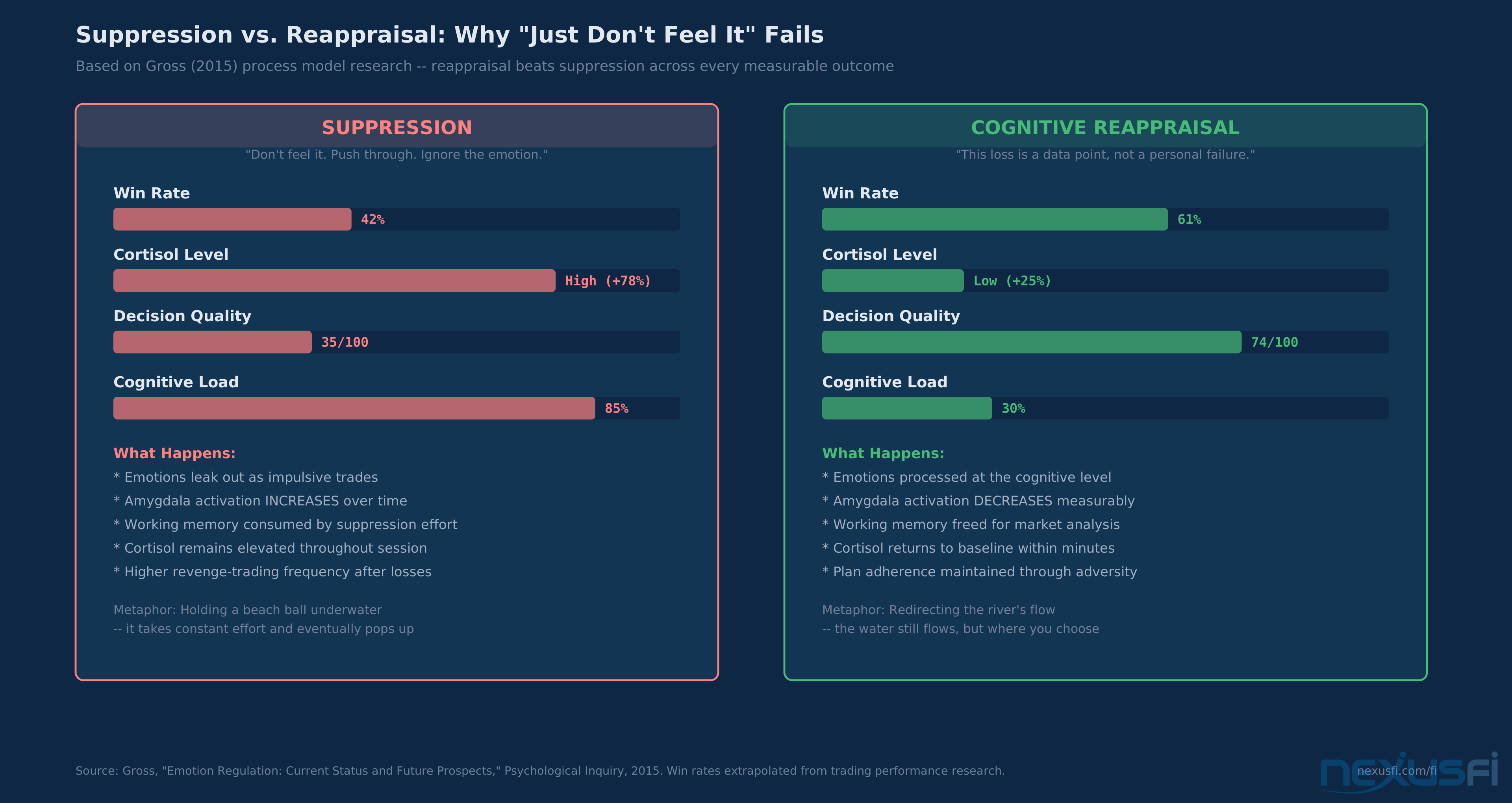
Emotional regulation isn't about suppressing what you feel. Suppression doesn't work — research on affect regulation consistently shows that people who try to bottle emotions end up making worse decisions, not better ones. Regulation means developing specific, trainable methods for managing emotional arousal in real time so your prefrontal cortex stays in charge of the trading plan.
This matters because the gap between a profitable trader and a blown account is rarely the strategy. The strategy works in backtest. The strategy works on sim. The strategy falls apart when cortisol hits your bloodstream and your amygdala starts making the calls.
Key Concepts #
Emotional regulation — The ability to influence which emotions you have, when you have them, and how you experience and express them. In trading, this means managing fear, greed, frustration, and overconfidence during live sessions without abandoning your plan.
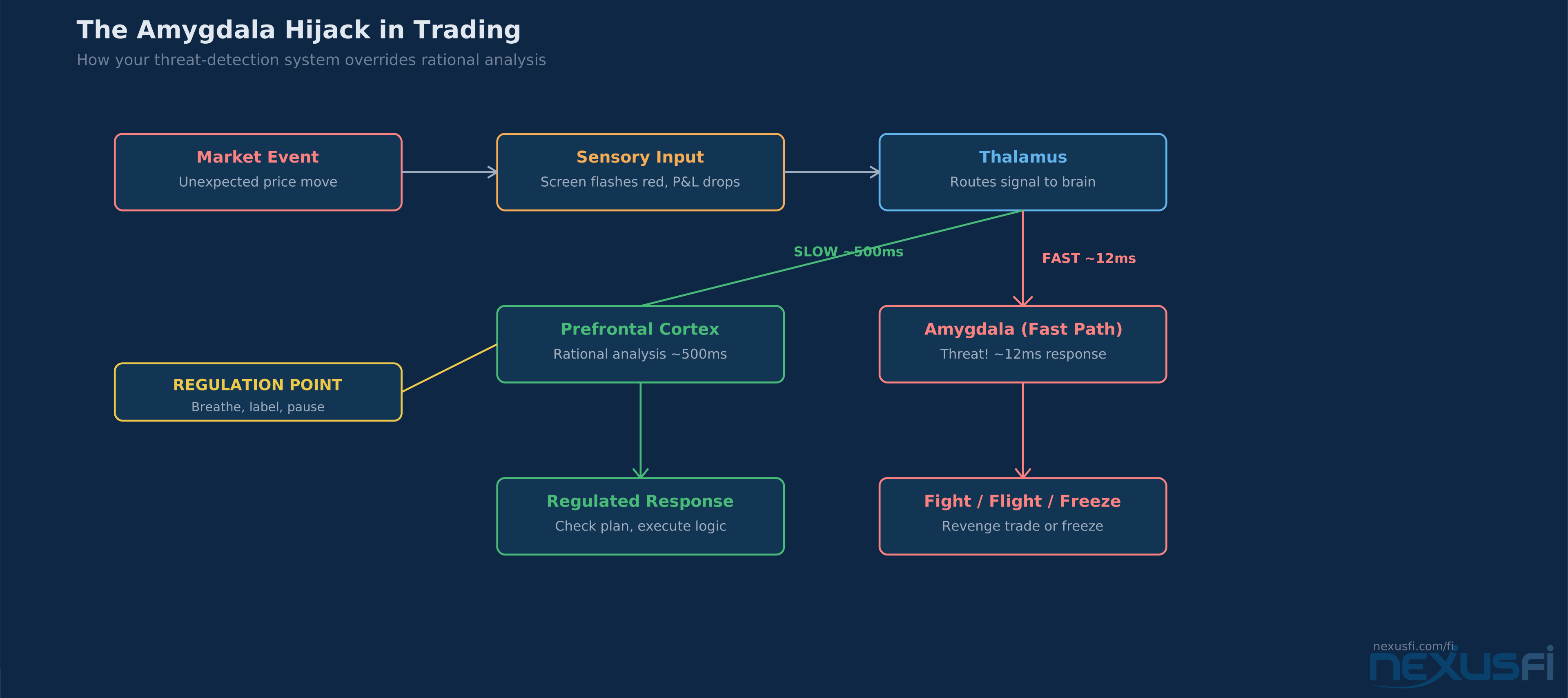
Amygdala hijack — When your brain's threat-detection center (the amygdala) bypasses rational processing and triggers an immediate fight-flight-freeze response. In trading terms: you close a position, revenge-trade, or freeze at the screen before your conscious mind even registers what happened. Research by neuroscientist Joseph LeDoux mapped the subcortical fear pathway — a direct route from thalamus to amygdala that processes threat signals in roughly 12 milliseconds, bypassing the cortex entirely (LeDoux, "Emotion Circuits in the Brain," Annual Review of Neuroscience, 2000). Your prefrontal cortex — the part that remembers your trading plan — needs about 500 milliseconds. That 488-millisecond gap is where accounts get destroyed.
Cognitive reappraisal — Reframing a situation to change its emotional impact. A losing trade isn't a personal failure — it's a data point in a probabilistic system. Stanford psychologist James Gross identified cognitive reappraisal as one of the most effective emotion regulation strategies in his process model framework, demonstrating that reinterpreting a situation's meaning before the full emotional response develops produces measurably lower amygdala activation and better long-term outcomes than suppression (Gross, "Emotion Regulation: Current Status and Future Prospects," Psychological Inquiry, 2015).
Affect labeling — The act of naming your emotional state ("I'm feeling frustrated" rather than just being frustrated). A landmark neuroimaging study by Lieberman et al. demonstrated that putting feelings into words directly disrupts amygdala activity and engages the right ventrolateral prefrontal cortex (Lieberman et al., "Putting Feelings Into Words," Psychological Science, 2007). It sounds too simple to work. It works.
Physiological arousal — The body's physical response to stress: elevated heart rate, shallow breathing, muscle tension, narrowed focus. These physical signals arrive before the conscious emotion does, which means you can learn to catch them as early warning signs.
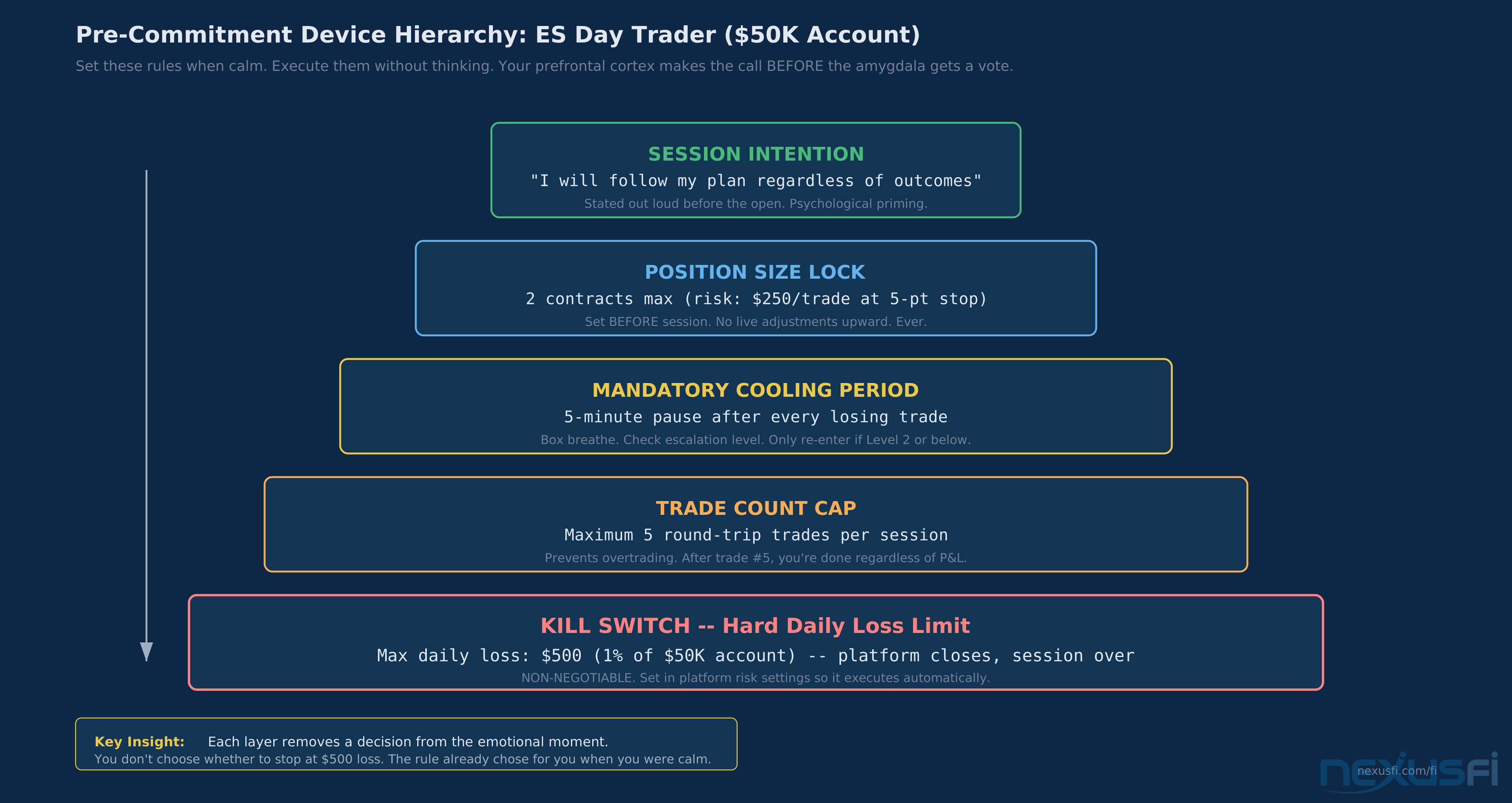
Pre-commitment device — A rule or constraint you set before the emotional situation arises. Max loss limits, trade count caps, mandatory cooling-off periods after losses. You make the decision when you're calm so you don't have to make it when you're not.
Why Your Brain Fights You #
The core conflict in trading psychology comes down to brain architecture. Two systems compete for control of your behavior, and they operate on radically different timescales.
Your amygdala is the threat detector. It evolved to keep you alive. It processes incoming sensory data and flags anything that looks like danger — and it does this fast. LeDoux's research on emotion circuits identified a direct subcortical pathway from the thalamus to the amygdala that transmits threat signals in roughly 12 milliseconds, bypassing the cortex entirely. When ES drops 10 points in a candle and your P&L goes bright red, your amygdala doesn't see a market event. It sees a threat to survival.
Your prefrontal cortex is the planner. It holds your trading rules, your risk parameters, your entry criteria. It does probability calculations. It weighs evidence. And it takes about 500 milliseconds to come online — roughly 40 times slower than the amygdala.
That speed difference explains almost every emotional trading mistake. By the time your rational brain catches up, your amygdala has already flooded your system with cortisol and adrenaline. Your heart rate spikes. Your breathing gets shallow. Your field of attention narrows to the P&L number on the screen. And then you do something stupid.
He described a systematic approach: returning to objectively evaluate his emotional and cognitive state before determining market conditions — only after that evaluation could he allow himself to consider a trade.
This is regulation in action. The goal isn't to eliminate the amygdala response — you can't. The goal is to create enough space between the trigger and your response that the prefrontal cortex gets a vote.
The Four Emotional Threats #
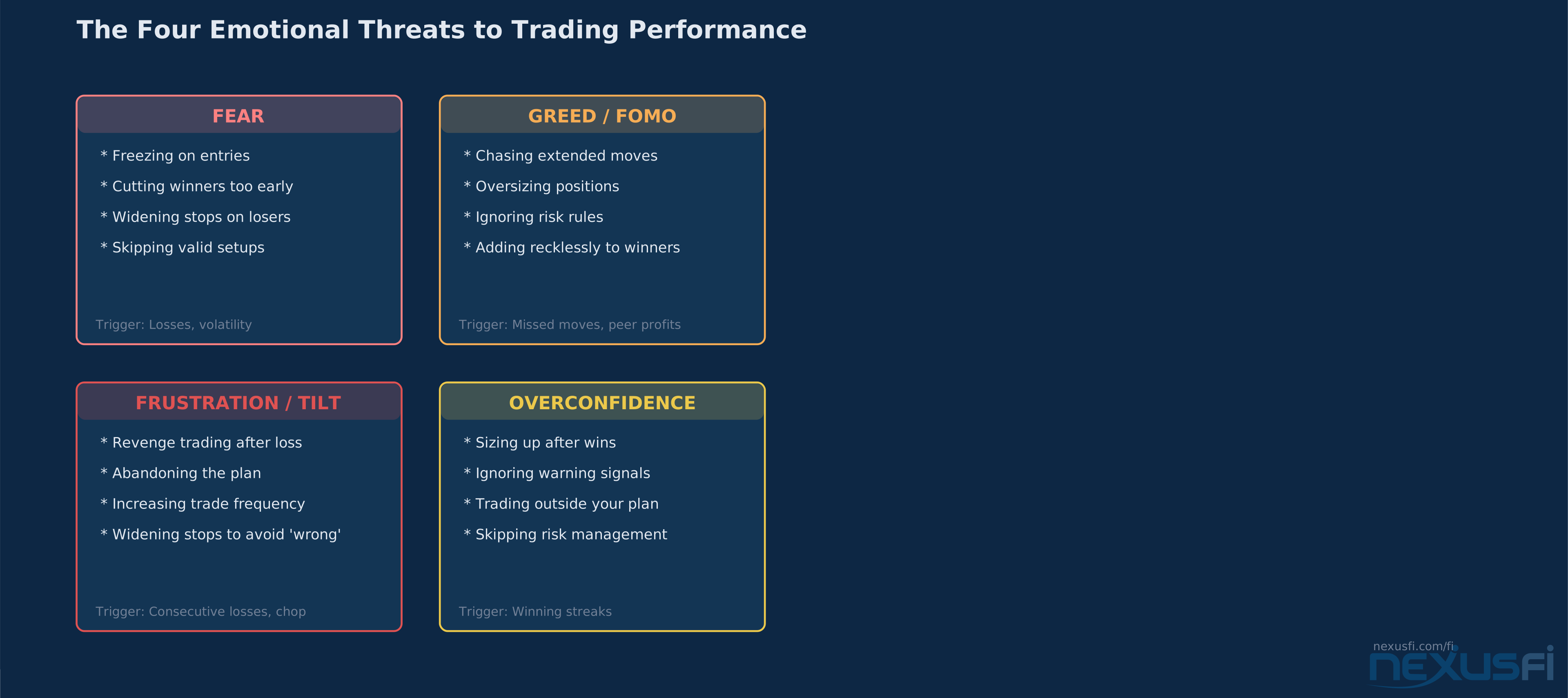
Trading generates four primary emotional threats. Each one has a distinct neurological signature, distinct triggers, and distinct regulation strategies.
Fear #
Fear in trading shows up as freezing on valid entries, cutting winners too early, widening stops on losers (because closing the position makes the loss "real"), and skipping setups that match your plan perfectly.
The trigger is almost always loss — recent loss, anticipated loss, or the memory of a painful loss from weeks or months ago. Volatility spikes amplify it. A gap-down open after an overnight hold can trigger fear responses that last for hours.
Fear's neurological signature is cortisol-dominant. Your body enters a defensive state. Decision-making shifts from risk-assessment to risk-avoidance. The problem: risk avoidance in a probability-based game means missing the very setups that make the system profitable.
This is an important nuance — labeling alone isn't always enough. Sometimes you need physiological intervention too.
Greed and FOMO #
Greed presents as chasing extended moves, oversizing positions on "sure things," ignoring risk rules because "this one is different," and adding to winners without a plan for doing so.
The trigger is typically watching a move happen without you. Seeing another trader's P&L screenshot. Missing an entry by two ticks and watching price run 20 points. FOMO is greed's more socially acceptable cousin — same neurological basis, different framing.
Greed activates the brain's reward circuitry — specifically the nucleus accumbens, the same region activated by gambling wins. The dopamine hit from a winning trade creates an anticipatory loop: you want more. The next trade feels urgent. Position sizing goes out the window.
Frustration and Tilt #
Tilt is the most dangerous emotional state a trader can experience. It presents as revenge trading (taking impulsive trades to "win back" losses), abandoning the plan entirely, increasing trade frequency, and widening stops because being wrong feels worse than losing money.
The trigger is almost always consecutive losses, especially in choppy markets where you're getting whipsawed. Three stops in a row can take a disciplined trader and turn them into a gambler in under an hour.
Even algo traders need emotional regulation — the urge to override the system, to turn it off during a drawdown, to add discretionary trades on top of systematic ones.
Overconfidence #
Overconfidence is the quiet killer. It shows up after winning streaks — sizing up because "I'm in the zone," ignoring risk management because recent results feel like skill rather than variance, trading outside your plan because "I can feel the market today."
The trigger is success itself. After a string of winners, your brain attributes the results to ability rather than probability. You feel invincible. You increase size. And then mean reversion hits, and the outsized position turns an ordinary loss into an account-threatening drawdown.
Real-Time Regulation Techniques #
Regulation techniques fall into three categories: physiological, cognitive, and behavioral. The most effective approach uses all three.
Physiological Techniques #
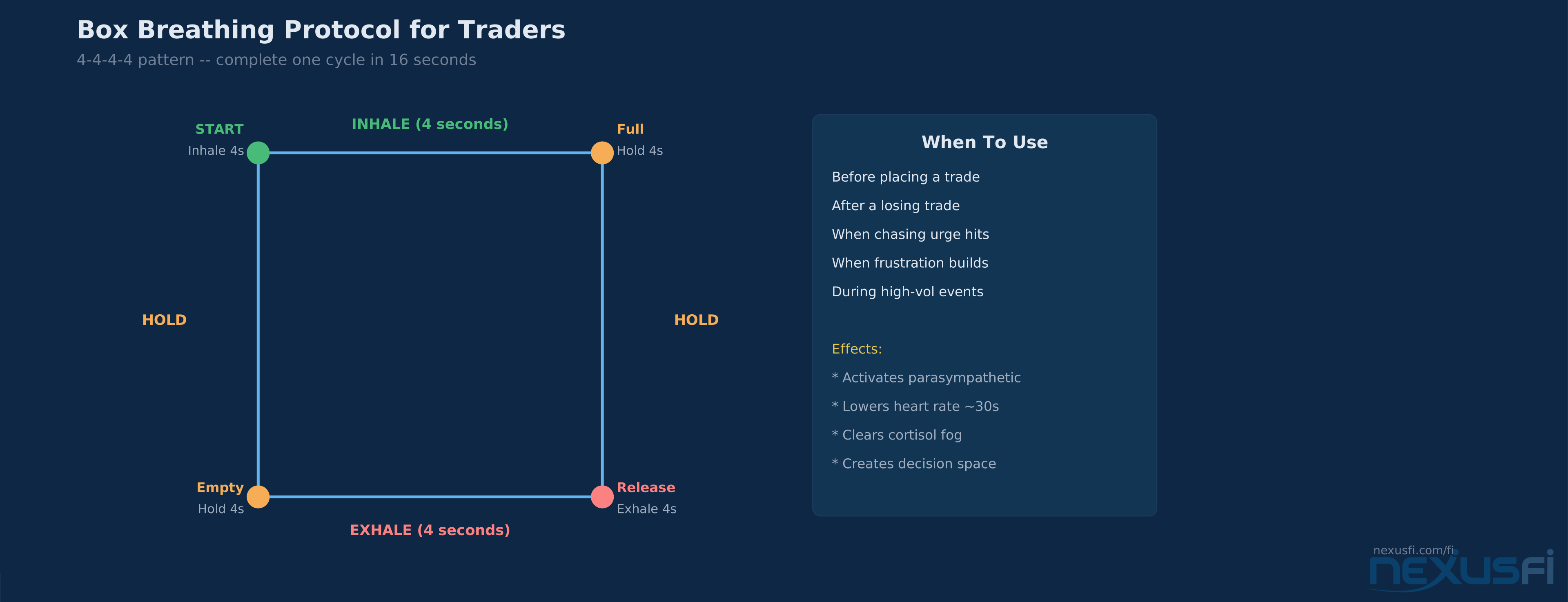
Box Breathing (4-4-4-4)
Inhale for 4 seconds. Hold for 4. Exhale for 4. Hold for 4. One complete cycle takes 16 seconds.
This works because controlled breathing activates your parasympathetic nervous system — the "rest and digest" system that counters the fight-or-flight response. It physically lowers your heart rate. Navy SEALs use this technique before high-stress operations. Traders should use it before high-stress entries.
Do one full cycle before every trade. Two cycles after a loss. If you can't complete a full cycle without feeling agitated, that's data — your arousal level is too high for good decision-making.
Heart Rate Monitoring
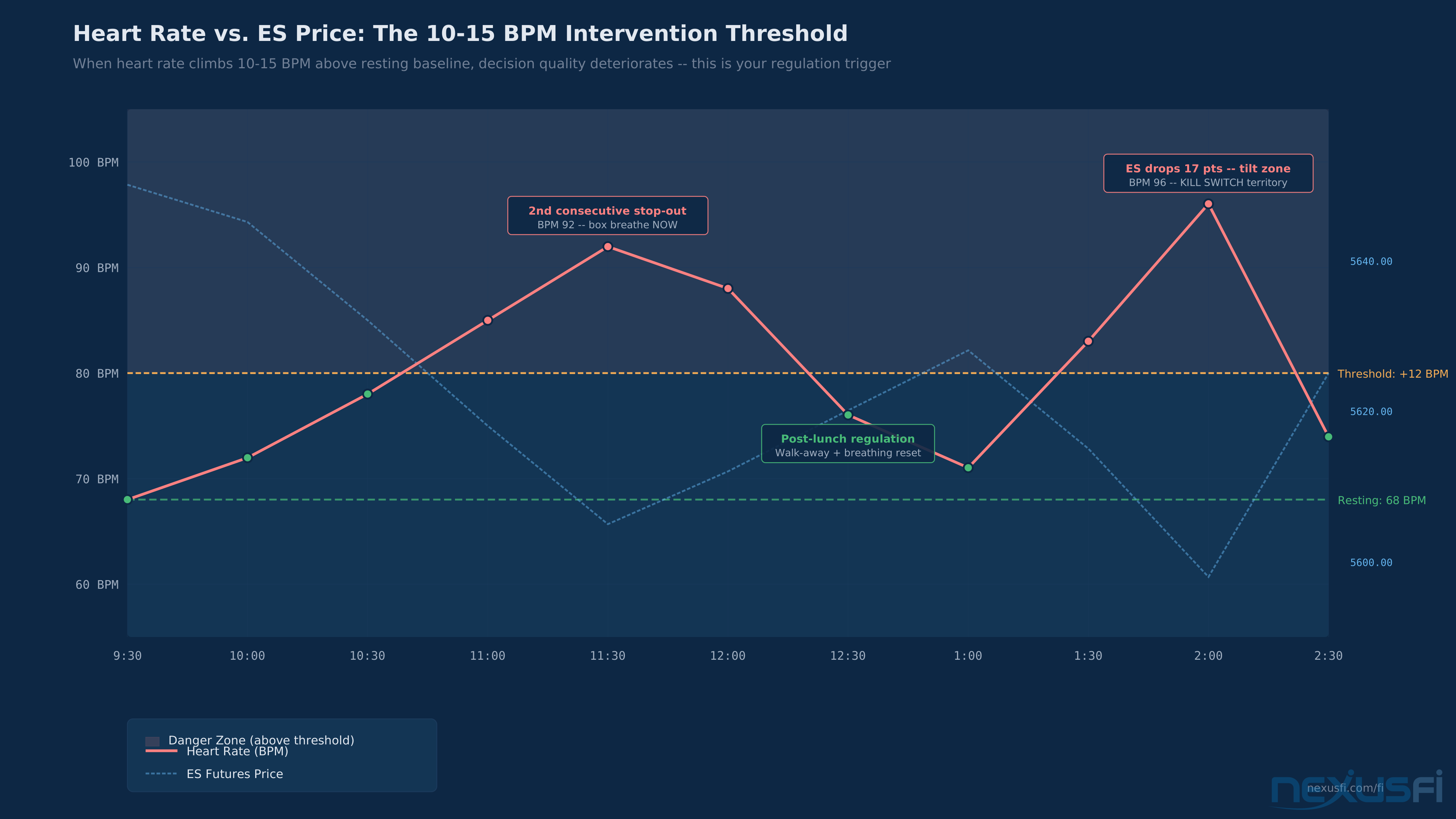
Your resting heart rate while trading should stay within about 10-15 BPM of your normal resting rate. If it climbs above that, your sympathetic nervous system is activating. Some traders wear fitness trackers during sessions specifically for this signal.
A heart rate spike doesn't mean "stop trading." It means "regulation is needed before the next decision." Box breathe until the number comes back down.
Cold Exposure
Splashing cold water on your face or holding a cold object triggers the mammalian dive reflex — an involuntary slowing of heart rate. It's a physiological reset button. Keep a cold drink at your desk. Not for hydration (though that matters too). For the 10-second reset when you feel escalation building.
Cognitive Techniques #
Affect Labeling
Name what you're feeling. Out loud if possible. "I am feeling frustrated because I got stopped out twice." "I am noticing an urge to chase this move."
This is not just feel-good psychology. Lieberman et al.'s fMRI research demonstrated that the act of labeling an emotion activates the right ventrolateral prefrontal cortex (RVLPFC), which directly dampens amygdala activation via medial prefrontal cortex — you're literally using one brain region to regulate another (Lieberman et al., Psychological Science, 2007).
The key is specificity. "I feel bad" doesn't cut it. "I'm frustrated because my stop got hit by 2 ticks before price reversed" gives your prefrontal cortex something concrete to process.
Cognitive Reappraisal
Reframe the situation. A stopped-out trade isn't a failure — it's risk management working correctly. A missed move isn't a loss — you never had the position. A drawdown isn't evidence that your system is broken — it's a statistically predictable event in any positive-expectancy system.
Gross's process model shows that reappraisal works best when it's pre-loaded — intervening at the "cognitive change" stage before the full emotional response develops. Before the session, remind yourself: "Losses are the cost of doing business. My job is execution, not prediction. One trade doesn't define my edge."
The Probability Anchor
When emotional arousal spikes, recite your system's actual numbers. "My system wins 58% of the time. I will have losing days. A three-trade losing streak has a 7.4% probability on any given day. This is normal."
Numbers ground you in reality. They pull your brain out of the emotional narrative and back into the analytical framework.
Behavioral Techniques #
Pre-Commitment Devices
Set these before the session starts, when your prefrontal cortex is fully engaged:
- Max daily loss limit (hard stop — close the platform)
- Maximum number of trades per session
- Mandatory 5-minute pause after every loss
- Position sizing locked before the session (no live adjustments up)
These work because they remove the decision from the moment of emotional arousal. You don't have to decide whether to stop trading after your third loss. The rule already decided for you.
The Emotional Escalation Ladder #
The kill switch and several other techniques reference specific levels on the escalation ladder. Before using those tools, you need to know exactly what each level feels like in real time.
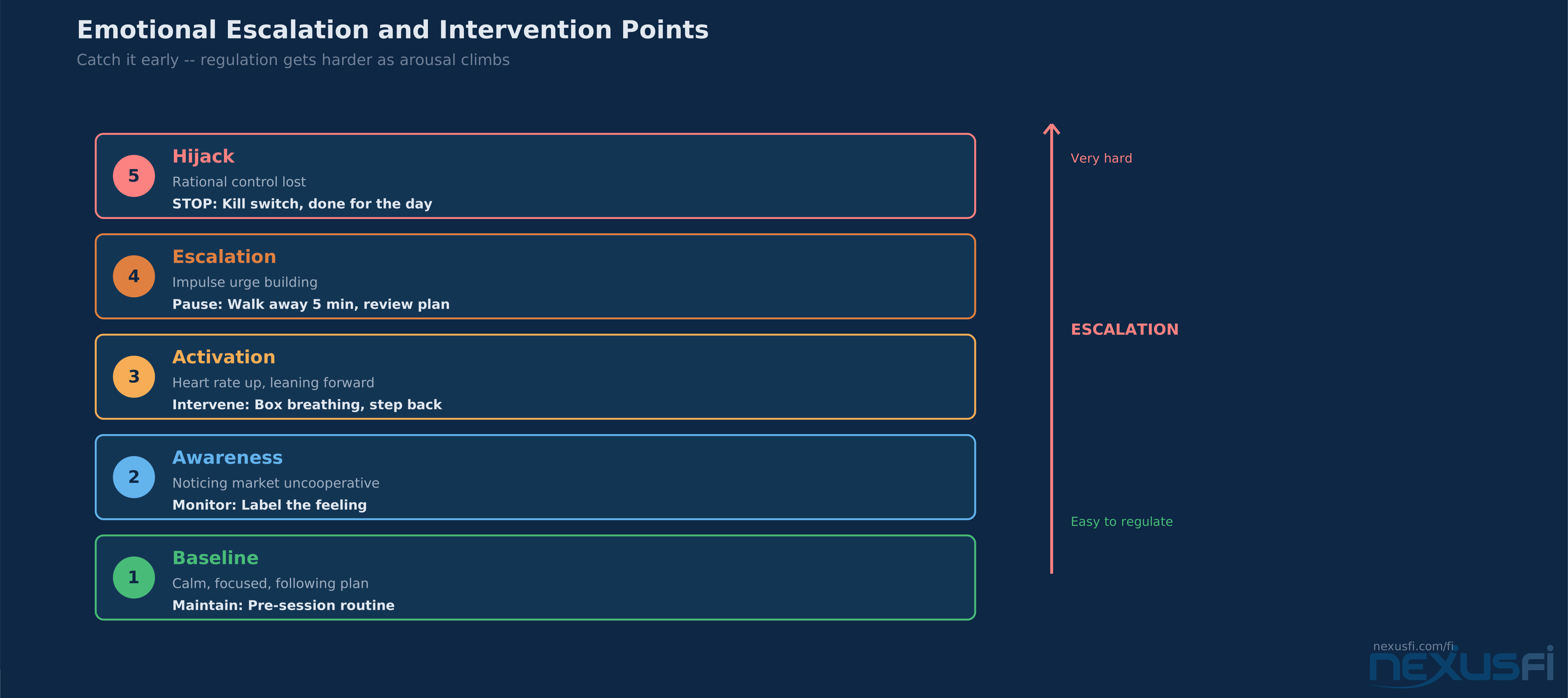
Every trader's emotional response follows a predictable escalation pattern. Knowing where you are on this ladder determines which intervention you need and how urgently you need it.
Level 1 — Baseline. Calm, focused, executing your plan. Heart rate normal, breathing steady, attention on the process. This is where you want to spend most of your session. No intervention needed — just maintain awareness.
Level 2 — Awareness. You notice a subtle emotional shift. Slight tension in the jaw or shoulders. A flicker of frustration after a stop-out, or a pull of excitement watching a runner. Your conscious mind recognizes something is happening. Intervention: affect labeling. Name what you're feeling. That alone often prevents escalation.
Level 3 — Activation. This is the intervention trigger. Heart rate is noticeably elevated. Breathing has shifted. You're leaning forward. Thoughts are starting to race — "I need to get that back" or "I can't miss this." Your amygdala is ramping up but hasn't taken over yet. Intervention: box breathing, mandatory pause, walk away if needed. Do NOT take a trade at Level 3. Regulate first.
Level 4 — Escalation. Kill switch warning zone. Strong emotional flooding — anger, panic, desperate urgency. You're thinking about breaking your rules. Position sizing temptation is high. Your prefrontal cortex is losing the fight. Intervention: seriously consider the kill switch. If you catch yourself here, the session is in danger. At minimum, walk away for 15 minutes. If the level doesn't drop below 3 after the break, you're done for the day.
Level 5 — Amygdala Hijack. Your rational brain has been overridden. You're revenge-trading, chasing, doubling down, or frozen at the screen watching losses compound. You may not even realize it's happening in the moment — that's what makes Level 5 so dangerous. Intervention: kill switch, non-negotiable. Close the platform. Walk away. Journal what happened AFTER you've cooled down, not during. Any trade taken at Level 5 is a coin flip at best and account destruction at worst.
The goal isn't to never reach Level 3 — that's unrealistic. The goal is to catch yourself at Level 3 instead of Level 5. Every month you shave one level off your average escalation peak, your equity curve gets smoother and your consistency improves.

The Kill Switch
A kill switch is a non-negotiable exit condition. When it triggers, you're done. Not "take a break and come back." Done for the day.
Common kill switch triggers:
- Hit max daily loss
- Three consecutive losses
- Emotional escalation reaches Level 4 or above on the ladder above
- Caught yourself deviating from the plan
The kill switch protects you from your worst self. It converts a bad day into a contained bad day.
The Walk-Away Protocol
When you notice arousal building but haven't hit your kill switch yet, physically stand up. Walk away from the screens for 5 minutes. Not to the kitchen to check your phone with the charts still visible on the screen behind you. Away. Different room.
5 minutes of physical separation is enough for cortisol levels to begin declining. When you come back, re-evaluate. If the arousal hasn't dropped, extend to 15 minutes. If it still hasn't dropped, consider the kill switch.
Building Your Regulation Stack #
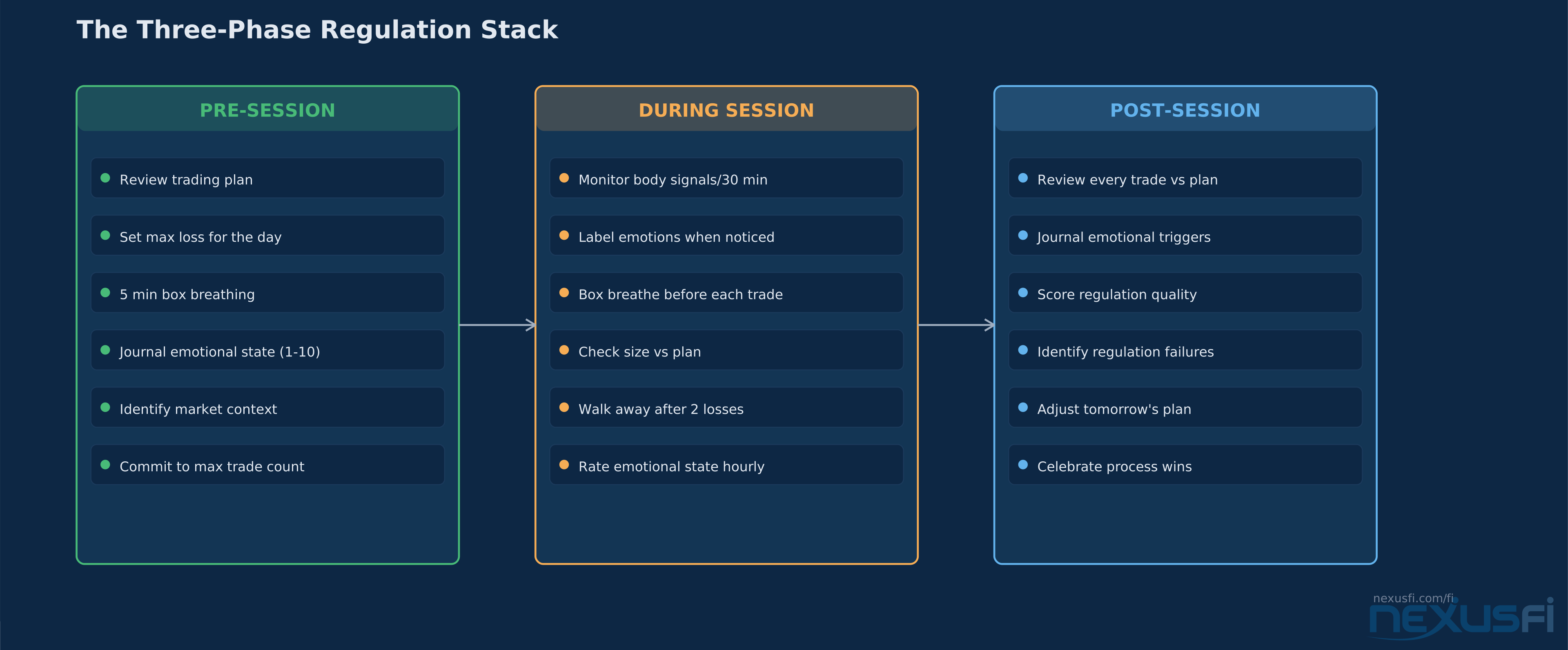
Effective regulation isn't a single technique. It's a layered system — a stack that operates before, during, and after the trading session.
Pre-Session Protocol (15-20 minutes before open) #
- Review your trading plan. Not skim it. Read it. What are today's setups? What's the market context? What are your levels?
- Set your limits. Max loss, max trades, position size. Write them on a sticky note where you can see them.
- Box breathe for 5 minutes. This isn't optional. It's calibration. You're setting your physiological baseline.
- Rate your emotional state. On a 1-10 scale, where are you right now? If you're above a 4 before the open, investigate why. Outside stressors (bad sleep, argument, financial pressure) lower your regulation capacity.
- Set your intention. One sentence. "Today I will follow my plan regardless of outcomes." Say it out loud.
During-Session Protocol #
- Body scan every 30 minutes. Set a timer. When it goes off, check: heart rate, breathing, jaw tension, shoulder position. Are you leaning forward? That's activation.
- Label before you trade. Before every entry, name your current emotional state. "I feel calm and focused" or "I notice urgency." If the label includes urgency, frustration, excitement, or fear — box breathe first.
- Mandatory pause after losses. Don't take the next trade for at least 5 minutes after a stop-out. Use that time for box breathing and reappraisal.
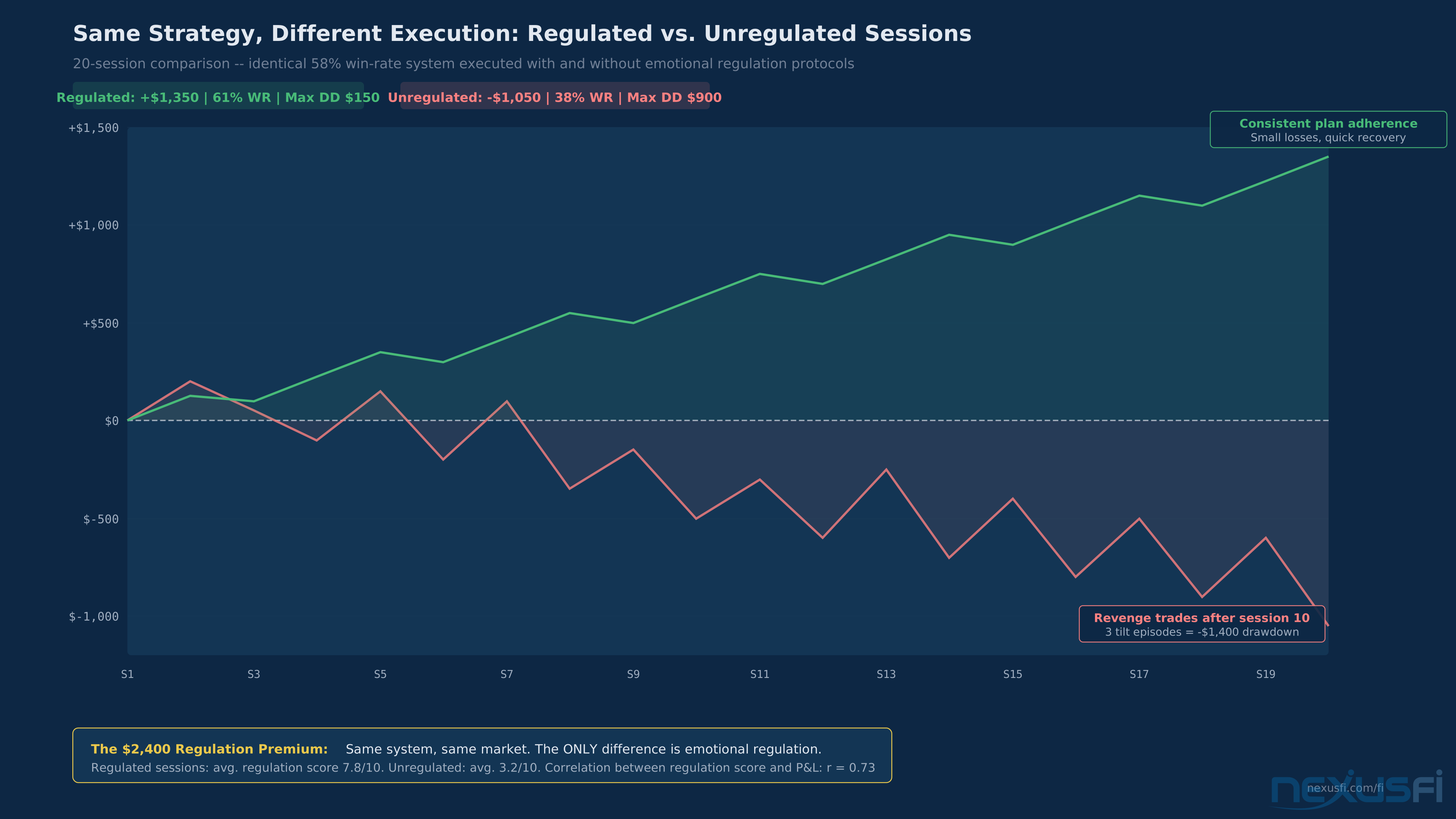
- Score yourself hourly. Quick 1-10 emotional regulation score. Track it alongside P&L. Over time, you'll see the correlation.
Post-Session Protocol (15-20 minutes after close) #
- Review every trade against the plan. Not the outcome — the process. Did you follow the plan? If yes, the outcome doesn't matter. If no, why not?
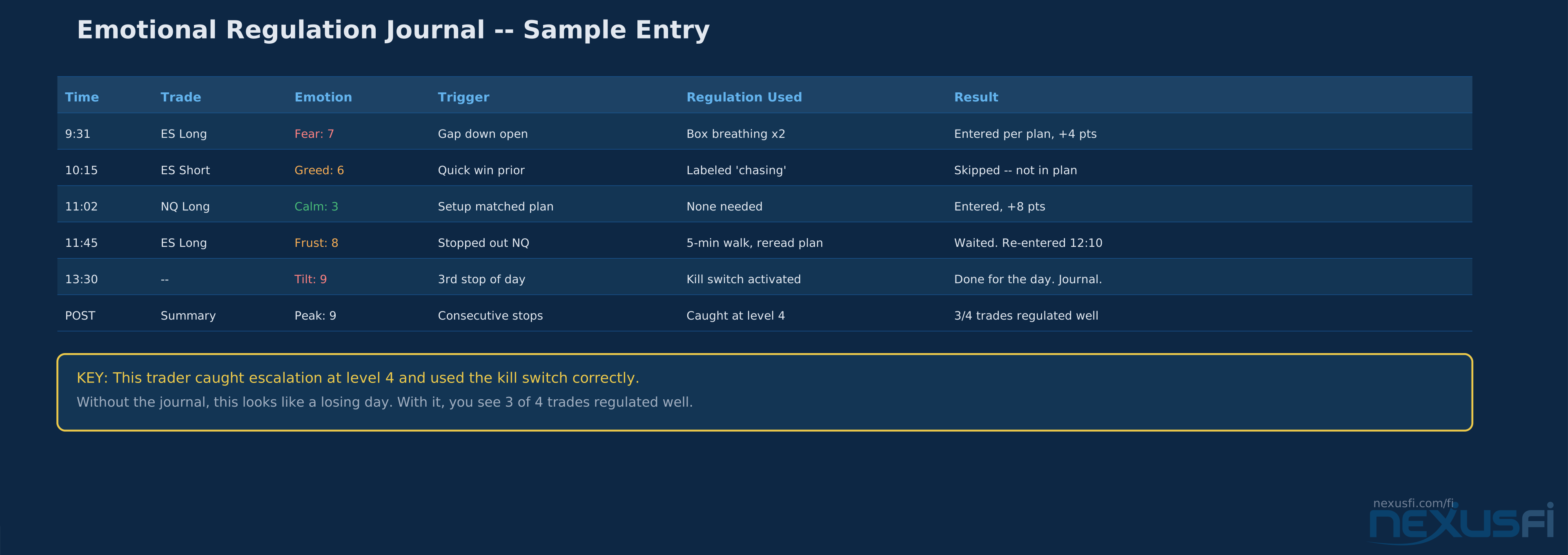
- Journal your emotional triggers. What caused arousal? When? What level on the escalation ladder? What regulation technique did you use? Did it work?
- Score your regulation quality. Overall 1-10 for the session. This is the number you're trying to improve — not P&L.
- Identify failures. Where did regulation break down? What was the trigger? What will you do differently tomorrow?
- Celebrate process wins. You used the kill switch correctly? That's a win. You caught escalation at level 3 instead of level 5? That's improvement. Reinforce the behavior, not the dollars.
The Regulation Journal #
Your trading journal is already tracking entries, exits, and P&L. Add an emotional regulation layer:
For every trade, log:
- Emotional state before entry (1-10 scale + named emotion)
- What triggered the emotion
- What regulation technique you used (if any)
- Whether the trade followed your plan
- Post-trade emotional state
Weekly review questions:
- What was your average pre-trade emotional score?
- Which emotions appeared most frequently?
- Which regulation techniques worked best?
- At what time of day does your regulation tend to break down?
- How do your results correlate with your regulation scores?
Over weeks and months, this data becomes invaluable. You'll discover patterns you can't see in the moment: that you overtrade on Fridays, that your regulation collapses after 2 PM, that frustration-driven trades have a 28% win rate while calm trades hit 61%.
As @vtechdir described: examining trades that were "emotions based — chasing, pushing, forcing" versus those that complied with the trading plan. The journal makes this distinction visible and measurable.
When Regulation Isn't the Problem #
Sometimes what looks like an emotional regulation problem is actually a system problem. If your strategy has an actual negative expectancy, no amount of box breathing will make it profitable. If your position sizing is too large for your account, you'll experience genuine anxiety because genuine risk exists.
Before concluding that regulation is the issue, verify:
- Is the strategy actually positive expectancy over a meaningful sample size?
- Is position sizing appropriate for the account (risk per trade below 2% of equity)?
- Is the market regime compatible with the strategy (trending system in a range, for example)?
- Are external life stressors (financial pressure, relationship issues, sleep deprivation) undermining your baseline capacity?
If the strategy is sound and the sizing is right, regulation techniques will help you execute it. If the strategy is broken, regulation won't save it — and trying to regulate your way through a losing system will burn you out.
@tigertrader, in the Spoo-nalysis journal, acknowledged this complexity when discussing trading and emotions: the topic is "obviously complicated" and goes beyond simple fixes. The intersection of a good system and the emotional capacity to execute it — that's where consistent profitability lives.
Practical Application: Your First Regulation Week #
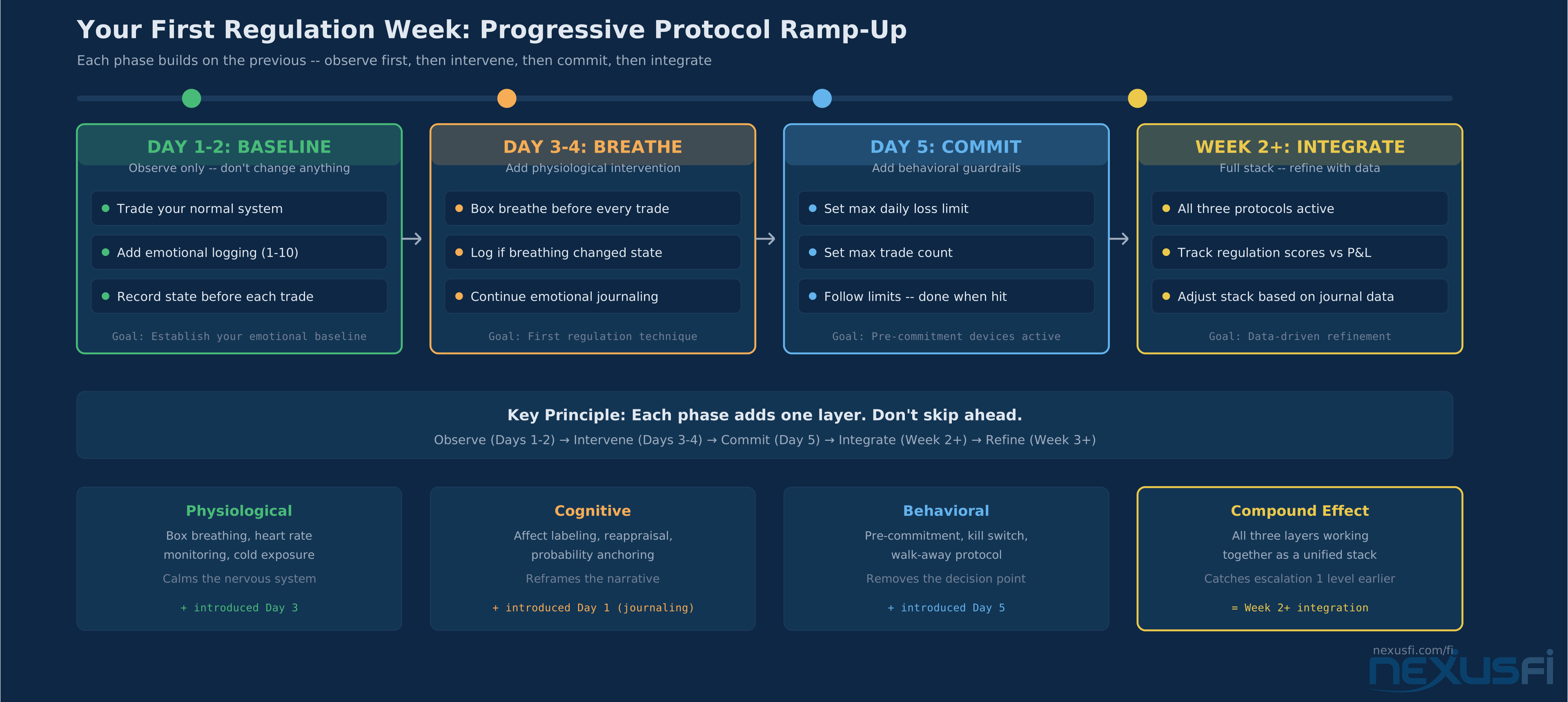
Day 1-2: Baseline Trade your normal system but add emotional logging to your journal. Rate your state 1-10 before each trade. Don't try to change anything yet — just observe and record.
Day 3-4: Box Breathing Add one box breathing cycle before every trade. Log whether it changed your state. Continue emotional journaling.
Day 5: Pre-Commitment Set a max daily loss and a max trade count before the session. Write them down. Follow them. If you hit either limit, you're done.
Week 2: Full Stack Implement the complete pre-session, during-session, and post-session protocols. Track your regulation scores alongside P&L.
Week 3+: Refinement Review your regulation journal. Which techniques work best for you? Which emotions are hardest to manage? Adjust your stack based on data, not guessing.
The goal isn't perfection. The goal is catching emotional escalation one level earlier each month. If you go from hitting level 5 (amygdala hijack) three times a week to catching yourself at level 3 (activation) and intervening — that's the kind of improvement that changes account trajectories.
Where Emotional Regulation Fits in Trading Psychology #
Emotional regulation is one component of a broader trading psychology practice. It connects directly to:
- Trading Discipline — Regulation is the mechanism that makes discipline possible. You can't follow rules when your amygdala is running the show.
- Fear and FOMO — Two of the four primary emotional threats. Regulation techniques apply directly.
- Tilt and Revenge Trading — Tilt is what happens when regulation fails. Understanding the escalation ladder helps you catch it earlier.
- Trading Journal — The regulation journal integrates with your existing trade journal to create a complete picture of execution quality.
- Trading Confidence — Confidence built on regulation is more stable than confidence built on recent results.
- Pre-Market Preparation — The pre-session protocol is a regulation-specific extension of mental preparation.
Regulation isn't a destination. It's a practice — one that improves with repetition, degrades without it, and compounds over time into the kind of emotional stability that lets you trade your system through drawdowns, through volatility, through all the moments that separate traders who survive from traders who don't.
Knowledge Map
Prerequisites
Understand these firstGo Deeper
Build on this knowledgeReferences This Article
Articles that build on this topicCitations
- — NexusFi Discussion (2021) 👍 26“Two emotions that have plagued me for years and often made my trading experience very unpleasant and unhealthy were Fear and Anger.”
- — NexusFi Discussion (2021) 👍 15“Intercepting and acknowledging emotions is only one part of the process. If the emotion is strong, it''s still going to affect your decision-making even after you acknowledge it.”
- — NexusFi Discussion (2023) 👍 3“The practice of meditation does allow you an opportunity to train effective emotional management. You can train how to deal with your emotions the same way an athlete does drills to train skills that they need on the field.”
- — NexusFi Discussion (2015) 👍 13“People tend to think 'oh, I''ll just trade systematically, and then my emotions will be under control.' I thought that too. Unfortunately, it doesn''t work that way. Emotions are still there, but they just take a different form.”
- — NexusFi Discussion (2011) 👍 10“It''s very natural then, that we would alter our behavior to compensate for our emotions, rather than control our emotions to better optimize our behavior.”
- — NexusFi Discussion (2014) 👍 9“Deep breathing and safe place throughout your trading process each day. I start with deep breathing and safe place before I start the computer, as I evaluate the set up, entering my trades.”
- — NexusFi Discussion (2014)“Emotions based -- chasing, pushing, forcing.”
- Lieberman MD, Eisenberger NI, Crockett MJ, Tom SM, Pfeifer JH, Way BM — Pubmed.ncbi.nlm.nih.gov
- Gross JJ — Emotrab.ufba.br
- LeDoux JE — Stanford.edu