



Trading Psychology: The Mental Game Behind Consistent Profitability
Why 90% of trading failure isn't about the charts — it's about the six inches between your ears.
Overview #
Every futures trader eventually confronts the same brutal realization: knowing what to do and actually doing it are two completely different skills. You can have a backtested edge, a solid risk management framework, and years of screen time — and still blow up an account in a single afternoon of revenge trading. The gap between knowing and doing is trading psychology.
Trading psychology isn't a soft skill bolted onto the "real" work of technical analysis. It IS the work. Research in behavioral finance consistently shows that cognitive biases, emotional reactivity, and discipline failures account for far more P&L damage than bad setups ever will. As @PandaWarrior catalogued from personal experience on NexusFi: FOMO, fear of loss, the need to be right, lack of trust in a method, poor self-image, arrogance — "Combine any and all of these and you end up with a stew of swirling emotions that lead one to think in ways that are simply not suited to trading."
This article maps the psychological terrain every futures trader must work through. It ties together the core pillars — emotional regulation, cognitive biases, discipline, mental preparation, and self-awareness — into a practical framework you can use starting tomorrow morning.
Where to Start -- Priority Order by Impact #
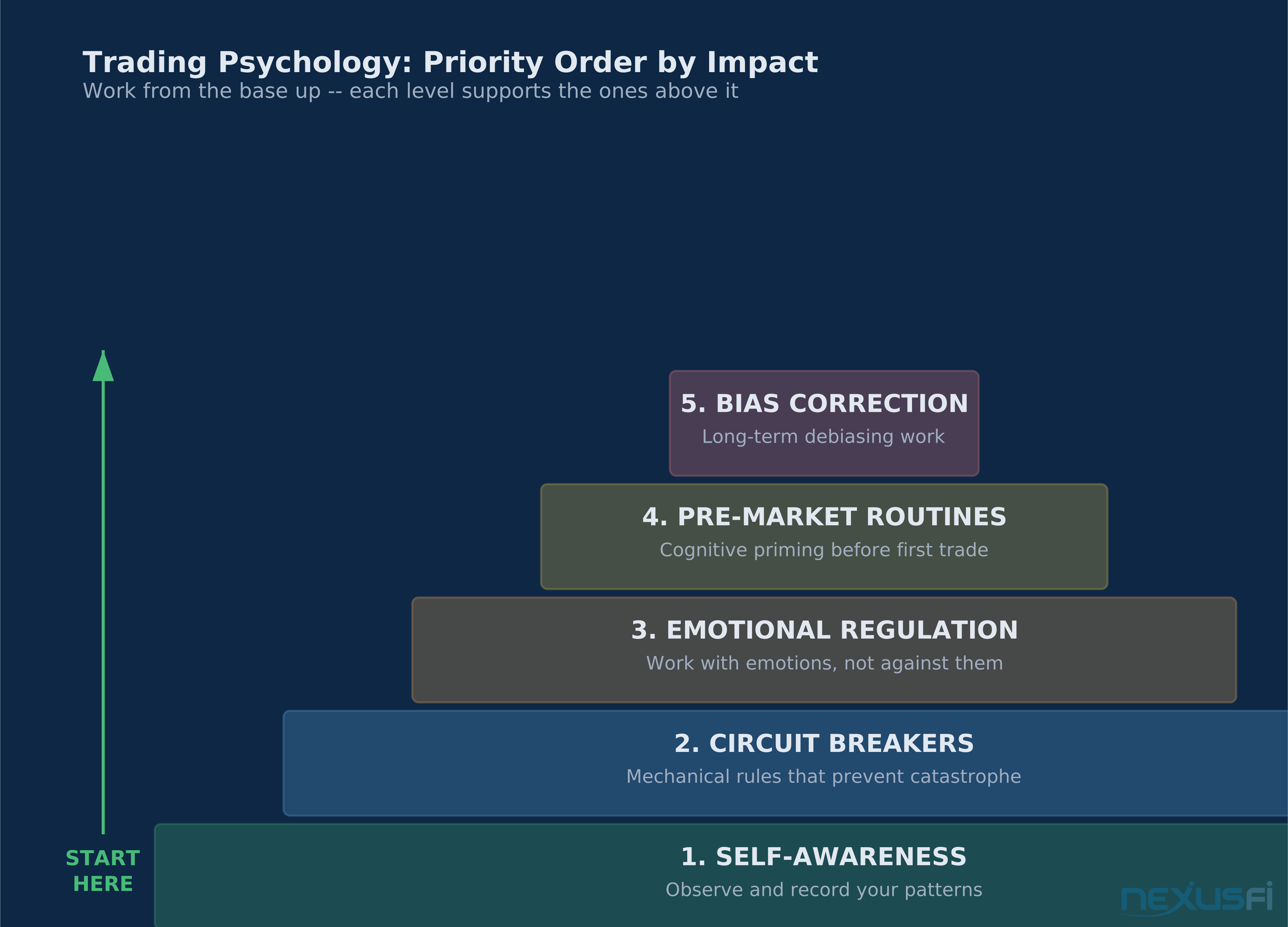
Not all psychology work delivers equal returns. If you're going to invest time in your mental game, invest it where the P&L impact is highest:
- Self-Awareness — You can't fix what you can't see. Start here. Two weeks of honest journaling reveals more about your trading problems than two years of reading psychology books.
- Circuit Breakers / Discipline Systems — Mechanical rules that prevent catastrophic losses. A daily loss limit that auto-shuts your platform saves more money than any mindfulness practice. Build the guardrails before you work on the driver.
- Emotional Regulation — Once you can observe your emotional patterns (Step 1) and have damage limits in place (Step 2), learn to work with your emotions rather than against them.
- Pre-Market Preparation — Routines that put you in the right cognitive state before the first trade. High ROI but only after you've identified what you're preparing for (which requires self-awareness).
- Cognitive Bias Correction — The hardest to fix because biases operate below conscious awareness. This is ongoing, long-term work that builds on all four foundations above.
Work them in this order. Traders who jump straight to "controlling emotions" without first building self-awareness and mechanical safeguards almost always fail — they're trying to modify behavior they haven't yet observed, with no safety net for the inevitable slip.
The Five Pillars of Trading Psychology #
1. Emotional Regulation — Fear, Anger, and Greed #
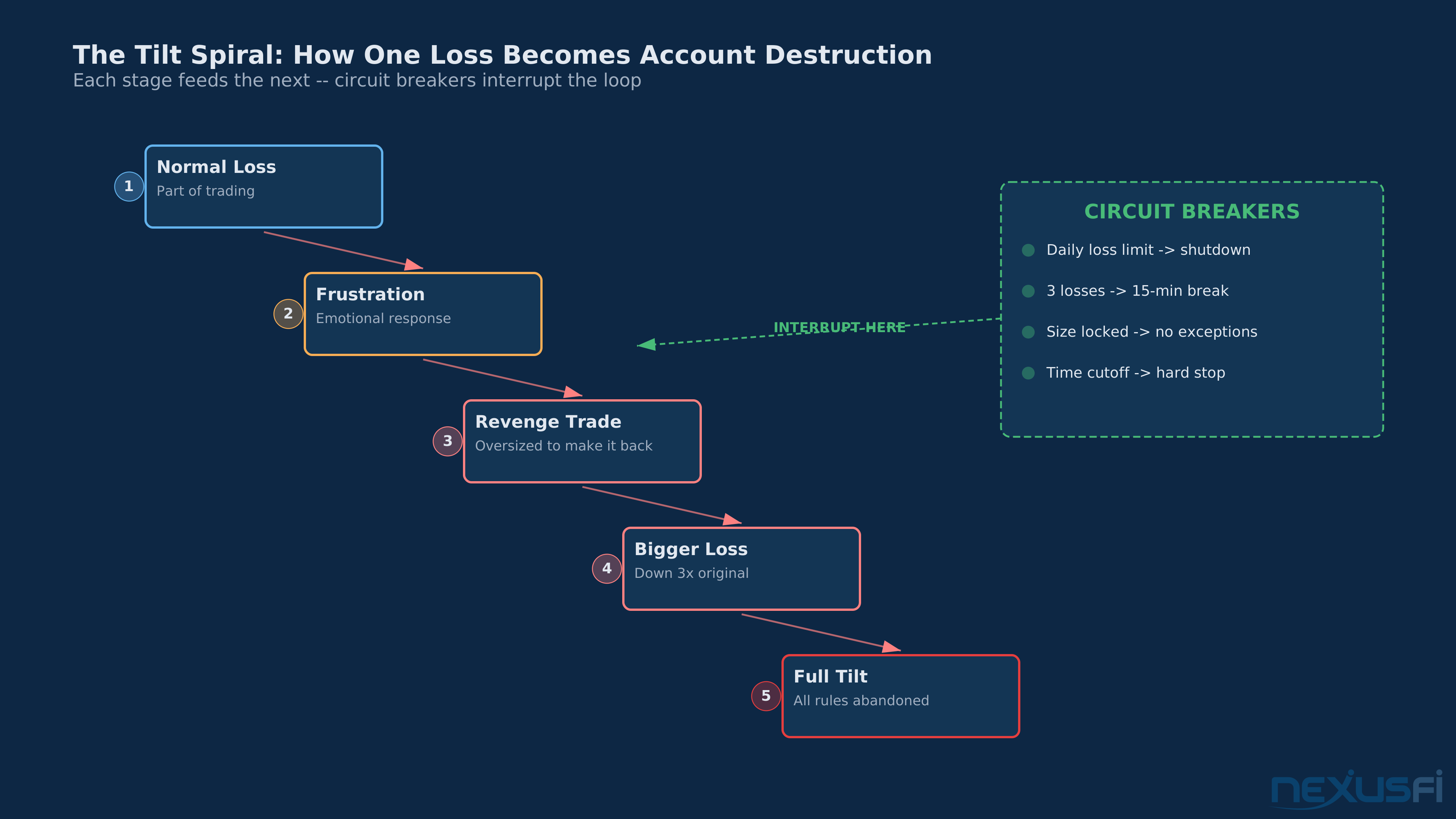
The three emotions that destroy the most trading accounts aren't complex. Fear freezes you out of valid setups. Anger drives revenge trades after losses. Greed holds you in trades past your exit plan or sizes you beyond your risk rules.
He'd freeze on perfect setups, then chase late entries out of frustration, then lose on those late entries, confirming the fear. A self-reinforcing loop.
The critical insight he landed on: "How much better would I be and how much more pleasant an experience would it be if I just divorced myself from the outcome of these trades while live?" On sim, none of the fear showed up — because outcomes didn't matter. The fix wasn't controlling the emotion. It was detaching from the outcome.
@Hoag — John Hoagland, Director of Trader Development at TopstepTrader and former S&P pit trader — put it more directly: "Control your actions, not your emotions." He spent his early career buying the exact high and selling the exact low because FOMO drove him to chase. A fellow pit trader told him: "All you need to do is sell it when you want to buy it and buy it when you want to sell it." The emotions were correct signals that it was time to act. His interpretation of those signals was backwards.
Key takeaway: Don't try to eliminate emotions. That's a losing battle. Instead, learn to recognize emotional states as information — and build a response protocol that overrides instinctive reactions. The emotion says "act now." Your protocol says "how."
For a deep dive into specific emotional patterns and regulation techniques, see Fear and FOMO in Trading and Managing Tilt and Revenge Trading.
2. Cognitive Biases — The Mental Shortcuts That Cost You Money #
Every trader carries cognitive biases — mental shortcuts that evolved for survival but actively sabotage trading decisions. The most destructive ones in futures trading:
Loss Aversion: Kahneman and Tversky's prospect theory demonstrated that losses hurt roughly 2x more than equivalent gains feel good — a finding replicated across decades of behavioral economics research. This manifests as moving stops, averaging into losers, cutting winners short, and the entire revenge trading spiral.
Confirmation Bias: Seeking information that supports your existing position while ignoring contradictory signals. You're long ES and suddenly only seeing bullish signals — ignoring the divergence on delta, the breakdown in breadth, the session profile screaming distribution.
Recency Bias: Overweighting recent outcomes. Three wins in a row doesn't mean your edge got better. Three losses doesn't mean it's broken. But your brain treats recent data as more meaningful than the full sample.
Anchoring: Fixating on a price level (your entry, yesterday's close, a round number) as a reference point when the market has moved past it. Your entry price is irrelevant to where the market is going next. The market doesn't know or care what you paid.
Sunk Cost Fallacy: Staying in a losing trade because you've "already invested this much" or "it has to come back." It doesn't have to do anything.
Outcome Bias: Judging decisions by their result rather than their process. A bad process can produce a winning trade (luck). A good process can produce a losing trade (variance). Grading on outcomes poisons your decision-making feedback loop.
For a complete guide to each bias and specific debiasing techniques, see Cognitive Biases in Trading.
3. Discipline — The Bridge Between Knowing and Doing #
Discipline is the gap between your trading plan and your actual execution. Every trader has experienced the moment: you know the rule, you wrote the rule, you've enforced the rule a hundred times — and today, you break it. Not because you forgot. Because something in the moment felt more compelling than the rule.
The win reinforced the broken behavior. The next attempt lost 10k. "Full tilt activated and I basically kept getting back in the same trades with huge sizes full on emotional revenge trading. Losing 8-10k at a time."
The most telling part: "I knew what I was doing at the time was wrong. I need to just smash my monitor and computer next time I try revenge trading, it'd be much cheaper in the end." Knowing isn't enough. The rational brain that wrote the rules isn't the brain making decisions under stress.
Key takeaway: Discipline isn't willpower. Willpower depletes. Discipline is system design — building external constraints, circuit breakers, and environmental conditions that make the right action easier than the wrong one.
For specific discipline frameworks and circuit-breaker designs, see Trading Discipline and Rule Following.
4. Mental Preparation — The Pre-Market Routine #
Consistently profitable traders don't just prepare their charts. They prepare their minds. @Big Mike outlined the non-negotiable baseline in his trading journal, which received 75 thanks from the NexusFi community:
"With trading, it requires you to be at the absolute top of your game. Mentally and physically alike, you must prepare yourself to trade just like you prepare yourself for a real job."
His protocol: proper sleep, wake on time, shower, breakfast — then clear your mind, focus, review charts. Then the meditation component: "Deep breath. Close eyes, just sit for 60 seconds, breathing deeply. Picture yourself trading today. You are following your rules. You are practicing patience. You are happy with the outcome."
The critical distinction: "Do not focus on the market heading higher or lower. Do not focus on pullbacks or price hitting a certain S/R. No, the objective is to picture yourself simply 'trading' the best you can, which means following your rules."
@SoftSoap built an extensive routine framework in his NQ journal — Pre-Market, Intraday, and Post-Market routines with specific checklists. Key elements: re-reading weekly assessment, laying out no-trade zones, completing a personal preparation checklist (hydration, weekly goals review, scenario planning), and a post-session review listing 3 things done well and 3 things to improve.
These routines aren't rituals. They're cognitive priming — setting the brain to operate from the analytical system rather than the reactive system before the first trade is placed.
For complete pre-market routines and mental preparation protocols, see Pre-Market Mental Preparation.
5. Self-Awareness — Knowing Your Patterns #
Self-awareness is the meta-skill that enables all the others. You can't regulate emotions you don't notice. You can't break patterns you haven't identified. You can't fix discipline failures you don't track.
That observation — the difference between his sim behavior and live behavior — unlocked everything else.
@FuturesTrader71 connected self-awareness directly to revenge trading prevention: "The prevention of revenge trading is all about being self-aware of the state of mind and thoughts you are having... The more you learn about yourself and are aware of your triggers, the more likely you will remain stable through the trading session."
The primary tool for building self-awareness is the trading journal — not just a P&L log, but a psychological journal that captures emotional state, thought patterns, and decision quality independently from outcomes.
For journaling methods and self-assessment frameworks, see Trading Journal for Self-Awareness.
How Psychology Problems Show Up in Your P&L #
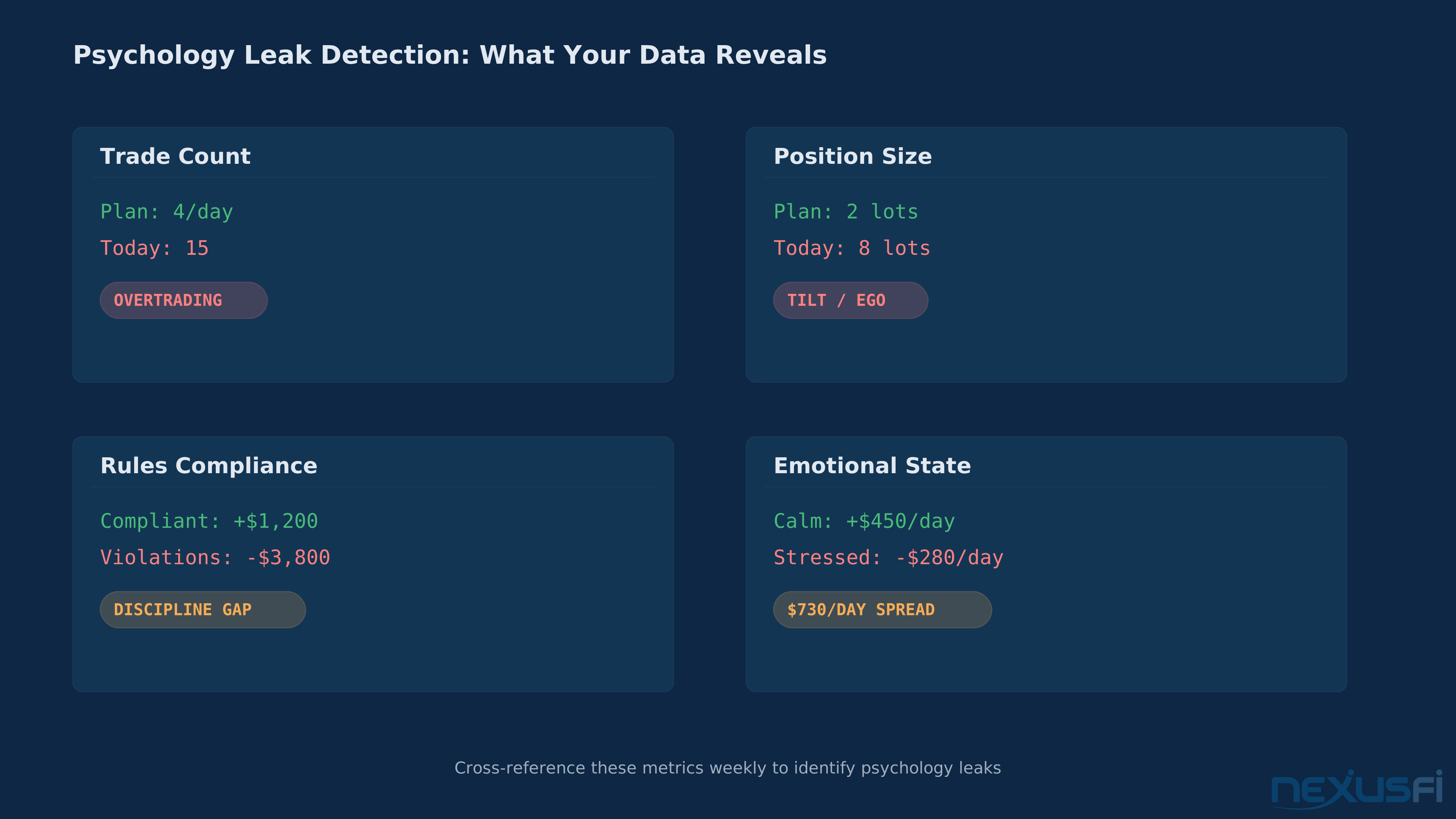
Psychology failures rarely announce themselves. They masquerade as "bad luck" or "the market was weird today." Here's how to spot them in your trading data:
Excessive trade count: If your average is 4 trades/day but you logged 15, that's not the market offering more setups. That's overtrading — usually driven by frustration, boredom, or revenge.
Position size variance: If your standard size is 2 contracts but you swung 8 today, that's ego or tilt overriding your risk rules. Check whether the size increase followed a loss.
Time-of-day clustering: Losses concentrated in the first 15 minutes or last 30 minutes often point to FOMO (chasing the open) or desperation (forcing trades to hit daily targets).
Win rate on revenge trades: Tag trades that violated your rules. Calculate their win rate separately. It's almost always dramatically worse than your rules-compliant trades. This gives you a concrete dollar figure for what psychology failures cost you.
Profit factor by emotional state: If you journal your emotional state, cross-reference it with performance. Calm/focused sessions vs. frustrated/tired sessions will show a measurable P&L gap.
The Psychology Framework -- Putting It Together #
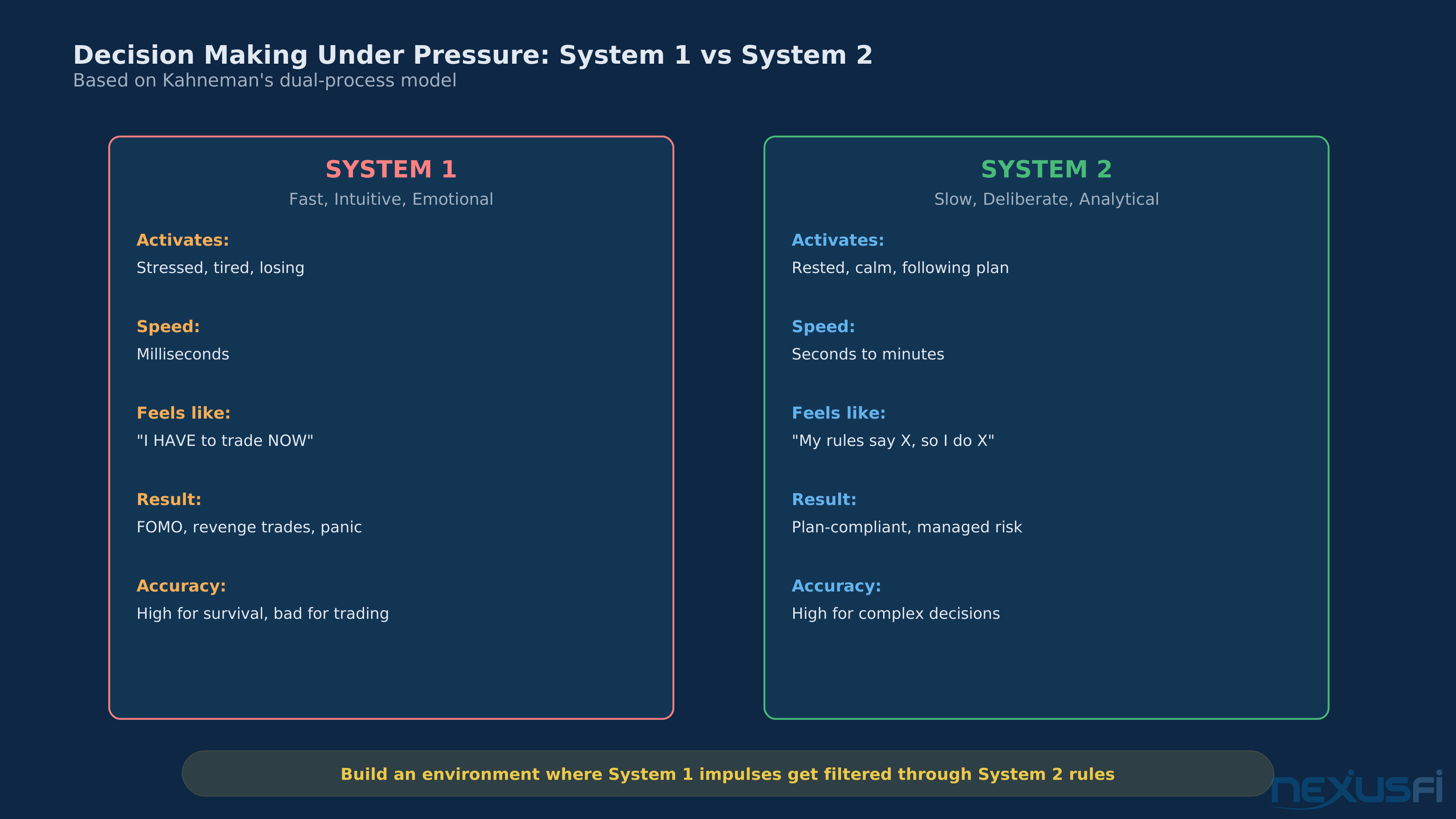
Trading psychology isn't about "fixing yourself." It's about building systems that account for how your brain actually works under pressure. Daniel Kahneman's dual-process model — System 1 (fast, intuitive, emotional) vs. System 2 (slow, deliberate, analytical) — explains why smart traders make dumb decisions. Under stress, time pressure, or fatigue, System 1 takes over. Your job isn't to eliminate System 1. It's to build an environment where System 1's impulses get filtered through System 2's rules before reaching the order entry button.
Step 1: Establish baselines. Track your behavior patterns for 2-4 weeks without trying to change anything. Just observe and record. Tag every trade with your emotional state (1-10 scale works) and whether it followed your rules (yes/no). Don't try to improve yet — you're gathering data.
Step 2: Identify your top 3 leaks. After 2-4 weeks, your data will show clear patterns. Common findings: 80% of losses come from 20% of trades (the emotional ones), or performance degrades sharply after 11 AM (fatigue), or losses cluster on Mondays (weekend anxiety). Everyone's pattern is different. Some traders struggle with fear. Others with overconfidence. Some with discipline. Don't try to fix everything at once.
Step 3: Design circuit breakers. For each leak, create a specific, mechanical rule that limits damage:
- Daily loss limit triggers mandatory shutdown. If your average winning day is $500 on ES, set your daily stop at -$750. When it hits, the session is over. No exceptions. No "one more trade to get it back."
- Three consecutive losses triggers a 15-minute mandatory break. Walk away from the screen. The break interrupts the tilt spiral before it accelerates.
- Position size locked to a fixed amount. If your plan says 2 contracts, you trade 2 contracts. Not 4 because "this one is a sure thing." Not 6 because "I need to make back what I lost."
- Time-based cutoff. If your data shows performance degrades after a certain hour, make that your hard stop.
Step 4: Build the routine. Pre-market preparation, real-time emotional check-ins, post-session review. Make it a system, not a choice. @SoftSoap's framework is a solid template: Sunday prep (weekly goals, S/R zones, scenario planning), daily pre-market (checklist, no-trade zones, mental readiness assessment), post-market (3 things done well, 3 to improve).
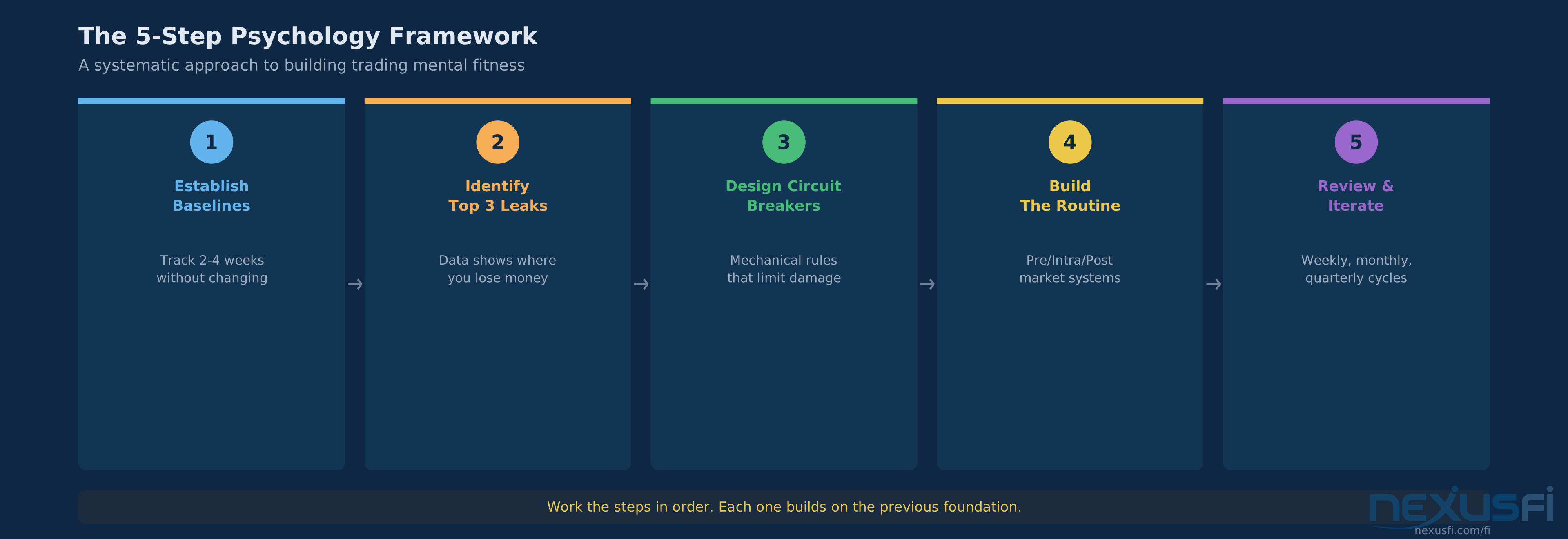
Step 5: Review and iterate. Weekly review of your psychological journal against your P&L. Monthly assessment of which circuit breakers fired and why. Quarterly review of whether your leaks have shifted — the problems you had six months ago may not be the problems you have today.
When Psychology Isn't the Problem #
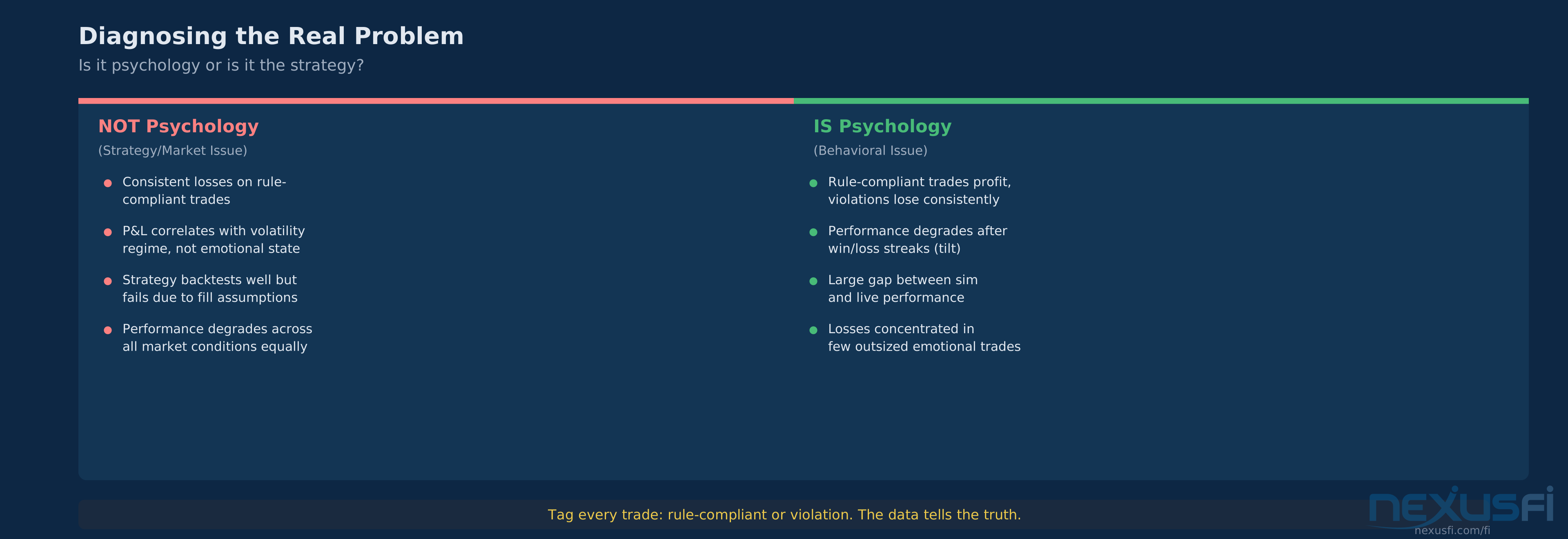
Not everything is a psychology issue. Sometimes the strategy is broken. Sometimes the market regime changed. Sometimes the risk management math doesn't work.
Red flags that it's NOT psychology:
- Consistent losses on rules-compliant trades (your edge may not exist)
- P&L degradation that correlates with volatility regime changes, not emotional state
- Strategy that backtests well but fails live due to slippage, fill assumptions, or data quality
Red flags that it IS psychology:
- Consistent profits on rules-compliant trades, consistent losses on violations
- Performance degrades after winning streaks (overconfidence) or losing streaks (tilt)
- Large variance between sim performance and live performance
- P&L damage concentrated in a small number of outsized losing trades
If you've genuinely tried structured self-work for 3-6 months and the patterns persist, consider working with a trading psychologist or performance coach. Some patterns have roots deeper than trading — stress, anxiety, self-worth issues, or life circumstances that no amount of meditation and journaling will address on their own. Seeking professional help isn't weakness. It's the same thing as hiring a coach for any other performance discipline.
Knowledge Map
Prerequisites
Understand these firstGo Deeper
Build on this knowledgeReferences This Article
Articles that build on this topicCitations
- — ES Trading Journal - conquering my fears (2014) 👍 6“FOMO, Fear of Loss, Need to be right, Lack of trust in a method... Combine any and all of these and you end up with a stew of swirling emotions that lead one to think in ways that are simply not suited to trading.”
- — The Beast Slayer, Lance's NQ Trading Journal (2021) 👍 26“Due to the psychological damage that resulted from years of failure and lost money, there has often been an inner fear that has gripped me... This would manifest in a large surge of adrenaline and I could literally feel my heart start to pound.”
- — Trading Lessons from TopstepTrader's John Hoagland (HOAG) (2014) 👍 22“FOMO: The Fear Of Missing Out. Control your actions, not your emotions. I can't stress enough how important it is to journal your thoughts and emotions before, during, and after a trade.”
- — I finally blew up an account (2021) 👍 81“I blew it all within a few days by emotionally revenge trading and scaling up higher as the losses got deeper.”
- — I finally blew up an account (2021) 👍 15“Full tilt activated and I basically kept getting back in the same trades with huge sizes full on emotional revenge trading. Losing 8-10k at a time.”
- — Best Trading Psychology course for dealing with Tilt and Revenge trading (2014) 👍 11“There is a limited tolerance to stress and then we, as humans, default back to our emotional mind to handle stressful situations. The prevention of revenge trading is all about being self-aware.”
- — Did revenge trade today, lost big... (2011) 👍 6“Moving your stop loss a bit further, doubling your position to make it easier to break-even (Martingale approach), overtrading and revenge trading, cutting profits short to avoid that they become losses.”
- — Big Mike's day trading method and advice (2009) 👍 75“With trading, it requires you to be at the absolute top of your game. Mentally and physically alike, you must prepare yourself to trade just like you prepare yourself for a real job.”
- — SoftSoap's NQ Journey - from SoftSoap to SoftGold (2016) 👍 29“Pre-Market Routine with personal preparation expectations, laying out no-trade zones. Post-Market Routine: list 3 things I did well, list 3 things to improve.”
- Kahneman & Tversky — Prospect Theory: An Analysis of Decision under Risk (Econometrica, 1979) (1979)