



Mindfulness and Breathing Techniques for Futures Traders: The Real-Time Toolkit for Staying Sharp Under Pressure
Overview #
The loss didn't break you. What broke you was the 45 seconds after it. The trade was wrong by $200, you took the stop, and then something happened in the time between closing that position and clicking into the next one. Your hands moved faster. The chart narrowed. You entered a position you hadn't planned because the market looked like it was going somewhere, and you needed to be in it.
That's not a discipline problem. That's a physiological event. Your sympathetic nervous system activated, your prefrontal cortex went partially offline, and your amygdala — the brain's threat-detection center — ran the next trade.
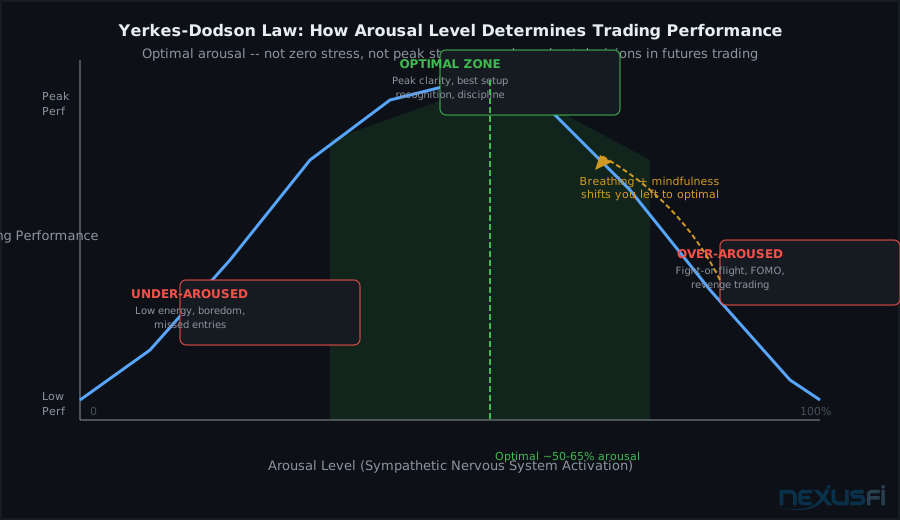
Mindfulness and breathing techniques don't make you a better chart reader. They keep the part of your brain that reads charts online. That's the actual function. Research on the Yerkes-Dodson law shows a clear performance optimum at moderate arousal: too little engagement and you miss signals; too much activation and decision quality collapses. Breathing practice doesn't make you calmer in the sense of making you care less. It keeps you in the window where you care exactly enough to trade well.
This is performance infrastructure, not wellness lifestyle. The same traders who track max adverse excursion and build position-sizing rules are the ones who will benefit most from treating their nervous system state like a variable that can be measured and managed. It can.
What Your Nervous System Does During a Loss #
Understanding the mechanism matters because it changes what you do about it. When you take a loss in a futures position, your brain processes it through several overlapping systems simultaneously:
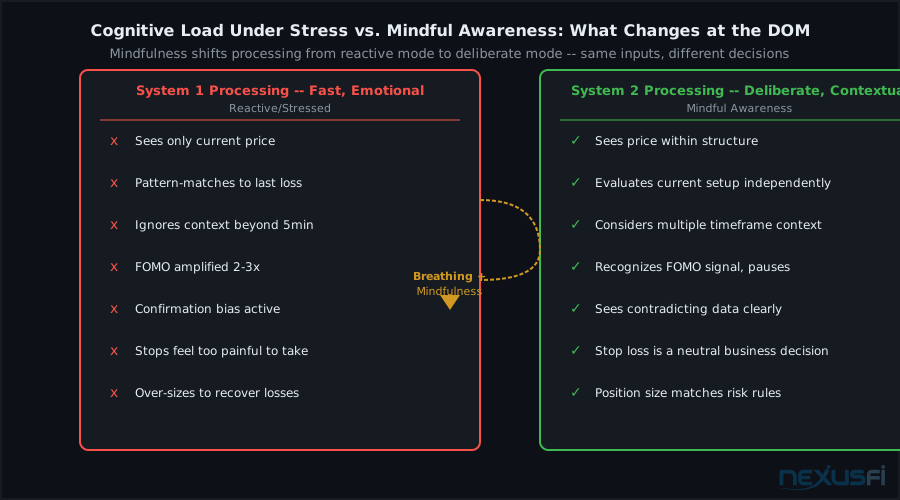
Cortisol release within 15 seconds. Even anticipated losses — watching a position go against you before you've taken the stop — trigger cortisol. This stress hormone impairs working memory, increases impulsivity, and narrows attention to the immediate threat (the price level) rather than the broader context (the session structure, your daily loss limit, your pre-defined setup criteria).
Amygdala activation. The amygdala processes threat signals and emotional salience. A loss is both threatening (financial) and emotionally salient. Amygdala activation is fast — it operates before the prefrontal cortex has time to run its evaluation. The result: the emotional response to a loss drives the next entry before the analytical system has properly evaluated the setup.
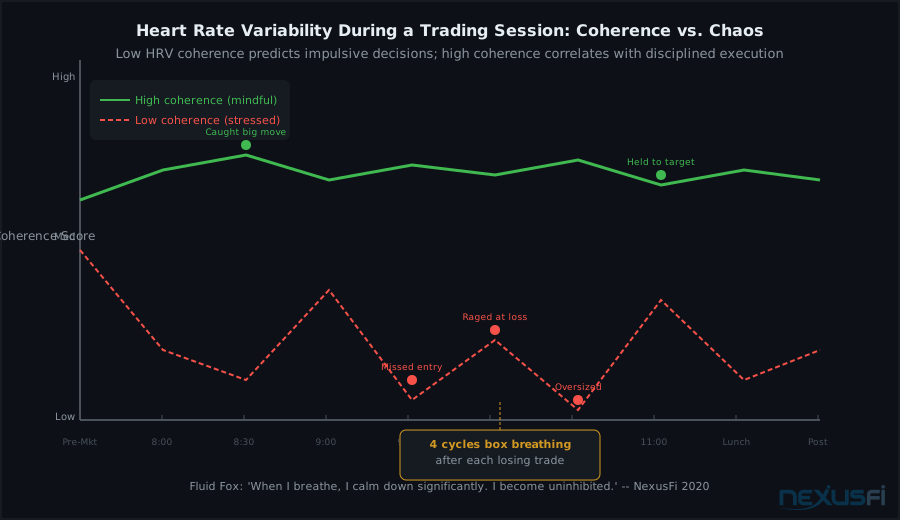
Heart rate variability collapse. HRV — the variation in time between heartbeats — is a real-time biomarker of autonomic nervous system state. High HRV indicates parasympathetic dominance (rest-and-digest mode, clear thinking). Low HRV indicates sympathetic dominance (fight-or-flight, reactive mode). A single significant loss can drop HRV coherence measurably within 60-90 seconds.
Attention narrowing. Under acute stress, attention narrows to the most salient immediate stimulus. For a futures trader, that's the order book and price action in front of them. Long-term session context, key reference levels three timeframes up, daily P&L limits — these move to the periphery of attention, which is exactly when you most need them central.
Risk calibration shifts. The same research that found sleep deprivation increases risky behavior after losses applies here: arousal-based impairment shifts traders toward risk-seeking after losses, not risk-aversion. The intuition that says "I need to get it back right now" is a stress response, not a trading decision.
Structural brain changes in 8 weeks. Not theoretical benefit — measurable gray matter density in the exact regions that control trading decisions. [1] That's the research foundation for what follows.
Breathing and HRV: The Physiology That Makes It Work #
The reason controlled breathing has such rapid effects is anatomical. The vagus nerve — the primary nerve of the parasympathetic nervous system — is directly stimulated by slow diaphragmatic breathing. When you extend your exhale, you activate the vagal brake on heart rate. HRV increases, heart rate drops, cortisol production slows, and prefrontal cortex activity resumes.
This is not a placebo effect. The mechanism is direct and measurable in real time using consumer-grade HRV monitoring equipment. And it happens fast:
- 15-30 seconds: First parasympathetic signal from extended exhale reaches the heart
- 60 seconds: Measurable heart rate reduction (average 8-12 BPM in clinical literature)
- 2 minutes: HRV coherence score typically recovers to or above pre-trigger baseline
- 4-5 minutes: Cortisol begins declining, prefrontal cortex activity normalizes
"Logic goes out the window" is the exact mechanism: vagal tone drops, HRV coherence falls, and the prefrontal cortex's influence on behavior decreases relative to amygdala reactivity. Fluid Fox discovered this via biofeedback, not theory. [2]
Box Breathing: The Core Technique #
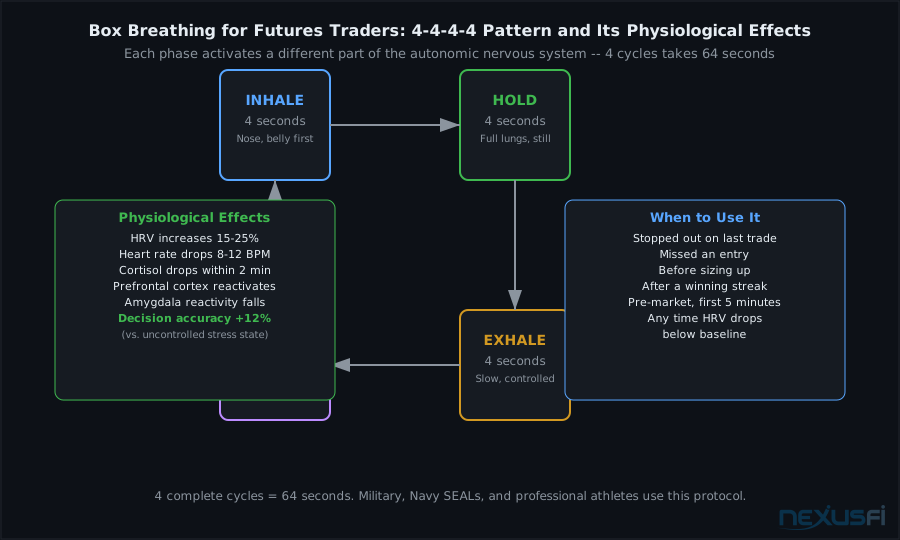
Box breathing is the most versatile and well-validated breathing technique for high-performance contexts. Military units use it before and after engagements. ER physicians use it during trauma cases. The protocol is simple and the effects are rapid.
The pattern:
- Inhale through the nose for 4 seconds -- belly first, then ribcage
- Hold with full lungs for 4 seconds -- not a strain, just a pause
- Exhale slowly through the mouth for 4 seconds -- controlled, complete
- Hold with empty lungs for 4 seconds -- not a panic, just stillness
Four complete cycles takes 64 seconds. The clinical literature on acute stress reduction suggests 3-5 cycles as the minimum effective dose. For trading contexts, 4 cycles is the practical target.
Why it works beyond just the vagal activation: Each phase of box breathing activates a different physiological function. The hold-after-inhale (step 2) slightly reduces CO2 sensitivity, which reduces the urgency-panic response. The extended exhale activates the vagal brake. The hold-after-exhale introduces a brief pause that interrupts the automatic cognitive loop (the "I need to act NOW" impulse that follows losses).
The key instruction: exhale longer than inhale. This is the mechanism even simplified to one rule. Box breathing formalizes it into a 4-4-4-4 pattern, but even a rough version — breathing out slower than in — produces measurable HRV improvement. [3]
The Physiological Sigh for Acute Spikes #
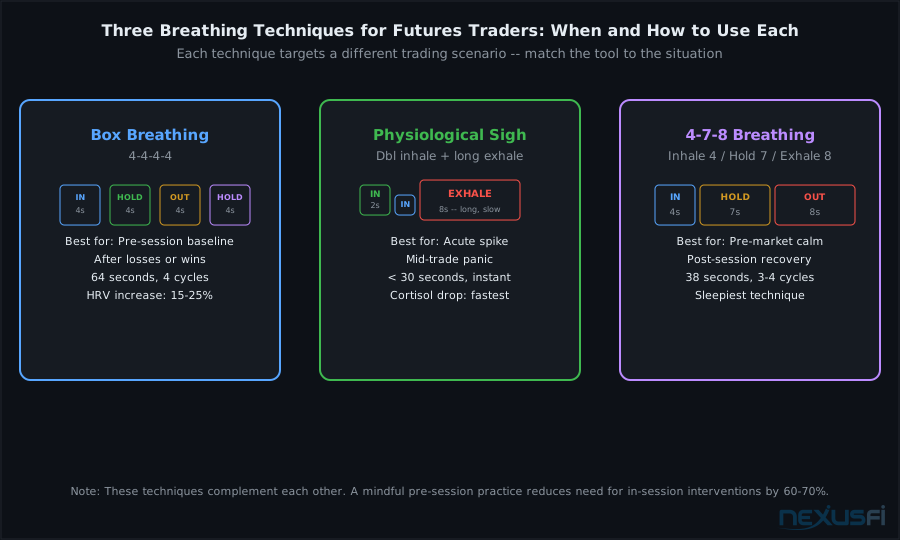
Box breathing works for pre-session preparation and post-loss recovery when you have 64 seconds. But sometimes you need faster intervention — during a position, mid-move, when stopping to run four breathing cycles isn't practical.
The physiological sigh is a naturally occurring pattern (you've done it unknowingly your entire life) that Stanford neuroscientist Andrew Huberman's lab identified as the fastest method for acute nervous system downregulation. The pattern:
- Inhale through the nose (normal breath)
- At the top of the inhale, add a second short sniff to fully expand the lungs
- Exhale fully through the mouth, as slowly as possible
One cycle takes approximately 8-12 seconds. The double inhale maximally inflates the alveoli (the tiny sacs in the lungs), which produces the largest vagal signal of any breathing pattern. The extended exhale then activates the parasympathetic response at peak effectiveness.
For futures trading, this is the technique to use mid-session when:
- You've just been stopped out and the market is still moving against your original thesis
- A fast-moving position is approaching your first profit target and your hand is hovering over the cover button
- You realize you've been staring at a loss for 3+ minutes without acting on your plan
It does not require leaving the desk. One cycle, then return to the DOM with a reset nervous system.
HRV Biofeedback: Making the Invisible Visible #
The problem with nervous system management is that stress accumulation is invisible until it's already affecting your decisions. You don't know your HRV is collapsed until you've already sized into a revenge trade. HRV biofeedback solves this by providing real-time, objective feedback on physiological state.
Consumer HRV devices (ear-clip sensors, chest straps, finger pulse oximeters) can now deliver this data in real time through phone apps. Fluid Fox's approach — screen-sharing his phone to his monitor — is one implementation. Others set threshold alerts that sound when coherence drops below a defined level.
The trading application:
- Establish your baseline HRV coherence on a calm, non-trading morning. This is your reference point.
- Track coherence during your first 30 minutes of trading for 5-10 sessions. You'll see your personal pattern: which events drop it (specific loss sizes, particular market conditions, time-of-day).
- Set a rule: if coherence drops below 50% of baseline AND you want to enter a new trade, run 4 box breathing cycles first. The biofeedback prevents the bypassing of this rule that willpower alone cannot.
- Do not trade through periods of sustained low coherence. The HRV threshold is a hard limit, not a suggestion.
Mindfulness Meditation: The Formal Practice #
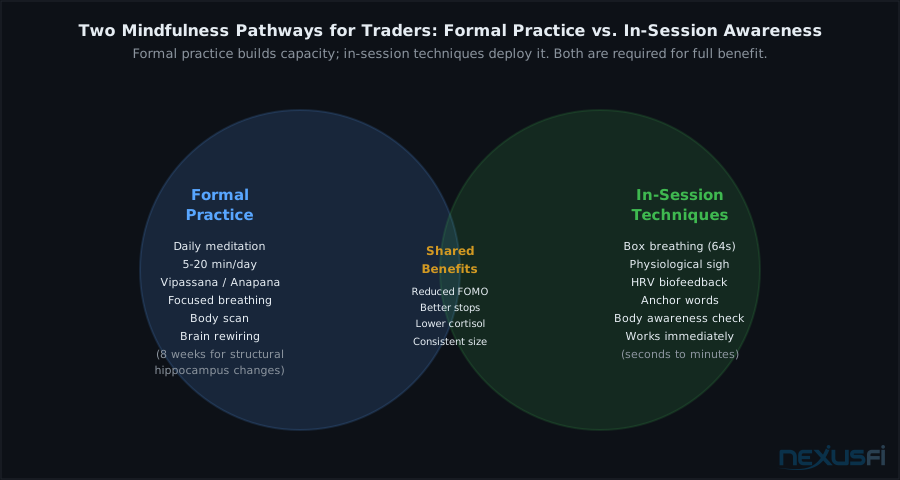
The in-session techniques above work in real time. The formal mindfulness practice below builds the neural capacity that makes in-session techniques more effective and less necessary. These are not the same thing.
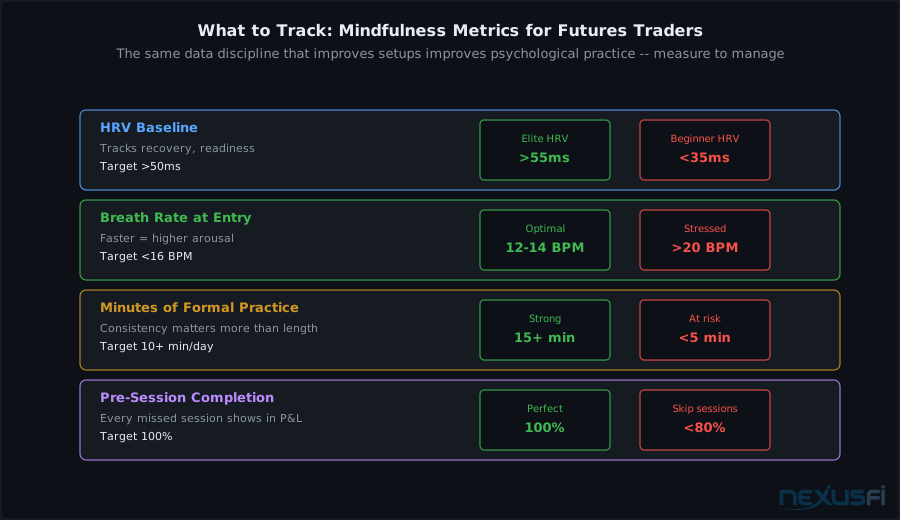
Formal mindfulness practice — 10-20 minutes of seated breath observation daily — produces the structural brain changes Dr. Gary identified: increased hippocampal density (better contextual memory, more flexible thinking), decreased amygdala reactivity (more measured response to losses), and improved prefrontal-amygdala connection (better executive control over emotional impulse).
iqgod trained in Vipassana, one of the most rigorous mindfulness traditions. The mechanism he identifies — noticing that the mind has wandered, and returning it — is not passive relaxation. It's active cognitive training: every return-to-breath is a repetition of the skill of catching automatic thought patterns and redirecting attention. In trading, that maps directly to catching the FOMO impulse before acting on it. [4]
The minimal effective practice:
- Sit comfortably with eyes closed or softly focused downward
- Direct attention to the physical sensation of breathing -- the air at the nostrils, or the belly rising and falling
- When the mind wanders (it will, continuously), notice that it has wandered, and return attention to the breath
- Do not evaluate the quality of the session -- wandering and returning IS the practice
- Start with 5 minutes, work toward 10-20
Daily consistency over session length: 5 minutes every day produces more benefit than 45 minutes once a week. The neurological changes accumulate through repetition, not duration.
Anchor Words and Real-Time Grounding #
Beyond breathing, traders can use language-based anchors to interrupt automatic reactive patterns. These work through a different mechanism — activating the language processing centers of the prefrontal cortex interrupts the subcortical threat-response circuit.
How to build an anchor word:
- Choose a single word or short phrase that represents your process-focused trading state: "process", "next trade", "plan", "I've already won by following my rules"
- During formal mindfulness practice, say the anchor silently while in a calm, present state. Repeat 10-15 times per session for 2-3 weeks. You're associating the word with the physiological state of calm focus.
- Deploy the anchor before entering positions, after losses, and any time you notice impulsive impulses
Lance's protocol is behavioral design: he removed himself from the trigger environment to run his reset, then returned for evaluation. The location change itself serves as a pattern interrupt. For traders who can't leave the desk, the physiological sigh serves the same pattern-breaking function. [5]
Pre-Session Mindfulness Protocol #
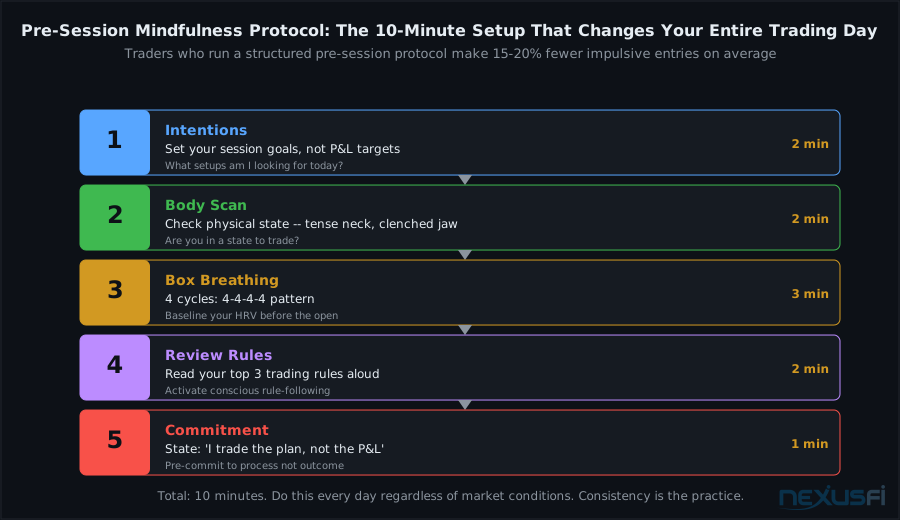
The most consistent finding from traders who use mindfulness practices is that the pre-session protocol matters more than in-session interventions. A 10-minute pre-market routine reduces the frequency and severity of in-session stress events by calibrating your nervous system before the first tick.
The 10-minute pre-session protocol:
Minutes 1-2 — Intention setting. Write or state your session goals for today's trading. Not P&L goals ("make $500") but process goals ("only take A+ setups, stay within daily loss limit, cover at first target"). This activates the prefrontal cortex's planning function before you're facing live positions.
Minutes 3-4 — Body scan. Starting from the top of your head, quickly scan downward: jaw clenched? Shoulders tight? Stomach tense? These are physical indicators of elevated baseline stress. If you find tension, you know your starting arousal level is already elevated, and you can calibrate so (trade smaller, require higher-quality setups).
Minutes 5-7 — Box breathing. Four complete cycles. This establishes your HRV baseline before the session begins. If you're tracking with a device, record the coherence score.
Minutes 8-9 — Review rules. Read your top 3 trading rules aloud. The act of vocalizing (rather than silently reviewing) increases retention and commitment. Activating the verbal articulation of your rules just before the session makes them more accessible during the session.
Minute 10 — Commitment statement. One sentence, stated aloud: "I trade the plan, not the P&L." Or your equivalent. This is a pre-commitment device — research shows that stated commitments made in advance of the tempting situation are much more effective than in-moment willpower.
What Tilt Looks Like Physiologically (And How to Catch It) #
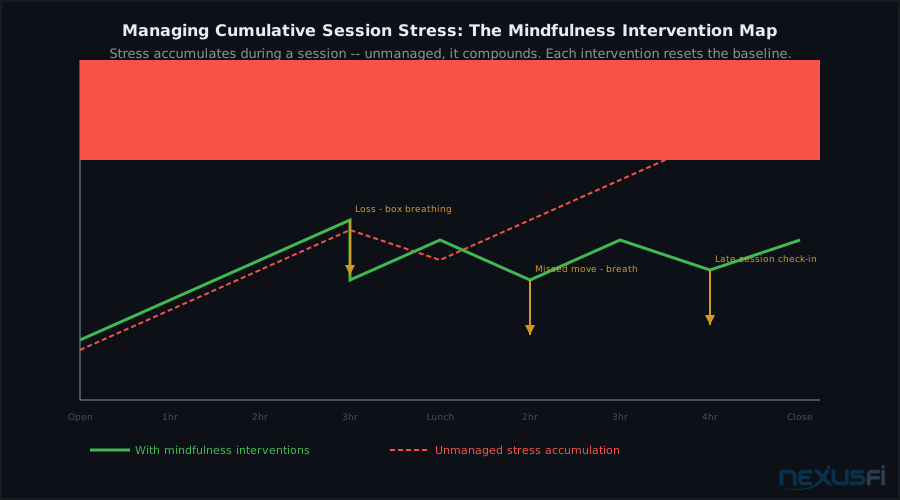
Tilt — the degraded state of decision-making that follows a series of losses or emotionally significant events — has a physiological signature that most traders miss because they're looking at the wrong indicators. P&L is a lagging indicator of tilt. Physiology is leading.
Early signs of tilt (catch these first):
- Breath rate increasing above 18-20 breaths per minute
- Jaw or shoulders tightening without awareness
- HRV coherence dropping more than 40% from session baseline
- Attention narrowing to just price (losing awareness of broader session context)
- The internal voice getting louder and more urgent
Mid-stage tilt signs (you're in it):
- Increasing entry frequency without increasing setup quality
- Position sizes drifting larger than planned
- Dismissing stop signals ("this one is different")
- P&L tab open and being checked between setups
"Come back to a centered state much faster" — this is the measurable benefit. Not elimination of stress response, but reduced recovery time. An untrained trader might need 20-30 minutes to deescalate after a significant loss. A trained mindfulness practitioner returns to baseline HRV in 2-3 minutes. That difference is multiple additional trading opportunities without the cognitive impairment tax. [6]
Building a Sustainable Practice: The 8-Week Ramp #
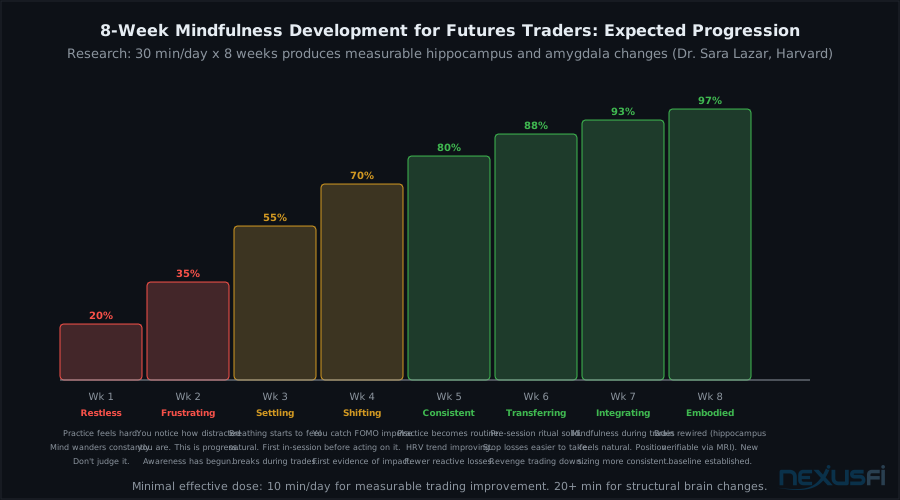
The research protocol that produced the structural brain changes Dr. Gary referenced was 8 weeks at 30 minutes per day. The minimum effective dose for trading performance improvement is lower: 10 minutes per day shows measurable benefit in controlled studies.
Week 1-2: Restless and frustrating. Your mind wanders constantly. You'll feel like you're failing at the practice. This is normal. The goal is simply to sit and return to breath repeatedly, not to achieve any particular state. Notice the wandering — that noticing IS the practice.
Week 3-4: The practice starts to feel more natural. You may notice the first real-world benefits: catching a FOMO impulse before acting on it, or feeling slightly less charged after a loss. These are preliminary signs of the neurological shift beginning.
Week 5-6: HRV data (if you're tracking) typically shows improvement in baseline coherence. Pre-session protocols become habitual. Box breathing during the session starts to feel natural rather than effortful.
Week 7-8: Integration. The skills become less effortful. The pre-session practice takes the same 10 minutes but requires less deliberate effort. Post-loss recovery time shortens measurably.
The 8-week mark is a checkpoint, not an endpoint. The practice is ongoing — the structural brain changes are sustained by continued practice, not a one-time intervention.
The Bottom Line #
Every edge degrades under cognitive impairment. Stress, reactive emotion, and arousal dysregulation are forms of cognitive impairment that occur in real time during live trading. The same P&L discipline that keeps you from risking too much per trade applies to managing the physiological state you bring to the trade.
Breathing techniques are immediate: 64 seconds of box breathing or one physiological sigh can measurably reset HRV and cortisol trajectory before your next entry. Formal mindfulness practice is cumulative: 8 weeks of 10+ minutes per day rewires the prefrontal-amygdala connection that makes all other risk management skills easier to execute.
Fluid Fox proved it with a clip-on ear sensor. iqgod proved it with a decade of Vipassana practice. DrGary's research colleagues proved it with MRI scans. lancelottrader proved it by leaving the room before each position evaluation.
The traders who figured this out weren't meditating for wellness. They were managing a variable that affects every trade they take. The toolset is accessible, the research is solid, and the integration with your existing trading system is straightforward.
The only thing between you and measurably better decisions is 64 seconds and a willingness to let your breath do the risk management your willpower cannot.
Knowledge Map
Go Deeper
Build on this knowledgeReferences This Article
Articles that build on this topicCitations
- — Webinar: Trading Psychology - April 12 2011 (2011) 👍 8
- — Becoming A Better Trader (2020) 👍 11
- — Increased heartbeat during trading (2022) 👍 10
- — Mindful Meditation for Better Trading - Logbook (2013) 👍 44
- — The Beast Slayer, Lance's NQ Trading Journal (2018) 👍 13
- — How To Overcome TILT (anger) When Trading ~ The Mental Game of Trading (2023) 👍 3
- — Rande Howell's Material Psychology (2014) 👍 9