



Fear and FOMO in Trading: The Two Emotions That Freeze and Chase
*Fear stops you from taking the trade. FOMO makes you take the wrong one. Both destroy P&L in different ways
Overview #
Fear and FOMO are the twin wrecking balls of futures trading. They're not separate problems
This cycle burns through accounts faster than any bad strategy. And it affects everyone
This article digs into both emotions
Recognition #
The Fear Response #
Fear in trading isn't abstract anxiety. It's a physical, measurable response. Your body doesn't distinguish between a charging bear and a flashing P&L. The amygdala fires, cortisol and adrenaline flood in, and your prefrontal cortex
Fear wears different masks in futures trading:
Fear of Loss (FOL)
Fear of Entry (FOE)
Fear of Being Wrong
The Freeze
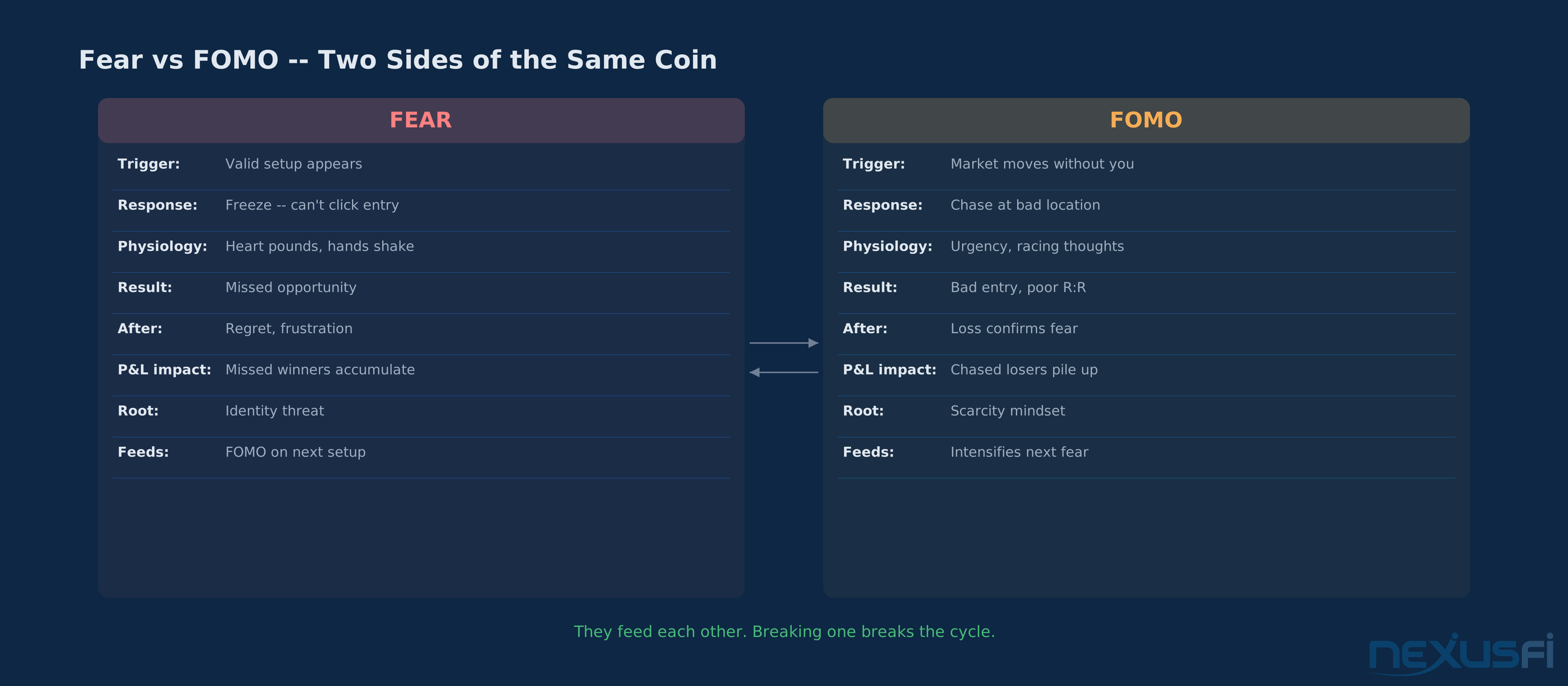
The FOMO Response #
FOMO is fear's mirror image. Where fear says "don't act," FOMO screams "act NOW before it's gone." @Hoag
The result? Compromised trade location, tripled risk, and exactly the kind of loss that feeds more fear.
FOMO manifests in specific patterns:
Chasing entries
Premature exits on winners
Overtrading
Late-session desperation
Understanding #
The Fear-FOMO Loop #
These emotions don't just coexist
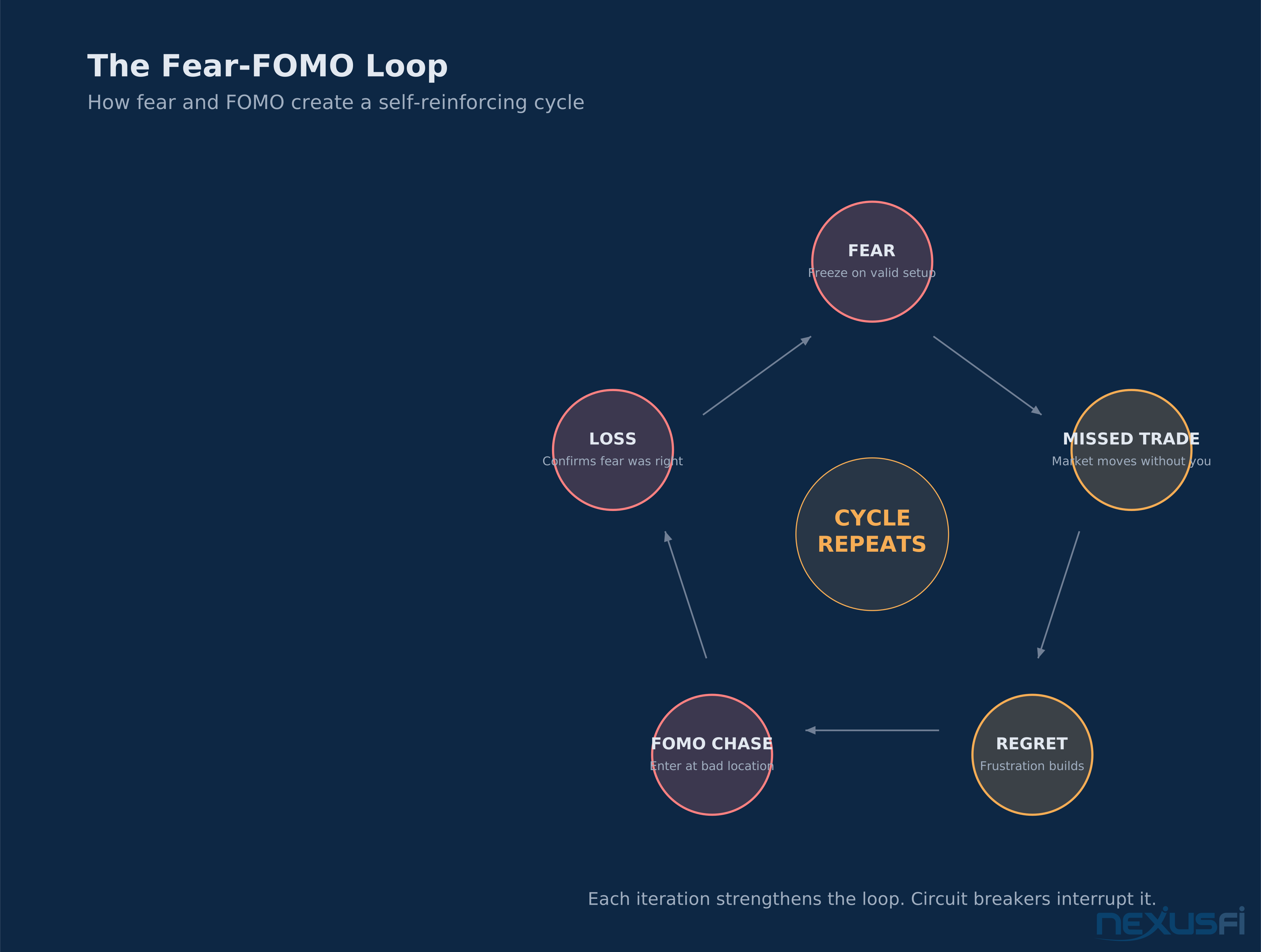
- Fear causes you to miss a valid trade
- Regret builds as the trade works without you
- FOMO drives you to chase the next opportunity at a worse location
- Loss from the chased trade confirms the fear was "right"
- Fear intensifies on the next valid setup
Why Sim Performance Doesn't Transfer #
Nearly every trader reports that fear and FOMO vanish on sim. This isn't because the money is different
This is why "just go back to sim until you're confident" rarely works. The problem isn't confidence in the strategy
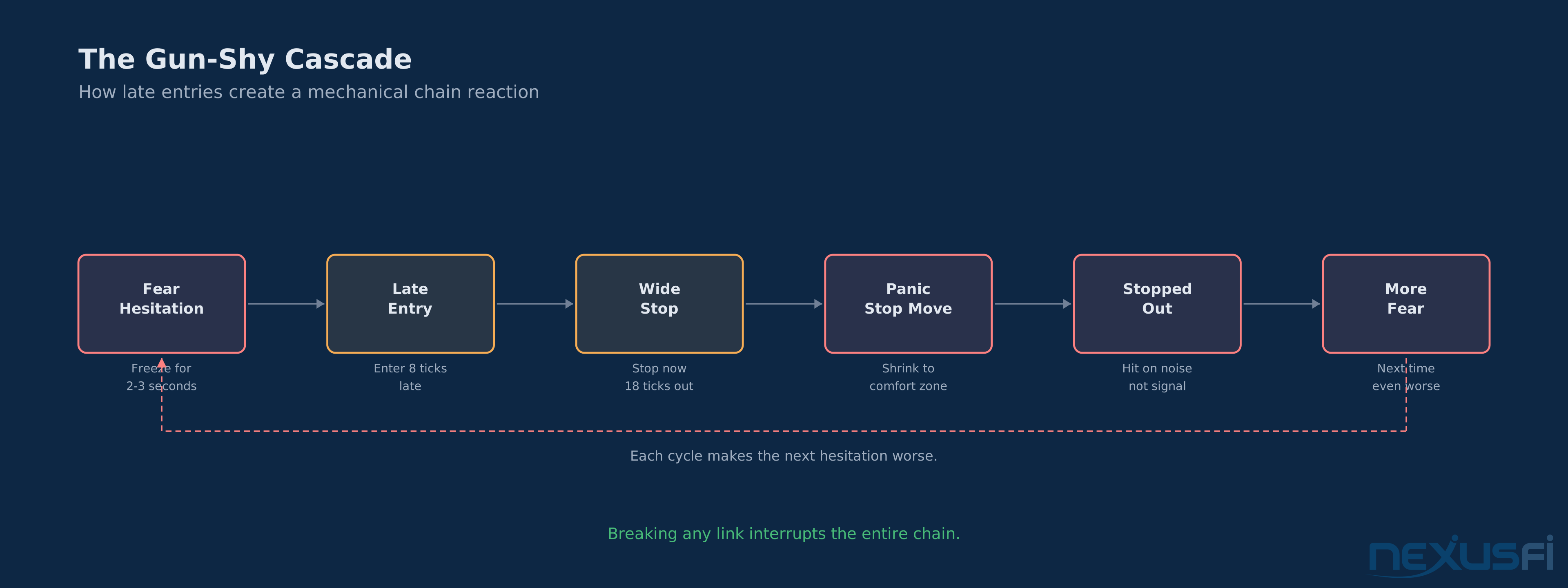
The Gun-Shy Cascade #
Late entries don't just reduce reward-to-risk. They distort stop placement, which distorts position sizing, which distorts everything downstream. The fear creates a mechanical cascade that makes the strategy underperform
Techniques #
1. Process Detachment #
The single most effective technique: detach from outcome, attach to process. Grade every trade on whether you followed your rules
2. Designed Distraction #
@Hoag's technique for FOMO: "When you feel the urge to take an action you know is out of fear, take another action. Get up and stretch. Make a journal entry. Grab your guitar. Every time you have the urge to make a trade due to FOMO, make a note of it." [4]
This works because FOMO has a half-life. The urgency peaks in the first 30-60 seconds. If you can redirect your attention for even 2 minutes, the compulsion weakens much.
3. Automation as a Bypass #
@vmodus took a different approach entirely: "The way I deal with fear of entry is through automation. Even when I know instinctively that an entry may be 'bad', I let the system take it if the rules are in place. I use the system because my instinct is influenced by my beliefs, background, etc. In other words, my instinct is flawed." [9]
Automation removes the emotional decision point. If the rules are met, the order fires. No freeze, no chase, no negotiation with yourself. This isn't available to every trading style
4. Exposure Through Small Size #
The goal is desensitization
The key: the losses must be real. Sim doesn't produce the desensitization effect. Trade micro contracts (MES, MNQ, MCL) if needed
5. The "Next Bus" Reframe #
For FOMO specifically
6. Real-Time Journaling #
Write down what you're feeling as you're feeling it
The act of writing engages the prefrontal cortex and partially deactivates the amygdala-driven fear response. It's not journaling for review
Practice Framework #
Week 1-2: Observation Only
- Tag every trade with an emotional state score (1-10) and a binary: "followed rules" yes/no
- Don't try to change anything yet. Just observe and record.
- Note when fear or FOMO showed up
Week 3-4: Circuit Breakers
- Set a hard rule: if you miss a setup, you cannot chase it. Wait for the next one.
- Set a hard rule: 3 consecutive losses = 15-minute mandatory break from the screen.
- Review your emotional tags. Calculate win rate on rules-compliant trades vs. non-compliant.
Week 5+: Active Techniques
- Apply designed distraction when FOMO hits
- Practice real-time journaling during sessions
- Begin tracking your "FOMO cost"
When This Doesn't Work #
Not every fear response is about trading technique. Some patterns have roots that no amount of journaling and circuit breakers will reach:
Under-capitalization — If your account size means every loss genuinely threatens your ability to keep trading, fear is not irrational. It is an accurate assessment of reality. Fix the capitalization before trying to fix the psychology. Trading with money you cannot afford to lose produces fear that no technique can override because the fear is correct.
Broken strategy — If your backtest is flawed, your edge doesn't exist, or your win rate is genuinely negative, fear of entry is your subconscious protecting your capital. The fix isn't psychological — it's methodological. Rebuild the strategy before addressing the emotion.
Life stress contamination — Divorce, health issues, job loss, family crisis. These produce baseline cortisol levels that make calm trading execution physiologically impossible. The trading desk is not the place to prove you can handle stress. Step away, resolve the external situation, and return when your nervous system isn't already maxed out.
Deep-seated patterns — Some traders discover that their relationship with risk, loss, and uncertainty connects to patterns far older than their trading career. If fear persists despite adequate capitalization, a proven strategy, and reasonable life circumstances, consider working with a professional who specializes in performance psychology. This isn't weakness — it's the same approach elite athletes use to perform under pressure.
Knowledge Map
Prerequisites
Understand these firstReferences This Article
Articles that build on this topicCitations
- — ES Trading Journal - conquering my fears (2014) 👍 6“1. FOMO 2. Fear of Loss (FOL) 3. Need to be right. 4. Lack of capital (makes you care to much about every tick) 5. Lack of trust in a method. (symptom of holy grail hunting, need to be right, et al). 6.”
- — AJ's Journal (2011) 👍 5“My hands shook, my heart pounded and my brain was shouting "run away!".....I suspect the fear will never really leave permanently but I have come to accept that fear and greed will always be around and to simply work to minimize them by trusting in m...”
- — Overcoming the Fear of Losing (2022) 👍 18“2 thoughts on the subject: 1. This first idea is not originally mine, but I've heard it from someone and it struck me as very true ever since, and if it resonates with you - great. In many traders, the real fear is not of losing.”
- — Trading Lessons from TopstepTrader's John Hoagland (HOAG) (2014) 👍 22“FOMO: The Fear Of Missing Out You have been looking for this move all day. The market is finally lining up for your trade entry, but seems to be stopping short of your preferred trade location. That feeling starts to come over you, you know the one.”
- — FOMO strikes again (fear of missing out) (2019) 👍 9“https://nexusfi.com/attachment.php?attachmentid=271904 FOMO my dear friend, This morning 1 minute after the open ES 4500 tick chart a large bearish engulfing formed I placed a short at the close of the bar and did not get filled.”
- — FOMO strikes again (fear of missing out) (2019) 👍 7“This is a good poll topic. Initially I picked the one about big bars, but due to a glitch that Big Mike was fixing as I clicked on the poll, it didn't record my vote.”
- — Really afraid to trade? (2010) 👍 14“Ok, I think a huge part of the mental stuff is self talk. This sounds hokey but in truth, we are what we say. If you have a lot of negative self talk, guess what, you are verbally programming yourself for more failure.”
- — Not able to pull the trigger (2012) 👍 33“Hi! :) And welcome on the forum, since it is your first post! :) I do not suffer from your problem, but I have the opposite (pull the trigger too often). I hope that another trader who knows your issue could help you better than I will do.”
- — How does one deal with FOE (Fear of Entry)? (2019) 👍 11“Seriously, the way I deal with fear of entry is through automation. Even when I know instinctively that an entry may be 'bad', I let the system take it if the rules are in place.”