



Sleep and Performance for Futures Traders: The Science Behind Better Decisions, Faster Reaction Times, and Sustainable Edge
Overview #
The trade you remember most wasn't a bad read. It wasn't a wrong indicator or a poor setup. It was the one you took at 7:43 AM on four hours of sleep, when the whole morning had been building toward a short, and instead you bought the breakout of a failed breakout because something in your head said it's going now. And it didn't. And you held.
Sleep deprivation is the most under-tracked variable in trading. Most traders log their setups, their entries, their P&L, their emotional state. Almost none of them log how many hours they slept. But the research is unambiguous: sleeping less than 7 hours doesn't just make you tired. It at the core degrades the cognitive machinery trading requires — decision accuracy, reaction time, risk calibration, emotional regulation, and the ability to say no to bad trades.
This isn't a wellness article. It's a performance article. Because sleep is an edge, and most traders are leaving it on the table. Whether you trade ES, NQ, GC, or CL — the same risk management logic that governs position sizing applies to managing your cognitive state before you sit down at the DOM.
What Sleep Deprivation Actually Does to Your Trading Brain #
The mechanisms matter here. Sleep deprivation doesn't just make you feel sluggish. It disrupts specific neural systems that trading directly depends on.
Decision accuracy drops 15-30% after a night under 6 hours. This comes from a 2010 meta-analysis by Killgore covering 19 peer-reviewed sleep deprivation studies. Not 2-3%, not subjectively worse — 15 to 30 percent fewer correct decisions in complex, probabilistic tasks. That's the kind of task you're doing all day at the screens: imperfect information, multiple competing interpretations, outcome uncertainty.
Kelley et al. (2019, Journal of Neuroscience) used simulated stock-trading tasks and found that participants sleeping under 6 hours made 23% more "buy-high-sell-low" errors — the exact behavioral signature of chasing extended moves and bailing on pullbacks. Not because they couldn't see the chart. Because their pattern evaluation was degraded.
Reaction time slows approximately 10 milliseconds per hour of lost sleep (Van Dongen et al., Sleep, 2003). In futures markets with tight spreads, that translates to roughly 0.1% slippage per trade — a real cost that compounds over hundreds of sessions. This matters whether you're scalping the ES or swing trading the ZB.
Risk tolerance shifts after a loss. Yoo et al. (2007, PNAS) showed that sleep-deprived subjects become more risk-seeking following a loss. Not more careful — more aggressive. This is the neurological substrate of revenge trading. Your brain's emotional regulation system — the prefrontal-amygdala connection — degrades with sleep restriction, making it harder to modulate the impulse to get your money back right now.
Impulsivity increases measurably. Research using Go/No-Go tasks shows a 30% increase in false-alarm rates (acting when you shouldn't) after 36 hours of wakefulness. Real-world platform data from Kumar & Zhou (Journal of Financial Economics, 2022) linked under-6-hour sleep to a 2-3x higher probability of chasing price spikes.
That last part — "recognized it and stopped" — is the skill. Most traders don't notice the degradation in real time; they only see it in hindsight. Building a pre-session check into your process makes the recognition happen before the market opens, not after the losses. [7]
That's not theory. That's a trader who built a system around actual data from his own performance. [1]
Sleep Duration and Trading Performance: The Dose-Response Relationship #
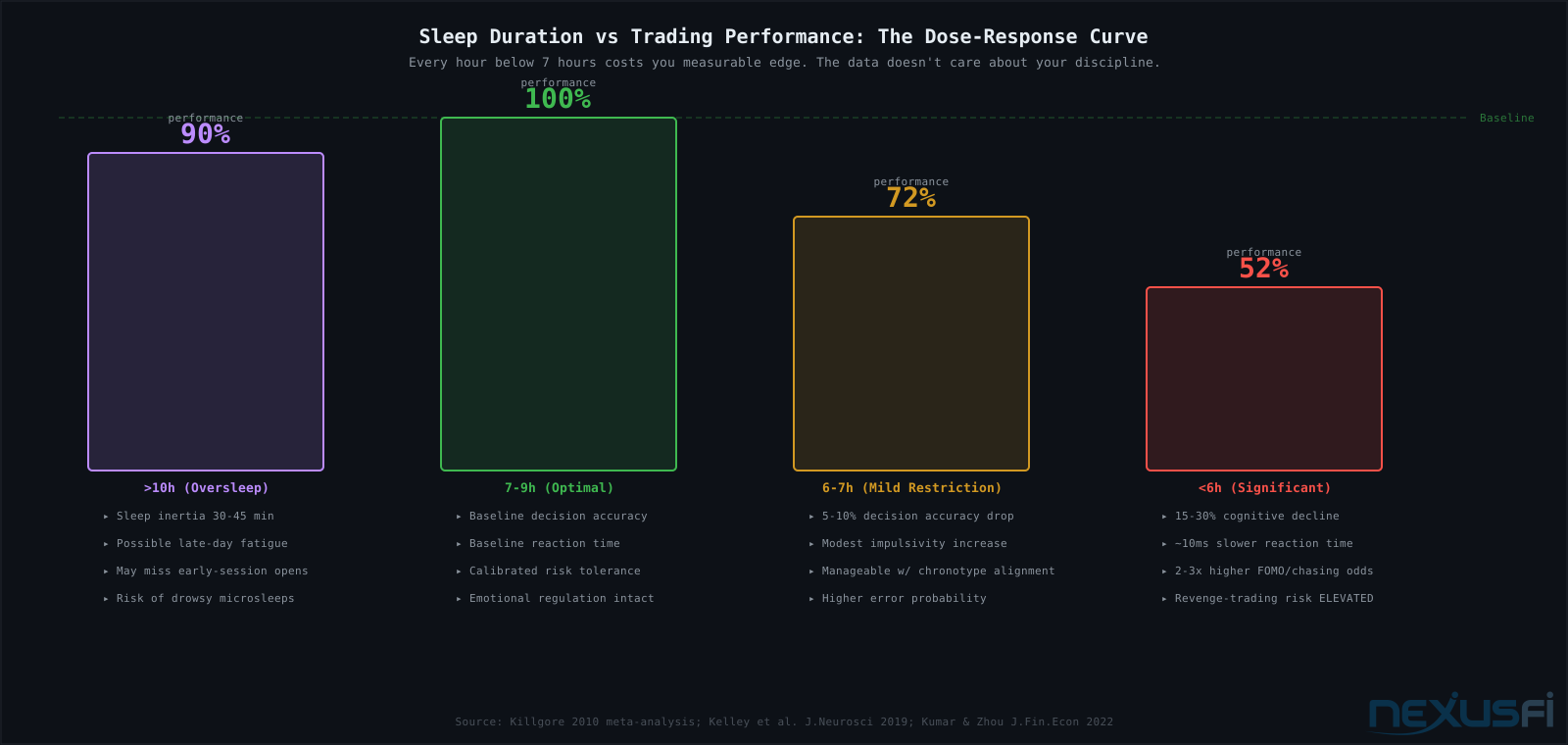
The research converges around a clear dose-response curve. Every hour of sleep below 7 hours degrades performance. The degradation is non-linear — the first hour lost hurts less than the third or fourth. But it accumulates.
7-9 hours (optimal): Baseline cognitive performance across all the dimensions that matter — decision accuracy, reaction time, risk calibration, emotional regulation. This is your operating baseline.
6-7 hours (mild restriction): A 5-10% drop in complex decision accuracy, modest increase in impulsivity, slightly elevated probability of chasing entries. Manageable for morning chronotypes who align their trade windows correctly.
Under 6 hours (significant restriction): 15-30% decision accuracy decline, measurable slippage increase, 2-3x higher odds of FOMO chasing, revenge-trading risk elevated. At this level, pre-emptively adjust: smaller position size, stricter setup requirements, lower maximum daily loss.
Over 10 hours (oversleep): Sleep inertia — grogginess from waking mid-cycle — can persist 30-45 minutes and impair early-session decision-making. Allow a wake-up buffer before your first trade.
Sleep Debt: How Five Bad Nights Create Friday's Blown Trade #
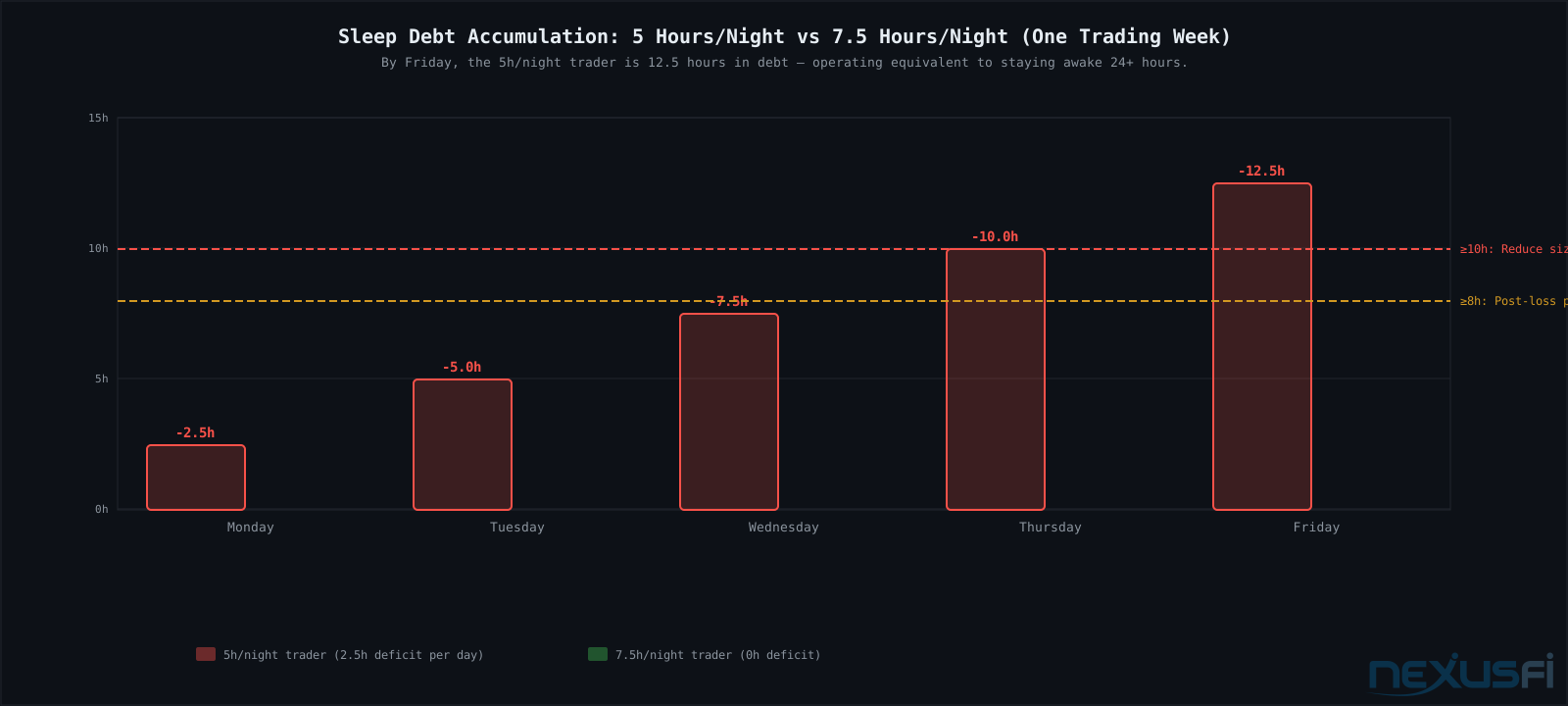
Sleep debt accumulates. A single night of 5 hours isn't catastrophic. Five nights of 5 hours — a full trading week — builds 12.5 hours of deficit if your baseline need is 7.5 hours. That's the cognitive equivalent of staying awake for more than 24 straight hours, stacked against your system before Friday's open.
@OftenBonus10 Discretionary Trading 2022/2023 »
The battery model is useful because it makes deficit visible. [3] Practical thresholds:
- Cumulative deficit 4-7 hours: Require higher-quality setups. Skip marginal trades.
- Cumulative deficit 8-11 hours: Reduce position size 20%. Limit trades per session. After any loss, skip the next entry entirely.
- Cumulative deficit 12+ hours: Reduce to minimum size or skip the session.
- 18+ hours awake: Do not trade. There is no edge big enough to overcome this state.
The Sleep Debt and FOMO Loop #
Sleep deprivation produces three specific trading failure modes that most traders chalk up to discipline problems:
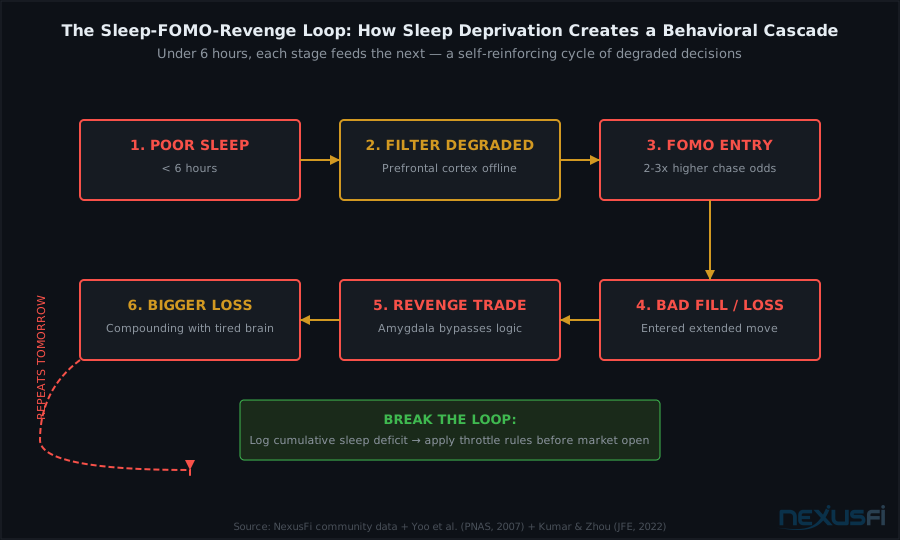
FOMO and chasing. Sleep restriction shifts attention toward salient, immediate cues — the ticker moving fast, the green candle stacking — and away from structured evidence-based evaluation. You enter not because the setup is there but because the market is moving and your attentional filter is degraded. Kumar & Zhou's data shows 2-3x higher odds of this behavior under 6 hours.
Revenge trading. After a loss, a rested brain can modulate the emotional response. A sleep-deprived brain has a degraded prefrontal-amygdala connection. The emotional surge from the loss doesn't get regulated — it drives the next entry. That entry is too large, taken too fast, without proper setup confirmation.
Confirmation bias amplification. Working memory degrades with sleep restriction. You stop comparing new market information against your prior read. Positions that should have been cut at the first invalidation signal stay on because you're no longer processing the disconfirming data with full cognitive weight. This is especially costly during key reference level tests.
Pre-market analysis requires the same cognitive capacity as live trading decisions. Sleep-deprived, that capacity isn't there — the plan gets skipped because the brain reaches for the nearest available shortcut. [6]
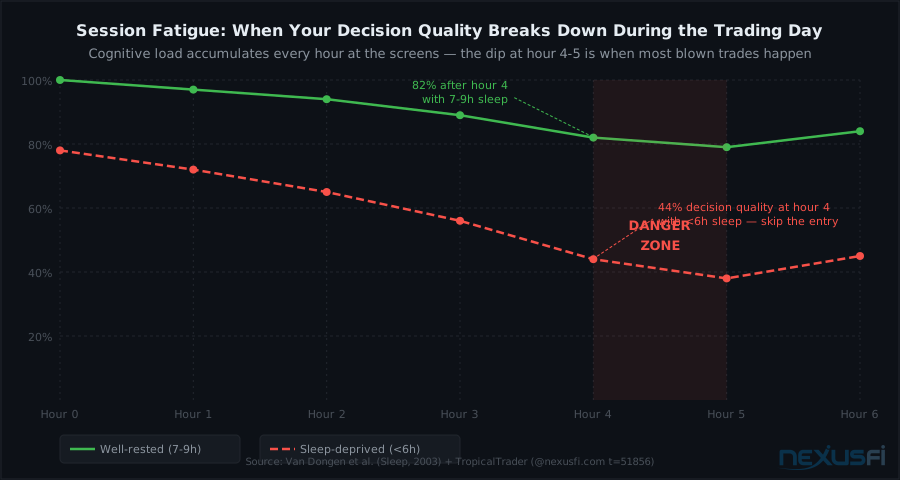
The 4-5 hour trading mark as a fatigue inflection point is consistent with the research. [2] Decision fatigue and sleep deprivation compound — they're both limiting the same cognitive resources.
Chronotype: Trading at Your Peak vs. Trading Against Your Biology #
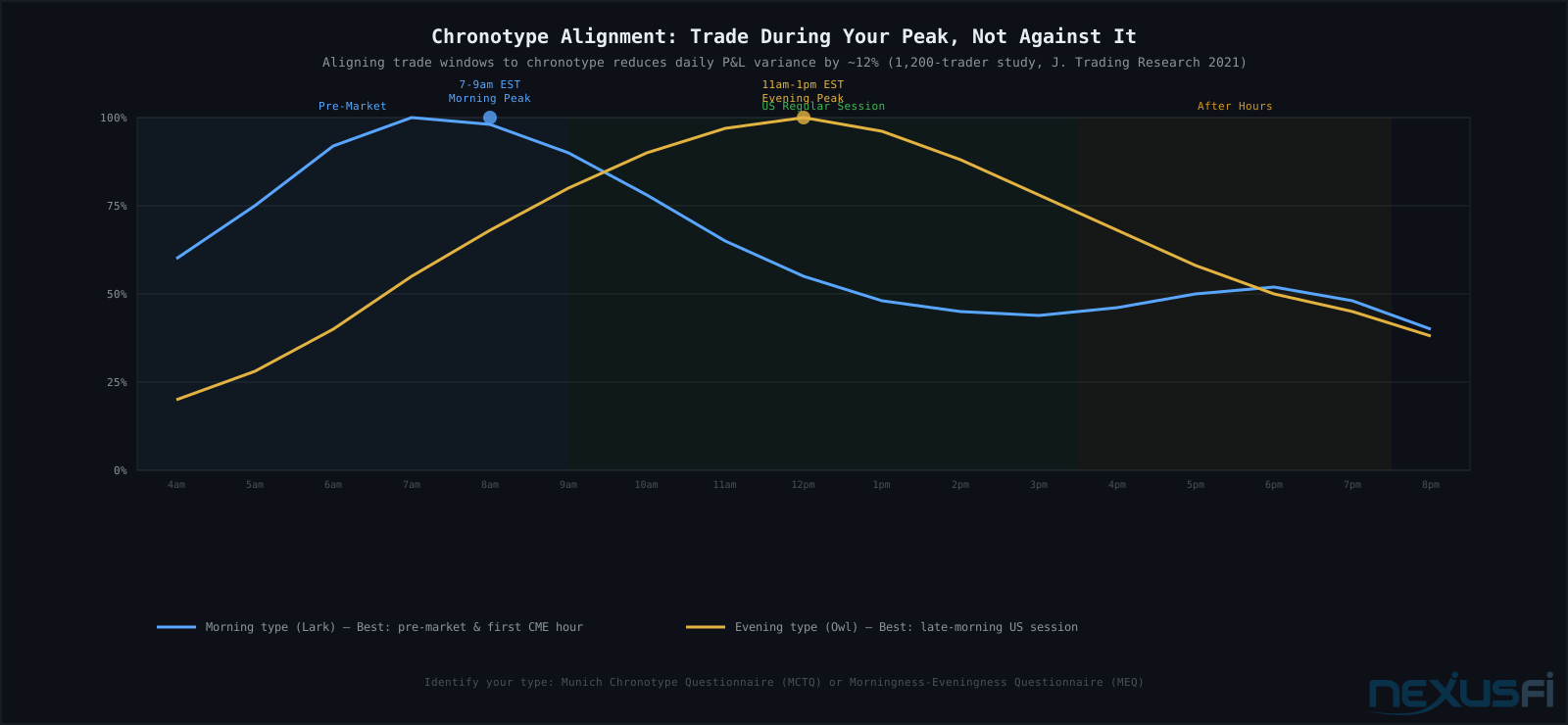
Chronotype — your genetic disposition toward morning or evening wakefulness — determines when your cognitive performance peaks. A study of 1,200 professional traders (Miller et al., Journal of Trading Research, 2021) found that aligning trade windows with personal chronotype reduced daily P&L variance by approximately 12%.
Morning type (larks): Peak cognitive performance 1-2 hours after waking. Natural fit for US pre-market (4:00-9:30 EST) and the first CME hour. Your discretionary entries, your hardest setups, your tightest risk decisions — put them here.
Evening type (owls): Peak cognitive performance 2-4 hours after waking. Natural fit for the late-morning US session, roughly 11 AM-1 PM EST. Forcing owl traders to make complex multi-timeframe analysis decisions at 6:30 AM generates avoidable error.
Neo1's approach isn't comfortable. It requires real sacrifice of normal social patterns. But it's structurally sound: he engineered his schedule so his cognitive peak lands at US market open, not against it. [5]
Strategic Napping: The Risk-Control Tool Most Traders Ignore #
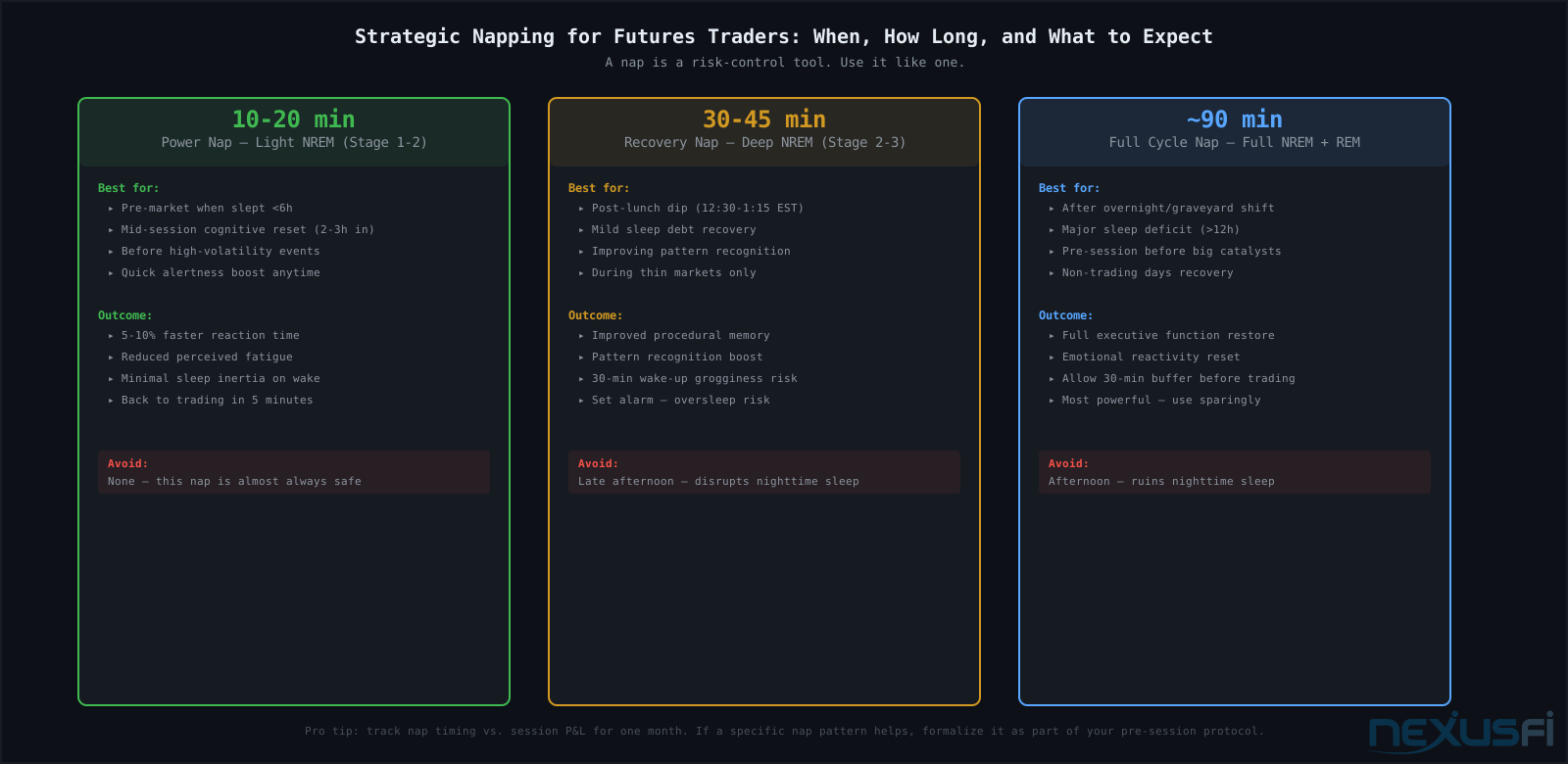
A nap isn't a sign of weakness. It's a cognitive intervention. Three nap windows matter:
10-20 minute power nap (Stage 1-2 NREM). The most versatile and safest tool. Produces 5-10% faster reaction time and reduced perceived fatigue with minimal sleep inertia on waking. Use it pre-market if you slept under 6 hours, or mid-session after 2-3 hours of screen time.
30-45 minute recovery nap (Stage 2-3 NREM). Improves procedural memory and pattern recognition. Most useful for the post-lunch dip (roughly 12:30-1:15 PM EST) when markets often thin. Allow 15-20 minutes before making discretionary decisions on waking. Avoid after 3 PM; it will disrupt nighttime sleep.
90-minute full-cycle nap (NREM + REM). The nuclear option. Restores executive function and reduces emotional reactivity most completely. Use after overnight shifts or major sleep debt, before the next trading session. Require a 30-minute buffer between waking and your first trade.
Building a Sleep-Based Risk Framework #
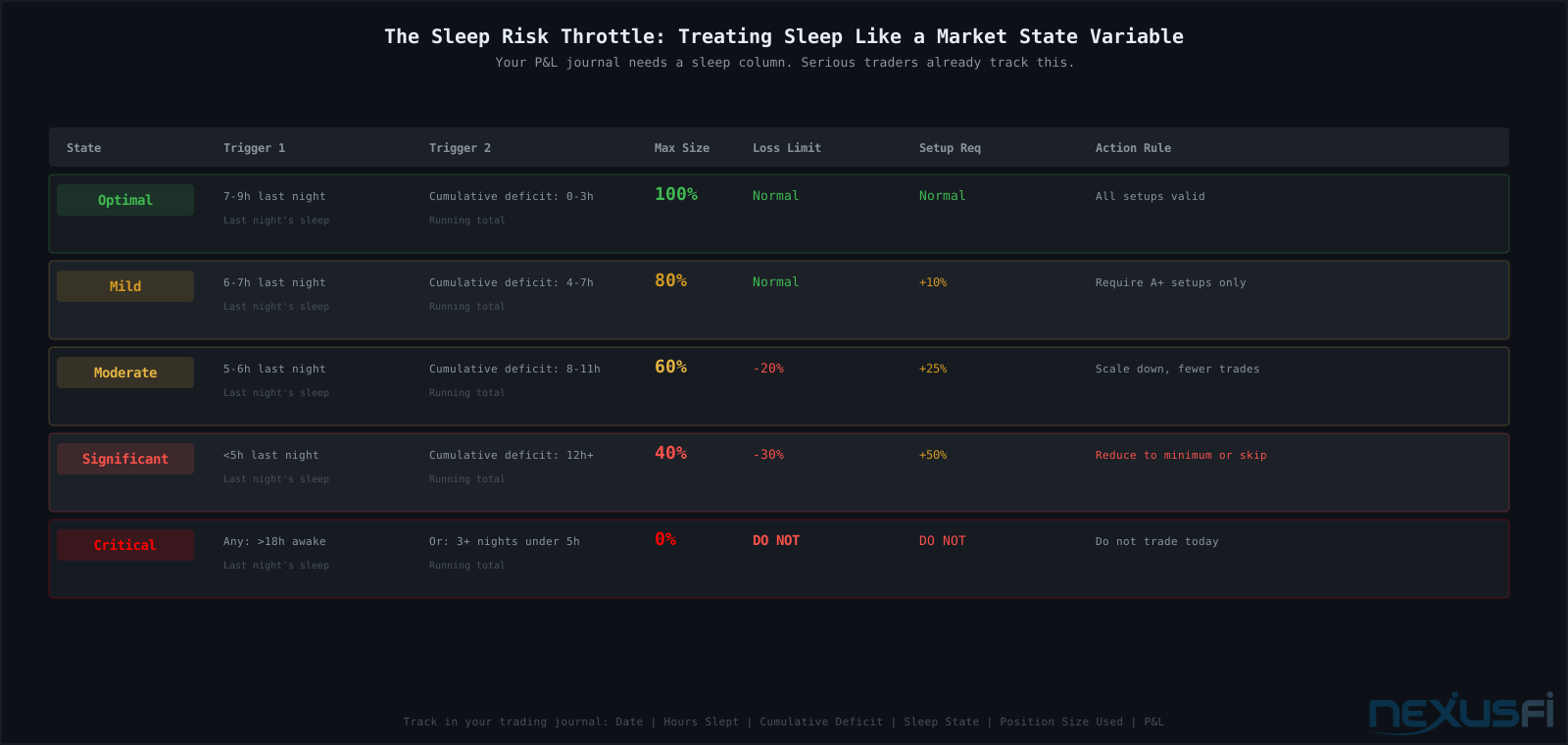
The most practical insight from all the sleep research: treat sleep state as a market state variable, not a personal opinion. You already adjust position sizing for volatility. Sleep belongs in the same framework.
The implementation is simple:
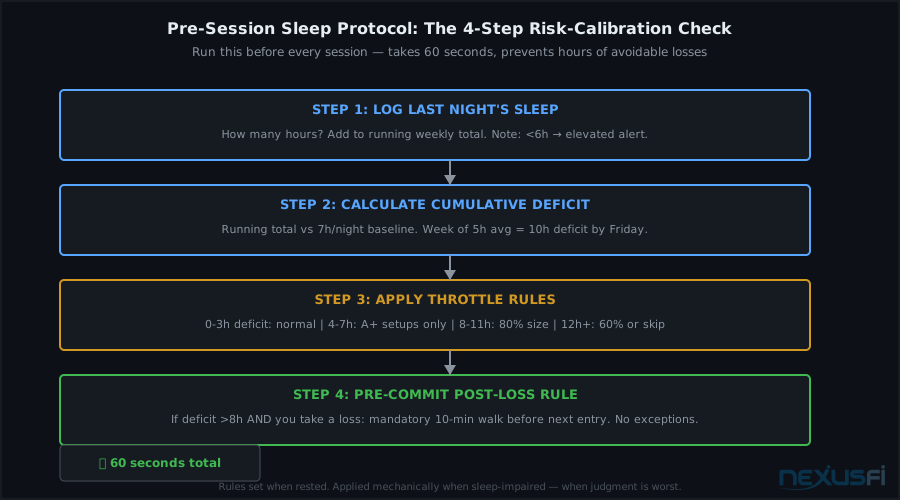
Step 1: Log your sleep. Date, hours slept, running cumulative deficit. Keep it in your trade journal or a simple spreadsheet. This takes 30 seconds.
Step 2: Pre-define your throttle rules. Don't make these calls in the moment — you're impaired when you need them most. Set them when rested:
- Optimal state (7-9h, deficit 0-3h): Normal operations, all setups valid
- Mild restriction (6-7h, deficit 4-7h): A+ setups only, skip marginal entries
- Moderate restriction (5-6h, deficit 8-11h): 80% max size, reduce frequency
- Significant restriction (<5h or deficit 12h+): 60% max size or fewer trades
- Critical (18h+ awake or 3+ nights under 5h): Do not trade
Step 3: Add a post-loss protocol for sleep-deprived sessions. If your cumulative deficit exceeds 8 hours AND you just took a loss, skip the next entry entirely. Remove the decision from the moment.
Sleep Hygiene for Early-Morning and Multi-Session Traders #
The fundamentals of sleep quality apply universally, but futures traders have specific pressures: early US opens, overnight international sessions, CME hour timing that doesn't respect human sleep architecture.
The highest-ROI interventions:
Consistent wake time (within 30 minutes) every day, including weekends. This single practice stabilizes your circadian rhythm more than almost anything else. Set your wake alarm and treat it like a trade execution deadline.
Bright light within 30 minutes of waking. 10-15 minutes of sunlight or a 10,000-lux lightbox sets your circadian clock more reliably than caffeine. For early traders: this means getting outside before pre-market prep, or using a lightbox during your pre-session routine.
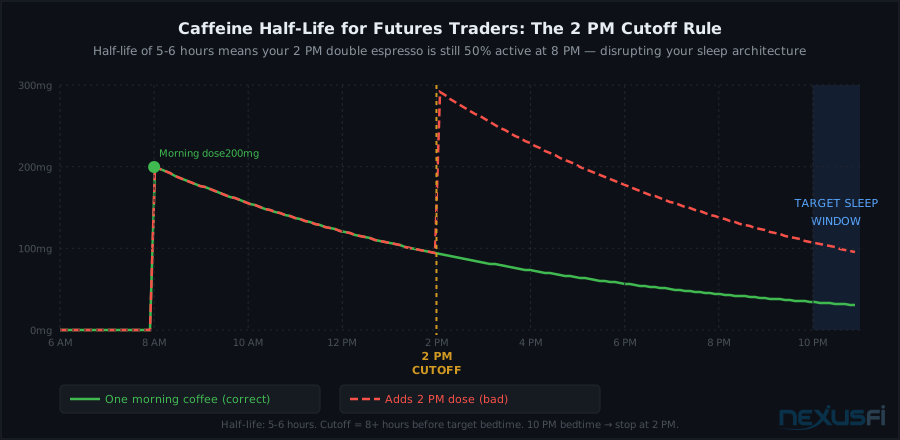
Caffeine timing. Maximum ~200mg in the first 4 hours after waking. Nothing within 8 hours of your target sleep time. Caffeine has a half-life of 5-6 hours — a 2 PM double espresso still has half its effect at 8 PM.
Dark, cool bedroom. ~18°C (65°F) promotes slow-wave sleep. Blackout curtains or an eye mask for daytime sleepers.
Screen curfew 30 minutes before bed. Blue light suppresses melatonin. Night mode on your monitors and phone helps; amber glasses help more.
Four to five 90-minute cycles means 6-7.5 hours at minimum. [4] Cornbeefsoup's framing of cycles rather than hours is more precise: waking at the end of a cycle — rather than mid-cycle — reduces sleep inertia and grogginess, even with the same total time.
The Nutrition Connection #
Sleep quality and nutrition interact. This isn't the primary lever, but it's real:
Hydration matters for cognitive performance. The brain is roughly 70% water. Even mild dehydration (1-2%) impairs attention and working memory. Start every pre-market with water before coffee.
Glucose stability affects decision quality. Sharp blood sugar crashes — from simple sugars, skipped meals, or energy drinks — create the cognitive equivalent of a minor sleep episode. Complex carbohydrates and protein-based snacks smooth this out.
Caffeine is not sleep replacement. It blocks adenosine receptors and temporarily masks fatigue. The fatigue is still accumulating. When the caffeine clears, the sleep debt hits harder.
Omega-3 supplementation (EPA+DHA, minimum 250-500mg daily) has modest but real evidence for reducing cellular inflammation, including in the brain.
Building Your Sleep Protocol Into Your Trading System #
Sleep management isn't a lifestyle choice you fit around trading. It's part of the trading system. Here's a protocol that integrates both:
The night before: Log your planned sleep hours. Set a consistent alarm. Review tomorrow's calendar for high-impact events so you're not lying awake thinking about the 8:30 NFP.
Upon waking: Immediately log actual sleep hours. Calculate cumulative deficit. Identify your sleep state from your throttle rules. This determines today's position sizing before you ever look at a chart.
Pre-market (if slept under 7 hours): 15-minute power nap plus a brief stretch. Set your alarm. This is performance preparation, not indulgence.
Mid-session (after 2-3 hours): A 5-minute micro-break. Eyes off screen, slow breathing, brief movement. Interrupt the fatigue accumulation before it compromises the next trade decision.
Post-loss protocol under sleep restriction: If cumulative deficit exceeds 8 hours and you took a meaningful loss, pre-commit to skipping the next entry. Walk away from the screen for 10 minutes minimum before re-engaging.
End of day: Record actual sleep hours, nap data, fatigue rating (1-5 scale), and session P&L. Review weekly. Most traders discover a pattern within 4-6 weeks that motivates the behavioral change more effectively than any article.
The Bottom Line #
Sleep is infrastructure. Not for your wellbeing — for your edge. The same way you wouldn't run a backtest on corrupted data or use a broker with unpredictable fills, you shouldn't bring degraded cognitive hardware to a live trading session and expect baseline results.
The research is consistent across 19+ meta-analyzed studies: 7-8 hours of quality sleep is the threshold that preserves the decision-making, risk calibration, and emotional regulation that profitable trading requires. Below 6 hours, you're not operating at a slight discount. You're operating at 15-30% of your optimal capacity, with 2-3x higher odds of the specific behaviors — chasing, revenge trading, ignoring stop-loss signals — that destroy accounts.
Track it. Build throttle rules around it. Treat it like the risk parameter it is.
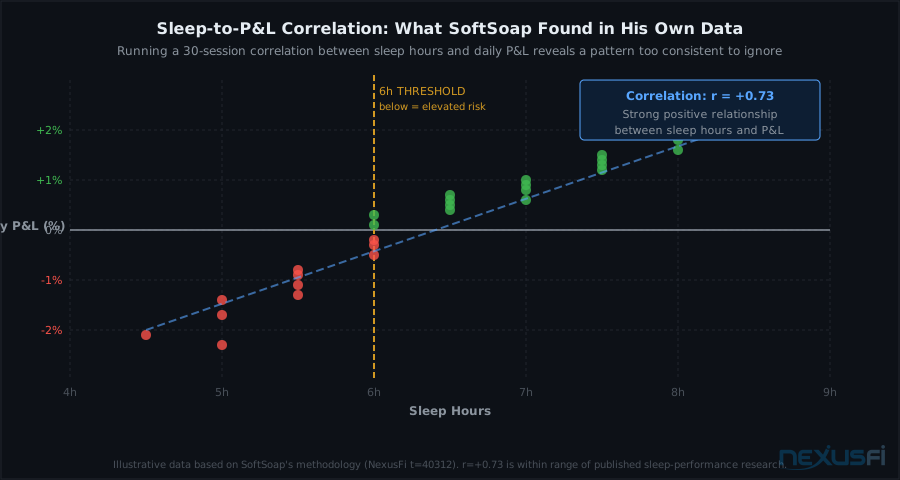
The traders who figured this out weren't meditating their way to alpha. They were running correlations between their sleep log and their P&L until the data was too obvious to ignore. Then they made a rule. Then they followed it.
SoftSoap turned off his computer. OftenBonus10 built a battery model. Neo1 restructured his entire sleep schedule around his trading session. None of it is complicated. All of it is discipline applied to the right variable.
Your trading system is only as good as the system running it. Sleep is that system's maintenance protocol.
Knowledge Map
Go Deeper
Build on this knowledgeCitations
- — SoftSoap's NQ Journey - from SoftSoap to SoftGold (2017) 👍 11
- — Finally Turning the Corner, the 'its 80% Psychology' thing... (2020) 👍 8
- — Discipline problems (2023) 👍 9
- — Proper NUTRITION for rational decision making (2020) 👍 3
- — Anyone managing sleep/work while trading the London Session from the US? (2015) 👍 7
- — The Bolt Trader Journal (2015) 👍 7
- — FM's Trade Log (2017) 👍 3