



Psychological Adaptation to Market Regime Changes: The Steenbarger ABCD Framework for Futures Traders
The market gave you clean trends for six weeks. You built confidence, sized up, refined your entries. Then one morning the tape changed. Your breakout entries started stopping out at the highs. The same setup that printed every day was now bleeding you three times before you could adjust.
What happened next — the frustration, the doubling down, the "one more try" — was not a trading problem. It was a psychological one: emotional fixedness, the failure to adapt when the market shifted regime.
Overview #
Every trader will eventually face the moment when their approach stops working — not because of a technical failure, but because the market shifted character. Trends that rewarded continuation plays start punishing them. Setups that printed reliably for weeks begin bleeding every session. The challenge at that point is not a trading problem — it's a psychological one.
Brett Steenbarger's ABCD framework from Trading Psychology 2.0 provides the most practical structure for navigating these transitions. This article examines the psychological mechanisms that keep traders anchored to prior regimes — emotional fixedness, identity-based rigidity, and the recognition lag — and walks through specific protocols for building the psychological flexibility that enables adaptation. The framework applies across all futures instruments and timeframes, from day trading ES to swinging CL.
Key Concepts #
Psychological adaptation in trading is the process of updating your beliefs, emotional responses, and behavioral patterns when the market's character changes. It is distinct from tactical adaptation (changing your setups) — though both are necessary, one must precede the other. If your psychology has not adapted, your tactics won't either, because you won't see the evidence that demands the change.
Market regime refers to the dominant behavioral character of a market at a given time: trending (directional, momentum-driven), ranging (mean-reverting, two-sided), or volatile (expanded ATR, unpredictable fill quality, heightened uncertainty). Each regime rewards different approaches and punishes the other two. A trader who succeeds across all three isn't running a single system — they're running three different psychological postures.
Emotional fixedness is Steenbarger's term for the mental state where a trader remains emotionally calibrated to the prior regime long after the market has moved on. It's not a lack of intelligence or discipline — it's the natural result of conditioning. Your nervous system learned what the market felt like. When it stops feeling that way, the dissonance registers as threat, not information.
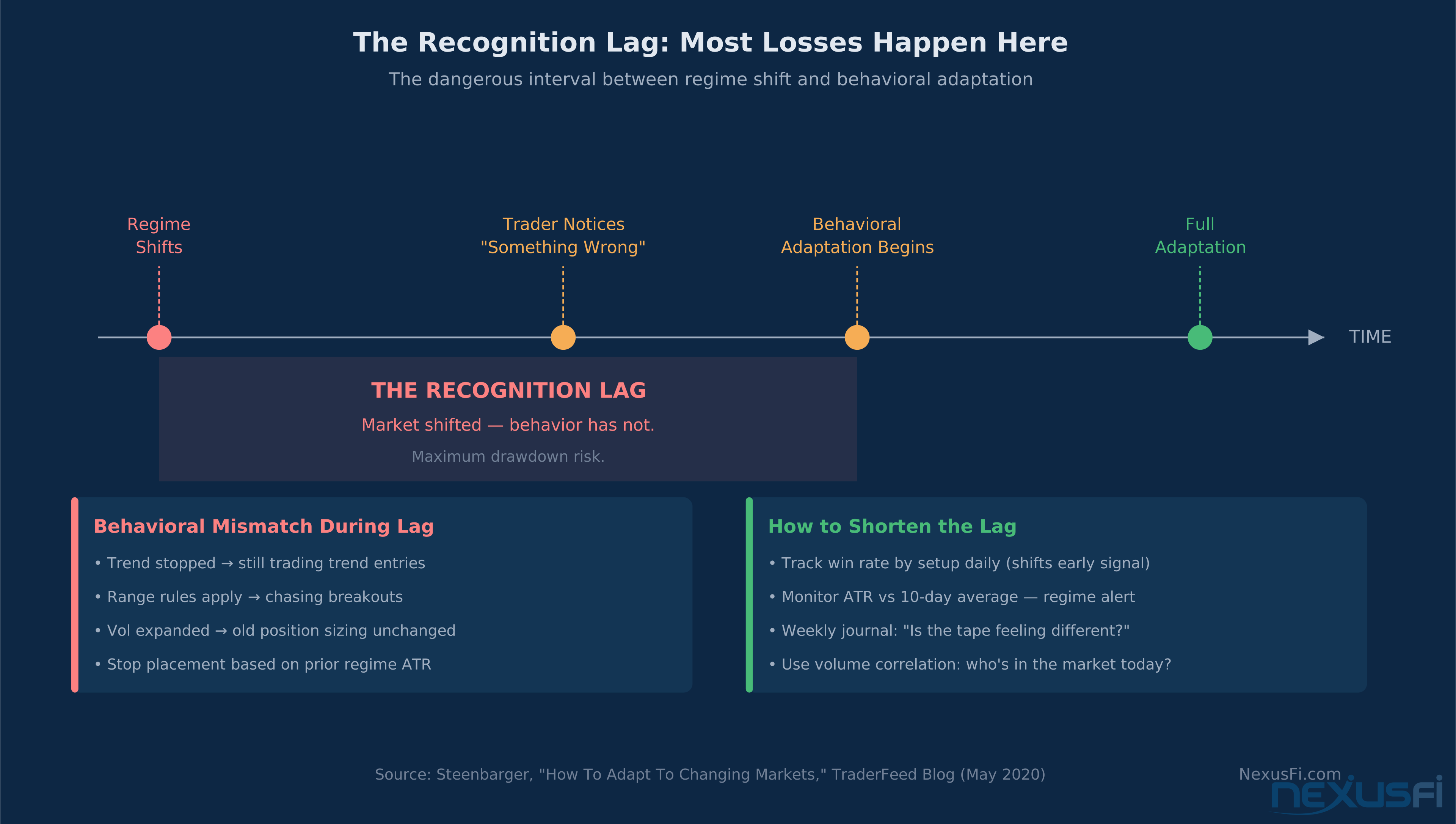
The recognition lag is the dangerous interval between when the market actually shifts regime and when you psychologically acknowledge and behaviorally respond to that shift. The longer the lag, the larger the drawdown incurred in the interim. Most regime-related account damage happens during this window.
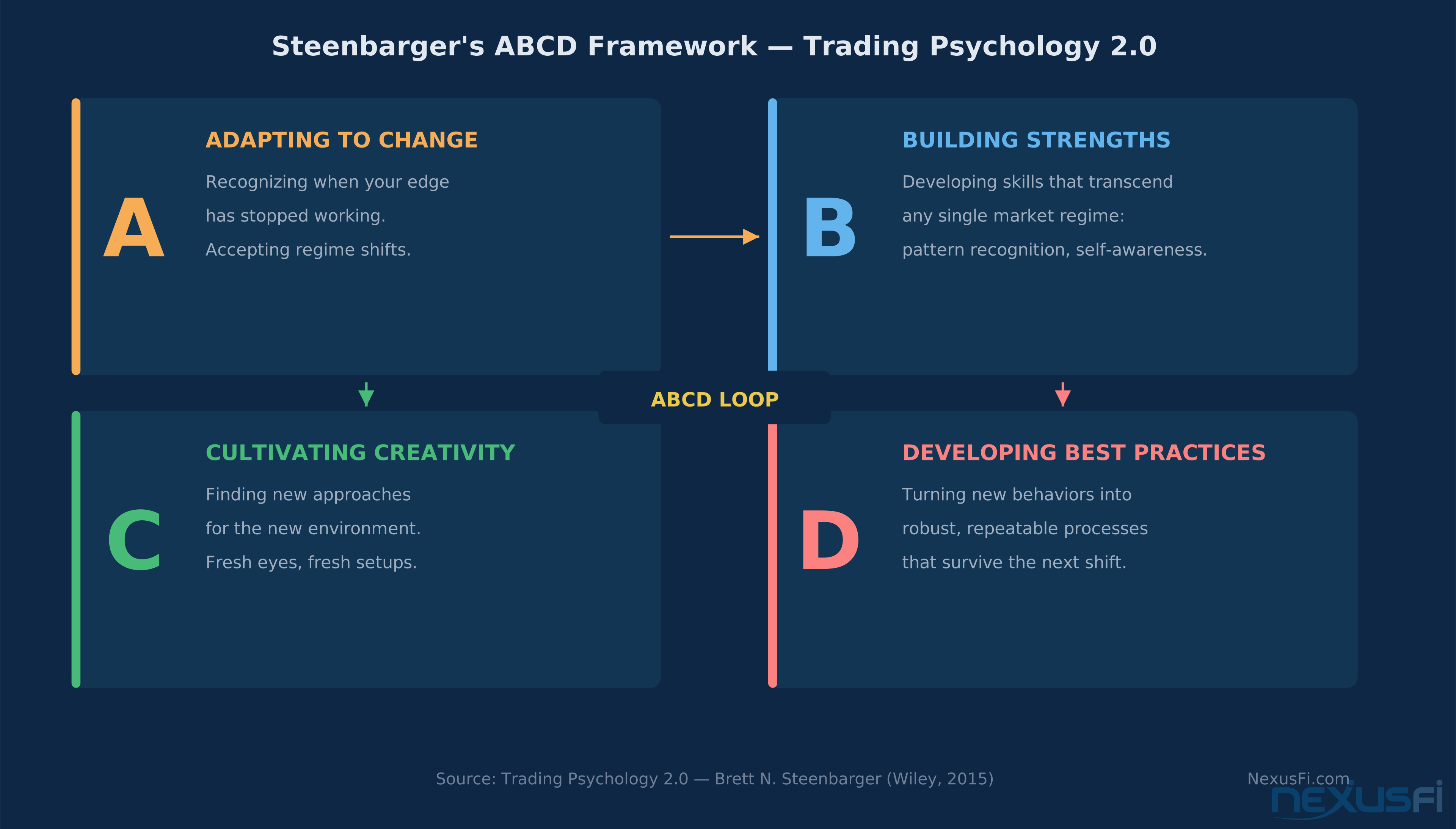
Steenbarger's ABCD framework (from Trading Psychology 2.0, Wiley 2015) provides a developmental path: A) Adapting to changing markets, B) Building strengths that transcend any regime, C) Cultivating creativity for new environments, and D) Developing strong best practices from new approaches.
Steenbarger's ABCD Framework #
Brett Steenbarger developed the ABCD model after reviewing ten of the top traders and portfolio managers he had worked with during his decade as Director of Trader Development at Kingstree Trading in Chicago. The framework was constructed by analyzing what distinguished traders who survived regime changes from those who did not.
The central observation: successful traders rarely had formal processes for adapting to changing markets. Their adaptation happened through unconscious pattern recognition honed over years. Less experienced traders lacked this implicit library — but they could develop an explicit process that produced the same result.
A: Adapting to Changing Markets #
The first and most critical component. Steenbarger writes in Trading Psychology 2.0: "Emotional disruptions of trading provide information, often signaling the need to adapt to changing markets. Emotional fixedness fuels functional fixedness. When we identify with a way of trading or a kind of analysis, we not only can't perceive alternatives: We typically don't want to see them."
This distinction — can't versus don't want to — is key for futures traders. The issue is rarely cognitive. You can intellectually recognize that the market has changed. The barrier is motivational: acknowledging the change means acknowledging that your current edge is impaired. For traders who have built significant PnL, track records, or identity around a particular approach, this feels like a personal threat rather than a market condition.
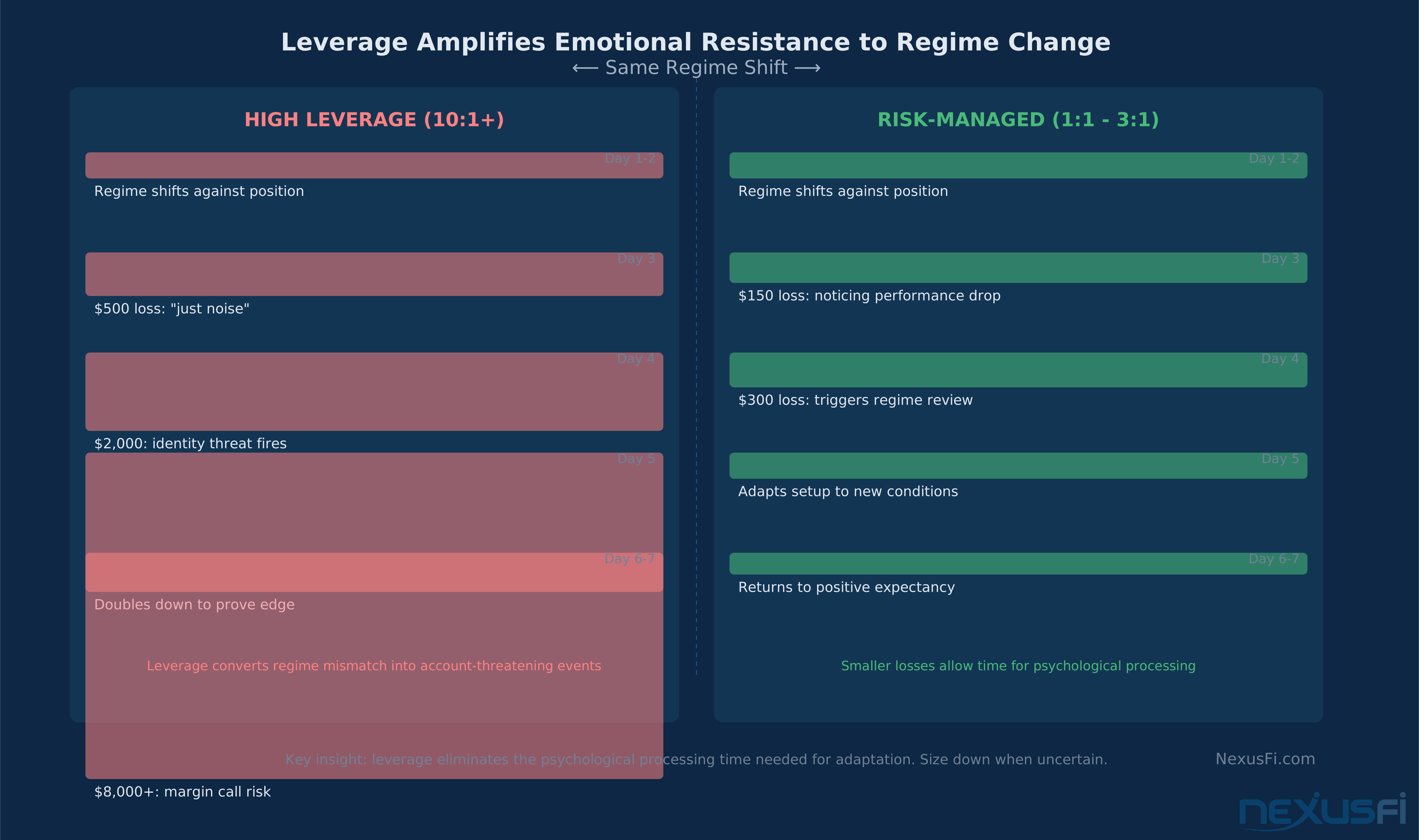
The futures-specific aggravation is leverage. Leverage compresses the timeline for adaptation. An equity trader with a deteriorating edge has weeks to notice and adjust while losses accumulate slowly. A futures trader with 10:1 effective leverage feels a regime mismatch within days. The psychological pressure to prove the original approach still works — rather than adapt to the new one — intensifies under the daily mark-to-market reality of futures accounts.
B: Building Strengths #
The B component addresses what Steenbarger calls "emotional, cognitive, social, and personality strengths" — the underlying psychological capacities that allow adaptation in the first place. These include:
Observational acuity: the ability to notice what the tape is actually doing, independent of what you expected it to do. NexusFi veteran
Observational strength means you track comfort and profitability separately, and notice when they've diverged.
Deliberate practice orientation: the willingness to treat each regime as a learning environment rather than an obstacle.
This isn't optimism — it's a functional response to the fact that regime changes are inevitable and frequent. Traders who treat each shift as something to understand perform better than traders who treat each shift as something to overcome.
Process accountability: the habit of reviewing your behavior against your plan rather than against your PnL. When you review trades by outcome alone, regime-induced losses look identical to execution failures. When you review by process, the pattern of regime mismatch becomes legible — and actionable.
Emotional Fixedness: The Invisible Anchor #
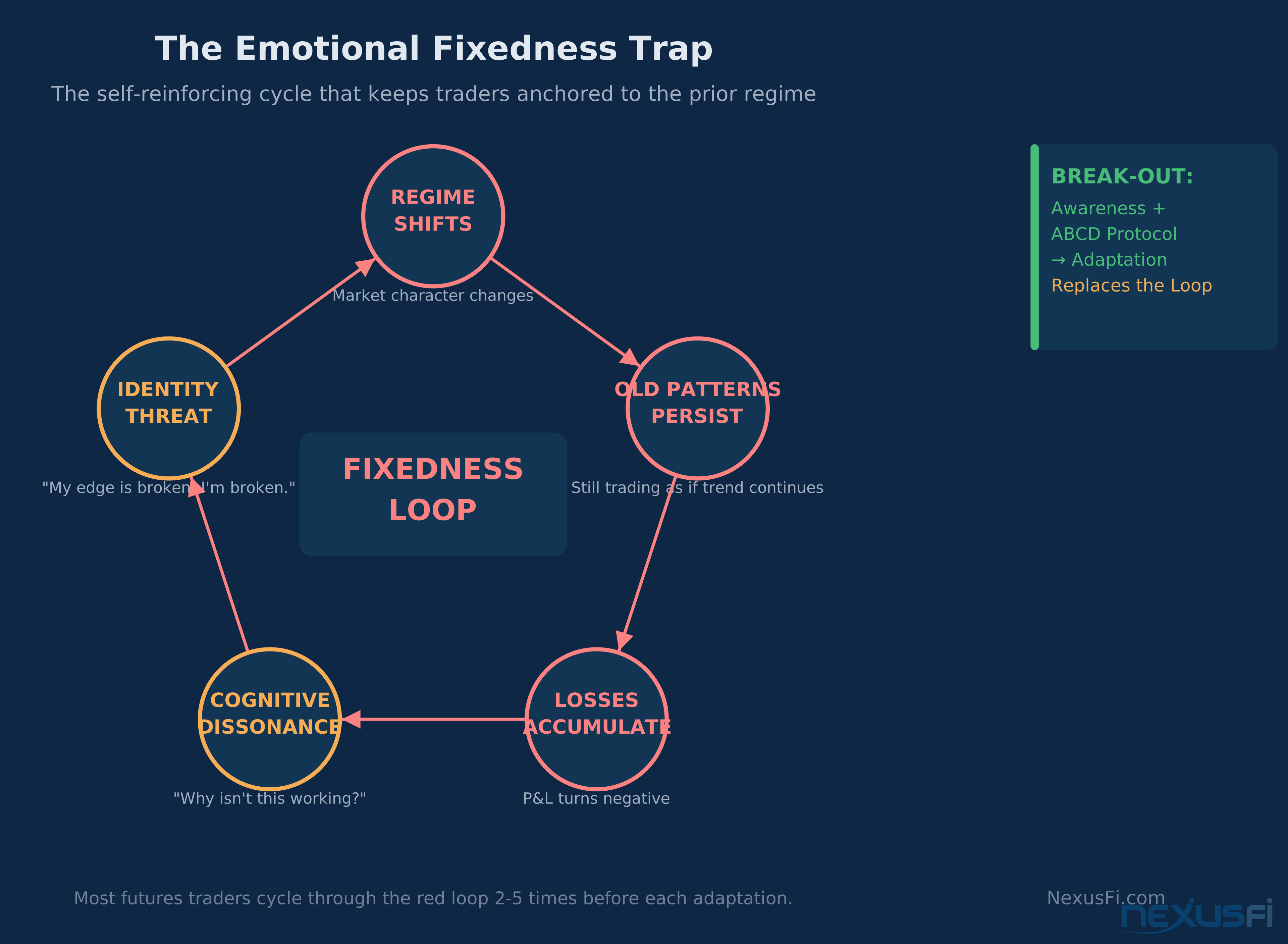
The most insidious feature of emotional fixedness is that it feels like discipline. You're "sticking to your system." You're "not letting the market shake you out of your approach." You're "staying consistent." From the inside, the rigidity is indistinguishable from the virtues that actually produce consistent performance.
The distinction becomes visible in the journal. During a genuine regime mismatch, the losses are structurally repetitive: same setup, same direction, same failure mode. The successful trade has the same entry as the losing trades — but the market context has changed. You're not experiencing random variance. You're experiencing systematic mismatch between your method and the current environment.
Denise Shull, quoted by NexusFi member @GaryD, identified the root mechanism: "I realized I was asking the market to validate me, to prove to me I really do know how to trade. My trading was coming from a place of psychological groveling and begging." When the market stops validating, the emotional fixedness loop activates: keep providing the same evidence to the market, expect different confirmation in return.
In futures trading specifically, this loop is accelerated by three factors:
Leverage amplification: A $500 loss on a futures position representing $50,000 notional registers as a threat, not a data point. Cortisol spikes, the threat response activates, and the drive to restore the prior state intensifies. Instead of processing the information in the loss, the brain routes resources toward eliminating the discomfort — which usually means trying the same trade again with more conviction.
Daily mark-to-market: Futures traders experience the reality of their current edge every day. When the edge has shifted, the daily feedback is unambiguous. But the brain's threat response doesn't distinguish between "this is temporary regime noise" and "my approach is at the core broken." Both feel like the second one.
Session-based psychology: Each trading day starts fresh, creating a recurring reset that masks the gradual recognition of regime change. "Yesterday was bad, but today I'll trade better" obscures "the last seven days have been bad in the same way, which suggests a structural problem."
Identity-Based Rigidity: When "I'm a Trend Trader" Becomes a Trap #
Emotional fixedness operates through habit and conditioning. Identity-based rigidity operates through self-concept. These are different mechanisms that require different interventions.
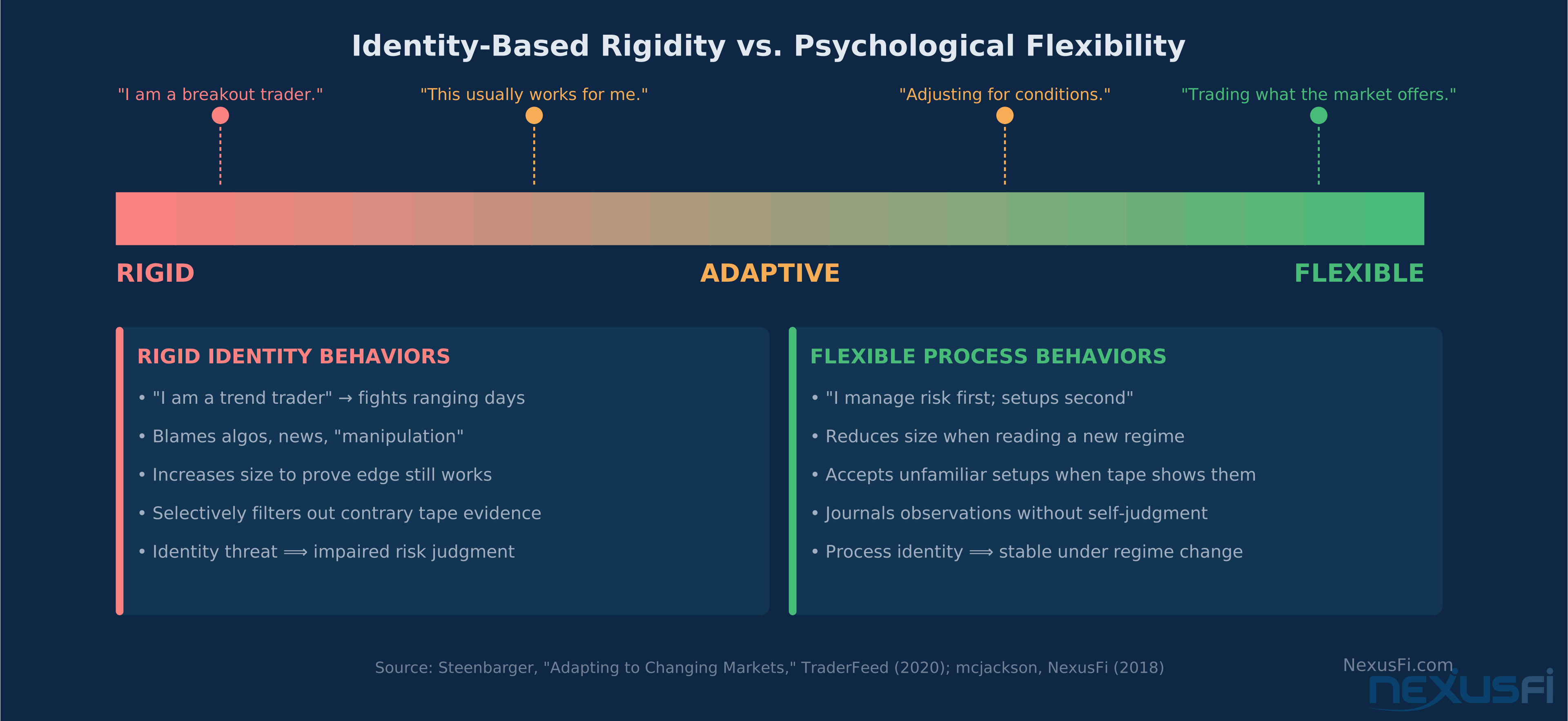
A trader who has successfully traded trending regimes for several years doesn't just have a preference for trend setups — they have an identity. "I am a trend trader" is a self-concept with real psychological weight. It's connected to their competence narrative, their self-efficacy beliefs, their professional story. When the market shifts from trending to ranging, the threat is not just to their PnL — it's to who they are.
He noted that effective behavior change often requires a concrete threat that makes the old identity incompatible with survival. Most regime changes don't provide that clarity — the threat is diffuse, probabilistic, and easy to rationalize.
@josh, a senior NexusFi member, described the identity-loss failure pattern directly: "Their identity and mental state are tied to their trading performance, win or lose. When they win they are elated and overconfident, and when they lose they are grumpy, negative, and make life miserable for anyone who comes into contact with them." This identity fusion means that losing streaks during regime transitions feel like existential disconfirmation — not market information.
The practical consequence is that identity-rigid traders exhibit a characteristic behavioral fingerprint during regime shifts:
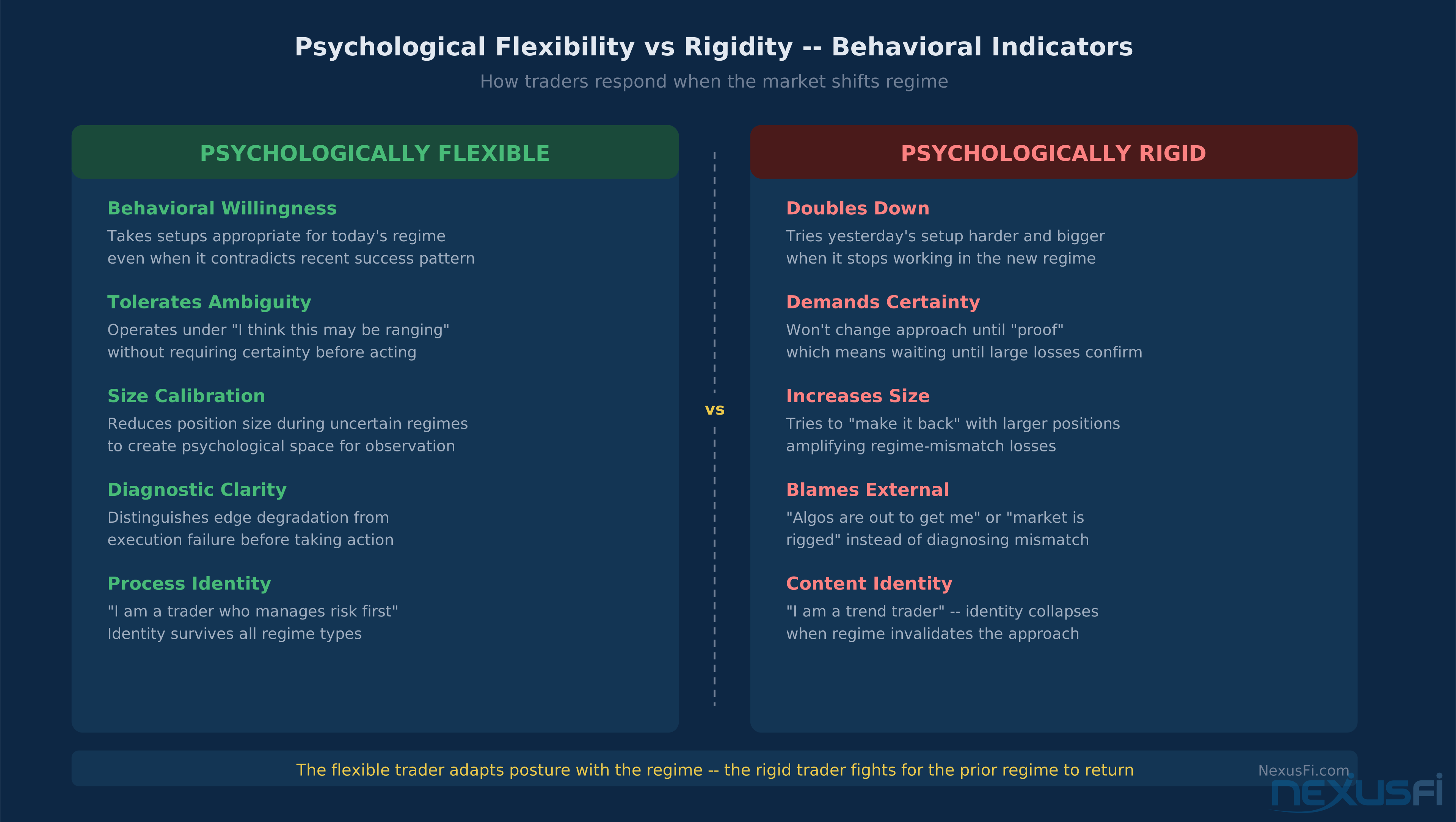
Doubling down rather than adapting: Adding to losing positions, increasing size after stops, trying the same setup more aggressively — motivated by the need to prove the identity still holds.
Evidence filtering: Attending to the one setup that worked and discounting the five that failed. Disconfirming evidence is explained away as an anomaly, a news-driven move, or "unfair" algorithm action.
Blame externalization: As @tigertrader observed, traders experiencing identity threat "think the algos are out to get them" or blame "manipulators" — anything that locates the problem outside their system rather than in the regime mismatch.
The solution is not to abandon the identity — it's to replace the content-based identity ("I am a trend trader") with a process-based one ("I am a trader who manages risk first and adapts setups second"). A process identity is regime-invariant because reading the tape, managing position size, and following pre-defined rules apply across all regime types.
Psychological Flexibility: The Adaptive Capacity #
Psychological flexibility is the capacity to hold your current beliefs and methods lightly while engaging fully with what the market is actually providing. It is not indecisiveness or inconsistency — it's the opposite. It requires the clarity to distinguish between "my process is solid and my current drawdown is within normal variance" and "my process is mismatched to the current regime and I need to adjust."
In practical trading terms, psychological flexibility manifests as:
Behavioral willingness: Taking mean-reversion entries on a day that presents ranging conditions, even if your recent history is trend-based. The flexibility is in the willingness to try the appropriate behavior for the current environment, rather than the comfortable behavior from prior success.
Tolerance for ambiguity: Accepting that you may be early in your regime read. The market doesn't announce transitions; they become visible in aggregate over time. Flexible traders operate under "I think this may be a ranging day" rather than requiring certainty before changing their approach.
Size calibration as emotional management: Reducing position size during uncertain regime periods is not weakness — it's structural. A smaller position gives you more information per dollar of risk. It creates the psychological space to observe rather than react.
The ACT framework, which Steenbarger draws on, defines psychological flexibility as contacting the present moment fully — including uncomfortable observations about your current edge — while persisting in or changing behavior in service of your chosen process. The discomfort of acknowledging that your approach isn't working is information about the environment, not a signal to stop.
Distinguishing edge degradation from execution failure is one of the highest-value skills here. Both produce losses. But edge degradation during a regime shift requires adaptation, while execution failure requires discipline reinforcement. Misdiagnosing the two leads to either dangerous drift (abandoning a sound system during temporary underperformance) or prolonged bleeding (tightening execution on a system whose edge has genuinely shifted).
The key diagnostic: Does the structure of your losses match the structure of the current market? If your trend entries stop out at levels consistent with a ranging market's behavior, the problem is environmental. If they stop out due to oversizing, late entry, or poor execution, the problem is behavioral.
The Recognition Lag and Its Costs #
The recognition lag is the interval between when the market shifts regime and when a trader's behavior fully reflects that shift. It's the single most expensive psychological phenomenon in futures trading, and it's almost entirely driven by the mechanisms described above — emotional fixedness, identity protection, and the dissonance between what the market is doing and what the trader needs it to do.
Experienced traders develop shorter recognition lags through pattern matching. A trader who has navigated multiple bull-to-bear transitions, multiple volatility shifts, and multiple trending-to-ranging periods builds a library of "this feels like regime transition" signals that allows earlier adaptation.
Practical tools for shortening the lag:
Setup-level win rate tracking: Rather than tracking overall P&L, track win rate by setup type. A setup whose win rate drops from 55% to 35% over 20 trades is a signal — not a certainty, but a signal that warrants investigation of regime conditions.
ATR regime monitoring: Compare current ATR to the 10-session average. An expansion of 20%+ suggests a volatility regime change. A contraction of 20%+ suggests a consolidation phase. These metrics are objective and resistant to the emotional interpretation that distorts qualitative perception.
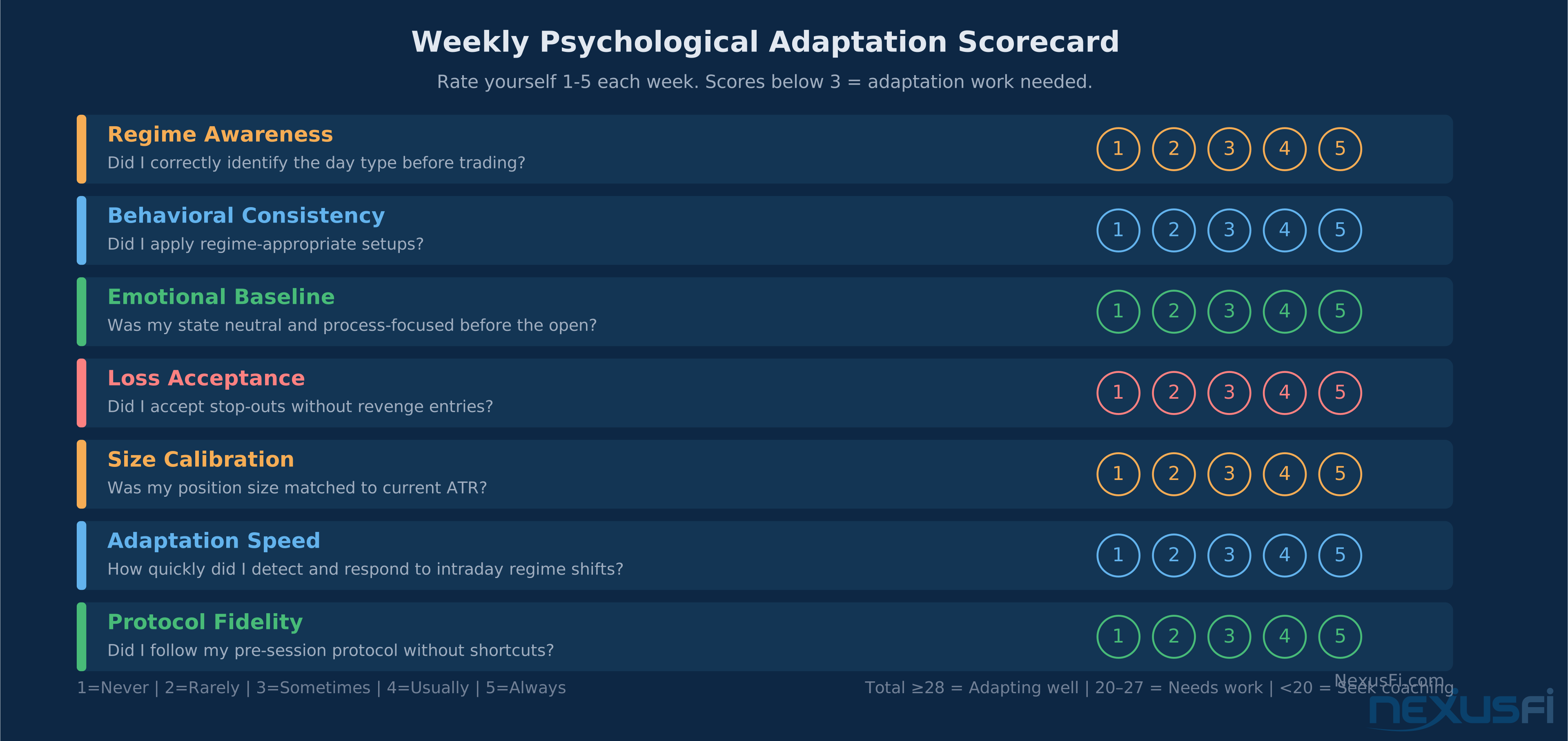
Weekly tape review: At the end of each week, review the tape from a regime perspective — not from a trade perspective. What kind of market did we have this week? How does that compare to the prior three weeks? The framing shift from "how did my trades perform" to "what kind of market was this" creates distance from the identity-protection response and makes regime transitions more legible.
Regime-Specific Behavioral Adaptation #
The ABCD framework's adaptational component is most practically applied through regime-specific behavioral protocols. Each regime type carries characteristic psychological failure modes that emerge when traders import the prior regime's behaviors into the new environment. 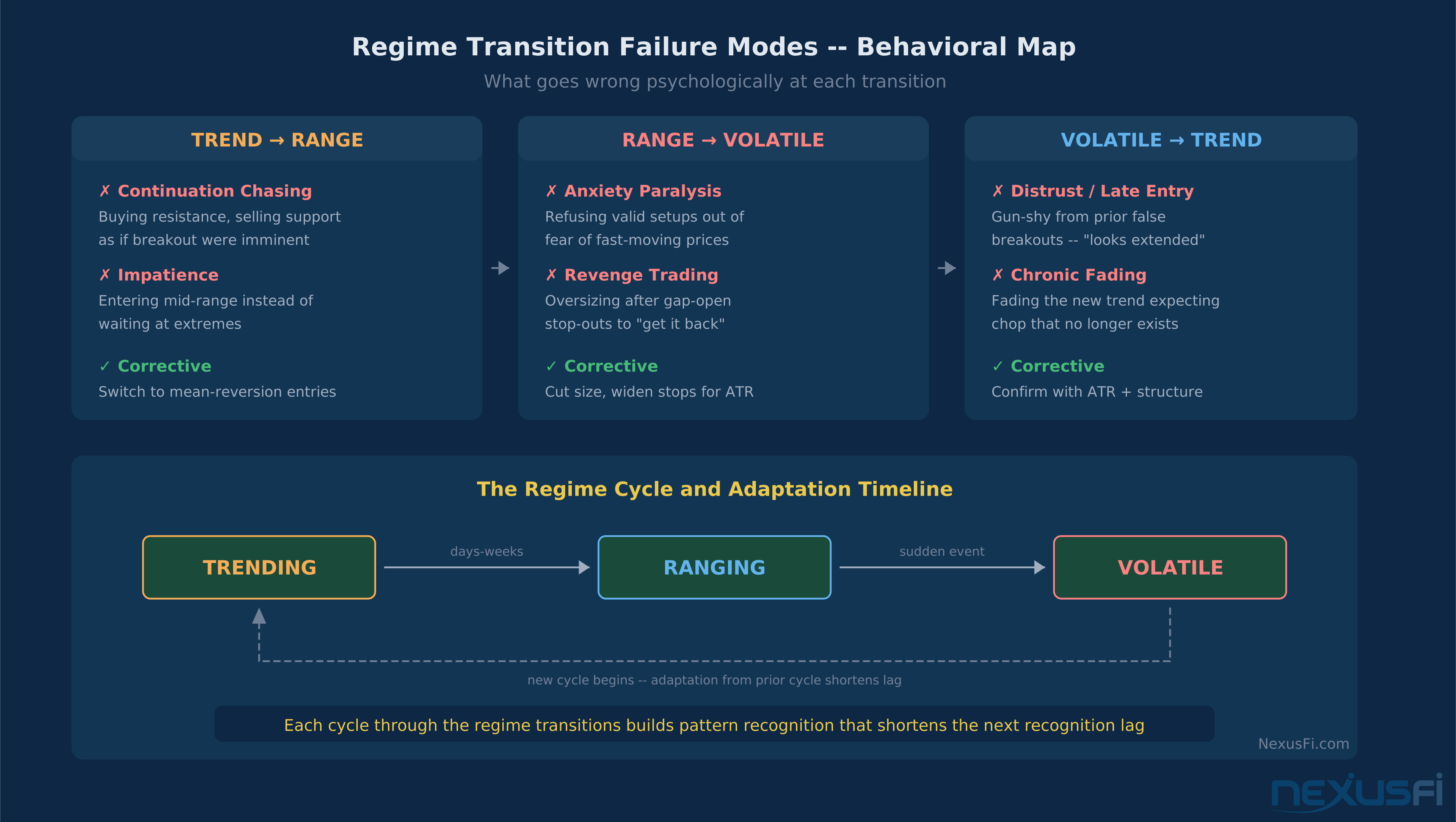
Trend to Range Transition #
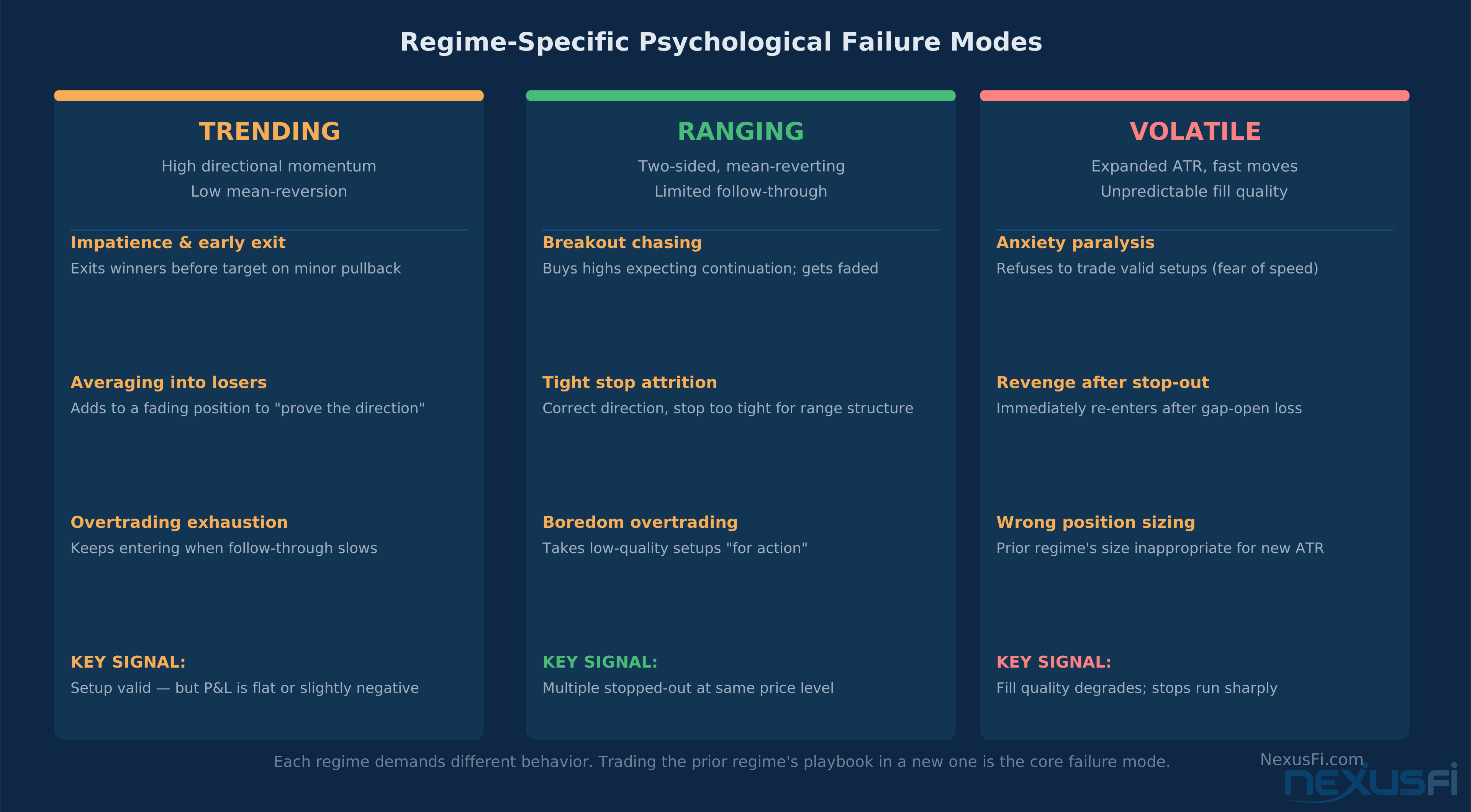
When a trending market becomes range-bound, the most common failure mode is continuation chasing. The trend trader's habit — enter on pullbacks, hold for extension — produces a specific type of loss in a ranging environment: buying into resistance that holds, selling into support that holds. The tape structure is mean-reverting; the trader's habit is trend-following.
The secondary failure mode is impatience. Ranging markets require waiting at extremes, not entering on pullbacks. The trend trader who has been rewarded for early, mid-range entries now enters early and gets whipsawed. The psychological response is to trade more frequently ("I'll catch the breakout eventually"), which is the opposite of what a ranging day rewards.
Range to Volatile Transition #
The range-to-volatile shift is the most psychologically disruptive transition because volatility expansion brings fill degradation, wider spreads, and fast gap-and-go moves that stop out technically valid positions.
The characteristic failure modes: anxiety paralysis (refusing valid setups out of fear of the speed), and revenge trading after gap-open stop-outs. A trader calibrated to a 15-point ATR on the ES now trading in a 40-point ATR environment is structurally over-exposed, even without changing any other parameter. The experience of being stopped out repeatedly on valid setups — "I'm doing everything right and it's not working" — is the trigger for revenge.
The psychological version of this rule is: before entering any trade, verify which regime you're operating in. The behavioral default should change with the regime.
Volatile to New Trend Transition #
The volatile-to-trend transition produces late-entry from distrust. Traders burned by false breakouts during volatile periods become gun-shy about committing to directional trades when a genuine trend develops. "Run too far." "Looks extended." The pattern that signals a new trend looks uncomfortably similar to the false breakouts that cost money during the volatile regime.
The solution is not to override the caution but to use regime metrics: Is ATR contracting? Is volume correlation high? Is the price action showing consistent higher highs and higher lows? These structural confirmations support entry when emotional memory pulls you toward hesitation.
Practical Adaptation Protocol #
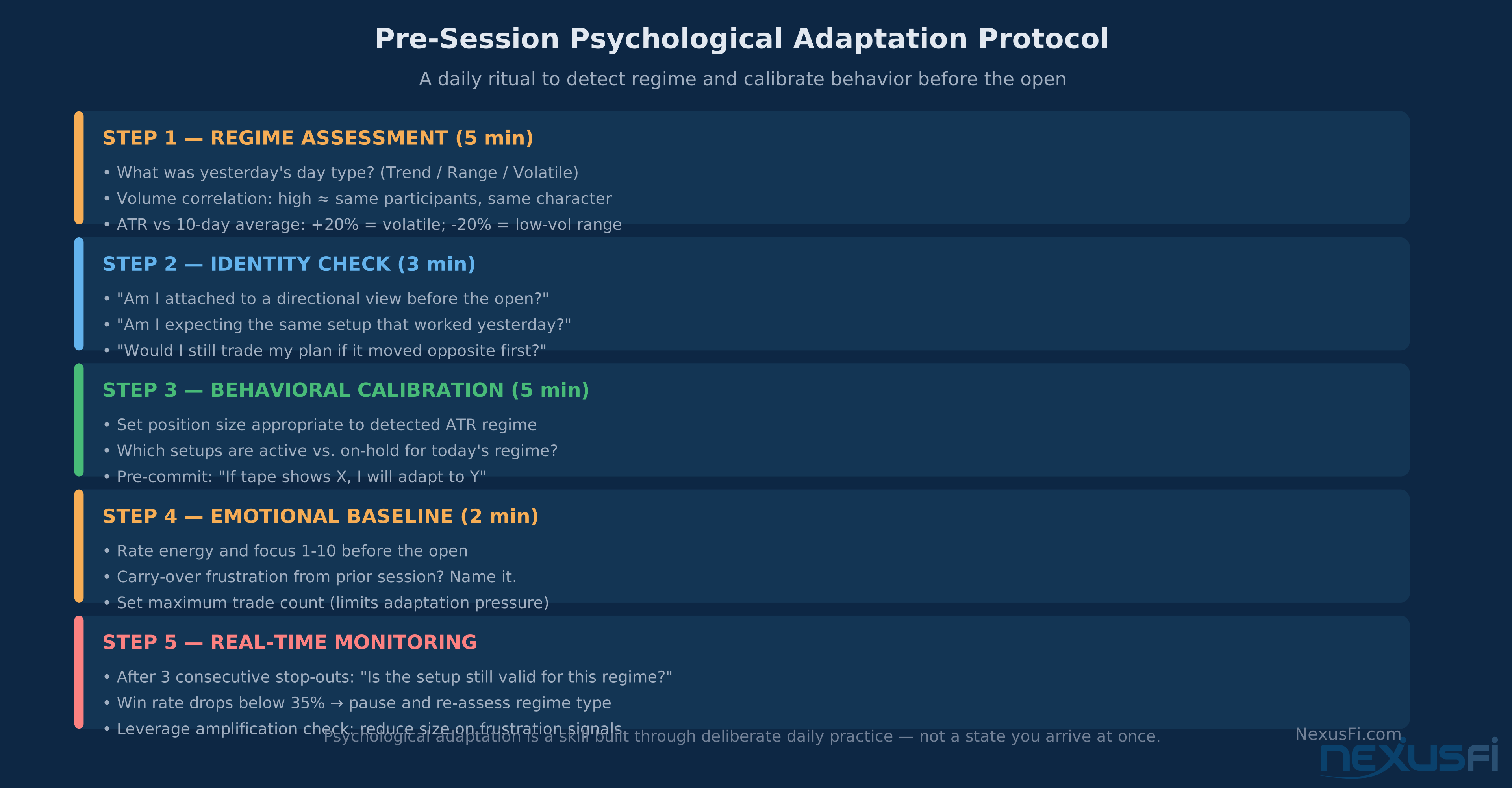
The following protocol applies the ABCD framework to daily futures trading practice. It is not a technique for predicting regime changes — that belongs in the Market Regime Detection article. This protocol addresses the psychological preparation for operating across regimes.
Pre-session (10-15 minutes before open):
First, perform an objective regime assessment. What was yesterday's day type? Run your ATR check — current vs. 10-session average. This is behavioral priming: choosing your psychological posture before the market's behavior can trigger an emotional reaction.
Second, run your identity check: "Am I attached to a directional view before the open?" and "Would I still follow my plan if the market moved opposite in the first hour?" These questions surface emotional fixedness before it can operate unconsciously.
Third, set size and regime-appropriate setup list. Which setups are active for today's likely regime? Which go on hold? Pre-committing creates a frame that makes in-session adaptation easier.
Intraday (real-time):
Monitor your trade outcomes structurally, not just financially. After any sequence of 3 consecutive stop-outs, ask: "Is the setup valid for the current regime?" Not "should I try again?" Not "is my execution off?" The regime question first.
Track your emotional state as a regime signal. Frustration is information. Steenbarger's point is that emotional disruptions signal something about the environment, not just about the trader. If you feel the urge to "get it back," that's a physiological signal that your current approach is mismatched to the environment. The frustration is real data.
Post-session (end of day):
Review trades through a regime lens. What regime did the market present? What regime did you trade? If they diverged, what maintained the mismatch? The goal is not to assess P&L but to build the library of regime recognition signals that shortens future recognition lags.
Limitations and When This Framework Fails #
The ABCD framework is a developmental model, not a trading signal. It addresses how to think and behave when markets change — not how to detect regime changes before they're obvious, and not how to quantify which setups to add or remove. Those applications belong in adjacent articles.
The framework does not eliminate losses during regime transitions. Even with perfect psychological awareness, the first few sessions of a regime change will likely produce suboptimal results because the behavioral adjustment takes time. The goal of the framework is to shorten the recognition lag and prevent the loss amplification that comes from emotional fixedness and identity protection — not to make regime transitions painless.
The framework is harder for experienced traders with long success histories. Paradoxically, a trader who has successfully applied the same approach for five years has more identity invested in that approach than a newer trader. The emotional cost of adaptation is higher, even though the skill level to execute the new approach faster is also higher. This is why Steenbarger's work with professional traders focuses heavily on the identity work in the B component — building strengths that transcend any regime.
Timeframe matters for how regimes manifest. Day traders experience regime changes as daily shifts, swing traders as multi-week shifts in trend structure, position traders as quarterly or annual shifts. The psychological mechanisms are identical, but adaptation timelines differ much — a slow-adapting day trader loses weeks of edge while a position trader in the same situation loses months.
The framework is necessary but not sufficient. You can't psychologically adapt if your technical toolkit doesn't include setups for the new regime. The ABCD framework prepares the psychological soil — but the behavioral repertoire must exist before readiness to deploy it produces results. See the Market Regime Detection and Deliberate Practice for Trading Performance articles for developing the technical library.
Avoid over-adaptation: Some traders become hyperactive in their regime reads — switching setups on every two-hour rotation, second-guessing their day type after every stop-out. The recognition lag has an opposite failure mode: premature regime switching driven by impatience. The corrective is objective metrics (ATR, win rate by setup) rather than subjective interpretation of each trade.
NexusFi Community Perspective #
The psychological dimension of regime adaptation is one of the most discussed themes on NexusFi, often surfacing as questions about why a "good" system suddenly stops working.
@Fluid Fox put the core problem plainly: "My single biggest weakness right now is not adapting to / not accepting changing market conditions or trading improbable outcomes stubbornly in the hopes of getting a big winner."
The critical phrase embedded in Fluid Fox's longer reflection is "what is happening now" — the present-tense orientation that distinguishes adaptive from fixed traders. The challenge isn't accessing information about what the market is doing. It's maintaining the perceptual openness to see it without the distortion imposed by what you need it to do.
The humility he describes is the precondition for the A component of Steenbarger's framework. You can't adapt what you refuse to see. The alternative — continued application of a mismatched approach under the banner of "discipline" — is always more expensive.
Knowledge Map
References This Article
Articles that build on this topicCitations
- — Is Trading Psychology a Hoax? (2013) 👍 11“Markets are always changing, as the players change, and the algorithms change, hence the term 'ever-changing cycles.' Most traders remain static and trade in a way that is most comfortable emotionally, and not necessarily most profitable.”
- — What Is the Source of Your Edge?? (2020) 👍 24“I have a growth mindset. I'm never done learning, which is convenient as the market is never done teaching.”
- — What is your single biggest weakness? (2020) 👍 7“My single biggest weakness right now is not adapting to / not accepting changing market conditions.”
- — Winning attitudes create winning traders (2024) 👍 31“Their identity and mental state are tied to their trading performance, win or lose.”
- — Purposeful Drivel (2013) 👍 9“I realized I was asking the market to validate me, to prove to me I really do know how to trade.”
- — McJackson's Journal (2018) 👍 10“Changing chronic behavior requires finding ways to completely change your reference points, and maybe even your identity.”
- — Spoo-nalysis ES e-mini futures S&P 500 (2015) 👍 26“Trend following approaches s/b stopped during sideways markets. Mean-reverting methodologies s/not be used during momentum surges.”
- — OK- this question is for my wife. (2020) 👍 7“The market will change character in some way, and the old methods that worked well will stop working.”
- — I finally blew up an account (2021) 👍 8“The pain of the losing day is so ingrained, nay, etched into your soul that you think you'll never forget it -- and you cling to it.”
- — Why do people keep changing their methods? (2021) 👍 4“Market environments change. Volatility conditions change from expanding to contracting.”
- — Finally Turning the Corner (2020) 👍 8“I was hell bent on doing it my way using just my renko patterns because I had spent a ton of time identifying and tracking them.”
- Brett Steenbarger — How To Adapt To Changing Markets (2020)
- Brett Steenbarger — Trading Psychology 2.0: From Best Practices to Best Processes (2015)