



Market Type Classification for Adaptive Trading: The Van Tharp Framework
Overview #
Market type classification is the practice of identifying which of six distinct market environments currently exists — and then adapting your strategy, position sizing, and expectations so. Van Tharp, whose work on position sizing and trading psychology has shaped a generation of systematic traders, identified this six-type framework as the foundation of adaptive trading. The argument is straightforward: a trend-following system applied during a sideways market will grind through losses that a mean-reversion approach would have harvested. The market doesn't care which system you believe in — it rewards those who recognize what kind of game is actually being played.
For futures traders, market type classification carries additional weight. Leverage amplifies regime mismatch. A trend-following system that might grind sideways in an equity account can generate a margin call in a futures account when applied to a choppy, range-bound market. This reality makes the ability to identify and adapt to market types not just a performance enhancement — it's a risk management necessity.
This article covers Van Tharp's six-type classification system, the practical methods for identifying each type in live futures markets, how strategy selection should adapt to each regime, and the risk management implications that most traders underestimate until they've paid for the lesson.
Van Tharp's Six Market Types #
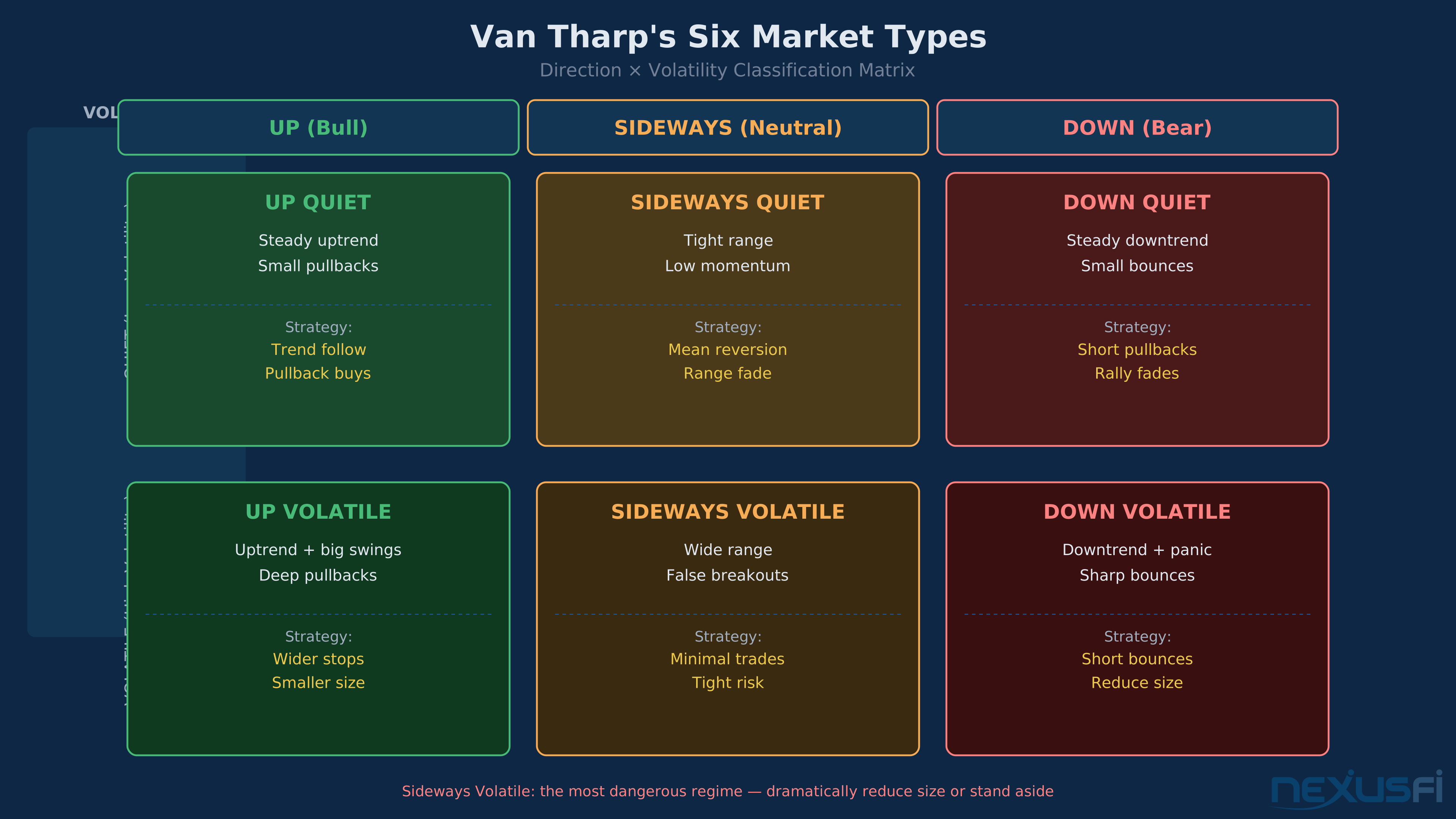
Tharp's classification begins with two orthogonal dimensions: direction (bull, bear, or sideways) and volatility (quiet or volatile). The combination produces six distinct market environments:
| Market Type | Direction | Volatility | Character |
|---|---|---|---|
| Up Quiet | Bull | Low | Steady uptrend, small pullbacks |
| Up Volatile | Bull | High | Uptrend with large swings |
| Sideways Quiet | Neutral | Low | Tight range, low momentum |
| Sideways Volatile | Neutral | High | Wide range, false breakouts |
| Down Quiet | Bear | Low | Steady downtrend, small bounces |
| Down Volatile | Bear | High | Downtrend with large panic swings |
Each type rewards a different approach. Each type punishes approaches designed for a different environment. The critical insight is that the same instrument — ES, CL, NQ — moves through all six types across time. Traders who lock into a single approach pay tuition whenever the market shifts to a type that doesn't suit their method.
Some implementations add a seventh type: chaotic, where no persistent structure exists and directional bias is absent even over short windows. In futures markets, this often appears around major economic releases or geopolitical shocks. The correct response to chaotic markets is typically reduced size or no position.
Why Six Types, Not Two #
Many traders simplify to "trending" and "ranging" — a binary that creates problems. A strong bull market and a volatile bull market require different approaches even though both are trending up. A strong uptrend supports wider trailing stops, larger positions, and patience to let runners develop. A volatile uptrend requires tighter management, smaller initial positions, and awareness that the pullbacks will be deep enough to stop out normal-sized positions.
Similarly, a sideways quiet market (tight range, predictable oscillation) and a sideways volatile market (wide range, false breakouts, whipsaws) are at the core different trading environments even though both lack directional trend. The quiet market rewards narrow mean-reversion entries. The volatile market punishes them.
Identifying Market Type in Futures #
Classification requires objectivity. The goal is a repeatable process — not a subjective judgment that changes based on how yesterday's trade went. NexusFi member @Barz, working through Tharp's "Definitive Guide to Position Sizing Strategies," documented the core identification methodology:
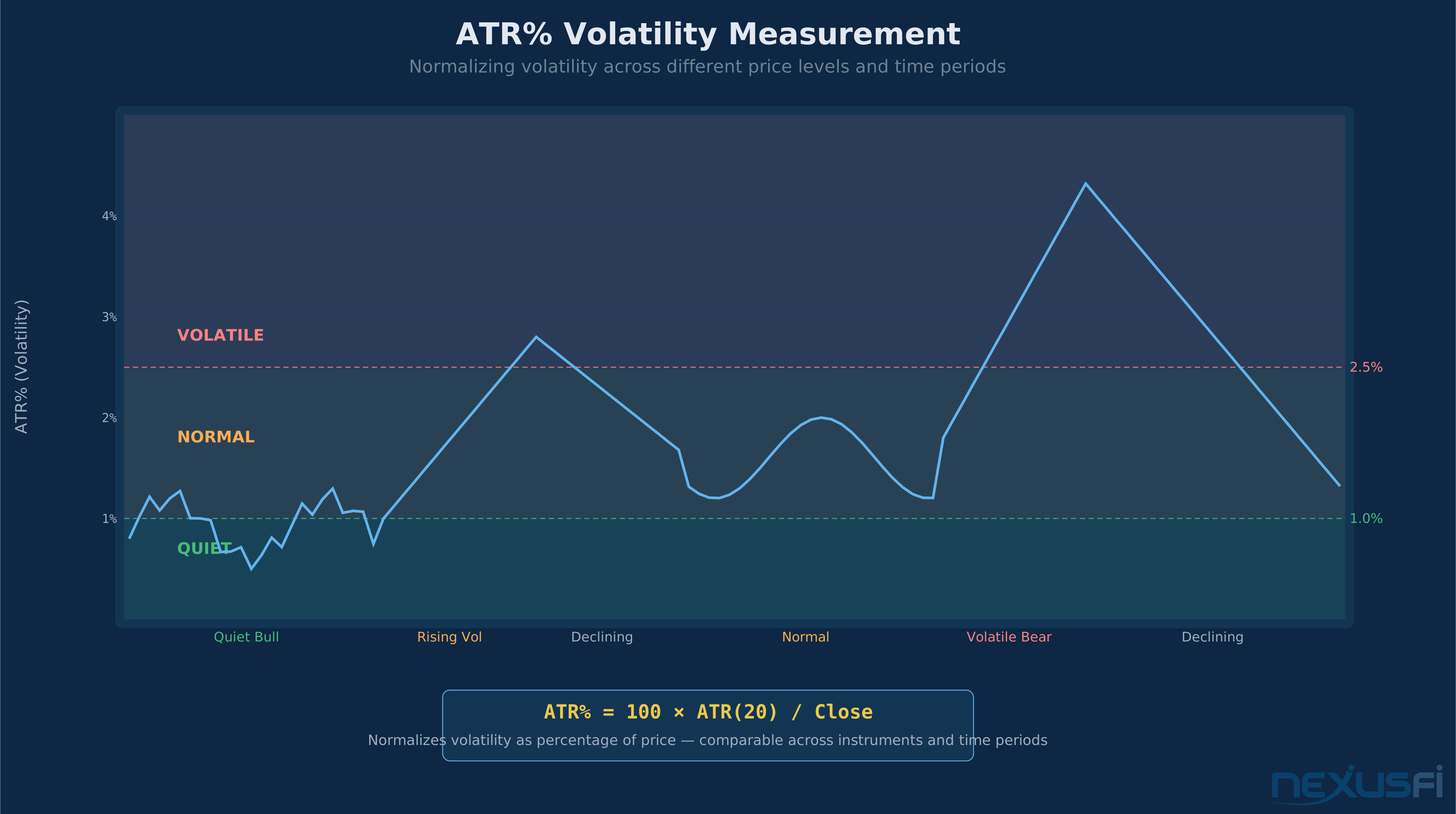
"He suggests using a 20 day ATR% indicator for measuring volatility. The ATR% is just the 20 day ATR divided by the current day close times 100... The nice thing about this is that it normalizes the volatility across time." — @Barz
The ATR% measure (ATR normalized as a percentage of price) solves a problem that raw ATR creates for futures: contract prices change dramatically across time, so raw ATR dollar values aren't comparable. ATR% provides a consistent volatility measure regardless of whether ES is at 3000 or 6000.
The Four Pillars of Classification #
1. Price Structure
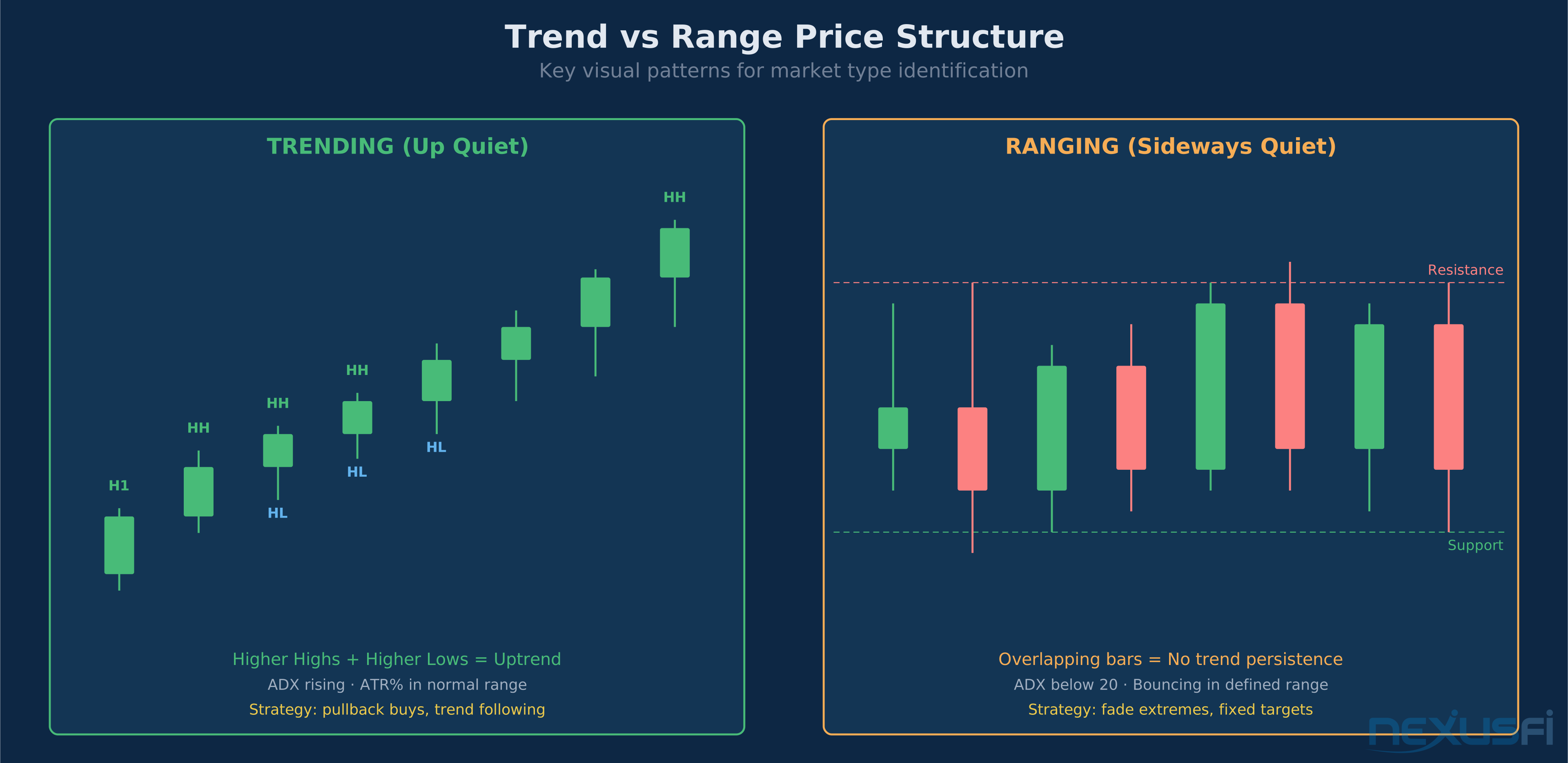
Price structure is the most fundamental classification signal. In a trending market — up or down — you see a consistent pattern of impulse moves in the trend direction followed by corrective pullbacks that fail to reach prior swing lows (in an uptrend) or prior swing highs (in a downtrend). This is the classic higher-high, higher-low pattern for uptrends and lower-high, lower-low for downtrends.
In a ranging market, swings reverse before establishing new extremes. The market oscillates between identifiable support and resistance without breaking through. Overlapping price bars on a daily or 4-hour chart indicate range conditions.
Experienced futures traders look at multiple timeframes: the daily chart for the primary classification, the 4-hour or hourly for execution-timeframe context, and intraday structure for specific sessions. NexusFi member @tigertrader, in his long-running Spoo-nalysis journal on ES futures, describes the practical observation: "trend following approaches s/b stopped during sideways markets - mean-reverting methodologies s/not be used during [trend markets]" — (@tigertrader, https://nexusfi.com/showthread.php?t=13452&p=503500#post503500).
2. Trend Strength Indicators
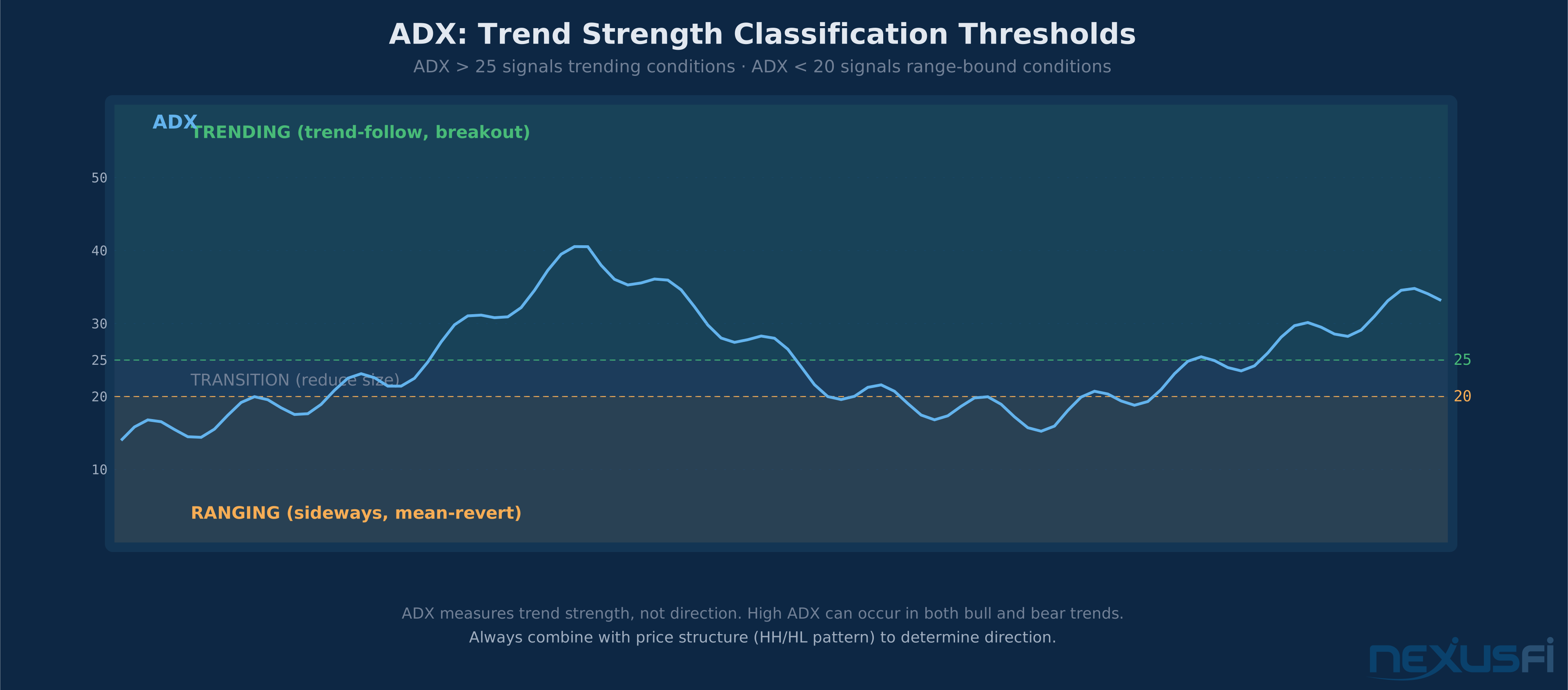
After identifying directional bias from structure, quantify strength. The most commonly referenced tool is ADX (Average Directional Index). ADX above 25 generally indicates trending conditions; ADX below 20 suggests range-bound or choppy conditions; ADX in the 20-25 zone is transitional.
NexusFi member @SodyTexas, in a thread specifically on Van Tharp market type classification, outlined four quantitative approaches: "1) the good old ADX. 2) Efficiency Ratio. 3) Price Density. 4) Fractal dimension." [2]
The Efficiency Ratio (ER), developed by Perry Kaufman, measures how efficiently price moves from one point to another relative to total path length. An ER near 1.0 indicates highly directional movement (efficient trend). An ER near 0 indicates choppy, oscillating movement (inefficient, range-bound). This metric is especially useful because it normalizes across instruments and timeframes.
Price Density and Fractal Dimension are more advanced mathematical approaches that measure the "roughness" of price movement. High price density or high fractal dimension indicates a ranging, choppy market; lower values indicate a smoother, trending market.
For practical futures trading, ADX combined with price structure provides a reliable two-factor classification that balances objectivity with computational simplicity.
3. Volatility State
The second dimension of Tharp's matrix — quiet versus volatile — is measured by ATR normalized as a percentage of price. The implementation:
ATR% = 100 × ATR(20) / CloseA threshold for "volatile" versus "quiet" depends on the instrument and historical context. Rather than using fixed values, compare current ATR% to the instrument's historical 25th and 75th percentile ATR% values. Markets above the 75th percentile are volatile; below the 25th percentile are quiet; between is normal.
For ES (S&P 500 futures), this means classifying volatility relative to the full history of ES behavior, not relative to some abstract constant. Periods of VIX below 15 often produce quiet markets; periods above 25 often produce volatile markets — but using ATR% directly on price keeps the metric instrument-native.
4. Session and Timeframe Context
Futures markets operate around the clock, but classification needs to distinguish between the liquid RTH (Regular Trading Hours) session and the thinner Globex overnight session. A market that is trending cleanly during RTH may show apparent choppiness during overnight low-volume periods. Classification for futures trading should prioritize RTH structure.
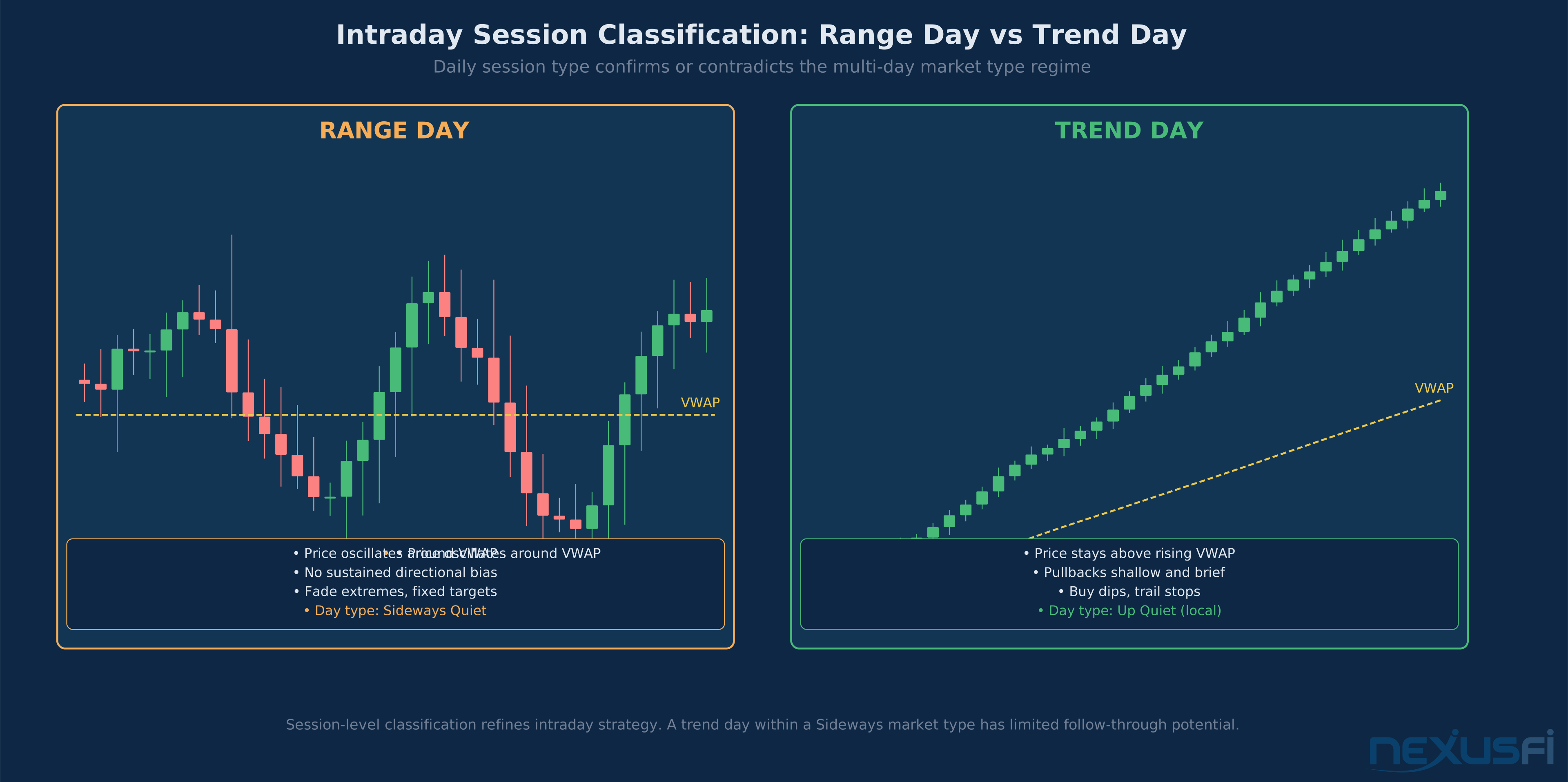
Within RTH sessions, @tigertrader's long-running analysis of ES identifies a practical classification that maps to daily session types: "a Range Day — The market will oscillate around an average price value with relatively low volatility through the day, likely ending [near open]." On trend days, the opposite — the market establishes direction early and the 1EMA of $TICK stays persistently positive or negative. (@tigertrader, https://nexusfi.com/showthread.php?t=13452&p=485497#post485497; https://nexusfi.com/showthread.php?t=54919&p=806961#post806961)
The session-level classification (trend day vs. range day) is a sub-classification within the broader multi-day market type framework. Both matter: a trend day in a sideways-volatile longer-term market requires different expectations than a trend day within an established strong uptrend.
Multi-Timeframe Alignment #
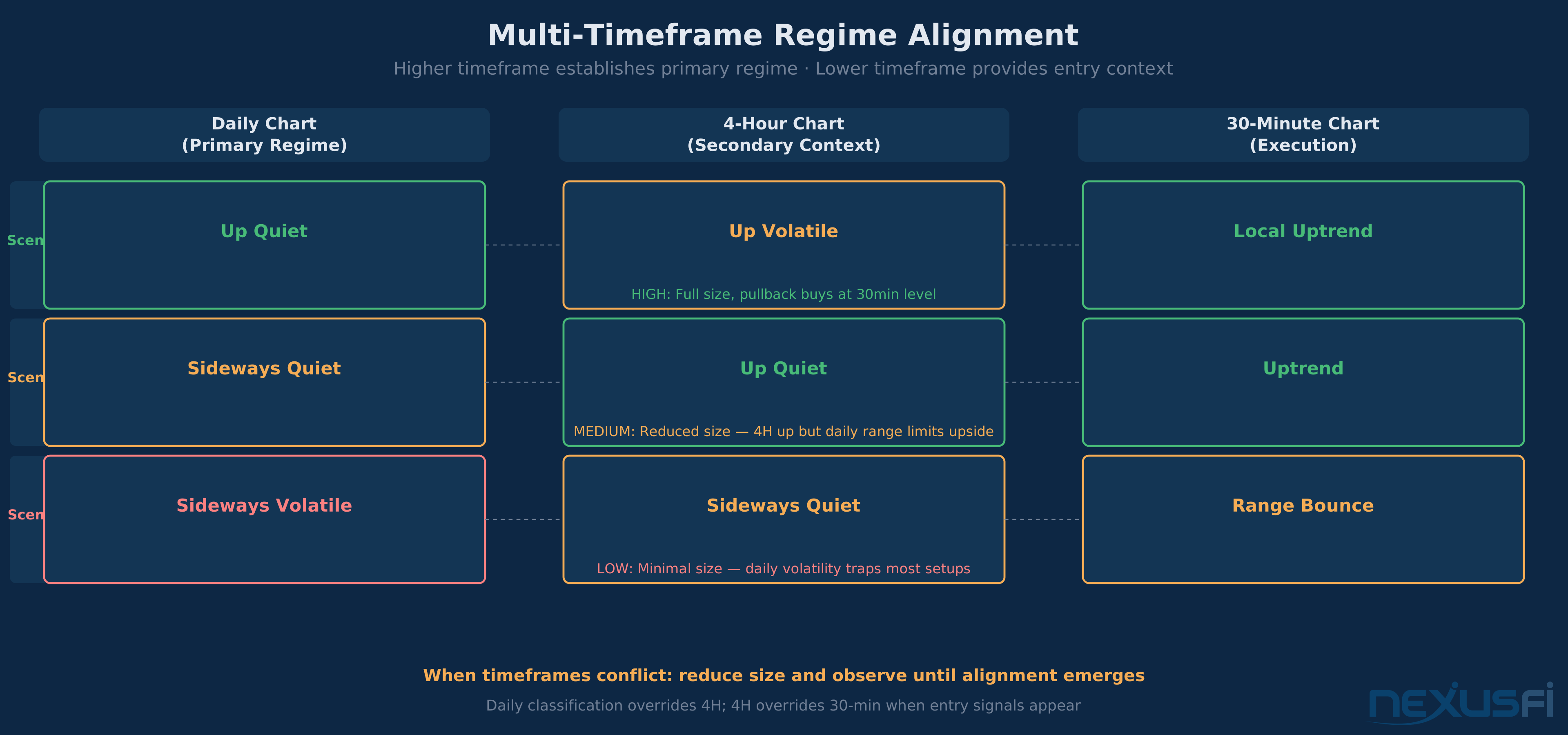
Classification can differ by timeframe. The daily chart may show sideways conditions while a 15-minute chart shows a clean local uptrend. The hierarchy: higher timeframe establishes the primary regime; lower timeframe provides entry context within that regime.
For swing futures traders operating on daily charts, daily market type is the primary classification. For intraday traders, the daily and 4-hour charts establish the broader regime; the 30-minute or 15-minute chart provides the execution-level classification.
Conflicts between timeframes require caution. When the daily chart is sideways-volatile while the 15-minute chart shows a trending setup, position sizing should be reduced and expectations lowered. The higher timeframe environment limits what the lower-timeframe setup can produce.
The Gray Zone #
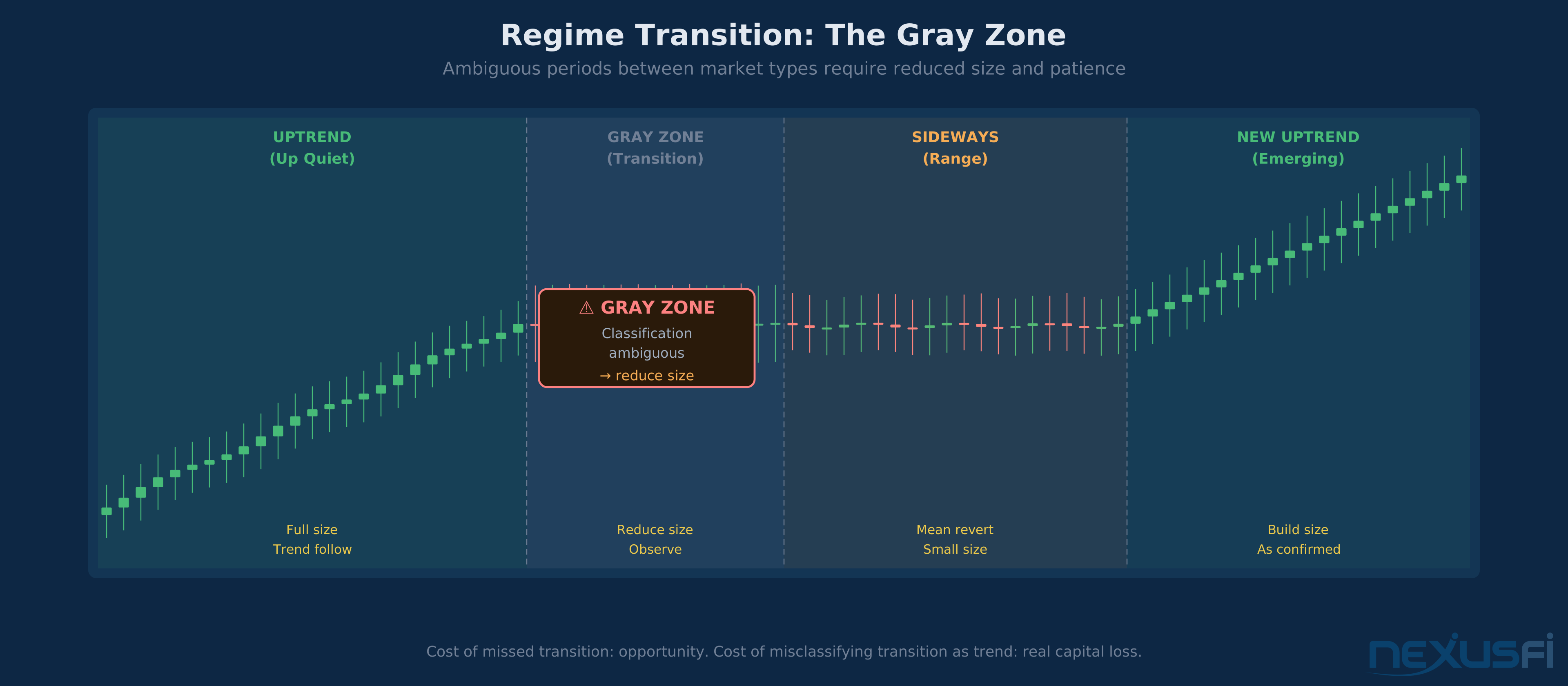
Not every market cleanly fits one of six boxes. During transitions between market types, classification becomes ambiguous. Trend strength readings disagree with price structure. Volatility expands even as direction is unclear. These gray zone conditions — which NexusFi member Big Mike has noted can be detected via Range charts showing "chop" patterns (@BigMike, https://nexusfi.com/showthread.php?t=770&p=7337#post7337) — warrant reduced position sizing regardless of which system signal appears.
The rule for gray zones: when classification is uncertain, reduce size. The cost of misclassification is asymmetric — applying a trend-following approach in a ranging market during a period you falsely classified as trending costs more than the gain from correctly classifying a difficult market.
Strategy Matching by Market Type #
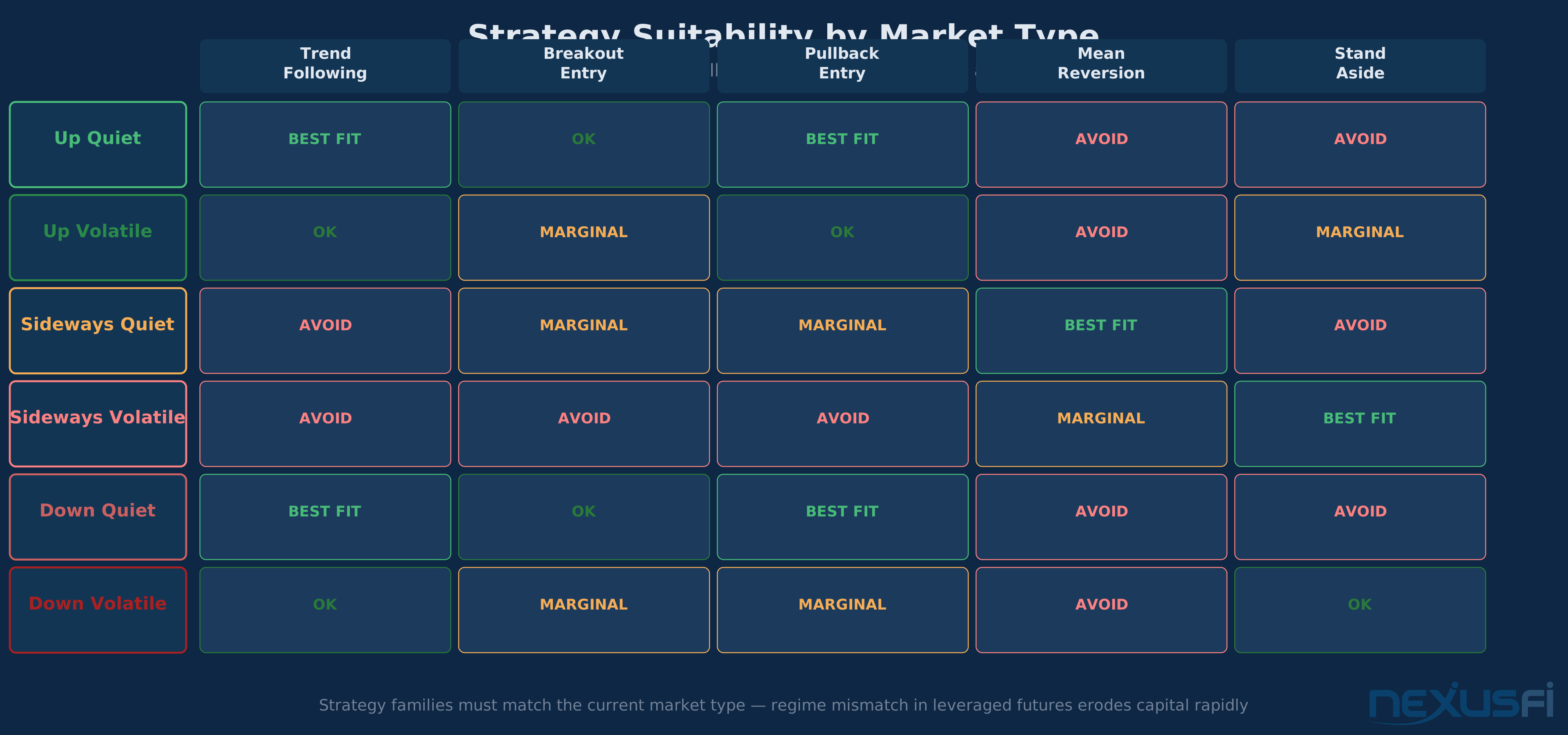
The payoff of classification is strategy selection. Each market type rewards specific approaches and punishes others. The table below provides the high-level mapping: Market Type Favored Strategies Avoid Up Quiet Trend following, pullback buys Short-side, aggressive fades Up Volatile Pullback buys (wider stops), breakout continuation Tight trailing stops, aggressive pyramiding Sideways Quiet Mean reversion, range fade, scalping at extremes Trend following, breakout entries Sideways Volatile Smaller positions, tight risk control Any large directional bet Down Quiet Trend following shorts, rally fades Long side except at extremes Down Volatile Short entries on bounces, awareness of sharp reversals Long-side breakouts, wide exposure Up Quiet Markets # The most forgiving market type for trend-following systems. Price moves steadily upward with modest pullbacks. Entries on pullbacks to the 20 EMA or moving average clusters work reliably. Stops can be set with normal volatility-adjusted width, and trailing stops can follow price without being prematurely triggered. For futures, an Up Quiet market is the environment where holding overnight positions and letting trades develop produces the best results. Position sizes can be at or near maximum risk tolerance. The primary mistake in this regime is taking profits too early — the steady trend creates a false sense of exhaustion that causes premature exits. Up Volatile Markets # More challenging than the quiet version. The uptrend is intact but the pullbacks are deeper and faster, and the upside moves can overshoot before reversing. Standard trailing stop placement gets triggered during normal pullbacks, resulting in premature exits followed by re-entries at worse prices. Adaptations: widen stops to account for the higher ATR, reduce initial position size to maintain the same dollar risk per trade, and adjust profit targets upward to reflect the larger swing potential. For intraday futures traders, volatile up markets can produce excellent intraday range — but require recognition that a trade going against you will go further against you than it would in a quiet market before it turns. Sideways Quiet Markets # Trend-following systems bleed in sideways quiet markets. This is the most commonly misunderstood environment — traders trained on trend-following approaches keep taking breakout entries that fail to follow through, losing a small amount on each trade and accumulating a series of small losses that produce significant drawdowns. The appropriate strategies are mean-reversion: enter near support, exit near resistance; enter near resistance, exit near support. Profit targets are fixed (at the range extremes) rather than trailing. Stops are placed beyond the range with assumption that a stop-out is a signal that the range has broken — either a legitimate breakout (requiring a strategy shift) or a false break (potentially an entry in the other direction). NexusFi member
Sideways Volatile Markets #
The most dangerous environment for most trading approaches. False breakouts are frequent — price appears to break above resistance, triggers breakout buys, then immediately reverses and moves to the other extreme. Positions get stopped out from both directions. The market punishes both trend traders (who see false breakouts) and range traders (who get caught in the explosive volatility when breaks are real).
The correct response is dramatic size reduction or elimination of new positions. Preserving capital during volatile ranging conditions is itself a positive outcome. The market is in a regime where expectancy across most systems is near-zero or negative. Sitting out or trading very small preserves equity for when the regime shifts to something more tradeable.
Down Quiet Markets #
The mirror of Up Quiet. Steady downtrend with modest bounces. Short entries on bounces to moving average levels work reliably. The primary challenge is psychological — most traders and most algorithmic systems have longer histories of being long than short. The same discipline that works in an uptrend applies here, but applied to the short side.
For futures, this is one of the environments where short-side performance often surprises traders accustomed to equity markets. Futures allow as natural a short position as a long one. Down Quiet markets often produce smooth, steady short-side opportunities in instruments like ES, NQ, and commodities.
Down Volatile Markets #
Bear markets combined with high volatility are the most psychologically destructive environment. Sharp counter-trend bounces — bear market rallies — can be violent enough to stop out even properly positioned shorts. Panic declines can be faster than market orders can fill.
The approach: trade smaller, take profits faster, and expect the unexpected. Short entries on bounces remain valid, but the expectation is not a smooth grind down — rather, a series of directional moves interspersed with sharp bounces that can cover multiple days of previous trend in hours.
Risk Management Adaptation #
Classification changes not just strategy but also how risk is sized and managed. This section covers the core principles; a dedicated article on position sizing by market type provides the full methodology.
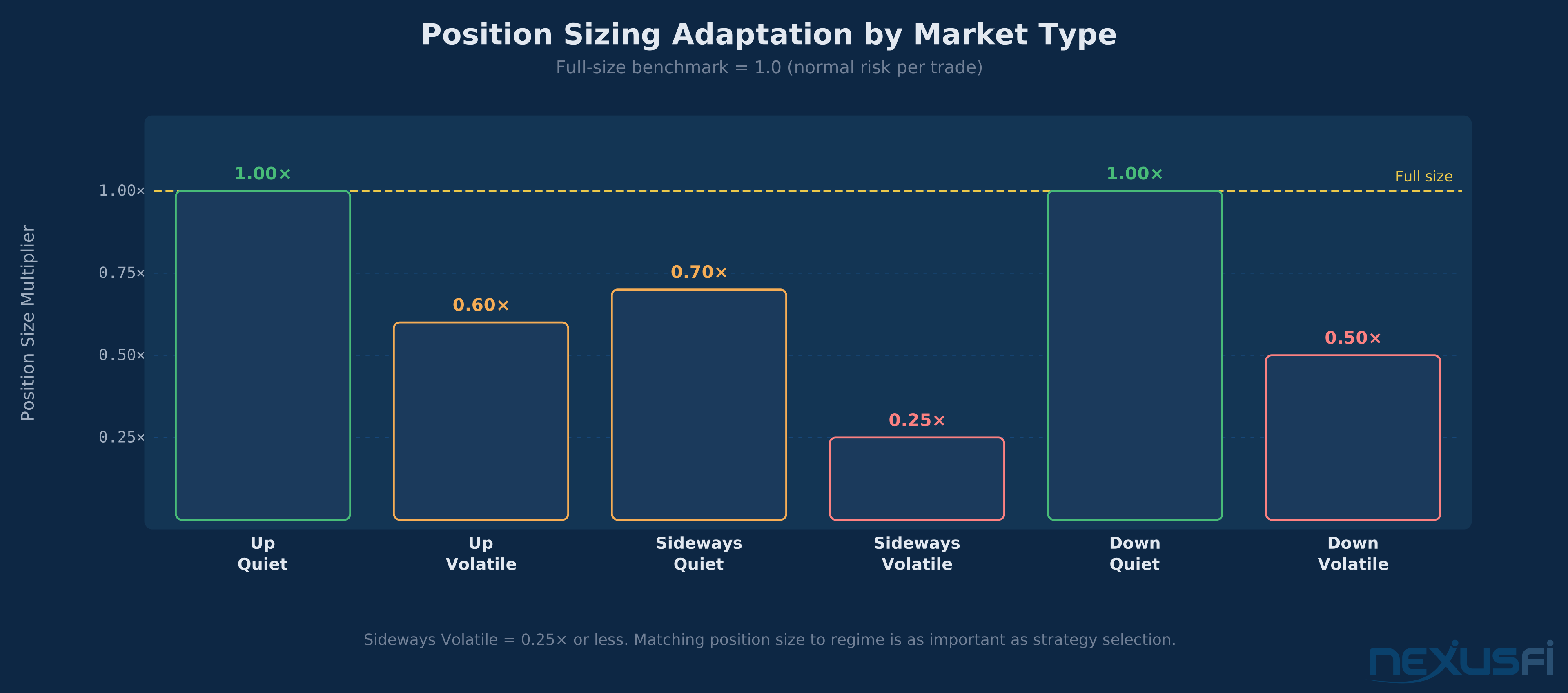
Position size by regime: Full-size positions are appropriate in Up Quiet and Down Quiet environments where the trend is steady and ATR is normal. In volatile markets (either direction), reduce position size to maintain dollar risk within acceptable bounds at the same percentage stop. In Sideways Volatile, reduce to minimal size.
Stop width: Volatility-adjusted stops (using ATR or ATR%) provide consistent dollar risk per trade regardless of the market's current volatility level. A stop set at 2× ATR in a quiet market and 2× ATR in a volatile market risks the same number of ATR units, but risks different dollar amounts. As volatility rises, either widen the stop (accepting higher dollar risk) or reduce position size (maintaining dollar risk). For futures with leverage, position size reduction is typically the better choice.
Profit target approach: Volatile markets support wider profit targets. Quiet markets support fixed targets. Ranging markets support exits at range extremes. Trending markets support trailing stops.
When to skip: Every market type classification should include a "no trade" condition. Sideways Volatile markets warrant this by default. Any gray zone transition period warrants reduced size at minimum. During major economic releases (FOMC, CPI, NFP), the brief window around the release often produces artificial volatility that doesn't represent any of the six stable types — stepping back during these windows is risk management, not opportunity aversion.
The System Quality Number and Classification #
Tharp's classification framework is connected to his System Quality Number (SQN), a metric for evaluating trading system performance. The SQN is calculated as:
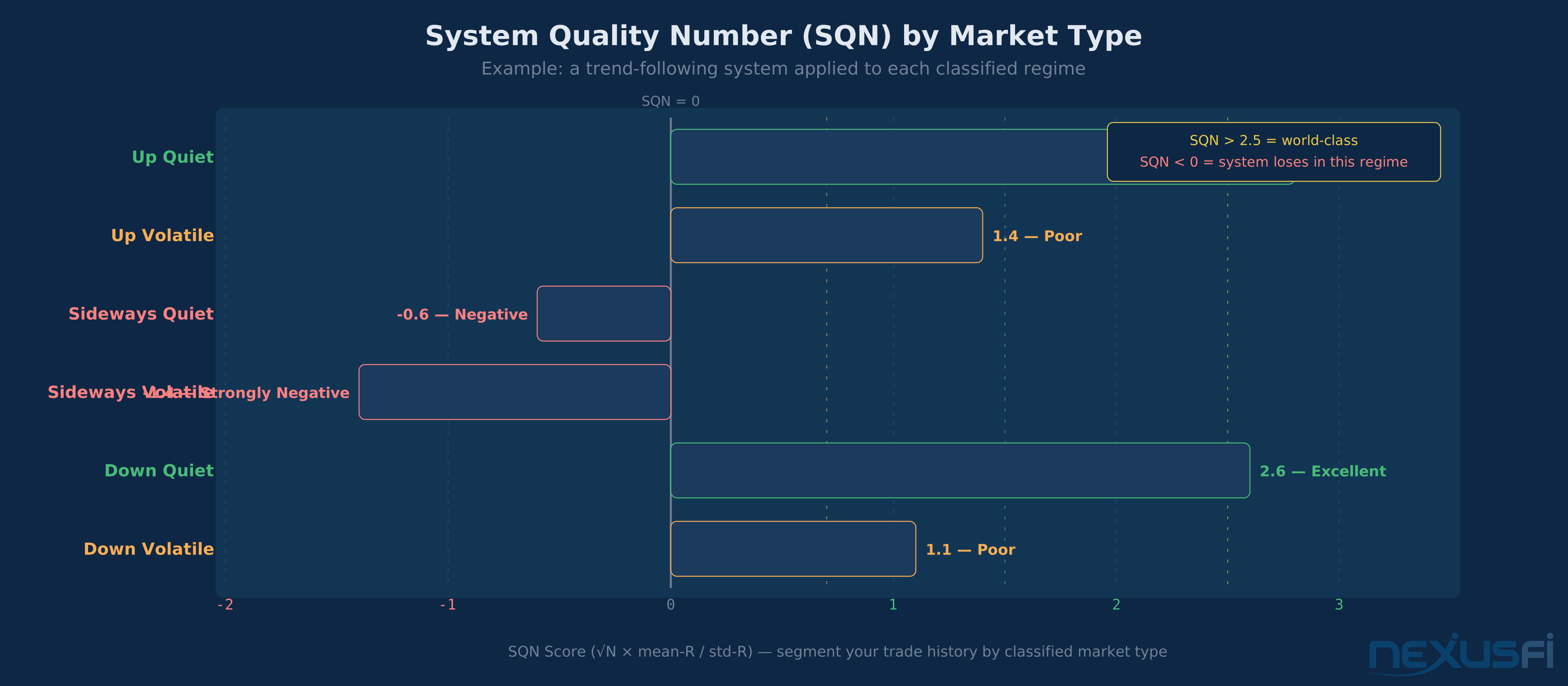
SQN = √N × (Mean R-multiple / Standard Deviation of R-multiples)Where R-multiples represent each trade's gain or loss as a multiple of initial risk. By segmenting your trade history by market type classification and computing SQN separately for each type, you can empirically verify which market types your system handles well and which it handles poorly.
This is the validation component that serious traders implement. Rather than accepting that a trend-following system "doesn't work in ranges" as an article of faith, compute the SQN for your system's trades during classified ranging periods versus classified trending periods. The data either confirms the expectation (low SQN in ranges, high SQN in trends) or reveals something unexpected about how your specific implementation interacts with different regimes.
NexusFi member @SodyTexas's observation on this: the market type calculation as Tharp defines it for this purpose requires actual trade data and R-multiple history, not just price data — it's a system-specific measure, not a pure price measure. (@SodyTexas, https://nexusfi.com/showthread.php?t=56971&p=840974#post840974)
The practical implication: most traders should start with the classification framework for strategy selection (use trend-following in trending markets, mean-reversion in range markets) before attempting to compute SQN by market type. The latter requires enough trade history in each classified environment to produce statistically meaningful results.
Common Mistakes in Market Type Classification #
Recency bias in classification: The most recent price action dominates subjective assessment. After three strong trend days, the market "feels" like it's trending even when the longer-term structure is sideways. Build classification rules that look at sufficient historical context — a 20-day window for volatility, a 50-100 day window for trend assessment.
Single-indicator classification: ADX alone is insufficient. A market can show high ADX readings during transition periods that look like trend but aren't. Price structure confirmation is essential.
Ignoring the volatility dimension: Many traders classify markets as "trending" or "ranging" without separately classifying volatility. An Up Volatile market requires different risk management than an Up Quiet market even though both are trending. Missing the volatility dimension leads to position sizes that are too large for the actual risk environment.
Failing to update: Market type classification is not set-and-forget. Regimes shift. A market that was Up Quiet for three months can transition to Sideways Quiet or Up Volatile within days. Update your classification periodically — daily for swing traders, at minimum weekly.
Applying the classification without adapting: Some traders go through the exercise of classifying the market but then trade identically regardless of the result. Classification without adaptation is a waste of time. The point is the adaptation — changing strategy type, position size, stop width, and profit target approach to match the current environment.
Transition Periods and Regime Uncertainty #
The most difficult moments for classification-based trading are not the clearly defined regimes — it's the transitions between them. An uptrend begins to show overlapping bars, ADX declines, and volatility picks up. Is this a transition to Sideways or a temporary consolidation within the trend? A ranging market breaks out above resistance. Is this a legitimate transition to Up Quiet or a false break that will reverse?
The operational rule during transitions: reduce size and observe. Wait for confirmation of the new regime before returning to full-size trading in the strategy appropriate for that regime. The cost of the missed entry during regime confirmation is the cost of false-break protection. In volatile markets, that cost is well worth paying.
Futures traders face a specific challenge during macro-driven regime transitions: the transition can be fast. A CPI print or FOMC decision can shift the multi-day market type within a single session. Pre-positioning classification rules for these events — specifically reducing size heading into known high-impact events — is part of strong adaptive trading practice.
Practical Implementation for Futures Traders #
Timeframe Selection #
Choose classification timeframes appropriate to your trading style:
- Swing traders: Classify on daily chart (primary), 4-hour chart (secondary confirmation)
- Intraday day traders: Classify on 4-hour or daily chart (primary), 30-minute (execution context)
- Scalpers: Classify on 30-minute chart (primary), 5-minute (execution context)
The primary classification timeframe determines which strategy type applies. The secondary timeframe provides confirmation and entry timing.
Instrument Considerations #
Different futures instruments have characteristic behaviors that interact with market type classification:
ES (S&P 500 futures): Highly liquid, trend-following periods interspersed with well-defined ranges. Mean-reversion strategies work well in range phases; trend-following systems with patient entries work in trend phases.
NQ (Nasdaq futures): Higher beta than ES, more volatile both in uptrends and downtrends. Up Volatile conditions are more common in NQ than ES. Position sizes for equivalent dollar risk should be smaller relative to ES sizing.
CL (Crude Oil futures): Commodity with geopolitical sensitivity. Down Volatile conditions are common — crude can fall sharply and then bounce sharply. The Sideways regime in CL often lasts longer than in equity indices before breaking directionally.
ZN/ZB (Treasury futures): Lower ATR% than equity or commodity futures. Quiet regimes are more common. Mean-reversion strategies work well during sideways phases; trend-following during periods of Fed policy shifts.
Continuous Contract Caveats #
As @Barz documented in working through the Van Tharp framework, ATR% calculation for futures requires attention to contract roll and continuous contract construction. Backadjusted continuous contracts using the offset method can show dramatic artificial discontinuities at roll periods, distorting historical ATR calculations.
For live classification, use the active front-month contract for current ATR% measurements. For historical analysis or backtesting of classification rules, ratio-adjusted continuous contracts (where available) provide more stable percentage measures. This is a nuance that equity-trained traders often overlook when first applying Tharp's framework to futures.
What Market Type Classification Does Not Solve #
Classification is a framework for strategy selection and risk adaptation. It is not:
- A complete trading system: Classification tells you which category of strategy to apply. It does not provide specific entries, exits, or parameter values.
- A market prediction tool: Classifying the current market type says nothing about what it will be next week. It increases the probability that you're applying an appropriate strategy for current conditions, not future ones.
- A solution to execution challenges: The best classification framework won't help if your execution is poor, your stops are wrong, or your position sizing methodology is flawed.
- A substitute for system testing: Know how your specific system has historically performed in each market type by segmenting your trade history by classified environment.
The framework is most powerful when combined with strong position sizing (the companion Tharp framework), tested strategies for each regime, and the discipline to switch strategies as the market shifts.
Key Takeaways #
- Van Tharp's six market types (Up Quiet, Up Volatile, Sideways Quiet, Sideways Volatile, Down Quiet, Down Volatile) provide a complete classification matrix for futures market environments.
- Classification requires objectivity: price structure analysis, trend strength measurement (ADX or Efficiency Ratio), and volatility measurement (ATR%) combined provide a repeatable, systematic framework.
- Strategy selection must adapt to market type. Trend-following systems underperform in ranging markets; mean-reversion approaches fail in trending markets. The market doesn't accommodate traders who refuse to adapt.
- Position sizing, stop width, and profit target approach all change with market type — not just strategy type. The risk management adaptation is as important as the strategy adaptation.
- Transitions between market types are the most dangerous periods. Reduce size and wait for confirmation when classification is ambiguous.
- Futures-specific considerations — session structure, instrument volatility profiles, contract roll timing — create nuances in how classification methods apply versus equity market applications of the same framework.
The traders who apply market type classification most effectively are not those who classify perfectly — they're the ones who adapt their risk exposure when they're uncertain. Classification-driven humility about when the market doesn't offer clear opportunity is often more valuable than the classification itself.
Knowledge Map
Go Deeper
Build on this knowledgeCitations
- — Van Tharp ATR% for Backadjusted Futures (2018)“He suggests using a 20 day ATR% indicator for measuring volatility. ATR% = 100 * ATR(20) / Close.”
- — Tharp Market Type Classification (2021) 👍 4“Four methods stand out: 1) the good old ADX. 2) Efficiency Ratio. 3) Price Density. 4) Fractal dimension.”
- — Spoo-nalysis ES e-mini futures S&P 500 (2015) 👍 26“trend following approaches s/b stopped during sideways markets - mean-reverting methodologies s/not be used during trend markets”
- — Spoo-nalysis ES e-mini futures S&P 500 (2015) 👍 36“a Range Day - The market will oscillate around an average price value with relatively low volatility through the day.”
- — I have no edge - Should I throw in the towel? (2020) 👍 25“1EMA of $TICK staying positive/negative. On range days the market trades above and below the VWAP.”
- — Outside the Box and then some.... (2016) 👍 19“the key to being successful in trend trading is to know when it is appropriate to use a trend trading tool box. In sideways markets trend tools fail.”
- — Detecting chop (2009) 👍 11“In my experience Range charts will show chop best.”
- — Definitive Guide to Position Sizing Strategies (2nd Edition) (2013)
- — Trading Systems and Methods (5th Edition) - Wiley Trading (2013)