



Market Regime Detection: How to Identify the Market State Before You Trade
Overview #
Every losing streak has a pattern. You find a setup that works, repeat it faithfully for two weeks, then suddenly the same setup produces five losses in a row. Nothing changed in your execution. Nothing changed in your discipline. What changed was the market regime — and your strategy didn’t notice.
Market regime detection is the discipline of identifying which of three fundamental market states is currently active — trending, ranging, or volatile — and adjusting your strategy so. It is not a trading strategy itself. It is the layer that sits beneath every trading strategy and determines whether that strategy’s edge is likely to manifest or evaporate.
> "Regime first, strategy second, entry third. The question is never just 'what is the setup?' — it is 'what is the environment, and does this setup fit?'" — NexusFi core trading principle
What Market Regimes Actually Are #
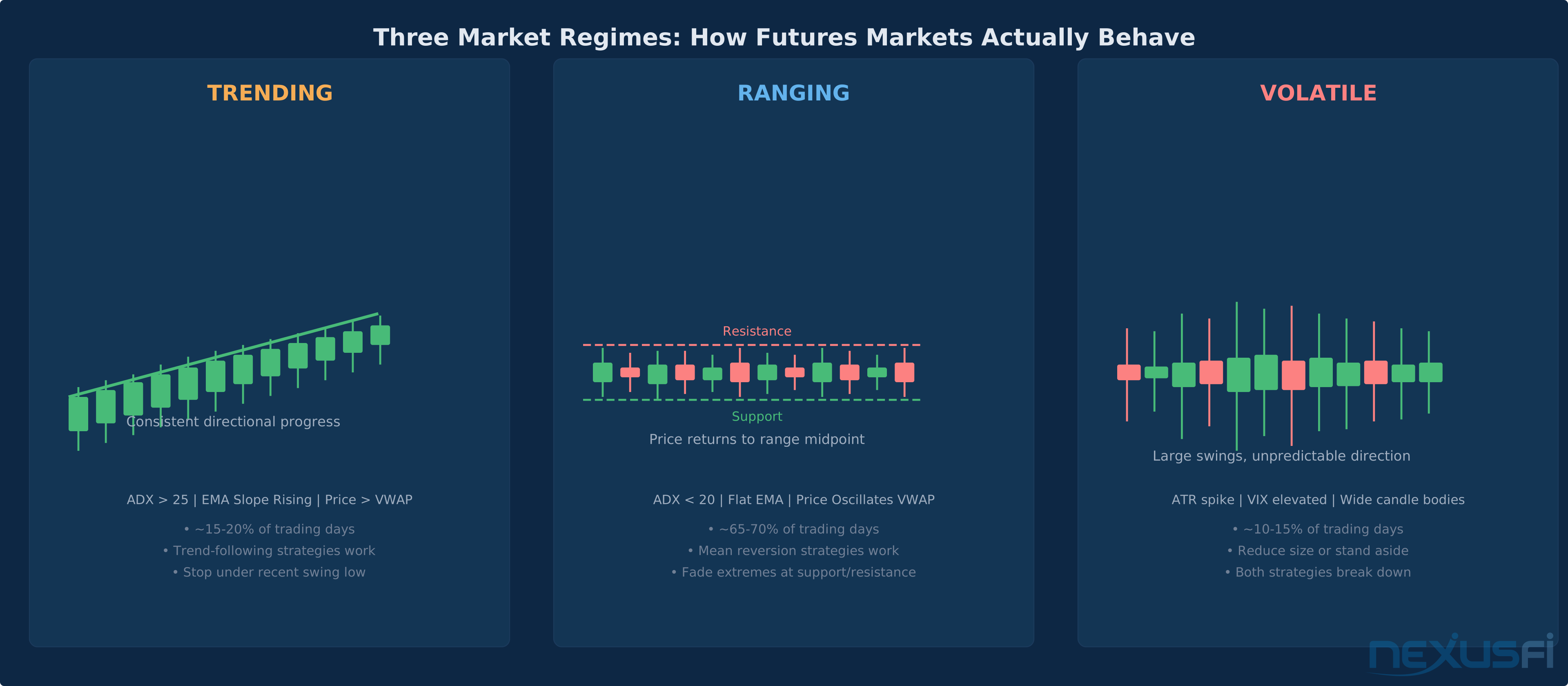
Markets exist in three states, not two. Most traders think in terms of “trending or ranging,” but this binary misses the third state that destroys more accounts than the other two combined: volatile, directionally ambiguous markets where both trend-following and mean-reversion strategies fail simultaneously.
Trending markets are characterized by persistent directional movement. Price makes consistent new highs or lows. Volume tends to confirm the direction. Trend-following strategies work because the market’s next action is more likely to continue in the prevailing direction than to reverse. Experienced ES traders like @tigertrader have documented that a true trend day opens at one extreme and closes near the opposite extreme: “on average trend days occur about once every 7 days.” The signal-to-noise ratio is high. Your setups fire cleanly and follow through.
Ranging markets are the market’s default state. A complete study by @sstheo found the market is ranging approximately 70% of the time. Price oscillates between established support and resistance, returning to a central value zone repeatedly. Trend-following strategies produce losses because every breakout attempt fails. Mean reversion strategies work because price always comes back.
Volatile markets are the exception, but they cause catastrophic damage when unrecognized. ATR spikes, candle bodies widen, gaps appear between sessions, and the normal price discovery process is disrupted by macro events, major data releases, or sudden liquidity crises. As @tigertrader noted: “trend following approaches should be stopped during sideways markets — mean-reverting methodologies should not be used during trending markets.” In high-volatility regimes, both rules apply simultaneously — making the correct answer “reduce size drastically and wait.”
The ADX: Your Primary Regime Scoreboard #
The Average Directional Index (ADX) is the most direct answer to the question: “Is this market trending?” Developed by J. Welles Wilder in 1978, ADX measures the strength of a trend without regard to direction. It tells you how strongly the market is going anywhere, not which direction it is going.
ADX interpretation zones that matter for regime classification:
- ADX below 20: Choppy, ranging market. @perryg documented this in the ADX Chop thread: “The correct way to use the ADX indicator is NOT to trend trade when the ADX is BELOW BOTH the +DI and the -DI lines.”
- ADX 20–25: Transition zone. High uncertainty. Reduce position size.
- ADX above 25: Confirmed trend. Trend-following strategies are in their element.
- ADX above 40: Strong trend. Mean reversion attempts are dangerous.
The standard lookback is 14 periods. The most important observation about ADX is directional: the level matters less than whether ADX is rising or falling. Rising ADX below 20 suggests transition to trend. Falling ADX above 25 signals trend weakening. @Fat Tails confirmed in Building Blocks of a Trading System that the directional movement system remains among the most reliable trend filters available.
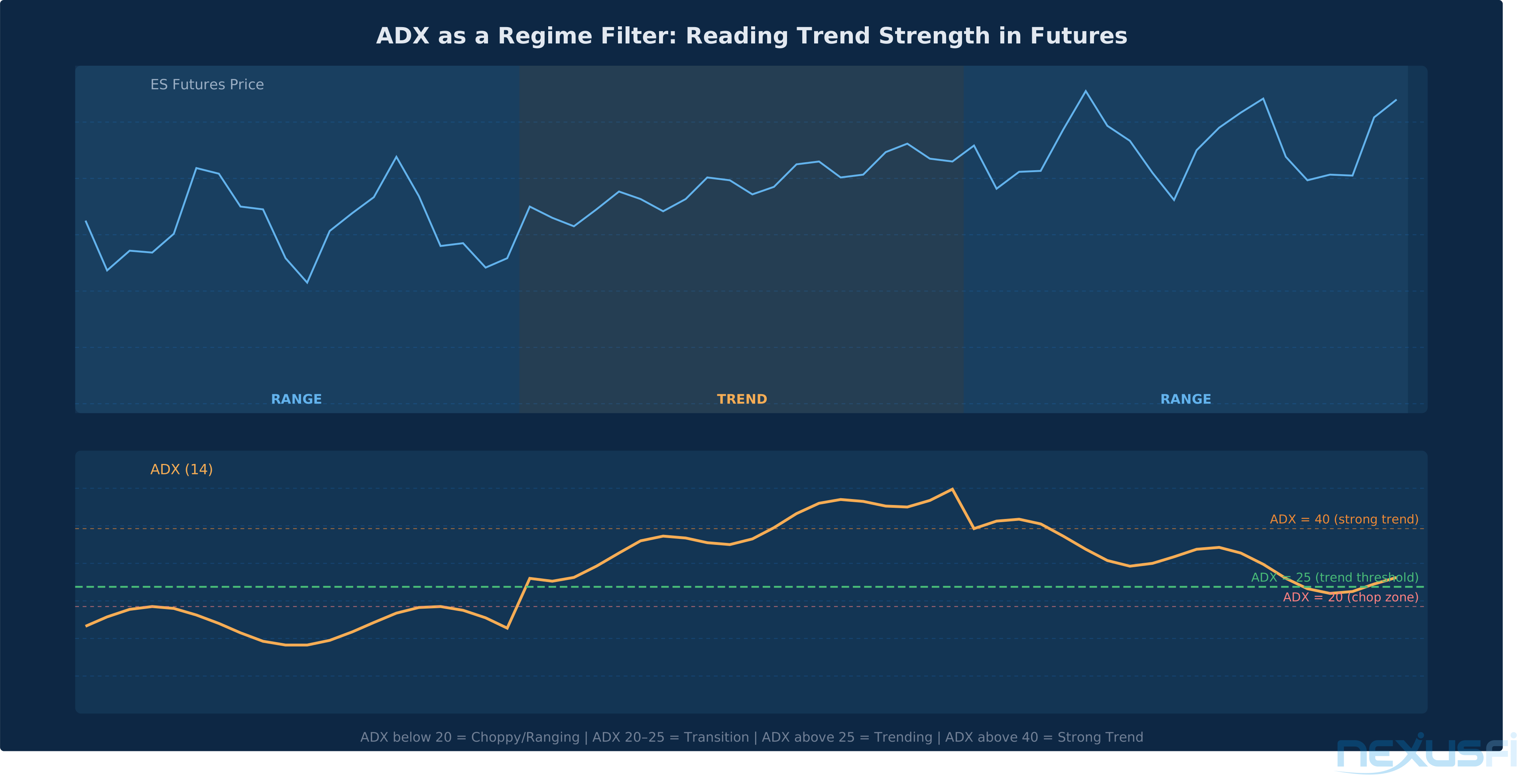
A critical practical note: ADX is a smoothed calculation and responds slowly to regime changes. By the time ADX confirms a trend, a significant portion of the initial move may have already occurred. This is a feature, not a bug — ADX’s value is confirming that a trend is sustained, not predicting that one is starting.
ATR and Volatility Regime Classification #
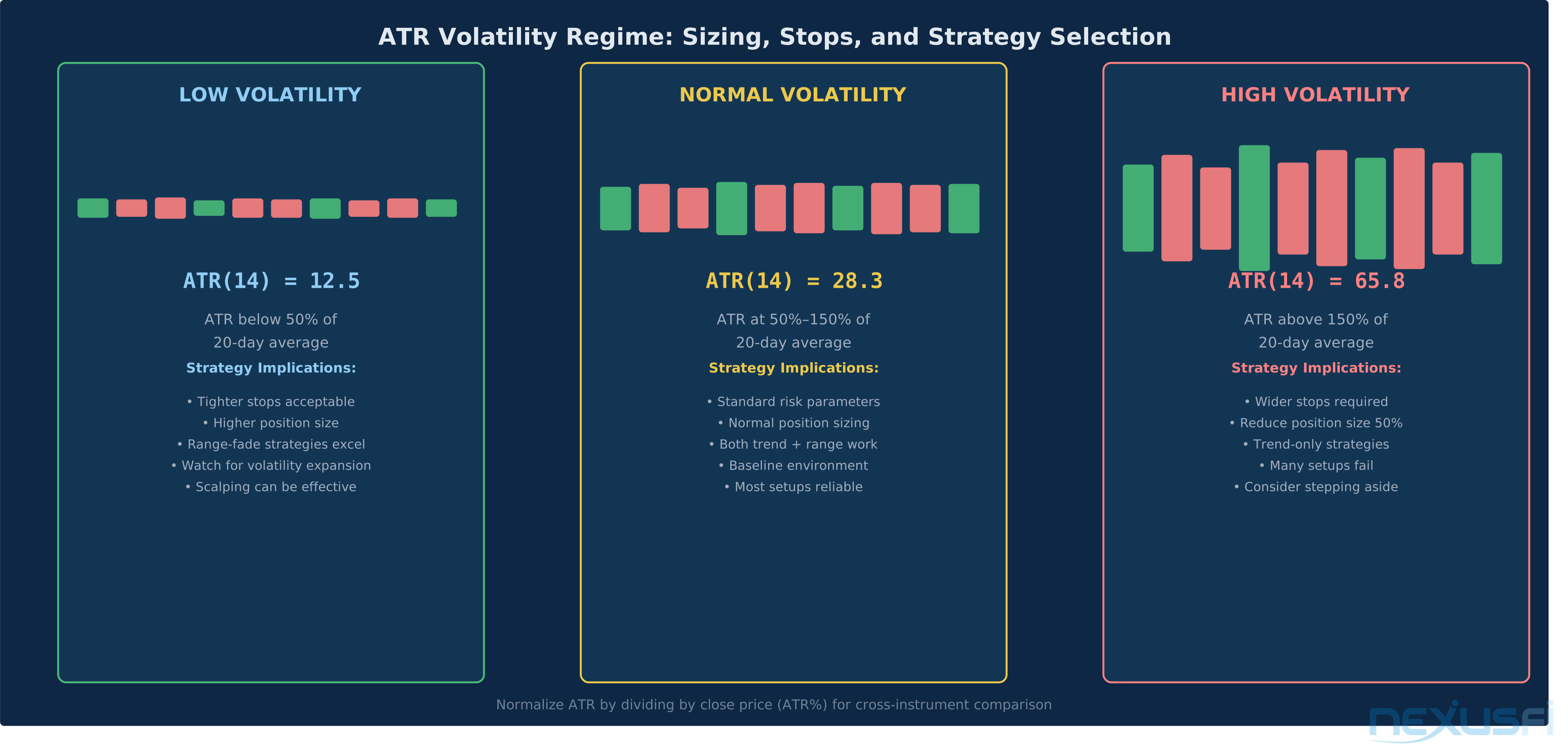
The Average True Range measures how much price moves in a typical bar — the single best volatility measure for futures traders. But raw ATR is insufficient for regime classification. A 12-point ES ATR when the 20-day average is 18 points is low volatility. The same 12-point ATR when the 20-day average is 8 points is elevated volatility. The ATR ratio — current ATR divided by its N-period moving average — provides volatility in context:
- ATR ratio below 0.5: Compressed volatility. Markets tend to coil before breakouts. Tighter stops are acceptable, but position for eventual expansion.
- ATR ratio 0.5–1.5: Normal volatility baseline. Both trend and range strategies perform as designed.
- ATR ratio above 1.5: Elevated volatility. Standard stop distances are too tight. @xelaar documented this practically: “I use ATR(20) to determine volatility. Anything above 6 points on 30 seconds makes me stop trading (as stop will be above acceptable loss).”
For cross-instrument comparison, normalize ATR by expressing it as a percentage of price (ATR ÷ close × 100). This ATR% removes the price-level dependency and gives you a consistent volatility measure across instruments and time periods. @Fat Tails described the volatility regime relationship to risk management in A Method to Tie R:R Directly to Volatility: “If you trade the high volatility base, you have a higher risk, compared to trading the low volatility base. The returns achieved by trading both setups are similar. So the low volatility base is the superior opportunity.”
VWAP Position as Regime Indicator #
Volume-weighted average price is the institutional reference price for the trading session. Its relationship to current price reveals whether the market’s current structure supports trending or ranging behavior.
In a trending market, price does not oscillate through VWAP — it extends away from it and holds above (uptrend) or below (downtrend) throughout the session. In a ranging market, price oscillates through VWAP repeatedly. As @Big Mike observed: “A range day is a day that bounces between the top +2 SD and bottom -2 SD on VWAP, or hovers near the VWAP itself.”
Two VWAP-based regime signals are especially reliable:
- VWAP rejection without penetration: In strong uptrends, pullbacks to VWAP see buyers emerge immediately -- price touches VWAP briefly and reverses. This “VWAP tap and go” pattern confirms trending regime.
- Multiple VWAP crossings in the first hour: If price has crossed VWAP three or more times in the first 60 minutes of RTH, you are likely in a range day. Adjust to range-fade strategies.
EMA Slope and the Choppiness Index #
A moving average’s rate of change carries regime information beyond simple direction. A flat 20-period EMA mathematically defines a ranging market. A steeply angled EMA indicates sustained directional progress. Three EMA-based regime signals for futures traders:
Single EMA slope: Price above a rising EMA: bullish trend. Below a falling EMA: bearish trend. EMA flat for 5+ bars: ranging. @HumbleTrader captured the institutional logic in a journal entry: “THE core foundation of my trading philosophy is based on this principle of 200 DMA as the line in the sand. If we close below that level, then my strategy and mindset changes from tomorrow.”
Moving average crossovers: When a faster EMA crosses above a slower EMA (8/21, 20/50, 50/200), this signals a trend forming with enough persistence to move multiple time-averaged prices. Use crossovers to classify the environment, not to trigger trades.
The Choppiness Index (CHOP) directly measures market efficiency — how directional versus non-directional recent price movement has been. The result oscillates between two interpretation zones:
- CHOP below 38.2: Highly directional. Strong trending environment. Trend-following strategies are in their optimal environment.
- CHOP above 61.8: Highly non-directional. Maximum choppiness. Mean reversion approaches and range strategies are most appropriate.
@ThatManFromTexas noted the practical reality in the Avoid Chop thread: “Most chop filters filter out as many good trades as they do bad. You will know you are out of chop when you miss the breakout.” The solution is to use CHOP as a sizing tool rather than a binary filter: reduce position size when CHOP is high, restore full size when it drops below 50.
The Five-Indicator Scorecard Approach #
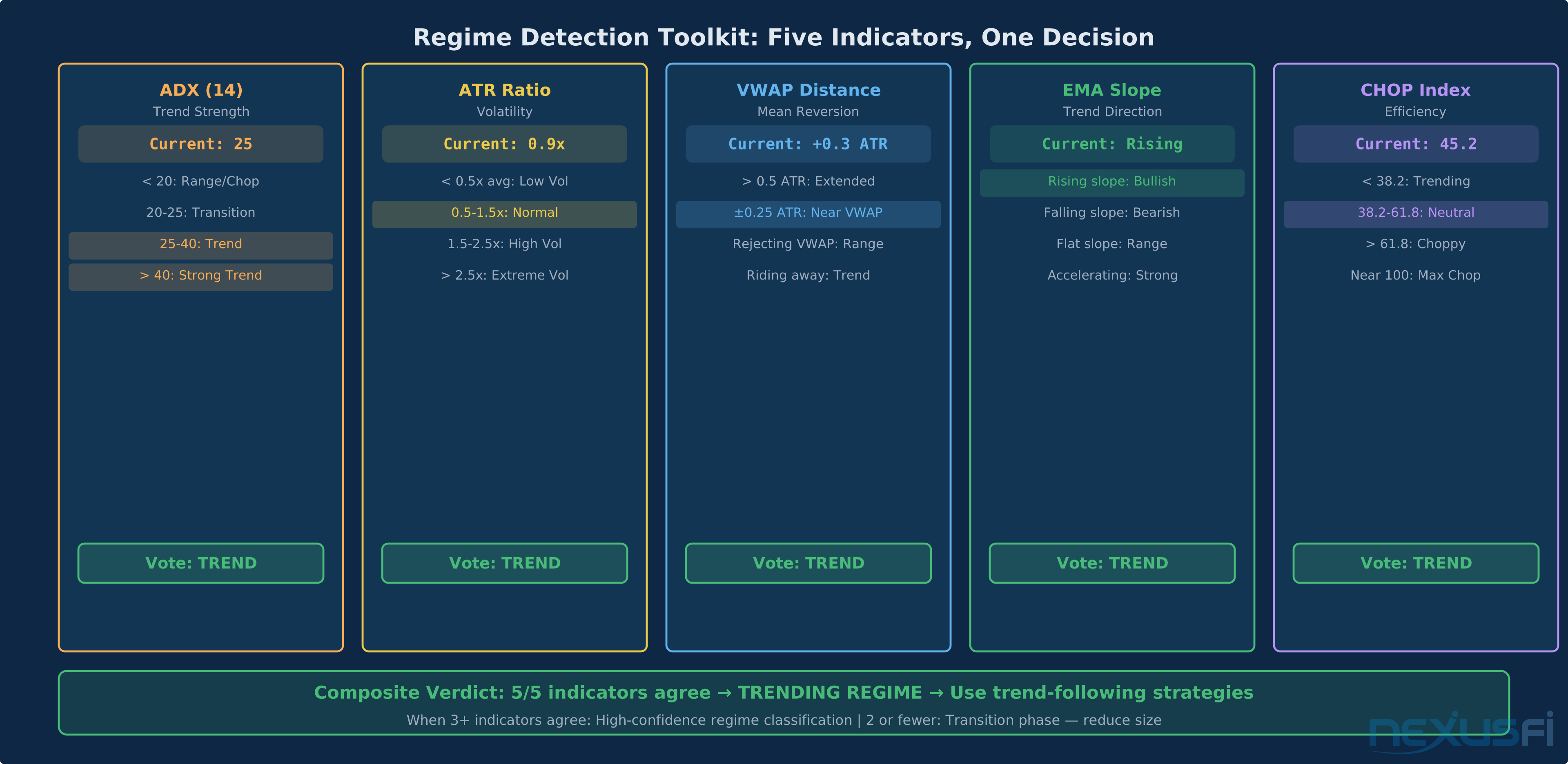
No single indicator reliably classifies regime in all market conditions. The solution is a composite scoring approach: run five indicators independently, let each cast a vote, and act on the majority.
The five-indicator scorecard:
- ADX (14): Vote = TREND if above 25, RANGE if below 20, TRANSITION between 20–25
- ATR Ratio: Vote = NORMAL or HIGH_VOL based on ratio to 20-period average
- VWAP Distance: Vote = TREND if price has stayed above/below VWAP for 3+ hours, RANGE if multiple crossings
- EMA(20) Slope: Vote = TREND if slope > 0.1% per bar, RANGE if slope < 0.05% per bar
- CHOP Index (14): Vote = TREND if below 50, RANGE if above 55
Interpretation: 4–5 votes for TREND = high-confidence trending regime, full position sizing. 4–5 votes for RANGE = high-confidence ranging regime. 2–3 votes either direction = transition, reduce size by 50%. The scorecard forces you to examine the market from five measurement angles before acting — preventing the most common failure mode: confirmation bias.
Multi-Timeframe Regime Alignment #
A regime classified on a single timeframe is only half the picture. Professional futures traders classify regime on at least three timeframes simultaneously and only take high-conviction positions when timeframes agree.
The standard multi-timeframe hierarchy for ES day trading:
- Weekly chart: Macro regime. If weekly is trending up, short-side trades fight a headwind at every level below. This determines which direction has institutional support.
- Daily chart: Intermediate regime. A daily trend running for 15 sessions is unlikely to reverse on an intraday pattern.
- 4-hour chart: Session-level regime. The 4-hour regime often determines whether RTH will trend or range.
- Entry timeframe (5-min or 30-min): Signal generation. Entry-level regime should align with 4-hour before taking full-size positions.
When weekly, daily, and 4-hour all show the same trending regime, this is maximum alignment — take full-size trend entries. @iantg described the practical importance in the Outside the Box journal: “The key to being successful in trend trading is to know when it is appropriate to use a trend trading tool box. In sideways markets tools that work fairly well in trending markets completely break down and fail. So the first rule is to define when markets are trending and when they are ranging.”
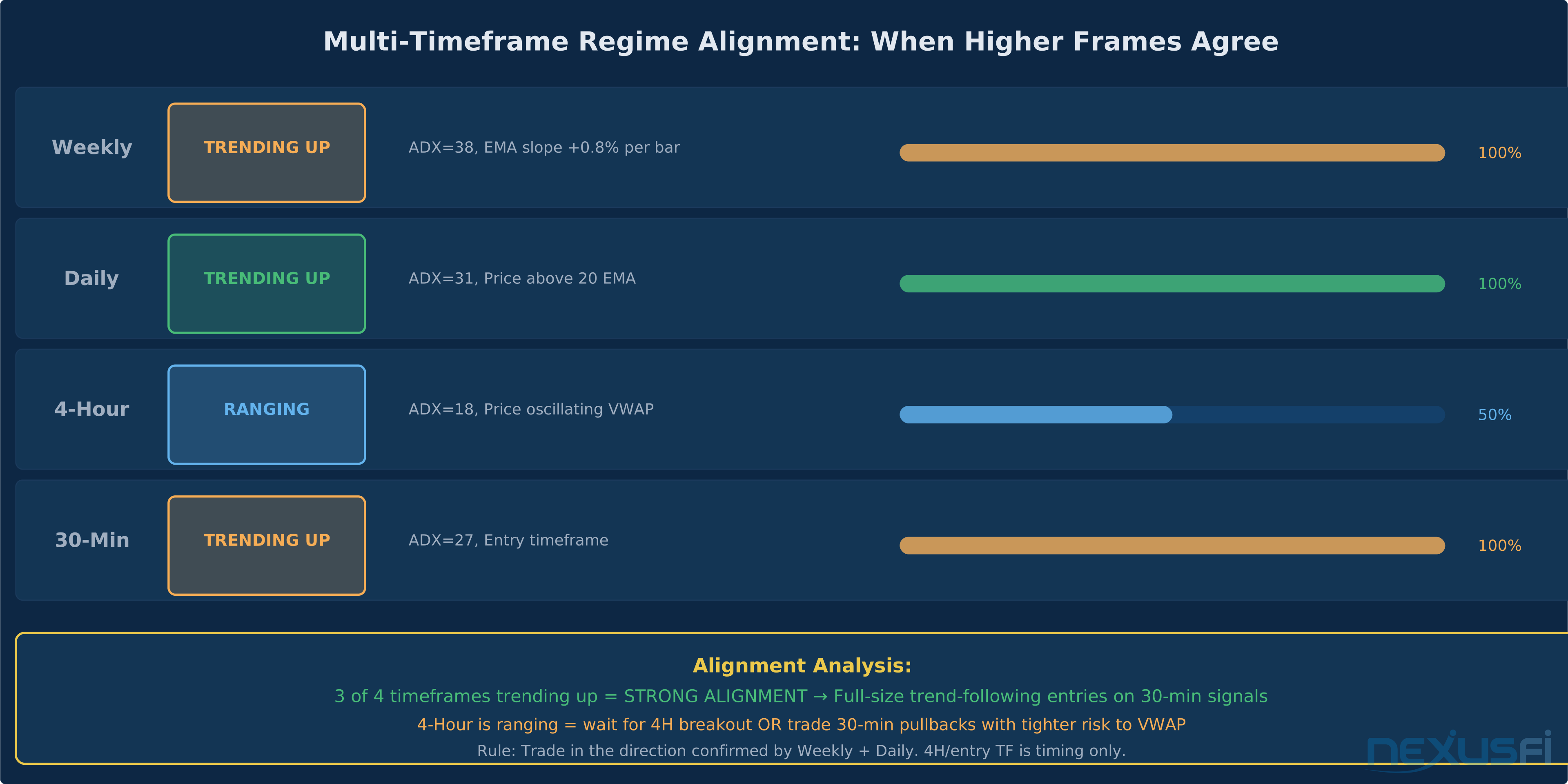
When higher timeframes conflict — say, daily is trending but 4-hour is ranging — trade smaller (50% size) or wait. One practical caution: higher timeframe regimes do not predict lower timeframe behavior precisely. A weekly trending regime gives you statistical advantage over your holding period, not a guarantee that every intraday setup will work. Use multi-timeframe alignment to set your default strategy bias, not to override what the entry-level market structure shows you in real time.
Advanced Techniques: Hurst Exponent and Fractal Dimension #
For quantitative traders, the Hurst exponent provides mathematically rigorous regime classification. The Hurst exponent (H) measures the long-term memory of a time series — whether price movements tend to persist or reverse:
- H = 0.5: Random walk. Each price movement is independent of history.
- H > 0.5: Persistent (trending). Past movements tend to continue. Higher H = stronger trending behavior.
- H < 0.5: Anti-persistent (mean-reverting). Past movements tend to reverse. This is ranging behavior.
@zander931 documented the application in the Master Homework thread: “Hurst exponent = A numerical measurement of market persistence. A measure of 0.5 implies that the previous price move has no effect on the next move. A measure greater than 0.5 indicates persistence.”
The closely related Fractal Dimension Index (FDI) expresses the same concept as market efficiency. @Fat Tails investigated the FDI in Fractal Dimensions and @Luger reported: “Long ago I spent a good deal of time with the Hurst exponent as a trend/mean reversion filter. Very similar to some fractal dimension methodology.”
Practical Hurst regime thresholds: H < 0.45 = strong mean-reversion regime, range strategies optimal. H between 0.45–0.55 = ambiguous, reduce size. H > 0.55 = trending/persistent regime, trend strategies optimal. Use Hurst primarily for strategy development and backtesting analysis rather than real-time classification, where ADX-based approaches offer sufficient accuracy with far less computational overhead.
Regime-Based Strategy Playbook #
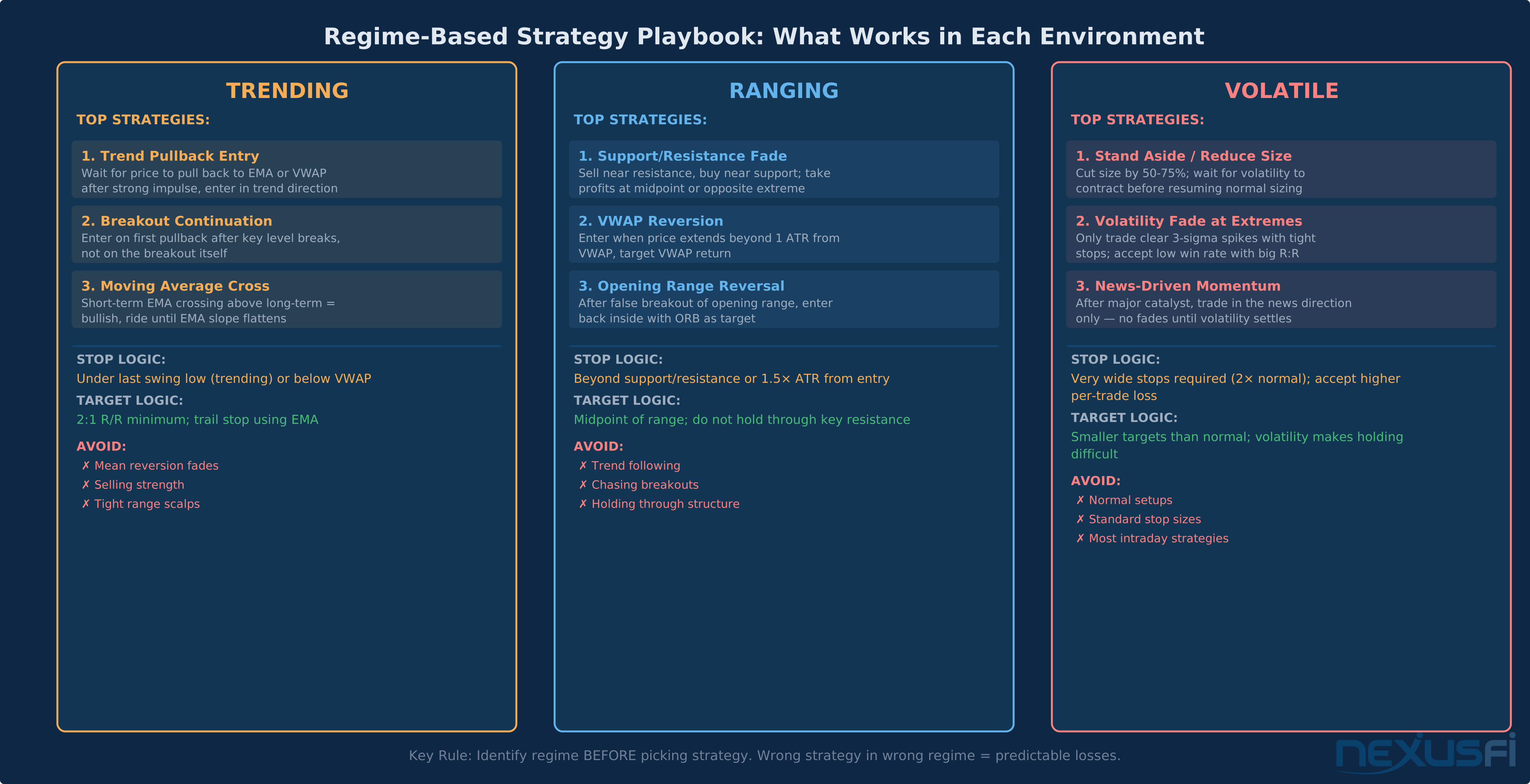
Trending Regime: The Trend-Follower’s Window
In a confirmed trending regime (ADX > 25, EMA sloped, price sustained above/below VWAP, CHOP below 50), the objective is straightforward: take positions in the trend direction, hold for extension, manage from a trailing stop.
Pullback to EMA: The 20-period EMA acts as dynamic support in uptrends, resistance in downtrends. Entry is as price touches or slightly penetrates the EMA and shows rejection. Stop below the EMA or below the swing low. Target is the prior high plus one-quarter ATR extension.
VWAP tap continuation: After an early trend day impulse move away from VWAP, the first pullback to VWAP creates a high-probability continuation setup. @tigertrader documented in the Edge thread that “if you capitalize on trend days when presented during the RTH session, you can make your month” — because a true trend day gives multiple high-probability entries throughout the session.
Ranging Regime: The Mean Reverter’s Bread and Butter
Range regimes constitute the majority of trading days. The tradeable range often manifests as the overnight high/low, the prior day’s value area, or the initial balance high/low from the first hour of RTH.
The key discipline in ranging regimes is taking profits at the midpoint rather than holding for range extremes. In genuine ranges, price spends more time near the middle than at the edges. Stop placement: beyond the range boundary, not just outside a single candle. The valid fade setup should have a stop only hit by a legitimate breakout, not by normal range-edge noise.
@wccktrader described range identification in the Detecting Chop thread: “I look for choppy markets and enter when the trend starts. The underlying auction theory which leads to the range being determined by the day’s price discovery plays the biggest role in whether a day is a range day.”
Volatile Regime: The Position-Sizer’s Nightmare
High-volatility regimes require a response that most traders resist: doing less. The statistical foundations of your strategies are temporarily invalid. Backtested stop distances will be hit by random noise. @rleplae offered a concrete systematic approach: “Detect that the market is going sideways with S/R and low ATR. Then only put your algo on when the market breaks out of the situation.” The same principle applies to high-volatility: only trade after volatility has begun to contract, not while it is expanding.
Valid responses to high-volatility regime: reduce position size by 50–75% and use wider stops, or stand completely aside until ATR normalizes. The wrong response is full size with standard stops — this produces stop-outs at rates that make the strategy statistically negative.
Regime Transitions: Reading the Warning Signs #
The most dangerous moment in a trading session is when a regime is changing but you haven’t recognized it yet. You are executing a strategy optimized for the previous regime in a different state. This is where the majority of large intraday losses occur.
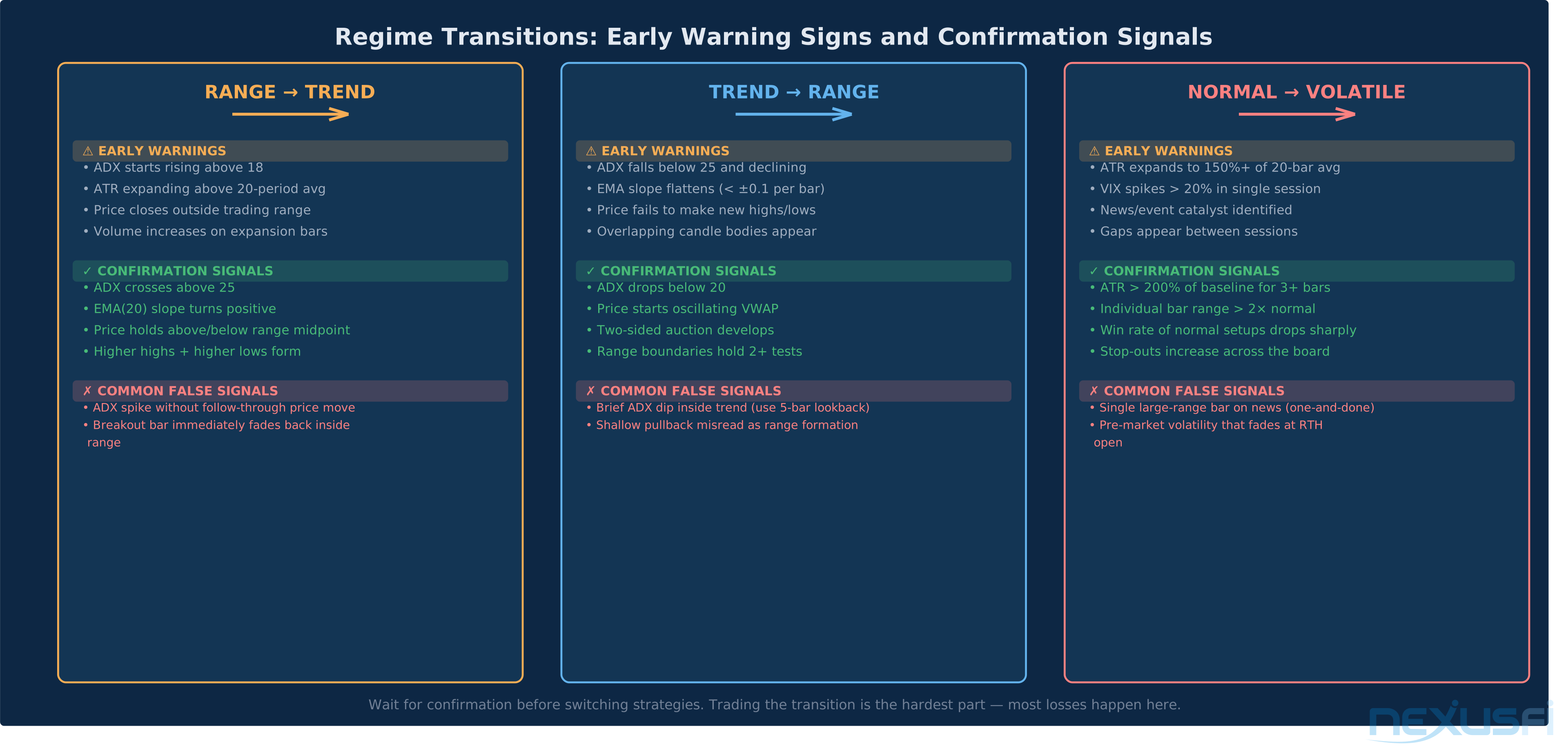
Range-to-Trend Transition
ADX rising toward 20 from below; ATR expanding above 20-period average; price closes outside range with above-average volume; first pullback after breakout holds above former range resistance. Common false signal: a single large-range bar that closes back inside the range on the following bar. Genuine transitions are confirmed by the test and hold of the prior range boundary.
Trend-to-Range Transition
ADX falls below 25 and continues declining; price fails to make a new high (in uptrend) after a 5-bar consolidation; price starts returning repeatedly to VWAP; overlapping candle bodies appear. @tigertrader noted in Spoo-nalysis that the equity trend indicator “can be helpful in determining whether today is a Trend Day or Rangebound Day” — watch for reversal of direction, not just level.
Normal-to-Volatile Transition
ATR expands to 150%+ of its 20-bar average; pre-announced economic event causes initial bar ranges more than 2× normal; win rate of normal setups drops sharply in a single session. The correct response at the first sign of volatility expansion is immediate sizing reduction — before the second stop-out, not after.
Building Your Regime Assessment Ritual #
Implementing regime detection requires a pre-market ritual and ongoing intraday monitoring:
Pre-market (15 minutes before RTH):
- Daily chart: Check ADX direction and level. Record as TREND, RANGE, or TRANSITION.
- ATR ratio (current ÷ 20-day ATR SMA). Record as LOW, NORMAL, or HIGH.
- Where is overnight price relative to prior day’s VWAP? Inside prior value area = range day probability elevated.
- Daily chart EMA slope: Rising, flat, or falling?
- 4-hour CHOP: Above 61.8 = pre-classified range. Below 38.2 = pre-classified trend.
- Scorecard: 4+ indicators agreeing = full size. Mixed = reduce 50%.
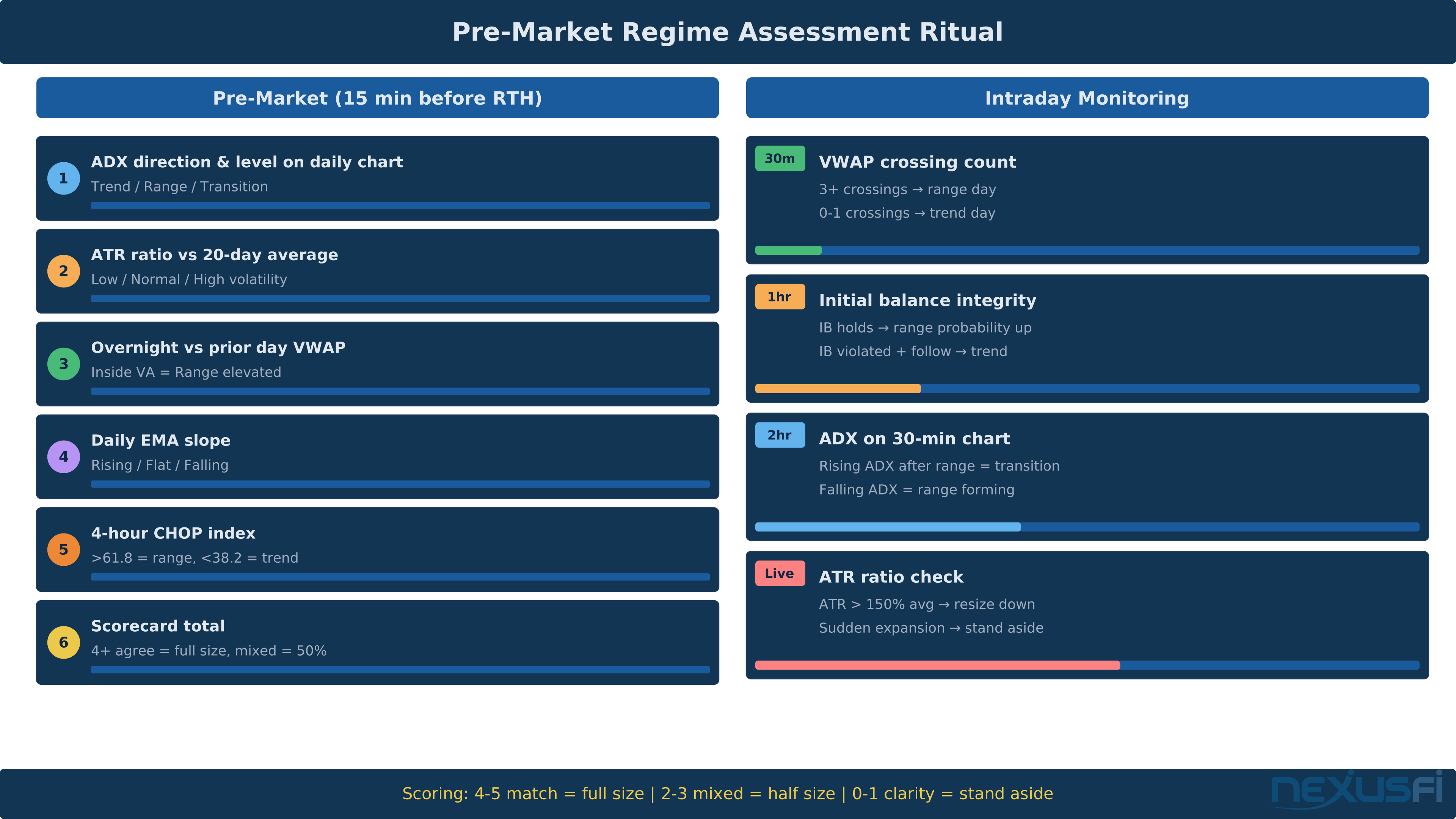
Intraday monitoring:
- At the 30-minute RTH mark: count VWAP crossings. Three or more = likely range day. Zero or one = potential trend day.
- Is the initial balance holding? IB holds = range day probability increases. IB violated with follow-through = trend day probability increases.
- Monitor ADX on 30-minute chart. Rising ADX after a range confirms transition. Falling ADX after a morning trend signals potential range developing.
@JonnyBoy asked in the trending versus reversal days thread for specific definitions: “The metrics you might want to think about: Trend Up Day — a day that creates a new recent high from its open and doesn’t look back.” This definitional precision matters. Write down exactly what ADX level, ATR ratio, and VWAP relationship constitutes each regime. Do not leave it to real-time judgment under the pressure of an open position.
The Takeaway: Regime First, Strategy Second #
The hierarchy is non-negotiable: Regime first, strategy second, entry third. Every time you reverse this order and select a setup before assessing the regime, you accept randomness into a process that does not need it.
Most losing days are not bad-execution days. They are wrong-regime days. The trader executed exactly as trained, but the market had already shifted to a different state and the training was no longer applicable.
The specific indicators do not matter as much as the habit. ADX or Hurst. CHOP or EMA slope. VWAP relationship or opening range structure. Pick the combination you can assess in 2 minutes before every session and monitor in 30 seconds at each regime-check interval. The habit of regime awareness — consistently asking “what environment is this?” before asking “what setup is this?” — is the infrastructure beneath every successful discretionary and systematic trading approach.
Trending markets reward patience and holding. Ranging markets reward active management and profit-taking. Volatile markets reward standing aside. Match the approach to the environment, and the environment will do most of the work.
Knowledge Map
Prerequisites
Understand these firstGo Deeper
Build on this knowledgeReferences This Article
Articles that build on this topicCitations
- — NexusFi Discussion“trend following approaches s/b stopped during sideways markets”
- — NexusFi Discussion“The market is ranging 70% of the time. Therefore, my default is trading the edges of the range toward the mid line.”
- — NexusFi Discussion“One of the best known trendfilters is the directional movement system. This was presented in 1978 by J. Welles Wilder Jr.”
- — NexusFi Discussion“The correct way to use the ADX indicator is NOT to trend trade when the ADX is BELOW BOTH the +DI and the -DI lines.”
- — NexusFi Discussion“if you capitalize on trend days when presented during the RTH session, you can make your month”
- — NexusFi Discussion“If you trade the high volatility base, you have a higher risk, compared to trading the low volatility base.”
- — NexusFi Discussion“A range day is a day that bounces between the top +2 SD and bottom -2 SD on VWAP, or hovers near the VWAP itself.”
- — NexusFi Discussion“Hurst exponent = A numerical measurement of market persistence. A measure of 0.5 implies that the previous price move has no effect on the next move.”
- — NexusFi Discussion“I like the word bipolar because it describes exactly what the market is. The market is bipolar.”
- — NexusFi Discussion“The key to being successful in trend trading is to know when it is appropriate to use a trend trading tool box.”
- — NexusFi Discussion“I use ATR(20) to determine volatility. Anything above 6 points on 30 seconds makes me stop trading.”
- — NexusFi Discussion“Most chop filters filter out as many good trades as they do bad. You will know you are out of chop when you miss the breakout.”
- — NexusFi Discussion“THE core foundation of my trading philosophy is based on this principle of 200 DMA as regime line in the sand.”
- — NexusFi Discussion“I look for choppy markets and enter when the trend starts.”
- — NexusFi Discussion“Trend Up Day -- a day that creates a new recent high from its open and doesn't look back.”