



Trading Futures for a Living
The leap from profitable trader to full-time trader is not a trading problem — it's a business problem. Most traders who fail at full-time trading were already profitable before they quit their jobs. Understanding why that happens, and what to do about it, is what this article is about.
Overview #
The forum thread "Primary source of income: how many have made it?" has accumulated 1.2 million views on NexusFi since 2010. That's not a number about technical analysis or order flow — it's a number about human aspiration. More futures traders want to trade full-time than want anything else. Most of them fail at it, not because they can't trade, but because they didn't understand what "full-time trading" actually changes.
When trading is a side income, losses are disappointments. When trading is your only income, the same losses are existential threats. That shift — from psychological freedom to financial pressure — is what breaks traders who were doing fine before they quit their jobs. The markets didn't get harder. Your nervous system did.
This article treats the transition to full-time futures trading as a systems problem with psychological, financial, and operational dimensions. It's not about whether you can trade. It's about whether you can build a business around trading that survives the inevitable runs of bad luck that every edge eventually produces.
Recognition: Are You Actually Ready? #
The most dangerous belief in trading is "I'll know when I'm ready." You won't. The signs of readiness are not feelings — they're numbers, time periods, and documented patterns.
The Four Readiness Tests #
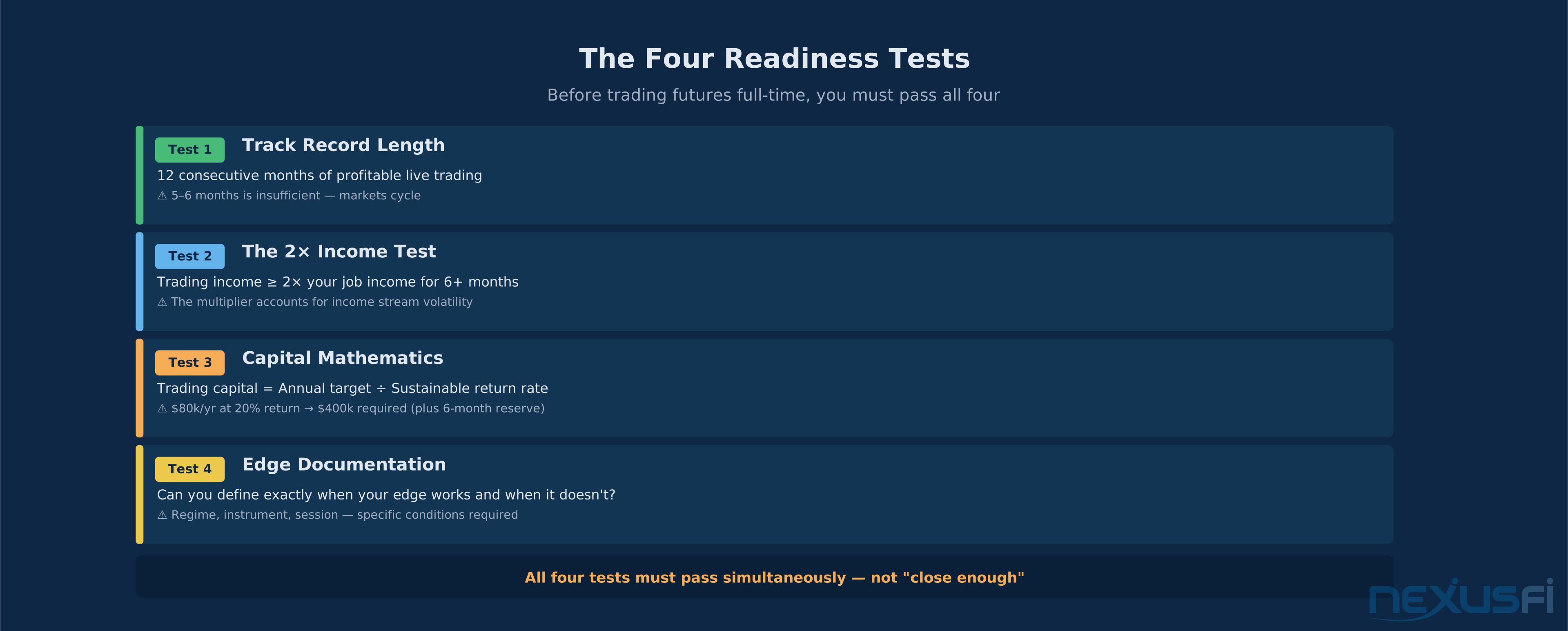
Test 1: Track Record Length You need a minimum of 12 consecutive months of profitable trading, under live conditions, with consistent position sizing. This is not a sample size question — it's a regime question. Markets cycle through different behaviors over the course of a year: low-volatility grinds, trending phases, choppy consolidations, event-driven spikes. If you've only traded in one regime, you don't know whether your edge is general or regime-specific.
Many traders pass the 5-month test that barabas — who later posted one of the most-read "I'm going broke" threads on NexusFi — passed before quitting his job. Five months of $300/day average sounds like enough. It isn't. The market that produced those five months will eventually change, and you need to have traded through that change before you depend on the income.
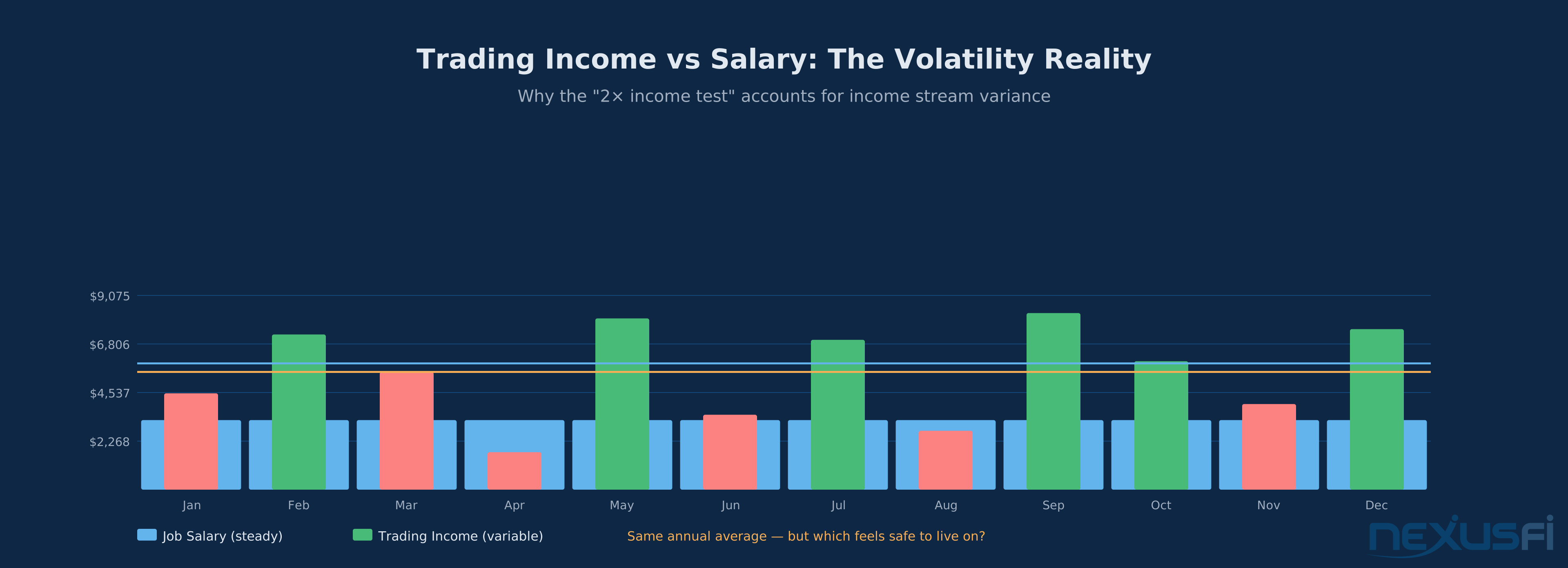
Test 2: The 2x Income Test Before quitting, your trading income should equal at least 2x your current job income for a minimum of six consecutive months. The multiplier exists because trading income is not linear — it comes in runs and drawdowns.
If you're averaging $8,000/month from trading against a $5,000/month job, you fail this test. The 2x rule creates a margin of safety for the volatility of your income stream.
Test 3: Capital Mathematics The capital requirement for sustainable full-time trading is higher than most traders expect. The formula involves three components:
- Target income: How much you need annually to live, including health insurance, taxes (remember: futures gains are reported as capital gains plus self-employment considerations), and savings
- Sustainable return rate: What you can realistically generate annually, not what you've generated in your best months
- Drawdown buffer: Capital you never trade, sized to cover 6+ months of living expenses without touching your trading account
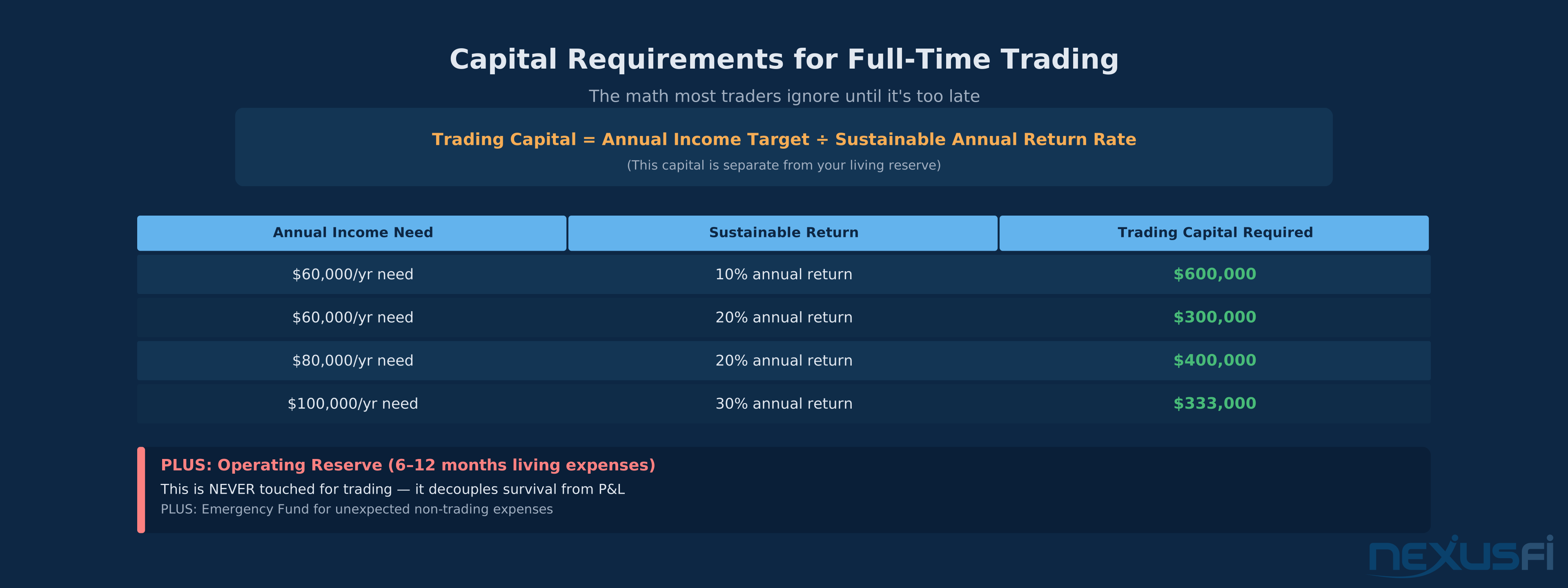
The calculation is: Trading Capital = Annual Income Target ÷ Sustainable Annual Return Rate
If you need $80,000/year to live and you can reliably generate 20% annually (a high estimate — experienced traders tend to cluster in the 10-30% annual range), you need $400,000 in trading capital. That capital must be separate from your living reserve.
The NexusFi community has run this math repeatedly. @grausch analyzed it with actual monthly return variance: "In my own case, I would not consider trading full-time with less than $500k, even if I average 100% p.a. for 2 or 3 years." @SMCJB, after 14 years as an independent proprietary trader, put it bluntly: "If you start with $100k, make 50% every year, take $40k out for living expenses every year, it takes you 5 years to double your money to $200k! I just don't see how the math works for full time, earnings dependent traders, on smaller amounts."
This math is not demoralizing — it's clarifying. If you don't have the capital, the answer is to keep trading part-time while building your account, not to quit and hope the markets cooperate.
Test 4: Edge Documentation Can you articulate specifically what your edge is, when it works, and when it doesn't? Not "I'm good at reading price action" — but: "My edge is in the first 45 minutes of RTH in the ES when overnight inventory is off-side and pre-market volume is above average. It does not work in low-volatility drift days or in the 30 minutes before major economic releases."
If you can't define the regimes where your edge is valid, you can't manage drawdowns when those regimes go offline. You'll keep trading when you shouldn't, turning a regime-specific edge into random noise.
The greatest danger is the "I passed 5 good months" trap. Markets cycle, and five months is rarely enough to have encountered all the conditions your edge will face. Require 12 months of live, documented results before treating any performance as reliable evidence of an edge.
Understanding: Why Profitable Traders Fail When They Go Full-Time #
The failure mode is so consistent it has a name in the NexusFi community: "the tilt." @mattz of Optimus Futures describes it precisely: "Traders perceive that if they are profitable, the next natural thing is to quit their job and move to a full-time position. But, that is precisely where the 'tilt' happens, and they are in danger of becoming gamblers as opposed to traders. Gamblers are those who use their impulses and intuition more than logic, and that is a very subtle mental change where it is tough to distinguish between our conscious and unconscious decisions."
The Pressure Inversion #
When trading is supplemental income, the psychological architecture is straightforward: job provides survival → trading provides growth. Losses in trading hurt but don't threaten your survival. You can trade your edge consistently because the outcome of any given trade doesn't determine whether you eat next month.
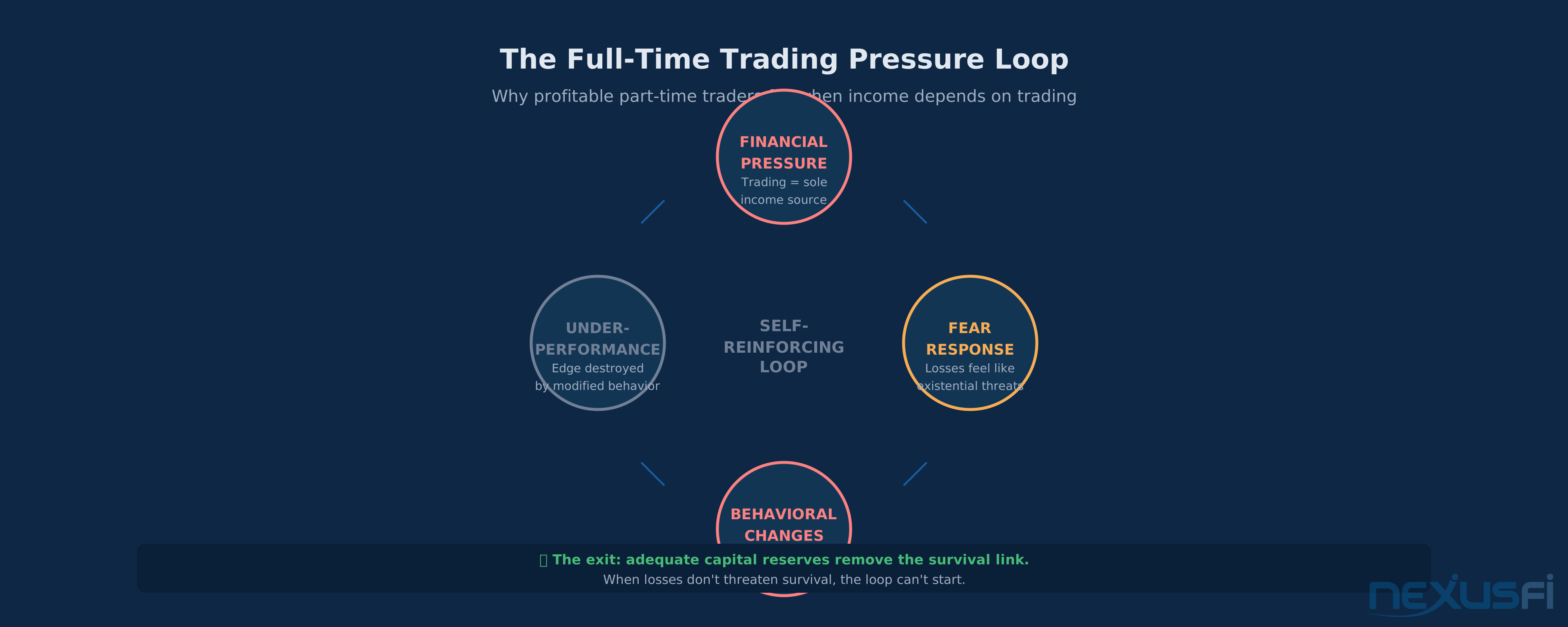
When trading becomes the sole income source, that architecture inverts. Trading now provides survival. This changes everything about how you experience losses. A $2,000 losing day, which was previously an annoyance, is now a month of groceries. The loss/survival association activates parts of the nervous system that are not compatible with disciplined execution.
This is not weakness — it's biology. Fear of financial ruin is a hardwired threat response, and when trading activates that response repeatedly, traders start modifying their behavior in ways that destroy their edge: widening stops to avoid closing losing positions, cutting winners short to "lock in" income, adding to losers, trading sizes that don't fit their edge, trading when their setup isn't present because they "need" to make money today.
The Performance Anxiety Loop #
Professional athletes choke. Professional traders choke. The mechanism is the same: when the stakes change, the behavior changes. The same ES setup that you've traded calmly for two years becomes terrifying when your rent depends on it. You start second-guessing entries you would have taken automatically before. You trail stops too early. You refuse to re-enter after a stop-out because "this one already got me once."
This loop — pressure leads to fear, fear leads to behavioral change, behavioral change leads to underperformance, underperformance leads to more pressure — is self-reinforcing. The only exit is either removing the pressure (by having adequate capital reserves) or modifying the response to pressure through systematic protocols.
The Undercapitalization Amplifier #
If you go full-time undercapitalized, every problem gets worse. A $50,000 trading account that needs to produce $60,000/year in income requires 120% annual returns — mathematically impossible to achieve sustainably. The trader compounds the pressure problem by trading too large, taking too much risk per trade, and treating every setup as a "must win" situation. This is how accounts blow up.
@mfbreakout, who lost $100,000 and then another $160,000 before finding sustainable profitability, arrived at this rule after experience: "Big account size in new trader hands is a NUCLEAR BOMB. Even if you have money, trade with small account and put rest of the money in savings account till you are ready." The irony is that undercapitalization forces the exact behaviors — trading too large, chasing losses — that blow accounts.
The capital math and the psychology math are connected: adequate capitalization is not just a financial safety net, it's a psychological one. Traders with significant reserves trade better because they can afford to follow their process rather than their fear.
Techniques: The Full-Time Trading Architecture #
If the recognition tests say you're ready and you understand the psychological terrain, the question becomes: how do you build a trading business that survives the inevitable drawdowns and regime changes?
Capital Structure: The Three-Account System #
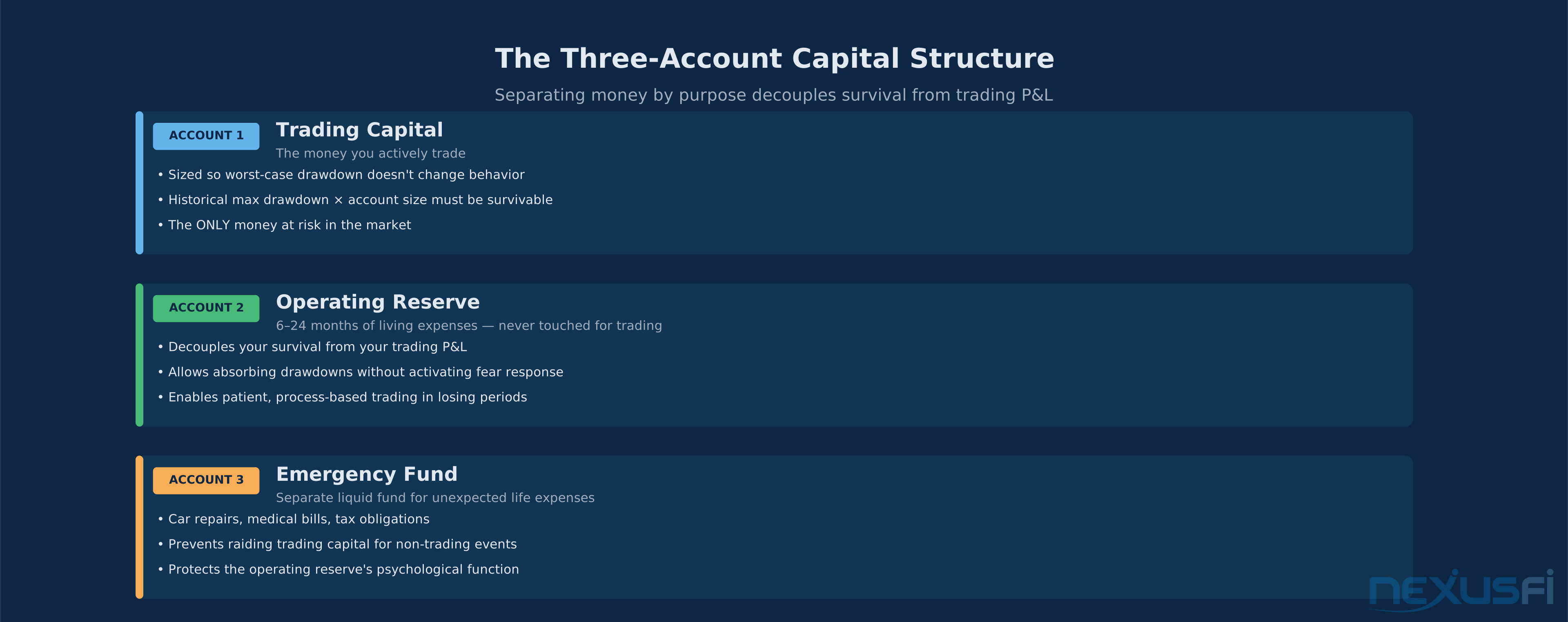
Separate your money into three distinct pools with distinct purposes:
Account 1: Trading Capital This is the account you trade. It should be sized so that a worst-case drawdown (historically, what has your strategy's max drawdown been? Assume it will happen again, and be larger) doesn't force you to change your behavior. A common rule: your worst historical drawdown percentage applied to this account should not threaten your ability to pay rent.
For ES day trading, typical drawdowns on well-designed strategies range from 10-25% in a bad stretch. A trader with $200,000 in trading capital and a 20% historical max drawdown faces a potential $40,000 drawdown. That drawdown needs to be survivable without behavioral modification.
Account 2: Operating Reserve Six months of living expenses, minimum. This account is never touched for trading. Its purpose is to decouple your survival from your trading P&L. When you have this reserve, a bad trading month doesn't activate the survival threat response — you know you can absorb the drawdown while waiting for your edge to reassert.
Many experienced full-time traders extend this to 12-24 months. The psychological benefit compounds with each additional month of runway: you trade with more patience, you take losses better, you don't force trades.
Account 3: Emergency Fund A separate, liquid emergency fund for unexpected non-trading expenses — car repairs, medical bills, tax obligations. This account prevents you from raiding the trading account or operating reserve when life events happen.
Position Sizing Discipline as Income Grows #
One of the most counterintuitive rules of professional trading: your position sizing should not scale proportionally with account growth in the early stages.
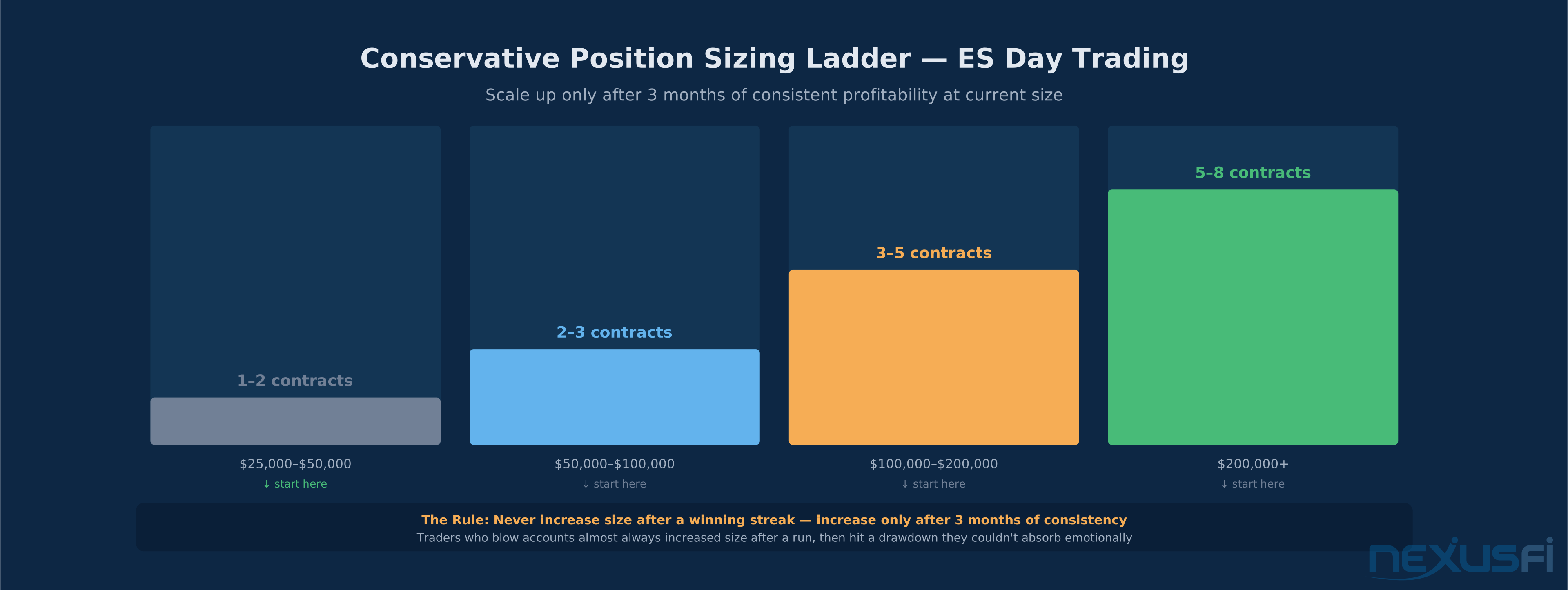
The discipline is this: maintain flat sizing until you have proven consistency at that size for at least 3-6 months. Then increase by one contract increment and repeat. The traders who blow accounts are almost always traders who increased size after a winning streak, then got hit by a drawdown they couldn't absorb emotionally because the losses were too large.
Practical sizing ladder for ES day trading:
- $25,000-$50,000 account: 1-2 contracts maximum
- $50,000-$100,000: 2-3 contracts
- $100,000-$200,000: 3-5 contracts
- Scale only after 3 months of consistent profitability at current size
The Daily Loss Limit: Your Behavioral Circuit Breaker #
Every full-time trader needs a hard daily loss limit — a number at which they stop trading, close the platform, and don't return until the next session. This limit serves two purposes: it caps the P&L damage of bad days, and it prevents the revenge-trading spiral that can turn a $2,000 bad day into a $10,000 catastrophe.
Setting the limit: 1-2% of account equity per day, or 1x the average winning day, whichever is lower. For a $200,000 account, that's $2,000-$4,000/day max loss.
This rule must be non-negotiable. "I'll stop after one more trade" is how $2,000 days become $8,000 days. The rule is a rule precisely because your judgment is compromised when you're at the limit.
Set your daily loss limit on a calm, clear day — not during a drawdown. Rules made when you're in pain are more likely to have exceptions built in. Rules made before the pain is the only way to have rules that hold when you need them most.
Practice Framework: The Business of Trading Full-Time #
{{figure:trading-business-pillars}}
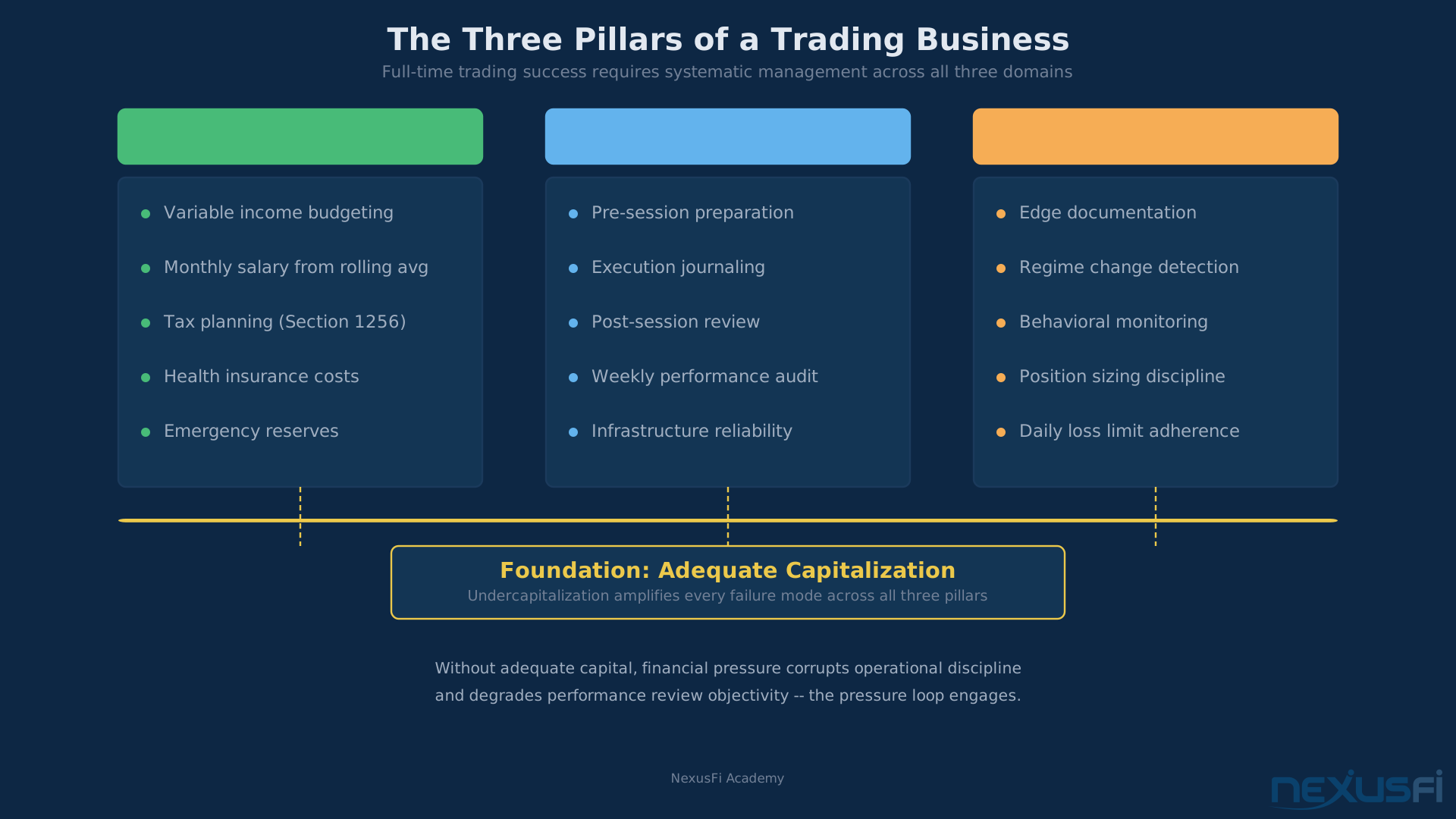
Professional trading is a business. Treating it like a hobby — even a profitable hobby — is one of the most reliable predictors of full-time failure. The business framework has three pillars: financial management, operational routine, and performance review.
Financial Management for Traders #
{{figure:variable-income-budgeting}}
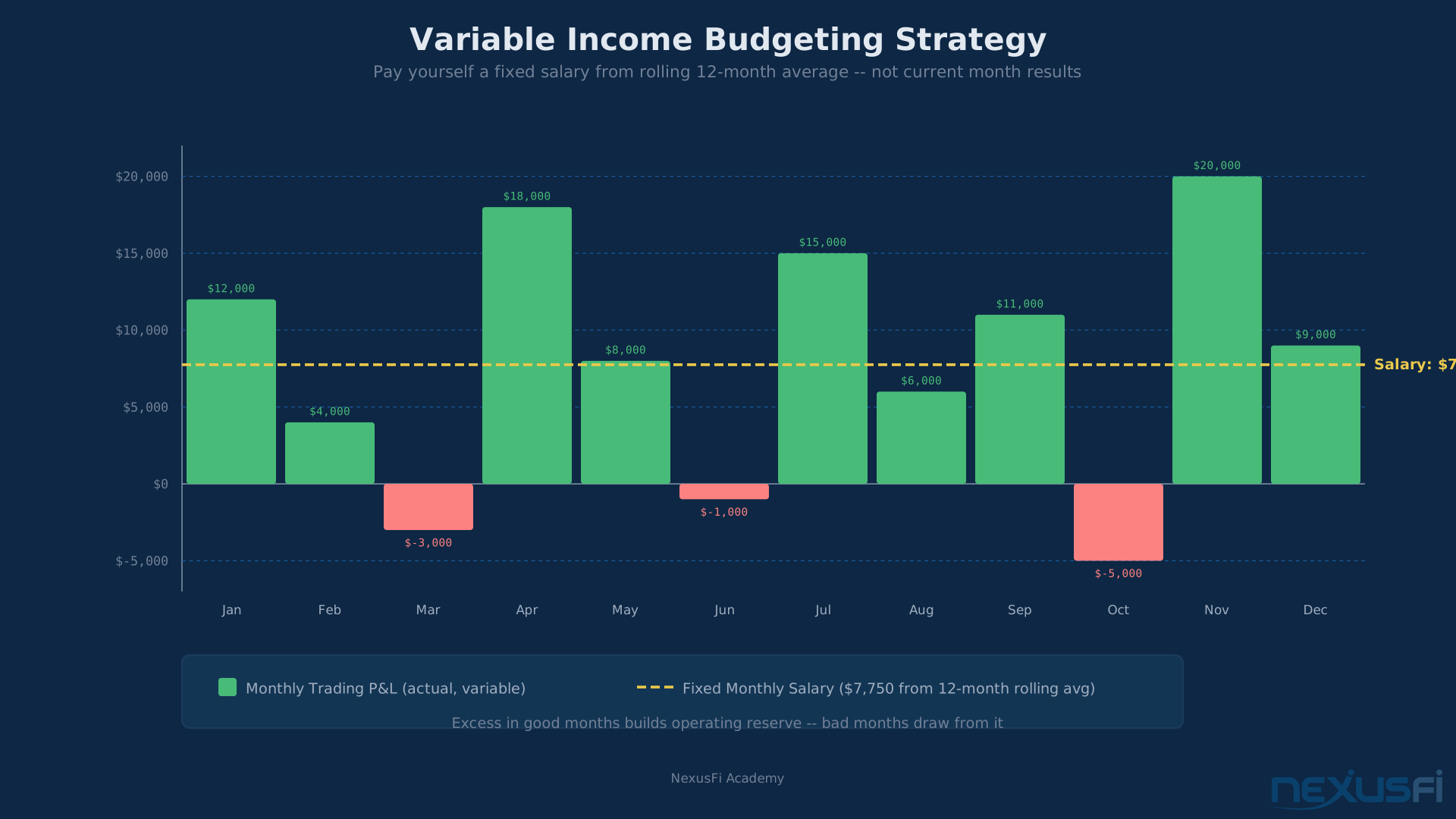
Budgeting for variable income: Unlike a salary, trading income doesn't arrive in predictable installments. Your expenses are fixed; your income is not. The solution is to pay yourself a consistent monthly "salary" from your trading account based on your rolling 12-month average profit, not your current month's results. In good months, the excess stays in the account (or goes to the operating reserve). In bad months, the salary payment comes from the operating reserve.
This structure prevents two failure modes: (1) spending drawdown months depleting your trading capital, and (2) lifestyle inflation in good months that leaves you undercapitalized when markets turn.
Tax management: US futures traders have a significant tax advantage — Section 1256 contracts are taxed at a blended rate of 60% long-term / 40% short-term capital gains, regardless of how long you hold the position. Traders report these gains and losses on IRS Form 6781, "Gains and Losses From Section 1256 Contracts and Straddles," which applies the 60/40 split automatically per 26 U.S.C. § 1256. For traders in high income brackets, this can represent a significant reduction compared to ordinary income tax rates. But tax complexity also increases: quarterly estimated payments, potential self-employment taxes if structured as a business, health insurance deductions, home office deductions. Work with a tax professional who specializes in traders from day one.
Health insurance: This is the expense most aspiring full-time traders underestimate. Transitioning from employer-sponsored insurance to individual market coverage through the ACA Marketplace can add $6,000-$18,000+/year to your expenses depending on age, location, and coverage level — though premium tax credits may reduce this substantially if your trading income qualifies. Include this in your capital requirement calculations before you quit.
Operational Routine #
{{figure:daily-trading-routine}}
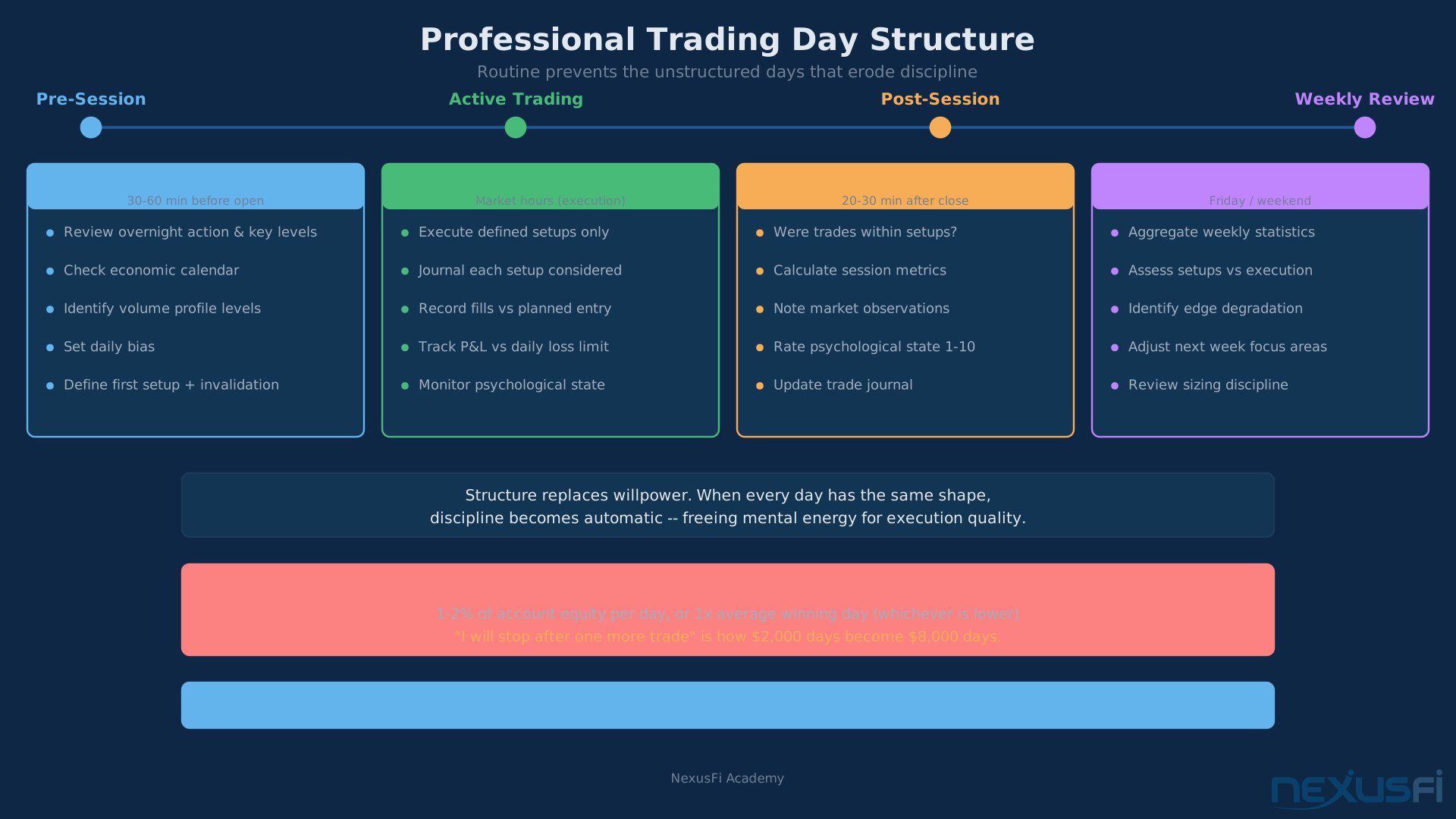
Full-time trading success correlates strongly with routine. Professionals have morning preparation rituals, mid-session check-in procedures, and post-session review processes. This structure serves two functions: it ensures you're consistently prepared, and it gives shape to days that have no external structure.
Pre-session preparation (30-60 minutes before market open):
- Review overnight futures action and key levels
- Check economic calendar for scheduled releases (FOMC, CPI, NFP, EIA)
- Identify today's key levels from composite volume profile
- Set daily bias (bullish/bearish/neutral) based on overnight positioning and higher timeframe context
- Define the first setup you're looking for and its invalidation criteria
Session trading (execution-focused, journaled):
- Document each setup considered: why you took it or passed
- Record actual fills vs. planned entry
- Track daily P&L at regular intervals, compare to daily loss limit
Post-session review (20-30 minutes after close):
- Review trades taken: were they within your defined setups?
- Calculate session metrics: win rate, average winner, average loser
- Note market observations for pattern recognition
- Rate psychological state: 1-10, with notes on what affected it
Weekly review (Friday or weekend):
- Aggregate statistics: weekly P&L, number of setups, execution quality
- Identify any edge degradation patterns
- Adjust next week's focus areas
Platform and Infrastructure #
Full-time trading requires professional infrastructure. The free broker-provided chart is not acceptable when your income depends on execution quality.
- Data feed: Rithmic or CQG for ES/NQ/CL. These are direct feeds, not rebroadcast. Latency matters less than reliability — interruptions during key market moments are more costly than speed.
- Trading platform: Sierra Chart or Quantower for order flow traders; NinjaTrader for automated/indicator-heavy approaches. The platform should support DOM trading (bid/ask ladder view) and order routing with configurable hotkeys.
- Backup internet: A failover connection (LTE hotspot at minimum) for platform outages or primary ISP failures. Missing an exit because your internet dropped is an unacceptable operational failure.
- Hardware: Dual monitors minimum for active trading; reliable CPU/RAM to ensure no platform lag during high-volume moments
The infrastructure investment pays for itself quickly: one avoided bad exit due to reliable data is worth months of platform fees. Treat trading infrastructure as a business expense, not a luxury.
When It Doesn't Work: Warning Signs and Exit Protocols #
Most traders who attempt full-time trading eventually face a moment where they need to assess honestly whether to continue. Recognizing that moment — and knowing what to do — is as important as the transition protocols above.
The Regime Change Problem #
Your edge was built in a specific market environment. When that environment changes, your edge degrades. This is not a failure of skill — it's a fact of markets. The CL day trader who built their edge in the 2014-2015 volatility environment found their setups degrading in the 2017 low-volatility regime. The ES scalper whose edge was built in low-correlation, algorithmic-dominated sessions of 2018 faced different conditions in the trend-dominated sessions of 2020.
The warning sign is this: a drawdown that extends past your historical worst-case, combined with a qualitative shift in how your setups behave. If your breakout setups are failing at a rate 40% above your historical failure rate, and that degradation has persisted for more than 3-4 weeks, the market has changed — not your execution.
The response: reduce size immediately, drop to paper or simulation while studying the current regime, and determine whether your edge needs modification or whether you need to wait for the regime to shift back. Do not attempt to trade through a regime change at full size.
Signs You've Moved From Trader to Gambler #
@Jaguar52, in a post that accumulated 24 thanks, described the 4-5 year mark where many traders face a reckoning: "They face some hard facts about their performance to date, and all the money and time, not to mention efforts both emotionally and psychologically... Many traders wanted to quit their day job, and trade for a living. In the beginning it started with the dream of big profits, and along the way changed to the struggle to just make few $100 a day, day after day."
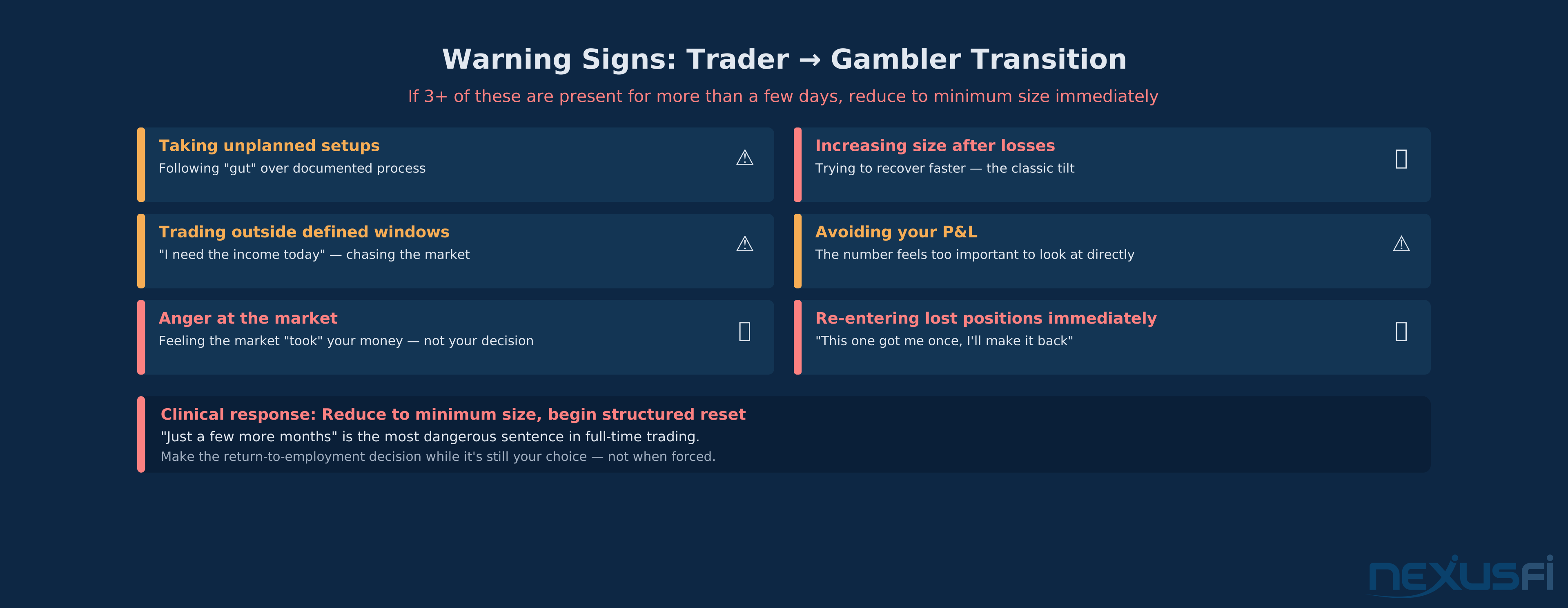
The behavioral signs of the trader-to-gambler transition:
- Taking setups you haven't journaled, following "gut" over process
- Increasing size after losses to "recover" faster
- Trading outside your defined windows because you "need" the income
- Avoiding looking at your monthly P&L because the number feels too important
- Finding yourself angry at the market for "taking" your money
If three or more of these are present for more than a few days, treat it as a clinical sign — reduce to minimum size immediately and begin a structured reset process.
The Return-to-Employment Decision #
There is no shame in returning to employment. Many successful traders — including some who have contributed some of the most useful posts on NexusFi — have cycled between full-time and part-time trading based on their financial situation and market conditions.
The decision criteria: when your trading capital has declined by 30%+ from peak, AND your performance metrics have deteriorated for 6+ weeks, AND your operating reserve has declined below 3 months, the rational decision is to reduce risk exposure. For many traders, that means returning to employment while trading part-time.
The practical reality: @shodson's advice applies on the way back too. "You can still trade while working a steady income-earning job." The goal was never to quit your job — it was to achieve financial independence. If returning to work extends your runway and removes destructive pressure, it's a strategically correct decision that may ultimately get you to sustainable full-time trading faster than continuing under pressure.
"Just a few more months" is the most dangerous sentence in full-time trading. If your capital is declining, your performance is degrading, and you're operating below your reserve floor, each additional month compounds the damage. The time to make the return-to-employment decision is when it's still your choice — not when it's forced on you.
Knowledge Map
Go Deeper
Build on this knowledgeReferences This Article
Articles that build on this topicCitations
- — Trading Futures with Context (2012) 👍 76“I have been day trading full time for 3 years. First 2 years stocks and E-mini with little success. Finally, i found a method which suits my style and i have been day trading Crude Oil for over a year now.”
- — FIO FULL TIME TRADERS (2021) 👍 18“If you start with $100k, make 50% every year, take $40k out for living expenses every year, it takes you 5 years to double your money to $200k! I just don't see how the math works for full time, earnings dependent traders, on smaller amounts.”
- — When to go fulltime (2014) 👍 4“market returns can be volatile and vary month to month, it can be hard to have consistent, predictable cash flow. Even though your trading income might be more than your job income, the income stream will be much more volatile so you may have to endure weeks or months of drawdown before making money again.”
- — Minimum starting funds to learn to trade (2016) 👍 3“I think most people underestimate the amount of capital needed that it takes to trade successfully if trading is your only source of income. In my own case, I would not consider trading full-time with less than $500k, even if I average 100% p.a. for 2 or 3 years.”
- — Take the inexpensive route (2012) 👍 24“They face some hard facts about their performance to date, and all the money and time, not to mention efforts both emotionally and psychologically... Many traders wanted to quit their day job, and trade for a living. In the beginning it started with the dream of big profits, and along the way changed to the struggle to just make few $100 a day, day after day.”
- — Trading Futures with Context (2013) 👍 42“How much should I expect to make on my account once I am fully trained and has my method down? I was scared that once I get my method down, I may not have capital to trade. Big account size in new trader hands is a NUCLEAR BOMB.”
- — Primary source of income: how many have made it? (2017) 👍 20“Undercapitalisation discussion -- the capital requirement for sustainable full-time trading is much higher than most traders expect.”
- — I'm in deep S@$% now. (2019) 👍 19“Traders perceive that if they are profitable, the next natural thing is to quit their job and move to a full-time position. But, that is precisely where the 'tilt' happens, and they are in danger of becoming gamblers as opposed to traders.”
- — About Form 6781, Gains and Losses From Section 1256 Contracts and Straddles
- — Health Coverage for Self-Employed