



Thinking in Probabilities: The Mental Framework That Separates Consistent Traders From the Rest
Every losing trader has something in common: they treat each trade as if the market owes them a verdict on their analysis. Win and they feel validated. Lose and they feel attacked. This outcome-by-outcome emotional accounting is not just uncomfortable — it is statistically illiterate, and it will destroy any edge you have.
Thinking in probabilities is the foundational mental shift that separates consistently profitable traders from those who seem to have occasional insight but can never sustain it. It is not a vague aspiration or a motivational phrase. It is a precise way of understanding what trading actually is: the repeated execution of a process with positive expected value over a large enough sample of trades.
This article builds that mental framework from the ground up — from the core mathematics of expectancy, through Mark Douglas's psychological model of outcome detachment, to concrete protocols you can implement in every trading session.
Overview #
Thinking in probabilities is the foundational mental shift that separates consistently profitable traders from those who produce occasional gains but cannot sustain them. Where most traders treat each trade as a verdict on their analysis — winning feels like validation, losing feels like failure — probabilistic thinking reframes the entire enterprise: trading is the repeated execution of a statistical process with positive expected value.
This article builds that framework from the ground up. Starting with the mathematics of expectancy, it moves through Mark Douglas's framework for outcome detachment, the statistics of losing streaks, position sizing as probability management, and the daily protocols that make probabilistic thinking a habit rather than a theory. Every section connects to real NexusFi community experience: the post where a trader finally understood that variance is mathematics, not misfortune; the journal entry where someone broke a 16-trade losing streak and recognized it as predicted, not anomalous.
Prerequisites: Familiarity with basic trading concepts — R-multiples, win rate, and stop loss — is helpful but not required. See R-Multiples and Risk Management for Futures Trading for foundational context.
What Probabilistic Thinking Actually Means #
Here is the first uncomfortable truth: you cannot know the outcome of any individual trade. Not with better analysis. Not with more indicators. Not with experience. The market is a stochastic process, and the best any trader can do is identify setups where the historical distribution of outcomes favors their position.
What professional traders have that most retail traders lack is not predictive ability. It is clarity about what they are actually doing: they are running a statistical experiment. Each trade is a draw from a distribution. Some draws will be wins. Some will be losses. The critical question is never "will this trade win?" but rather "does the distribution of outcomes from this setup type have positive expected value?"
NexusFi member jamiej83 captured this clearly: "Accept that trading is about the ODDS of success over a SERIES OF TRADES (20 trades min) not individual trades — accept the RANDOMNESS of the outcome." (https://nexusfi.com/showthread.php?t=17811&p=207780#post207780)
This is not philosophical — it is the operating reality of every profitable trading system in existence. The question is whether you will align your thinking with it or fight it.
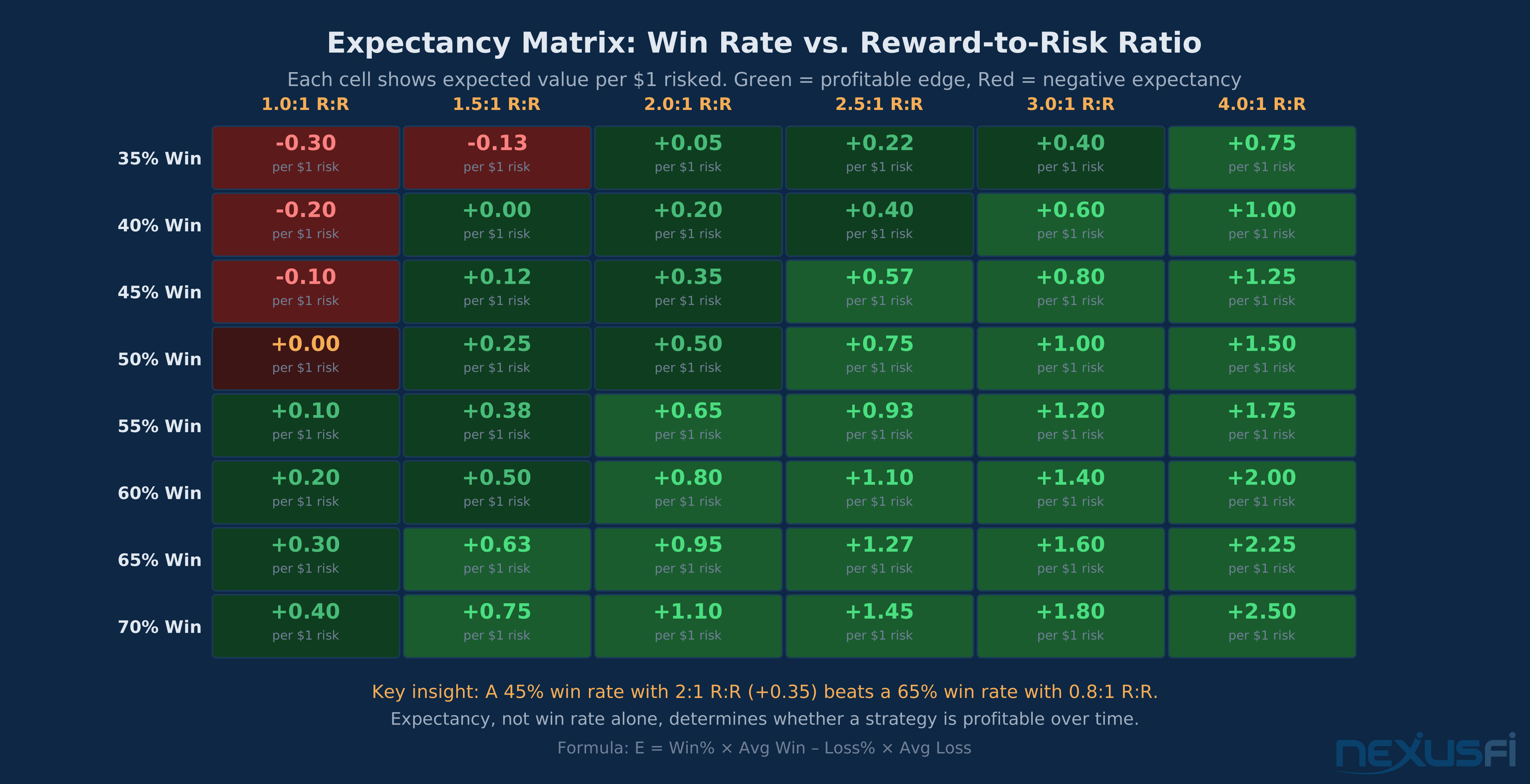
The matrix above reveals one of trading's most important and widely misunderstood truths: win rate alone tells you nothing about profitability. A 35% win rate with a 4:1 reward-to-risk ratio produces +0.40 expectancy per dollar risked — solidly profitable. A 65% win rate with a 1:1 reward-to-risk produces +0.30. But a strategy that hits 65% of the time while risking 2R to make 1R produces negative expectancy (-0.05).
The matrix forces you to think in the correct units: expected value per trade, not percentage of wins.
The Expectancy Equation: The Only Number That Matters #
Expectancy is the single metric that determines whether a trading strategy is profitable over time. The formula is deceptively simple:
E = P(win) × Average Win — P(loss) × Average Loss — Costs
Where:
- P(win) is the percentage of trades that close as winners
- Average Win is the typical gain in ticks, points, or dollars
- P(loss) = 1 — P(win)
- Average Loss is the typical loss
- Costs include commissions, fees, and expected slippage
If E > 0, you have an edge. If E ≤ 0, you do not — regardless of how confident you feel in any particular setup.
A Worked Example: ES Futures #
An ES strategy with 53% win rate, 2.5-tick average win, 1.5-tick average loss, and $5 round-trip costs yields E = 0.53×$12.50 — 0.47×$7.50 — $5.00 = --$1.90/trade — negative despite a majority win rate. Widening the average win to 4 ticks: E = 0.53×$20 — 0.47×$7.50 — $5 = +$2.07/trade. The discipline is computing actual expectancy including realistic costs, not assuming profitability from win rate alone.
NexusFi member monpere described building real probability awareness through years of execution: "I've been trading this 'dumb' method for 7 years. This is how you use probability in trading, you develop a signal, you test it on real trades." (https://nexusfi.com/showthread.php?t=18809&p=205362#post205362)
The Mark Douglas Framework: From Outcome Attachment to Decision Discipline #
Mark Douglas's work — especially Trading in the Zone and his seminar series — represents the most important psychological framework in modern trading literature. His core insight is not motivational. It is structural: the mind's natural response to uncertainty systematically destroys trading performance, and the only remedy is a specific, learnable shift in how you define success.
NexusFi member rubyslippage summarized Douglas's teaching from a seminar interview: "We cannot know the outcome of any individual trade, only the odds of net profitability over a series of trades. Mark Douglas captures the essence of..." (https://nexusfi.com/showthread.php?t=27284&p=329959#post329959)
Douglas identified five core principles for thinking in probabilities:
1. Anything can happen. Every trade setup, no matter how good, carries genuine uncertainty about outcome. The market has infinite possible paths from any given moment. Accepting this is not pessimism — it is accuracy.
2. You don't need to know what happens next to make money. Expectancy-positive trading does not require prediction. You need only a setup type that has historically produced favorable distributions, executed consistently enough for the statistics to manifest.
3. There is a random distribution between wins and losses for any given set of variables that define an edge. Even with a genuine 60% win rate, any given sequence of 10 trades might contain 7 losses. This is mathematics, not malfunction.
4. An edge is nothing more than an indication of a higher probability of one thing happening over another. It is not certainty. It is not even near-certainty. It is a statistical lean in your favor, which is sufficient for profitability when combined with correct risk management.
5. Every moment in the market is unique. No trade is identical to a previous trade, which means outcome attachment to previous trades is irrational — the "revenge trade" following a loss is responding to a ghost.
The practical implication: define success as plan adherence, not profit. A trade executed perfectly according to your defined parameters is a successful trade — whether it wins or loses. A trade where you widened your stop because it "felt wrong" is an unsuccessful trade — whether it accidentally ends up profitable or not.
NexusFi member josh wrote: "Watch every one of Mark Douglas' videos you can find. He has a common message in every workshop he's done; there's nothing fancy there, just mind-blo..." (https://nexusfi.com/showthread.php?t=49724&p=761177#post761177)
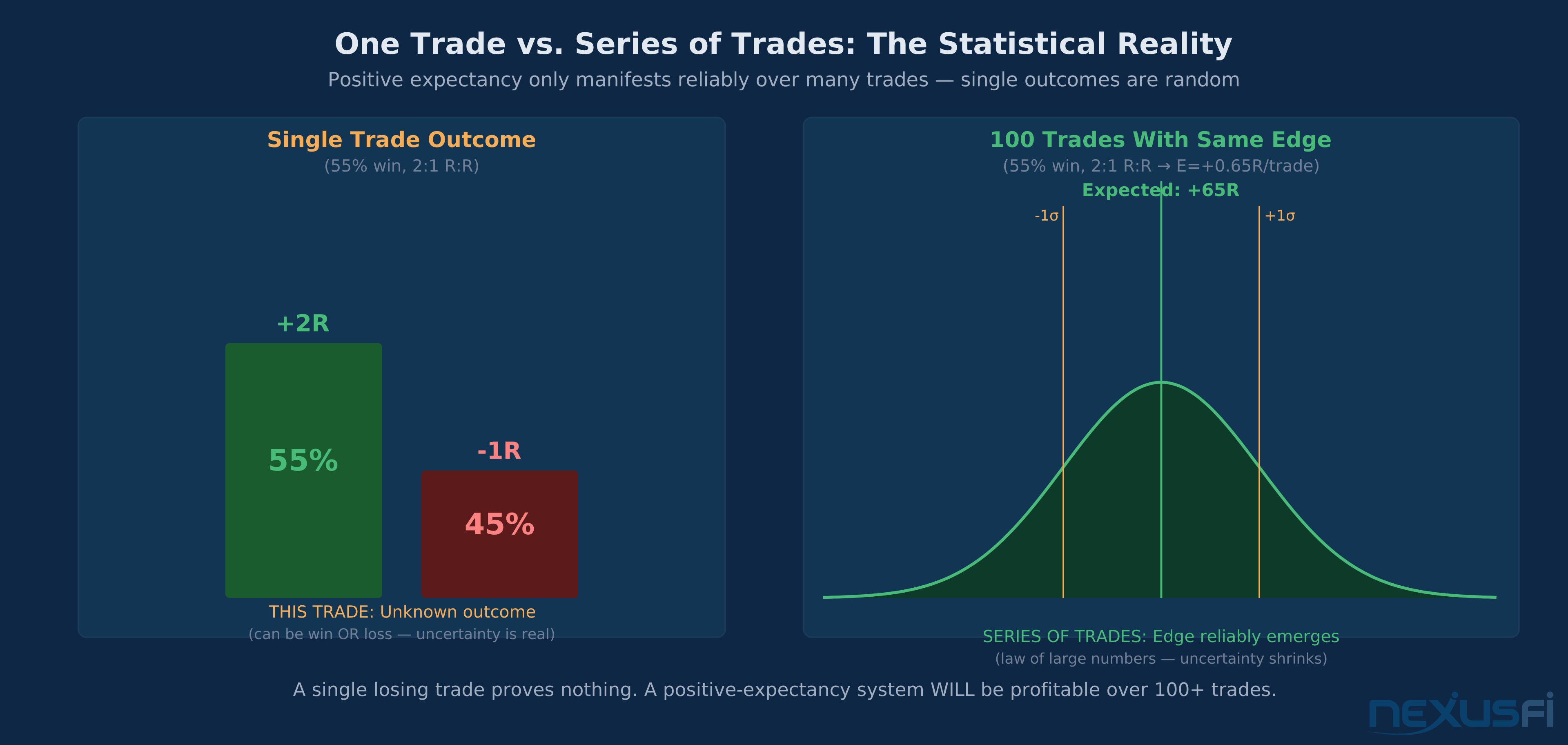
The chart above makes the central point visually: a single trade tells you almost nothing about whether your edge is real. The left panel shows that any individual trade is simply uncertain — 55% chance of +2R, 45% chance of -1R. The right panel shows what happens over 100 trades with that same edge: the distribution of outcomes centers tightly around +65R, with variance that shrinks relative to the expected return as sample size grows.
Your job is not to beat the next trade. Your job is to execute your process well enough and often enough for the statistics to favor you.
Series Thinking: Why Evaluation Must Be Statistical #
One of the most damaging cognitive errors in trading is evaluating strategy quality based on small samples. After 10 trades, most performance metrics are statistically meaningless. After 30 trades, they are still highly unreliable. Most trading professionals use 100-200 trades as a minimum sample before drawing conclusions about whether an edge is real or illusory.
This matters enormously because the natural human tendency is to do exactly the opposite: abandon strategies after small losing streaks and chase strategies after short winning streaks. Both responses are statistically irrational.
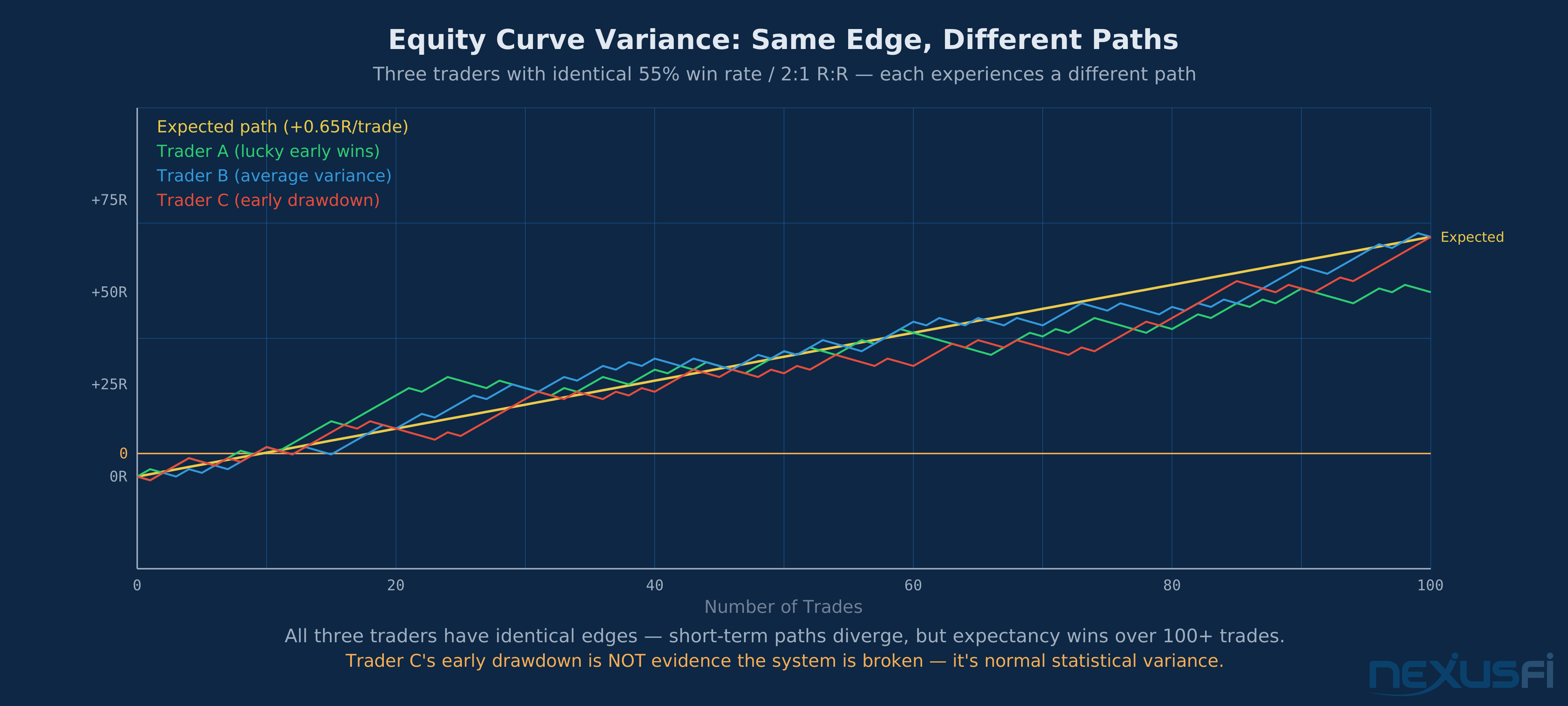
The equity curve chart shows three traders with identical edges — 55% win rate, 2:1 reward-to-risk — experiencing dramatically different short-term paths. Trader A gets lucky early and builds a comfortable cushion. Trader C hits an early drawdown and faces a psychological test of whether they will abandon the strategy.
Here is the critical insight: Trader C's early drawdown is not evidence that the system is broken. It is normal statistical variance. The edge is still there. The question is whether Trader C has the statistical understanding to know this and the emotional discipline to continue executing.
This is why series thinking is inseparable from probabilistic thinking. You must understand, before you ever place a trade, that:
- You will have losing streaks even with a genuine edge
- The length of those losing streaks is predictable and expected, not anomalous
- The correct response to a losing streak is to verify that the statistical edge still exists in recent data — not to panic and change your system based on feelings
The Minimum Sample Standard #
Before evaluating any strategy, establish your minimum sample standard:
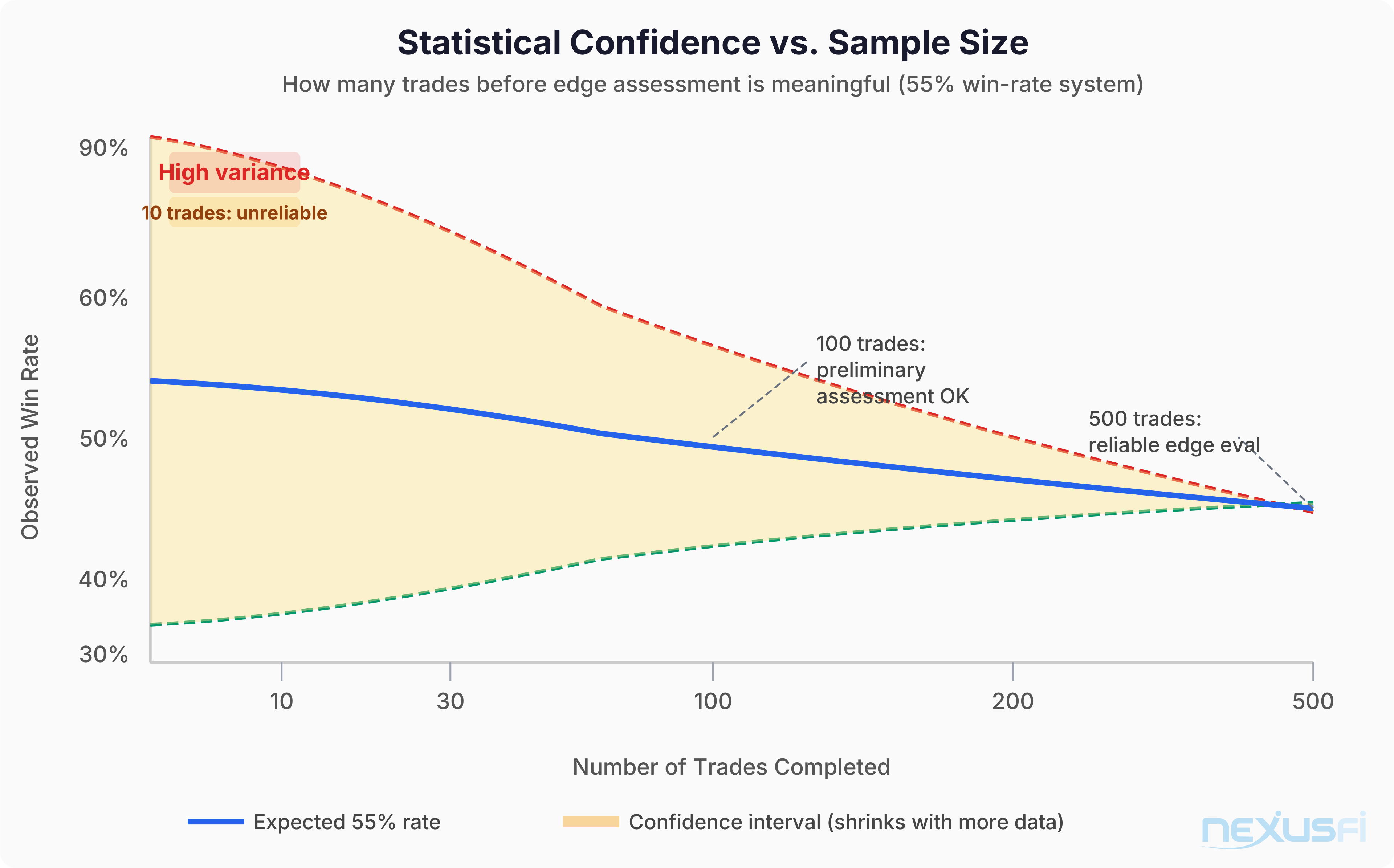
| Sample Size | Statistical Confidence | Appropriate Conclusion |
|---|---|---|
| < 30 trades | Very low | "No meaningful data yet" |
| 30-100 trades | Moderate | "Early indication, continue collecting data" |
| 100-200 trades | Good | "Preliminary edge assessment" |
| 200+ trades | High | "Reliable edge evaluation" |
Apply this standard to yourself: when you feel the urge to declare a strategy "broken" after 15 losses, ask what the sample size says.
Losing Streaks: Mathematics, Not Misfortune #
One of the most psychologically devastating experiences in trading is a losing streak. Even traders who understand probability intellectually often find themselves doubting their edge, second-guessing their analysis, or reducing their position size when a run of losses arrives. Understanding the actual mathematics of losing streaks transforms this experience.
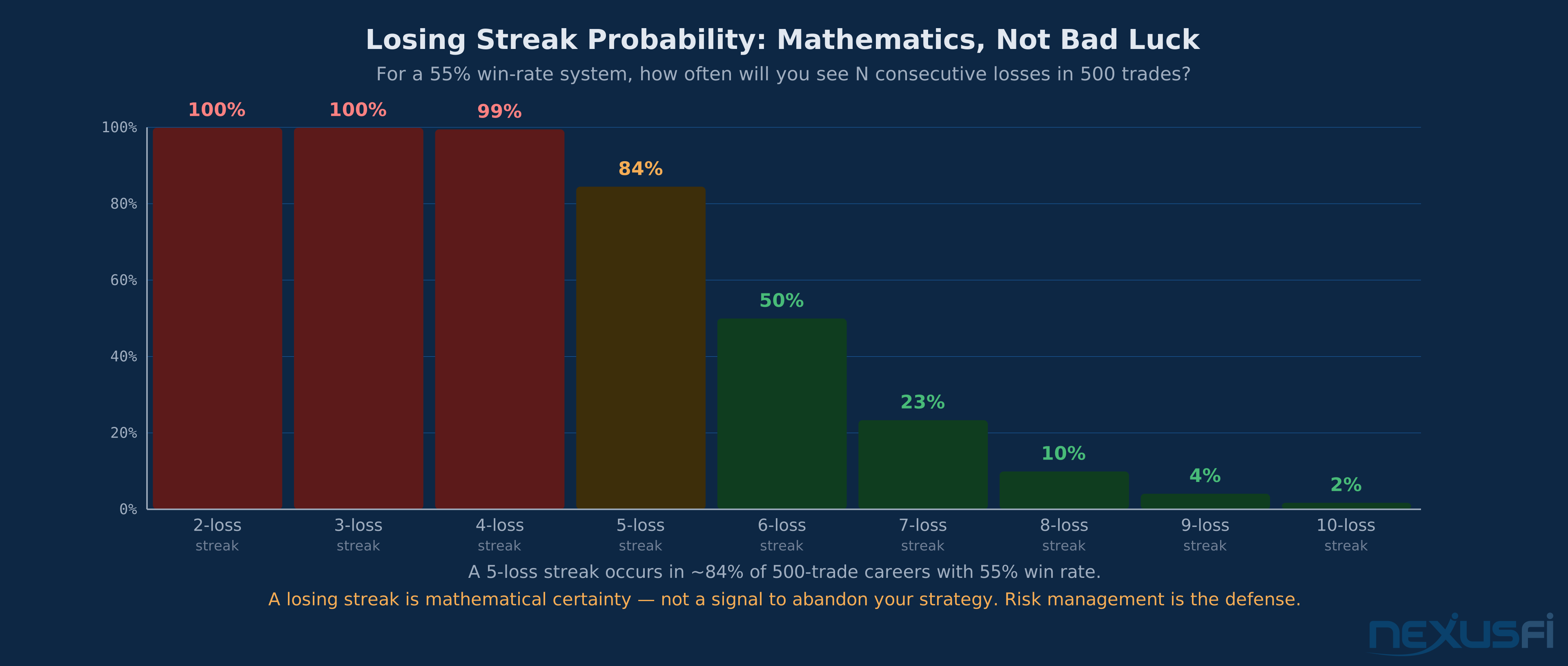
The bar chart shows the probability of experiencing various losing streak lengths in a 500-trade career with a 55% win rate system. The probability of seeing a 5-loss streak in such a career is extremely high — mathematically near-certain. A 7-loss streak will happen. An 8-loss streak will likely happen at some point.
This is not bad luck. This is the predicted behavior of a 45% loss probability over time.
The answer matters: nothing. It means statistics happened. A 20-loss streak with a 45% loss rate is rare but not impossible — it's a 0.45^20 probability, roughly 1 in 7,000. If you trade a 500-trade career, you probably won't see it, but you might. And if you do, the correct response is to check whether your edge statistics have changed in recent data (rolling 30-trade window), not to conclude that the strategy failed.
Fluid Fox described breaking a significant losing streak in his journal: "I broke a losing streak of 16 trades today with a 6R winner. I managed to capture a portion of that massive move..." (https://nexusfi.com/showthread.php?t=49962&p=778097#post778097)
Sixteen consecutive losses followed by a 6R winner — this is not unusual behavior for a legitimate positive-expectancy system. It is mathematics expressing itself as painful experience.
The practical protocol: define your personal drawdown threshold before entering any trade. At what drawdown percentage do you pause to review whether the edge has degraded versus whether you are simply experiencing expected variance? Typical professional standards suggest 15-20% drawdown from peak as a review threshold, not an automatic stop.
Process Focus vs. Outcome Focus: The Foundational Distinction #
"Outcome focus" is the state most traders are in by default: they track P&L, win percentage, and profit per trade. When they win, they feel good. When they lose, they feel bad. After a win streak, they feel confident. After a loss streak, they feel doubt. Every emotional state is driven by recent results.
The problem is that this emotional feedback loop operates on statistically meaningless samples. A 5-trade win streak does not mean your edge has improved. A 5-trade losing streak does not mean it has degraded. But the outcome-focused mind cannot resist interpreting recent results as meaningful signal.
"Process focus" is the alternative: tracking setup quality, entry execution, stop adherence, and target discipline — independent of whether each trade ends up profitable. The correct internal measure is: did I follow my plan?
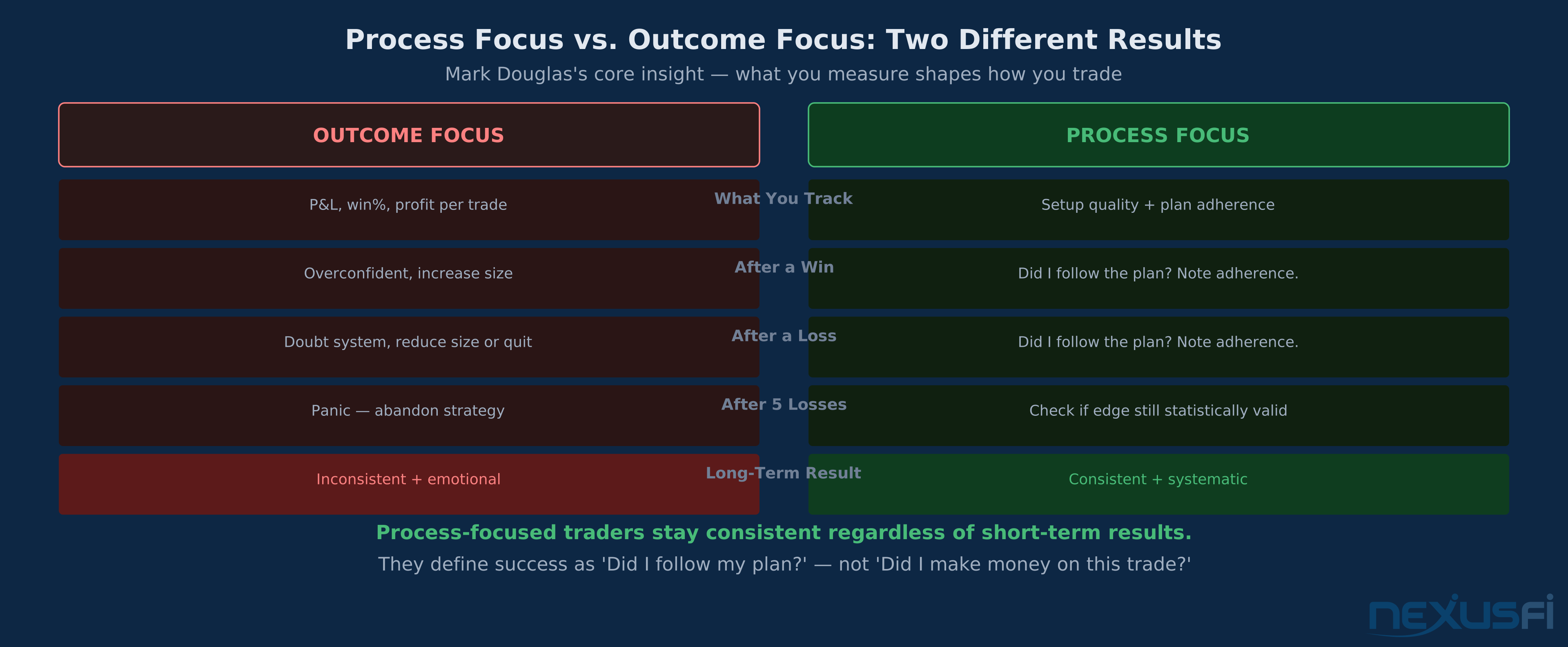
The contrast table above shows how the two orientations produce systematically different responses to identical market events. An outcome-focused trader sizes up after wins and sizes down after losses — exactly the pattern that amplifies variance and undermines the statistical edge. A process-focused trader maintains consistent sizing and consistent execution regardless of recent results, because they understand that recent results are just noise from the true signal.
The Pre-Trade Commitment Ritual #
Before each trade: (1) Verify all setup criteria are met — not "mostly," but fully. (2) Confirm stop at technical invalidation, not dollar comfort. (3) State target and expected R-multiple. (4) Speak or write: "I accept any result within my stop." This final step pre-processes the loss emotionally. When the stop is hit, you close the trade — no hesitation, no stop-widening. Emotional pre-processing removes the decision-under-pressure.
The Post-Trade Process Journal #
After each trade, record:
- The setup quality (1-5, based on your defined criteria)
- Entry execution (did you enter at the defined price?)
- Stop adherence (did you maintain the defined stop?)
- Target management (did you manage the trade according to your rules?)
- Plan adherence score (1-10, independent of P&L)
Review this weekly. The critical insight is comparing plan adherence to profitability over time: if you have high plan adherence and negative P&L, the strategy needs refinement. If you have low plan adherence and negative P&L, the execution needs refinement. These are very different problems requiring very different solutions.
Risk Management as Probability Management #
Probability thinking extends directly into position sizing. If each trade has positive expectancy, the question becomes: how much capital to risk per trade to maximize growth while preserving survival probability?
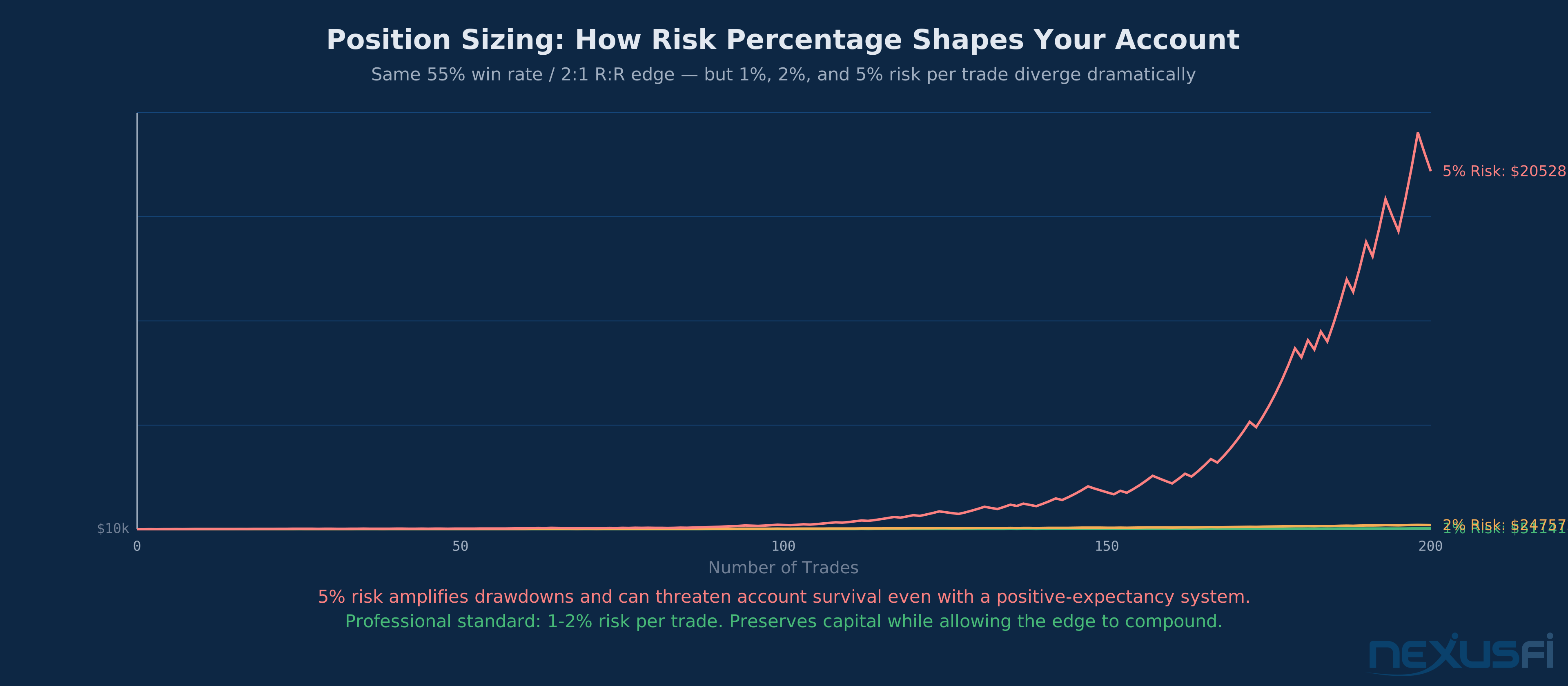
The position sizing chart demonstrates the impact of risking 1%, 2%, or 5% of account equity per trade on the same edge. All three scenarios use identical trade outcomes — only the risk percentage changes.
The 5% risk scenario produces larger absolute gains when things go well, but also creates drawdowns that can threaten account survival. More dangerously, large losses at high risk percentages reduce the capital base used to calculate future position sizes, compounding the damage in losing streaks. A 25% drawdown requires a 33% gain just to recover. A 50% drawdown requires a 100% gain.
The Kelly Criterion #
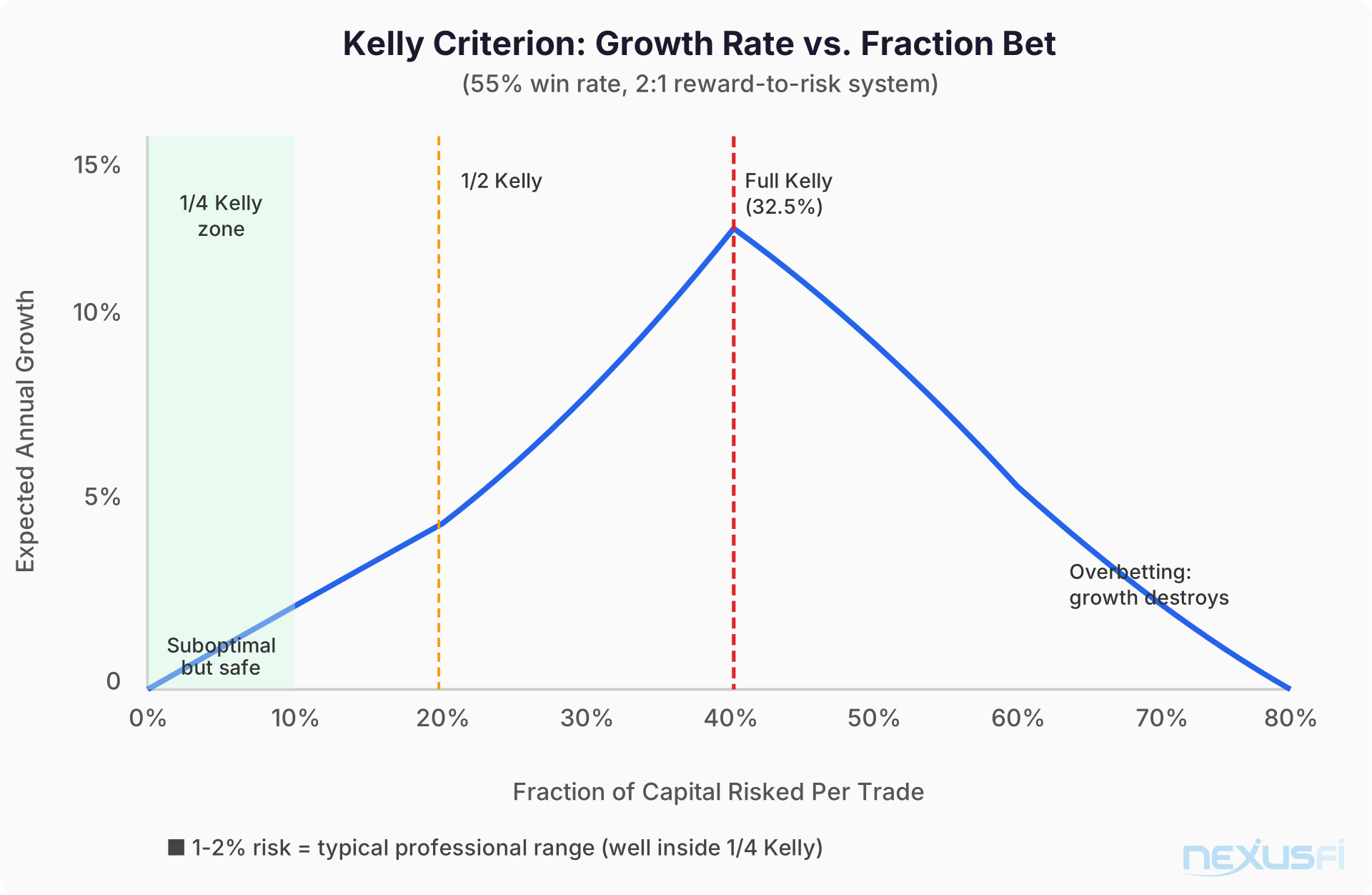
The Kelly Criterion calculates the mathematically optimal position fraction for maximizing long-term growth: f* = E / W, where E is expectancy and W is average win size. For a 55% win rate, 2:1 R:R system, full Kelly suggests 32.5% of capital — far too aggressive in practice. Most professional guidance: risk 1-2% of account equity per trade. This is well below optimal Kelly but prioritizes account survival and psychological stability. See Kelly Criterion for complete derivation and quarter-Kelly methodology.
NexusFi member Massive l demonstrated the relationship between R:R ratios and expectancy across different systems: his analysis showed that "3:1 41% win $109 expectancy 4:1 36% win $141 expectancy" — demonstrating that lower win rates with higher R:R ratios can produce superior expectancy. (https://nexusfi.com/showthread.php?t=51862&p=776794#post776794)
Volatility-Adjusted Sizing #
Position sizing adapts to volatility: Contracts = (Account × Risk%) / (Stop Distance × Tick Value). An ES trader risking 1% ($1,000) at a 4-tick stop ($200/contract) takes 5 contracts. When volatility doubles the stop to 8 ticks, they take 2 contracts — same edge, same risk percentage, fewer contracts.
Psychological Protocols: Building the Daily Habit #
Probabilistic thinking is not a philosophy you adopt once. It is a set of daily habits that counteract the mind's natural tendency to treat each trade as a verdict.
The Probability Diary #
Before each trading session or each trade, write down:
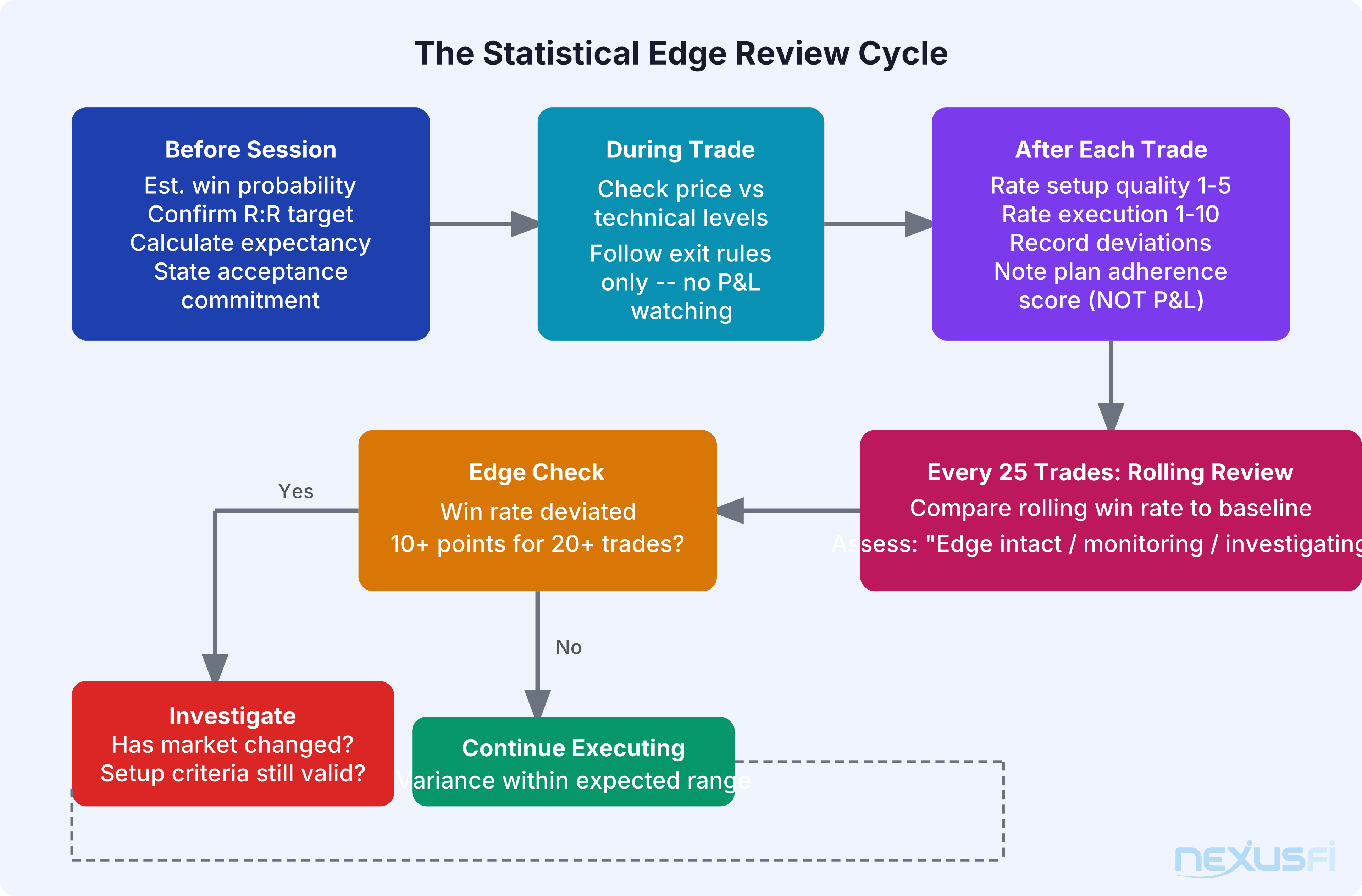
- Your estimated win probability for this setup type (based on your historical data)
- Your estimated R:R for this specific trade setup
- Your calculated expectancy for this trade
- The maximum loss you will accept and your commitment statement
After the session, record actual results and compute your running expectancy over the last 20 and 50 trades. Compare your estimated win probability to your actual win rate. This closes the feedback loop and builds accurate probability calibration over time — the ability to estimate "this setup wins 55% of the time" and have that estimate be approximately correct.
The Variance Simulation Exercise #
Periodically, gather your last 100 trades, randomly shuffle the outcome sequence 1,000 times in a spreadsheet, and compute the equity curve for each permutation. Observe the range of worst drawdowns, best runs, and final balances. When the next drawdown arrives, you recognize it as a previously simulated scenario rather than an unusual crisis.
During-Trade Protocol #
Once you are in a trade, the probabilistic trader's only job is to follow their defined exit rules. The trade has already been committed to with the pre-trade acceptance ritual. During the trade:
- Do not check your P&L mid-trade. Check price relative to your technical levels.
- Do not adjust stops based on how you feel. Adjust only if new structural information warrants it.
- Do not add to losers. Adding to a losing position changes the statistical characteristics of the trade entirely.
- Follow your target rules. Whether you scale out or take a full exit at target, apply the rule consistently.
A pause protocol is volatility management applied to your own decision-making. When you have been wrong twice in a row, the risk of a third trade influenced by emotional recovery is elevated. Taking a defined break removes this noise from the statistical sample.
Weekly Statistical Review #
Every week, review your trading data in statistical rather than narrative terms:
- Rolling 20-trade win rate vs. historical baseline
- Rolling 20-trade average R vs. historical baseline
- Rolling expectancy vs. historical expectancy
- Plan adherence score vs. profitability correlation
If rolling win rate has dropped more than 10 percentage points from historical baseline AND the deviation has persisted for 20+ trades, this warrants investigating whether market conditions have changed in ways that affect your setup type. If the deviation is smaller or newer, file it as "within expected variance" and continue executing.
The Complete Probabilistic Trader Framework #
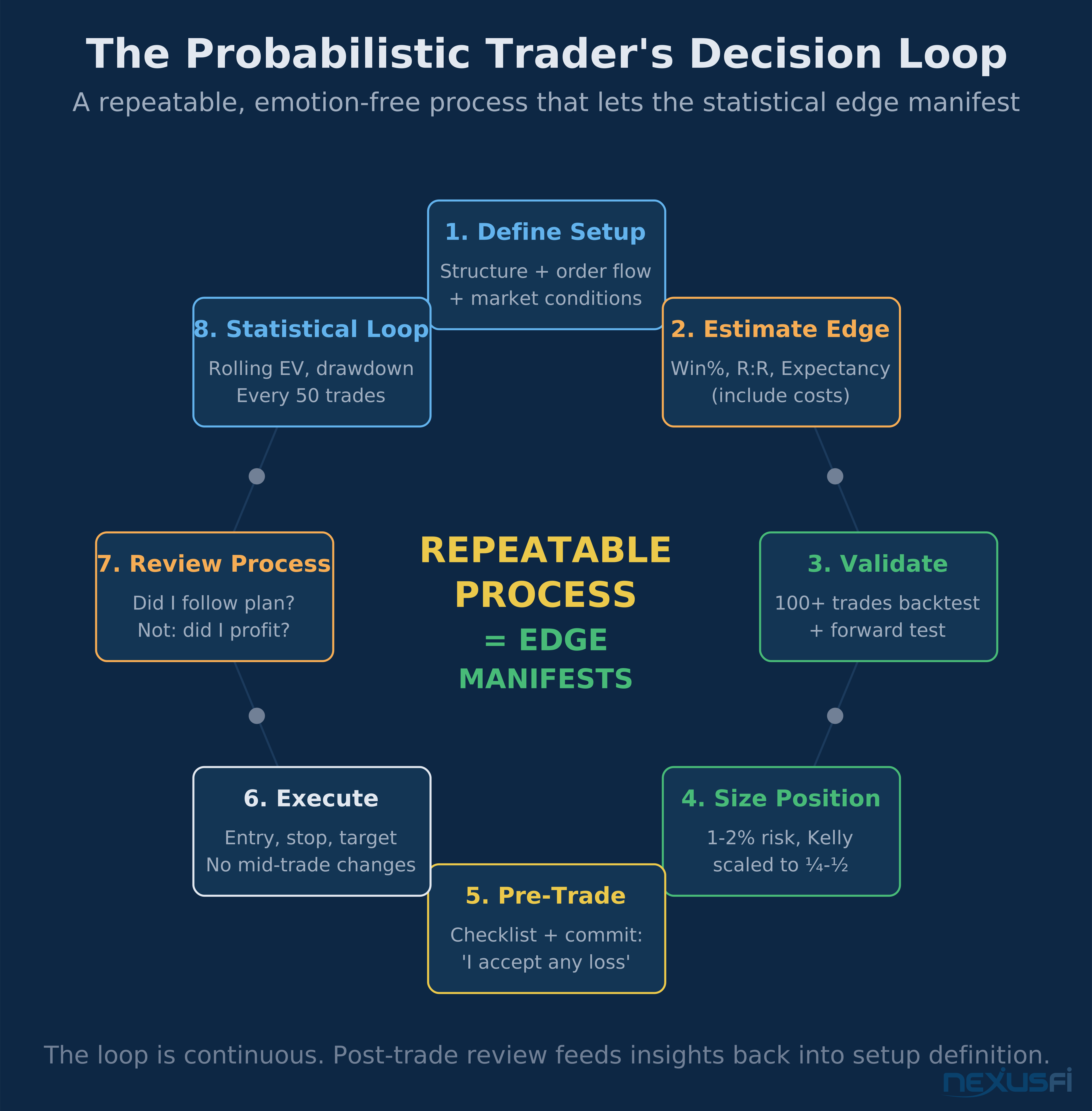
The decision loop chart integrates all the components discussed in this article into a continuous, repeatable process:
1. Define Setup: Identify the specific structural, order flow, and volatility conditions that constitute your setup — specific enough to train another trader consistently. 2. Estimate Edge: Calculate win rate, average win/loss, and expectancy from at least 100 historical trades of this type, including realistic costs. 3. Validate Edge: Confirm it holds across different market regimes and has been tested out-of-sample. 4. Size Position: Use fixed-fractional (1-2% equity) methodology, volatility-adjusted. 5. Pre-Trade Commitment: Complete checklist, state entry/stop/target, speak the acceptance statement. 6. Execute: Enter at defined price, manage by rules only — no improvisation. 7. Review Process: Score plan adherence after the trade closes — not P&L. 8. Statistical Loop: Every 50 trades, compute rolling expectancy and compare to historical baseline; adjust only if deviation is statistically meaningful and persists.
The loop is continuous: post-trade review feeds directly into setup refinement.
Common Failure Modes #
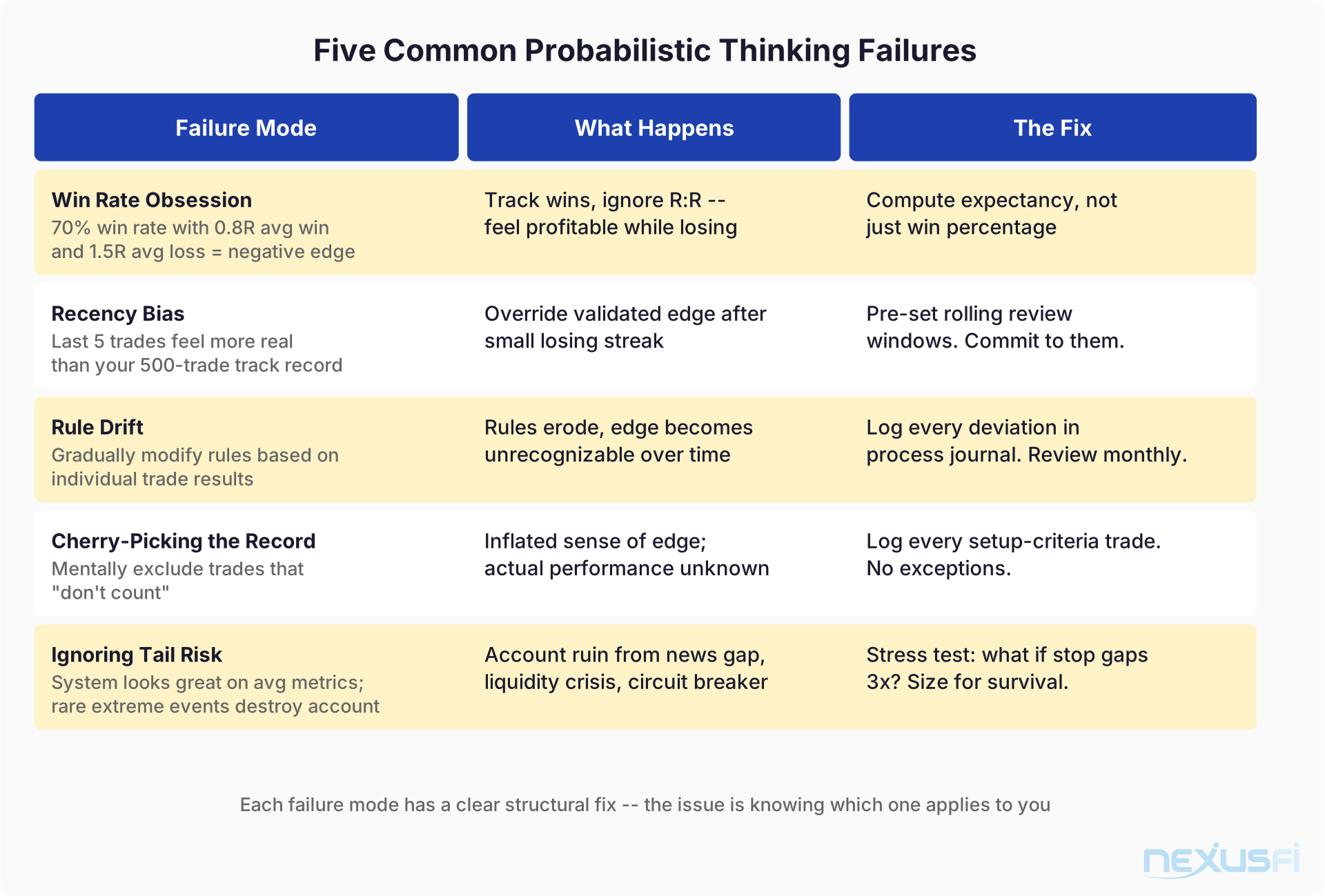
Even traders who intellectually embrace probabilistic thinking repeatedly fall into predictable traps. Understanding these failure modes in advance provides a defense against them.
Win Rate Obsession #
The most common failure mode: focusing exclusively on win percentage while ignoring reward-to-risk ratio. A trader with a 70% win rate who averages a 0.8R win and a 1.5R loss has negative expectancy (-0.03 per trade) despite feeling successful on most trades. The psychological seductiveness of winning frequently is a systematic bias toward systems with unsustainable risk profiles.
Defense: Always compute and track expectancy, not just win rate. Your goal is positive expected value, not high frequency of winning.
Recency Bias #
The last 5 trades feel more real than the last 500. After a losing streak, you doubt an edge that has been validated over hundreds of trades. After a winning streak, you feel invincible and may increase size inappropriately.
Defense: Establish your rolling review windows before you start trading, and commit to using them as the primary evaluation mechanism. Do not allow a 10-trade sample to override a 500-trade track record.
Rule Drift #
Gradually modifying your rules based on individual trade outcomes. You moved the stop once because it "felt like it would come back." It did. Now you move stops more often. You added a trade once without a clean setup because "the overall context was good." It worked. Now you're taking lower-quality setups.
Defense: Record every rule deviation in your process journal with the outcome. If deviations consistently produce better outcomes on average, the rule may need updating. If they produce worse or equal outcomes, the deviation is noise — the rule is correct. (https://nexusfi.com/showthread.php?t=37351&p=654694#post654694)
Cherry-Picking the Record #
Mentally excluding trades that "don't count." If you selectively include wins and exclude losses from your mental performance record, your sense of edge is systematically inflated. Defense: Keep a complete trade record for every trade that meets your defined setup criteria, regardless of outcome. Compute expectancy on the full sample only.
Over-Optimization on Small Samples #
Finding parameters that produce an 80% win rate on the last 30 trades, then trading at full size — only to discover it was curve-fit to a short window. Defense: Always test new parameters on out-of-sample data. Look for consistency across multiple market regimes, not performance on a single recent window.
Ignoring the Tail Risk #
Many systems look excellent on their average win/loss metrics but carry fat-tail risk — rare scenarios where losses dramatically exceed the historical average. News spikes, gap openings, extreme volatility events, and liquidity crises can all produce losses many multiples of the expected maximum.
Defense: Stress-test your system by asking: what happens if the market gaps through my stop by 3x the normal distance? Can my account survive this? Position sizing should account for tail risk, not just expected loss.
Practical Exercises for Building the Habit #
Baseline Calculation: Extract your last 100 completed trades. Calculate win rate, average win (in R), average loss (in R), and expectancy. This is your statistical baseline.
Shuffle Test: List your last 100 trade outcomes in a spreadsheet. Shuffle randomly 20 times and plot the equity curve for each permutation. Identify worst drawdown — ask whether you could continue executing through it. This transforms abstract variance into concrete preparation.
Pre-Trade Scripting: Before your next 10 trades, write: setup criteria met, entry/stop/target, expected R-multiple, and the acceptance statement: "I accept this stop loss as the cost of this probability bet." Score plan adherence 1-10 after each trade.
Rolling Review: Every 25 trades, compute rolling win rate and expectancy, compare to long-term baseline, write: "Edge status: intact / monitoring / investigating."
Why This Matters #
The statistics of trading are ruthless and impartial. Your edge either exists or it does not. You either execute it consistently enough for the statistics to manifest or you do not. No amount of hope, fear, conviction, or emotional reaction changes the underlying math.
Traders who internalize probabilistic thinking stop treating trading as a series of one-off decisions and start treating it as the management of a statistical process. They become less interesting to observe on any given day and more profitable over any given year.
NexusFi member Anagami calculated exactly how many consecutive losers to expect based on win rate and career length — confirming that the painful frequency of losing streaks is mathematics, not misfortune. (https://nexusfi.com/showthread.php?t=9009&p=107430#post107430)
The traders who survive and compound in this environment are not the ones who can predict markets. They are the ones who made peace with uncertainty, defined their edge, protected it through disciplined execution, and understood that the only time-frame that matters is the long run. That understanding — and the process disciplines it creates — is what thinking in probabilities actually means.
Knowledge Map
Go Deeper
Build on this knowledgeReferences This Article
Articles that build on this topicCitations
- — Concerning risk per trade sizing (2012) 👍 43“Accept that trading is about the ODDS of success over a SERIES OF TRADES (20 trades min) not individual trades -- accept the RANDOMNESS of the outcome.”
- — Trading Metrics for journals/record keeping (2010) 👍 32“The edge is the expectancy. Expectancy = Average winner x Winning percentage - Average Loser x Losing percentage.”
- — Dear Ruby (2013) 👍 13“We cannot know the outcome of any individual trade, only the odds of net profitability over a series of trades. Mark Douglas captures the essence of probabilistic thinking.”
- — Why most traders fail, in 1 minute of an interview (2019) 👍 17“The outcome of this trade is purely random, just like pulling the handle on a slot machine.”
- — Self Sabotage - Help please (2018) 👍 10“In the long run, a few losing days won't matter, as long as you keep playing the probabilities game, as Mark Douglas points out.”
- — Concerning risk per trade sizing (2012) 👍 8“You are more focused on the outcome, than the process, of your decision making. It's a natural defense mechanism.”
- — ES Trading Journal - conquering my fears (2014) 👍 11“What happens when you have 20 losers in a row? What happens when you only take your A+ set ups and you have 20 losers in a row?”
- — Becoming A Better Trader (2020) 👍 12“I broke a losing streak of 16 trades today with a 6R winner. I managed to capture a portion of that massive move.”
- — The two sides of probability (2020) 👍 6“3:1 41% win $109 expectancy 4:1 36% win $141 expectancy -- demonstrating that lower win rates with higher reward-to-risk ratios can produce superior expectancy.”
- — A different kind of journal (2022) 👍 4“Two consecutive losses triggers a self-imposed time out of 5 minutes before re-evaluating.”
- — GruttePier's trading journal to getting profitable (2017) 👍 13“With exception of 2 months, 20 months were positive since I made significant changes.”
- — Winning Trade % Confidence vs. Straight Losers Expectation (2011) 👍 10“Depending on your trading frequency, you can estimate how many losers in a row you can expect in a year, a decade, or a lifetime of trading.”
- — Probability 101 (2012) 👍 22“This is how you use probability in trading, you develop a signal, you test it on real trades.”
- — Why most traders fail, in 1 minute of an interview (2019) 👍 9“Watch every one of Mark Douglas' videos you can find. He has a common message in every workshop he's done.”