



How to Build a Trading Journal: A Complete System for Active Traders
Overview #
A trading journal is the single highest-leverage tool available to a developing trader. Not a platform. Not an indicator. Not a strategy course. The journal.
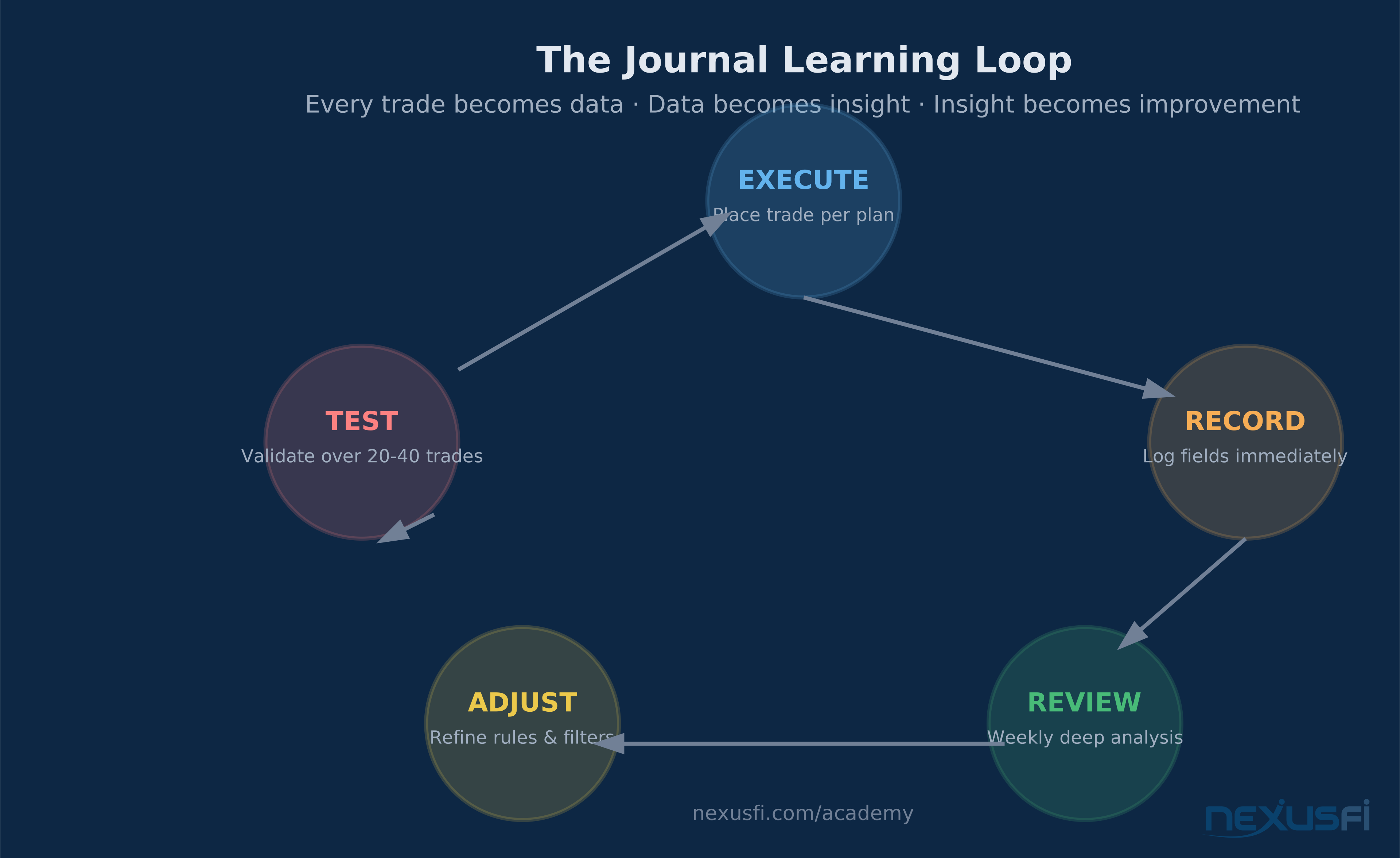
Every trader who reaches consistent profitability arrives there through some version of the same mechanism: they find a way to convert raw experience into deliberate practice. They stop accumulating screen hours and start accumulating learning. The journal is the mechanism that makes this transformation possible.
Without a structured record, trading experience is largely wasted. You repeat the same mistakes because you cannot see them. You feel like you are improving when you are actually just running hotter or colder in a random sequence. You change strategies based on recent results rather than underlying edge. The journal breaks this cycle by creating a closed feedback loop between what you do and what you learn.
This guide covers the complete system: how to structure your journal, what to record, how to review your data, which metrics reveal genuine edge, how to track behavioral patterns, and how to translate findings into measurable rule improvements. The framework applies whether you are trading ES futures, NQ, individual equities, or any other liquid instrument.
The core principle: your journal must record decisions and reasoning, not just outcomes. Outcome-only journals tell you whether you won or lost. Decision journals tell you why — and why is the only thing you can actually change.
Why Every Serious Trader Needs a Journal #
NexusFi member Big Mike launched one of the forum's longest-running threads on this exact topic, writing: "I'm on a mission to improve my Excel trade journal. I'd like to hear input on what metrics you guys measure: Sharpe ratio, Expectancy, Win/Loss Dollar Ratio, Win Percentage, Maximum drawdown, Realized MAE/MFE, Unrealized MFE." That thread, started in 2010, accumulated nearly 1,000 replies because the question struck something universally relevant.
The fundamental problem a journal solves is feedback latency. In most skill domains, feedback arrives quickly. A musician hears immediately when they play a wrong note. A surgeon knows within hours whether a procedure succeeded. A trader, however, can make the same mistake dozens of times across weeks or months and never identify the pattern, because each instance is separated by time and by the natural variability of market outcomes. Bad entries get bailed out by favorable price action. Good decisions result in losses because of external factors. Without systematic recording, the signal drowns in noise.
A well-maintained journal creates four things that experience alone cannot:
External memory: The journal remembers what you did and why, so you can examine it objectively later, separate from the emotional context of the trade.
Aggregate signal: Individual trades are too noisy to be informative. Fifty trades grouped by setup reveal patterns. One hundred trades reveal them clearly. The journal enables this aggregation.
Behavioral accountability: When you know you will record a trade decision in writing, you are less likely to break your rules. The act of documentation creates a mild accountability structure.
Hypothesis testing infrastructure: Every adjustment you make to your trading should be treated as a hypothesis. The journal provides the data needed to test whether a change actually improved your results.
Brett Steenbarger, whose work Enhancing Trader Performance has influenced thousands of active traders, frames this in terms of deliberate practice — the goal-directed, feedback-intensive repetition that creates expertise in any domain. The journal is the mechanism for converting undirected screen time into deliberate practice.
The Two-Layer Journal Structure #
The most effective trading journal architectures use two distinct layers that serve different functions.
Layer A: The Trade Log
The Trade Log is your per-trade record. It should be fast to complete — ideally sixty to ninety seconds — and focused on capturing the minimum information needed for later analysis. Every additional field you add to the Trade Log creates friction, and friction destroys the habit. PandaWarrior, one of the most-thanked members in the NexusFi metrics thread, noted this directly: "I am sure mine is pretty rudimentary compared to some but I am making it available just the same." The point was a working journal that actually got used.
The Trade Log captures what happened at the level of individual trades: the mechanics, the plan, the execution, and the outcome.
Layer B: The Review Database
The Review Database is your analytical layer — pre-built views, pivot tables, filters, and computed metrics that answer strategic questions about your performance. This layer is not updated trade-by-trade. It is the aggregated view of your Trade Log, structured to reveal patterns that individual records obscure.
This two-layer separation prevents a common mistake: trying to analyze performance from a single sprawling spreadsheet where data entry and analysis compete for the same interface. The Trade Log prioritizes speed and consistency. The Review Database prioritizes analytical power.
Implementation tools
Most traders should start with Google Sheets or Excel. A spreadsheet handles both layers well at the scale of an individual trader: the Trade Log is the data entry sheet, and the Review Database is built from pivot tables and computed columns on separate sheets. MiniP on NexusFi described this approach directly: "I would suggest you make a few different journals and keep them all in the same space. I personally use Google Sheets with a handful of different tabs."
Dedicated journal software — Tradervue, Edgewonk, Trademetria — offers more analytical power and can import broker CSV files automatically. These become valuable as trade volume grows and manual entry becomes impractical. A custom database solution (MySQL or PostgreSQL with a simple frontend) is worth building only if you have the technical background and consistently find spreadsheets limiting.
The best journal is the one you actually use every single day.
Essential Fields: What to Record #
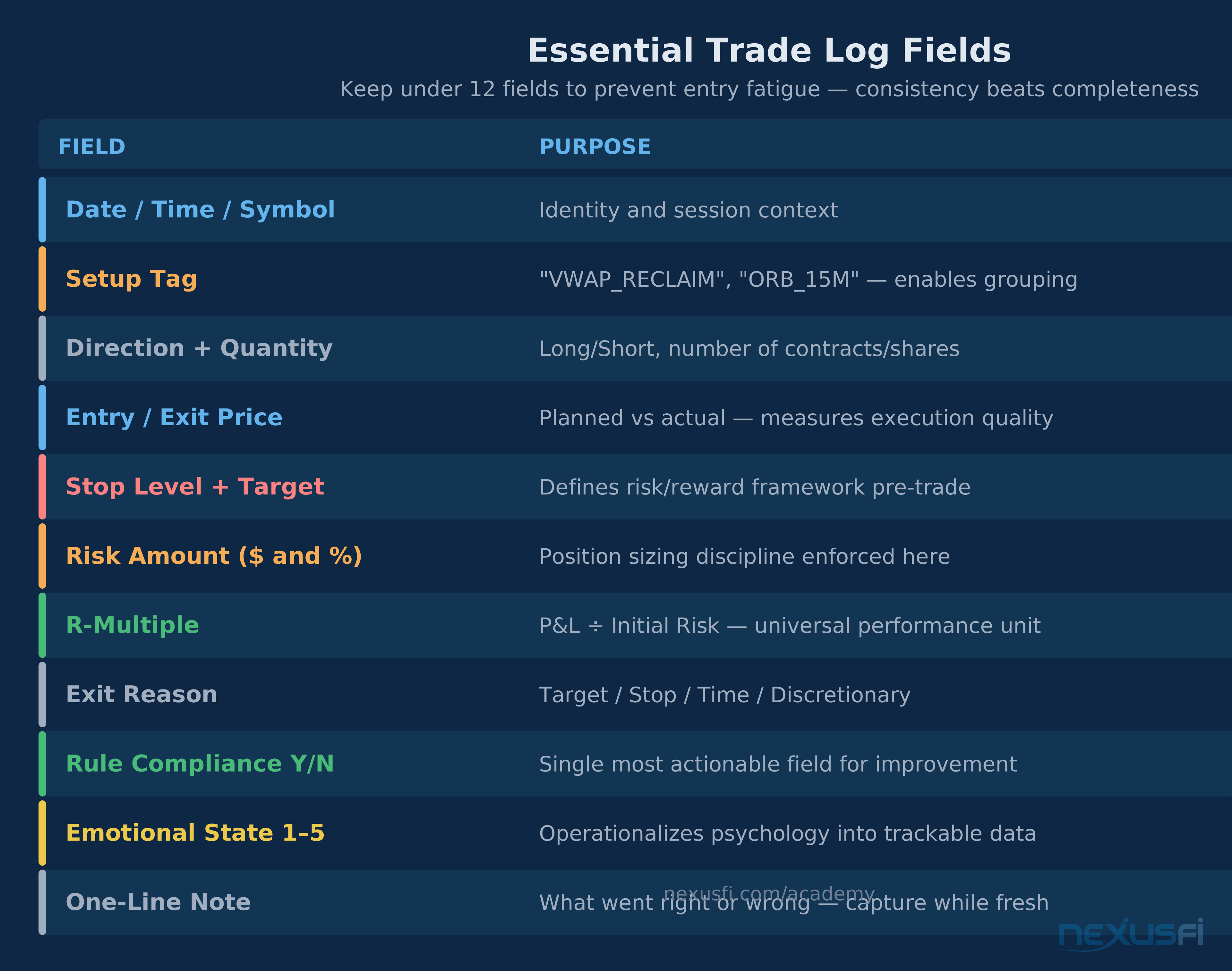
The minimum viable Trade Log has eleven fields. Add enrichment fields only after the basic journaling habit is solid — typically after the first full month.
The Core Eleven
Date, Time, Symbol: Identity and session context. For futures traders, include the session (RTH vs Globex), as the two behave differently in terms of liquidity, volatility, and typical setup behavior.
Setup Tag: A consistent label for the trade type — "VWAP_RECLAIM," "ORB_BREAKOUT," "HTFPB_PULLBACK." This is perhaps the single most important field after the outcome. Setup tags enable you to group trades and compare performance by strategy type, which is impossible without them. Use a consistent naming convention from day one.
Use uppercase abbreviations with underscores for setup tags: ORB_BREAKOUT, VWAP_RECLAIM, HTFPB_PULLBACK. Mixed conventions collapse your ability to group and compare. The tag must be identical every time or weekly setup aggregation fails.
Direction and Quantity: Long or short; number of contracts or shares. For futures traders, note the specific contract expiration when rolling periods are relevant.
Entry Price and Exit Price (planned vs actual): Recording both planned and actual prices measures execution quality over time. Systematic differences between planned and actual entry reveal whether you are chasing entries, getting poor fills during volatile conditions, or executing well.
Stop Level and Target: The pre-trade stop placement and target levels define the risk/reward framework. Recording both ensures you can later analyze whether your stops were appropriately placed or whether they were based on dollar risk rather than market structure.
Risk Amount in dollars and percentage: The dollar amount at risk and the percentage of account equity. This enforces position sizing discipline — you cannot review your risk management systematically without this data.
R-Multiple: Net profit or loss divided by initial risk. This is the universal performance unit for active traders. A trade that risks $200 and makes $400 has an R-multiple of 2.0. A trade that risks $200 and loses $200 has an R-multiple of -1.0. R-multiples allow you to compare trades across different position sizes, different symbols, and different account sizes. JohnS noted in the NexusFi forum that he built his entire journal around tracking %R: "I created my own macro-free lite journal that tracks Sum %R, Avg %R, compares different instruments and systems, equity curve over 12 months."
Exit Reason: How the trade ended — target hit, stop triggered, time stop, or discretionary exit. This field, analyzed over time, reveals systematic patterns in your exit behavior that aggregate metrics cannot show.
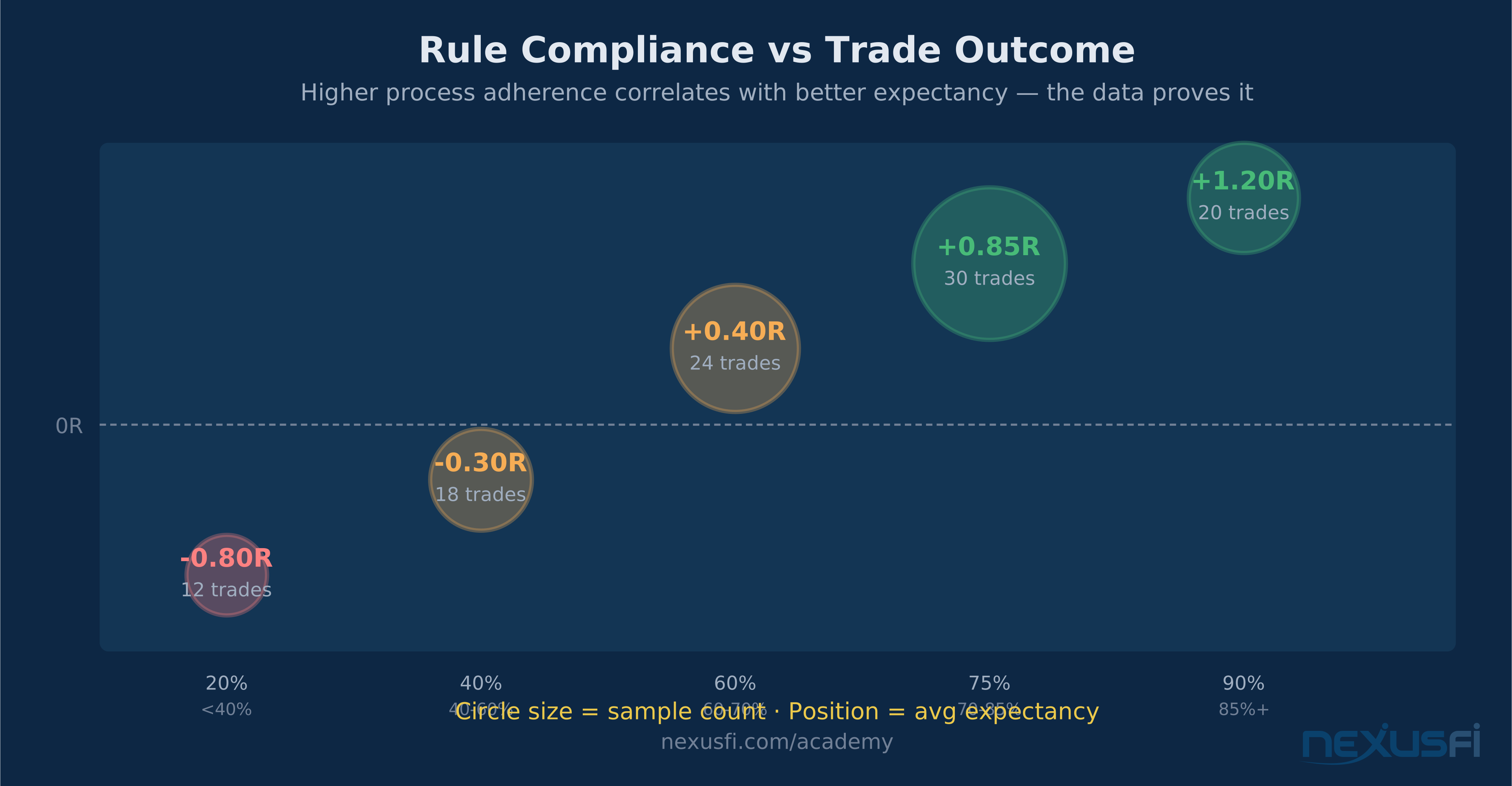
Rule Compliance (Yes/No): A single checkbox: did you follow your plan? This binary field is arguably the most actionable in the entire journal. Performance differences between compliant and non-compliant trades, measured over fifty or more records, tell you whether your edge comes from your system or from your discretionary overrides.
Rule compliance rate is often more predictive of future performance than win rate in early development. A trader with 95% compliance on a 60% win-rate system outperforms a 65% win-rate trader at 60% compliance — executing an edge beats getting lucky.
Emotional State (1-5): A simple rating of your pre-trade psychological state — calm and focused at 5, distracted or stressed at 1. Tracking this over time reveals whether emotional state correlates with performance outcomes, and if so, how strongly.
One-Line Note: A single sentence about what went right or wrong. Write it immediately after the trade, not hours later. This note captures the situational context that disappears from memory quickly.
Enrichment Fields (add after month one)
Once the basic habit is established, add: MAE and MFE, slippage in ticks, order type, regime tag (trend/range/high-vol), and confidence score before entry. thetradinghermit tracked "Winners to losers per Instrument, Average winner per trade time, Winning/losing periods." The data becomes meaningful only after the core 11 fields are consistently captured.
The Three Separation Principle
Effective Trade Logs separate three components: signal quality (did the setup meet your criteria?), management quality (did you follow the exit plan?), and execution quality (how well did you implement the plan?). These fail independently — treating all three as a single "trade quality" score hides which layer is actually losing edge.
The Review Cadence: Daily, Weekly, Monthly #
Data without review is just storage. The review cadence turns stored data into learning.
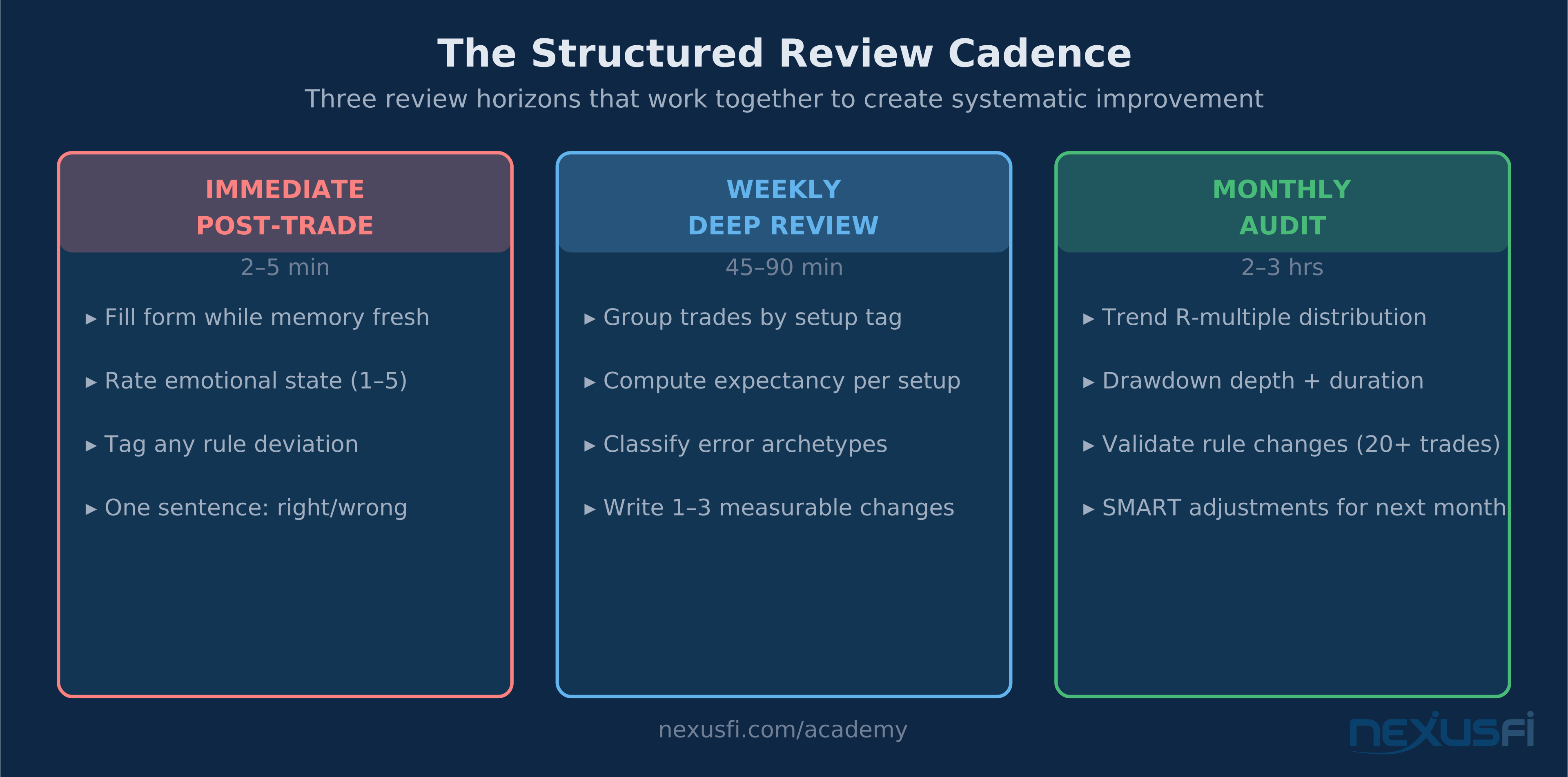
Immediate Post-Trade Review (2-5 minutes)
Complete the Trade Log while the trade is fresh. Fill in the emotional state rating, the one-line note, and any rule compliance flag. The goal is to capture accurate information before memory distorts it. Post-trade rationalization is a well-documented cognitive bias — the story you tell about a trade thirty minutes after it closes is already different from what actually happened.
If you deviated from your plan, note what caused the deviation. Was it a specific price action event? An emotional reaction? A news item? Document the cause, not just the effect.
Daily Review (10-15 minutes, after the close)
At the end of each session, spend ten to fifteen minutes reviewing the day's trades. Compute basic summary metrics: total R, win rate, largest single drawdown. Review only losers and rule deviations — winners that followed the plan need no analysis. Identify one recurring issue from the day. Write it down.
This review is not for deep analysis. It is for quick pattern detection and to ensure the Trade Log is complete while memory is intact.
Weekly Deep Review (45-90 minutes) — The Core Learning Session
The weekly review is where systematic improvement happens. Block sixty to ninety minutes for it every week, at the same time, without interruption.
Run three analytical loops:
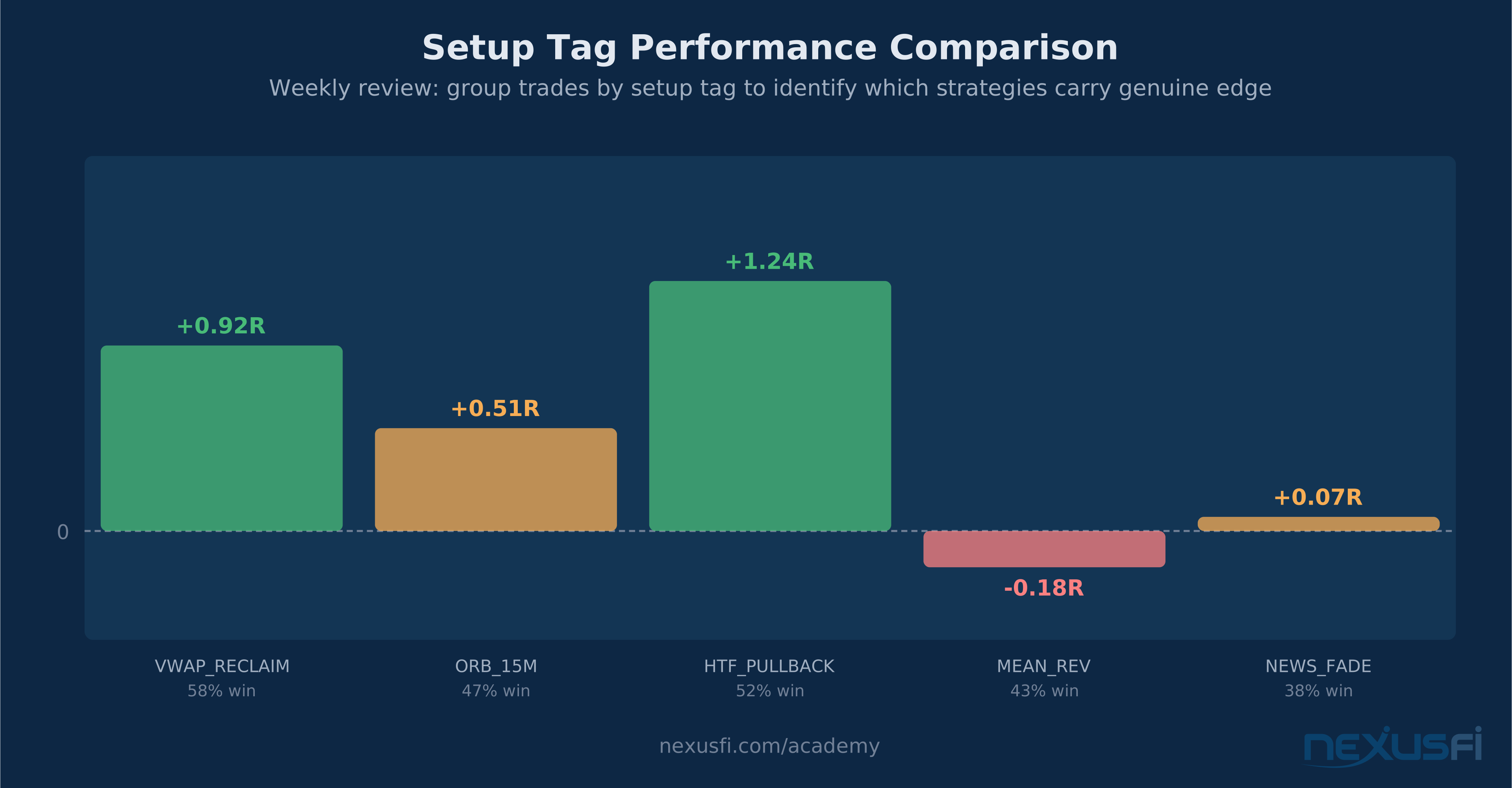
Setup Performance: Group all trades from the week by setup tag. For each setup, compute expectancy, win rate, and average R. Filter by market regime — the same setup may perform well in trending conditions and poorly in range-bound conditions. This analysis reveals which setups merit scaling and which should be filtered.
Error Taxonomy: Classify every non-compliant trade and every underperforming trade into a repeatable category. Common categories include: late entry, stop placed incorrectly, winner cut too early, position sized incorrectly, entered without setup criteria met, revenge trade after a loss. Track the frequency and average R-impact of each category. thetradinghermit described his approach: "Average winner per trade rating based on observation and monitoring of market, trade setup recognition, entry and execution, trade monitoring, trade exit, post trade analysis."
Process Audit: Score your adherence to 5-10 non-negotiable rules for each strategy. What percentage of trades this week fully complied with your documented process? This number is often more predictive of future performance than win rate alone, especially for traders who have demonstrable edge in their setup selection but struggle with execution discipline.
Write 1-3 measurable adjustments based on findings. Not vague intentions — specific, testable changes. "Reduce position size by 25% during the first 30 minutes of RTH" is measurable. "Be more patient" is not.
Monthly Audit (2-3 hours)
The monthly audit tracks the long-term view: R-multiple distribution trend, drawdown depth and duration, and which rule changes actually improved expectancy. Set SMART adjustments for the coming month. GruttePier documented this: "I updated my big, hairy excelsheet in which I record my trades and calculate my stats." Willingness to refine the tool alongside trading is its own indicator of serious development.
Performance Metrics That Matter #
Not all metrics are equally informative. Focus on the ones that reveal edge and risk, not just raw profit.
Expectancy: The Core Measure of Edge
Expectancy is the average amount you expect to make per unit of risk, over a large sample of trades. A positive expectancy means your setup has statistical edge. A negative expectancy means you are losing money regardless of how it feels.

Many traders focus exclusively on win rate. This is a mistake. A 70% win rate with an average winner of 0.5R and average loser of 1.5R produces negative expectancy. A 40% win rate with an average winner of 2.5R and average loser of 0.8R produces strongly positive expectancy. The combination of win rate and payoff ratio, expressed through expectancy, is what matters. See Risk-Reward Ratio for a deeper treatment of how payoff ratios determine whether a system is viable before you trade it live.
R-Multiple Distribution
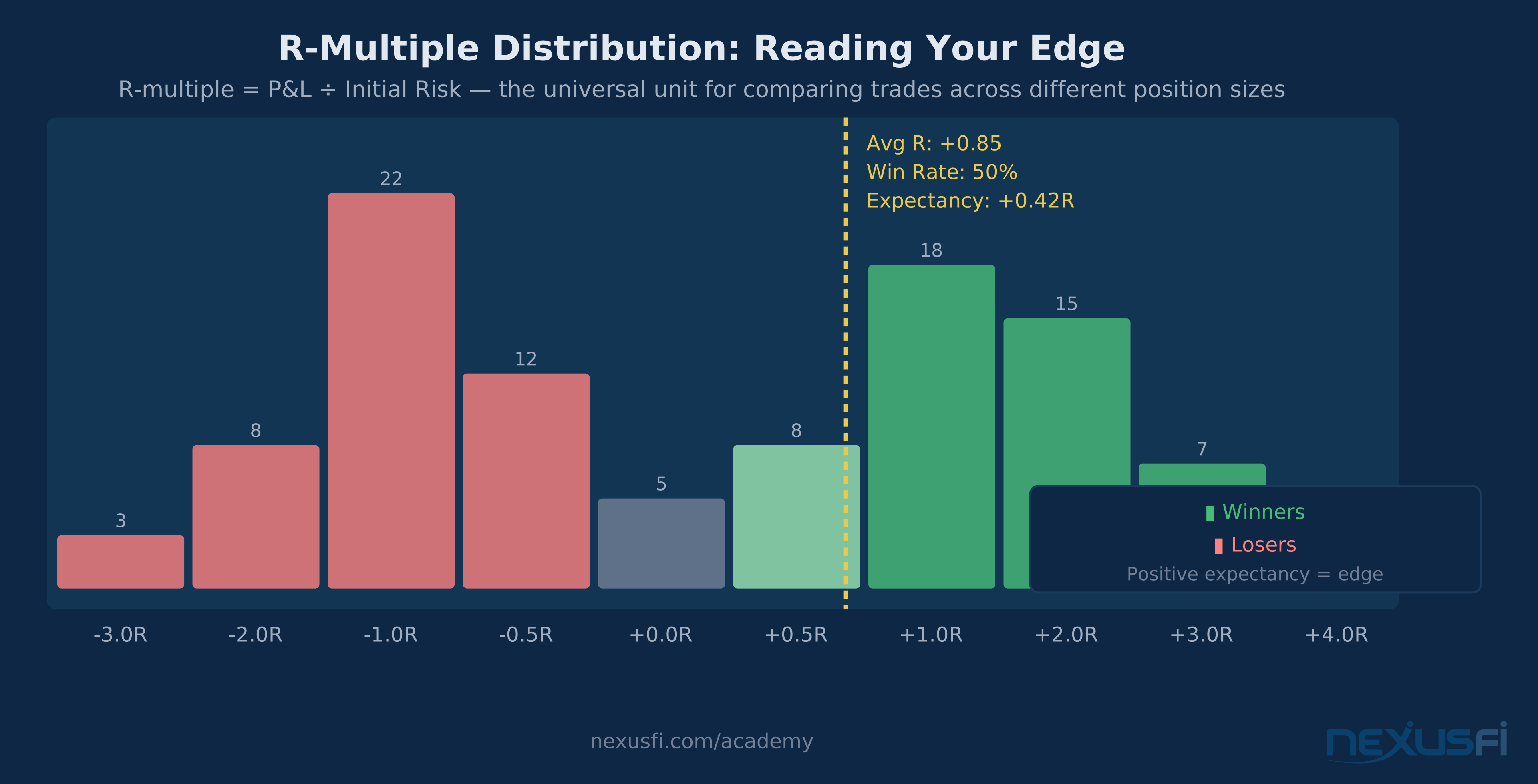
Your R-multiple distribution is the histogram of all your trade outcomes measured in units of initial risk. This chart tells you far more than net P&L. It shows: whether your worst losses are outliers or part of a pattern, whether your large winners are repeatable or random, and whether your distribution has the shape of a genuine edge or looks like random noise.
A distribution with positive skew — more small losers than large losers, and occasional large winners — is the signature of well-managed trading with defined risk and let-winners-run discipline. A distribution with fat left tails — occasional catastrophic losses — indicates risk management problems that aggregate P&L numbers can temporarily hide.
Maximum Drawdown and Drawdown Duration
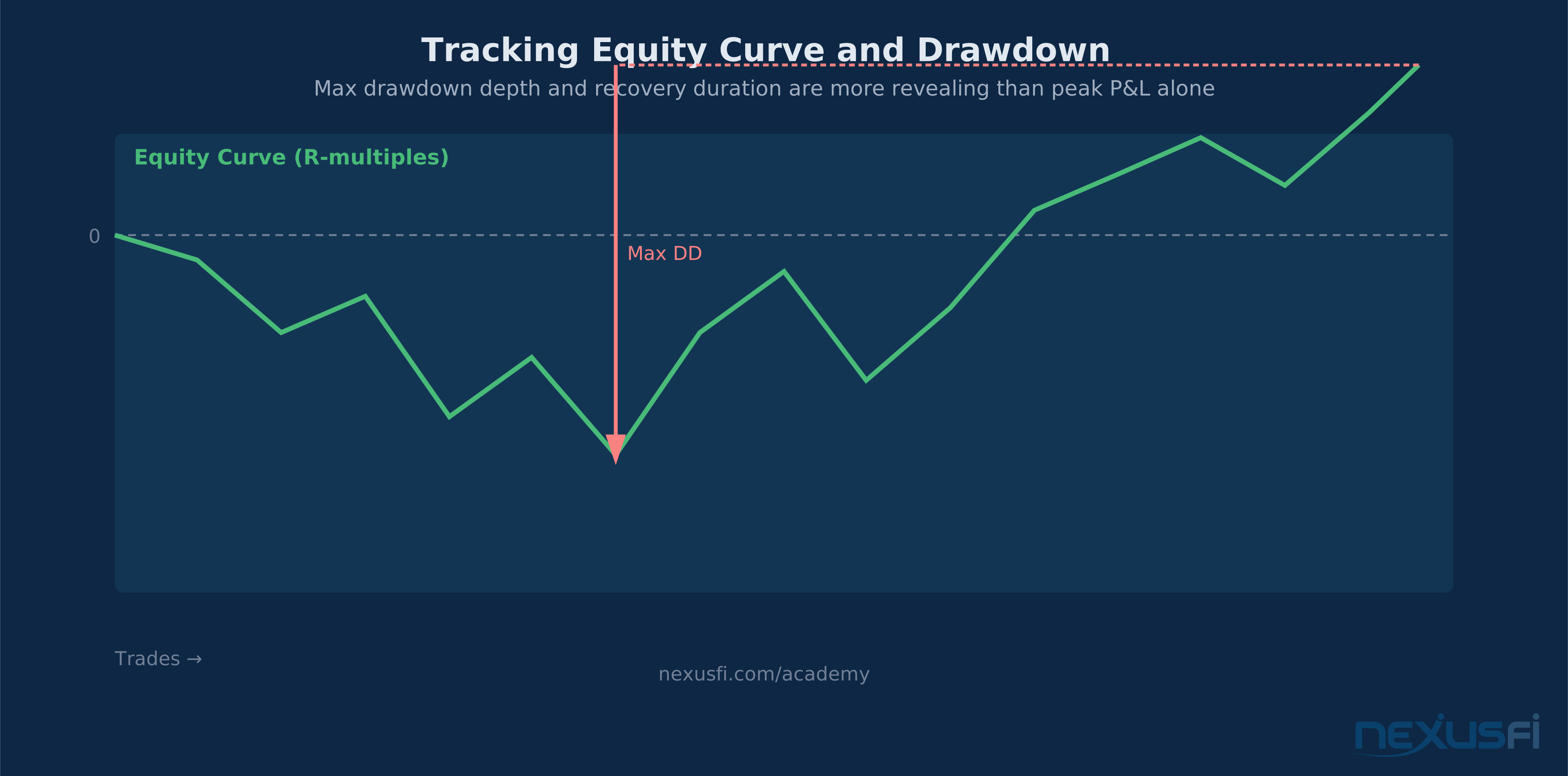
Maximum drawdown measures the largest peak-to-trough decline in your equity curve. Drawdown duration measures how long you spent underwater before recovering to the previous peak. Both matter, but drawdown duration is often the more psychologically significant of the two. Traders who can endure a 15% drawdown often break discipline not at the maximum point, but during a prolonged period of being underwater even at a lesser level.
Track both, and track them per setup, not just in aggregate. If one setup accounts for 80% of your drawdown and 20% of your trades, that is actionable information.
Process Metrics: The Most Directly Actionable Numbers
Outcome metrics like P&L and win rate are important, but they lag your actual behavior by weeks or months. Process metrics are leading indicators.
Checklist compliance rate by setup and time of day reveals whether your edge is captured by your system or whether you are trading outside your documented criteria. Entry timing accuracy — what percentage of entries occurred within your defined trigger window — reveals chronic problems with patience or impulsiveness. Slippage averages by order type reveal whether your execution methodology is leaking edge. Daily loss limit adherence reveals whether your risk rules are real or theoretical.
MAE and MFE: Diagnosing Trade Management #
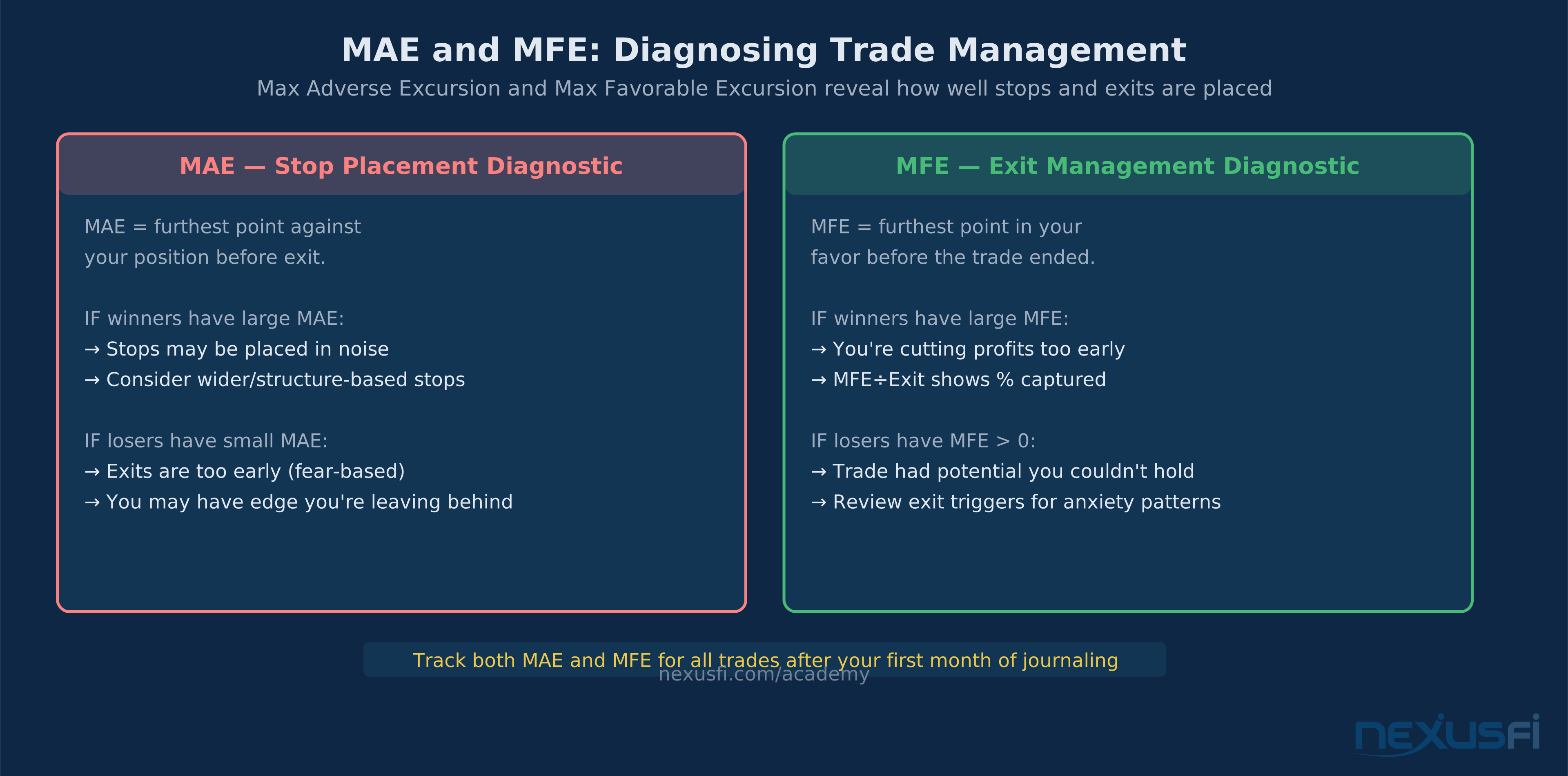
Maximum Adverse Excursion (MAE) and Maximum Favorable Excursion (MFE) are among the most underused metrics in retail trading, and among the most informative.
MAE: Diagnosing Stop Placement
MAE measures the furthest point against your position before the trade ended. For any completed trade, the MAE is the worst point the trade reached while you held it.
Analyze MAE separately for winners and losers. If your winning trades consistently show large MAE values, your stops may be placed in noise — the trade is moving against you by a significant amount before recovering to a winner. This suggests either that your stop placement logic is poor, or that you are systematically entering at suboptimal points.
If your losing trades consistently show small MAE values, your stops may be too tight — the trade is being stopped out quickly, often before the market has had time to develop, and sometimes before the setup has actually failed.
Tracking Psychology as Data #
Psychology is not a soft topic in trading — it is a measurable variable that drives hard performance outcomes. The key is to track it like any other variable: consistently, specifically, and in a form that enables analysis.
Operationalizing Behavioral Patterns
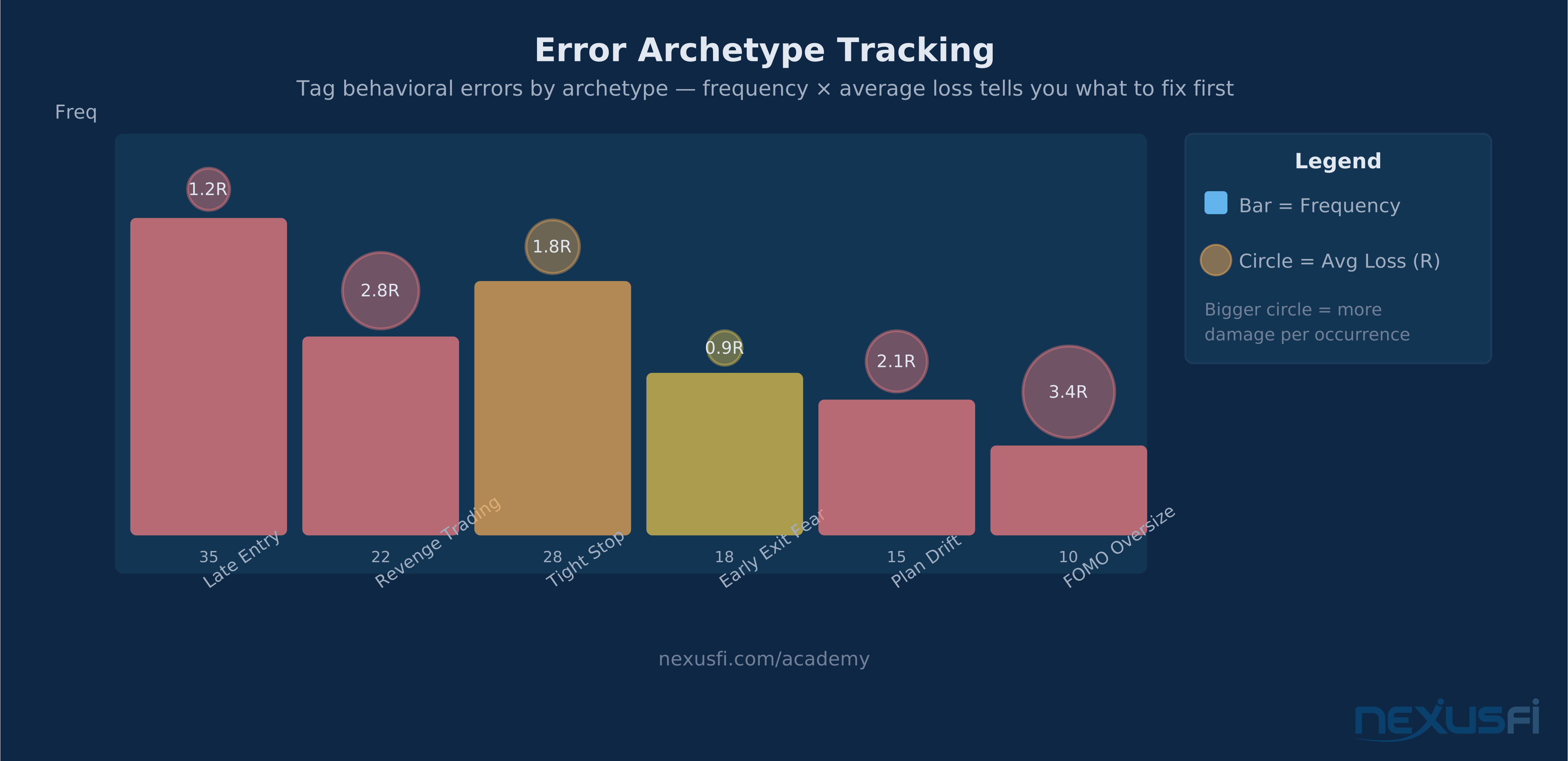
Avoid vague narrative descriptions of your emotional state. Instead, create a defined taxonomy of behavioral patterns — error archetypes — and tag each trade with whichever archetype caused deviations from plan.
Common archetypes for active traders include:
Late Entry / Confirmation Chasing: Waiting for more confirmation than your rules require, entering after the initial trigger at a worse price. High frequency in early trading career. Cost: reduced risk/reward on each trade.
Revenge Trading: Entering a trade to make back losses from a previous trade, rather than because a qualified setup appeared. Typically results in either the original loss being compounded or a lucky scratch that reinforces the behavior.
Tight-Stop Martyrdom: Placing stops closer than your rules require because the dollar risk at the correct stop distance feels too large. Results in chronic early exits that would have become winners if held.
Early Exit Fear: Exiting winners before the target because of fear of giveback. Systematically reduces average win R. Often shows as large MFE relative to actual exit price.
Plan Drift: Moving stops, changing targets, or adding to positions without a thesis-based reason. Often rationalized as "active management" but actually reflects emotional reaction to price movement.
Oversize After Winners: Increasing position size much after a winning streak, taking on more risk than the system calls for at the moment of greatest psychological vulnerability to overconfidence.
Tag each trade with the relevant archetype, if any, and track frequency and average R-impact over time. The analysis question is: which archetype is causing the most damage per occurrence? That is the behavioral pattern to address first.
As thetradinghermit noted, tracking your equity curve alongside a self-review score reveals a direct relationship: "Basically finding my profits go up when I complete all my tasks."
The Data-Driven Improvement Loop #
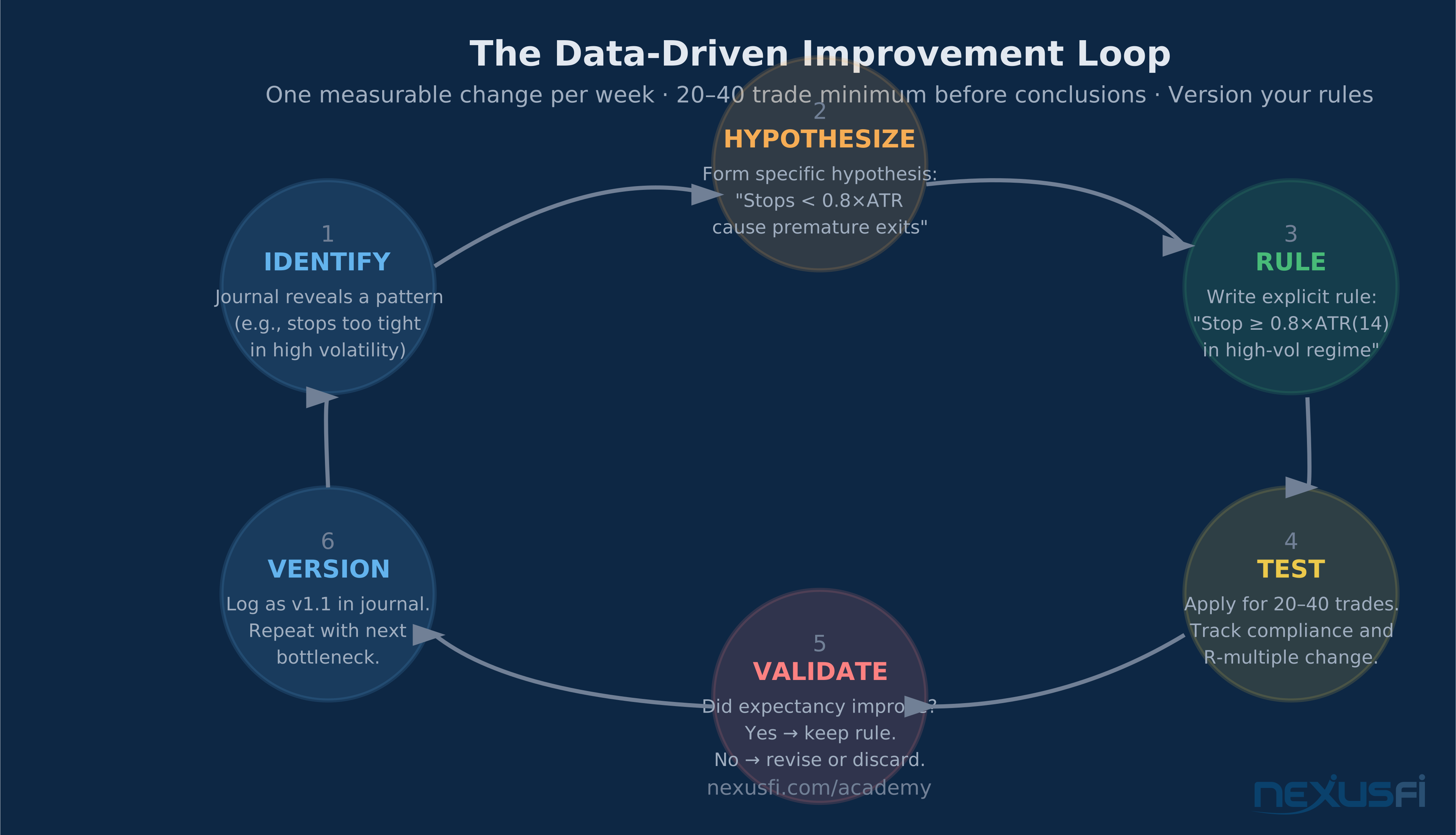
The improvement methodology that separates developing traders from plateaued traders is systematic and iterative: hypothesis, rule, test, validate, version.
Step 1: Identify from Journal Data
Your journal reveals patterns. Weekly reviews surface recurring issues: stops placed too tight, certain setups underperforming in specific conditions, errors clustering around particular times of day. The identification step turns a vague sense that something is wrong into a specific, documented observation.
Example: "My breakout setups have an average R of -0.3 during the first 30 minutes of RTH, but +0.8 for the rest of the session."
Step 2: Form a Hypothesis
The observation generates a hypothesis — a specific, testable claim about cause and effect. Write it clearly.
Example: "Opening 30-minute breakouts are unpredictable due to program-driven price action and gaps filling. Adding a session filter — no breakout entries in the first 30 minutes of RTH — should improve expectancy for this setup."
Step 3: Write an Explicit Rule
Convert the hypothesis into a specific, unambiguous rule that can be evaluated as passed or failed on every trade. Vague rules cannot be tested. Specific rules can.
Example: "No ORB_BREAKOUT trades in the first 30 minutes of RTH (9:30-10:00 ET). Trades taken after 10:00 only."
Step 4: Test Over Minimum Sample
Apply the new rule for a minimum of twenty to forty trades before drawing conclusions. Active traders may reach this threshold in two to three weeks. Lower-frequency traders may need a full month or more. The minimum sample requirement exists because smaller samples have too much noise for the signal to be reliable.
Track rule compliance during this period. If you break the new rule frequently, the problem may not be the rule itself — it may be execution discipline. That is a separate issue to address.
Step 5: Validate
After reaching the minimum sample, compare expectancy under the new rule against expectancy without it (using historical data from before the change). Did it improve? By how much? Was the improvement statistically meaningful or within the noise range?
Step 6: Version and Continue
Whether the rule works or not, document the test and its outcome in your journal. Label it as version 1.1 of your strategy. This versioning creates a clean record of what you changed and why, which prevents you from accidentally regressing to a previous approach.
The discipline of one meaningful rule change per week — no more — is one of the markers that separates traders who improve systematically from those who tinker endlessly and accumulate noise.
One rule change per week maximum. Each change requires 20-40 trades to evaluate. Stack multiple changes simultaneously and you lose the ability to isolate what worked.
As thetradinghermit noted, tracking your equity curve alongside a self-review score reveals a direct relationship: "Basically finding my profits go up when I complete all my tasks." The correlation between process discipline and outcome is measurable — and the journal is how you measure it.
Tools and Templates #
Starting Points
For most traders, Google Sheets is the best starting point. It handles both layers of the journal, enables pivot tables for review, is accessible from any device, and costs nothing. The friction to begin is minimal.
The minimum viable spreadsheet has columns for the eleven core fields, a computed R-multiple column, and a separate sheet with a pivot table grouped by setup tag. This takes about two hours to build and immediately provides more analytical power than most traders have ever had access to. Big Mike shared the evolution of his journal design: "The basic idea is an Overview panel... I can break down stats by Method and also by Comment, so I can track 'followed rules/not followed rules' and see how stats break down."
Excel works equally well for traders who prefer offline tools. JohnS shared a well-regarded Excel journal on NexusFi: "I created my own macro-free lite journal that tracks Sum %R, Avg %R, compares different instruments and systems, equity curve over 12 months, compares performance over days of the week."
Dedicated Journal Software
Tradervue, Edgewonk, and Trademetria are the most widely used dedicated journal applications. They offer broker statement import, pre-built analytics dashboards, and more sophisticated filtering than spreadsheets. The trade-off is cost and reduced flexibility. For futures traders, NinjaTrader and Sierra Chart both export trade data in CSV format that feeds directly into a spreadsheet-based system.
Putting It All Together #
The trading journal is not a single thing. It is a system with multiple components that serve different functions at different time horizons.
The Trade Log captures decisions in real time, at the moment of lowest distortion and highest fidelity.
The Daily Review completes the record and flags immediate issues while memory is intact.
The Weekly Review is the primary learning session — the structured analysis that converts raw data into pattern recognition and generates actionable hypotheses.
The Monthly Audit validates the effectiveness of rule changes, tracks long-term trends, and sets strategic direction.
The Improvement Loop turns validated findings into explicit rule changes, tested systematically and versioned for accountability. The journal pairs naturally with a written trading plan — without documented rules, there is nothing to track compliance against.
The psychology layer operationalizes behavioral patterns into trackable data, enabling the same analytical rigor applied to setups and execution to be applied to the mental game.
The Starting Point
Week 1: Build a spreadsheet with the eleven core fields. Record every trade. Week 2: Add rule compliance checkbox and emotional state rating. Start daily review. Week 3: Add MAE/MFE and error archetype tags. Run the first weekly review grouped by setup tag. Week 4: Write your first hypothesis from a pattern you found. Document it as a rule. Track compliance.
After four weeks, the habit usually persists on its own. After three months, you have enough data for meaningful setup analysis. After six months, you have a record of your own development that no amount of reading or mentoring can replace.
The journal is, ultimately, how you build the feedback loop that turns experience into expertise. Every trade you take without recording it is data you have discarded. Every week you skip reviewing is a learning cycle you have forgone. The traders on NexusFi who have journaled their way from struggling to profitable — GruttePier, Rrrracer, and dozens of others who documented the path — all share one common thread: they built a system that made learning from their trades unavoidable.
That system starts with a journal.
Knowledge Map
Prerequisites
Understand these firstGo Deeper
Build on this knowledgeReferences This Article
Articles that build on this topicCitations
- — Trading Metrics for journals/record keeping (2010) 👍 46“I'm on a mission to improve my Excel trade journal. I'd like to hear input on what metrics you guys measure: Sharpe ratio, Expectancy, Win/Loss Dollar Ratio, Win Percentage, Maximum drawdown, Realized MAE/MFE, Unrealized MFE (benchmark potential).”
- — Trading Metrics for journals/record keeping (2010) 👍 148“I've attached a copy of my spreadsheet. I am sure mine is pretty rudimentary compared to some but I am making it available just the same. I want to actually put in the original stop in this column but so far, this has proved elusive.”
- — Trading Metrics for journals/record keeping (2010) 👍 19“I also measure Equity Curve vs Weekly Review Score -- my own system for rating myself on trades. Essentially I find my profits go up when I complete all my tasks.”
- — Trading Metrics for journals/record keeping (2015) 👍 12“I created my own macro-free lite journal that tracks: Sum %R, Avg %R, compares different instruments and systems, equity curve over 12 months, compares performance over days of the week.”
- — Crossing the Abyss: An Adventure Guide by Snax (2019) 👍 6“I would suggest you make a few different journals and keep them all in the same space. I personally use Google Sheets with a handful of different tabs.”
- — GruttePier's trading journal to getting profitable (2016) 👍 4“I updated my big, hairy excelsheet in which I record my trades and calculate my stats. I included: Daily range of the days that I trade on.”
- Brett N. Steenbarger — Enhancing Trader Performance (2006)
- — Trading Metrics for journals/record keeping (2010) 👍 22“The basic idea is an Overview panel... I can break down stats by Method and also by Comment, so I can track 'followed rules/not followed rules' and see how stats breakdown. The Bench field measures the absolute best-case exit, and Efficiency compares actual realized exit to benchmark.”
- — Trading Metrics for journals/record keeping (2011) 👍 18“Added some psychologically interesting stats. Simplified rules column (now only two options, whether trade worked or not is calculated automatically). Expectancy calculation seemed to have a sign error -- please double check.”
- NexusFi Community Consensus — Systematic trade journaling with setup tags, R-multiples, and weekly review is a cornerstone practice among consistently profitable traders (based on 946 posts)