



Trading Performance Metrics: The Quantified Feedback System Every Futures Trader Needs
Subtitle: Win rate doesn't tell you if you have an edge. Profit factor won't tell you why you keep giving it back. What really does.
Overview #
Most traders track the wrong things. They watch P&L tick by tick — which is the trading equivalent of judging a doctor by how many patients recovered on Tuesday. P&L is an outcome. It's the result of hundreds of small decisions, most of which you made on instinct, a few you made systematically, and some you made while sitting on a four-loss streak wondering if the market had a personal vendetta against you.
Performance metrics exist to break that cycle. A properly built metrics system tells you why the P&L looks the way it does — and more importantly, which specific behaviors to change to improve it. That's the key shift: from managing results you can't control, to managing processes you can.
This article covers the complete performance metrics framework for futures traders: what to track, how to calculate it, what the numbers actually mean, and how to build a review practice that turns raw data into measurable improvement. The framework applies across instruments — ES, NQ, CL, GC, ZB — though the specific thresholds and emphasis shift between day trading and swing trading contexts, as covered below.
Before you track a single number, define what "one trade" means in your system. Partial exits count — or they don't. Reversals are separate trades — or not. Inconsistency in what you measure is worse than not measuring at all.
Prerequisites: Futures contract basics (tick value, margin), stop loss to dollar risk translation, and access to your full trade history with fills.
The Feedback Loop: Why Metrics Beat Feelings #
Here's the problem with most traders' self-evaluation: they look at the P&L for the week, feel good or bad about it, and use that feeling to decide whether their system is working. That's outcome-based judgment applied to a noisy, probabilistic process. It's useless for improvement.
Performance metrics replace the feeling with structure. They turn every trade into a data point, every week into a dataset, and every month into a pattern. The pattern — not any individual result — is what tells you the truth about your edge.
This is not about becoming a quant. It's about applying the same discipline to your self-evaluation that you apply to your trade setups. You wouldn't enter a trade without a thesis. Don't evaluate your trading without one either.
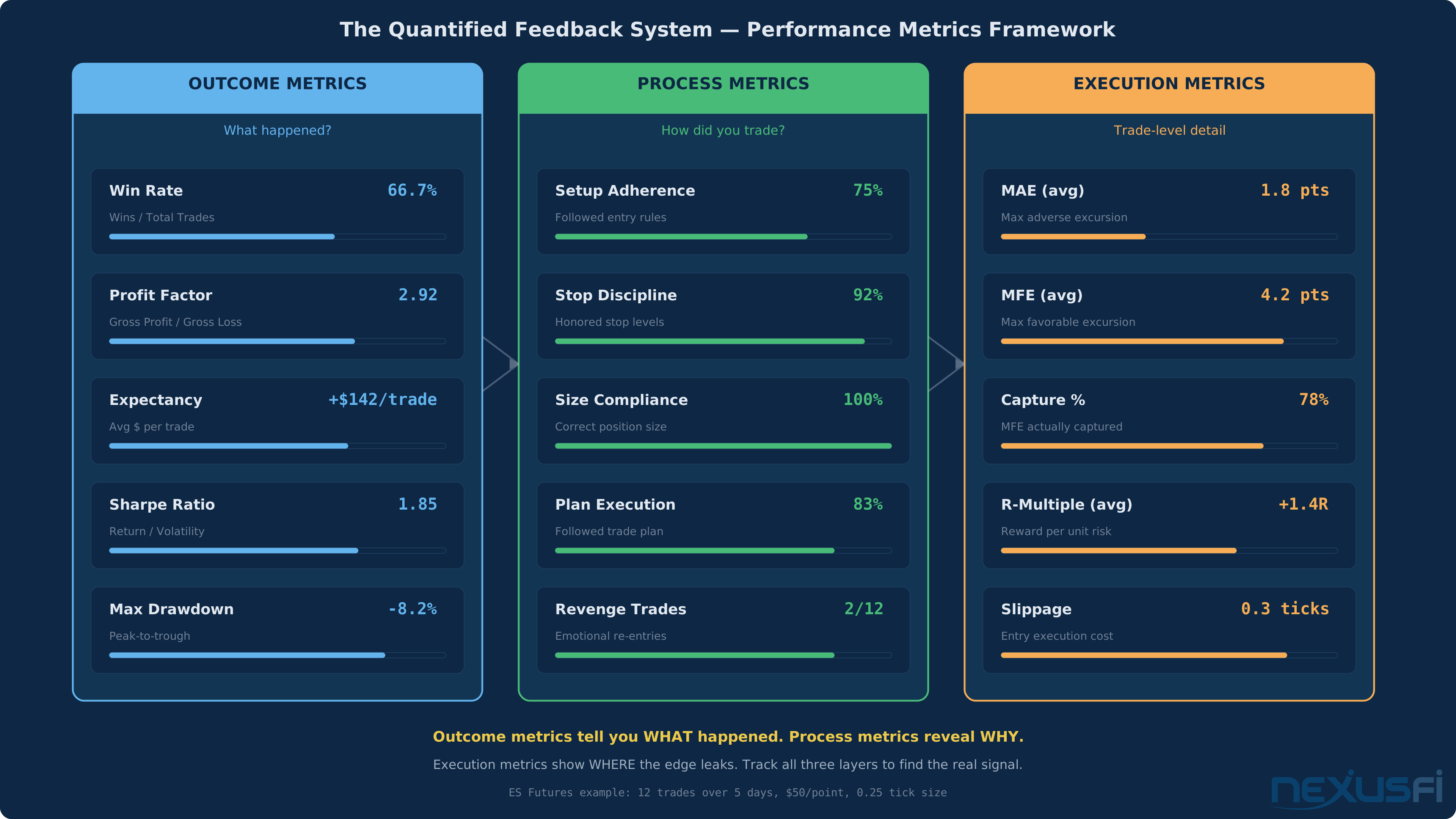
There are two types of metrics, and this distinction is the foundation of everything that follows:
Outcome metrics: Win rate, expectancy, profit factor, R-multiples, drawdown. These measure what happened as a result of your decisions.
Process metrics: Rule adherence, journaling completeness, setup quality score, max daily loss compliance. These measure how well you executed your process — what you actually control.
The relationship between them: outcome metrics validate your edge over time, but they're too noisy for short-term feedback. Process metrics are where you find specific behaviors to improve right now. Together, they form the complete feedback loop.
Outcome metrics are like your monthly P&L statement. Process metrics are like your daily trading checklist. Both matter — but only the checklist tells you what to do tomorrow.
Win Rate: The Most Misunderstood Metric in Trading #
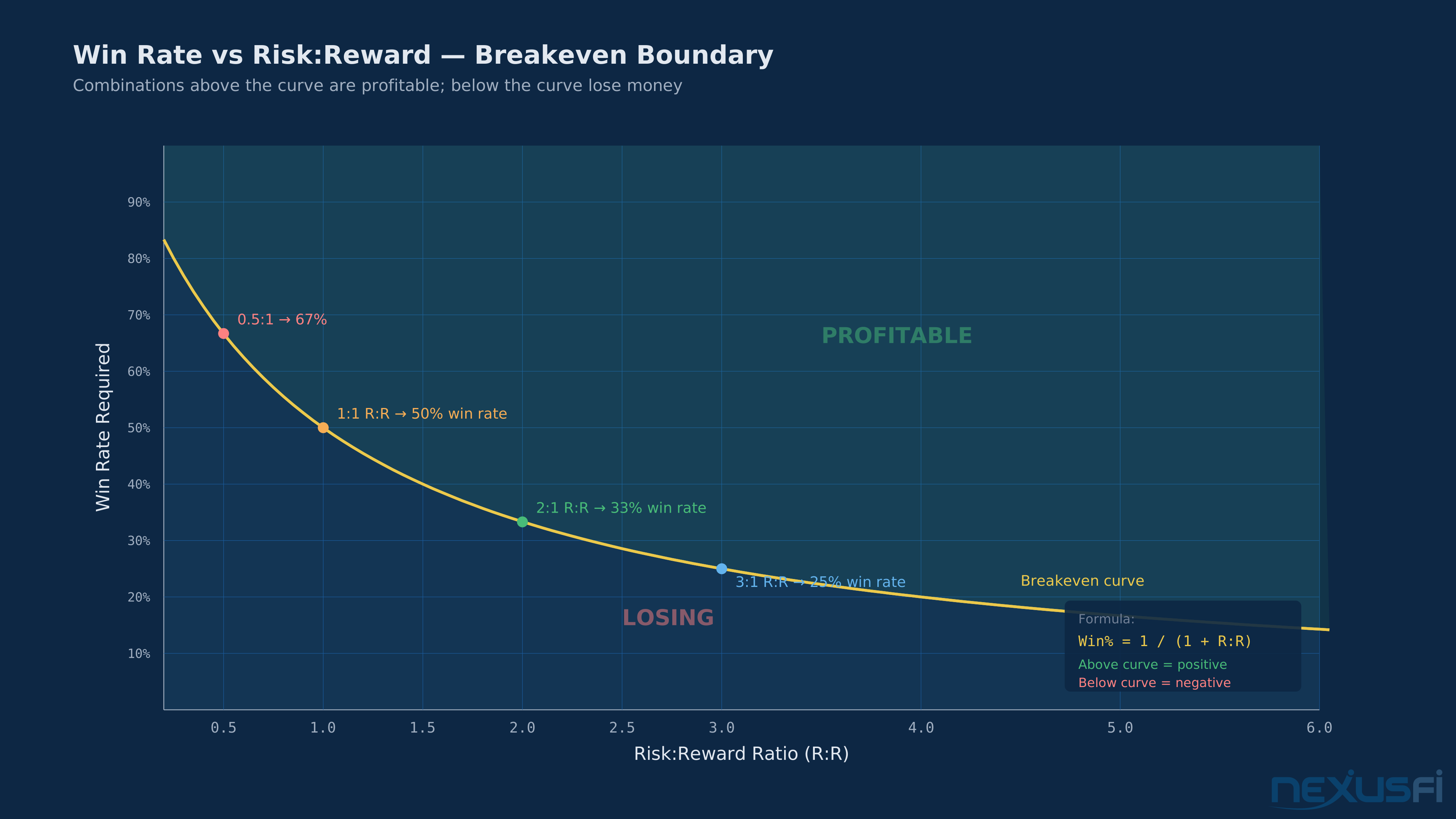
Win rate is the number traders cite first, and it's the number that tells you the least. A 70% win rate can be a losing system. A 35% win rate can be a very profitable one.
Here's why. Win rate only measures how often you're right. It says nothing about how right or how wrong you are. A system that wins 70% of the time for 3 ticks each, but loses 30% of the time for 15 ticks, is underwater. The math: (0.70 × 3) - (0.30 × 15) = 2.1 - 4.5 = -2.4 points per trade. Negative expectancy, high win rate. It feels like it's working until it doesn't.
Flip the picture: a system that wins 35% of the time for 20 ticks but loses 8 ticks on losers: (0.35 × 20) - (0.65 × 8) = 7.0 - 5.2 = +1.8 points per trade before costs. Lower win rate, positive expectancy.
What win rate actually tells you: Whether your system is high-probability (60-75%+, usually lower R/R) or high-reward (35-50%, higher R/R). Neither is naturally better. Both can work — but only if the other half of the equation holds.
The futures-specific complication: In futures, costs (commissions, slippage) hit every trade. On a system with many trades and small edges, costs can be the difference between profitable and losing even at 65% win rate. A scalper taking 20 ES trades per day at $5 commission round-trip is paying $100/day just in commissions before a single loss. Always calculate win rate on net-of-costs figures.
Win rate alone is used to sell every trading system that doesn't have positive expectancy. "82% win rate!" sounds impressive until you realize the losses average 4x the wins. Check expectancy before trusting any win rate claim, including your own.
Expectancy: The Real Measure of Edge #
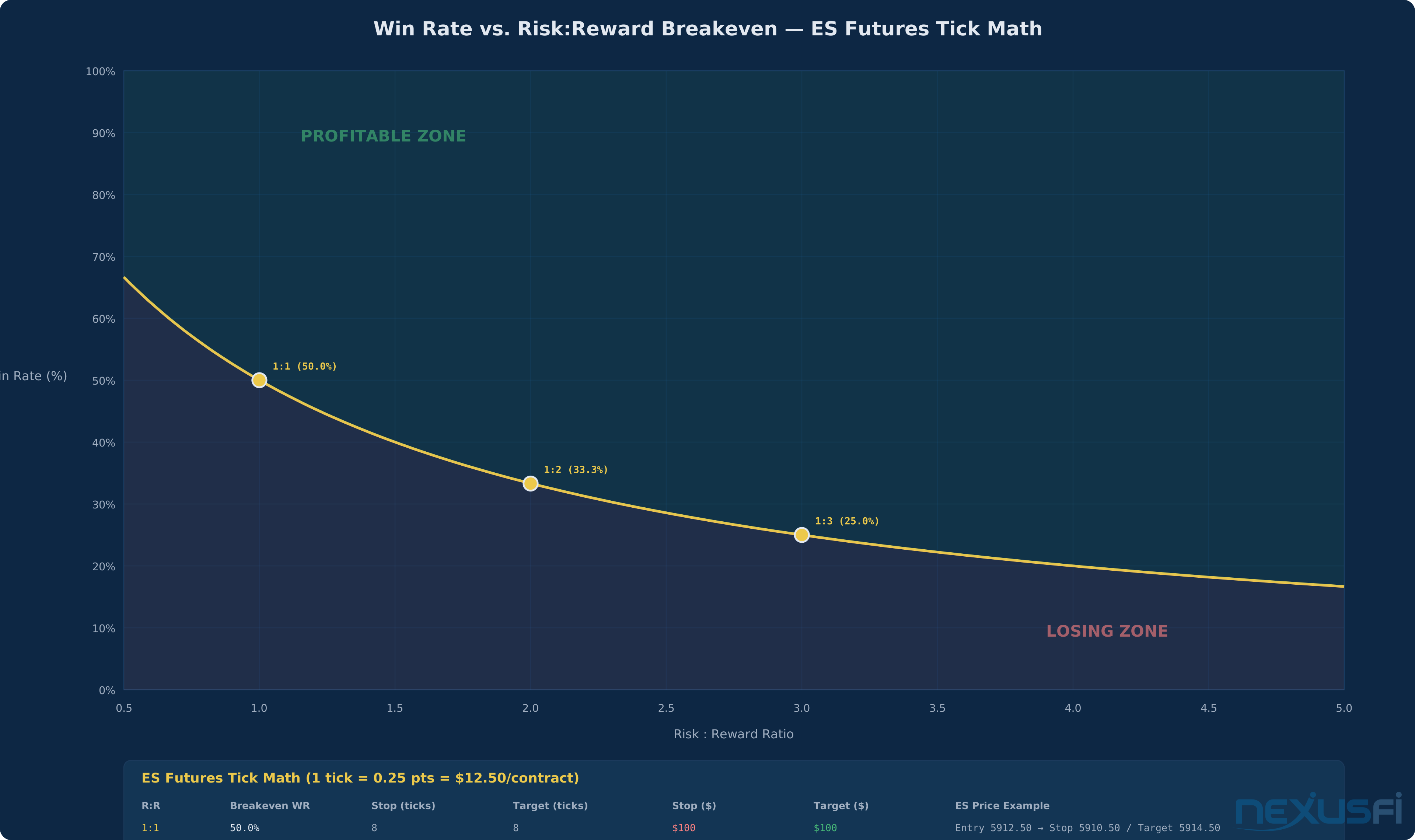
Expectancy answers the question that win rate can't: does this system make money over many trades?
The formula:
Expectancy = (Win Rate × Avg Win$) - (Loss Rate × Avg Loss$)
Breakeven win rate = Avg Loss$ / (Avg Win$ + Avg Loss$)
Example: 65% win rate, $220 avg win, $180 avg loss: (0.65 × $220) - (0.35 × $180) = $143 - $63 = +$80 per trade
In futures, always use net dollar figures — after commissions, after slippage. A system that generates $300 gross per winning trade but costs $20 to execute has an average win of $280. That difference compounds across thousands of trades.
The psychological function of expectancy: It tells you whether a losing day (or week) is variance or evidence of a broken edge. If your expectancy is $80/trade and you have a -$1,200 day on 10 trades, that's statistical noise, not a signal the edge is gone. If you have 60 consecutive losing trades, that's a different conversation.
Expectancy per unit time: Day traders should also track expectancy per hour and per session. An edge that only exists between 9:30-10:30 AM EST is still an edge — but only if you know where it lives. A system with $80/trade expectancy but only positive results in the opening 90 minutes is a different system than one that runs positive all day. Segment your expectancy by time window before trusting aggregate numbers.
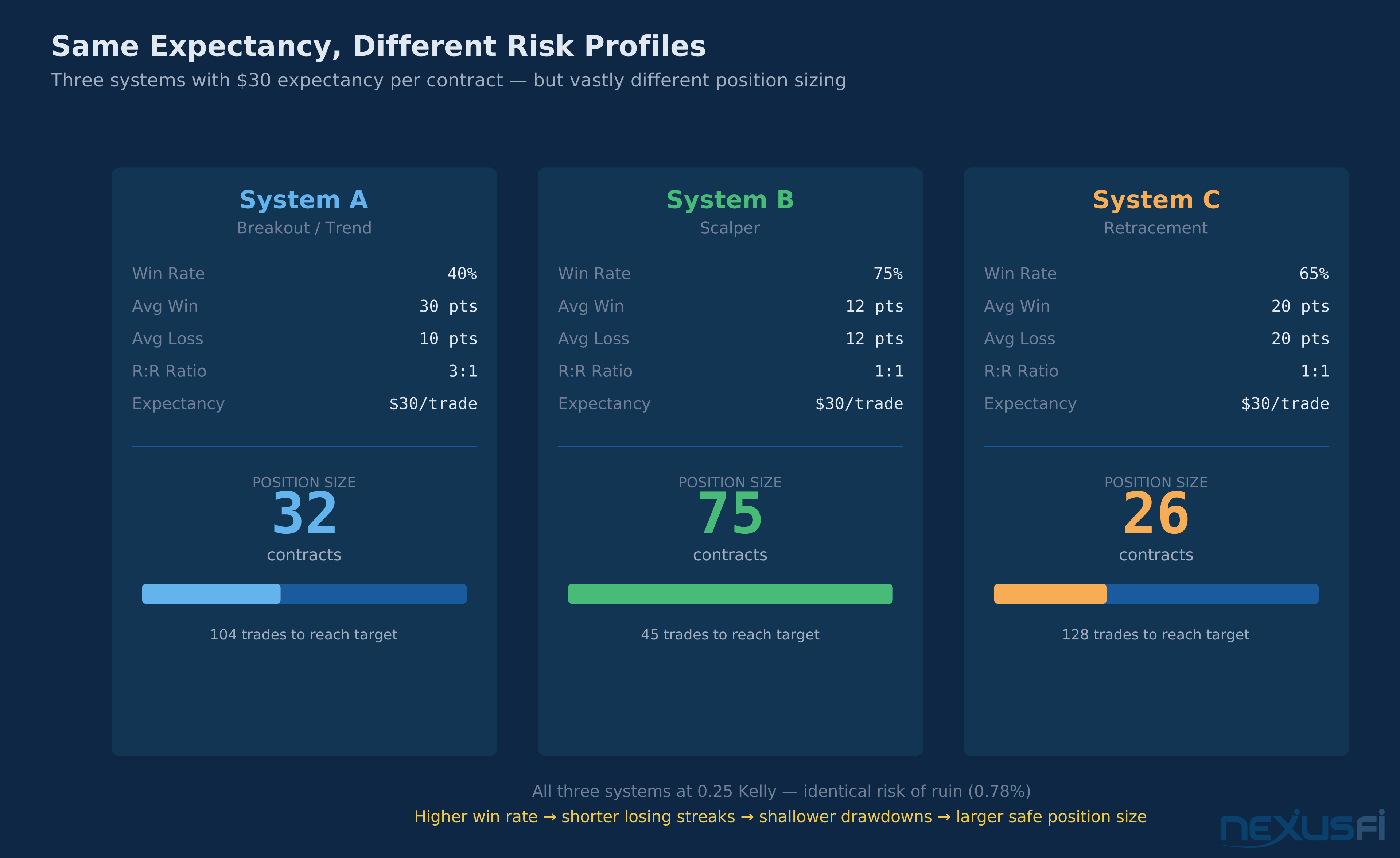
The harder truth about expectancy: you need a large enough sample to trust it. In a small sample, a few lucky outlier wins can make a losing system look profitable. This is the sample size problem, covered below.
R-Multiples: Normalizing Performance Across Instruments #
Here's the problem with comparing trades in dollar terms: a $300 winner on one ES trade and a $300 winner on a CL trade are not equally impressive. ES has a tick value of $12.50, CL has $10.00. More importantly, your stop distance — and so your risk — was probably different on each.
R-multiples solve this by expressing outcomes in units of risk. Van Tharp formalized the R-multiple framework in Trade Your Way to Financial Freedom as a way to normalize performance across different instruments and position sizes — stripping away the dollar noise to reveal whether you're actually managing risk effectively:
R = 1 unit of initial risk = the dollar amount defined by your stop loss at entry
A trade where you risked $200 (1R) and made $400 is a 2R winner. A trade where you risked $300 and lost $300 is a -1R loser. Now you can compare trades across instruments, strategies, and time periods on an equal footing.
Why this matters for psychology: When @Fat Tails analyzed trading systems on NexusFi, the core insight was direct: "Most beginning traders do not let their profits run, and achieve bad R-Multiples. It is psychologically easy to take a quick profit, and have a large loss every 5 trades." The R-multiple system makes this pattern impossible to hide. A trader with a 65% win rate but average R of +0.4 on winners vs -1.1 on losers is running a negative expectancy system that feels positive because they win most of the time. The R-multiple distribution makes the problem undeniable in about 30 trades.
The R-multiple formula:
R-multiple = Net profit or loss / Initial dollar risk
Example (ES): Bought at 5100, stop at 5096 (-4 points, -$200 risk) Exit at 5109 (+9 points, +$450 profit) = 2.25R winner Exit at 5097 (-3 points, -$150 loss) = -0.75R loser
R-multiple distribution: Don't just track average R. Track the full distribution — specifically the tails. In futures, fat tails happen: stop-outs through news events, held losers during fast markets, missed stops. A system that produces +0.8R on 70% of trades but occasionally produces -5R or -8R outliers has a very different risk profile than its averages suggest. The distribution tells you what can happen, not just what usually happens.
R-multiple as a behavioral diagnostic: After each session, calculate your average R. If it's consistently below 0.5, you're leaving too much on the table. If it's highly volatile (1.8 one session, -2.3 the next), that's a management consistency problem. Tracking R-multiple trends over 4-6 weeks shows whether your position management is improving or deteriorating independent of market conditions.
Profit Factor: The Supporting Metric #
Profit factor is simple: total gross profit divided by total gross loss. A profit factor of 1.5 means you make $1.50 for every $1.00 you lose. Above 1.0 is profitable, below 1.0 is losing.
It's a useful quick check, but it has structural limitations that make it dangerous as a primary metric.
Profit factor limitations:
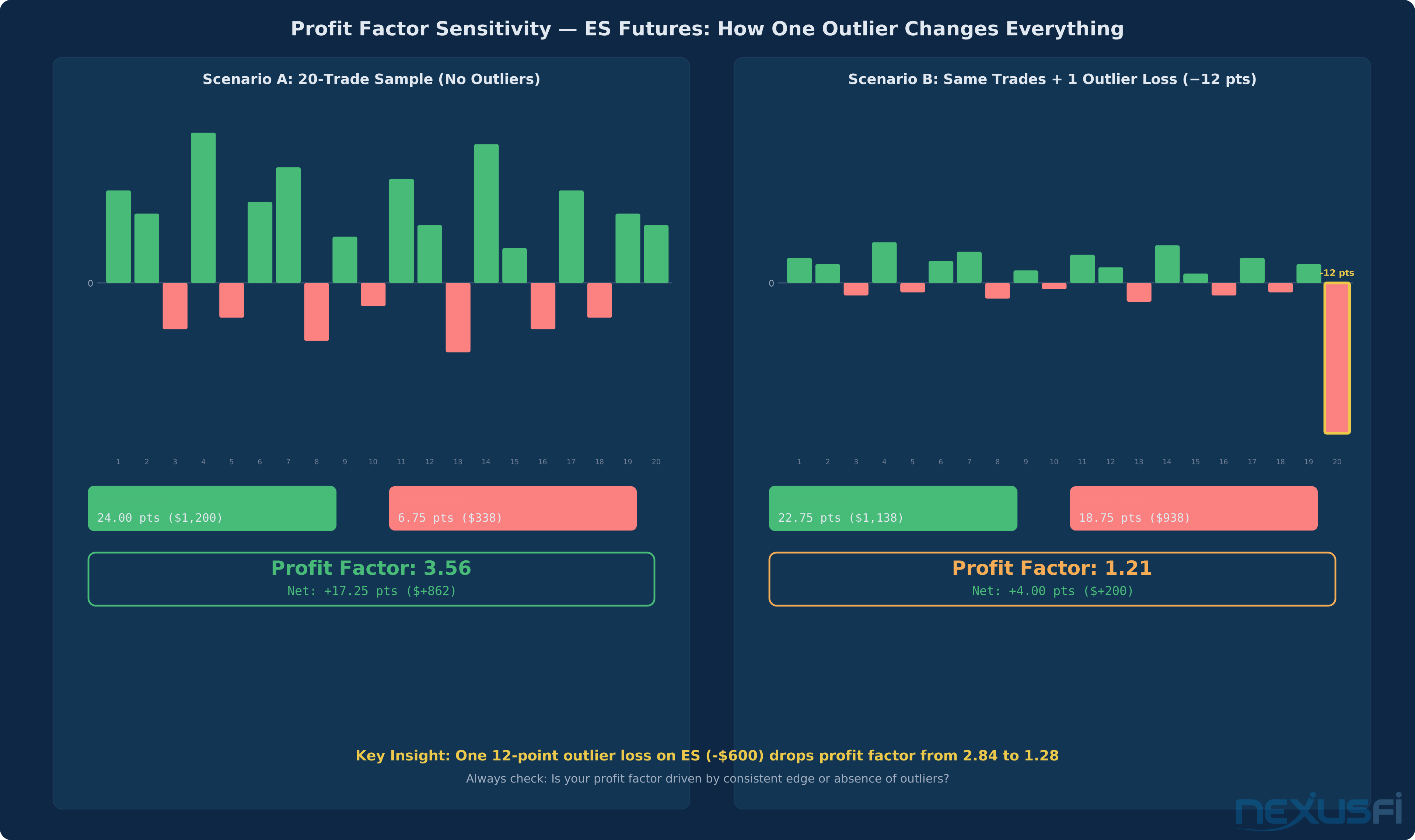
- Outlier sensitivity: A single massive winning trade inflates profit factor much. A 1.8 profit factor looks excellent — until you realize it's driven by two outlier trades that you can't reliably replicate.
- Sample-size dependency: With 30 trades, profit factor is basically meaningless. With 200+ trades in similar market conditions, it carries weight.
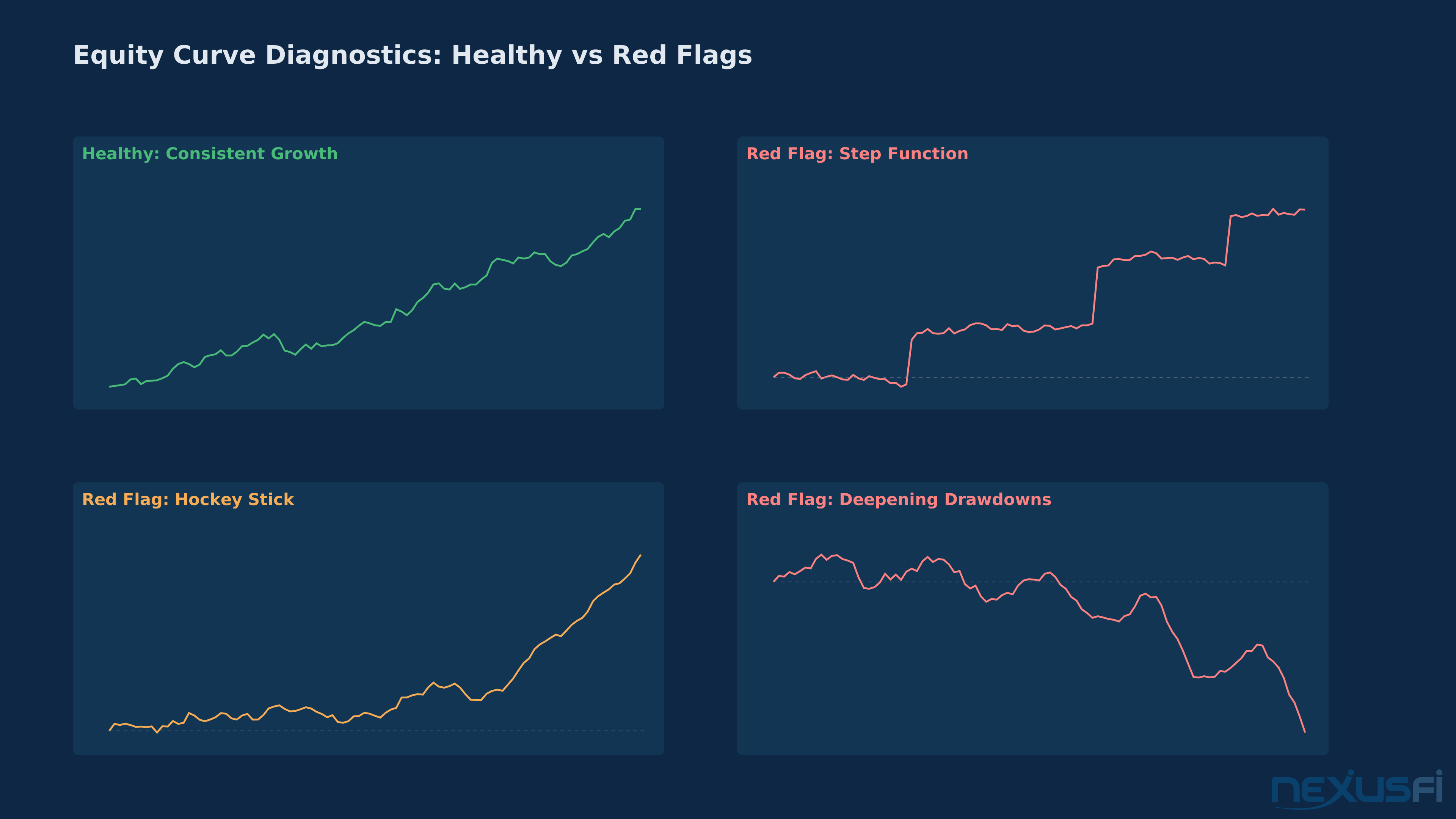
- Ignores consistency: A profit factor of 1.4 achieved with smooth returns differs entirely from 1.4 achieved with extreme variance and occasional catastrophic losses.
The proper use of profit factor: Use it as a stability check on your expectancy calculation. If expectancy is positive but profit factor is near 1.0, you have inconsistency or outlier risk to investigate. If both are strong and consistent over large samples, the combination gives more confidence than either alone.
MAE/MFE: The Execution Truth Layer #
This is where performance analysis gets genuinely useful — and genuinely uncomfortable for most traders.
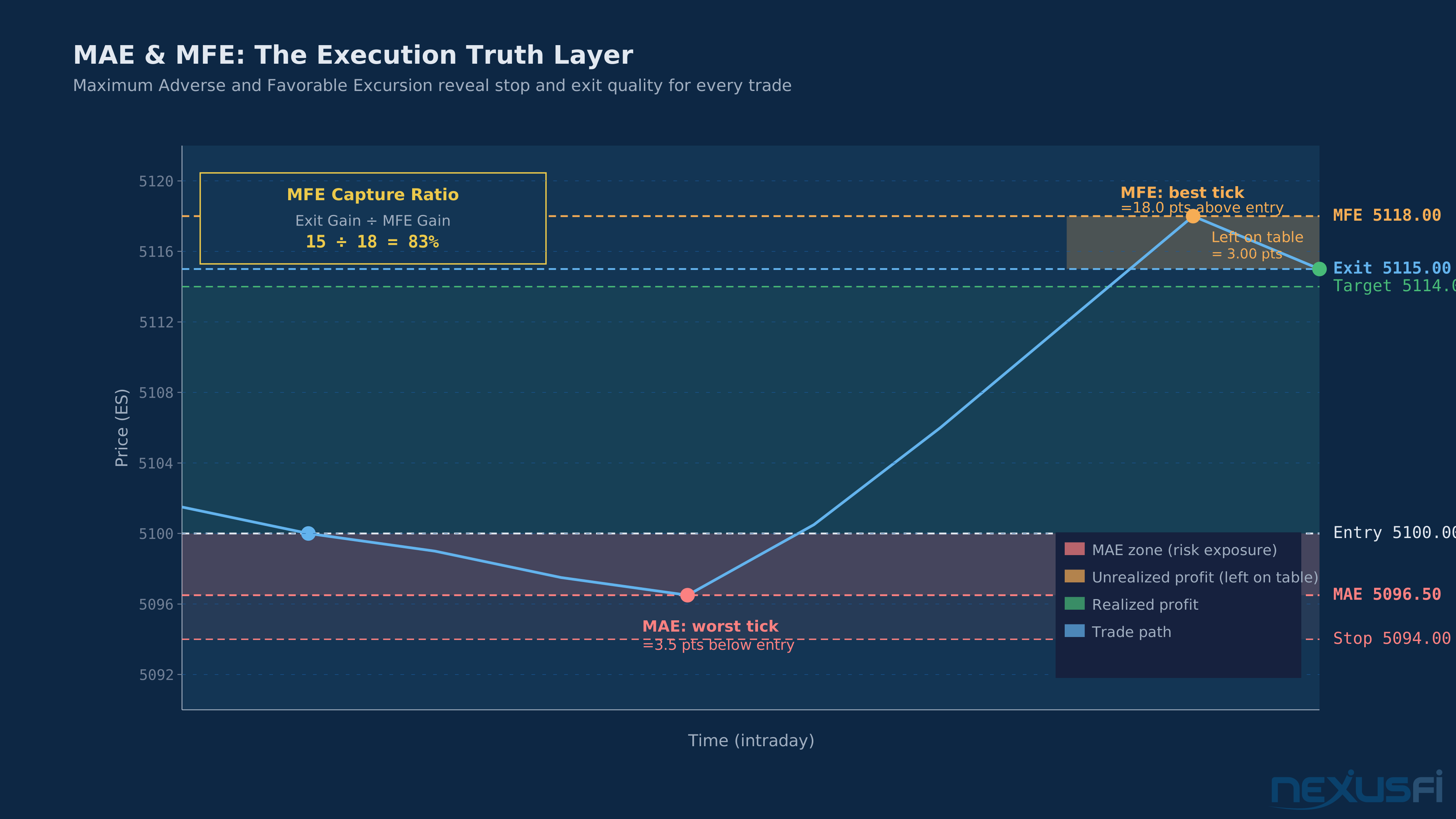
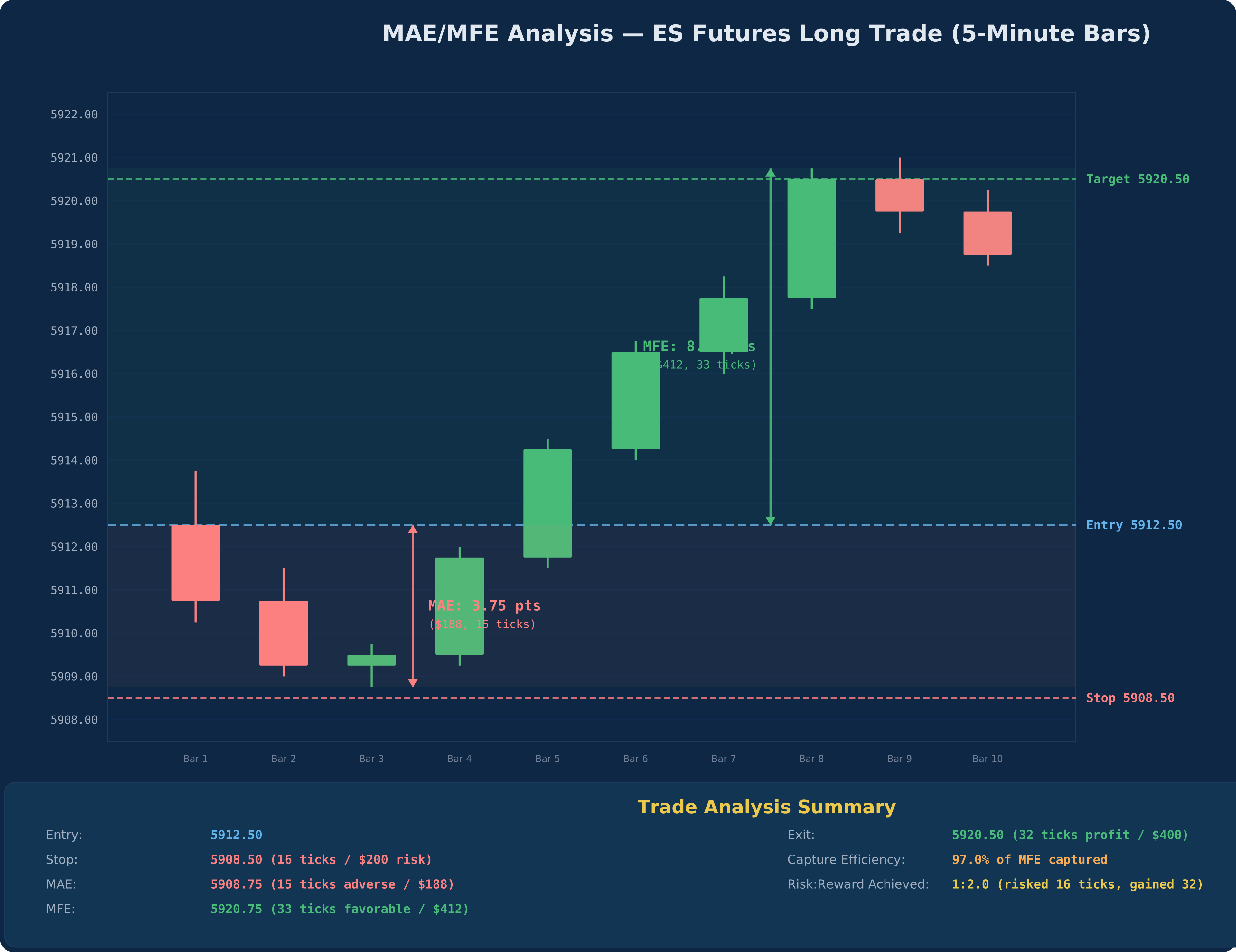
MAE (Maximum Adverse Excursion) is the largest drawdown a trade reaches before it resolves. If you buy ES at 5100 and the trade ticks down to 5095 before reversing and closing at 5115, your MAE is 5 points (-$250/contract).
MFE (Maximum Favorable Excursion) is the best price your trade reaches while you hold it. Using the same trade, if price ticked up to 5118 before you exited at 5115, your MFE is 18 points (+$900/contract) even though you only captured 15.
Together, MAE and MFE tell you what was available and how much of it you captured. They are the most honest metrics for diagnosing whether your problems are with entry, stop placement, or exit management.
Stop placement diagnosis with MAE:
- If 40%+ of your winning trades had MAE greater than your stop distance, your stops are too tight — you're being stopped out of trades that would have worked.
- If MAE on winning trades rarely exceeds 25% of your stop distance, stops may be too loose.
- A practical benchmark for ES day trading: MAE on winning trades should typically be below 40-60% of your stop distance.
Exit timing diagnosis with MFE: Calculate this ratio: Average Exit Value / Average MFE. If you consistently exit at 50-60% of MFE, you have a systematic pattern of leaving money on the table. For ES: if MFE averages 12 points but you exit at 6, the data is telling you something about how you manage winners — usually fear of giving back gains.
This is where psychological behavior becomes visible in the data. If your exits cluster around 60% of MFE on winning trades, you're demonstrating the loss aversion that Daniel Kahneman documented in Thinking, Fast and Slow — the asymmetric weighting where potential losses loom roughly twice as large as equivalent gains. The difference is that MAE/MFE doesn't just tell you loss aversion exists. It shows you exactly how much it's costing you per trade. MAE/MFE is the lie detector test for your position management claims.
You can tell yourself you let winners run. The MFE ratio tells you whether you actually do.
Error classification using MAE/MFE:
| Pattern | What It Means | Fix |
|---|---|---|
| MAE > stop on 40%+ of winners | Stops too tight for volatility | Widen stops to match realized swing |
| MFE capture ratio < 55% | Cutting winners early | Extend targets or trail more slowly |
| High MAE even on losers | Wrong stop placement logic | Review stop methodology |
| MFE = exit on most trades | Exiting at MFE, not managing | Missing multi-target exits |
Futures-specific MAE/MFE notes: In liquid instruments like ES and NQ, MAE/MFE data is reliable. In less liquid instruments or overnight sessions, wide bid/ask spreads can distort excursion calculations. Always measure using actual executed prices, not chart theoretical levels.
Process vs. Outcome Goals: The Framework That Changes Everything #
This is the psychological core of the metrics system — the part that determines whether metrics help you improve or just make you feel more scientifically bad about losing.
The distinction, as Brett Steenbarger framed it in The Daily Trading Coach: you can't control how much money you make. You can only control how well you trade.
Outcome goals: "Make $500 today." "Don't lose more than $300." "Hit my weekly target."
Process goals: "Take only trades that meet all five criteria in my setup checklist." "Keep position size at 2 contracts until drawdown is below 5%." "Journal every trade with a screenshot before market close."
The problem with outcome goals: they put psychological pressure on things you can't control. The market doesn't know your P&L target. A $500/day goal doesn't affect whether there's $500 of available edge today — it only affects how you feel when there isn't, which then affects how you trade the next session.
Process goals measure what you actually control: execution quality, rule adherence, and systematic behavior. Hit your process goals consistently, and outcomes follow over time — because disciplined process preserves the edge you've built.
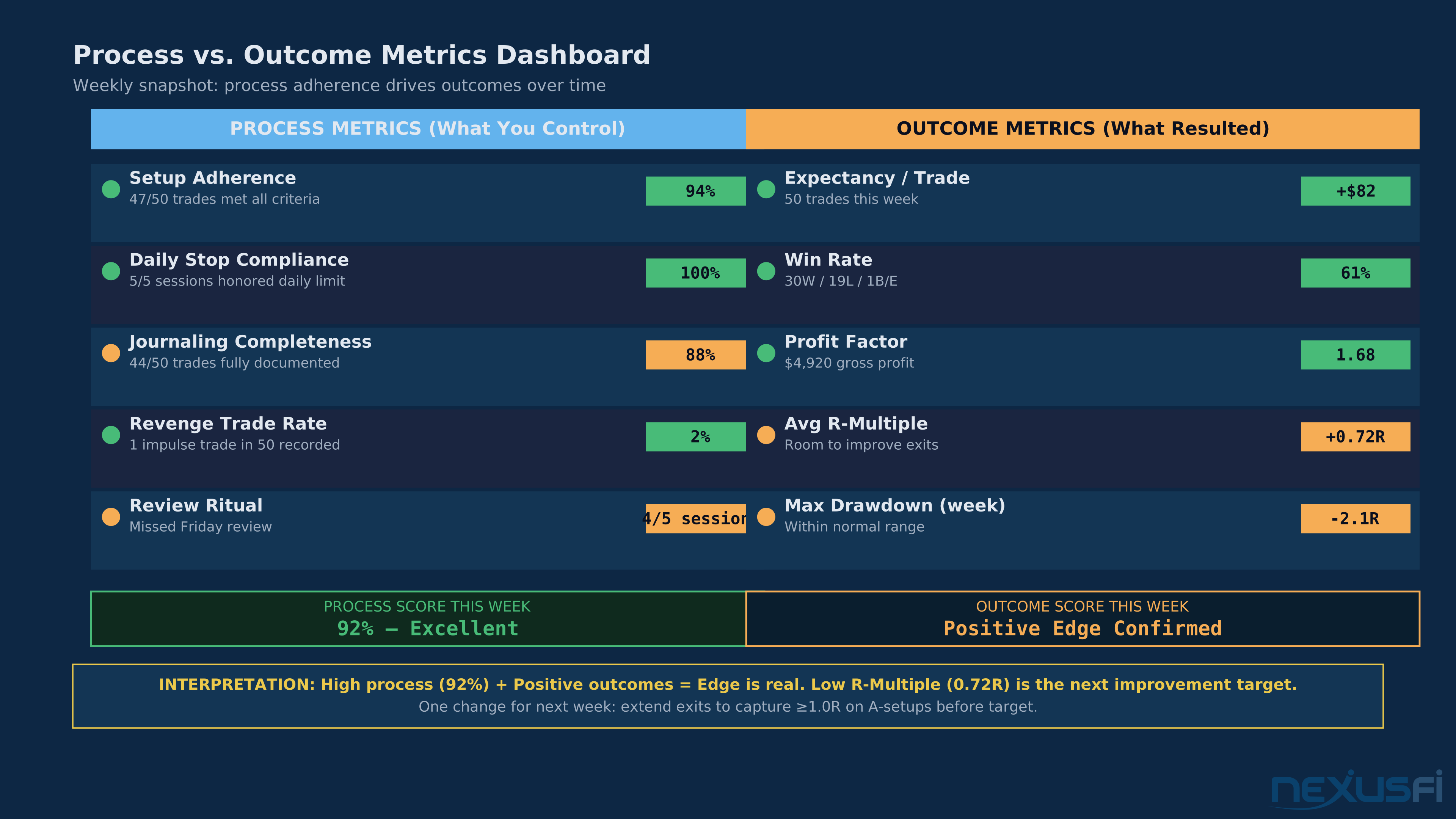
Building a measurable process metrics dashboard:
| Process Metric | Definition | Targets |
|---|---|---|
| Setup adherence | % of trades meeting all entry criteria | ≥90% green / 70-89% yellow / <70% red |
| Daily stop compliance | Honored daily loss limit? | Yes=green / No=red |
| Target hit rate | % of trades reaching first target | >50% green / 30-50% yellow |
| Journaling completeness | % of trades with full entry/exit/screenshot | 100% green / <80% red |
| Revenge trade indicator | Trades taken within 5 min of stop-out | 0=green / Any=red |
Track these weekly. Compare to outcome metrics. When process is high but outcomes are negative, it's variance — trust the process and keep going. When process is low but outcomes are positive, you got lucky — fix the process before variance catches up. When both are low, you have the clearest signal of all to work on your fundamentals.
Process metrics are how you find the specific behavior to fix next week. Outcome metrics are how you know if fixing it worked over the next 200 trades.
Statistical Significance: How Many Trades Before You Trust Your Edge #
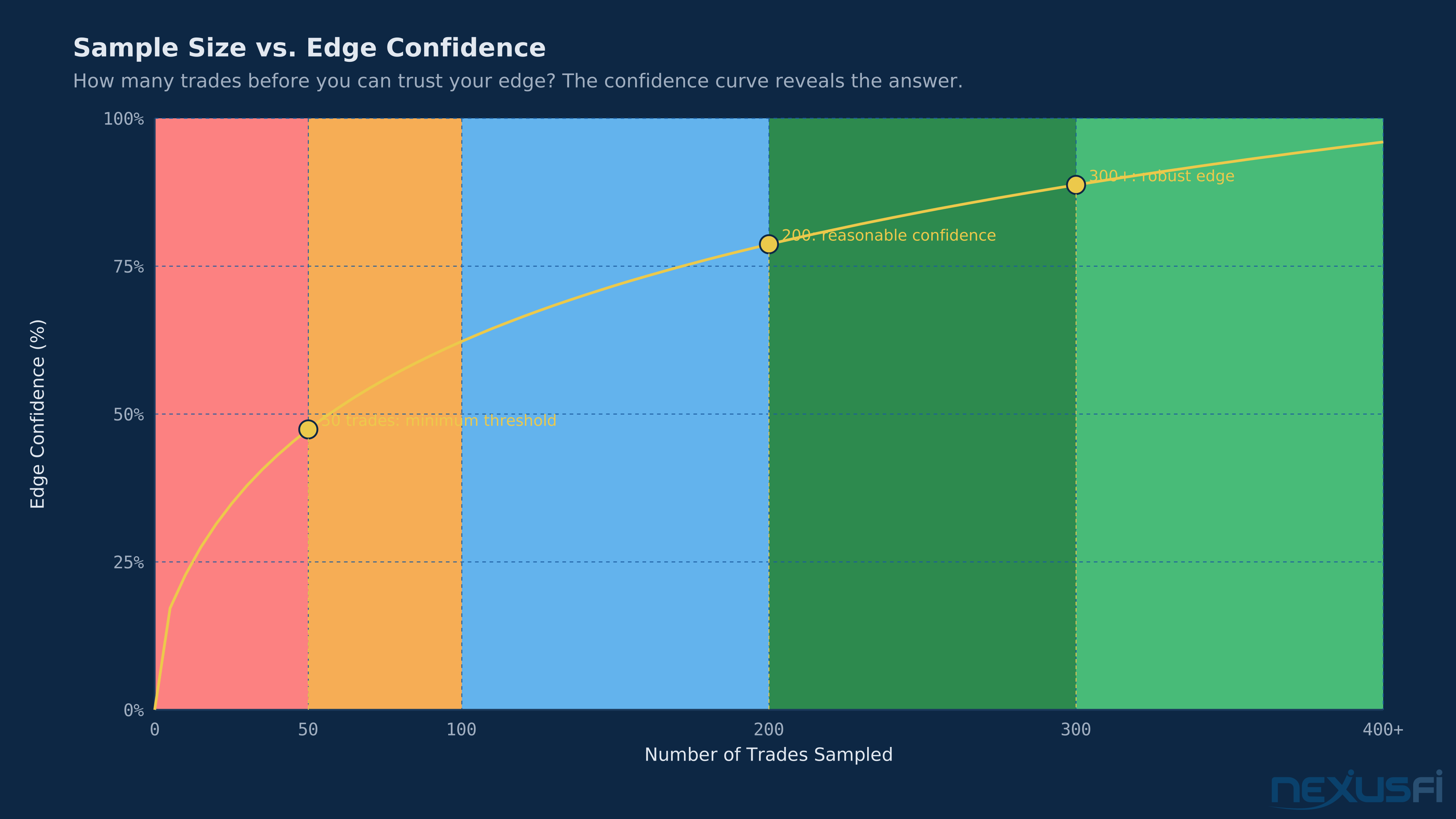
Here's the hard truth: your last 30 trades tell you almost nothing about whether you have a real edge. In a coin-flip system (genuinely 50/50), streaks of 8 wins in a row happen regularly. A run that looks like a 65% win rate over 20 trades is entirely consistent with a 50% win rate system during an up streak.
Practical sample size guidelines for futures traders:
| Sample Size | Confidence Level | What You Can Conclude |
|---|---|---|
| 20-50 trades | Very low | "Something might be here — keep tracking" |
| 50-100 trades | Low | "Pattern is forming, not conclusive" |
| 100-200 trades | Moderate | "Edge probably real, keep pressure on" |
| 200-300 trades | Good | "Confident enough to size up slightly" |
| 300+ trades (same regime) | High | "Strong edge, reasonable to improve" |
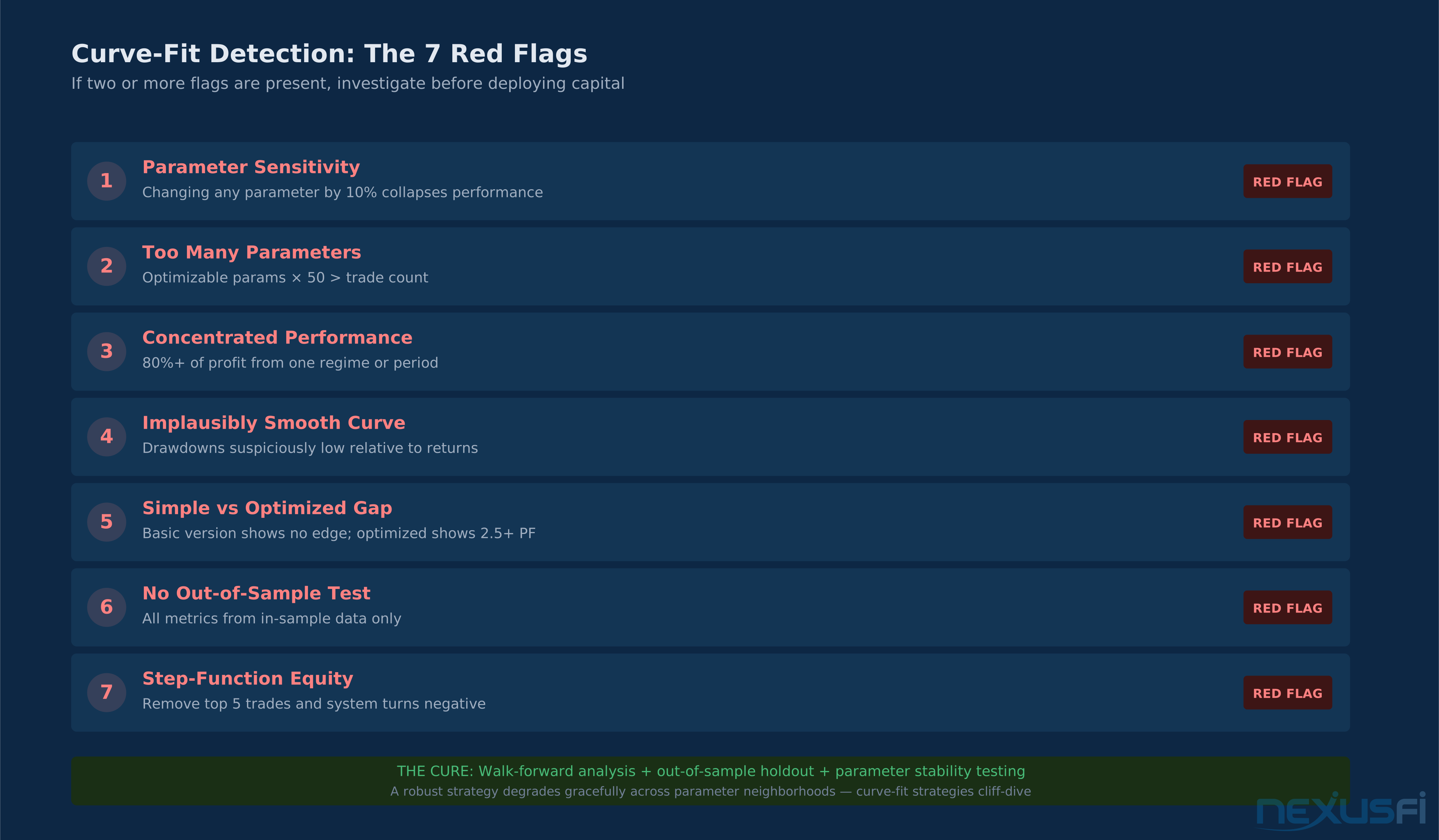
The regime caveat: all 300 trades should be in similar market conditions. A system that worked brilliantly in 2023's trending regime has limited predictive value for 2025's chop. Regime shifts invalidate sample periods, which is why segmenting your data by market regime is always better than pooling everything.
What this means for system changes: When you have 40 trades of data and start making significant adjustments, you're probably responding to noise. Make major system changes only after 300+ trades in similar conditions, unless there's a clear structural reason the edge has broken — a change in your primary instrument's volatility regime, or a setup that depended on a condition that no longer exists.
"It used to work" isn't a thesis for continuing a system that's been negative for 80 trades. But "it's been negative for 40 trades" isn't necessarily a thesis for abandoning one either. Know your sample size before deciding.
The most dangerous cognitive trap: using short-run success to feel confident, then abandoning a working system on a normal losing streak before sample size justifies any conclusion. Research on trader behavior shows this cycle: 40 winning trades → confidence → size increase → 20 losing trades (normal variance) → abandoned system → repeat. The metrics framework breaks this cycle by replacing felt certainty with sample-based certainty.
The Trade Review Framework #
Data without review is just noise. The review framework is what converts performance metrics into behavioral change.
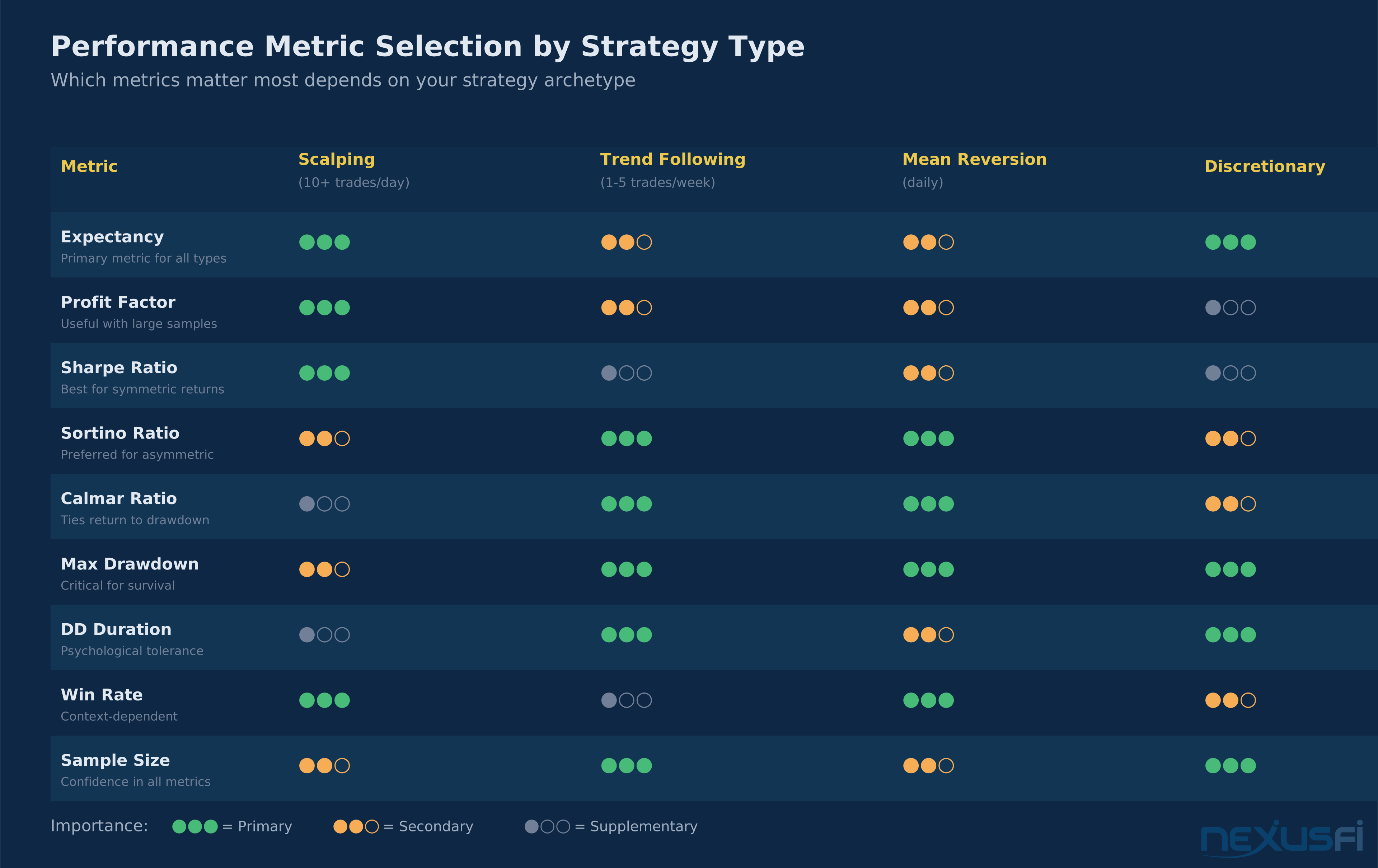
A complete trade review has four components: capture, classify, analyze, and update.
1. Capture (after each trade, same session):
- Entry/exit price, time, instrument, direction
- Stop placement and target (original plan vs. actual)
- Screenshot of the setup at entry and exit
- Emotion flag (0-3): 0=calm, 1=slight tension, 2=notable stress, 3=impaired judgment
- Setup label (A-setup, B-setup, C-setup)
2. Classify (weekly, during review):
- Was this a planned setup or an impulse trade?
- Rule adherence: yes, partial, or violation?
- MAE, MFE, final R-multiple
- Error type (if applicable): entry, stop placement, sizing, management, exit
3. Analyze (weekly):
- Expectancy by setup type — is your A-setup performing better than B?
- Time-of-day breakdown — where does your edge actually live?
- Win rate and R-multiple by market regime (trending vs. ranging)
- Process metrics aggregate: adherence rate, daily stop compliance, journal completeness
4. Update (monthly or per 100 trades):
- What single change would most improve your weakest metric?
- What process rule needs tightening based on this period's data?
- What setup should be promoted, demoted, or retired?
One change at a time. The purpose of the monthly review is to identify the single most impactful change for next month, not to rebuild the system. Changing five things simultaneously makes it impossible to attribute what caused the improvement — or the deterioration.
The emotion flag in practice: After classifying 50+ trades by emotion flag, calculate separate expectancy for each flag level. The research on trader performance consistently finds that trades taken at emotion flag 2-3 much underperform flag 0-1 trades. Many traders find their calm-state expectancy is $100+ per trade while their stressed-state expectancy is negative. That single data point, more than any motivational framework, drives behavioral change. It converts "don't trade angry" from a platitude into a quantified fact about your own P&L.
Day Traders vs. Swing Traders: How the Emphasis Shifts #
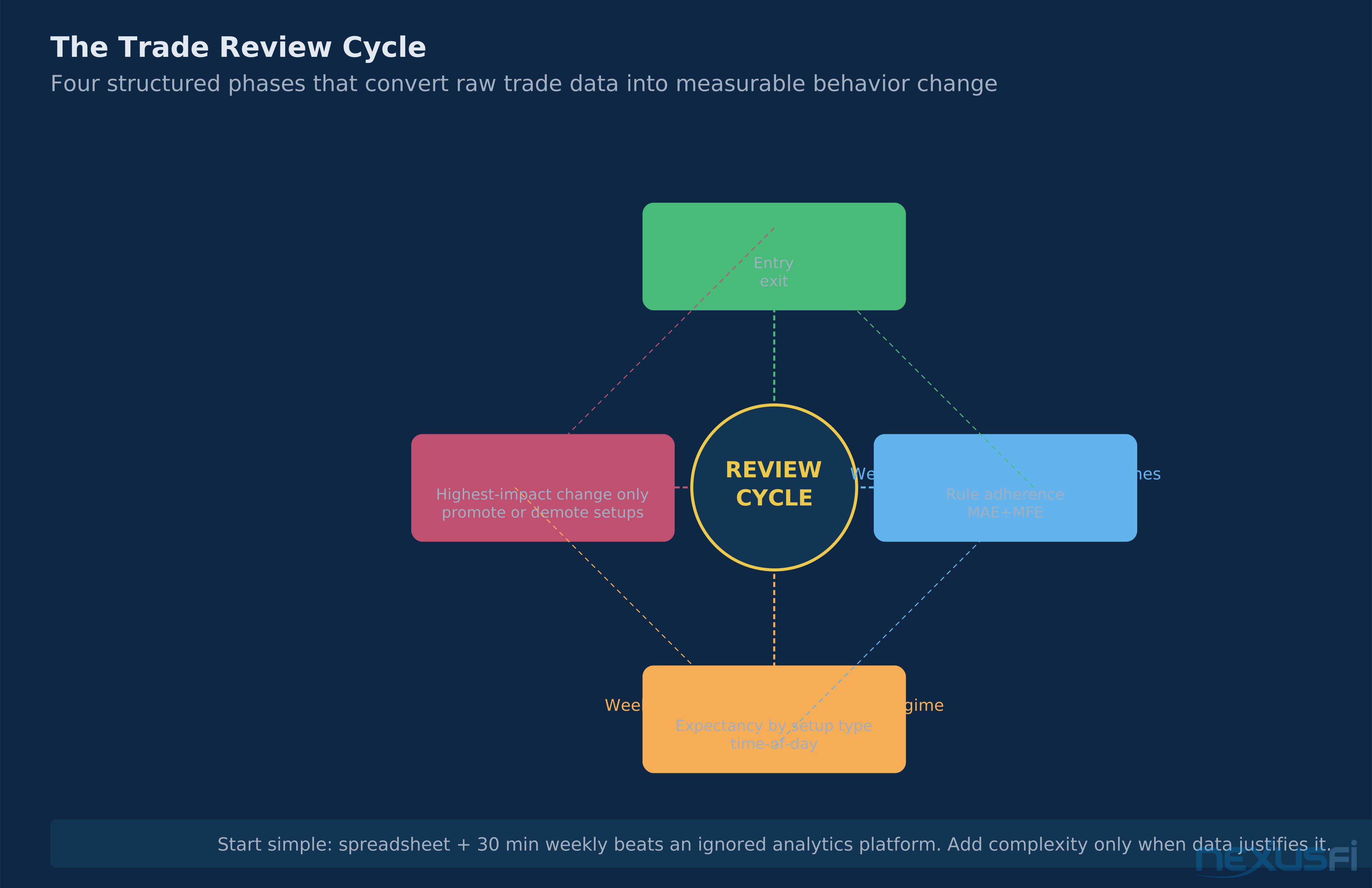
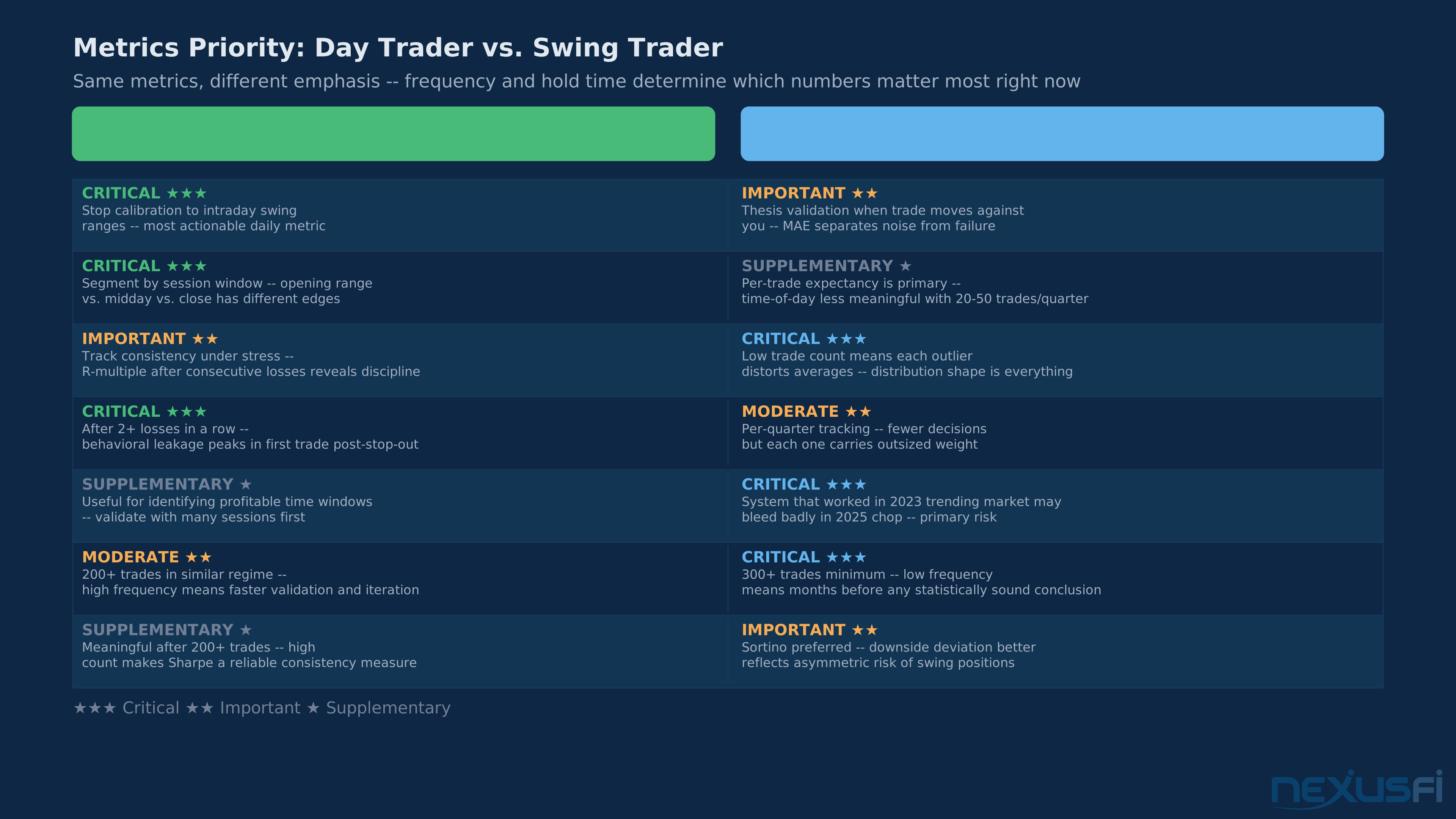
The same metrics apply to both styles. The weight you put on each — and the benchmarks for what's healthy — shifts meaningfully.
Futures Day Traders: MAE/MFE is the most actionable metric for daily improvement. Your edge lives in intraday volatility. Stops must be calibrated to actual intraday swings, not theoretical levels. Expectancy per hour and per session window reveals where your edge actually lives and where it doesn't. Process adherence under stress matters most after two consecutive losses — that's where behavioral leakage happens. If your adherence drops below 70% after back-to-back stop-outs, that's your primary improvement target.
Futures Swing Traders: With 20-50 trades per quarter, each trade matters more to the distribution. Consistency of R-multiple delivery is the key metric — not just average R, but whether you're consistently executing near your target R or experiencing high variance. MAE as thesis validity diagnostic: when a swing trade moves against you for three days, MAE tells you whether you're seeing normal adverse excursion or a genuine thesis break. Regime stratification matters more for swing traders: a system that works in trending regimes but loses in choppy conditions has a completely different risk profile than one that performs consistently across regimes.
Day traders need high-frequency process discipline. Swing traders need regime awareness and statistical humility. Both need expectancy and R-multiples — just with different interpretive lenses.
Building Your Tracking System #
Most traders overcomplicate this. A basic spreadsheet covers 90% of what you need.
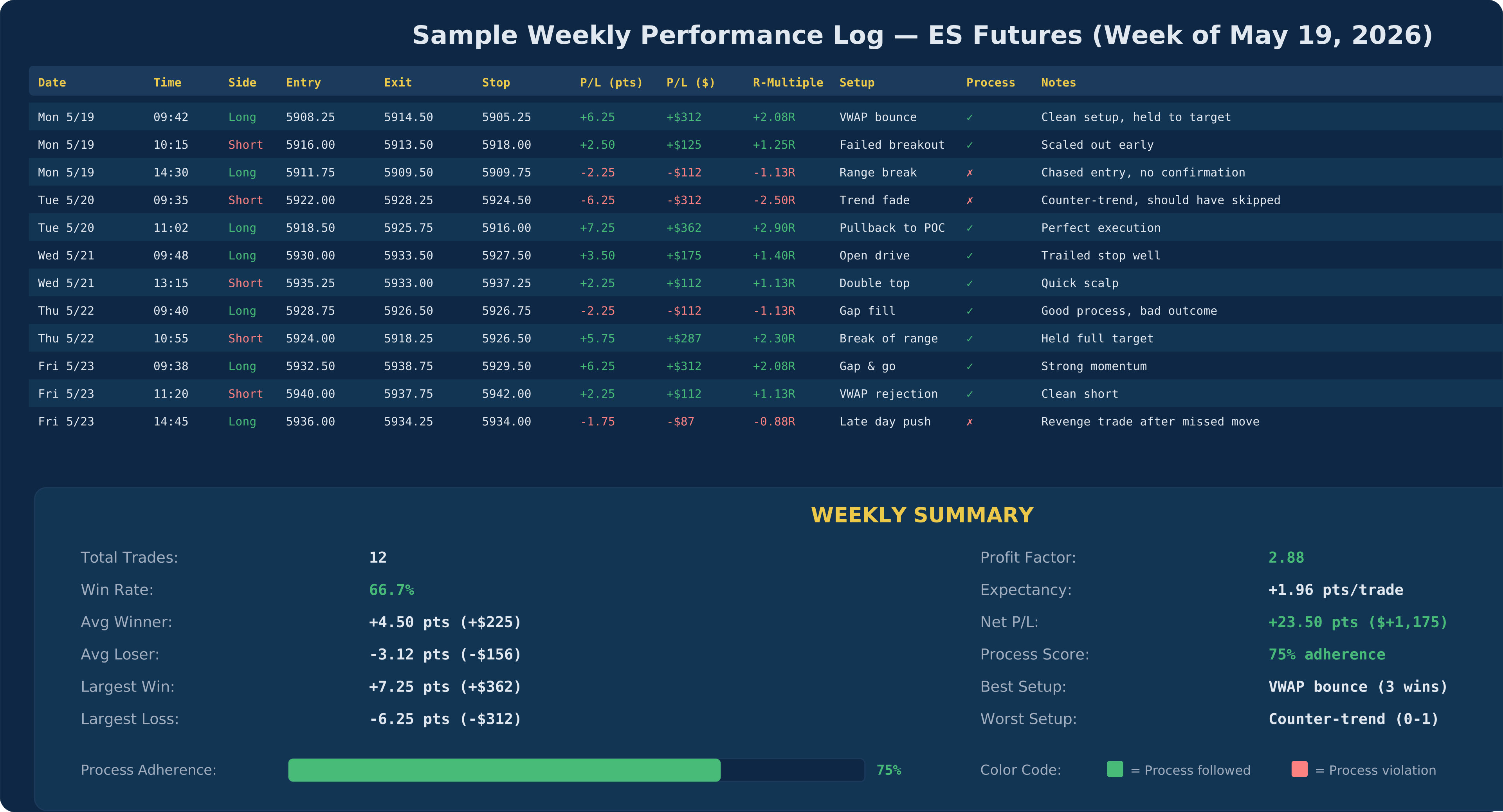
Minimum viable metrics log (per trade):
- Date, time, instrument, direction (long/short)
- Entry price, stop price, target, exit price
- Contract size, gross P&L and net P&L (after commissions)
- R-multiple: net P&L ÷ initial dollar risk
- Setup type label (A/B/C or your own taxonomy)
- MAE and MFE in ticks or points
- Process adherence (yes/no for your core 3-5 rules)
- Emotion flag (0-3)
With this log, you can calculate every metric covered in this article. Weekly review takes 20 minutes. Monthly review takes an hour.
Weekly review ritual: Every Sunday, run the numbers for the week. Calculate expectancy, profit factor, R-average, and process adherence. Compare to your trailing 30-day averages. Ask one question: what single change would have the most impact on next week's performance based on this data?
Tools for automating data capture: Most serious trading platforms (NinjaTrader, TradeStation) export trade history. Dedicated analytics tools like TraderSync and EdgeWonk add MAE/MFE tracking automatically and produce visualizations of your distributions. For discretionary traders not using these tools, manual entry immediately after each trade is the required discipline.
The goal isn't a perfect metrics system. The goal is a consistent feedback loop: capture data, review patterns, identify the highest-value change, implement it, measure results. Start simple. Complexity can wait until you have a baseline dataset worth analyzing.
Citations #
- @Fat Tails, Trading Metrics for journals/record keeping, NexusFi — Psychology and Money Management
- @Massive l, IchibomB Futures Trading, NexusFi — Elite Trading Journals
- @Big Mike, Big Mike's day trading method and advice, NexusFi — Traders Hideout
- @indextrader7, The PandaWarrior Chronicles, NexusFi — Elite Trading Journals
- Brett Steenbarger, The Daily Trading Coach, Wiley, 2009
- @FuturesTrader71, AMA: FuturesTrader71 (FT71) / Morad Askar, NexusFi — Trading Reviews and Vendors
- @Big Mike, how many trades to prove it works?, NexusFi — Elite Quantitative
- @HumbleTrader, HumbleTrader's next chapter, NexusFi — Trading Journals
- @DarkPoolTrading, Trading stats - Dig deeper, NexusFi — The Elite Circle
- @JonnyBoy, VWAP for stock index futures trading?, NexusFi — Emini and Emicro Index
- Van Tharp, Trade Your Way to Financial Freedom, Wiley, 1998
- Daniel Kahneman, Thinking, Fast and Slow, Farrar, Straus and Giroux, 2011
Become a NexusFi Elite Member #
Academy content is free, but Elite members get additional access: suggest edits, vote on article quality, and access the full version history showing how this article evolved through multiple council review rounds.
Join NexusFi Elite — Help improve the knowledge base that helps you trade better.
Version History #
- v1.0 (2026-05-06): Initial publication.
- v1.1 (2026-05-26): Added Van Tharp and Daniel Kahneman external citations for R-multiples and loss aversion frameworks.
Knowledge Map
Prerequisites
Understand these firstGo Deeper
Build on this knowledgeReferences This Article
Articles that build on this topicCitations
- — Trading Metrics for journals/record keeping (2010) 👍 32“The expectancy can only be calculated by taking into account both winning percentage and R-Multiple. Most beginning traders do not let their profits run, and achieve bad R-Multiples.”
- — IchibomB Futures Trading (2021) 👍 17“If you can trade consistently at 67% with 1R you are essentially profiting 2x the amount of every loser. Using profit factor as expectancy is my preferred metric.”
- — Big Mike's day trading method and advice (2010) 👍 32“Each morning, before I trade, I am going to literally take a moment and picture myself trading the entire day. Picture myself executing exactly as laid out in my trading rules.”
- — The PandaWarrior Chronicles (2016) 👍 11“Couple those process goals with good trading statistics and you'll be full aware of what weaknesses are showing up. Then re-adjust process goals to suit.”
- Brett Steenbarger — The Daily Trading Coach (2009)
- — AMA: FuturesTrader71 (FT71) / Morad Askar - Ask Me Anything (2018) 👍 9“A 200 sample test of a clearly identified edge is plenty enough for what we do with a reasonable confidence interval. We are not looking to eliminate uncertainty -- we are looking to build a risk plan around a probability.”
- — how many trades to prove it works? (2012) 👍 8“Always compare live results to the forward test results and backtest results. I am looking for similar expectancy, similar win/loss ratio, similar average profit/loss to make sure strategy performs as expected.”
- — HumbleTrader's next chapter (2024) 👍 8“MAE MFE metrics help decide stop loss and scale out profit locations. I was surprised that many of my big winning trades go down $100 before hitting profit target -- MAE indicates I'm entering too early.”
- — Trading stats - Dig deeper (2014) 👍 7“A steeper cumulative MFE shows that in general the trader has good R:R -- they cut their losers and let their winners run. Cumulative MAE vs MFE is one of the most revealing statistics you will ever see.”
- — VWAP for stock index futures trading? (2020) 👍 13“Harvesting metrics and probabilities is part of our job. You can determine that on an X type of day a setup has x% probability of reaching each target.”
- Van Tharp — Trade Your Way to Financial Freedom (1998)
- Daniel Kahneman — Thinking, Fast and Slow (2011)