



Stages of Trader Development: From Unconscious Incompetence to Consistent Mastery
Overview #
Knowing which stage you are in changes what your next action should be — not the next system, but the next stage-appropriate behavior.
Overview #
Every trader who eventually makes money consistently went through the same arc. They didn't know it at the time--most had no map for the path--but in retrospect, the stages are recognizable. The overconfident beginner who blows up their first account. The frustrated intermediate who chases systems and indicators for years. The quiet shift that happens somewhere in year two or three. The discipline to execute without hesitation. Finally, if they make it, the calm efficiency of a trader who doesn't need excitement to validate themselves.
Understanding these stages doesn't shortcut the path--you still have to live through each one--but knowing where you are changes how you respond. Instead of thinking "I'm failing," you recognize you're in Stage Two, which is exactly where you should be. Instead of chasing the next system, you understand why you're chasing and what you need to stop doing.
Two frameworks capture trader development better than anything else. The first is the four-stage competence model from psychology--unconscious incompetence, conscious incompetence, conscious competence, unconscious competence--which describes how skill develops in any domain. The second is Mark Douglas's three-stage framework from Trading in the Zone: mechanical, subjective, and consistent. Together they explain why so many traders fail, why the ones who survive the middle stage eventually make it, and what the actual psychological shifts look like that separate each stage.
The path is not linear. You will backslide. You will think you've made the shift into Stage Three and discover you're still in Stage Two. That's not failure--that's how the competence model actually works in trading, where the market has a way of exposing every belief you haven't yet surrendered.
The Four-Stage Competence Model: A Map for the Path #
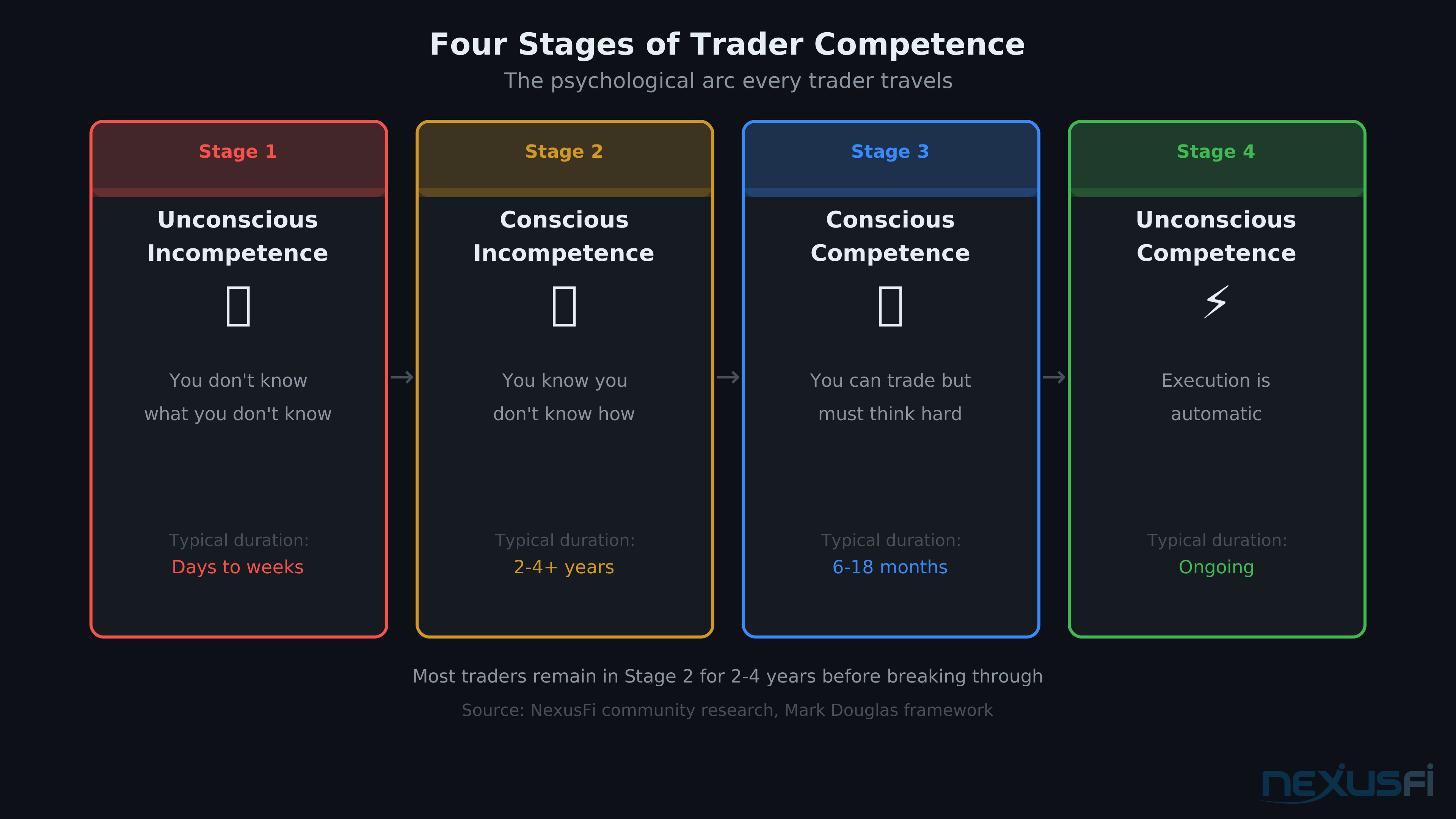
The four-stage competence model--originally from psychology--describes how anyone learns a complex skill. Trading maps onto it almost perfectly, with one important difference: the gap between Stage Two and Stage Three is wider in trading than in almost any other profession, because the market actively punishes the misunderstandings that characterize Stage Two thinking.
Stage One: Unconscious Incompetence. You don't know what you don't know. Markets look simple--prices go up or down, and surely you can figure out which way. This stage is characterized by overconfidence and often initial luck, which makes the subsequent losses more confusing. As @George put it in one of NexusFi's earliest psychology discussions: "1. Being unconsciously incompetent. That's when you don't know anything about the markets. Unfortunately most people get in the markets, on the last wave of a bull market. The only thing required is to be in the markets. Everything is going up." [1]
Stage Two: Conscious Incompetence. The market teaches you that it's harder than it looks. You now know you're incompetent--you're losing money and can't figure out why. This triggers the search for systems, indicators, gurus, and edge that characterizes most traders' middle years. The danger is that you intellectualize the problem endlessly without addressing its root cause, which is psychological, not technical.
Stage Three: Conscious Competence. You can trade profitably, but it requires deliberate effort. You have to think about every trade, consciously apply your rules, and actively manage your psychology. Discipline is effortful. This is the stage where many traders plateau--they can make money, but they burn out from the cognitive load of staying disciplined every minute of every session.
Stage Four: Unconscious Competence. The rules have been internalized to the point where execution is automatic. Pattern recognition happens without deliberate analysis. Position sizing and risk management are reflexive. This is what @cory described as "You know how to do it, and don't have to think about it. You just do it." [2] This stage is often described by experienced traders as boring--you're just executing a process, and the emotional charge of each trade has long since disappeared.
These four stages describe what happens at the skill level. Mark Douglas's framework describes what has to happen at the belief level. The two are related but not identical--you can develop technical skills while still carrying the wrong beliefs about what trading is, and those beliefs will undermine your performance regardless of your technical competence.
Stage One: The Confident Beginner Who Doesn't Know What They Don't Know #
Stage One is short in trading, because the market charges tuition immediately. The confidence of a new trader--the sense that markets are simple, that you just need to identify the right indicator or the right pattern--gets corrected quickly by loss. What makes Stage One dangerous isn't the ignorance itself, it's that early luck can reinforce the wrong beliefs. A new trader who wins their first several trades doesn't learn from those trades; they learn the wrong lesson: that trading is easy and their instincts are good.
The defining psychological feature of Stage One is certainty. The new trader believes they know where the market is going. They take trades based on conviction--"this is definitely going up"--and when the trade works, the conviction feels validated. When it doesn't work, they're confused rather than educated, because their mental model of what trading is hasn't been challenged yet.
Futures markets are especially efficient at ending Stage One quickly. The use of leverage means that overconfident position sizing--very common in Stage One--produces account damage in days rather than months. This is not, despite how it feels at the time, bad news. The faster you're shown that your Stage One mental model is wrong, the faster you can start the actual learning process.
The transition to Stage Two happens the moment you accept that you don't actually know what you're doing. That moment of honest self-assessment is uncomfortable, but it's the prerequisite for everything that follows.
Stage Two: The Long, Difficult Middle Where Most Traders Quit #
Stage Two is where trading careers are made or broken. You now know you're incompetent. You don't know how to fix it. The correct response--consistent practice of a single methodology over a very long time--is psychologically hard to execute because it offers no immediate feedback and requires surrendering the search for certainty that feels like it should solve the problem.
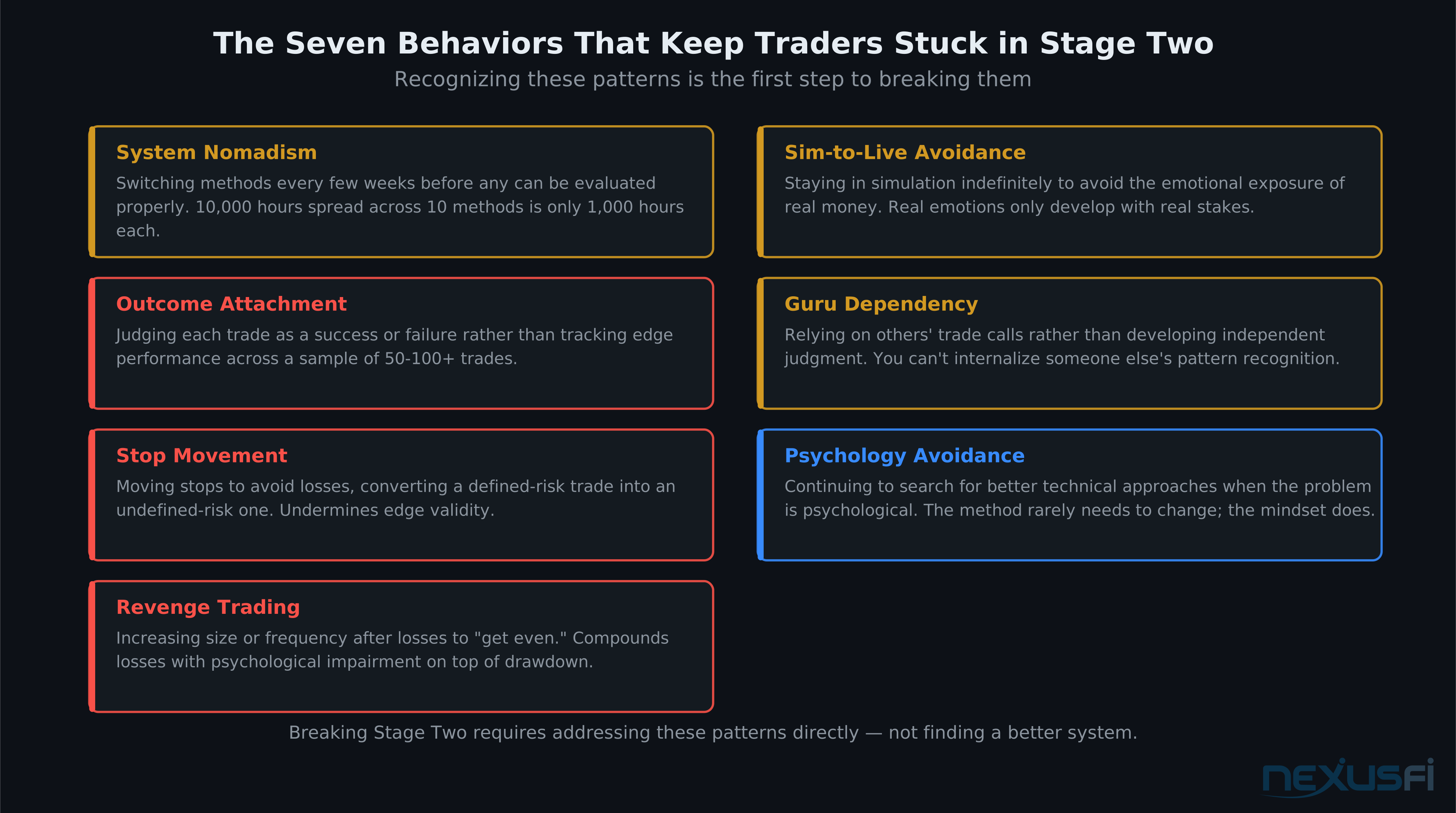
The typical Stage Two trader becomes what experienced traders call a system nomad: cycling through methods every few weeks or months, convinced that the next approach will finally click. They buy indicators, subscribe to services, watch trading rooms, read books. Each new system offers a brief honeymoon period where it seems to work, followed by a losing streak that triggers the search for the next one. The problem isn't the systems--it's the trader's relationship with uncertainty and loss. That relationship doesn't change no matter how many systems you try.
@Big Mike described this pattern in one of NexusFi's most-referenced discussions on trader psychology: "We are too quick to blame the market for our own faults. We are too quick to dismiss a bad trading plan (usually involving some convoluted indicator-following system) as just a bad day, or a rough spot in the market, instead of coming to the realization the system itself is not sound." But the deeper pattern he was identifying wasn't about bad systems--it was about the inability to sit with uncertainty and learn from it. [3]
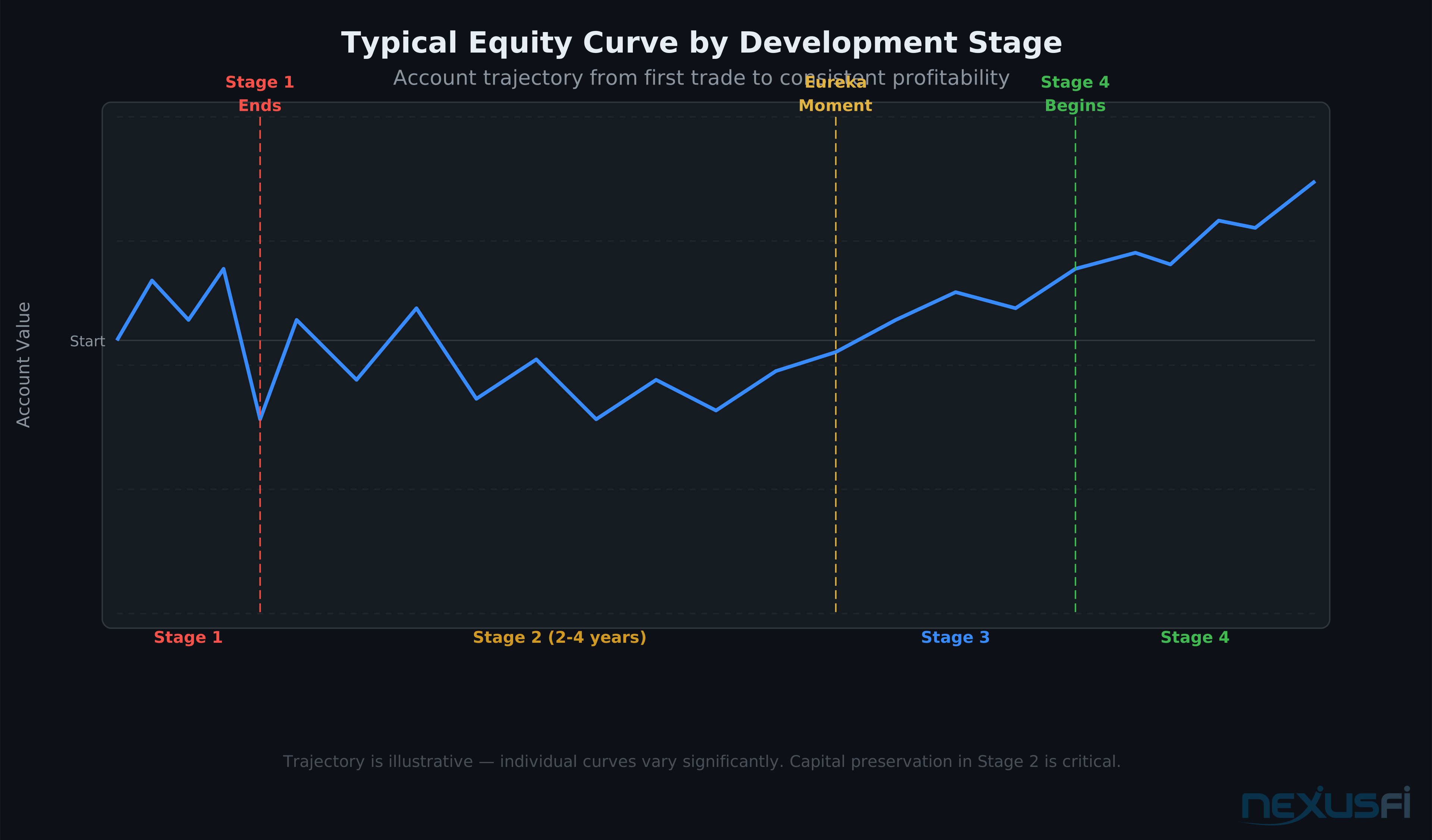
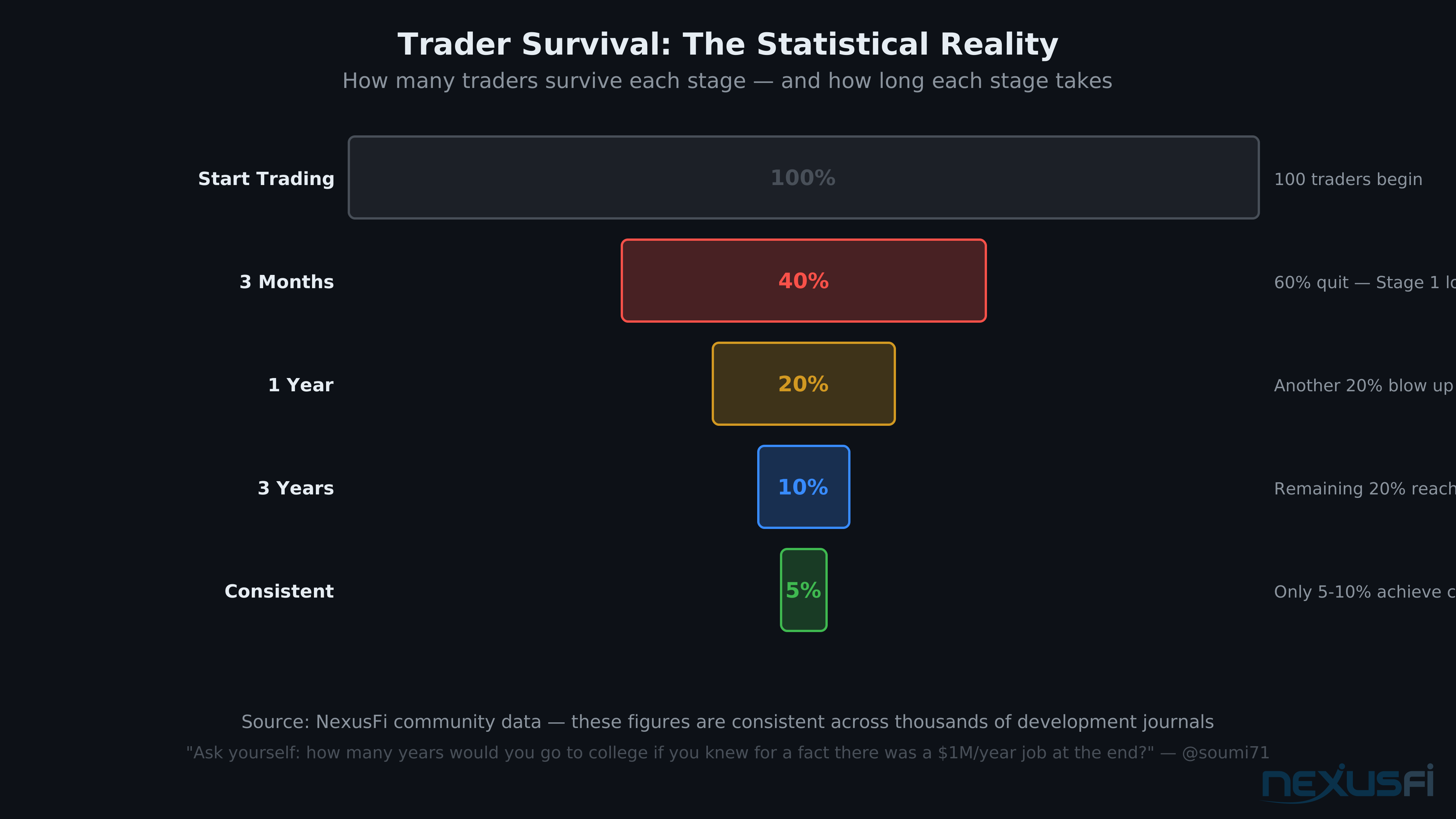
The duration of Stage Two is the most sobering fact about trader development. The consensus from experienced traders who document their journeys--and there are thousands of data points in NexusFi's journals going back to 2009--is that Stage Two typically lasts two to four years for futures traders who make it through. The trader who shared "The 5 Steps to Becoming a Trader" (widely reshared across NexusFi) put the numbers bluntly: around 60% of traders quit within 3 months. Another 20% last about a year before blowing up. Of the remaining 20% who make it to three years, only 5-10% go on to consistent profitability. [4]
Those aren't discouraging statistics--they're clarifying ones. They explain why the survivors describe Stage Two as lasting longer than they expected and requiring more capital than they planned for. They also explain why the traders who make it through talk about Stage Two as the thing that actually made them good traders. The losses teach things that wins can't.
The sim-to-live transition is one of Stage Two's most treacherous passages. @Renatogrant's account of it is almost universal: "I sim traded my strategy (successfully, surprise surprise) for 12 months before going live. I read everything I could find on the psychology behind trading for over a year prior to that... I started trading live a week ago and almost blew up my account entirely within a week!... I found that when trading live, a whole different set of emotions come into play when trading with your own money." [5] The methodology didn't fail--the trader's psychology changed when real money was at stake. That's not a methodology problem. It's a Stage Two problem.
What does Stage Two look like from the inside? @lancelottrader, who documented years of development in NexusFi's journals, described a recurring pattern: "For a long time I wasn't really following my own system and its rules completely." [6] The rules existed. The trader knew the rules. The trader still couldn't consistently follow them. That gap between knowing and doing is the defining feature of Stage Two.
The Eureka Moment: Accepting That You Cannot Predict the Market #
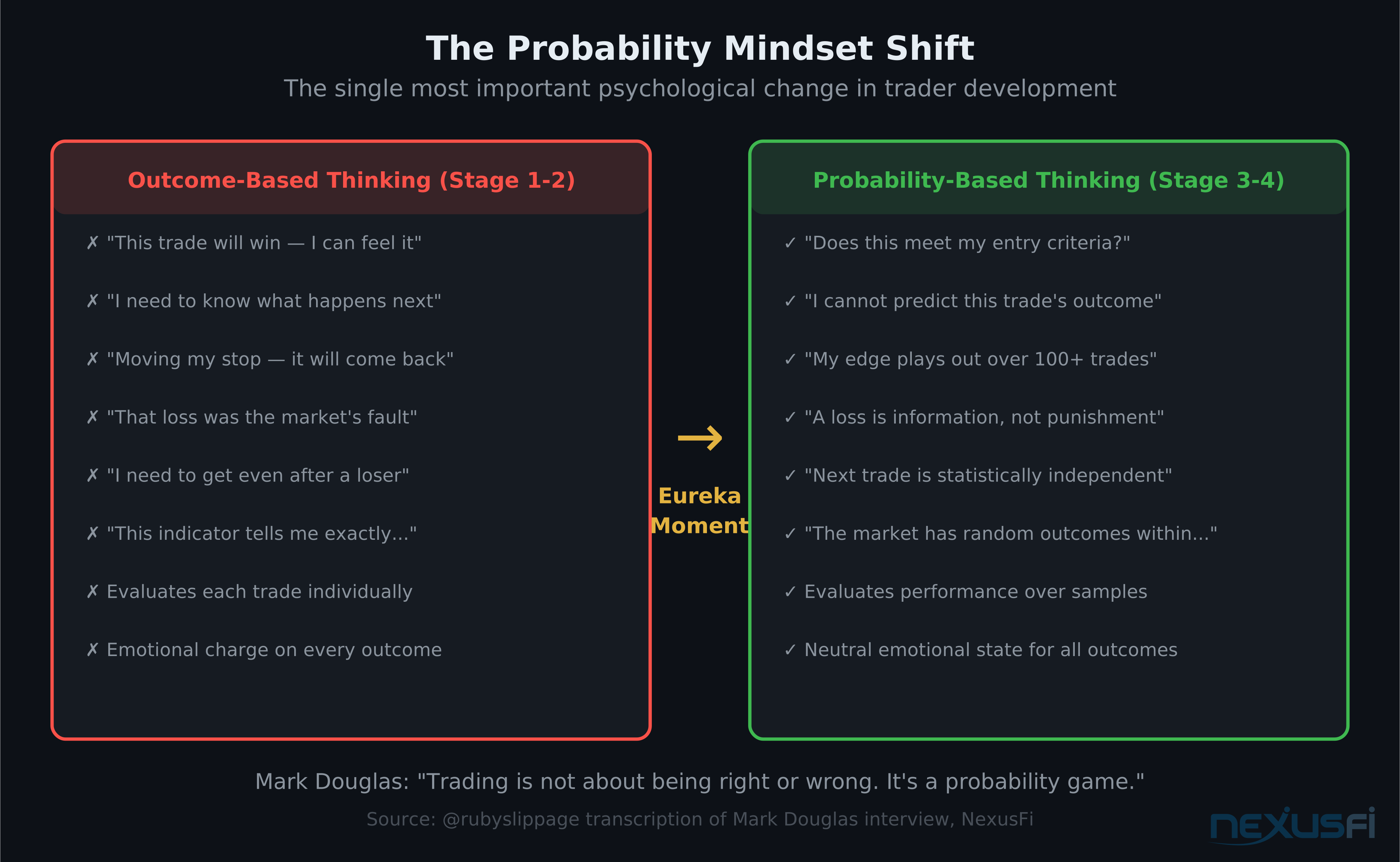
The transition out of Stage Two doesn't happen gradually. Experienced traders describe it as a shift that happens in a moment--a sudden rewiring of their relationship with uncertainty. The shift is this: they stop believing that the purpose of a trade is to be right, and they start believing that the purpose of a trade is to execute a probabilistic edge across a large sample of trades.
This sounds simple. It is not simple. Humans are wired to interpret outcomes as feedback on decisions. If you take a trade and it wins, your brain tells you the decision was good. If it loses, you must have done something wrong. This wiring is adaptive in most of life and catastrophic in trading, because individual trade outcomes in a high-quality system are random within the distribution. A losing trade from a sound setup is not a mistake. A winning trade from a poor setup is not evidence of skill. The brain doesn't naturally make this distinction.
Mark Douglas spent both of his major books--The Disciplined Trader and Trading in the Zone--trying to help traders make this shift. @rubyslippage's transcription of a Douglas interview captures his thinking precisely: "Trading a technical methodology or a technical pattern does not have anything to do with being right or wrong. It's just an odds game. You've got to be able to take every single trade because you don't know the sequence of wins and losses." [7]
Douglas's key insight was that the typical trader approaches each trade with the question: "Is this going to win?" The consistent trader approaches each trade with the question: "Does this meet my criteria?" The answer to the second question is actionable. The answer to the first question is unknowable. When you're operating on an unknowable question, every trade becomes emotionally fraught. When you're operating on a knowable one, execution becomes straightforward.
@jamiej83 described the five fundamental truths that Mark Douglas identified as the foundation of the probability mindset: "(i) Anything can happen; (ii) You don't need to know what is going to happen next in order to make money; (iii) There is a random distribution between wins and losses for any set of variables that define an edge; (iv) An edge is just an indication of a higher probability of one thing happening over another; (v) Every moment in the market is unique." [8]
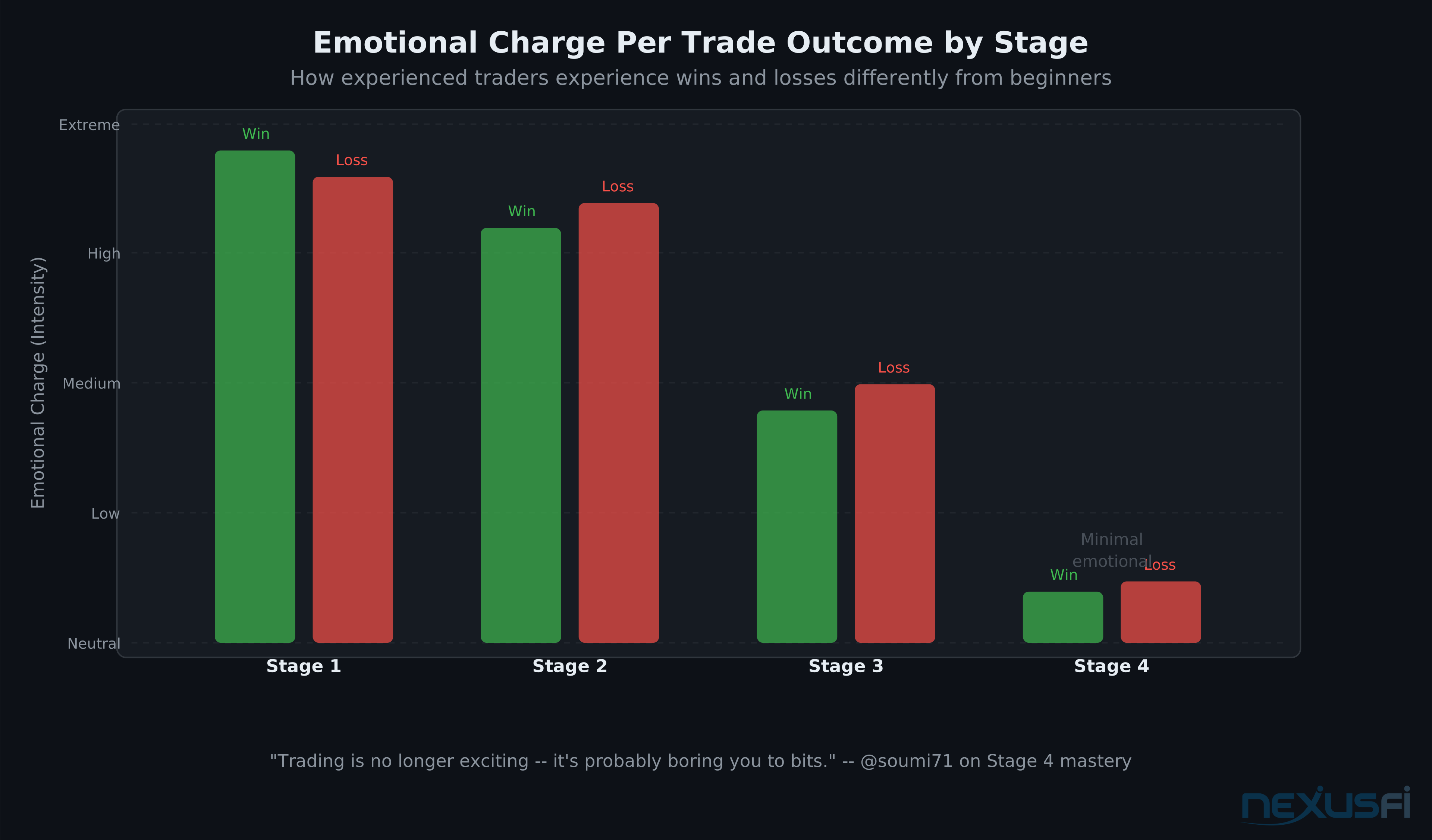
When these truths are genuinely internalized--not just intellectually understood, but embedded in how you process every trade--the emotional charge of individual outcomes disappears. A loss becomes information, not punishment. A win becomes data, not validation. This shift is what makes consistent execution possible. Without it, every losing trade triggers the psychological reactions that lead to revenge trading, early exits, moved stops, and all the other behaviors that Stage Two traders recognize in themselves but can't seem to stop.
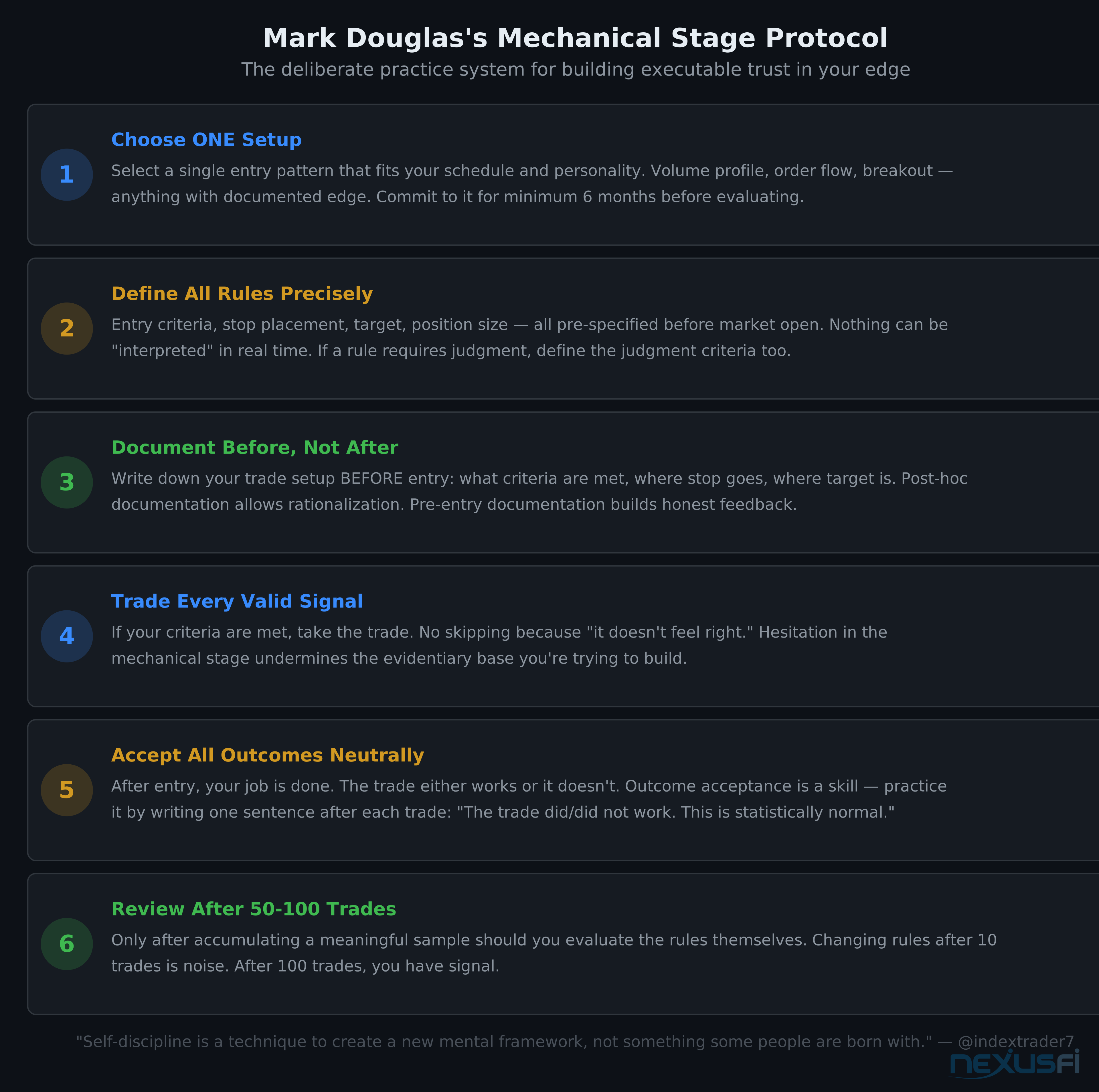
@indextrader7 described the active process of building this mindset while completing a trading evaluation: "I'm now trading as mechanical as I can in order to learn to trust myself to execute flawlessly, develop a real belief in the uncertainty of the markets on an individual/micro level, and learning to think in terms of probabilities which is a real belief in the certainty of the markets on a 20-trade sample size/macro level view." [9] This is the transition as active work: deliberately building the mental habits that eventually become automatic.
Mark Douglas's Mechanical Stage: Building Trust Through Rules #
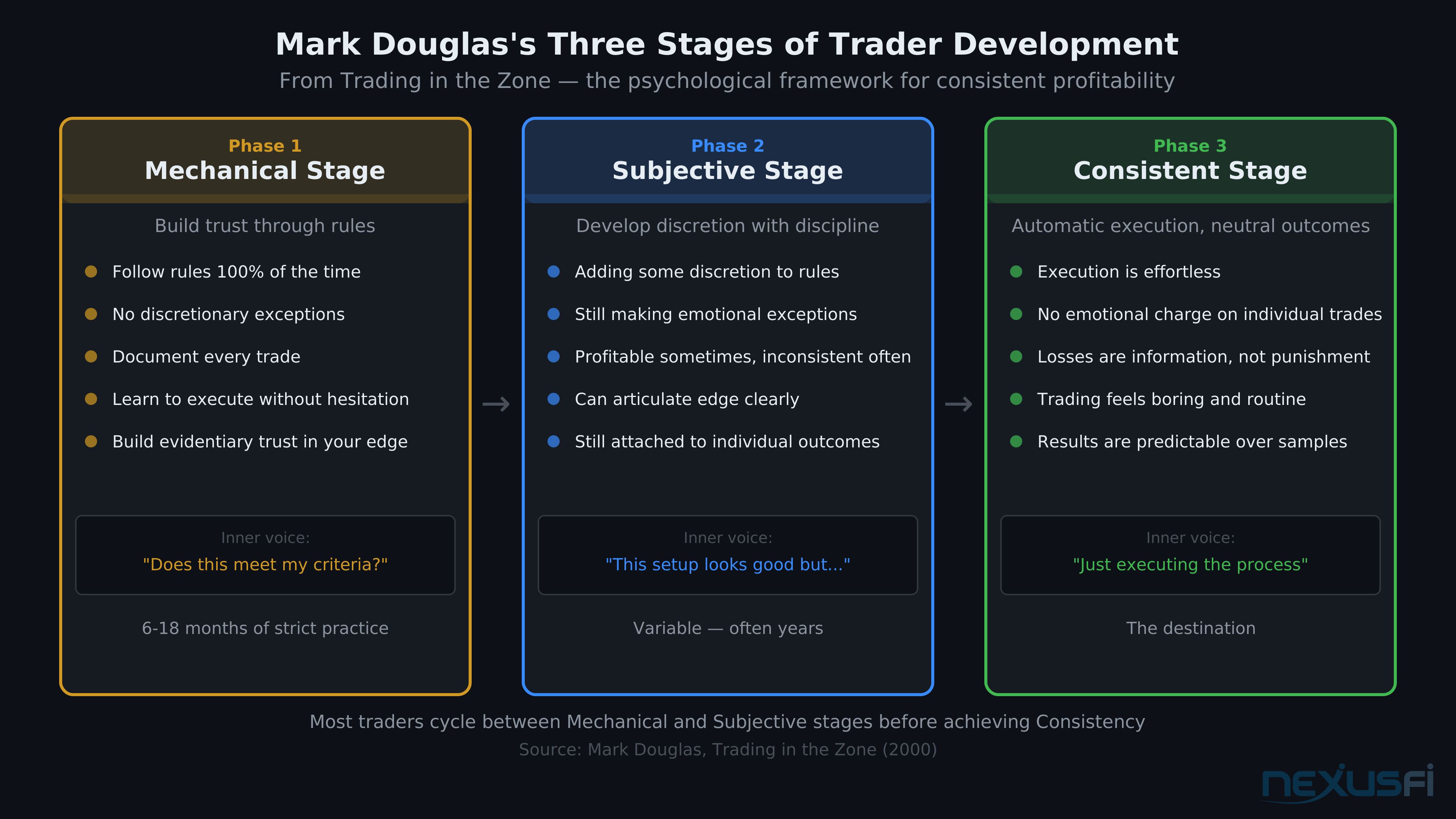
Douglas's three-stage framework describes what has to happen psychologically, not just technically. The mechanical stage is the deliberate practice phase where a trader builds the neural pathways--the habits--that make consistent execution possible. It's not about finding the right rules. It's about trusting yourself to follow rules consistently enough that you can evaluate whether they work.
The mechanical stage has a specific purpose: to build proof. When you've followed your rules for 200 consecutive trades--documented, evidenced, honest--you have something you can believe in. Not because you're psyching yourself up, but because you have data. The rules worked or they didn't. You followed them or you didn't. This evidence-based trust is the only kind that holds up when a losing streak hits, because it's anchored in reality rather than hope.
Most Stage Two traders never complete the mechanical stage because they find a reason to deviate from their rules before they've built the evidentiary base. A trade looks different. The market is behaving unusually. The setup is "almost" there. Each deviation feels justified in the moment and undermines the very thing the mechanical stage is trying to build: a documented track record of rule-following that you can trust.
The mechanical stage also builds the capacity to execute without hesitation. Hesitation in trading is expensive--not just financially, but psychologically. Every time you see a valid setup and don't take it, you're reinforcing the belief that you need to analyze further before acting. That belief compounds into paralysis. The mechanical stage is practice in execution: seeing the signal, taking the trade, accepting the outcome, moving on. Repeat until the sequence is automatic.
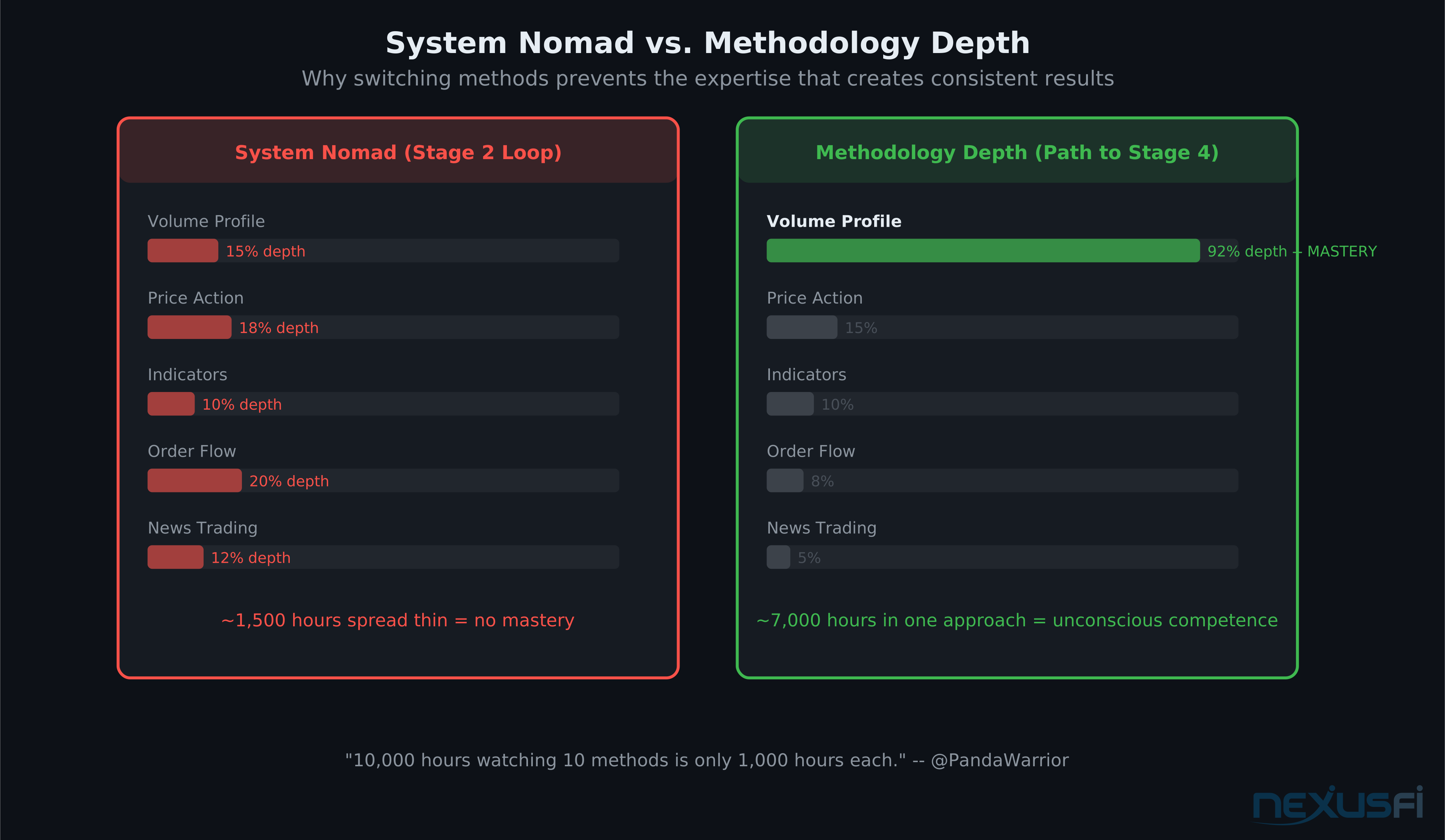
@PandaWarrior's extended journal provided a candid account of what the mastery process actually requires--and how it parallels other professional domains: "Screen time equals confidence. But here is a catch, I think screen time with the same setup or similar setups is the key. 10,000 hours of watching 10 different methods is only 1,000 hours each. And I am willing to bet very few of us give 1,000 hours to a method before moving on." [10]
That observation cuts to the heart of why the mechanical stage fails for most traders: they're system nomads who never accumulate the deep expertise in one approach that mastery requires. The trader who spends three years studying volume profile deeply--learning every nuance, developing real intuition for how POC migrates, how value area rejections behave across different market conditions--will outperform the trader who spends three years trying every indicator in the platform's library.
From Subjective to Consistent: The Transition to Stage Four #
Douglas's subjective stage is where many traders live for years. You have some skills. You've internalized some rules. But you're still making discretionary exceptions based on gut feel, still modifying your stops under pressure, still letting recent losses distort your read of the next setup. The subjective stage is conscious competence with too much subjectivity--you're profitable sometimes, inconsistent often, and unable to replicate your best days reliably.
The path out of the subjective stage runs directly through the probability mindset. When you genuinely believe that each trade is independent of the previous one, that your edge plays out over a sample rather than any individual trade, that you cannot know in advance which trades will win--you stop having opinions about individual trades. You just execute the process.
The consistent stage--Douglas's third stage, equivalent to Stage Four in the competence model--is characterized by what experienced traders describe as the absence of emotional charge around trading, not emotional suppression. They don't mean they've become robots. They mean the hope on entry, the relief on a win, the frustration on a loss--has been replaced by neutral execution. The trade is just a trade. It wins or it doesn't. Either way, the next setup is coming.
@soumi71 shared a widely-circulated piece that described this final stage with unusual clarity: "Trading is no longer exciting--in fact it's probably boring you to bits--like everything in life when you get good at it or do it for your job--it gets boring--you're doing your job and that's that." [11]
The transition to Stage Four is gradual rather than sudden. Unlike the eureka moment of the probability shift, unconscious competence builds over months and years of consistent execution. You notice it when you look back and realize you've been following your rules automatically for weeks without consciously thinking about it. The rules have become habits. The analysis has become pattern recognition. The process has become who you are as a trader.
@lancelottrader, who documented years of transition in NexusFi's journals, captured the trajectory of the Stage Three-to-Four path: "I'm trying to get to that level of 'unconscious competence'... somewhat akin to high performance driving. Reacting without having to over analyze." [12] The driving metaphor is apt: you don't think about steering; you steer. You don't think about braking; you brake. Trading at Stage Four looks the same way from the outside--someone calmly executing a process with no visible effort or drama.
How Long Does Each Stage Take? And What Accelerates It? #
The honest answer is: longer than you want it to, and more capital than you planned for. But the variance is real--some traders move through Stage Two in eighteen months while others spend a decade. The factors that determine speed are knowable.
Stage One: Days to months. Leverage accelerates the lesson — overconfident position sizing produces account damage fast. The faster you accept you don't know what you're doing, the faster real learning begins.
Stage Two: 2-4 years minimum for most futures traders who eventually become consistently profitable. The floor is real--it takes thousands of hours of screen time to develop genuine pattern recognition, and there are no shortcuts. The ceiling is variable: traders who stay system nomads, who never commit to one approach long enough to accumulate deep expertise, can stay in Stage Two indefinitely. The ceiling also depends on capital management--running out of trading capital ends the path regardless of how close you were to the transition.
Stage Three/Four transition: Gradual. The mechanical stage typically takes 6-18 months to produce reliable execution. The shift to unconscious competence happens over time — most traders identify when it occurred in retrospect.
What actually accelerates development:
- Trading smaller, longer: The trader who keeps their risk small enough to survive Stage Two without blowing up develops through experience. The trader who sizes up aggressively loses their capital before the experience accumulates. @Big Mike's directness on this was unambiguous: "Don't spend a single dollar trading for at least 24 months if you are just getting started. Spend 60-80 hours a week for the next 2 years learning." [13]
- Single methodology depth: As @PandaWarrior observed, 10,000 hours spread across 10 methods is only 1,000 hours in each. Commit to one approach and go deep. See Volume Profile Trading as an example of a methodology with enough depth to sustain years of focused study.
- Journaling everything: The traders who develop fastest document relentlessly--not just P&L, but their decision-making process on every trade. Pattern recognition improves faster when you're forced to articulate what you saw and why you acted. See Trading Journal for Self-Awareness.
- Community accountability: NexusFi journals function as an accountability mechanism -- explaining your decisions publicly forces clarity that private journaling doesn't.
What slows development: System nomadism, undersized capital that forces premature full-size trading, overleveraging, treating trading like gambling rather than a probability business, and avoiding the psychological work by focusing exclusively on technical analysis.
@Rrrracer, who documented his path from scratch in one of NexusFi's most detailed development journals, framed the educational investment question directly: "The $100 for Elite membership is the only money I have spent on my education outside of the market other than a handful of books: Mind Over Markets, Trading In the Zone..." [14] The best traders invest in genuine education rather than in expensive systems or courses promising shortcuts that don't exist.
Where Are You Now? Applying the Framework to Your Trading #
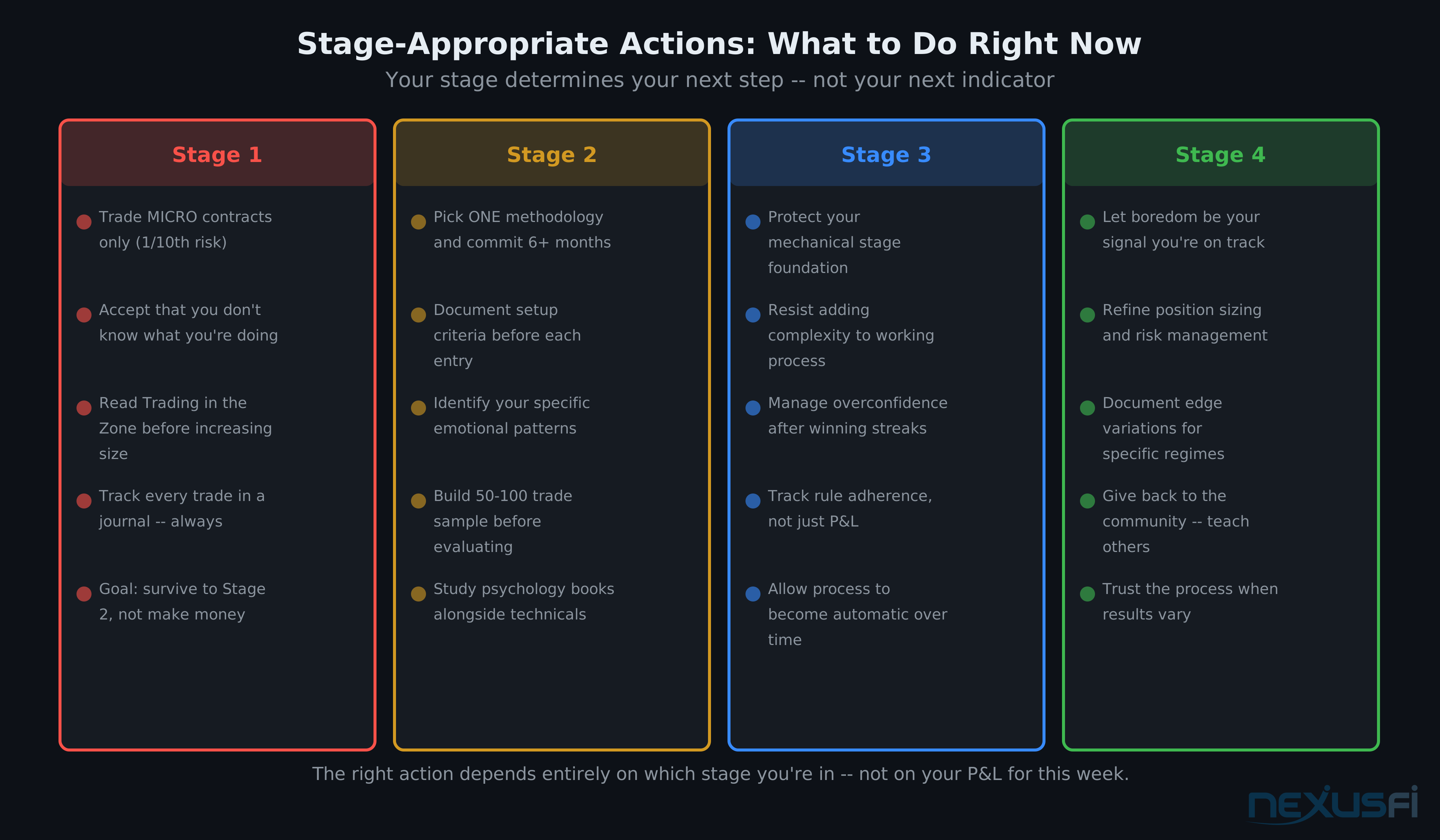
The value of understanding trader development stages is diagnostic. If you know where you are, you know what the next step actually is. Not the next system. Not the next book. The next stage-appropriate action.
If you're in Stage One: Your goal is not to make money--it's to survive long enough to get to Stage Two. Trade micro contracts. Reduce your position size until no individual loss can materially hurt you. Let the market teach you without charging more tuition than you can afford. Read Trading in the Zone by Mark Douglas and The Disciplined Trader before touching your trading size. Accept that you don't know what you're doing yet--that acceptance is the prerequisite for learning.
If you're in Stage Two: Stop searching for the right system and start building expertise in one approach. Choose a methodology that fits your personality and your schedule and commit to it for at minimum one year before evaluating. Document every trade. Understand your psychology: what patterns of behavior do you exhibit when you're losing? Fear? Revenge trading? Early exits? Identify them, name them, and develop specific protocols for when those states appear.
Accept that Stage Two is expensive. Loss is tuition. The goal is to make sure you're learning from every dollar you lose, not just losing. @Trader146's account of a 25-year struggle--documented candidly in NexusFi--is a cautionary tale about what happens when the learning isn't happening even as the losses accumulate. [15]
If you're in Stage Three: Protect what you've built. Consistency is fragile at Stage Three--it's deliberately maintained, not automatic. The traps are overconfidence (expanding risk too soon after a winning streak), environmental changes (new job, life stress, market regime change), and the temptation to add methods and complexity to a process that was working because it was simple.
If you're transitioning to Stage Four: Trust the boredom. The emotional flatness of consistent trading is a feature, not a bug. If trading feels routine and slightly tedious, you're on the right trajectory. If it still feels exciting and dramatic, you're still carrying emotional charge that will eventually produce inconsistency.
The consistent trader that every Stage Two trader envisions isn't someone who never loses. They're someone who has genuinely internalized that losses are part of the edge, and whose behavior doesn't change when they occur. Getting there is the work. Knowing where you are in that work is the first step.
Knowledge Map
Go Deeper
Build on this knowledgeReferences This Article
Articles that build on this topicCitations
- — Four Phases (2009) 👍 3“Being unconsciously incompetent. That's when you don't know anything about the markets.”
- — MWinfrey's 5 Minute Odyssey (2011) 👍 4“Unconscious Competence: You know how to do it, and don't have to think about it. You just do it.”
- — Big Mike's day trading method and advice (2009) 👍 45“We are too quick to blame the market for our own faults.”
- — The 5 Steps to becoming a trader (2010) 👍 12“Around 60% of new traders die out in the first 3 months.”
- — The Greatest Weakness (2011) 👍 10“I sim traded my strategy successfully for 12 months before going live... almost blew up my account entirely within a week!”
- — The Beast Slayer, Lance's NQ Trading Journal (2012) 👍 8“For a long time I wasn't really following my own system and its rules completely.”
- — Dear Ruby (2013) 👍 13“Trading a technical methodology does not have anything to do with being right or wrong. It's just an odds game.”
- — Concerning risk per trade sizing (2012) 👍 43“Mark Douglas's five fundamental trading truths: Anything can happen; You don't need to know what is going to happen next.”
- — TST Combine Journal (2013) 👍 12“Trading as mechanical as I can in order to learn to trust myself to execute flawlessly.”
- — Which level of trader are YOU? (2011) 👍 3“Screen time equals confidence. 10,000 hours of watching 10 different methods is only 1,000 hours each.”
- — The 5 Steps to becoming a trader (2010) 👍 12“Trading is no longer exciting -- in fact it's probably boring you to bits.”
- — The Beast Slayer, Lance's NQ Trading Journal (2018) 👍 7“Trying to get to that level of unconscious competence... reacting without having to over analyze.”
- — Experience at Live Trading Rooms (2009) 👍 98“Don't spend a single dollar trading for at least 24 months if you are just getting started.”
- — How did you learn to trade? (2021) 👍 14“The $100 for Elite membership is the only money I have spent on my education outside of the market.”
- — A Cautionary Tale: My 25-Year Struggle in Pursuit of Trading Success (2023) 👍 15“25 years of struggle in pursuit of trading success -- a cautionary tale.”