



CFTC Enforcement Actions and Penalties: How Futures Market Violations Are Investigated and Prosecuted
Overview #
CFTC enforcement actions are public record and permanently visible on the NFA BASIC database. Even a minor regulatory infraction can follow a trader or firm for decades — always verify your broker's enforcement history before opening an account.
Every futures position you hold exists within a regulatory enforcement architecture that most traders never think about until it points at them. The Commodity Futures Trading Commission, the National Futures Association, and the exchanges themselves run independent but overlapping enforcement operations that together monitor every order entered on U.S. designated contract markets — from institutional desks managing billions in notional exposure down to retail accounts running two-lot strategies on a prop firm evaluation.
Understanding how this enforcement system works gives you three practical advantages: you can assess the regulatory history of brokers and CTAs before funding an account; you can recognize order entry behaviors that generate surveillance flags; and you can make informed decisions about cooperation and self-reporting if you ever receive an inquiry.
This article covers the complete enforcement environment: who enforces what, how investigations begin, what the penalty structure looks like in practice, and what the enforcement record reveals about actual market behavior.
The Three-Layer Enforcement Architecture #
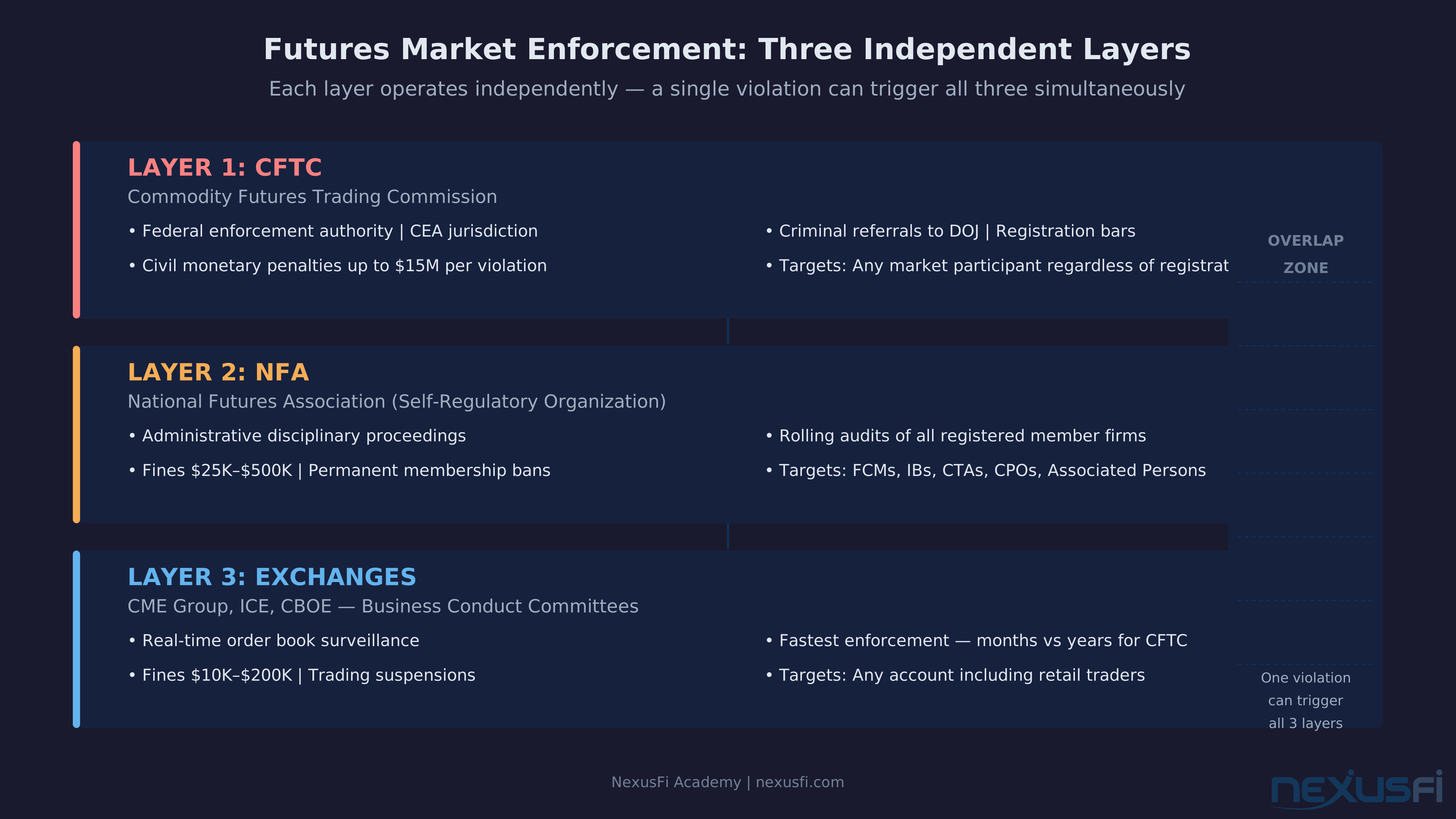
Futures market enforcement doesn't run through a single regulator. It operates through three independent but connected layers, each with distinct authority, jurisdiction, and tools.
Layer 1: The CFTC — Federal Agency Enforcement #
The Commodity Futures Trading Commission derives its enforcement authority from the Commodity Exchange Act. The CFTC's Division of Enforcement investigates violations, files civil complaints in federal district court or through administrative proceedings, and seeks civil monetary penalties, disgorgement orders, injunctive relief, and registration bars.
The CFTC's jurisdiction covers everyone trading in CFTC-regulated markets — not just registered professionals. A retail trader with zero NFA registration can be charged with manipulation under CEA Section 9(a)(2) if they trade futures or swaps on a U.S. designated contract market. The law applies to the market participant, not to the registration category.
Since Dodd-Frank in 2010, the CFTC can also pursue attempted manipulation — conduct that doesn't successfully distort prices can still trigger charges if the intent was present. This extends the enforcement perimeter considerably: the government doesn't need to prove your scheme worked.
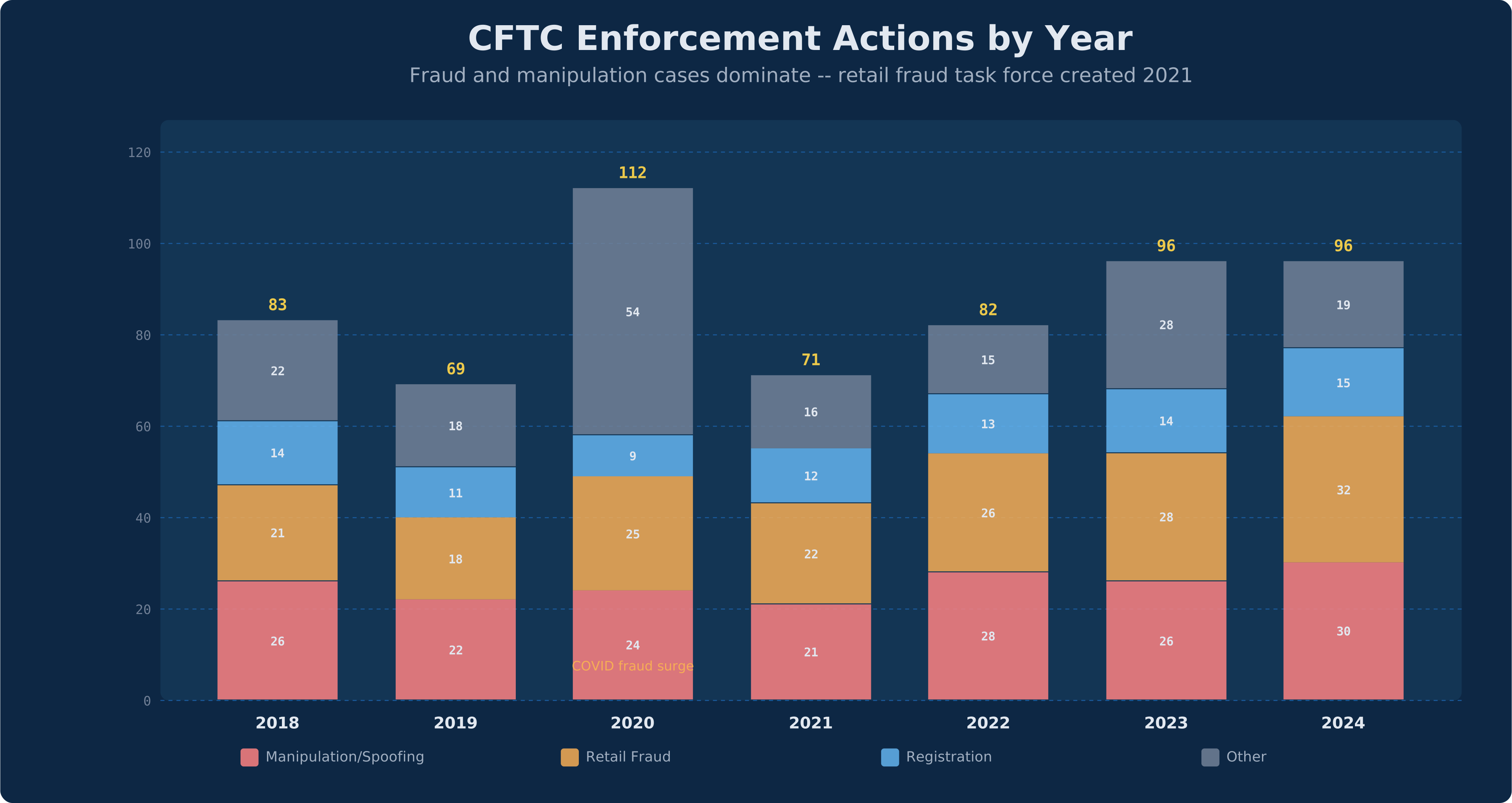
The CFTC reorganized its enforcement function into two task forces: the Complex Fraud Task Force (large-scale manipulation, Ponzi schemes, digital asset fraud) and the Retail Fraud and General Enforcement Task Force (retail investor protection, broker misconduct). The Retail Fraud task force is directly relevant to everyday traders — enforcement actions harming retail participants receive escalated priority regardless of dollar amount. The Ninyo layering case ($1,390 profit → $30,000 fine) went through the full exchange enforcement process.
Layer 2: The NFA — Self-Regulatory Organization Enforcement #
The National Futures Association operates as the self-regulatory organization (SRO) for CFTC-regulated entities. The NFA registers all futures industry participants, audits member firms on a rolling schedule, and brings disciplinary actions through its Business Conduct Committee (BCC) when it finds compliance failures.
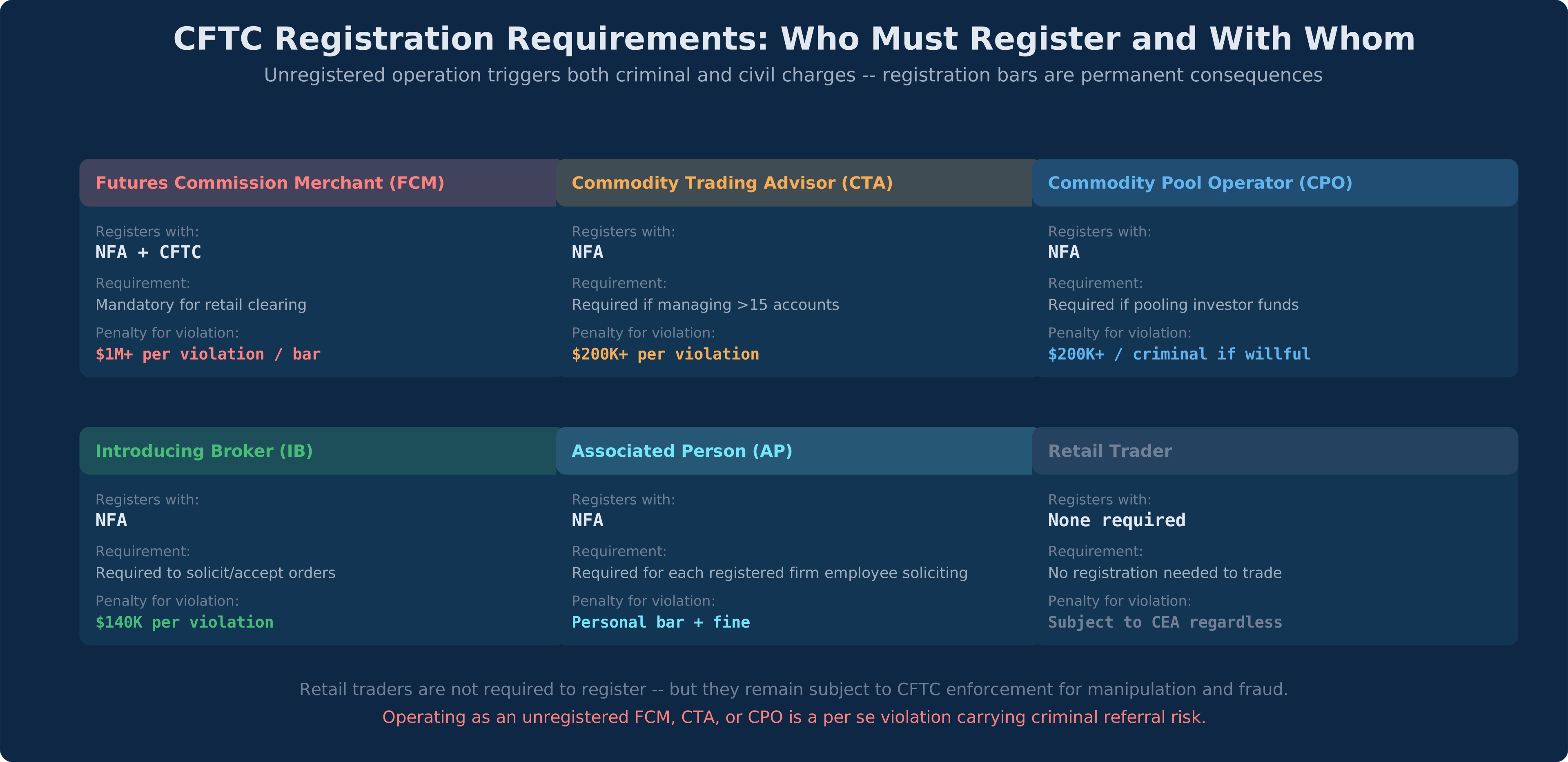
NFA enforcement targets firms and individuals in the registered futures industry: FCMs, IBs, CTAs, CPOs, and Associated Persons. NFA disciplinary actions are administrative proceedings — they don't go through federal courts, but they carry real financial consequences. More importantly, every NFA action is published permanently in the NFA BASIC database at nfa.futures.org/BasicNet and stays on a firm's record indefinitely.
NFA fines for member firms typically range from $25,000 to $500,000. In the most egregious cases — fabricating performance records, operating fraudulently, persistent compliance failures — the NFA orders the firm to permanently withdraw from NFA membership and never reapply. Without NFA membership, a firm cannot operate as a registered futures professional in U.S. markets.
In February 2026, the NFA ordered Spartan Asset Group, a Michigan-based CTA, to permanently withdraw from membership for presenting hypothetical performance results on their website without the required disclaimer and without being able to demonstrate that the results were representative of actual client experience. The firm settled without admitting or denying the allegations — but the ban was permanent and immediate.[1]
Layer 3: Exchange Business Conduct Committees #
At the base of the enforcement structure sit the exchanges themselves — CME Group, ICE, CBOE Futures Exchange. Each operates a Market Regulation department and Business Conduct Committee that reviews trade data for prohibited behaviors and levy fines and trading suspensions independently of any CFTC or NFA action.
Exchange enforcement is fast. Exchanges have direct, real-time access to their own order book data and run algorithmic surveillance on entry and cancellation patterns. Cases that take the CFTC years to resolve can generate exchange-level fines within months.
Exchange enforcement reaches retail traders directly. In March 2026, the COMEX Business Conduct Committee fined retail trader Mark Ninyo $30,000, required disgorgement of $1,390 in profits, and suspended him from all CME Group markets for 10 days — for layering gold and silver futures across a 43-day period in 2024. The penalty was more than 21 times the profit from the activity.[2]

Types of Violations: What the Enforcement Record Shows #
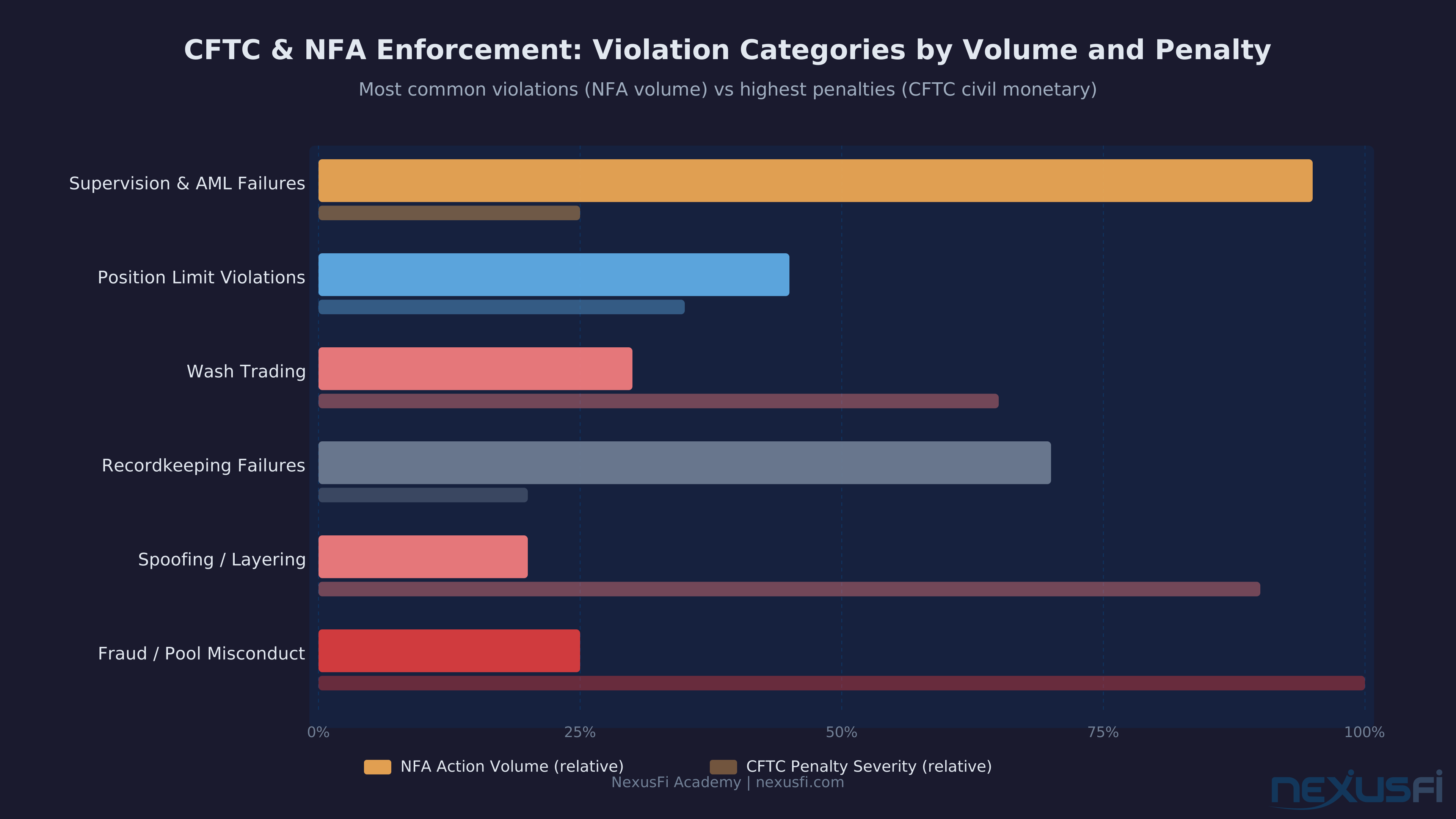
The enforcement record across CFTC, NFA, and exchange actions reveals consistent patterns. Understanding what actually gets prosecuted tells you where the enforcement energy goes — and where genuine regulatory risk concentrates.
Manipulation and Disruptive Trading #
The highest-severity violations involve intentional market manipulation. The CEA's anti-manipulation provisions target conduct designed to artificially move prices or create false impressions of market depth:
Spoofing — placing large orders with the intent to cancel before execution, creating artificial price pressure to attract other market participants to trade at a disadvantage. Dodd-Frank Section 747 made spoofing a federal criminal offense in 2010. The CFTC and DOJ have pursued it aggressively since 2015.
Layering — placing multiple orders on one side of the book, filling a small order on the opposite side, then canceling the large orders. The Ninyo case is a textbook example: layer multiple silver and gold orders at one side, fill a smaller opposing order, cancel the layers. The COMEX surveillance algorithm identified the pattern across 43 trading days and generated a $30,000 enforcement action against an account that cleared $1,390.[2]
Banging the close — executing trades in the closing auction window to influence settlement prices, generating losses for holders of cash-settled contracts that reference that settlement.
Momentum ignition — using a burst of orders to create artificial price momentum, attracting other participants into a directional move, then reversing position.
[3] Exchange-level action is typically the first enforcement step; CFTC escalation follows when the conduct is systematic enough to warrant federal resources.
Wash Trading #
Wash trading — executing trades that result in no net change of beneficial ownership, creating artificial trading volume — is prohibited under CEA Section 4c(a) and CFTC Regulation 1.38. The CFTC's $5 million enforcement action against DV Trading (formerly Rosenthal Collins Capital Markets) in 2017 illustrates the mechanics. Over three years, proprietary traders executed wash sales across three different strategies to generate rebates from CME's Eurodollar market maker program. Approximately 300,000 Eurodollar contracts changed hands through more than 8,000 wash transactions — all of it visible in the CME audit trail, none of it flagged by the firm's internal compliance systems until CME's own surveillance brought the pattern to RCCM's attention through regulatory inquiry.[4]
The individual trader who devised one of the three strategies, Brandon Elsasser, faced a separate $200,000 civil penalty alongside the firm's $5 million payment. This illustrates a consistent CFTC enforcement pattern: when individuals at a firm are personally responsible for violations, they face individual civil penalties in addition to whatever the firm pays.
Position Limit Violations #
CFTC speculative position limits cap the maximum position any single trader can hold in physical commodity futures. Exceeding these limits is a violation regardless of intent — even automated monitoring systems that fail to properly enforce limits create enforcement exposure.
JPMorgan paid $600,000 for holding short positions in Cotton No. 2 futures in excess of CFTC speculative position limits on multiple days in 2010. The violation occurred because JPMorgan's automated monitoring system failed to differentiate between long-side hedge exemptions and short-side speculative limits. When the system was configured to track positions, it applied the hedge exemption to both sides — leaving the short-side limit unenforced. JPMorgan discovered the system failure, implemented manual monitoring, and ultimately still violated the short-side limit multiple times before correcting the configuration.[5]
The $600,000 fine for one of the world's largest financial institutions reflects two factors: the violation was inadvertent rather than intentional, and the firm self-reported the underlying monitoring system failure. Intentional position limit violations carry substantially larger penalties.
Supervision and AML Failures #
The largest category by volume of NFA enforcement actions involves institutional compliance failures: inadequate supervision of employees, deficient anti-money laundering programs, recordkeeping failures, and improper promotional materials.
Interactive Brokers paid $38 million across three regulators in 2020 for a combination of AML program deficiencies and supervision failures. The CFTC component — $11.5 million in civil monetary penalty plus $706,214 in disgorgement — arose from the firm's supervision of customer accounts that included an account later charged with operating a Ponzi-like scheme. The CFTC specifically cited "failing as a registered futures commission merchant to diligently supervise employees' handling of accounts."[6]
Seven years earlier, Interactive Brokers paid $225,000 to the CFTC for separate segregation calculation failures — a violation discovered internally and self-reported. The CFTC's order credited IB's independent corrective measures and cooperation as factors in the modest penalty.[7]
NFA fines for introducing brokers typically fall in the $25,000-$100,000 range for supervision and compliance failures. Stage 5 Trading paid a $75,000 NFA fine in November 2022 for doing business with an unregistered forex introducing broker and failing to maintain adequate supervision of its forex operations.[8]

How Investigations Begin: Surveillance, Tips, and Self-Reporting #
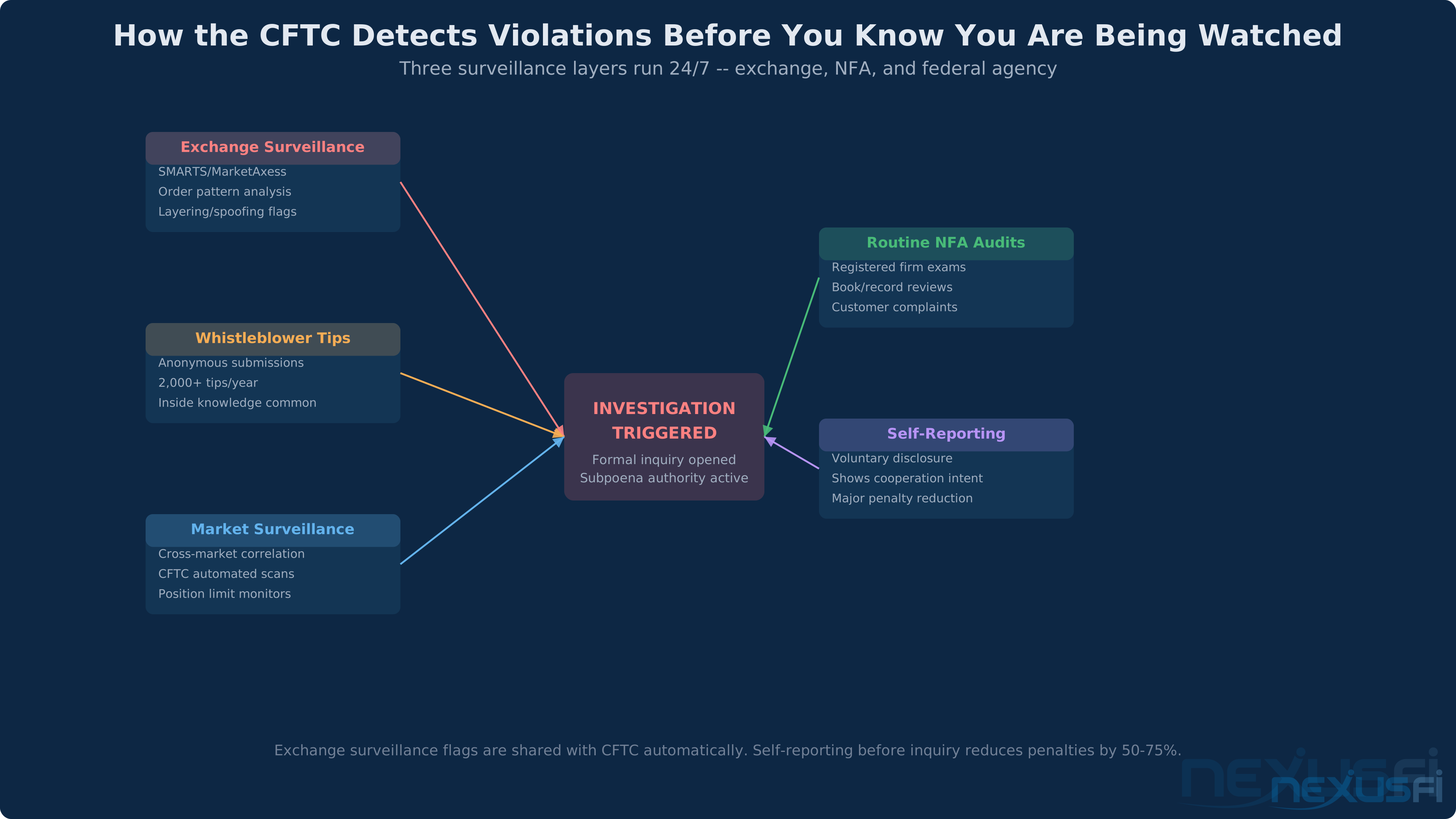
Every CFTC enforcement matter starts with a lead. Understanding where those leads come from helps you assess the actual probability that any given trading behavior will surface as an enforcement matter.
Exchange Surveillance Systems #
Every designated contract market operates real-time market surveillance. CME Group's Market Regulation department analyzes order book data continuously using pattern recognition algorithms that flag:
- Order entry and cancellation patterns with abnormally high ratios of cancellations to fills
- Trading behavior that consistently precedes adverse price moves for other participants (suggesting informed front-running)
- Coordinated order activity across accounts suggesting common beneficial control
- Order patterns near settlement time that could influence settlement prices
The Ninyo layering case demonstrates the precision of exchange surveillance. The COMEX Business Conduct Committee identified a specific 43-day window of behavior — May 16 through June 28, 2024 — during which the pattern of order entry and cancellation was statistically distinguishable from legitimate trading. The total economic benefit was $1,390. The surveillance system identified it, documented it, and generated an enforcement action.
Many FCMs also run broker-level surveillance. Trading Technologies' TT Score platform assigns risk scores to individual accounts based on order entry and cancellation patterns and is used by major clearing firms and FCMs to monitor customer activity before patterns reach the exchange's own surveillance team. As @SMCJB observed, "many brokers have ways of detecting this themselves, before the exchange will."[3]
Whistleblower Tips #
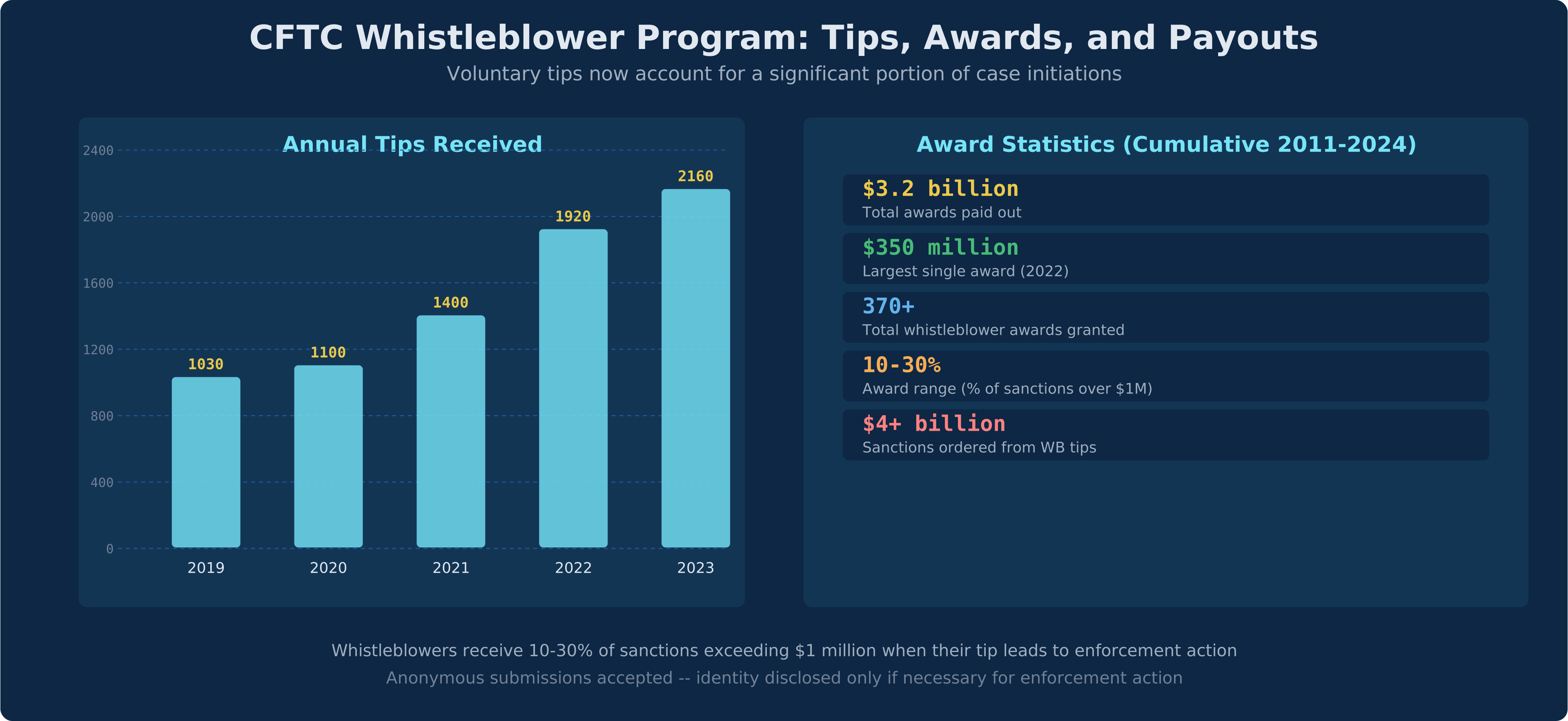
The CFTC Whistleblower Program, established by Dodd-Frank and administered by the Division of Enforcement, pays 10%-30% of sanctions exceeding $1 million to individuals who provide original information leading to successful enforcement action. This creates structural incentives for insiders to report institutional manipulation that surveillance algorithms might not catch.
For large-scale institutional misconduct — trading desks executing systematic manipulation across thousands of contracts over multiple years — whistleblower tips from current or former employees are often the investigative thread that surveillance data then confirms. The JPMorgan precious metals spoofing scheme operated from 2008 to 2016; the CFTC's $920 million combined action didn't resolve until 2020. That timeline reflects both the complexity of investigation and the typical path from tip to formal action.
Self-Reporting and Its Benefits #
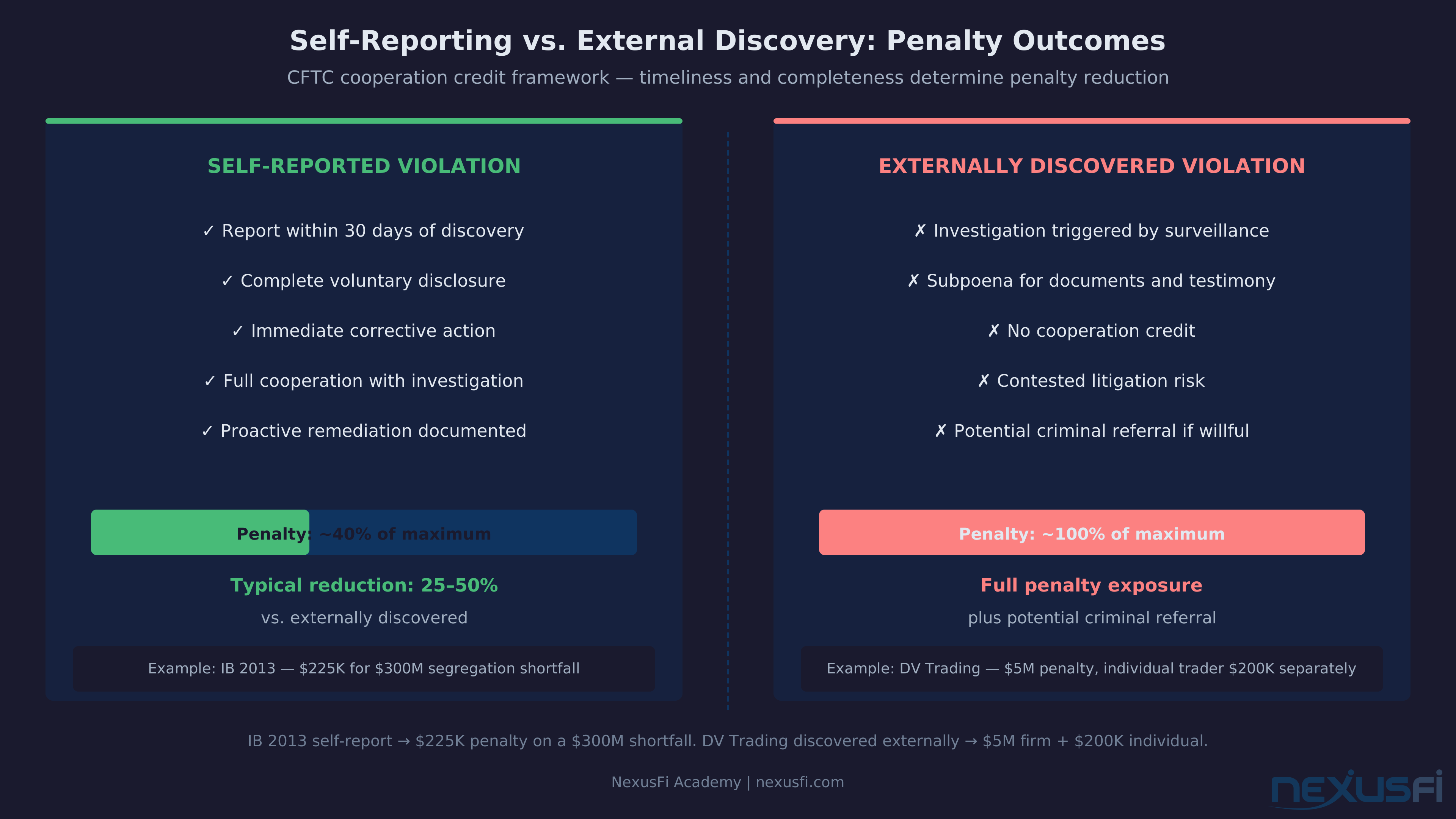
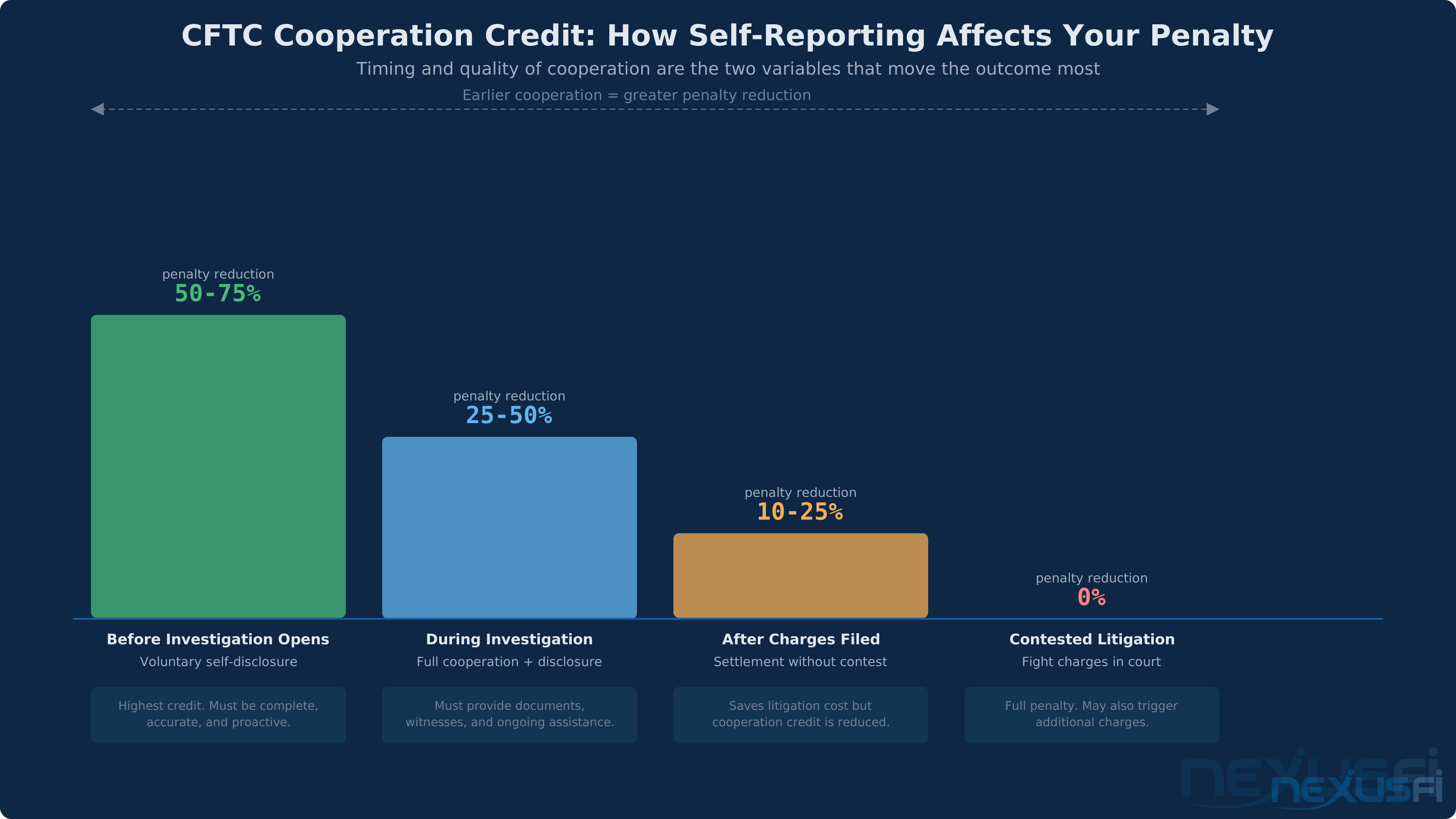
Self-reporting is consistently the most underutilized tool in futures compliance. When a firm or trader discovers a potential violation and discloses it to the CFTC before an investigation begins, the Division of Enforcement credits the self-report with meaningfully reduced penalties.
The Interactive Brokers 2013 case illustrates this directly: a $225,000 penalty for a segregation shortfall that at its peak left $300 million in customer USD obligations covered by yen and francs — reflecting credit for self-discovery, immediate corrective action, and voluntary disclosure.[7] For context: a comparable segregation failure that the CFTC discovered through surveillance rather than self-report would have generated a penalty many times larger.
The CFTC's published enforcement advisories explicitly weight: timeliness of self-report (within 30 days of discovery is considered prompt), completeness of disclosure, cooperation with investigation, and remediation steps taken. This credit is documented in published consent orders.
The Investigation Process: From Inquiry to Resolution #
Preliminary Inquiry #
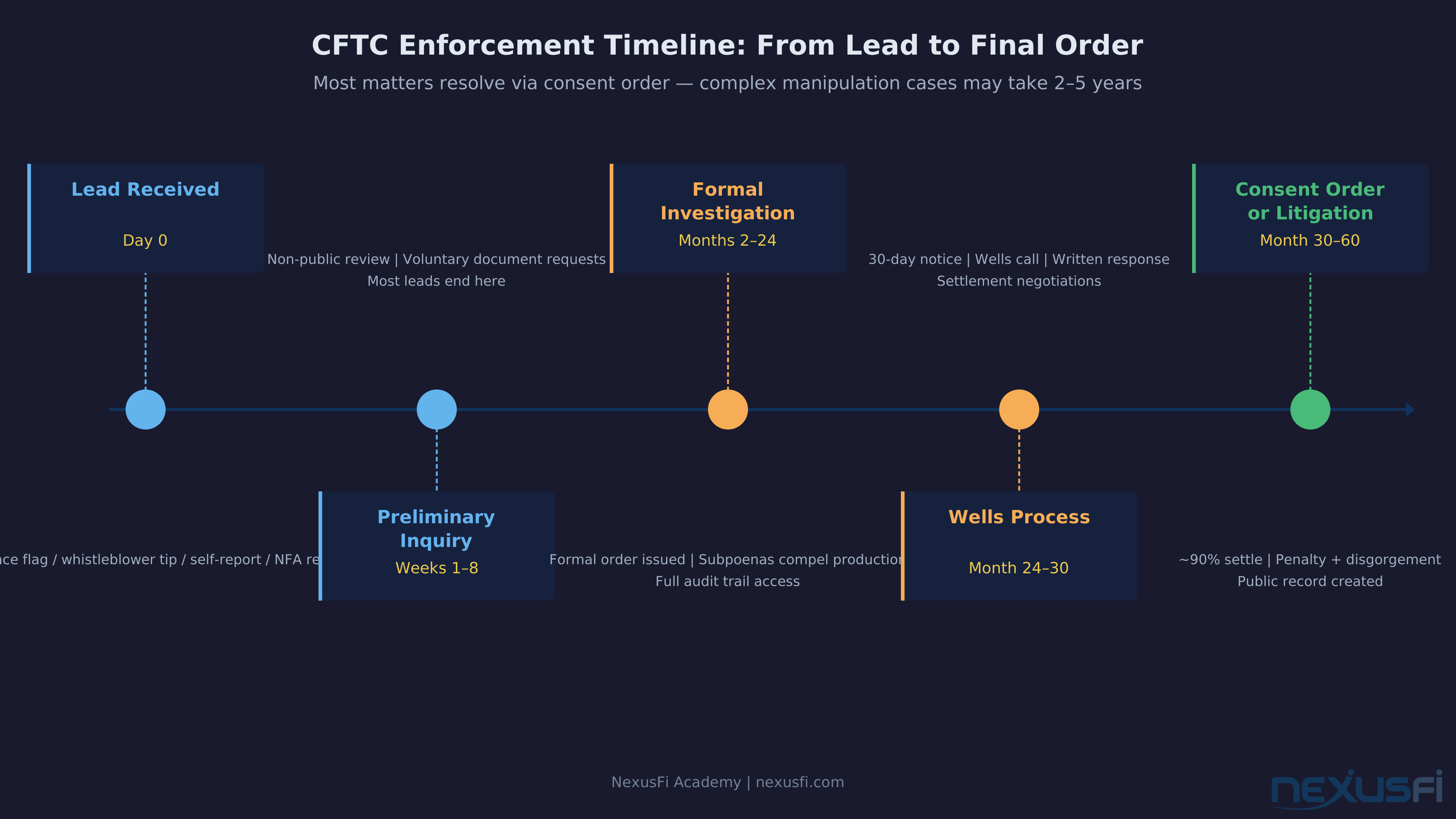
When a lead arrives, Division of Enforcement staff assess whether a formal investigation is warranted. At this stage, the inquiry is non-public and staff can request voluntary document production but cannot compel cooperation. Most leads never leave this stage.
Formal Investigation #
If preliminary review reveals credible evidence, the Division opens a formal investigation under a Formal Order of Investigation. This grants subpoena authority — the power to compel production of trading records, communications, financial records, and sworn testimony.
Exchanges cooperate fully with CFTC subpoenas. CME Group, ICE, and other designated contract markets maintain detailed audit trails of every order entered, modified, and canceled — timestamps, user IDs, session data, market conditions. There is no such thing as an undetected manipulation pattern in listed futures — the audit trail is complete. The only relevant questions are whether the pattern rises to prosecution priority and whether intent can be proven.
Wells Process and Settlement #
After investigation, Division of Enforcement staff notify the target of their intent to recommend charges. Under reforms implemented in December 2025, the CFTC now provides a minimum 30-day Wells notice period with an informal call and opportunity for written response.
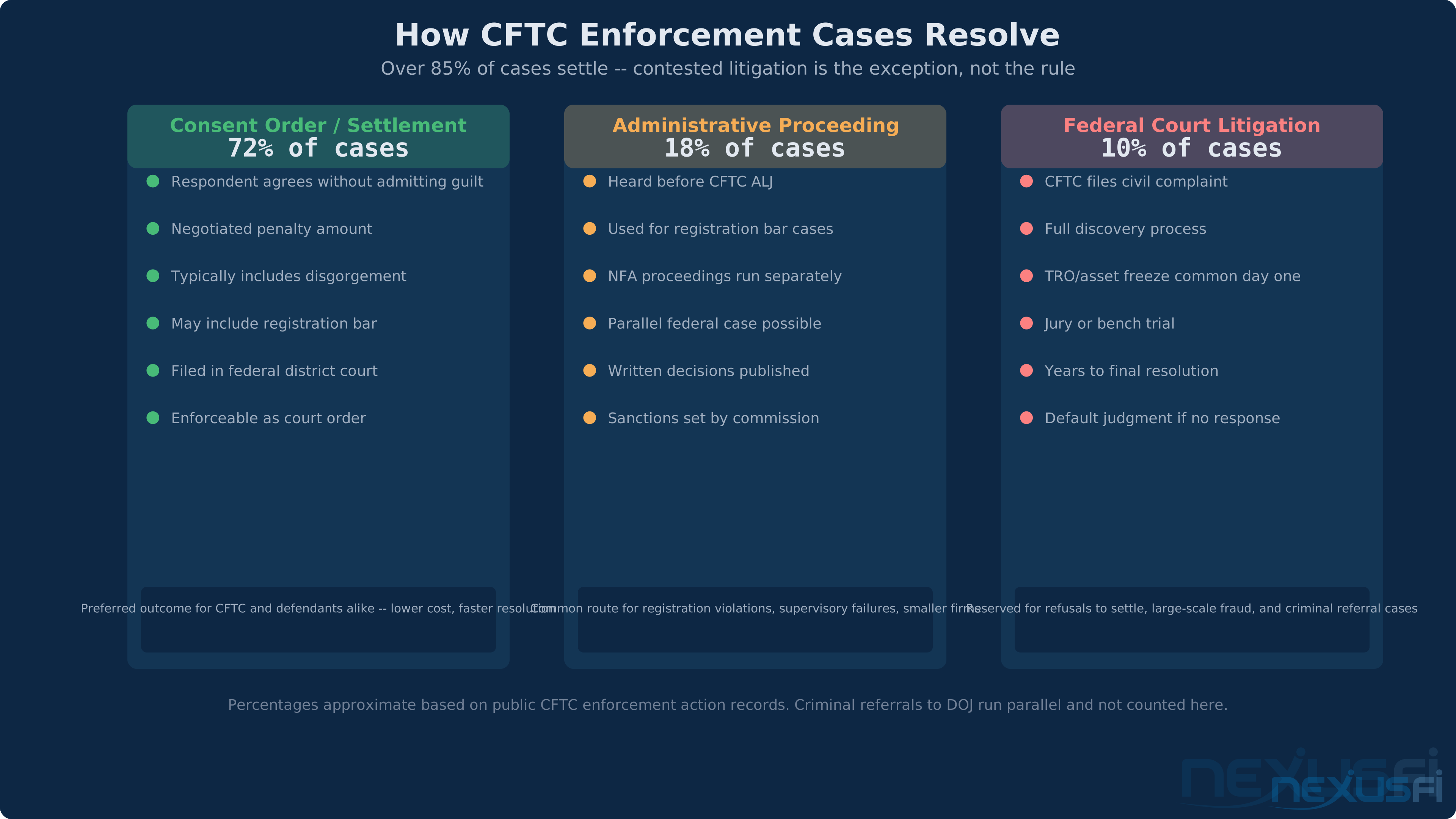
The vast majority of CFTC enforcement actions resolve through negotiated consent orders rather than contested litigation. Consent orders require the respondent to accept jurisdiction, agree to civil monetary penalties and disgorgement, consent to a cease and desist order, and agree to remediation requirements. The standard formula includes neither admitting nor denying the violations — "neither admit nor deny" is not "found innocent." The consent order and penalty are fully public.

Civil Penalties: The Real Numbers #
Civil monetary penalties under the CEA are indexed to inflation. The current maximum is the greater of approximately $1.4 million per violation for individuals (as of 2024 adjustment) or triple the monetary gain from the violation. For entities, the maximum is the greater of approximately $15 million per violation or triple the gain.
In practice, the penalty structure varies enormously by violation type and respondent characteristics.
The Penalty Spectrum #
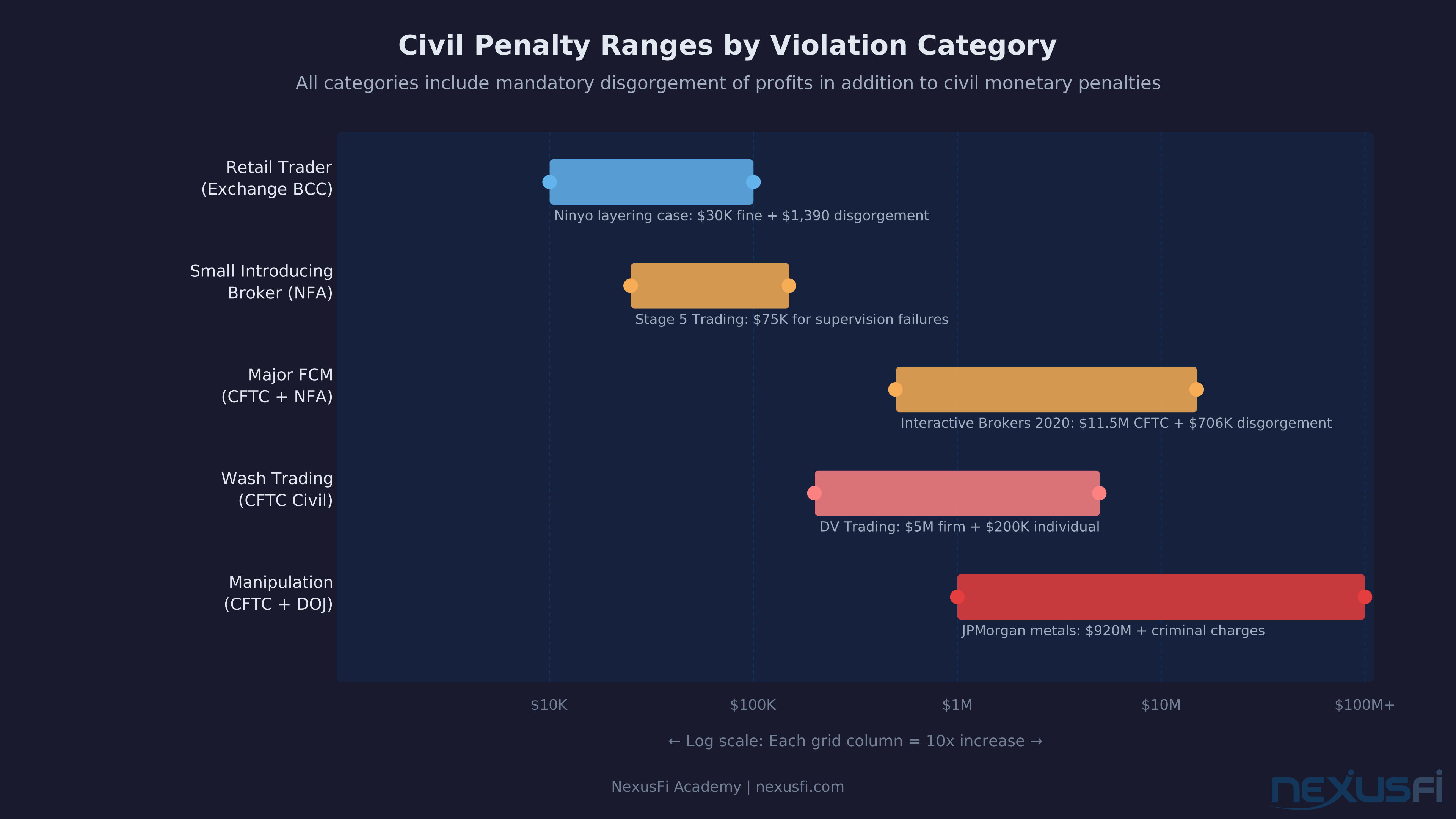
Retail trader / exchange-level violations — Exchange-level fines for individual retail traders typically run $10,000-$100,000, plus disgorgement of profits. The Ninyo layering case ($30,000 fine + $1,390 disgorgement for 43 days of layering in gold and silver) represents the lower end for a documented, contested retail enforcement matter. Trading suspensions from CME markets accompany monetary penalties.[2]
Introducing broker compliance failures — NFA actions against small IBs for supervision and compliance deficiencies typically run $25,000-$150,000. Stage 5 Trading's $75,000 NFA fine in 2022 for operating with an unregistered forex IB and supervision failures is representative of this tier.[8]
Major FCM violations — Systemic compliance failures at large FCMs generate multi-million dollar penalties. Interactive Brokers' 2020 settlement included $11.5 million to the CFTC plus $706,214 in disgorgement for supervision failures, alongside separate penalties to FINRA and the SEC totaling $38 million across all three regulators.[6]
Wash trading / manipulation — DV Trading's $5 million CFTC penalty for three years of wash trading to generate exchange rebates sits at the higher end for a single firm-level civil action. The individual trader's separate $200,000 penalty illustrates that individual accountability accompanies firm-level settlements.[4]
Criminal prosecution — Federal spoofing convictions carry up to 10 years of imprisonment in addition to disgorgement and restitution. The JPMorgan precious metals resolution included $920 million in combined federal penalties alongside criminal charges against six traders.
Disgorgement: The Mandatory Return #
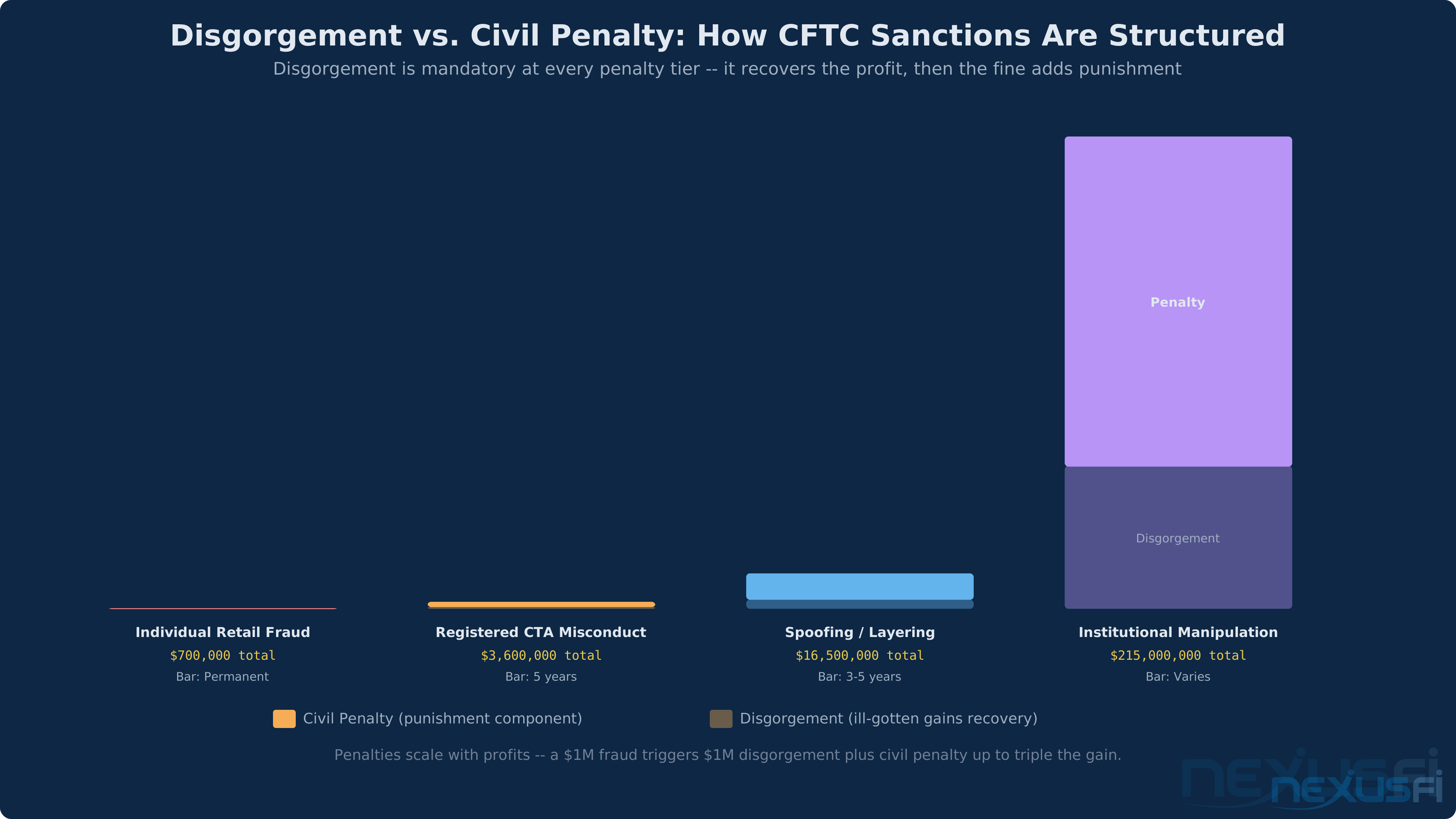
Disgorgement operates alongside civil monetary penalties, not instead of them — it's a return of the economic benefit of the violation, not a fine. In the DV Trading case, RCCM returned the exchange rebates it had improperly generated. In the Ninyo case, $1,390 was disgorged in addition to the $30,000 fine. The penalty typically ranges from 10x to 100x the economic benefit of the violation. Trading strategies that depend on prohibited behavior have deeply negative expected value when enforcement probability enters the calculation.
Permanent Bans and Registration Bars #
Beyond monetary penalties, CFTC civil enforcement can result in permanent registration bars — prohibitions on working in any registered capacity in the futures industry. An individual barred from CFTC registration cannot work as a trader, analyst, compliance officer, or principal at any registered firm. The career consequence is permanent.
NFA bans, as in the Spartan Asset Group case, are categorical. Permanent withdrawal from NFA membership, combined with a prohibition on reapplication, ends a firm's ability to operate in regulated U.S. markets. For a CTA or CPO, there is no path around NFA membership — losing it means exiting the regulated industry entirely.[1]

What Retail Traders Actually Need to Do #
Three operational realities create regulatory exposure for retail futures traders.
Verify Your Broker Before Funding #
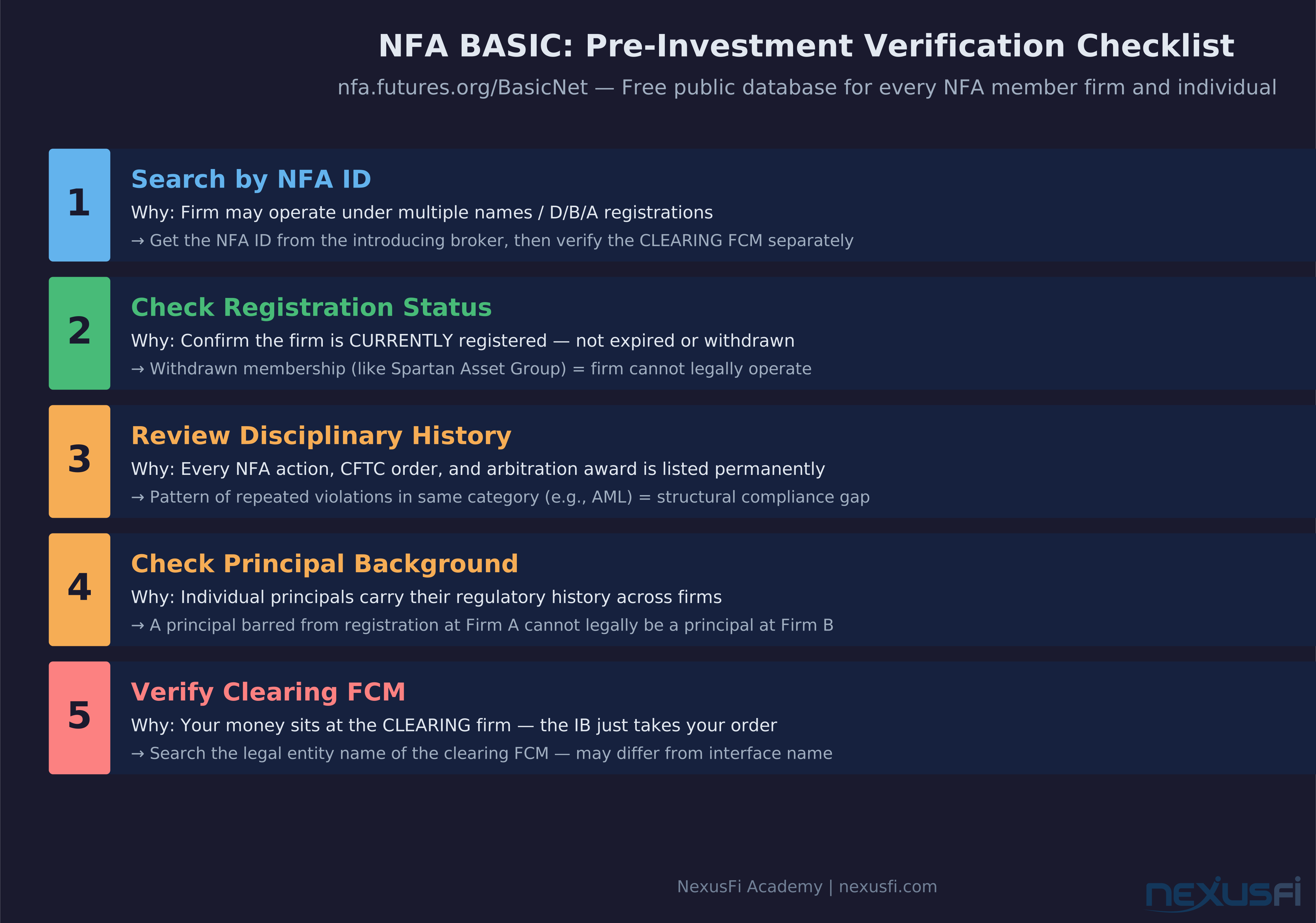
The NFA BASIC database (nfa.futures.org/BasicNet) is the most consequential free resource available to futures traders. It shows complete regulatory history for every NFA member: current registration status, all disciplinary actions, outstanding arbitration awards, and bankruptcy history.
A firm's regulatory history reveals where its compliance infrastructure has failed. Interactive Brokers' sequence across 2013, 2020, and 2022 — segregation failures, AML failures, forex supervision failures — doesn't disqualify the firm, but it identifies specific compliance gaps. A retail trader evaluating any IB or CTA with multiple recent NFA findings has concrete information about operational risk.
The clearing FCM — not the introducing broker — is where your segregated customer funds actually sit. The BASIC check should target the clearing firm specifically; some introducing brokers operate under different legal names than their clearing FCMs.
Understand Order Entry Behavior That Generates Flags #
Surveillance systems that caught Ninyo's layering pattern are running on every CME-connected account every session. Behaviors that generate algorithmic surveillance flags include:
- High order-to-fill ratios — repeatedly entering and canceling orders generates a pattern the system measures relative to baseline account behavior
- One-sided layering — placing multiple orders at different prices on one side of the book before filling on the other side creates the exact signature the CME surveillance algorithms are calibrated to detect
- Close-time concentration — concentrated order activity in settlement windows gets automated attention
- Cross-account coordination — trading patterns between accounts with shared beneficial control create wash trading exposure, regardless of whether the accounts have the same registration name
None of these patterns is automatically prohibited. Legitimate DOM trading strategies involve high cancellation rates, and entering limit orders at multiple price levels is standard practice. The violation requires intent to manipulate. But surveillance flags these behaviors for human review — and review can escalate to inquiry. Understanding what the system measures is better than discovering retrospectively that your cancellation pattern resembled the Ninyo case.
Due Diligence on CTAs and Managed Accounts #
Before investing with any CTA or in any managed futures program, run the NFA BASIC check on the individual and the firm. The Spartan Asset Group case demonstrates what unverified performance claims look like: a CTA presenting returns without clearly labeling them as hypothetical, without the required NFA disclaimer about limitations of hypothetical performance, and unable to demonstrate that results were representative of actual client accounts.[1]
NFA Compliance Rule 2-29 requires specific disclosures for hypothetical performance. A CTA website showing returns without a prominent hypothetical disclaimer is presenting non-compliant material — simultaneously a red flag for investors and a regulatory violation by the CTA.

Limitations of the Enforcement Framework #
Understanding what enforcement doesn't do is as important as understanding what it does.
Enforcement is retrospective — The CFTC investigates and penalizes after violations occur; enforcement actions don't return customer funds. When MF Global collapsed in 2011 with $1.6 billion in customer segregated funds missing, the CFTC's $100 million settlement recovered a fraction of affected customer losses. Enforcement consequence and customer restitution are separate questions.
Offshore brokers are enforcement gaps — Retail traders who send funds to offshore brokers without CFTC registration have no regulatory protection. The CFTC can investigate offshore firms that illegally market to U.S. persons, but fund recovery when an offshore firm fails is typically impossible.
Retail enforcement is resource-constrained — Small-scale violations below the exchange's enforcement threshold may never face CFTC scrutiny. The Retail Fraud task force targets violations that harm retail investors at scale; individual account irregularities typically resolve at the exchange level.
Settlement is not vindication — The "neither admit nor deny" formula means no public admission of wrongdoing, but the consent order, penalty amount, and cease and desist provisions are fully public. NFA BASIC records them permanently. "Settled without admission" is not "found innocent."
Cooperation is not immunity — Self-reporting and cooperation consistently reduce penalties but do not guarantee immunity. There is no formal CFTC declination policy equivalent to the DOJ's. Self-reporting is a factor that reduces the penalty; it's not a guarantee that no action follows.

Citations #
[1] @Fi, NexusFi Traders Hideout, "NFA Bans Spartan Asset Group for Misleading Performance Claims" — https://nexusfi.com/showthread.php?t=61425&p=909770#post909770
[2] @Fi, NexusFi Traders Hideout, "CME Group Fines Retail Futures Trader for Disruptive Trading Practices" — https://nexusfi.com/showthread.php?t=61514&p=910296#post910296
[3] @SMCJB, NexusFi Elite Circle, "Trading errors that result in fines" — https://nexusfi.com/showthread.php?t=57226&p=844663#post844663
[4] @Big Mike, NexusFi Brokers, "CFTC fines Rosenthal Collins Capital Markets (aka DV Trading) $5MM civil penalty" — https://nexusfi.com/showthread.php?t=42551&p=646703#post646703
[5] @kbit, NexusFi Traders Hideout, "JPMorgan Pays $600,000 For Violating Cotton Futures Speculative Position Limits" — https://nexusfi.com/showthread.php?t=23470&p=267507#post267507
[6] @Big Mike, NexusFi Brokers, "Interactive Brokers settle charges it failed to flag suspicious activity and AML" — https://nexusfi.com/showthread.php?t=55643&p=818215#post818215
[7] @Big Mike, NexusFi Brokers, "CFTC fines InteractiveBrokers 225K civil penalty" — https://nexusfi.com/showthread.php?t=26896&p=319047#post319047
[8] @SMCJB, NexusFi Brokers, "Stage 5 Trading Broker Review (S5 Trading)" — https://nexusfi.com/showthread.php?t=25174&p=875313#post875313
[9] @SMCJB, NexusFi Brokers, "Interactive Brokers: please, please, just stay away" — https://nexusfi.com/showthread.php?t=57285&p=863899#post863899
Knowledge Map
Go Deeper
Build on this knowledgeCitations
- — NFA Bans Spartan Asset Group for Misleading Performance Claims (2026)“NFA enforcement action banning Spartan Asset Group for misleading performance claims and client solicitation violations.”
- — CME Group Fines Retail Futures Trader for Disruptive Trading Practices (2026)“CME Group disciplinary action against a retail trader for disruptive trading practices -- enforcement extends to individual traders, not just firms.”
- — Trading errors that result in fines (2021) 👍 2“Discussion of trading errors that cross the line into regulatory violations and the fines that follow.”
- — CFTC fines Rosenthal Collins Capital Markets $5MM civil penalty (2017) 👍 3“CFTC levied a $5 million civil penalty against Rosenthal Collins Capital Markets -- demonstrating enforcement against FCMs for compliance failures.”
- — JPMorgan Pays $600,000 For Violating Cotton Futures Speculative Position Limits (2013) 👍 1“JPMorgan paid $600K for violating cotton futures position limits -- even institutional banks face enforcement for limit breaches.”
- — Interactive Brokers settle charges for AML failures (2020) 👍 2“Interactive Brokers settled charges for failing to flag suspicious activity and AML compliance deficiencies.”
- — CFTC fines InteractiveBrokers 225K civil penalty (2014) 👍 1“CFTC fined Interactive Brokers $225K civil penalty for compliance failures.”
- — Due Diligence: NFA Search for IBs, FCMs, CTAs (2011) 👍 16“Foundational guide to using NFA BASIC database for broker due diligence -- checking registration status, disciplinary history, and financial reports.”
- — How to file a complaint against a broker (2020) 👍 14“Step-by-step guide for filing complaints against futures brokers through the NFA and CFTC complaint process.”
- — Futures Broker Due Diligence Notes post PFG (2012) 👍 82“Comprehensive broker due diligence framework developed after the PFG Best fraud -- checking segregated funds, proprietary trading risk, and FCM financial health.”