



Spoofing and Layering in Futures Markets: The Manipulation That Rewrote Market Rules
Overview #
What Is Spoofing? The Legal Definition #
The Commodity Exchange Act (CEA), as amended by the Dodd-Frank Wall Street Reform and Consumer Protection Act in 2010, defines spoofing under Section 4c(a)(5)(C) as "bidding or offering with the intent to cancel the bid or offer before execution."
The critical word is intent. Canceling orders is a normal part of electronic trading — market makers, algorithmic traders, and institutional participants cancel and replace orders thousands of times per day as conditions change. The distinction between legal cancellation and illegal spoofing comes down to whether the trader ever genuinely intended to execute at the posted price, or whether the order was placed specifically to deceive other market participants about supply and demand.
Layering is closely related and often used interchangeably in enforcement contexts. It refers to placing multiple orders at different price levels — creating artificial "layers" of apparent liquidity across the order book — with the intent to cancel all of them before execution. The effect is to create an illusion of significant one-sided interest that moves the market before the orders disappear.
Both practices rely on the same core deception: other traders, algorithms, and market makers see the displayed orders, interpret them as genuine trading intent, and adjust their behavior so — which is exactly what the spoofer wants.
How Spoofing Works in Practice #
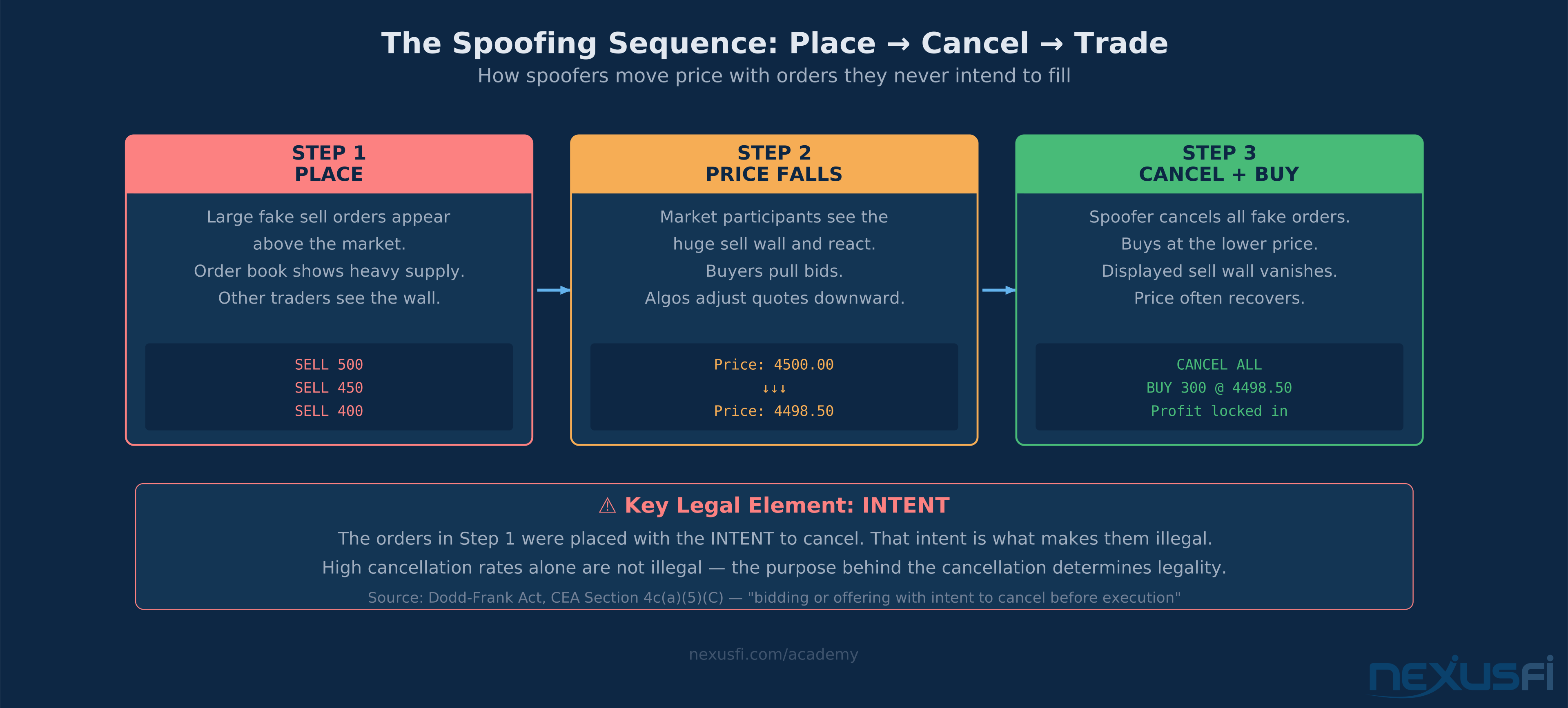
The mechanics of spoofing follow a recognizable pattern, even if the execution happens in milliseconds:
Step 1: Place the deceptive orders. The spoofer places large buy or sell orders — or multiple "layered" orders at different price levels — on the side of the market where they want to create false pressure. If they want prices to fall so they can buy cheaper, they stack large sell orders to create the impression of heavy supply.
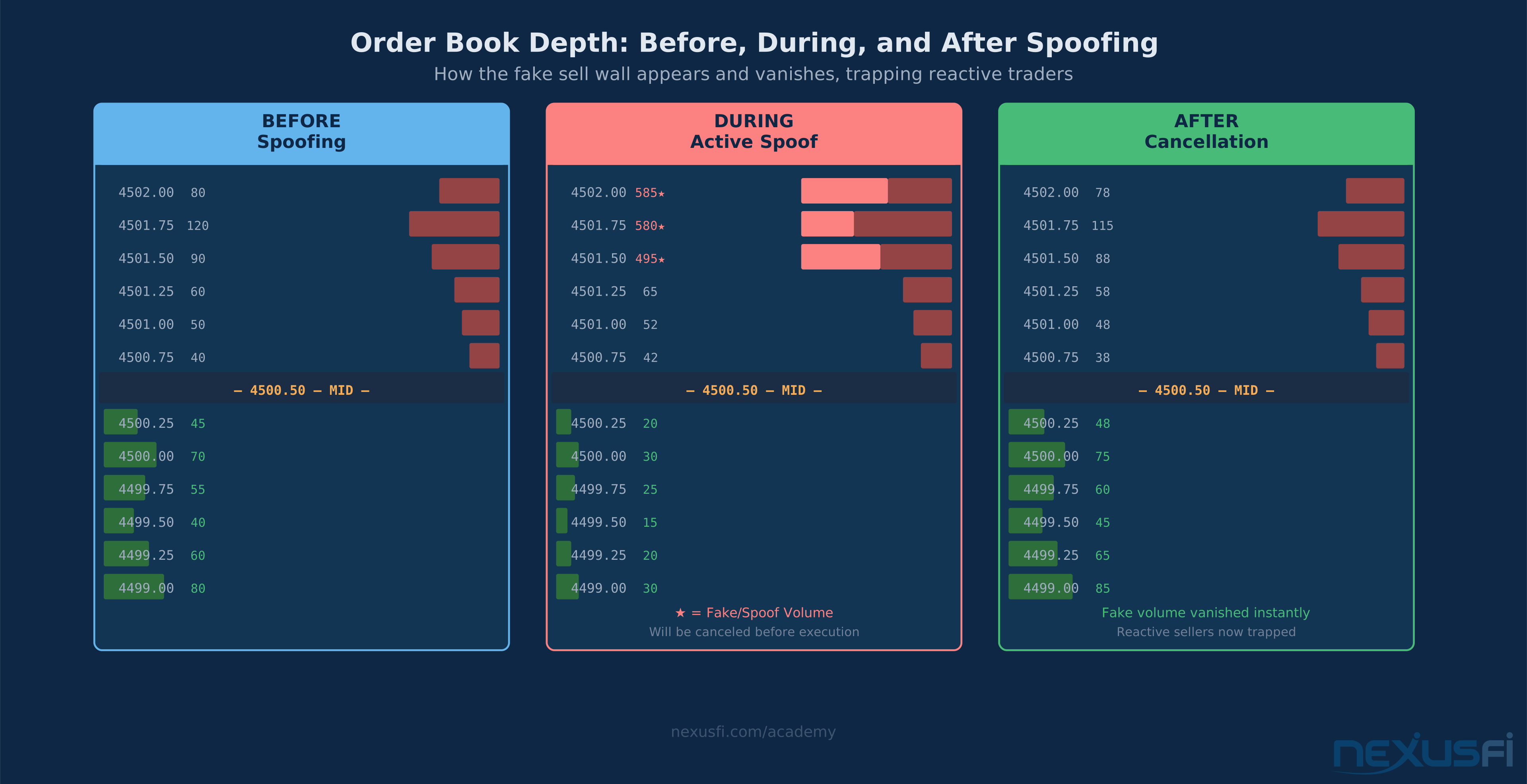
Step 2: The market reacts. Other traders, seeing the large displayed sell interest, become reluctant to buy at current prices or begin selling in anticipation of downward pressure. Algorithmic systems detect the order book imbalance and adjust their quotes or strategies.
Step 3: Cancel the fake orders. Once prices have moved in the desired direction — or once the spoofer has established their real position on the other side — the deceptive orders are canceled, often within milliseconds.
Step 4: Execute the genuine trade. With prices artificially moved, the spoofer executes on the other side: buying at the artificially depressed price, or selling at the artificially inflated one.
This "place-cancel-trade" sequence is the enforcement signature regulators look for. The orders served their purpose not by executing but by creating a false market signal that moved prices in the manipulator's favor.
As Jigsaw Trading, a respected NexusFi contributor with deep experience in order flow analysis, explained in a community discussion on order book dynamics:
The key insight is the combination: fake size on one side, real hidden buying or selling on the other. The iceberg orders absorb the selling from fooled participants while the spoof creates the selling pressure.
Flipping: A More Complex Variant #
A related technique described in NexusFi community discussions is "flipping" — a more sophisticated layering strategy where the spoofer works both sides of the order book simultaneously:
This two-stage approach — spoofing to accumulate, then flipping to liquidate — demonstrates how layering can be used not just for a single price move but as a complete trading strategy.
The Dodd-Frank Anti-Spoofing Provisions #
Before 2010, the legal framework for prosecuting spoofing was less clear. Prosecutors had to rely on broader anti-manipulation and fraud statutes under the Commodity Exchange Act, which required proving price manipulation or fraudulent conduct — a higher evidentiary bar than proving intent to cancel.
The Dodd-Frank Wall Street Reform and Consumer Protection Act of 2010 changed this by explicitly codifying spoofing as illegal under CEA Section 4c(a)(5)(C). The provision created a new category of prohibited conduct specifically focused on the "intent to cancel before execution" — separating spoofing from general manipulation and making it easier for regulators to bring enforcement actions.
Key elements of the Dodd-Frank anti-spoofing provision:
- Applies to any order placement: Covers both bids and offers on designated contract markets
- Intent-based standard: Does not require proof of actual price impact — only that the orders were placed with intent to cancel
- Civil and criminal liability: Creates exposure to both CFTC civil penalties and DOJ criminal prosecution
- No de minimis exception: There is no threshold below which spoofing is permitted
The CFTC also issued interpretive guidance establishing that "spoofing" encompasses a broad range of manipulative trading practices, including layering and related strategies, not just the specific case of a single cancel-before-fill order.
Landmark Enforcement Cases #
Navinder Sarao and the 2010 Flash Crash #
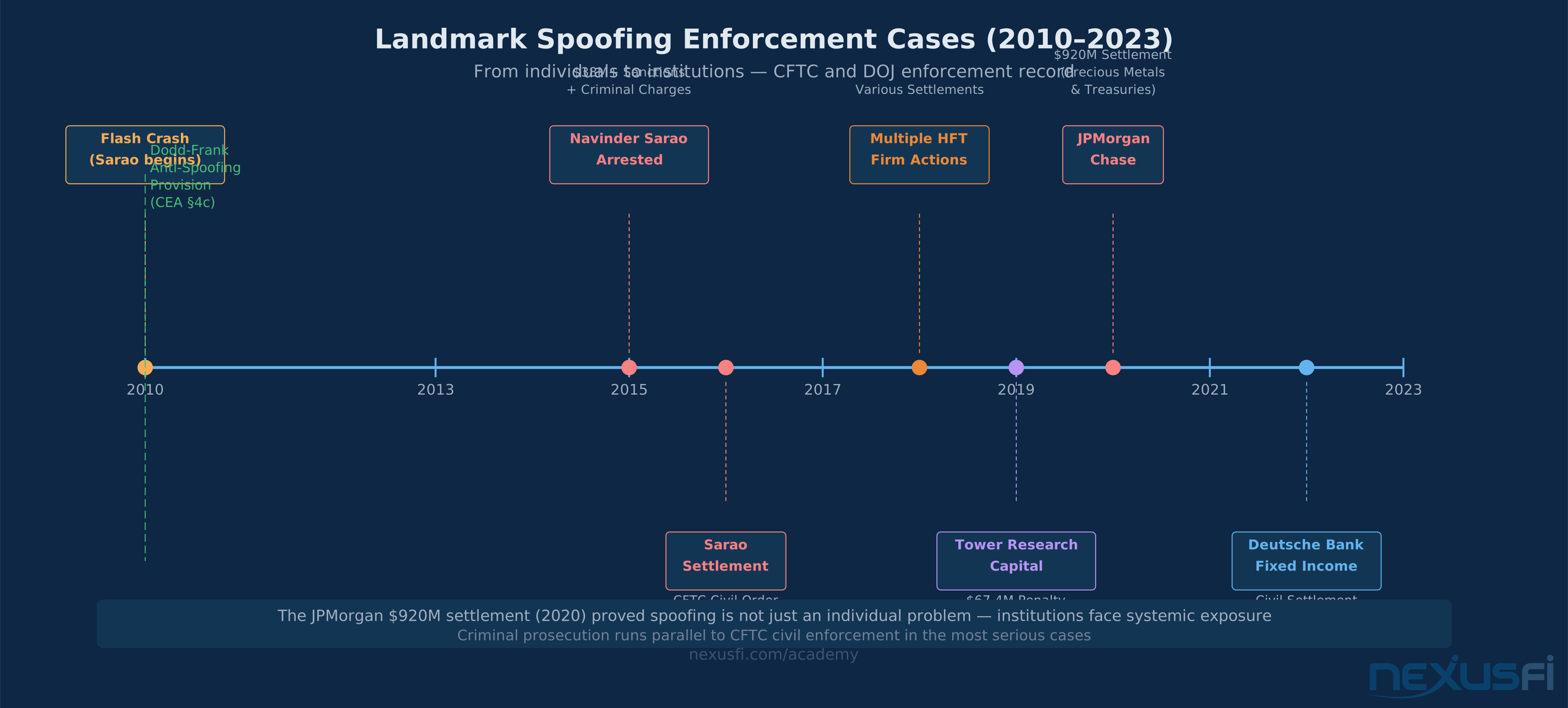
The most famous spoofing case in futures market history involves Navinder Singh Sarao, a London-based trader whose activities were linked — at least in part — to the market conditions surrounding the May 6, 2010 Flash Crash, when the Dow Jones Industrial Average fell nearly 1,000 points in minutes before recovering.
Sarao used automated algorithms to place massive sell orders in E-mini S&P 500 futures on the Chicago Mercantile Exchange, creating the appearance of enormous supply pressure. His layering strategy placed sell orders that were continuously modified to stay just above the market price — never close enough to be filled — while creating the impression of overwhelming selling interest. He would then cancel the orders, buy at lower prices, and repeat the cycle.
The CFTC ordered Sarao to pay more than $38 million in monetary sanctions for price manipulation and spoofing. The Department of Justice separately pursued criminal fraud and market manipulation charges. His case established several important precedents:
- Individual traders using sophisticated algorithms face both civil and criminal liability
- Automated spoofing — where algorithms rather than human hands place and cancel the orders — still meets the intent standard
- Cross-border enforcement is viable: Sarao operated from his parents' house in the U.K., trading U.S. futures contracts
Tower Research Capital: When HFT Strategies Cross the Line #
Tower Research Capital, a prominent high-frequency trading firm, became a landmark case for algorithmic spoofing in futures markets. The enforcement action emphasized that high-frequency quoting behaviors — rapid order placement and cancellation that characterizes much HFT market-making — can cross into illegal spoofing when paired with manipulative intent.
The case resulted in significant regulatory penalties and settlements, and shaped industry compliance approaches for HFT firms. The key distinction enforcement found: Tower's activity was not consistent with bona fide liquidity provision but rather with using short-lived orders as deceptive signals designed to move prices and benefit the firm's actual trading positions.
This case established Tower Research as a benchmark for how algorithmic trading can morph from legitimate market-making into market manipulation when the intent shifts from genuine liquidity provision to deception.
JPMorgan Chase: Institutional Spoofing at Scale #
The JPMorgan Chase enforcement action — resulting in a $920 million settlement — demonstrated that spoofing is not exclusively the work of individual rogue traders or small proprietary firms. The multi-year investigation revealed that traders across multiple desks engaged in spoofing of precious metals and Treasury futures markets in a pattern that was systemic rather than isolated.
The JPMorgan case had several defining characteristics:
- Scale: The manipulation occurred across multiple instruments, multiple desks, and over an extended period
- Institutional knowledge: The investigation found evidence that the behavior was embedded in trading culture, not simply the actions of individuals acting without institutional awareness
- $920 million penalty: One of the largest spoofing-related penalties in history, signaling regulatory willingness to impose severe consequences even on the largest market participants
- Criminal charges: Individual traders faced criminal prosecution, not just the institution
The case at the core changed how compliance departments at major financial institutions approach algorithmic trading oversight and anti-manipulation controls.
How Regulators Detect Spoofing #
The CFTC and exchanges have developed sophisticated surveillance capabilities to identify spoofing and layering patterns. The CFTC's SMARTS Market Surveillance System uses machine learning to analyze massive volumes of order data in near real-time, looking for behavioral patterns that indicate manipulative intent.
Key detection methods include:
Order-to-Cancel Ratio Analysis Regulators compare how often orders are filled versus canceled. While high cancellation rates are normal in algorithmic trading, rates that are consistently extreme — especially when accompanied by directional trading on the opposite side — are a significant red flag.
Time-in-Book Distributions Spoofing orders tend to have characteristic short lifetimes. Surveillance systems flag orders that are placed and canceled within specific time windows, especially when this behavior repeats in a patterned way.
Place-Cancel-Trade Sequence Mining The most reliable indicator of spoofing is the three-step sequence: large order placed → price moves in response → order canceled → trader executes on the opposite side. Automated sequence mining across millions of orders can identify this pattern even when it's spread across time or accounts.
Communications Analysis Internal messages, chat logs, and algorithm documentation remain the most damning evidence. Language like "pull to move price" or explicit instructions to cancel orders before they fill directly establishes the intent element that regulators must prove.
Cross-Account Correlation Layering often uses multiple accounts or strategies to obscure the pattern. Surveillance systems look for correlated order activity across nominally separate entities controlled by the same actor.
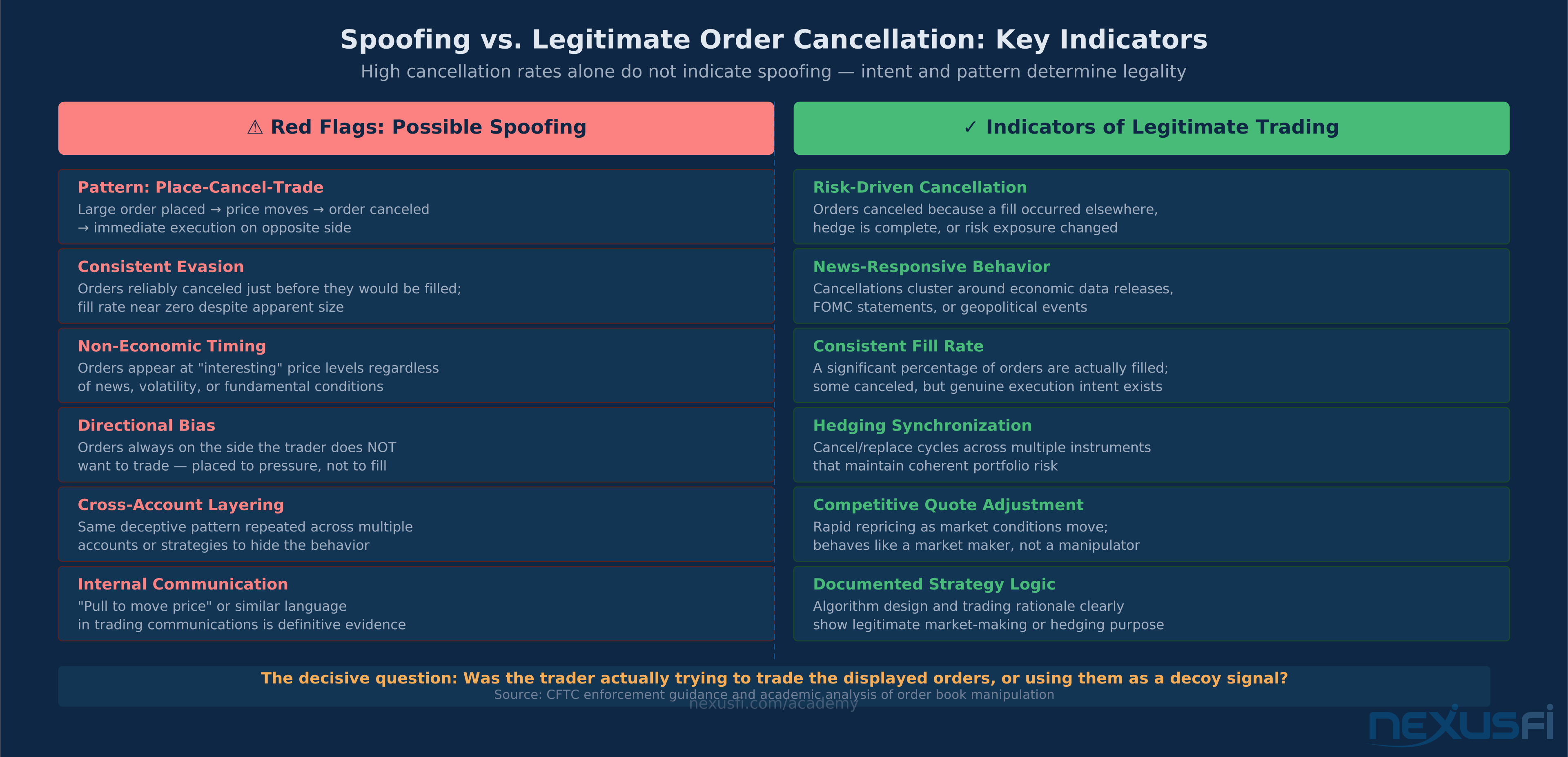
Spoofing vs. Legitimate Order Cancellation: The Critical Distinction #
The hardest analytical challenge in spoofing enforcement — and the most important question for traders seeking to understand their own behavior — is where legitimate order management ends and illegal manipulation begins.
High cancellation rates are not naturally suspicious. Market makers, algorithmic traders, and institutional participants cancel and replace orders continuously as market conditions change. A 95% cancellation rate may be perfectly legal for a market maker adjusting quotes to news flow, or completely illegal for a spoofer deliberately moving prices.
Red Flags That Indicate Spoofing:
| Pattern | What It Suggests |
|---|---|
| Large orders that consistently cancel as soon as they approach execution | Orders placed without genuine execution intent |
| Mid-price consistently moves away from large orders before cancellation | Orders successfully deceiving the market |
| Aggressive execution on the opposite side immediately after cancellation | "Place-cancel-trade" sequence completing |
| High cancellations during low-volume periods with high order-to-fill ratios | Targeting thin markets for maximum price impact |
| Patterned repetition of the same sequence across many instances | Systematic rather than opportunistic |
Indicators of Legitimate Cancellation:
| Pattern | What It Suggests |
|---|---|
| Cancellations tied to fill activity elsewhere in the book | Order management, not manipulation |
| Quote adjustments driven by news or volatility events | Responsive, economically rational behavior |
| Consistent quoting across market conditions without directional bias | Bona fide market-making |
| Cancel/replace cycles that maintain similar inventory risk | Hedging and risk management |
| Orders that get filled regularly, even if many are also canceled | Genuine trading interest, not pure deception |
Experienced trader tpredictor offered practical insight on how to analyze whether displayed liquidity is genuine or manufactured:
This is a practical observation: if a price level had 500 contracts displayed but only 50 contracts traded through it before price moved, the displayed size was likely not genuine. The spoofed depth scared participants away from the level rather than absorbing actual order flow.
Impact on Market Microstructure and Price Discovery #
Spoofing inflicts systemic damage on market quality that extends well beyond the immediate trades of the manipulator.
False Depth and Liquidity Illusions #
The most direct harm is the creation of artificial order book depth. When significant displayed volume is deceptive, the order book becomes an unreliable source of market information. Signals that traders and algorithms rely on — order book imbalance, apparent support and resistance levels, depth-weighted price calculations — are all corrupted when a significant fraction of displayed volume is designed to be canceled.
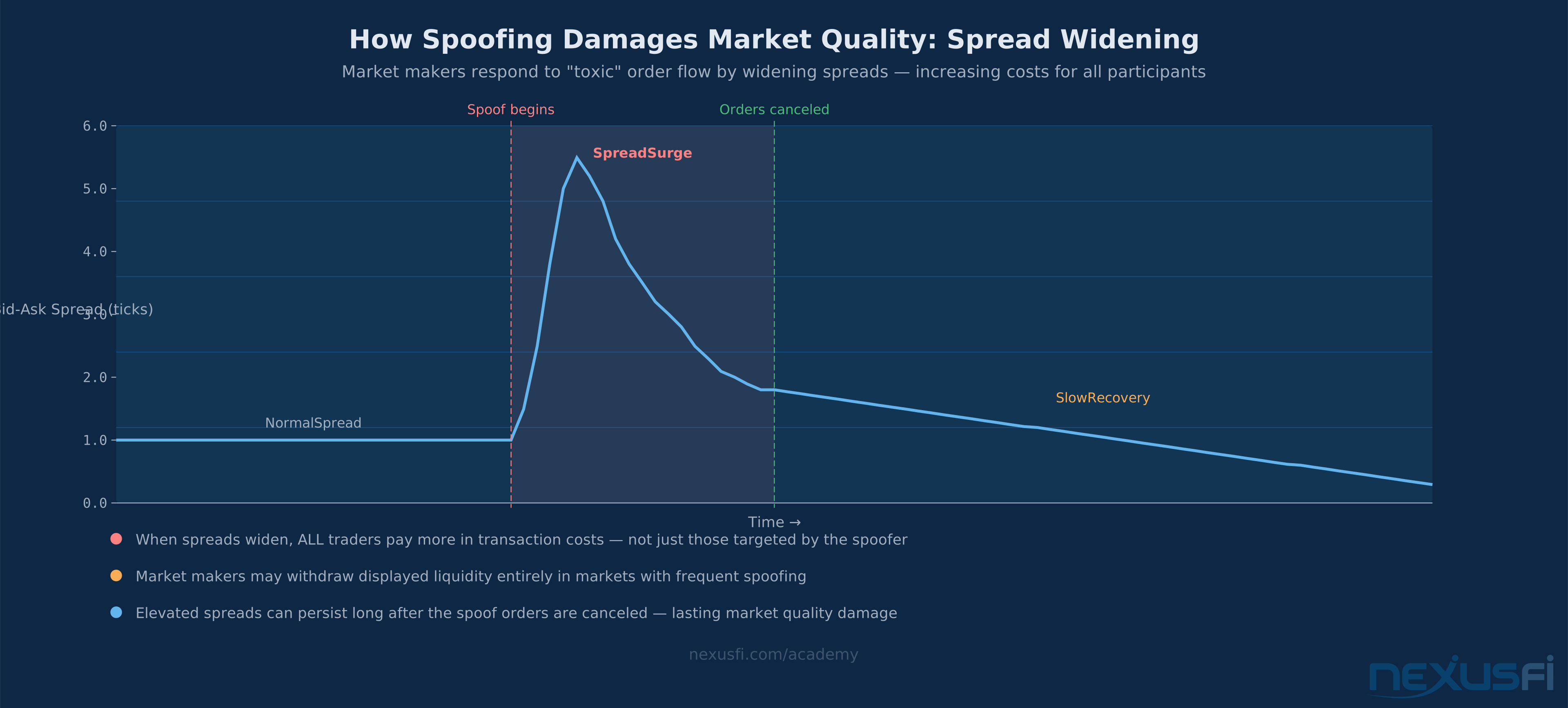
Spread Widening by Market Makers #
When market makers suspect widespread spoofing in a market, they respond by widening bid-ask spreads and reducing their displayed size. This is a rational response to increased "toxicity" of order flow — the risk that displayed liquidity will be exploited by manipulators rather than traded by genuine participants. The result is higher transaction costs for everyone, including the majority of traders who have nothing to do with the spoofing.
Volatility Amplification #
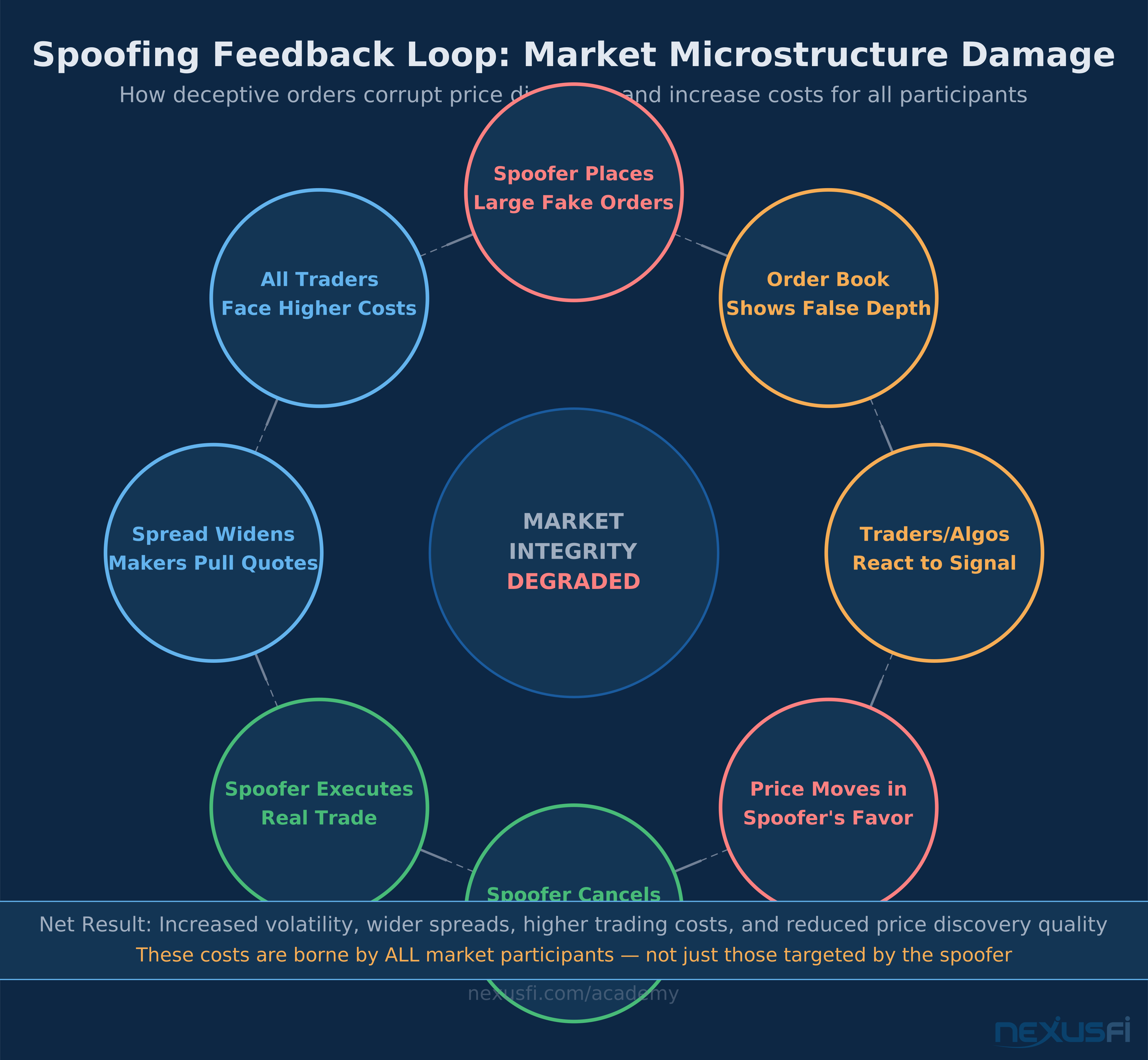
Spoofing creates a characteristic feedback loop that amplifies price volatility:
- Spoof orders appear → other traders adjust behavior, prices begin to move
- Spoof orders cancel → liquidity suddenly vanishes
- Price "cliffs" — sudden, sharp moves — occur as the artificial depth disappears
- Participants who responded to the false signal are now trapped and must exit quickly
This pattern increases volatility beyond what genuine supply and demand conditions would produce, making markets noisier and harder to trade for everyone.
Degraded Price Discovery #
Perhaps the most fundamental harm is to price discovery — the process by which futures markets aggregate dispersed information about supply, demand, and future expectations into a single price. When significant order flow reflects manipulative intent rather than genuine information, the resulting price is less accurate as an estimate of fair value. This reduces the economic function of futures markets as price discovery mechanisms.
NexusFi member tpredictor, reflecting on the market impact of manipulation tactics, noted:
The observation about low-liquidity markets is important: spoofing has the greatest price impact when the ratio of spoofed orders to genuine orders is highest. Thin markets in off-peak hours, less liquid contracts, and volatile periods are most vulnerable.
The Evolving Enforcement Environment #
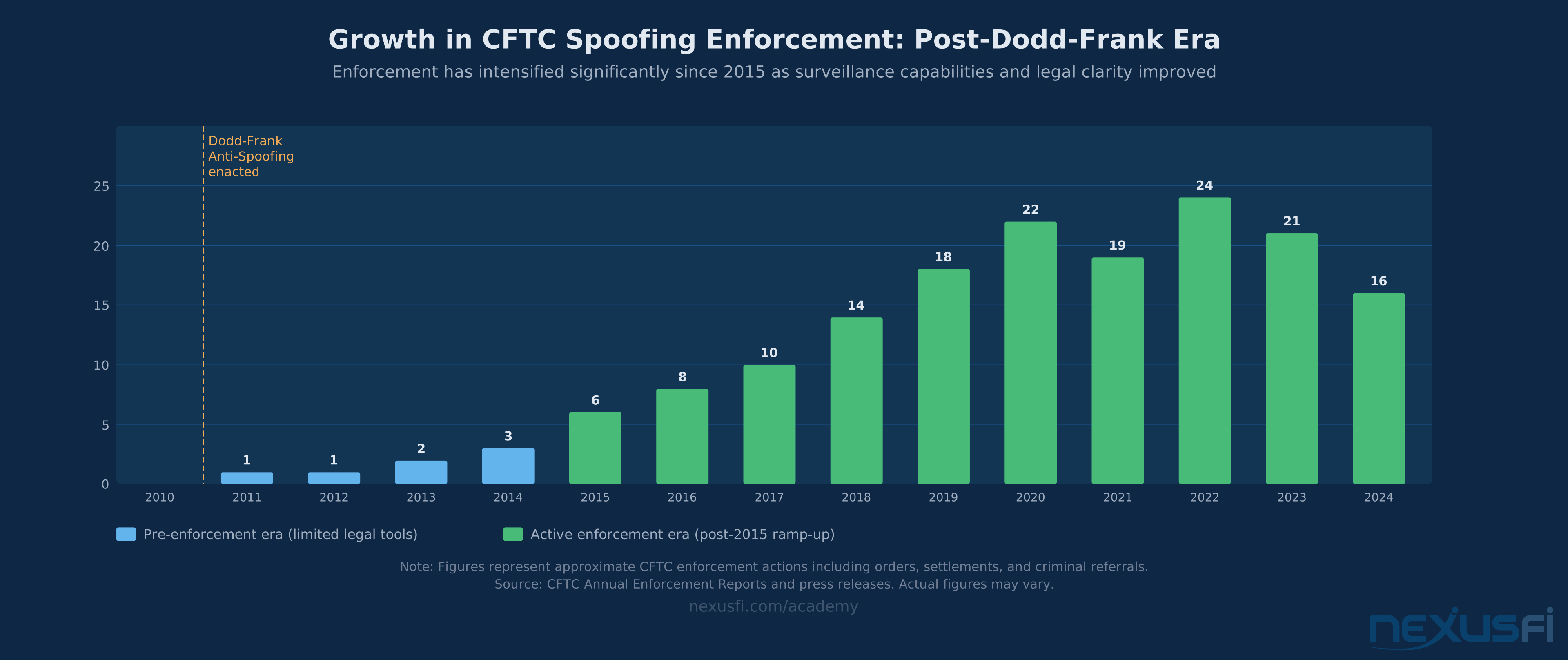
The spoofing enforcement environment has changed substantially since Dodd-Frank. The CFTC has brought dozens of cases, imposed hundreds of millions in penalties, and established surveillance capabilities that can detect sophisticated algorithmic spoofing in near real-time.
Key trends in enforcement:
From individuals to institutions: Early enforcement focused on individual traders — Sarao, specific prop traders at HFT firms. More recent cases target institutional compliance failures that allowed spoofing to occur at scale.
Criminal prosecution as a tool: The DOJ's willingness to pursue criminal charges alongside CFTC civil actions has much raised the cost of spoofing. The prospect of incarceration creates deterrence that civil penalties alone may not.
Global coordination: The CFTC has coordinated with foreign regulators — the U.K.'s FCA, European ESMA, and others — to pursue cross-border cases. Trading futures from outside the U.S. does not provide protection from U.S. enforcement.
Self-regulatory organization (SRO) surveillance: The CME Group, ICE, and other exchanges operate their own market surveillance programs and refer cases to the CFTC. Exchange surveillance is often the first line of detection.
Algorithm-specific scrutiny: As spoofing has become more algorithmic, regulators have developed the expertise to analyze algorithm design documentation and trading logs. An algorithm explicitly programmed to place orders with high cancel rates in specific market conditions — especially when paired with opposite-side execution — can constitute evidence of intent even without a "smoking gun" communication.
What This Means for Legitimate Traders #
Understanding spoofing has practical implications for any futures trader using order flow analysis or DOM-based trading:
The DOM is not always truthful. As Jigsaw Trading noted in the NexusFi forums, the order book shows intent — but that intent may not be genuine. Developing the skill to distinguish spoofed size from real liquidity is a core competency for order flow traders.
Volume confirmation matters. When a large bid or offer appears at a level, watch whether price actually tests that level and whether the displayed volume absorbs order flow or disappears as price approaches. Spoofed orders typically evaporate before they're tested.
Context reduces vulnerability. Spoofing is most effective in thin markets and during low-volume periods. During normal market hours with high liquidity, the ratio of genuine to deceptive orders is generally higher.
Algorithm design requires careful attention. If you use automated strategies that involve high cancellation rates, ensure your algorithm's logic reflects genuine trading intent. "Cancel if price moves beyond X threshold" is rational risk management. "Cancel before the order can be filled" is the definition of spoofing.
Document your trading rationale. If you ever face regulatory scrutiny, the ability to demonstrate that your cancellations reflected genuine market analysis rather than manipulative intent is essential. Trading journals, strategy documentation, and algorithm specifications all serve this function.
Conclusion #
Spoofing and layering represent some of the most direct attacks on market integrity in modern futures trading — practices that undermine the information value of the order book, distort price discovery, and impose costs on all legitimate market participants. The Dodd-Frank Act's explicit prohibition, combined with the CFTC's aggressive enforcement record and the DOJ's willingness to pursue criminal charges, has substantially raised the consequences for those who engage in these practices.
For traders, the practical takeaway is twofold: understanding how spoofing works makes you a more sophisticated reader of order flow, capable of distinguishing genuine from manufactured liquidity; and ensuring your own trading practices reflect genuine execution intent protects you from enforcement risk as algorithmic trading continues to attract regulatory scrutiny.
The market is a game, as experienced traders describe it — but the rules now explicitly prohibit using deceptive orders as your playing pieces.
Knowledge Map
Go Deeper
Build on this knowledgeReferences This Article
Articles that build on this topicCitations
- — NexusFi Discussion (2011) 👍 11
- — NexusFi Discussion (2013) 👍 2
- — NexusFi Discussion (2017) 👍 5
- — NexusFi Discussion (2017) 👍 2