



CFTC Enforcement Actions in Futures Markets: From Detection to Penalty
When the regulator comes knocking, every futures trader needs to know exactly what happens next.
Overview #
The Commodity Futures Trading Commission runs the toughest enforcement program in U.S. financial regulation — and most retail futures traders have no idea how it actually works until they, or their broker, are in the crosshairs.
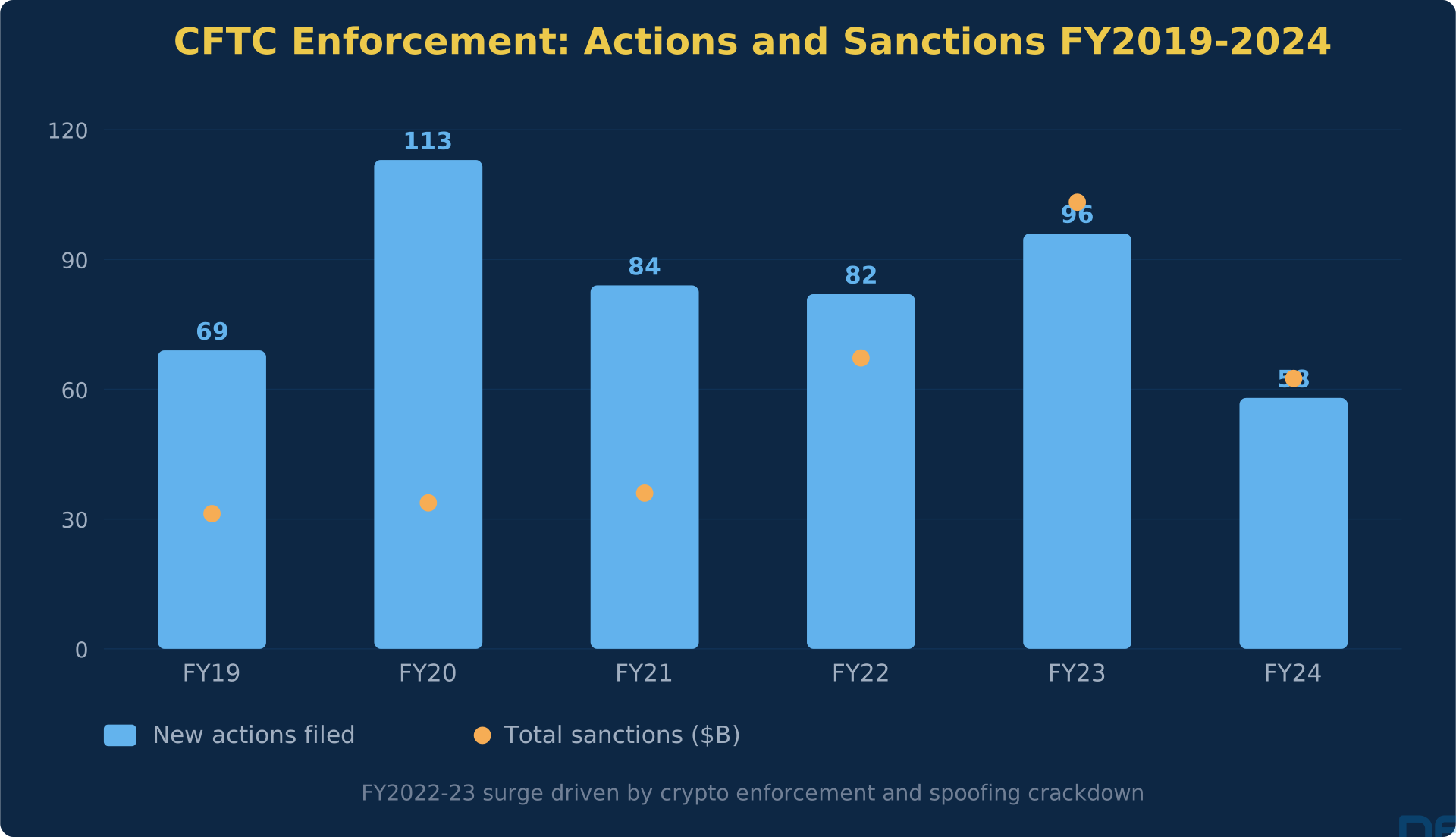
That ignorance is expensive. The CFTC's Division of Enforcement has secured more than $15 billion in sanctions and penalties over the past decade. In fiscal year 2024 alone, the agency filed 58 new actions and secured orders that included $1 billion in disgorgement. The targets range from individual retail traders to global banks, HFT firms, swap dealers, and commodity pool operators.
Understanding how enforcement works isn't paranoia. It's table stakes for anyone trading professionally, operating a small fund, or working at a regulated FCM. The Commodity Exchange Act creates real liability for real market participants, and the CFTC has both the technology and the legal authority to pursue violations wherever it finds them.
This article covers the full enforcement pipeline: how the CFTC detects violations, what violations look like, how cases progress from informal inquiry to formal charges, how civil and criminal actions run in parallel, what penalties look like, and the self-reporting and cooperation framework that can materially reduce your exposure if something goes wrong on your desk.
The Regulatory Architecture #
Before diving into enforcement mechanics, the structure matters.
The CFTC is an independent federal agency with jurisdiction over futures, swaps, and options on commodities. Its enforcement authority derives primarily from the Commodity Exchange Act (CEA), a statute first passed in 1936 and substantially overhauled by the Dodd-Frank Act in 2010. The CFTC's Division of Enforcement investigates and prosecutes CEA violations.
But the CFTC doesn't operate alone. Below it sit self-regulatory organizations (SROs): the National Futures Association and the designated contract markets (DCMs) like CME Group, ICE Futures, and others. These SROs are the first enforcement layer — they handle routine violations, impose smaller fines, and refer the serious stuff up to the CFTC.
Above the CFTC sits the Department of Justice. For serious criminal violations — wire fraud, securities fraud, commodities fraud — the CFTC refers cases to the DOJ, which can bring parallel criminal proceedings that carry prison sentences.
Three layers. Three sets of penalties. Understanding where in this stack a particular violation lands tells you everything about how serious the consequences will be.
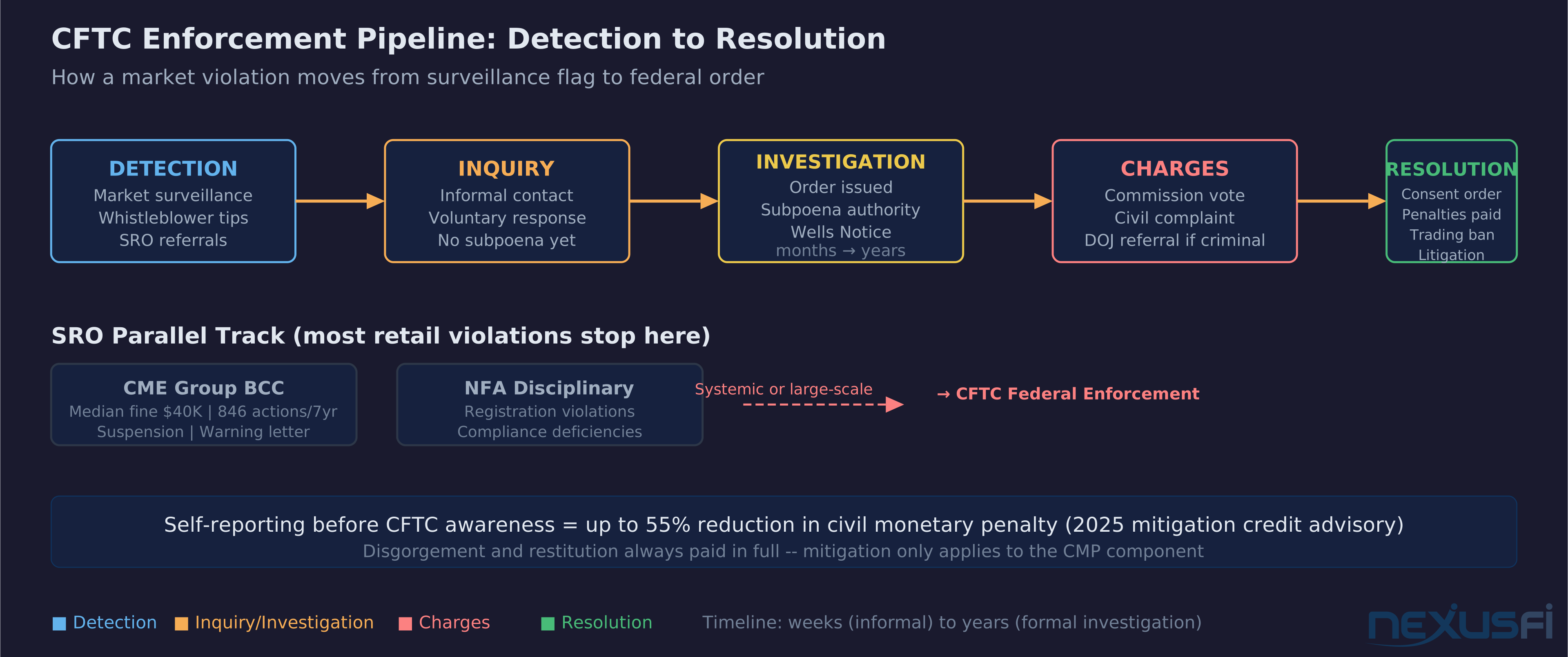
The SRO model means most futures traders who commit minor violations will face CME Group's Business Conduct Committee (BCC), not the CFTC directly. The BCC handles hundreds of actions per year. The CFTC handles dozens. When the CFTC gets involved, the stakes are categorically different.
What the CFTC Actually Pursues #
The Division of Enforcement organizes its caseload into distinct program areas. Knowing what they watch for — and what they don't — is practical intelligence.
Fraud #
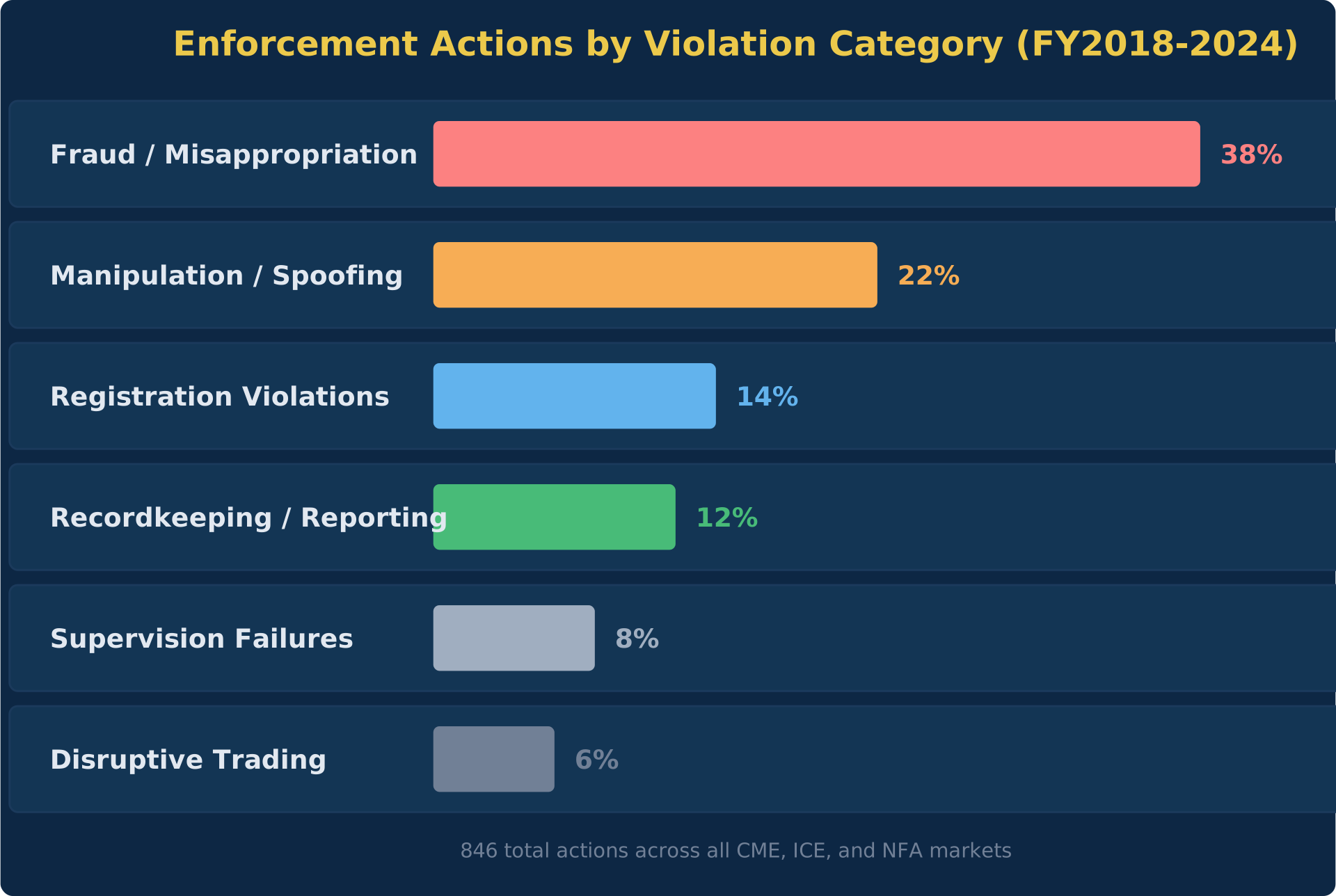
The largest enforcement category by case count. Commodity pool fraud (running unregistered pools, misappropriation of customer funds), forex fraud, precious metals fraud targeting retail investors, and Ponzi schemes structured around trading. These cases tend to involve victims who can demonstrate actual losses, which makes them politically tractable and relatively easy to prosecute.
Manipulation and Attempted Manipulation #
CEA Section 9(a)(2) prohibits cornering markets, creating artificial prices, and attempting to do either. This is the statute used to prosecute squeeze operations, wash trading, fictitious trades, and similar schemes. The burden of proof is high — the CFTC must show price artificiality, which requires expert econometric analysis. These cases are expensive to bring, but the penalties are correspondingly large.
Disruptive Trading (including Spoofing) #
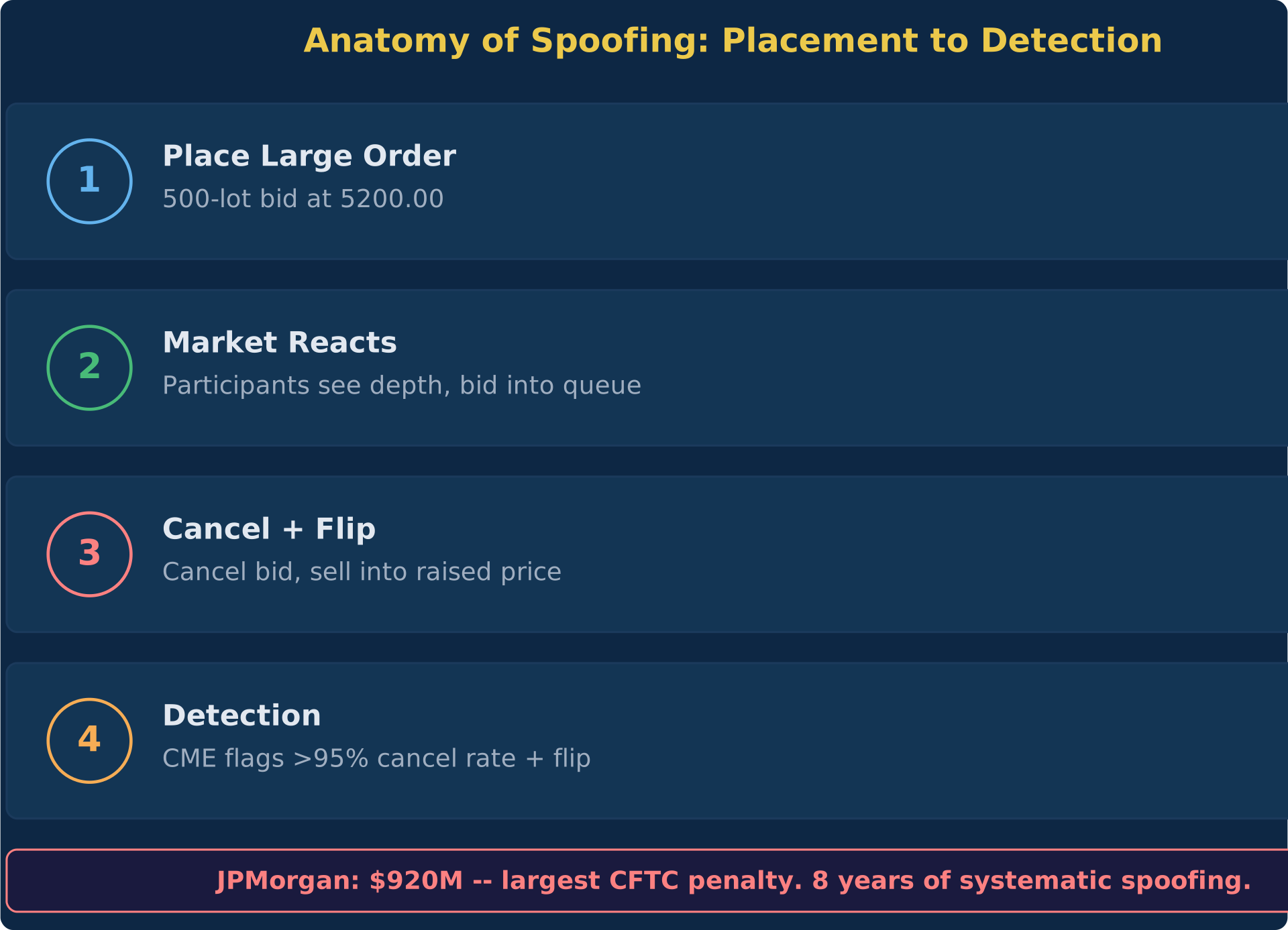
Dodd-Frank's Commodity Exchange Act Section 4c(a)(5) added explicit prohibitions against spoofing (placing orders without intent to execute), layering, and other disruptive order entry practices. These cases have become the signature CFTC enforcement action of the past decade. The CFTC runs algorithmic surveillance across all major futures markets specifically looking for spoof order patterns.
False Reporting #
Required reports — large trader reports, financial reports for FCMs, data submitted to the CFTC — must be accurate. Filing inaccurate reports is a strict liability violation in many cases. Citi paid $1.5 million in 2025 specifically because of a programming error that caused inaccurate large trader reports for over 1,000 business days. Not fraud, not manipulation — just bad data, and still a seven-figure penalty. [1]
Failure to Supervise #
FCMs, CTAs, CPOs, and introducing brokers are required to supervise their personnel. Regulation 166.3 imposes liability on firms when employees commit violations that adequate supervision would have prevented. This is how the CFTC holds institutions accountable even when the individual actor is hard to identify or prosecute.
Registration Violations #
Operating as an FCM, IB, CTA, CPO, or AP without proper registration triggers CFTC enforcement. These cases are usually clean because the registration status is a matter of public record.
Position Limit Violations #
The CFTC sets position limits on spot-month contracts for physical commodities to prevent corners and squeezes. Violating them triggers enforcement action.
The CFTC pursues six main violation categories: fraud, manipulation, disruptive trading (spoofing), false reporting, failure to supervise, and registration violations. Retail traders are most likely to encounter scrutiny for spoofing-adjacent order behavior. FCMs and institutional traders face the full menu.
How the CFTC Detects Violations #
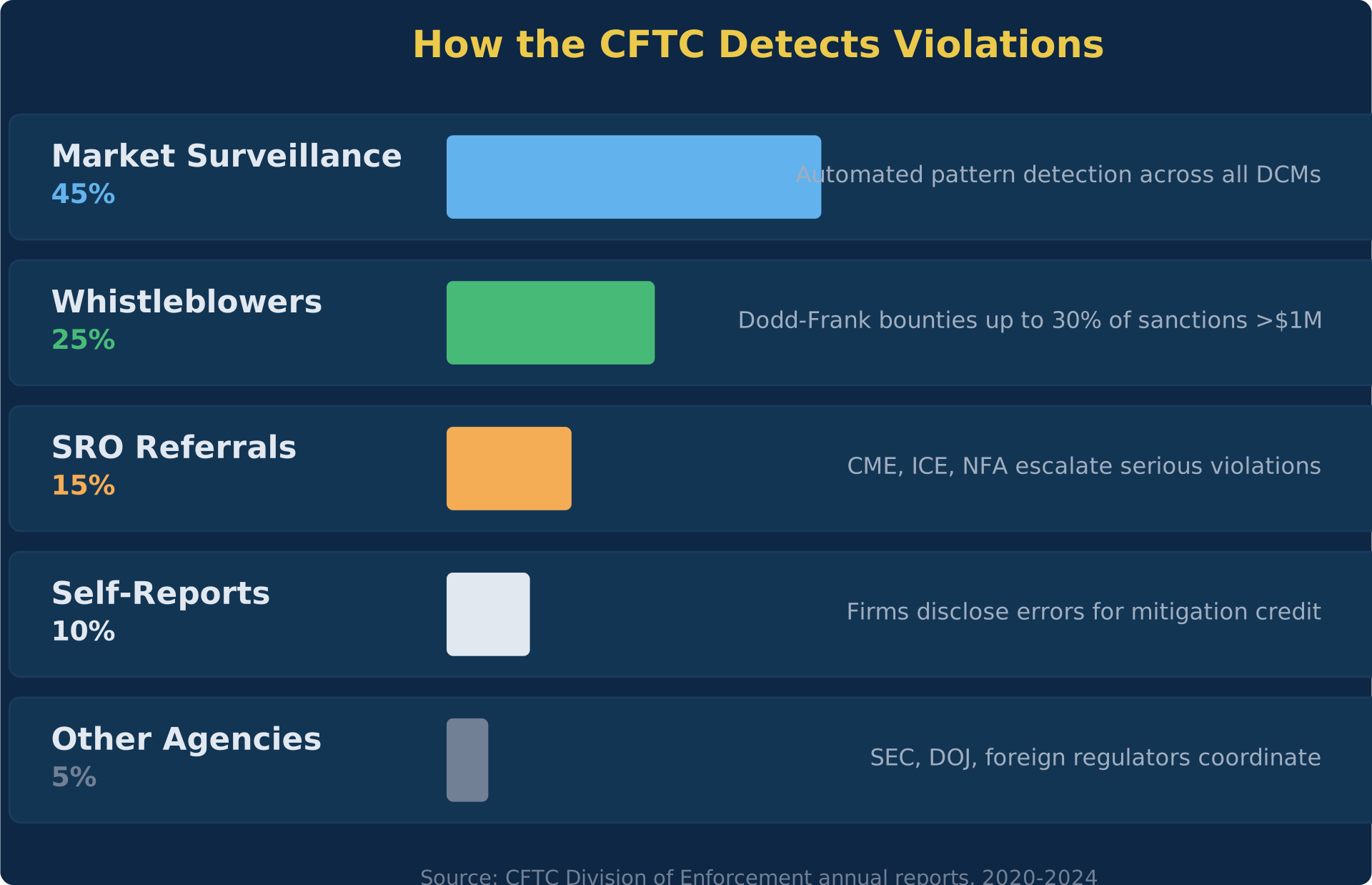
This is the part most traders never think about until it's too late. The CFTC runs detection through four distinct channels, and they're more sophisticated than most traders assume.
Market Surveillance. The CFTC runs its own automated market surveillance system that ingests real-time and historical data across all regulated futures markets. The system flags anomalous patterns — large orders that are cancelled immediately after moving the market, wash trades between related accounts, unusual price movements correlated with news events. CME Group runs parallel surveillance through its Market Regulation department and flags what it finds to the CFTC. ICE, Cboe, and other DCMs do the same.
This is the channel that caught Navinder Sarao. His algorithm placed thousands of large sell orders in ES futures, which moved the market, and then cancelled them before they could be filled — a textbook spoof signature that automated surveillance is specifically designed to detect. The CME flagged his pattern, reported it to the CFTC, and the investigation began. [3]
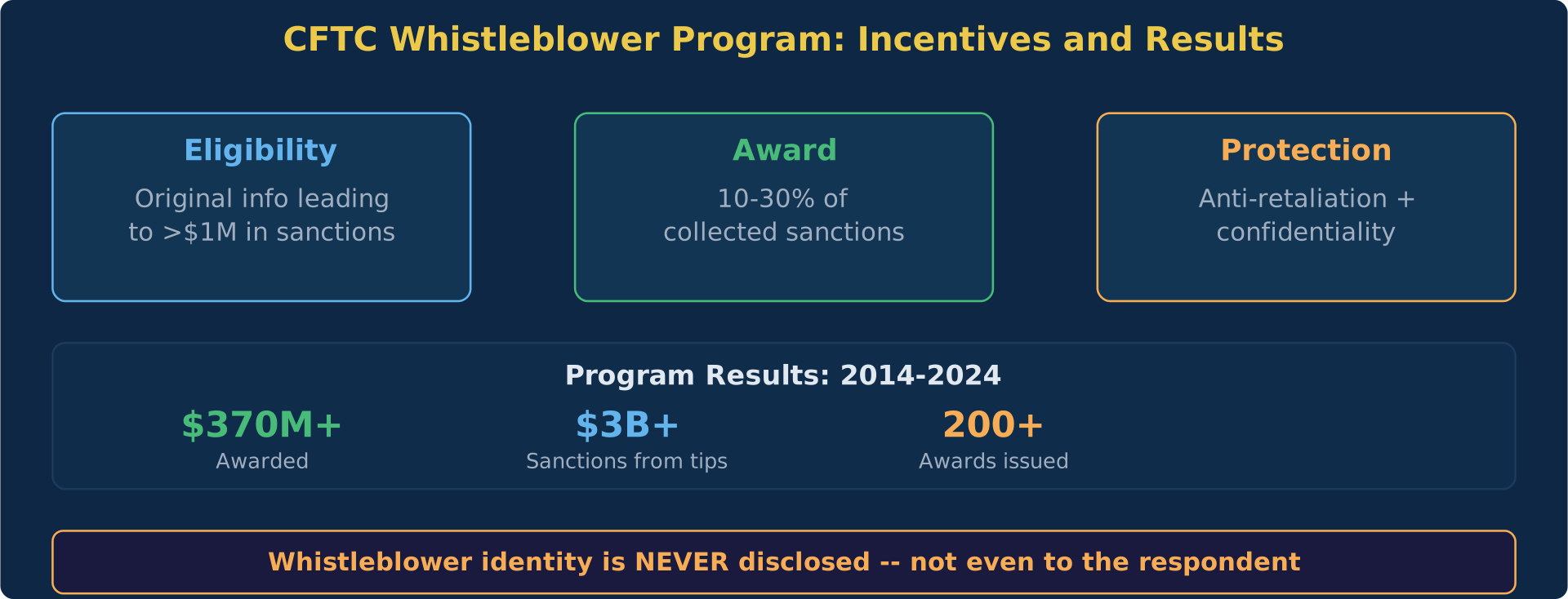
Whistleblowers. The CFTC Whistleblower Program, created by Dodd-Frank, pays awards of 10-30% of sanctions over $1 million to individuals who voluntarily provide original information about violations. The awards are paid from a dedicated fund and don't come out of penalties paid to victims. Since 2014, the CFTC has awarded more than $400 million to whistleblowers. Multiple large bank spoofing cases originated with internal employees tipping the CFTC.
SRO Referrals. CME Group's Market Regulation department and NFA's compliance examiners routinely refer matters to the CFTC when they exceed the SRO's enforcement authority or when violations appear systemic. The JPMorgan precious metals spoofing case — which resulted in a $920 million penalty — originated partly from CME surveillance data that was shared with the CFTC and DOJ. [4]
Parallel Agency Intelligence. The CFTC coordinates with the DOJ, SEC, FINRA, state regulators, and international authorities. The SEC may detect suspicious trading in equity derivatives that connects to futures positions. Foreign regulators may share intelligence about cross-border manipulation schemes. The CFTC's enforcement reach extends as far as these partnerships allow.
Self-Reporting. Firms self-report violations more than most people realize — because the alternative is usually worse. The CFTC's 2025 mitigation credit advisory explicitly rewards early, voluntary self-disclosure. Citi's 2025 case is the clearest example: they identified a programming error causing inaccurate large trader reports, self-reported within weeks of discovery, cooperated fully, and received the maximum mitigation credit — a $1.5 million penalty instead of what could have been much larger. [1]
The surveillance technology has improved dramatically since 2010. What looked like acceptable order management in 2008 now triggers algorithmic pattern recognition across every market the CFTC regulates. If you're placing large orders with the intent to cancel before execution, the question isn't whether this will be detected — it's when.
The Enforcement Pipeline #
Cases don't go from detection to charges overnight. The CFTC enforcement process follows a structured sequence, and understanding where a matter sits in that sequence tells you something about how serious it is.
Informal Inquiry #
Most investigations start informally. CFTC staff may contact a firm or individual by letter or phone to request trading records, account statements, or explanations for specific transactions. There's no formal legal process at this stage. Cooperation isn't legally required — but refusing to respond or being evasive tends to accelerate the timeline to the next step.
Formal Order of Investigation #
The CFTC Commissioners vote to issue a formal order of investigation. Once this order exists, CFTC staff has subpoena authority — they can compel document production, require witness testimony under oath, and demand trading records from third parties like FCMs and exchanges.
Investigative Phase #
This can last months or years. CFTC economists analyze trading data and construct expert reports on whether prices were artificial or patterns were manipulative. Staff attorneys review documents, conduct depositions, and build the factual record. In parallel cases, DOJ attorneys may join the investigation and begin building the criminal case simultaneously.
Wells Notice #
Before recommending enforcement action, CFTC staff typically provides a Wells Notice — a letter informing the target that staff intends to recommend charges and providing an opportunity to submit a written response. The Wells submission isn't mandatory, but it's the primary opportunity to argue against charges before they're filed.
Enforcement Recommendation and CFTC Vote #
Staff presents its recommendation to the Commission. Commissioners vote on whether to file the action. The vote is by majority, with dissents sometimes published as opinions.
Resolution #
Most CFTC enforcement actions resolve by consent order. The respondent agrees to remediation, pays a civil monetary penalty, and agrees to cease and desist — without necessarily admitting the underlying facts. Historically the default was "neither admit nor deny," but since 2023 the CFTC has moved toward requiring admissions in cases involving conclusive evidence of misconduct.
Litigation #
Cases that don't settle go to federal district court. The CFTC wins the majority of contested cases — the factual records built during investigations tend to be strong.
If you receive an informal inquiry from CFTC staff, get securities counsel immediately — before responding. The informal stage is when the factual record gets built. What you say now matters later. Most experienced regulatory attorneys will tell you: respond cooperatively, but don't respond alone.
Civil vs. Criminal Pathways #
The CFTC brings civil actions. The DOJ brings criminal prosecutions. Many large futures enforcement cases involve both simultaneously, which creates specific complications for anyone caught in the middle.
Civil CFTC Actions. The CFTC files in federal district court or via internal administrative proceeding for certain registration violations. Civil standard of proof is preponderance of the evidence. Penalties include civil monetary penalties, disgorgement, restitution to victims, trading bans, and cease-and-desist orders. Incarceration isn't available through the civil path.
Criminal DOJ Prosecutions. The DOJ files criminal charges when the same underlying conduct constitutes a crime — wire fraud (18 U.S.C. § 1343), commodities fraud, conspiracy, or violations of the CEA with criminal penalties. Standard of proof is beyond a reasonable doubt. Penalties include prison sentences. Michael Coscia, the first person criminally convicted of spoofing under Dodd-Frank in 2015, received a three-year sentence. Navinder Sarao faced a maximum of 30 years across his charges. [3]
The Parallel Proceeding Problem. When civil and criminal cases run simultaneously, the respondent faces a Fifth Amendment problem in the civil case. Testifying in a civil proceeding can create evidence used against you in the criminal case. Invoking the Fifth in the civil case looks bad but is constitutionally protected. Most sophisticated respondents pause the civil case while the criminal case resolves, but the CFTC has authority to continue civil proceedings regardless.
Collateral Estoppel and Admissions. A civil consent order without admissions historically didn't create collateral estoppel — admitting facts in the CFTC case couldn't be used directly against you in private civil litigation. The CFTC's shift toward required admissions changes this calculus completely. An admission to systematic spoofing over eight years creates significant exposure in class action litigation from everyone who traded against those orders.
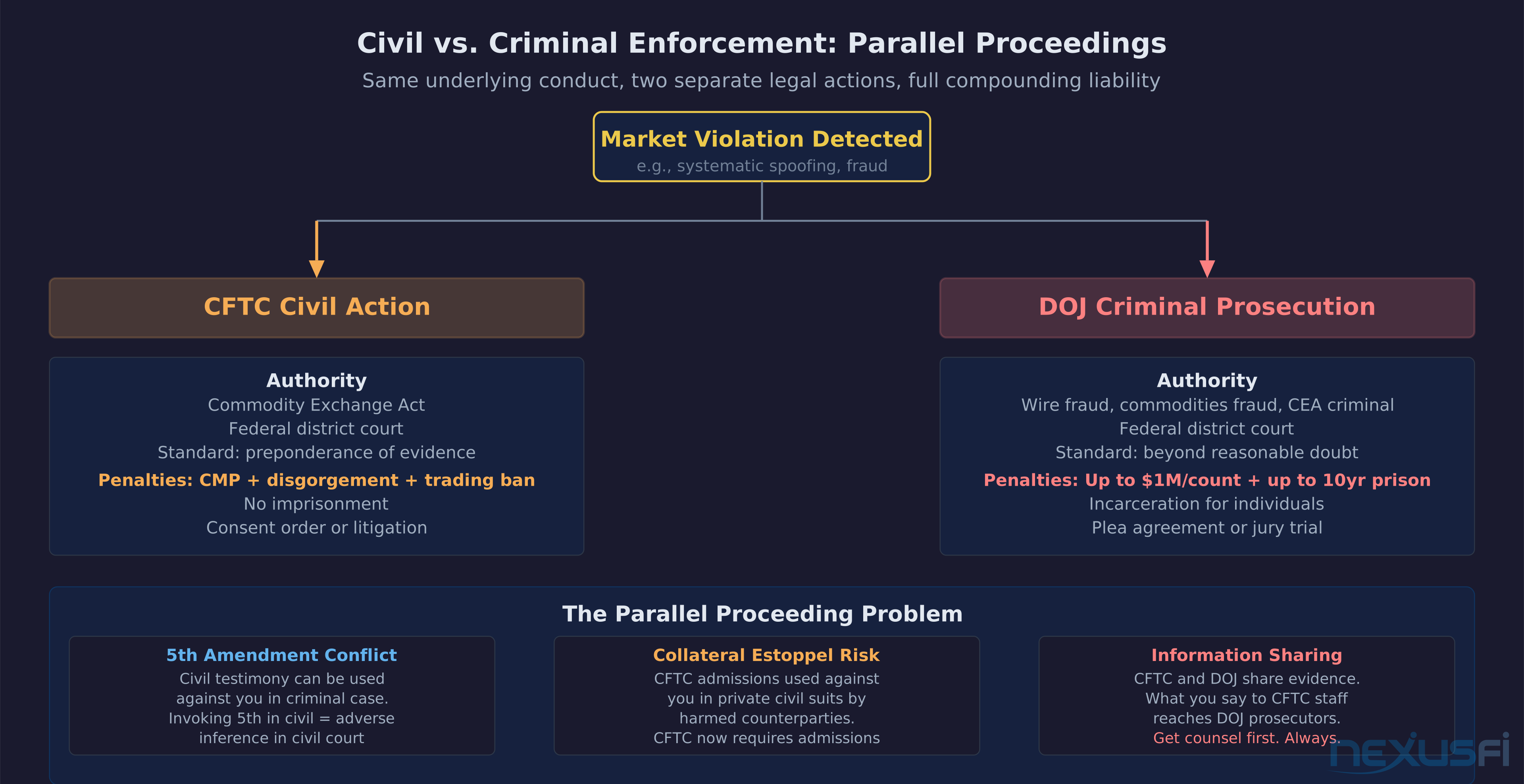
The practical message from the JPMorgan case: the CFTC's $920 million penalty was significant, but it was the criminal charges against individual traders that changed behavior most dramatically. Banks can absorb nine-figure fines as cost of doing business. Executives can't absorb prison sentences. The DOJ referral is the teeth behind the CFTC's civil enforcement.
Penalty Structures #
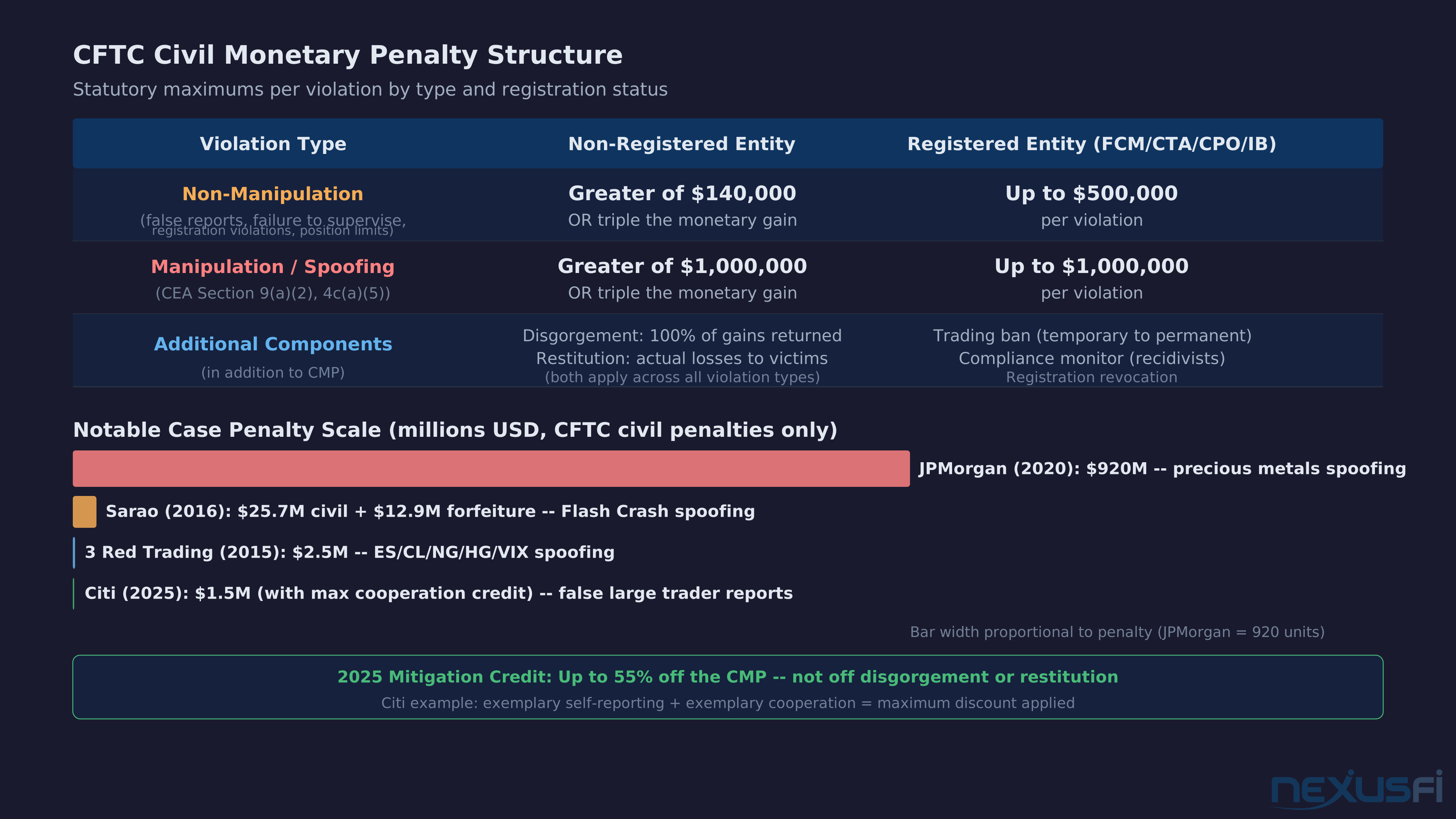
The Commodity Exchange Act sets statutory maximum penalties that vary by registration status and violation type. Knowing the penalty range going in tells you how seriously the CFTC views a particular violation.
Non-Manipulation Violations (CEA Section 6(c)) #
- Non-registered entities: the greater of $140,000 per violation OR triple the monetary gain
- Registered entities (FCMs, CTAs, CPOs, IBs, APs): up to $500,000 per violation
Manipulation or Attempted Manipulation (CEA Section 9(a)(2)) #
- Non-registered entities: the greater of $1,000,000 per violation OR triple the monetary gain
- Registered entities: up to $1,000,000 per violation
These are per-violation maximums. In spoofing cases involving thousands of manipulative orders, the CFTC doesn't press $1 million per spoof order — it negotiates a global resolution based on overall gain and deterrence value. [6]
Other Penalty Components #
- Disgorgement: Full return of profits derived from the violation. Not eligible for mitigation credit.
- Restitution: Payment to harmed victims for actual losses. Not eligible for mitigation credit.
- Trading bans: From temporary suspension to permanent prohibition from trading or registering in any CFTC-regulated capacity.
- Registration revocations: Pulling NFA membership or CFTC registration.
- Compliance monitors: For institutional recidivists, the CFTC can mandate an external compliance monitor at the firm's expense.
Recidivism Premium #
Since 2023, the CFTC has explicitly stated it will recommend higher penalties for repeat violators. The advisory identifies four factors in recidivism analysis: the nature of the prior violation, the time elapsed, whether remediation was genuine, and whether the new violation is the same type. [6]
SRO vs. CFTC Scale #
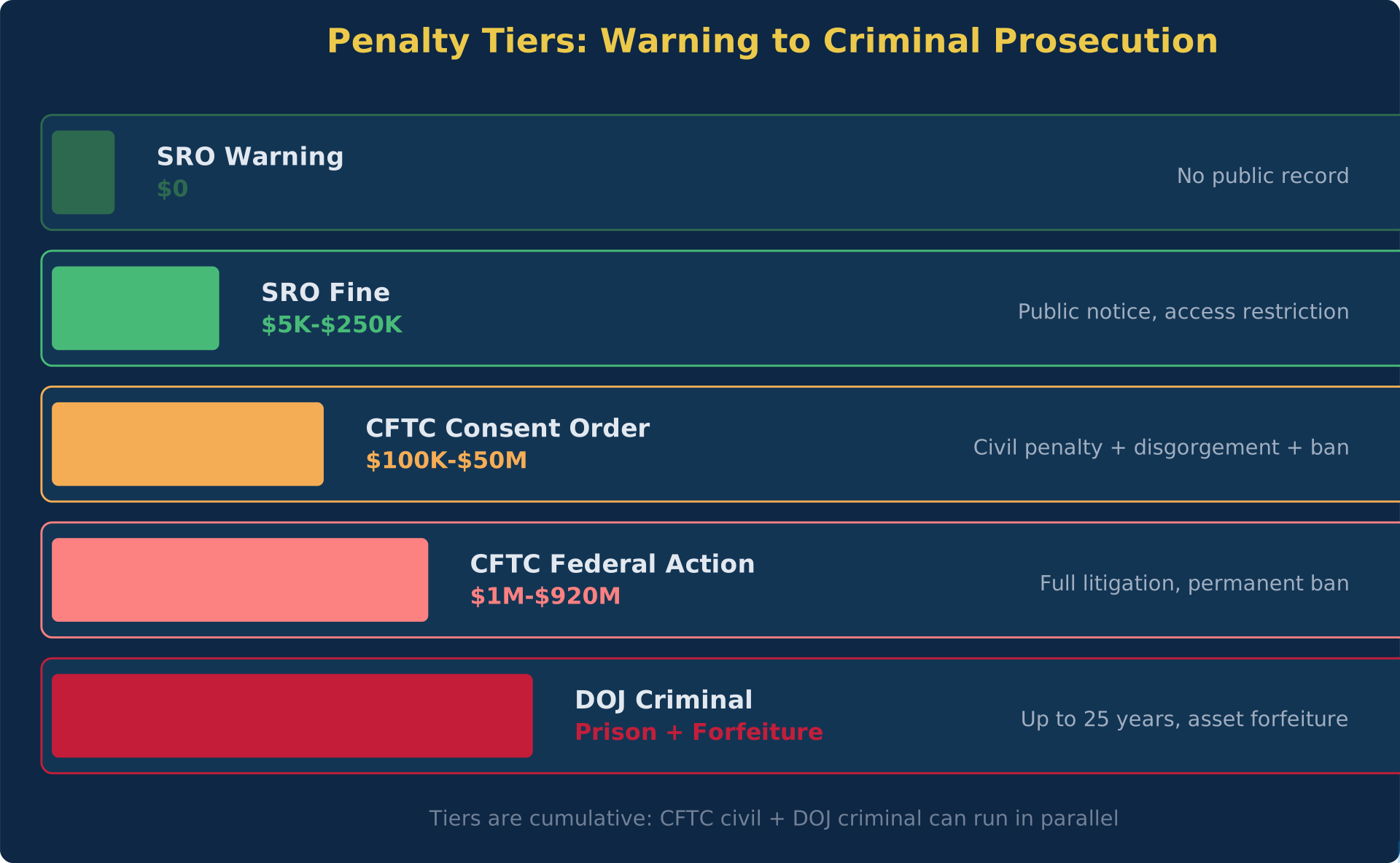
The contrast is stark. CME Group's BCC imposed median fines of approximately $40,000 across 846 actions from 2018-2024 — a total of $76 million across seven years. [2] The CFTC imposed $920 million in a single JPMorgan action. SRO enforcement handles volume, CFTC handles significance.
CME Group BCC fine range: $5,000 — $250,000 per action (typical retail/small firm violations)
CFTC civil penalty range: $140,000 — triple the gain (non-registered) / $500,000 — $1M per violation (registered)
DOJ criminal exposure: up to $1M fine per count + up to 10 years imprisonment for commodities fraud
Self-Reporting, Cooperation, and Mitigation Credits #
The CFTC's 2025 enforcement advisory replaced all prior cooperation guidance with a transparent matrix system. For the first time, firms and individuals can calculate their presumptive mitigation credit before deciding whether to self-report. This is the most significant change to CFTC enforcement practice in a decade.
Self-Reporting Tiers:
The advisory defines three tiers of self-reporting quality. Tier 3 (exemplary) requires: proactive, voluntary disclosure before the CFTC has any awareness of the potential violation, disclosure of all material facts known at the time, and ongoing disclosure as additional facts emerge. Tier 2 (satisfactory) covers reports that are timely but not fully proactive — for example, reporting after receiving a subpoena but before being specifically asked about this violation. Tier 1 is no self-reporting. [7]
Cooperation Tiers:
Four tiers for cooperation quality. Exemplary (Tier 4) requires the firm to have substantially completed remediation before the investigation closes — not just committed to a plan, but actually fixed the problem. This is where Citi landed in 2025, receiving the maximum mitigation credit for both self-reporting and cooperation. [1]
The Mitigation Matrix:
The CFTC published the presumptive discount percentages for the first time:
- Self-reporting Tier 3 + Cooperation Tier 4 = maximum mitigation credit, up to 55% off the CMP
- Self-reporting Tier 1 + Cooperation Tier 1 = no mitigation credit
Disgorgement and restitution are excluded from mitigation credit eligibility — those amounts are returned regardless of cooperation level. [7]
Practical Implications:
If you're sitting on a potential violation — bad reporting, a trading pattern that might look manipulative in retrospect, a compliance failure — the math now clearly favors self-reporting. A $2 million CMP baseline with maximum cooperation credit becomes $900,000. The same violation discovered by CFTC surveillance with no cooperation equals $2 million, plus likely add-ons for concealment.
The caveat is fraud and manipulation involving client harm. These violations require disgorgement of all profits plus restitution — neither of which gets mitigated. Cooperation credit only reduces the civil monetary penalty, not the amount that was never yours to keep.
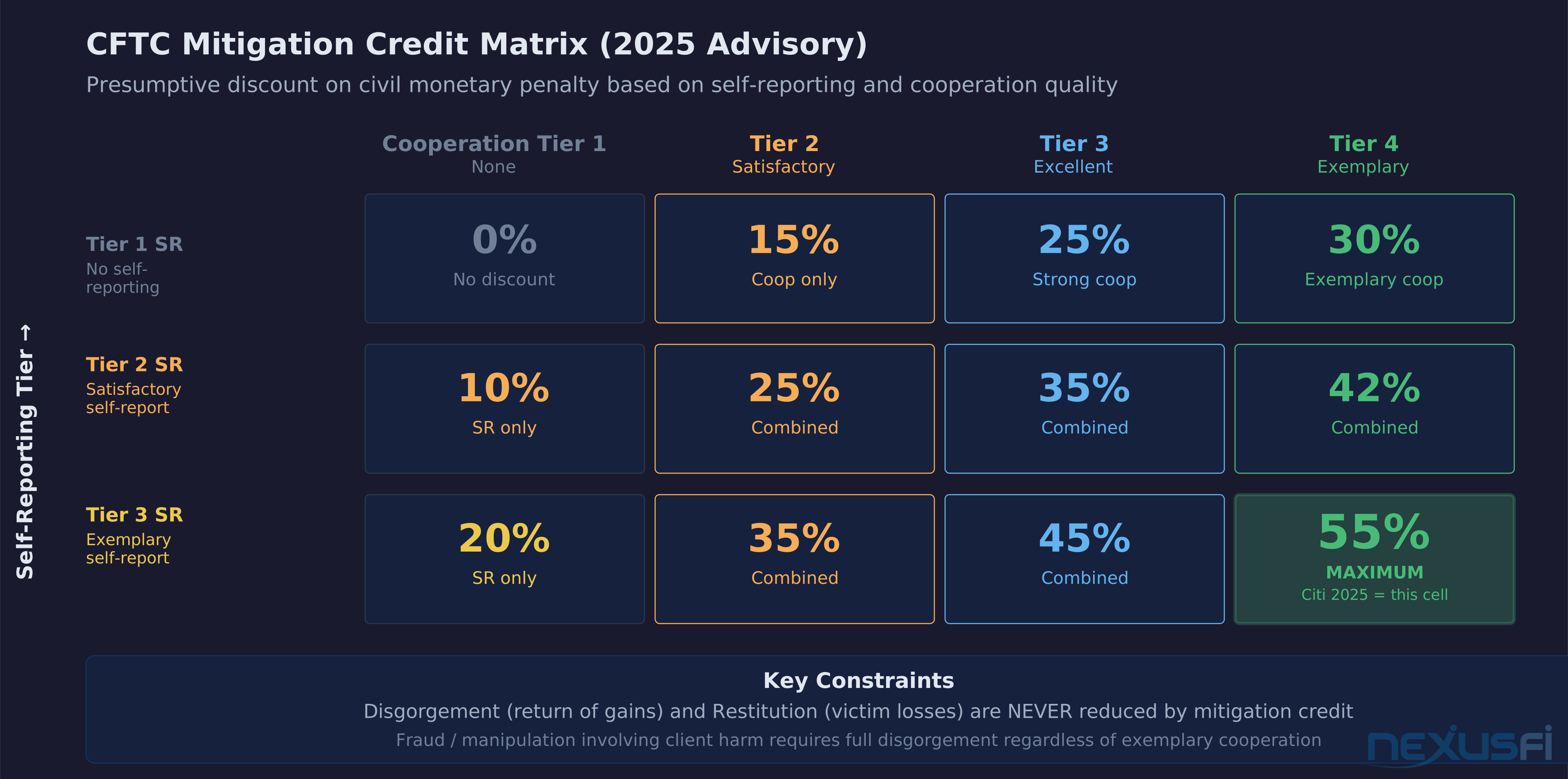
Self-reporting doesn't eliminate liability — it reduces the civil monetary penalty. Disgorgement and restitution are always paid in full regardless of cooperation level. If you made $5 million spoofing and got caught, you're paying back $5 million in disgorgement plus a reduced CMP. There's no cooperation discount on giving back money that was never yours to keep.
Notable Cases: What Real Enforcement Looks Like #
Theory is one thing. Case studies show what the CFTC actually does when it finds manipulation at scale.
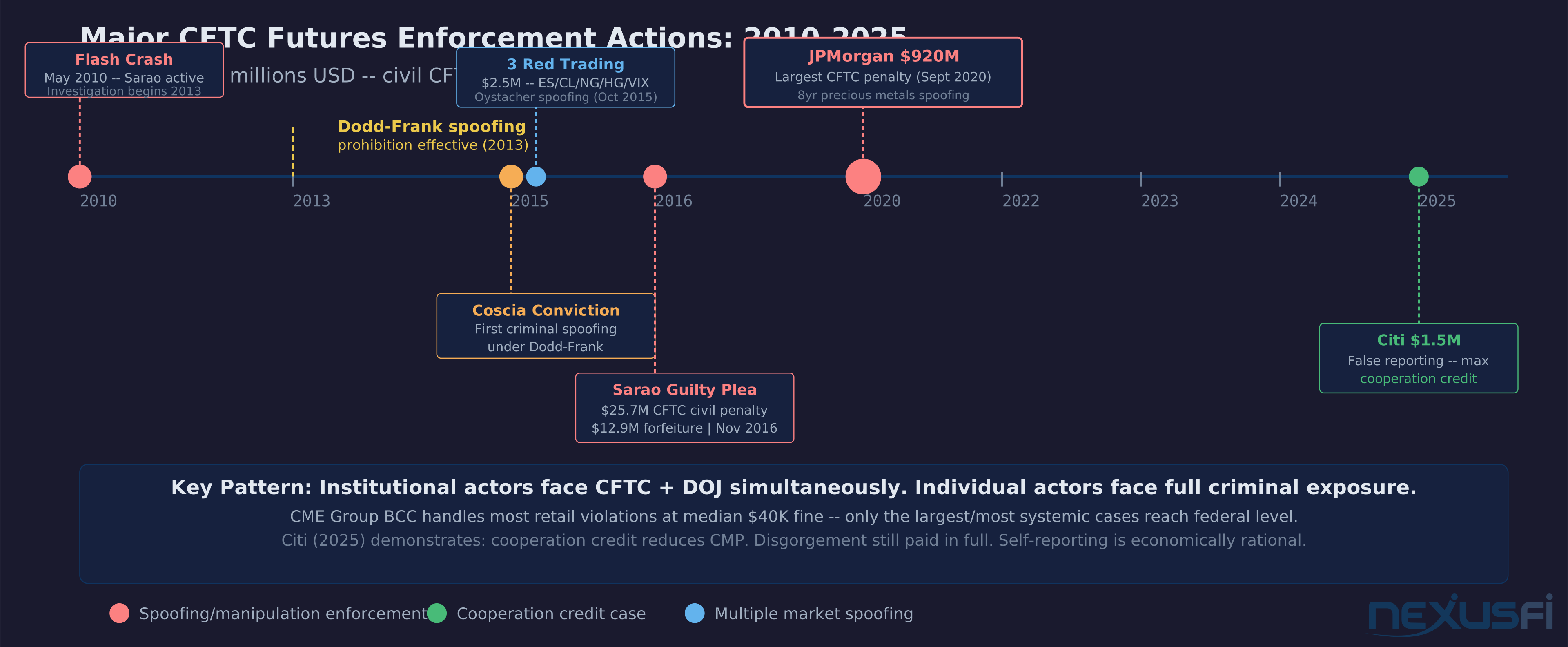
Navinder Sarao and the 2010 Flash Crash (2015-2016)
Sarao operated from his parents' house near London's Heathrow Airport. Over five years, using a spoofing algorithm on CME's ES futures market, he made approximately $40 million. On May 6, 2010 — the Flash Crash — his algorithm was active in the market during the period when U.S. equities briefly lost nearly $1 trillion in market value.
The CFTC filed a civil complaint in 2015, and the DOJ filed criminal charges simultaneously. Sarao was extradited from the UK to the US and pleaded guilty in 2016 to spoofing and wire fraud. He agreed to forfeit $12.9 million and pay a $25.7 million civil penalty to the CFTC. The CFTC consent order permanently banned him from trading derivatives. [3]
The case established that spoofing was prosecutable even for individuals operating on the retail/semi-institutional boundary — you didn't have to be a bank or HFT firm to get the full weight of CFTC and DOJ attention.
JPMorgan Precious Metals Spoofing (2020)
JPMorgan's trading desk systematically manipulated precious metals and Treasury futures markets from 2008 to 2016. Hundreds of thousands of spoof orders. Six individual traders criminally charged. The CFTC imposed a $920 million penalty — the largest in its history at the time. The DOJ simultaneously reached a $920 million deferred prosecution agreement. [4]
The mechanics were identical to Sarao: place large orders to move price, cancel before execution, profit from the move. The scale was different. Eight years of institutional manipulation across multiple product lines at one of the world's largest banks. JPMorgan had been previously sanctioned for manipulative trading — the recidivism dimension contributed to the penalty magnitude.
Igor Oystacher / 3 Red Trading (2015)
The CFTC filed charges against Oystacher and 3 Red for spoofing simultaneously in five different futures markets: ES, copper, crude oil, natural gas, and VIX. As @ron99 reported when the CFTC press release dropped, the mechanics involved placing large passive orders near the best bid/offer to create false impressions of market interest, then cancelling and flipping direction before execution. [5]
The case settled for approximately $2.5 million in penalties and a trading ban. It was notable for being the first major CFTC enforcement action specifically targeting the layering/spoofing pattern in E-mini futures after Dodd-Frank.
Citi Large Trader Reporting (2025)
The most recent notable case illustrates enforcement at the compliance failure end of the spectrum — not fraud or manipulation, but faulty reporting. A programming error caused Citi to file inaccurate large trader reports on over 1,000 business days. They self-reported within weeks of discovering the error, cooperated fully, completed remediation, and received the maximum mitigation credit under the 2025 advisory. [1] Penalty: $1.5 million.
The case demonstrates the entire cooperation spectrum: maximal cooperation produced a $1.5 million outcome for a major bank facing structural reporting failures. The same violation history without self-reporting and cooperation would have produced much larger penalties.
SRO Enforcement vs. CFTC Federal Enforcement #
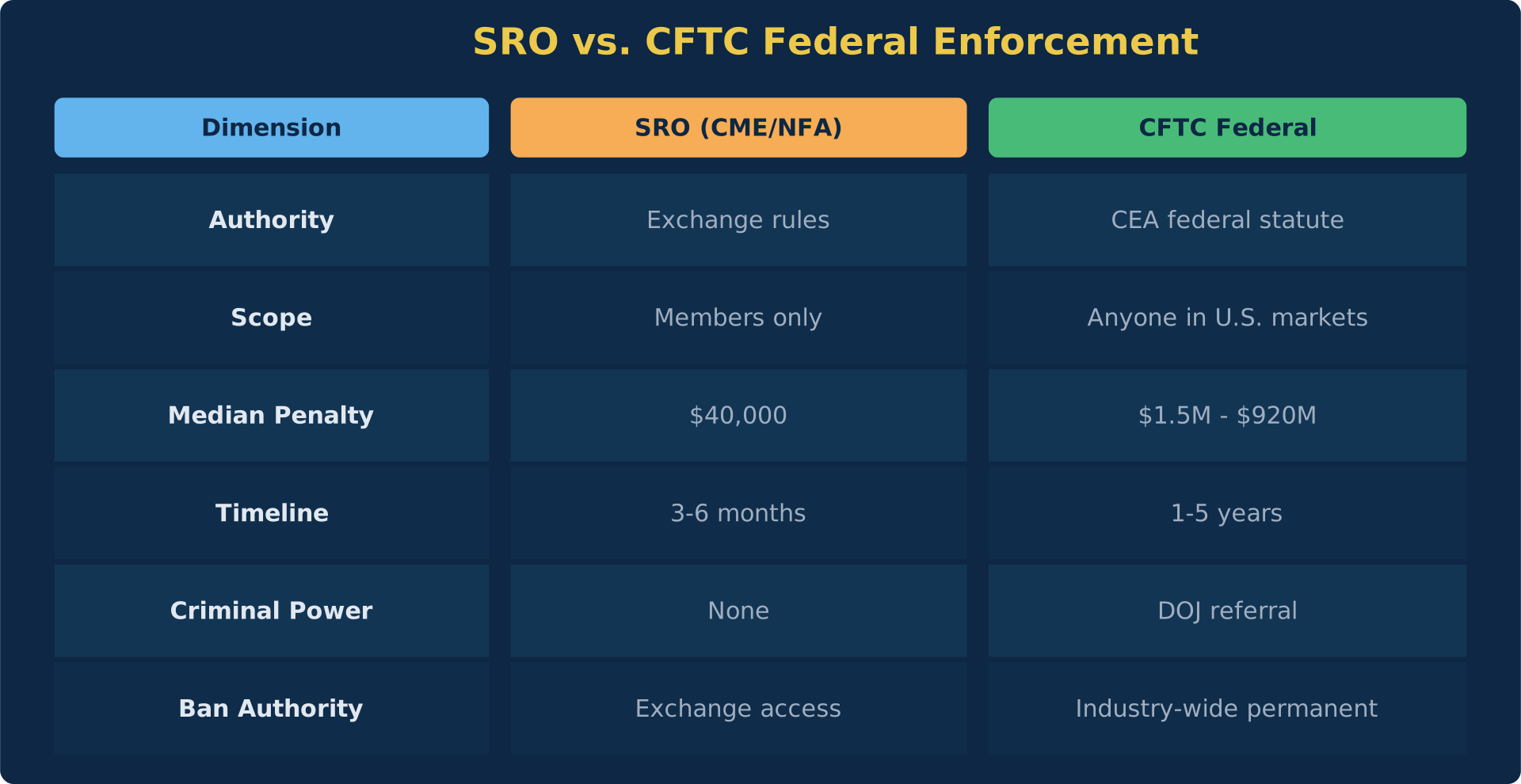
The CME BCC handles trade practice violations — spoofing complaints from smaller firms, position limit technical violations, late reporting, trading outside permitted hours. Penalties run from warning letters up to six-figure fines and temporary suspensions. CME Cornerstone Research tracked 846 BCC actions from 2018-2024, totaling $76 million in penalties at a median fine of about $40,000. [2]
NFA Disciplinary Actions cover registration violations, required disclosure failures, compliance program deficiencies, and conduct issues with CTAs and CPOs. NFA can impose fines, require additional training, mandate enhanced compliance procedures, and suspend or revoke NFA membership. Losing NFA membership effectively means losing the ability to operate as a registered futures professional.
As @FuturesTrader71 noted, the NFA handles individual disputes while the CFTC typically gets involved when "a large number of people are affected by a singular issue" or when systematic conduct demands federal attention. [8]
When Does It Escalate to the CFTC?
The pattern is consistent: SROs handle individual and small-firm violations at the transaction level. The CFTC gets involved when:
- The violation is systemic — not one trader, but a firm-wide pattern or an algorithm running across multiple markets
- The monetary scale justifies federal enforcement resources
- Criminal conduct is suspected — which requires DOJ involvement and CFTC referral
- The SRO has a conflict of interest (the SRO's largest members are often the largest violators)
That last point is uncomfortable but accurate. CME Group earns transaction fees from its biggest member firms. The BCC's median fine of $40,000 is rounding error for a firm with trillions in assets. The federal enforcement mechanism exists because SRO enforcement has structural limitations built into the self-regulatory model.
The SRO/CFTC division is function-based. Small firms and individuals get the BCC and NFA. Large-scale, systemic, or criminal violations get the CFTC and DOJ. Understanding which layer you're in determines what compliance resources you actually need — and how seriously to take an inquiry.
Practical Considerations for Traders and Firms #
Order Cancellation Ratios. Modern surveillance systems flag high cancellation-to-execution ratios, especially when the pattern correlates with short-term price moves in the cancellation direction. There's no published threshold, but ratios above 90% in concentrated periods invite scrutiny. Market makers with documented market-making activity get more latitude. Retail traders and prop desks without that documentation don't.
Avoid Layering. Entering multiple orders at different price levels on one side, then cancelling them all when filled on the other side, is textbook layering. The CFTC has argued the predictable effect of the order pattern is sufficient to establish disruptive trading intent. It's not a theory you want to test with your account.
Document Market-Making Intent. If you're running a strategy that involves placing orders you'll cancel — because market conditions changed, risk limits triggered, or you updated your model — document that logic. Timestamped system logs showing the order management rationale are the difference between "legitimate order management" and "spoofing" in contested cases.
Registered Firms: Take Annual CCO Reports Seriously. The 2025 advisory explicitly states that timely self-identification in an annual CCO report can satisfy partial self-reporting requirements. CCO reports that actually review trading patterns for potential violations build a record of good faith that matters if something later comes to light. [7]
Self-Report Early if You Find Something. The mitigation credit framework covered above makes the math clear — early voluntary disclosure qualifies for the highest tier reductions, as Citi's 2025 outcome demonstrates.
Understand the Parallel Criminal Risk. If a regulator is asking about your trading, the same facts can support both civil CFTC charges and criminal DOJ charges. The agencies share information and coordinate strategy. Get regulatory counsel before substantive engagement.
Knowledge Map
Prerequisites
Understand these firstGo Deeper
Build on this knowledgeReferences This Article
Articles that build on this topicCitations
- CFTC Division of Enforcement — In the Matter of Citigroup Global Markets Inc. -- Consent Order (2025) (2025)
- — CME Fines and Suspends NYMEX Broker for Leaking Customer Order Info in Crude Oil (2026) 👍 1“Cornerstone Research tracked every CME disciplinary action from 2018 through 2024 -- 846 total actions, $76 million in penalties, median fine of $40,000. JPMorgan ran a systematic spoofing operation across precious metals and Treasuries for eight straight years -- the CFTC imposed $920M, the largest penalty ever.”
- — Flash Crash Trader Sarao Pleads Guilty to Fraud, Spoofing (2016)“Navinder Singh Sarao pleaded guilty to spoofing and wire fraud. He agreed to forfeit $12.9M in ill-earned gains and pay a $25.7M civil penalty to the CFTC. The CFTC consent order permanently bans him from trading derivatives.”
- CFTC — CFTC Orders JPMorgan to Pay $920 Million for Spoofing in Precious Metals and U.S. Treasury Futures Markets (2020)
- — The CL Crude-analysis Thread (2015) 👍 3“CFTC charges Igor Oystacher and 3 Red Trading LLC with spoofing while trading E-Mini S&P 500, Copper, Crude Oil, Natural Gas, and VIX futures. Spoof orders placed near best bid/offer, then cancelled while flipping position to opposite side.”
- CFTC — CFTC Releases FY 2024 Enforcement Results (2024)
- CFTC — Enforcement Advisory: Self-Reporting and Full Cooperation (February 2025) (2025)
- — Need Help: Urgent Broker Problem (Phillip Capital: NT Brokerage, Edge Clear) (2021) 👍 13“The CFTC is only useful when a large number of people are affected by a singular issue. The NFA handles individual cases well -- it is a truly excellent option for resolving serious issues with a broker. This is a highly regulated industry.”
- — How to file a complaint against a broker (2020) 👍 14“The CFTC complaint can be done in addition to the NFA complaint. Many members have run into unfair business practices from their broker. When you take a wide-angle view, you see a lot of these things repeat themselves frequently.”
- — CFTC Capital Requirements for FCMs (2020) 👍 11“Additional capital haircuts that a FCM may be required to take are set forth in CFTC Regulation 1.17. Net Capital Requirement: The minimum net capital that each FCM must maintain is determined under CFTC Regulation 1.17.”