



Futures Trading Taxes in Australia: ATO Rules, Capital Gains, and Business Income
Overview #
Australian futures traders operate under a tax framework at the core different from the Section 1256 treatment that US traders rely on — and from the UK's spread betting exemption that lets British traders take profits tax-free. In Australia, everything starts with a single question from the Australian Taxation Office: are your futures trading profits business income or capital gains?
That determination drives your effective tax rate, how losses can be used, whether the 50% CGT discount is available, and what deductions you can claim. The difference between the two characterizations can exceed 23 percentage points of effective rate on the same dollar of profit. And unlike the US, there's no bright-line instrument-based rule — futures don't get a special regime. The ATO evaluates the substance of your activity, not the label on the contract.
Australia's rules have a lot in common with Canada's CRA framework: both jurisdictions require a facts-based characterization analysis, both typically find business income for active traders, and neither offers a US-style 60/40 blended rate. But Australia adds its own complexity: the income year runs 1 July to 30 June, the 50% CGT discount creates meaningful upside for long-term investors, and USD-to-AUD translation at RBA transaction-date rates adds a hidden tax variable that many traders overlook entirely.
The Central Question: Business Income or Capital Gains? #
The ATO doesn't care what instrument you trade. Corn futures, E-mini S&P 500 contracts, crude oil — the instrument is irrelevant. What matters is the nature of your trading activity.
Two possible outcomes:
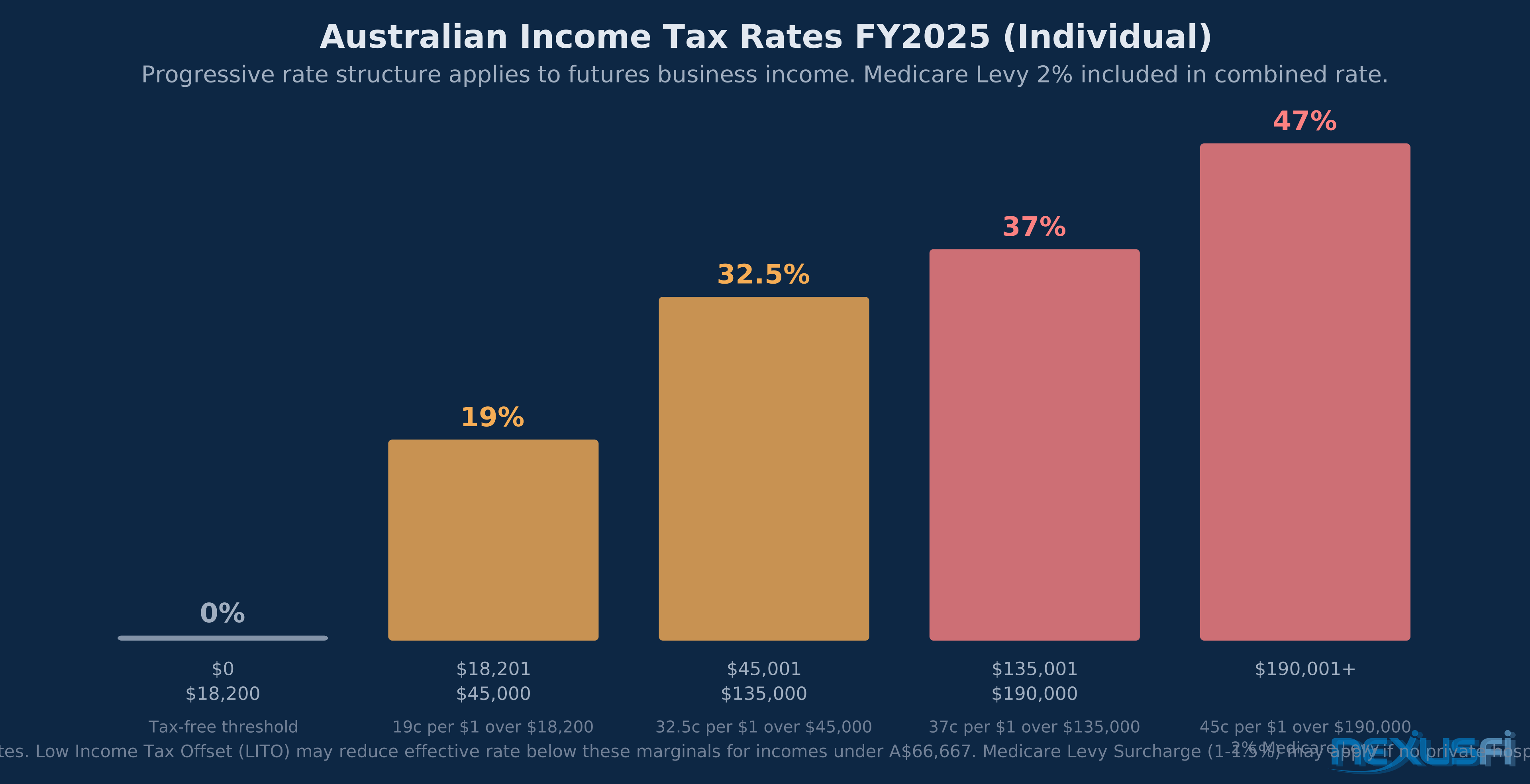
Business Income (ITAA 1997 ss.6-5 and 8-1): Profits are 100% assessable as ordinary income, reported in your Individual Tax Return (ITR) as business income. Losses offset other income — employment, rental, interest — without the restrictions that apply to capital losses. You can deduct business expenses. The downside: you pay at your full marginal rate on every dollar of profit with no discount.
Capital Gains Tax (ITAA 1997 Part 3-1): Gains are assessed under the CGT provisions. For individuals holding a CGT asset for more than 12 months, the 50% CGT discount applies — only half the gain is included in taxable income. Capital losses only offset capital gains. The potential upside: effective rate on qualifying gains drops to roughly half the marginal rate.
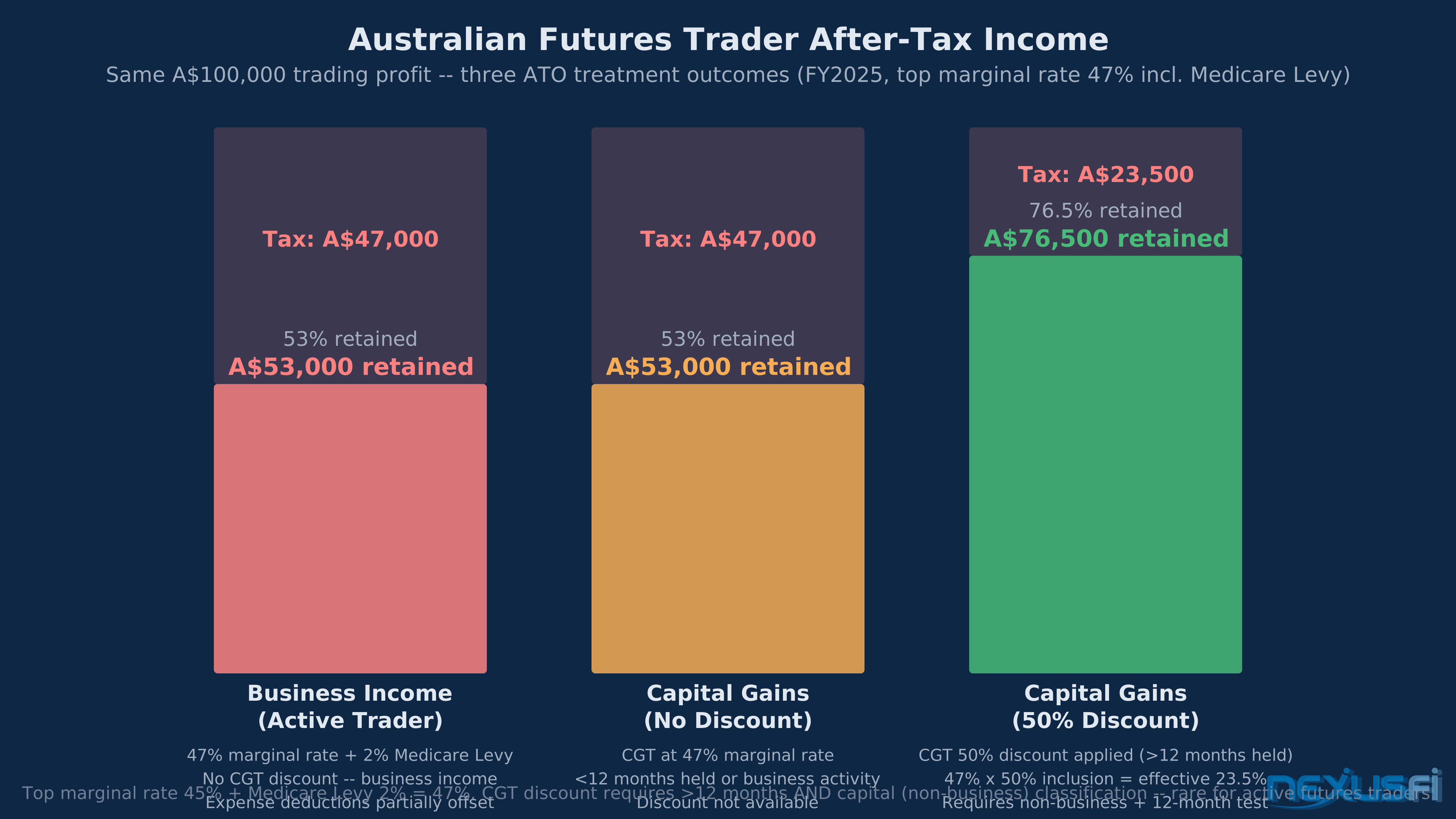
After-tax math for a top-bracket Australian trader (47% combined including Medicare Levy):
| Treatment | A$100,000 Profit | Taxable Amount | Effective Rate | After-Tax |
|---|---|---|---|---|
| Business income | A$100,000 | A$100,000 | 47% | A$53,000 |
| Capital gains (no discount) | A$100,000 | A$100,000 | 47% | A$53,000 |
| Capital gains + 50% discount | A$100,000 | A$50,000 | 23.5% effective | A$76,500 |
| Company trading entity | A$100,000 | A$100,000 | 25--30% | A$70,000--A$75,000 |
The 50% CGT discount is the obvious target. The problem: the ATO makes it genuinely difficult for active futures traders to qualify.
The ATO Characterization Test: Six Factors #
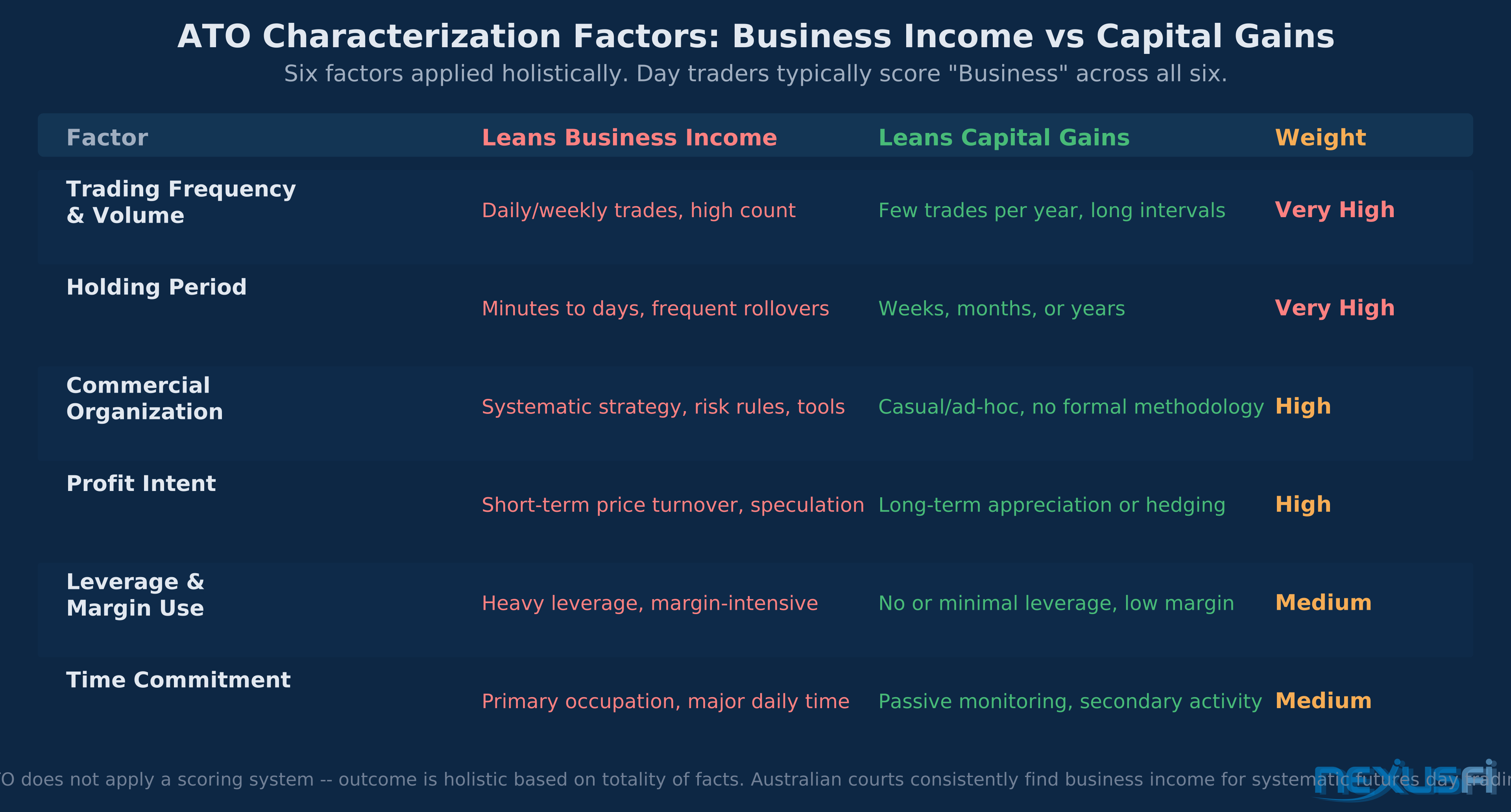
The ATO doesn't apply a scoring system. Characterization is a facts-and-circumstances determination evaluated holistically across six primary factors:
1. Frequency and volume. The single most determinative factor. Multiple trades per week — let alone per day — strongly indicates a business operation. High trade counts almost always produce business income classification.
2. Holding period. Short-duration positions — minutes, hours, days — point toward business income. Longer positions held over weeks or months can support capital treatment. Day traders and short-term swing traders fail this factor conclusively.
3. Business-like organization. Do you have a systematic strategy? Risk management rules? Dedicated tools and data subscriptions? Organized professional operations point toward business. Casual, sporadic activity points toward investment.
4. Profit-making intent. Trading to capture short-term price movement (business) versus benefiting from long-term appreciation or hedging an underlying exposure (capital). The ATO examines your actual trading pattern, not your stated intent.
5. Use of leverage and margin. Heavy margin use and high leverage suggest professional trading activity.
6. Time commitment. Primary occupation or major daily time commitment points toward business.
ATO Tax Ruling TR 2005/15 (financial contracts for differences) addresses the broader framework, and futures contracts follow the same principles. Active futures speculation consistently falls into business income territory under Australian case law and ATO guidance. The ATO has stated directly that systematic, high-frequency trading for short-term gains is business income, not investment.
The bottom line for most NexusFi members: If you're placing multiple futures trades per week with short holding periods, you're carrying on a business for ATO purposes.
For Australian traders, that's not just mindset — the ATO will treat it as a business regardless. Build the documentation and expense structure that a business taxpayer can actually use.
Business Income Treatment #
When ATO classifies your futures trading as a business, profits flow through as ordinary income under ITAA 1997 s.6-5 — fully assessable at your marginal rate.
Revenue recognition: Realized profits from closed futures positions are assessable in the income year realized. Australia's income year runs 1 July to 30 June — completely different from the US and Canada calendar year. Mark-to-market accounting (annual inclusion of unrealized gains) is not a standard requirement for individual Australian traders.
Loss deductibility (s.8-1): Business losses offset assessable income without the capital loss restrictions. Employment income, investment income, rental income — all fair game for offset. This is the main financial advantage of business classification that traders often overlook when chasing CGT treatment.
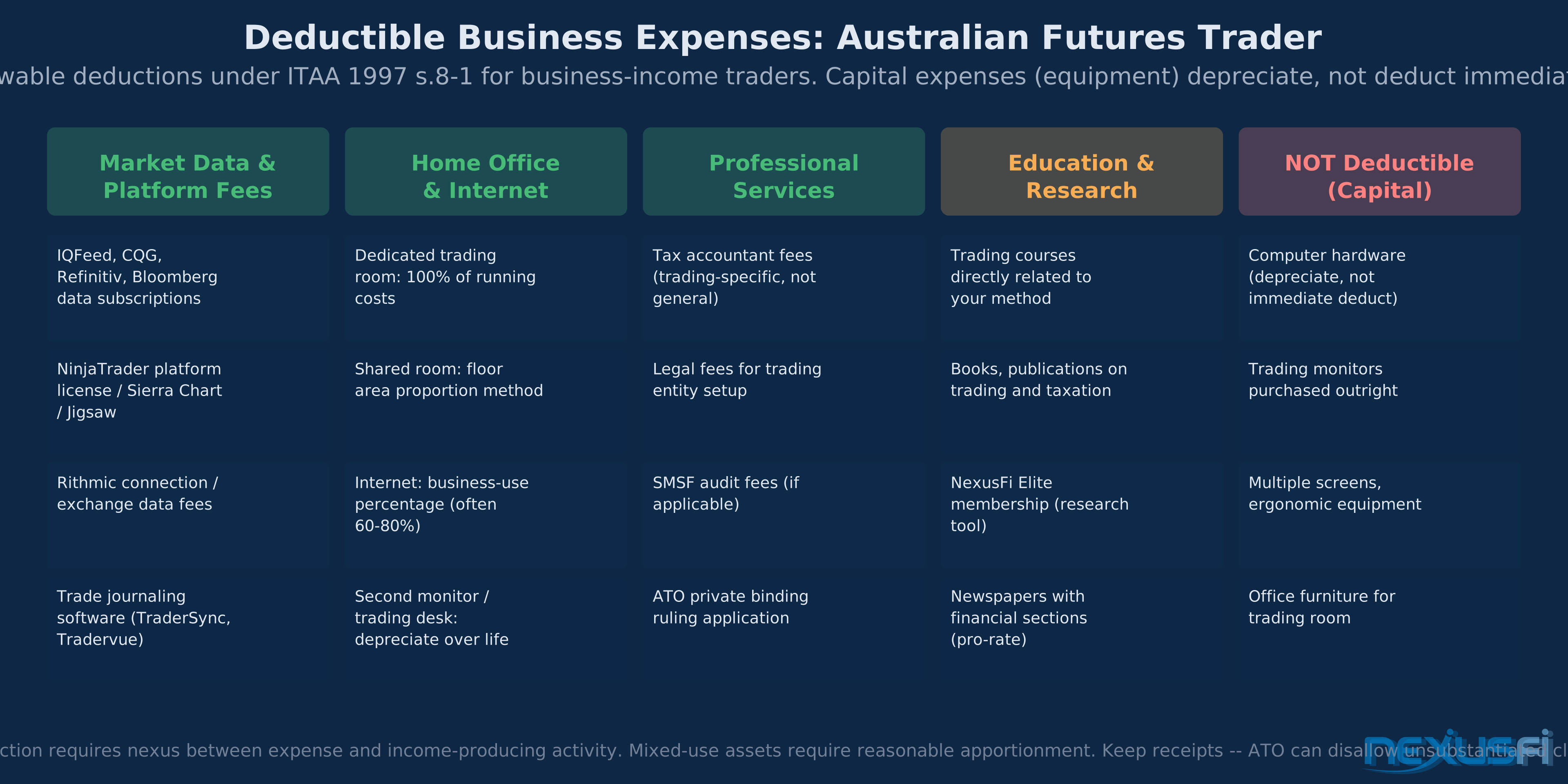
Deductible business expenses:
- Market data subscriptions (IQFeed, CQG, Refinitiv, Bloomberg)
- Platform fees (NinjaTrader, Sierra Chart, Rithmic connection)
- Home office expenses (proportional to trading space)
- Internet costs (business-use percentage)
- Professional development directly related to trading
- Accounting and legal fees for trading-related matters
Filing: Business income from futures appears in your ITR at the "Business income" labels. Operate as a sole trader, or through a company or trust for entity structure optimization.
Capital Gains Tax Treatment and the 50% Discount #
Capital gains treatment follows Part 3-1 of ITAA 1997. A futures contract is a CGT asset when on capital account. The gain arises on a CGT event — typically CGT Event A1 (disposal/close-out) or CGT Event C2 (expiry or cancellation).
The 50% CGT discount under ITAA 1997 s.115-100 is the most significant tax advantage available to Australian investors. For an individual at the top marginal rate (45% + 2% Medicare Levy = 47%), it effectively cuts the rate to 23.5% on qualifying gains. At lower income levels the effective rate is even more favorable.
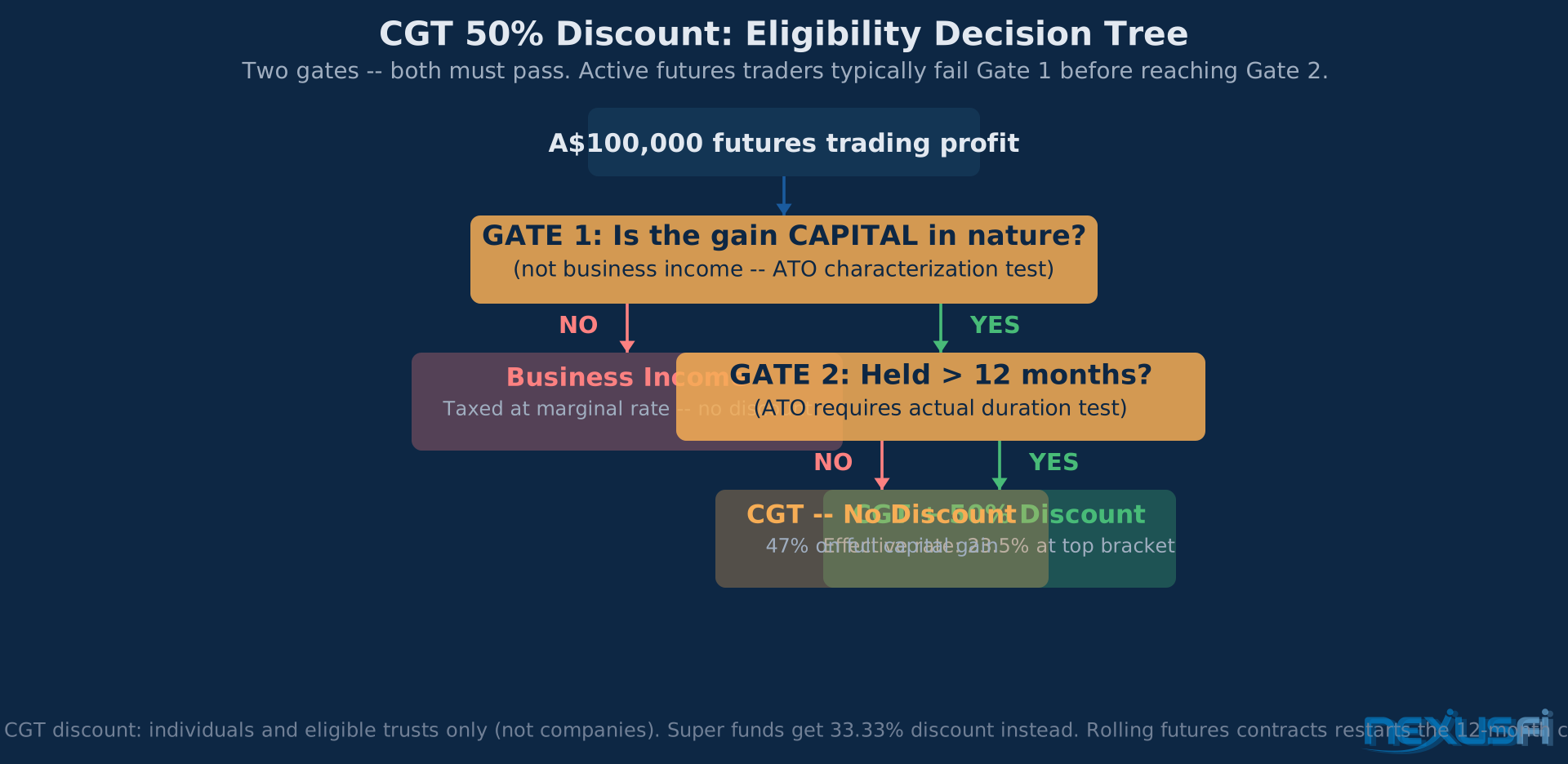
Two gates must BOTH pass:
Gate 1: The gain must be capital in nature — not business income. Most active futures traders fail here.
Gate 2: The CGT asset must be held for more than 12 months before the CGT event. Futures contracts are typically short-dated. Rolling a quarterly CME contract restarts the 12-month clock — each rollover is a new CGT event.
That's the US framework. Australians get no equivalent. No 60/40 blended rate, no mark-to-market election, no special instrument rules. The ATO framework is facts-based — and active traders are businesses.
Timing of Income Recognition #
Australian tax law is a realization system — gains are taxed when realized, not when marked to market.
Business income: Realized when you close the position. Open positions at 30 June are not taxed until closed. This differs from the US, where certain mark-to-market elections are available under IRC Section 475.
Capital gains: Timed to the CGT event — typically when the contract terminates or is settled. For cash-settled futures, realized on cash settlement.
Variation margin: Daily margin credits and debits are not separately assessable income events. They're part of the overall trade result, recognized when the position closes. Report net realized P&L when you exit — not daily margin flows.
Year-end positioning: A profitable trade opened in June that you hold through 30 June defers the tax liability to the following income year. Fully legal tax deferral. Many active traders manage their June 30 position book with this in mind.
Carry Forward Losses #
The characterization decision creates dramatically different loss profiles:
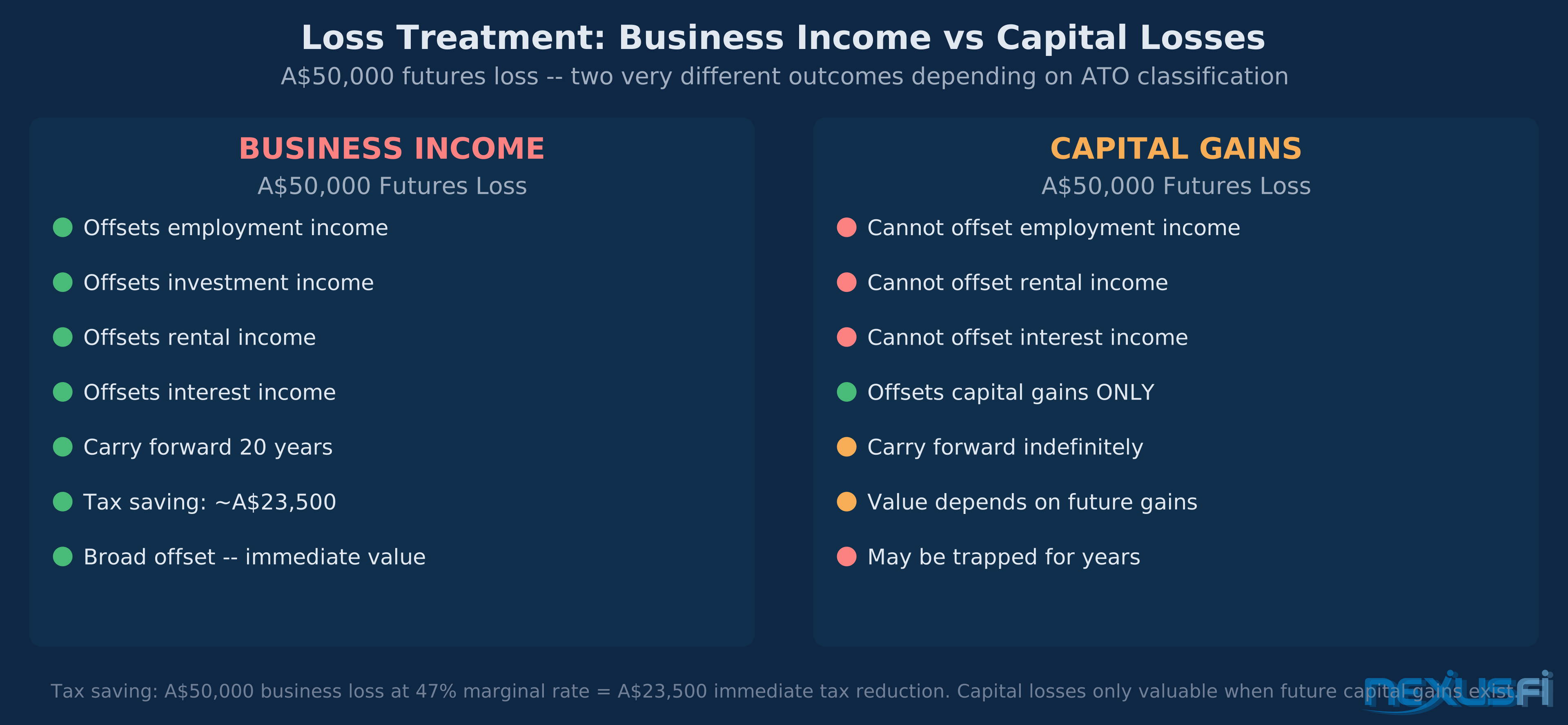
Business losses (s.8-1): Allowable deductions offset assessable income in the current year. Unused deductions carry forward as "prior year losses" against future assessable income, with no statutory time limit for individuals.
Capital losses: Can only be applied against capital gains. Cannot reduce ordinary income. Carry forward indefinitely but only against future capital gains.
The strategic implication: If you expect significant losses some years — common in futures trading — business income classification may be preferable despite the higher rate in profitable years, because you can use those losses immediately. Pursuing CGT treatment to chase the 50% discount can backfire badly in losing years when losses are trapped in the capital bucket.
SMSF: Futures Trading in Your Super Fund #
The Self-Managed Superannuation Fund (SMSF) pays only 15% tax on earnings and is tax-exempt in pension phase. The appeal for futures traders is obvious. The reality is heavily restricted.
Sole purpose test (SIS Act s.62): An SMSF must be maintained solely to provide retirement benefits to members. Using super assets for current-income trading violates this test.
Derivative restrictions (SIS Reg 13.14): Futures contracts are only permitted where the derivative reduces investment risk (hedging), not increases it. The fund must have sufficient assets to cover the exposure. Speculative futures trading — taking on price risk rather than hedging it — is outside permitted use.
Investment strategy requirement: The SMSF must document an investment strategy addressing risk, return, liquidity, and diversification. A strategy covering futures must be specifically appropriate for the fund's membership and demonstrably aligned with retirement objectives.
The ATO actively audits SMSF trustees using derivatives. Systematic futures speculation inside an SMSF is inconsistent with the sole purpose test. The consequences of non-compliance are severe: ATO can make the fund non-complying (15% tax becomes 45% on the whole fund balance). Consult an SMSF specialist before trading any derivatives inside super.
For eligible US traders, the closest comparison is the Self-Directed IRA — similar restrictions on prohibited transactions and qualifying investments apply.
US Futures Accounts: Withholding and ATO Treatment #
Most Australian futures traders access US exchanges (CME, CBOT, NYMEX) through US-registered brokers.
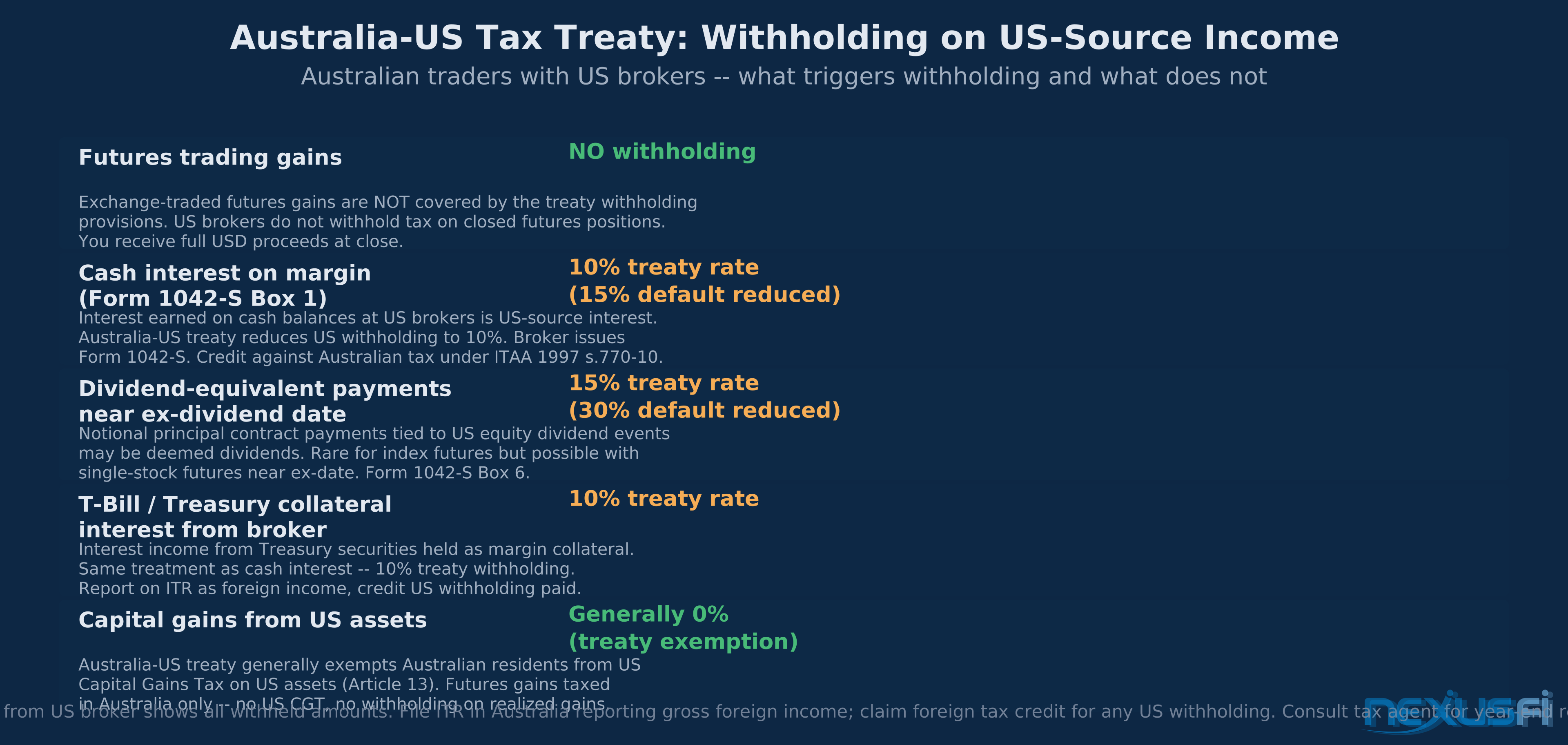
US withholding on futures gains: No withholding applies. When you close a futures position profitably, your US broker doesn't withhold US tax on the gain. Exchange-traded futures gains are trading gains, not dividends or interest — the categories covered by the Australia-US Tax Convention.
What does get withheld:
- Interest on cash balances (generally 10% under the Australia-US treaty — broker issues Form 1042-S)
- Dividend-equivalent payments on certain equity futures near dividend dates
- Treasury bill collateral interest
Foreign tax credit: Any US withholding is creditable against your Australian tax liability under ITAA 1997 s.770-10 — prevents double taxation.
Practical step: Review your full year-end broker statement, not just the futures P&L. Look for Form 1042-S entries. Your tax agent needs all US-source income, not just the trading bottom line.
USD to AUD Currency Translation #
Every trade in a USD-denominated futures contract must be translated to Australian dollars. Your broker statement shows USD — that's not what you report.
The requirement: ITAA 1997 s.960-50 requires Australian residents to express all amounts in AUD. Standard method: use the Reserve Bank of Australia (RBA) spot exchange rate on the date of each transaction.
The calculation:
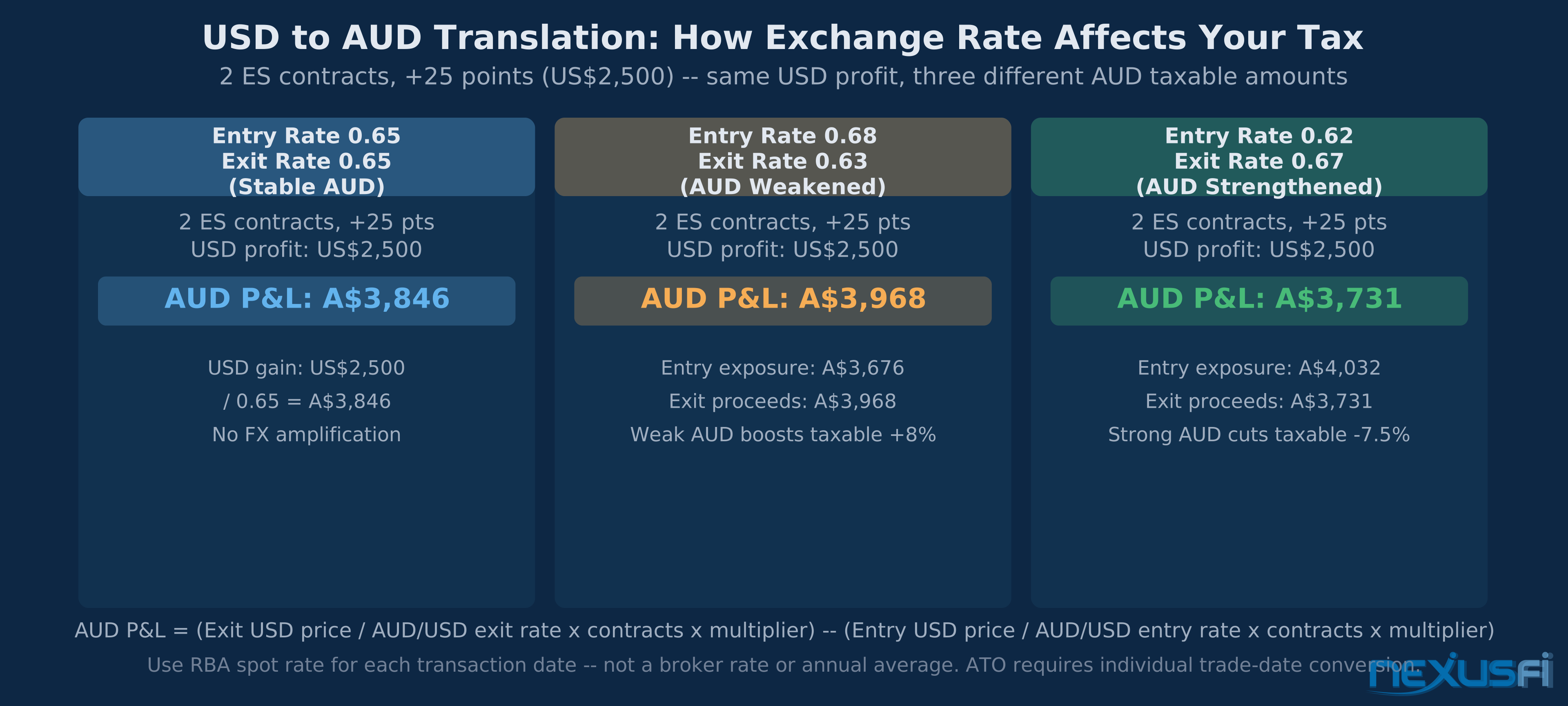
AUD P&L = (Close price / AUD/USD close-date rate x multiplier x contracts)
         - (Open price / AUD/USD open-date rate x multiplier x contracts)
         - (Commissions in AUD)
The AUD/USD rate at entry versus exit creates a second variable independent of your futures P&L:
- AUD weakens between entry and exit: your USD gain is worth more Australian dollars — amplifies taxable income
- AUD strengthens between entry and exit: your USD gain is worth fewer Australian dollars — reduces taxable income
Source for rates: RBA publishes daily exchange rates at rba.gov.au. Use the mid-rate on the transaction date. Don't use your broker's rate or an annual average — ATO expects transaction-date accuracy.
Consistency: Choose a rate source and document it. Apply it uniformly across all trades and all years. Switching methodology between years is an ATO audit red flag.
GST and PAYG Instalments #
GST on trading P&L: Futures trading gains and losses are generally financial supplies under the GST Act — input taxed, not standard taxable supplies. You don't charge GST on trading profits. Brokerage commissions and platform fees from licensed providers may have GST applied, and you can claim those credits if registered.
GST registration threshold: A$75,000 annual turnover from taxable supplies. For most individual traders, futures trading profits don't constitute "taxable supply" turnover — so trading alone rarely triggers registration. Confirm with a specialist if you have other business income.
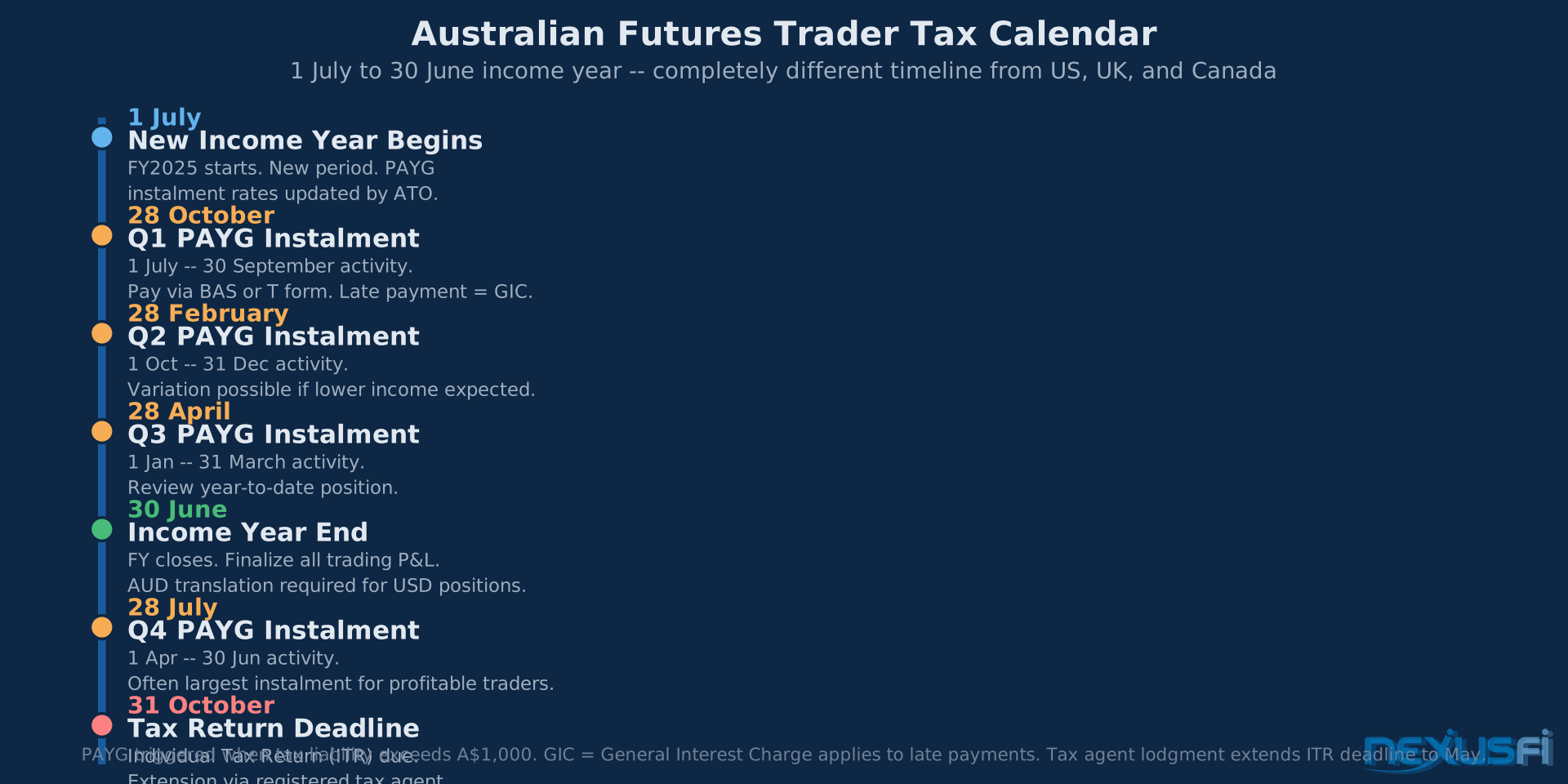
PAYG Instalments: The Pay As You Go system requires quarterly pre-payment of income tax when your liability exceeds A$1,000. Instalments are due:
- 28 October (Q1: July--September)
- 28 February (Q2: October--December)
- 28 April (Q3: January--March)
- 28 July (Q4: April--June)
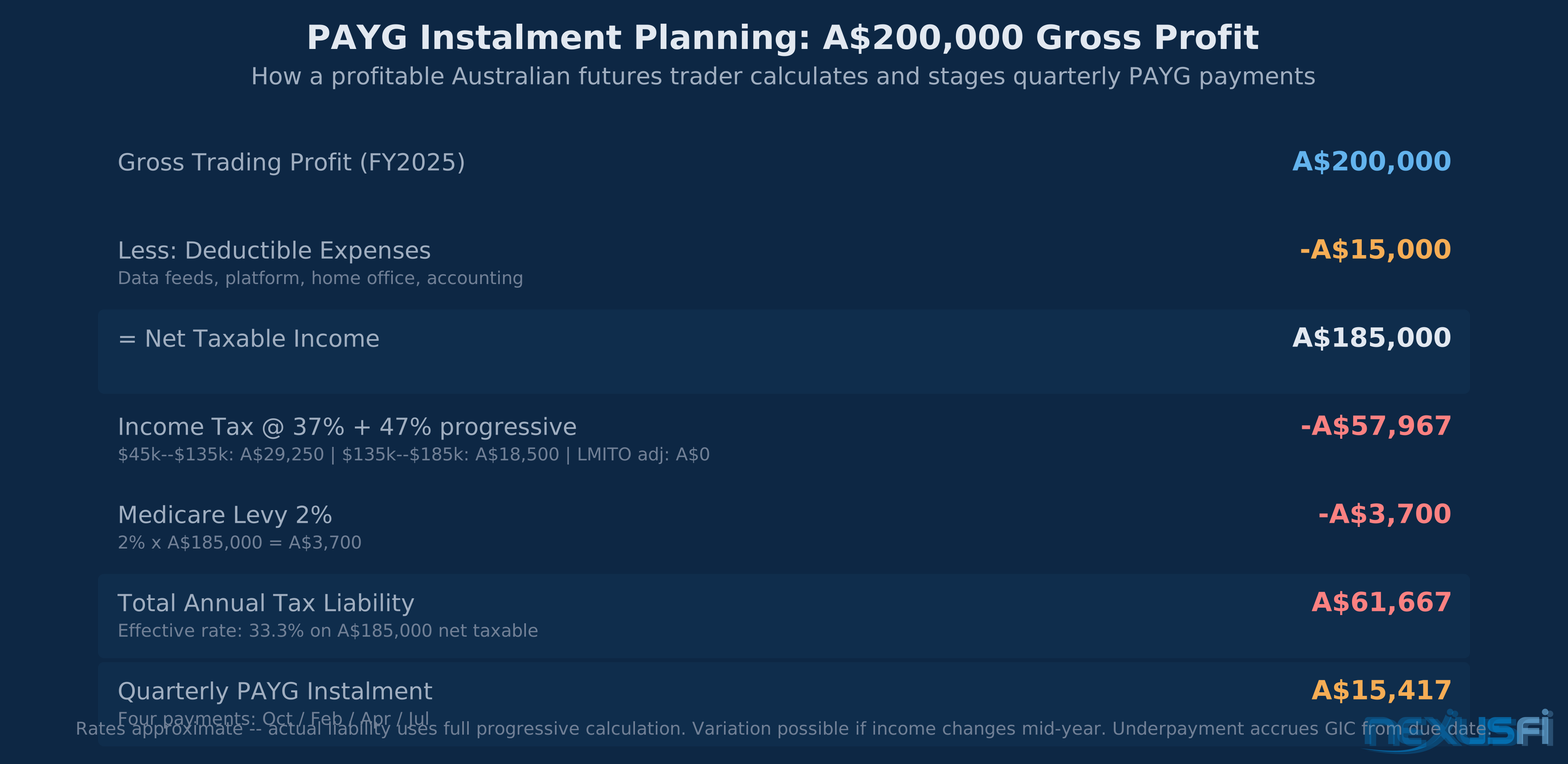
You can vary the instalment amount if you expect lower income — but underpayment triggers the General Interest Charge (GIC). Profitable futures traders should set aside approximately 47% of net profits quarterly to cover the obligation.
Record-Keeping Requirements #
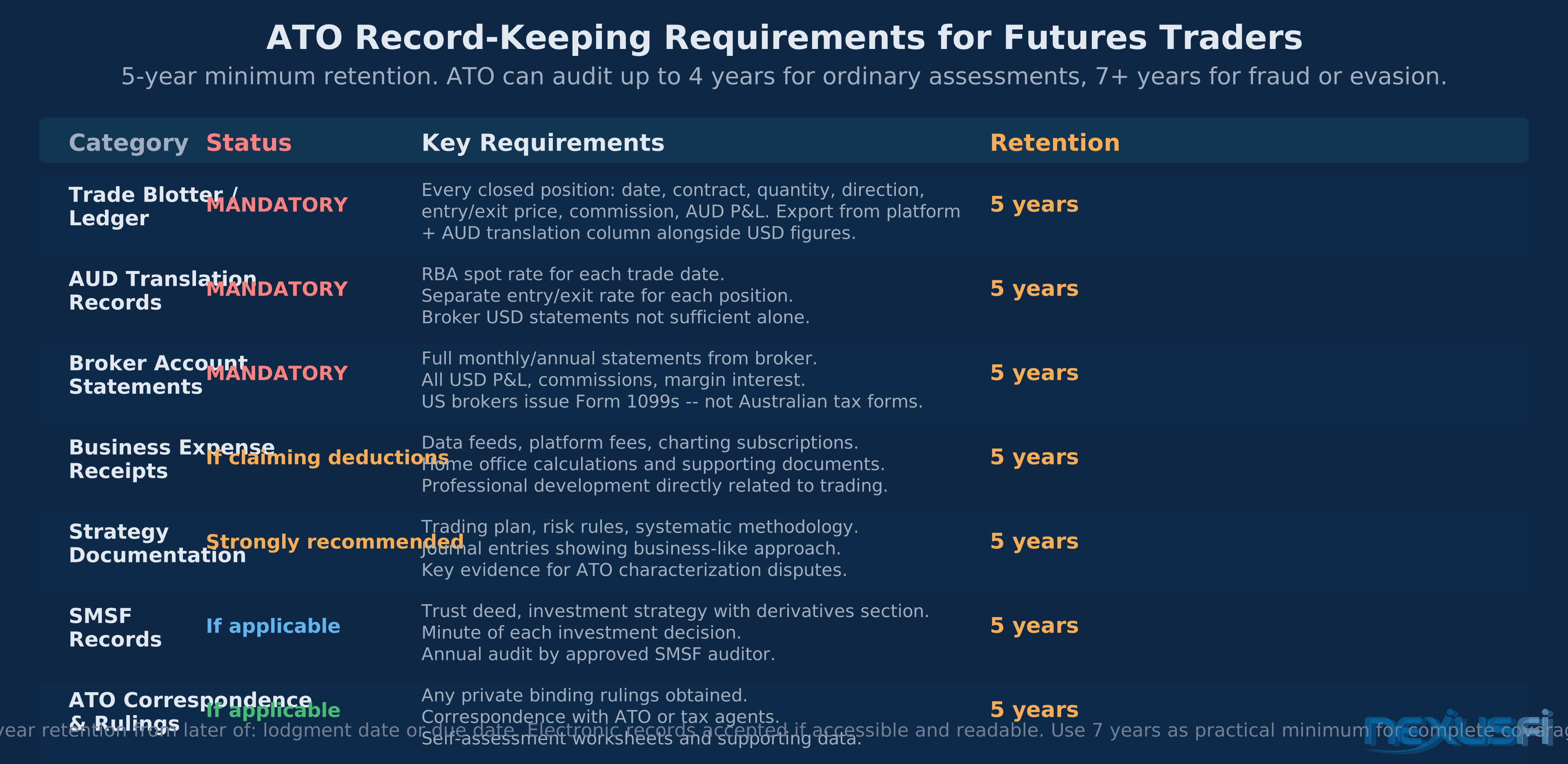
ATO requires business taxpayers to maintain adequate records. Failure to keep proper records can result in denial of claimed deductions and income adjustments.
Minimum retention: 5 years from the later of (a) when you lodged the return or (b) when the return was due. Use 7 years as a practical target.
Critical records for Australian futures traders:
- Trade blotter/ledger: Every closed position with AUD P&L column (not just USD figures from broker)
- AUD translation records: RBA rate for each transaction date — your personal documentation, not just broker statements
- Broker account statements: Full monthly statements covering all USD activity
- Expense receipts: Invoices for every data subscription, platform fee, and home office calculation
- Strategy documentation: Trading plan and risk management rules — evidence of business-like approach
Tax Filing Mechanics #
Income year: 1 July to 30 June. A position opened in June and closed in July defers the taxable gain to the next income year — a full 12-month deferral on the same holding period as far as tax timing is concerned.
Individual Tax Return (ITR): Business income from futures appears in the "Business income" section. Filed online via myTax or through a registered tax agent.
Filing deadline: 31 October following year-end (30 June). With a registered tax agent, this can extend to May the following year. Any tax owing still accrues interest from the natural due date.
PAYG Instalments: Set aside ~47% of net trading profit each quarter. Vary the amount down if you expect lower income, but calculate carefully.
No state income taxes: Unlike US and Canadian traders who face state/provincial rates on top of federal, Australia has no state income taxes. Commonwealth income tax is the only income-based obligation. Stamp duty, payroll tax, and land tax exist at the state level but don't touch futures trading P&L.
Common ATO Audit Triggers #
Inconsistent characterization: Claiming capital gains treatment in profitable years and business income in loss years. The ATO looks for this explicitly. Your activity doesn't change its nature based on whether you made money.
Large losses against employment income: A$100,000+ trading losses offset against wages creates an unusual return profile. Have your trade-by-trade records and business documentation ready before lodging.
FX methodology problems: Using an annual exchange rate, not converting at all, or switching methods between years. ATO's international data matching can reveal Australian account holders at US brokers.
Missing PAYG instalment lodgments: Automated system — if the ATO assigned instalments you didn't lodge, expect contact.
Expense claims without activity: Data subscriptions and platform fees in a year with minimal trading is a mismatch.
SMSF derivative breaches: ATO actively reviews SMSF investment strategies and treats derivative use as a specific enforcement priority.
For US traders, yes. For Australian traders: no 60/40 rule, no instrument-based carve-out. The CGT discount is the Australian equivalent, and active traders usually can't access it.
Australia has no equivalent to this. Don't import US tax assumptions.
Practical Tax Planning #
1. Decide your characterization upfront. Active trading means business income. Plan for it from day one — build your expense tracking, PAYG obligations, and AUD translation methodology before your first trade.
2. Model after-tax returns before deploying capital. At 47% combined rate, your edge needs to survive a 47% haircut. A strategy generating 20% gross return delivers around 10.6% after tax. Run this math before committing capital.
3. Build AUD translation records as you trade. Don't reconstruct a year's worth of RBA rates from memory after the fact. Use rba.gov.au daily rates and document each trade-date rate in your blotter at the time of trade.
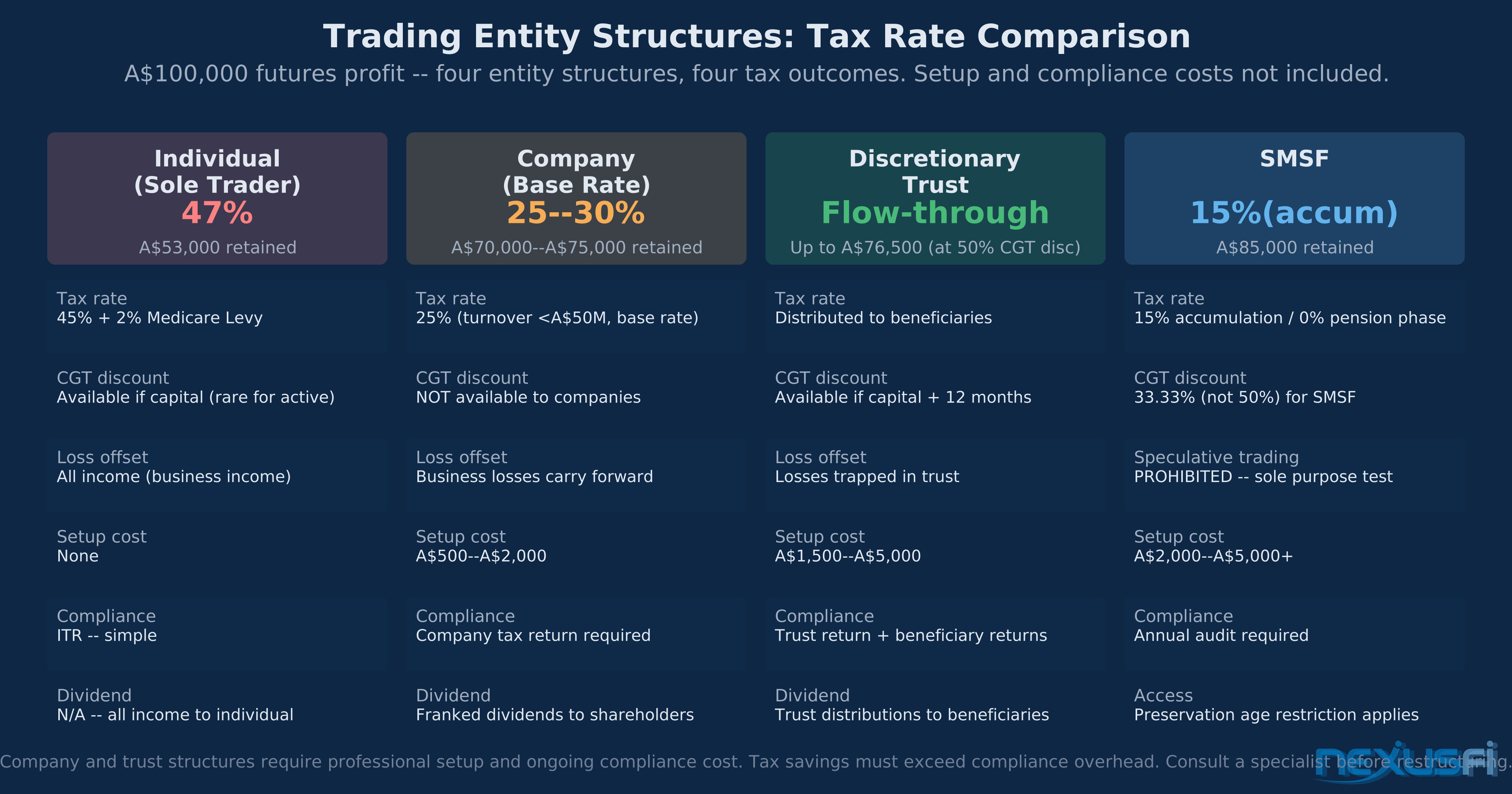
4. Review entity structure. Individual (47%), company (25--30% base rate), or trust (flow-through, complex) each have distinct tradeoffs. For consistent six-figure trading income, a company structure may save meaningful tax. Get modeled by a tax professional before switching — trading entity structures have real compliance overhead.
5. Don't import US assumptions. Section 1256, 60/40, Schedule D — none of these apply in Australia. US-focused trading tax content actively misleads Australian traders. Every tax decision needs to be validated against ATO guidance or a qualified Australian adviser.
6. Engage a specialist. General practitioners often don't understand futures characterization, AUD translation, or non-commercial loss rules for trading activity. A specialist in trading taxation and financial arrangements costs more and saves more.
Knowledge Map
Go Deeper
Build on this knowledgeCitations
- — Trading is a Business (2025) 👍 8“It seems like most traders get into trading because they saw an advertisement and were led to believe that options, or penny stocks, IPOs, Futures, Crypto, or whatever the hot thing is at the moment, would be their path to easy money. Treating it as a business is the mindset that matters.”
- — Selling Options on Futures? (2021) 👍 6“I live in a no income tax state and trade in my individual name. All futures are taxed as section 1256 contracts and hence are treated as 60% long-term, 40% short-term capital gains. This is unique to the US -- traders in Australia and Canada face entirely different frameworks.”
- — Personal or LLC? (2018) 👍 10“For most retail traders the most common use case of trading will be to use the net loss as a deduction on their personal taxable income. If you are trading at a large scale, then yes, the business route will be required, but even smaller traders benefit from keeping proper records.”
- — Any long term success stories from funded traders in these get-funded programs? (2021) 👍 4“From a live account you pay futures taxes 60/40 long term/short term capital gains tax, which is clearly superior to ordinary income. Capital gains treatment is advantageous, but it depends entirely on your jurisdiction -- Australian traders have no 60/40 rule.”
- — futures tax rate in Canada? (2021) 👍 1“Essentially, it appears that the courts see futures (including both index futures and commodity futures) in the same light as stocks and options. Therefore, actively trading futures would be taxed on account of income in most jurisdictions outside the US.”
- — Making a Living with the Micros (2021) 👍 6“Assuming you are in the USA and are trading futures -- 60% are taxed at the long-term capital gains tax rate of 15%, while only 40% of your short-term capital gains are taxed at your ordinary income rate. This is a US-only advantage -- non-US traders do not get this treatment.”
- — Tax treatment of financial arrangements -- TOFA (2024)
- — Are you in business? (2024)
- — Capital gains tax (CGT) -- 50% CGT discount (2024)
- — Tax Ruling TR 2005/15: Income tax -- tax treatment of gains and losses from financial contracts for differences (2005)
- — Carrying on a business of share trading -- ATO Private Binding Rulings database (2024)