



Futures Trading Taxes in the UK: CGT, Spread Betting, and HMRC Rules
Overview #
UK futures traders operate under a tax framework that has no equivalent anywhere else in the developed world. The same trading activity — long a December ES contract, short a March crude oil position — can produce profits that are entirely tax-free, or taxable at rates approaching 45%, depending entirely on the legal structure of the contract you traded. Not the market. Not your holding period. Not your intent. The contract type.
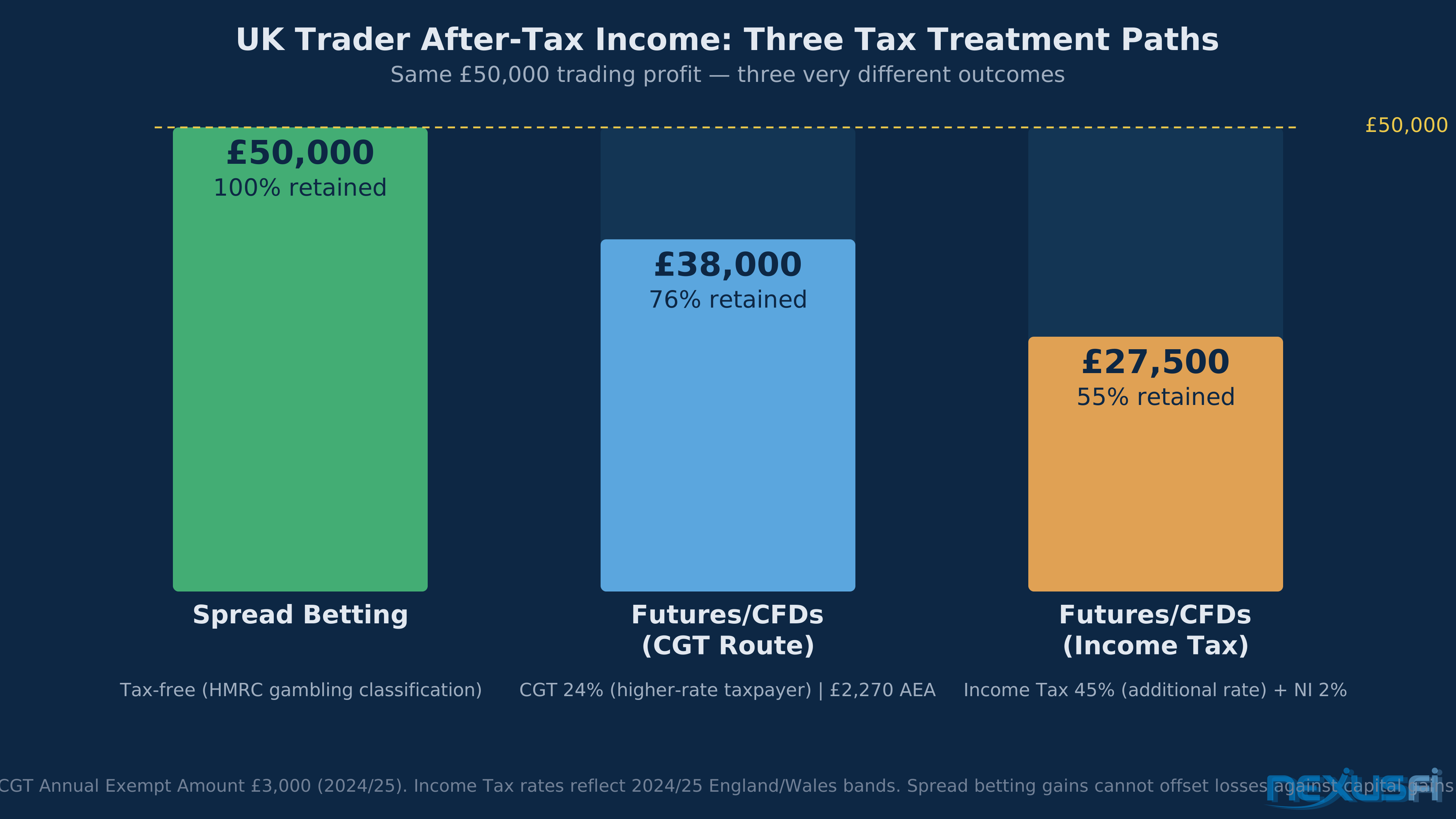
HMRC draws a bright line between spread betting and listed futures. Spread betting profits are classified as gambling proceeds under the Income Tax (Trading and Other Income) Act 2005 (ITTOIA s.776) and are completely exempt from income tax and capital gains tax. Listed futures on exchanges like CME, ICE, or Eurex are CGT assets. Trade the same S&P 500 exposure via a spread betting platform and keep 100% of your profits. Trade it via an ES contract and owe HMRC 18-24% of the gain.
This distinction drives every tax decision a UK futures trader makes.
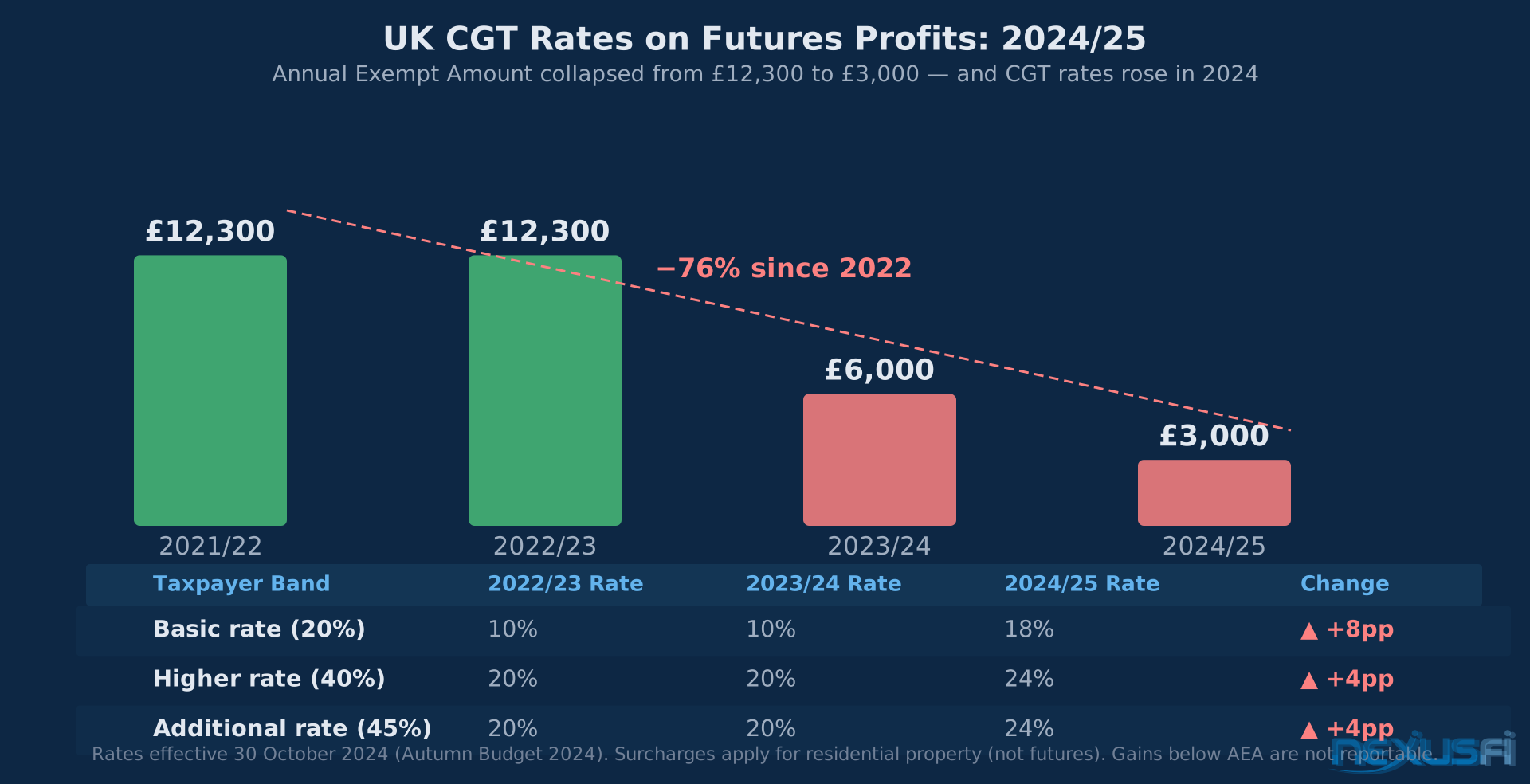
The 2024 Autumn Budget made the environment more expensive for listed-futures traders. CGT rates on non-residential assets rose from 10%/20% to 18%/24% in October 2024, while the Annual Exempt Amount (AEA) continued its collapse — from £12,300 in 2022/23 to £6,000 in 2023/24 to £3,000 in 2024/25. A trader who crystallised £30,000 in futures gains in 2022 paid CGT on £17,700. The same gain in 2024/25 attracts CGT on £27,000 — before accounting for the higher rate.
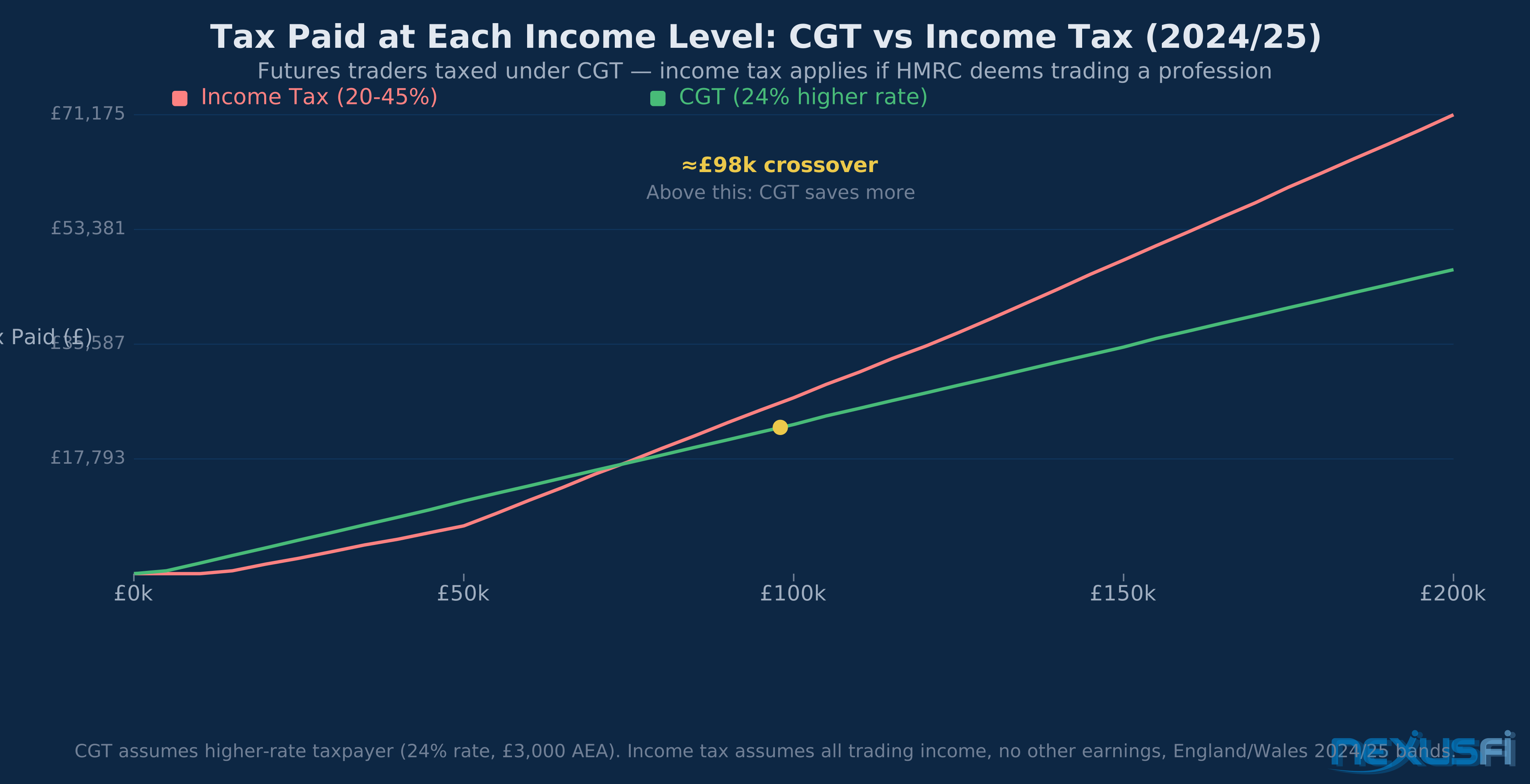
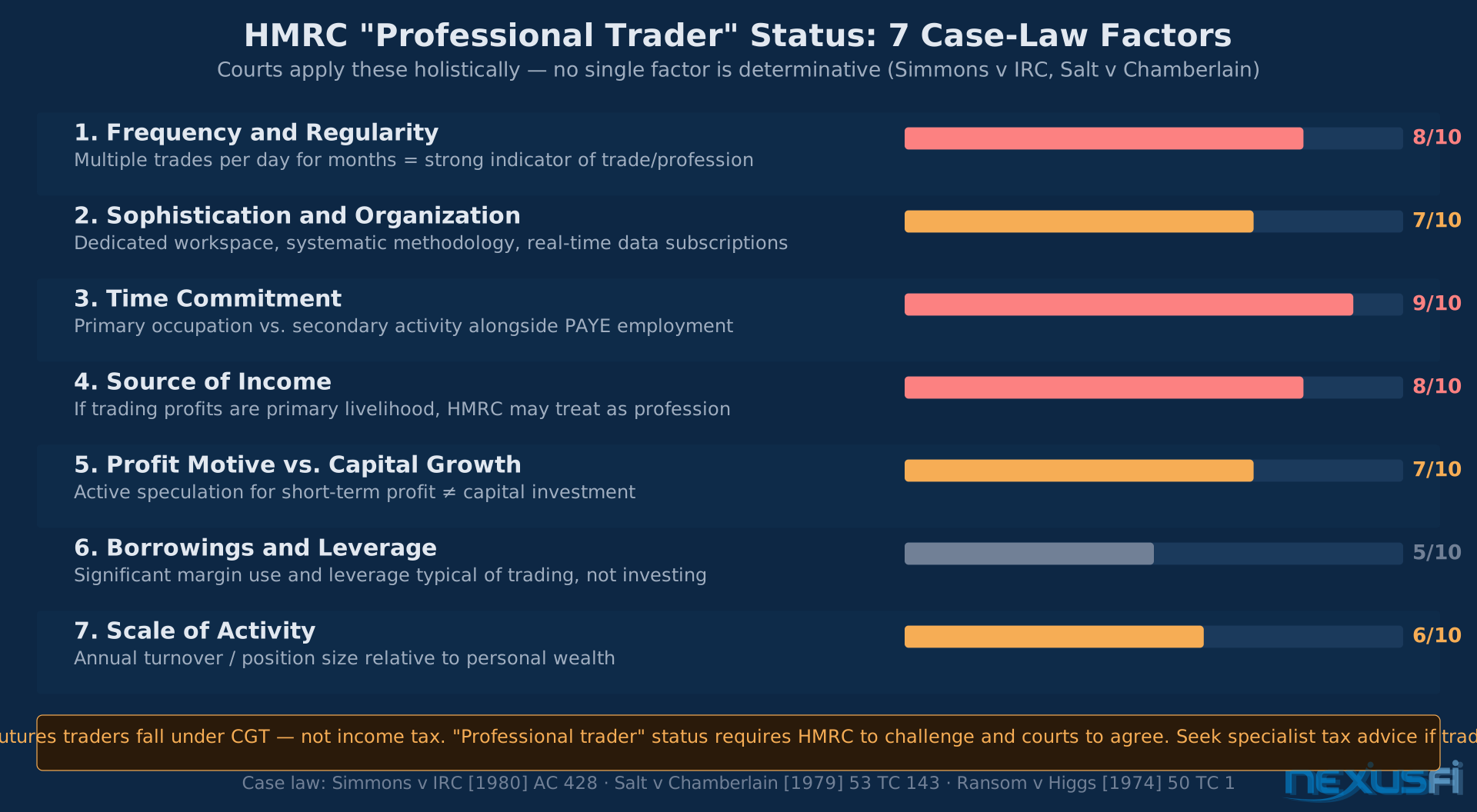
The third variable is professional trader status. HMRC can reclassify futures gains as trading income subject to income tax (20-45%) plus National Insurance, rather than CGT. This happens rarely for retail traders, but when it does, the tax burden roughly doubles. Seven case-law factors — frequency, organization, time commitment, income source, profit motive, leverage, and scale — determine the outcome, applied holistically by courts in cases going back to Simmons v IRC [1980].
Understanding which category you fall into — and how to document it — is the foundation of every UK trading tax decision.
Spread Betting vs Futures: The Tax Fork #
The single most important tax decision a UK trader makes is whether to trade via a spread betting platform or via listed futures contracts. The underlying markets are identical. The economics can be structured to be nearly identical. The tax outcomes are radically different.
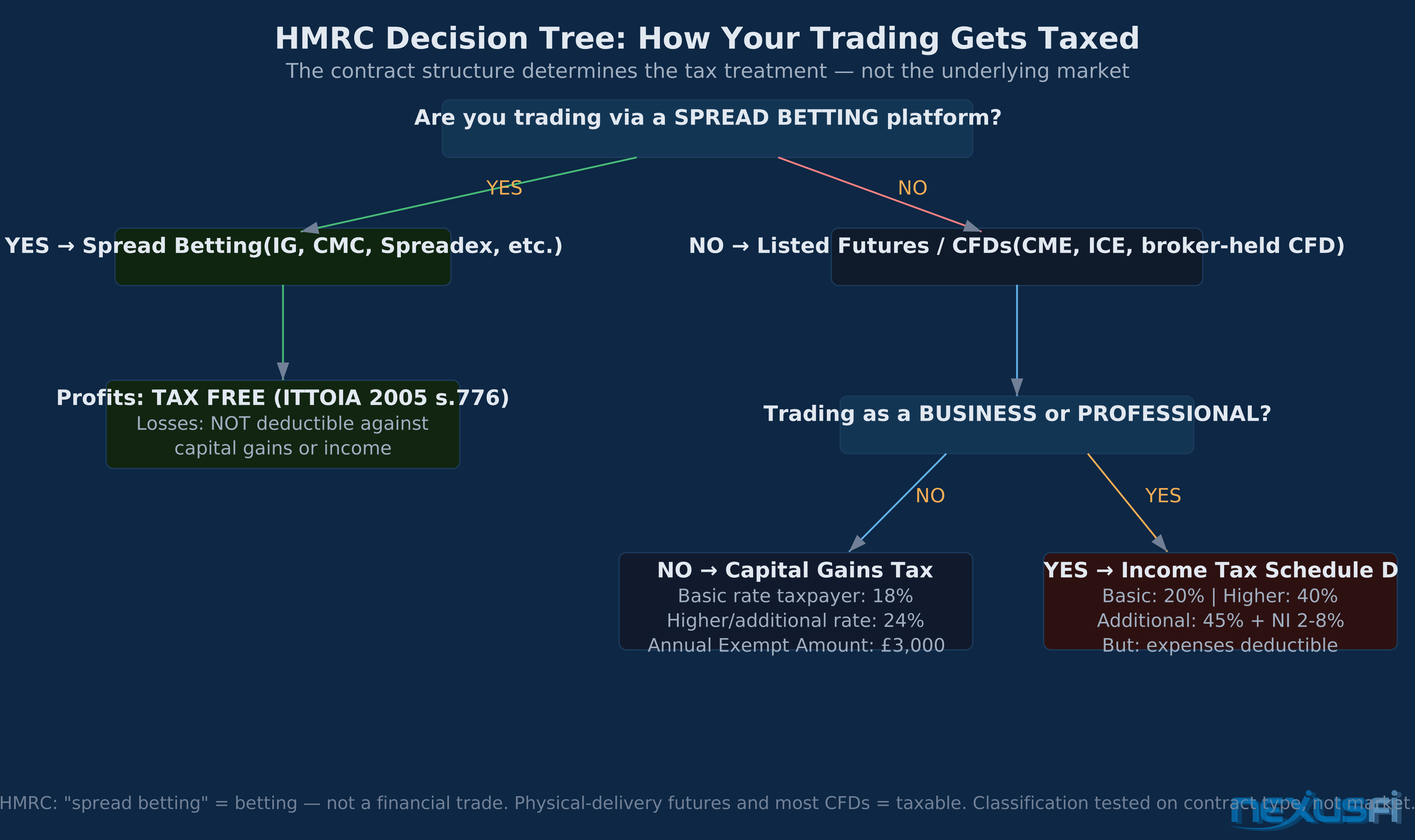
Spread betting is classified as gambling under ITTOIA 2005 s.776. HMRC has consistently maintained this position since the Finance Act 1985 removed betting taxes, and UK courts have confirmed it. When a spread better profits on the FTSE 100 or crude oil, the gain is not a financial asset disposal — it's a gambling win. No CGT. No income tax. No reporting obligation. A UK trader running a systematic spread betting operation, trading 50 markets daily, generating £500,000 per year in profits, owes HMRC nothing.
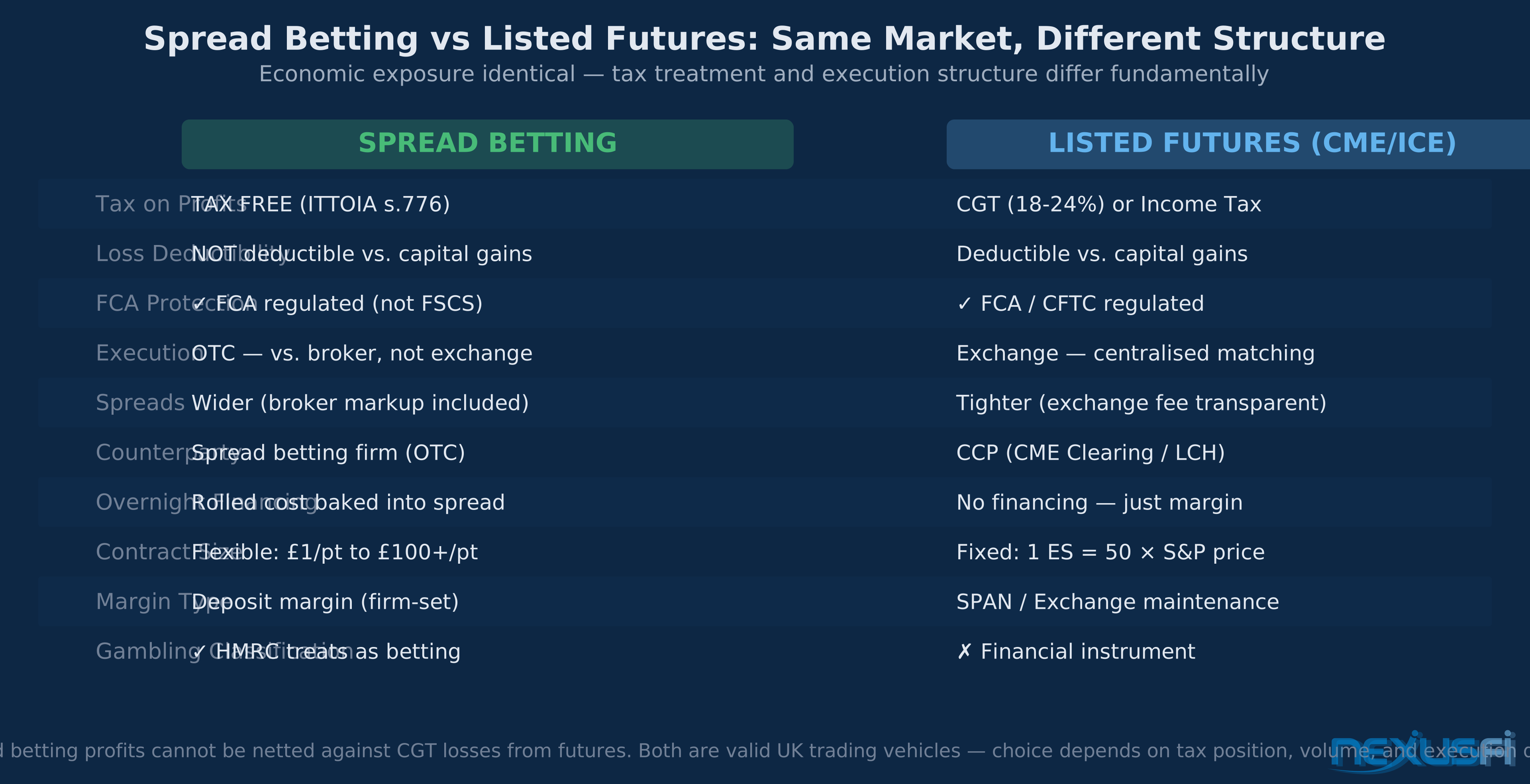
There are two costs to this treatment. First, losses are not deductible. A spread better who loses £50,000 in a bad year cannot offset those losses against capital gains from other assets — shares, property, crypto. The loss disappears for tax purposes. Second, the economics are slightly worse: spread betting firms make money on the spread, so bid-ask costs are typically wider than on listed futures with transparent exchange fees.
Listed futures — ES, NQ, CL, GC, anything on CME or ICE — are treated as CGT assets under TCGA 1992. Each contract expiry is a separate disposal. Rolling from December ES to March ES creates a disposal event — see futures contract rollover for the mechanics. Profits above the £3,000 Annual Exempt Amount are taxable at 18% (basic rate taxpayers) or 24% (higher and additional rate taxpayers). Losses can be offset against other capital gains — a significant structural advantage over spread betting for traders who also hold equity portfolios.
The practical choice between the two structures depends on several factors. Spread betting platforms offer flexibility (bet sizes from £1/point), FCA regulation without exchange membership requirements, and no reporting obligation for profitable years. Listed futures offer tighter spreads, exchange-level counterparty clearing through entities like CME Clearing, and loss deductibility. For UK traders generating consistent profits above £50,000 per year, spread betting's tax advantage typically outweighs execution cost differences. Below that threshold, the choice becomes less obvious.
A critical point many UK traders miss: @Tymbeline, one of NexusFi's long-standing UK members, explained this precisely in The Tax Thread: "For anyone living in the UK, there can be considerable advantages, under some circumstances, to trading by spreadbetting, because all profits are tax-free. Even UK residents whose primary or sole income comes from spreadbetting are not liable for either income tax or capital gains tax on their profits." That remains accurate in 2025. But Tymbeline also flagged what's easy to miss: the quality and regulation of the spread betting firm matters. OTC counterparty risk is real when your broker is the other side of the trade.
Capital Gains Tax: How Futures Profits Are Taxed #
UK-listed and US-listed futures contracts held by UK residents are capital assets under TCGA 1992. When you close a position, you've made a disposal. The gain or loss is the difference between proceeds and cost basis, both converted to GBP.
AEA is aggregate, not per-account The £3,000 Annual Exempt Amount covers ALL your CGT disposals for the year — shares, crypto, futures combined. If you sell a winning stock position in April and trade futures all year, the AEA may already be consumed before you calculate futures CGT.
The Annual Exempt Amount (AEA) is your first shield. For 2024/25, the AEA is £3,000. The first £3,000 of net annual gains — across all CGT assets — is tax-free. Gains above that are taxable. The AEA cannot be carried forward; unused amounts are lost each year. Importantly, the AEA is not per-asset or per-account — it's an aggregate across everything you sold that year. If you also sold shares at a gain in the same tax year, those gains compete for the same £3,000 exemption.
CGT rates (2024/25): The October 2024 budget permanently raised CGT rates on non-residential property assets. Basic rate taxpayers (whose income plus gains keep them within the basic rate band) pay 18%. Higher and additional rate taxpayers pay 24%. "Within the basic rate band" for a basic rate taxpayer means their income plus the futures gains don't exceed approximately £50,270 combined. In practice, most active futures traders who generate significant profits are higher-rate taxpayers and pay 24%.
Each disposal is calculated separately. Unlike US futures under Section 1256 which use year-end mark-to-market, UK futures traders calculate gain/loss on each trade close. An ES position opened at 5200 and closed at 5350 generates a specific gain in USD, converted to GBP at the spot rate on the closing date. If that same position was opened and closed within a single tax year, it's straightforward. Open positions at 5 April must be valued at mark-to-market for some purposes, but HMRC guidance on exactly when this applies to non-UK-exchange futures is layered — specialist advice is warranted for large open positions spanning the year end.
USD to GBP conversion is required for all US futures. HMRC accepts the spot rate on the transaction date (the day the position is closed) or, in some circumstances, the forward rate at trade inception. The Bank of England publishes daily spot rates at bankofengland.co.uk/boeapps/database. Do not use an annual average rate — HMRC expects transaction-date conversion, and using an average is a common audit trigger. NexusFi member @SMCJB, who regularly discusses futures mechanics across the forum, noted in The Tax Thread that the precision of trade documentation is what protects you in any HMRC inquiry — and conversion rates are part of that documentation.
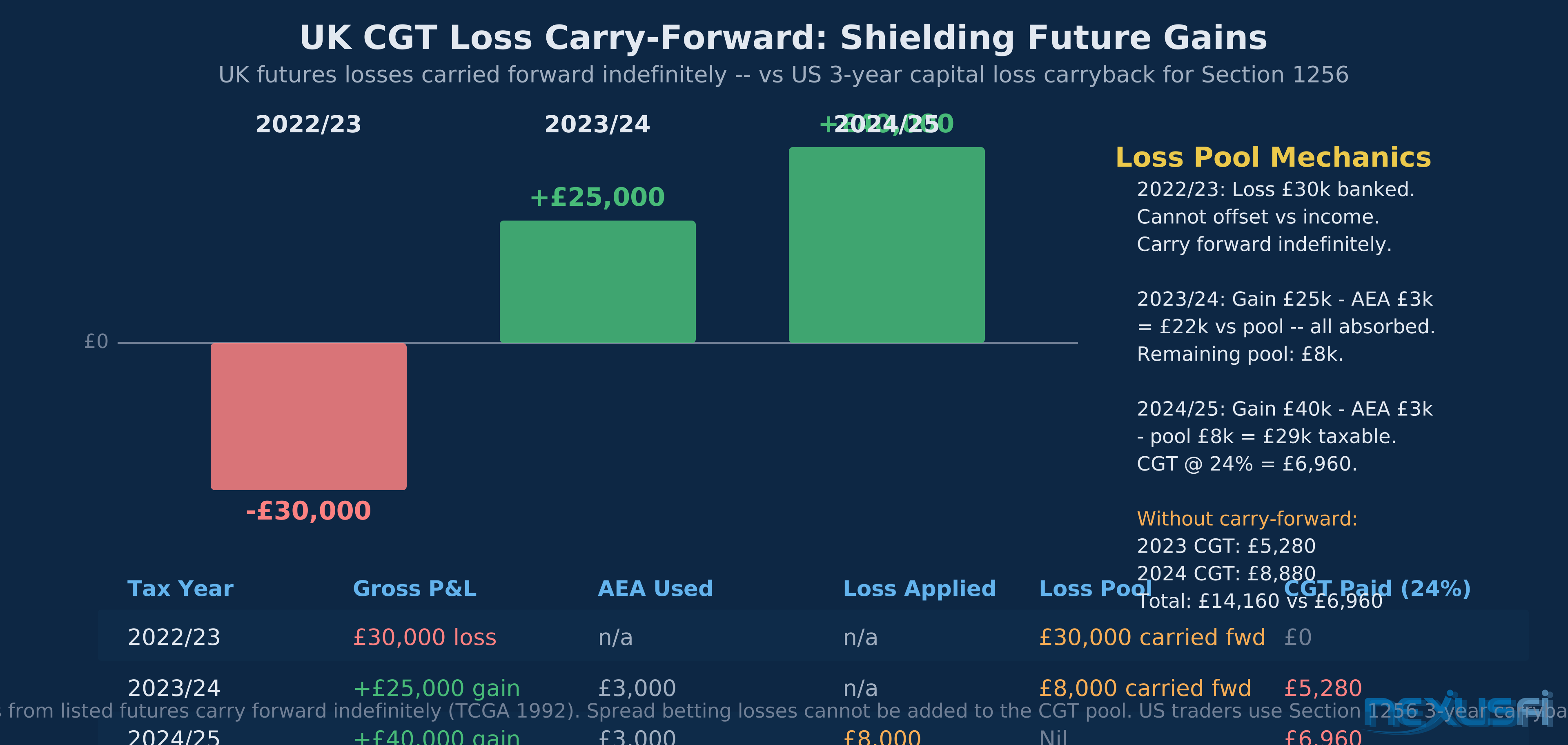
Loss relief: CGT losses on futures are fully deductible against capital gains in the same year, and can be carried forward indefinitely against future capital gains. If your futures trading generated a net £20,000 loss in 2024/25, you bank that loss and apply it against capital gains in any future year. You cannot apply capital losses against income tax — they're locked to the CGT pool.
Section 87 claims (non-UK trusts): UK-resident beneficiaries of non-UK resident trusts who receive matched gains from futures should be aware of Section 87 TCGA, which attributes gains to beneficiaries. This is a specialist area beyond the scope of most retail traders but worth flagging for traders with offshore trust arrangements.
Income Tax: The Professional Trader Exception #
Most UK retail futures traders pay CGT, not income tax. The professional trader classification exists but is applied narrowly by HMRC and even more narrowly by courts.
The leading cases — Simmons v IRC [1980] AC 428 and Salt v Chamberlain [1979] 53 TC 143 — established that speculative trading in futures and financial instruments is prima facie "not a trade" for income tax purposes. The starting position in UK law is that futures speculation is capital, not income. HMRC must establish facts to override that presumption.
Seven factors emerge from case law as the HMRC test:
1. Frequency and regularity: Multiple trades per day, every trading day, over an extended period is the strongest single indicator. A trader executing 200 round-trips per month for two years is harder to defend as capital than one who trades 20 positions per year.
2. Sophistication and organisation: Dedicated trading infrastructure — real-time data subscriptions, professional platforms (NinjaTrader, Sierra Chart), execution systems, risk management tools — indicates a business operation. Someone trading from a smartphone app twice a week is clearly not a professional trader.
3. Time commitment: Trading as a primary occupation, with 6-8 hours daily devoted to market analysis and execution, looks different than trading one hour per morning before a full-time job.
4. Source of income: If trading profits are your primary or sole source of income for two or more years, HMRC has a stronger basis for income tax treatment. NexusFi member @doggette, also in The Tax Thread, noted the corporate structure approach: "I'm in the UK and the way I did it was to run the trading account as a corporate company" — a structure that separates personal and business income and clarifies tax treatment.
5. Profit motive vs. capital growth: Short-term speculative intent (entering and exiting positions within hours to capture price movements) is consistent with trade. Long-term investment intent (holding positions for months to benefit from economic growth) is consistent with capital. Day traders and swing traders have difficulty arguing capital intent.
6. Leverage and borrowings: Systematic use of margin — the normal condition for futures trading — is consistent with commercial activity. HMRC may use this as corroborating evidence.
7. Scale of activity: High annual turnover relative to personal capital suggests commercial activity. A trader with £50,000 in capital generating £5 million in notional annual turnover looks very different from a private investor managing a portfolio.
The practical test is this: if trading is your job, HMRC is likely to treat it as a job. If trading is a profitable hobby that generates more income than your employment, HMRC may want to argue it's your job. The outcome determines whether your gains are taxed at 24% (CGT) or up to 47% (income tax at 45% plus Class 4 National Insurance at 2%).
Consequence of income tax treatment: If HMRC successfully argues professional trader status, all trading expenses become deductible — market data subscriptions, platform fees, professional advice, home office allocation. This partially offsets the higher rate. A trader paying 47% on gross profits but deducting 15% in legitimate expenses effectively pays 47% on 85% of gross — roughly equivalent to 40% on gross. Still higher than CGT but the gap narrows for high-expense operations.
Practical Tax Planning for UK Futures Traders #
The unique UK tax structure creates planning opportunities that don't exist in the US or most other jurisdictions.
Structure choice: The first and most important decision is whether to use spread betting or listed futures. For traders with consistent annual profits above £30,000, the tax advantage of spread betting is significant. At £50,000 profit, spread betting saves approximately £11,250 in CGT (£50,000 − £3,000 AEA × 24%). At £100,000 profit, the saving is approximately £23,280. The spread execution cost difference on a typical ES-equivalent position is often under £100 per contract round-trip on a liquid market — easily offset by the tax saving at any meaningful trading size.
ISA accounts are not available for listed derivatives — futures cannot be held in a Stocks and Shares ISA. Spread betting has no ISA equivalent because it's already tax-free. This eliminates one common planning tool available to stock investors.
Spousal transfer strategies: The "bed and spouse" strategy involves selling a loss-making position and having your spouse or civil partner buy the same (or similar) position. Unlike the 30-day rule (which applies to the same person re-buying the same asset), transfers to a different taxpayer can crystallize losses for CGT purposes while maintaining market exposure. The mechanics must be structured carefully to avoid HMRC anti-avoidance provisions, and the spouse must be a lower-rate taxpayer for the strategy to produce overall savings.
Timing gains across tax years: The UK tax year ends 5 April, not 31 December. US futures traders accustomed to December year-end planning need to adjust. Positions can be closed before 5 April to crystallize gains in the current year (using AEA) or carried into the next tax year. With the AEA at just £3,000, the benefit of splitting gains across two tax years is limited — it saves at most £720 (£3,000 × 24%) if you've used the current year's AEA and can defer enough to get a second AEA in the new tax year.
Using losses systematically: A profitable futures trader who also holds a stock or crypto portfolio should actively coordinate loss harvesting across asset classes. CGT losses from futures offset CGT gains from shares and vice versa. Spread betting losses, however, cannot be used — they're outside the CGT pool entirely. Structuring a portion of trading through listed futures (for loss deductibility) while using spread betting for the bulk of activity may offer the best of both worlds.
Company structures: Some high-volume UK traders operate through limited companies, as @doggette mentioned. Corporate trading pays corporation tax (25% for profits above £250k, 19% below £50k) with a marginal rate structure in between. Gains retained in the company compound at the corporate rate; profits extracted as dividends face an additional layer of tax. Whether a company structure is beneficial depends heavily on extraction strategy, profit levels, and personal tax position. It's the domain of specialist accounting advice, not a general recommendation.
Loss Harvesting: The 30-Day Rule #
UK tax law has an anti-loss-harvesting provision (s.106A TCGA 1992) that is stricter than the US wash-sale rule in one critical way: it applies to all assets, not just substantially identical ones.
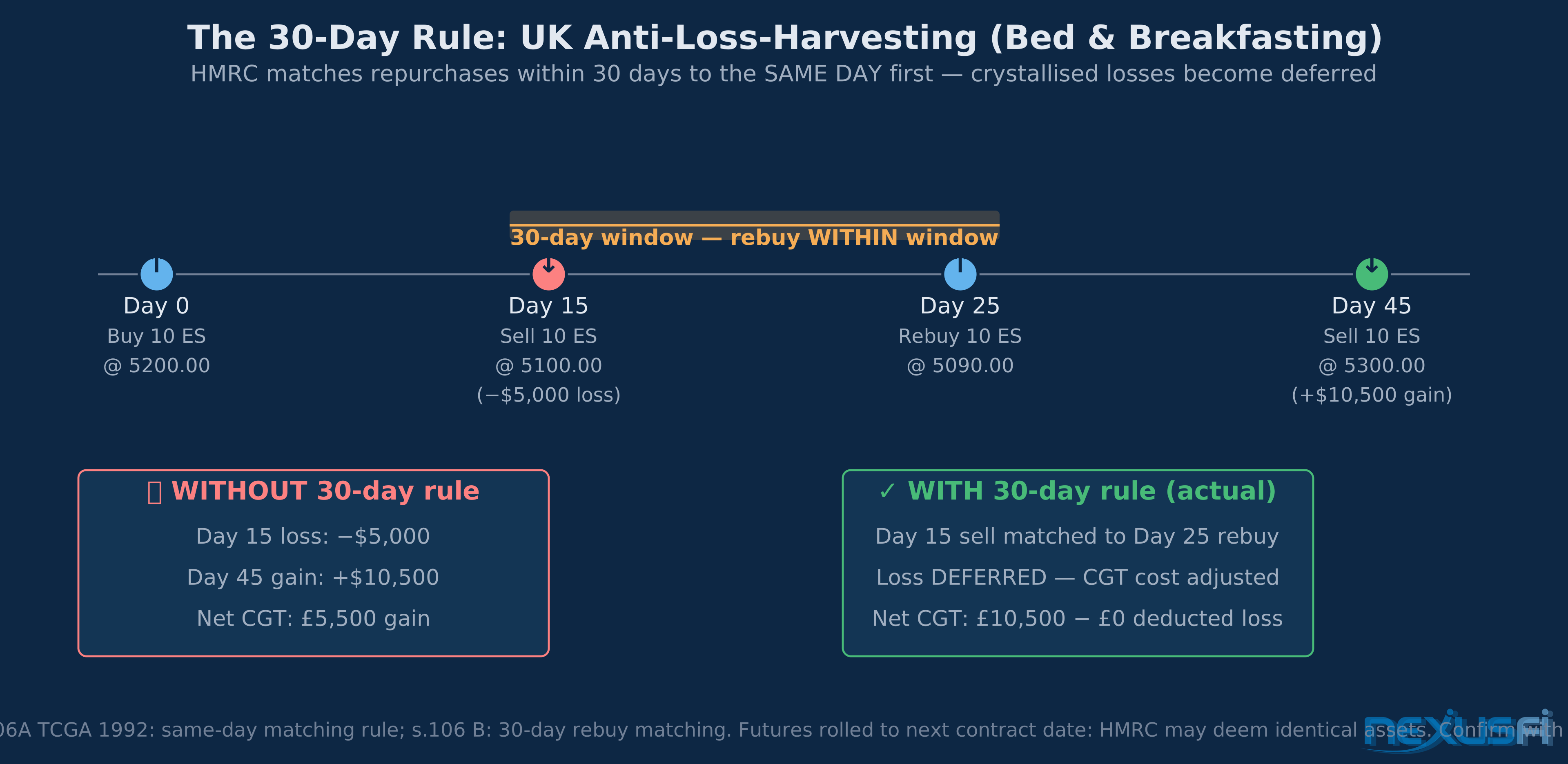
The rule: if you sell an asset and repurchase the same asset (or a functionally identical one) within 30 days, HMRC matches the repurchase to the sale. The loss you thought you crystallized is deferred. Your cost basis on the repurchased position is adjusted to absorb the deferred loss.
How it works in practice: You hold 10 ES contracts at an average cost of 5200. On Day 15 of October, you close the position at 5100 — a $5,000 loss ($50 per point × 10 contracts × $10/tick... varies by contract size). You plan to rebuy in 10 days. On Day 25, you repurchase 10 ES contracts at 5090. Under the 30-day rule, the Day 15 sale is matched to the Day 25 purchase. The $5,000 loss is not crystallized — it's folded into your new cost basis, which becomes 5190 (5090 actual price + $100 per contract deferred loss in ES-point terms). You haven't lost the loss; you've deferred it to your eventual exit from the new position.
Implications for contract rollovers: Rolling from an expiring contract to the next delivery date may trigger the 30-day rule. If you close December ES and open March ES on the same day, HMRC could argue these are the same asset for s.106A purposes. The position is uncertain — ES contracts for different delivery months are technically different financial instruments — but caution is warranted for loss positions near year-end. Get specialist advice before implementing systematic roll-and-harvest strategies.
Section 106 (same-day matching): Before the 30-day rule, there's an even stricter same-day rule under s.106. If you buy and sell the same asset on the same day, the buys are matched to the sells on that day first — preventing day-trading loss harvesting within a single session. This rarely affects futures traders who aren't explicitly trying to crystallize same-day losses, but is worth knowing.
Record-Keeping and USD to GBP Conversion #
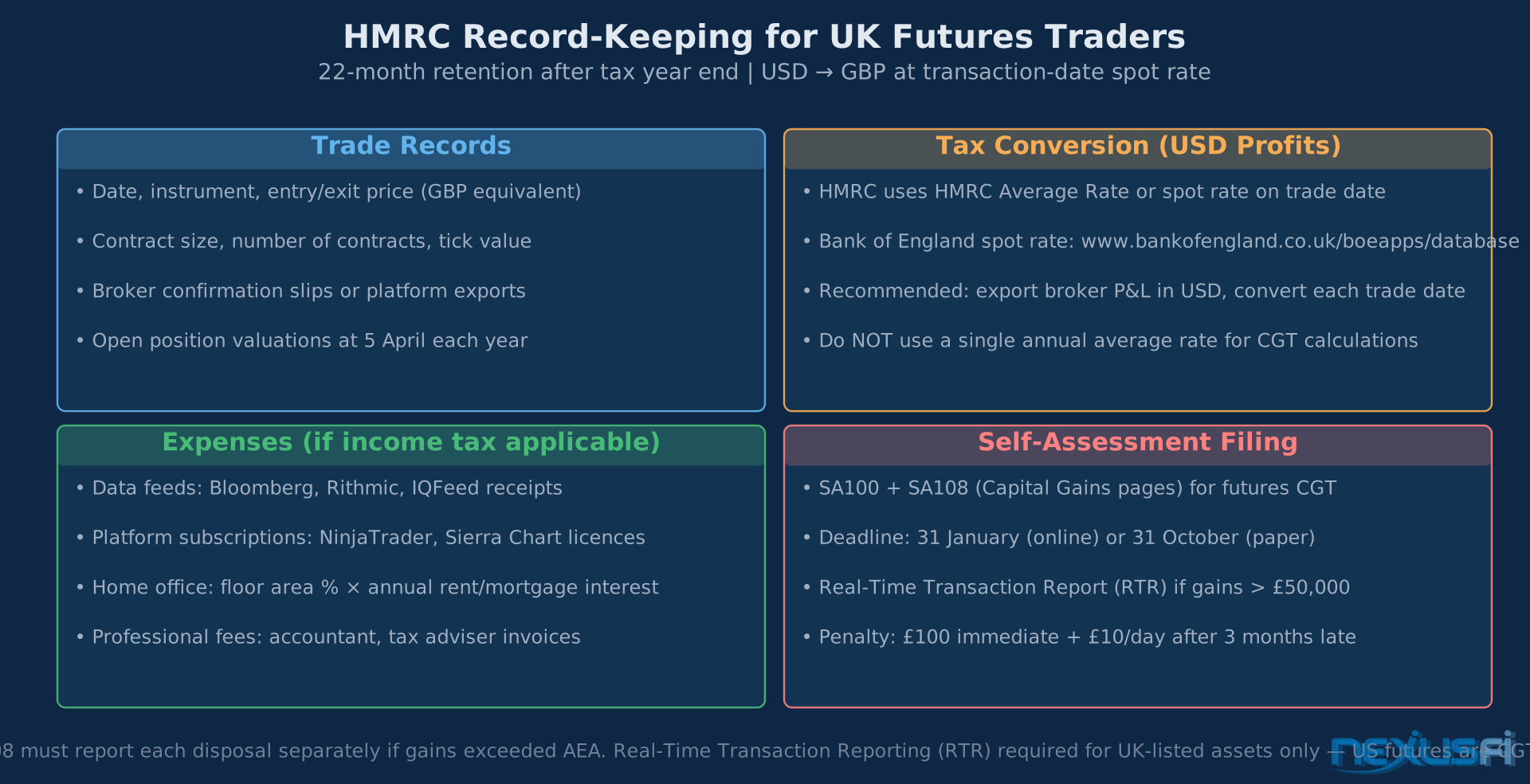
UK self-assessment requires you to keep records for 22 months after the tax year end (5 April). For self-employed traders under income tax, the retention period is 5 years and 10 months. HMRC can investigate returns up to 4 years back for innocent errors, 6 years for careless errors, and 20 years for deliberate concealment.
What to keep: Trade confirmations or broker statements showing date, instrument, entry price, exit price, number of contracts, and commission. Position valuations at 5 April for any open positions. Evidence of the USD/GBP conversion rate used for each trade — ideally a screenshot or saved Bank of England rate page for each closing date. All expense receipts if income tax applies.
USD to GBP conversion mechanics: HMRC's guidance in the Capital Gains Manual (CG78300-CG78380) allows use of either the actual spot rate on the transaction date or the Bank of England published rate. For futures trading, HMRC typically expects transaction-date spot rates. The calculation is:
Gain in USD = (Exit price − Entry price) × Contract multiplier × Number of contracts Gain in GBP = Gain in USD × BoE spot rate on closing date
For a position with multiple legs or averaging, each component should be converted at the rate applicable to each transaction date. Many UK traders use their broker's USD/GBP conversion as a proxy, but brokers use interbank rates that may differ slightly from BoE published rates. For large gains (above £50,000), using the BoE rate directly provides HMRC-verifiable documentation.
Real-Time Transaction Reporting (RTR): If your CGT asset disposals exceed £50,000 in gross proceeds (not net gain), you must file an RTR. For futures traders, gross proceeds means the total exit value of all positions closed, not the net profit. A trader who turned £100,000 of account equity through 1,000 ES contract trades with gross exit proceeds of £5 million must file RTR regardless of net profit. RTR is filed as part of self-assessment, not separately.
Practical workflow: Export your full trading history from your broker at year-end (5 April). Most US brokers (Interactive Brokers, Tradovate, Schwab, AMP) offer detailed P&L exports including per-trade data. Convert each trade's USD profit/loss to GBP using the BoE rate for the closing date. Sum gains and losses separately. Apply the 30-day matching rule to any loss positions. Deduct the £3,000 AEA from net gains. Apply the CGT rate (18% or 24% depending on your total income). File on SA108 with your SA100.
Filing Mechanics: SA100, SA108, and Getting It Right #
UK futures traders file via self-assessment using the SA100 main return with the SA108 Capital Gains supplementary pages. There is no equivalent of the US Form 6781 specifically for futures — all futures gains go through the standard CGT framework.
Who must file: You must file a self-assessment return if your total capital gains in the year exceed the AEA (£3,000 in 2024/25) regardless of whether you owe tax. You must also file if your gains (before deducting AEA) exceed £50,000 — even if net gains after losses are below the AEA.
SA108 mechanics: Section 6 of SA108 covers "other property, assets and gains." Each futures position closed is technically a separate disposal. For traders with hundreds or thousands of trades, HMRC accepts a consolidated summary — total proceeds, total cost, total gain — rather than listing each trade individually. Attach a schedule (typically a spreadsheet) to the return showing the underlying trades. Keep your detailed trade log in case HMRC investigates.
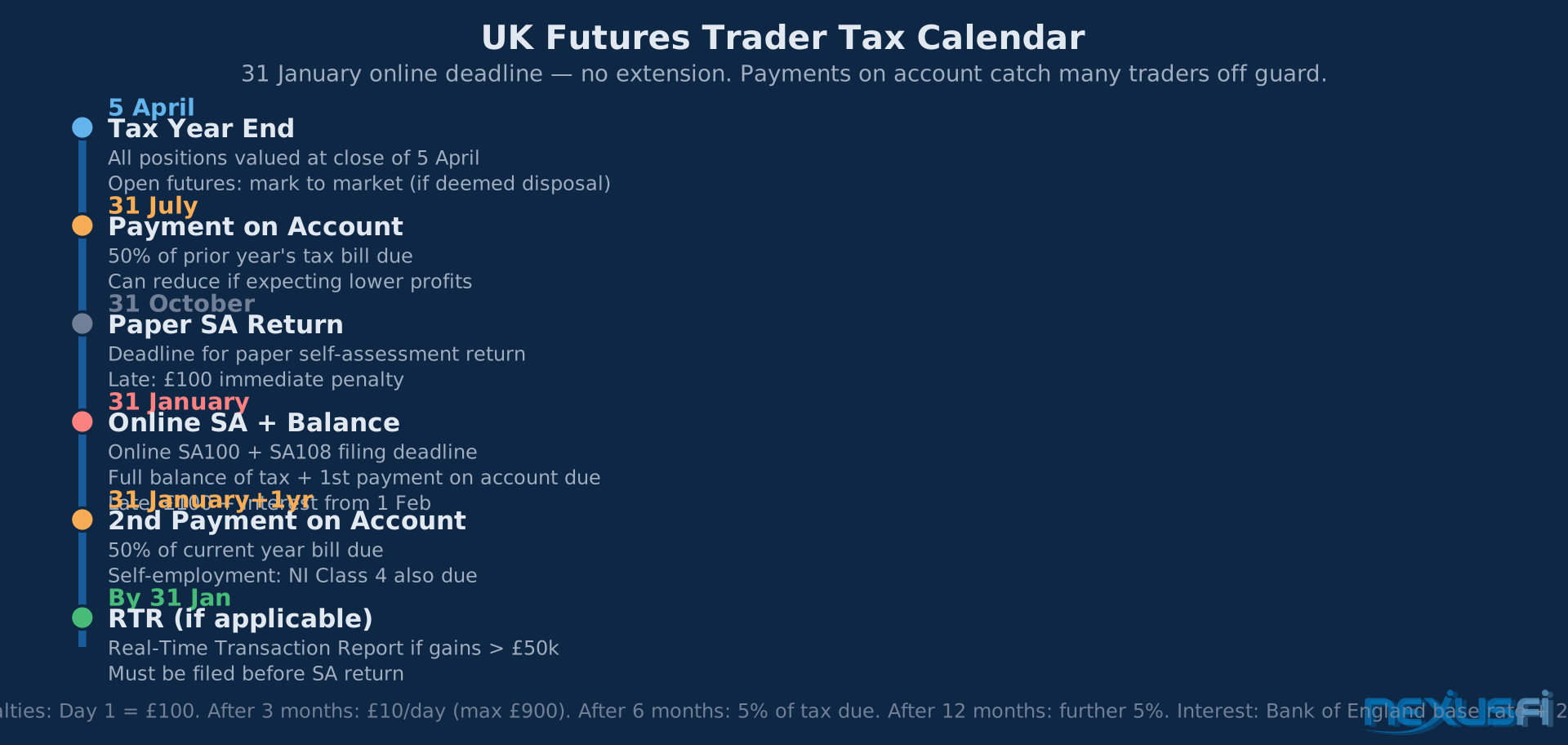
Payment on Account: Unlike US estimated quarterly payments, UK income-tax filers must make "Payments on Account" — two half-year advance payments of estimated tax. The first payment is due 31 January (same day as the prior year's balance). The second is due 31 July. Each payment equals 50% of the prior year's tax bill. For a trader who had a £0 tax bill in Year 1 and a large profitable Year 2, the first year's advance payments are zero. Year 3 will require two POA payments equal to 50% of Year 2's bill each — a cash flow shock for traders whose profits vary. POA can be reduced by application if you expect lower current-year profits.
CGT-only traders: If you pay no income tax (because futures gains are your only income, and you use the personal allowance) and report CGT, the POA system does not apply — only a single annual CGT payment is due by 31 January. This simplifies planning.
Deadlines: Self-assessment returns for 2024/25 (year ending 5 April 2025) must be filed online by 31 January 2026. Paper returns were due 31 October 2025. There is no extension available for online returns, unlike the US. HMRC penalties begin at £100 for day 1 of lateness and increase progressively to 5% of tax owed after 6 months.
Hiring a specialist: Futures taxation in the UK sits at the intersection of CGT, income tax, derivatives law, and HMRC practice. HMRC does not have a designated futures trader helpline. Most general accountants do not regularly encounter listed derivatives in client portfolios. The accountants who consistently handle these cases include those who advertise specifically to active traders and who understand the spread betting exemption, professional trader classification risk, and USD/GBP conversion requirements. The investment in specialist advice typically pays for itself on any trading operation generating more than £30,000 per year.
UK vs US Tax Treatment #
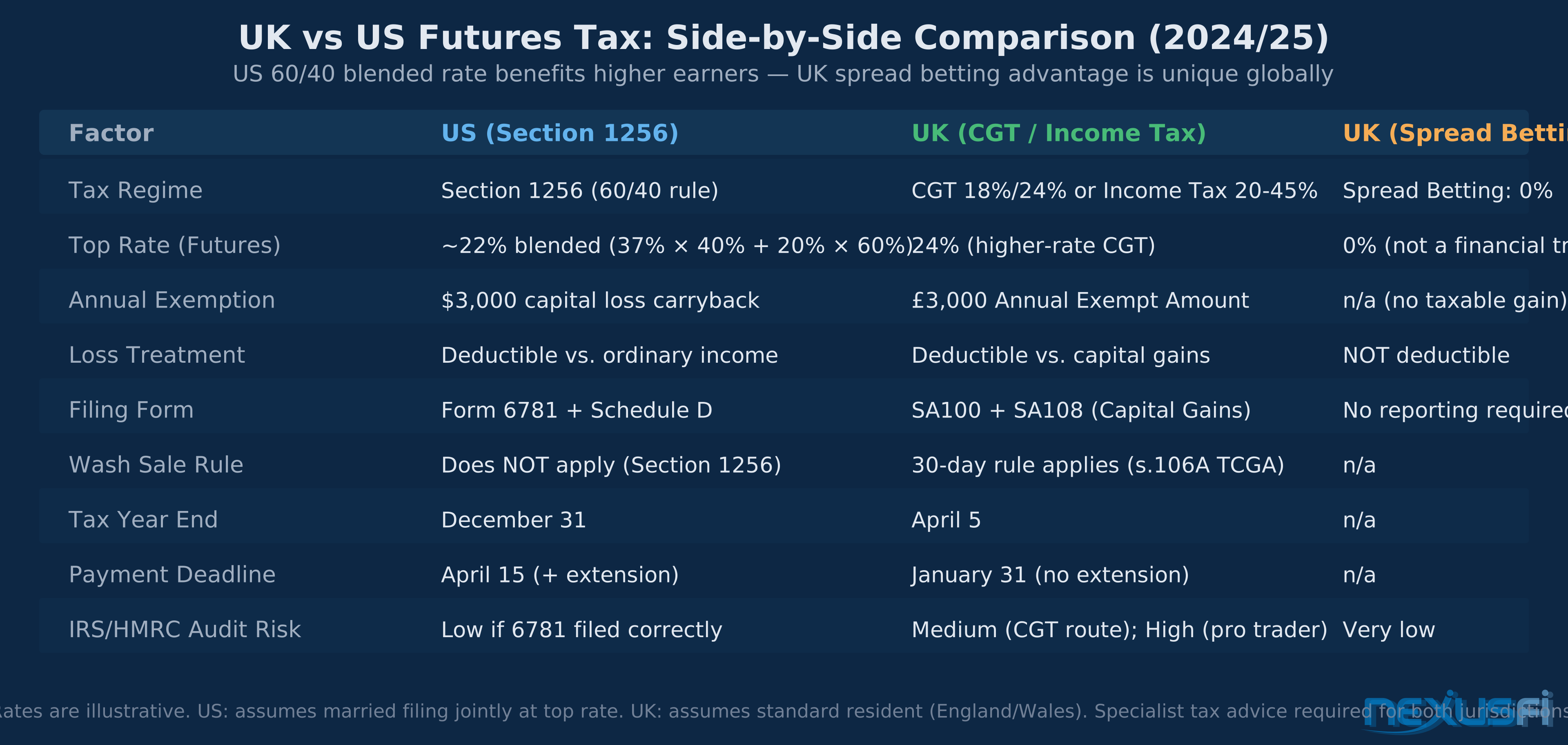
UK and US futures traders face at the core different tax environments, and UK traders trading US markets interact with both systems simultaneously.
No withholding tax on US futures: UK residents trading US futures through a US broker do not pay US withholding tax on futures gains. Futures are not subject to FATCA withholding in the same way that US dividends are. The broker will require a W-8BEN form confirming UK residency, which eliminates any US withholding obligation. UK residents pay UK CGT on the gains (converted to GBP) and have no US filing obligation.
Double taxation treaty: The UK-US tax treaty (1975, updated 2001, with protocols) addresses investment income but not speculative trading gains. For retail futures trading, there is no realistic double taxation risk — gains are taxable only in the UK for UK residents. For professional traders spending significant time in the US, or for US citizens resident in the UK, the interaction is more complex.
Section 1256 does not apply to UK residents: The US 60/40 blended rate is a US domestic provision that applies to Section 1256 contracts held by US persons. A UK resident without US tax obligations does not benefit from or pay under Section 1256. The comparison is academic except for those with dual tax status.
The spread betting advantage in global context: No other major developed market offers the UK's spread betting exemption. Australian traders pay CGT on derivatives. Canadian traders face business income tax. German traders pay Abgeltungssteuer (flat 25% plus solidarity surcharge). US traders pay Section 1256 blended rates. The UK's ITTOIA s.776 exemption for spread betting gains is historically unique — the accidental product of a 1985 law designed to eliminate a physical betting tax, not to create a derivatives trading tax haven. HMRC has been aware of traders exploiting this since the early 2000s but has not moved to legislate against it, likely because the revenue at stake is modest relative to the complexity of distinguishing legitimate spread betting from other derivatives activity.
Common Mistakes UK Futures Traders Make #
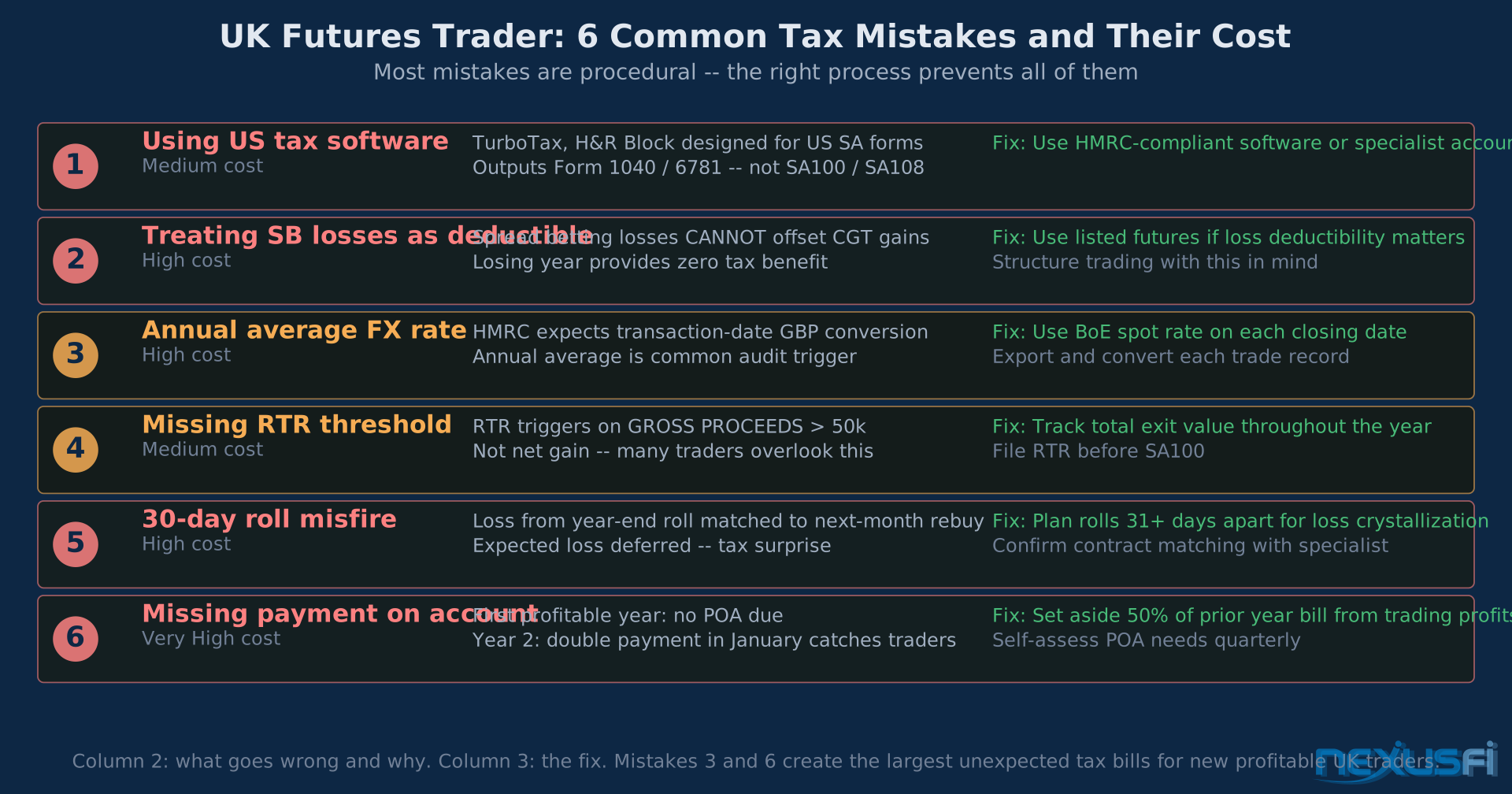
Using US-oriented tax software: Tools like TurboTax or H&R Block software are designed for US tax law and produce US tax forms. UK traders need UK self-assessment software or an accountant familiar with SA108.
Assuming spread betting losses are deductible: They're not. This mistake leads traders to over-count their tax savings and then be surprised when a losing year provides no CGT offset for other gains.
Converting at annual average rates: HMRC expects transaction-date conversion. Annual average rates are acceptable for some purposes (PAYE, international income) but not for CGT on each individual disposal.
Missing RTR threshold: Traders focused on net profits sometimes miss that RTR triggers on gross proceeds (total exit value), not net gain. A trader with £500,000 in gross ES contract proceeds and a net £5,000 gain still needs RTR filing if total proceeds exceed £50,000.
Rolling contracts without considering the 30-day rule: Year-end rolls that crystallize losses and then re-establish the position within 30 days may inadvertently trigger s.106A, deferring the expected loss relief.
Treating IS (intermediate delivery) as the same contract: HMRC has not definitively ruled on whether quarterly ES contract rollovers constitute same-asset disposals under the 30-day rule. Most practitioners treat them as different assets (different delivery dates, different pricing), but confirmation from a specialist is worth getting before building roll-based tax strategies.
Not registering for self-assessment early enough: Registration must be complete by 5 October following the tax year in which the obligation first arises. A trader who first becomes liable in 2024/25 must register by 5 October 2025. Late registration doesn't delay the 31 January 2026 filing deadline.
Ignoring payments on account: A first-year profitable trader who files a 2024/25 return showing £24,000 in CGT will also face two payments on account for 2025/26 — each £12,000 — due 31 January 2026 and 31 July 2026. That's £48,000 due within days of each other for the payment-naive trader.
Knowledge Map
Go Deeper
Build on this knowledgeReferences This Article
Articles that build on this topicCitations
- — The Tax Thread (2015) 👍 1“For anyone living in the UK, there can be considerable advantages, under some circumstances, to trading by spreadbetting, because all profits are tax-free.”
- — The Tax Thread (2015)“I am in the UK and the way I did it was to run the trading account as a corporate company.”
- — The Tax Thread (2014)“Any opinions on UK corporate structures for futures trading, to help reduce tax liabilities?”
- — The Tax Thread (2017)“I am a citizen of Republic of Armenia, if I open trading account in US or UK based company which taxes I have to pay?”
- — The Tax Thread (2017) 👍 5“In the United States you sign a form called W8 which is Certificate of Foreign Status of Beneficial Owner.”
- — The Tax Thread (2015) 👍 1“Most Futures and Futures Option contracts are taxed as Section 1256 Contracts which means that they are taxed 60 percent at your long term capital gains rates.”
- — Offshore Banking and Asset Protection, Offshore Trading (2014)“Does anyone here have experience with such a structure? Is there any issue with brokers like InteractiveBrokers opening accounts for Nevis LLCs?”
- — Offshore Banking and Asset Protection, Offshore Trading (2014) 👍 8“Be very careful with any sort of offshore entity.”
- — German Tax (2012)“I have done some backtesting and my question is if I could declare the commissions as costs which decrease the returns.”
- — ITTOIA 2005 s.776 - Income Tax (Trading and Other Income) Act 2005
- — Taxation of Chargeable Gains Act 1992 (TCGA 1992)
- — Bank of England Exchange Rate Database - Daily Spot Rates for USD/GBP Conversion