



SPAN Margin System: How Futures Exchanges Calculate Risk and Set Your Required Deposits
Overview #
Every time you open a futures position, your broker debits a specific dollar amount from your account before a single tick has moved. That number — your margin requirement — doesn't come from thin air. It comes from a systematic, scenario-based calculation called SPAN: the Standard Portfolio Analysis of Risk. CME Group invented it in 1988. Today it governs margin calculations across virtually every major futures exchange on the planet.
Most traders treat margin as a fixed annoyance — the amount they need in their account to trade. But margin isn't fixed. It changes with volatility, with what else you hold, with whether you're hedging or speculating, and with which broker you use. During the March 2020 COVID crash, ES initial margin tripled overnight. During the Ukraine invasion in February 2022, crude oil margins doubled before the week was out. Understanding how SPAN actually calculates these numbers turns margin from a passive tax into useful information about risk.

What SPAN Is -- and What Problem It Solved #
Before SPAN, exchanges calculated margin contract-by-contract. You held ten ES contracts, you paid margin for ten ES contracts. The problem: this ignored correlation entirely. A trader holding ten ES long and ten NQ long had far less than twice the risk of holding ten ES alone — but under the old system, paid twice the margin. Meanwhile, a trader with a highly concentrated single-contract position might be carrying more actual portfolio risk than the margin suggested.
CME Group addressed this by designing a portfolio-level margining system. Instead of asking "what is the risk of this contract?" SPAN asks "what is the worst-case loss this portfolio could experience over one trading day across a defined set of scenarios?" The answer to that question, adjusted for offsetting positions and correlated products, becomes the performance bond requirement.
The system has three core advantages over contract-by-contract calculation: it rewards diversification and spread trading with lower margins, it penalizes concentrated positions appropriately, and it can dynamically update when volatility regimes change — which is exactly what happens when markets move violently.
The Risk Array: How SPAN Defines 'Worst Case' #

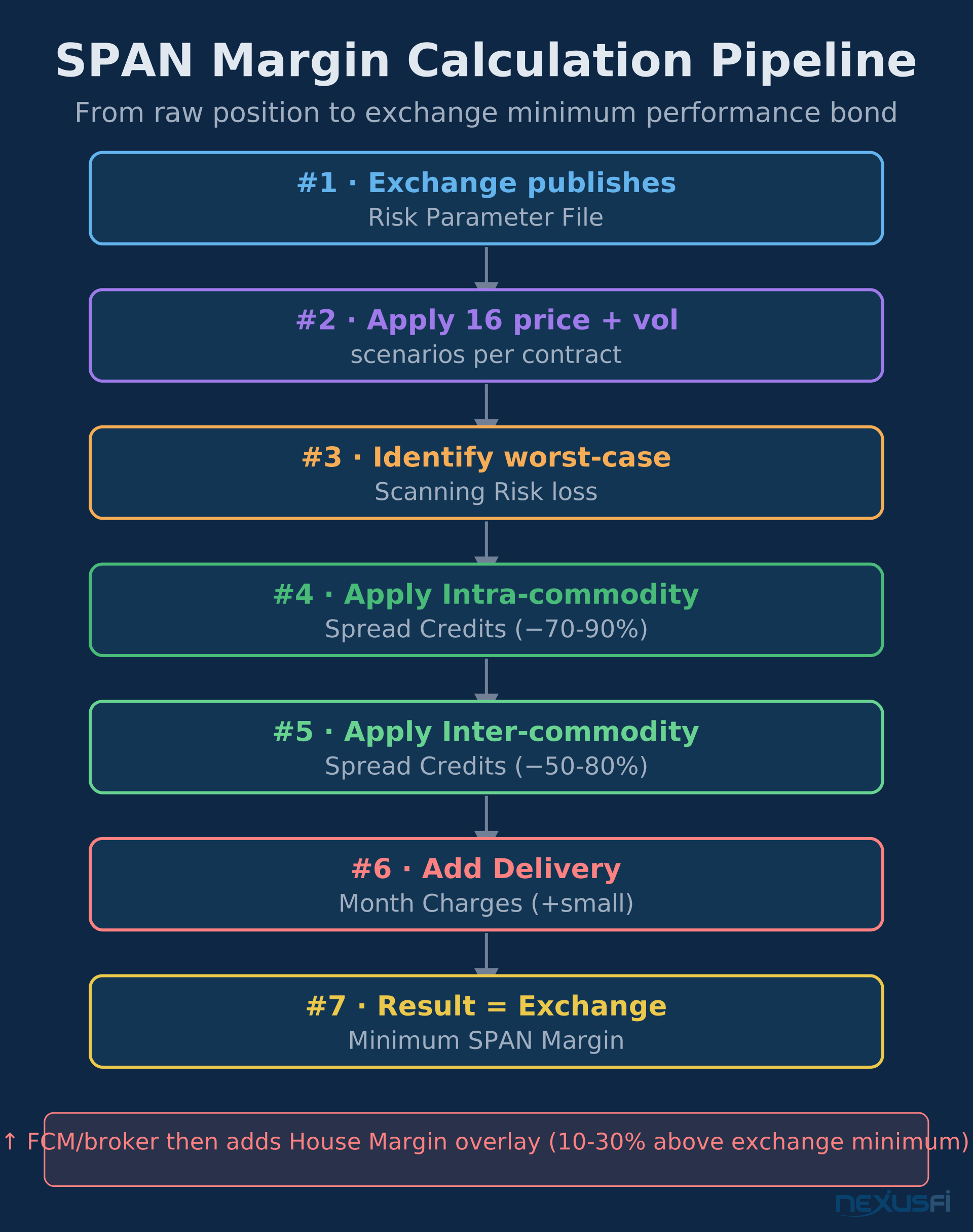
The foundation of every SPAN calculation is the risk array. For each tradeable product, the exchange publishes a parameter file containing a grid of hypothetical price and volatility scenarios. The standard CME implementation uses sixteen scenarios — combinations of price moves (expressed as multiples of the product's scan range) against volatility shifts (up, down, or unchanged).
The scan range itself is the key variable. For ES, CME sets it based on statistical analysis of recent price moves — typically calibrated to cover 99% of expected one-day moves. As of 2026, with ES around 5,400, the scan range is roughly $5,500, meaning the worst-case scenario simulates a $11,000 adverse move (two times the scan range in the worst direction).
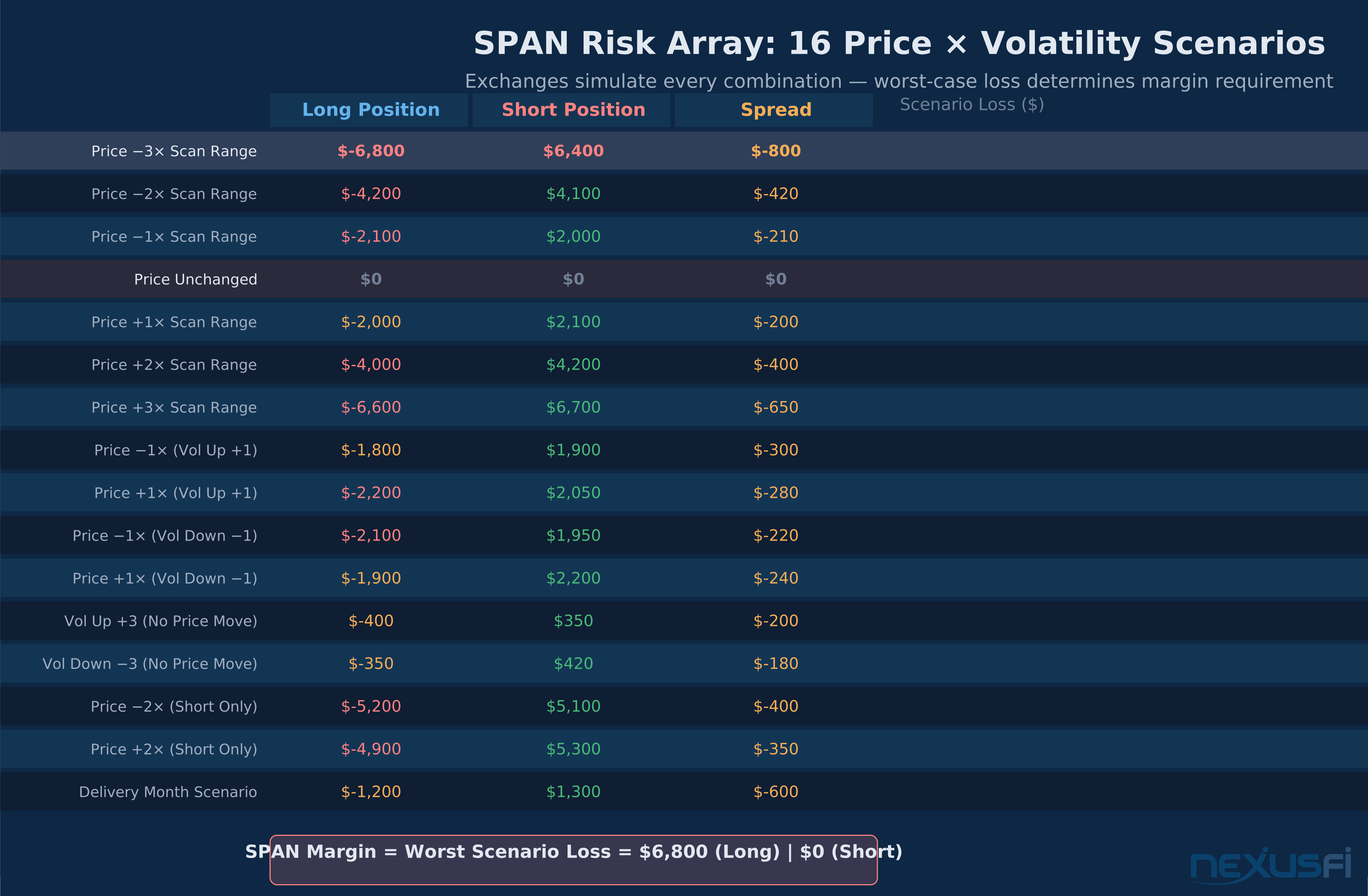
For each scenario, the exchange calculates the mark-to-market profit or loss on your position. The scenario that produces the largest loss becomes your Scanning Risk — the baseline margin requirement. The sixteen scenarios aren't random; they're designed to stress the portfolio against the plausible extreme moves that could actually occur in normal trading conditions, with an extreme delivery-month scenario for positions approaching physical settlement.
The key practical takeaway: SPAN margins aren't arbitrary. They represent the exchange's best estimate of how much money needs to be in your account to cover an adverse but realistic one-day move. When volatility is low, scan ranges are narrow and margins are lower. When volatility is high, scan ranges widen and margins increase so.
Scanning Risk: The Margin Baseline #
Scanning Risk is the raw output of the risk array calculation before any spread credits or charges are applied. For a single outright futures position — one ES long, no other related contracts — Scanning Risk is your entire SPAN margin requirement.
The calculation is straightforward: run the portfolio through all sixteen scenarios, find the scenario with the worst aggregate mark-to-market loss, and that loss amount is the Scanning Risk. For a single outright ES long in normal market conditions, this typically produces a Scanning Risk in the $5,500--$13,000 range depending on prevailing volatility.
@NinjaTrader explained the basic structure in a thread on NexusFi about margin types: [1]
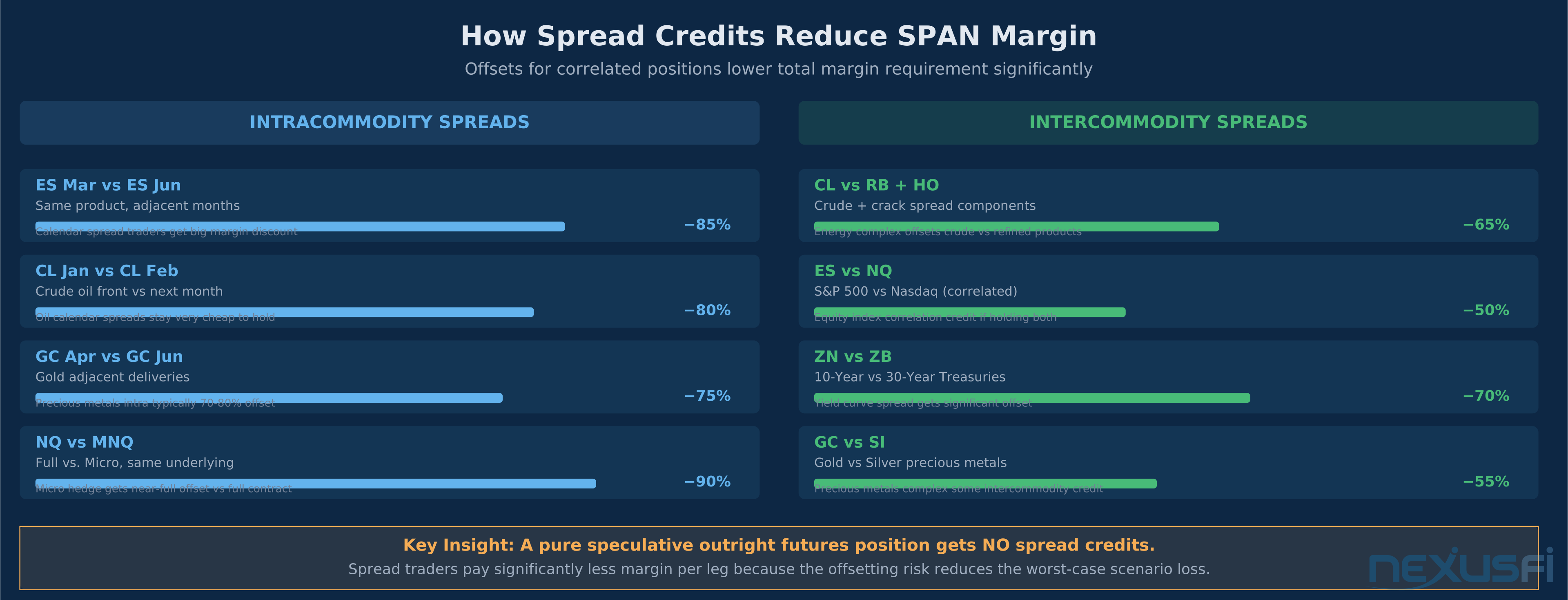
Outright speculative positions pay the full Scanning Risk because there are no offsetting positions to reduce the worst-case scenario loss. Where SPAN gets interesting — and where the margin calculation becomes non-trivial — is when you hold positions that partially offset each other.
Intracommodity Spread Credits #

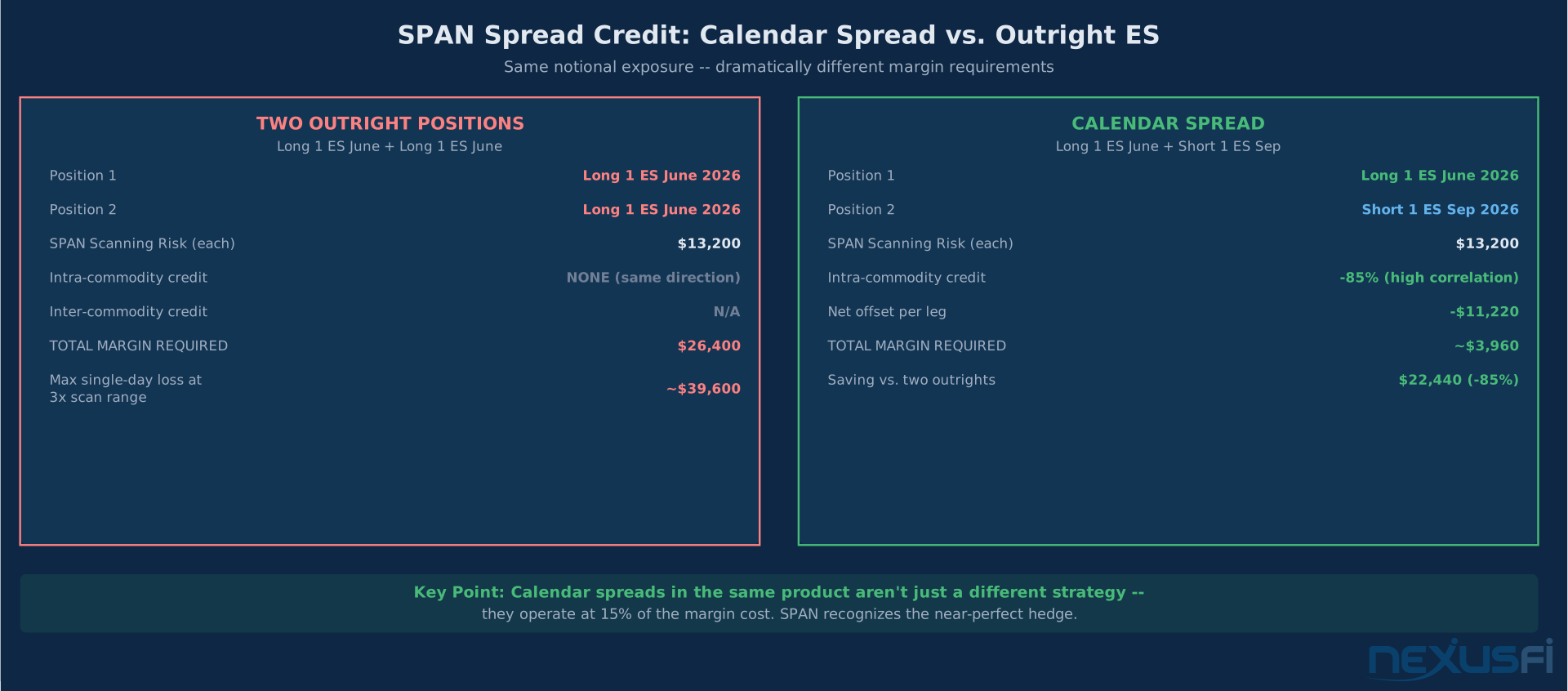
An intracommodity spread is two positions in the same underlying product but different delivery months — a calendar spread. Long ES March, short ES June. Long CL January, short CL February. These positions are highly correlated: when March ES moves, June ES moves in the same direction by almost the same amount. The net price exposure is small compared to either leg alone.
SPAN recognizes this correlation and awards a spread credit that reduces the combined margin requirement. The exchange defines specific spread offset percentages in its parameter files. For ES calendar spreads, the intracommodity offset typically runs 80--90%. In practice, this means a one-lot calendar spread in ES requires roughly 10--20% of what two outright contracts would require.
The practical relevance for retail traders: if you ever find yourself holding both a March and June position in the same product — perhaps because you rolled a trade and temporarily have both months open — you'll pay dramatically less margin during the overlap period than if you held two outright contracts in the same direction.
Spread traders in commodities use these credits extensively. A grain trader running a corn July/December calendar spread can maintain much larger notional exposure at a given account size than someone trading outright December corn. KKFX described this in a thread about reducing overnight margin costs: [2]
Intercommodity Spread Credits #
Intercommodity spread credits work the same way as intracommodity credits but across different, correlated products. The exchange defines which product pairs qualify and at what offset percentages.
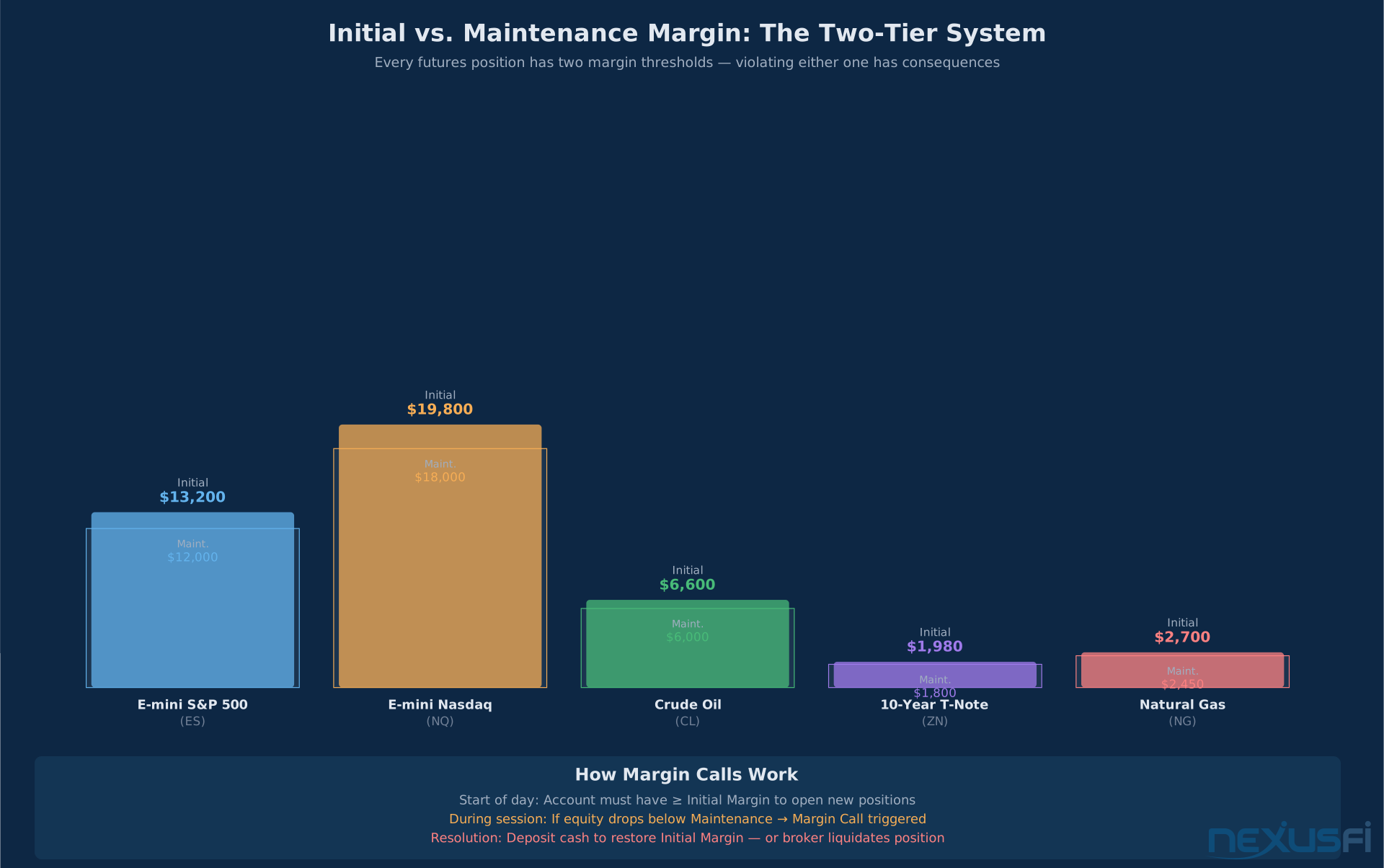
Classic intercommodity spread relationships include: crude oil versus refined products (heating oil, RBOB gasoline) in the energy complex; gold versus silver in precious metals; S&P 500 versus Nasdaq in equity index futures; and the Treasury curve (10-year versus 30-year notes). When you hold offsetting or correlated positions across these pairs, SPAN recognizes the reduced portfolio risk and applies a margin credit.
The offsets for intercommodity spreads are typically smaller than intracommodity offsets — 50--70% is common, versus 75--90% for calendar spreads — because the price correlation between different products, while real, isn't as tight as between delivery months of the same contract.
The practical implication: a trader running a crude oil long against a short position in heating oil futures is genuinely running lower directional risk than two outright crude oil contracts, and SPAN margin reflects that. What SPAN does not reward is the appearance of a spread without the actual price relationship — two random long positions in unrelated markets get no intercommodity credit regardless of how you think about them.
Delivery Month Charges #
The fourth SPAN component is a small additive charge applied to positions in the delivery month or close to physical settlement. These charges exist because positions approaching delivery exhibit different risk characteristics than forward months — wider bid-ask spreads, potential squeeze dynamics, forced liquidations by traders who don't want to take or make delivery.
For most retail traders, delivery month charges are irrelevant — you roll positions before the delivery period or trade products that cash-settle anyway (like ES). For physical commodity traders in grains, metals, or energy, delivery month charges can be meaningful. The practical message is simple: roll your positions before delivery to avoid these elevated charges.
Initial vs. Maintenance Margin: The Two-Tier System #

SPAN calculates a single performance bond requirement, but exchanges and FCMs typically present traders with two threshold levels: initial margin and maintenance margin.
Initial margin is the amount required when you open a position or at the start of each trading day. To hold a position overnight, your account equity must meet or exceed initial margin per contract at the daily settlement mark. Maintenance margin is a lower threshold — typically 75--90% of initial — that your equity must stay above during the trading day. If your account equity falls below maintenance margin, you receive a margin call and must restore your balance to initial margin or close positions.
The practical difference: initial margin is the entry requirement and the restoration target after a margin call. Maintenance margin is the ongoing monitoring threshold. You don't need to maintain initial margin dollar-for-dollar every minute of trading — you need to stay above maintenance. If you fall below maintenance, you must fund back up to initial, not just back to maintenance.
@bobwest explained how this works in practice for intraday traders on NexusFi: [3]
The distinction matters especially for swing traders and position traders. Day traders who close before the exchange settlement rarely see exchange margins applied — their FCM's intraday rate is what governs. But anyone holding positions overnight is subject to the exchange's SPAN-derived initial margin.
Performance Bond vs. Speculative Margin #
CME and other exchanges distinguish between two margin levels: performance bond rates for commercial accounts with documented hedging intent, and speculative margins for everyone else. Performance bond rates are typically lower because the position represents genuine economic risk reduction — a grain farmer selling corn futures to lock in a harvest price is genuinely reducing exposure, not adding it.
For retail futures traders, speculative margins are the default. Qualifying for hedger rates requires documentation of actual economic exposure (physical inventory, production, consumption) and ongoing reporting to the exchange. Most prop traders, algorithmic traders, and individual speculators never operate under performance bond rates.
The practical relevance: when you read about margin requirements on exchange websites, the numbers listed are usually speculative rates. If you see lower figures in academic literature or clearing firm presentations, they may be referencing performance bond rates for commercial hedgers.
How Volatility Changes Your Margin #

This is where SPAN margin stops being an abstraction and becomes urgent operational information. Exchanges don't publish a single fixed margin schedule and leave it there. They update their SPAN risk parameter files — and with them, the scan ranges that drive margin calculations — based on current and recent volatility. When markets get violent, margins go up, often sharply and with little advance notice.
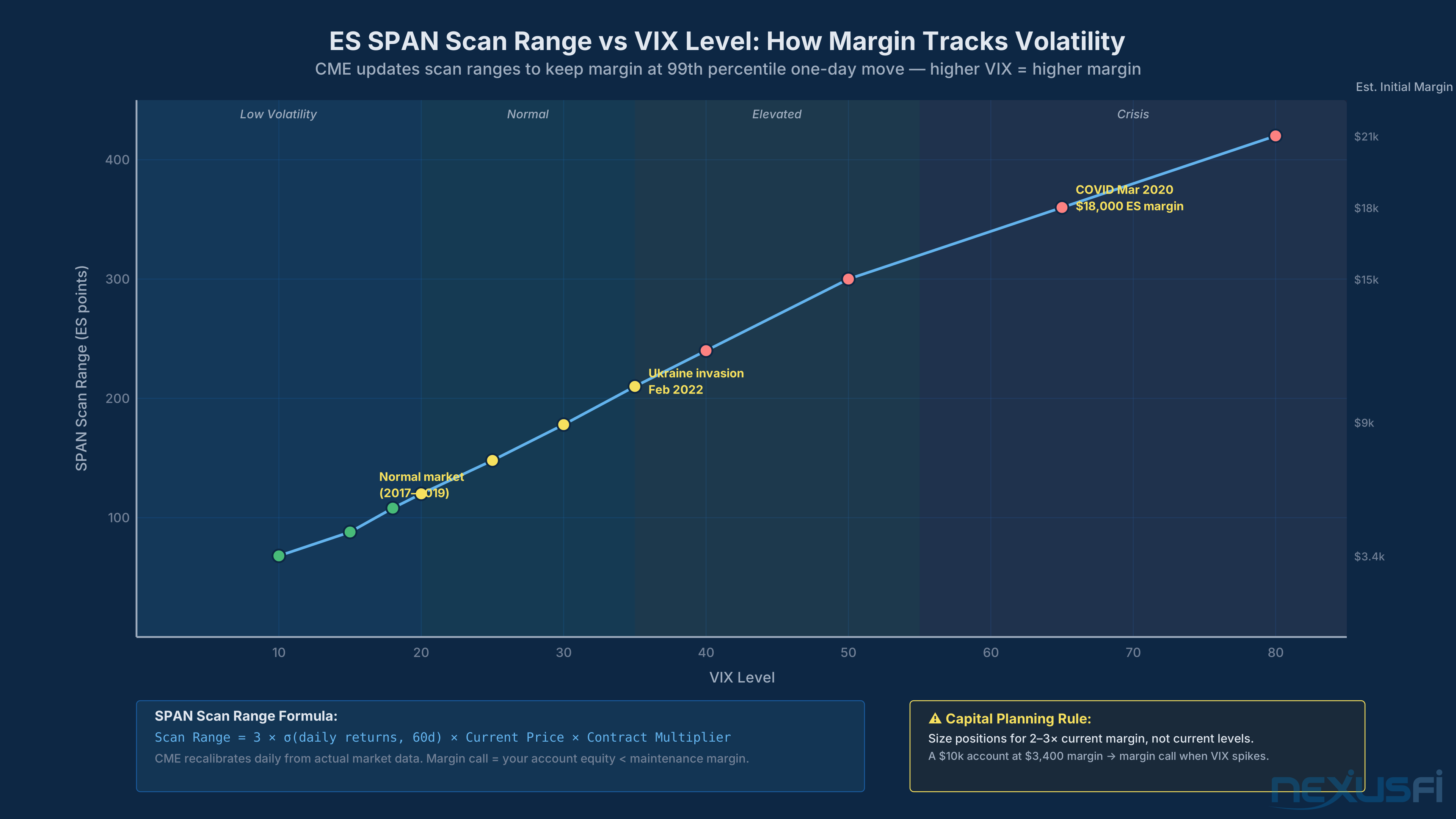
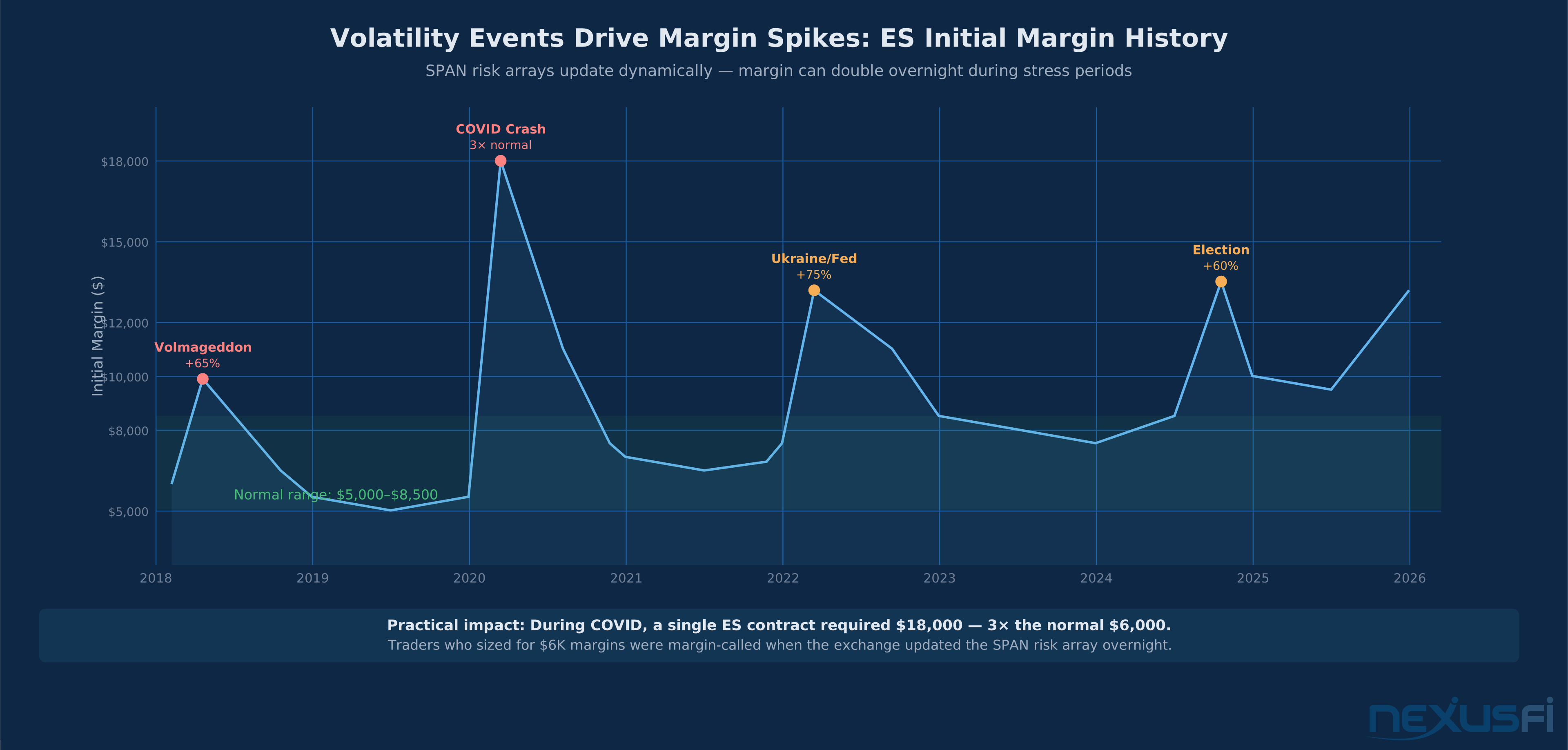
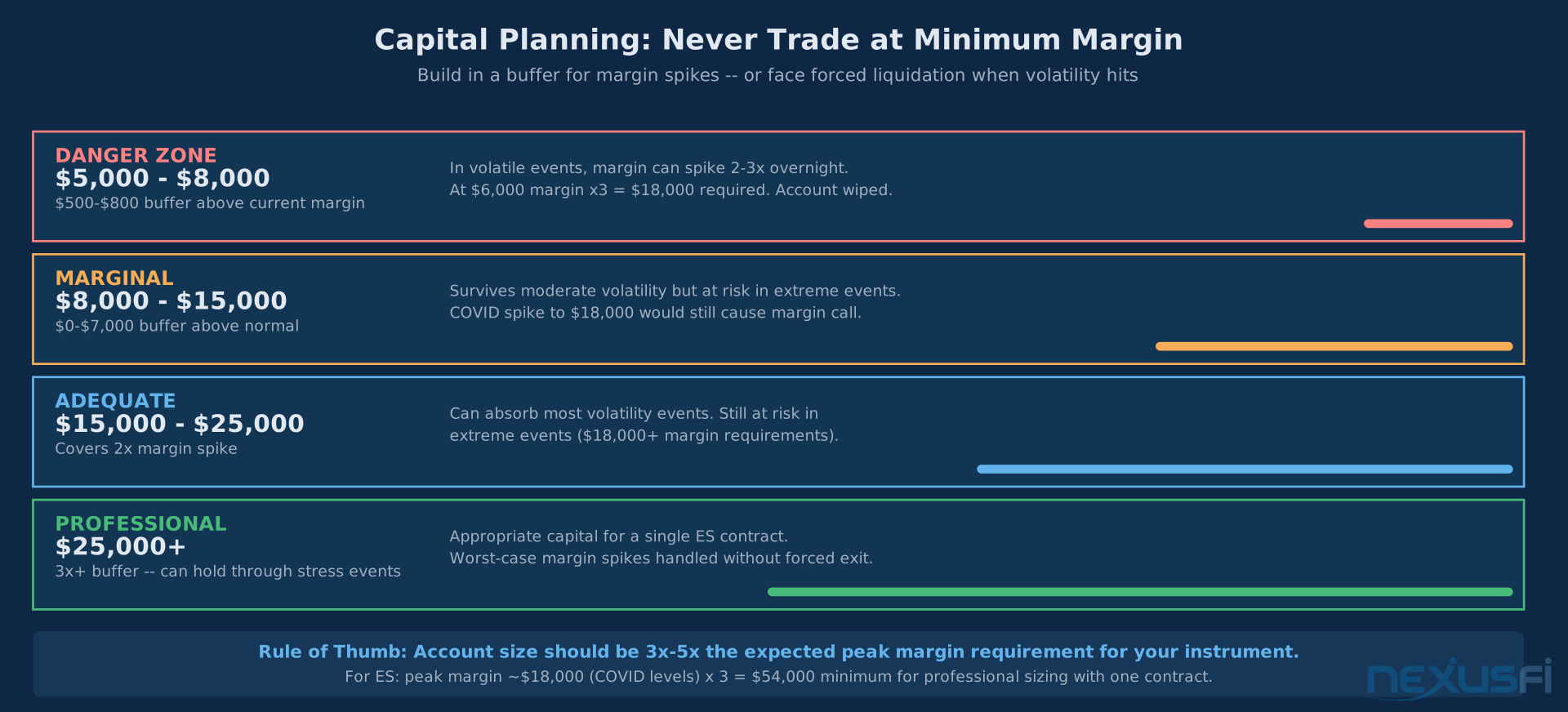
The mechanism is straightforward: higher realized volatility means wider SPAN scan ranges, which means larger worst-case scenario losses, which means higher margin requirements. An exchange that was requiring $6,000 initial margin for ES when 30-day realized volatility was 12% will require $12,000--$18,000 when realized vol spikes to 50% during a market crisis.
The February 2018 "Volmageddon" event illustrates this precisely. When the VIX doubled in a single session, CME Group updated ES margins within days, increasing requirements from approximately $6,000 to over $9,000. During the COVID crash in March 2020, ES initial margin hit $18,000 — three times normal levels. During the Ukraine invasion in early 2022, crude oil margins exceeded $12,000.
NinjaTrader Brokerage described their real-time margin management policy during volatile periods: [4]
The capital planning implication: never size your trading purely on minimum margin at the current moment. Traders who funded accounts based on $6,000 ES margins found themselves margin-called when COVID hit because their $10,000 accounts suddenly required $18,000 per contract. Professional sizing accounts for margin requirements that could be two to three times current levels in a stress scenario.
@dannyinhouston described the COVID experience directly: [5]
House Margins: Why Your FCM Charges More #

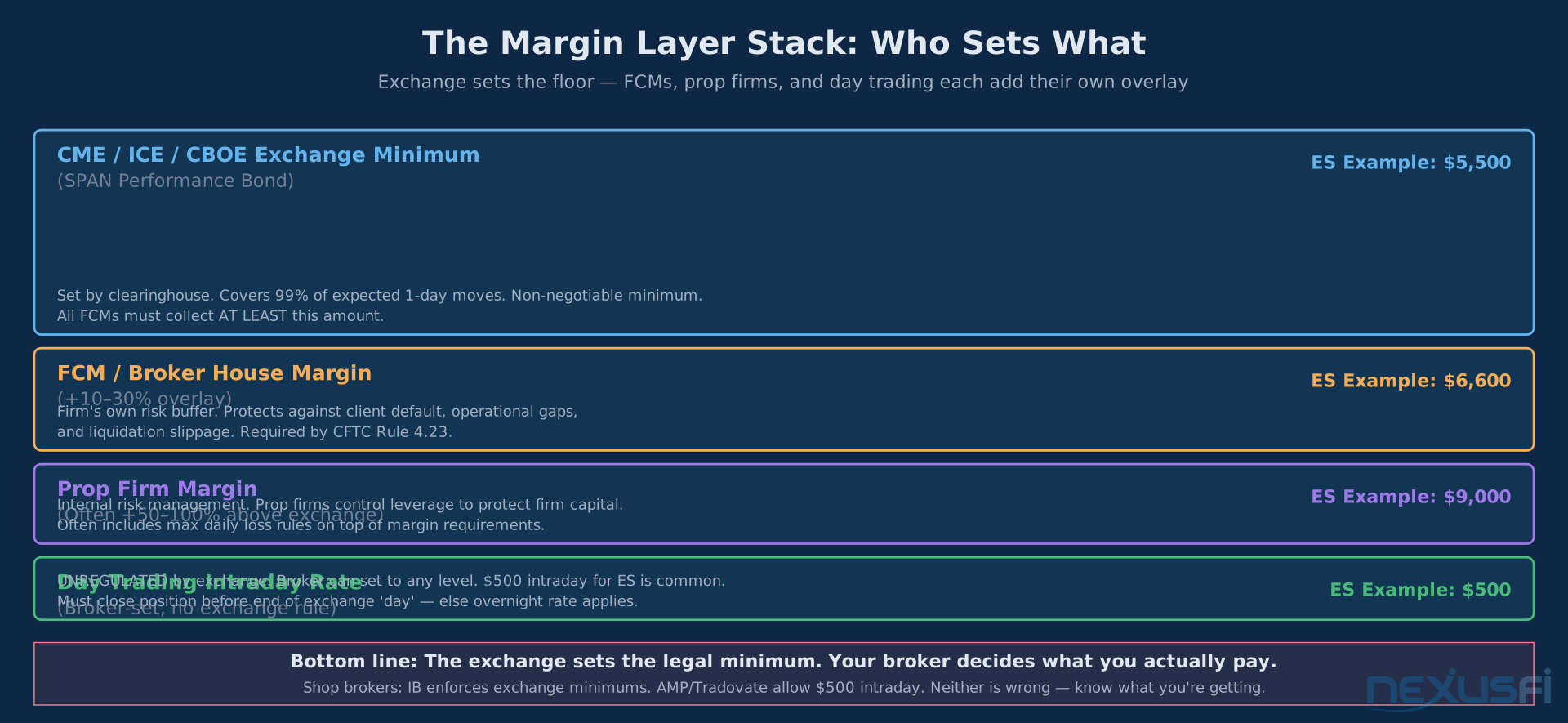
Every futures clearing merchant (FCM) and broker has the right to set margins above the exchange minimum. These house margins are not SPAN — they're the firm's own risk overlay on top of the SPAN-derived requirement. Understanding why FCMs add this buffer helps you evaluate whether a broker's requirements are genuinely reasonable or unnecessarily restrictive.
FCMs add house margin for several legitimate reasons. Model risk: SPAN is designed to cover 99% of one-day moves, which means 1% of the time it doesn't. If a client account goes into deficit during that 1%, the FCM is on the hook for the shortfall. A buffer above the exchange minimum reduces that exposure. Operational lag: margin calls and collateral transfers take time to process. An FCM needs breathing room between when a position goes underwater and when they can actually liquidate it. Concentration risk: SPAN doesn't perfectly account for large positions in thinly traded contracts where liquidation itself would move the market.
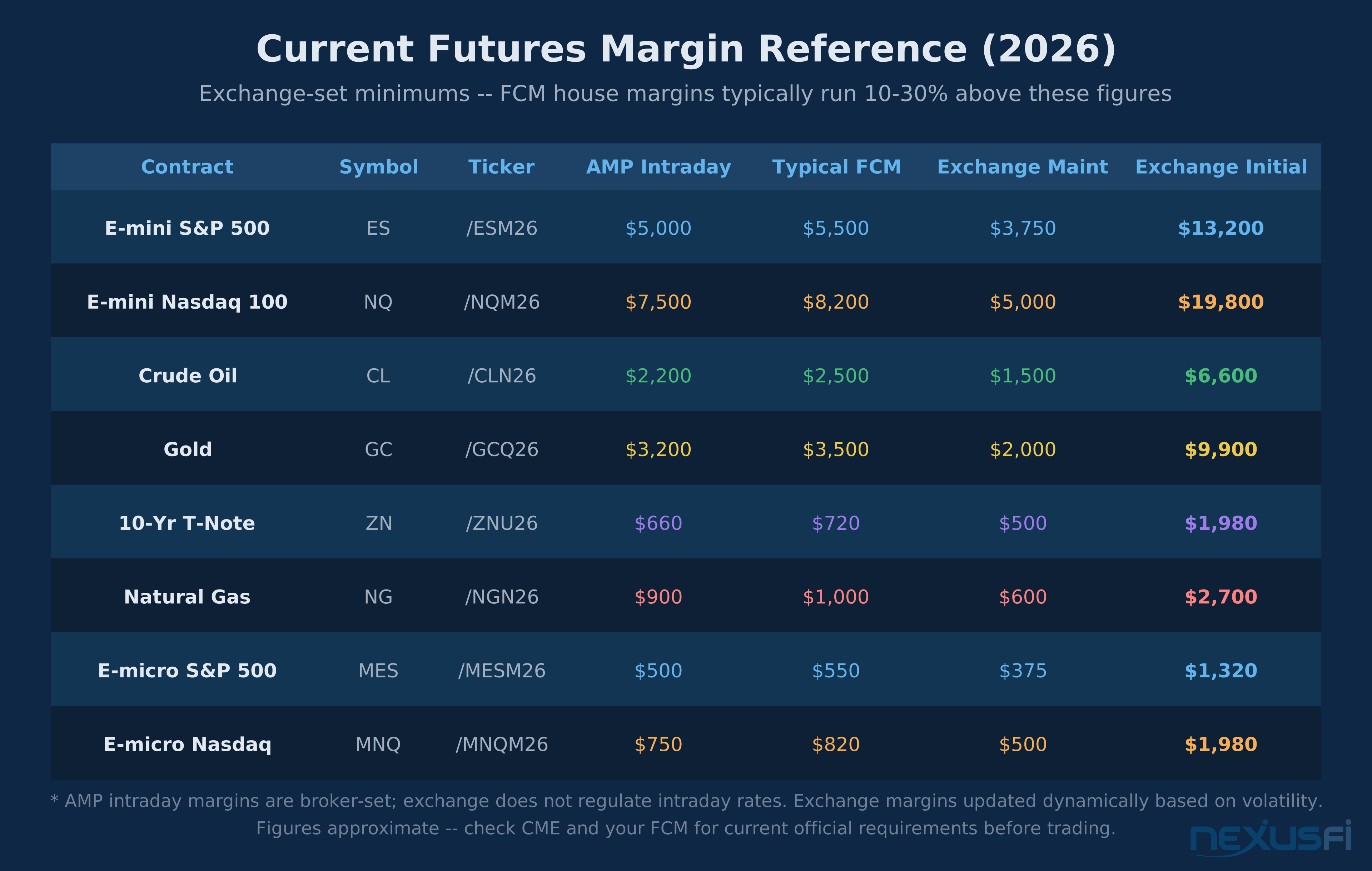
CFTC Rule 4.23 explicitly permits FCMs to collect margin above exchange minimums provided the higher requirement is "reasonable" and disclosed. In practice, most retail FCMs add 10--30% above exchange minimums for standard products. Interactive Brokers, known for strict risk management, often enforces exchange minimums precisely but with aggressive auto-liquidation policies. Discount FCMs like AMP or Tradovate may charge exchange minimums for overnight positions but extremely low rates for intraday.
@SMCJB documented margin variation across brokers during a discussion about spread margin: [6]
Day Trading Margins: The Unregulated Layer #
Intraday margin is a different species entirely. The CME does not set intraday margin requirements. For positions that open and close within the same exchange trading day, margin is entirely at the broker's discretion. This is why you see $500 intraday rates for ES contracts at some brokers while others charge $13,000.
The exchange's reasoning: the overnight margin requirement exists because daily mark-to-market settlement means your position's cumulative loss must be settled at day-end. Intraday positions are closed before settlement, so the clearinghouse isn't exposed to overnight gap risk. Intraday risk management is the FCM's problem, not the exchange's.
Reduced intraday margins enable active day trading with smaller accounts. An ES intraday rate of $500 means a $5,000 account can theoretically hold ten contracts — enormous leverage. Brokers offering ultra-low intraday margins are basically extending credit for the duration of the trading day, relying on their liquidation systems to close positions if equity approaches zero.
@kevinkdog gave direct advice about the risks: [7]
The practical rule: intraday reduced margins tell you what's technically allowed, not what's financially sound. Using the full intraday leverage at low-margin brokers means a single adverse move of a few points eliminates your entire account buffer. For active day traders, the question isn't "what's the minimum margin?" but "how much capital do I need to hold this position size through normal market noise without being force-liquidated?"
@trendwaves captured the range in a commission-shopping thread: [8]
How to Calculate Your Own SPAN Requirements #
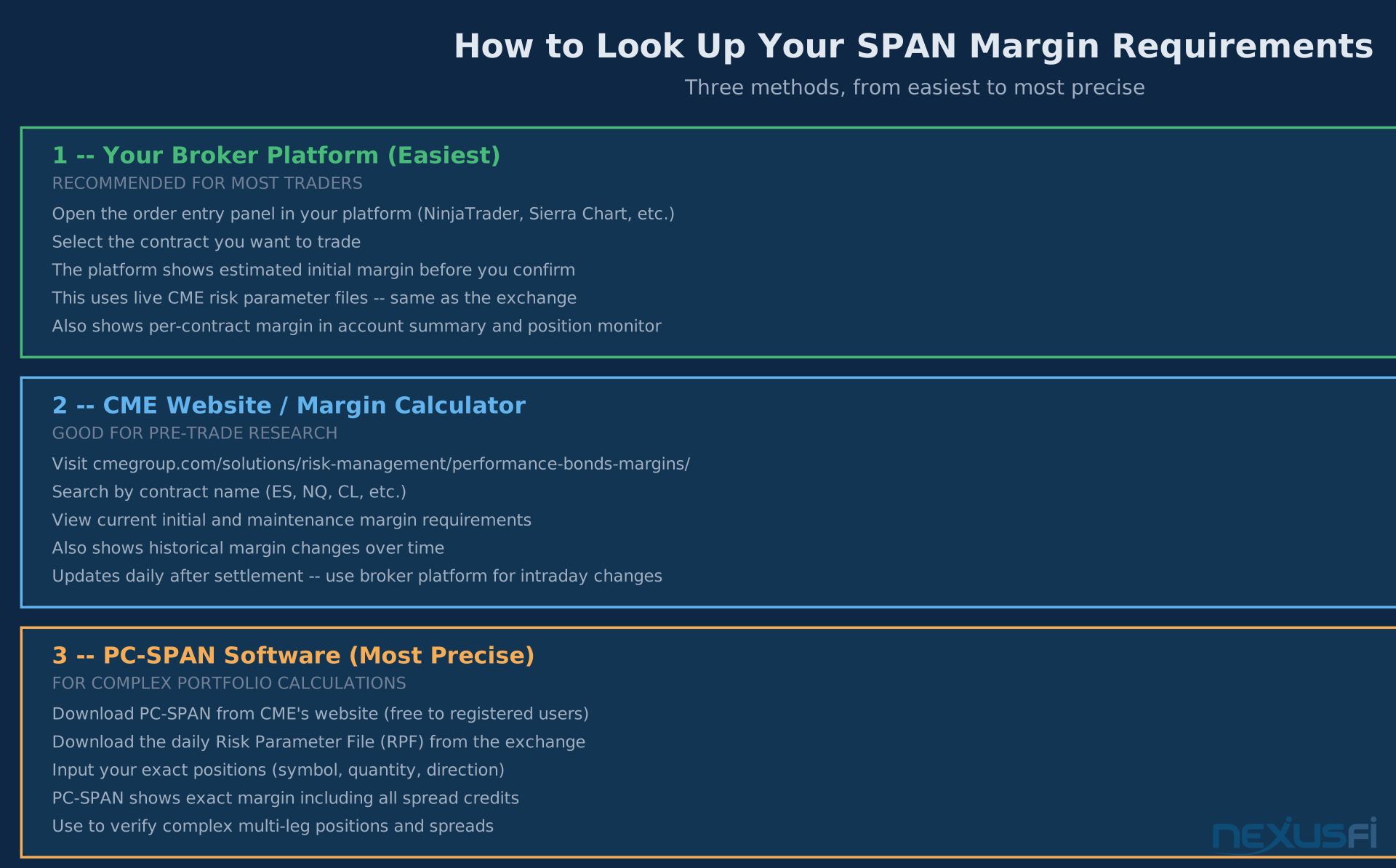
The CME offers several tools for traders who want to calculate their exact margin requirements before placing trades. CME's PC-SPAN software is the official desktop tool — it ingests the exchange's daily Risk Parameter Files and calculates exact margin requirements for any position combination. The tool is available to download from CME's website.
For most traders, the practical approach is simpler: use your broker's margin calculator. Every major FCM's trading platform includes a pre-trade margin check that shows estimated initial margin for any order you're about to place. These calculators use the same CME risk parameter files and produce the same result as PC-SPAN.
What changes day-to-day: the Risk Parameter File itself. CME publishes updated SPAN parameters each trading day, incorporating the previous session's volatility. A margin check done at 9 AM may produce a different result than one done at 3 PM if the exchange has updated parameters during the session, which they can do under extreme conditions.
For spread traders, the key variable is which specific spread combination qualifies for credits and at what percentage. Not all spread combinations receive recognition — the exchange's intercommodity spread table defines exactly which product pairs qualify. A trader constructing a multi-leg position specifically to minimize margin should verify the exact credits available, not assume that any correlated pair will receive the same discount.
@SMCJB, one of the most technically knowledgeable members on NexusFi, explored the relationship between portfolio composition and margin in a PC-SPAN thread: [9]
SPAN in Practice: What This Means for Your Trading #
Several practical applications emerge from understanding SPAN mechanics.
Position sizing should use stress margins, not current margins. Size positions as if margins could be two to three times their current level. A trader who sizes based on $6,500 ES margins in a quiet market will face a crisis of choice when COVID-like volatility arrives: accept forced liquidation or immediately fund the account. Sizing with a buffer means volatility events are a cost, not a catastrophe.
Spread trading lowers margin-per-dollar-of-risk. If you're regularly hedging or running calendar spreads as part of your strategy, you're benefiting from SPAN's spread credit system. A trader who holds a near month long and a deferred month short isn't just managing price risk — they're operating with meaningfully lower margin requirements because SPAN recognizes the offset.
Overnight versus intraday dramatically changes your margin environment. An account sized for intraday trading with $500 intraday margins has no relationship to overnight requirements. Traders who accidentally hold positions into settlement — or who intend to hold overnight — should check the actual overnight initial margin, not the intraday rate they're used to seeing.
Broker margin policies matter as much as exchange requirements. If you're running a tight account, the gap between exchange minimum margins and your FCM's house rate could be the difference between getting margin-called and staying in the trade. Margin leniency, a topic @SMCJB examined in a dedicated thread, varies much: [10]
Capital planning should include margin concentration risk. A trader who runs multiple contracts in the same underlying has concentrated margin exposure — if the exchange raises SPAN for that product due to a volatility event, the entire portfolio is affected simultaneously. Diversifying across instruments with uncorrelated SPAN parameters reduces the risk of a single volatility event generating multiple simultaneous margin calls.
SPAN is one of the best-designed risk systems in modern finance. It's transparent, scenario-based, and continuously updated to reflect market reality. Learning to read it isn't just regulatory knowledge — it's practical edge in capital management. The trader who understands why margins change, when they change, and how to anticipate those changes is running a more professional operation than the trader who just accepts margin as a static cost of doing business.
Knowledge Map
Go Deeper
Build on this knowledgeCitations
- — Margin: initial vs maintenance vs day trading (2017) 👍 7“Initial Margin is set by the exchange (not by the FCM/broker). Intraday margin is set by the FCM/broker and may vary between firms.”
- — Brokerage or Method that will reduce overnight margin costs (2013) 👍 1“The brokers who follow the CME margins for outrights and spreads are, to my knowledge, IB, advantage futures, vision financial. Other brokers like AMP, Mirus, velocity etc have very less margin requirements.”
- — Question about intraday margins (2021) 👍 6“If you open and close entirely in one exchange 'day,' your broker can require any margin they like, and exchange margin is not involved. Margin is totally unregulated for intraday trades.”
- — Ninjatrader Margin Update for Major Events (2022) 👍 7“The temporary elevated margin requirements will remain in place until market volatility is determined to present manageable risk for our traders.”
- — Emini Micro margin and brokers (2020) 👍 3“Before COVID, my Ninja Trader broker would require $50 intraday per MES contract. Lately, it changes in real time, but often the intraday margin is the initial margin.”
- — Brokerage or Method that will reduce overnight margin costs (2013) 👍 1“Spread margin variation across brokers -- some follow CME exactly, others have dramatically reduced requirements.”
- — Question about intraday margins (2021) 👍 4“If intraday margin is $40, and your account equity falls below $40, you are subject to a margin call. Some brokers will just auto close your position.”
- — Commission shopping with brokerages (2014) 👍 3“Overnight full margin rate ($4100) AMP day margin for ES is $400 or 9.7% of full margin. Several brokers quoted 20% day margin rates, or around $1,000 for the ES.”
- — PC-SPAN (2018) 👍 4“There is an obvious strong correlation between margin requirement and Net Futures Value and less of a correlation between Total $ spread value and margin requirement.”
- — Futures Margin Leniency (2023) 👍 3“I would say that the consensus opinion is that IB have some of the highest margin requirements and some of the most aggressive liquidation policies.”
- — SPAN Methodology Overview (2024)
- — CME Clearing Margining Practices (2023)