



Customer Funds Segregation in Futures: How Your Money Is Protected, What Can Go Wrong, and How to Verify Your Broker's Compliance
Overview #
Every futures trader deposits money with a broker. The moment those funds leave your bank account and land at an FCM, a specific set of federal rules kicks in that determine whether your money is actually yours — or whether it's fair game for your broker's creditors the moment things go sideways.
Customer funds segregation is the legal and operational framework that answers that question. It's not marketing language. It's not a disclosure checkbox. It's a daily accounting discipline, enforced by the CFTC under the Commodity Exchange Act, that determines whether the $50,000 in your futures account can be clawed back in bankruptcy or whether it sits safely outside the FCM's general estate.
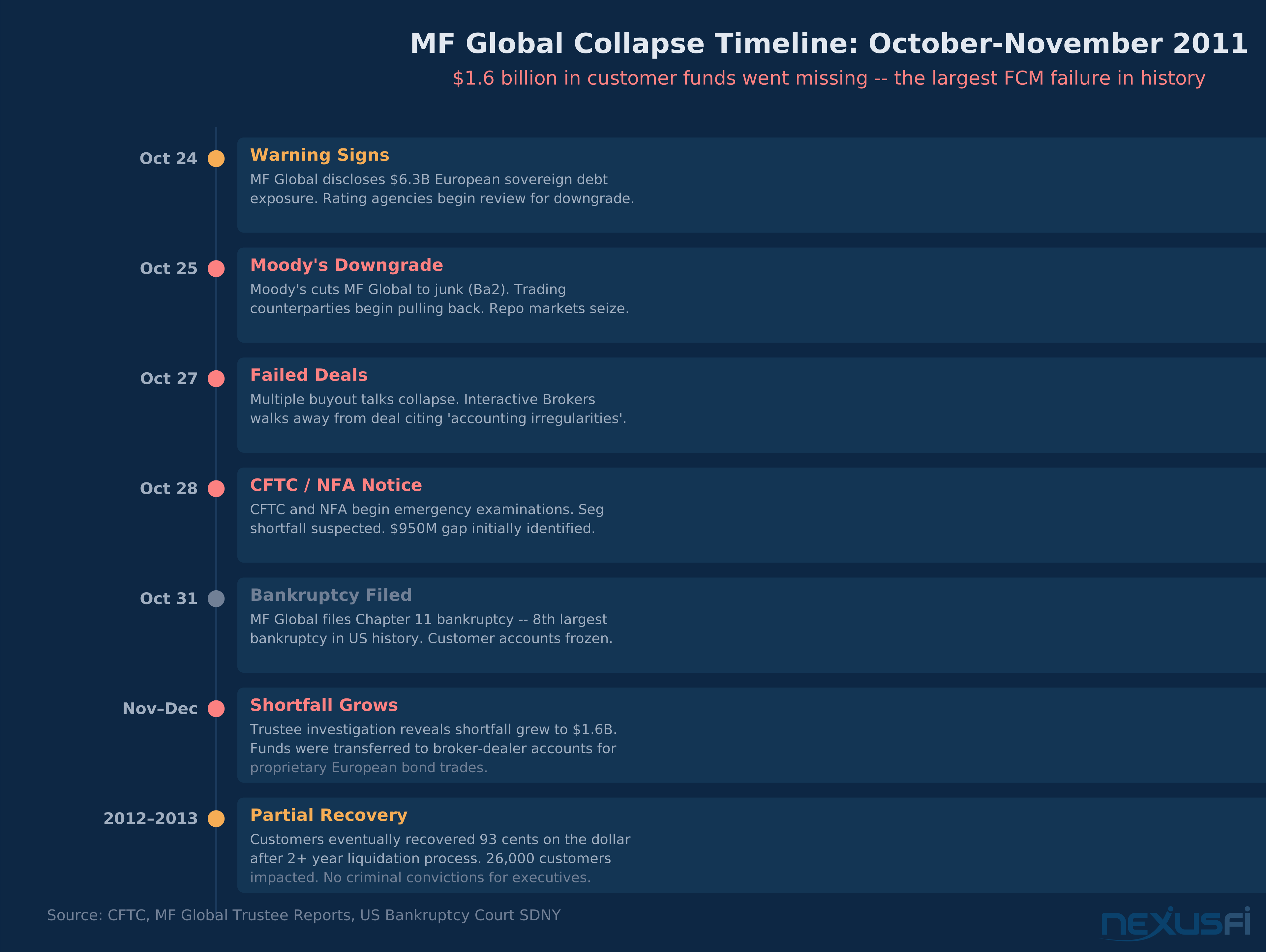
Most traders never think about segregation until a broker fails. MF Global in October 2011 — $1.6 billion in customer funds disappeared in the final days. PFGBest in July 2012 — Russell Wasendorf Sr. forged bank statements for 20 years, hiding a $215 million shortfall. In both cases, customers who thought their money was "segregated" discovered the word had gaps.
This article explains how customer funds segregation actually works, where the framework breaks down, what changed after MF Global, and how to evaluate whether your broker is actually protecting your capital.
What to Check Before You Deposit a Dollar #
Before the theory, here's the practical checklist. Run through these five steps for any FCM where you're parking real capital:
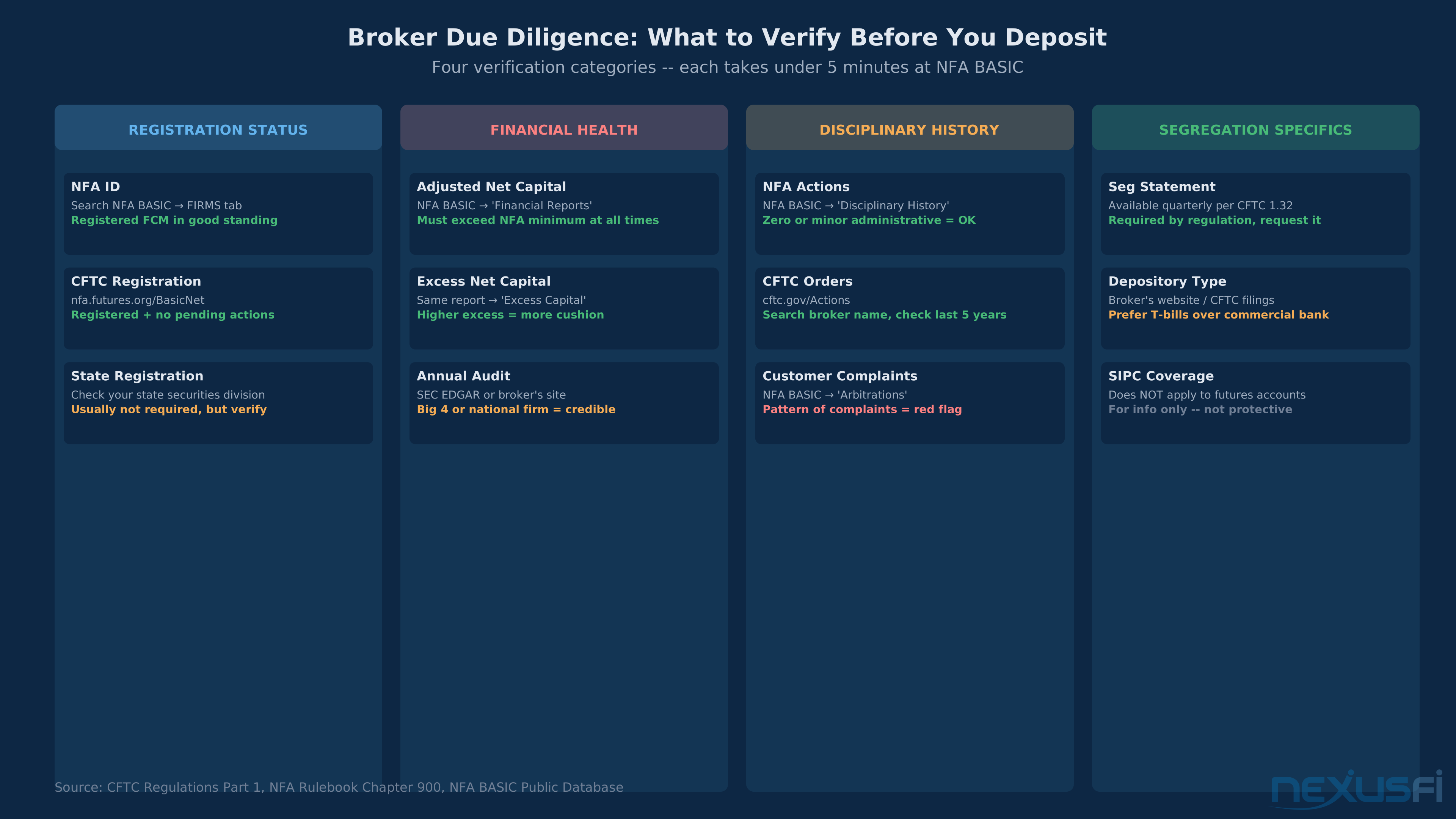
Step 2: Map the entity and custody chain. Get the FCM's exact legal name (not the brand name — the registered entity name). Ask which banks hold the customer segregated accounts. Request a copy of the bank acknowledgment letter, or at minimum confirmation that one exists. If the FCM won't tell you which bank holds your margin, that's information.
Step 3: Pull the CFTC monthly FCM financial data. Available at cftc.gov under Market Reports > Financial Data for FCMs. Find your FCM's row and look at "Excess Net Capital" (how far above the minimum the FCM's own capital sits) and "Customer Segregated Funds Required" vs "Customer Segregated Funds Held." Excess should be consistently positive. A declining trend over consecutive months is a yellow flag.
Step 4: Search NFA BASIC for enforcement history. At nfa.futures.org/basicnet, search your FCM's registration. Look for any disciplinary history involving segregation, financial reporting, or customer funds. A clean record doesn't guarantee future compliance, but a pattern of past violations is meaningful.
Step 5: Ask about account portability under stress. If your FCM fails on a Friday, what happens to your positions Monday? How long does transfer to a new FCM take? What happens to open positions during that window? Reputable FCMs have documented contingency procedures for this scenario. Evasive answers here tell you something.
Futures segregation is NOT the same as SIPC protection (which covers securities brokerage customers). If you have a futures-only account, SIPC does not apply. If you have a combined account at a firm offering both securities and futures, your futures margin sits in a separate segregated commodities account under CFTC rules — not the SIPC-protected securities account. This is one of the most common misconceptions traders have about their broker protection.
The Protection Chain: Where Your Money Goes #
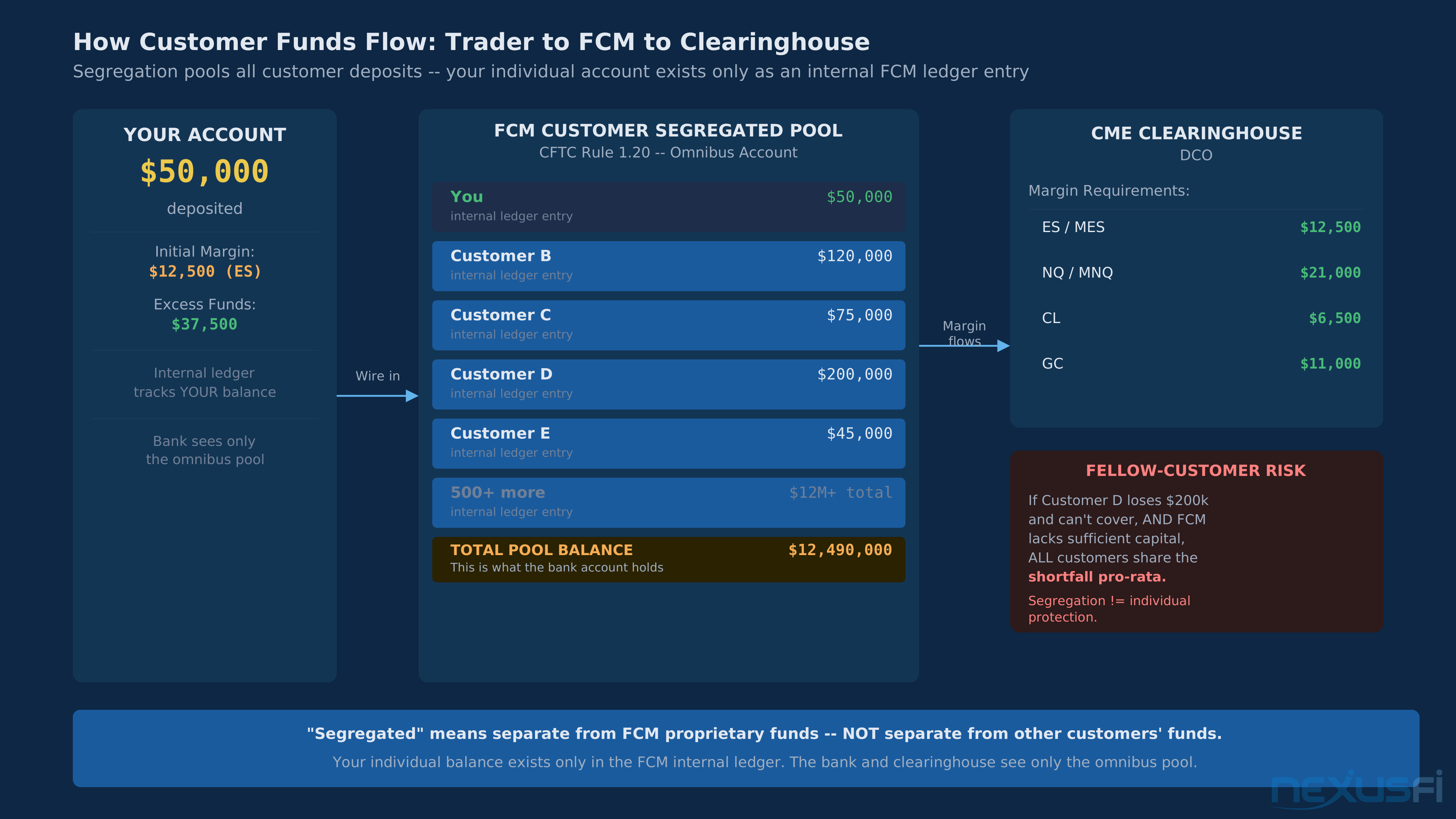
When you wire funds to a futures broker, the money travels through a chain of custody with specific legal obligations at each step.
Trader → FCM → Clearinghouse/DCO → Depository Bank
You deposit margin with your Futures Commission Merchant. The FCM posts required margin to the Derivatives Clearing Organization (DCO) — the clearinghouse — based on your position. The DCO holds the collateral through relationships with major banks. At each link in this chain, the funds are supposed to retain their character as customer property, not transform into the FCM's general assets.
The acknowledgment letter framework is what gives this chain legal teeth. When an FCM deposits customer funds at a bank, the bank is required to acknowledge in writing that the account contains customer funds, that those funds belong to futures customers — not the FCM — and that the bank cannot use those funds to satisfy the FCM's debts to the bank. Without this acknowledgment, "segregated" is just a label on an account.
The acknowledgment requirement is embedded in CFTC Rule 1.20, and it matters most when an FCM fails. When investigators are trying to figure out which assets belong to customers versus general creditors, these letters are exhibit A. The chain of acknowledgments from FCM to depository bank is what allows customer property to be identified and returned even as the FCM's bankruptcy estate is being carved up.
The acknowledgment letter is due-diligence evidence you can actually request. When investigators reconstructed the MF Global estate, they spent months tracing whether each piece of the customer pool had the proper documentation behind it. Every gap in the acknowledgment chain complicated the recovery. You can ask your FCM for confirmation of this documentation before it matters.
Regulatory Framework: The Rules That Actually Govern Your Money #
The legal foundation for customer funds segregation is CEA Section 4d (7 U.S.C. § 6d). The statute requires that FCMs treat funds deposited by futures customers as belonging to those customers, held for their benefit, not available to satisfy the FCM's own obligations.
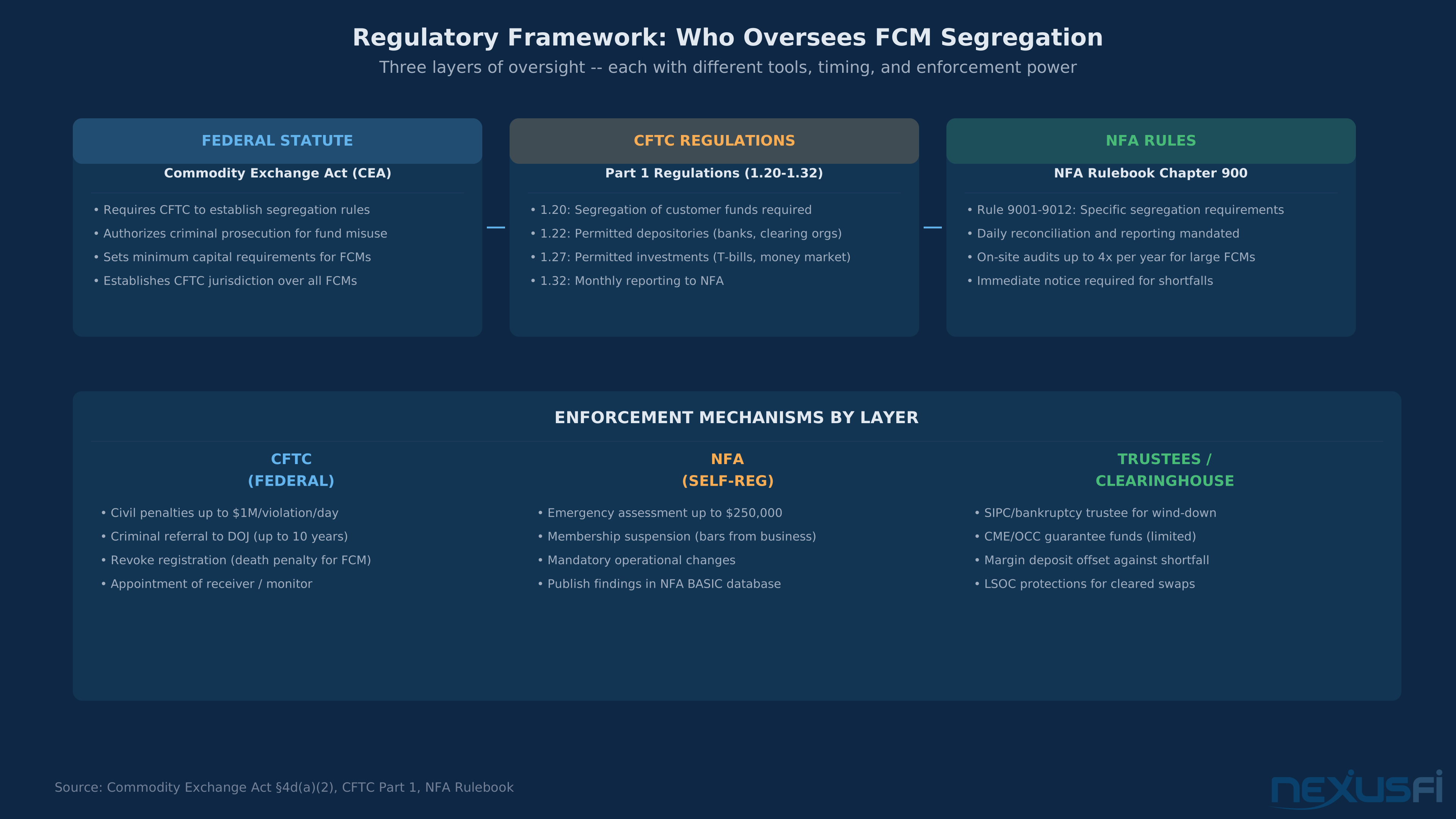
- What accounts qualify as segregated
- How FCMs calculate how much must be held ("required") versus how much is actually in segregated accounts ("held")
- What types of assets count toward the "held" balance
- What FCMs are and are not permitted to do with customer funds
- The daily reconciliation requirements
For foreign futures — contracts traded on non-U.S. exchanges — a different set of rules applies. CFTC Part 30 and specifically Section 30.7 establish the "secured amounts" framework, which requires FCMs to separately account for customer funds relating to foreign futures in a way that provides analogous protections to domestic segregation.
The rule structure creates three separate buckets:
- Part 1 customer funds — domestic futures, governed by Rule 1.20
- 30.7 secured amounts — foreign futures, governed by Part 30
For the vast majority of retail futures traders, Rule 1.20 is the relevant framework. That's the one covering ES, NQ, CL, GC, ZB, and every other exchange-traded futures contract you're likely trading.
What Counts as Customer Funds #
Under Rule 1.20, "customer funds" is a defined term with specific scope:
Included:
- Initial margin deposited for futures positions
- Variation margin amounts associated with daily mark-to-market settlement
- Funds deposited by customers to cover potential margin requirements
- Proceeds from closing positions that remain in the account
- Cash and approved assets deposited as performance bond collateral
Excluded:
- FCM proprietary capital
- Commission income earned by the FCM
- Funds explicitly designated as FCM working capital
- Amounts the customer has withdrawn and transferred elsewhere
The critical point is this: when you deposit $50,000 to trade futures, that entire amount becomes customer funds subject to Rule 1.20 the moment it's deposited — not just the margin you actually post. The FCM must account for 100% of it in its daily segregation calculation, even while you're not in a position.
One important nuance: customer funds segregation is a pooled system, not an individual custody arrangement. Your $50,000 is legally protected, but it's not sitting in a dedicated account with your name on it at a bank. It's commingled with other customers' funds in a segregated account maintained in the FCM's name for the benefit of customers. You have a claim against the segregated pool, not against a specific pile of cash.
This distinction matters in insolvency: if the pool is intact, customers recover their money. If the pool has a shortfall, customers share losses pro rata. Customer protection derives from maintaining the pool at required levels, not from individual account custody.
How Segregation Works Day-to-Day: Required vs. Held #
The operational core of Rule 1.20 is a daily test: Required ≥ Held.
Required is the total amount the FCM must hold for customers in segregated accounts. It's computed from customer positions — all the margin obligations, open trade equity, and cash that belongs to customers on any given day.
Held is the actual balance of eligible assets in the FCM's segregated accounts — customer segregated funds at the clearinghouse, customer funds at depository banks, and other qualified assets.
The FCM runs this calculation every business day. If "held" is less than "required," that's a segregation shortfall. Under CFTC rules, the FCM must immediately remedy a shortfall and notify the CFTC. Failure to do so is itself a regulatory violation — and in insolvency, a shortfall is the mechanism by which customer losses materialize.
The reconciliation process works in two steps:
- Pull the clearinghouse margin statement showing what the FCM owes the DCO for customer positions
- Pull the bank statements for the segregated accounts and verify the balance equals or exceeds what's required
In practice, large FCMs run automated reconciliation with real-time margin data feeds from the clearinghouse. Discrepancies trigger alerts immediately. This is the technical layer that the CFTC and NFA are looking at when they examine FCMs for segregation compliance.
Daily Segregation Test Held ≥ Required
- Required = Σ customer margin obligations + customer open trade equity + other required amounts per Rule 1.20
- Held = cash + Treasuries + other approved assets in segregated accounts
- Shortfall = Required − Held (when Held < Required)
A shortfall requires immediate funding from FCM proprietary capital and same-day regulatory notification.

Post-MF Global, the CFTC also adopted rules requiring FCMs to submit daily segregation computations electronically. The "Corzine rule" — formally Rule 166.3 — requires senior executives to personally sign off on any withdrawal from the customer segregated pool that exceeds 25% of the excess funds. That rule didn't exist before October 2011.
Permitted Uses and Restrictions: What FCMs Can Do With Your Money #
Customer funds are not completely frozen while sitting in a segregated account. Rule 1.20 permits specific uses — but the list is narrower than many traders realize.
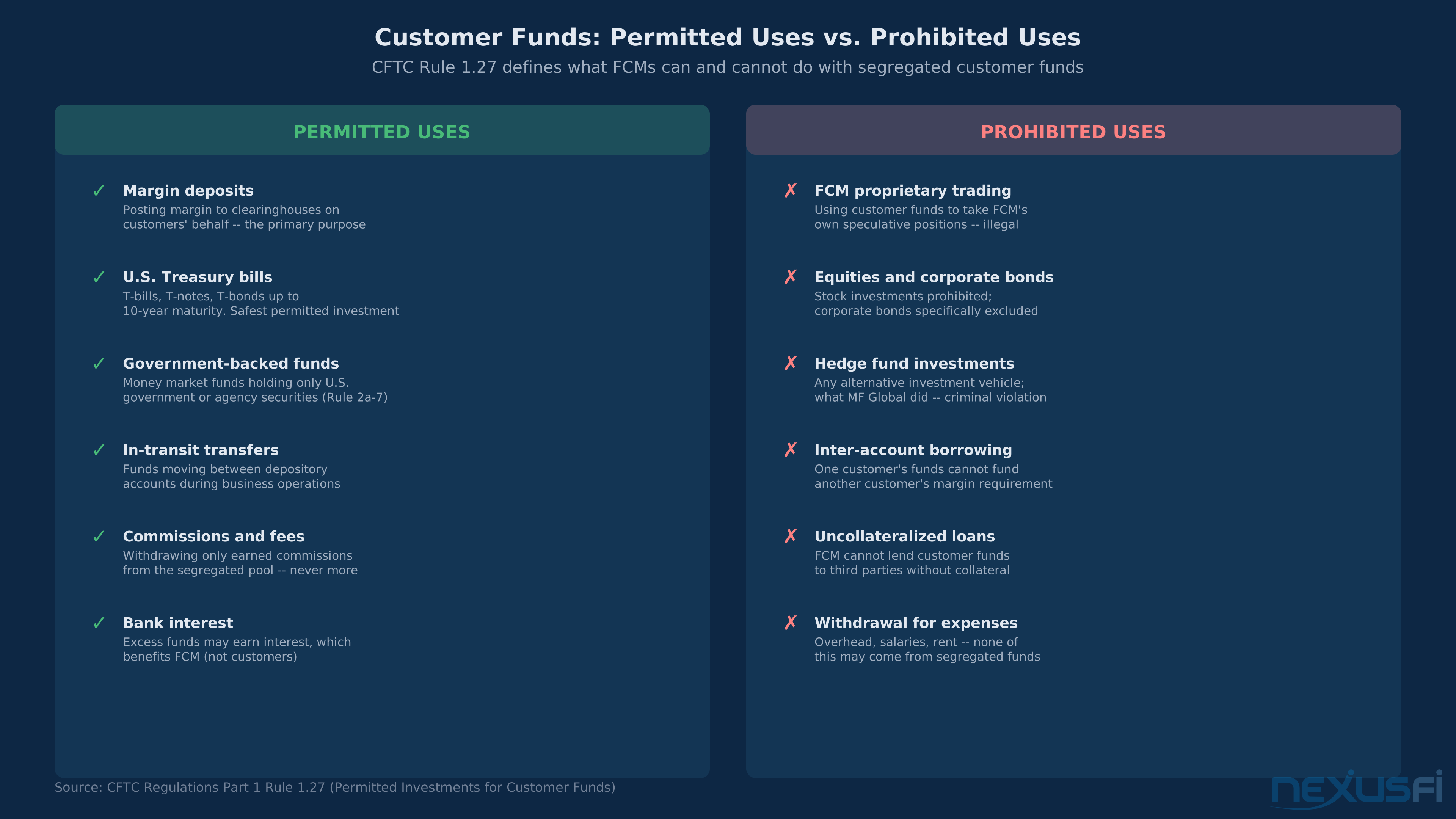
- Post the funds at the clearinghouse as margin for customer positions
- Invest in U.S. Treasury securities, government agency securities, and other instruments on the CFTC's approved list (Rule 1.25) while maintaining segregated status — interest earned belongs to the customer
- Hold cash at approved depository institutions (major banks with recognized credit quality)
- Apply funds to satisfy customer obligations in the normal course (variation margin calls, settlement)
Prohibited:
- Using customer funds for the FCM's proprietary trading
- Pledging customer funds as collateral for the FCM's own borrowing
- Commingling customer funds with FCM operating accounts
- Using Customer A's excess funds to cover a margin deficit for Customer B (cross-margining outside approved structures)
- Unlimited rehypothecation of customer assets
The rehypothecation issue deserves specific attention. Under U.S. futures rules, FCMs cannot freely hypothecate or re-pledge futures customer margin the way prime brokers can with securities. This is a fundamental difference in how customer protection works between futures and securities brokerage.
That analysis correctly identifies the loophole MF Global exploited: routing customer funds through a UK affiliate where UK law had no minimum formula for hypothecating assets. MF Global's sovereign debt bet was backed, in part, by customer collateral transferred offshore to a jurisdiction where the protections that should have applied in the U.S. didn't apply.
When Segregation Fails: MF Global and PFGBest #
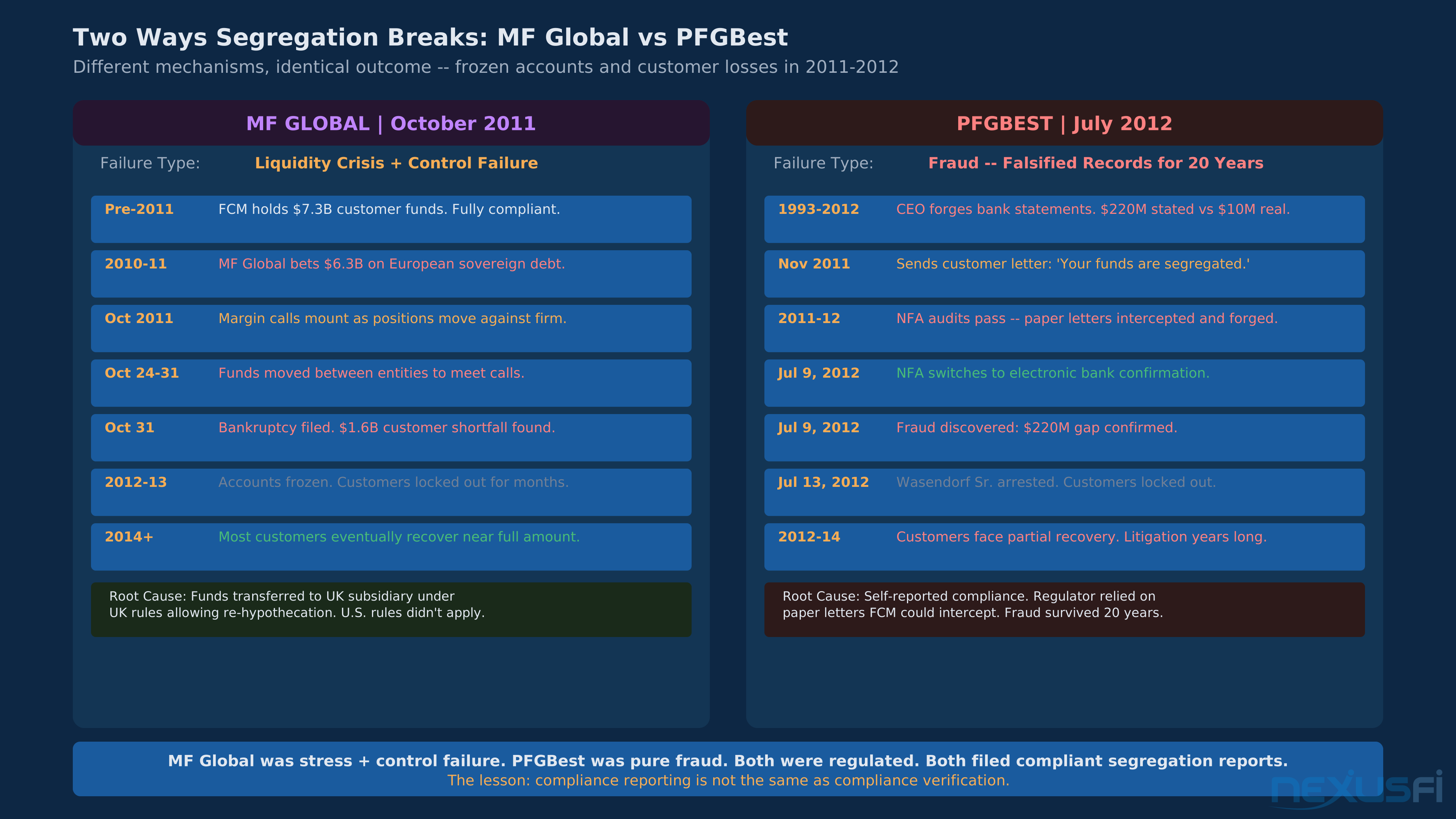
Two collapses defined modern understanding of where segregation breaks down. They illustrate two entirely different failure modes — and two different types of risk that no checklist can fully eliminate.
MF Global (October 2011): The Accounting Fiction #
MF Global was the eighth-largest futures broker in the United States, with $41 billion in assets, led by former U.S. Senator Jon Corzine. In late October 2011, the firm's $6.3 billion bet on European sovereign debt was unraveling. As counterparties pulled credit lines, the firm scrambled for liquidity. $1.6 billion in customer funds went missing.
How the segregation calculation was manipulated: MF Global was routinely drawing on customer segregated funds to meet its own short-term liquidity needs, primarily through repurchase-to-maturity transactions routed through its UK affiliate. The UK affiliate wasn't subject to the same hypothecation limits as U.S. law. Customer funds transferred offshore weren't under CFTC Rule 1.20 protection.
Here's the key accounting trick: the daily segregation calculation appeared to balance because MF Global was counting inter-company receivables from its UK affiliate as "held" assets. On paper: Held >= Required. In reality, those receivables were worthless — they were claims against an affiliate that was itself being vaporized by the same sovereign debt losses.
What a trader could have detected: MF Global's public financial statements showed unusually large inter-company receivable balances from its UK subsidiary. This is a red flag on any FCM's balance sheet: large "receivables" from affiliated entities counted toward the segregation calculation are not the same as cash in a bank account. If you see this pattern in an FCM's Form 1-FR or in CFTC disclosure data, ask the question.
Recovery: Most customers eventually recovered their segregated account balances, but the process took 2-4 years. "Eventually" is not a workable timeline for active traders whose capital was frozen.
PFGBest (July 2012): 20 Years of Forged Bank Statements #
PFGBest is a different and arguably more troubling story. Russell Wasendorf Sr. didn't make a bad bet. He systematically forged bank statements — from three different banks — for 20 years, hiding a $215 million shortfall in customer segregated funds.
How the fraud worked mechanically: NFA auditors were accepting paper bank statements that Wasendorf himself was providing. He would intercept the bank statements (which at one point he had directed to be mailed directly to his firm's address, not verified at the bank), alter them to show healthy balances in the segregated accounts, and present the forged documents to auditors. The actual accounts at the bank showed a fraction of those amounts.
The fraud worked because the verification procedure had a gap: auditors were accepting FCM-provided documents rather than independently verifying with the bank. For 20 years, the NFA's BASIC system showed PFGBest as compliant. Every audit came back clean.
What ended it: NFA implemented a new audit procedure in 2012 that demanded electronic, direct access to bank account records rather than accepting paper statements from the FCM.
Wasendorf gave NFA the authority to access the accounts directly. The actual balances didn't match. The fraud was exposed.
What a trader could have detected: This one is genuinely hard. The fraud was at the bank-verification level, not at the trading account level. But there's a specific question you can now ask: "Can you provide me with NFA's most recent independent verification of your segregated account balances?" Post-2012, NFA verifies directly with banks. An FCM that is compliant will have this documentation. The specific due-diligence question didn't exist pre-2012 because the procedure didn't exist. It does now.
Recovery: Customers with money in the segregated accounts at the time of the July 2012 freeze received pro rata distributions based on actual balances — less than 100% of what they were owed. Wasendorf pleaded guilty to fraud and received a 50-year federal prison sentence.
Post-MF Global Regulatory Response #
The Commodity Exchange Act gave the CFTC statutory authority to strengthen segregation rules. After MF Global, several significant changes took effect:
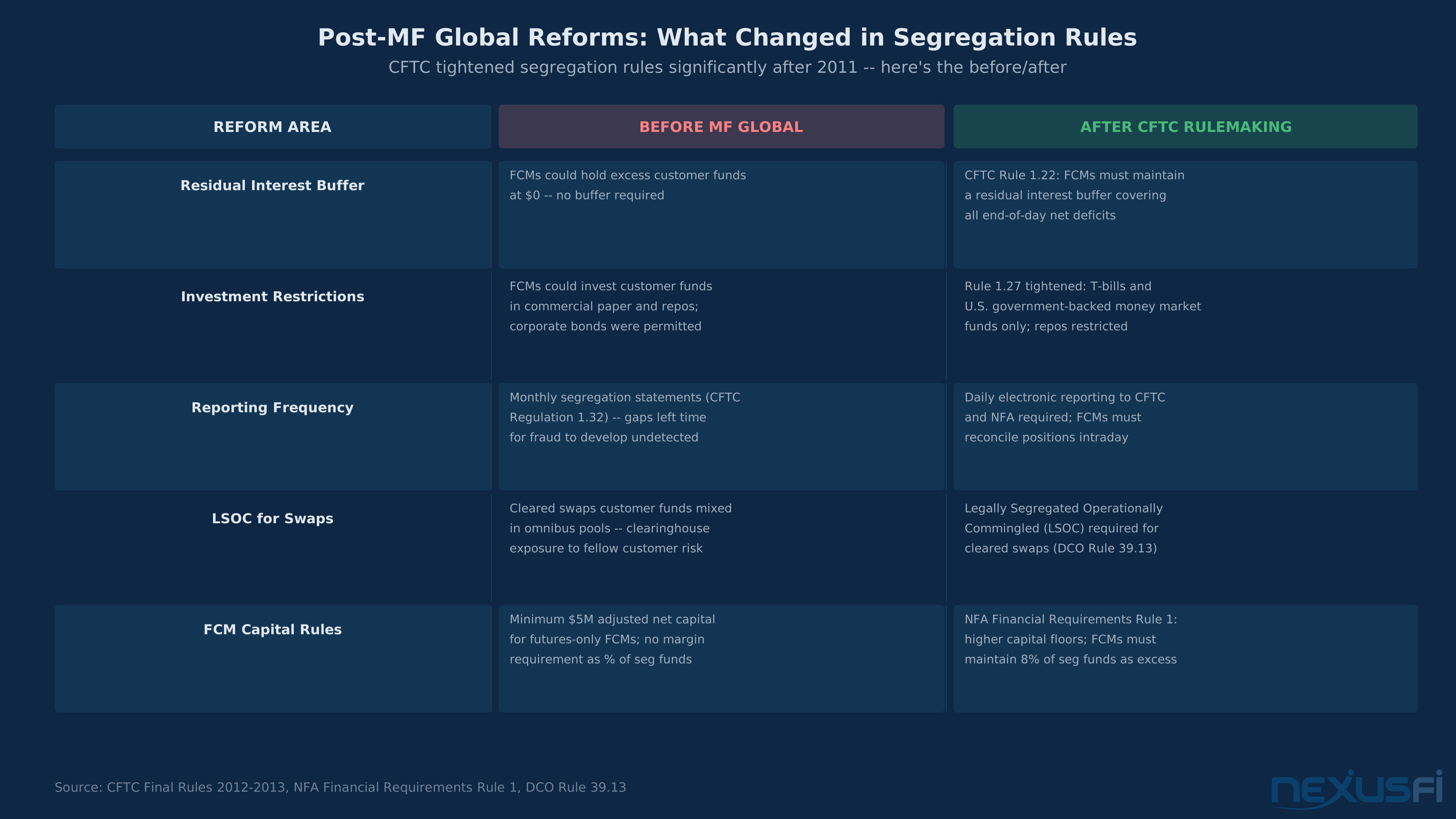
Daily Electronic Segregation Reports: FCMs must now file daily electronic segregation computations with the CFTC. This provides real-time visibility into the required-vs-held calculation, allowing regulators to identify shortfalls before they become catastrophic.
Enhanced Bank Verification: Following PFGBest, NFA implemented direct electronic verification procedures for segregated account balances. Auditors now confirm balances directly with depository banks rather than relying on FCM-provided documents. The specific loophole Wasendorf exploited — intercepting paper bank statements — is now closed.
Written Authorization Policies: FCMs must maintain written policies governing how excess funds in segregated accounts are managed, approved, and withdrawn.
These reforms are meaningful. The daily reporting requirement in particular means that a segregation shortfall at a major FCM is far more likely to be detected within days rather than after the firm has collapsed. The regulatory infrastructure is materially better than it was in 2011.
But better infrastructure does not mean zero risk. A determined fraudster like Wasendorf found ways to evade scrutiny for two decades. The regulatory framework creates compliance standards — it does not guarantee that every FCM meets them.
What Segregation Won't Protect You From #
This is the section most traders skip and most articles don't include. Let's be direct about the limits.
Market risk: If you lose money on trades, that's not a segregation issue. Segregation protects the principal you deposited, not the P&L you generate. A bad trading week doesn't become a segregation problem.
Recovery timing: The segregation framework keeps your funds outside the FCM's general bankruptcy estate. But "outside the estate" doesn't mean "immediately available." In a major FCM bankruptcy, the process of identifying customer property, reconciling claims, obtaining court approval for distributions, and actually sending money takes time — typically 12-36+ months for full resolution, with partial interim distributions possible. If you trade full-time and your entire trading capital is tied up in a bankruptcy estate, "you'll eventually recover most of it" is not a substitute for operating capital.
Pro-rata shortfall math: If the segregated pool has a $100M shortfall across 5,000 customers, each customer absorbs losses proportionally. The FCM's "excess net capital" provides a buffer — the FCM is supposed to fund shortfalls from its own capital before touching the customer pool. But once that buffer is exhausted, customer losses begin. In MF Global, the shortfall was $1.6B against customer assets of roughly $7.2B — a roughly 22% impairment on the missing funds.
Affiliate routing risk: Rule 1.20 governs what the U.S.-registered FCM must do. If customer funds are transferred to a foreign affiliate for clearing or investment purposes, those funds may be subject to different rules — or no rules. MF Global's UK affiliate had no hypothecation limits under UK law at the time. The U.S. rules were intact; the UK operations were not bound by them.
Insider fraud: PFGBest demonstrated that a sufficiently determined CEO can conceal a $215M shortfall for 20 years by forging documents. Post-2012 electronic verification makes this harder. It doesn't make it impossible. Regulatory compliance history is backward-looking, not forward-looking.
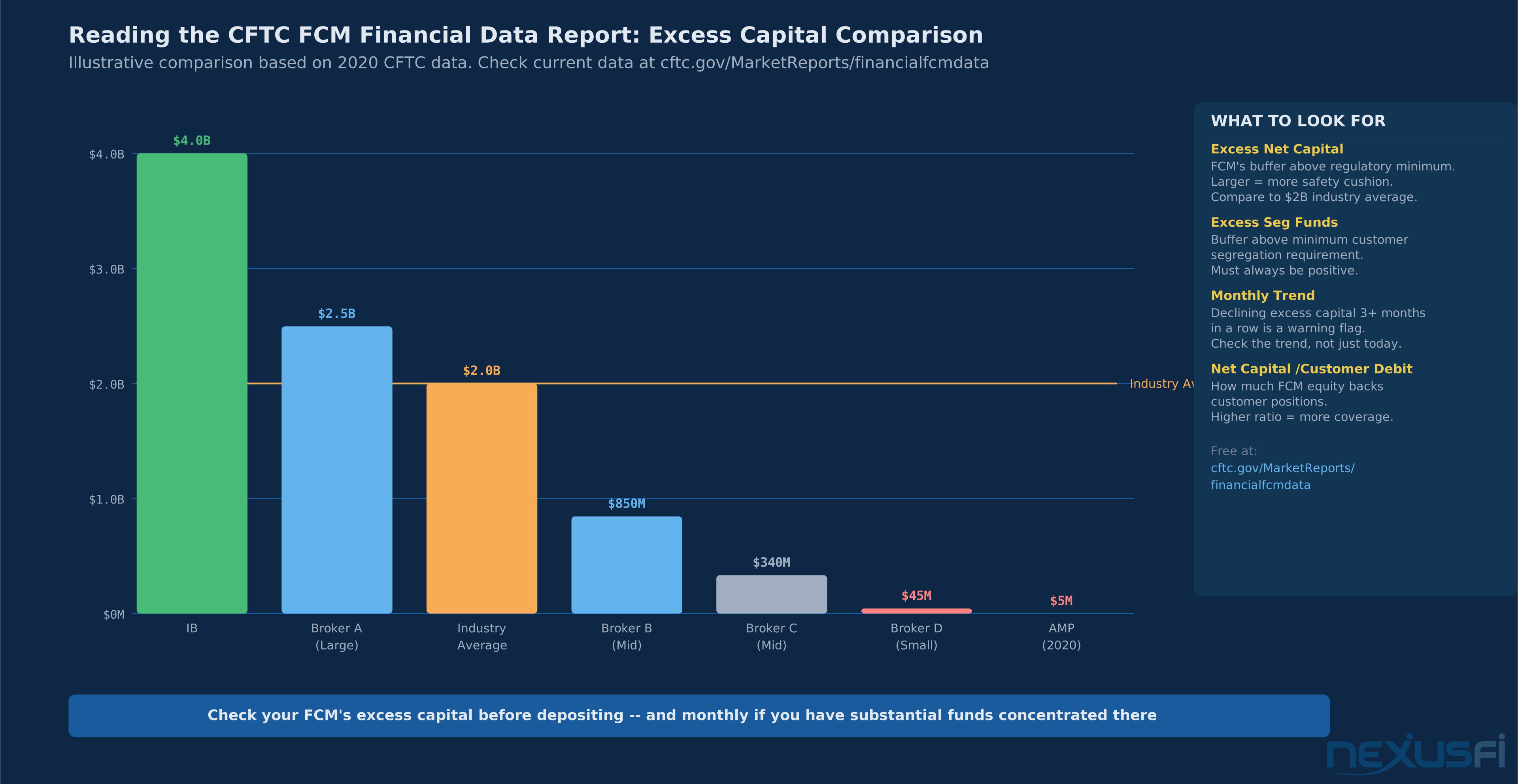
The CFTC's FCM financial data report has a column labeled "Net Excess Customer Funds" — the difference between what the FCM holds and what it's required to hold. A large, stable positive number here is a good sign: the FCM holds more than required, giving a buffer before customers are directly exposed to any shortfall. A shrinking trend or number that's consistently near zero is a yellow flag worth investigating further.
Compliance and Oversight: How Regulators Test Segregation #
Three regulatory entities maintain ongoing oversight of FCM segregation compliance:
CFTC: Conducts annual examinations of registered FCMs, reviews daily segregation reports, and investigates shortfall notices. CFTC enforcement authority covers civil penalties, suspension of registration, and referral for criminal prosecution.
NFA: As the self-regulatory organization for the futures industry, NFA conducts compliance examinations and audits, reviews FCM financial filings, operates the BASIC system for public disclosure of FCM enforcement history, and now verifies segregated account balances directly with depository banks (the key reform post-PFGBest).
DSRO (Designated Self-Regulatory Organization): Major clearing firms also operate under exchange-level oversight from their Designated SRO (CME Group for CME-cleared products, ICE for ICE-cleared products). DSRO oversight focuses especially on clearing margin compliance.
The capital disparity between FCMs is real and material to your risk.
Practical Application: Using This Knowledge #
The framework knowledge translates directly into broker evaluation behavior. Here's how:
When opening a new account: Before depositing, run the five-step checklist at the top of this article. The CFTC FCM data report is the most underused public resource in retail futures trading. Download it, find your broker's row, look at "Excess Net Capital" and "Net Excess Customer Funds." This takes five minutes.
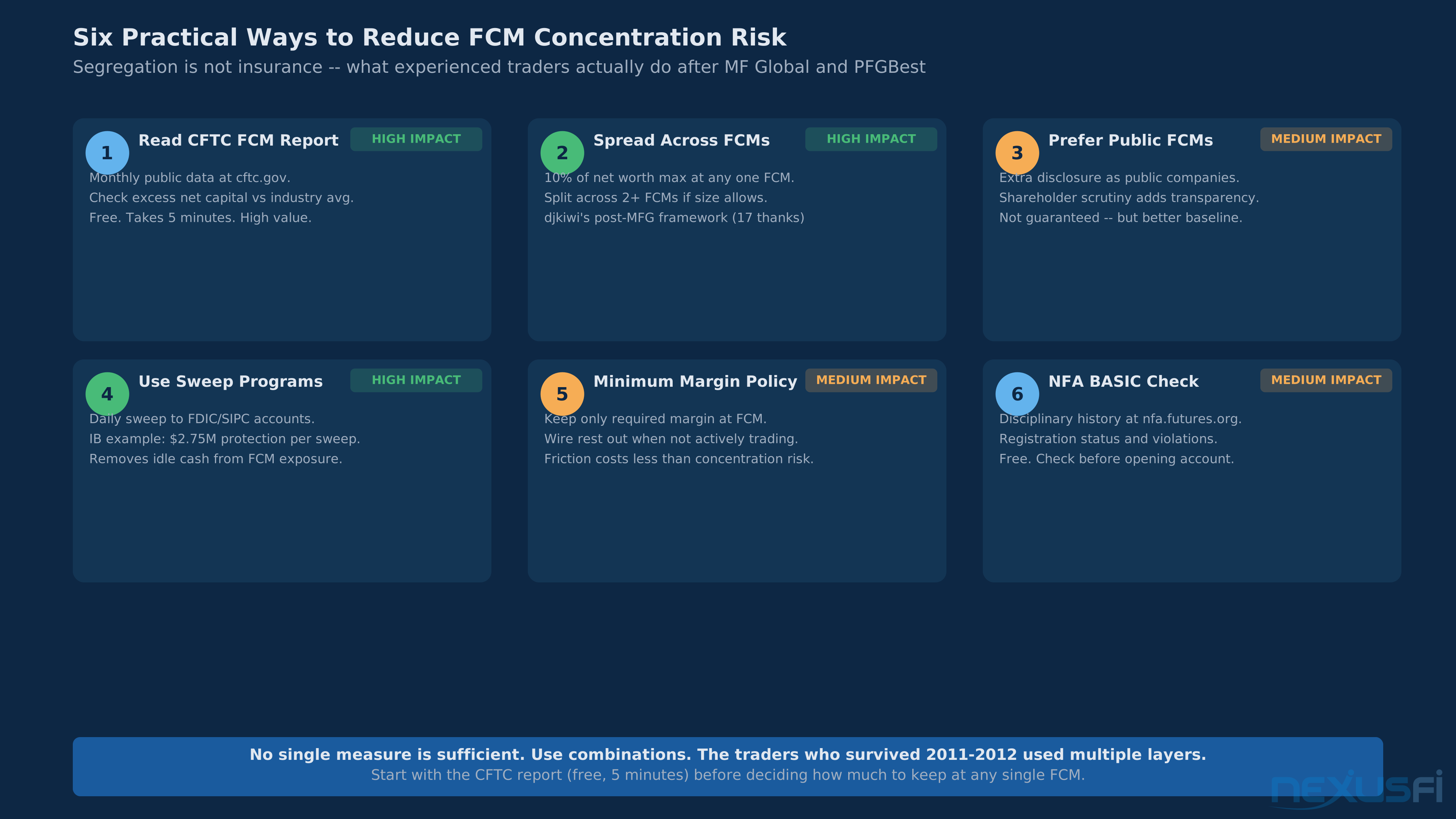
When evaluating concentration risk: Segregation protects you from FCM default, not from the regulatory process that follows. If your account represents more than you can afford to have tied up for 12-24 months, diversify across FCMs. The friction of running two accounts is less than the risk of a single-point failure.
When something feels off: An FCM that is reluctant to answer direct questions about its depository bank relationships, bank acknowledgment letter status, or recent segregation computation history is displaying a behavior pattern. Reputable FCMs answer these questions. The combination of FCM registration, NFA compliance history, and transparent answers to these direct questions is the best due-diligence framework available to retail traders.
Customer funds segregation is one of the most strong customer protection mechanisms in U.S. financial regulation. The daily required-vs-held calculation, combined with direct bank verification post-2012, provides real and legally enforceable protection against FCM insolvency. What it doesn't provide: guaranteed immediate recovery, protection from timing delays in bankruptcy proceedings, immunity from fraud at the bank-documentation level, or protection against affiliates outside U.S. jurisdiction. Know what you have, know what you don't, and size your concentration risk so.
Knowledge Map
Go Deeper
Build on this knowledgeReferences This Article
Articles that build on this topicCitations
- — Futures Broker Due Diligence Notes post PFG (2012) 👍 82“The additional risk to customer funds occurs through the brokerage using client assets to collateralize its positions. MF Global used client assets to collateralize its European sovereign debt bet that went wrong.”
- — U.S. approves new rules to protect futures customers (2012) 👍 1“Brokers must notify regulators before large withdrawals. Must also submit daily segregated fund calculations. Rules come as a response to MF Global collapse.”
- — What if a broker declare bankruptcy!!! Ftx first whose next? (2022) 👍 6“In the US Customer Funds are required to held in a separate segregated account to protect the customer from a situation like this. Unfortunately people still violate these laws as was seen in the PFG and MF Global failures.”
- — Class Action Lawsuit: AMP Global Clearing LLC (2020) 👍 21“If you have substantial funds, it's prudent to diversify those funds across FCMs. IB has excess capital of $4 billion according to the latest CFTC FCM report. By comparison, AMP has $5 million.”
- — Futures Broker Due Diligence Notes post PFG (2012) 👍 82“After the PFG collapse I've been evaluating my futures brokers to determine whether my capital is adequately protected. I've broken the analysis down into: invested capital, proceeds from sales, initial margin requirements, and excess funds.”
- — PFGBest Accounts Frozen (PFG scandal big thread) (2012) 👍 17“The murky world of segregated accounts and FCMs is coming under the right amount of scrutiny. Atlas Ratings had identified PFGBest in the bottom 5% of all FCMs on their proprietary rating scale.”
- — Is Amp at risk of going under? (2020) 👍 7“You have only the trust in the FCM accounting practices to save you. Do not let them tell you the funds are segregated - that will NOT save you, just look no further than PFGBest where customers lost everything.”
- — NinjaTrader Clearing Risks (2024) 👍 5“The funds you deposit with a futures commission merchant are not held in a separate account for your individual benefit. Futures commission merchants commingle the funds received from customers in one or more accounts and you may be exposed to losses incurred by other customers if the FCM does not have sufficient capital.”
- — AMP Futures / AMP Global Review (2014) 👍 17“Protecting my capital is my own responsibility. My preferred option is to limit funds with privately owned brokers in favor of publicly listed brokers, and to use companies that allow excess cash to be swept to FDIC/SIPC insured accounts.”
- — Edge Clear futures broker FT71 (2020) 👍 5“FCMs are required to hold customer funds in a segregated bank account separate from the working capital of the FCM. This customer segregation protection is a core principle of the futures industry.”