



Position Limits, Accountability Levels, and Large Trader Reporting in Futures Markets
Overview #
Every futures contract you trade exists inside a regulatory framework designed to prevent any single entity from cornering a market. Position limits cap how many contracts you can hold. Accountability levels flag you for scrutiny before you hit those caps. Large Trader Reporting forces transparency once your positions get big enough to matter.
Most retail traders never bump into these constraints. But if you're scaling size, managing multiple accounts, trading physical commodity futures near delivery, or running a CTA — these rules define your operational ceiling. Misunderstanding them doesn't just create compliance headaches. It can freeze your trading at exactly the wrong moment.
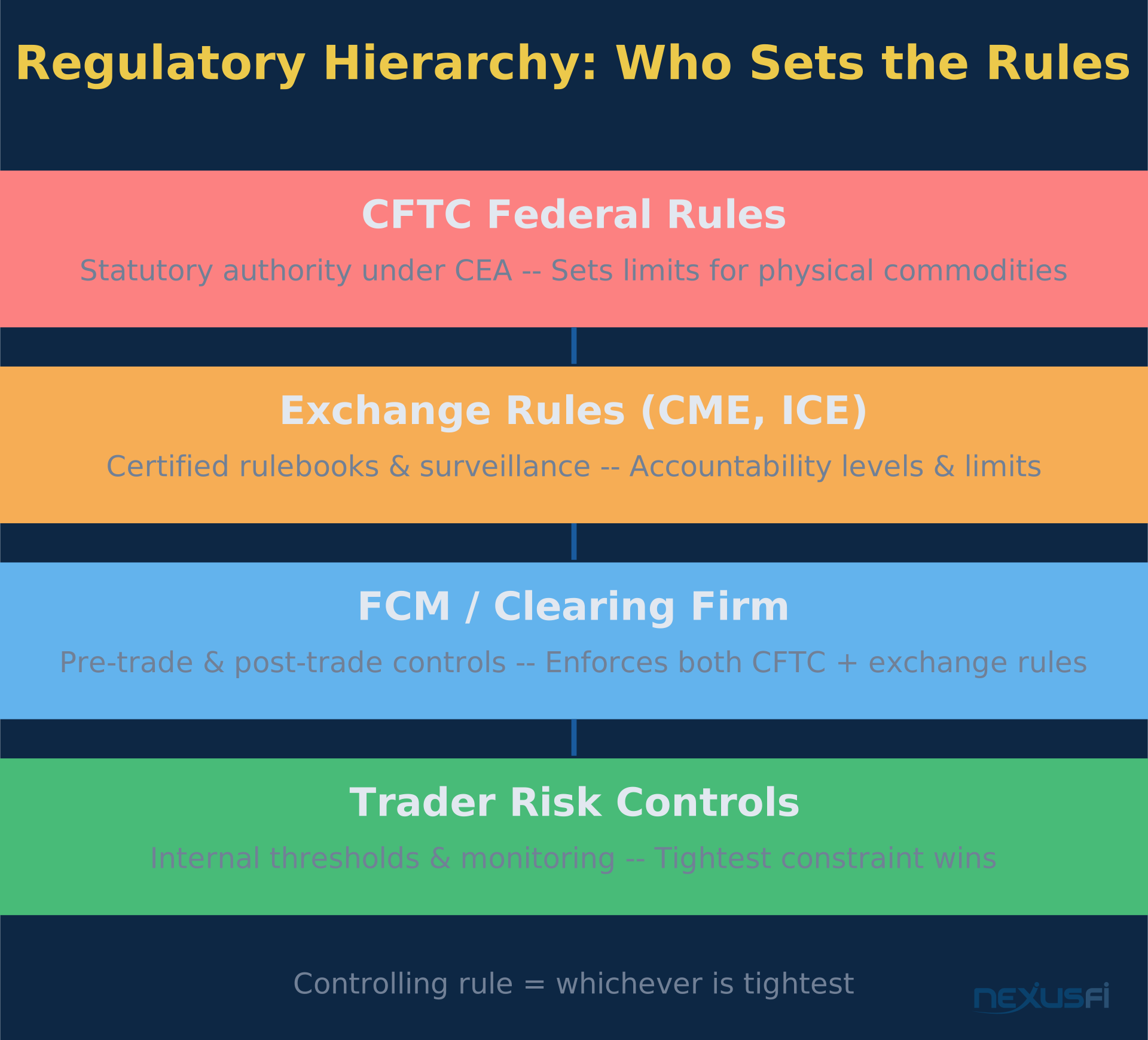
The U.S. framework is a layered system: the CFTC sets federal rules under the Commodity Exchange Act (Futures Exchange Regulation), exchanges like CME Group and ICE implement their own limits and surveillance programs, and your FCM enforces everything through pre-trade risk controls. You live under whichever rule is tightest.
Key Concepts #
Position limit — The maximum number of net contracts (long minus short) a single trader or entity can hold in a specific futures contract. Hard cap. Exceed it and you're in violation.
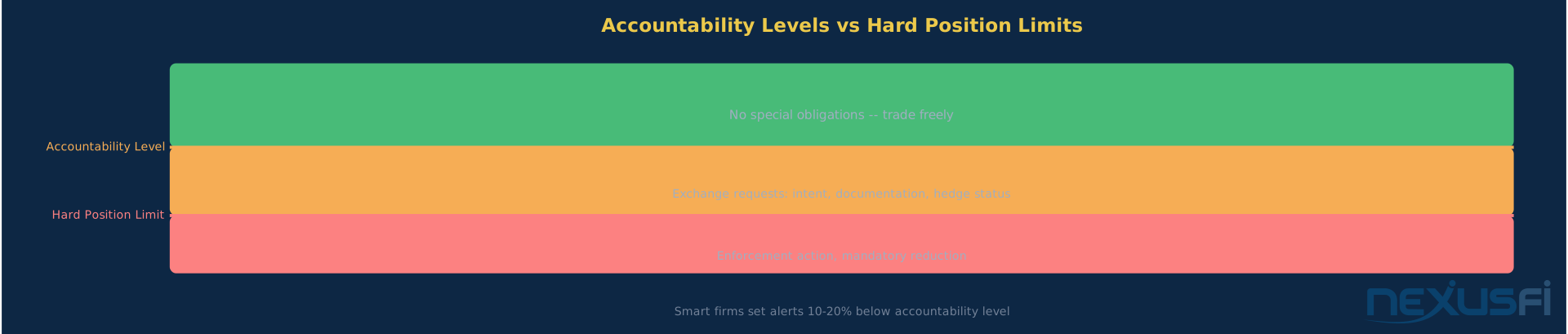
Accountability level — A monitoring threshold set by the exchange, below the hard position limit. Cross it and the exchange wants an explanation — your intent, your hedging status, your timeline. Not a prohibition, but a trigger for enhanced surveillance.
Reportable position — A position size threshold that, once exceeded, requires your FCM to report your position data to regulators. You become visible to the CFTC's surveillance systems.
Form 40 — The CFTC's Large Trader Questionnaire. Filed when you hold reportable positions. Asks who you are, who controls the accounts, whether you're hedging or speculating, and what your commercial interests look like.
Hedging exemption — Permission to exceed speculative position limits because your futures position qualifies as a bona fide hedge against underlying commercial exposure (physical inventory, production commitments, processing margins).
framework is a layered system: the CFTC sets federal rules under the Commodity Exchange Act, exchanges like CME Group and ICE implement their own limits and surveillance programs, and your FCM enforces everything through pre-trade risk controls.
Aggregation — The requirement to combine positions across all accounts under common ownership or control when calculating compliance. Your three accounts at two different FCMs? They add up.
Options-to-futures equivalency — Conversion of option positions into futures-equivalent contract counts (usually via delta) for position limit and reporting calculations.
The Regulatory Hierarchy #
The system operates in layers, and the controlling constraint is always the tightest one that applies to your situation.
Layer 1: CFTC Federal Rules
The Commodity Futures Trading Commission has statutory authority under the Commodity Exchange Act to set position limits for certain physically settled commodity futures. The CFTC's Part 150 regulations establish federal limits primarily for agricultural and energy commodities where deliverable supply is finite and market corners are a real risk.
For financial futures like E-mini S&P 500 (ES) or Nasdaq-100 (NQ), the CFTC hasn't imposed federal position limits in the same way. These markets are cash-settled with effectively unlimited "deliverable supply," so the exchange-level framework handles surveillance.
Layer 2: Exchange Rules
Designated Contract Markets — CME Group, ICE, CBOT, NYMEX, COMEX — implement their own position limits, accountability levels, and reporting thresholds via certified rulebooks. For many products, the exchange rulebook is where you find the specific numbers that govern your daily trading.
Exchange limits can be tighter than CFTC limits. They frequently are for spot-month positions approaching delivery.
Layer 3: FCM/Clearing Firm Controls
Your FCM enforces both CFTC and exchange rules through automated pre-trade and post-trade risk controls. Most FCMs also set internal limits tighter than exchange thresholds — they don't want the regulatory phone call any more than you do.
Layer 4: Your Own Risk Controls
Smart firms set internal triggers well below exchange accountability levels. The goal is never to receive the exchange's "please explain" call in the first place.
Position Limits -- The Hard Caps #
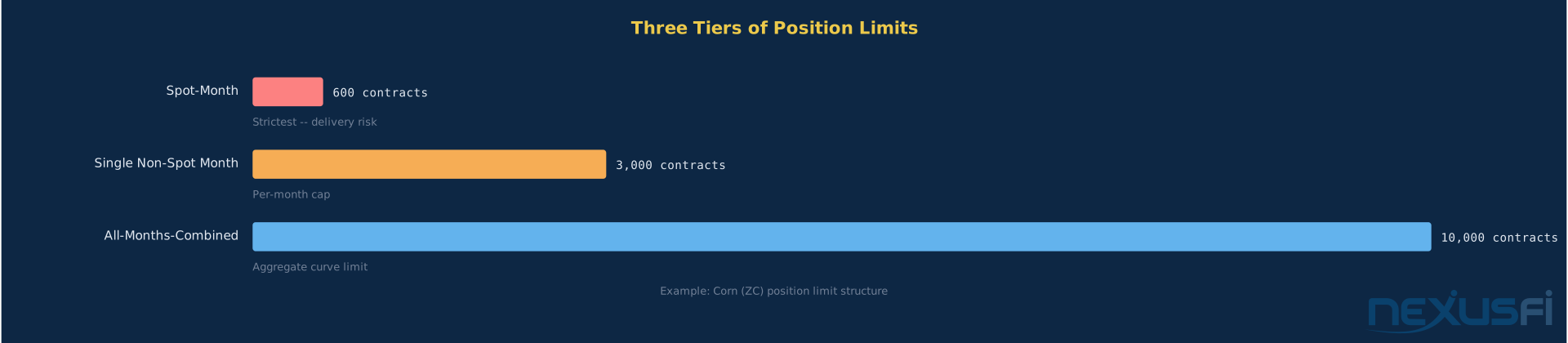
Position limits restrict the maximum net position a trader (after aggregation) can hold. They're structured in three tiers that serve different protective purposes.
Spot-Month Limits
The strictest tier. Applies to the front delivery month where physical delivery risk is highest. Spot-month limits exist because a concentrated position in the delivery month can distort the physical delivery process and manipulate the cash-futures basis.
For corn (ZC) on CBOT, the CFTC spot-month limit is 600 contracts. For crude oil (CL) on NYMEX, spot-month limits run in the thousands of contracts — the exact threshold is adjusted periodically as market conditions change. [4] These numbers aren't arbitrary — they're calibrated against estimated deliverable supply.
Non-Spot-Month (Single Month) Limits
Applies to any individual contract month that isn't the spot month. These are larger than spot-month limits because delivery risk is lower in deferred months.
All-Months-Combined Limits
The aggregate cap across all listed contract months for a given commodity. Prevents a trader from staying under individual month limits while building an enormous position across the entire curve.
A Worked Example
Suppose a commodity futures contract has these limits:
- Spot-month: 600 contracts
- Single non-spot month: 3,000 contracts
- All-months-combined: 10,000 contracts
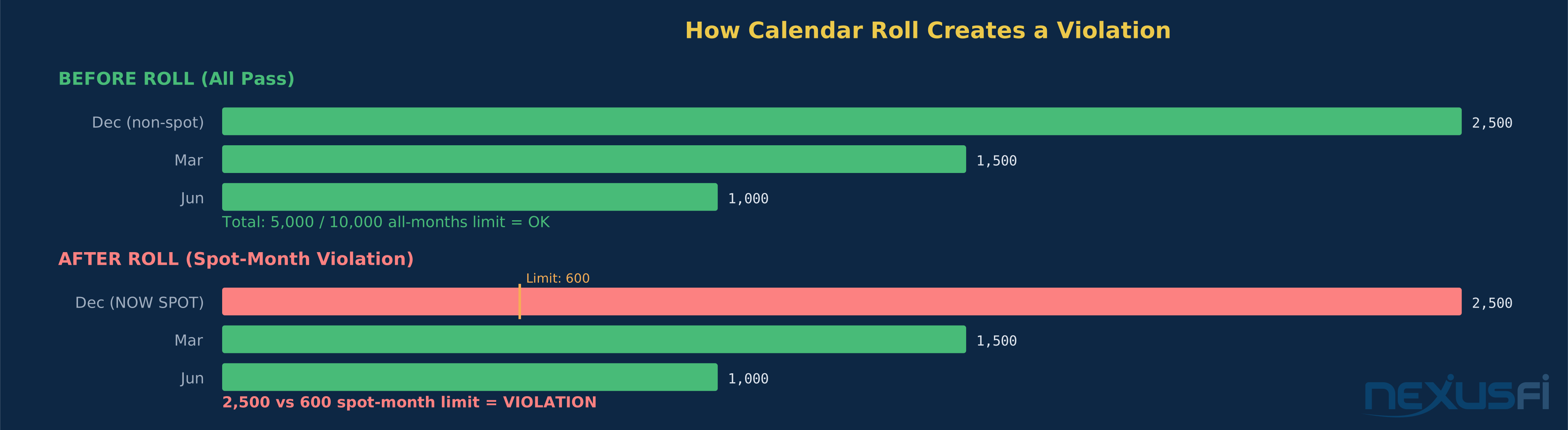
A trader is long 2,500 December, 1,500 March, and 1,000 June. Total: 5,000 contracts. The all-months-combined check passes (5,000 < 10,000). Each non-spot month passes individually (2,500 < 3,000 and 1,500 < 3,000 and 1,000 < 3,000).
But if December becomes the spot month, that 2,500 position violates the 600-contract spot-month limit. The trader must reduce before December enters the delivery window — or hold a valid hedging exemption.
This is exactly how traders get caught.
How Limits Apply to Different Products
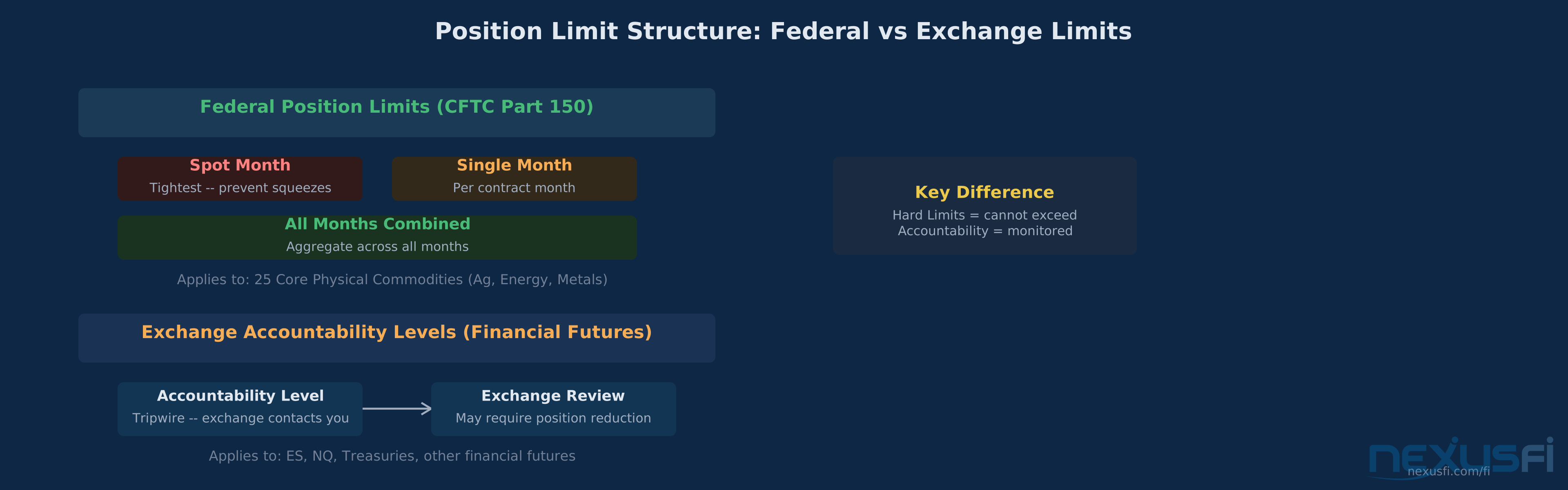
For ES and NQ, there are no CFTC-set federal position limits. Exchange-set accountability levels are the primary constraint. The markets are extremely deep, cash-settled, and delivery-related concentration risk doesn't apply the same way.
For CL (Crude Oil), position limits matter operationally. Crude is physically delivered, and a large directional position heading into delivery can affect the physical market. Exchange surveillance gets aggressive around first notice day.
For corn (ZC) and soybeans (ZS), CFTC federal limits apply. Position limits for physical commodities are not static — they evolve as markets grow. In 2020, CME increased gold spot month position limits from 3,000 to 6,000 futures contract equivalents, while raising accountability levels from 6,000 to 8,000. [6] These adjustments happen when deliverable supply estimates change or when market structure evolves. Commercial hedgers (grain elevators, processors, crushers) routinely need hedging exemptions to operate above speculative caps during harvest and delivery periods.
Accountability Levels -- The Warning System #
Accountability levels sit below hard position limits. Think of them as tripwires that alert the exchange's Market Regulation department.
How They Work
When your net position exceeds an accountability level, the exchange may:
- Request information about your position — trading intent, expected duration, hedging status
- Ask you to explain why the position is justified
- Require documentation supporting any hedging claims
- In extreme cases, order you to stop increasing the position or begin reducing it
Accountability levels aren't violations. You won't get fined for crossing one. But ignoring the exchange's inquiry definitely becomes a problem.
Why They Matter Even for Smaller Traders
The practical impact extends beyond the threshold itself. When an exchange contacts you about an accountability breach, your compliance team scrambles. Your FCM gets notified. Documentation gets requested. Response timelines are tight.
That's why sophisticated trading operations set internal warning triggers 10-20% below exchange accountability levels. They want to manage the situation proactively rather than reactively.
Large Trader Reporting and Form 40 #
Large Trader Reporting (LTR) is the CFTC's surveillance program for tracking significant market positions. It's the mechanism that makes position limits enforceable — you can't police limits you can't see.
Reportable Position Thresholds
Each futures contract has a specific reportable position level. When a trader's net position in any single contract month exceeds that level, their FCM must begin reporting that position to the CFTC and the exchange.
Reportable levels are contract-specific and generally much lower than position limits. For corn, the reportable level is 250 contracts. For crude oil, it's 350 contracts. For ES, it's 1,000 contracts.
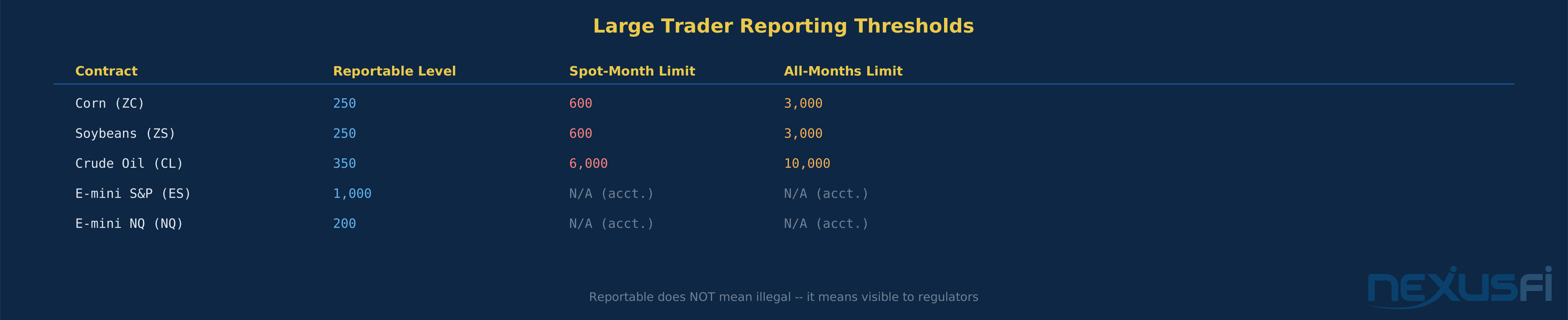
Crossing a reportable threshold doesn't mean you've done anything wrong. It means your positions are now visible to regulators. The CFTC uses this data for market surveillance, concentration analysis, and the weekly Commitments of Traders (COT) report. COT data distinguishes between commercial and non-commercial positions — the same classification that determines your position limit category. [10]
Form 40 — The Large Trader Questionnaire
When you become a "reportable trader," the CFTC may call for a Form 40 filing. This questionnaire asks for:
- Legal entity name and structure
- Principals and control persons
- Whether trading is speculative or hedging
- Commodity business details (for commercial hedgers)
- Related accounts and affiliated entities
- Ownership structures that might trigger aggregation
Form 40 is not a routine filing for retail accounts. It's a regulatory identification tool used when your position size attracts surveillance attention.
The key word is "must." This isn't optional. [1]
The Community Misconception
The most important thing to understand about reportable positions and Form 40: reportable does not mean illegal. Crossing a reportable threshold is a transparency obligation, not an accusation. You're required to be visible to regulators — that's the entire point of the surveillance system.
[2]\n\nAs @SMCJB described from a decade of personal experience: "In reality, other than the government getting information about you — the loss of privacy — none at all. For me all I have to do is file a form with the CFTC every two years. They even email me when the form is due. All the actual reporting is done automatically by the broker to the CFTC." He added one memorable detail: "I actually had a meeting with the CFTC. They literally called me up and said 'hey we're in town mind if we get together'. I nearly had a heart attack! In reality it was purely informational." [5]
What can get you in trouble is failing to report, filing inaccurate information, or exceeding position limits without a valid exemption.
Hedging Exemptions -- Commercial Relief from Speculative Caps #
Hedging exemptions are the mechanism that lets commercial participants operate above speculative position limits. Without them, the farmer can't hedge their crop and the refiner can't lock in their margins.
Bona Fide Hedge Standard
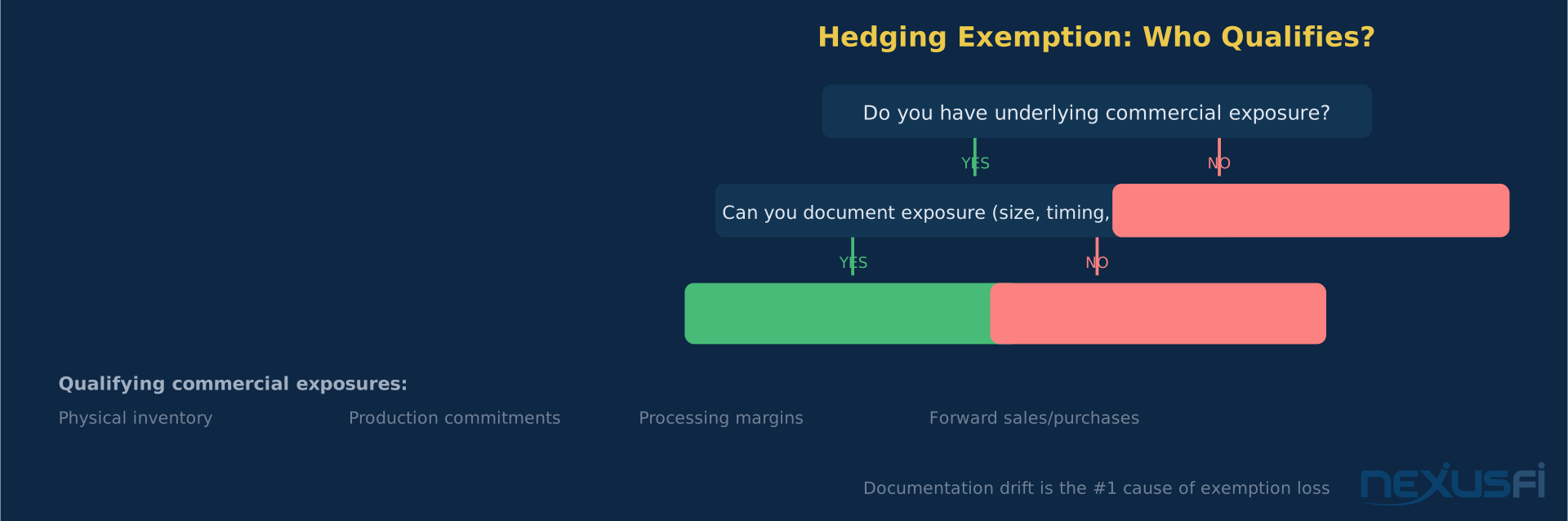
To qualify, a position must be economically connected to a genuine commercial risk:
- Inventory hedging: A grain elevator long physical corn hedges by selling ZC futures
- Production hedging: An oil producer hedges future production by selling CL futures
- Processing margin hedging: A soybean crusher hedges crush margins by going long ZS (beans) and short ZL (oil) and ZM (meal)
- Anticipated merchandising: Forward sales or purchase commitments for physical commodities
- Fixed-price exposure: Cash-market obligations that create price risk
Documentation Requirements
Hedging exemptions aren't handed out casually. The trader must document the underlying commercial exposure, how the futures position offsets that specific risk, the proportional sizing logic, and ongoing updates as exposures change. Documentation drift — when physical positions change but exemption files aren't updated — is one of the most common compliance failures, especially during harvest or production cycles when physical positions move fast.
Commercial vs. Speculative Classification
The classification determines your regulatory treatment — and it is not permanent. As @SMCJB pointed out, "Commercial does not always equal commercial." After CFTC reclassified energy trading firm Vitol from a commercial hedger to a speculator, "the impact on the COT was enormous." [7] The classification audit happens when positions grow large enough to attract scrutiny.
- Commercial hedger: Has a bona fide physical or cash-market exposure. Eligible for hedging exemptions. Subject to enhanced documentation requirements.
- Speculator: Trades for profit without qualifying underlying commercial exposure. Subject to speculative position limits with no exemption pathway.
For financial futures like ES and NQ, the "bona fide hedge" concept operates differently. An asset manager hedging equity portfolio risk might qualify, but the documentation standards and regulatory posture differ from physical commodity hedging.
Spread Trading — Not an Automatic Exemption
There's a common misconception that calendar spreads or inter-commodity spreads are automatically exempt from position limits. They're not.
Some exchange frameworks provide reduced limit treatment for qualifying spread structures. A CL calendar spread (long one month, short another) may receive favorable treatment under specific exchange rules. But the trader must verify qualification against the contract's rulebook. A spread that doesn't meet the exchange's structural criteria — wrong months, wrong ratio, wrong instruments — gets no special treatment.\n\nFor margin treatment of spread positions, see Futures Margin Requirements. Spread positions may receive reduced margin requirements without qualifying for position limit exemptions. Don't confuse the two.
Aggregation and Options Equivalency #
Aggregation is where position limit compliance gets operationally complex. The rules don't just apply to one account — they apply to everything under common ownership or control.
What Gets Aggregated
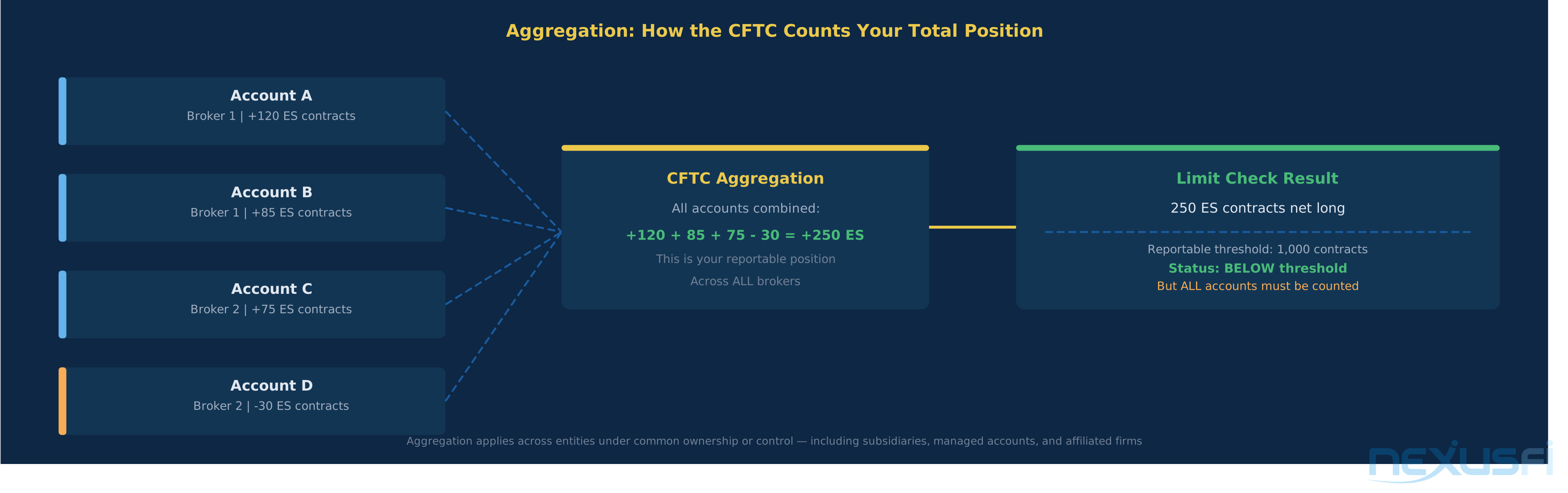
Positions must be combined across:
- Multiple accounts at the same FCM
- Accounts at different FCMs controlled by the same entity
- Parent and subsidiary companies
- Accounts managed by the same investment advisor (CTA)
- Affiliated entities under common ownership or trading control
A prop firm with three trading desks at two different clearing firms? Those positions aggregate for limit purposes.
[3] A CTA with discretionary authority over 50 client accounts? Those aggregate too.
Options-to-Futures Equivalency
Options positions are converted into futures-equivalent contract counts before limit testing. The standard approach is delta-based conversion:
- A long call with delta 0.50 counts as 0.50 long futures contracts
- A short put with delta -0.30 counts as 0.30 long futures contracts
- Deep in-the-money options approach 1.0 delta and count nearly as full futures equivalents
The exact conversion methodology varies by exchange and product. Don't rely on intuition — an options book that looks "small" in notional terms can generate significant futures-equivalent exposure once deltas are computed. A large CL options spread book might trigger reporting or accountability thresholds even when the trader perceives minimal directional risk.
How This Affects Different Traders #
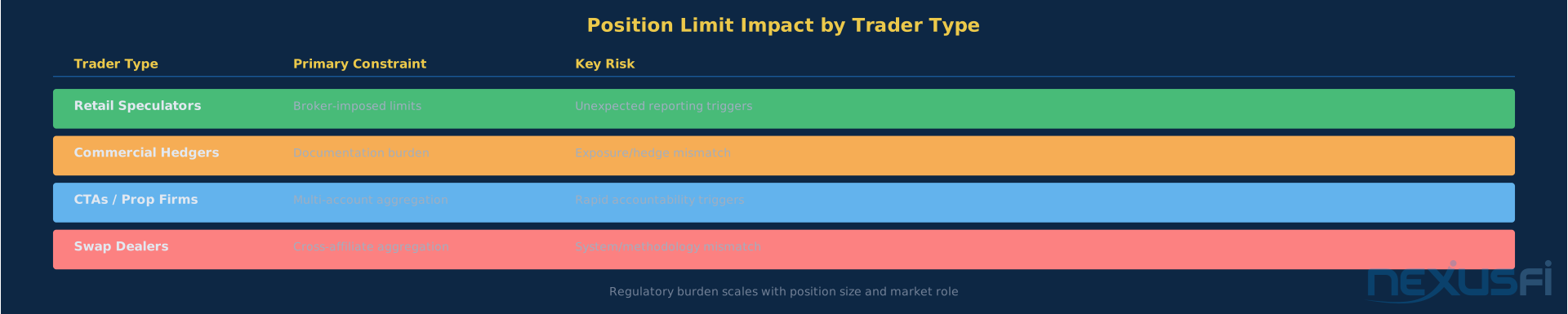
The regulatory burden scales with position size and market role, but the nature of the constraints differs by trader type.
Retail Speculators
Most retail traders never encounter position limits or reporting requirements. Broker-imposed limits and margin constraints are the effective ceiling, and those thresholds sit well below any regulatory level.
Where retail traders get surprised: scaling up — and sometimes in unexpected contracts. As @myrrdin discovered, "most of [the thresholds] are far beyond my position numbers. With one exception: 'All other Commodities: 25'. Indeed, I hold 40 futures for the Bloomberg Commodity Index." That relatively small contract triggered Form 40 obligations he hadn't anticipated. [8] A trader who starts with 2-lot ES positions and gradually grows to 50 lots over a year is still nowhere near position limits. But a retail trader who aggressively scales into physical commodity futures — building a 300+ contract corn position during a volatile harvest — could approach reportable levels faster than expected.
Commercial Hedgers
These traders have the most complex regulatory relationship. They routinely need hedging exemptions to do their jobs. A grain elevator buying physical corn from farmers and selling ZC futures to lock in margins can't operate within speculative limits during harvest — the physical flow demands larger positions.
The compliance workflow is significant: documenting underlying exposures, maintaining exemption files, updating documentation as physical positions change, and responding to exchange inquiries. For large commercial operations, position limit compliance is a full-time job for dedicated compliance staff.
CTAs and Managed Futures
CTAs face aggregation challenges. When you have discretionary authority over multiple accounts, all those positions combine for limit purposes. A trend-following CTA that's long NQ across 100 managed accounts could trigger accountability levels from the aggregated position even though each individual account holds a modest number of contracts.
CTAs also face the "speculative" classification challenge. Unless they're trading on behalf of commercial hedging clients with qualifying underlying exposure, their positions are speculative from a regulatory standpoint.
Proprietary Trading Firms
Similar to CTAs but often with more concentrated exposure. A prop desk aggressively building a position in CL or NQ can trip accountability thresholds quickly. Internal risk systems need real-time aggregation across all trading strategies and accounts.
Operational Compliance Workflow #
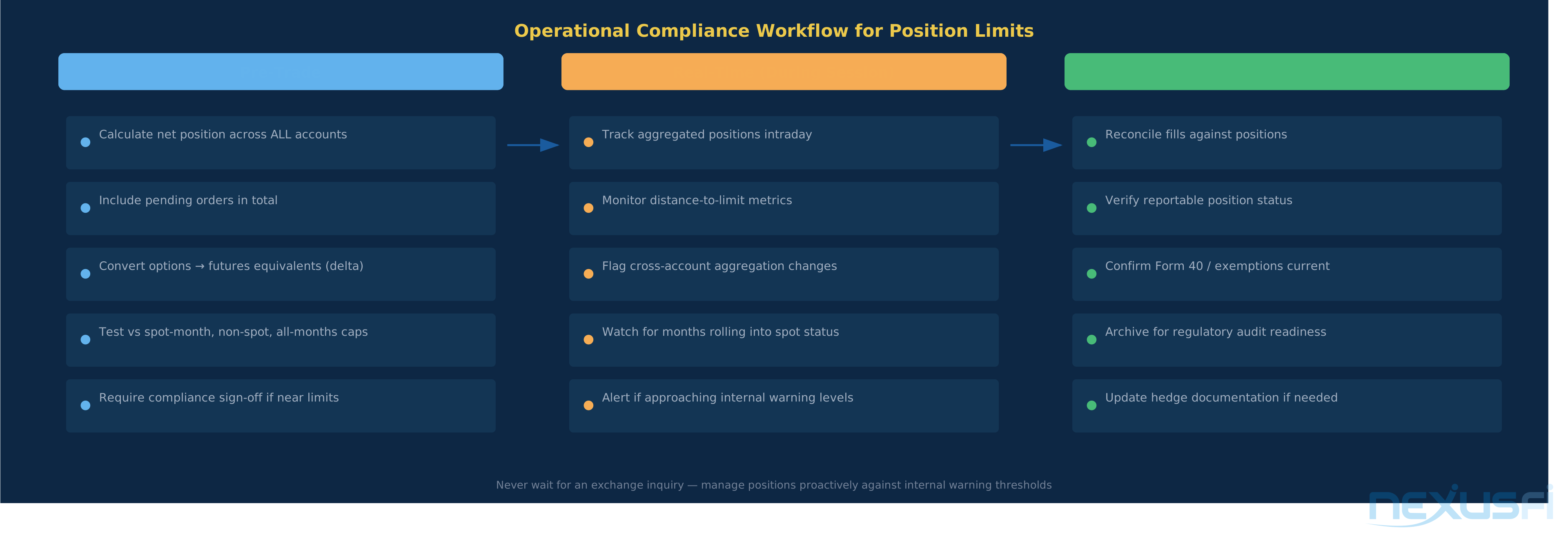
Staying compliant isn't a once-a-year exercise. It's a daily operational discipline. But the administrative reality is less intimidating than it sounds. As @SMCJB — who has been subject to large trader reporting for over a decade — put it: "You don't need to spend a lot of money on a lawyer for this. It's not a big deal." [9] The key is understanding what the system requires and building it into your operational routine.
Pre-Trade
Before placing orders that will materially increase position size:
- Calculate current net position after aggregation across all accounts
- Include pending orders in the calculation
- Convert option positions to futures equivalents
- Test the projected position against spot-month, non-spot-month, and all-months-combined thresholds
- If approaching internal warning levels, require compliance sign-off
Real-Time Monitoring
During trading hours:
- Track aggregated positions intraday with automated threshold alerts
- Monitor "distance to limit" metrics rather than just raw position numbers
- Flag cross-account aggregation changes from fills in multiple accounts
- Watch for calendar rolls that shift months from non-spot to spot-month status
Documentation
For hedging exemptions:
- Maintain current hedge files linking physical/commercial exposure to futures positions
- Update documentation when underlying exposures change
- Keep exemption records and exchange correspondence organized for audit
For all traders:
- Maintain ownership and control structure documentation
- Track beneficial ownership changes that might trigger new aggregation requirements
Escalation
When thresholds are approached or breached:
- Compliance review — assess whether the position qualifies for any exemption
- FCM notification — your clearing firm needs to know
- Exchange inquiry response — prepare rationale documentation within the required timeframe
- Position management plan — develop a reduction or roll schedule if needed
Post-Trade Audit
After each session:
- Reconcile fills against positions
- Verify reporting status for all contracts with reportable positions
- Confirm Form 40 and any exemption filings are current
- Archive documentation for regulatory examination readiness
The Bottom Line #
Position limits, accountability levels, and large trader reporting form an interconnected system designed to maintain market integrity. The limits cap concentration. The accountability levels provide early warning. The reporting makes everything visible.
For most traders, these rules operate in the background. For traders who scale — whether through growth, strategy changes, or market opportunity — they become the operational architecture that defines what's possible.
The single most important takeaway: understand the system before you need it. Discovering position limit mechanics while your FCM is on the phone asking you to reduce isn't the time to learn.
Knowledge Map
Prerequisites
Understand these firstGo Deeper
Build on this knowledgeReferences This Article
Articles that build on this topicCitations
- — CFTC / Large Trader (2020) 👍 10“You 'must' report. 'A reportable trader must file a Form 40 on call by the Commission or its designee.'”
- — CFTC / Large Trader (2020) 👍 7“Generally, you are required to do so if you are holding or controlling a reportable position. This isn't an option. Their mandate is to make sure that the markets remain orderly.”
- — CFTC / Large Trader (2021) 👍 1“Have you considered the total position summed across all accounts? That's what the CFTC look at.”
- — Max position sizes (2021) 👍 3“For Crude CL: Spot Month Limit is 3,000 contracts, Non-Spot Month Limit is 10,000, with the total NET position limit of 20,000 contracts.”
- — CFTC / Large Trader (2020) 👍 8“In reality, other than the government getting information about you, none at all. For me all I have to do is file a form with the CFTC every two years. All the actual reporting is done automatically by the broker.”
- — Gold Futures (GC) main discussion (2020) 👍 5“Spot month position limits will be increased for five gold futures and options contracts, going up from 3,000 to 6,000 futures contract equivalents. Accountability levels will be raised from 6,000 to 8,000.”
- — The CL Crude-analysis Thread (2015) 👍 5“Commercial does not always equal commercial. They reclassified Vitol from a hedger to a speculator a few years back, and the impact on the COT was enormous. It is quiet easy to get hedge exemptions.”
- — CFTC / Large Trader (2020) 👍 6“Looking at the table of the thresholds, most of them are far beyond my position numbers. With one exception: 'All other Commodities: 25'. Indeed, I hold 40 futures for the Bloomberg Commodity Index.”
- — CFTC / Large Trader (2020) 👍 6“I've been subject to this for approx 10 years. You don't need to spend a lot of money on a lawyer for this. It's not a big deal!”
- — The Scalper's Journey (2017) 👍 3“The original COT reports published by the CFTC since 1924 simply broke positions down by commercials, non-commercials, and non-reportables. The classification determines your regulatory treatment and which position limit tiers apply.”
- — Why are S&P and EMini S&P COT reports so different? (2011) 👍 4“For the Traders in Financial Instruments Report, which breaks down traders into Dealer/Intermediary, Asset Manager/Institutional, Leveraged Funds, and Other Reportables. The classification differs from physical commodity COT because there are no commercial hedgers with physical delivery obligations.”