



Financial Freedom Number and Trading Objectives: Van Tharp's Framework for Quantifying Enough
Overview #
Every trader has a number. Not a P&L target for Tuesday, not a "wouldn't it be nice" daydream — a hard, calculated threshold where trading income replaces the need for a paycheck. Van Tharp called it the Financial Freedom Number, and it's the single most important calculation most traders never do.
Here's the problem: traders obsess over win rates, indicator settings, and entry signals while ignoring the one question that determines whether any of it matters. How much do you actually need? Not want. Need. The number that covers your rent, feeds your family, keeps the lights on, and lets you sleep at night. That's your freedom number, and everything else in your trading — system selection, position sizing, risk parameters, even the instruments you trade — flows downstream from it.
Van Tharp's framework doesn't just give you a number. It gives you a hierarchy — five distinct stages from bare survival to absolute financial freedom — and a methodology for reverse-engineering your trading system to hit each one. The math isn't complicated. The honesty required to do it is.
This article breaks down the complete framework: how to calculate your freedom number, the five stages of financial freedom, how R-multiples and expectancy connect to monthly income targets, and how all of this drives the system you should actually be trading. If you've never done this calculation, you're trading blind.
Key Concepts #
Financial Freedom Number — The specific monthly income from trading (or investments) required to cover all living expenses without employment income. Van Tharp defined this as the point where passive or active trading income exceeds total monthly costs, including a safety margin. This isn't a stretch goal. It's a hard engineering target.
R-Multiple — The profit or loss on a trade expressed as a multiple of initial risk (R). If you risk $500 on a trade and make $1,500, that's a +3R trade. If you lose the full $500, that's a -1R trade. R-multiples strip away position size and dollar amounts to reveal the true quality of your trading decisions.
Expectancy — The average R-multiple you expect per trade over a large sample. Calculated as (Win% x Average Win in R) - (Loss% x Average Loss in R). A system with +0.50R expectancy means you earn half your initial risk, on average, per trade. Expectancy is the engine. Your freedom number is the destination. The math connecting them is straightforward: Freedom Number / (Expectancy x Trades per Month x R-value in dollars).
Position Sizing — The algorithm that determines how many contracts or shares you trade on each setup. Van Tharp considered position sizing the single most important factor in trading system performance — more important than entry signals, indicators, or market selection. Position sizing is how you translate your R-value into actual dollar risk per trade.
Initial Risk (1R) — The dollar amount you'll lose if your worst-case stop is hit. Before entering any trade, you define 1R. Van Tharp's entire framework depends on knowing this number before the trade, not after. If you can't define your risk before entry, you don't have a trade — you have a gamble.
System Quality Number (SQN) — Van Tharp's metric for evaluating overall system quality. Calculated as (Expectancy / Standard Deviation of R-multiples) x sqrt(number of trades), capped at sqrt(100) = 10. An SQN above 2.0 indicates a tradeable system. Above 3.0 is excellent. Above 5.0 is superb. The SQN tells you whether your system can reliably deliver the expectancy your freedom number demands.
The Five Stages of Financial Freedom #
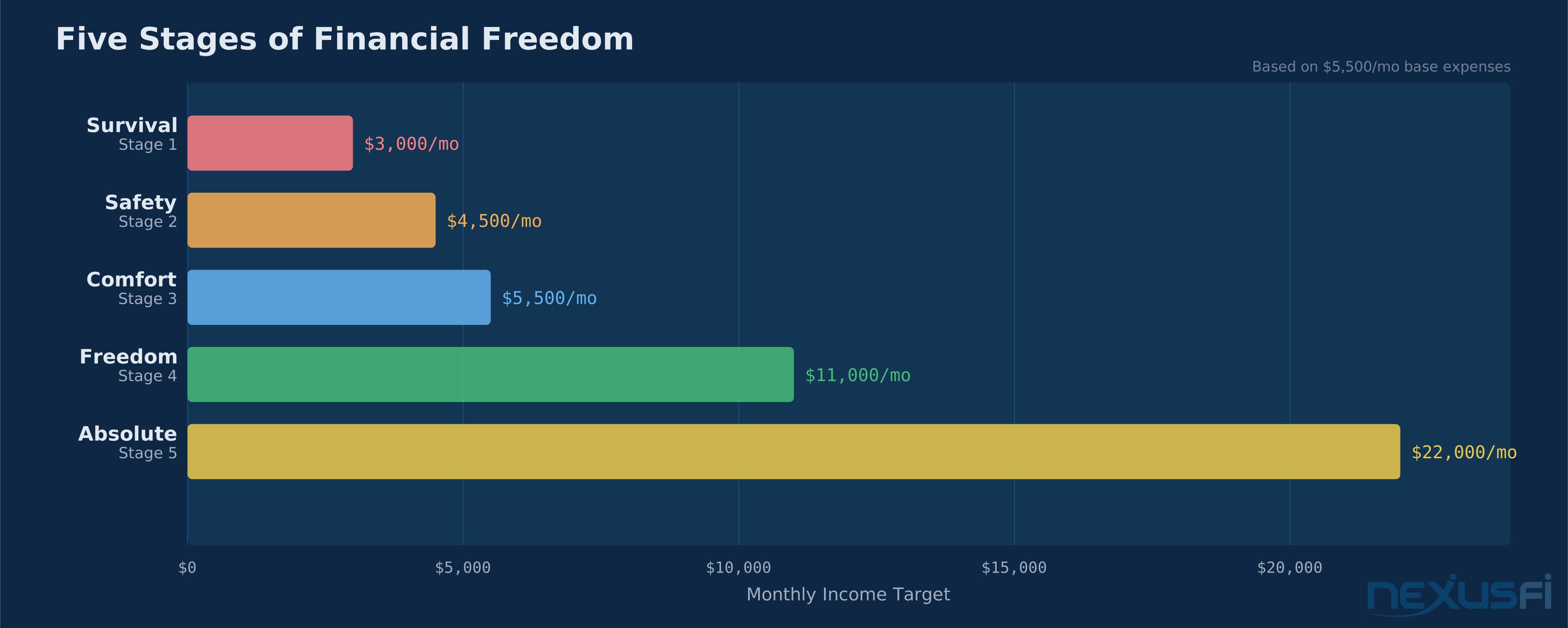
Van Tharp didn't treat financial freedom as a binary — you're either free or you're not. He identified five distinct stages, each with its own monthly income threshold. This matters because each stage creates different psychological conditions and demands different trading behavior.
Stage 1: Survival. You can cover the absolute minimum — housing, food, basic utilities. Nothing extra. No buffer. This is the bare floor. For most traders, survival means $2,000-$4,000/month depending on location. Trading at this stage is brutal because every losing trade threatens actual survival. The psychological pressure distorts decision-making in ways that guarantee worse performance. If you're here, the priority isn't a bigger trading system — it's reducing expenses or supplementing with other income until your trading can reliably exceed this threshold.
Stage 2: Safety. Survival costs plus an emergency buffer — typically 50% above survival expenses. At this stage, a losing month doesn't mean crisis. You can absorb a drawdown without panic. The psychological shift from survival to safety is enormous. As @Pariah Carey noted in a discussion about trading goals, the short answer to "why do you trade" is to make money — but how much, and over what period, is the question most traders skip. Safety gives you the first real breathing room to trade without desperation.
Stage 3: Comfort. Your current lifestyle, fully sustained by trading income. All bills paid, normal spending maintained, no lifestyle reduction. This is where most traders set their initial target, and it's the right first milestone for anyone leaving a salaried job. The number here is personal — it's your actual spending over the last 12 months, not what you think you spend. Pull your bank statements. Comfort requires honesty about what your life actually costs.
Stage 4: Financial Freedom. Income exceeds expenses with enough surplus to grow capital. At this stage, your trading account grows even as you withdraw living expenses. The compounding effect kicks in. You're no longer just sustaining — you're building. Van Tharp typically placed this at 2.0-2.5x survival expenses. This is the stage where you stop worrying about money and start optimizing for the life you actually want.
Stage 5: Absolute Financial Freedom. Income much exceeds all possible expenses. At this level, money is a tool rather than a constraint. You trade because you choose to, not because you need to. The monthly number here varies wildly by person, but the defining characteristic is that spending decisions are never constrained by income. For traders, this often means capital has grown to a point where even conservative returns produce significant income.
The critical insight: each stage isn't just a financial threshold — it's a psychological one. The psychology of trading changes at the core at each boundary. A trader at survival who reaches safety doesn't just have more money. They have less fear, better sleep, clearer thinking, and statistically better decision-making. The stages aren't arbitrary — they map to real cognitive and emotional shifts that affect performance.
Calculating Your Freedom Number #
Here's the actual math. No hand-waving, no "it depends," just the calculation.
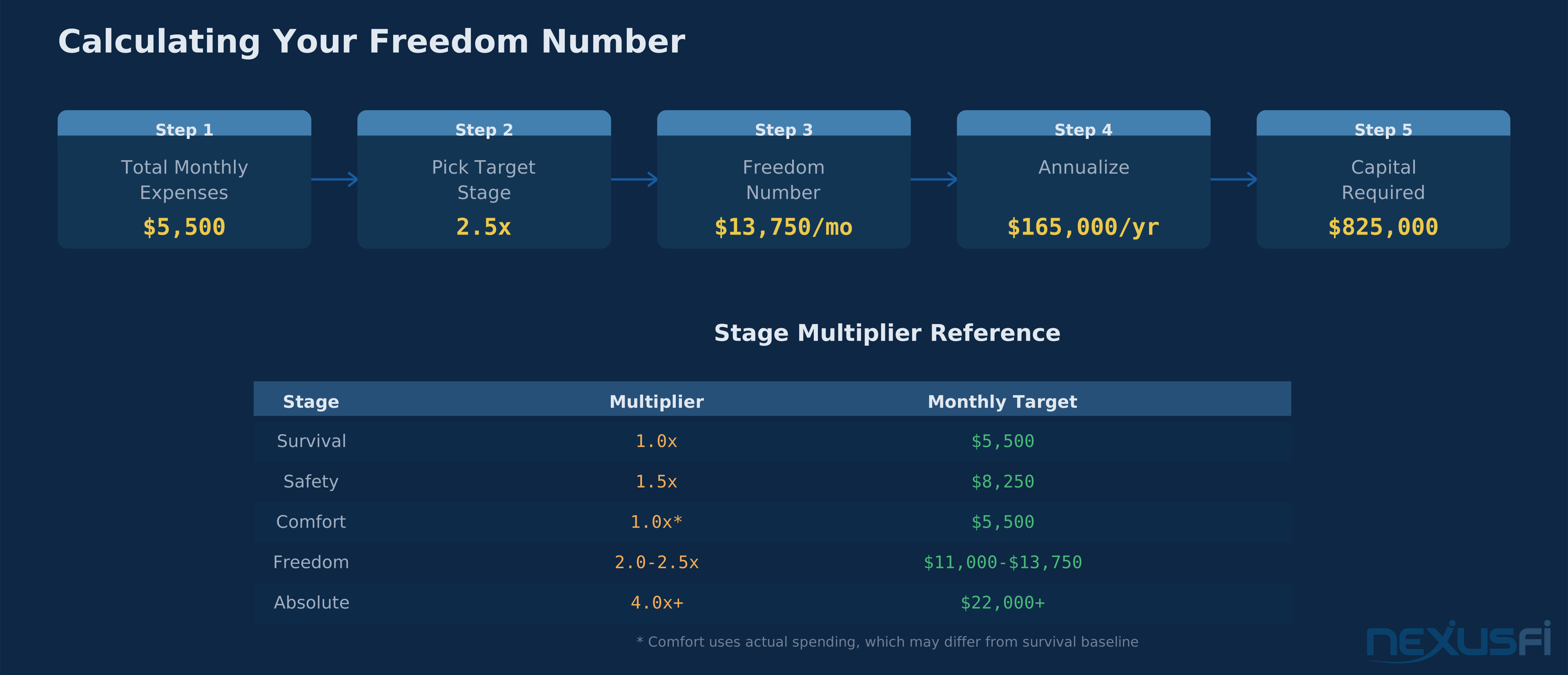
Step 1: Total your monthly expenses. Not your budget. Your actual spending. Pull 12 months of bank and credit card statements and average them. Include everything: housing, insurance, food, transportation, healthcare, debt service, subscriptions, kids' activities, the coffee habit you keep saying you'll quit. The number that shows up is usually 15-30% higher than what traders estimate from memory.
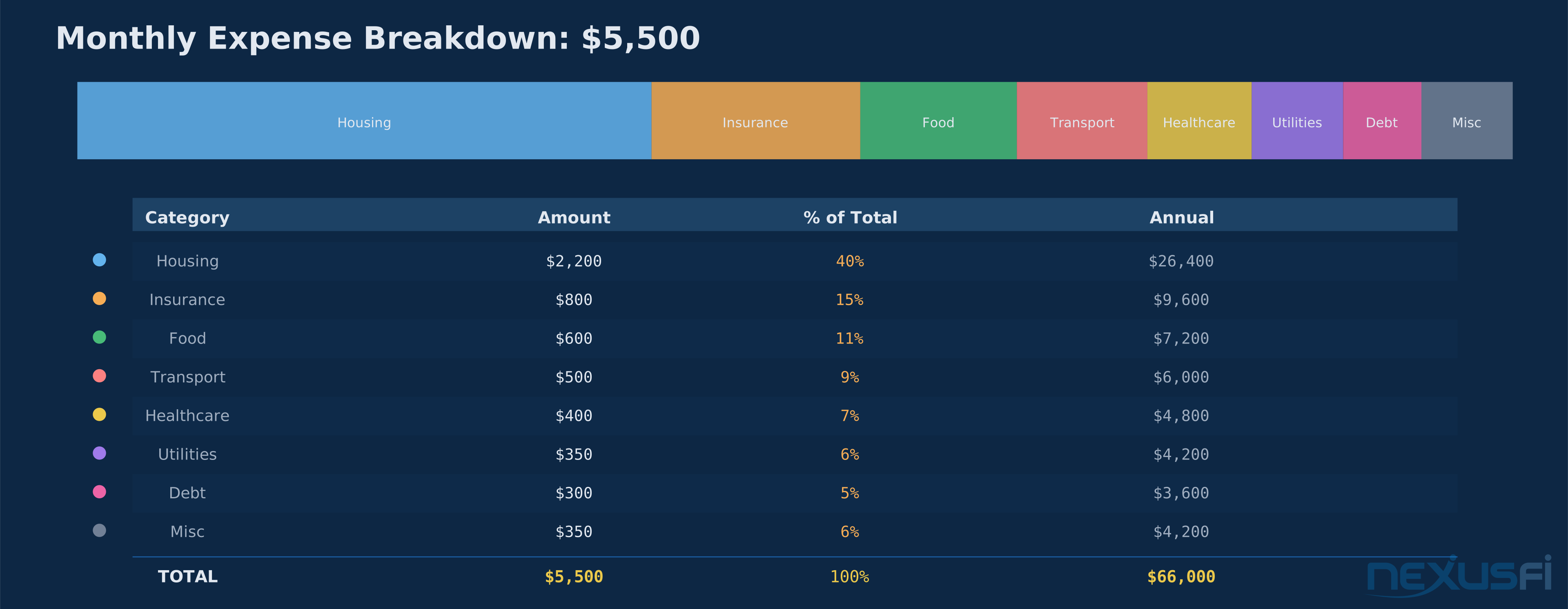
A typical breakdown for a US-based trader might look like: housing $2,200, insurance $800, food $600, transportation $500, utilities $350, healthcare $400, debt payments $300, miscellaneous $350. Total: $5,500/month. Your number will be different. Get it right.
Step 2: Pick your target stage. Survival = 1.0x monthly expenses. Safety = 1.5x. Comfort = 1.0x of actual spending (which may differ from the "survival" baseline). Financial Freedom = 2.0-2.5x. Absolute Freedom = 4.0x or more. For the $5,500/month example: Survival = $5,500. Safety = $8,250. Comfort = $5,500 (at actual spending). Freedom = $11,000-$13,750. Absolute = $22,000+.
Step 3: Annualize. Your freedom number times 12 gives the annual trading income target. For Financial Freedom at $13,750/month: $165,000/year.
Step 4: Determine required capital. This depends on your expected annual return on capital. A realistic target for an active futures trader is 15-25% annually after fees. At 20% annual return, reaching $165,000/year requires $825,000 in trading capital. That's the capital freedom number — the account size where your expected return hits your income target.
Step 5: Reality check. Compare your current capital to the capital freedom number. The gap tells you either (a) how much capital you need to accumulate, (b) how much higher your returns need to be, or (c) how much you need to reduce expenses. Most traders discover their freedom number requires more capital than they have, which redirects energy from signals to capital growth.
The freedom number isn't fixed. It changes as your life changes — kids, mortgage, healthcare costs, location. Update it annually at minimum. Traders who don't recalculate end up either under-trading (targeting a number they've already surpassed) or over-trading (chasing a number that inflated without their noticing).
R-Multiples and Expectancy: Connecting Risk to Income #
Your freedom number tells you how much you need. R-multiples and expectancy tell you whether your system can deliver it.
Every trade you take produces an R-multiple. Win $2,000 risking $1,000? That's +2R. Lose $800 risking $1,000? That's -0.8R (managed exit below full R). Over 100+ trades, your R-multiples form a distribution — and that distribution is your system's fingerprint.
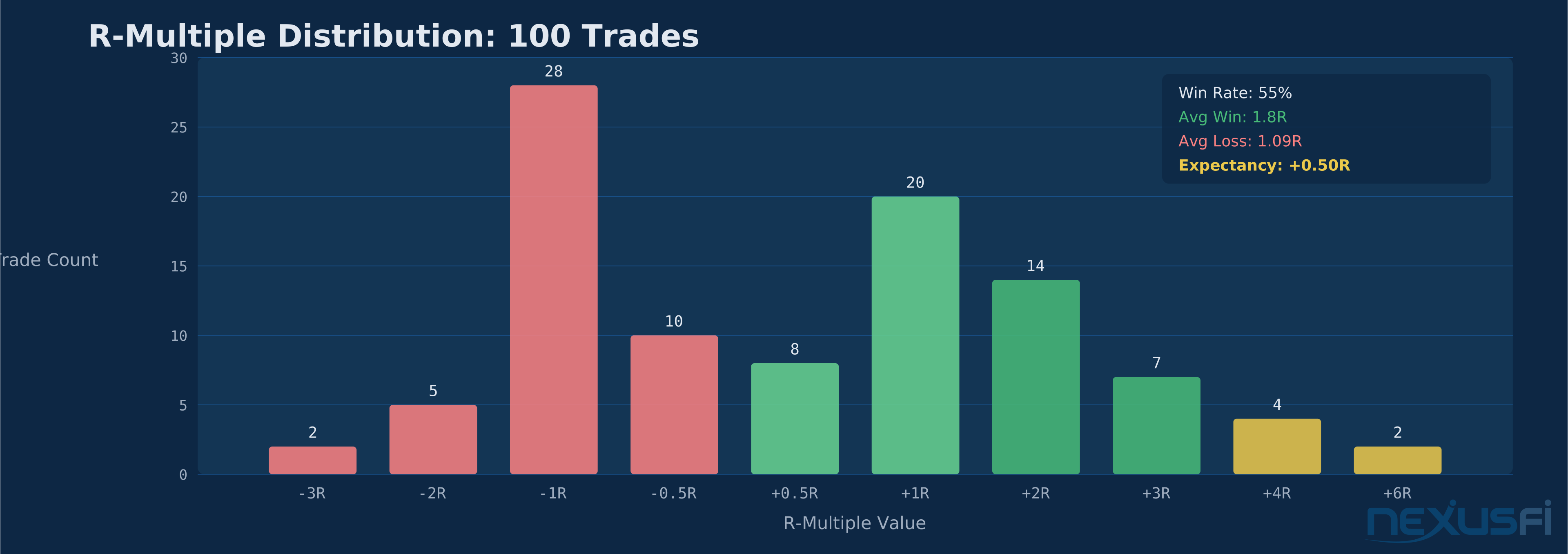
A healthy R-multiple distribution for an active futures trader might look like this: 28 trades at -1R, 10 trades at -0.5R (managed exits), 5 trades at -2R (gaps or slippage), 2 trades at -3R (catastrophic stops), 8 trades at +0.5R (partial wins), 20 trades at +1R, 14 trades at +2R, 7 trades at +3R, 4 trades at +4R, 2 trades at +6R (home runs). That's 100 trades with a 55% win rate, and those numbers generate a specific expectancy.
The Expectancy Calculation:
Expectancy = (Win% x Average Win in R) - (Loss% x Average Loss in R)
Using the distribution above: Average win = (8 x 0.5 + 20 x 1.0 + 14 x 2.0 + 7 x 3.0 + 4 x 4.0 + 2 x 6.0) / 55 = 1.8R. Average loss = (28 x 1.0 + 10 x 0.5 + 5 x 2.0 + 2 x 3.0) / 45 = 1.09R.
Expectancy = (0.55 x 1.8R) - (0.45 x 1.09R) = 0.99R - 0.49R = +0.50R per trade.
That means for every trade you take, on average, you earn half your initial risk. If 1R = $1,000, you earn $500 per trade on average over a large sample.
Now connect it to your freedom number.
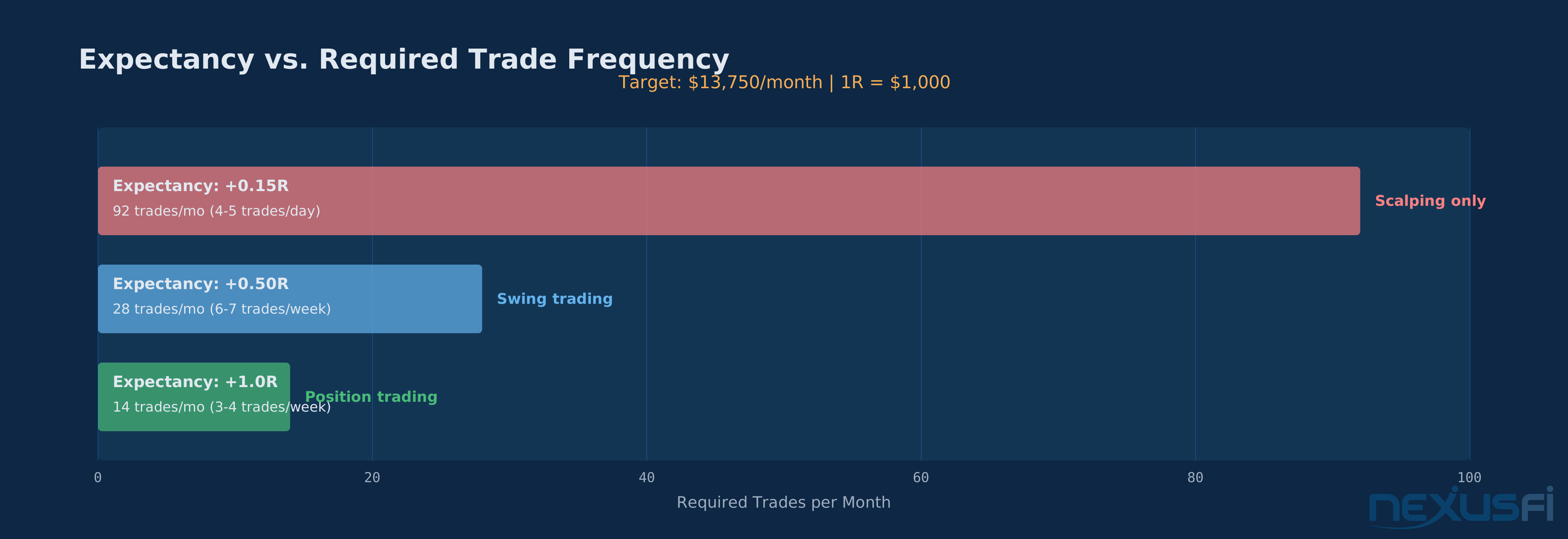
Monthly income needed: $13,750 (Financial Freedom stage). Expectancy: +0.50R per trade. If 1R = $1,000: you need $13,750 / $500 = 27.5 trades per month to hit your freedom number. That's roughly 6-7 trades per week. For an active ES futures trader, that's manageable.
But here's where it gets interesting. The same freedom number with different expectancies demands wildly different trade frequencies:
As @Fat Tails noted, Van Tharp recommends high R-multiples because contracts tradeable relates to max drawdown. At +0.15R expectancy: $13,750 / $150 = 92 trades per month. That's 4-5 trades per day. Possible for a scalper, unsustainable for a swing trader.
At +0.50R expectancy: 28 trades per month. Comfortable swing trading pace.
At +1.0R expectancy: 14 trades per month. Position trading territory.
The expectancy of your system doesn't just affect profitability — it determines the entire structure of your trading life. Low expectancy systems require high trade volume, which means more screen time, more commissions, more psychological wear. High expectancy systems allow fewer trades with larger R-multiples, which means less screen time but more patience and larger individual drawdowns.
Van Tharp's insight was that traders should choose their system based on their freedom number and desired lifestyle, not based on what's exciting or what worked for someone else. If your freedom number requires 80+ trades per month and you have a day job, that system-lifestyle mismatch will break before you reach freedom. As @MXASJ demonstrated in a practical position sizing spreadsheet, the mechanics of Van Tharp's approach come down to knowing your risk per trade (based on ATR or fixed stop), then sizing positions to match your percentage risk model.
Position Sizing: The Bridge Between Expectancy and Freedom #
Position sizing is where Van Tharp's framework moves from theory to execution. Your freedom number tells you the destination. Expectancy tells you the engine's power. Position sizing is the throttle, as @sdonahue showed.
The core position sizing formula for futures:
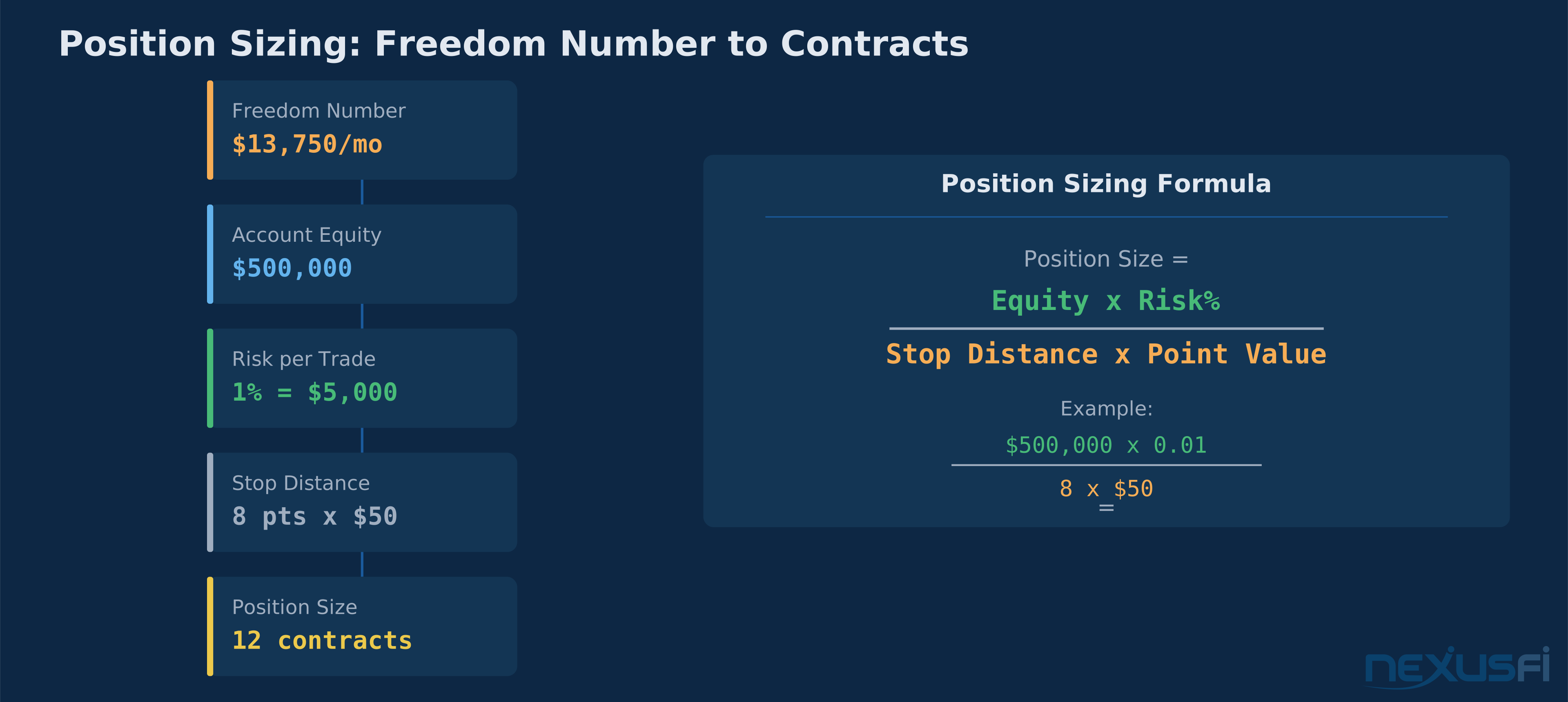
Position Size = (Account Equity x Risk%) / (Stop Distance x Point Value)
Example: $500,000 account, 1% risk per trade, 8-point stop on ES ($50/point). Position Size = ($500,000 x 0.01) / (8 x $50) = $5,000 / $400 = 12.5, rounded down to 12 contracts.
Van Tharp identified several position sizing models, each with different risk-reward characteristics:
Fixed Percentage Risk (CPR model): Risk a constant percentage of current equity on every trade. The standard is 1-2%. This is the model most professional traders use because it automatically scales up during winning streaks (compounding) and scales down during drawdowns (preservation). For freedom number calculations, this model is the baseline. If your account grows, your R-value grows, and you reach your freedom number faster.
Fixed Ratio: Increase position size only after generating a specific dollar profit (the "delta"). More conservative during rapid growth but slower to compound. Useful for traders who find percentage-based scaling psychologically uncomfortable.
Percent Volatility: Size positions based on current ATR, ensuring equal dollar risk across volatility regimes. As @monpere explained: PositionSize = DesiredDollarRisk / StopSize. Place your stop according to market analysis, then size so. Most traders do it backwards — picking position size first, then figuring out the stop.
The Freedom Number drives the risk percentage. If your freedom number requires $12,000/month from a $600,000 account, that's a 2% monthly return — very achievable. If you need $12,000/month from a $150,000 account, that's 8% monthly — aggressive and likely unsustainable. The gap between what your freedom number demands and what your capital can deliver at reasonable risk levels tells you whether you need to (a) grow capital, (b) reduce expenses, or (c) improve your system's expectancy.
The relationship between position sizing and risk of ruin is non-negotiable. Risk 5% per trade and your risk of ruin over 1,000 trades is significant, even with positive expectancy. Risk 1% per trade and the probability of ruin drops to near zero for any system with positive expectancy and reasonable variance. Van Tharp's recommendation: never risk more than 2% per trade, and ideally stay at 1% until your freedom number is comfortably exceeded.
System Selection: Matching Your Strategy to Your Freedom Stage #
Here's where Van Tharp's framework becomes genuinely practical. Different freedom stages demand different system characteristics, and trying to trade the wrong system for your stage is one of the most common structural mistakes traders make.
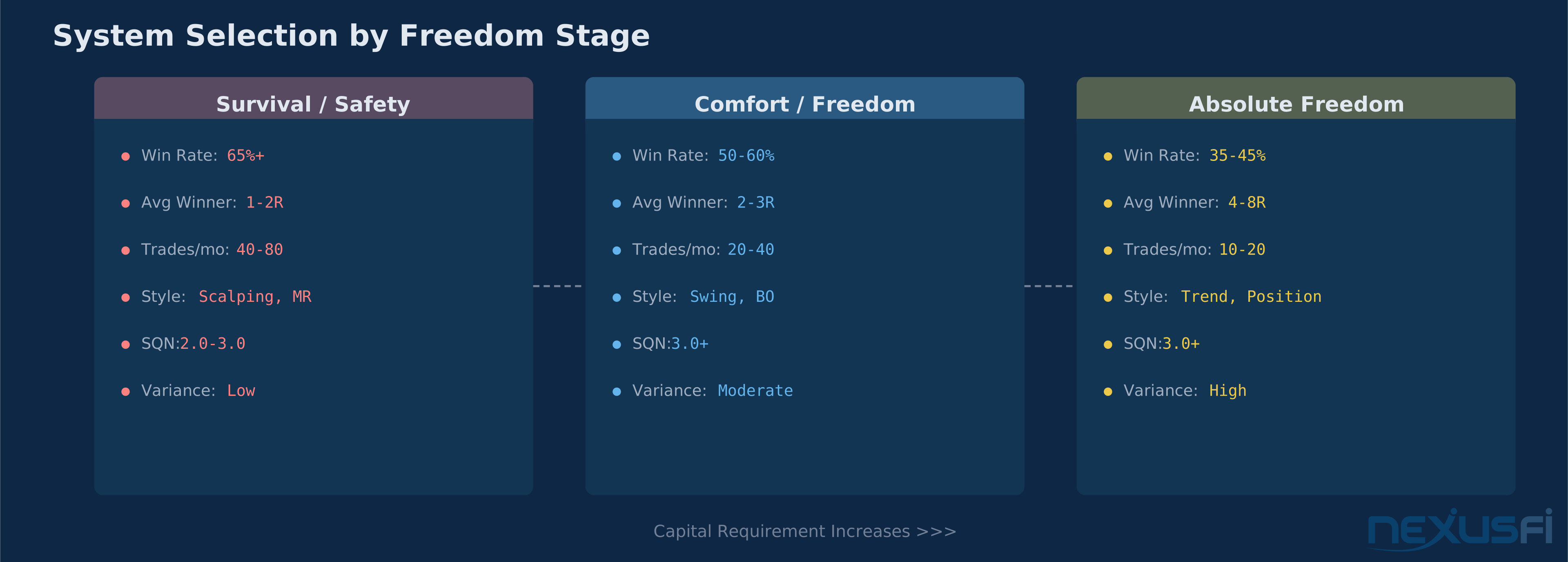
Survival/Safety Stage Systems: You need consistent, predictable income with low variance. That means high win rate systems (65%+) with moderate R-multiples (1-2R average winners). Scalping, mean reversion, and range-bound strategies fit here. The downside: these systems require more trades per month (40-80) and more screen time. The upside: the equity curve is smoother, drawdowns are shallower, and you can calculate monthly income with higher confidence. For a trader at survival, a 55% win rate trend-following system with occasional 8R winners sounds exciting — but the months where those big winners don't appear can threaten rent payments.
Comfort/Freedom Stage Systems: You have enough capital buffer to absorb variance. Swing trading and breakout systems with 50-60% win rates and 2-3R average winners work well. Trade frequency drops to 20-40 per month. The psychological requirements shift from "need consistency" to "can handle drawdowns." This is where most professional independent traders operate — enough capital to weather a bad month, enough edge to compound over time.
Absolute Freedom Stage Systems: Capital is significant enough that even conservative systems produce more income than you need. Trend following, position trading, and portfolio-level strategies with 35-45% win rates but 4-8R average winners become viable. These systems have brutal losing streaks — sometimes 10+ losses in a row — but the winners more than compensate. You can only trade these if your capital base is large enough that a 3-month drawdown doesn't push you below your comfort threshold.
As @TraderDoc2 discussed regarding Van Tharp's SQN, the system quality number helps determine whether your system can reliably deliver the performance your stage demands. An SQN below 2.0 shouldn't be trusted for income replacement at any stage. Between 2.0 and 3.0, it works for survival/safety with conservative sizing. Above 3.0, you have a system that can reliably target comfort or freedom stages.
The stage-system mismatch problem is real. A trader at the survival stage using a 38% win rate trend-following system will experience months of zero income — statistically profitable, psychologically unsustainable. Van Tharp's framework says: match the system to the stage, not to your aspirations. Trade the system your capital and psychology can support right now. Graduate to higher-stage systems as your capital grows past each threshold.
Reverse-Engineering Your System from Your Freedom Number #
Most traders build a system and then figure out what it earns. Van Tharp's approach inverts this completely: start with what you need, then engineer a system to deliver it.
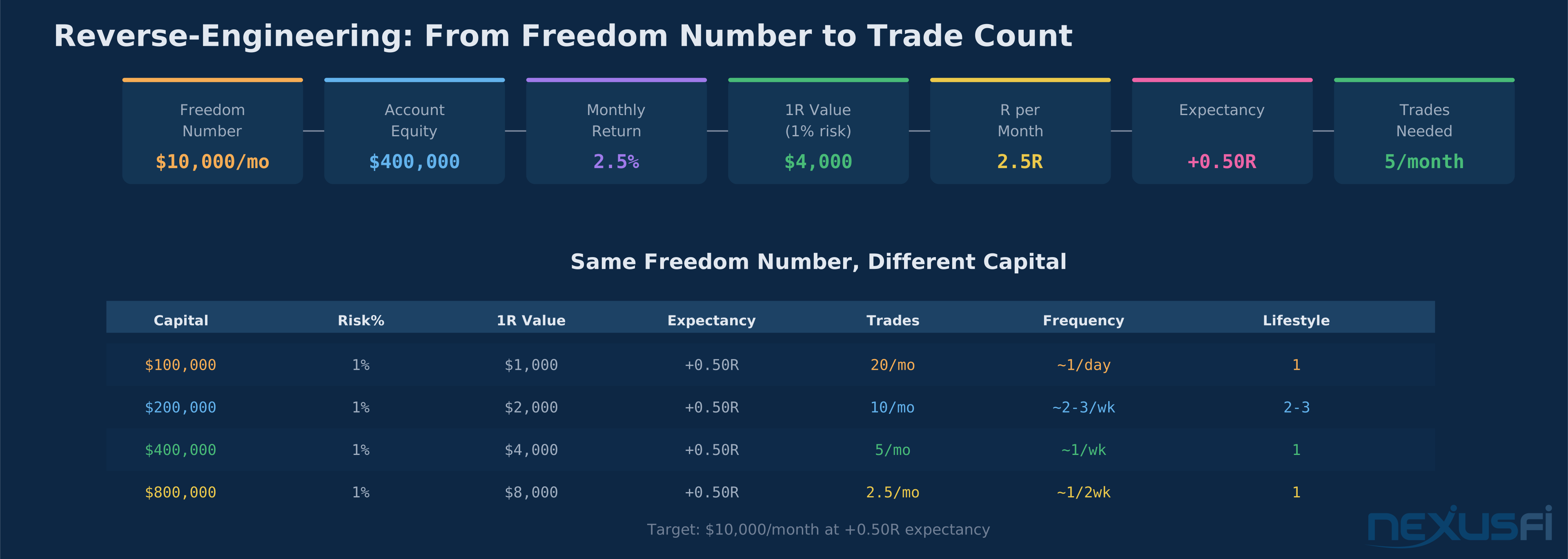
Step 1: Define your freedom number. Let's use $10,000/month (Comfort stage for a trader with $5,000 in monthly expenses at 2x multiplier).
Step 2: Determine available capital. $400,000 trading account.
Step 3: Calculate required monthly return. $10,000 / $400,000 = 2.5% monthly return. Annualized, that's roughly 30% — aggressive but achievable for an active futures trader.
Step 4: Set risk per trade. At 1% risk per trade on $400,000, 1R = $4,000.
Step 5: Calculate required expectancy and trade frequency. You need $10,000/month. At 1R = $4,000: $10,000 / $4,000 = 2.5R total needed per month. At +0.50R per trade: 2.5 / 0.50 = 5 trades per month. That's startlingly low.
And that's the power of proper capitalization. With $400,000 and 1% risk, a +0.50R system only needs 5 trades per month to produce $10,000. The same freedom number with $100,000 in capital requires 1R = $1,000, meaning you need $10,000 / ($1,000 x 0.50) = 20 trades per month. Still manageable, but the margin for error shrinks dramatically.
Step 6: Validate with historical data. Backtest your system over 200+ trades. Does the expectancy hold? Does the SQN support the required consistency? What's the maximum drawdown, and can your capital survive it while still withdrawing living expenses? If the backtest shows +0.50R expectancy but maximum drawdown of 40%, a $400,000 account could drop to $240,000 — and at that point, 1% risk = $2,400, which changes all the math. Van Tharp's framework accounts for this by recommending you calculate your freedom number using the worst-case drawdown scenario, not the average.
As @Pariah Carey asked the community: what are your goals in trading — how much, and over what period of time? The answers from experienced traders consistently pointed to specific numbers, not vague aspirations. The traders who had calculated their freedom number could answer instantly. The ones who hadn't gave answers like "as much as possible" — which is the same as having no target at all.
Common Mistakes in Freedom Number Planning #
Traders who learn this framework make predictable errors:
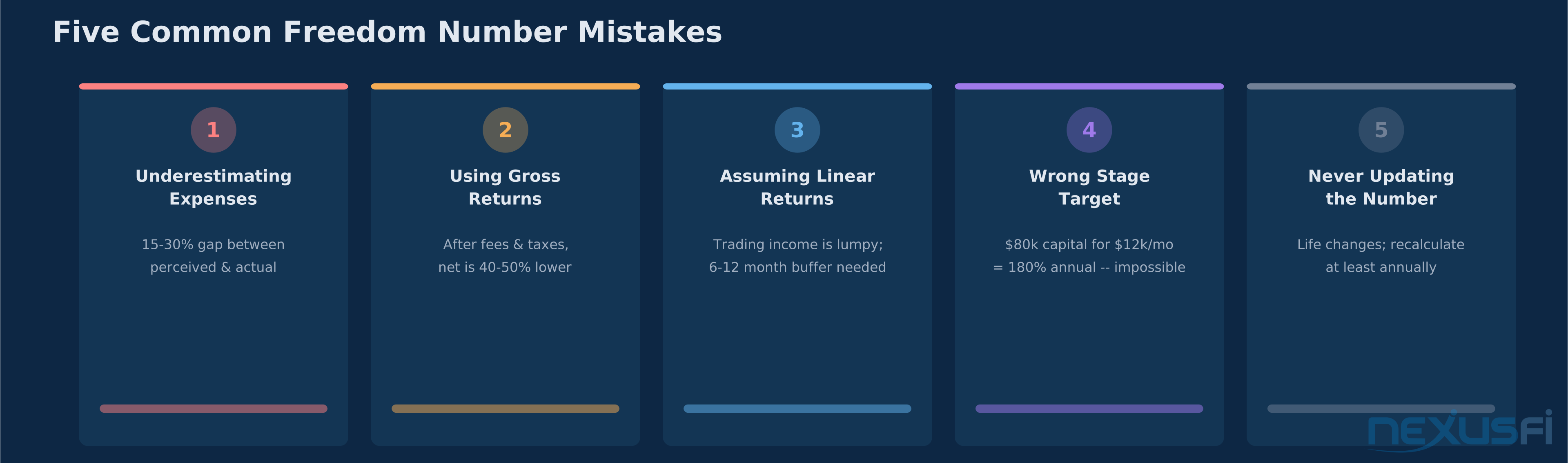
Underestimating expenses. The gap between perceived and actual spending is consistently 15-30%. Traders forget annual costs (property tax, insurance premiums), irregular expenses (home repairs, medical), and lifestyle creep. Use 12 months of actual bank statements and add a 20% buffer.
Using gross returns instead of net. Your freedom number must be met after commissions, data fees, platform costs, and taxes. Commissions, data feeds ($200-500/mo), platform costs ($100-200/mo), and taxes (60/40 Section 1256 treatment) add up fast. The gross freedom number is often 40-50% higher than net lifestyle cost.
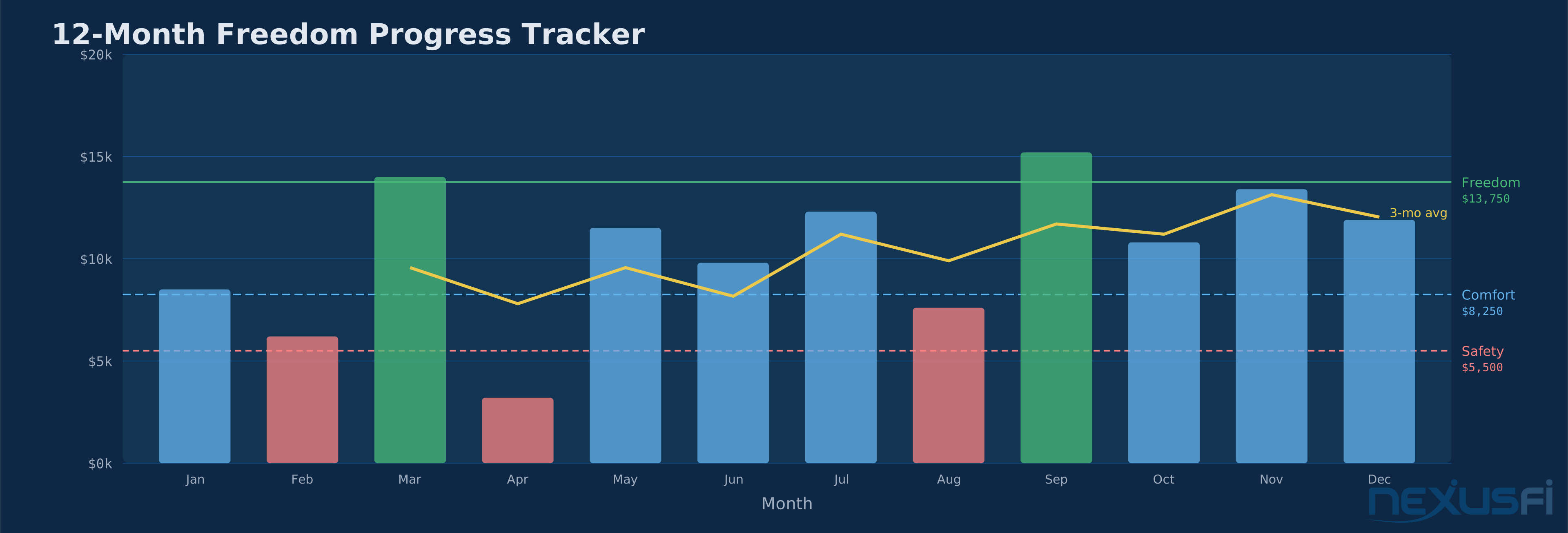
Assuming linear returns. Trading income is lumpy. You might make $18,000 in March and lose $4,000 in April. Your bills don't care. Van Tharp's solution: maintain a 6-12 month expense buffer in a separate account. Deposit profits when above target, withdraw during losing months. The buffer prevents overtrading during drawdowns to "catch up."
Targeting the wrong stage. A trader with $80,000 in capital targeting $12,000/month needs 15% monthly returns — 180% annually. That doesn't happen consistently, and the risk level required to attempt it virtually guarantees a blowup. Accept that current capital supports a specific stage and build from there.
Never updating the number. Life changes. Kids cost money. Healthcare rises. Traders who calculated their freedom number three years ago are targeting an outdated destination. Annual recalculation is the minimum.
Integrating Freedom Numbers with Risk Management #
Your freedom number doesn't exist in isolation. It sits inside a broader risk management framework that determines whether you'll actually reach it or blow up trying.
Maximum drawdown tolerance. If your freedom number requires $600,000 and worst-case drawdown is 30%, the account could drop to $420,000. Your 1% risk shrinks from $6,000 to $4,200, and trade count to hit target increases 43%. Van Tharp's recommendation: calculate your freedom number from your maximum drawdown level, not current equity.
The withdrawal problem. Backtests assume no withdrawals. A trader living off their account withdraws $5,000-$15,000+/month, creating compounding drag that backtests miss. A 25% annual system might only compound at 8-12% with $10,000/month withdrawals from $500,000.
The income replacement sequence. Van Tharp's transition plan: (1) Build capital while employed, (2) Reach safety-stage income for 12 consecutive months, (3) Accumulate 12-month expense buffer separate from trading capital, (4) Reduce to part-time work, (5) Reach comfort-stage income for 6 consecutive months, (6) Leave employment. Traders who skip steps — quitting after one good quarter — account for a disproportionate share of blowup stories. As @sdotcarter described in their Financial Freedom Journal, this pursuit demands both technical skill and systematic discipline.
Portfolio heat. With multiple simultaneous positions, total risk matters more than individual trade risk. Five positions at 1% each = 5% portfolio heat. If correlated (e.g., all long equity index futures), effective risk exceeds 5%. Van Tharp recommended keeping total portfolio heat below 6% at all times.
Practical Implementation: A 12-Month Roadmap #
Theory without implementation is entertainment. Here's the 12-month sequence.
Month 1: Calculate everything. Total actual expenses (12-month average). Calculate freedom numbers for each stage. Determine current capital. Calculate required annual returns at each stage. Write these numbers down.
Months 2-3: Measure your system. With 100+ historical trades, calculate your R-multiple distribution, expectancy, SQN, and maximum drawdown. No data? Start tracking every trade in R-multiple format immediately.
Months 4-6: Validate the math. Does your system's expectancy, at current capital, with your trade frequency, produce your freedom number? If yes, execute. If no, identify the gap: capital, expectancy, or trade frequency. Each demands a different fix.
Months 7-9: Improve the weakest link. Capital gap = reinvest profits or add capital. Expectancy gap = improve entries, widen stops, reduce choppy-market trades. Frequency gap = add instruments or timeframes.
Months 10-12: Build the income buffer. Once your system consistently produces target-stage income, build a 6-12 month buffer. Don't withdraw living expenses until the buffer hits 6 months minimum. Track monthly income against your freedom number — three consecutive months below target means reassess.
Tharp Think: Beyond the Numbers #
Van Tharp's framework isn't purely mechanical. He built it on a psychological foundation he called "Tharp Think" — a set of beliefs about trading that most traders resist because they contradict conventional thinking.
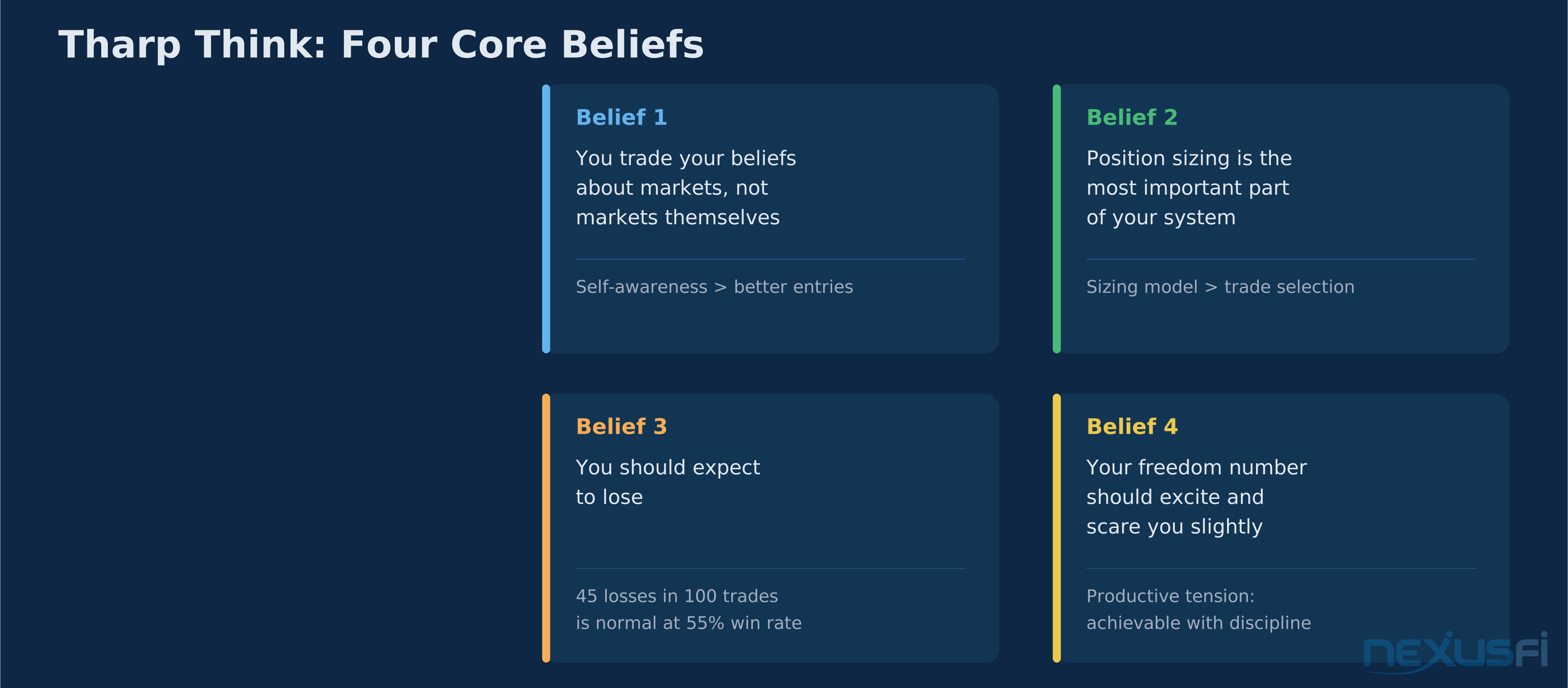
Belief 1: You don't trade markets. You trade your beliefs about markets. Two traders with identical systems produce different results because they deviate differently. Your freedom number is achievable only if you can execute the system that produces the required expectancy. Self-awareness about which rules you'll break under pressure matters more than better entries.
Belief 2: Position sizing is the most important part of your system. A mediocre system with excellent position sizing outperforms an excellent system with mediocre sizing. For freedom number planning, spend more time on the sizing model than on trade selection. Most traders do the opposite.
Belief 3: You should expect to lose. A 55% win rate loses 45% of the time — 45 losses in 100 trades. Van Tharp framed losses as business costs. Your expectancy already accounts for them. The emotional reaction to individual losses is noise that prevents traders from realizing the signal.
Belief 4: Your freedom number should excite you and scare you slightly. If it feels impossible, drop to a lower stage. If it feels easy, you've probably surpassed it. The right number creates productive tension: achievable with discipline, impossible without it.
As @PandaWarrior reflected after significant trading success, the ultimate goal was time and geographical freedom — which requires passive income or income freedom. That's the qualitative expression of what the freedom number quantifies: not just enough money, but enough money to live the specific life you want.
Knowledge Map
Prerequisites
Understand these firstReferences This Article
Articles that build on this topicCitations
- — What are your goals in trading? (2016) 👍 12“I found a few threads on specific daily trading goals, but nothing on longer-term trading goals. The short answer to this question, obviously, is to make money. But how much, and over what period of time?”
- — Position Sizing by Van Tharp (2009) 👍 15“A JPEG and a Excel spreadsheet. Top part is based on how much you are prepared to risk per trade (2% of equity in this case), what the 14 period ATR is for the timeframe you are trading.”
- — EURUSD Scalping (2012) 👍 5“You should be placing your stop according to market analysis, then size your position accordingly to achieve or maintain the desired dollar risk. PositionSize = DesiredDollarRisk / StopSize.”
- — Van Tharp's SQN with over 100 trades (2019) 👍 2“I think Van Tharp's reason for capping the multiplier - SQRT(number of trades) at 10, is that he uses his SQN to determine things like Max position sizing.”
- — Millions Made, now what? (2012) 👍 49“I got close once and the goal then and now is the same -- time and geographical freedom. Which requires passive income or income freedom.”
- — Financial Freedom Day Trading Journal (2022) 👍 5“At least a 5:1 risk/reward. As the title states, 'Financial Freedom' -- the point of this journal is two-fold.”
- Van Tharp Institute — Trade Your Way to Financial Freedom (2006)
- Van Tharp Institute — The Definitive Guide to Position Sizing Strategies (2008)
- — Mindset's Money Management (2009) 👍 17“The holy grail is in fact a Holy Trinity; 1. Positive Expectancy 2. Position Sizing & good money management 3. Execution.”
- — Trading Metrics for journals/record keeping (2010) 👍 7“There are several reasons that Van Tharp recommends to trade high R-multiples: the number of contracts you can trade is related to the max expected drawdown.”
- — Why position sizing matters (2012) 👍 9“When you have a positive expectancy trading methodology, then applying the optimal position sizing methodology can exponentially increase the overall financial return.”