



Trading Business Plan Development: Van Tharp's 15-Element Framework for Futures Traders
Most futures traders have a strategy. Very few have a business. The distinction sounds semantic until the third consecutive losing week — the moment when "strategy" becomes "maybe I should change everything" and a "business" becomes a structured diagnostic process that tells you exactly what to check and exactly when to stop.
Van Tharp's 15-element trading business plan framework exists to close that gap. Developed through decades of working with professional traders and documented in Trade Your Way to Financial Freedom and Super Trader, the framework treats trading not as a sequence of bets but as an operating system — one with a strategic vision, analytical foundations, operational protocols, resilience mechanisms, and precision execution rules. Every element connects. Remove one and the system develops a failure mode.
This article works through all 15 elements with the depth they require, organized into the five layers Tharp's framework implies: strategic, analytical, operational, resilience, and execution. Each section includes templates adapted specifically for futures traders, because futures markets have characteristics — leverage, roll mechanics, intraday session structures, contract specifications — that generic trading plans routinely overlook.
Overview #
The Five-Layer Architecture #
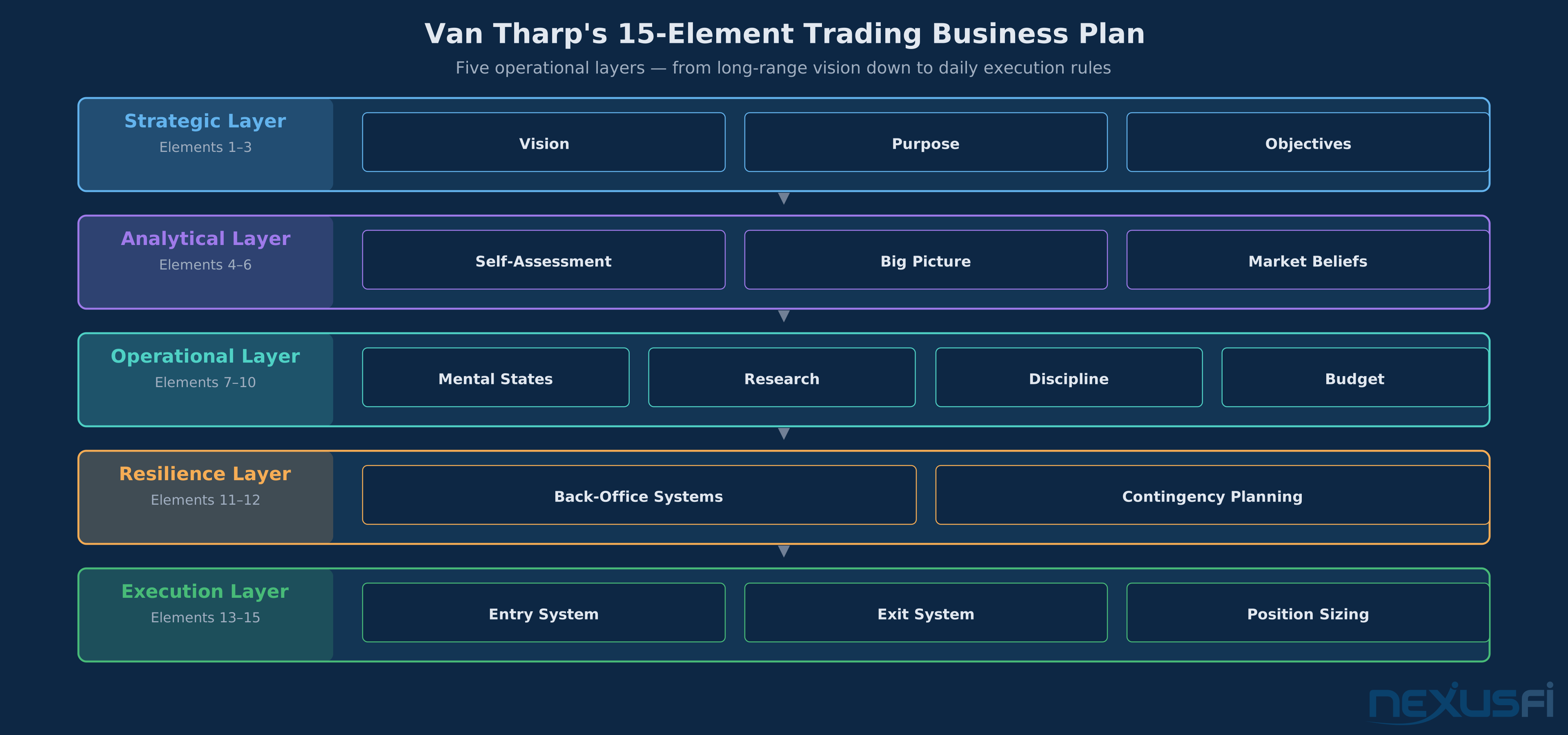
Before examining individual elements, understand the architecture. Tharp's 15 elements are not a checklist you fill out once. They form five interdependent layers where each layer depends on the ones above it.
Strategic Layer (Elements 1-3): Vision, Purpose, Objectives. Defines why you trade and what success requires. Without clarity here, every market difficulty becomes a potential reason to abandon the strategy.
Analytical Layer (Elements 4-6): Self-Assessment, Big Picture Analysis, Market Beliefs. Determines what you are suited to trade and what you believe drives price. Mismatches between analytical conclusions and operational execution create the psychological friction that destroys discipline.
Operational Layer (Elements 7-10): Mental States, Research Methodology, Discipline Protocols, Budget Management. Translates strategy into daily procedure. This is where most trader business plans are either absent or vague — and where most real-world failures originate.
Resilience Layer (Elements 11-12): Back-Office Systems, Contingency Planning. Handles the gap between what you planned and what actually happens. Markets will gap. Platforms will fail. Drawdowns will occur. The resilience layer determines whether these events are survivable.
Execution Layer (Elements 13-15): Entry System, Exit System, Position Sizing System. The three system cards — the only place where strategic, analytical, and operational decisions actually produce a trade. Every upstream layer feeds these three.
Strategic Layer: Elements 1-3 #
Element 1: Vision
Vision is your three-to-five year north star — a description of the trading business you are building and the life it will support. Tharp's emphasis here is not motivational. It serves a specific operational function: during drawdowns and difficult periods, vision is what prevents you from making structural decisions (changing systems, abandoning strategies, drastically altering position sizing) based on temporary emotional states.
A useful vision statement for a futures trader specifies: what markets, what return profile, what drawdown tolerance, what time commitment, and what lifestyle it enables. It should be concrete enough that you can evaluate whether your current behavior is consistent with it.
Template:
"By [year], I will operate a [describe methodology: rules-based trend-following / discretionary mean-reversion / systematic breakout] futures trading business focused on [markets: ES/NQ/CL/GC] that generates consistent monthly returns within a [maximum drawdown percentage]% peak-to-trough constraint, requiring no more than [daily hours] of active attention, enabling [lifestyle description]."
Write one version. Then test it: does your current position sizing, system selection, and time allocation point toward that vision or away from it?
Element 2: Purpose
Purpose answers why you trade beyond the money. This is not a philosophical exercise — it has a direct practical function. Traders who trade purely for income often cannot tolerate the variance inherent in futures because every losing day represents a failure to meet a financial obligation. Traders with a clearly articulated purpose that extends beyond today's P&L have a cognitive buffer that makes drawdowns more tolerable and exits from unprofitable setups more reliable.
Template:
"I trade futures to [primary purpose]. I will not trade to [failure mode 1], [failure mode 2], or [failure mode 3]."
Element 3: Objectives
Objectives translate vision into measurable targets across three dimensions. Financial objectives (return target, maximum drawdown, consistency requirements) are necessary but insufficient. Process objectives (compliance rate, journal completion, review cadence) and development objectives (slippage improvement, new system testing) complete the picture.
Separate these categories explicitly. A trader who measures only financial outcomes has no way to distinguish a profitable quarter driven by excellent process from a profitable quarter driven by luck. The reverse is also true: a losing quarter with high process compliance is a different diagnostic situation than one with poor compliance.
Futures-specific objective examples:
- Financial: Achieve 8-12% quarterly returns with a maximum peak-to-trough drawdown of 15%
- Process: Execute pre-trade checklist 100% of sessions; journal every trade within 30 minutes of close
- Compliance: Maintain 95%+ rule adherence rate as measured weekly
Analytical Layer: Elements 4-6 #
Element 4: Self-Assessment
Self-assessment in Tharp's framework is not a general personality inventory. It is a systematic audit of how your specific psychological and operational characteristics interact with the specific demands of futures trading. The goal is fit — matching system complexity, holding period, and required discipline level to your actual temperament and constraints.
The most useful self-assessment focuses on documented failure modes from actual trading history, not hypothetical weaknesses. If your journal shows that your compliance rate drops below 70% after two consecutive losses, that is a specific operational constraint that must appear in your discipline protocols. If you consistently exit trend trades too early, that is a signal about your risk tolerance that must inform your exit system design.
Futures-specific self-assessment dimensions:
- MTM tolerance: Can you hold through 3R adverse excursion without exiting prematurely?
- Rule compliance under pressure: What is your compliance rate after three consecutive losses (not hypothetical -- measure it)?
This assessment informs system selection directly. A trader with demonstrated difficulty holding positions through normal retracements should build an exit system with structured partial exits, not open-ended trailing stops. A trader with documented overtrading after losses needs a hard daily trade-count limit, not a vague intention to "be more disciplined."
Element 5: Big Picture Analysis
Big picture analysis defines the operating environment: which markets you trade, which sessions, which regime types your systems are designed for, and which conditions cause you to reduce or suspend activity. Updated monthly, it prevents the common failure of deploying trend-following systems in sustained range environments or mean-reversion systems during strong trending markets.
Monthly big picture template:
- Markets: Primary contracts (ES, NQ, CL); secondary (ZB, GC)
- Sessions: RTH only vs Globex; specific hours based on liquidity assessment
- Regime assessment: Current market type (trending / ranging / volatile / quiet) and the indicators used to classify it
- News and events: Upcoming scheduled events (FOMC, NFP, CPI) and their impact on trading rules
Element 6: Market Beliefs
Tharp emphasizes beliefs specifically because they operate below conscious decision-making. A trader who believes "markets are mostly random" will behave differently during a setup than one who believes "order flow creates persistent directional moves." The belief shapes whether you press a winner, cut a loser, or sit through adverse movement.
The innovation in Tharp's framework is converting beliefs into testable hypotheses linked to measurable system behaviors. This prevents a common failure mode: abandoning a valid system during a normal losing streak because you stop believing it works.
Belief to rule mapping examples:
- "Volatility clusters and mean-reverts" -- Use ATR-based position sizing; reduce size when ATR exceeds 120% of baseline
- "Trend-following works in trending markets and fails in ranging ones" -- Implement regime filter; disable trend systems when ADX below 20
- "Edge decays in poor liquidity" -- Stop trading if bid-ask spread exceeds 2 ticks for more than 15 minutes

Write each belief with: what market behavior you expect, how you would measure deviation from that expectation, and what you would conclude if the measurement showed you were wrong.
Operational Layer: Elements 7-10 #
Element 7: Mental States
Tharp's mental states element is often misread as general advice about staying calm. Its operational function is more specific: defining the conditions under which you will and will not execute trades, with those conditions specified in advance so they cannot be overridden by the emotional states they are designed to protect against.
The practical implementation is a three-state classification: Green (trade normally), Yellow (reduce size or skip setups), Red (no trading today). Each state has defined entry conditions — observable, checkable facts, not subjective self-assessment in the moment.
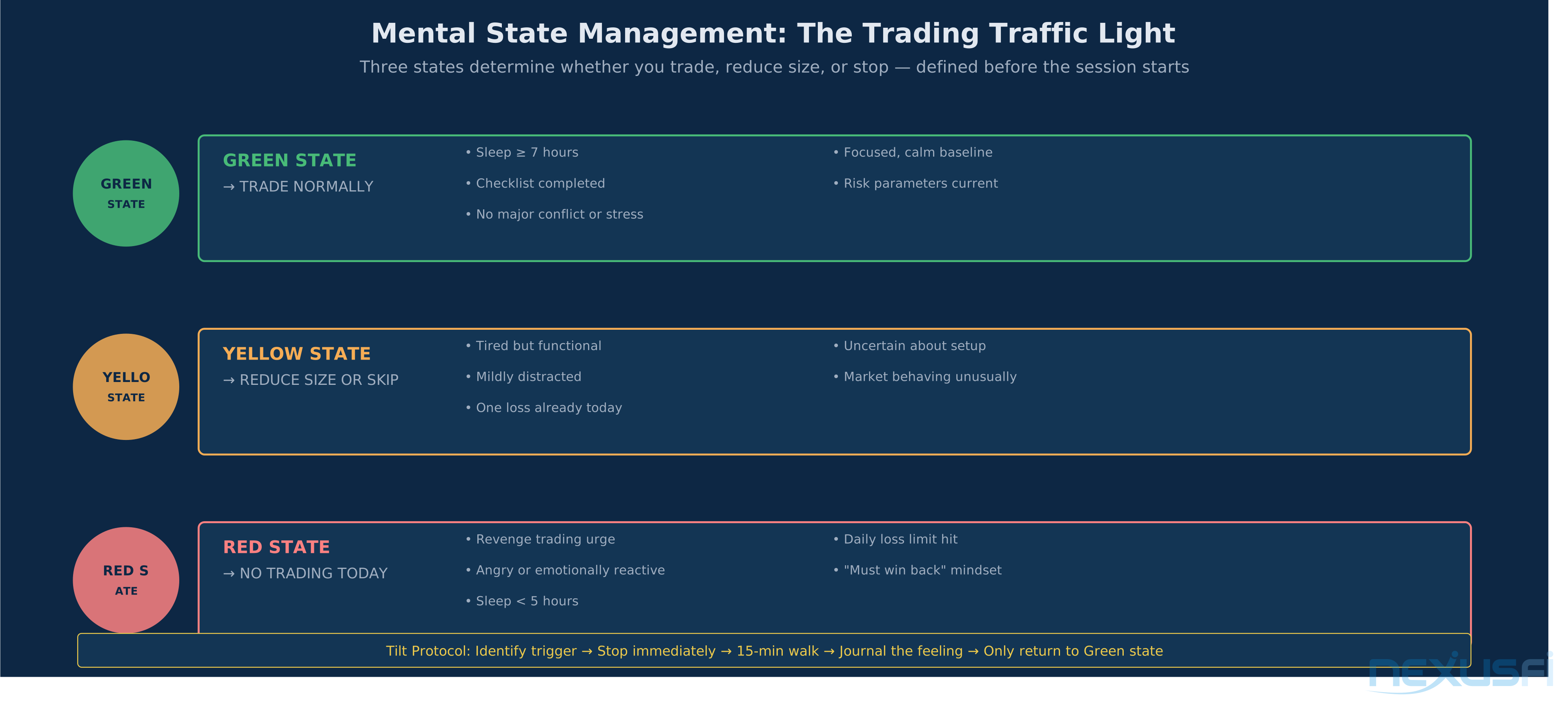
Green state conditions (all must be met):
- Sleep 7 or more hours
- Pre-market checklist completed
- No major unresolved personal conflict
- Daily loss limit not yet hit
- Risk parameters reviewed and current
Yellow state triggers (any of these — reduced size or skip):
- Sleep 5-7 hours
- One loss already today
- Mildly distracted or preoccupied
- Uncertainty about market regime
Red state triggers (any of these — no trading):
- Sleep under 5 hours
- Active revenge trading urge ("I need to get it back")
- Daily loss limit reached
- Angry, reactive, or emotionally overwhelmed
- Physical illness or significant impairment
The Red state is not a suggestion — it is a hard stop. Trading in a Red state is not suboptimal performance, it is expected capital destruction. Most blown accounts include at least one session where the trader knew they should stop and traded anyway. Define your Red state triggers in writing before a bad day, because you won't define them clearly when you're in the middle of one.
The tilt recovery protocol is the equally critical piece: when you notice you are transitioning from Green to Yellow or Yellow to Red, what exact actions do you take? A structured protocol — stop trading, leave the screen, 15-minute walk, journal the feeling, re-evaluate — prevents the slide from becoming a session-destroying event.
"It is in the details where the magic happens." Peak performance is not about being in a great state every day — it is about knowing exactly what to do when you are not.
Element 8: Research Methodology
Research methodology defines how you generate, test, and qualify trading edges before deploying capital. Tharp's framework insists on rigor here because most retail traders overfit their systems to historical data, discover this during live trading, and then incorrectly conclude that systematic trading does not work.
For futures traders, the research methodology must explicitly address several factors that generic backtesting frameworks ignore:
Realistic execution assumptions: Include 1-2 ticks slippage per side (depending on the contract and entry type), actual commission rates, and the difference between stop order fills during normal conditions versus during fast markets. Systems that only work with perfect fills are not real systems.
Walk-forward validation: The standard backtesting error is optimizing parameters on the entire historical dataset and reporting the results. Walk-forward testing trains on a window, tests on the next out-of-sample period, rolls forward, and repeats. A system that survives this process across multiple windows has meaningfully more evidence of genuine edge.
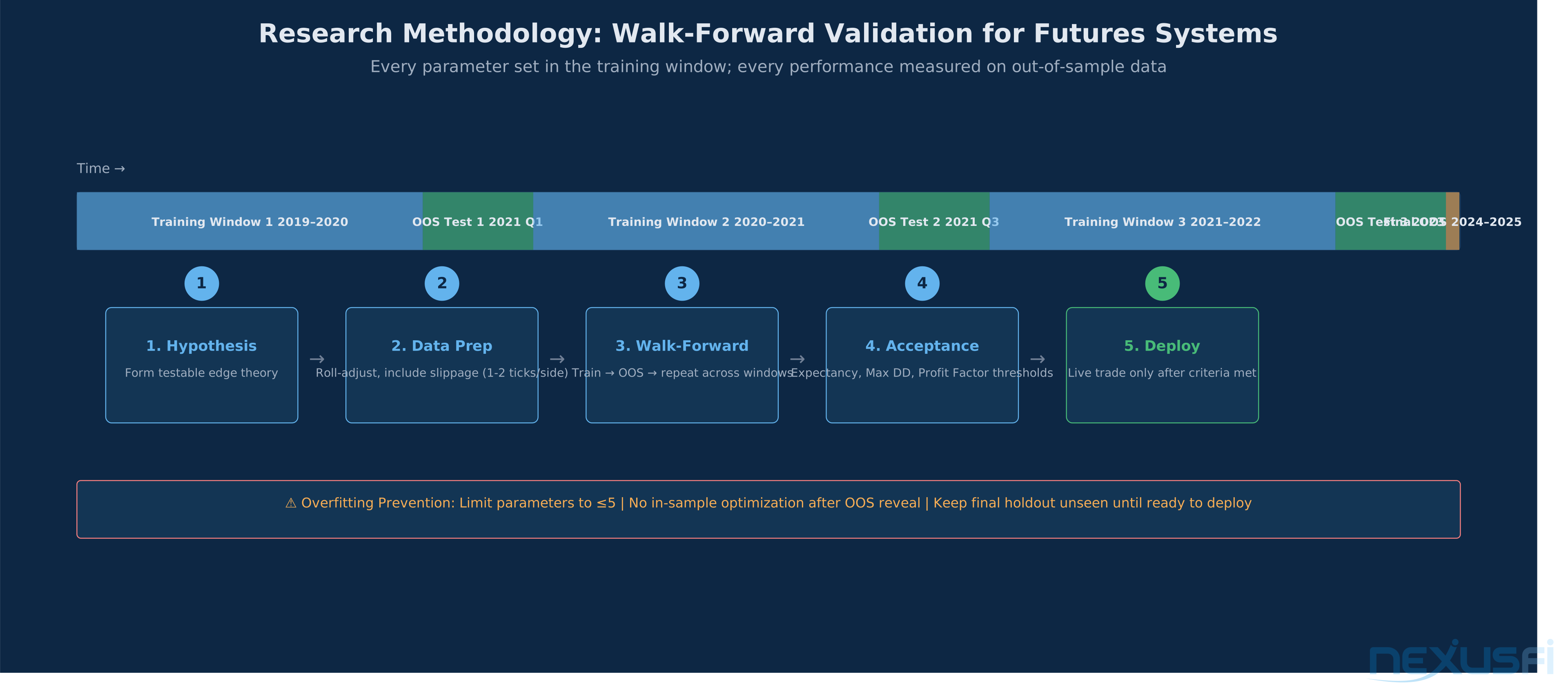
Acceptance criteria: Define minimum thresholds before you see the results, not after. Common futures-appropriate thresholds:
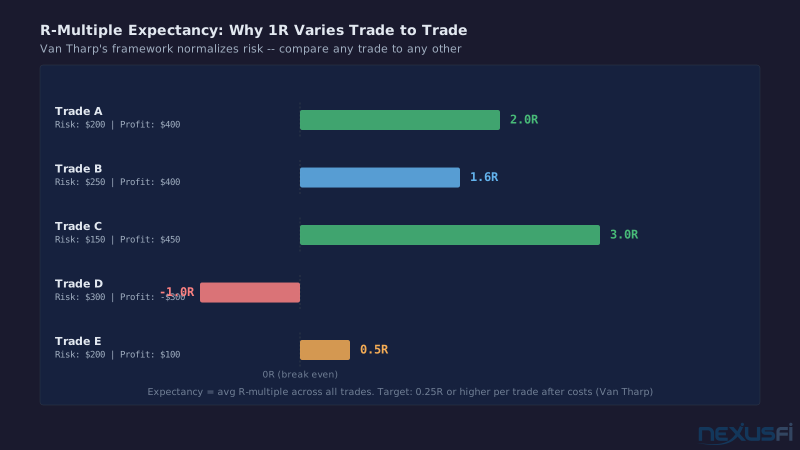
- Expectancy 0.25R or more per trade after realistic costs
- Maximum drawdown no more than 3x average monthly gain
Systems that do not meet these criteria go back to research, not into live capital.
Element 9: Discipline Protocols
Discipline protocols are the operational procedures that transform your strategy into daily behavior. The most effective protocols are binary and physically external — meaning they exist on paper or screen outside your head, not as intentions you are relying on to remember and apply under pressure.
The pre-trade checklist is the most critical discipline protocol. It functions as a gate between wanting to trade and actually trading. A checklist that requires each item to be checked before order entry prevents a specific failure mode: the setup that looks compelling but violates one or more plan conditions, entered because you wanted the trade more than you wanted to follow the rules.
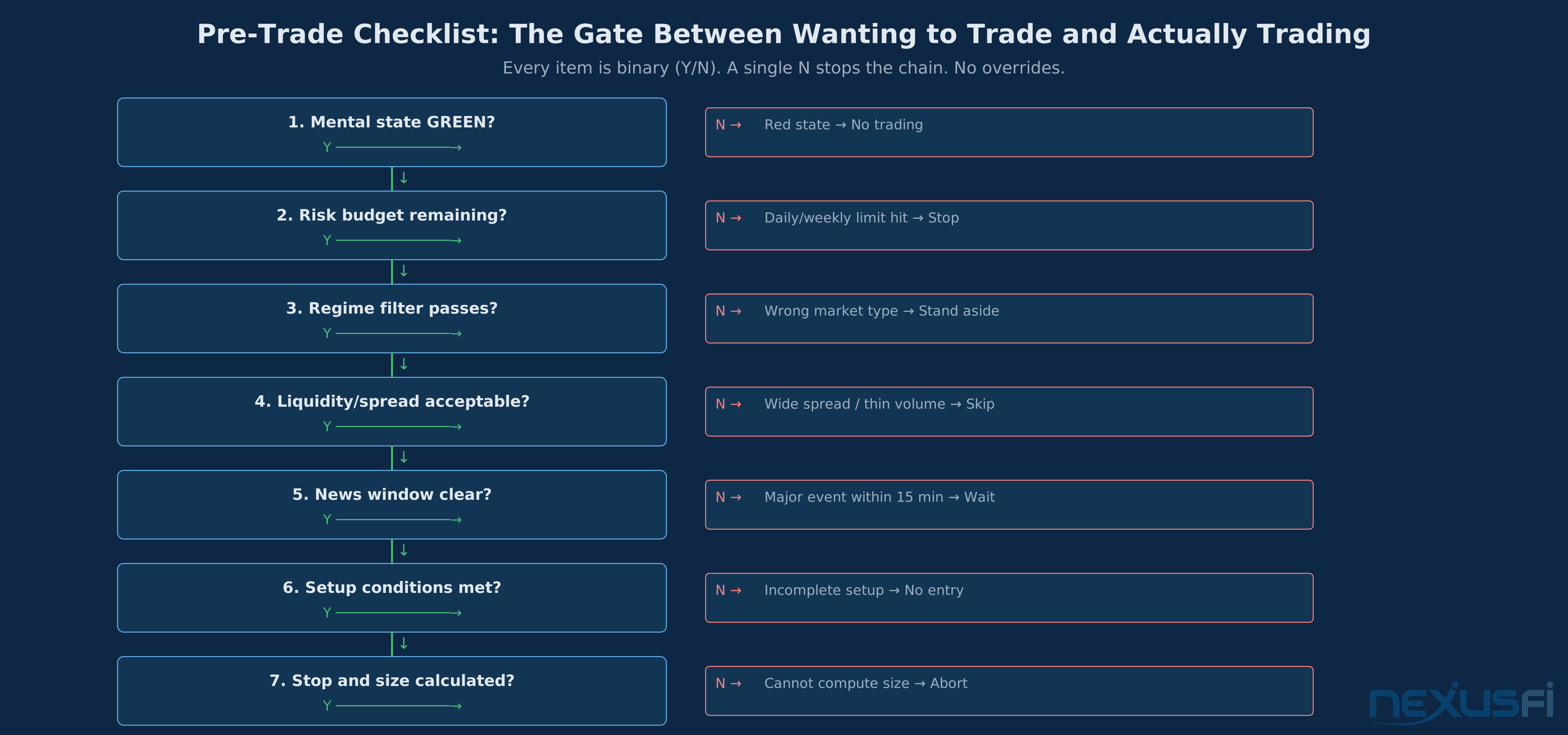
Print the pre-trade checklist. Pin it next to your monitor. A checklist you must open a document to access will be skipped exactly when you most want to skip it. The physical card removes the friction from compliance at the moment compliance is hardest.
Standard pre-trade checklist for futures traders:
- Mental state Green? (if Yellow: reduce size by 50%; if Red: no trading)
- Daily risk budget remaining? (if limit reached: stop all trading)
- Regime filter passes? (if wrong market type: no entry)
- Liquidity and spread acceptable? (if spread excessive: skip)
- News window clear? (if major event within 15 minutes: wait)
- Setup conditions fully met? (partial setups: no entry)
- Stop distance and contracts calculated? (if uncertain: abort)
The post-trade journal has equal importance but serves a different function: it provides the data for performance review. At minimum, journal: instrument, date/time, setup type, entry/stop/target prices, actual fill with slippage, position size, emotional state rating (1-5), and rule compliance (Y/N with notes if N).
Weekly review protocol: Review the last 10 trades against the checklist. Calculate rule compliance rate. Identify any systematic violations. If compliance rate falls below 90%, do not add new trades until root cause is identified and protocol is adjusted.
Element 10: Budget Management
Budget management in Tharp's framework is the translation of risk objectives into daily, weekly, and trade-level limits. For futures traders, this requires specifying not just position-level risk but the cascade of constraints that govern how risk scales across different conditions.
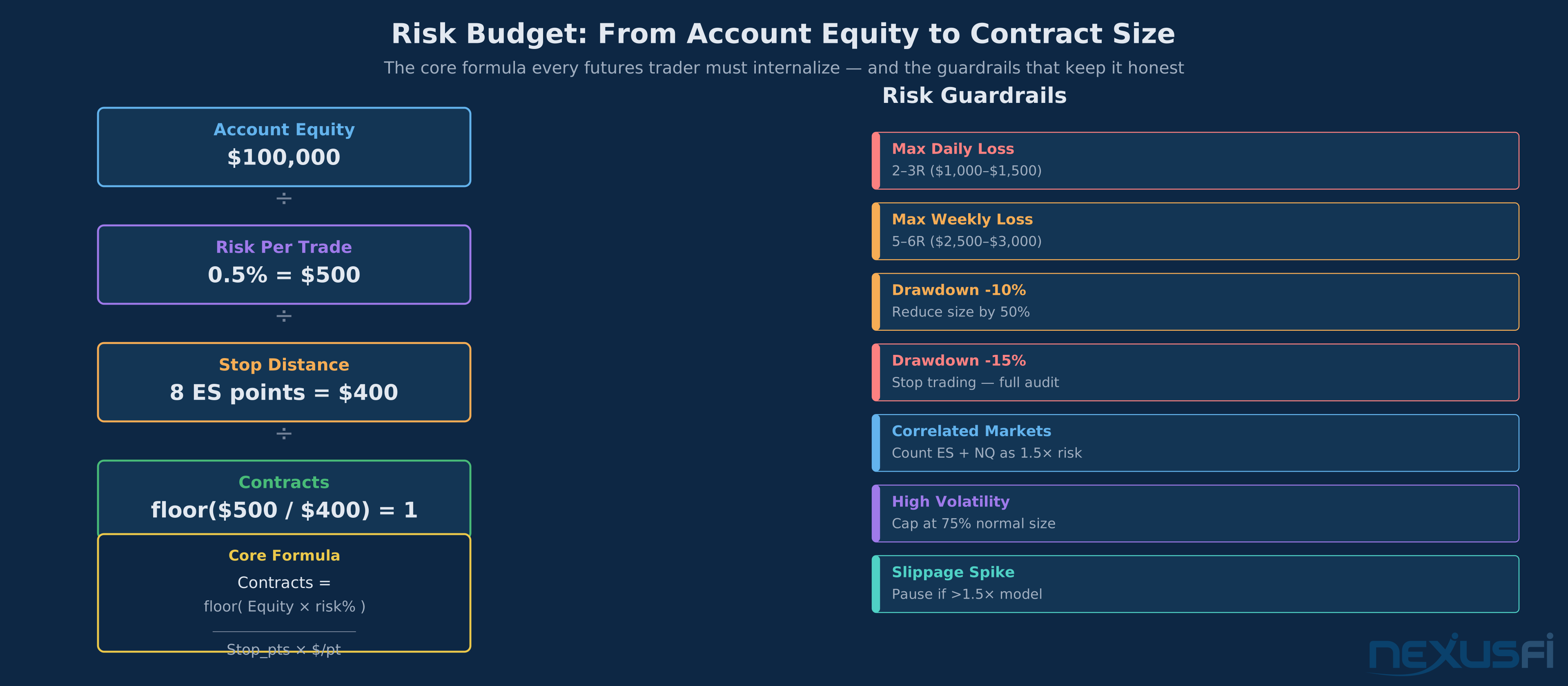
The core position sizing formula is:
Contracts = floor( Account Equity x Risk% ) divided by ( Stop Distance in Points x $/Point )
The formula is necessary but not sufficient. The guardrails that govern it are equally important:
- Max daily loss: 2-3R. When hit, stop all trading for the remainder of the session. No exceptions.
- Max weekly loss: 5-6R. If reached before Friday, no new entries for the remainder of the week.
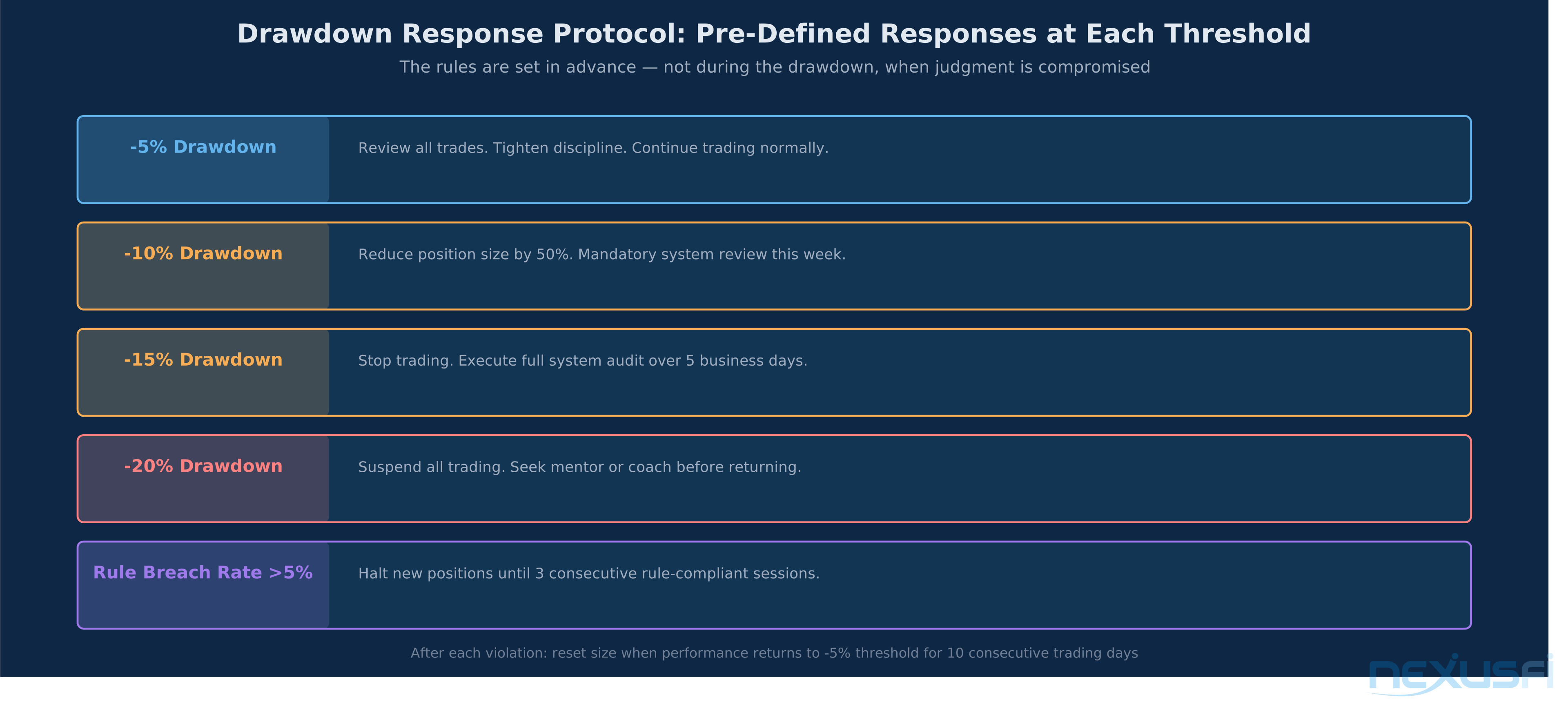
- Drawdown scaling: At -5%, tighten discipline. At -10%, reduce size by 50%. At -15%, halt and audit.
- Volatility adjustment: If ATR exceeds 120% of its 20-day baseline, cap size at 75% of normal to control variance.
- Correlation constraint: If trading both ES and NQ, count them as 1.5x the standard risk budget. They are highly correlated; standard sizing produces effective risk concentration.
Resilience Layer: Elements 11-12 #
Element 11: Back-Office Systems
Back-office systems are the infrastructure that makes your trading business legible. Without them, you are relying on memory and feeling to assess your performance — a catastrophically unreliable approach in a domain where cognitive biases systematically distort post-hoc assessment.
A functional back-office system for a futures trader has four components: trade journaling, performance dashboards, data management, and review cadence.
Trade journal schema (minimum viable):
- Instrument, date, time of entry and exit
- Setup name (from your playbook)
- Entry price, stop price, initial target
- Actual fill prices, slippage per side
- Position size (contracts)
- R-result (outcome in multiples of initial risk)
- Rule compliance (Y/N, notes if N)
- Emotional state (1-5)
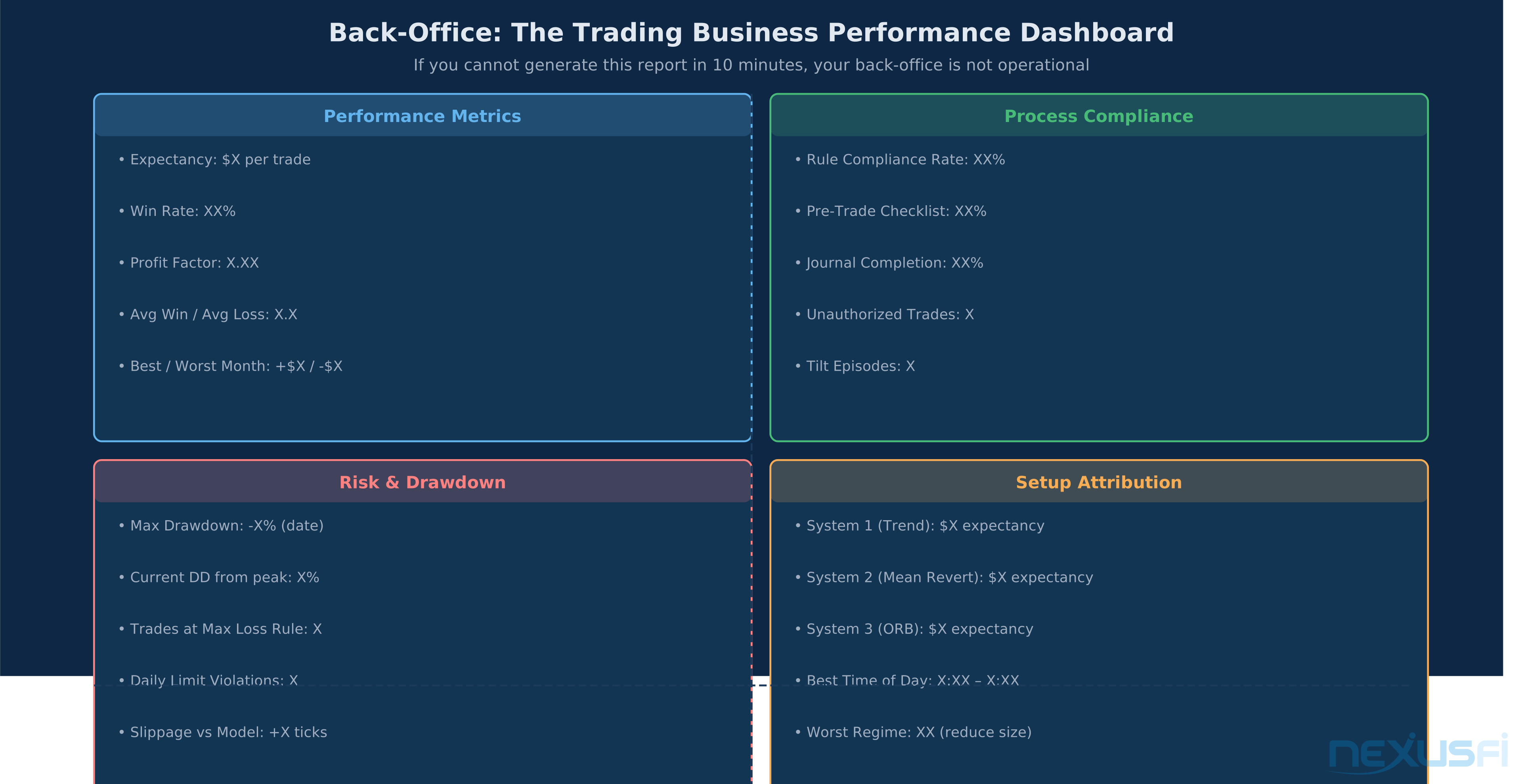
Performance dashboard (weekly update):
- Performance quadrant: Expectancy, win rate, profit factor, average win/loss ratio
- Risk quadrant: Current drawdown from peak, days since daily/weekly limit was hit, slippage versus model
- Compliance quadrant: Rule adherence rate, checklist completion, journal completion, unauthorized trades
- Attribution quadrant: Expectancy by setup type, by market regime, by time of day
Element 12: Contingency Planning
Contingency planning documents your responses to foreseeable adverse events before they happen. The cognitive value: during the event, when stress and time pressure reduce judgment quality, you are executing a pre-written protocol rather than making novel decisions in a compromised state.
Technology failure protocol:
- Maintain a funded backup brokerage account, tested monthly with a single small trade
- Broker phone number available without needing to unlock a computer
- Mobile platform installed, tested, and authenticated on a backup device
Market crisis protocol (flash crash, halts, extreme volatility):
- All positions always have hard stop orders in the market -- no exceptions
- If account drops 10% in a single day, close all positions and stop trading for the week
Performance deviation protocol:
- After any calendar month with drawdown exceeding 2x the worst historical monthly loss: suspend trading, run full system audit before returning
- If acceptance criteria (expectancy, max drawdown) are violated over any 50-trade out-of-sample window: suspend system, do not modify parameters, run diagnostic before continuing
Execution Layer: Elements 13, 14, and 15 -- The Three Trading Systems #
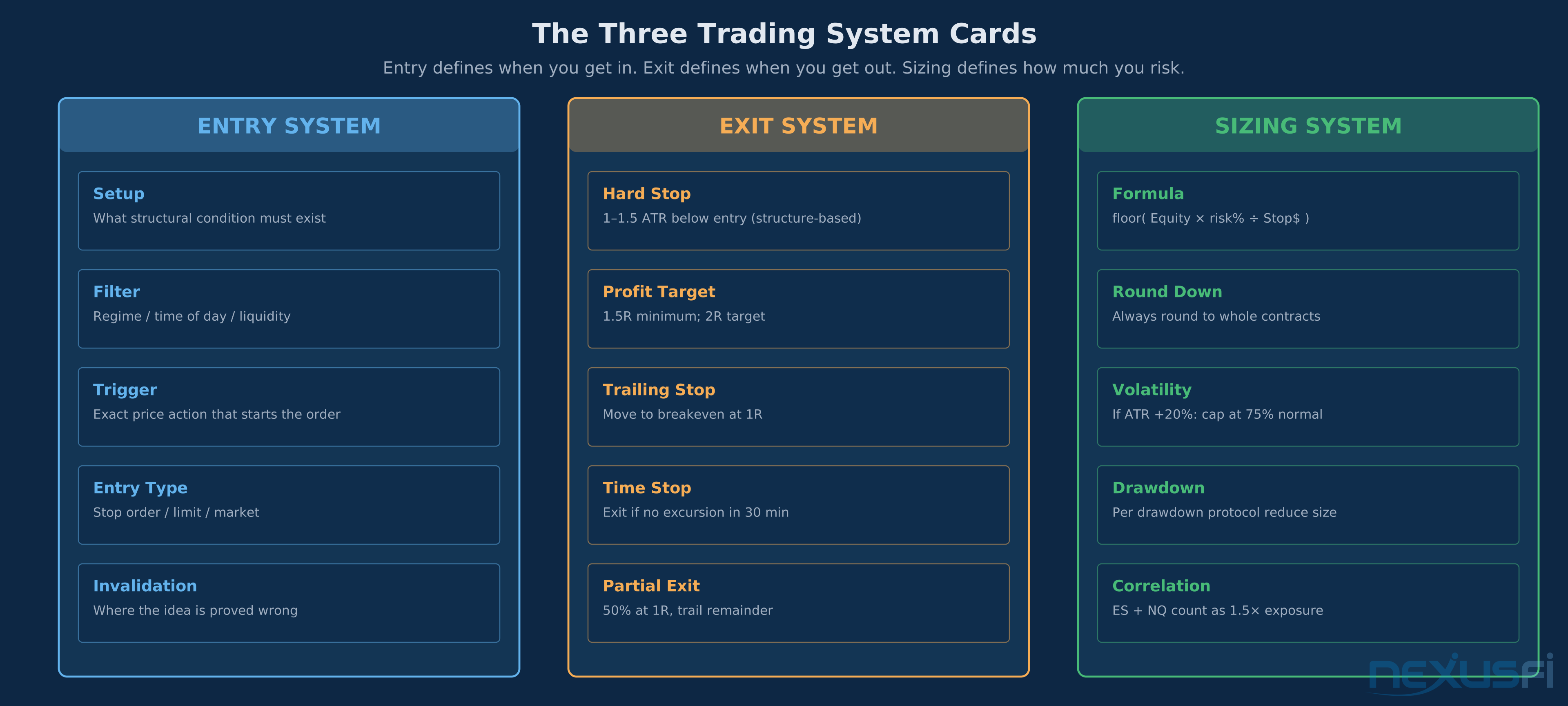
The execution layer is where all upstream elements converge into specific trading rules. Tharp specifies three distinct system components — entry, exit, and position sizing — because each involves different trade-offs and because the interaction between them (not any one in isolation) determines actual performance.
Element 13: Entry System
The entry system defines the complete set of conditions that must exist before you place a trade. Tharp's framework distinguishes between setup (the structural condition), trigger (the specific price action that causes the order), filter (conditions that modify or restrict the setup), and invalidation (the price level or condition that means the setup is no longer valid).
For futures traders, the entry system must also specify entry type (stop order, limit order, or market order), because this affects both execution quality and the risk profile of the position.
Entry system template — trend continuation example (ES):
- Regime filter: Trade only when 60-minute chart shows higher highs and higher lows; ADX 18 or higher on 15-minute; RTH hours only (9:35-11:30 AM and 2:00-3:30 PM EST)
- Setup: Three-bar pullback to the 20 EMA on the 5-minute chart, with pullback volume below 70% of the 10-bar volume average
- Trigger: Bar that closes back above the 20 EMA; enter on the next bar's open via stop order at the prior bar's high plus one tick
- Invalidation: If price closes below the 20 EMA on the 15-minute chart before trigger fires; if news event occurs within 10 minutes
Write this for each system you trade. If you cannot write it without ambiguity, the system is not yet sufficiently developed for live capital.
Element 14: Exit System
Exit system design is where most retail traders underinvest. A common failure pattern: precise, rule-based entry combined with vague, emotion-driven exits. The result is technically correct entries that produce poor outcomes because the profit-taking rules systematically cut winners short or the stop rules are inconsistently applied.
The exit system must address four scenarios: the initial stop (where the trade is wrong), the profit target or trailing mechanism (how you capture gains), the time stop (what happens if the trade simply does not develop), and the partial exit rules (if you scale out).
Exit system template — trend continuation example:
- Initial stop: One tick below the pullback low (structure-based), or 1.0 ATR(14) below the entry price if the pullback low is more than 1.5 ATR away. Use the smaller of the two.
- First profit target: 1.5R from entry (in dollar terms based on initial stop). Exit 50% of position here.
- Remainder management: Move stop to breakeven on remaining 50%. Trail by: move stop to one tick below each new higher low as it forms on the 5-minute chart.
- Time stop: If trade has not reached 0.75R favorable excursion within 45 minutes of entry, exit the full position at market.
- Hard exit: Exit 100% of remaining position at 3:50 PM EST regardless of profit or loss.
Element 15: Position Sizing System
Tharp considers position sizing the most important of the three systems. The same entry and exit system with different sizing produces radically different outcomes in drawdown depth, recovery time, and long-term compounding.
The base formula translates risk into contracts:
Contracts = floor( Equity x risk% ) divided by ( StopDistance_pts x $/pt )
Contracts = floor( Equity x Risk% / (StopDistance_pts x $/pt) )
Example (ES): $100,000 account x 0.5% = $500 risk budget. Stop of 4 points x $50/pt = $200 per contract. Result: floor($500 / $200) = 2 contracts.
Complete position sizing protocol for ES futures:
- Base risk: 0.5% of current equity per trade
- Stop distance: Calculated fresh for each trade from the entry system's stop rule (never fixed)
- ES contract value: $50 per point; 0.25 points per tick = $12.50 per tick
This framework connects directly to the technical skills covered in Academy: Position Sizing in Futures handles the mathematical details of Element 15, Drawdown Management complements Element 12's contingency planning, and Trade Journaling for Performance Review supplies the measurement infrastructure for Elements 11 and 9.
Putting the Plan Together: Operational Artifacts #
Tharp's 15 elements are useful as a framework but only valuable as operational artifacts — documents that are actually consulted and used during trading rather than filed and forgotten. Translate the complete plan into these six specific items:
- One-page vision/purpose/objectives: Read every morning before market open. Keeps the strategic layer present during operational decisions.
- Monthly big picture assessment: One page covering markets, sessions, regime, events, and implied strategy adjustments. Updated at the start of each month.
- Pre-trade checklist: Seven binary Y/N questions. Physical card near your trading setup, not a document you have to open.
- Three system cards: One page each for entry, exit, and position sizing. Specific enough that a colleague could execute them correctly without asking you questions.
- Risk/budget sheet: Current limits (daily, weekly, drawdown), the position sizing formula with current equity plugged in, and the volatility multiplier for the current period.
- Performance dashboard: Updated weekly with the four quadrants described in Element 11. If updating it takes more than 10 minutes, simplify the data collection process.
Implementation Timeline #
Most traders attempt to build all 15 elements simultaneously and produce a detailed document they never actually use. A more effective sequence builds each layer before the next is needed: start with the strategic and analytical foundations (vision, purpose, objectives, self-assessment, beliefs), add the operational protocols (mental states, checklist, research, budget), complete the resilience infrastructure (back-office systems, contingency playbook), then develop and validate the three system cards through walk-forward testing and a minimum of 100 paper trades before committing live capital. Expect six months. The plan only works when structural elements are in place before execution elements are tested.
The six operational artifacts — vision statement, monthly big picture, pre-trade checklist, three system cards, risk/budget sheet, performance dashboard — are the difference between a trading plan you wrote and a trading business you run. A checklist on your desk and a checklist in a document folder are not the same object. The plan only works where it lives: in your daily workflow.
The Quarterly Review: Keeping the Plan Alive #
A trading business plan written once and never revisited is not a plan — it is a document. The quarterly review keeps it current as markets and your own psychology evolve.
Compare actual results against your Element 3 objectives, recalculate expectancy from the last quarter's trades, and assess whether your systems still meet your Element 8 acceptance criteria. If they don't, the answer is research — not more trading.
The Business Versus the Gamble #
Van Tharp's core insight — the one the 15-element framework exists to implement — is that the difference between a professional trader and a gambler is not the quality of their trade ideas. It is the presence or absence of a system that operates independent of any individual trade's outcome.
The 15-element framework creates the feedback loop. Each element generates data. The data flows into reviews. The reviews produce adjustments. The adjustments improve the system. This is what "trading as a business" means in practice: not merely a metaphor for taking things seriously, but a literal operating system with inputs, processes, outputs, and measurement.
Knowledge Map
Prerequisites
Understand these firstCitations
- — Day Trading Using the Basis of Mack's PAT Teachings (2013) 👍 13“Scratch a successful trader, and they all have quantified each of the above elements in their own way, and it is easily and readily explainable to anyone. These are the common elements that are essential to all successful enterprises, trading or not.”
- — Finally Turning the Corner, the its 80 Percent Psychology thing (2020) 👍 16“Your state of mind is a byproduct of your beliefs and attitudes. Winning is a state of mind just like happiness, having fun and satisfaction are states of mind.”
- — The Logical Trading Journal (2013) 👍 10“There is no rush to get into a trade. This is not a sprint, it's a marathon. Focus always on initiating a trade when there is context and confirmation.”
- — Path to mastery (2016) 👍 10“Psychology does not matter if your trading does not have a positive expectancy. Psychology is all about being able to stick with the plan -- however, if the plan is worthless then all the discipline in the world won't help.”
- Van K. Tharp — Trade Your Way to Financial Freedom (2006)
- Van K. Tharp — Super Trader: Make Consistent Profits in Good and Bad Markets (2011)
- — Trading Metrics for journals/record keeping (2010) 👍 7“The R-Multiple is known for each trade setup, the win rate is unknown. An unfavorable R-Multiple allows you to skip a trade -- this is valid for discretionary trading.”
- — Trading Metrics for journals/record keeping (2010) 👍 6“Van Tharp suggests calculating all R-Multiples together (sum) then using that to find the median expectancy. 1R is not always equal from trade to trade -- you also need to factor in what 1R actually equals in terms of percentage risk to your account.”
- — Calculating trades in R (2019) 👍 4“Divide the profit/loss of a trade by the risk per trade. If a trade made $200 and the total risk was $100, the trade has an R multiple of 2R. If you risked $200 and took a full stop for -$200 then that is a -1R trade.”
- — Journal Trading Competition July 2017: Focus on the Top Tasks of Traders (2017) 👍 3“I express the results of my trades in R's because it will tell me something about the expectancy of my trading plan. This is a concept of Van Tharp to train your trader's brain and you can use it for position sizing to achieve your goals.”