



Super Trader Development Model: Van Tharp's Multi-Stage Path to Trading Excellence
Overview #
Van Tharp spent decades studying what makes elite traders elite — and his answer wasn't a better indicator or a secret setup. The Super Trader development model lays out a multi-stage path from clueless beginner to world-class performer, and the uncomfortable truth at its core is this: most traders fail because they skip straight to system-building without doing the foundational work on themselves first.
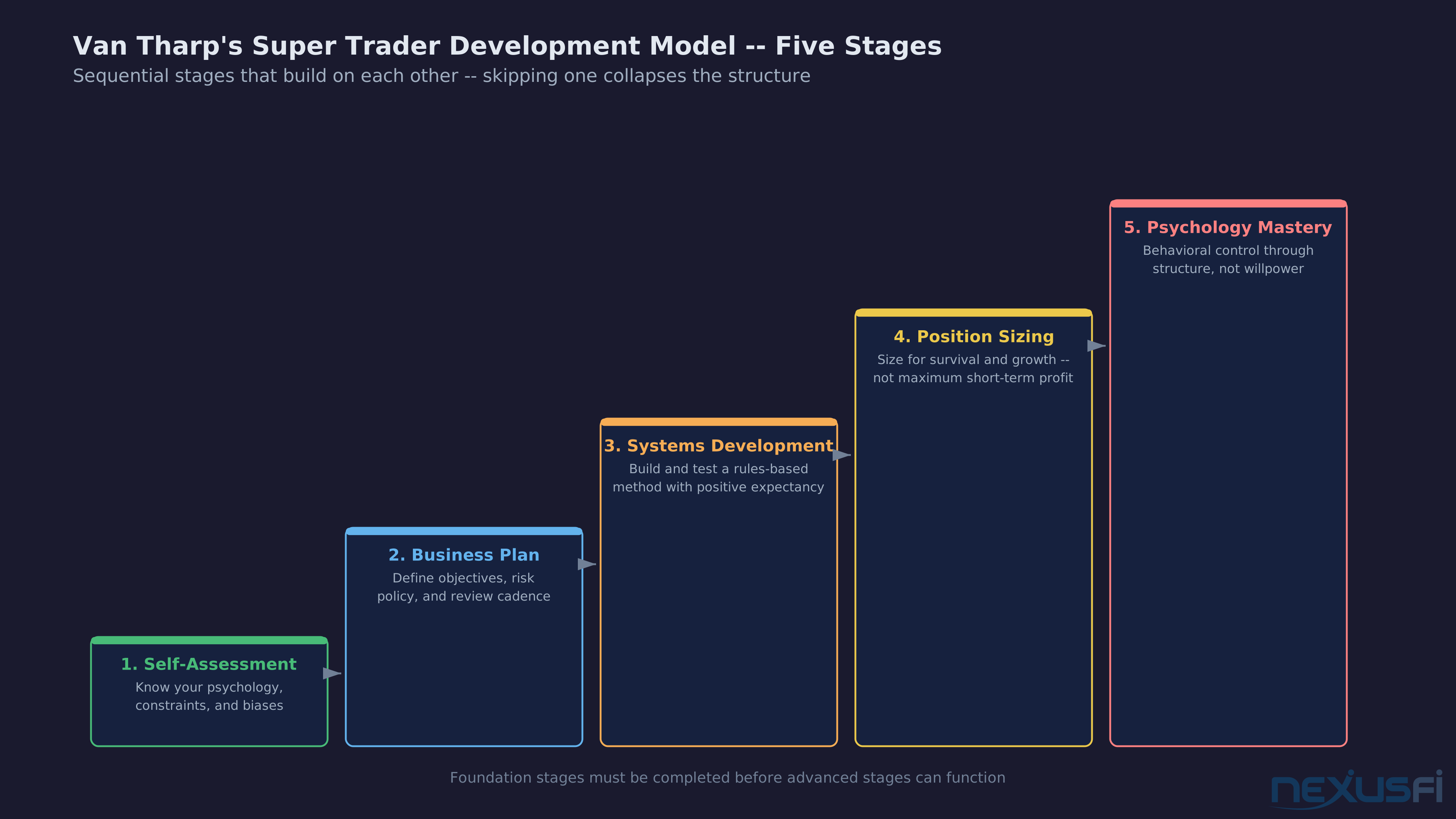
Tharp's framework treats trading as a business and a performance discipline. Five interconnected stages — self-assessment, business planning, systems development, position sizing mastery, and psychological mastery — build on each other in sequence. Skip a stage, and the whole structure collapses under pressure. The model also maps onto a well-known competence progression: from unconscious incompetence (you don't know what you don't know) through conscious effort to eventual mastery where execution becomes almost automatic.
This isn't a weekend seminar framework. Realistic timelines run from 6 months to multiple years depending on commitment level, prior experience, and how honest you're willing to be about your own weaknesses.
The Competence Progression: Five Levels of Trader Awareness #
Before diving into the stages, it helps to understand the psychological terrain you're crossing. Tharp draws on the classic competence model from skill acquisition research and maps it directly to trading development.
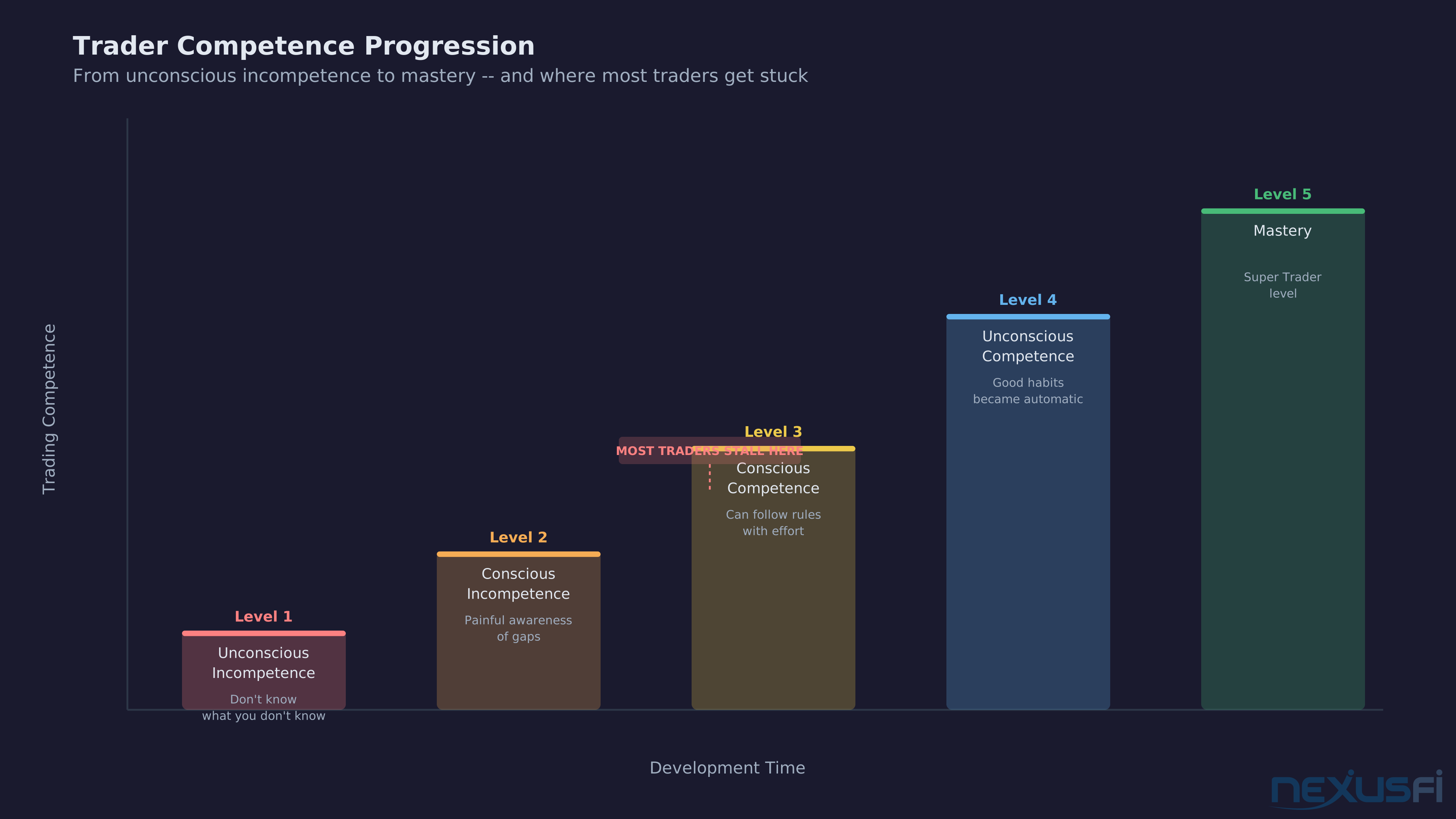
Level 1: Unconscious Incompetence. You don't know what you don't know. Trading looks like finding good setups and clicking buttons. Risk management sounds like something for people who aren't confident. This level is dangerous because confidence is high and competence is near zero.
Level 2: Conscious Incompetence. Reality arrives — usually via blown accounts or painful drawdowns. You start to see that trading involves probability, risk, discipline, and emotional control. This stage hurts, but it's where real learning begins. The traders who quit do it here.
Level 3: Conscious Competence. You can follow rules and execute a method, but it takes real effort. Discipline isn't automatic — it requires concentration, checklists, and active self-monitoring. Performance improves, but it's fragile.
Level 4: Unconscious Competence. Good habits are internalized. You don't need to remind yourself to check risk before entering — you just do it. Emotional reactivity decreases because the process is trusted and tested.
Level 5: Mastery. The Super Trader level. You operate as a business owner and performance athlete simultaneously. Focus shifts from prediction to process — expectancy, risk management, position sizing, and continuous adaptation.
The gap between Level 3 and Level 4 is where most traders stall for months or years. They understand what to do but can't consistently do it under pressure. Tharp's five-stage development model is specifically designed to close that gap by building competence in layers rather than all at once.
Stage 1: Self-Assessment -- Know Thyself Before You Trade #
Tharp puts self-assessment first for a reason: a mismatch between who you are and how you trade is the single most common cause of failure that nobody talks about. A highly emotional trader trying to scalp 50 times a day is a disaster waiting to happen. A risk-averse person using aggressive leverage will freeze at exactly the wrong moment.
Self-assessment isn't a personality quiz you take once and forget. It's an honest inventory of your psychological makeup, practical constraints, and behavioral tendencies — all of which directly determine what kind of trading can work for you.
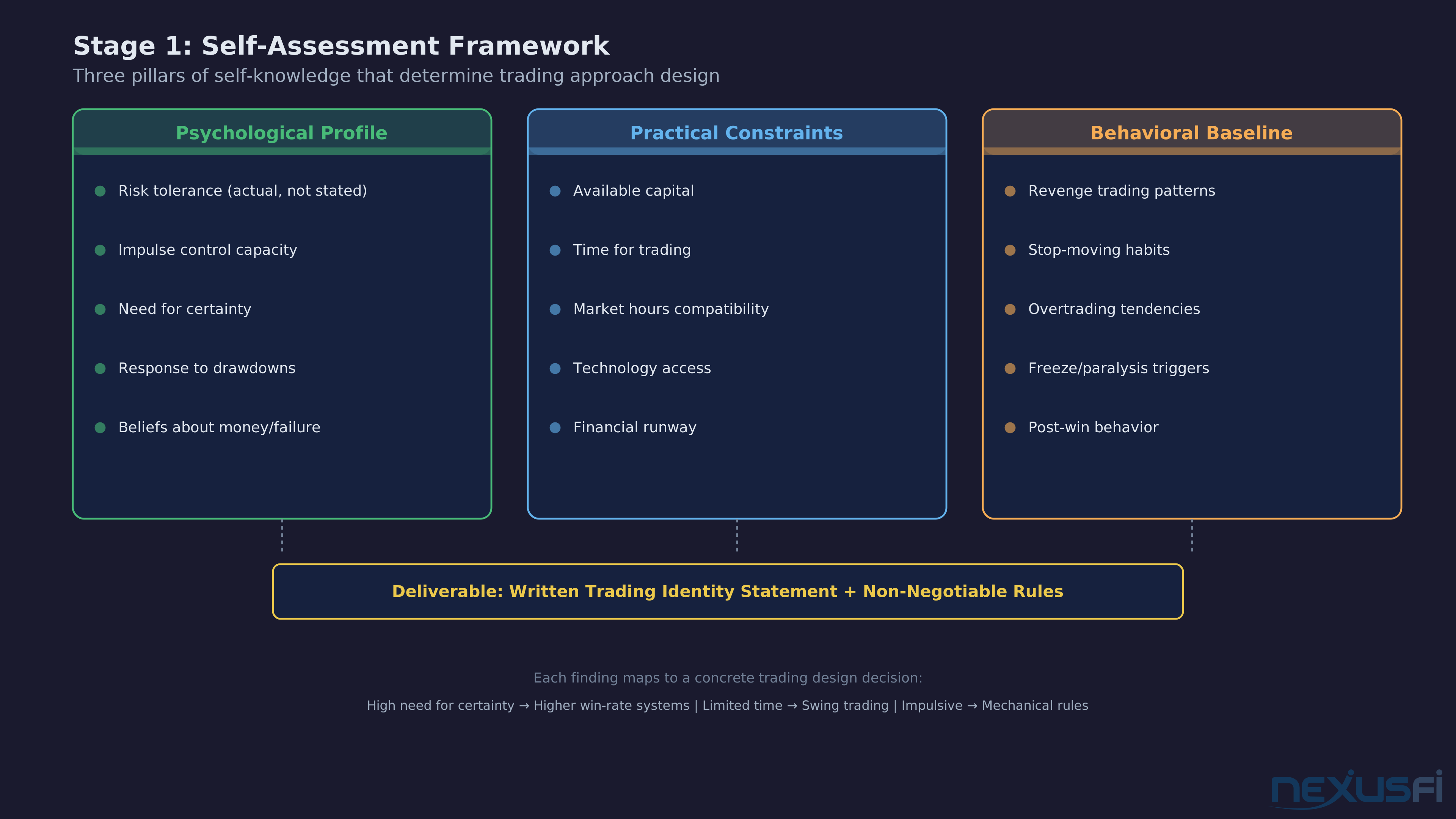
Psychological profile: Risk tolerance (not what you say, but how you actually behave when losing), impulse control, need for certainty vs. ability to tolerate ambiguity, response to drawdowns, beliefs about money and failure.
Practical constraints: Available capital, time for trading, technology access, market hours compatibility, financial runway.
Behavioral baseline: Your actual patterns under pressure. Do you revenge trade? Move stops? Add to losers? Overtrade after wins? Freeze when it's time to enter? These aren't character flaws — they're data points that inform every design decision that follows.
Most traders skip self-assessment because it feels unproductive. But research on trader behavior consistently shows that misalignment between trader type and trading approach produces failure rates far above the baseline. A strategy that works brilliantly for one personality type can destroy another.
The assessment maps to concrete trading decisions. High need for certainty points toward higher win-rate systems, not trend-following that's wrong 60% of the time. Limited time rules out scalping in favor of swing or end-of-day approaches. Small account size demands micro contracts and extended development timelines. The deliverable from Stage 1 is a written trading identity statement: what you will and won't do, your non-negotiable rules, and a measurement plan.
Stage 2: Developing a Trading Business Plan #
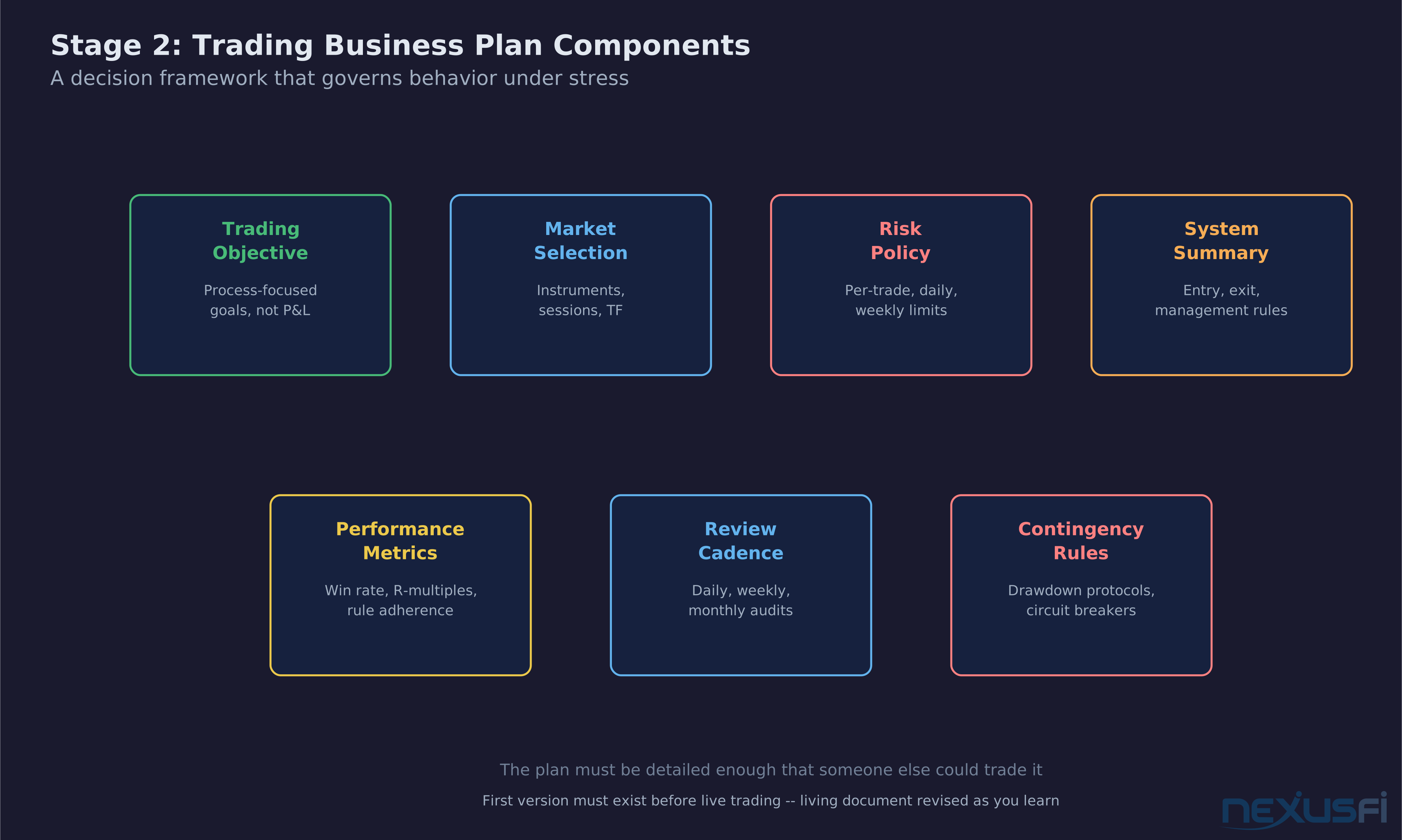
Most traders treat trading like a hobby with occasional profit potential. Tharp treats it like a business — and the difference in outcomes is enormous. A trading business plan isn't a motivational vision board. It's a decision framework that governs behavior under stress, when clear thinking is impossible.
The plan forces you to answer hard questions before you're in the heat of a trade. What markets will you trade and why? What's your edge? How much will you risk per trade, per day, per month? What happens during a drawdown? When do you stop trading and reassess?
Trading objective: Define success in process terms. "Follow my rules on 90% of trades" beats "make $10,000 per month" because you control the former.
Market selection: Which instruments, sessions, and timeframes. For futures traders: micros, minis, or full-size contracts — be honest about whether your account can handle the contract you want to trade.
Risk policy: Maximum risk per trade (typically 0.5-2% of equity). Maximum risk per day. Maximum risk per week. Maximum drawdown before stopping live trading. These aren't suggestions — they're circuit breakers.
Performance metrics: Win rate, average win/loss ratio, expectancy, R-multiple distribution, and rule adherence rate. That last metric matters most during development.
Review cadence: Daily trade review, weekly performance scorecard, monthly strategy audit.
Write the plan in enough detail that someone else could trade it. If your plan says "look for good entries near support" you don't have a plan — you have a wish. Specify the exact conditions, the exact stop, and the exact target.
For futures traders, the plan also needs margin usage limits, overnight exposure rules, event-risk protocols (FOMC, NFP, CPI), and contract rollover procedures. A real business plan is a living document — you revise it as you learn — but the first version must exist before you trade live.
Stage 3: Trading Systems Development #
Here's where most traders want to start — and it's exactly why Tharp puts it third. Building a system without self-knowledge produces a system that doesn't fit you. Building a system without a business plan produces a system with no risk constraints.
A trading system in Tharp's framework includes market selection, signal generation, entry logic, position sizing, trade management, and exit rules. Most traders obsess over entries and ignore everything else — like designing a race car and forgetting the brakes.
Many systems work. Trend-following, mean-reversion, breakout, momentum — all produce positive expectancy in the right hands with the right risk management. The question isn't "which system is best?" but "which system fits my personality, constraints, and risk tolerance?"
Expectancy matters more than win rate. A system winning 40% with 3:1 reward-to-risk has better expectancy than one winning 70% with 0.5:1. Tharp uses R-multiples to evaluate systems on a common scale.
Robustness beats optimization. A system tuned to perfection on historical data will break live. Walk-forward testing and parameter stability analysis matter more than the "optimal" settings. If changing a parameter by 10% destroys the edge, you have a curve fit, not an edge.
System Quality Number (SQN) #
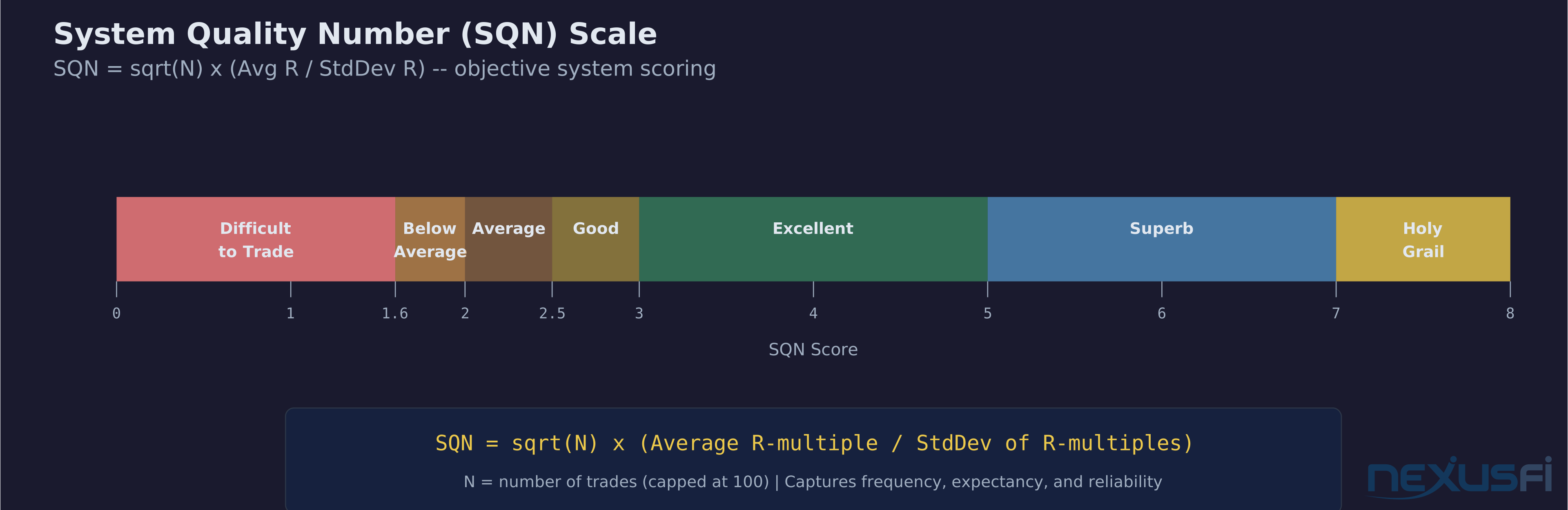
Tharp developed the SQN as an objective scoring metric. The formula captures three dimensions: frequency (N, truncated at 100), expectancy (average R), and reliability (standard deviation of R). Scores translate roughly: below 1.6 is difficult to trade, 2.0-2.5 is average, 3.0-5.0 is excellent, and 7.0+ is rare "holy grail" territory.
For futures, test across multiple regimes (trending, ranging, volatile, quiet), include realistic transaction costs, and validate with forward testing. The deliverable: a documented system with explicit rules, positive expectancy across conditions, and a forward-test plan.
A mediocre entry with excellent risk control and sizing discipline will outperform a brilliant entry with poor discipline. Don't spend years searching for the perfect system when a good-enough system executed with discipline would have made you profitable two years ago.
Stage 4: Position Sizing Mastery -- The Most Neglected Edge #
This is arguably Tharp's most important contribution. Position sizing isn't just "how many contracts to trade." It's the single factor that most determines whether a positive-expectancy system actually produces profit or blows up your account.
Two traders can run the identical system and produce wildly different equity curves based solely on sizing. One compounds steadily. The other hits a drawdown deep enough to trigger psychological capitulation, abandons the system, and concludes it "doesn't work."
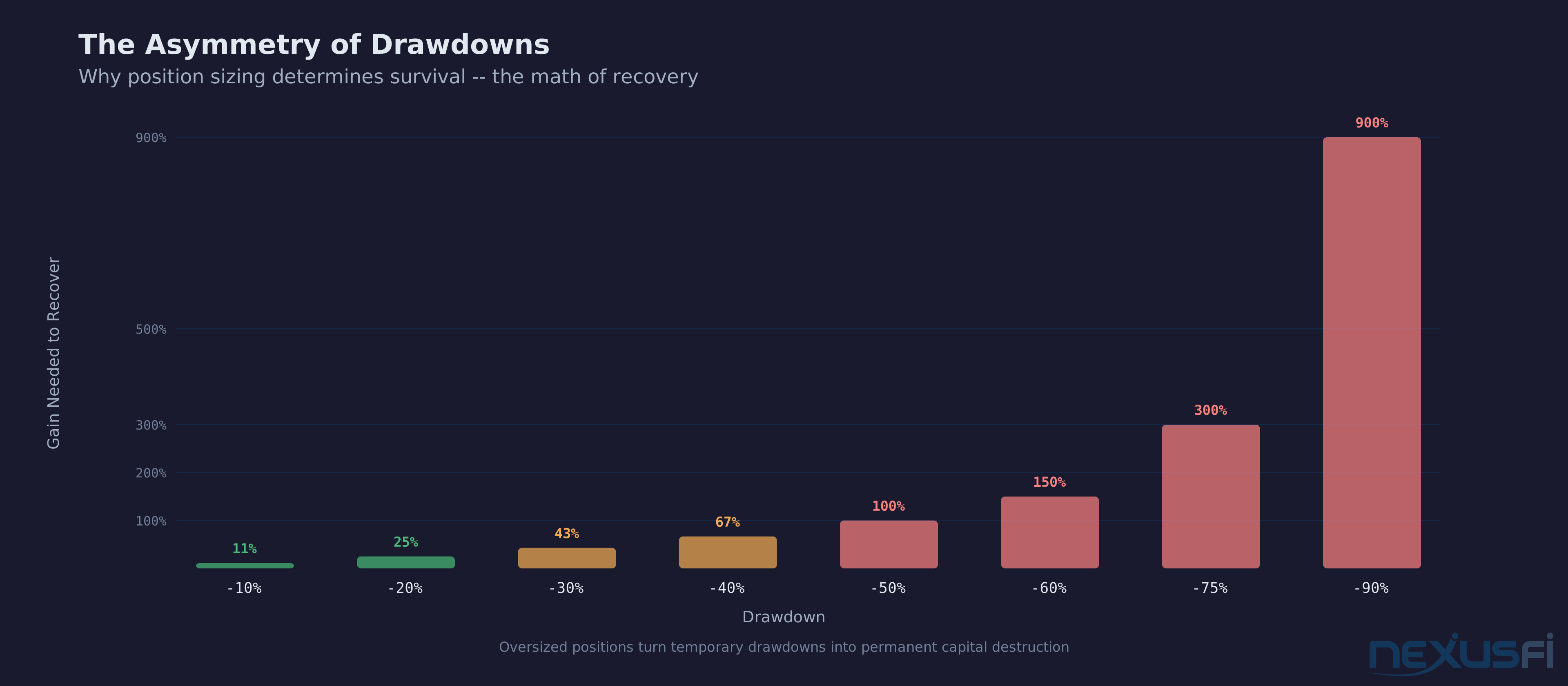
Compounding only works if you survive. The math of drawdowns is asymmetric: 20% down needs 25% to recover, 50% down needs 100%, 75% down needs 300%. Oversized positions turn temporary drawdowns into permanent capital destruction.
Risk of ruin is a function of sizing, not edge. A system with positive expectancy can still have non-zero ruin probability if sizing is too aggressive.
Use R-multiples. Define 1R as your risk per trade before entry. Express all profits and losses as R-multiples. This normalizes performance across instruments and time periods.
Multiple constraint layers:
- Maximum risk per trade (0.5-2% of equity)
- Maximum risk per day (2-6% of equity)
- Maximum correlated exposure
- Drawdown circuit breaker (stop live trading at predefined level)
Size based on volatility, not conviction. Position size should be a function of ATR and stop distance, not how "sure" you feel. Conviction-based sizing puts the largest positions on trades after extended runs — exactly when reversals are most likely.
Position Size Calculation: Contracts = (Account Equity x Max Risk %) / (Stop Distance x Dollar Value Per Point)
Example: $100,000 account, 1% max risk, 4-point ES stop Contracts = ($100,000 x 0.01) / (4 x $50) = 5 contracts
Scale up only after proving stability: 50+ trades with stable execution, stable process adherence, and understood drawdown behavior. Never increase size because you "feel ready" or had a great week.
Stage 5: Trading Psychology Mastery -- Executing Under Pressure #
Tharp puts psychology last not because it's least important, but because it's nearly impossible to master without the preceding stages. A trader without a plan can't distinguish a discipline problem from a strategy problem. A trader without proper sizing experiences drawdowns severe enough to break any psychological framework.
Trading psychology mastery isn't about being emotionless. It's about building behavioral control systems that make good execution easier and bad execution harder — through structure, not willpower.
The Four Trading Fears #
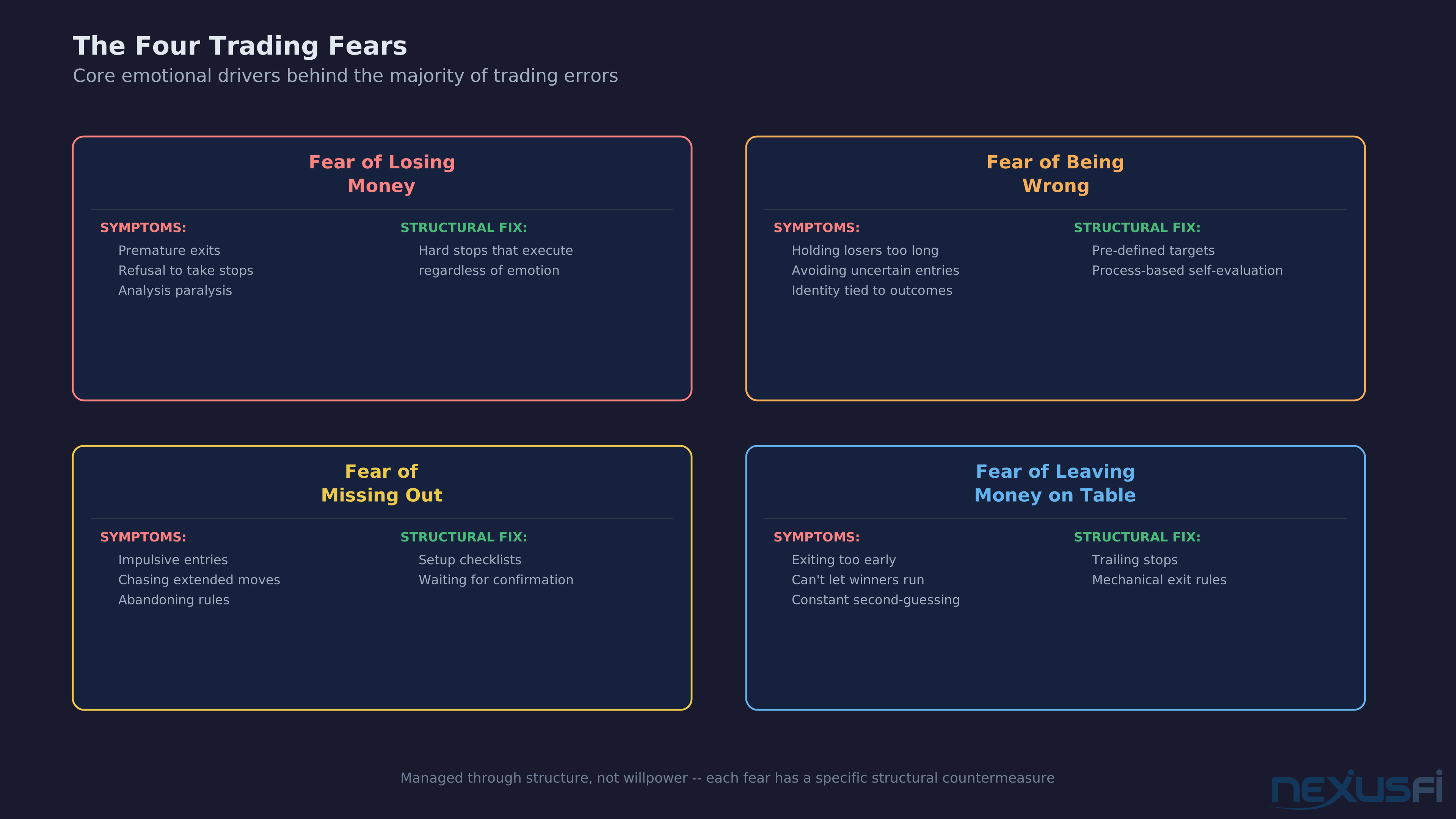
- Fear of losing money: Causes premature exits and refusal to take stops
- Fear of being wrong: Causes holding losers (admitting the loss = admitting error)
- Fear of missing out: Causes impulsive entries without proper setups
- Fear of leaving money on the table: Causes exits too early and constant second-guessing
These fears don't disappear with experience. They're managed through structure: hard stops, pre-defined targets, daily loss limits, and trading journal practices that make fear-driven patterns visible.
Behavioral Control Through Structure #
Pre-commitment protocols. Before the session, define responses to specific scenarios. "If I hit 3 consecutive losers, I stop for the day." These decisions are made when calm, then executed mechanically when you're not.
Error taxonomy in journaling. A system error (wrong setup) requires different treatment than an execution error (right setup, entered late) or a sizing error (correct trade, too large). Track each separately. Most traders discover 80% of losses come from one or two behavioral patterns.
Process adherence as primary metric. During development, measure rule adherence more carefully than P&L. A trader who follows rules perfectly and loses money has a strategy problem — solvable. A trader who breaks rules and loses money has a trading discipline problem — different solution entirely.
Revenge trading, euphoria-driven sizing, plan abandonment during drawdowns, and the need to be right — these are the most common failure patterns. Each is addressed not through willpower but through structural constraints: hard stops that execute regardless of emotion, daily loss limits that force you to step away, and error-categorized journals that make the patterns visible and correctable.
Psychology mastery is not "feeling calm while trading." It's building a structure where good execution is easier than bad execution. Hard stops, daily limits, process checklists, and error-categorized journals create the guardrails. The feelings follow the structure — not the other way around.
Commitment Levels: The Uncomfortable Truth #
Tharp is blunt about commitment: the level of effort you bring determines your ceiling. Most traders want professional outcomes with hobby-level commitment. That mismatch explains more failures than bad systems ever will.
Casual Curiosity: Reads a book, opens a demo. Survival probability: near zero.
Part-Time Seriousness: Trades regularly but inconsistently. Can persist for years without meaningful progress because feedback loops are too slow.
Professional Mindset: Treats trading like a business. Regular journaling, structured review, systematic testing. This is the minimum for consistent profitability.
Super Trader Commitment: Continuous self-improvement across all five stages. Views trading as a lifelong craft with no finish line.
The transition from Part-Time to Professional is where most traders either break through or permanently plateau. It requires a fundamental identity shift — from "someone who trades" to "someone who runs a trading business." The work is reviewing trades you'd rather forget, tracking statistics that expose your weaknesses, and maintaining discipline when the market doesn't cooperate.
Realistic Timelines: How Long This Actually Takes #
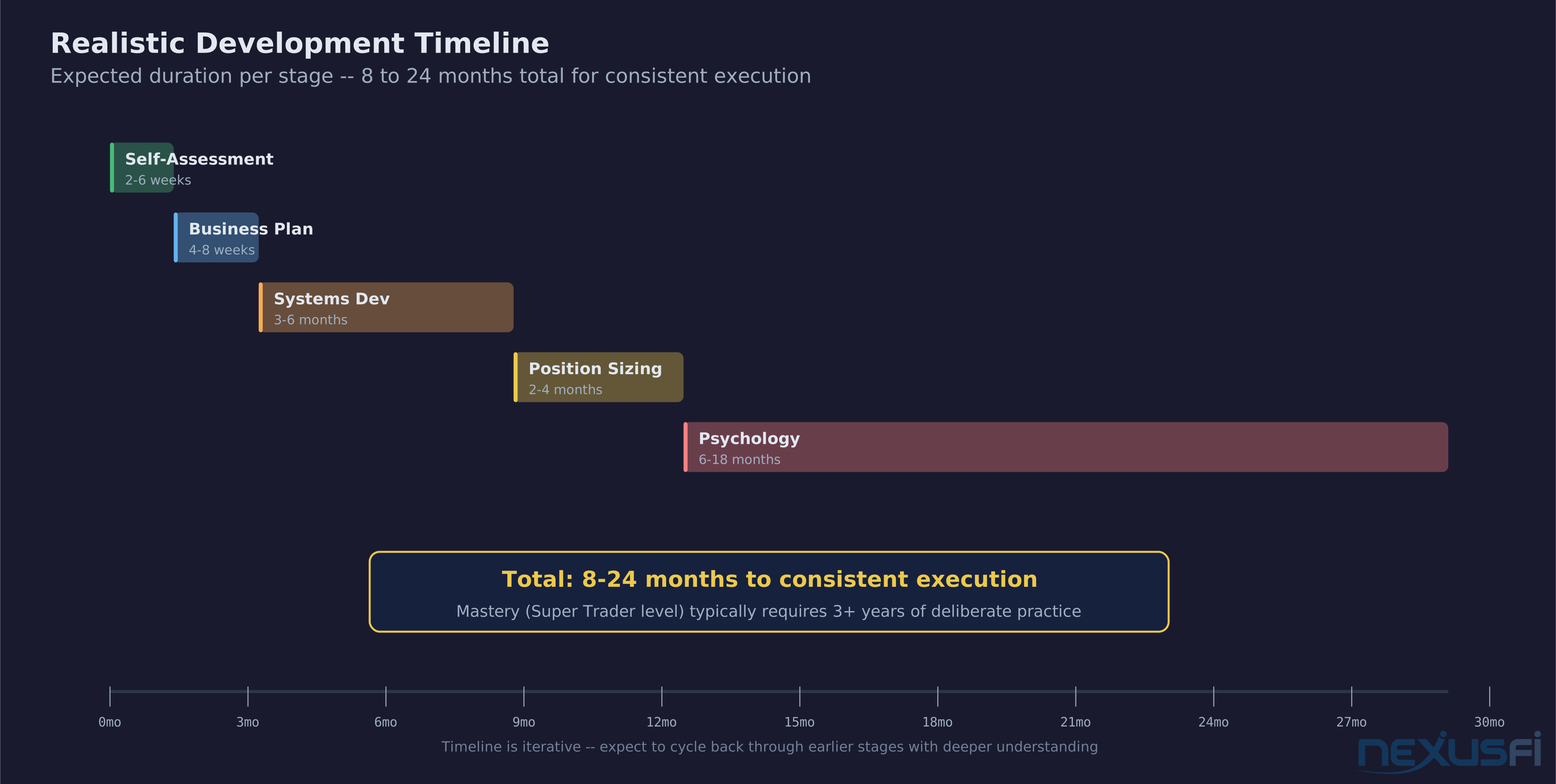
Honest timelines are one of the most valuable things Tharp provides. Traders who expect consistency in 3 months will abandon a working system at month 4 because they haven't hit their (unrealistic) benchmark.
| Stage | Minimum | Typical | What You're Building |
|---|---|---|---|
| Self-Assessment | 2-4 weeks | 2-6 weeks | Written identity statement, behavioral inventory |
| Business Plan | 2-4 weeks | 4-8 weeks | Complete operational plan with risk policy |
| Systems Development | 2-4 months | 3-6 months | Tested system with documented rules |
| Position Sizing | 1-2 months | 2-4 months | Sizing framework with constraint layers |
| Psychology Mastery | 3-6 months | 6-18 months | Behavioral control systems, error taxonomy |
Total: 8-24 months from serious start to consistent execution. Mastery typically requires 3+ years.
Accelerators: Prior probability/statistics experience, full-time availability, quality mentorship, adequate capitalization.
Decelerators: Belief in shortcuts, trading scared money, isolation without feedback, system-switching during drawdowns, refusing to journal.
The timeline isn't linear. Most traders experience rapid progress followed by plateaus that feel permanent. These plateaus are where real development happens — your brain is integrating conscious knowledge into automatic behavior. The plateau feels like stagnation but it's actually consolidation.
Putting It All Together: The Super Trader Operating System #
The five stages create a trader who knows their strengths and designs around them, operates within a defined framework, executes a tested method, sizes positions for survival and growth, and maintains behavioral discipline through structure.
The development path is iterative, not purely sequential. Systems development reveals things about your psychology you didn't know. Position sizing exposes gaps in your business plan. Psychology work uncovers patterns requiring system modifications. Each cycle through the stages operates at a higher level of sophistication.
Stage-Gate Checkpoints #
- Stage 1 Gate: Name your top 3 failure modes with written mitigation plans
- Stage 2 Gate: Trade per written plan for 20 consecutive sessions without improvising
- Stage 3 Gate: Positive expectancy in forward testing with realistic costs across 50+ trades
- Stage 4 Gate: Sizing rules followed under stress, drawdowns within limits across 100+ trades
- Stage 5 Gate: Rule violation rate below 10%, plan executed during 5+ trade losing streaks
Mastery isn't a destination. Markets change, edges decay, new challenges emerge. The Super Trader maintains a learning posture permanently — refining systems, recalibrating risk, and doing the psychological work that keeps execution sharp across market regimes.
Van Tharp's Super Trader model succeeds because it forces sequential development where each stage creates the foundation for the next. Most traders skip directly to system development and wonder why they fail. The five-stage path is longer but it's the one that actually arrives. Expect the path to take years, not months. Commit to the process, not the outcome.
Knowledge Map
Prerequisites
Understand these firstGo Deeper
Build on this knowledgeReferences This Article
Articles that build on this topicCitations
- — Finally Turning the Corner, tha "its 80% Psychology" thing... (2020) 👍 11“If you're struggling, really think about that.. A lot of us get started in trading with the idea that we will be part of the minority of successful traders...”
- — How to determine your own trading experience level (2013) 👍 12“He begins to incorporate the scientific method into his efforts in order to develop a trading plan...”
- — Lord Sidious's Trading Journal (2012) 👍 66“I think that successful trading requires three things. For me they are equally important. If one of them is missing, you will be quickly taken out of the game.”
- — Van Tharp's Max Expectancy (2009) 👍 2“SQN = SquareRoot(N) * (Avg Trade Result/Standard Deviation(Avg Trade Result)). This formula takes frequency, reliability, and expectancy...”
- — Concerning risk per trade sizing (2012) 👍 18“Using exactly the same system, with pre-determined stops and targets, altering the position sizing alone results in huge variations in the equity curve...”
- — Killer Instinct and the Home Run Mentality (2011) 👍 8“You can always adopt a fixed fractional trading strategy where you determine the number of contracts you trade for a defined level of risk.”
- — Finally Turning the Corner, tha "its 80% Psychology" thing... (2020) 👍 16“Something else that's very useful I received from Dr. Steenbarger -- make a list of what sets you off...”
- — Discipline -> Consistency -> Success (2011) 👍 14“As a mentor once told me, discipline leads to consistency, and consistency leads to success.”
- — My Plan to become a Full-Time Trader in 365 days (2015) 👍 17“A trader must be able to find the balance of not being complacent nor dogmatic, but also fully committing mentally...”
- — Van Tharp's SQN with over 100 trades (2021) 👍 3“Van would say that the SQN is a good metric and you have to understand the metric...”