



Trading Performance Metrics: Win Rate, Expectancy, and Profit Factor for Futures Traders
Subtitle: The numbers behind your edge — and how to use them to improve faster
Overview #
Most traders track whether they made or lost money today. That's account management, not performance analysis. The traders who consistently improve — the ones who catch structural problems before they get expensive — are tracking the statistical signature of their edge.
Win rate. Expectancy. Profit factor. These aren't just numbers to fill in on a spreadsheet. They're a diagnostic system that tells you whether your approach has edge at all, and if it does, exactly where it's leaking.
A trader with a 40% win rate can be more profitable than a trader with a 65% win rate. A great week doesn't prove your system works. A consistent profit factor of 1.7 across 300 trades tells you something real. This article explains what these metrics mean, how to calculate them correctly, what the numbers should look like, and how to use them to get better.
The prerequisite is having trades to analyze. If you're not keeping a trading journal, start there first. This article picks up where journaling leaves off, and is foundational to any serious trading plan.
Key Concepts #
Win Rate: The Most Misunderstood Metric #
Win rate is the simplest metric: the percentage of trades that close in profit.
Win Rate = (Winning Trades ÷ Total Trades) × 100
A trader who took 100 trades and won 55 of them has a 55% win rate. The problem is that win rate alone is meaningless — and most traders who've been at this less than a year don't know this yet.
Consider two traders:
- Trader A: 70% win rate, average winner $200, average loser $500
- Trader B: 40% win rate, average winner $600, average loser $200
Trader A feels like they're winning — 7 out of 10 trades close green. Over 100 trades: 70 × $200 minus 30 × $500 = $14,000 minus $15,000 = -$1,000 total. They're losing money.
Trader B watches most trades go against them. Over 100 trades: 40 × $600 minus 60 × $200 = $24,000 minus $12,000 = +$12,000 total. Consistently profitable.
Win rate without context about average winner and loser size is like reading one axis of a map — you know you're somewhere on a line, but not where. You need both axes.
High win rate feels good psychologically. That's a bug, not a feature. Discretionary traders unconsciously bias toward high-win-rate setups — even when those setups have negative expectancy because the losers are too large. The psychology of frequent wins overrides the math. Tracking metrics directly counters this bias.
R-Multiple: Normalizing Your Trades #
The R-multiple (popularized by Van Tharp) solves the problem of comparing trades where you risked different amounts. Instead of measuring profit in dollars, you measure it in multiples of your initial risk.
If you risk 4 ticks on an ES trade ($50 per contract) and make 8 ticks ($100), that's a +2R winner. If you lose all 4 ticks, that's a -1R loser. Every trade, regardless of actual dollar size, gets expressed in the same unit: multiples of risk.
Why this matters: You can compare your June where you risked 2-3 points per trade with your October where you risked 4-6 points per trade. R-multiples are comparable across different position sizes. Dollar outcomes are not.
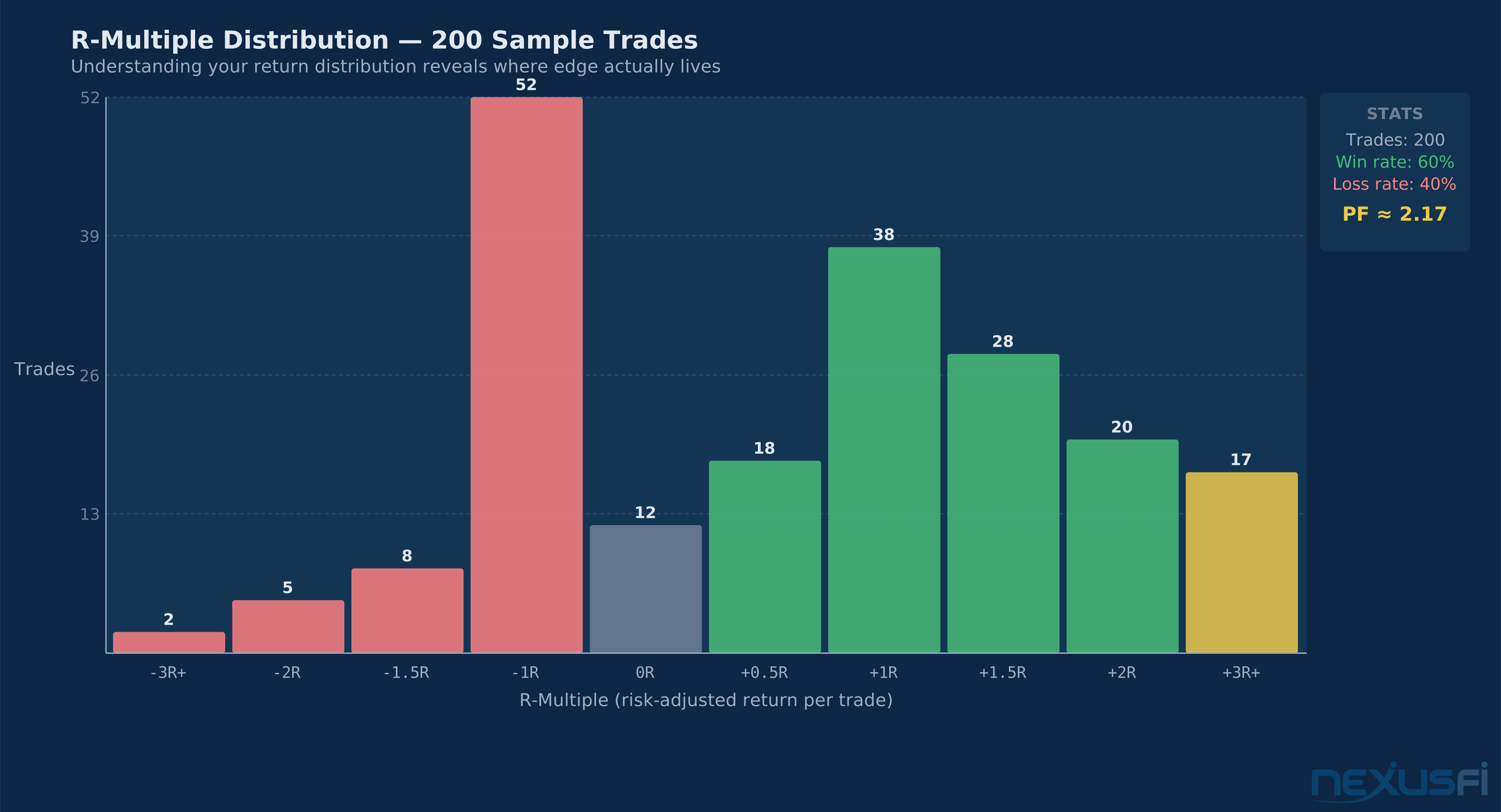
A sample R-multiple sequence from a week of trading: +2.1R, -1R, +1.4R, -1R, +3.2R, -1R, -1R, +1.8R
Average R-multiple = (2.1 + 1.4 + 3.2 + 1.8 - 1 - 1 - 1 - 1) ÷ 8 = +0.69R per trade. This trader has positive expectancy.
Expectancy: The True Measure of Edge #
Expectancy is the average profit per trade. It answers the core question: does this trading approach make money at all?
Expectancy = (Win Rate × Avg Win) - (Loss Rate × Avg Loss)
Van Tharp Expectancy = Expectancy ÷ Average Loss (Above 0.20 = solid | Above 0.25 = good | Above 0.50 = excellent)
Using the Trader A/B example:
- Trader A: (0.70 × $200) - (0.30 × $500) = $140 - $150 = -$10 per trade (losing system)
- Trader B: (0.40 × $600) - (0.60 × $200) = $240 - $120 = +$120 per trade (solid edge)
@kevinkdog, a systematic futures trader with years of documented live results in NexusFi's journals, makes this concrete: "I have strategies with 10-20% winning percentage, and they are just fine. The key is positive expectancy, which is a fancy way of saying 'positive average trade.' avg trade = win% × avg win - lose% × avg loss." A 20% win rate sounds like a disaster. With a 5R average winner, it's a profitable system.
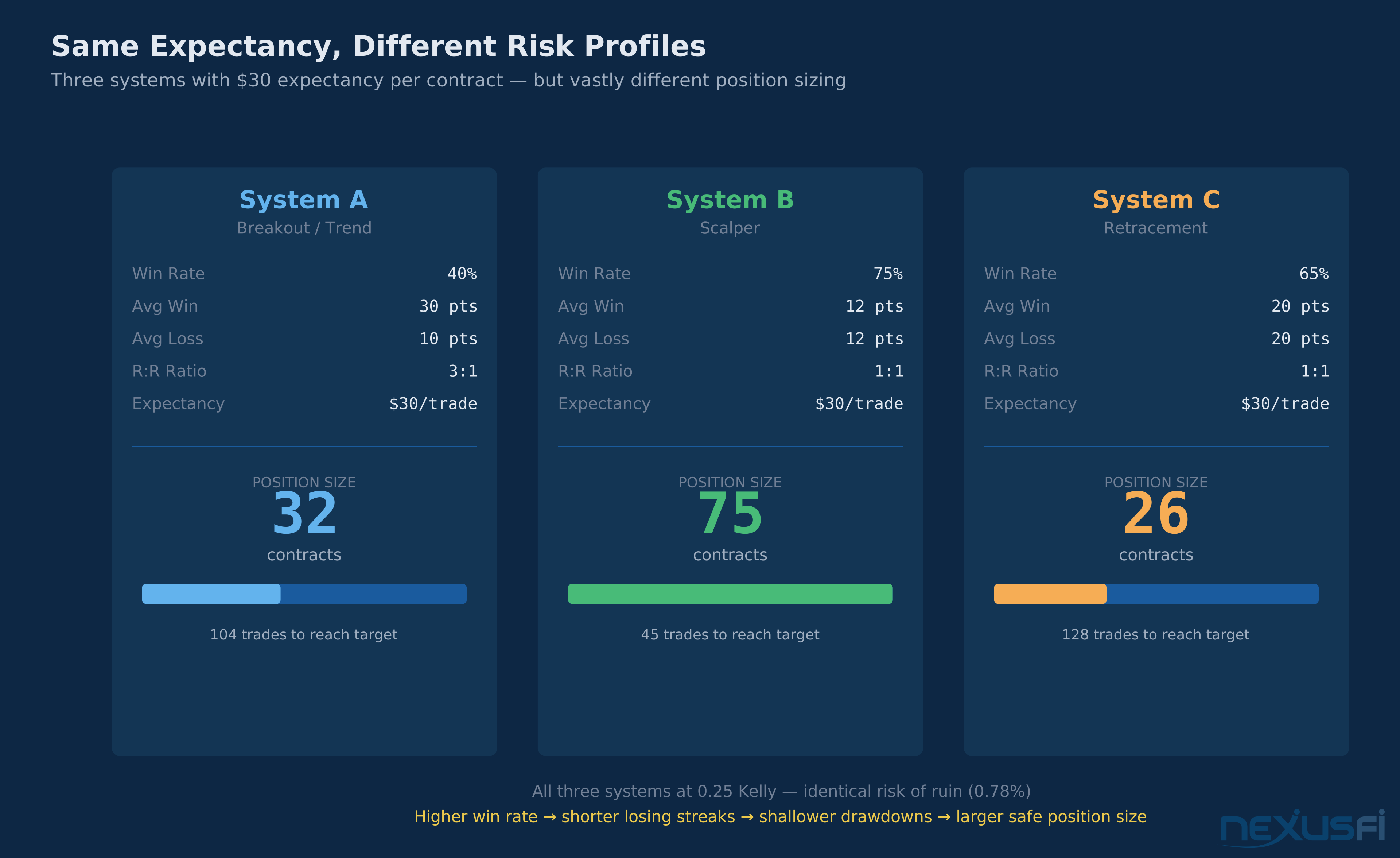
Expectancy calculated from 30 trades is not reliable. From 300 trades, it starts meaning something. The mistake is looking at results after 3 weeks and declaring the system broken — or declaring yourself profitable — when the sample is statistically worthless. Small sample variance can show a profit factor of 2.5 on a breakeven system, or 0.6 on a genuinely profitable one.
Profit Factor: The Simplest Reliable Metric #
Profit factor is the ratio of total gross profit to total gross loss. No win rate calculation, no averaging — just total winners divided by total losers.
Profit Factor = Total Gross Profit ÷ Total Gross Loss
PF < 1.0: Losing system PF 1.0-1.25: Breaking even (commissions will push this to losing) PF 1.25-1.5: Marginal edge — fragile PF 1.5-2.0: Solid, tradeable edge PF 2.0-3.0: Strong edge PF > 3.0: Excellent or overfitted — investigate carefully
A trader who made $15,000 on winners and lost $8,000 on losers over 200 trades has a profit factor of 1.875. Clean, simple, hard to manipulate.
Profit factor is why many experienced traders prefer it as their primary metric — it captures everything in one number.
@Massive l has documented years of live results in NexusFi's Elite Trading Journals. His mental model is direct: "1R @ 60% win = 1.5 Profit Factor. If my edge is trading with those metrics, I'm doing pretty damn good. 1R @ 70% = 2 Profit Factor. 1R @ 80% = 3 Profit Factor." This maps the win rate/reward trade-off into profit factor directly.
The Metrics Relationship: Win Rate ↔ Reward:Risk #
Win rate, average R-multiple, and profit factor are interconnected. You can't evaluate any one in isolation. The breakeven formula:
Required Win Rate = 1 ÷ (1 + R-Multiple) Required R-Multiple = (1 ÷ Win Rate) - 1
In practice:
- 1R system (equal average winners and losers): need >50% win rate to be profitable
- 2R system: need >33% win rate
- 3R system: need >25% win rate
Most prop firm evaluations target 60-65% win rates — achievable with 1R setups where execution timing needs to be precise. Systematic trend-following systems often run 30-40% win rates with 3-5R average winners. Neither approach is better. What fails is a 40% win rate with 0.8R average winners — that's just losing slowly, and it feels like you're almost getting there.
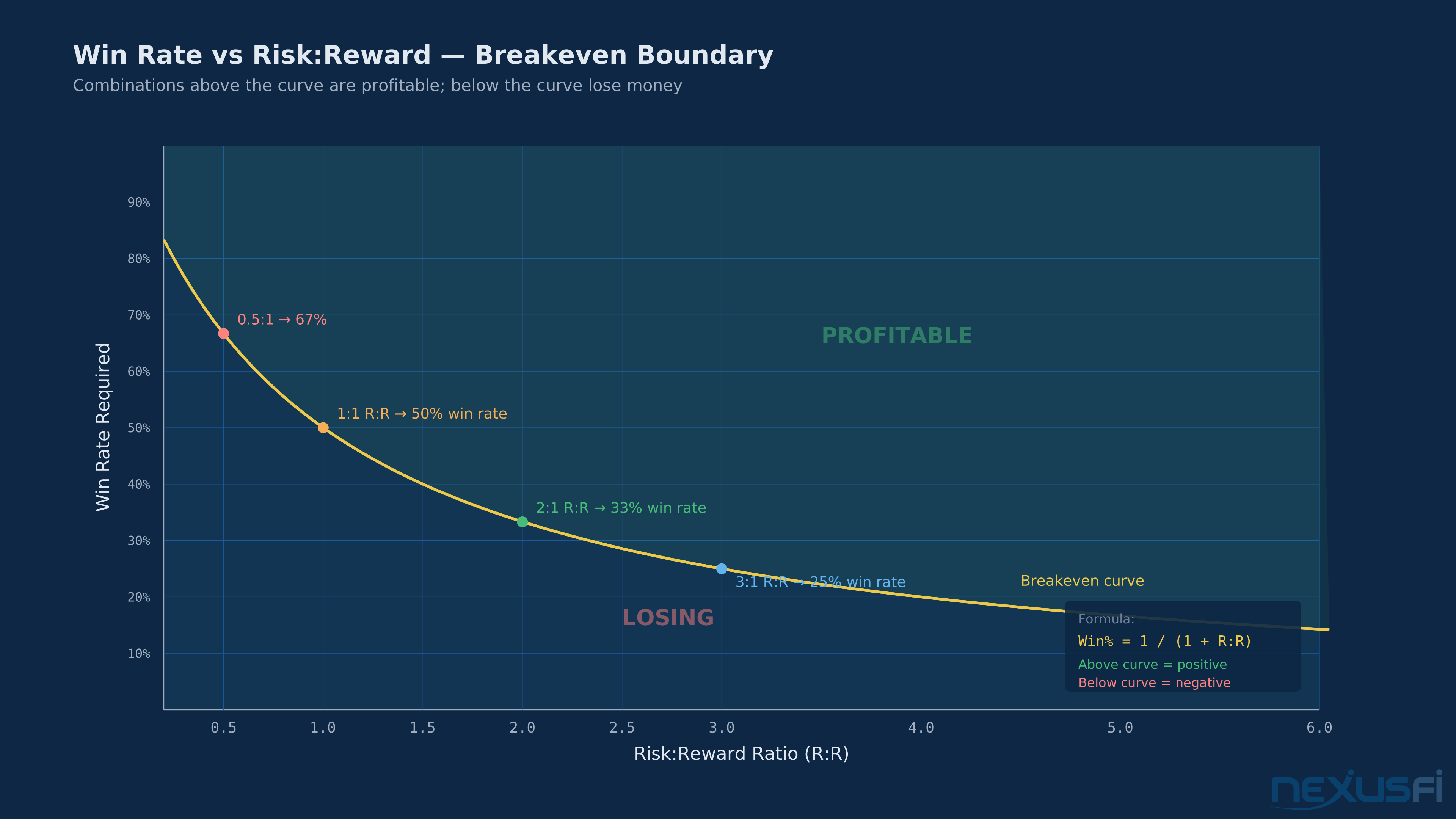
There's no universal "good" win rate. A 40% win rate with 2R average is mathematically equivalent to a 67% win rate with 1R average — both produce approximately the same profit factor. What matters is the combination of win rate and reward:risk, not either metric in isolation.
How to Calculate Your Metrics Correctly #
Step 1: Gather a Meaningful Sample #
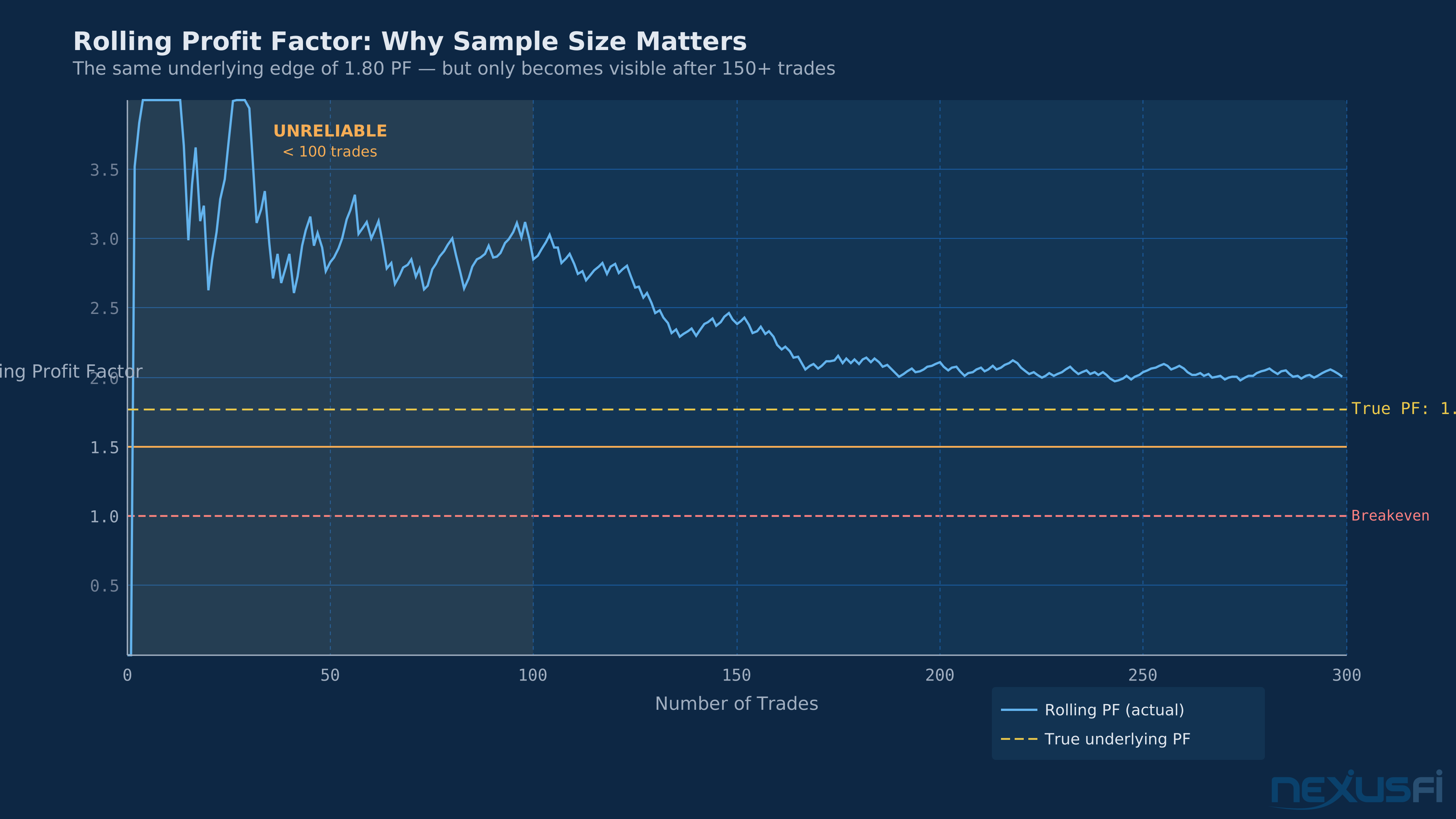
Fewer than 100 trades is not enough to evaluate edge. With 30 trades, random variance can produce profit factors ranging from 0.5 to 4.0 even for a perfectly breakeven system. Practical minimums:
- 100 trades: Rough signal — enough to flag obvious problems
- 200-300 trades: Reliable read on win rate and profit factor
- 500+ trades: Statistical confidence about expectancy
- 1,000+ trades: Fine-grained setup-level distinctions become meaningful
This is why journaling every trade without exception is non-negotiable. Without records, you're guessing. With 50 trades, you're guessing with more confidence than the math warrants.
Step 2: Include All Costs #
Metrics calculated before commissions are educational but not real. ES round-trip commissions run $3-5 per contract depending on your broker and volume tier. For a scalper targeting 2-point moves ($100 per contract), that's 3-5% friction cost per trade. Calculate every metric net of commissions and estimated slippage.
Common calculation mistakes:
- Including commissions in losers but rounding them off for winners
- Omitting partial fills that muddied your entry
- Excluding "scratch" trades (near-breakeven exits) when they should be included
- Mixing different setups in one metric pool — each setup should track separately
Your broker statement is the source of truth. Cross-reference your journal against it monthly.
Step 3: Segment Your Data #
Your aggregate metrics are the starting point. The insight comes from segmentation.
By setup type: Do your A+ setups have better profit factor than your full dataset? If your A+ setups run 1.9 and your B setups run 0.8, you already know what to do.
By time of day: Are you profitable in the first 45 minutes of RTH but negative during the lunch hour? Many traders find their edge is concentrated in specific windows.
By market condition: Trending day vs. range-bound day. If your metrics collapse during chop but excel in trends, your system has regime sensitivity — not a bug, but it changes how you size and when you sit out.
By instrument: If you trade ES and NQ, are your metrics the same? Often one instrument suits your setup better than the other.
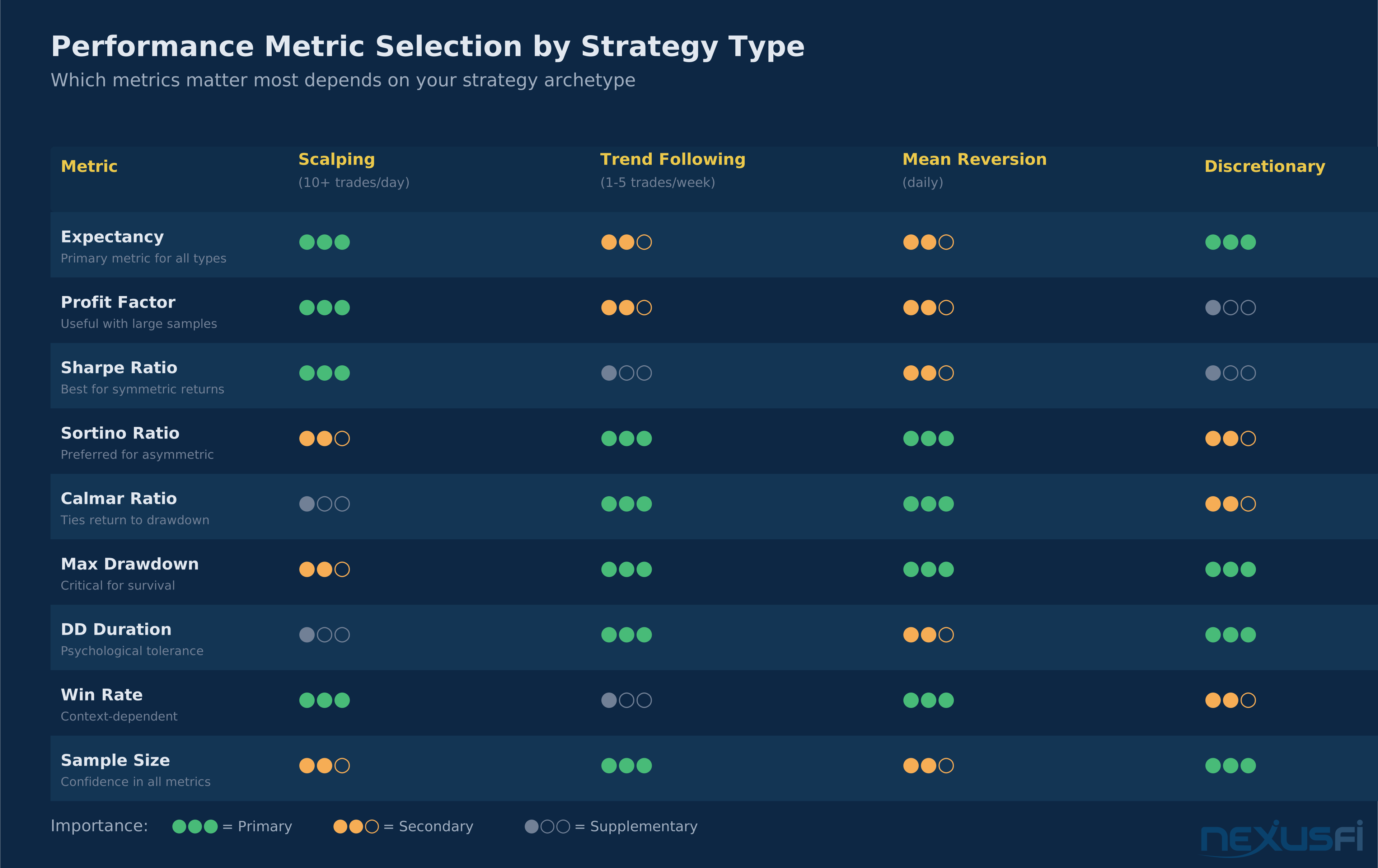
Segmented metrics tell you not just whether you have edge, but where you have it. A trader with aggregate PF of 1.1 who discovers their A+ trend-continuation setups run at PF 2.3 while their counter-trend fades run at PF 0.6 has a clear path: eliminate the fades, scale the trend setups. The bad trades were subsidizing the good ones.
When Metrics Deceive You #
Small Sample Variance #
The most common self-evaluation error. A trader runs 40 trades, sees a profit factor of 2.3, concludes they've found their edge, increases size — and then the next 40 trades show 0.8. Both readings are statistically meaningless. The true edge might be anywhere in a wide range.
Don't make system conclusions from fewer than 100 trades. Track metrics as leading indicators, but don't act on them decisively until you have a meaningful sample.
Regime Changes #
A system can have genuine profit factor of 1.8 in trending markets and 0.7 in range-bound markets. If your sample happened to fall in a trending period, your metrics don't represent performance in all conditions.
@Fat Tails, one of NexusFi's most technically rigorous contributors, makes this explicit in the Psychology and Money Management forums: "Some of the risks cannot be quantified: changing markets, false evaluation of edge, operational risk, gaps." Metrics capture historical edge. They don't guarantee future edge when the market regime shifts.
Slippage and Commission Degradation #
A replay or paper trading profit factor of 2.5 may become 1.4 live after accounting for realistic slippage. Scalpers targeting 3-5 ticks can see their entire theoretical edge consumed by execution costs. The gap is often larger than traders expect.
Paper trading and replay metrics are almost always better than live metrics. The gap exists because: (1) no slippage on entries in sim, (2) no hesitation that delays entry by 1-2 ticks, (3) no position sizing errors that change the risk calculation mid-trade. If your paper profit factor is 1.3, expect your live starting point to be 0.9-1.1. Track the degradation explicitly — it tells you how much execution quality is costing you.
Overfitting the Analysis #
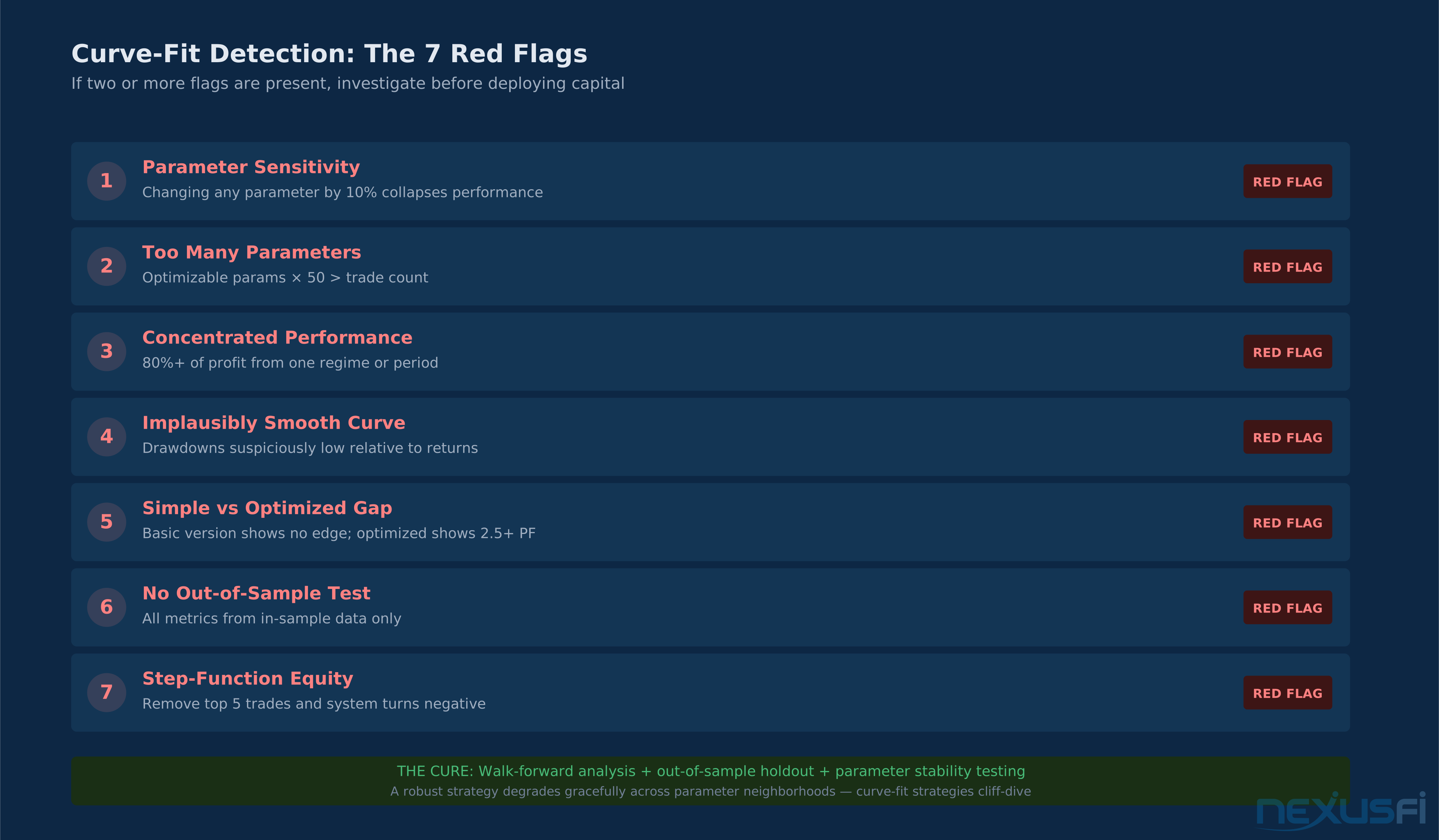
If you slice data enough ways, you'll find a segment that looks incredible. "I only trade ES on Tuesdays between 9:45-10:15 and my profit factor is 3.8." Maybe true historically — but with a tiny sample and many filters, it's almost certainly coincidence rather than structural edge. The more parameters you filter on, the more your "edge" is data mining.
The Psychological Trap of Good Metrics #
A profit factor of 2.0 over 100 trades might be genuine excellence — or a system that worked perfectly in the specific six-month regime you were trading and will break when conditions change. Humility about what your metrics actually prove is as important as the metrics themselves.
Using Metrics to Improve #
The Weekly Review Cycle #
Metrics without a review process are just numbers. The review converts data into improvement.
A practical weekly review (30-45 minutes, done Friday afternoon or over the weekend):
- Calculate core metrics for the week: win rate, profit factor, average R-multiple
- Compare to your 90-day rolling baseline: is this week above or below trend?
- Segment by setup: which setup drove profit? Which drove losses?
- Review your three worst trades: what did they have in common? Was the setup itself wrong, or a valid setup with poor execution timing?
- Review your three best trades: what made them work, evaluated at entry (not exit)?
- Set one specific improvement goal: not "be more disciplined" but something measurable — "I will not take counter-trend setups in the 30 minutes before a scheduled Fed announcement"
The improvement goal must be specific and verifiable. "I want a better profit factor" is aspiration. "I will not take setups during the lunch hour" is testable in the following week's data.
Identifying Metric Patterns Over Time #
Rolling metrics — 30-day and 90-day rolling profit factor — tell a story. Common patterns:
Profit factor declining over 60-90 days: Either the market regime shifted against your style, or you've developed a bad habit. Separate these by reviewing your setup execution quality — are you still taking the setups your system was designed for, or have you drifted?
Win rate falling, average R increasing: You're letting winners run more and cutting losses faster — usually a positive evolution toward better trade management.
Win rate rising, average R falling: Profit-taking is too early. Feels good short-term, compresses upside long-term.
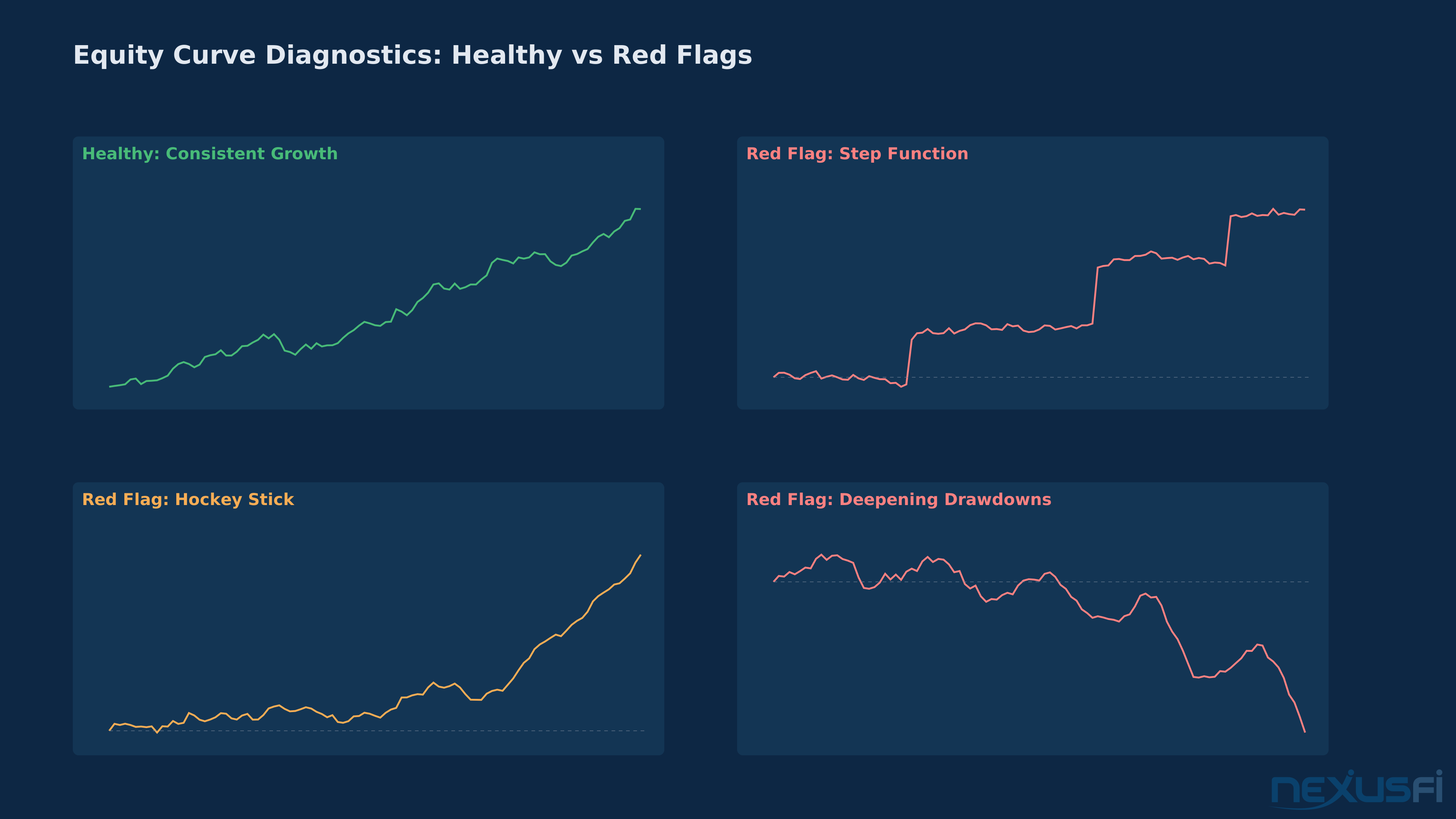
Profit factor stable, equity curve choppy: High-variance strategy. Your edge is real but the return distribution is lumpy. May need position sizing adjustments rather than strategy changes.
The Minimum Viable Edge #
Not all profitable strategies are worth trading. After commissions and slippage, you need:
- Profit factor ≥ 1.5 to cover inevitable drawdown periods and still compound the account
- Sufficient trade frequency to generate meaningful income at your position size (a PF of 2.0 with 5 trades per month doesn't pay the bills)
- Drawdown depth that's sustainable psychologically — you need to sit through the bad streaks without abandoning the system mid-drawdown
A profit factor of 1.2 with 100 trades per month is not meaningfully different from breakeven once you account for drawdown variance. The edge exists mathematically but will be indistinguishable from noise in real-time, making it psychologically impossible to execute through the inevitable losing streaks.
@HumbleTrader, with hundreds of documented live trading days in NexusFi's public journals, articulates the target clearly: "My goal is to beat my system. I have a fairly strong methodology now and my system has a win percentage of 55-60% and a profit factor of >1.5 and often closer to 2." That's the right framing — a documented edge with defined metrics, then the job is executing within those parameters consistently.
The minimum viable edge for live trading: profit factor ≥ 1.5 net of all costs, across 200+ trades, demonstrating stability across at least two distinct market regimes. Below this threshold, you're not ready for meaningful size — you're still gathering evidence that edge exists.
Practical Application: Building Your Metrics Dashboard #
Build a simple tracking system — a spreadsheet or a journaling platform like Tradersync or Edgewonk that auto-calculates metrics. Track for every trade:
| Field | What It Captures |
|---|---|
| Date/Time | Session and time-of-day patterns |
| Instrument | Per-instrument edge differences |
| Setup type | Which setups generate edge |
| Entry price | Execution quality reference |
| Stop price | Your defined risk |
| Exit price | Reward realization |
| Contracts | Position sizing |
| Gross P&L | Raw results |
| Commissions | Net costs |
| R-multiple | Normalized performance |
| Setup notes | Qualitative entry conditions |
From these 11 fields, a spreadsheet can auto-calculate win rate by setup type, profit factor by time of day, average R-multiple by instrument, and rolling 30/60/90-day metrics. The segment analysis is where the real improvement comes from.
The Monthly Audit #
Once per month, step back from daily metrics and look at the full picture:
- Is profit factor improving, stable, or declining? Three declining months in a row is a serious signal — either the market or your execution has changed.
- Which setups are dragging down aggregate metrics? Kill the losers, scale the winners. This sounds obvious but most traders don't have the data to do it precisely.
- Is the sample large enough to draw conclusions? Under 50 trades per month means you're working with slow feedback cycles — need 3 months before making setup decisions.
- Does live performance match your backtested or sim performance? A large gap requires investigation — execution issues, regime change, or the backtest wasn't realistic.
The metrics don't lie. They just require honesty to read.
Run a separate metrics spreadsheet for your "planned" trades vs. all trades taken. If your planned setups have PF 1.9 and your total includes PF 0.8 from impulsive entries, the data pinpoints exactly what to fix: stop trading impulsively. This kind of surgical diagnosis is only possible with complete, honest records.
Knowledge Map
Prerequisites
Understand these firstGo Deeper
Build on this knowledgeReferences This Article
Articles that build on this topicCitations
- — Trading Metrics for journals/record keeping (2010) 👍 32“The expectancy can only be calculated by taking into account both winning percentage and R-Multiple. Most beginning traders do not let their profits run, and achieve bad R-Multiples.”
- — For the Traders that are Profitable (2021) 👍 4“The key is positive expectancy, which is a fancy way of saying positive average trade. avg trade = win% x avg win - lose% x avg loss”
- — IchibomB Futures Trading (2021) 👍 17“If you can trade consistently at 67% with 1R you are essentially profiting 2x the amount of every loser. Using profit factor as expectancy is my preferred metric.”
- — Risk of Ruin (2012) 👍 15“Some of the risks cannot be quantified: changing markets, false evaluation of edge, operational risk, gaps.”
- — Experience at Live Trading Rooms (2009) 👍 98“Everyone loves to make excuses for why something went wrong, but 99% of the time the trader is at fault and whatever excuse they make is pure crap.”
- — IchibomB Futures Trading (2021) 👍 4“1R @ 60% win = 1.5 Profit Factor. 1R @ 70% = 2 Profit Factor. 1R @ 80% = 3 Profit Factor.”
- — HumbleTrader's next chapter (2023) 👍 2“My system has a win percentage of 55-60% and a profit factor of >1.5 and often closer to 2.”