



How to Learn to Trade Futures: The Structured Self-Education Path
Overview #
Most people who try to learn futures trading fail. Not because they lack intelligence, discipline, or work ethic — but because they follow the wrong learning sequence. They discover signals before they understand contracts. They go live before they validate anything. They measure success in dollars when they should be measuring it in process quality.
Here's the truth: futures trading is a skill, not a secret. The traders who figured it out didn't find a better indicator or a smarter entry signal. They built a structured learning program, executed it deliberately, and stayed alive long enough to develop genuine competence.
This article outlines that program — the same one that experienced traders describe when you ask them what they'd do differently if they were starting over. Five stages, each with clear entry and exit criteria. Skip one and the next stage collapses. The prerequisite for every stage is completing the one before it, not reading about the one ahead.

Why Futures Learning Is Different #
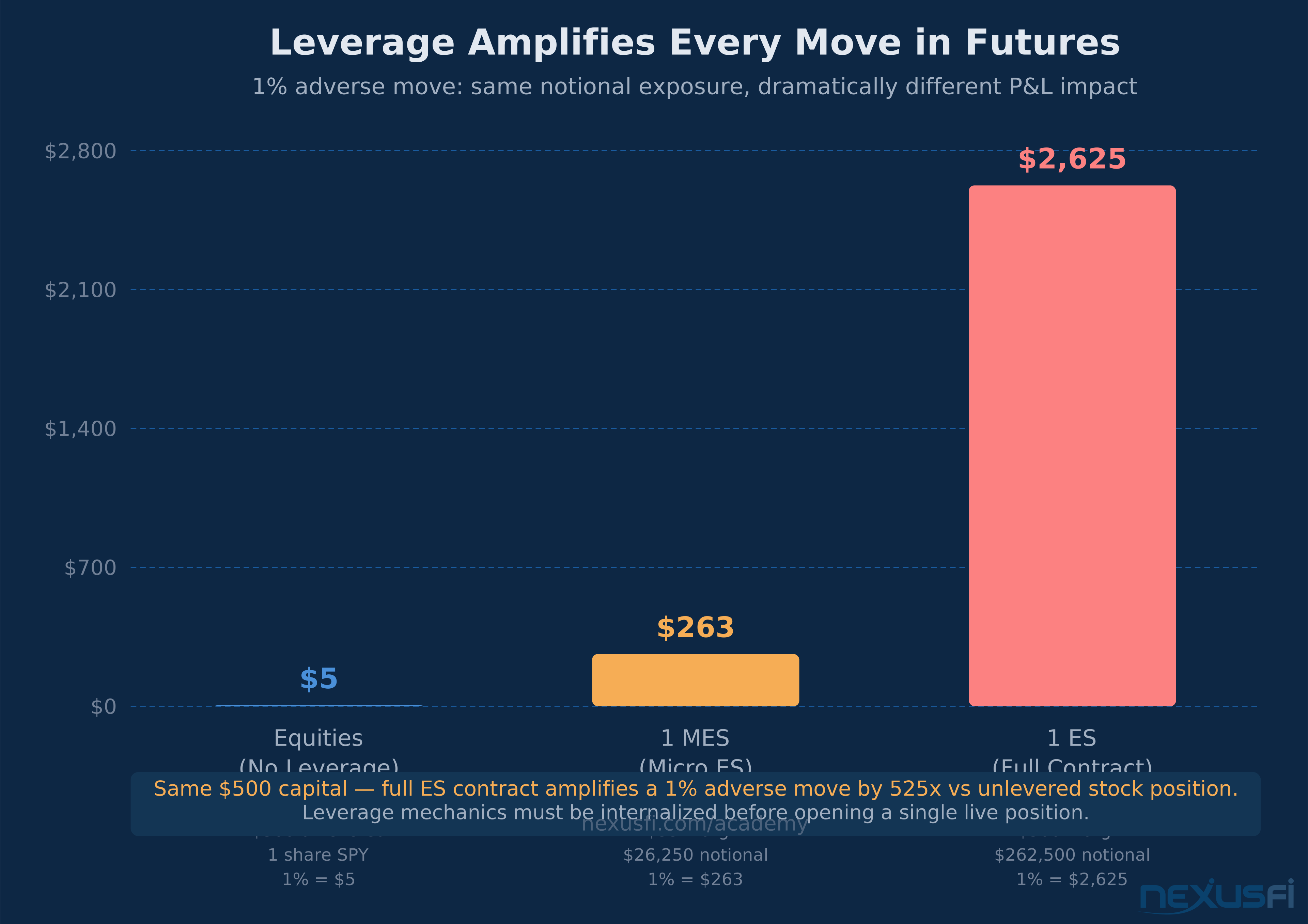
Learning to trade futures is not the same as learning equities, options, or crypto. Three structural differences make it harder and change how the learning must be sequenced.
Leverage amplifies errors immediately. A single ES contract controls roughly $260,000 of notional value on approximately $500 in day-trading margin. A 1-point adverse move costs $50. A 10-point stop — which barely covers normal intraday noise — costs $500. In equities, bad position sizing bleeds you slowly over months. In futures, it takes you out within days. The leverage that makes futures attractive is the same force that makes undisciplined learning expensive.
Every contract has mechanical requirements you must internalize before you can trade. Tick size, tick value, margin, expiration, roll dates — these are not administrative details. They are the operating system. If you don't know that the ES has a tick value of $12.50 and a daily average true range of roughly 40-60 points, you can't size positions rationally, can't evaluate whether your stop loss makes sense, and can't calculate your realistic risk exposure at any given time.
Centralized exchange means execution is transparent but unforgiving. Your limit order competes with professional algorithms. Your stop order is visible and can be targeted during thin conditions. Slippage in fast markets is real and not included in most backtesting assumptions. The paper trading environment your platform provides gives perfect fills at the exact price you specified. Live markets don't cooperate that cleanly.
These three differences don't make futures impossible to learn. They mean the learning sequence matters more than in almost any other market — start in the wrong place and you pay real tuition before you have the framework to learn from the loss.
Stage 1: Instrument Literacy #
Before you look at a chart with any analytical intent, you need to know exactly what you're trading. This sounds obvious. Most beginners skip it and spend months trying to interpret price action they don't understand mechanically.
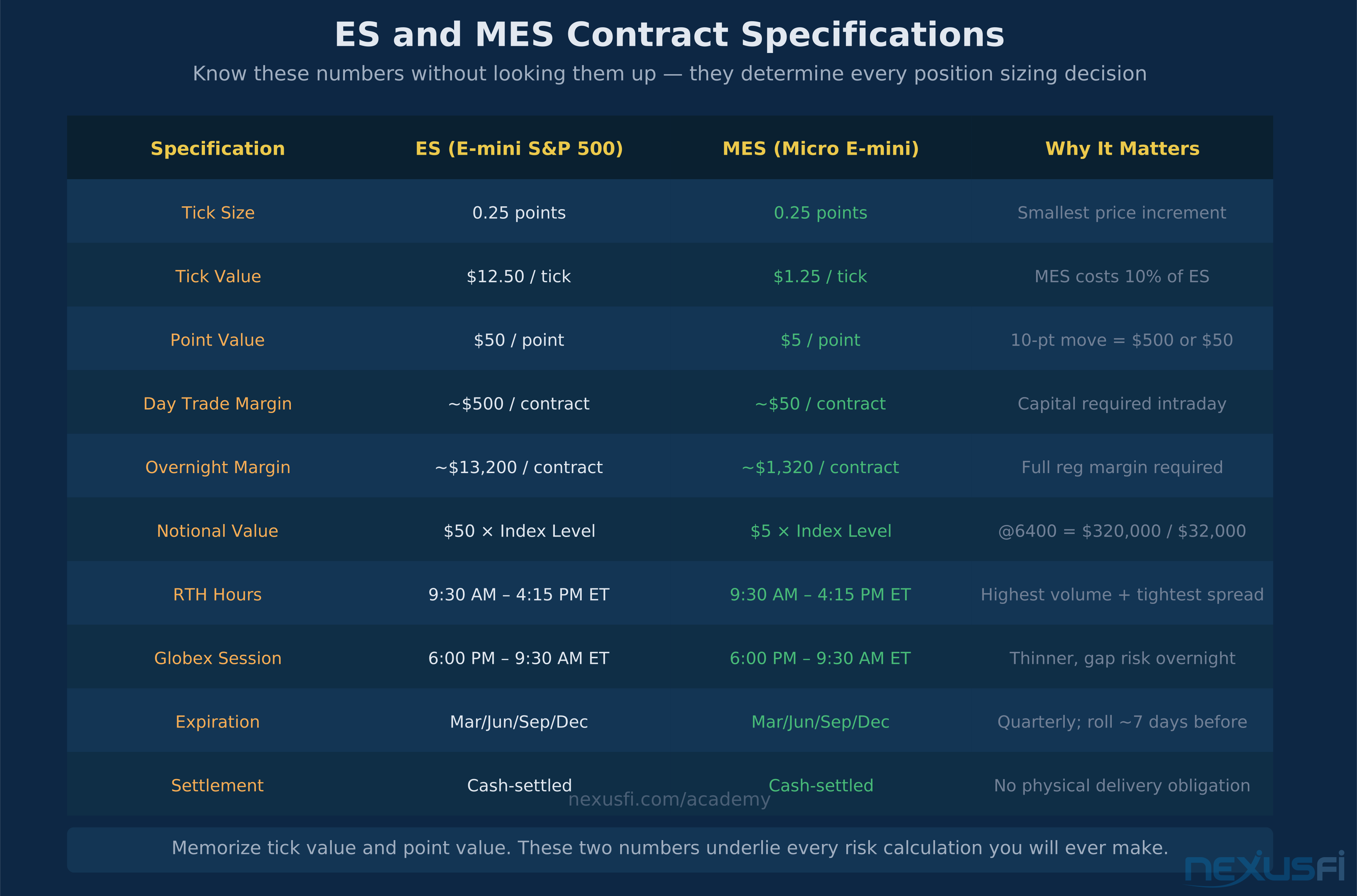
What you need to know about your contract:
- Tick size and tick value (the smallest price move and its exact dollar cost per contract)
- Point value (how much a full one-point move costs per contract)
- Margin requirements — both initial and maintenance, day trading vs overnight
- Trading hours, RTH vs Globex sessions, and how volume and volatility shift across them
- Expiration dates and the roll schedule (when volume migrates from front month to next month)
- Settlement mechanics — cash or physical delivery
For the ES specifically: tick = 0.25 points = $12.50 per contract, point value = $50, standard day-trading margin around $500 per contract at most brokers. Liquidity peaks during RTH (9:30 AM — 4:15 PM ET). Quarterly expirations in March, June, September, December. Roll happens when front-month open interest falls below next-month volume, typically the Thursday before expiration.
Go to the CME Group website and read the contract specification page for every instrument you plan to trade. It takes about 30 minutes per contract and is more useful than any trading course or indicator tutorial.
Order types and execution:
Understanding what each order type does mechanically is not optional:
- Market orders: immediate execution at best available price — guaranteed to fill, but in fast conditions, the fill can be far from where price appeared when you clicked
- Limit orders: specified price or better, but no guarantee of fill — your order sits in the queue and may not execute if price doesn't reach your level
- Stop orders: trigger at your price, then execute as market — your stop loss can gap past your specified price in a volatile move
- Stop-limit: trigger at your price, execute only at limit price or better — you avoid the gap but risk not getting out at all during fast moves
- Bracket orders: combine entry with automatic stop and target, reducing the chance of human error under pressure
Practice placing, modifying, and canceling each order type in your platform's simulator before you trade anything real. These mechanics should be automatic — you should never be figuring out how to place a stop while price is moving against you.
@stevew18, in a frequently-cited thread about training programs for futures traders, emphasizes finding what fits you personally: "Be open minded to trade any market. Many traders in the beginning think the emini S&P is what they should trade but in the end they realize their personality type fits the price action of crude oil for example." [2]
But that discovery comes after you've developed depth on one instrument — not before.
Stage 1 exit criteria: You can recite the tick value, point value, and day trading margin of your chosen contract without looking it up. You know the roll schedule. You can place all major order types without hesitation in your platform.
Stage 2: Building Your Trading Plan #
A trading plan is not a strategy. A strategy is an idea — "buy when price pulls back to support." A plan is a mechanical framework specific enough that a stranger could identify your setups on a chart without asking you any questions.
The difference between those two things is testability. A strategy leaves you making real-time judgment calls with no reference point. A plan gives you rules specific enough to check your behavior against them after the fact. Without that, there is no learning — just random feedback.
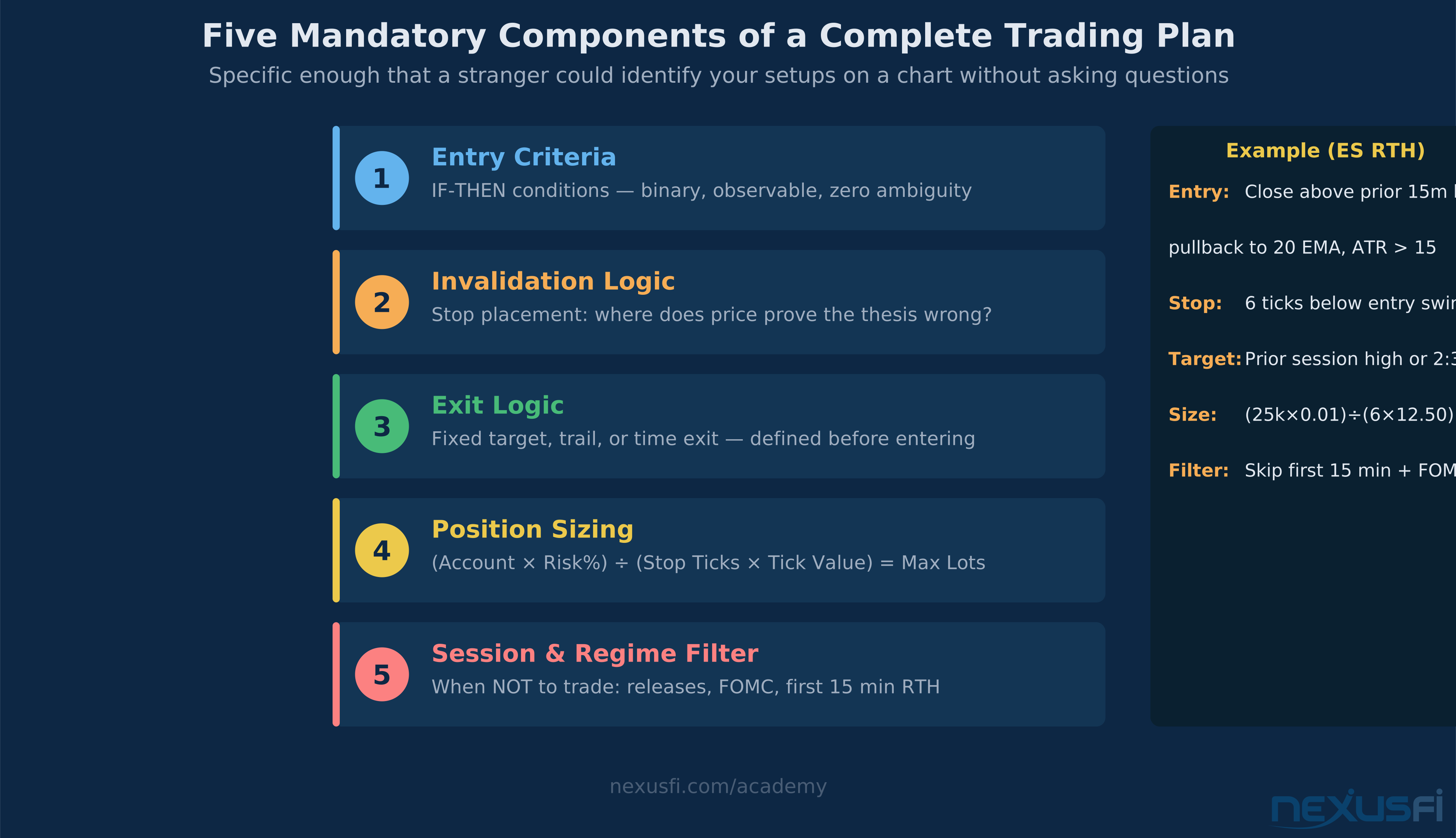
What a complete trading plan must define:
Entry criteria (written as an if-then statement): What must be true on the chart for you to take a trade? Every condition must be binary — either it's present or it isn't. "The market looks bullish" is not a criterion. "Price closes above the high of the prior 15-minute bar after a pullback to the 20-period EMA during RTH, with ATR above 15 points" is a criterion.
Invalidation logic (your stop loss): Where does price tell you the thesis is wrong? This must be defined at trade entry, not during the trade. The question "should I move my stop?" can only be answered objectively if you have a pre-defined rule governing when and how stops can be adjusted.
Exit logic (profit target and time exit): Either a fixed target, a trailing mechanism, or a time-based exit — but defined before you enter the trade. "Exit at the previous session high, or at 2:30 PM ET if not hit, whichever comes first" is a plan. "I'll see how it goes" is not.
Position sizing rule: How many contracts per trade, calculated from account size and stop distance in ticks. Not from conviction. Not from what you can afford. From the risk management formula: (Account × Risk Percentage) ÷ (Stop Ticks × Tick Value) = Maximum Contracts.
Session and regime filters: When do you NOT take setups? High-impact economic releases? FOMC days? First 15 minutes of RTH? Define the conditions under which even a valid-looking setup is bypassed. Markets behave differently on different days and at different times — a plan that ignores this will have enormous variability in results across market conditions.
Write the plan down. Put it next to your monitor. Check entry criteria against it before every trade. Review it after every trade. The discipline of a written plan isn't perfectionism — it's having something specific enough to actually learn from.
Stage 2 exit criteria: You have a written plan with unambiguous criteria that someone else could follow. You can show it to another trader and they could identify valid setups without asking you for clarification.
Stage 3: The Risk Framework #
Risk management isn't a chapter you read after you understand the strategy. It is the first discipline you develop. Traders who learn entries first and risk management later tend to blow up before the risk education has any practical effect. The leverage in futures doesn't wait for you to finish studying.

Risk per trade: Most experienced traders recommend risking 0.5-1.0% of total account equity per trade. On a $25,000 account, that is $125-$250 per trade at most. If your stop on an ES trade is 6 ticks (6 × $12.50 = $75 per contract), you can trade 1-3 contracts while staying within a 1% risk limit. If your stop is 24 ticks ($300 per contract), you are over your maximum risk threshold on even a single contract.
Never let position size be driven by how good the setup looks or how confident you feel. Conviction is not a risk management system. The formula is: (Account × Risk%) ÷ (Stop Ticks × Tick Value) = Max Contracts.
Daily loss limit: Set a hard number — in dollars, not points — at which you stop trading for the day, without exception. Most prop firms cap newer traders at 2-3% daily drawdown. A similar floor makes sense for independent traders. On a $25,000 account, that is $500-$750. When you hit it, the platform closes and there are no more trades that day.
This feels artificial when you're confident the next trade will recover the loss. That confidence is almost always wrong, and the trades you take while chasing intraday losses are systematically your worst trades.
Maximum drawdown threshold: If your account drops below a certain level from starting equity — say 15% — you stop trading live and return to simulation. This prevents the spiral where losses generate emotional pressure that generates worse decisions that generate larger losses.
R-multiple tracking: Track every trade by its R-multiple. If your stop is $100 (1R), a $200 winner is +2R and a $150 loser is -1.5R. This normalizes trade outcomes across different stop sizes and contract counts, making it possible to evaluate your system's actual expectancy. A system with a 40% win rate and an average winner of +2R versus an average loser of -1R has positive expectancy: (0.4 × 2) - (0.6 × 1) = +0.2R per trade.
Expectancy formula: (Win Rate × Avg Winner) − (Loss Rate × Avg Loser) = Expected R per trade. Example: 45% win rate, avg winner +1.8R, avg loser -1.0R → +0.26R per trade. Positive expectancy over a sufficient sample is how edge compounds.
The risk framework doesn't need to be sophisticated. It needs to be written, followed, and enforced. Consistent traders build their track records not by having perfect entries, but by managing drawdowns well enough to stay in the game until their edge plays out over a large enough sample.
Stage 3 exit criteria: You can calculate your maximum position size for any stop distance without a calculator. Your daily loss limit is written down and non-negotiable. You track every trade by R-multiple, not just P&L.
Stage 4: Testing Your Plan #
You have a written plan. You have risk parameters. Now you test them — systematically, not by going live and hoping the plan works.
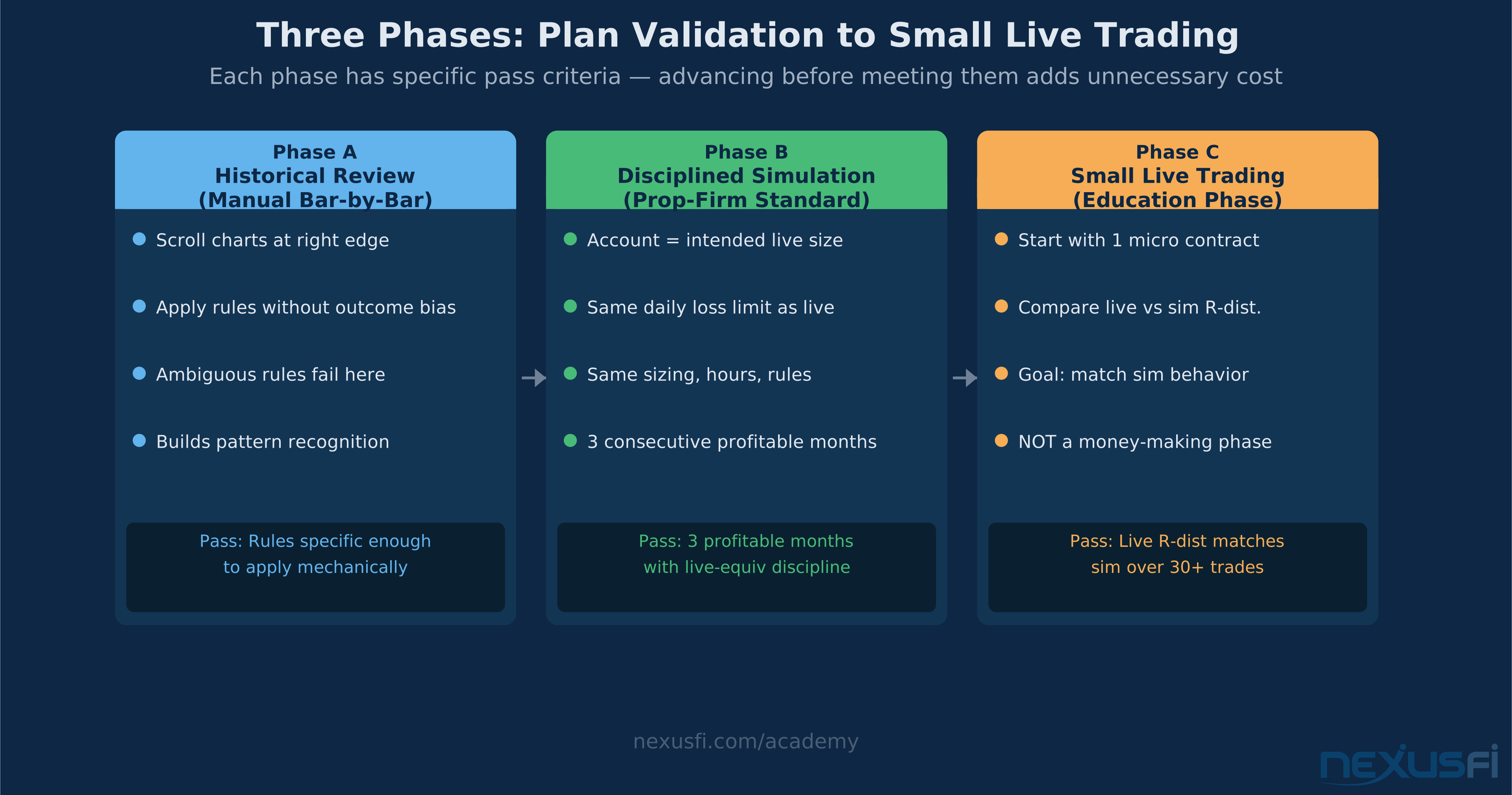
Phase A: Historical review (manual, not automated) Before using automated backtesting, scroll through historical charts bar by bar. For each day, at each potential setup, ask: would I have taken this trade? Why? Would I have held it? At what point would I have exited? What would the actual outcome have been?
This process trains pattern recognition in a way that automated backtesting cannot. A setup that looks clean on a finished chart looks very different when you're at the right edge and the outcome is genuinely unknown. Manual review forces you to confront ambiguous situations — the ones where your rules aren't specific enough and you'd be improvising in real time.
Automated backtesting is still useful — it answers "what would have happened to every instance of this setup over 6 months?" — but it comes after you've confirmed your rules are specific enough to identify setups mechanically.
Phase B: Simulation with prop-firm discipline Not casual paper trading — disciplined simulation with the same structure you'd bring to a funded account.
@Pa Dax, in one of NexusFi's most-cited posts on the sim-to-live transition, identifies the core failure mode: "I think a lot of traders treat SIM the wrong way — they don't use it as training at all but as entertainment — as playing FIFA on the PlayStation. There's a difference between me playing F1 on the PlayStation and Max Verstappen doing SIM racing — for him it's practice and for me it's chilling out." He recommends treating sim like employment at a prop firm: "Having a daily loss limit, a set value that mimics the same value you are going to use for live trading and a maximum drawdown after which you fire yourself." [3]
Disciplined sim means:
- Sim account size equals your intended live account size
- Same daily loss limit as you'd use live
- Same position sizing rules, the same session hours
- Record every trade with the same discipline you'd apply in a funded account
- No "just to see what happens" trades outside your defined setup criteria
@danielk, whose post earned 21 thanks in the thread "How would you start learning futures all over again?", gave blunt guidance: "Stay in SIM until you with a realistic approach can stay green a minimum of 3 months in a row." [4]
Three consecutive profitable months on simulation with proper discipline does not guarantee live profitability. But it is the minimum threshold that suggests your plan has positive expectancy and you can execute it consistently under comparable conditions.
Phase C: Small live trading The transition from simulation to live is a distinct skill from simulation trading itself. The emotional weight of real money changes execution in ways that most traders underestimate much.
@ZviTradingCoach was explicit about the correct framing: "The initial purpose of beginning live trading should be viewed as 'close as possible to simulated trading, just in the real market, and with low tuition costs.' Your goal is to perform near as profitably as in sim. It is an EDUCATIONAL phase, not a MONEY MAKING phase in your development." [5]
Start with one micro contract. Track whether your live execution matches your simulation behavior. Compare your R-multiple distribution live versus simulation over 30 trades. If the distributions are similar, the plan is intact. If live performance is much worse, something is affecting your execution — whether slippage, emotional pressure, or behavioral change when real capital is at risk.
Scale to two contracts only after demonstrating consistent profitability and execution consistency through your first scale-up period. @ZviTradingCoach: "Only at about your 3rd scale-up should your intent turn to making money and growing your trade size to make more." [5]
@jackbravo's practical recommendation from hard experience: "Trade SIM until you get profitable for a few months in a row, and tired of trading SIM. Then choose the smallest future contract you can, such as micro Euro if interested in currencies. Trade that until you're profitable. It will be hard because you have to overcome expensive commission. But really you're still learning, so it just saves you from potential massive losses." [6]
Stage 5: The Review Loop #
Deliberate practice — the kind that produces expertise — is not the same as repetition. An athlete who practices without reviewing performance data improves more slowly per hour than one who reviews after every session and identifies specific errors to target.
@GruttePier, researching Anders Ericsson's work on expert performance, wrote in his public trading journal: "Making enough flight hours is important of course, but at least as important is deliberate practice... What is deliberate practice in my trading? Back testing is one for sure, but what else? Maybe I should dedicate my time on focusing on some very specific aspects of trading like recognizing turning points, the relation between various instruments." [7]
The review loop is what converts screen time into skill. Without it, you're accumulating experience without building expertise.

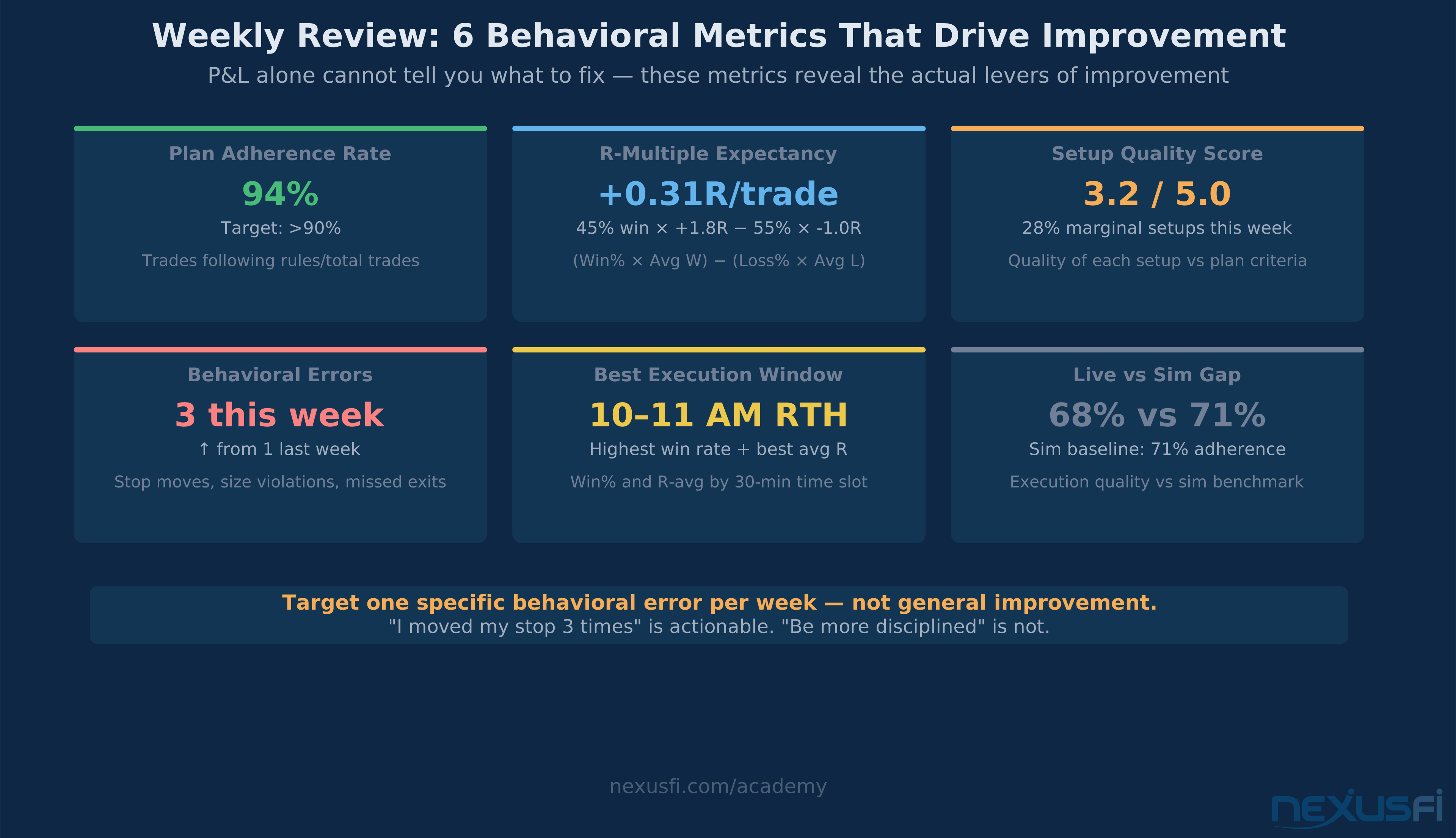
What the review loop looks like in practice:
After every trading session: For each trade, record: setup description, entry timing and price, stop placement, exit decision, R-multiple result, and a behavioral assessment. Did you follow the written plan exactly? If not, what deviated and why?
The behavioral assessment matters more than the P&L. A trade that followed the plan and lost is a good trade — it contributed data to your statistical sample. A trade that violated the plan and won is a bad trade — it reinforced a behavior pattern that will cost money over time. Outcome is what happened. Process is what you controlled.
Weekly behavioral audit: Review all trades from the week. Identify recurring errors — not losses, errors. "I moved my stop three times this week" is an error pattern. "I missed two setups because I was hesitant after a morning loss" is an error pattern. Build the next week's practice focus around correcting the single most impactful specific error.
This is deliberate practice: targeted repetition of a specific identified weakness, not general chart study.
Monthly expectancy review: Calculate your win rate, average winner in R, average loser in R, and expectancy. Compare to your simulation baseline. If live expectancy is trending negative compared to simulation, something structural has changed — market conditions, execution quality, or the plan itself needs revision.
What the journal must track: A journal that only records P&L is a ledger, not a learning tool. A proper trading journal tracks setup quality (did the setup meet criteria?), execution quality (did slippage or hesitation affect the fill?), behavioral adherence (did you follow every rule?), and market context (what was happening in the broader market during this trade?).
The data accumulated in a proper journal answers questions that P&L can't: Are you more consistent during certain session times? Do you perform better on winning days or losing days? Which specific setups are you consistently mismanaging? This is the raw material for genuine, measurable improvement.
The Behavioral Difference: Traders Who Make It vs. Those Who Don't #
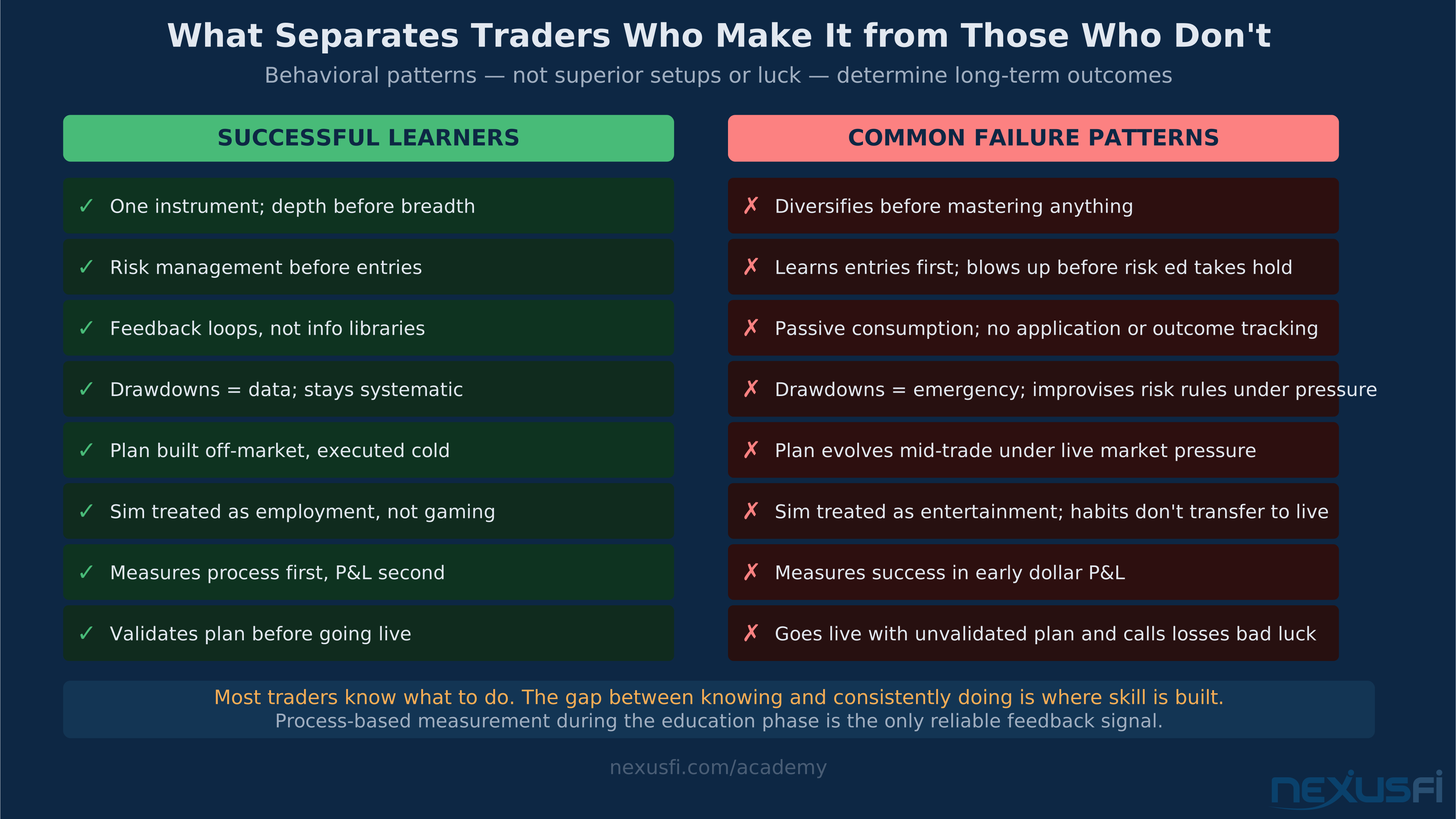
After years of community discussion at NexusFi, the patterns are consistent enough to state directly.
The learners who make it:
Focus on one instrument, one timeframe, long enough to build genuine depth. The urge to diversify across multiple markets and timeframes is constant among new traders and consistently destructive. Genuine understanding of how CL behaves — how it reacts to inventory data, how it trades during rollover, what its typical RTH range looks like across different volatility regimes — takes hundreds of hours of focused observation. Surface familiarity across six instruments takes the same time and produces a fraction of the understanding.
Learn risk management before entries. They calculate their stop, then their maximum position size, before they think about the target. Every trade starts with "how much do I lose if I'm wrong?" before "how much do I make if I'm right?" This order is not arbitrary — it keeps capital intact while they're learning.
Build feedback loops, not knowledge libraries. Consuming information is not learning. The successful trader reads something, applies it in simulation or review, tests whether it measurably improves their outcomes, and either integrates or discards. Passive consumption produces familiarity with trading concepts. Structured practice with feedback produces trading skill.
Treat drawdowns as data, not emergencies. Every validated trading system has losing streaks. The successful learner has pre-defined rules for what constitutes normal variance versus a system breakdown, and responses defined for each. The unsuccessful trader improvises risk management during drawdowns, which is exactly when improvisation is most expensive.
The patterns that predict failure:
Strategy hopping. After a losing streak — which every system produces — the urge to find a "better" approach overwhelms the discipline to analyze what actually went wrong. Each new approach resets the learning curve and prevents any system from accumulating enough trades to know if it has edge. Most traders who hop strategies do so just before their current approach would have started working.
Jumping live before validation. The emotional experience of real capital amplifies every execution error. Trading live with an unvalidated plan is paying real tuition for feedback that simulation could have provided for free.
Treating simulation as entertainment, not training. @Pa Dax's framing is exact: the difference between sim practice and sim entertainment is intentionality. Sim trading where you take random trades "just to see what happens" builds habits that work in simulation and fail in live markets. The whole point of simulation is to build the same habits you'll need when real money is at risk.
Measuring success in dollars too early. You can lose money while learning correctly and make money while executing incorrectly. The market gives false positive feedback constantly in the short run. Process metrics — behavioral adherence, R-multiple distribution, setup quality — are better learning indicators than P&L during the education phase.
@Rrrracer's honest account of a four-year learning path is one of the most realistic you'll find on NexusFi: "The $100 for Elite membership is the only money I have spent on my education outside of the market. In the market, I have spent roughly $11,000 on my tuition in the form of losses and learning what not to do... After four years, starting from scratch, I am finally at the point where I have established consistency... It is a never-ending process; every day in the market is a school day." [8]
That account is honest about both the timeline and the cost. Expecting to learn futures trading to a consistent standard in under a year is optimistic for most traders starting from scratch. Two to four years of disciplined, structured effort — following the sequence above — is a realistic baseline.
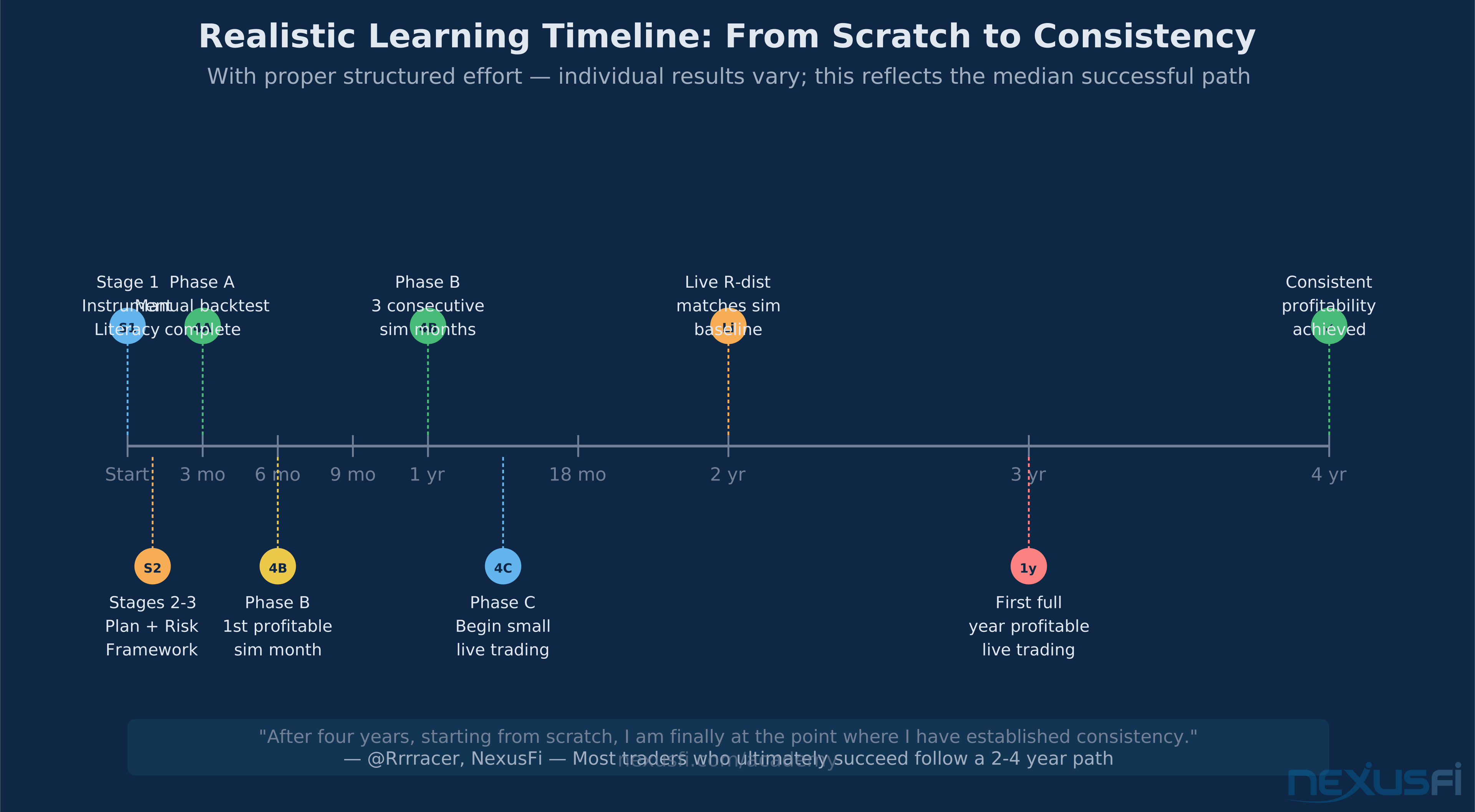
The biggest financial mistake new futures traders make is treating their initial losses as bad luck rather than tuition. Every loss before you have a validated plan is tuition you're paying without a structured curriculum. Every loss after you have a validated plan but before you've learned to execute it consistently is also tuition. Tuition doesn't have to be that expensive if you use micro contracts and keep position size small during the learning phase — but pretending you're not paying it is how you exhaust capital before you've learned enough to trade it profitably.
The five-stage sequence is not the only way to approach this. But the traders who've made it to consistent profitability almost uniformly describe following something close to it — instrument literacy before chart analysis, risk management before position sizing, simulation before live trading, review loops throughout. The sequence exists because it works. The shortcuts exist because they feel faster and almost always aren't.
Knowledge Map
Go Deeper
Build on this knowledgeReferences This Article
Articles that build on this topicCitations
- — Basic Education for Beginner Trader (2022) 👍 12“Go straight to the CME and Cboe and learn from there. Capital is precious and its not always easy to start over.”
- — Whats the best training program to learn futures trading? (2015) 👍 13“Be open minded to trade any market.”
- — Rrrracer complete noob starting from scratch journal (2018) 👍 24“A lot of traders treat SIM the wrong way -- they don't use it as training at all but as entertainment.”
- — How would you start learning futures all over again if you had to? (2017) 👍 21“Stay in SIM until you with a realistic approach can stay green a minimum of 3 months in a row.”
- — When to Quit Paper Trading Replay and Go Live? (2021) 👍 8“It is an EDUCATIONAL phase, not a MONEY MAKING phase in your development.”
- — How would you start learning futures all over again if you had to? (2017) 👍 12“Trade SIM until you get profitable for a few months in a row. Then choose the smallest future contract you can.”
- — GruttePier trading journal to getting profitable (2017) 👍 10“Making enough flight hours is important but at least as important is deliberate practice.”
- — How did you learn to trade? (2021) 👍 14“After four years, starting from scratch, I am finally at the point where I have established consistency.”
- — ES Futures Contract Specifications (2024)
- Anders Ericsson and Robert Pool — Peak: Secrets from the New Science of Expertise (2016)