



Building a Trading Plan for Futures Trading: The Complete System
The Operating System Every Serious Futures Trader Needs #
Overview #
Most traders who blow up don't blow up because they have bad strategies. They blow up because they have no plan — or they have one on paper and ignore it under pressure. A trading plan is the difference between running a trading business and running a gambling operation.
Here's what a plan does that your instincts can't: it makes decisions in advance, before you're in a losing trade at 10:45 AM watching tick counts with an agenda. When you're already in a position, your judgment is compromised by sunk costs, fear of loss, and the hope that the market will come back. The plan makes the call — you just execute.
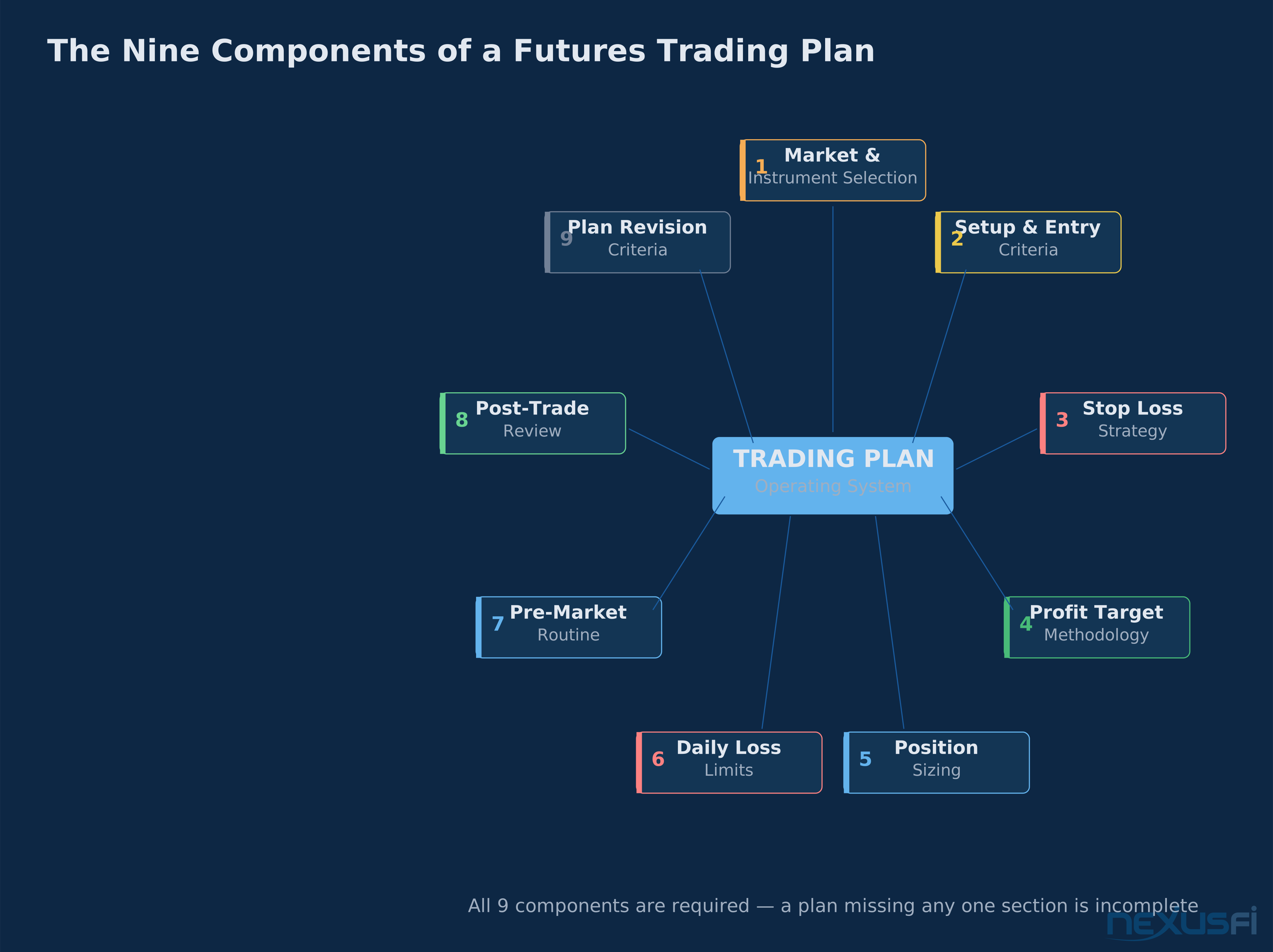
This article builds your trading plan from scratch. Nine components, each with mechanics, specific parameters, and concrete examples across ES, NQ, and CL. End result: a framework defining every decision from market selection to daily close.
What a Trading Plan Actually Is #
A trading plan is not a strategy. The strategy is the "what to look for" part — VWAP bounces, opening range breakouts, trend continuation setups. The plan is the full operating system: strategy plus risk controls, session management, plus rules that keep you off the desk when you're down three in a row.
The plan answers one question at every stage: what do I do right now? Based on conditions defined before the session started — not what the market might do next.
As @deaddog put it directly in the Traders Hideout:
That's the bar. If your plan can't answer "what do I do now" at every moment of the session, it's incomplete.
The plan solves the root cause of most account damage: undisciplined real-time decisions. Research shows damage accumulates fastest in the first 30 minutes, on high-volatility days, and in the 15 minutes after a significant loss — precisely when the instinct to override the plan is strongest. Explicit rules for those moments are the only structural defense.
The Nine Components #
A complete futures trading plan has nine sections. Not eight. Nine. Leave one out and you have a plan with a hole — and a hole is where everything bad enters.
1. Market and Instrument Selection #
The most underrated section of any trading plan is the one most traders skip: deciding exactly which instruments you'll trade and why.
"I trade ES" is not a market selection rule. The rule is: "I trade ES front-month during Regular Trading Hours (RTH) 9:30-16:00 ET, and nothing else until I've logged 100 profitable trades in ES. I'll add NQ as a secondary instrument only after six consecutive profitable months."
Why this specificity matters: concentration builds pattern recognition. Every instrument has its own personality — ES is steadier, NQ is faster and more volatile, CL is headline-driven and event-sensitive. Splitting attention across three markets simultaneously dilutes all three. Accounts that focus on one instrument in year one survive at higher rates than accounts that hop between markets chasing activity.
The liquidity filter: only trade instruments that meet minimum liquidity requirements for day trading:
- ES: spread typically 0.25 points, average daily volume >1M contracts
- NQ: spread typically 0.50 points, average daily volume >200K contracts
- CL: spread typically $0.02, average daily volume >300K contracts
The volatility filter: your strategy needs a specific market environment to work. If you run a mean reversion setup that needs 20-35 point daily ranges in ES, and the 14-day ATR is 11 points, your setup won't trigger or won't produce enough profit to justify the risk. Build a volatility gate: define the ATR range where your edge works, and on days when ATR is outside that range, reduce size or stand down entirely.
The concentration rule: one primary market only. Define the criteria for adding a second as a specific milestone: profitable months, minimum trades logged, minimum win rate over a defined sample.
ES alone provides more setups in a single RTH session than most traders can profitably execute. Edge comes from pattern recognition built through repetition — seeing the same instrument respond to similar conditions over and over. Master one market before adding a second.
2. Setup and Entry Criteria #
Here's where most trading plans fall apart: vague entry criteria. 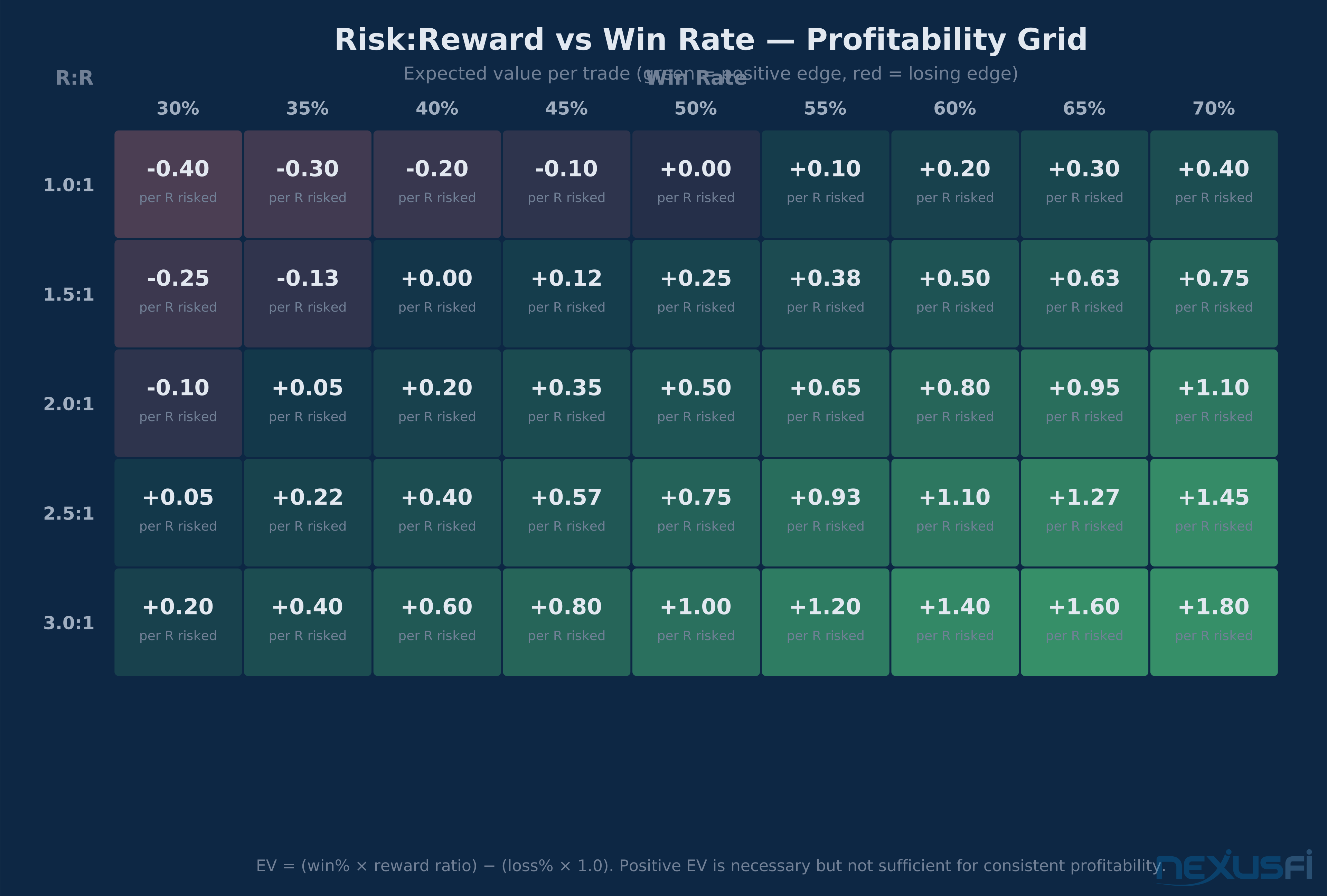
"I buy when price pulls back to support." That's not a rule. That's a vibe.
A valid setup definition has five required components. Missing any one means the setup doesn't exist.
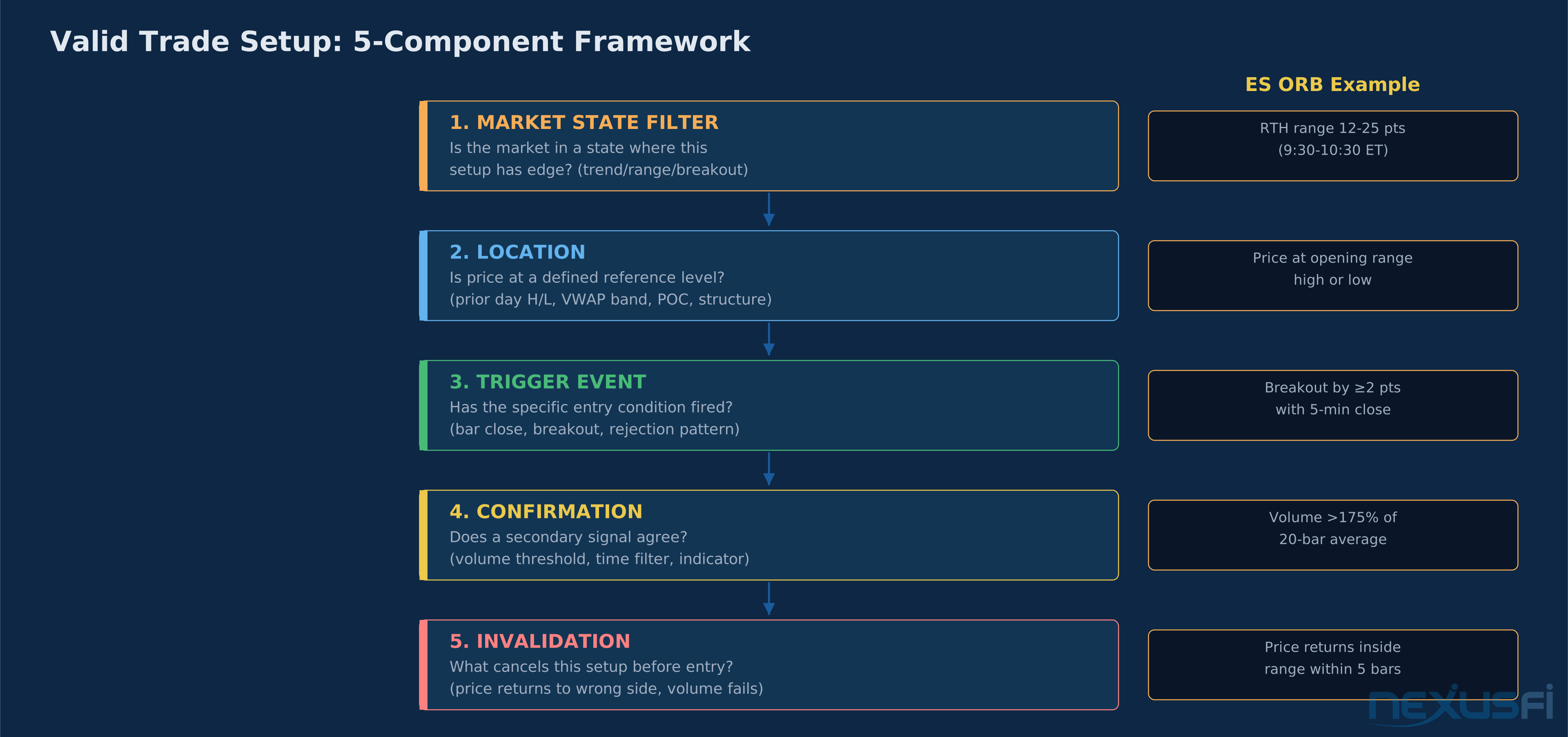
1. Market state filter — what market regime must exist for this setup to be valid?
- Trend-following setups require a defined trend (price above 20-EMA on 60-min chart for the past 5 bars, or three consecutive higher highs/lows)
- Mean reversion setups require a ranging market (price within the prior session's value area, not making new extremes)
- Breakout setups require a defined consolidation (a range of 12-25 ES points holding for at least 45 minutes)
2. Location — where must price be for the setup to form?
- Prior day high or low
- Overnight high or low
- VWAP plus or minus standard deviation bands
- Volume point of control (POC) from the prior session
- Round numbers and key psychological levels
Not any level — the specific levels that align with your edge. "Price within 1.5 points of prior day low with no auction below it since open" is a location.
3. Trigger — what precise event initiates the entry?
- "Price breaks above the opening range high by 2+ points on a 5-min bar close" — specific
- "5-min bar closes above VWAP with close in top 25% of bar range" — specific
- "Price sweeps prior day low and immediately reclaims it within 2 bars" — specific
4. Confirmation — what secondary condition reduces false signals?
- Volume: breakout bar >150% of 20-bar average
- Time: no entries first 15 or last 30 minutes of RTH
- Price: retracement ≤50% of trigger bar before momentum continues
5. Invalidation — what cancels the setup before you enter?
- "Price returns inside the opening range within 5 bars after breakout"
- "Volume on the reversal bar exceeds the breakout bar volume"
- "Market makes a new contrary extreme before the trigger fires"
ES Example (Opening Range Breakout):
Market State: 9:30-10:30 ET consolidation of 12-25 points
Location: Opening range high or low
Trigger: ≥2.00 pt break, closes above/below on 5-min bar
Confirmation: Volume >175% of session avg; no immediate 50% pullback within 3 bars
Time Window: 10:30-11:30 ET
Invalidation: Price returns inside range within 5 bars
As @rubyslippage observed after years of developing her own plan, the goal is to reach a point where:
That's what precise entry criteria produce: not certainty but probability, and probability is all the edge you need.
@Fat Tails framed the structure in the Elite Circle, naming three minimum components for any valid entry rule:
Build your entry logic in that order: setup context first, filters second, trigger third.
3. Stop Loss Strategy #
Stop placement is where the plan becomes real. A vague stop — "somewhere below support" — produces inconsistent risk. Consistent risk requires consistent stop placement rules.
Three valid stop placement methods:
Method A — Structure stops: place the stop beyond the technical level that invalidates your thesis.
- ES: 2-4 points beyond the swing high/low that defines the setup
- NQ: 15-25 points beyond structure
- CL: $0.15-0.30 beyond the consolidation boundary
The logic is direct: if price violates the structure level by that buffer, the setup is wrong. The trade is closed. Not "let's see what happens" — closed.
Method B — ATR-based stops: set the stop at 1.0-1.5× ATR(14) on your execution timeframe.
- If 5-min ES ATR is 1.5 points, stop = 1.5-2.25 points from entry
- If 5-min NQ ATR is 12 points, stop = 12-18 points from entry
- This approach adjusts automatically to current volatility conditions
Method C — Fixed dollar risk: calculate the maximum dollar loss you'll accept and back-solve to ticks.
- Risk per trade $500, ES tick value $12.50 → 40 ticks = 10 points
- Risk per trade $500, NQ tick value $5.00 → 100 ticks = 25 points
Stop adjustment rules must be equally explicit. Three frameworks:
- Break-even move: when the trade is profitable by 1R (initial risk amount), move stop to entry + 1 tick. You're now trading on the market's money.
- Trailing stop: after reaching 2R, trail the stop below each new 5-min swing low for longs (or above swing highs for shorts). Trail to structure, not to a fixed distance.
- Time stop: if the position isn't profitable by 1R within 45 minutes, exit half and evaluate. If not profitable within 90 minutes, exit the rest. The market didn't confirm your thesis.
One rule is absolute:
Never widen a stop. If market action reaches your stop level, the plan said exit — and the plan made that decision before you were emotional. Widening a stop in real time is a decision made under stress, by a compromised mind. The number of "just this once" widened stops that resulted in the intended outcome is vastly outweighed by the number that produced catastrophic losses. The plan overrules it.
ES ORB with trailing — example:
Entry: Long ES at 5,020.00
Initial Stop: Below opening range low (5,004.50) minus 2-point buffer = 5,002.50
Risk: 17.5 points = $437.50 per contract
At +17.5 points (1R): Move stop to 5,021.00 (breakeven + 1 point)
At +35 points (2R): Trail stop below last 5-min swing low
Time stop: If not at 5,037.50 (1R) within 90 minutes, reduce to 50% size
4. Profit Target Methodology #
The exit strategy is where traders give back most of their edge. The two failure modes are polar opposites: taking profits too early because you're afraid the move will reverse, and having no target at all so winners become losers.
Three valid target frameworks:
Fixed R-multiple: take profits at a predetermined multiple of initial risk.
- Conservative: 1.5R (risk $437, target $655)
- Moderate: 2R (risk $437, target $874)
- Aggressive: 3R+ (risk $437, target $1,310+)
Technical targets: exit at the next significant price level.
- Prior day high/low
- Overnight high/low
- Key round numbers (ES 5,000 handles, 50-point increments)
- Measured moves (height of consolidation projected from breakout)
Runner strategy: take partials at first target, let remainder run with a trailing stop.
- Example with 3 ES contracts: take 1 at +1R (guaranteed positive outcome), take 1 at +2R, trail 1 below swing lows
@dctrade69 laid out the philosophy plainly after years of refining his approach:
The key insight there: setting a minimum reward threshold prevents you from taking trades that don't justify the risk. A trade with 2:1 R:R at 50% win rate is profitable. A trade with 0.5:1 R:R at 70% win rate isn't. Run the math before you trade.
Targets must be consistent with your stop logic. If your stops average 15 ES points and your average exit is 8 points, you need a >65% win rate to break even after commissions. Most traders can't sustain that. The fix isn't to find better entries — it's to set targets that justify the risk. Minimum 1.5:1 R:R. Aim for 2:1.
5. Position Sizing and Risk Per Trade #
This is the section that determines whether you have a career or a hobby.
The core formula:
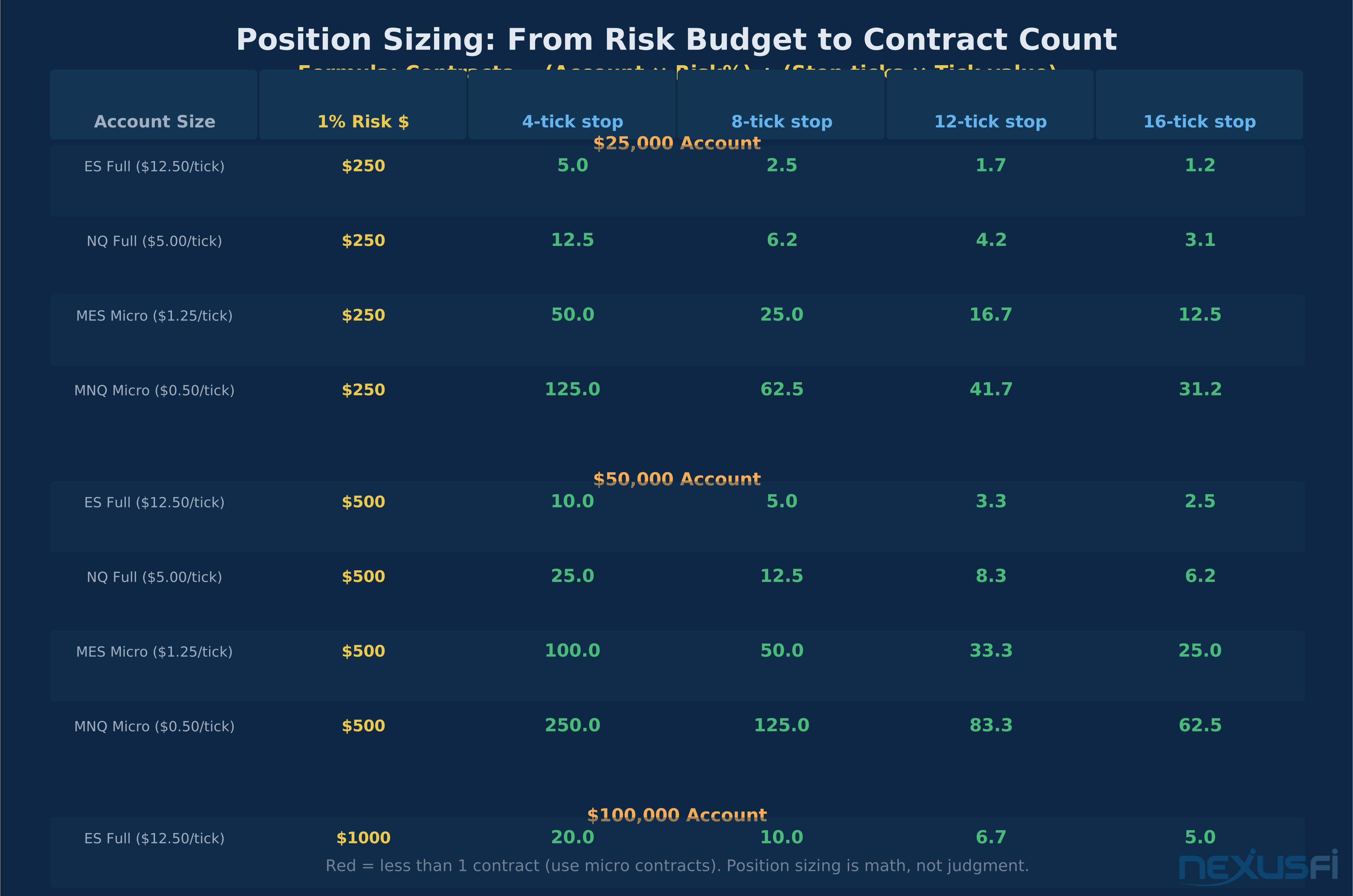
Contracts = (Account Size × Risk%) ÷ (Stop Distance in Ticks × Tick Value)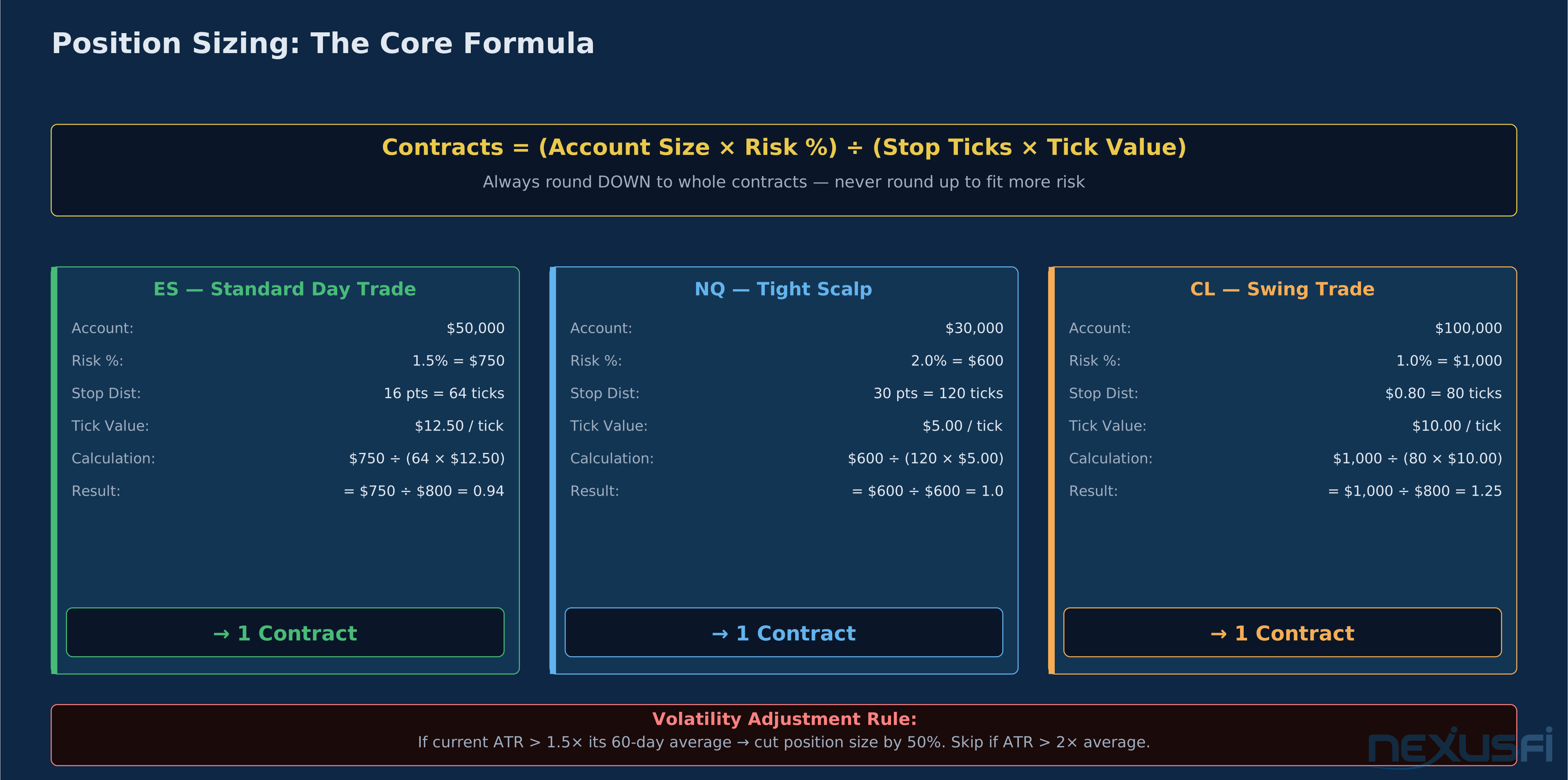
Worked example — ES day trader, $50,000 account:
- Risk per trade: 1.5% = $750
- Stop distance: 16 points = 64 ticks
- Tick value: $12.50
- Contracts = $750 ÷ (64 × $12.50) = $750 ÷ $800 = 0.94 → 1 contract
Worked example — CL swing trader, $100,000 account:
- Risk per trade: 1% = $1,000
- Stop distance: $0.80 = 80 ticks
- Tick value: $10
- Contracts = $1,000 ÷ (80 × $10) = $1,000 ÷ $800 = 1.25 → 1 contract
The volatility adjustment: in abnormal volatility — when ATR exceeds 1.5× its 60-day average — reduce position size by 50%. You're not reducing profit potential, you're reducing the probability that wider noise stops you out before your thesis plays.
Maximum position cap: regardless of what the formula produces, set a hard maximum. For accounts below $100K, a common starting point is 2-3 contracts per trade. This prevents the formula from justifying an oversized position on a very tight stop.
What to do when the stop is too wide: skip the trade. Don't reduce the stop to force the size. Don't force the contract count. If the math says the setup doesn't fit your risk parameters, that's information — act on it.
Position sizing is the invisible edge. Two traders with identical setups and stops — one risking 3% per trade, one risking 0.75% — will have dramatically different outcomes over 200 trades. The 3% trader encounters a 6-loss streak that removes 18% of the account, triggering emotional trading. The 0.75% trader takes the same streak at 4.5% drawdown and keeps executing the plan. Same setups. Different outcomes entirely. Sizing is the difference.
6. Daily Loss Limits and Maximum Drawdown Rules #
These are circuit breakers. Non-negotiable stops that override everything else — your bias, your confidence, your certainty that the next trade will turn things around.
The daily loss limit: when your net P&L for the day reaches this number, trading stops. Done. Shut down the platform. Not "one more trade" — done.
Common calibrations:
- Conservative: 2% of account (e.g., $1,000 on $50K)
- Moderate: 3% of account
- Rule of thumb: 2-3× your average winning day's profit
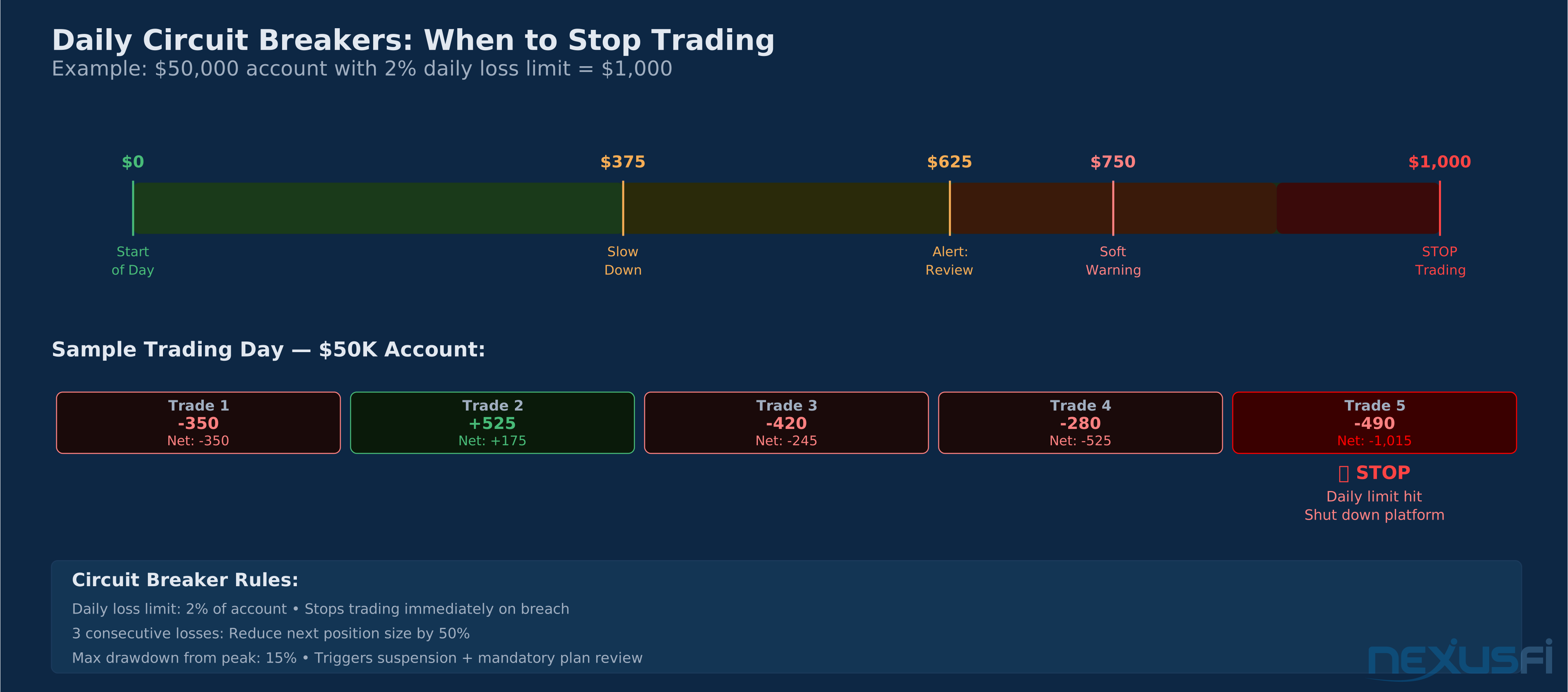
Consecutive loss rules add a second layer before the hard cap is reached:
- After 3 consecutive losses: reduce next position size by 50%
- After 4 consecutive losses: stand down for the day regardless of P&L
- Rationale: consecutive losses often indicate you're out of sync with the market that session. Forcing more trades amplifies the problem.
Maximum drawdown from equity peak: the longer-term circuit breaker.
- 10-15% from account peak: trading suspension until plan review
- 20% from account peak: mandatory 2-week break, full plan audit
@garyboy275 captured the rules that funded traders operate under — rules private traders should adopt for the same reasons:
These aren't rules that apply to other people. They're the rules that keep a trading career alive. @Big Mike confirmed that most brokers will enforce a hard daily loss limit at the account level if you request it — a mechanical enforcement layer for days when willpower runs low.
Recovery protocol after hitting the daily limit: resume the next session with full risk allocation. The daily limit resets. If you hit the daily limit more than 3 times in one week, take 2 days off and review what's happening before returning to live trading.
7. Pre-Market Routine #
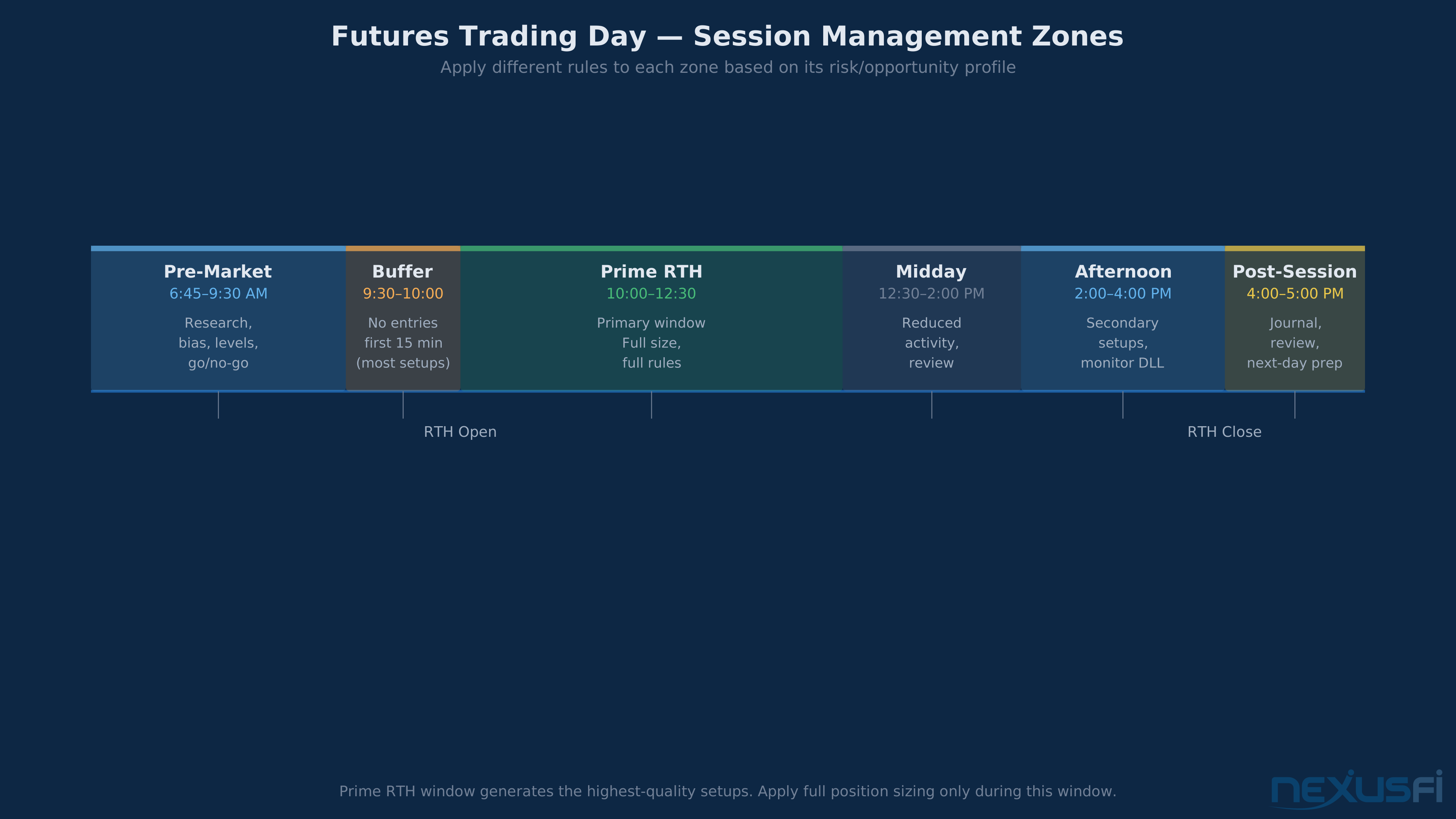
Every session starts before the session starts. Traders who look at the chart for the first time at 9:28 and decide their bias on the fly are at a structural disadvantage to traders who spent 30-45 minutes preparing.
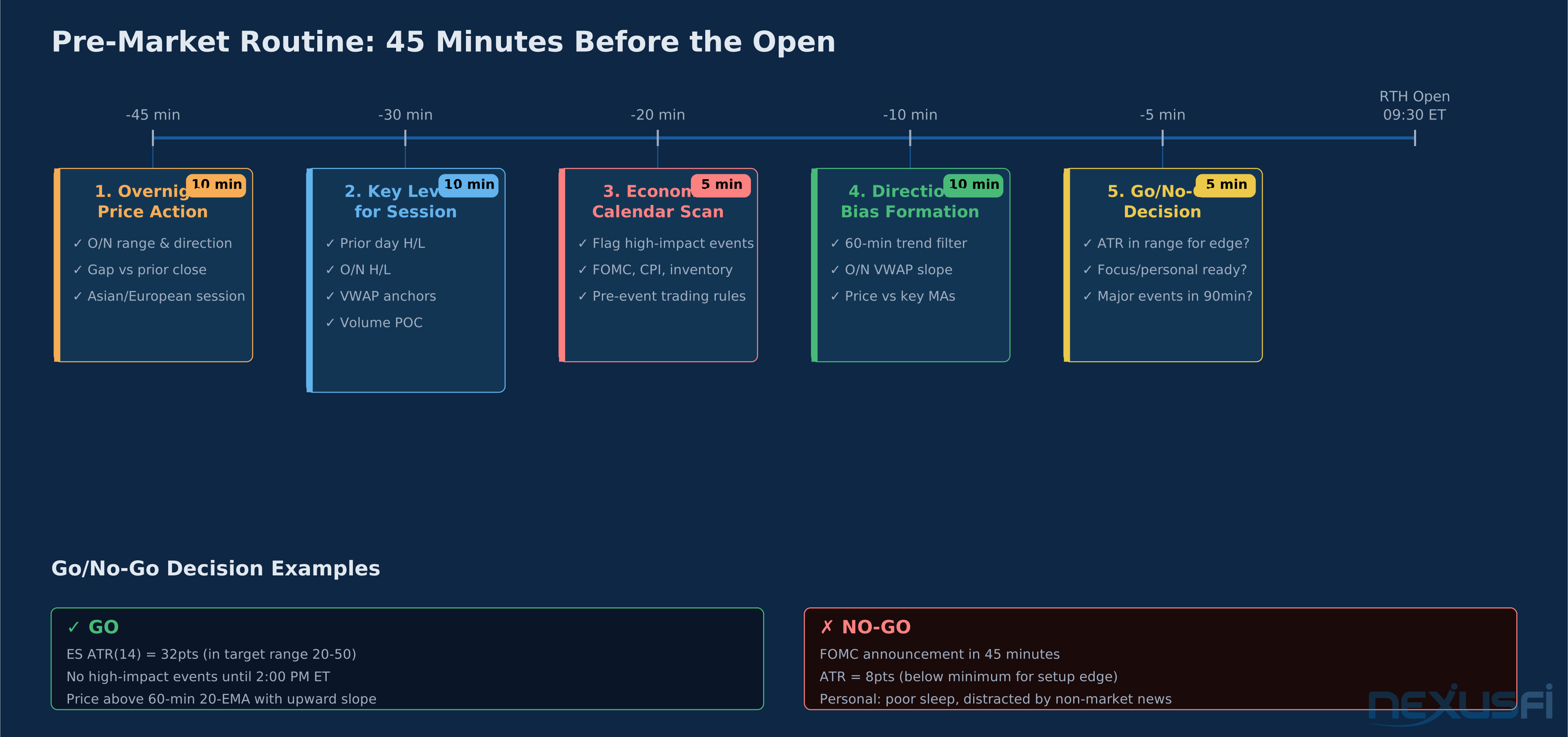
The standard pre-market checklist:
1. Overnight price action (10 minutes)
- What did the overnight session do — trending or choppy?
- Where is price relative to yesterday's close, high, and low?
- Is there an overnight gap? Which direction?
- Asian and European session direction and range
2. Key levels for the session (10 minutes)
- Prior day high and low
- Overnight high and low
- Weekly open and prior week high/low
- Volume point of control (POC) from the prior session
- Significant VWAP anchors and round numbers in the vicinity
3. Economic calendar scan (5 minutes)
- What high-impact events are scheduled today?
- If there's a major event (FOMC, CPI, crude inventory report) within the first 90 minutes of RTH, how does it affect the plan?
- Define the pre-event rule explicitly: no new entries within X minutes before the release
4. Directional bias formation (10 minutes)
- What is the 60-min trend? (price above or below key moving averages, making higher highs or lower lows?)
- What does overnight suggest? (strong trending Globex often fades at RTH open; weak Globex often continues)
- What's the VWAP slope on the 30-min chart?
- Does the bias allow both long and short setups, or only one direction?
5. Go/no-go decision (5 minutes)
- Does today's setup environment match your strategy's requirements?
- Is ATR in the range where your edge works?
- Are there conditions requiring you to stand down?
- Are you personally ready to trade with full focus?
As @dctrade69 described his morning process for CL:
Identifying specific price levels and what trade scenarios each level enables — that's the pre-market process done right.
@CenFlo described his ES preparation:
The pre-market routine doesn't need to be elaborate. It needs to be consistent. Run the same process every day — same order, same depth of analysis, same time window. Consistency is what turns preparation into edge.
8. Post-Trade and Post-Session Review #
The review process is where learning happens. P&L tells you whether you made money. The review tells you whether you traded your plan — and whether your plan is working.
The minimum trade log (every trade):
- Date, time, and instrument
- Setup type (e.g., "ORB Long", "VWAP Reversion Short")
- Bias alignment: did the pre-market bias support this direction? (Y/N)
- Entry price, stop price, target price
- Actual exit price and reason (target hit, stop hit, manual exit, time stop)
- R-multiple result: actual P&L ÷ initial risk
- Maximum Adverse Excursion (MAE): deepest loss before exit — if consistently high, the stop needs to be wider or the entry refined
- Maximum Favorable Excursion (MFE): deepest profit before exit — if consistently much higher than actual exit, you're exiting too early
- Rule adherence: did you follow the plan? (Y/N)
- Notes: one sentence on market context
The session review (5-10 minutes at day's end):
- Total R-multiple for the day
- Win rate for the day
- Were there rule violations? What triggered them?
- Was the pre-market bias correct? Did you use it?
The weekly review (30 minutes, weekend):
- Total R-multiple for the week
- Win rate by setup type
- Performance by time of day (which sessions are productive?)
- Rule adherence rate: what percentage of trades were executed per the plan?
- One specific improvement to test next week
The rule adherence rate is the metric that matters most early in a trading career. A plan executed with 90% adherence and a mediocre edge will outperform a great edge executed at 50% adherence. You can't improve a plan you're not following consistently.
@rubyslippage's approach — building a formal trading plan after years of journal data — shows what rigorous review produces:
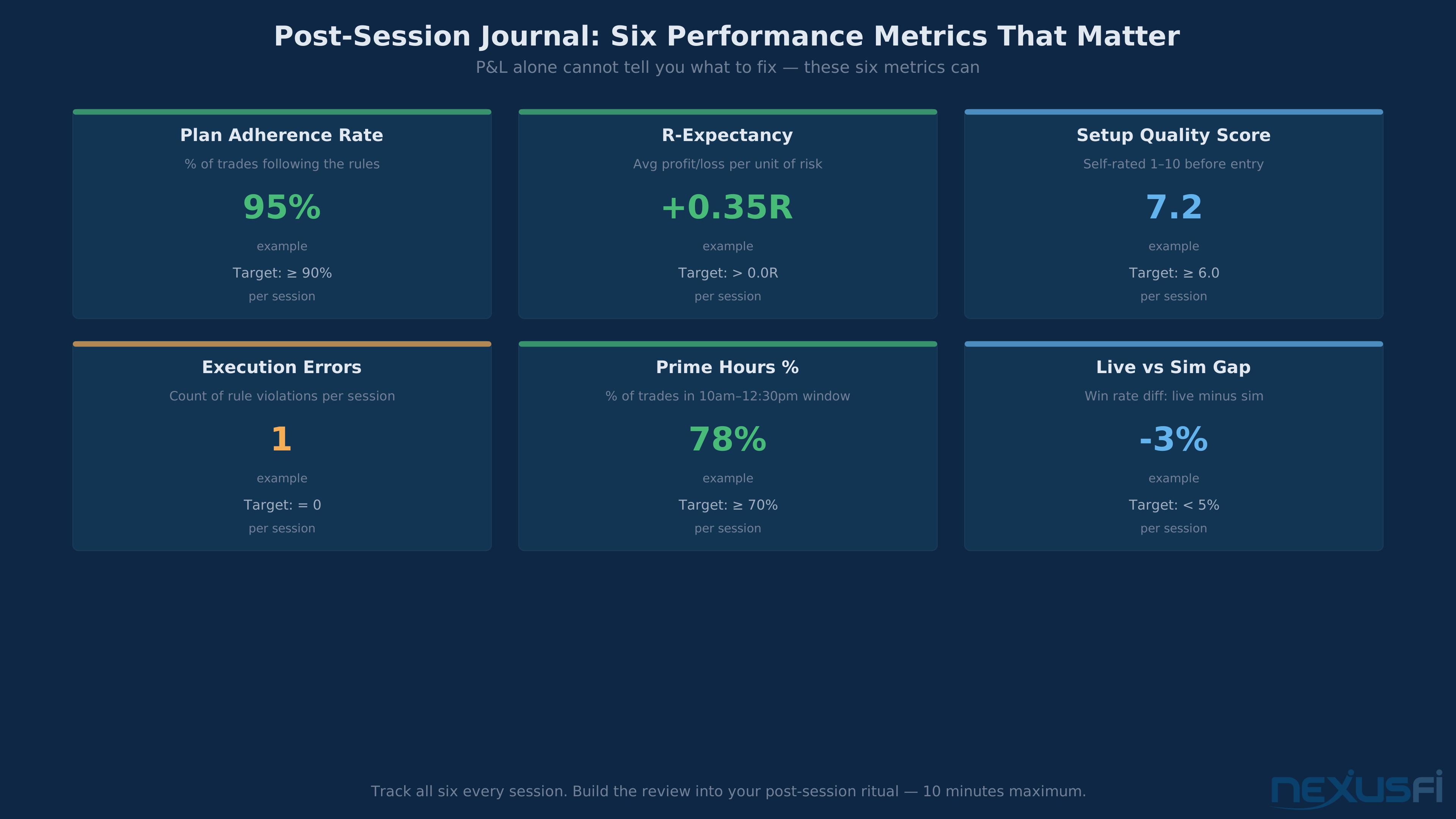
That's an extreme example. But the principle is right: the journal is the data source that turns trading experience into a testable, improvable system.
9. Plan Revision Criteria #
The hardest part of running a trading plan is knowing when to change it
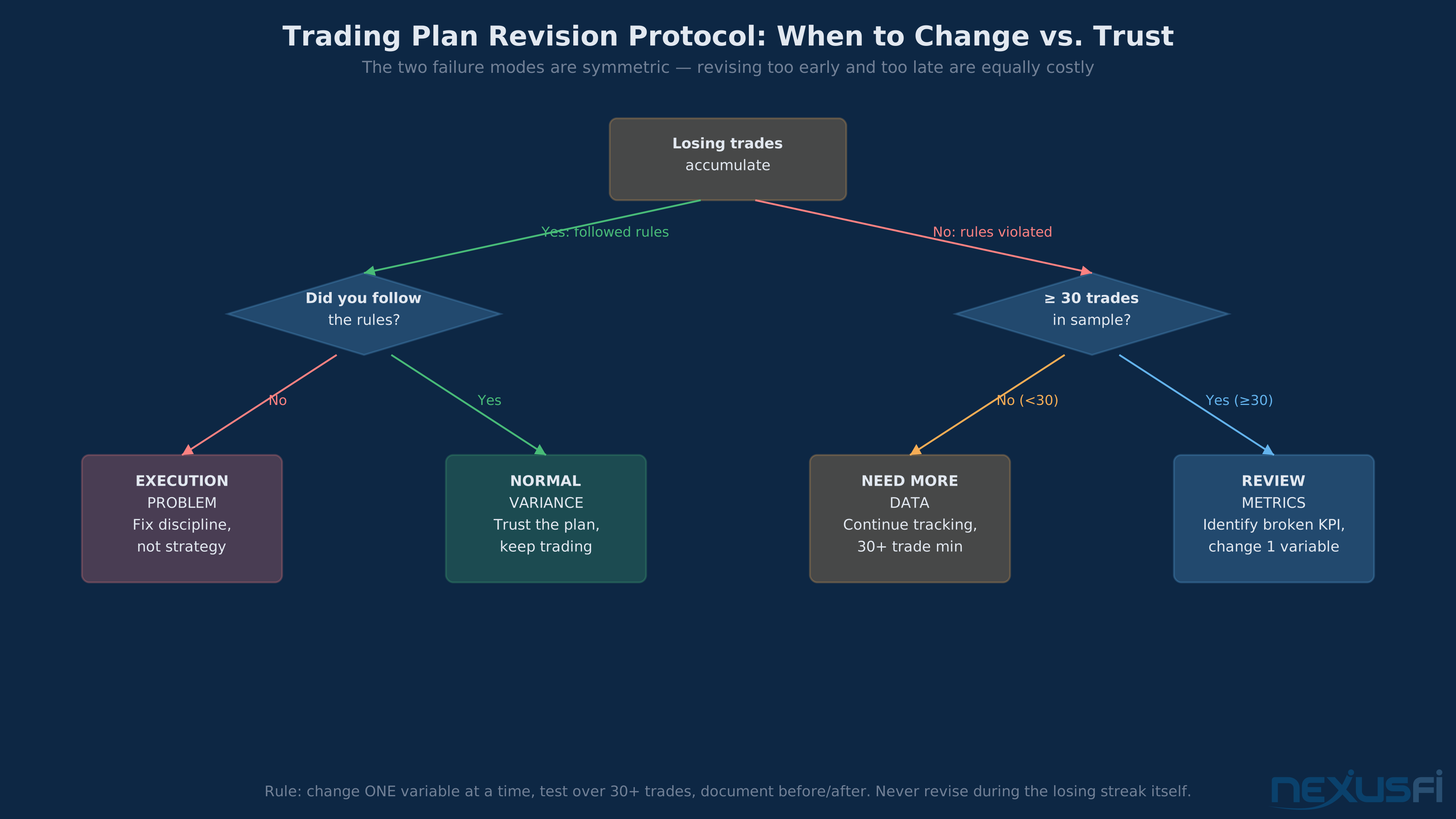
and when to trust it through a rough patch. The two failure modes are symmetric: revising too quickly after normal losing streaks destroys working edges, while never revising ignores legitimate signal that something is broken.
Layer 1 — Execution review (immediate): after any losing streak, first determine whether you followed the rules. If you violated the rules on 60% of the losing trades, the problem is discipline, not strategy. Fix the execution process — not the entry criteria.
Layer 2 — Strategy modification (requires data): define minimum sample sizes before changing any parameter. A reasonable floor: 30-50 completed trades per setup category. Less than that isn't statistically meaningful — it's noise.
Specific revision triggers:
- Win rate below 40% over 30+ trades → review entry criteria
- Avg R-multiple below 0 over 20+ trades → review targets and stops
- Daily loss limit hit 3+ days in one month → review position sizing
- Maximum drawdown exceeded → mandatory plan review before resuming
Rules for changing the plan:
- Change one variable at a time, test over 30+ trades, document date and rationale
- Keep the prior version for comparison
What not to change: risk per trade on a winning streak (recency bias), stops in real time (panic), strategy parameters after one bad week (normal variance).
The revision section prevents two equal and opposite mistakes: abandoning a working plan after normal losing sequences, and stubbornly running a broken plan out of sunk-cost loyalty. Both cost money. The solution is data — enough trades to tell the truth — and the discipline to act on data rather than emotion.
When the Plan Fails #
Every plan has failure conditions. Know them in advance.
Regime change failure: a mean reversion strategy gets wrecked on a trend day. Define regime detection and have explicit rules for low-probability sessions.
Building Your Plan: The Process #
Don't write all nine sections in one sitting. Build from the inside out.
Stage 1: Write Section 2 (setup criteria) based on your current approach. What is your actual entry logic? Write it until it's precise enough that someone else could execute it.
Stage 2: Derive Section 3 (stop placement) from the invalidation logic inside your setup criteria. Where does the trade prove wrong?
Stage 3: Write Section 4 (targets) aligned to your stop distance. Stops averaging 15 ES points → minimum 22-point target (1.5:1 R:R minimum).
Stage 4: Use Section 5 (sizing) to calculate contract counts for your actual account. If the formula produces 0 contracts, you need a larger account or tighter stops.
Stage 5: Write Sections 6-8 (circuit breakers, pre-market, post-session) based on what you do now — then formalize it.
Stage 6: Leave Section 9 (revision) for after 30-50 trades. You need data to define what "working" looks like.
@Fat Tails on the correct order:
Build in that order of importance: money management first, exits second, entries third. Backwards from how most traders think — but correct in terms of what determines survival and long-term success.
Knowledge Map
Go Deeper
Build on this knowledgeReferences This Article
Articles that build on this topicCitations
- — Trading Plan (2022) 👍 6“A trading plan should answer the following questions. What am I going to trade. How much am I going to trade (position size). Why am I taking this trade now (set-up & reason). When and at what price w”
- — TST Combine Journal (2013) 👍 19“I know the odds of my trade setups reaching a minimum profit target before hitting a maximum stop loss. Because of this, I have no need to predict direction. There is no prediction nor opinion necessa”
- — Building Blocks of a Trading System (2010) 👍 19“Entry rules should at least have three components: a setup bar, filters to increase the probability of an edge and a trigger bar. Money management rules are most important, exits come second and entri”
- — Trading Futures with Context (2014) 👍 27“The market gave me a reason to get into a trade, I will not exit until the market gives me a reason to close the trade. I will not take a trade that doesn't have potential for at least 2 to 1 reward. ”
- — Trading fast markets (2013) 👍 8“I will not hit my loss limit (per day or per calendar week). I will not hit my max drawdown. I will not add to a losing trade. I will not hold positions into major economic releases. My largest winnin”
- — Trading Futures with Context (2014) 👍 10“On my chart you will see some dotted lines -- Blue is POC, Red is VAH and Green is VAL. I also have the untouched POC from Monday. What I am going to watch for is a move around the RTH open -- either ”
- — Study prep for the Emini (2017) 👍 4“I take a screenshot of the overnight movement, note the O/N range and if the market is long or short from the previous day's close. I check the economic calendar to see what news will be hitting for t”
- — TST Combine Journal (2013) 👍 19“The supporting documentation out of which the plan evolved includes a 420-page trading journal and more than 150 statistical analyses of the application of various trading ideas to daily price action ”
- — Building Blocks of a Trading System (2010) 👍 19“Money management rules are most important, exits come second and entries third. Money management rules prevent the trader from blowing their account. Exit rules can be tested independently from entry ”
- — TST Combine Journal (2013) 👍 30“SUMMARY OF COMBINES: Combine #1 Start Date: 4/3/2013 Days traded: 1 Results: I exceeded the daily loss limit of $3,000 on the first day. I refused to take a small loss, and added to a losing position.”