



AVWAP Trading Strategies: The Complete Playbook for Anchored VWAP in Futures
Overview #
Session VWAP is the floor. Anchored VWAP is the entire building.
The daily RTH VWAP tells you the average price of today's auction. That's useful for one thing: knowing where fair value is right now, as the current session's participants defined it. But markets don't start fresh at 9:30. They carry weight from yesterday's close, last week's failure at resistance, the CPI spike from three Tuesdays ago. Session VWAP is blind to all of it.
Anchored VWAP (AVWAP) solves this by letting you choose where the calculation begins. Anchor it to a significant swing low and you get a running volume-weighted average of every trade since that auction started. Anchor it to the last FOMC announcement and you see where the institutional average cost basis sits from that day forward. Anchor it to the calendar year open and you're looking at what's been paid, on average, for every ES contract sold since January 2.
This isn't a minor upgrade to session VWAP. It's a at the core different tool that answers a at the core different question: what does the crowd who bought (or sold) at this reference point actually own?
When price returns to an anchored VWAP, you're watching two forces collide: the buyers or sellers who established positions from that anchor are either getting back to breakeven (potential distribution pressure) or seeing confirmation (potential re-entry pressure). That structural awareness turns abstract price levels into actionable context.
The concept was formalized by Paul Levine in the 1990s and later refined by Andrew Coles and David Hawkins as MIDAS (Market Interpretation/Data Analysis System). NexusFi traders — especially @JonnyBoy, @Fat Tails, @Inletcap, and @michaelleemoore — have built complete trading systems around it. What follows is the practical taxonomy of anchor types, the core setups, and the specific application to ES and NQ futures.
What Makes an Anchor Point Valid #
Not every bar deserves an anchored VWAP. The calculation works by accumulating volume * price from the anchor forward — garbage anchor, garbage line.
Valid anchor criteria share one characteristic: other participants care about the same point. If you can name it without looking at the chart ("the March swing low," "the FOMC from last Tuesday," "the start of this week"), institutions running similar analysis will land on the same anchor. The AVWAP becomes a consensus reference. If you're anchoring to idiosyncratic bars no one else would identify, you're drawing a personal line with no market significance.
The practical test: before anchoring, ask whether a significant volume event occurred at or around that bar. Major reversals, gaps, news spikes, and period resets all qualify. Random bars between events generally don't.
Anchor significance hierarchy (highest to lowest):
- Yearly/annual open — all fund managers benchmark against this
- Monthly/weekly open — institutional period resets, fund accounting periods
- Major macro events — FOMC decisions, NFP, CPI spikes
- Contract rollover — futures-specific; changes the actual instrument being traded
- Monthly options expiration (OPEX) — dealer hedging flows shift dramatically
- Swing highs and lows — market-determined auction boundaries
- Gap open levels — previous session close into current open
- HOD/LOD of specific reference sessions
The further down this list, the more subjective the anchor and the more care required in application.
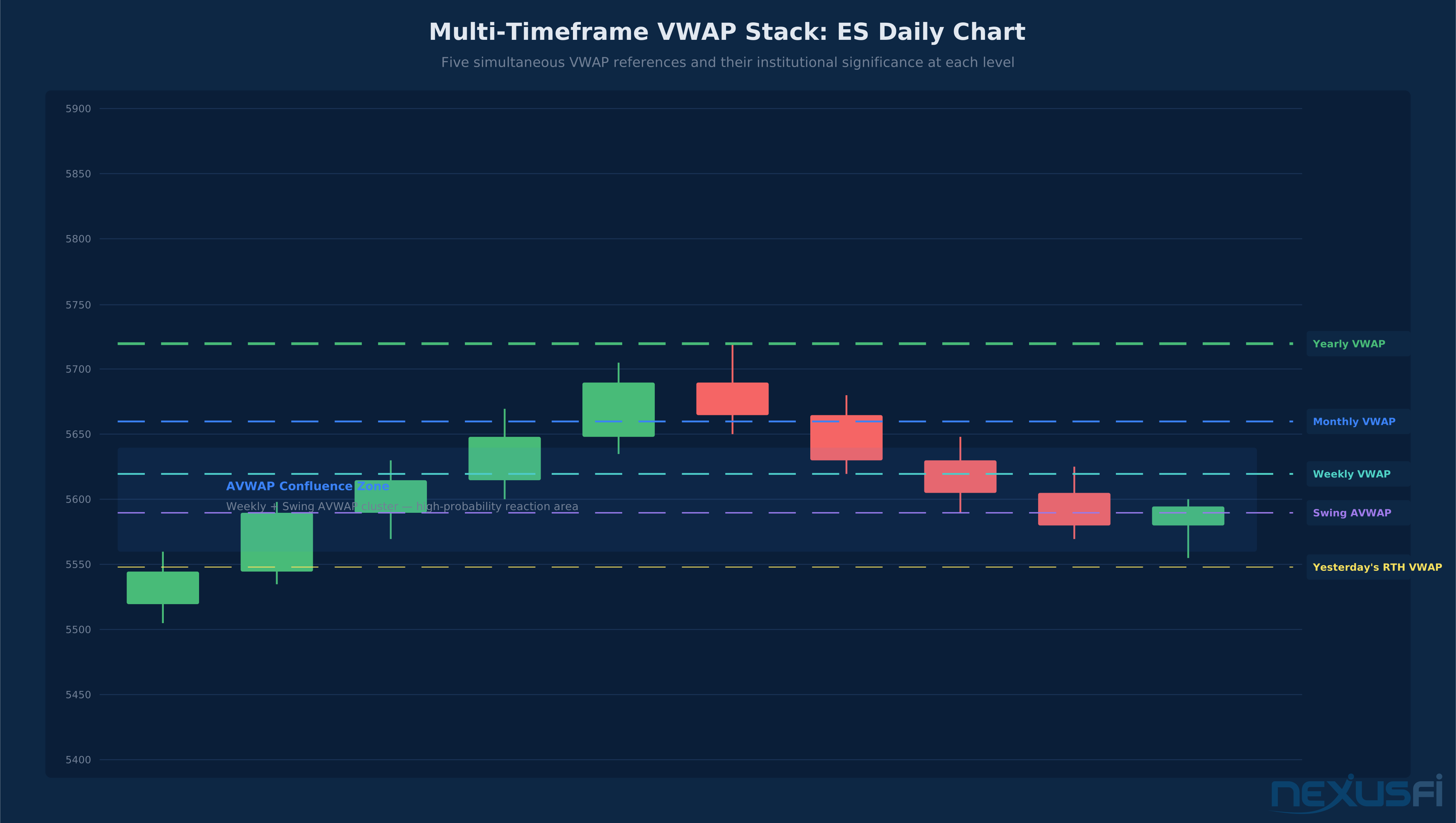
"For futures, I found that weekly VWAP, monthly VWAP and Yearly VWAP, work well as reference. If we look at the daily ES chart with 3 VWAPs — weekly, monthly, and yearly — you can see areas of confluence where multiple VWAPs cluster within a few points of each other." — @JonnyBoy
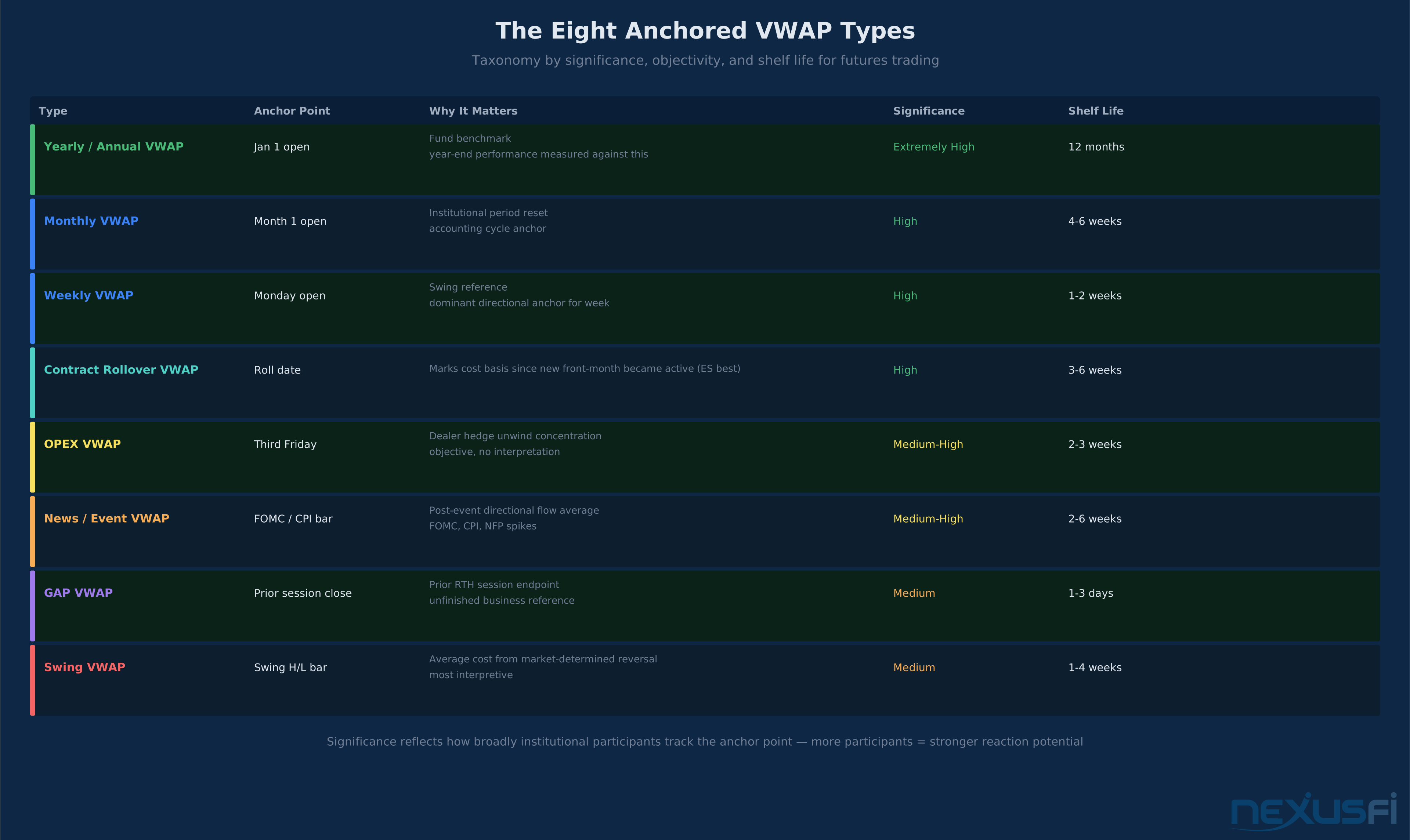
The Eight AVWAP Types #
@JonnyBoy documented this taxonomy after years of systematic application across ES and YM. He refers to these as "Anchored Action VWAPs" — levels worth watching for potential action, not mechanical signals.
1. Swing VWAPs
The most interpretive category. You're anchoring to swing highs and lows — the fractal extremes where the auction reversed. The challenge: swing definition is timeframe and data-series dependent. @JonnyBoy uses a minimum of 9 bars preceding and 2 bars succeeding to validate a swing. Others use 5/2 or 3/1 depending on chart resolution.
When price returns to a swing VWAP from a swing low, you're seeing the average cost of everyone who bought the bounce. If they're profitable (price is above the VWAP), they may add. If they're at breakeven, the decision point is clean.
Swing VWAPs lose relevance over time as new trading activity dilutes the memory. @JonnyBoy cuts them off algorithmically when the signal degrades — avoiding chart clutter from dozens of developing swing VWAPs reaching the right edge with diminishing returns.
2. GAP VWAPs
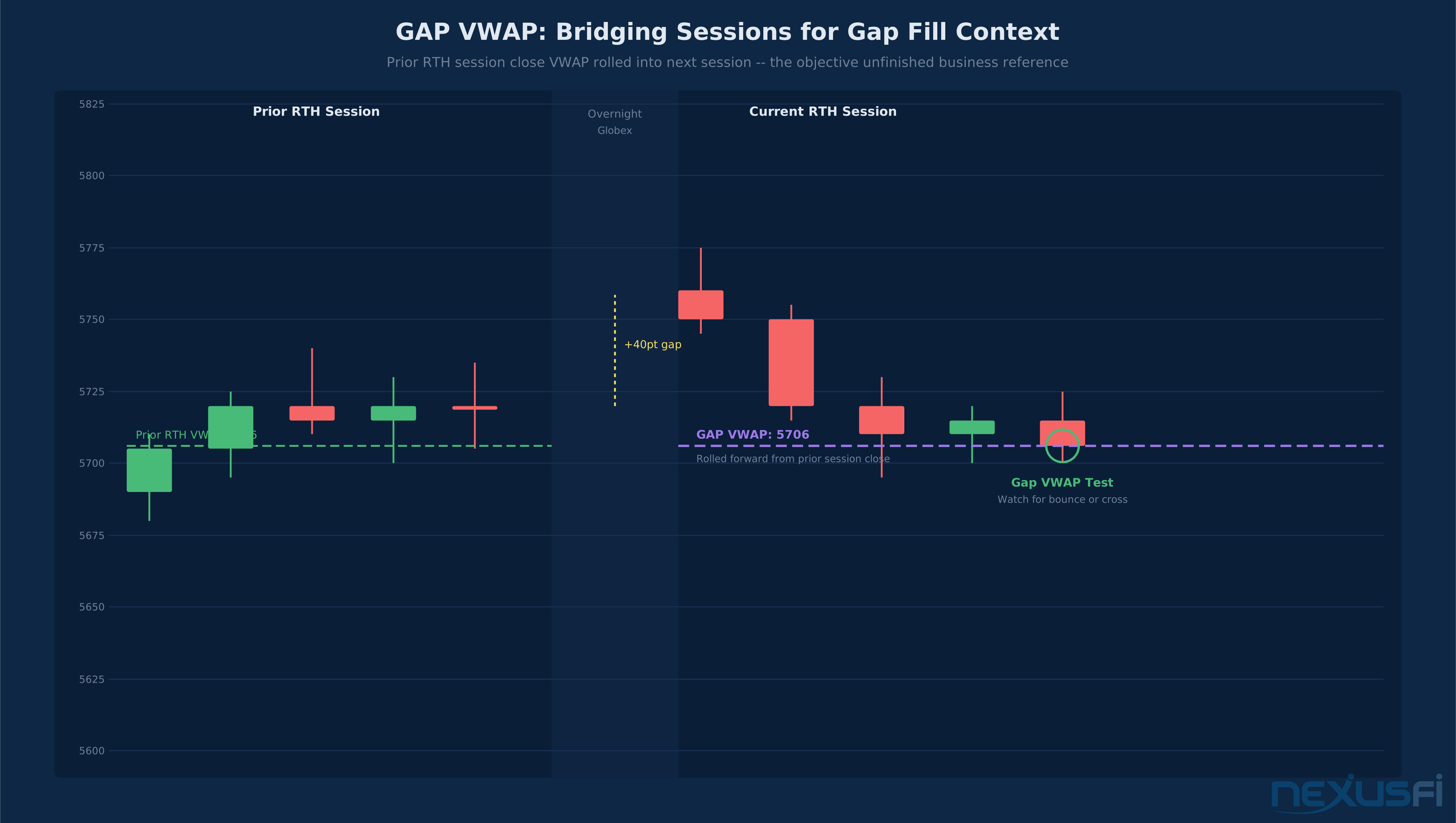
Anchored to the close of the prior regular session before a gap open. This is the average cost basis of the crowd that held overnight and is now sitting with an unrealized gap profit or loss. GAP VWAPs are especially powerful in equity index futures because overnight positions tend to be directional (not hedges), meaning the crowd has a clear break-even motivation.
3. Period VWAPs (weekly, monthly, quarterly, yearly)
These are the institutional reference points. Fund managers, algorithmic execution systems, and pension funds benchmark performance against period-defined averages. Weekly VWAP resets every Monday. Monthly resets on the first trading day. These generate institutional order flow when price revisits them, which is why bounces and rejections at these levels tend to be sharp.
The annual VWAP (AVWAP anchored to January 1) is the single most important level for equity index futures. Every fund manager knows whether their portfolio is above or below it.
4. Macro Event VWAPs
Anchored to FOMC decisions, NFP prints, CPI releases, and geopolitical events. The logic: participants who traded on that event established positions at particular prices. As time passes, the event's VWAP becomes their aggregate breakeven. When price returns to it, the two forces (those in profit looking to add/take, those underwater looking to recover) create a structural inflection.
5. Contract Roll VWAPs
Futures-specific. The contract rollover creates a new instrument — the crowd participating in the new front month has a different average cost than the prior contract's participants. Anchoring to the first day of significant volume in the new contract captures this shift.
6. OPEX VWAPs
Monthly options expiration creates dealer hedging flows that influence futures prices. Anchoring to OPEX captures the average cost basis of the hedging activity that followed the expiration. These tend to be relevant for 2-3 weeks before the next OPEX cycle, then lose signal quality.
7. HOD/LOD VWAPs
The high of day and low of day from significant sessions — especially high-volume days with clean structural extremes. These are shorter-lived than period VWAPs but often precise for intraday reference.
8. Yearly VWAP
The annual AVWAP deserves its own category because of its extraordinary institutional weight. Above the yearly VWAP = the average buyer from January 1 is profitable. Below it = the average buyer is underwater. This creates persistent directional pressure when price is trending away from it and mean-reversion pressure when price is far extended.
In practice, ES and NQ traders who use yearly VWAP report it acting as key support in bull market corrections and as magnetic resistance in bear market rallies.
MIDAS: The Original Framework #
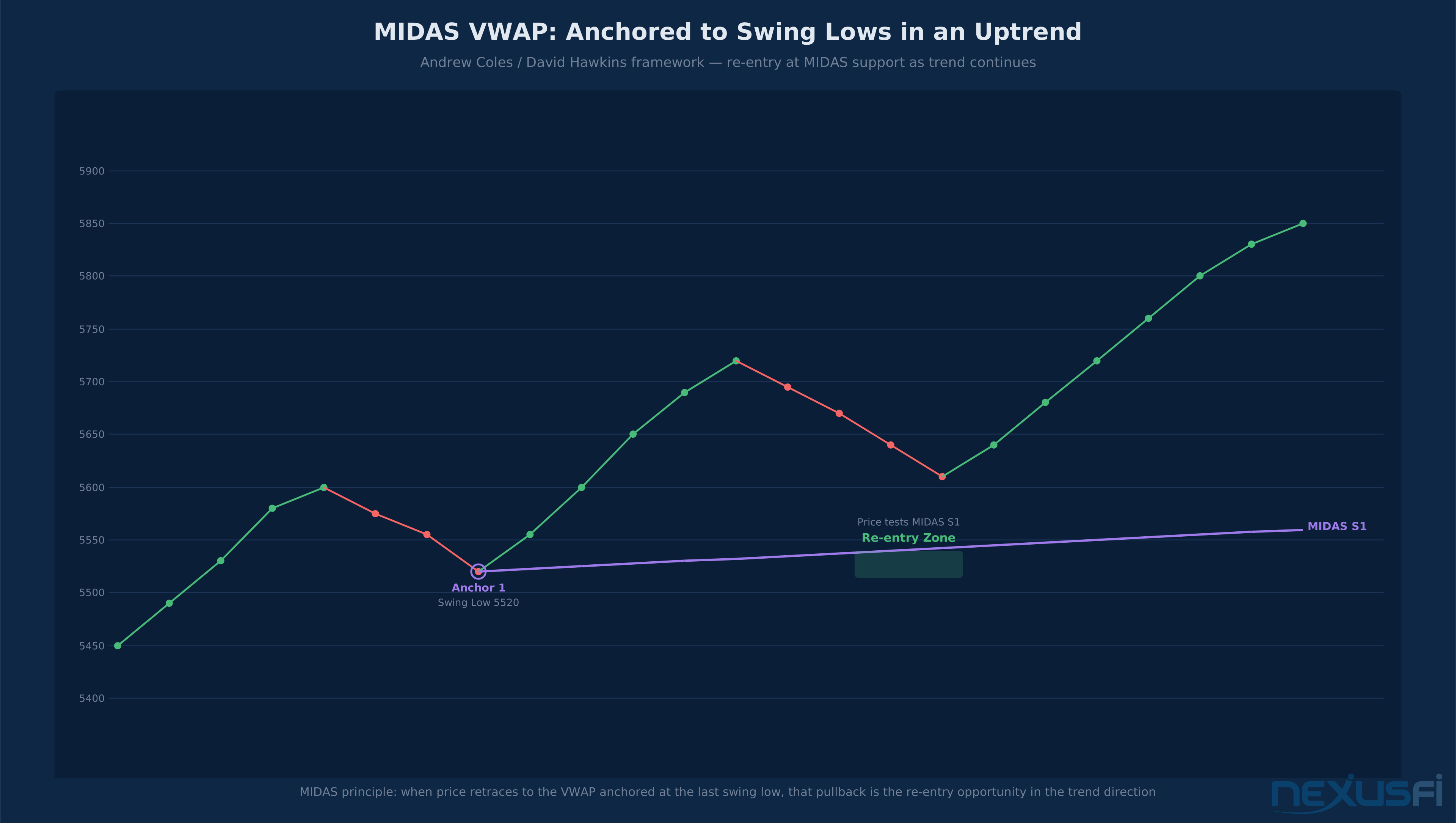
Paul Levine's MIDAS method predates modern AVWAP tools but anticipated the core insight. Levine argued that supply and demand curves in financial markets are not fixed horizontal lines — they evolve as new price discovery occurs. He anchored his curves to fractal tops and bottoms (significant reversals), then tracked price behavior as it returned to those anchored averages.
Andrew Coles and David Hawkins formalized this into the MIDAS system in the early 2000s, adding quantitative rigor to Levine's intuitive framework. Their key additions:
- S-curve behavior: AVWAP levels curve toward price as time passes and volume dilutes the anchor event's weight. This curvature is itself a signal — a flat AVWAP is "fresher" and carries more anchor momentum.
- Stop and reverse (S/R) levels: Not fixed horizontal levels, but evolving curves that price trades through rather than bounces off of — the signal is the nature of the interaction, not just the touch.
- Topfinder and Bottomfinder: Levine's quantitative models for identifying exhaustion in trends, which Coles/Hawkins extended with AVWAP context.
"Adding VWAPs at swing lows and highs has been promoted by Andrew Coles and David Hawkins under the name of MIDAS. They have published a significant body of work on AVWAP." — @Fat Tails
The practical takeaway from MIDAS: when price returns to an AVWAP, it can either respond (bounce/reject at the level) or ignore it. Ignoring it strongly suggests that the crowd anchored there has been absorbed — the auction memory has been reset. That's a momentum signal, not a mean-reversion opportunity.
Standard Deviation Bands: Four Core Setups #
The raw AVWAP line is one signal. Adding standard deviation bands (±1σ, ±2σ) produces a complete framework for evaluating extension and compression relative to each anchor.
Setup 1: AVWAP Reclaim (Trend Continuation)
Price has fallen below the AVWAP and is attempting to reclaim it. The crowd anchored at that level is now underwater. A reclaim above the AVWAP puts them back to breakeven — potential rotation to profit-taking could stall momentum. But if reclaim happens with volume expansion and holds above the +0.5σ band, the crowd has been absorbed. Continuation trade: long with stop below the AVWAP.
Setup 2: AVWAP Rejection (Mean Reversion)
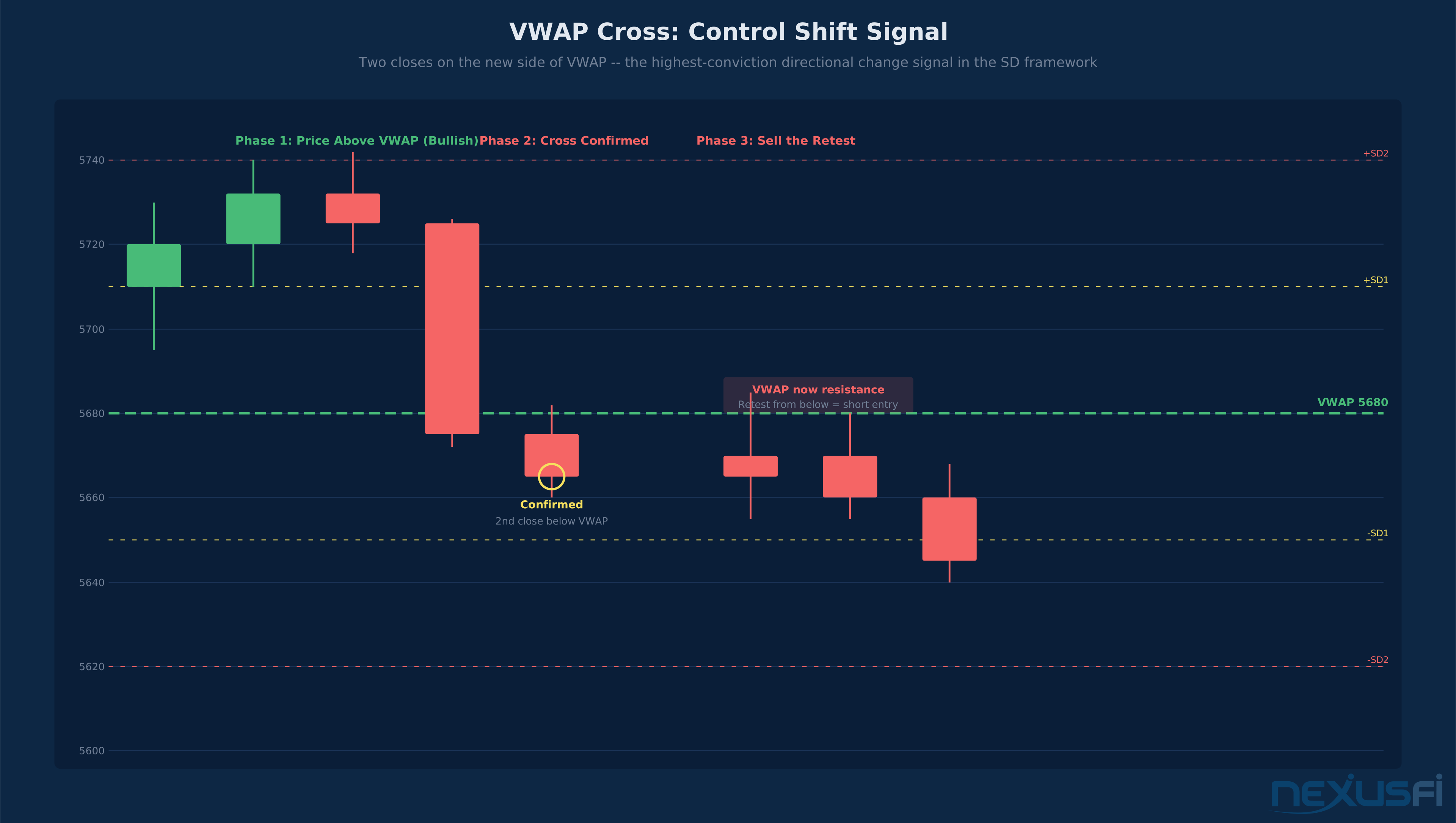
Price approaches the AVWAP from below or above with a sharp volume spike and then reverses. The crowd at the anchor point is defending breakeven. This is a classic AVWAP-as-resistance or AVWAP-as-support setup. The key is the nature of the rejection — a shallow, low-volume test that bounces is weak. A high-volume probe that drives through then reverses (a "search and destroy" move) is stronger.
Setup 3: AVWAP Extension (Breakout)
Price has been consolidating above or below the AVWAP and breaks with a volume surge. The anchor crowd's breakeven is now far behind price action. This is not a mean-reversion trade — it's the opposite. The move away from AVWAP is itself the signal.
Setup 4: AVWAP Convergence (Compression)
Multiple AVWAPs from different anchors are converging toward the same price level. This creates a compressed zone where conflicting forces from multiple anchor points collide. These zones typically resolve with sharp directional moves. @JonnyBoy calls this the "VWAP squeeze" — you don't know the direction, but you know the move will be meaningful when it comes.

Reading VWAP Context: What Price Behavior Tells You #
The anchor level itself is one signal. How price behaves approaching and interacting with it tells a second, more specific story.
Time at level: Price hovering near an AVWAP for multiple bars is different from a fast probe and reversal. Extended time near the AVWAP means the level is being tested — participants at the anchor are making decisions. Fast sweeps that reverse mean the level defended itself without requiring extended deliberation.
Volume at level: A high-volume touch at the AVWAP that fails to move through it is the strongest confirmation of the level's validity. A low-volume drift through suggests the crowd at the anchor was thin or already exited — the AVWAP is no longer the active reference.
Sequence of tests: First test of an AVWAP after a significant move is typically the strongest. Second and third tests often see weakening response as the crowd thins. By the fourth test, AVWAP violations become more likely.
"I use it in the ES to anchor at LOD, HOD, month, week etc. or any significant turning point on higher TF charts. The ES chart with weekly, monthly and yearly VWAP gives very different levels than session VWAP." — @JonnyBoy
Anchor relevance decay: Older anchors gradually lose weight as new price discovery accumulates. A swing low from 6 months ago has less active AVWAP memory than a swing low from 3 weeks ago. The practical implication: weight your attention toward more recent anchors unless the older one carries extraordinary institutional significance (like the annual open).
Practical Application: ES and NQ Multi-VWAP Setup #
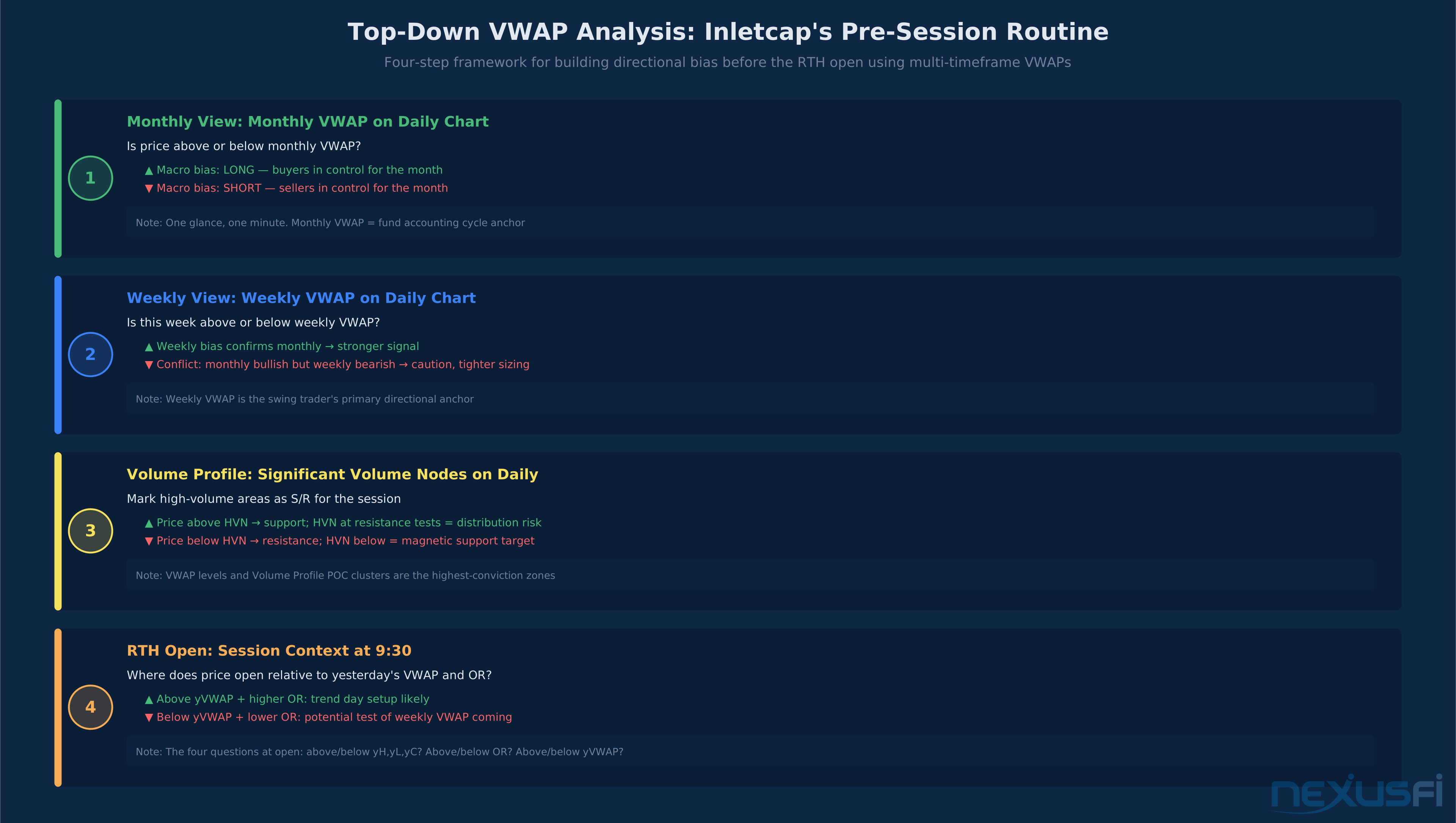
Here's how traders building around the AVWAP framework typically structure their daily setup for ES and NQ:
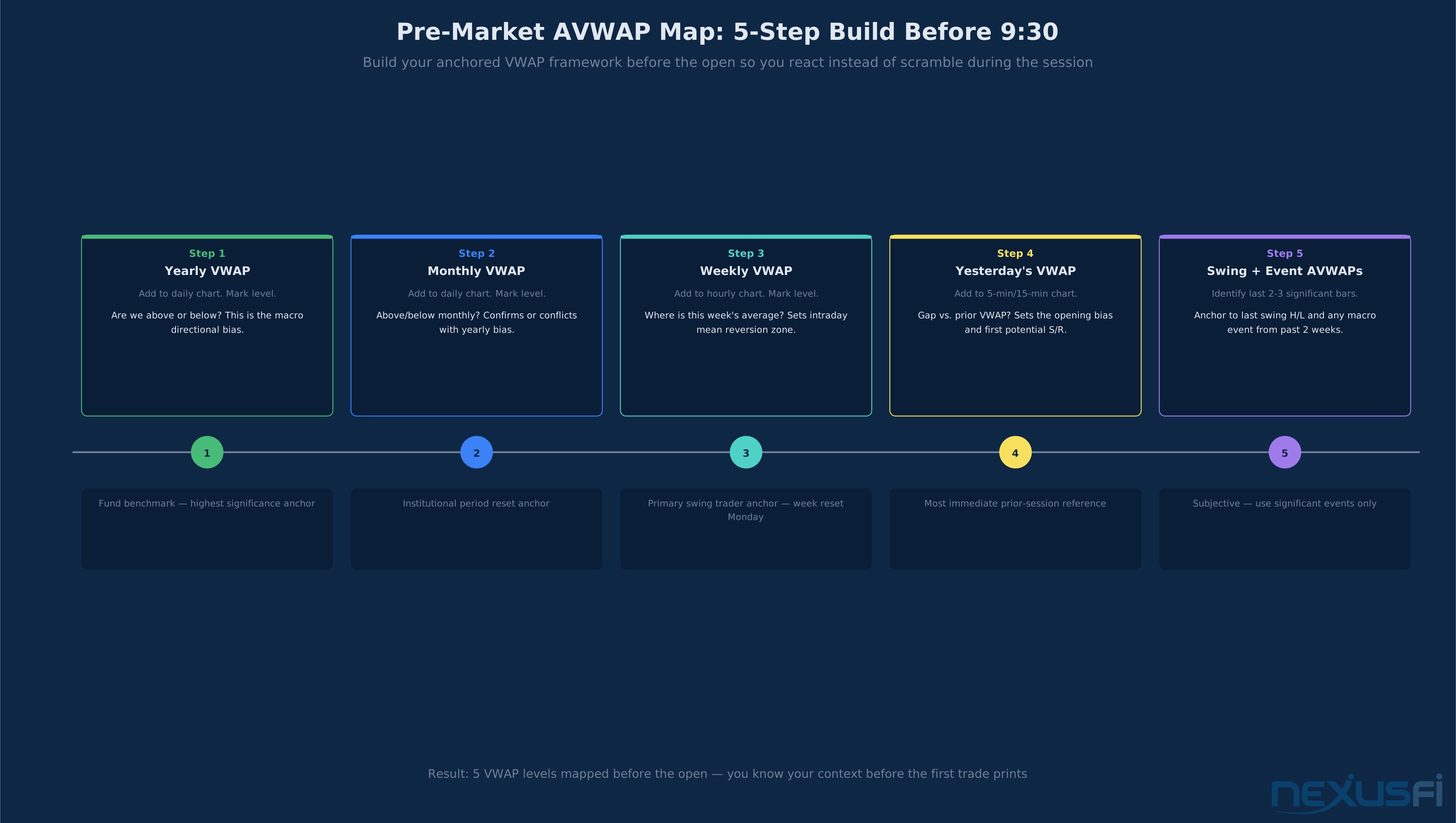
Pre-market preparation (6:30-9:00 AM ET)
- Plot the yearly AVWAP — this doesn't change during the session
- Plot the monthly AVWAP — resets on the first business day of each month
- Plot the weekly AVWAP — resets every Monday morning
- Plot the prior swing AVWAP from the most significant recent reversal
- Note which AVWAPs are within 8-12 ES points of the current overnight price — those are your session reference zones
Session trading framework
The pre-market VWAPs define the context. The daily session VWAP (anchored to 9:30 ET RTH open) fills in the intraday picture. You're working with a 4-5 level VWAP structure:
- Price above all VWAPs → structural strength, trend continuation
- Price between VWAPs → auction balance, responsive behavior, range trading
- Price below all VWAPs → structural weakness, continuation of weakness
- Price compressing against a VWAP cluster → expect expansion
The decision framework isn't "buy at VWAP" — it's "understand who has positions anchored here and what their decision calculus is."
NQ-specific notes
NQ (Nasdaq-100 E-mini) tends to see sharper AVWAP reactions than ES because of its higher volatility and momentum-oriented participant base. ES AVWAP levels tend to produce more deliberate, grinding responses. When NQ violates a major AVWAP with volume while ES is still holding its corresponding level, it's a divergence signal worth watching.
"Anchored vwap daily from point 1 anchored vwap m30 from point 2. Blue channels are the developing value areas. In Overextended market — the AVWAP becomes the magnetic target for reversion." — @OPP Scalper
What Actually Doesn't Work #
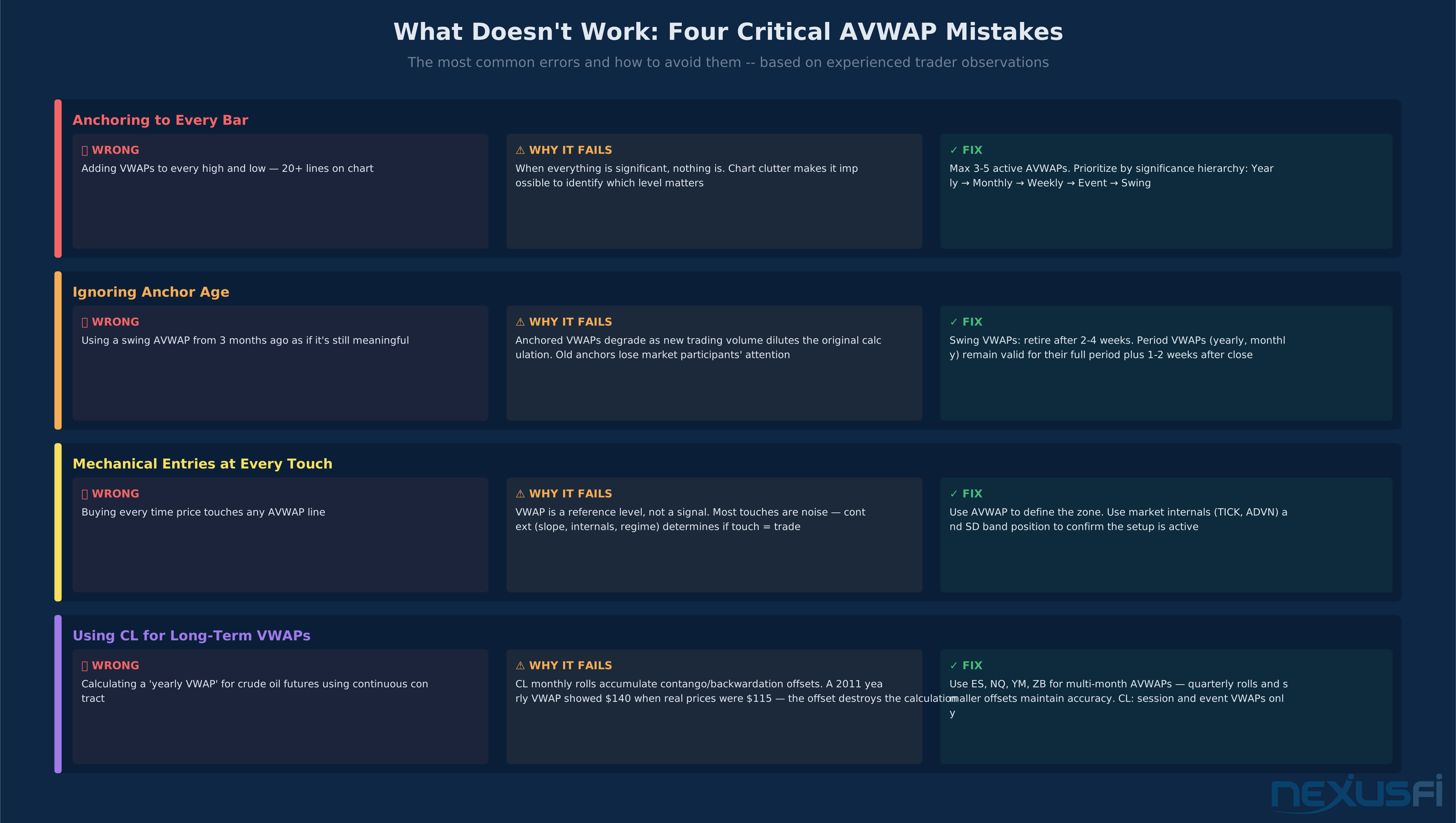
AVWAP as a mechanical entry signal: The level by itself doesn't generate trades. Too many traders see "price at yearly VWAP" and enter, then wonder why it doesn't work consistently. The AVWAP tells you who is at the level. It doesn't tell you what they'll do next.
Too many anchor points: Plotting AVWAP from every swing generates chart noise. If you have 12 AVWAPs on a daily chart, none of them is a meaningful reference — they're decorations. @JonnyBoy algorithmically prunes his swing VWAPs when signal quality degrades. The discipline to remove AVWAPs when they've lost relevance is as important as adding them.
Ignoring volume context: AVWAP that developed on a low-volume basis carries less weight. If the swing low that anchors your AVWAP was a thin overnight session reversal rather than a high-volume RTH reversal, the AVWAP memory is weaker.
Using AVWAP in non-auctioning markets: Trending markets that never return to AVWAP are telling you something — the auction is over. The crowd at the old anchor point has been absorbed or closed out. Continuing to treat old AVWAPs as relevant reference in a strong trend leads to fighting the momentum.
Choosing Your Anchor: The Decision Framework #
The question isn't "should I add an AVWAP here?" — it's "would institutional participants recognize this as a significant event?"
Start with the period resets (yearly, monthly, weekly) — these are non-discretionary. Then evaluate:
- Was there a major macro event? FOMC, NFP, CPI, geopolitical shock → anchor it
- Was there a significant gap? Anchor to prior session close
- Was there a clean structural reversal with volume? → anchor it, but prune when signal degrades
- Was there a contract rollover? → anchor to first high-volume day of new contract
If you can't describe why another participant would care about your anchor point without referencing your own chart, skip it.
Getting Started Without Getting Overwhelmed #
Start with two: yearly VWAP and weekly VWAP. These are the highest-signal levels with the clearest institutional rationale. Map them to your daily ES or NQ chart. Observe for 2-3 weeks without trading them — just note when price reacts and when it ignores.
When you see a consistent reaction, ask: what's different on the reaction days vs. the ignore days? The answer is usually volume (reactions happen with volume; ignores are thin-air tests) and context (reactions happen when the broader market structure supports it; ignores happen when trend is already far extended).
Add the monthly AVWAP next. That's three levels. Most professional traders using AVWAP systems work with 4-6 maximum on any given day.
Knowledge Map
Citations
- — VWAP for stock index futures trading? (2020) 👍 14
- — VWAP for stock index futures trading? (2020) 👍 9
- — VWAP for stock index futures trading? (2020) 👍 15
- — VWAP for stock index futures trading? (2020) 👍 8
- — VWAP for stock index futures trading? (2019) 👍 16
- — Want your NinjaTrader indicator created, free? (2013) 👍 10
- — VWAP for stock index futures trading? (2020) 👍 13
- — VWAP for stock index futures trading? (2019) 👍 8
- — Daytrading ES & NQ (2023) 👍 2
- — MIDAS Technical Analysis: A VWAP Approach to Trading and Investing in Today's Markets
- — Anchored VWAP Strategy Guide