



Anchored VWAP (AVWAP): The Dynamic Value Reference That Remembers Market Structure
Overview #
Anchored VWAP (AVWAP): The Dynamic Value Reference That Remembers Market Structure
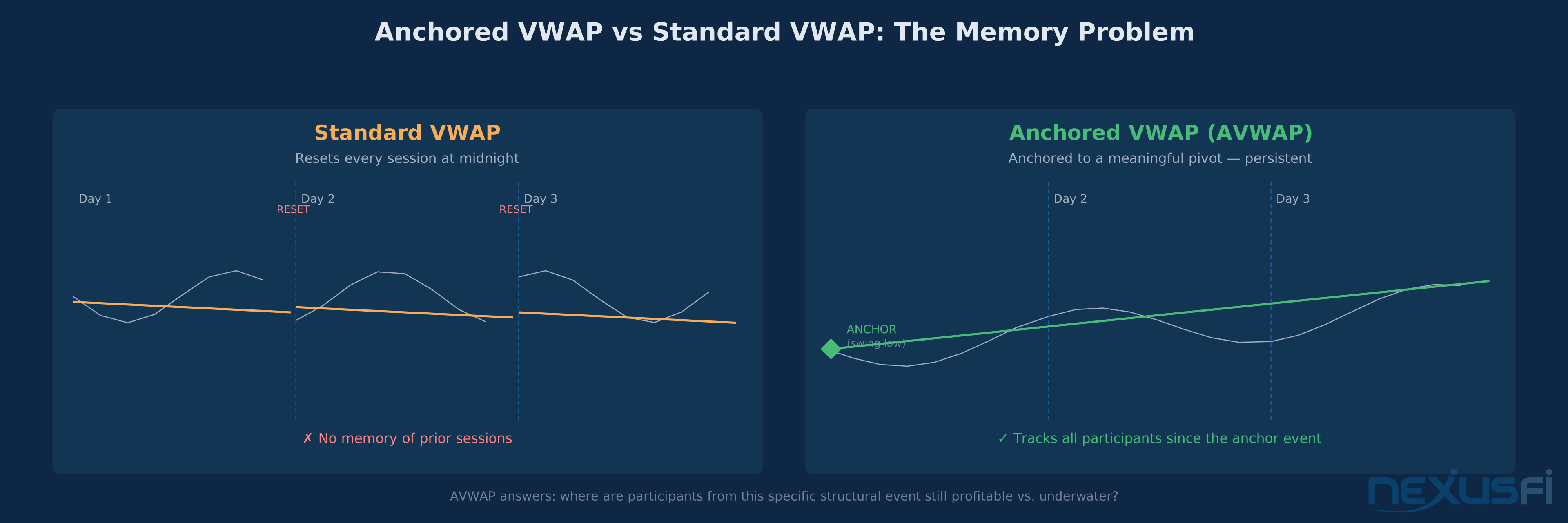
Standard VWAP resets every day at midnight. It has no memory.
— and that daily reset is precisely the limitation that AVWAP solves. [1]. It does not know that three weeks ago price collapsed through a key level, found buyers, and reversed hard — creating a structural pivot that institutions are still measuring from. Anchored VWAP does.
For ES and NQ futures traders, this matters because it answers a question static support/resistance cannot: where are the participants from that specific structural event still profitable, underwater, or at breakeven?
AVWAP is the same volume-weighted average price calculation as standard VWAP, with one critical difference: you choose the starting point. You set the anchor to the bar that matters — a significant swing low, a major FOMC reaction, a breakout day — and the indicator calculates the cumulative volume-weighted average price from that moment forward. The result is a dynamic line that represents the average cost basis of every participant who entered after that anchor point.
AVWAP vs. Standard VWAP: What the Anchor Changes #
Standard VWAP gives you one thing: where the average dollar traded today. It's a useful reference — institutions benchmark execution against it — CME Group uses VWAP as the primary methodology for daily settlement pricing across major futures contracts including E-mini S&P 500, WTI Crude Oil, and agricultural products, calculating the volume-weighted average price during defined settlement windows [9] — and algorithms maintain it as an intraday fair-value target — but its daily reset makes it blind to anything that happened before the current session opened.
Anchored VWAP extends the measurement window to any starting point you choose. The calculation is identical:
AVWAP = \frac{\sum_{t=anchor}^{now} (Typical Price_t \times Volume_t)}{\sum_{t=anchor}^{now} Volume_t}
AVWAP is not a magic indicator — it tells you where participants from a specific event are positioned. Used at inflection points (major swing highs/lows, gap fills, FOMC dates), it identifies price zones where institutional hedging and repositioning create durable support and resistance.
Where typical price is (High + Low + Close) / 3.
The result is a line that represents the average cost basis of participants since the anchor event. As time passes and more volume trades, the line becomes "heavier" — it takes larger price moves to shift it much. Early in its life, AVWAP is volatile and sensitive. After accumulating months of volume, it becomes a slow-moving, heavily-weighted reference that only major structural moves can displace.
The Standard VWAP Limitation in Futures
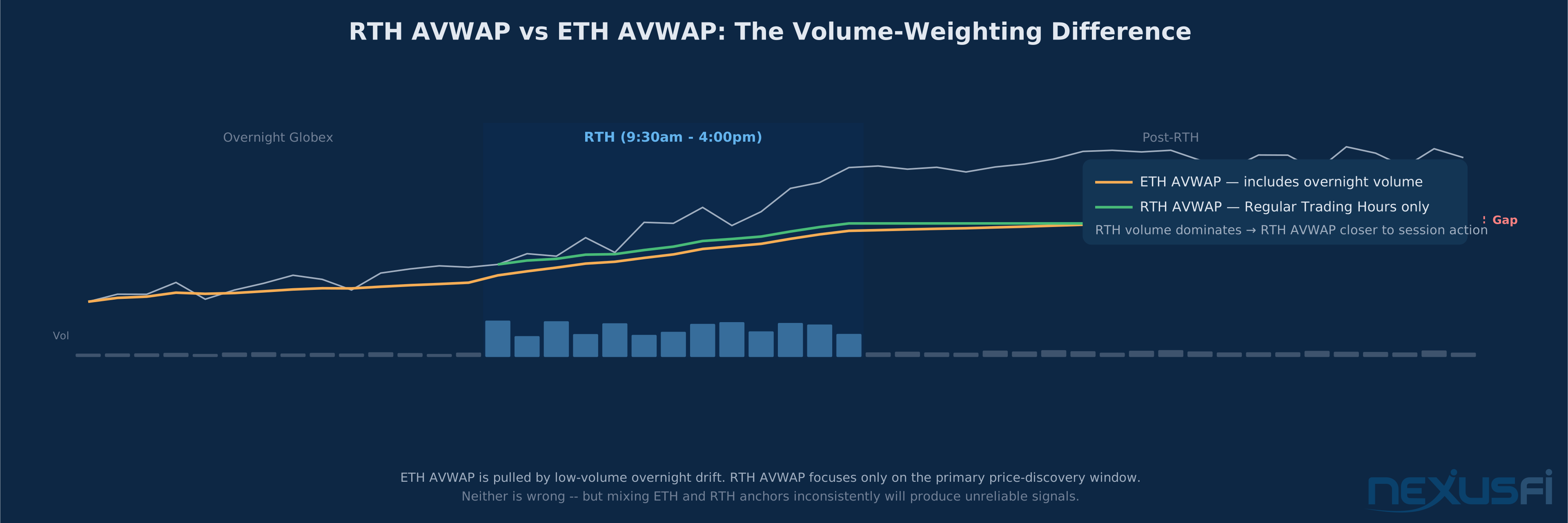
Futures trade nearly 24 hours. The ES is active during Asia hours, Europe hours, and the US session. Standard VWAP anchored to midnight UTC captures all of this, but it also means that by 10 AM EST, the VWAP has already absorbed hours of lower-volume Globex trading that does not represent primary price discovery.
RTH-anchored VWAP (anchored to the 9:30 AM EST open) addresses this by capturing only Regular Trading Hours volume. But even RTH VWAP still resets daily, still has no memory of yesterday's structure.
AVWAP solves this: anchor to the most recent significant structural event, and you have a volume-aware reference that spans exactly the relevant period — not an arbitrary calendar boundary.
The Math: Why AVWAP Is Path-Dependent #
This is the critical structural fact that creates AVWAP's analytical power and its risk. As @Fat Tails notes on NexusFi, "Adding VWAPs at swing lows and highs has been promoted by Andrew Coles and David Hawkins under the name of MIDAS. They have published 5 articles in technical analysis journals about this approach" [4]. Coles and Hawkins formalized this property in their work on MIDAS (Market Interpretation/Data Analysis System), a VWAP-based trading methodology originally developed by physicist Paul Levine that extends volume-weighted average price into predictive support and resistance analysis [10].
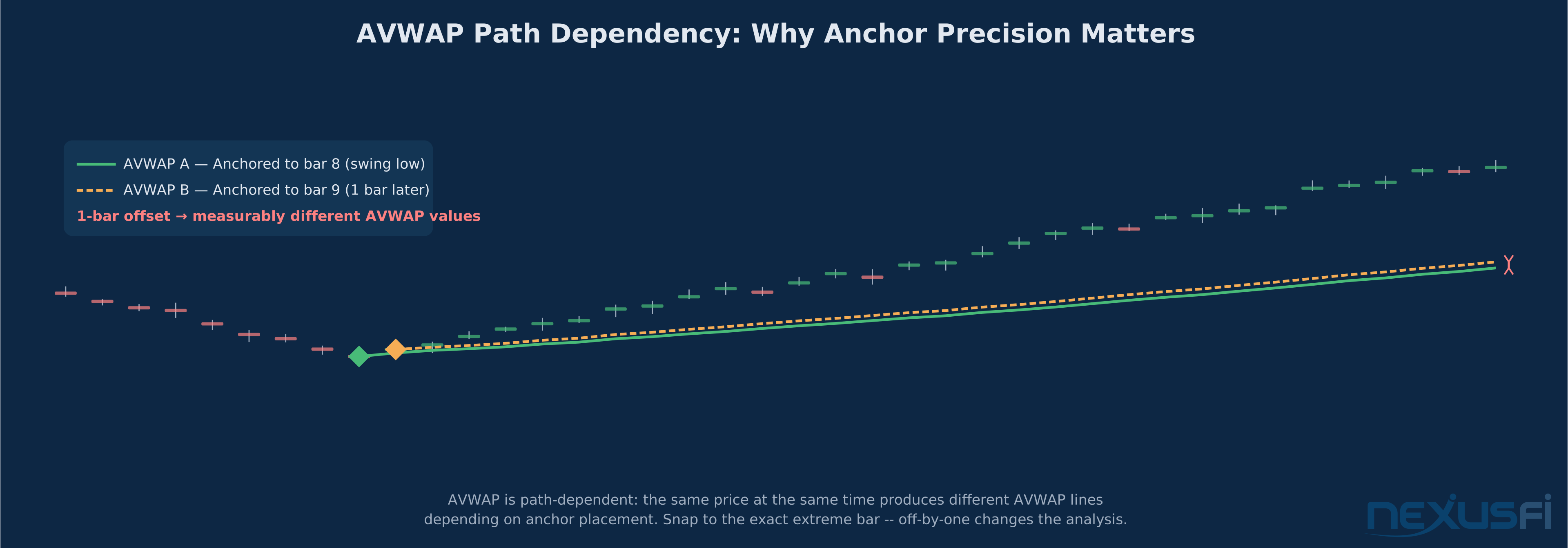
AVWAP is path-dependent: the same price at the same point in time will produce a different AVWAP depending on what price and volume did between the anchor and now. Two traders anchoring to what they think is the same swing low — but one is off by a single bar — will get different lines. This is not a flaw; it is a feature. It means precision of anchor selection is analytically meaningful.
For futures traders, the practical implication: standardize your anchor methodology. If you use AVWAP from major swing lows, define what "major swing low" means before you anchor — perhaps a pivot with at least a 2% preceding move, or a swing that creates a clear displacement. Consistency makes your AVWAP zones predictable and testable.
Anchor Selection: The Most Important Decision #
The anchor determines everything. A well-chosen anchor creates an AVWAP with explanatory power. A random or minor-swing anchor creates noise.
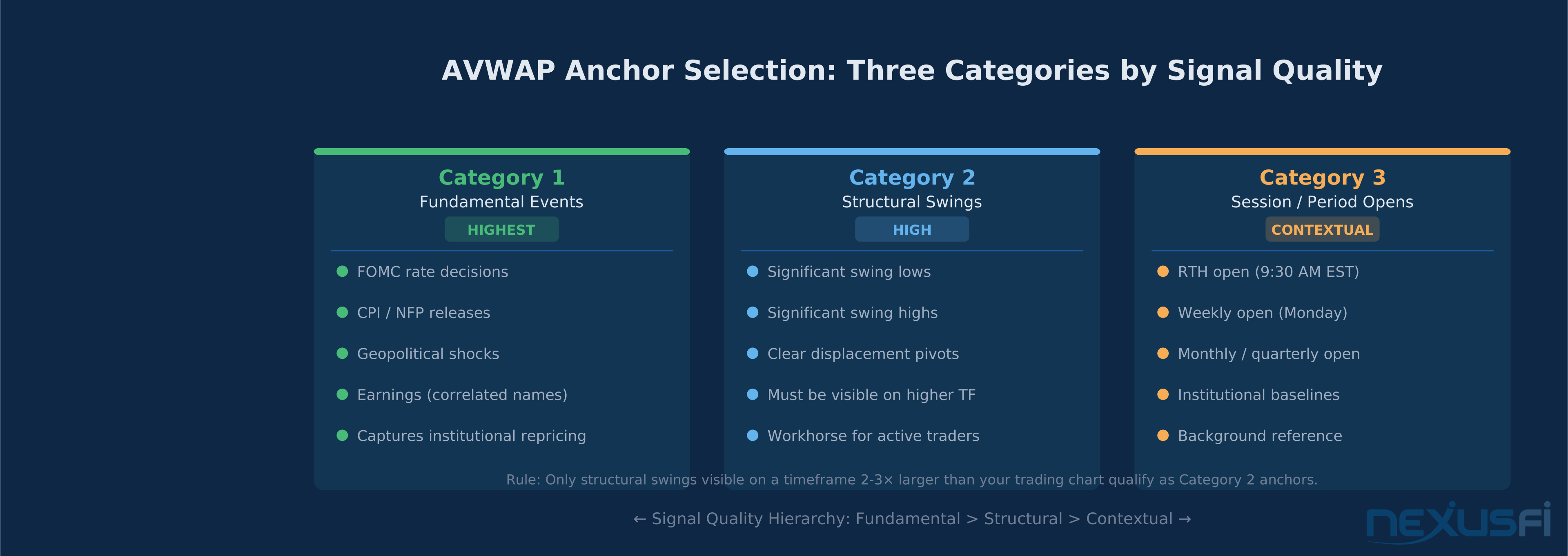
Category 1: Fundamental Event Anchors
These are the highest-quality anchors because they represent moments when institutional participants collectively repriced the market. Every participant who established positions after the event now has a cost basis relative to that event's resolution.
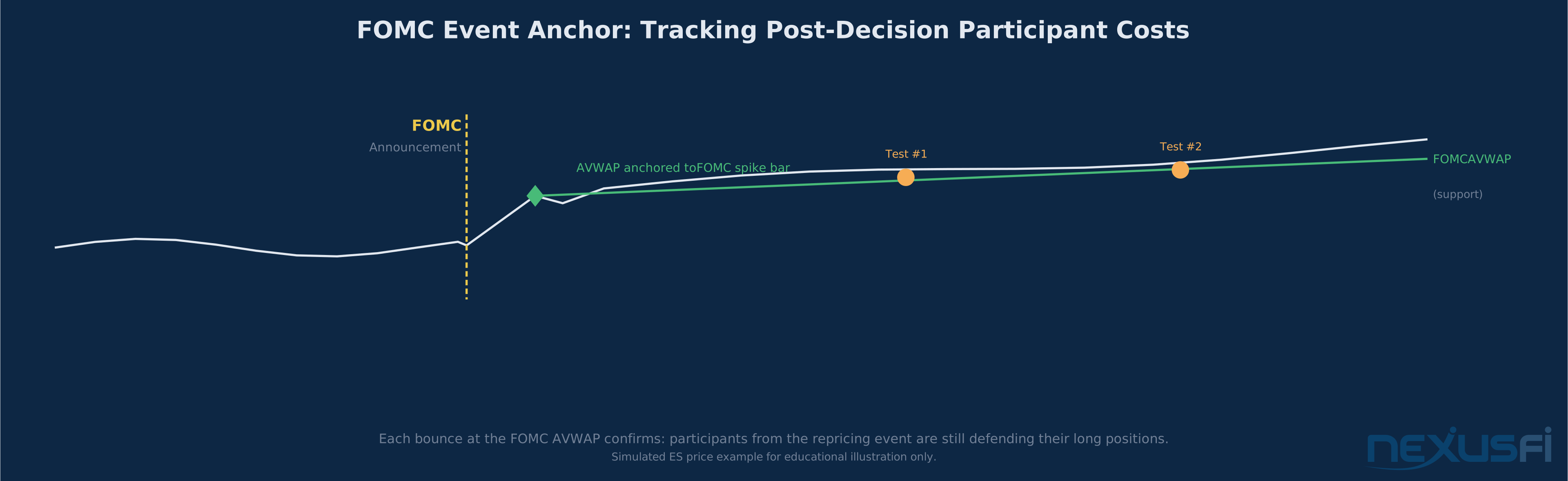
Federal Reserve decisions: When the FOMC delivers an unexpected rate decision, institutional risk managers reassess positions immediately. AVWAP anchored to the FOMC announcement timestamp captures every post-FOMC position's average cost. Price returning to this level tests whether those participants are willing to hold.
CPI and NFP releases: Major economic data releases create sudden imbalances as algorithmic models update simultaneously. The AVWAP from a significant CPI surprise shows where the inflation-trade crowd has averaged.
Earnings in correlated equities: For NQ traders especially, AVWAP anchored to major earnings announcements (NVDA, AAPL, META in the tech space) captures the institutional repricing of equity risk that directly affects NQ futures pricing.
The practical rule: any event where you can say "something fundamental changed for market participants at this moment" is a candidate for an event anchor.
Category 2: Structural Swing Anchors
These are the workhorses of AVWAP analysis for active futures traders. A structural swing high or low represents a point where the market's direction reversed — where buyers overcame sellers (swing low) or sellers overwhelmed buyers (swing high). The AVWAP from that pivot captures the average cost of the participants who established positions in the subsequent move.
Swing low anchors: After a meaningful decline bottoms and reverses, anchor AVWAP to the low bar.
[3]. This AVWAP rises as the uptrend progresses; price pulling back to it tests whether reversal participants will defend.
Swing high anchors: The mirror image. After a rally peaks and rolls over, anchor to the high. This AVWAP declines with the downtrend; price rallying back tests whether participants who sold that high will add to shorts again.
What qualifies as a structural swing: Significance on at least one timeframe higher than your trading frame. 5-minute traders need anchors visible on the 30/60-minute chart. Minor oscillations don't qualify — only pivots where direction meaningfully reversed.
Category 3: Session and Period Opens
Contextual anchors that professional futures traders use as baselines: RTH open (9:30 AM EST) captures only Regular Trading Hours — where institutional algorithms recalibrate, making it a genuine professional benchmark. Weekly open shows where the current week's participants averaged — above is broadly bullish, below bearish. Monthly/quarterly opens become important for swing traders benchmarking against institutional horizons; for intraday traders, these are background references.
[2].
Reading AVWAP: The Three Behavioral Modes #
Price can interact with AVWAP in three at the core different ways, each with distinct trading implications:
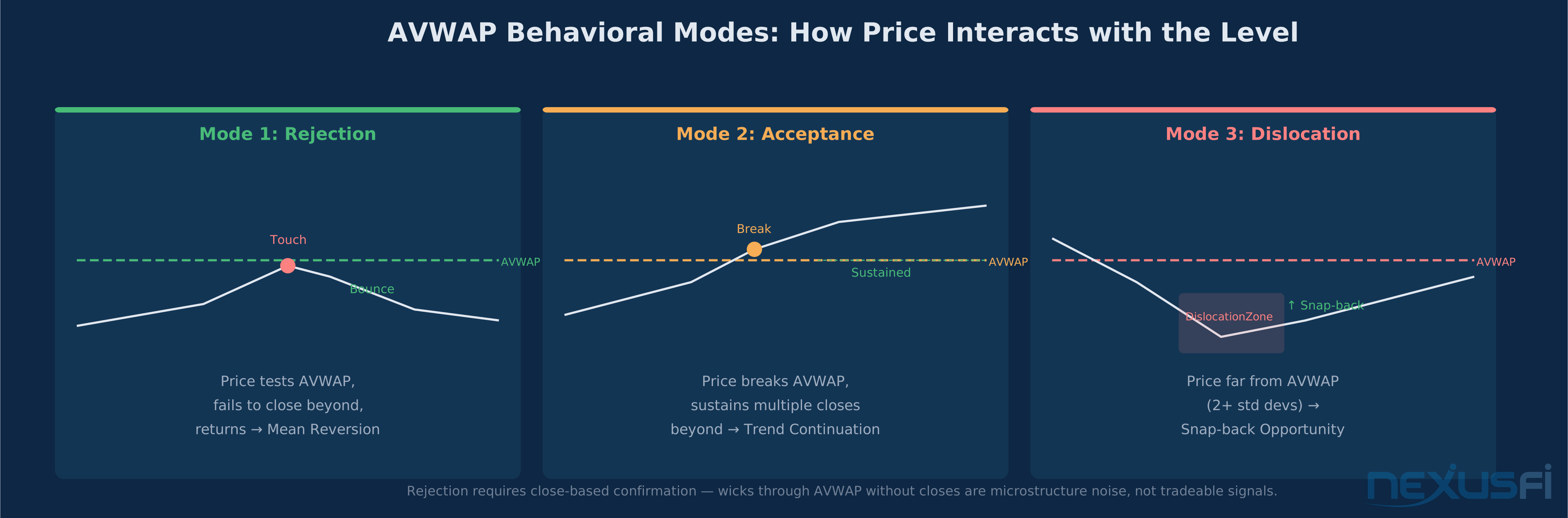
Mode 1: Rejection (Mean Reversion)
Price approaches the AVWAP zone from one side, tests it, fails to establish closes on the other side, and reverses. This is the mean-reversion setup. As NexusFi member
— this mean-reverting tendency is precisely what makes AVWAP rejection setups viable, especially in index futures where price gravitates back to volume-weighted fair value [5].
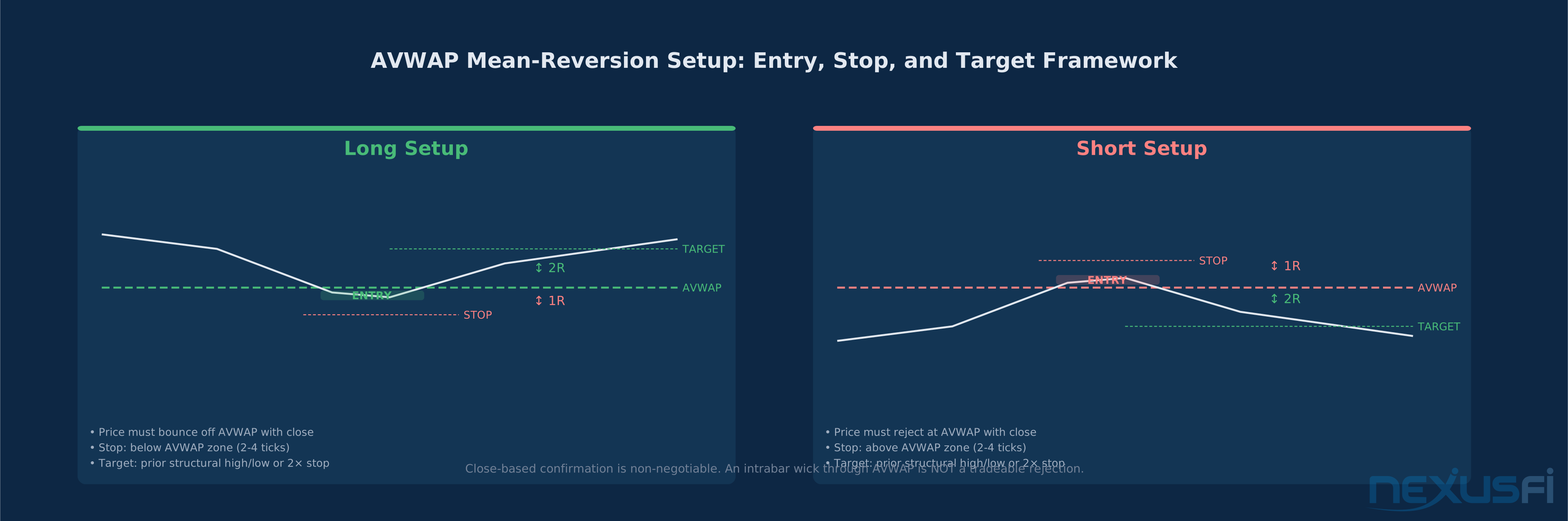
The key requirement: close-based confirmation. An intrabar wick through AVWAP without a close beyond it is not rejection — it is microstructure noise, often a deliberate stop-run by algorithms that overshoot a known reference level before reclaiming it. Only a close beyond the AVWAP zone that fails to hold, followed by a close back to the original side, constitutes a clean rejection.
Volume context strengthens the signal: rejection accompanied by above-average volume on the approach and declining volume on the initial break (but no follow-through) suggests absorption — participants defending the value zone.
What this means for ES/NQ: Confirm the rejection with order flow analysis — absorption shows as heavy buying at AVWAP that prevents closes through it. The zone has active defenders adding or holding, not exiting.
Mode 2: Acceptance (Value Migration)
Price breaks through the AVWAP zone with sustained closes on the new side — multiple consecutive closes, reduced overlap, and above-average volume. Value has migrated. When acceptance occurs, the original AVWAP often flips polarity — support becomes resistance or vice versa. Acceptance through a significant anchor is one of the cleaner trend continuation signals — structural shift, not just volatility.
Mode 3: Dislocation (Deviation Play)
Price moves much away from AVWAP — creating meaningful deviation from the cumulative average — without being driven by a new fundamental anchor. The longer price stays away from AVWAP without creating acceptance of a new value zone, the more likely a return to AVWAP becomes.
This is the "rubber band" dynamic. AVWAP is a gravity well; significant deviations invite reversion as participants whose average cost sits at AVWAP become motivated to rebalance.
[6]. This standard-deviation framework gives the dislocation play a measurable threshold rather than a subjective "too far" judgment.
The risk: distinguish temporary deviation from acceptance in progress. No obvious trigger for the move away? Dislocation reversion is the higher-probability play. Clear trigger? That argues for acceptance underway.
Multi-Anchor Analysis: The Advanced Framework #
Single-anchor AVWAP gives you one data point. Multi-anchor analysis maps competing value regimes and answers the hardest question in futures trading: which participants are currently in control?
The Three-Tier Framework
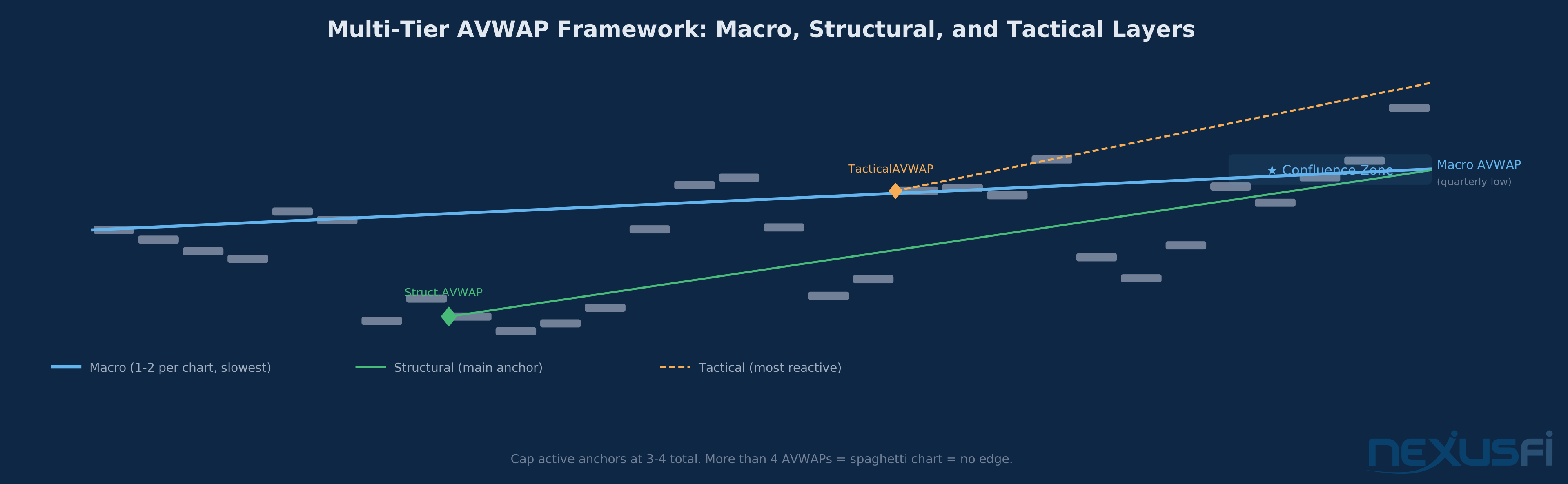
The highest-information multi-anchor setup uses three tiers simultaneously:
Tier 1 — Macro Anchor: Year-to-date open, quarterly open, or the most significant structural pivot in recent months. This AVWAP represents the institutional long-term cost basis. Is the market above or below where the dominant participants from this anchor period averaged? That's the macro bias.
Tier 2 — Structural Anchor: The most recent major swing high or low on your primary trading timeframe. This is the active battleground — where the most recent trend reversal participants sit. Are they still in profit? Are they defending? This anchor generates the most active day-to-day interaction.
Tier 3 — Tactical Anchor: RTH open or prior-day extremes. This is the immediate intraday sentiment reference. Fast, responsive, resets frequently, but essential for understanding where today's participants averaged.
Reading Confluence Zones
When two or more AVWAPs converge within ~0.1% of ES price, that zone concentrates cost-basis references where multiple cohorts are simultaneously motivated to act. Rejection at confluence carries the weight of multiple groups defending simultaneously; breakout through confluence signals a more decisive structural shift than breaking any single AVWAP.
Value Hierarchy and Stacking
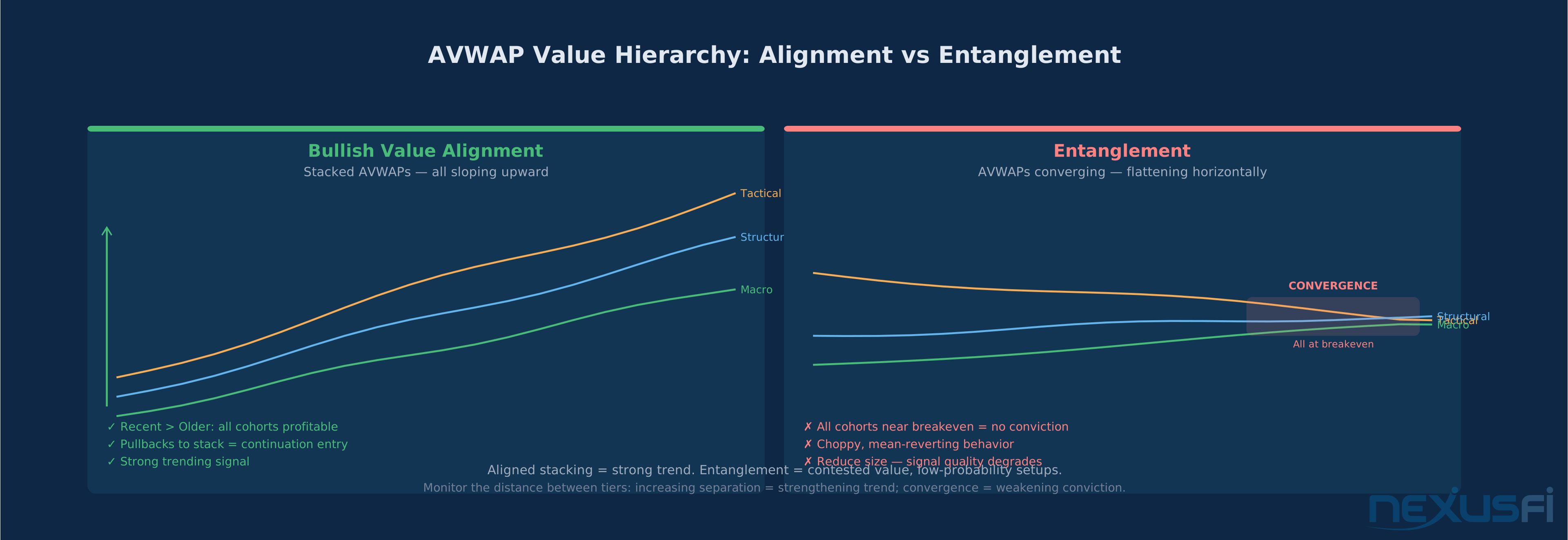
When faster AVWAPs sit above slower ones in an uptrend — all sloping up — this is bullish value alignment: all cohorts profitable, pullbacks holding the stack invite continuation. When faster anchors fall below slower ones or AVWAPs converge horizontally, value alignment is breaking down, often preceding regime change.
Entanglement: When multiple AVWAPs converge into a tight band, different participant cohorts average nearly the same price. This produces choppy, mean-reverting behavior with low follow-through. Reduce size — signal quality degrades when all participants are near breakeven simultaneously.
The Three High-Probability Setups #
Setup 1: Swing-Low AVWAP Support in Uptrend
Context: Clear structural uptrend. Price has made a meaningful swing low followed by a sustained advance. Now in a normal pullback.
Setup mechanics:
1. Identify the most recent meaningful swing low (visible on a timeframe 2-3x higher than your trading timeframe)
2. Anchor AVWAP to the swing low's bar
3. Monitor as price pulls back from the current high
4. Watch for price to reach the AVWAP zone from above
Entry conditions (all required):
- Price enters the AVWAP zone but fails to establish closes below it
- Volume on the approach is normal to elevated (showing sellers are engaged but not overwhelming)
- Volume on the attempted break lower is declining (absorption signal)
- Price closes back above AVWAP within 1-3 bars
Stop placement: Below the lowest close of the rejection sequence (typically 1-2 ticks below)
Target: Prior swing high, or the nearest swing-high AVWAP resistance above the current level
When to abandon: If price closes through AVWAP and trends below it with increasing momentum, the thesis is invalidated. Don't average into a losing AVWAP hold.
Setup 2: Multi-Anchor Confluence Trade
Context: Two or more AVWAPs from different tiers converge within a narrow band. Price approaches from one direction.
Setup mechanics:
1. Maintain the three-tier AVWAP framework (Macro + Structural + Tactical)
2. Identify a zone where 2+ AVWAPs are within 0.1-0.15% of each other
3. Price approaches the confluence zone with a clear direction of movement
Entry: Apply Setup 1's close-based confirmation. Rejection: enter when price closes back to the entry side after failing the band. Acceptance: enter on the first pullback after closing through on above-average volume. Multiple cohorts defending or abandoning the same zone simultaneously is what makes this the highest-conviction AVWAP setup.
Setup 3: Anchor Regime Shift
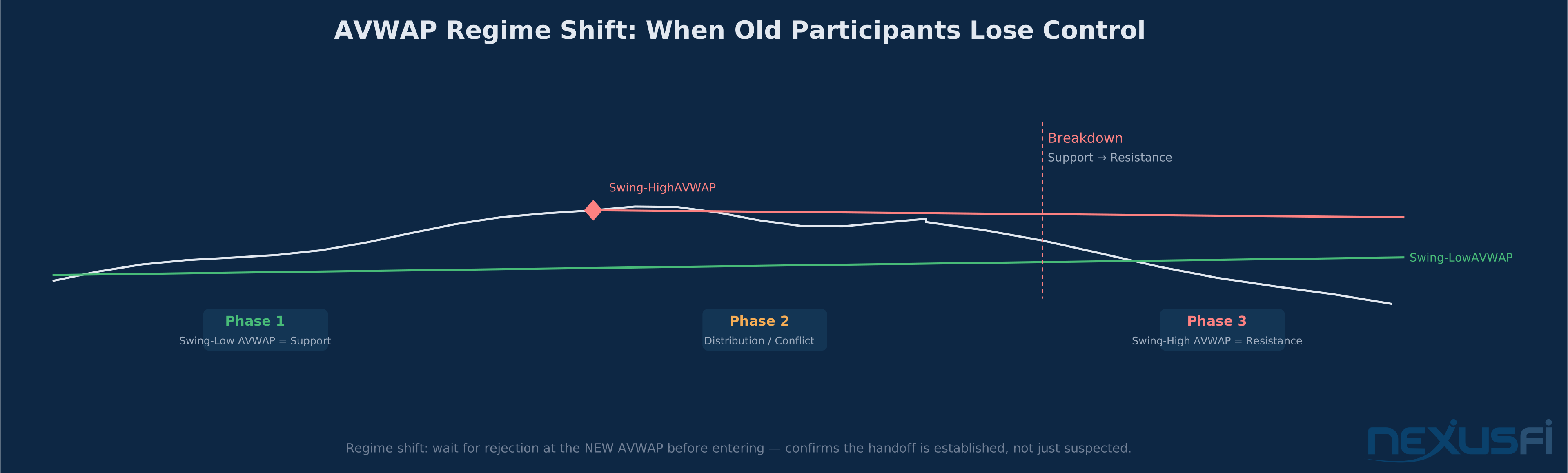
Context: Price has been respecting one AVWAP (e.g., the swing-low anchor as support) but breaks through it decisively. A new AVWAP (e.g., the swing-high anchor from above) begins to act as resistance.
What this tells you: The market is transitioning between value regimes. The old dominant participant cohort (those defending from the swing-low anchor) is losing control. A new reference point — the swing-high anchor from which sellers were profitable — is now the operative value reference.
Entry: Confirm acceptance below the broken AVWAP (multiple closes, expanding distance), then apply Setup 1's confirmation at the new AVWAP resistance. Wait for that rejection before entering — it confirms the handoff in control between cohorts and validates the regime shift signal.
Platform Implementation for Futures Traders #
Sierra Chart
Sierra Chart has one of the strongest AVWAP implementations — native ETH/RTH handling, continuous contract splicing, right-click anchor placement. Color-code by tier: blue/purple for macro, gray for structural, orange/yellow for tactical.
NinjaTrader 8
NinjaTrader 8 includes native Anchored VWAP with click-to-anchor placement. @trendisyourfriend shared C# code for automated swing-anchor detection [7]. Critical: use actual trade prices for continuous contracts — roll-adjusted data creates artificial price gaps.
TradingView
TradingView's native Anchored VWAP uses click-to-anchor placement. Test multi-day anchors against intraday benchmarks — some resolutions have issues with extended lookback periods.
Common Implementation Pitfalls
Anchor precision: A one-bar offset produces measurably different AVWAP values, especially early after the anchor. Snap to the exact extreme bar (actual high/low), not the bar before or after.
Volume data quality: Use CME actual tick volume from your data provider for ES/NQ. Some retail providers delay or aggregate volume in ways that distort AVWAP calculations.
Session filter choice: Decide whether AVWAP uses all hours (ETH) or RTH only. A swing-low anchored at 2 AM EST looks different with each. Neither is wrong, but mixing methodologies produces inconsistent results.
Common Mistakes That Destroy AVWAP Edge #
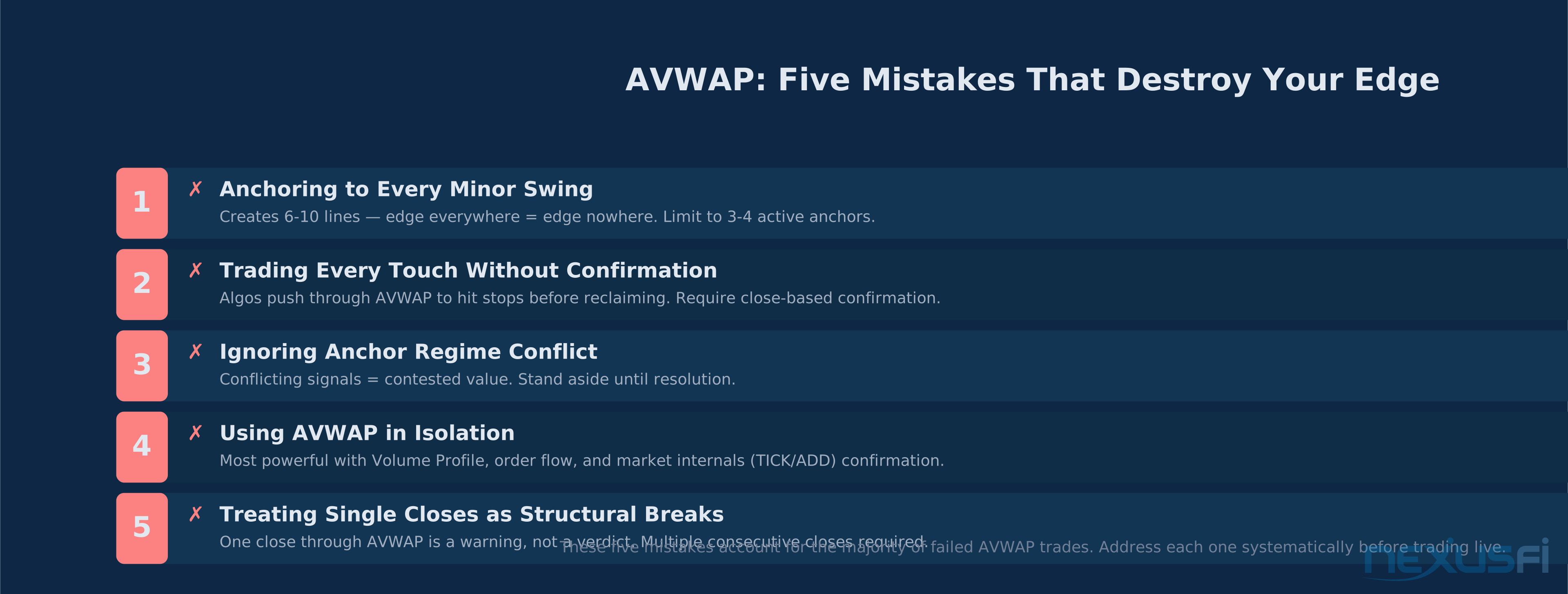
Mistake 1: Anchoring to Every Minor Swing
The most common error. Traders with AVWAP experience but lack of discipline place anchors at every visible swing, creating a spaghetti chart with 6-10 lines. In this state, price will almost always be near some AVWAP, producing the illusion of signal everywhere and edge nowhere.
The fix: Limit active anchors to 3-4 maximum at any time. Use the practical filter: if the swing point is not clearly visible and meaningful on a timeframe 2-3x larger than your trading chart, it does not qualify for an anchor. Maintain discipline — remove old anchors that no longer contain meaningful participant activity.
Mistake 2: Trading Every Touch Without Confirmation
AVWAP is not a support/resistance line in the classical sense. Algorithms routinely push price through AVWAP levels to trigger stops before reclaiming the level.
[8]. Trading every intrabar touch of AVWAP without requiring close-based confirmation will produce a significant number of false signals.
The fix: The close-based confirmation rule — and the distinction between wick stops and actual closes — is covered in full in the Behavioral Modes section above. Applying it consistently eliminates the majority of false signals from AVWAP analysis.
Mistake 3: Ignoring Anchor Regime Conflict
When multiple AVWAPs give conflicting signals — one suggesting support while another suggests resistance — the correct response is to reduce position size or stand aside. Attempting to select one signal over another without resolution is an exercise in rationalization.
The fix: Conflicting signals mean the market is in a contested value regime. Wait for resolution: either the conflict resolves via acceptance through one of the disputed levels, or AVWAPs converge into a clearer configuration. "No trade" is a valid and often profitable position.
Mistake 4: Using AVWAP in Isolation
AVWAP is most powerful combined with other analysis tools. Without context, it is a statistical average with no directional content. Always combine with at least one of: Volume Profile (VPOC, Value Area), order flow analysis (delta divergence), higher-timeframe market structure, or session market internals (TICK, ADD) for ES/NQ.
Mistake 5: Treating AVWAP Breaks as Decisive
A price bar closing below AVWAP is not, by itself, a structural break. It is one data point. Markets frequently close through AVWAP, fail to follow through, and return to the prior side. This is especially common near session opens and during low-liquidity periods.
The fix: Structural acceptance requires multiple confirming closes, expanding distance, and volume confirmation. A single close through AVWAP is a warning, not a verdict.
Risk Management: Where AVWAP Systems Break Down #
AVWAP-based trading degrades predictably in specific conditions:
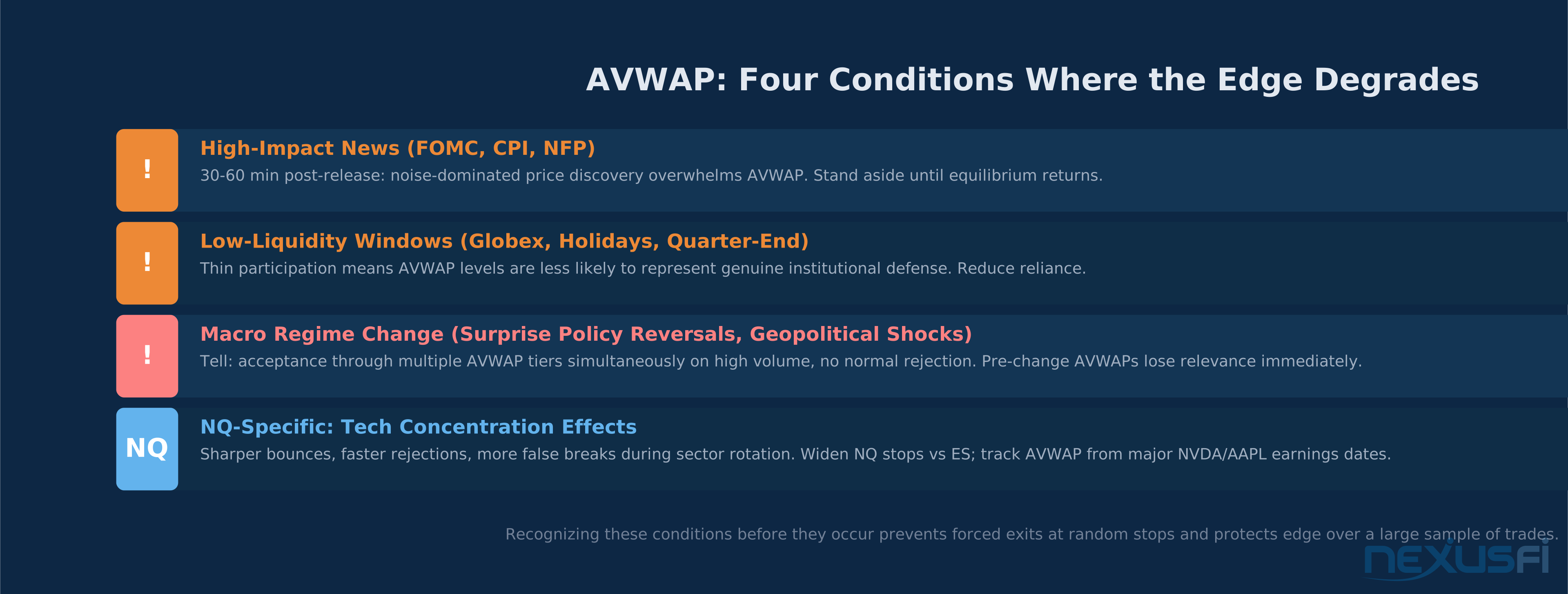
High-impact news: The 30-60 minutes following FOMC, CPI, or NFP releases overwhelm AVWAP references with noise-dominated price discovery. Stand aside until equilibrium re-establishes.
Low-liquidity windows: Overnight Globex, holidays, and month/quarter-end reduce AVWAP reliability — levels are less likely to represent genuine institutional defense during thin participation.
Regime change moments: When major macro themes shift (surprise policy reversals, geopolitical shocks), pre-change AVWAPs lose relevance immediately. The tell: acceptance through multiple AVWAP tiers simultaneously on high volume without normal rejection behavior.
NQ-specific: NQ reacts more sharply to AVWAP than ES due to tech concentration — sharper bounces, faster rejections, but more frequent false breaks during sector rotation. Widen stops for NQ versus ES at comparable setups, and monitor AVWAP from major NVDA/AAPL earnings dates.
Connecting AVWAP to the Broader Analytical Framework #
AVWAP is most powerful in conjunction with independent confirmation tools:
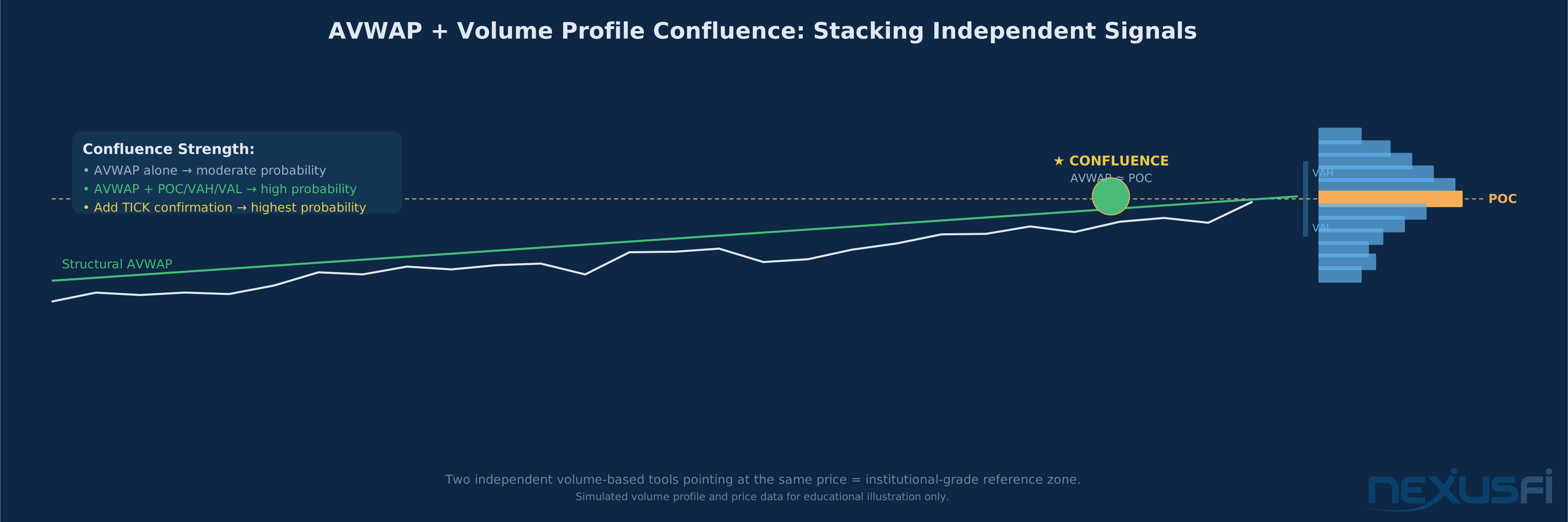
Volume Profile (VPOC/Value Area): When VPOC or Value Area boundaries align with a significant AVWAP level, two independent volume-based tools confirm the same zone — the highest-quality confluence available.
Daily VWAP: Price above both session VWAP and structural AVWAP confirms bullish alignment. When session VWAP falls below structural AVWAP, short-term deterioration against the structural picture signals potential regime shift.
Market internals (TICK, ADD): A rejection at significant AVWAP accompanied by deteriorating TICK confirms sellers dominate at the breadth level, not just this instrument.
Order flow: Delta showing absorption at AVWAP zones (heavy attempts met with limited progress) is the cleanest confirmation for mean-reversion setups — institutional defenders are actively working the level.
The AVWAP framework rewards patience. Choose anchors that represent genuine institutional repricing moments, limit active count to three or four, and require close-based confirmation before acting. Used this way, AVWAP provides a cost-basis reference that static support and resistance cannot replicate.
Knowledge Map
Prerequisites
Understand these firstGo Deeper
Build on this knowledgeReferences This Article
Articles that build on this topicCitations
- — VWAP for stock index futures trading? (2019) 👍 16“Anchored VWAPs: The anchored VWAP typically refers to a session. A daily VWAP has an anchor point at the start of the trading day. You can calculate them for 10 years provided that you have minute data over that period.”
- — VWAP for stock index futures trading? (2020) 👍 9“For futures, weekly VWAP, monthly VWAP and Yearly VWAP work well as reference levels. Anchored VWAPs from prior structural pivots provide additional context.”
- — VWAP for stock index futures trading? (2020) 👍 8“The anchored VWAP from the swing low bar gives much better definition. When the wick dipped there were 2 layers of support -- the anchored VWAP was one of them.”
- — Want your NinjaTrader indicator created, free? (2013) 👍 10“Adding VWAPs at swing lows and highs has been promoted by Andrew Coles and David Hawkins under the name of MIDAS. They have published 5 articles in technical analysis journals about this approach.”
- — InletCap's Random Collections (2016) 👍 18“Due to the mean reverting character of the ES, the market tends to close near the VWAP. This mean-reverting behavior is what makes anchored VWAP levels worth watching as price returns to test them.”
- — VWAP for stock index futures trading? (2020) 👍 35“Standard deviation reversion to VWAP: after price extends to +1SD or -1SD from VWAP, the odds favor a return toward the mean. The VWAP acts as a magnetic reference that price tends to revisit.”
- — Darmok and Jalad at Tanagra (2025) 👍 1“C# code that calculates and plots a VWAP starting from the most recent confirmed swing high or swing low -- the anchored VWAP concept applied programmatically.”
- — VWAP for stock index futures trading? (2020) 👍 14“Swing VWAPs have the most degree of interpretation. Just like an out of the box Swing indicator, you need a certain number of bars preceding a high or low to properly define what constitutes a significant swing anchor.”
- CME Group — Cmegroup.com (2024)
- Andrew Coles, David G. Hawkins — Wiley.com (2011)
- — Session Toolbox -- Trading the Session (Fat Tails) (2013) 👍 26“Session VWAPs anchor to the session open, prior highs and lows, or any significant event. The anchored VWAP keeps a running record of where participants have averaged since that anchor point.”