



Price Discovery in Futures Markets
Overview #
Price discovery is the process by which futures markets determine fair value — the price at which buyers and sellers agree to transact right now. It's not a formula. It's not an indicator. It's the real-time auction that happens every time an order hits the book. Every tick on your chart is the output of this process, and understanding how it works changes how you read markets.
Most traders stare at candlestick charts and think that's the market. It's not. The chart is a summary — a lossy compression of what actually happened in the order book. Price discovery happens in the book itself: the continuous interaction of limit orders, market orders, cancellations, and the behavior of liquidity providers who stand between you and the other side of your trade.
The Continuous Double Auction #
Futures exchanges run what's called a continuous double auction. "Double" because both buyers and sellers submit orders simultaneously. "Continuous" because matching happens in real time, not at fixed intervals.
Here's how it works mechanically:
Limit orders are resting orders at specific prices. A limit buy at 5600.00 says "I'll buy at this price or better." These orders build the order book — the visible supply and demand at each price level. They provide liquidity.
Market orders are aggressive orders that demand immediate execution. A market buy sweeps through the resting sell orders (the ask side) until filled. These orders consume liquidity.
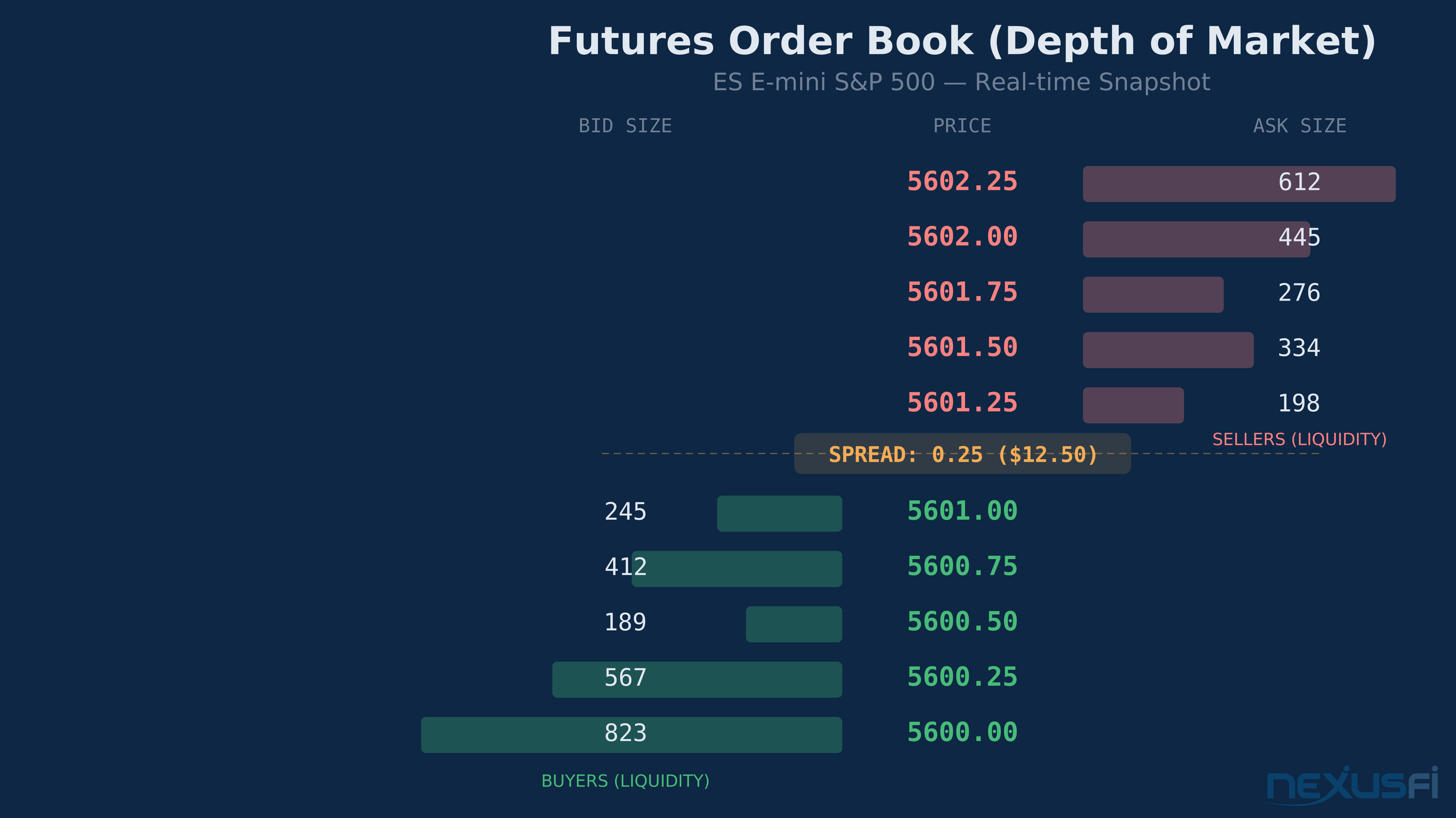
The best bid is the highest price someone is willing to pay right now. The best ask (or offer) is the lowest price someone is willing to sell at. The gap between them is the bid-ask spread. When a market order arrives and matches against a resting limit order, a trade occurs. That's a tick on your chart.
Price moves when the balance between aggressive buyers and sellers shifts. If aggressive buyers keep lifting offers (buying at the ask), the ask side gets consumed and the price ticks up. If aggressive sellers keep hitting bids, the bid side gets consumed and price ticks down. The order book is constantly being built and destroyed on both sides.
This is at the core different from how most retail traders think about price. There's no mysterious force moving candles. There are orders. Aggressive orders move price. Passive orders absorb it. That's the entire game.
As [John Hoagland explained on NexusFi] [1]: "Price discovery is the function of all the participants in the auction establishing the collective perception of value." When the collective shifts, price moves to find the new balance point.
The Order Book: What You're Actually Looking At #
The Depth of Market (DOM) displays the order book in real time. Most platforms show 5-10 price levels on each side of the current market. Here's what the columns mean:
- Bid size: Total resting buy orders at each price level
- Ask size: Total resting sell orders at each price level
- Last trade: The most recent execution price
- Volume: How many contracts have traded at each level
What most traders miss: the DOM is a snapshot, not a commitment. Orders can be added and canceled in microseconds. [As discussed in NexusFi's DOM analysis threads] [2], less than 10% of traders focus on the right signals in the DOM. What matters isn't the size sitting at a level — it's how that size changes in response to price approaching it.
A critical distinction: the mid-quote (the average of the best bid and best ask) is generally a better indicator of where the market thinks fair value is than the last trade price. The last trade reflects who just got aggressive. The mid-quote reflects where both sides of the market currently stand.
For example, if ES is 5600.25 bid at 5600.50 offer, the mid-quote is 5600.375. If a large buy market order lifts the offer and trades at 5600.50, the "price" jumps — but the mid-quote only moves if the quotes themselves shift. Sometimes quotes shift before any trade occurs, which brings us to information incorporation.
How Information Gets Into Prices #
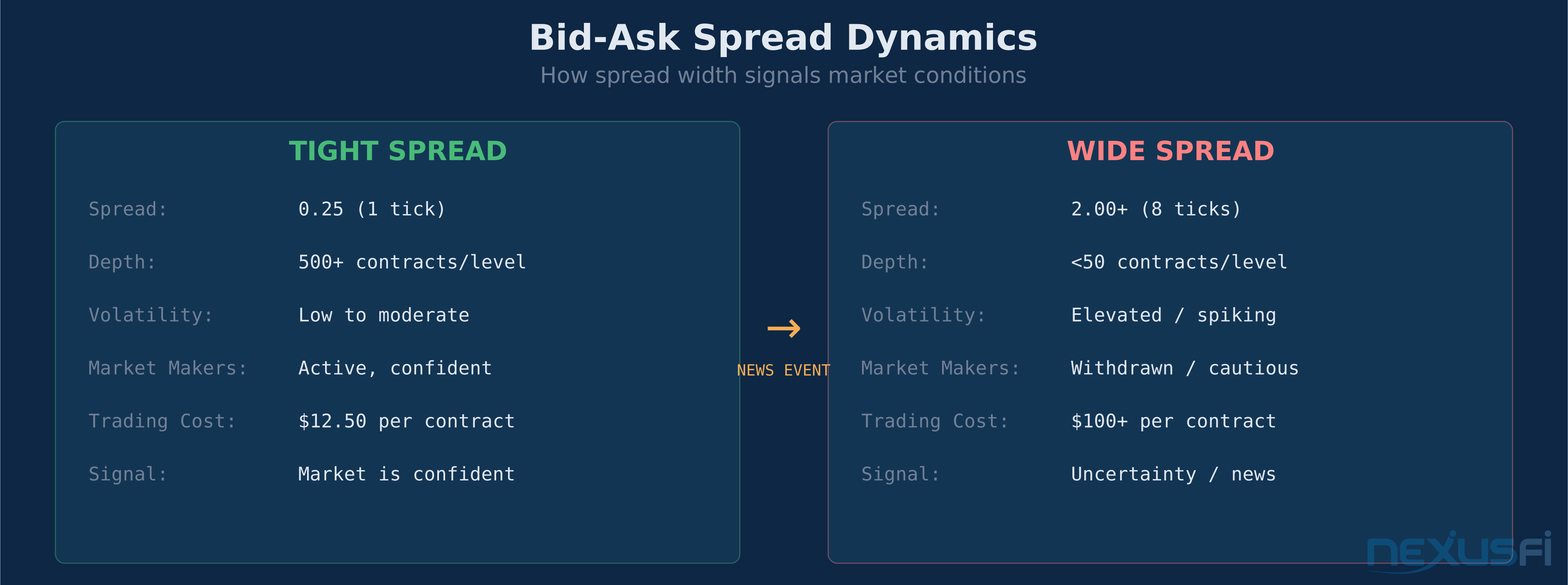
Information enters futures prices through a specific sequence. Understanding this sequence is the difference between reacting and anticipating.
Channel 1: Direct Aggressive Trading (Fastest) #
When FOMC announces a rate decision, traders who have a view immediately fire market orders. Within milliseconds, aggressive buy or sell flow hits the book, consuming liquidity on one side. Price moves violently as depth gets swept through multiple levels. This is the "fast channel" — information translated directly into aggressive order flow.
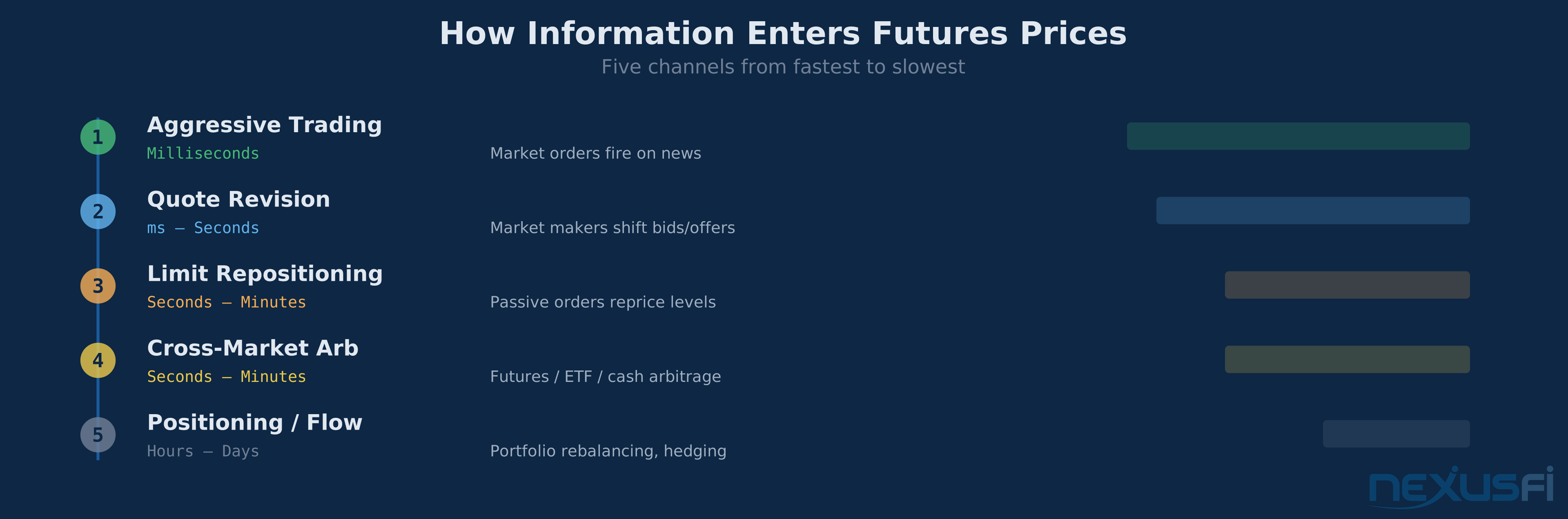
During these events, the bid-ask spread typically widens dramatically. Market makers pull their quotes (more on this below), reducing available liquidity, which amplifies price movement for a given order size.
Channel 2: Quote Revision (Fast) #
Here's something most chart traders never consider: price can move before a single trade occurs. Market makers and liquidity providers continuously adjust their quotes based on new information. If NFP comes in hot, market makers may shift their entire quote schedule up by 10 points — raising both their bids and offers — before any trade executes. The mid-quote moves, reflecting the new consensus, even though the "last trade" price hasn't changed.
This is why watching only the time and sales tape gives an incomplete picture. Quote revisions are a form of price discovery that's invisible on a standard chart.
Channel 3: Limit Order Repositioning (Medium Speed) #
After the initial shock of a news event, traders begin repositioning. New limit buy orders appear at higher prices. Existing limit sell orders get canceled and re-entered at higher levels. The entire order book shifts, reflecting the new equilibrium. This process takes seconds to minutes, depending on the magnitude of the information.
Channel 4: Cross-Market Arbitrage (Medium-Fast) #
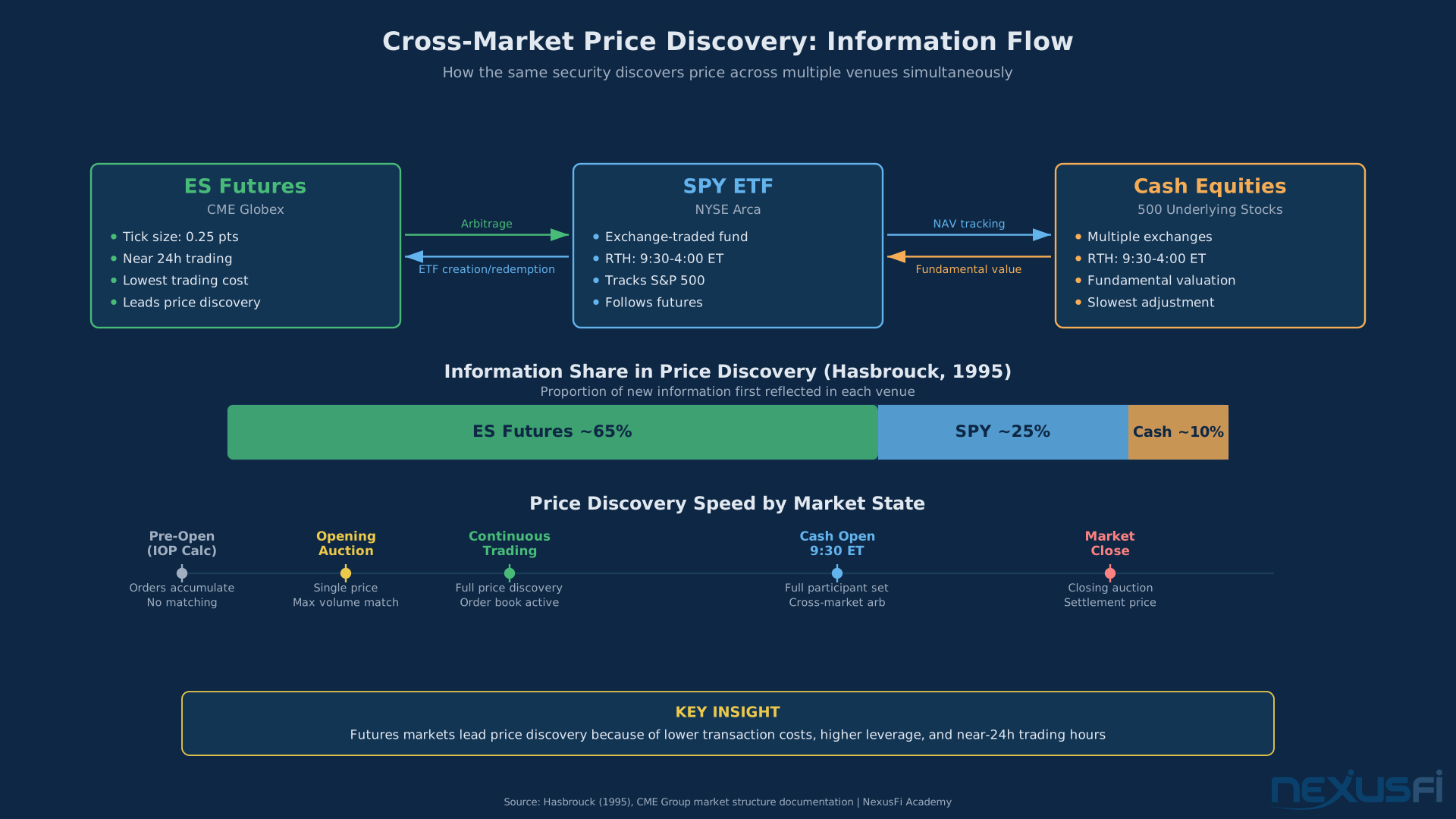
Futures don't discover price in isolation. ES futures, SPY ETF, and the 500 underlying stocks are all linked. Hasbrouck's foundational research on multi-market price discovery (1995) [7] showed that when the same security trades across multiple venues, price discovery concentrates in whichever market has the lowest trading costs and highest information content — futures markets routinely lead their cash counterparts in this regard. When ES moves, arbitrageurs immediately buy or sell SPY and the basket of stocks to capture any discrepancy. This keeps the futures price anchored to the underlying cash market.
Calendar spreads work similarly. The front month ES contract and the next quarterly contract are linked by carry (financing cost minus dividend yield). If the front month moves without the back month following, spread traders step in. Information flows across contract months, across related commodities, and across asset classes.
For energy traders, CL (crude oil) and NG (natural gas) share some macro drivers. For index traders, ES, NQ, and YM share broad equity market drivers but differ in sector composition. Price discovery in one instrument informs discovery in related instruments — constantly.
Channel 5: Inventory and Positioning Effects (Slower) #
Not all price movement reflects new fundamental information. Changes in trader positioning, margin requirements, funding constraints, and hedging needs create price pressure that unfolds over hours or days. A large asset manager rebalancing a portfolio might sell ES futures steadily over an afternoon, pushing price down not because of bearish information but because of mechanical flow.
Understanding whether price movement is information-driven or flow-driven is one of the harder problems in trading. The market doesn't distinguish between the two in real time — a sell is a sell regardless of motivation.
Market Makers: The Price Discovery Infrastructure #
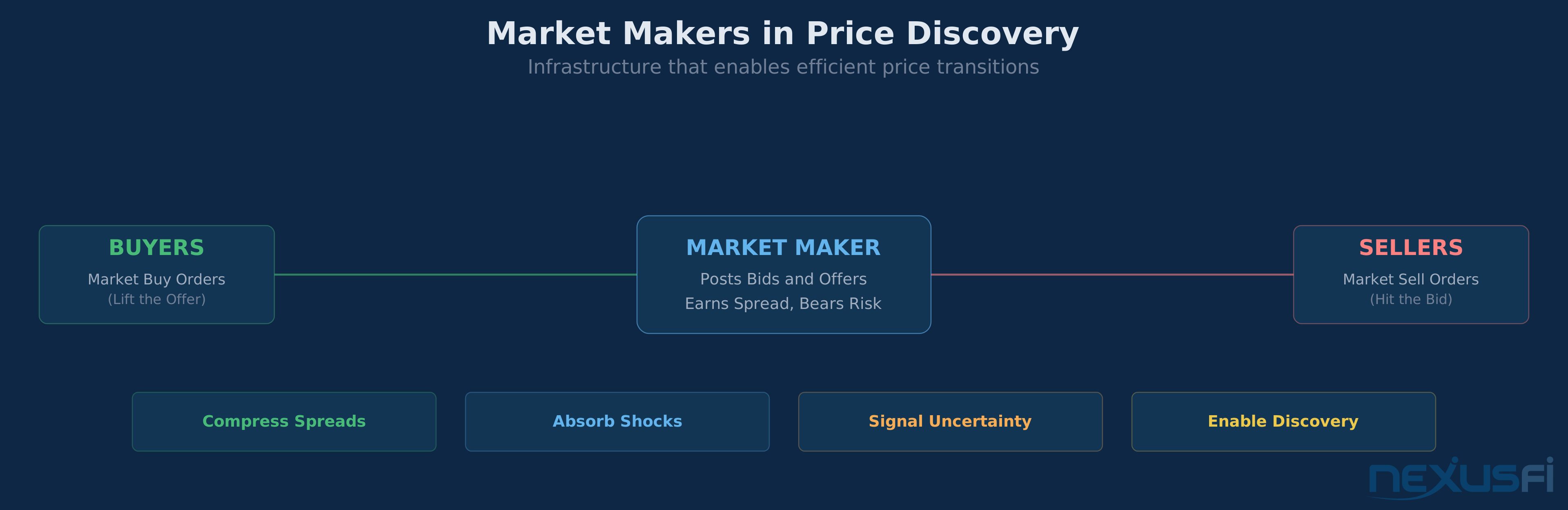
Market makers are liquidity providers who continuously post bids and offers. In futures markets, they can be designated market makers (with exchange obligations) or proprietary trading firms that choose to provide liquidity for profit.
Their business model is straightforward: buy at the bid, sell at the ask, pocket the spread. If the bid-ask spread on ES is one tick (0.25 points = $12.50 per contract), a market maker who buys and sells at those prices earns $12.50 per round trip before costs.
The catch: adverse selection. When a well-informed trader hits your offer, the price is likely to continue moving against you. Market makers lose money on these trades. Their profitability depends on earning the spread on enough uninformed flow to offset losses from informed flow.
This dynamic shapes price discovery in several ways:
Spread width reflects uncertainty. When market makers face higher adverse selection risk (around news events, during illiquid periods), they widen their spreads to compensate. A wider spread means higher transaction costs for everyone and slower price discovery. When conditions are calm and predictable, spreads tighten, making it cheaper and faster for prices to adjust.
[As the NexusFi community has discussed] [5], market makers "maintain their actual inventory at their target level" by selling as much on the offer as they buy on the bid. When inventory gets out of balance, they shade their quotes — lowering both bid and offer if they're long and want to sell, raising both if they're short and want to buy. This quote-shading is itself a form of price discovery.
Depth reflects confidence. When market makers post large size at tight spreads, they're signaling confidence in current price levels. When they pull size and widen, they're signaling uncertainty. Watching how depth changes — not just the snapshot — tells you about the market's confidence in current prices.
Market makers don't set the price. This is a common misconception. They don't determine where the market should trade. They determine how quickly and at what cost the market can transition from one consensus to another. They're the infrastructure of price discovery, not the decision-makers.
Order Flow: The Leading Indicator #
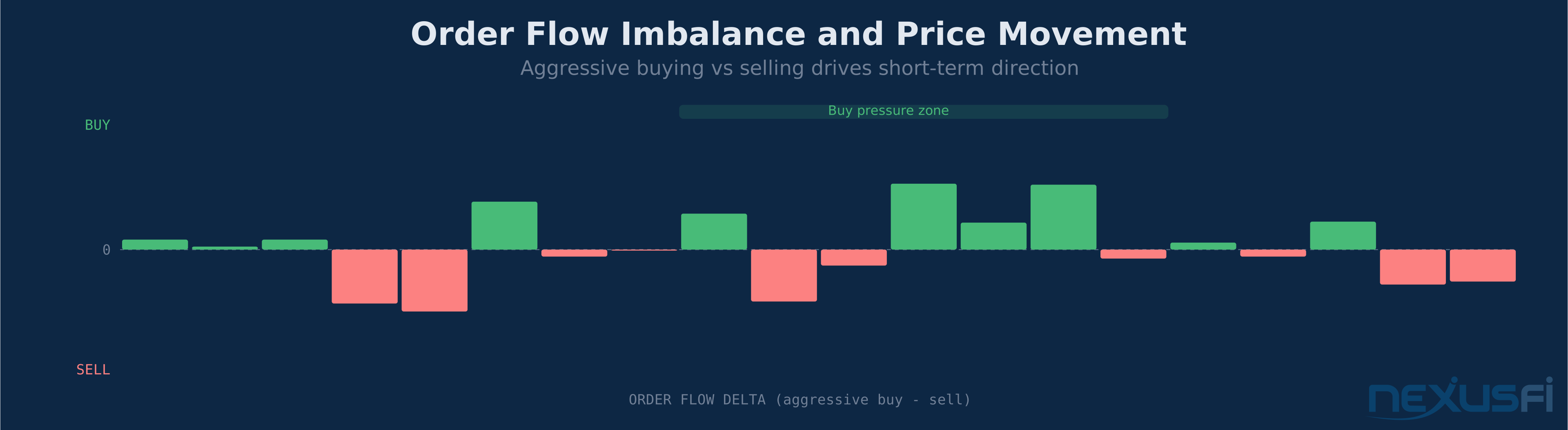
Order flow is the sequence of aggressive orders hitting the book. It's the most direct measure of real-time supply and demand because it represents traders putting capital at risk — not just expressing opinions with limit orders that can be canceled.
Order flow imbalance — the ratio of aggressive buying to aggressive selling — is a leading indicator of short-term price direction. Multiple academic studies and practitioner experience confirm this relationship. When buying pressure exceeds selling pressure at a given price level, the probability of price moving higher increases.
[Hyperscalper's order flow analysis on NexusFi] [4] breaks down the distinction between retail participants who "pay the spread" with market orders (liquidity takers) and those who post limit orders (liquidity makers). The imbalance between these two groups at any moment is the raw signal of where price wants to go next.
Key order flow signals include:
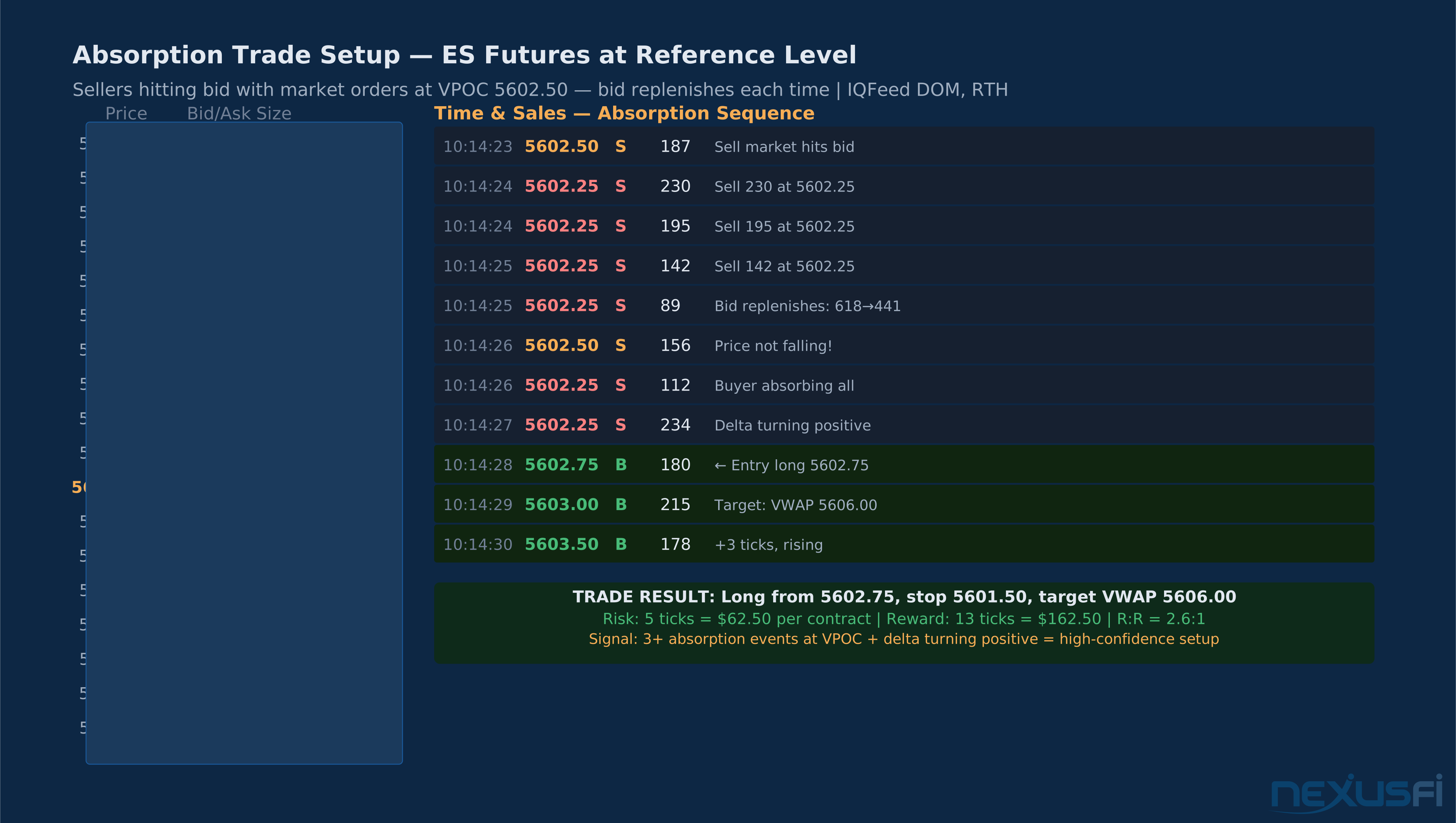
Absorption: Large resting limit orders that absorb aggressive flow without moving. If sellers are hammering the bid with market orders but the bid size keeps replenishing, someone is absorbing the selling. Price is likely to reverse higher when the selling exhausts itself.
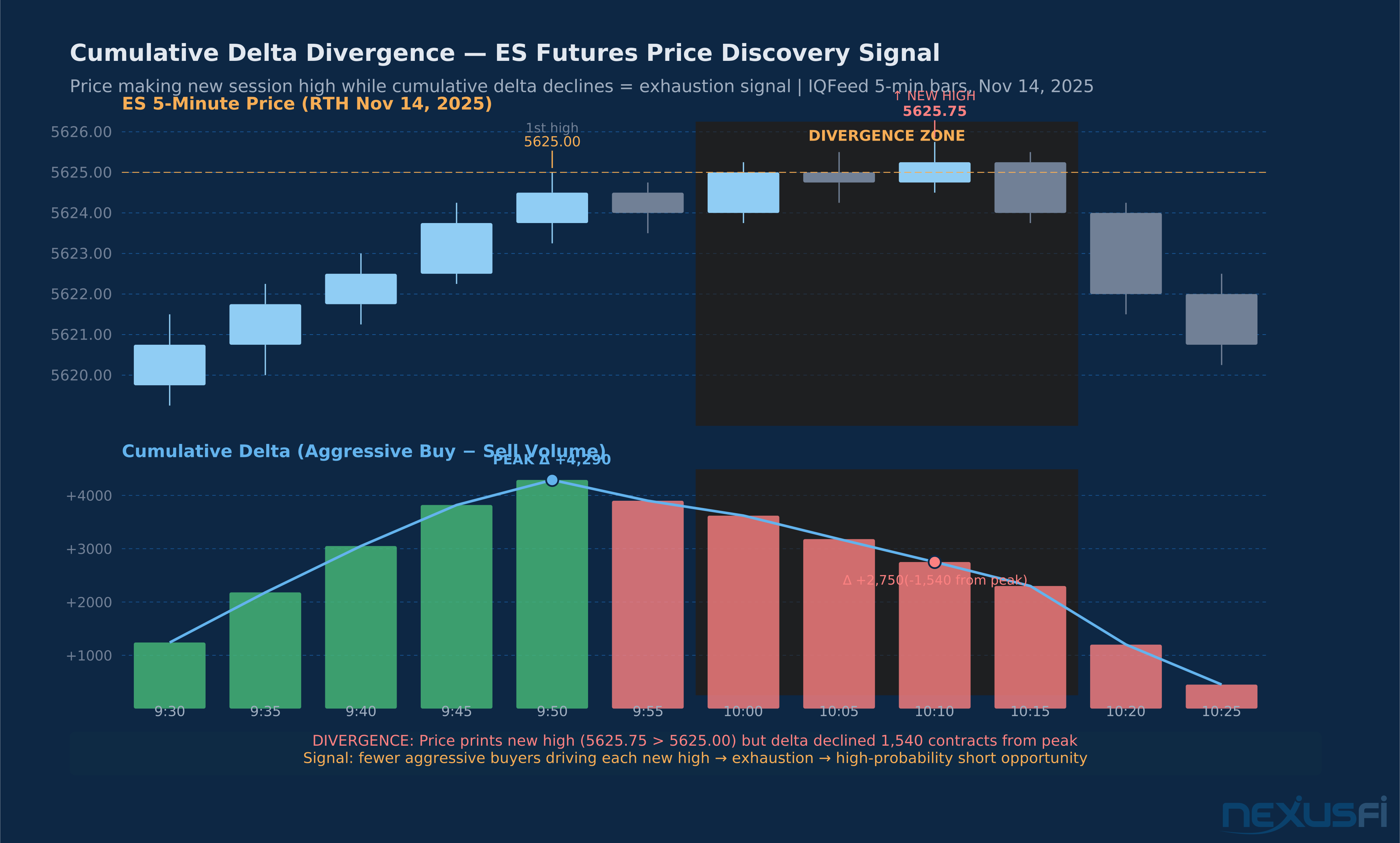
Exhaustion: Declining aggressive volume in the direction of a move. If price has been rallying on aggressive buying but each new high produces less buy volume, the move is running out of fuel. The buyers who wanted in are already in.
Cancellation patterns: Orders that get canceled as price approaches them. If 500 contracts are resting on the bid three ticks below current price, but they disappear as price drops toward that level, those orders were never real support. This "spoofing" or "pulling" behavior is a common feature of modern electronic markets, though large-scale spoofing is illegal.
Delta divergence: Price making new highs while cumulative delta (net aggressive buying minus selling) is declining. This means price is being pushed higher by fewer and fewer aggressive buyers — a warning sign that the move may be exhausted.
The Opening Auction #
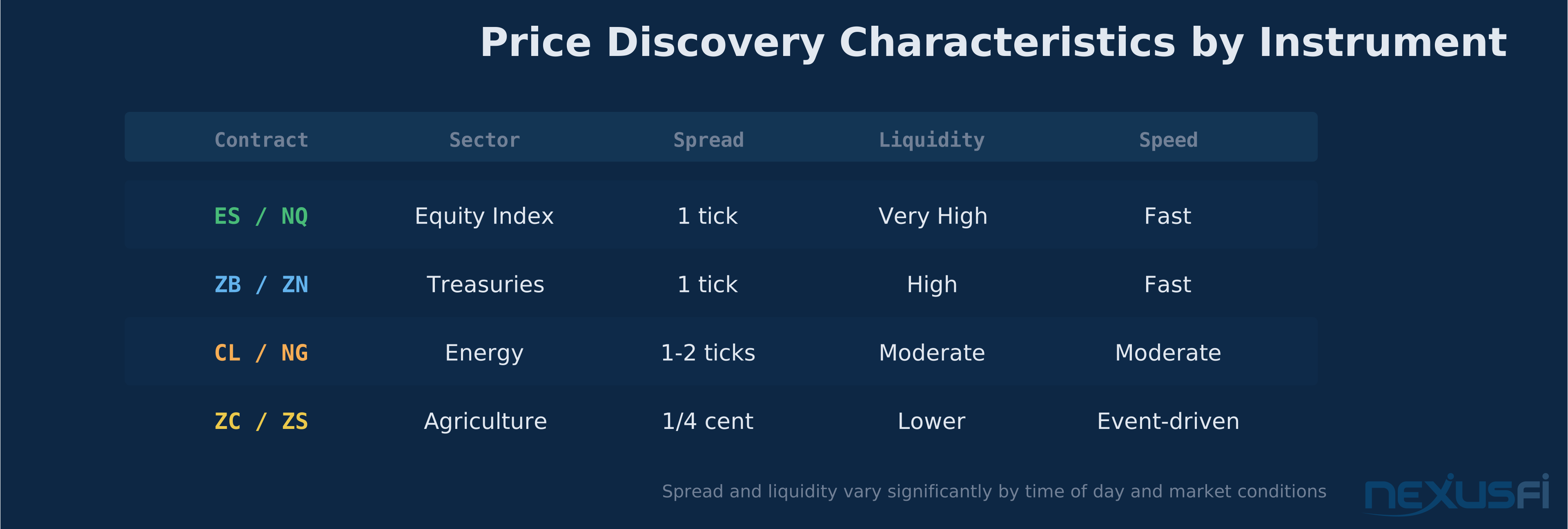
Not all price discovery is continuous. Most futures exchanges run a call auction at the open (and sometimes at the close). During the pre-market period, traders submit orders that accumulate without matching. At a specified time, the exchange calculates the single price that maximizes the volume of matching orders and executes them all at once. On CME Globex, the trading engine transitions through distinct market states — Pre-Open, Opening, and Open — with the Indicative Opening Price (IOP) [8] calculated during Pre-Open to determine the price where maximum volume will match.
[Fat Tails' discussion on NexusFi] [3] noted that while we usually assume continuous double auction pricing, the opening call serves a different function: it aggregates overnight information into a single reference price. The opening print often shows a significant gap from the prior close, reflecting all the information that accumulated while the continuous auction was closed.
The opening auction is where much of the daily price discovery happens for instruments that don't trade 24 hours. Even for nearly-24-hour futures like ES, the cash equity open at 9:30 ET triggers a surge of price discovery as the full participant set enters the market.
Practical Implications for Traders #
Understanding price discovery changes how you approach markets:
1. Watch the book, not just the chart. The chart tells you where price has been. The order book — depth, spread, quote changes, order flow — tells you about the current state of the auction. If you're trading off a naked chart with no book data, you're making decisions with outdated information.
2. Spread changes are signals. If the ES spread suddenly widens from 1 tick to 3 ticks, something is happening. Market makers are pulling back. Volatility is about to increase. Don't place market orders into a wide spread unless you have strong conviction.
3. The mid-quote matters more than the last trade. For assessing "where the market is right now," the mid-quote (average of best bid and ask) is more informative than the last trade price. The last trade might have been an aggressive order that temporarily displaced price.
4. Order flow imbalance leads price. Before price moves on your chart, order flow shifts in the book. Learning to read delta, absorption, and exhaustion patterns gives you a lead time that chart patterns alone can't provide.
5. Not all price movement is information. Some moves are mechanical — portfolio rebalancing, hedging flows, option expiration effects. These create tradeable dislocations because the price movement isn't driven by new information about fair value.
6. Liquidity is not constant. The same 100-lot market order will move ES by 1 tick at 10:00 AM ET and might move it by 5 ticks at 3:00 AM ET. Price discovery is more efficient during liquid hours because more participants and tighter spreads allow faster, cheaper information incorporation.
Trade Setup Examples #
The principles above aren't academic. Here are two concrete setups that translate price discovery mechanics into executable trade ideas.
Setup 1: Absorption Reversal at a Reference Level
[As Private Banker described on NexusFi] [9], absorption is "when you see either buyers or sellers cutting off the opposing traders." Here's what that looks like as a trade:
Context: ES is pulling back toward a known reference level — prior day's high, a volume point of control (VPOC), or a level where significant volume traded previously. You're watching the DOM and time & sales.
What you're looking for: Aggressive sellers hitting the bid with market orders at the reference level, but bid size keeps replenishing. The sell market orders are printing on time & sales, the bid is getting hit repeatedly — but the price doesn't drop. Someone is absorbing the selling.
Specific conditions:
- Price reaches a reference level (prior day high, VPOC, or high-volume node)
- Bid size at the level is 600+ contracts (for ES during RTH) and replenishes after being partially filled
- You see 3 or more prints where 200+ contracts hit the bid and the bid reloads to similar size within seconds
- Cumulative delta at the level is flat or turning positive despite heavy sell prints
Entry: Long at market or limit at the offer price (one tick above the absorption level) after 3+ absorption prints confirm the bid is being defended. Example: absorption confirmed at 5602.50, enter long at 5602.75.
Stop: 2 ticks below the absorption level. If the level breaks, the absorption thesis is wrong and you need to be out fast. In this example, stop at 5601.50 — a $50 risk per contract.
Target: VWAP (if below current price), the next resistance level, or 4-6 ticks for a scalp. If VWAP is at 5606.00, that's a 3.25-point target ($162.50) against $50 risk — better than 3:1.
When this fails: The bid size is spoofed. If the resting size disappears as selling pressure mounts rather than absorbing it, the defense was an illusion. This is why the stop is tight and non-negotiable. Also fails in fast markets (FOMC, NFP) where normal DOM patterns break down.
Setup 2: Delta Divergence Fade
[As tigertrader documented on NexusFi] [10]: "New high, but negative cumulative delta... the convictions of traders' choices do NOT match price." That mismatch is tradeable.
Context: ES is making new session highs during regular trading hours (RTH). Price is printing higher on the chart. But when you look at cumulative delta, it's declining or flat. The chart says "buyers in control." The order flow says "not really."
What you're looking for: Price makes a new high while cumulative delta has been declining for 10-15 minutes. The price advance is happening on limit order revisions (market makers adjusting quotes higher) rather than aggressive buying.
Specific conditions:
- Price prints a new session high (or new 30-minute high in a range day)
- Cumulative delta has been declining for at least 10 minutes leading into the new high
- Volume on the push to new highs is declining compared to earlier pushes (exhaustion signal)
- The bid-ask spread hasn't widened (rules out a news-driven move)
Entry: Short at market when price ticks back below the new high by 2 ticks, confirming the breakout failed to hold. Example: new session high prints at 5627.50, price drops to 5626.75 — enter short.
Stop: 4 ticks above the new high. If price rips through to another new high with conviction, the divergence signal was premature. Stop at 5628.50 — $100 risk per contract.
Target: The prior 30-minute VWAP, or the point of control of the current session's volume profile. If VPOC is at 5620.00, that's a 6.75-point target ($337.50) against $100 risk — 3.4:1.
When this fails: A second wave of aggressive buying enters — new institutional flow, a headline, or a stop cascade on the other side. Delta divergence is a warning sign, not a certainty. It works best when multiple timeframe participants are absent (thin afternoon sessions, pre-holiday trading). During high-conviction moves, delta can diverge for longer than your stop can tolerate.
Risk management note for both setups: These are single-contract examples. Position sizing should follow your account risk rules — 2% max risk per trade for most accounts. A $50k account means $1,000 max loss, which is 20 contracts on the absorption setup or 10 contracts on the delta divergence setup. Start with 1-2 contracts until you've logged at least 20 instances in your journal.
Price Discovery Across Different Futures Markets #
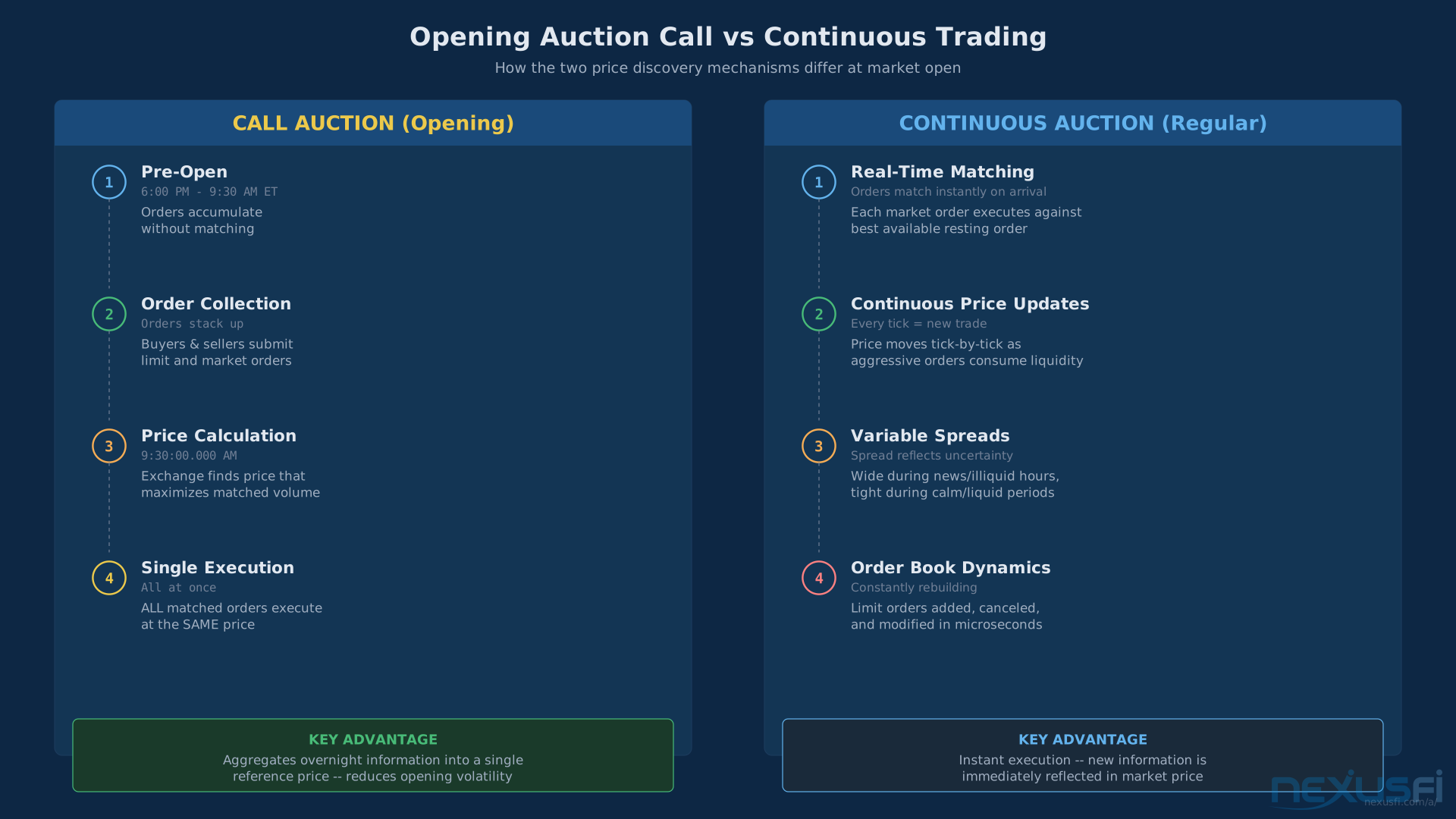
The mechanics are universal, but the character varies by instrument:
Equity Index Futures (ES, NQ, YM): Highly liquid, tight spreads (usually 1 tick during RTH), efficient price discovery linked to underlying equities and ETFs. Cross-market arbitrage keeps prices anchored. Most retail-accessible for order flow analysis.
Treasury Futures (ZB, ZN): Very liquid but quote behavior differs — [NexusFi discussions on ZB/ZN] [6] note that much of the visible liquidity is "virtual" and will be pulled before execution. Price discovery heavily influenced by Fed communication and macro data.
Energy Futures (CL, NG): Wider spreads, more volatile, influenced by physical supply/demand factors. Geopolitical events can cause discontinuous price discovery (gaps). Spread between physical and financial markets adds a layer of complexity.
Agricultural Futures (ZC, ZS, ZW): Seasonal patterns and weather events drive periodic bursts of price discovery. Report days (USDA crop reports, WASDE) create concentrated price discovery episodes similar to FOMC for index futures.
The Bottom Line #
Price discovery isn't abstract theory — it's the mechanical reality of how your P&L gets determined. Every fill you get is the result of your order interacting with the order book at that exact moment. Understanding the auction process, the role of market makers, and the information content of order flow doesn't guarantee profits. But it does mean you're trading based on what's actually happening rather than a simplified chart-based abstraction of what already happened.
The market is an auction. Learn to read the auction, and you're reading the market at its most fundamental level.
Knowledge Map
Prerequisites
Understand these firstGo Deeper
Build on this knowledgeReferences This Article
Articles that build on this topicCitations
- — Trading Lessons from TopstepTrader's John Hoagland (HOAG) (2014) 👍 12“The Auction Futures markets - or any market for that matter, is truly an auction. Price discovery is the function of all the participants in the auction establishing the collective perception of value.”
- — Is DOM worth using if I only have access to best 5 bid and ask levels? (2022) 👍 3“I think at this point, there is too much focus on the DOM levels. If you think about it - there's a few types of players on the DOM showing size: - spreaders - who have no directional bias after the trader - spoofers - who will pull as we get closer...”
- — Opening Call. Is it still available? (2012) 👍 6“When we are trading, we usually assume that price discovery is achieved via a continuous double auction (CDA), where market orders hit the order book, which then triggers a trade within the matching engine.”
- — Design a DayTrader Scalping Order Flow Indicator (2021) 👍 8“WHY SHOULD TRADE FLOW ANALYSIS GIVE YOU AN EDGE? Trading is fundamentally a battle between Buyers and Sellers. As a Retail Trader, you Buy and you Sell from/to a Market Maker.”
- — Market Makers in Futures (2013) 👍 2“Dealers make money by maximizing their realized spread. That is, they favor a balanced order flow where they can sell as much on the offer as they buy on the bid and therefore they earn the spread.”
- — When to trade ZB/ZN? (2017) 👍 7“As said on many other occasions: Most of the liquidity that you can see in the order books / DOMs is purely virtual.”
- — One Security, Many Markets: Determining the Contributions to Price Discovery (1995)
- — CME Globex Indicative Opening Price (IOP) (2024)
- — Volume Profile and Footprint discussion (2012) 👍 21“The way I look at absorption is when you see either buyers or sellers cutting off the opposing traders.”
- — CLASSIC DELTA DIVERGENCE (2010) 👍 5“Classic example of delta divergence. New high, but negative cumulative delta. Delta Divergences can take many forms, but ultimately they show only one thing: the convictions of traders' choices do NOT match price.”