



Price Discovery in Prediction Markets: How Collective Intelligence Sets Prices
Why prediction market prices often beat polls, expert forecasts, and models — and when they don't.
Overview #
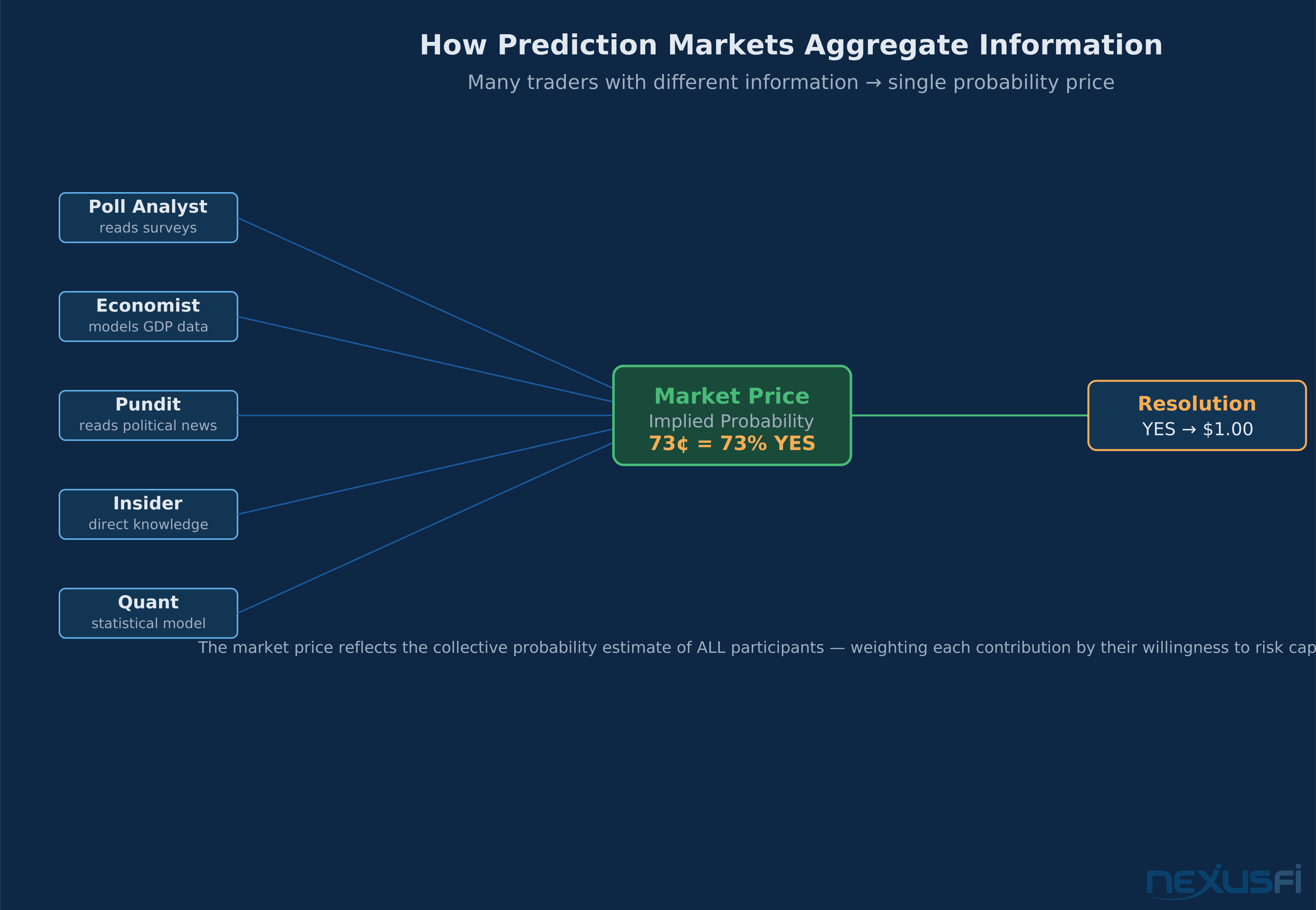
Price discovery is the process by which markets aggregate information from many participants into a single price that reflects collective probability estimates. In prediction markets, this price is the implied probability of an event occurring.
The mechanics sound simple: YES contracts trade between $0.00 and $1.00. A price of 73¢ means the market thinks there's a 73% chance of YES. But behind that single number is a deep information aggregation process that draws on the knowledge, models, and informed bets of everyone willing to put money on it.
Each trader knows a small piece of the puzzle — polling methodology details, local conditions, base rates from their domain expertise — and markets synthesize all of it into a single number.
This article covers how that aggregation works, why it usually produces better forecasts than alternatives, when it breaks down, and what it means for traders on Kalshi, Polymarket, and other platforms.
How Price Discovery Works #
Every prediction market price is set by the interaction of buyers and sellers in a continuous double auction — the same price discovery mechanism that drives traditional futures exchanges, adapted for binary event outcomes. At any moment:
- Buyers of YES believe the true probability is higher than the current ask price
- Buyers of NO believe the true probability is lower than the current bid price
- Market makers earn the spread by quoting both sides
When someone with good information enters the market — say, an economist who has modeled the upcoming CPI release more carefully than the consensus — they submit orders that move the price toward their estimate. Other participants observe the price movement and update their own beliefs so, either following the informed trader's lead or fading the move if they disagree.
The result is a continuous voting machine where votes are weighted by conviction. Unlike a poll where every respondent has equal weight, prediction markets weight each contribution by the capital the participant is willing to risk. An expert who is 90% confident and willing to deploy $50,000 moves the price more than a casual observer who bets $20. As @Hoag explored in his Trading Lessons thread, price discovery is the function of all participants establishing collective perception of value — a principle that holds whether you're trading ES futures or binary event contracts on Kalshi.
The key mechanism: Skin-in-the-game filtering. Every participant who enters a prediction market faces real financial consequences for being wrong. This filters out uninformed noise and amplifies signal from genuinely informed participants.
Why Prediction Markets Often Outperform Polls #
Multiple large-scale studies have compared prediction market accuracy against polls, expert surveys, and quantitative models. The findings are consistent: prediction markets tend to outperform alternatives, especially for political and economic events.
The leading explanation is the Hayek hypothesis, named after economist Friedrich Hayek's 1945 insight that prices aggregate dispersed information no central planner could ever collect. Each trader knows a small piece of the puzzle — polling methodology details, local conditions, base rates from their domain expertise — and markets synthesize all of it into a single number.
Specific Advantages Over Polls #
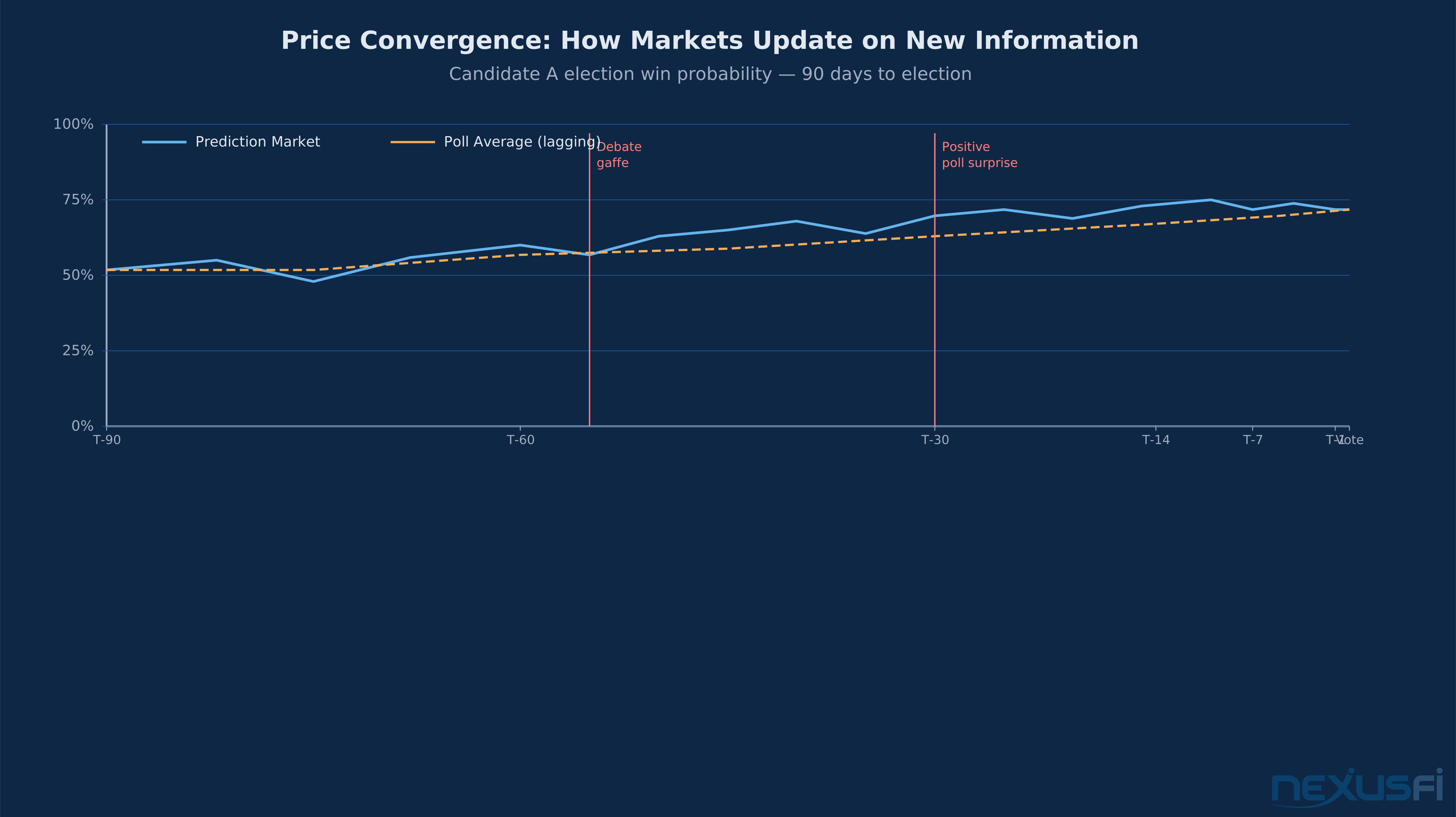
Real-time updating: Polls take days to field, code, and publish. Prediction markets update in milliseconds. When news breaks, market prices adjust within minutes; poll averages may not reflect the same information for two weeks.
No house effects: Different pollsters apply different likely voter screens, different weighting methodologies, different response adjustments. These systematic differences introduce noise into polling aggregates. Prediction markets don't have house effects — they aggregate all available information from all sources.
Incentive alignment: Poll respondents have no financial stake in accuracy. They may give socially desirable answers, troll surveys, or simply not think carefully. Market participants know their money is on the line.
Information beyond polls: Prediction markets incorporate information that polls can't capture — observable behavior, economic indicators, internal campaign signals that sophisticated traders pick up from context clues.
The Brier Score Evidence #
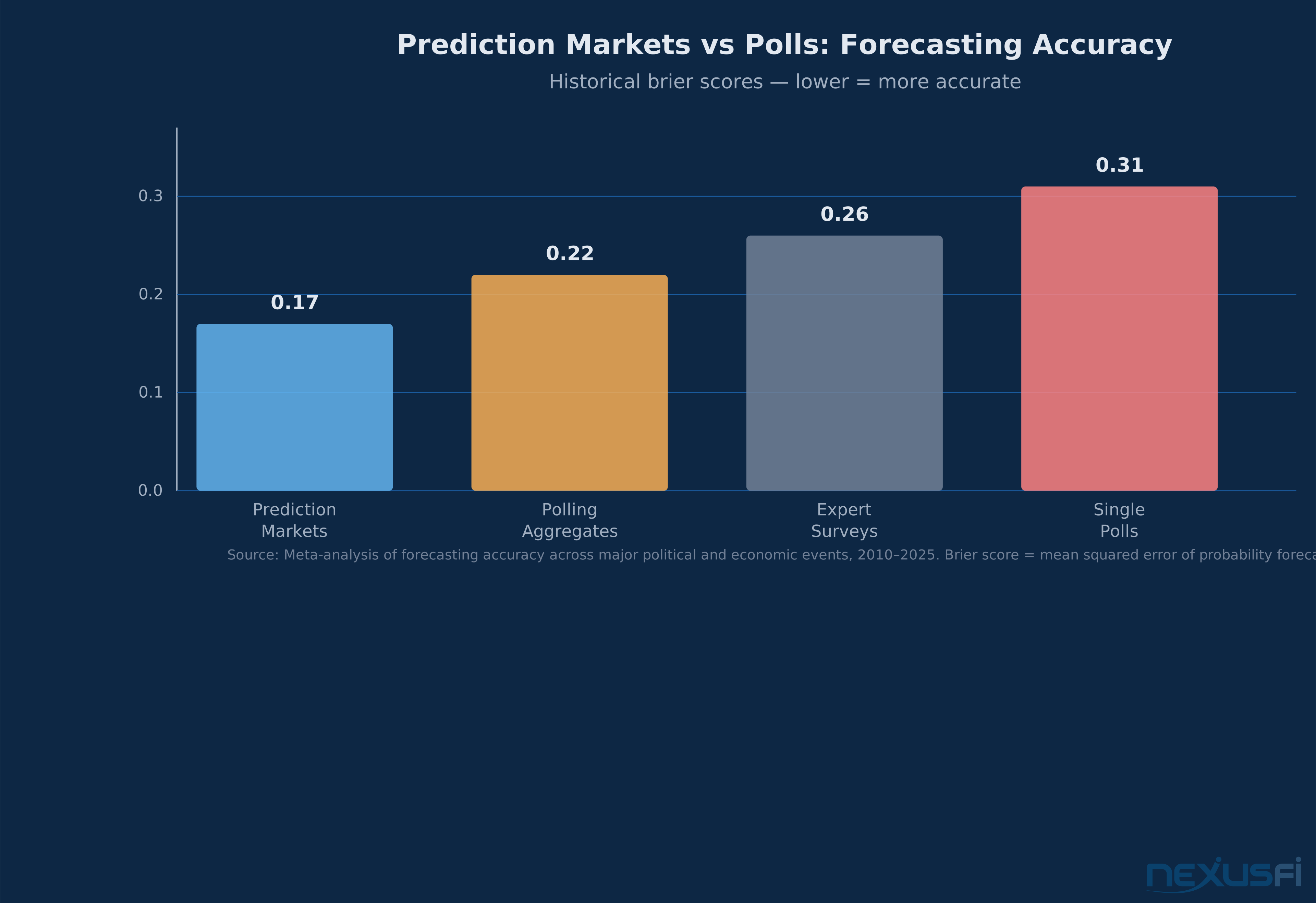
Brier scores measure forecast accuracy on a 0-to-1 scale (lower = better). The key empirical studies backing prediction market accuracy:
Iowa Electronic Markets (IEM): The most-cited real-money prediction market research comes from Berg, Nelson, and Rietz at the University of Iowa. Their long-run accuracy study analyzed IEM data across multiple US presidential election cycles and found that market prices outperformed polls 74% of the time when compared head-to-head at matching time horizons. IEM prices were especially strong in the final weeks before elections, where continuous repricing gave markets a structural advantage over polling snapshots taken days earlier.
Good Judgment Project (GJP): Philip Tetlock's IARPA-funded forecasting tournament (the ACE program) showed that trained "superforecasters" — carefully selected and calibrated human forecasters working in teams — could achieve Brier scores competitive with or better than prediction markets on geopolitical and economic questions. The GJP's strongest finding: structured probabilistic reasoning with active updating and feedback loops produces forecasts that rival market-based aggregation.
Atanasov et al. (2016): The direct comparison study "Distilling the Wisdom of Crowds: Prediction Markets versus Prediction Polls" compared prediction markets against algorithmically aggregated prediction polls on identical questions. The results showed that properly aggregated polls could match market performance — challenging the assumption that markets are always superior.
Across these and related studies, the typical performance range:
- Prediction markets: ~0.17 average Brier score
- Polling aggregates: ~0.22
- Expert survey forecasts: ~0.26
- Individual polls: ~0.31
These differences are consistent but context-dependent. Markets excel in speed and incentive-driven accuracy; poll aggregators offer robustness when sampling is representative. The most accurate forecasting systems combine both inputs — and the literature increasingly supports hybrid approaches over any single method.
Price Discovery in Real Time #
The most observable feature of prediction market price discovery is responsiveness. Watch a Kalshi market during a live event and you'll see prices update with each new data point.
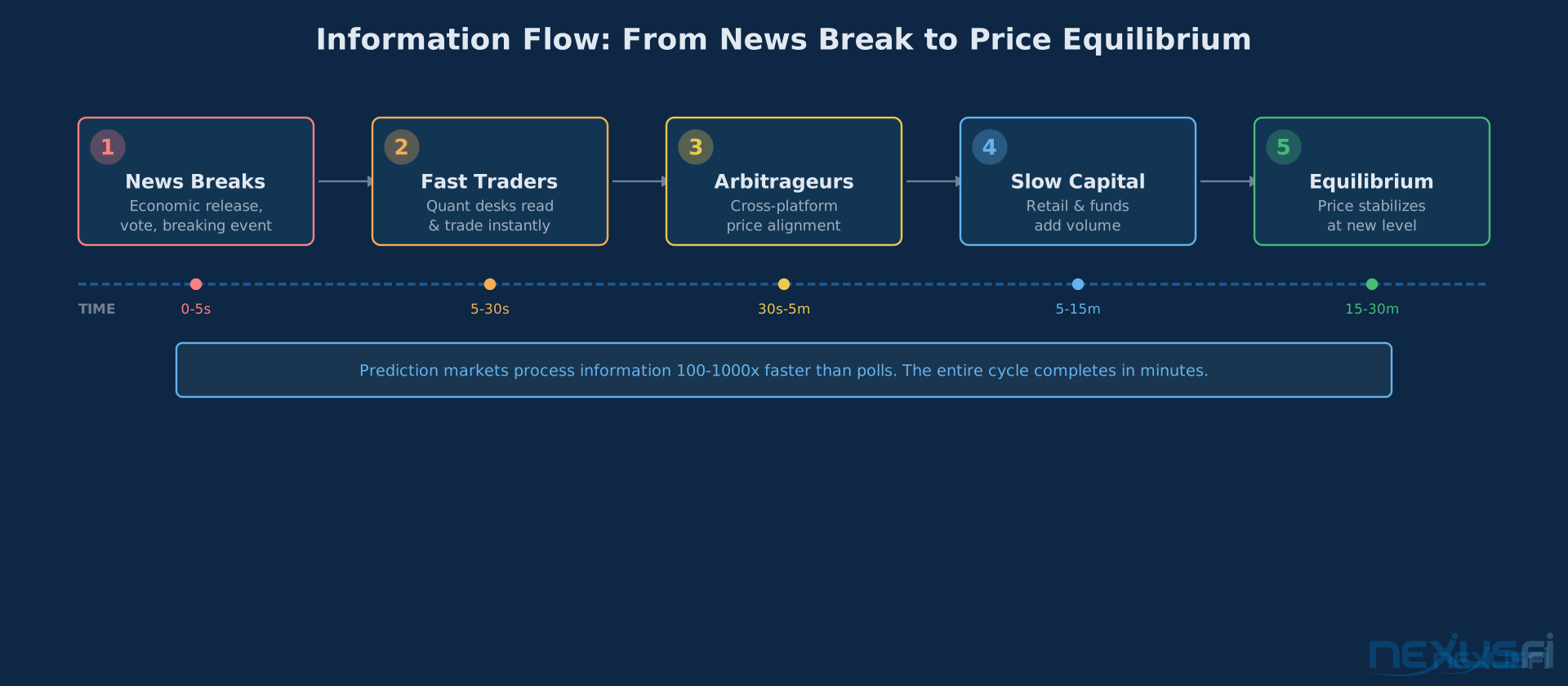
The Information Path #
- News breaks (economic release, vote announcement, breaking event)
- Fastest participants read and trade within seconds
- Arbitrageurs compare the market price to related contracts and other platforms
- Slower participants follow the initial move and add volume at new prices
- Price stabilizes at a new level reflecting all available information
This process typically completes within 5-30 minutes for major events in liquid markets. The speed advantage over polls (which lag by days to weeks) is most valuable in fast-moving situations: election nights, live debates, breaking news about economic data.
What Information Gets Incorporated #
Prediction market prices reflect:
- Public information: News articles, official statements, published data
- Processed public information: Analysts who've built models from public data
- Observable signals: Fundraising totals, endorsement patterns, market behavior of correlated assets
- Private information: Insiders (legally or illegally — Kalshi now actively monitors for and reports insider trading to the CFTC)
- Crowd wisdom: Aggregated judgment of diverse participants with different expertise
The last category is perhaps the most underappreciated. Even without any single "expert," the crowd can synthesize information effectively because different participants have different blind spots — and those blind spots partially cancel out when aggregated.
How Correlated Contracts Interact #
Prediction markets rarely operate in isolation. Events are interconnected, and sophisticated traders exploit these relationships:
- Conditional probability chains: If "Party X wins the presidency" trades at 55¢ and "Party X wins the presidency AND raises tariffs" trades at 40¢, the implied conditional probability of tariffs given a Party X win is 40/55 = 72.7%. When these conditional relationships get out of alignment, arbitrageurs step in to correct them.
- Complementary contracts: YES and NO contracts for the same event must sum to $1.00 (minus fees). If YES trades at 62¢ and NO trades at 42¢, the 4¢ gap represents either a fee structure or an arbitrage opportunity.
- Cross-market signals: Fed rate decision contracts correlate with Treasury futures, and election outcome contracts correlate with sector ETFs and currency pairs. Traders who apply intermarket analysis to these correlations can identify when prediction market prices lag behind signals from deeper, more liquid financial markets.
These interactions mean that mispricings in one contract propagate corrections across related contracts — the market is self-healing, up to a point.
Prediction Market Microstructure and Price Formation #
Understanding how prices form technically helps traders avoid paying unnecessary costs and identify when markets are informationally thin.
The Order Book #
Kalshi and Polymarket both operate order book markets where prices are formed through continuous matching of limit and market orders. The order book shows:
- Bid side: Active buy orders for YES (or NO), sorted by price descending
- Ask side: Active sell orders, sorted by price ascending
- Spread: The gap between the best bid and best ask
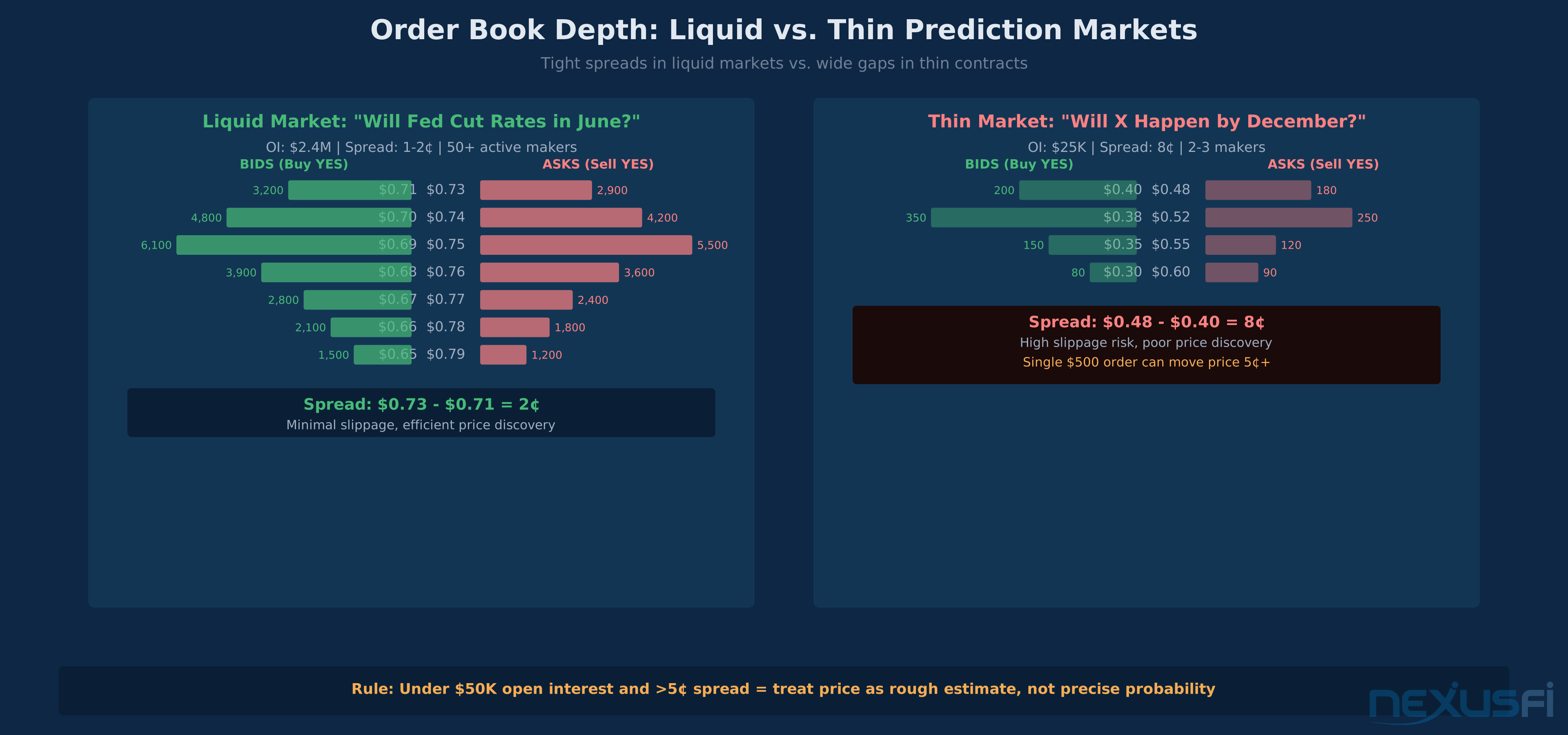
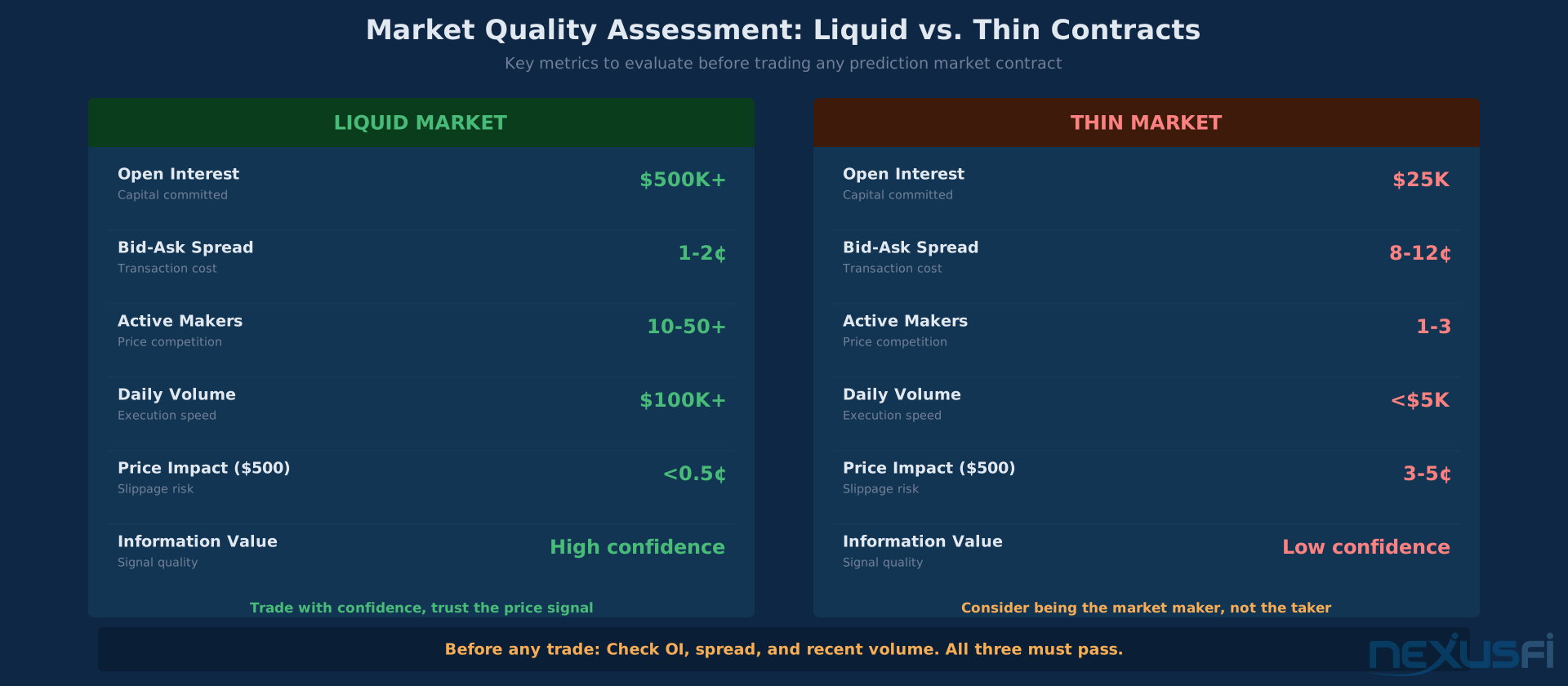
Narrow spreads (1-3¢) indicate liquid, competitive markets with many participants. Wide spreads (10¢+) indicate thin markets where each trade has significant price impact — the same dynamics that affect depth of market in traditional futures trading.
Market Making Economics #
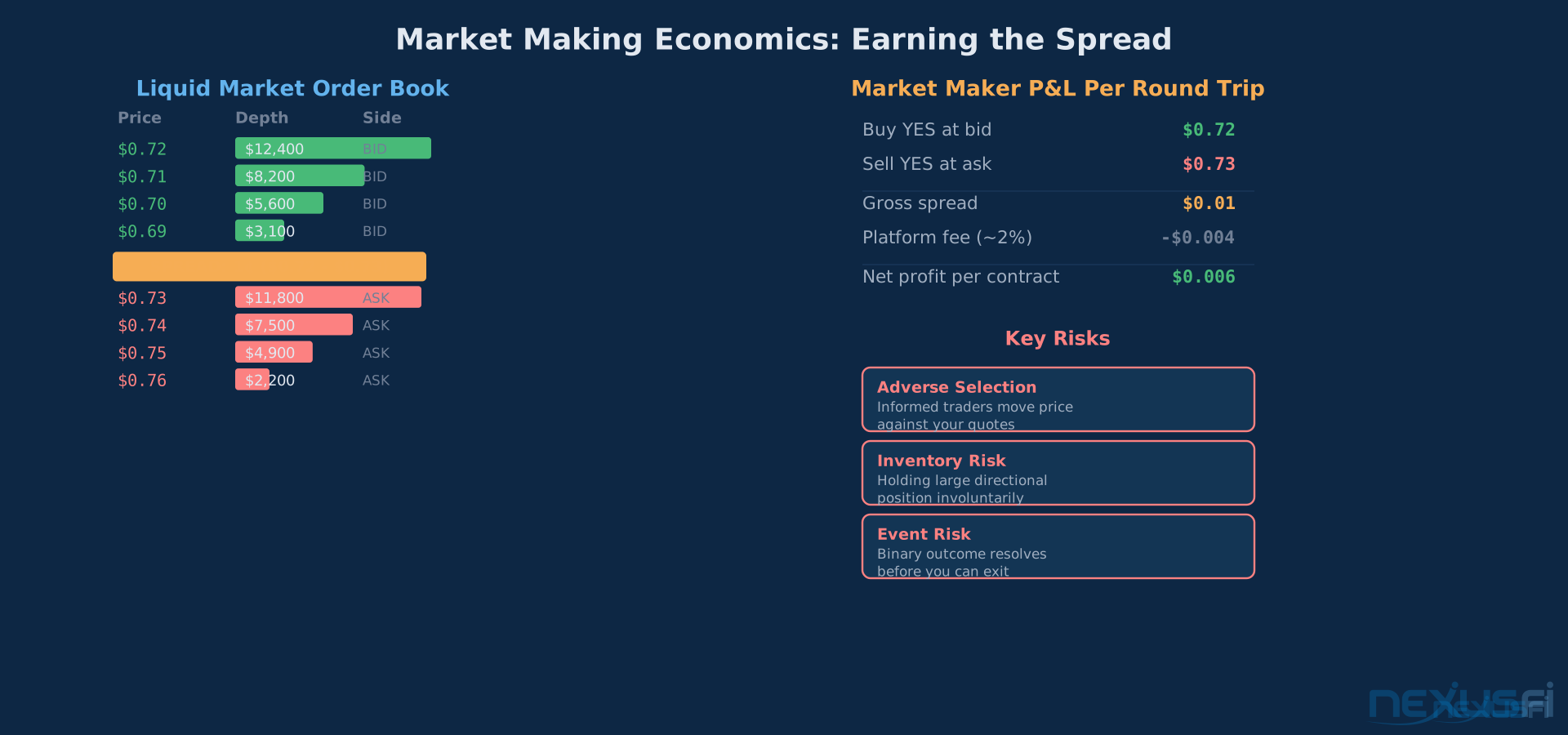
Professional market makers in prediction markets earn the spread by quoting both sides simultaneously. They profit when uninformed traders cross the spread, but lose to informed traders who move prices against their positions. As @artemiso explained in the NexusFi Ask me anything about hedge funds and HFT thread, information drives risk-neutral pricing from market makers who widen their spreads to manage adverse selection — a dynamic that plays out identically in prediction markets, where spreads balloon before high-impact events and compress afterward.
In practice, Kalshi's most liquid markets (major elections, near-term Fed decisions, CPI releases) attract sophisticated market makers who compress spreads to 1-2¢. Less popular markets may have no active market maker, leaving wide spreads that represent a significant friction cost for traders.
Price Impact and Market Depth #
Your trade's price impact depends on:
- Size of your order relative to available liquidity
- Aggressiveness: market orders have immediate impact, limit orders do not
- Distance from equilibrium: prices move more on small orders when the market is thin
For most retail prediction market traders, price impact is minimal in liquid contracts. But in thin contracts (under $50,000 total open interest), even a $500 position can move prices noticeably.
When Prediction Markets Fail #
For all their advantages, prediction markets have systematic failure modes that traders should understand.
Thin Market Mispricing #
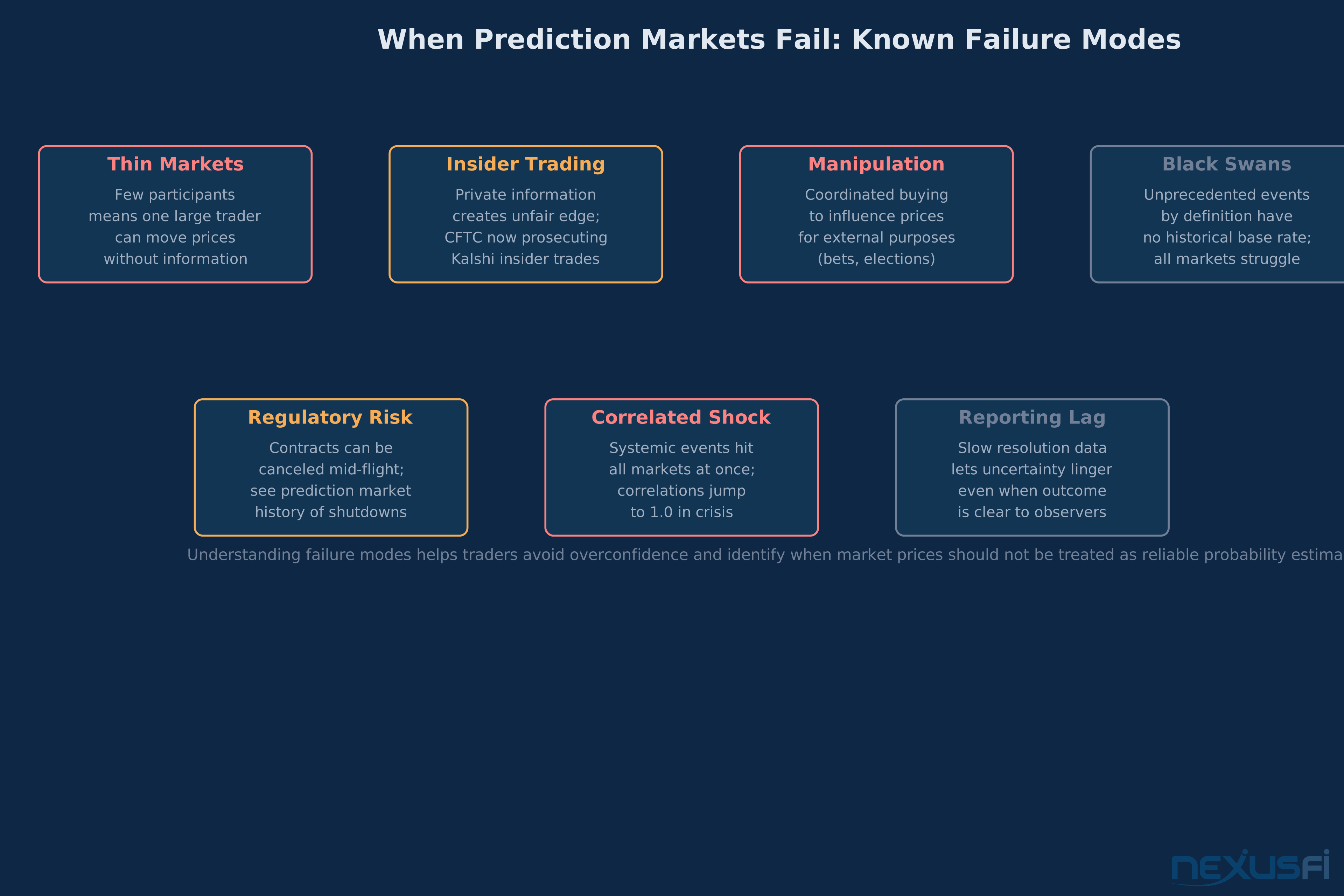
The information aggregation mechanism only works when enough participants are active to bring prices to equilibrium. In markets with few participants, a single uninformed trader — or one with a financial interest in a particular price — can move prices away from fair value for extended periods.
The warning sign: wide spreads and low open interest. When a contract shows fewer than 1,000 outstanding positions, treat the price as a rough estimate, not a precise probability. Position sizing discipline is critical here — size down aggressively in thin contracts rather than treating them like liquid markets. Check whether the price makes intuitive sense given base rates and available information.
Insider Trading (Now Actively Policed) #
In 2026, Kalshi caught and reported to the CFTC two cases of insider trading — including a political candidate's aide trading on non-public information about an election outcome. The CFTC issued its first prediction market insider trading enforcement actions.
The lesson for traders: insider trading in prediction markets is both illegal and detectable. Kalshi and Polymarket have built compliance programs that flag unusual position sizes, timing patterns that correlate with information events, and accounts with abnormal win rates on markets with discrete information asymmetry.
For legitimate traders, this development is positive: it means professionals are being held to the same standard as futures markets, which should improve the reliability of prices as information signals.
Manipulation and Strategic Trading #
Actors with interests in the perception of a probability (not just profits from correctly forecasting it) have incentives to manipulate prediction market prices. This has been documented in elections: campaigns sometimes push prices up on their own candidate to create a narrative of momentum.
Concrete detection signals for manipulation:
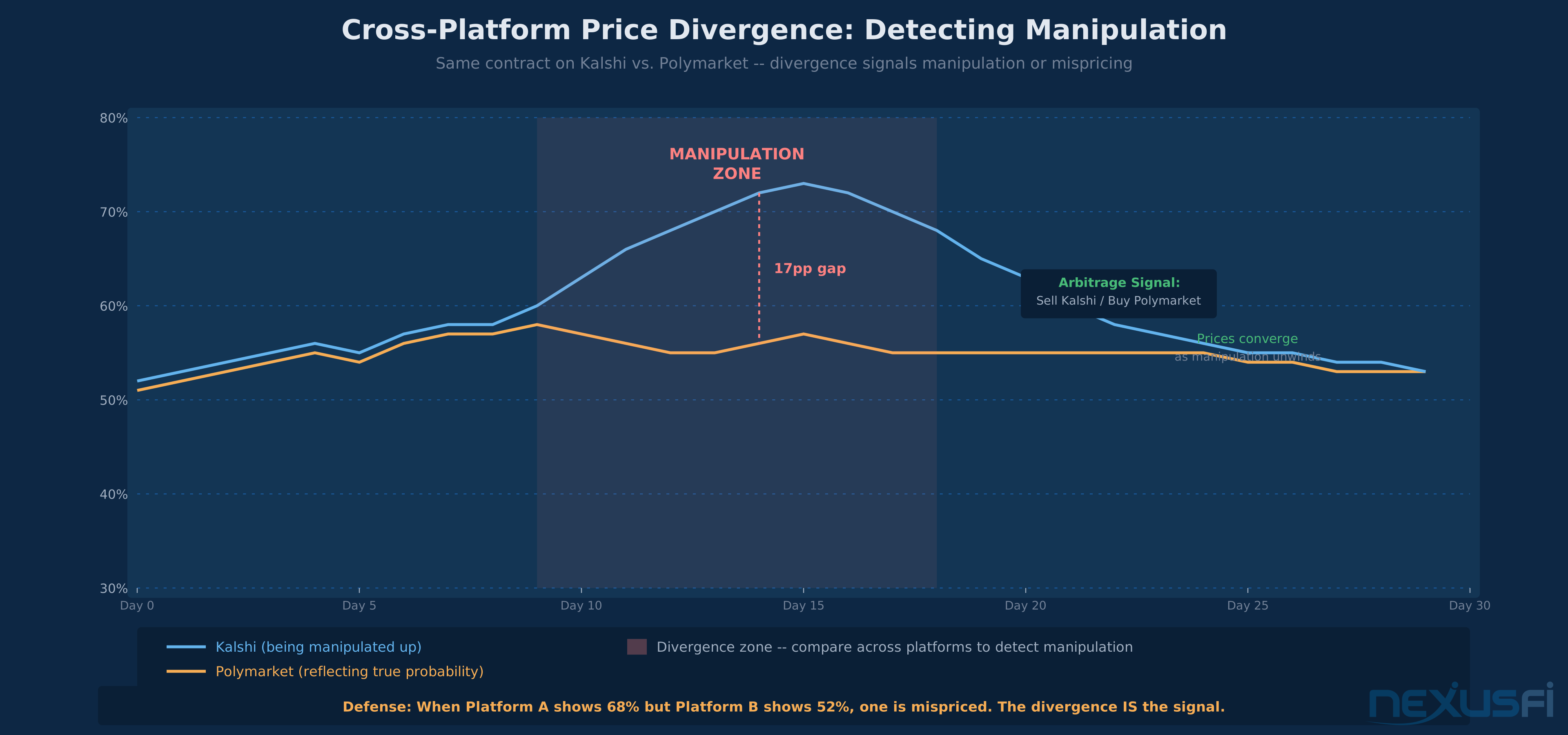
- Cross-platform price divergence: Compare the same event across Kalshi and Polymarket. Normal arbitrage keeps prices within 2-4 percentage points. When the gap exceeds 8-10 points, something is wrong. A worked example: if Kalshi shows YES at 68¢ and Polymarket shows YES at 52¢ for the same event, the 16-point gap far exceeds normal spread differences. Calculate the arbitrage-adjusted divergence by subtracting each platform's typical bid-ask spread (say 2¢ each): 68 - 52 - 2 - 2 = 12 points of unexplained divergence. That's either manipulation on one platform or a genuine information asymmetry worth investigating.
- Volume-price dislocation: Watch for large price moves on thin volume. If a contract moves 15 points on $5,000 of volume in a market that normally requires $50,000+ to move 5 points, a single actor is likely forcing the price. Check the order book depth — legitimate price discovery builds volume gradually; manipulation creates sharp, isolated spikes.
- Mean reversion speed: Manipulated prices typically revert within hours as arbitrageurs and informed traders push back. If a sudden 15-point move reverses 80% within 4-6 hours, the initial move was likely artificial. Sustained moves that hold or build over 24+ hours are more likely genuine information.
- Timing correlation with external narratives: Watch for price moves that coincide suspiciously with media campaigns, social media pushes, or public statements from interested parties. A candidate's price jumping 8 points the same hour their campaign tweets "momentum is building" is a red flag.
The defense for individual traders: never trust a single platform's price in isolation. The cross-platform consensus is the signal; any single platform's deviation from that consensus is noise until proven otherwise.
Black Swans and No Historical Base Rates #
Prediction markets work best for events with historical precedent — elections, quarterly economic releases, sports outcomes. For genuinely novel events with no historical parallel, there are no base rates to anchor the probability, and the market becomes a pure opinion poll without the calibration advantages that come from historical comparison.
The 2026 "US-Israeli Strikes Kill Iran's Supreme Leader" scenario discussed in NexusFi's Traders Hideout is a good example: geopolitical shock events that have no clean historical parallel are difficult for any forecasting method, including prediction markets.
Practical Implications for Traders #
1. Use Market Prices as Bayesian Starting Points #
Prediction market prices are strong evidence about probability, but not definitive. Use them as a calibrated prior: "the market thinks 73%, I have reasons to think it's 80%, so my edge is approximately 7 percentage points."
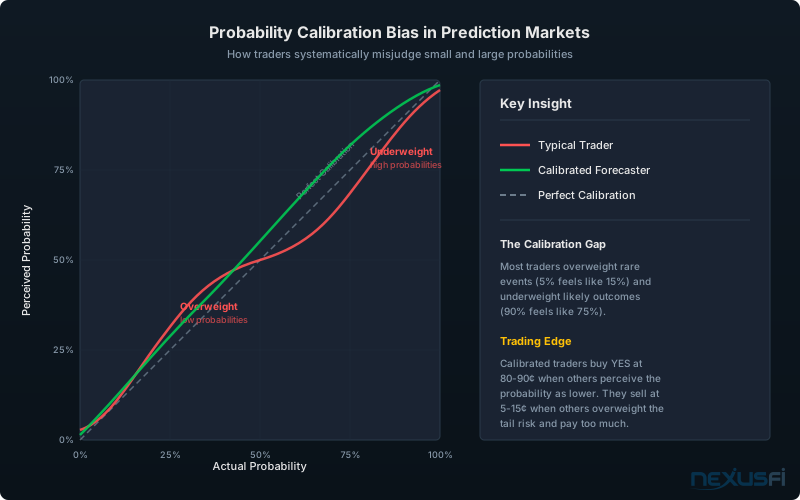
The mistake is treating market prices as the probability rather than a probability estimate — especially in thin markets where the evidence base is weak. As @tigertrader observed in his Spoo-nalysis thread, most individuals either ignore small probabilities completely or exaggerate them — which is exactly why calibrated priors beat gut feel in thin prediction markets. And as @SpeculatorSeth argued in There is more to trading than charts, markets are statistically efficient but not informationally efficient: the current price doesn't include all available information, which is precisely where prediction market edge lives.
2. Position Sizing: Liquidity First, Edge Second #
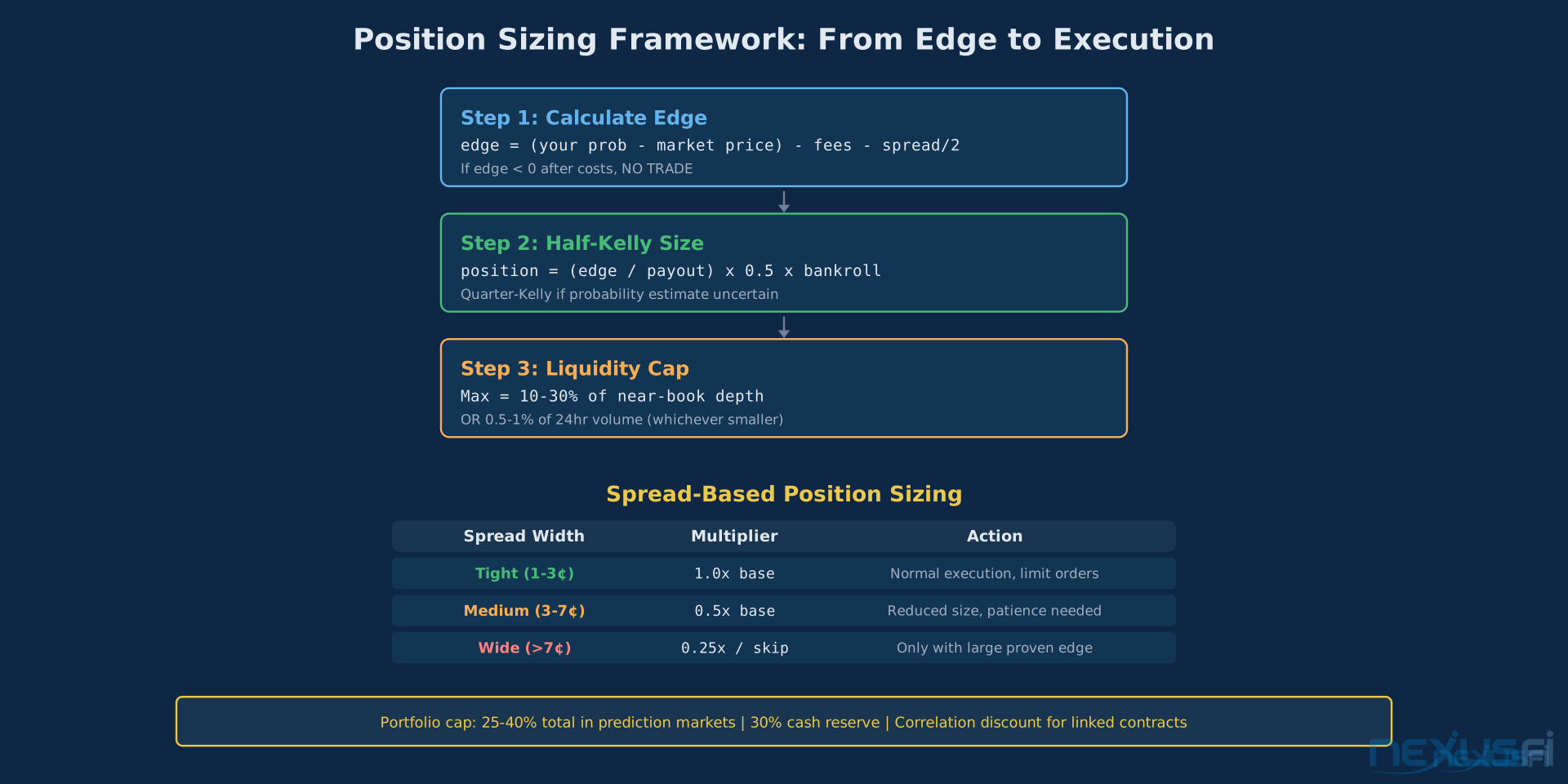
Position sizing in prediction markets is governed by liquidity constraints, not volatility. The order book depth at your price level determines your maximum position — not your Kelly fraction alone.
The framework: Start with a conservative Kelly calculation (half-Kelly or quarter-Kelly), then cap it against what the market can actually absorb.
- Calculate your edge:
edge = (your probability - market price) - fees - half-spread. If edge is negative after costs, there is no trade. - Apply half-Kelly:
position = (edge / net payout) x 0.5 x bankroll. Quarter-Kelly for contracts where your probability estimate is uncertain. @Fat Tails demonstrated this rigorously in his Risk of Ruin analysis, showing that quarter-Kelly keeps ruin probability under 1% — exactly the discipline prediction market traders need given the binary payout structure. - Cap against liquidity: Your position should never exceed 10-30% of near-book executable depth, or 0.5-1% of trailing 24-hour volume — whichever is smaller.
Spread-based sizing buckets (adjust your base position size):
| Spread Width | Size Multiplier | Action |
|---|---|---|
| Tight (1-3 cents) | 1.0x base | Normal execution, limit orders |
| Medium (3-7 cents) | 0.5x base | Reduced size, patience required |
| Wide (>7 cents) | 0.25x base or skip | Trade only with large, demonstrable edge |
Portfolio-level caps: Keep total prediction market exposure under 25-40% of bankroll, and maintain a 30% cash reserve for new opportunities. If you hold multiple contracts sharing a common driver (say, three political contracts that all hinge on the same election), apply a correlation discount — your combined size should be smaller than three independent positions.
Use limit orders exclusively. Market orders in bot-heavy prediction market books guarantee adverse selection. Post your price and wait.
3. Identify Thin Markets — and Adjust Your Trading Actions #
Before trading any contract, run through this checklist. Don't just detect problems — adjust your behavior for each scenario:
| Warning Sign | What It Means | Adjusted Trading Action |
|---|---|---|
| Open interest under $50k | Price discovery is weak | Size down to 0.25x base. Treat price as rough estimate, not precise probability. |
| Spread over 5 cents | Limited maker competition | Use limit orders only. Never cross the spread. Consider being the market maker. |
| No volume in last 24 hours | Dead market | Skip unless you have extraordinary edge AND are willing to be sole liquidity provider. |
| Fewer than 50 active positions | Minimal information aggregation | Ignore market price as information signal. Size near zero. |
In thin markets, your best edge is often providing liquidity rather than consuming it. Post limit orders at your fair value and let uninformed flow come to you — you earn the spread instead of paying it.
4. Exploit Information Timing Advantages #
The price discovery mechanism means that when you process public information faster or more carefully than the market, you have genuine edge — this is the core of news trading in prediction markets. Common timing advantages:
- Carefully modeling economic releases before they happen
- Reading resolution criteria carefully to identify cases where the market is pricing the wrong variable
- Tracking correlated markets (related Kalshi contracts, futures, polls) to identify inconsistencies
5. Pre-Resolution Exit Criteria #
Do not default to holding every position until resolution. The research on prediction market profitability consistently shows that capital rotation beats hold-to-resolution for most traders.
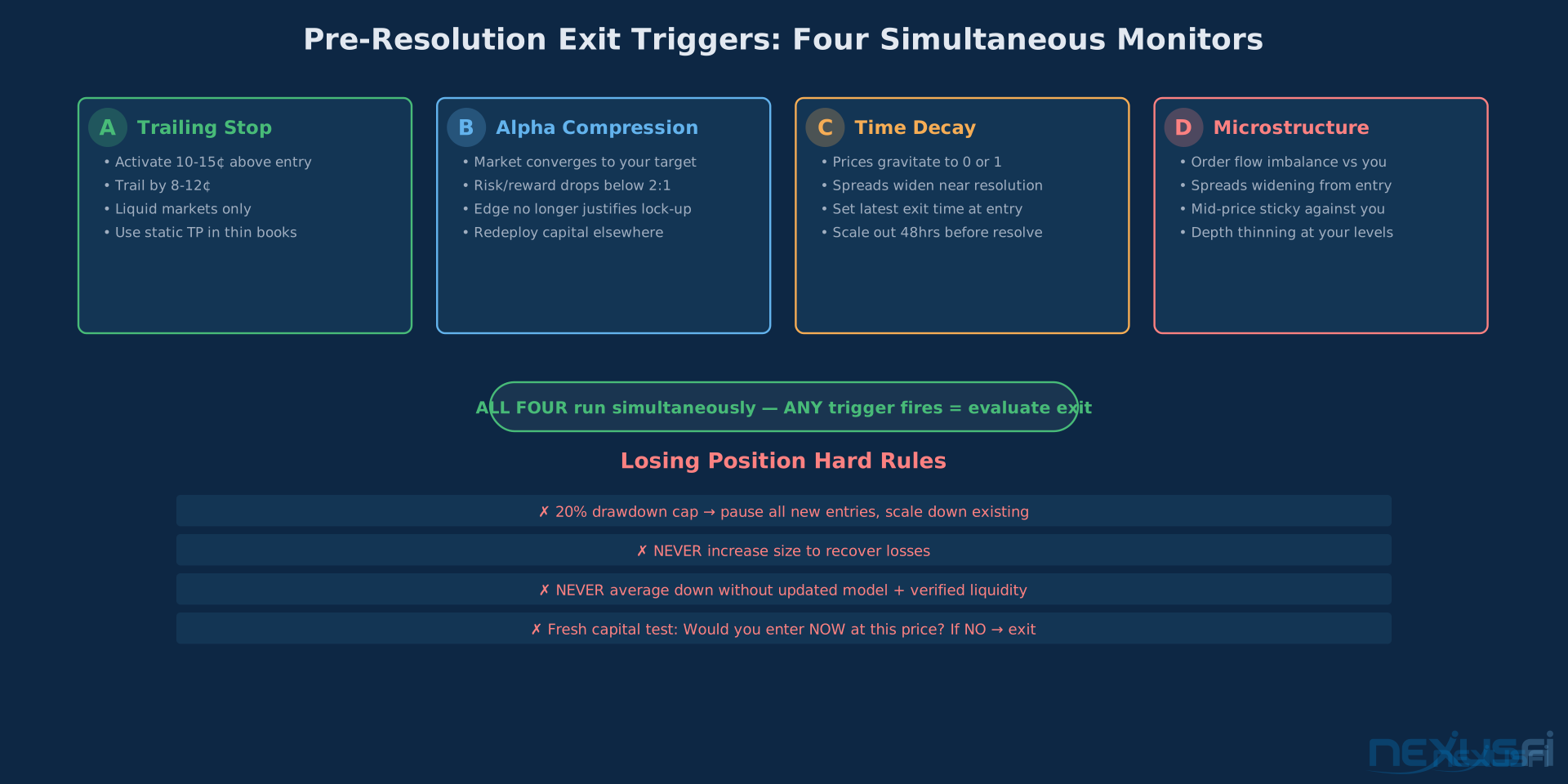
Four exit triggers to run simultaneously:
A. Trailing stop (liquid markets only): Set an activation threshold 10-15 cents above your entry and trail by 8-12 cents. In thin markets, substitute static take-profit orders — trailing stops get triggered by noise in illiquid books.
B. Alpha compression: If the market price has converged substantially toward your target probability, the remaining edge may not justify the capital lock-up. When the risk/reward ratio of the remaining move drops below 2:1 after costs, exit and redeploy the capital.
C. Time decay near resolution: As resolution approaches, prediction market prices gravitate toward 0 or 1. Spreads often widen, depth thins, and your ability to exit deteriorates. Set a latest exit time before entry — the cutoff beyond which you refuse to hold unless deliberately carrying through resolution. For most traders, scaling out when resolution is 48 hours away and you are in profit is the disciplined move.
D. Microstructure deterioration: Exit when you see persistent order flow imbalance against your side, spreads widening materially from entry conditions, or mid-price becoming sticky away from your fair value with thinning depth. These are the order book telling you conditions have changed.
6. Managing a Losing Position Pre-Resolution #
Losing positions in prediction markets are psychologically tricky because the binary payout structure creates a "just hold and it might come back" temptation — one of the behavioral biases that most consistently erodes prediction market returns. Don't fall for it.
The fresh capital test (non-negotiable): When a position moves against you, ask one question: "Would I enter this trade right now at the current price with fresh capital?" If no, exit immediately. If yes, verify that current liquidity still supports your position size.
Decision tree:
- Did fundamentals change? New information that shifts the actual probability = exit immediately. Do not average down against confirmed thesis invalidation. The market is almost always faster than you at pricing real-time information.
- Is it positioning noise? If no new information emerged and the move is liquidity-driven, holding may be justified — but only if your original sizing was conservative enough that you can absorb the drawdown without forced exits.
- Can you exit within your slippage budget? If spreads have widened since entry, your exit is more expensive than planned. Consider partial liquidation immediately rather than waiting for conditions to improve.
Hard rules for losing positions:
- 20% drawdown cap: If your prediction market allocation is down 20%, pause all new entries and scale down existing positions.
- Never increase size to recover losses. This is the single fastest way to blow up a prediction market bankroll.
- Never average down without both updated model support AND verified liquidity at the new price. If either condition fails, the add is just hope with leverage.
- Consider hedging: If complementary outcomes exist on the same platform, hedging reduces directional exposure while you reassess. Cross-market hedges (equities, volatility indices) may also apply for macro-linked contracts.
7. Respect the Aggregate #
Against all these caveats, the single most important practical lesson is: be humble about disagreeing with the market. Prediction markets aggregate information from thousands of participants, many of whom have deep domain expertise. When you think the market is wrong by 20 percentage points, the more likely explanation is that you're missing something, not that thousands of experts are.
Profitable prediction market trading comes from identifying specific, well-defined cases where you have a genuine information edge — not from having opinions that systematically differ from the market. Know when you have edge. Trade that edge. Leave the rest alone.
Citations #
NexusFi Community #
- @Hoag: Trading Lessons from TopstepTrader's John Hoagland — Auction-based price discovery framework and collective perception of value
- @artemiso: Ask me anything about hedge funds and HFT — Information-driven risk-neutral pricing and market maker spread dynamics
- @tigertrader: Spoo-nalysis — Cognitive biases in probability assessment and small probability errors
- @Fat Tails: Risk of Ruin — Kelly criterion position sizing with risk-of-ruin constraints
- @SpeculatorSeth: There is more to trading than charts — Statistical efficiency vs informational efficiency in market pricing
- @Fi: Kalshi, Polymarket, Prediction Markets etc — Community discussion of prediction market mechanics
- @Fi: CFTC Withdraws Prediction Market Ban — CFTC regulatory development affecting market structure
- @Fi: Kalshi Insider Trading Enforcement — First CFTC prediction market enforcement actions
- @Fi: Kalshi Hits $1 Billion in Super Bowl Volume — Market scale and liquidity data
Research & External Sources #
- Berg, Nelson, and Rietz, "Prediction Market Accuracy in the Long Run" — University of Iowa IEM empirical accuracy study
- Atanasov et al., "Distilling the Wisdom of Crowds: Prediction Markets versus Prediction Polls" — Direct comparison of markets vs algorithmically aggregated polls
- Tetlock and Gardner, Superforecasting: The Art and Science of Prediction (2015) — Good Judgment Project results and superforecaster methodology
- How Kalshi Works: Contracts, Odds & Settlement Explained — pm.wiki
- How Does Polymarket Work? — PredScope
This article is part of the NexusFi Academy Prediction Markets series. Full series at /a/prediction-markets/.
Knowledge Map
Prerequisites
Understand these firstCitations
- — Trading Lessons from TopstepTrader's John Hoagland (HOAG) (2014) 👍 12“Auction-based price discovery framework: price discovery is the function of all participants establishing collective perception of value”
- — Ask me anything about hedge funds and HFT (2013) 👍 5“Information drives risk-neutral pricing from market makers who have the choice to widen their spreads, which then drives price discovery”
- — Spoo-nalysis (2014) 👍 19“Cognitive biases in probability assessment: most individuals either ignore small probabilities completely or exaggerate them”
- — Risk of Ruin (2012) 👍 30“Kelly criterion position sizing with risk-of-ruin constraints: quarter-Kelly keeps ruin probability under 1%”
- — There is more to trading than charts (2022) 👍 4“Markets are statistically efficient but not informationally efficient: the current price does not include all available information”
- — Kalshi, Polymarket, Prediction Markets etc (2026)“Community discussion of prediction market mechanics and information aggregation”
- — CFTC Withdraws Prediction Market Ban, Signals New Rulemaking Under Chairman Selig (2026)“CFTC regulatory development affecting market structure”
- — Kalshi Catches MrBeast Editor and Political Candidate for Insider Trading (2026)“First CFTC insider trading enforcement in prediction markets”
- — Kalshi Hits $1 Billion in Super Bowl Trading Volume (2026)“Market scale and liquidity data”
- — How Kalshi Works: Contracts, Odds & Settlement Explained (2026)
- — How Does Polymarket Work? (2026)