



Fair Value Gaps and Price Imbalances: Reading the Footprints of Aggressive Order Flow in Futures Markets
Overview #
When price rips through a zone so fast that virtually no two-way trading occurs, it leaves a scar on the chart. Traders call that scar a fair value gap — a visible record of where aggressive order flow overwhelmed available liquidity and the market skipped price levels entirely. The broader phenomenon behind it is price imbalance: one side of the order book dominated so completely that normal auction mechanics broke down.
Fair value gaps have become one of the most discussed concepts in modern futures trading, partly because of their popularization through ICT (Inner Circle Trader) methodology and partly because they map neatly onto older market profile concepts like single prints and liquidity voids. As one NexusFi community member [observed] [1], many of these ideas trace directly back to Market Profile — "ICT FVG for Fair Value Gap" maps to what profile traders have long called single prints.
Here's the thing: FVGs are useful. They highlight zones where the market has unfinished business. But they're not magic. Treating every three-candle gap as a guaranteed fill zone is a fast path to clustered losses. The edge comes from understanding why these gaps form, when they're likely to attract price back, and when they're telling you to stay out of the way.
Key Concepts #
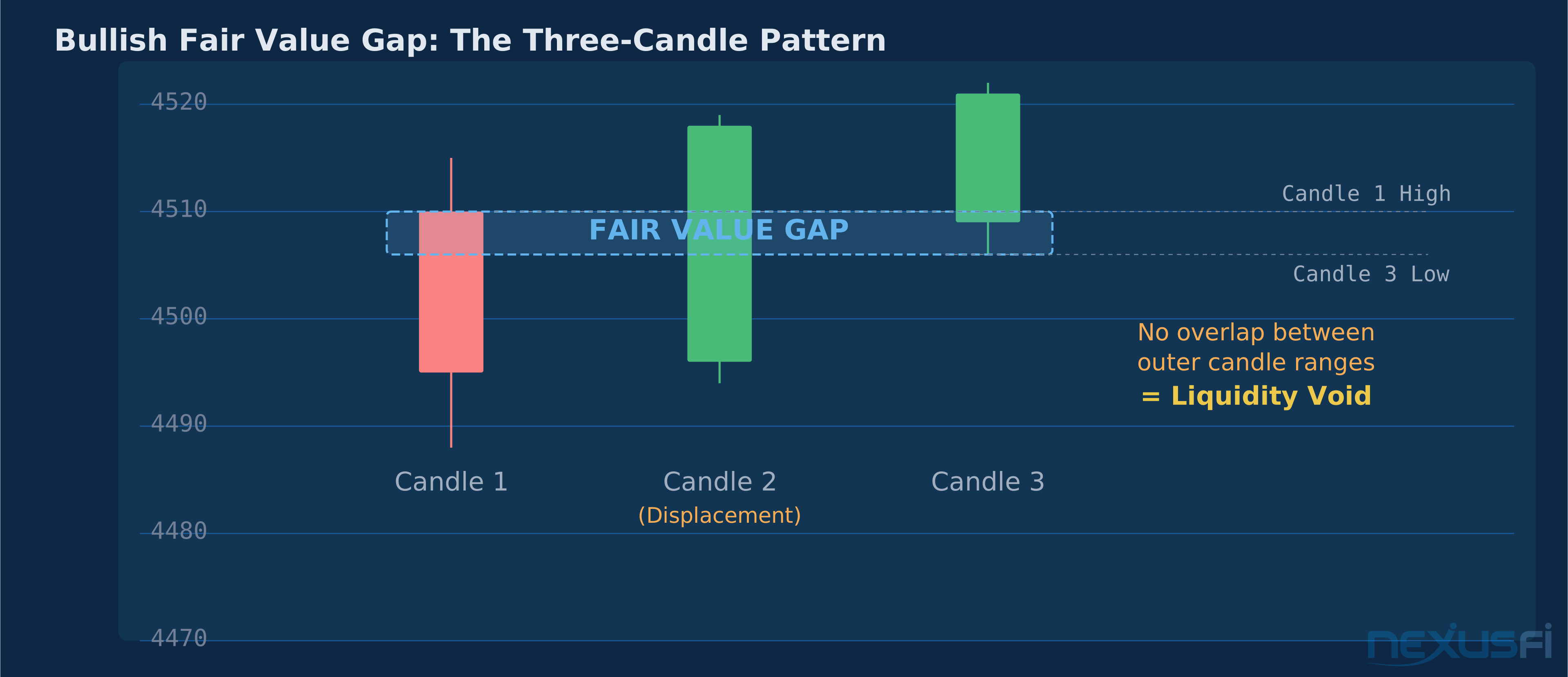
Fair Value Gap (FVG): A three-candle pattern where the middle candle moves so aggressively that there's no overlap between the ranges of the first and third candles. In a bullish FVG, the high of candle 1 sits below the low of candle 3 — the zone between those two prices is the gap. Bearish FVG: the reverse.
Price Imbalance: The broader market condition where buying or selling pressure is severely unequal across a price range. FVGs are one visual footprint of imbalance, but imbalance can exist without a textbook three-candle gap — a single massive directional candle with extreme delta, for instance, represents imbalance even without the classic pattern.
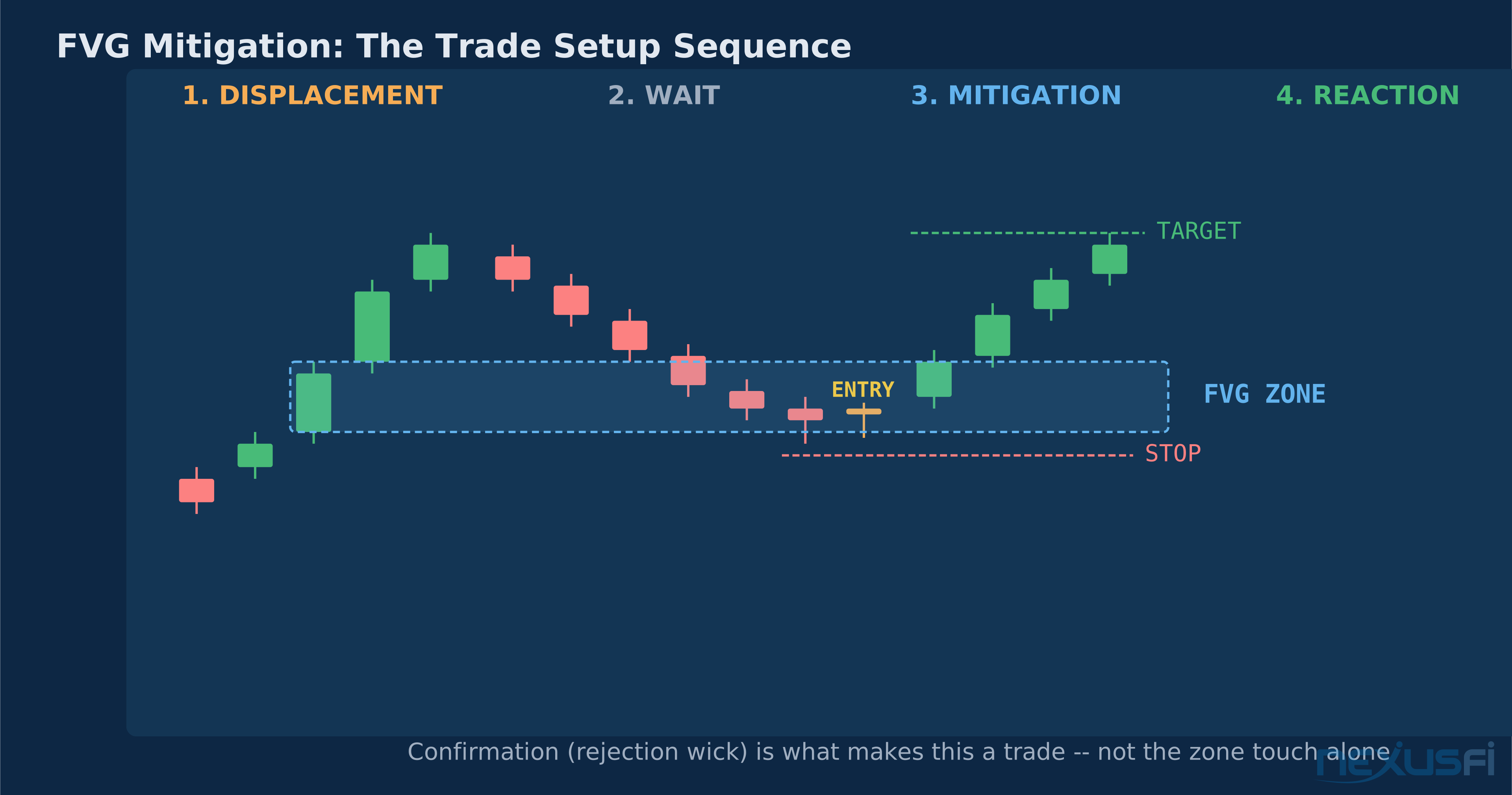
Mitigation: When price returns to an FVG zone after the initial impulse. This is the moment traders care about — does the zone attract responsive activity, or does price blow through it?
Displacement: The aggressive, directional move that creates the gap in the first place. Strong displacement — large candle bodies, minimal wicks, consecutive directional bars — signals genuine conviction behind the move.
Liquidity Void: The microstructural reality behind the chart pattern. When aggressive market orders sweep through a region where resting limit orders are thin, price jumps across levels without meaningful two-way participation. That void is what the three-candle pattern is trying to capture.
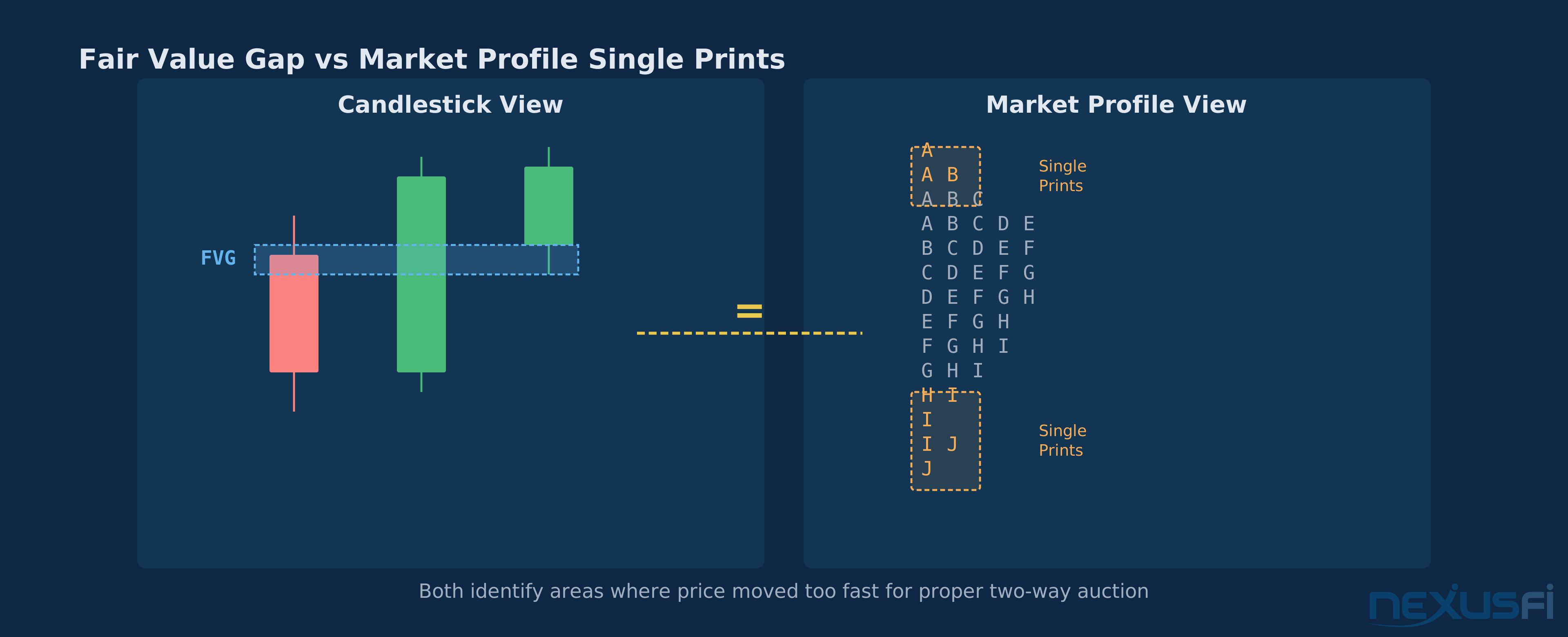
Single Prints: The Market Profile equivalent of an FVG. In TPO (Time Price Opportunity) charts, single prints are price levels visited during only one time period — evidence that price moved through too quickly for normal auction rotation. Same phenomenon, different visualization.
How Fair Value Gaps Form #
FVGs don't appear randomly. They're the chart-level evidence of specific order flow dynamics playing out in the limit order book.
The Mechanics #
The formation sequence follows a consistent pattern across all liquid futures markets:
- Aggressive order flow hits the book. Large institutional orders, algorithmic sweeps, or stop-loss cascades generate a burst of market orders on one side.
- Available liquidity gets consumed. The resting limit orders at each price level are absorbed faster than market makers can replenish them. As [Jigsaw Trading explained] [2] on NexusFi, when market buy orders "eat the sell side liquidity and break through," the book thins rapidly at intermediate levels.
- Price skips levels. With insufficient counterparty orders at intervening prices, price effectively jumps from one liquidity pool to the next. The zone it skips becomes the FVG.
- The void persists. Until the market revisits that zone with sufficient two-way participation, those prices represent incomplete auction — levels where the market hasn't established whether buyers and sellers agree on value.
What Triggers the Displacement #
Several catalysts reliably produce FVGs in futures markets:
Macro data releases. FOMC announcements, Non-Farm Payrolls, CPI prints, and inventory reports (especially for CL and NG) create violent repricing. The gap represents the market adjusting to new information faster than participants can post orders.
Session transitions. The handoff between Asian, European, and US sessions often generates gaps as institutional positioning shifts. Overnight liquidity is thinner, so even moderate order flow can create displacement.
Stop-loss cascades. When price breaks a key technical level, clustered stops trigger a chain reaction of market orders. The resulting move sweeps through resting liquidity and creates a void below/above the trigger zone.
Trend continuation legs. In strong directional markets, pullbacks that fail to develop leave gaps along the impulse. These aren't caused by a single event — they're the cumulative result of persistent one-sided pressure where buyers or sellers simply aren't showing up to provide counterparty liquidity.
As NexusFi member josh noted in his analysis of ES futures, moves where [total volume through multiple handles is remarkably thin] [3] — "combined with the fact that there were no pullbacks at all" — create exactly these conditions. The order book reveals what the candle chart summarizes.
Reading FVGs: What the Pattern Actually Tells You #
The three-candle pattern is a summary. What it summarizes matters more than the pattern itself.
The Information Content #
A well-formed FVG tells you several things simultaneously:
Conviction existed. The displacement candle's size and character reveal how aggressively one side participated. A displacement candle with a large body, small wicks, and elevated volume suggests genuine conviction — not just a stop run.
Liquidity was thin. The gap between the outer candles' ranges means the order book couldn't absorb the flow at intermediate prices. The wider the gap, the thinner the book was.
Unfinished business remains. From an auction theory perspective, prices within the FVG weren't properly auctioned. The market hasn't discovered whether participants find those levels attractive for two-way trading. As Fi noted in a NexusFi [profile analysis discussion] [4], "those untested extremes, single prints, or poor lows/highs are loose ends waiting to be resolved."
The direction of the impulse matters. A bullish FVG created during an uptrend has different implications than one created counter-trend. Context determines whether the gap is likely to act as support (trend-aligned) or as a reversal zone (counter-trend).
What It Doesn't Tell You #
The pattern alone doesn't tell you:
- Whether price will return. In strong trends, gaps can remain open for days, weeks, or permanently if the market has repriced.
- What happens at mitigation. Price returning to the zone is necessary but not sufficient — the response at the zone is what matters.
- The timeframe of resolution. A gap on a 5-minute chart behaves differently than one on a daily chart. Lower timeframe gaps fill more frequently but offer less structural significance.
How Traders Use Fair Value Gaps #
The Mean-Reversion Approach #
The most common FVG strategy treats the gap as a zone where price is likely to return and find responsive activity:
- Identify displacement. Look for a three-candle sequence with genuine conviction — large middle candle, no overlap between outer candle ranges, ideally with elevated volume.
- Define the zone. Mark the area between candle 1's high and candle 3's low (bullish) or candle 1's low and candle 3's high (bearish).
- Wait for mitigation. Don't chase the move. The trade only exists when price comes back to the zone.
- Require confirmation at the zone. This is where most traders fail. Touching the zone isn't a signal — it's a condition. Confirmation means evidence of initiative change: a rejection wick that closes inside the zone, a counter-impulse candle, a shift in delta if you're reading order flow, or confluence with another key level (VWAP, prior day high/low, value area edge).
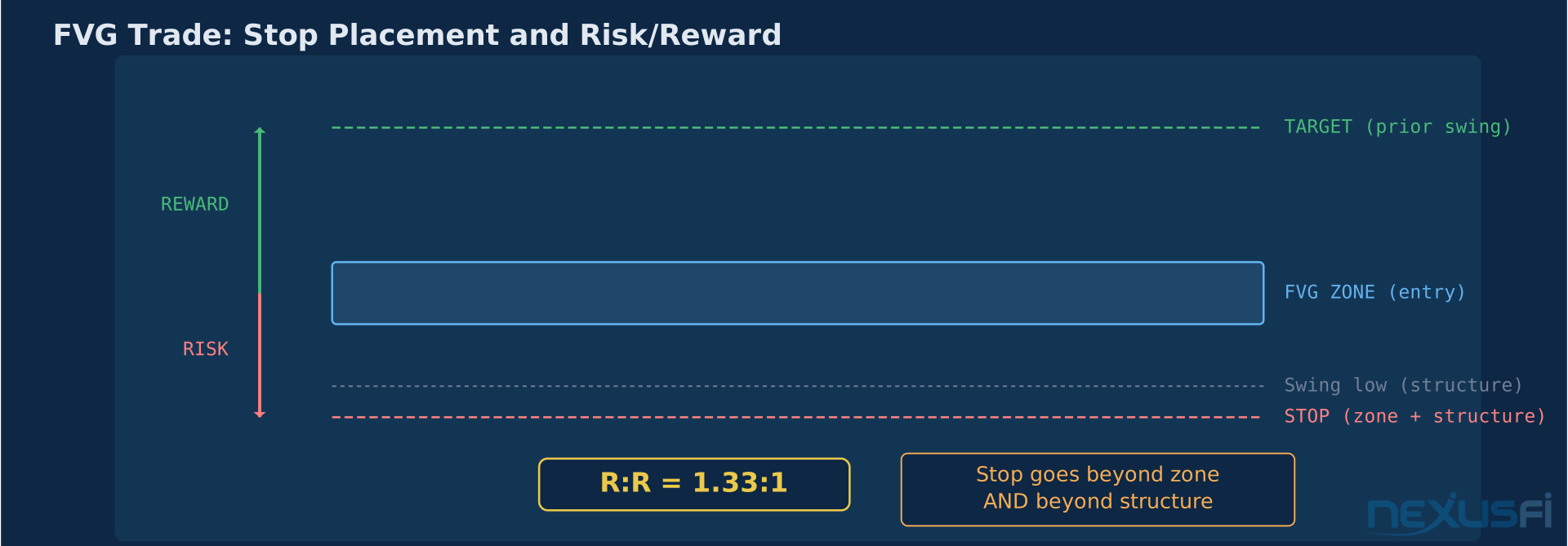
- Place stops beyond structure. Not just beyond the gap — beyond the gap plus a structural break point. If you're trading a bullish FVG, the stop goes below the zone and below the preceding swing low.
- Target the next liquidity pool. First target: the nearest swing high/low. Extended target: the opposite-side imbalance or the next structural level where resting orders likely sit.
The Continuation Approach #
In trending markets, FVGs serve a different purpose — they mark potential support/resistance levels along the impulse:
- Identify FVGs created in the direction of the trend. These are zones where the trend's aggression left gaps.
- On pullbacks, watch for the trend-aligned FVG to hold. Price pulling back to a bullish FVG in an uptrend and bouncing confirms that the zone is acting as demand.
- Enter on the first sign of the pullback stalling at the zone. Stops below the gap, targets at or beyond the impulse high.
This approach treats FVGs as structural levels within an ongoing move — similar to how profile traders use value area low/high as support/resistance during directional days.
Combining FVGs with Market Profile Concepts #
The strongest FVG setups often align with profile-based analysis. NexusFi community discussions have repeatedly connected these concepts:
- Single prints in a Market Profile are the direct analog of FVGs — both mark areas of inefficient auction. As [CenFlo described on NexusFi] [5], "A poor high means no excess, at least two" TPO periods of single prints — these same areas often correspond to candlestick-visible FVGs.
- Poor highs and lows — areas where the market failed to auction properly at extremes — frequently contain FVGs. The [OPP Scalper trading journal] [6] on NexusFi describes the expected behavior: "a backing away from the poor/weak high (with a liquidation) and a later repair by pushing through and creating excess."
- Value Area edges that coincide with FVG zones create higher-confidence setups because two independent frameworks are identifying the same level as significant.
When Fair Value Gaps Fail #
This is the section that matters most. Understanding failure modes separates traders who use FVGs as a tool from those who use them as a religion.
Strong Trending Markets #
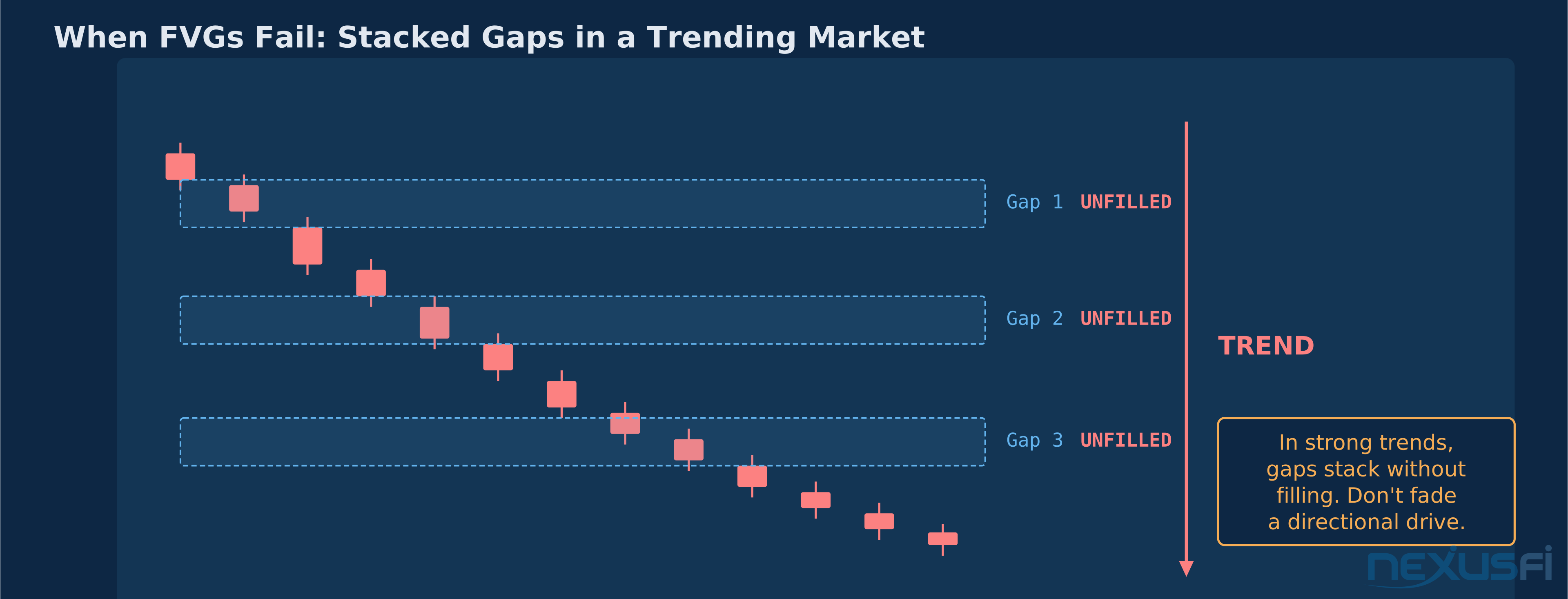
The single biggest failure mode. When the market is in a genuine impulse — moving more than 1% in under 30 minutes on something like ES — FVGs created along the impulse are far less likely to see mitigation. Price keeps finding new liquidity beyond the gap. Traders who sit waiting for a fill get left behind, and traders who fade the move into a gap get run over.
The tell: Pullbacks are shallow, immediately reclaimed, and each impulse leg creates new FVGs faster than old ones get filled. When you see three or more gaps stacking without a fill, the market is in directional drive mode. Don't fight it.
News-Driven Regime Shifts #
When the Federal Reserve pivots policy, when a geopolitical crisis erupts, or when a major earnings surprise hits index futures — the "fair value" itself changes. An FVG created before the event represents the old pricing regime. The market isn't "going back to fill" that gap because the gap no longer represents inefficiency — it represents the transition between two different value regimes.
Liquidity Replenishment #
Sometimes market makers re-post liquidity into the void quickly. When that happens, the gap self-heals before price returns. The zone that looked meaningful on the chart has already been addressed in the order book. Price can glide through without the dramatic reaction the FVG trader was expecting.
Wrong Timeframe #
A 5-minute FVG inside a 1-hour breakout is noise. The micro-gap is meaningless relative to the macro move. Conversely, trading against a daily FVG when the 5-minute chart shows counter-trend is a recipe for catching falling knives. The timeframe of the gap must match the timeframe of your thesis.
Multiple Overlapping Gaps #
Real markets don't create one clean FVG and then politely retrace. During aggressive moves, multiple zones stack on top of each other. Which one "matters"? Often, price trades through the first zone, reacts at the second, or blows through all of them. Trading every zone as if it's the one leads to death by a thousand cuts.
The Liquidity Grab #
Perhaps the most insidious failure mode. Price returns to an FVG zone, appears to find support/resistance, then sweeps through stops placed beyond the zone before reversing in the original direction. The FVG acted as a trap — a magnet that drew in limit orders, which the market then harvested. This is especially common near session transitions and around key structural levels where stop placement is predictable.
Risk Management for FVG Trading #
Position Sizing #
FVG trades are mean-reversion plays by nature. They carry inherent uncertainty — the gap might fill or it might not. Size so: smaller positions than your trend-following trades. A reasonable framework is 0.5-1% of account risk per trade, with the understanding that you'll need multiple samples to realize the statistical edge.
Stop Placement #
Beyond the zone plus structure. Not "3 ticks below the gap" — that's arbitrary and the market doesn't care about your 3 ticks. The stop goes where your thesis is invalidated: below the FVG zone AND below the nearest swing low that confirms the structural break. Yes, this makes some trades unattractive from a risk/reward standpoint. Skip those.
Time Decay #
Here's something most FVG traders miss: gaps have a shelf life. If price hasn't reacted to a gap within roughly 5-10 bars on your timeframe, the probability of a meaningful reaction drops sharply. The market has moved on. Fresh gaps are more magnetic than stale ones because the order flow that created them is still relevant.
The Session Filter #
Not all trading hours are equal. FVGs formed during Regular Trading Hours (RTH) in liquid futures like ES and NQ carry more weight than overnight gaps formed during thinner Globex sessions. Overnight gaps may never fill until the next liquid session, making them poor intraday targets. Conversely, RTH gaps often see mitigation within the same session as the auction works through its rotation.
Regime Awareness #
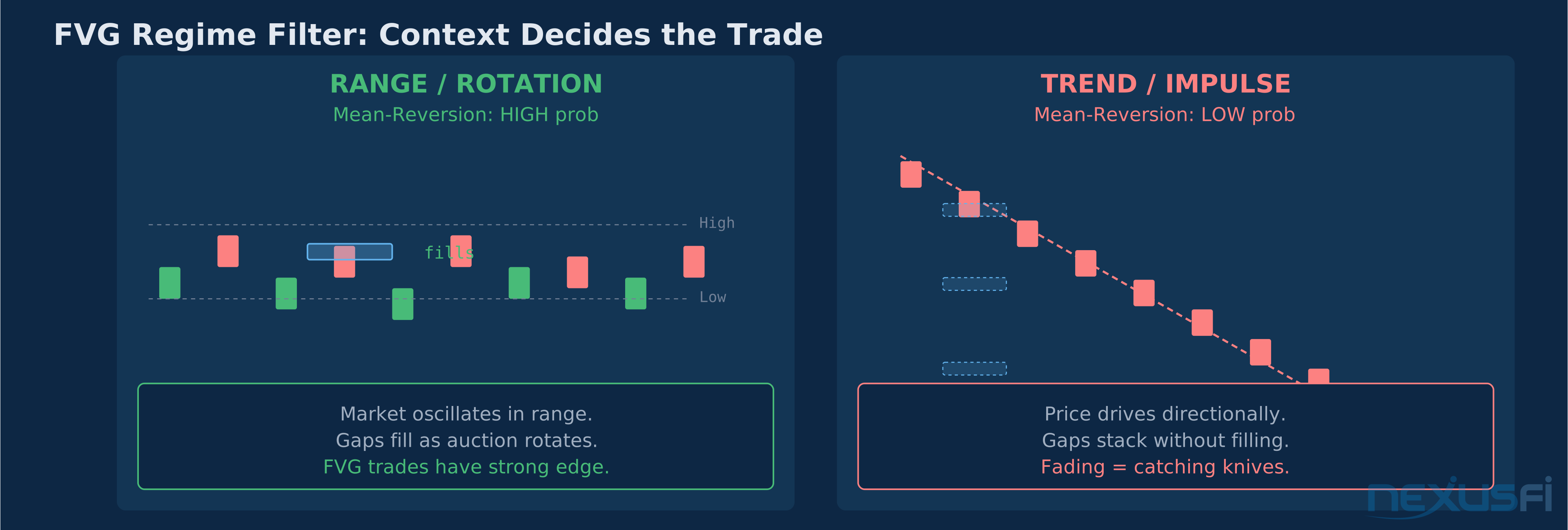
The single most important risk management rule: know what regime you're in. FVGs work best in range-bound, mean-reverting environments where the market oscillates between balance areas. They're unreliable in impulse/trending regimes where price creates new structure faster than old structure resolves.
Before taking any FVG trade, ask: Is the market rotating within a range, or is it driving directionally? The answer changes everything about how you should treat the gap.
The Practical Checklist #
Before executing any FVG-based trade in futures:
Regime assessment. Is this a rotation/range day (mean-reversion works) or a trend/impulse day (continuation only)?
Higher timeframe alignment. Does the FVG sit near a level that the higher timeframe cares about — prior day high/low, VWAP, value area edge, weekly level?
Displacement quality. Was the impulse genuine? Large bodies, small wicks, elevated volume, consecutive directional candles? Or was it a thin, sloppy move during low-liquidity hours?
Confirmation at mitigation. Don't enter just because price touched the zone. Wait for: rejection wick, counter-impulse candle, delta shift, or confluence with another level.
Risk/reward viability. Is the stop (beyond zone plus structure) small enough relative to the target (next swing/liquidity pool) to make the math work? If you need a 10-point stop for a 5-point target, skip it.
Invalidation clarity. Before you enter, know exactly what price action would prove you wrong. Write it down. If it happens, honor it.
The Deeper Truth About Fair Value Gaps #
FVGs aren't predictive. They're descriptive. They describe where the market's auction process broke down — where aggressive order flow overwhelmed available liquidity and created a void in the price discovery process.
The predictive element isn't the gap itself. It's the auction theory principle that markets tend to revisit areas of incomplete price discovery. "Tend to" being the operative phrase — not "always do."
The traders who profit from FVGs are the ones who combine this descriptive tool with contextual analysis (regime, structure, session), confirmation at the zone (not just a touch), and disciplined risk management (stops beyond structure, appropriate sizing, time decay rules). They treat FVGs as one input in a decision framework, not as a standalone system.
The traders who lose money on FVGs are the ones who treat every gap as a guaranteed fill, enter without confirmation, size as if certainty exists, and refuse to accept when the market has moved on.
The gap on the chart is just information. What you do with that information is the edge.
Knowledge Map
Prerequisites
Understand these firstGo Deeper
Build on this knowledgeReferences This Article
Articles that build on this topicCitations
- — Inner Circle Trading (2022) 👍 8“ICT FVG for Fair Value Gap maps to Market Profile single prints”
- — Understanding Liquidity and Market Pullbacks (2012) 👍 89“Market buy orders eat the sell side liquidity and break through”
- — Spoo-nalysis ES e-mini futures S&P 500 (2012) 👍 2“Total volume through multiple handles was remarkably thin with no pullbacks at all”
- — Profile Setup - How would you trade it? (2026)“Those untested extremes, single prints, or poor lows/highs are loose ends waiting to be resolved”
- — Spoo-nalysis ES e-mini futures S&P 500 (2016) 👍 4“A poor high means no excess, at least two TPO periods of single prints”
- — Daytrading ES & NQ (2024) 👍 1“A backing away from the poor/weak high with a liquidation and a later repair by pushing through and creating excess”