



Futures Price Discovery: How Exchanges Create Prices From Competing Interests
Overview #
Futures Price Discovery is the process by which exchanges convert competing buyer and seller interests into prices. This article covers the exchange-level machinery that makes it work: the continuous double auction (CDA), call auctions, matching engine mechanics, fair value computation, and the arbitrage channels that keep futures prices tethered to underlying assets.
Key Concepts
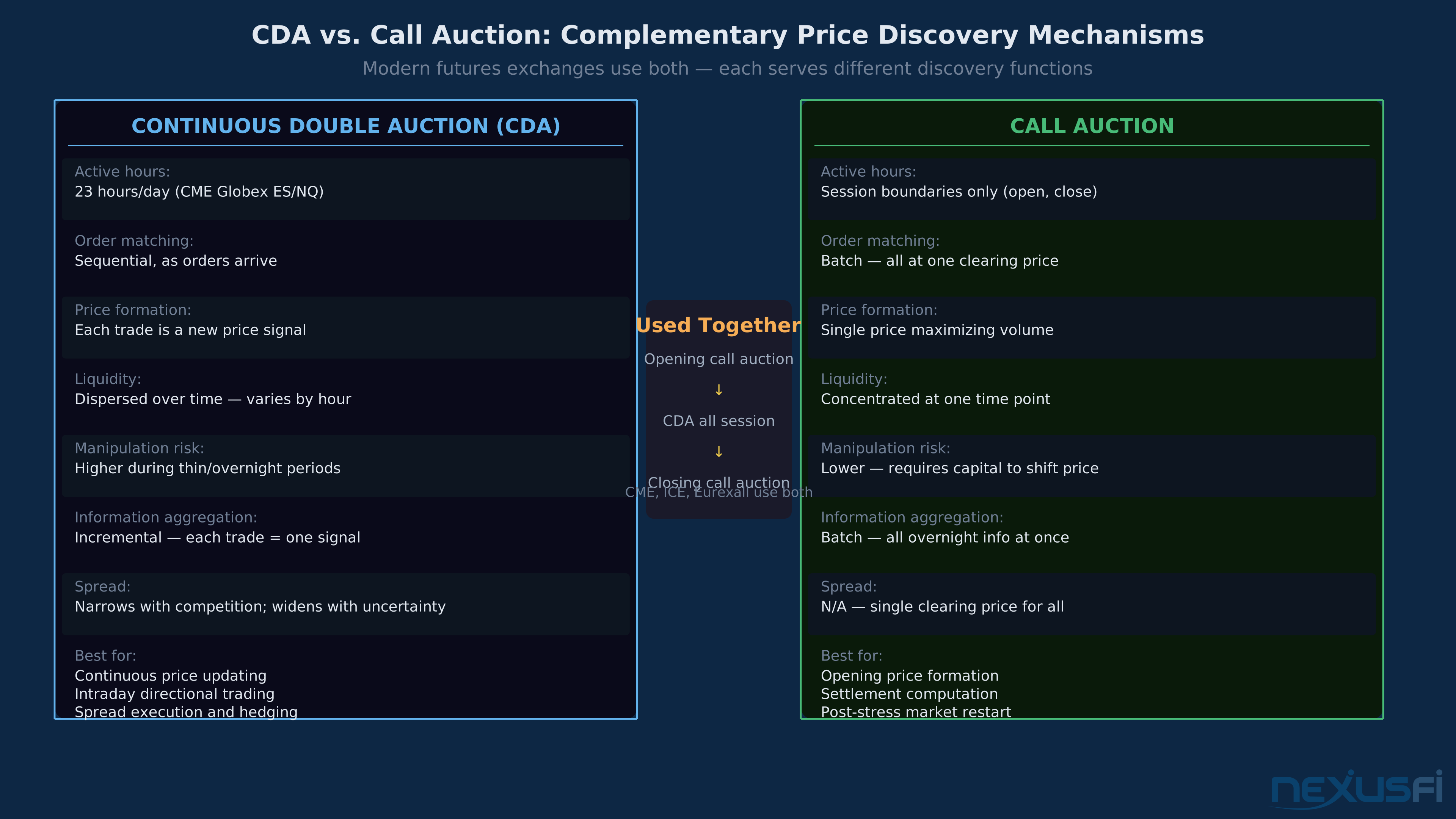
Continuous Double Auction (CDA): The perpetual matching engine used for electronic futures trading. Orders enter a central limit order book (CLOB) and are matched by price-time priority — best price fills first, earliest time wins ties. Operates 23 hours/day on CME Globex.
Call Auction: A scheduled batch auction at session boundaries. Orders accumulate during a pre-open period, then execute at a single clearing price that maximizes matched volume. More manipulation-resistant than the CDA because it concentrates liquidity.
Fair Value: The theoretical futures price where cash-futures arbitrage breaks even. Formula: F = S exp((r + y - q - u) T). Index arbitrage desks enforce this relationship in seconds — deviations beyond transaction costs are immediately exploited.
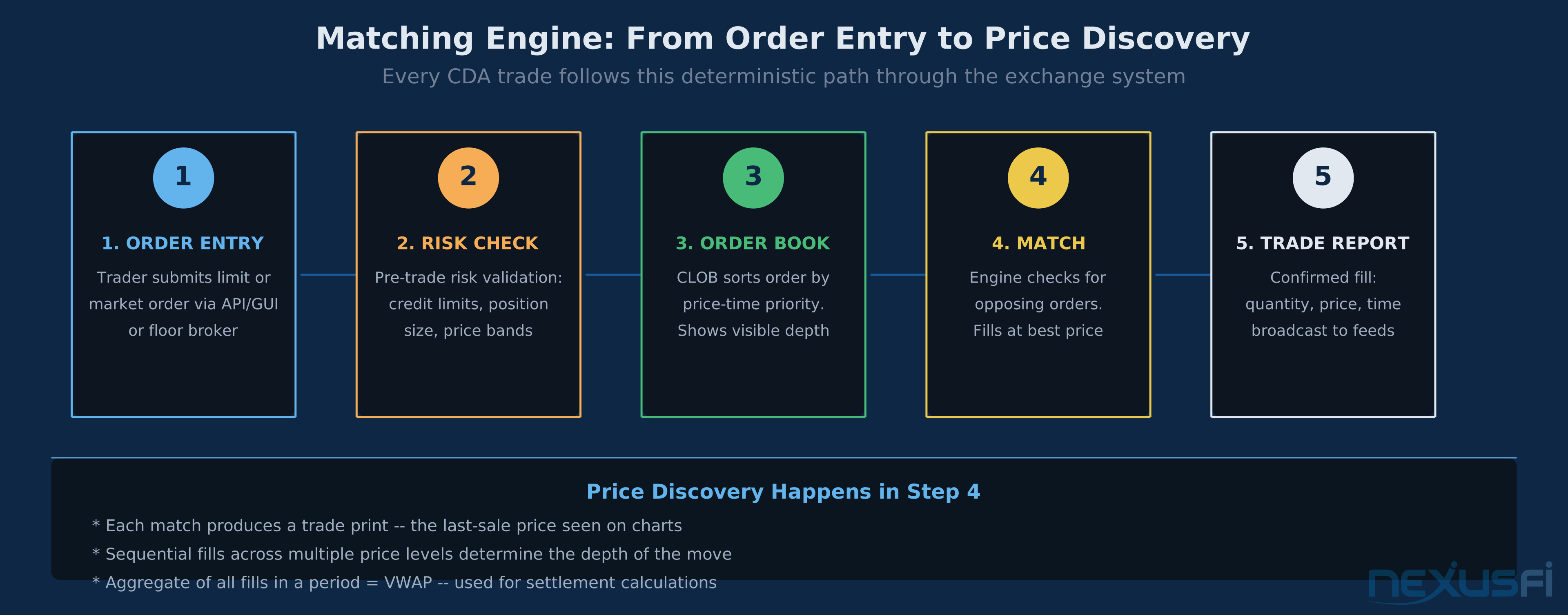
Matching Engine: The exchange software that processes orders, applies price-time priority, and generates trade reports. Every trade print on your chart came from a matching engine execution.
Velocity Logic: CME's dynamic circuit breaker. Triggers when price moves anomalously fast, briefly pausing trading and reopening with a mini call auction to allow the book to rebuild.
Every price you see on a futures chart was produced by a specific mechanism — not a formula, not an algorithm that decides what things are worth, but a set of rules for matching opposing orders. Exchanges are the infrastructure of price discovery. They don't determine value. They create the conditions under which value gets expressed, contested, and continuously updated.
Understanding how that mechanism works — the architecture of exchange-level price discovery — changes how you read markets. The bid-ask spread stops being a tax and becomes a measure of uncertainty. The opening auction stops being noise and becomes a condensed negotiation. Fair value stops being a financial abstraction and becomes the anchor that keeps futures from drifting permanently away from the assets they're supposed to represent.
This article covers the exchange machinery underneath price discovery: the continuous double auction, call auctions, matching engine mechanics, fair value computation, the arbitrage channels that enforce it, and what all of this means for how you actually trade.
The Mechanism Question #
Most traders learn that futures prices reflect supply and demand. That's true but incomplete. Supply and demand are inputs. The exchange mechanism is what converts those inputs into prices.
There are two at the core different auction mechanisms that exchanges use: the continuous double auction (CDA) and the call auction. Most electronic futures exchanges use both — the call auction at session boundaries, the CDA everywhere in between. Each has different properties for liquidity concentration, price formation, and manipulation resistance.
As Fat Tails explained on NexusFi:
The CDA is the perpetual matching engine. The call auction is the scheduled concentration point. Together they form the price discovery infrastructure of modern futures exchanges.
The Continuous Double Auction #
The continuous double auction is the standard market microstructure for electronic futures trading. It operates 23 hours a day on CME Globex, nearly 24 hours on ICE. Every order submitted during the trading session enters the CDA.
How the CDA Works #
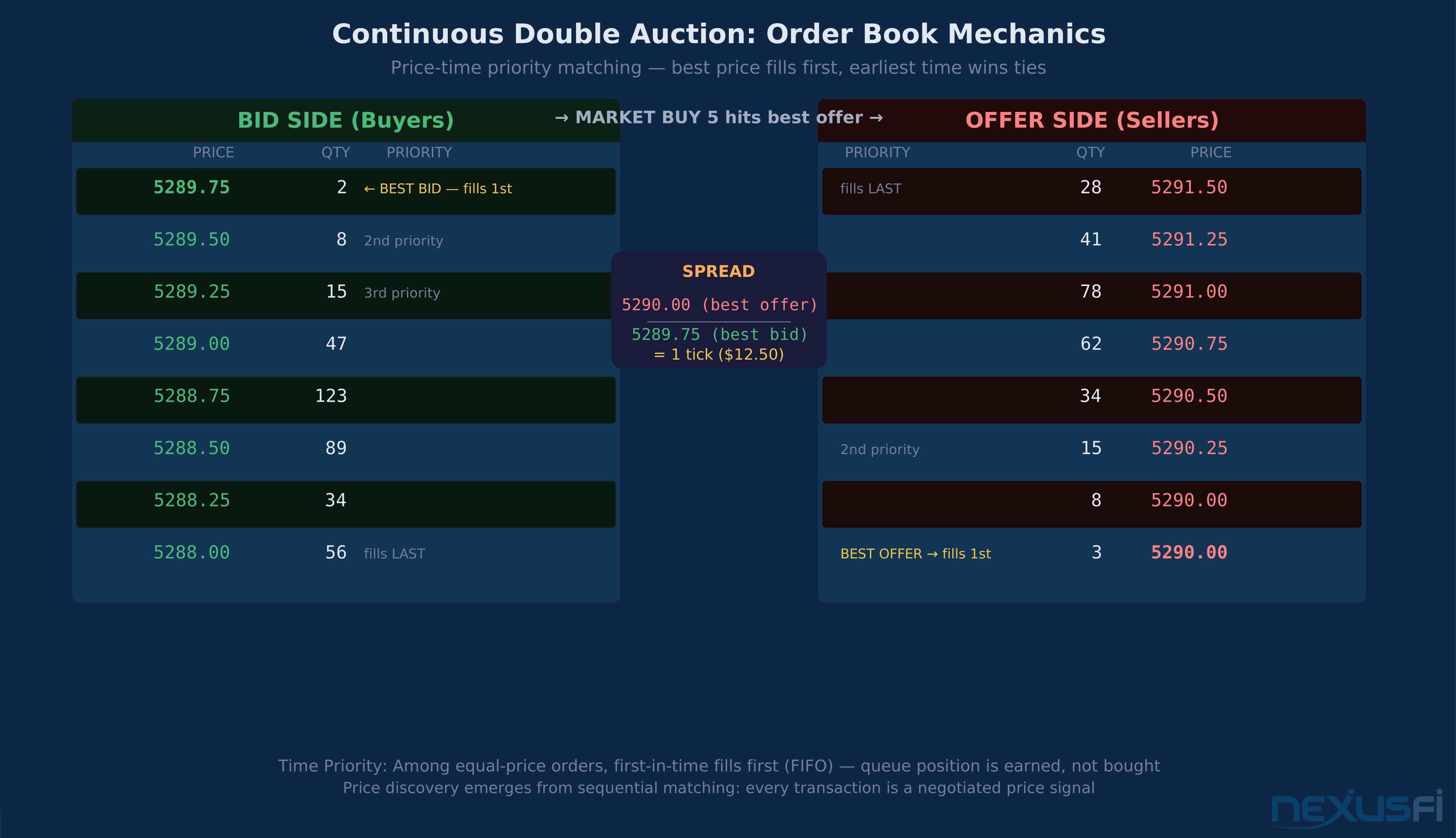
The CDA maintains a central limit order book (CLOB) — two queues, one for buy orders (bids) sorted descending by price, one for sell orders (offers) sorted ascending by price. Orders sit in their respective queues until a matching counterpart arrives or they're cancelled.
The matching logic follows price-time priority on most major exchanges:
- Price priority: The best-priced order (highest bid or lowest offer) fills first
- Time priority: Among orders at the same price, the earliest-submitted order fills first
- Pro-rata or other allocation: Some exchanges (especially for options and certain rate products) allocate fills proportionally across all orders at the best price — CME Globex uses pure FIFO for equity index futures
When a market order hits the book, it sweeps through limit orders at the best available price, then the next-best price, and so on until it's fully filled or the book exhausts available liquidity. The sequence of fills is what generates the price tape — every transaction is a data point in price discovery.
The Bid-Ask Spread as Uncertainty Measure #
The spread between the best bid and best offer is the exchange's real-time measure of uncertainty about fair value. A one-tick spread on ES (0.25 points, $12.50) reflects near-consensus on value — someone will buy and someone will sell with almost no disagreement about price. A wider spread during overnight sessions or pre-news periods reflects genuine uncertainty: market makers demand more compensation for providing liquidity when they don't know which way the next piece of information will move prices.
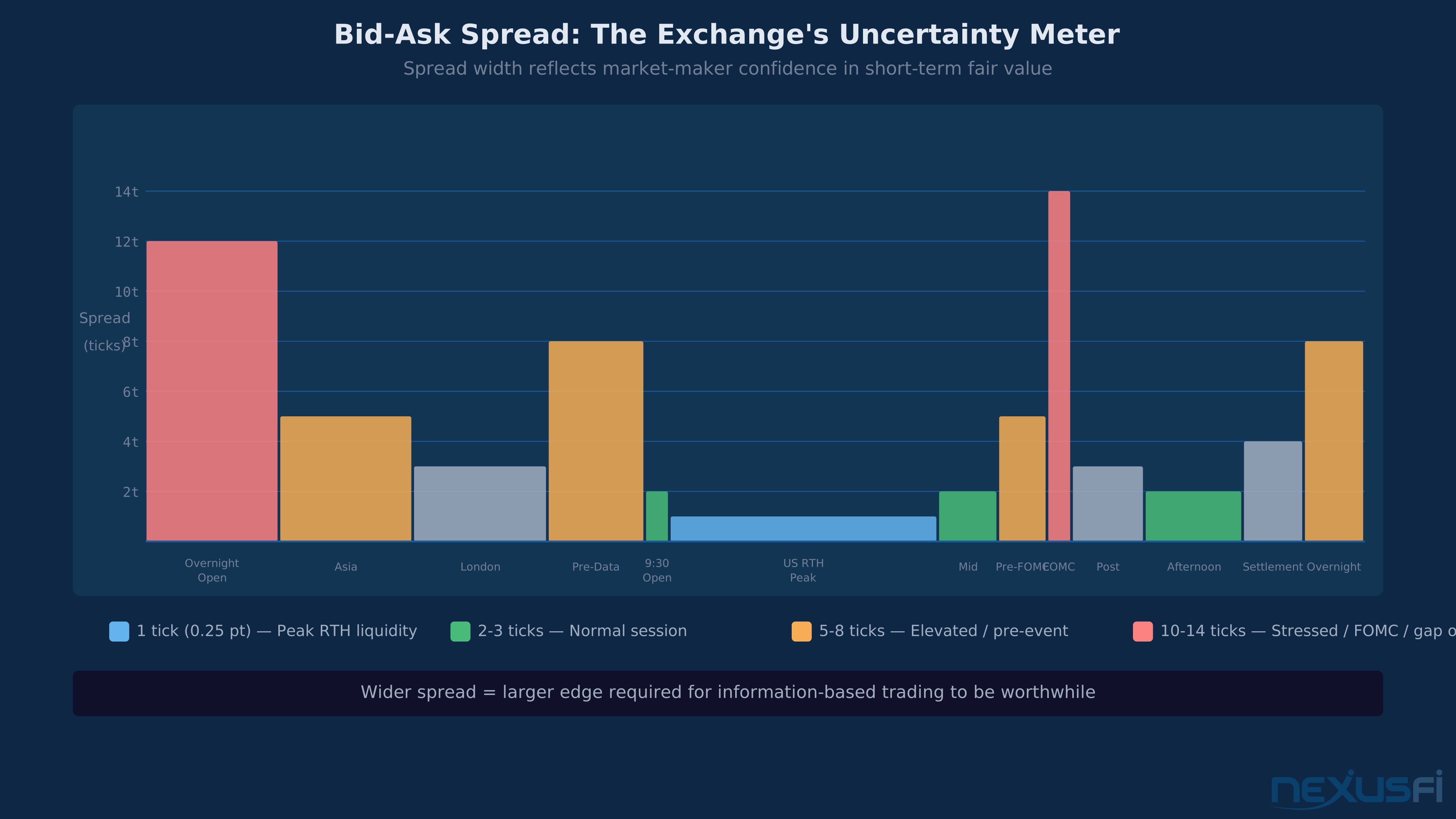
The spread isn't a cost imposed by the exchange. It's an emergent property of uncertainty, and it narrows as certainty increases.
Liquidity Fragmentation and Manipulation Risk #
The CDA's weakness is that liquidity is dispersed across time. Because anyone can submit any size at any time, the order book depth varies continuously. A large market order at a quiet moment can move prices far more than the same order during peak liquidity.
Fat Tails' observation that CDA makes prices "easier to manipulate" refers to this property: when the book is thin, a trader with enough capital can temporarily move prices. Call auctions address this by concentrating orders at a single point — making it much harder and more expensive to manipulate the resulting clearing price.
Call Auctions: Concentrated Liquidity at Session Boundaries #
The call auction is the scheduled alternative to continuous trading. Rather than matching orders in real time, it collects orders during a pre-open period and executes them all at a single clearing price.
The Opening Auction Mechanics #
Fat Tails described the Eurex opening auction process, consistent with Eurex Deutschland's official trading phases documentation published by the exchange:
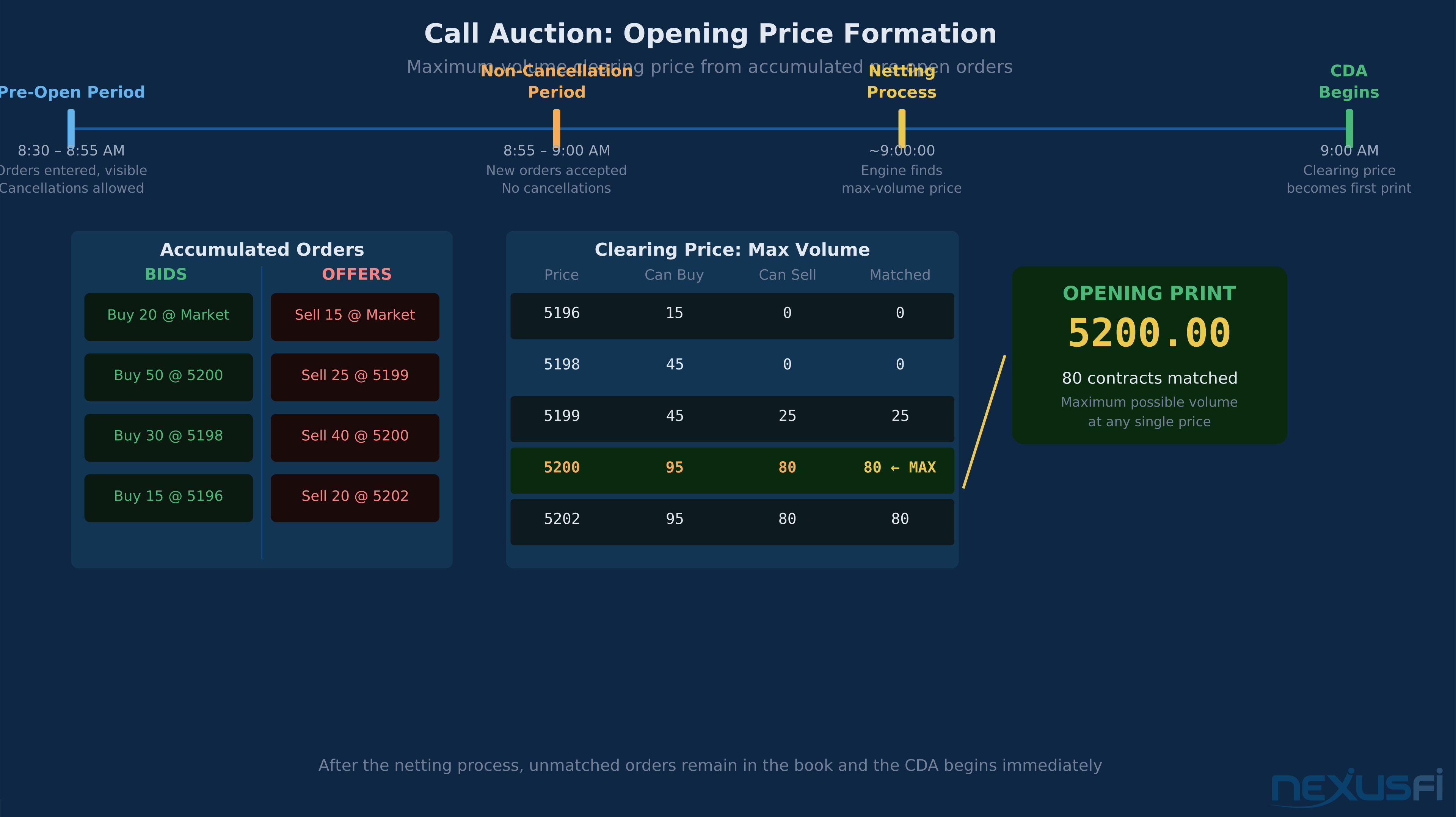
The matching engine finds the price that maximizes executed volume — the price at which the most contracts can be matched. This is called the equilibrium price or clearing price of the call auction.
The logic: if 100 buyers want to buy at any price below 5200 and 80 sellers want to sell at any price above 5198, the clearing price that maximizes matched volume is somewhere in the 5198-5200 range. The exchange sets the exact price at the maximum-volume point from the accumulated order book.
CME Globex Opening Auction #
CME uses a similar pre-open period for its flagship products. For equity index futures (ES, NQ), the pre-open period typically runs from 3:00 PM to 5:00 PM CT when the session closes and then restarts — though the electronic session runs nearly continuously, the real opening auction occurs at the 8:30 AM CT open of the regular trading hours session for many traders.
SMCJB described observing this directly on NexusFi:
The opening auction sets the reference price for the session. Volume, range, and the relationship between the opening auction price and the prior session's settlement price all carry information about how the market has reassessed value overnight.
Why Call Auctions Matter for Price Discovery #
The call auction produces a single price from the condensed expression of many participants' views about value. Because everyone submits before seeing others' orders (or with limited visibility), the resulting price aggregates private information rather than allowing sequential herding.
During the continuous session that follows, prices reflect the incremental arrival of new information. The opening auction reflects the revaluation of everything that happened since the last session closed.
Fair Value: The Arbitrage Anchor #
The exchange mechanism produces prices. The fair value relationship enforces that those prices can't drift too far from the underlying assets.
What Fair Value Is #
Fair value is the theoretical futures price that makes cash-futures arbitrage unprofitable. Fat Tails defined it precisely:
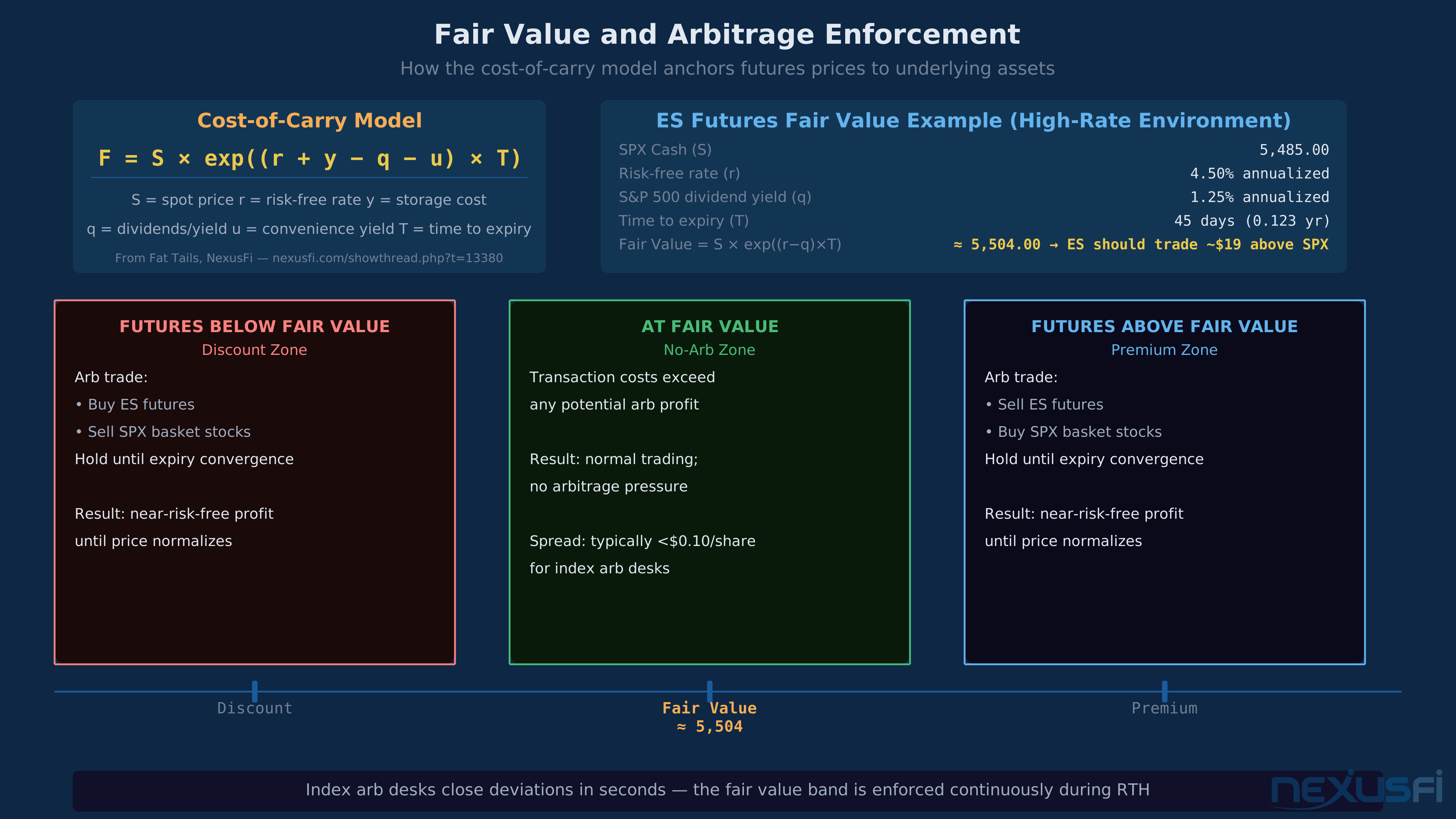
The formula: F = S × exp((r + y - q - u) × T)
Where:
- S = current spot price
- r = risk-free interest rate
- y = storage cost (relevant for physical commodities)
- q = dividends or yields paid by holding the spot position
- u = convenience yield
- T = time to expiration
For equity index futures, this simplifies to the cost-of-carry relationship: fair value reflects what it costs to hold an equivalent position in the underlying stocks versus holding the futures. You post margin on futures and earn interest on the cash you would have otherwise invested. You miss the dividends that stock holders collect.
The Negative Basis in Low-Rate Environments #
Tigertrader explained this relationship on NexusFi in a thread about ES pricing:
In a high-rate environment (like post-2022), this reverses: the interest earned on cash held in lieu of stock positions makes futures the preferred vehicle for leveraged participation, pushing the futures above cash. The fair value relationship is dynamic, reflecting the current interest rate and dividend environment.
How Arbitrage Enforces Fair Value #
Bobwest explained the enforcement mechanism clearly:
And from the CME's own fair value definition (quoted by bobwest):
The Auction as Collective Valuation #
Beyond the mechanical details of order matching, there's a conceptual framework that unifies why all of this matters.
Hoag (John Hoagland from TopstepTrader) articulated it directly:
The exchange mechanism is the infrastructure for this auction. The CDA is a perpetual auction — every second, the last price traded represents the current collective perception of value given everything known to all market participants at that moment.
Hoag continued:
"The market is always seeking the area (value) where buyers and sellers are comfortable conducting business. This value area and the perception of value can (and does) change constantly, and sometimes rapidly. Fundamentals, technical analysis, and inventory adjustment are some of but not all the influences on price discovery. Inventory adjustment is an important factor to understand, as it forces participation when certain levels are reached."
This is the difference between price movement and price discovery. Price movement is mechanical — the matching engine outputting trades. Price discovery is behavioral — market participants continuously updating their valuation in response to new information, forced exits, and the actions of every other participant.
Exchange Mechanisms That Protect Price Discovery Quality #
Modern exchanges have built multiple layers of mechanism on top of the basic CDA to improve price discovery quality and prevent temporary distortions.
Velocity Logic and Dynamic Circuit Breakers #
CME's Velocity Logic detects anomalous price changes — specifically, when prices move faster than can be explained by legitimate order flow — and briefly pauses trading to allow the book to rebuild. CME's Globex technical documentation defines Velocity Logic as a system "designed to detect market movement of a predefined number of ticks either up or down within a predefined time," transitioning instruments into a Reserved state where participants can enter, modify, and cancel orders while matching is suspended. When triggered, futures enter this reserved state for a few seconds before reopening.
The mechanism isn't about preventing any price move; it's about preventing the execution of orders against a book that doesn't reflect current participant intentions. A thinly traded overnight session can have a single large order sweep through five price levels, triggering Velocity Logic even when the fundamental value assessment hasn't changed.
After the reserved state, the exchange reopens typically with an abbreviated call auction — concentrating available orders for a single clearing print that reflects post-disruption participant intentions better than a continuation of the sweep would.
Implied Markets and Spread Books #
CME and ICE both run implied-in and implied-out markets: synthetic spread prices derived from outright books, and synthetic outright orders derived from spread books. This expands effective liquidity by allowing the same economic position to be expressed through multiple instruments.
The matching engine runs all three books simultaneously (spread, outright, and implied) and matches against the best available price regardless of source. A calendar spread order can execute via the spread book, two outright legs, or some combination of implied spreads across multiple maturities.
This mechanism improves price discovery by tying together related markets. A mispricing in the calendar spread is immediately visible to the engine and can be exploited, keeping the relationship between contract months tightly arbitraged.
Closing Auctions and Settlement Price Determination #
The closing auction (or settlement procedure) is one of the most consequential moments of exchange-level price discovery. The settlement price is the reference price for:
- Daily mark-to-market of all open positions
- Option expiration calculations
- The starting price for overnight trading
- Arbitrageur reset calculations for the next session's fair value
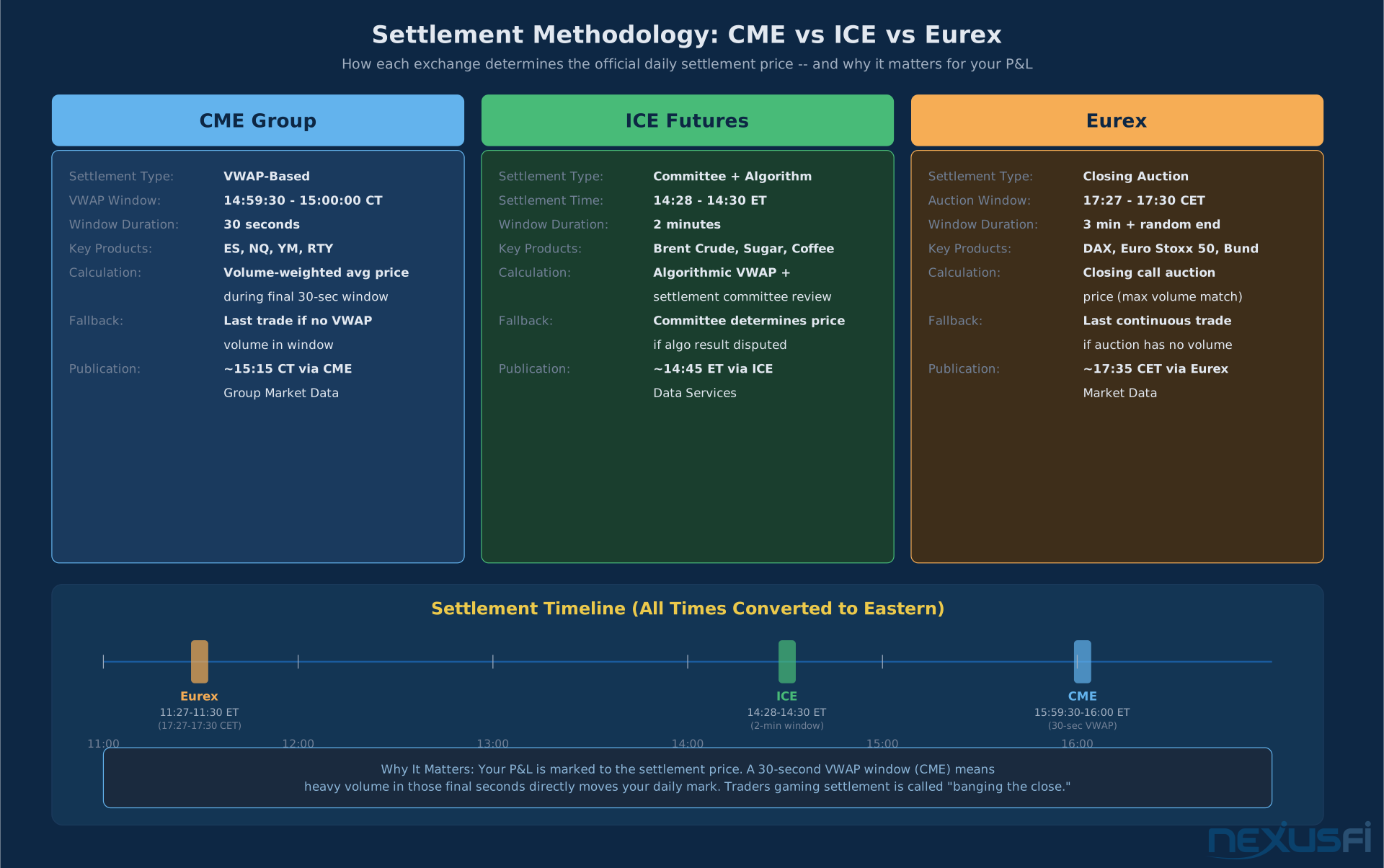
CME uses various settlement methods depending on the product. Equity index futures settle at a VWAP over a 30-second window near close, reducing the ability of a single large order to manipulate the settlement. This is a direct design response to the known incentive to move settlement prices when carrying large option positions expiring that day.
ICE energy products use a similar VWAP-based methodology, with the specific window and weighting methodology published in exchange rules.
What Exchange Mechanisms Reveal About Markets #
Reading the Opening Auction #
When the opening auction prints much above or below the prior session close:
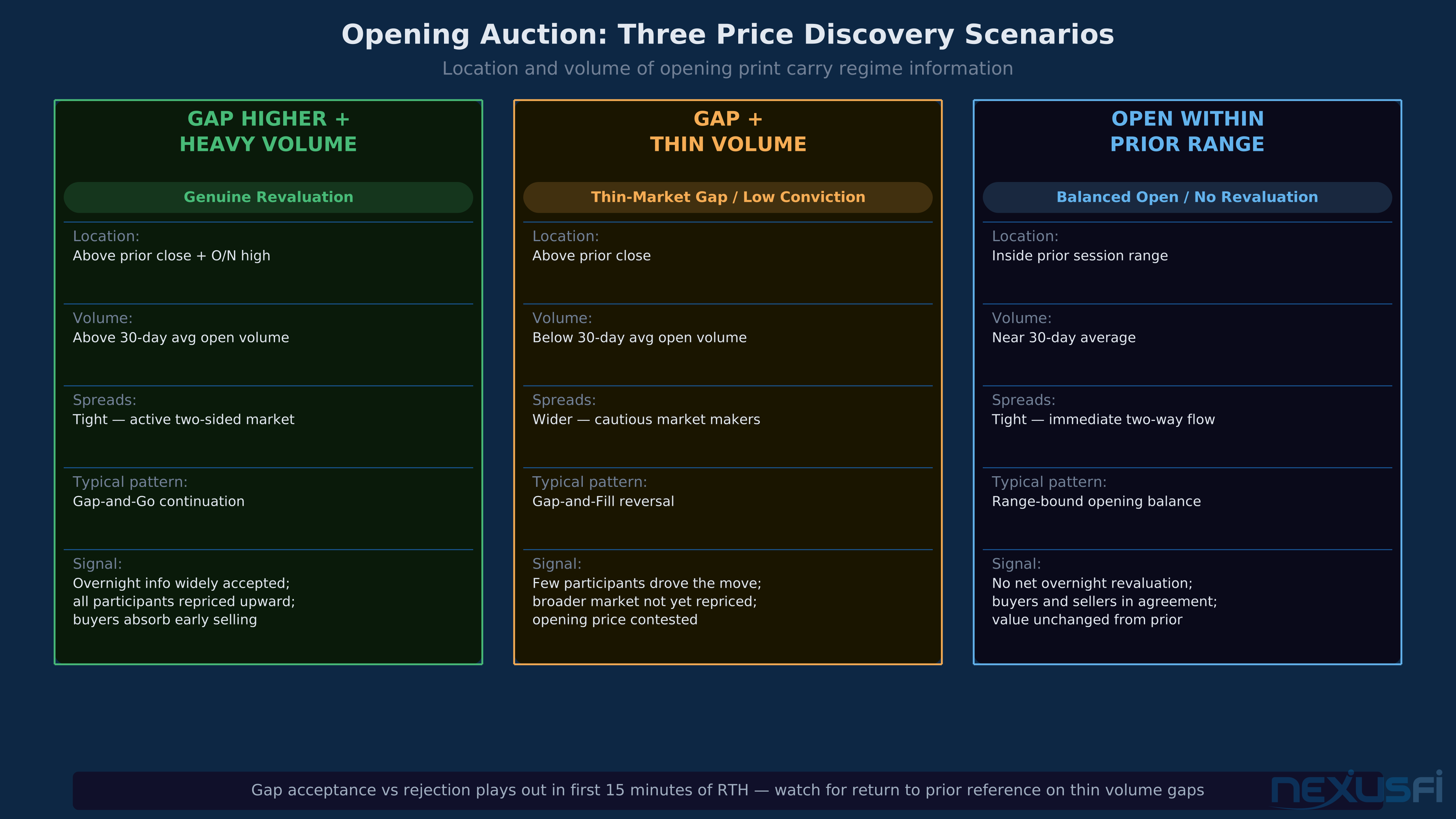
- Strong gap higher with large opening volume: New information has been uniformly revalued upward. The call auction aggregated more buying than selling at any price near yesterday's close.
- Weak gap with thin volume: The gap may reflect positioning in thin overnight conditions rather than genuine revaluation. The CDA that follows will often test the gap.
The gap-and-go versus gap-and-fill distinction is at the core about whether the opening auction's price reflects broad valuation consensus or is an artifact of thin-market conditions.
Reading the Bid-Ask Spread #
In the CDA, spread width carries information:
- One-tick spread: High certainty, active two-sided market, aggressive competition for the best price
- Two-to-three tick spread: Normal during slower periods, slightly elevated uncertainty
- Wide spread: Pre-news, overnight session, stressed market — market makers pricing in significant directional uncertainty
When you're trying to execute a large order, the visible spread is only part of the story. The relevant question is depth at multiple levels. The ES might show a one-tick spread but only 50 contracts on each side. A 100-lot will sweep the inside market and move one or two ticks before the book refills.
Fair Value as a Pre-Market Reference #
CME publishes a fair value reference calculation before the cash market opens each day. During the 30 minutes before the equity market opens (9:00-9:30 AM ET), ES is trading but SPX cash isn't. The ES/SPX relationship during this window is purely the futures market's collective assessment of where cash stocks should open.
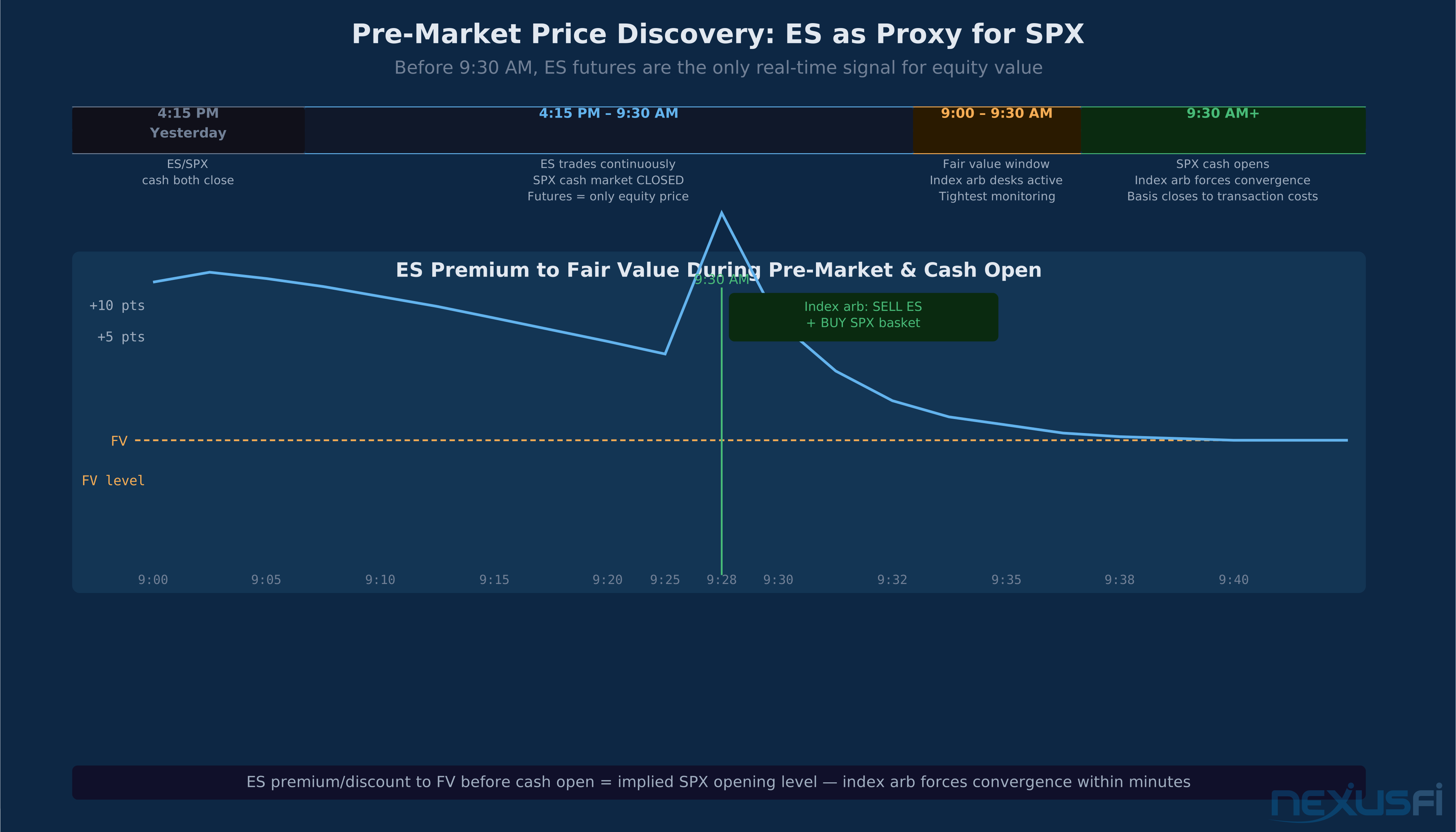
When ES is trading at a $5 premium above fair value, the implied opening for SPX cash is a specific number — and large program traders have computers watching this relationship in real time, ready to execute index arb the moment cash opens. This creates a predictable gravitational force toward the fair value calculation at the 9:30 AM cash open.
The Exchange's Role in Information Aggregation #
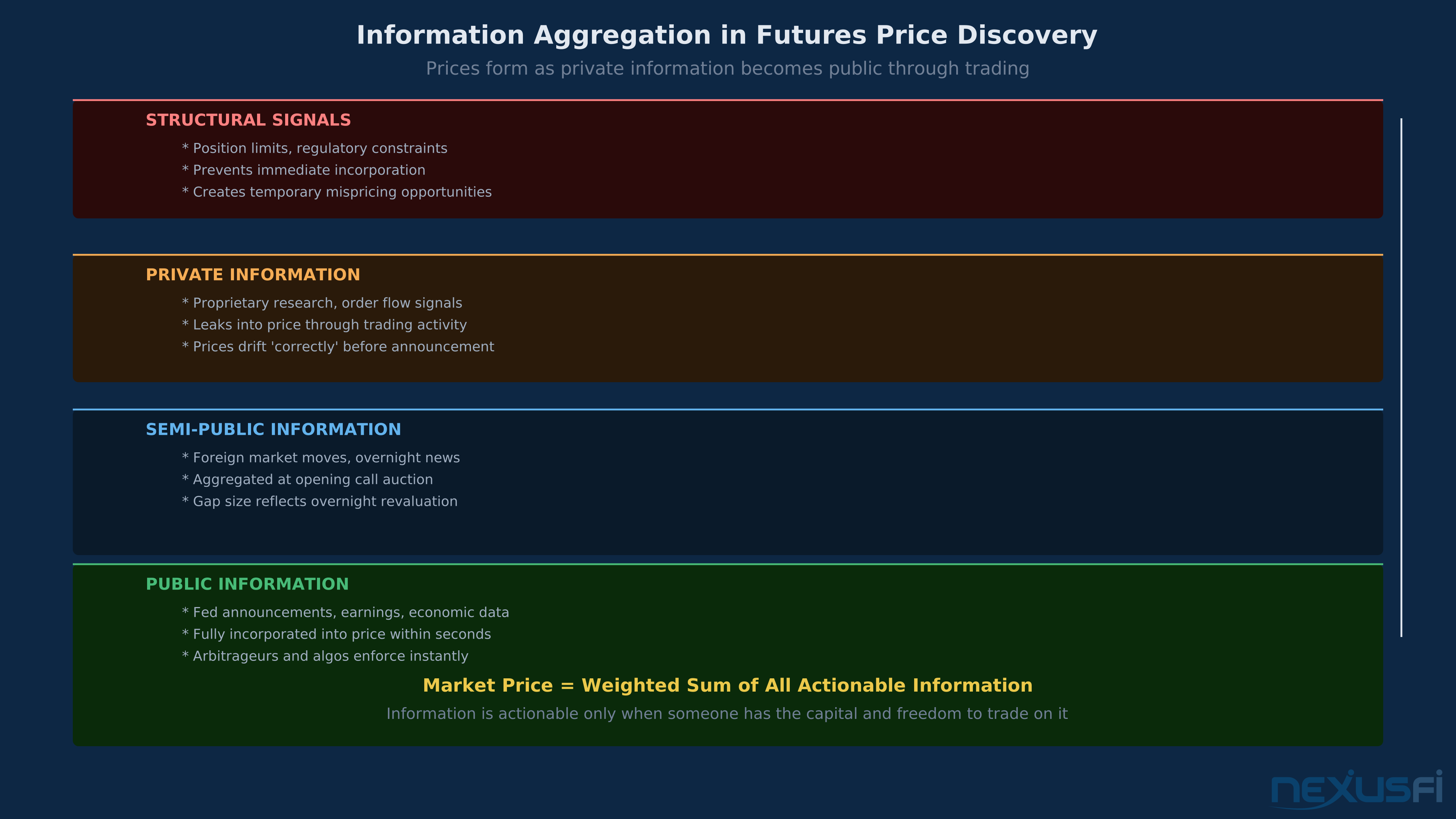
The deepest function of the exchange mechanism is information aggregation. The price at any moment represents everything that all participants collectively know, weighted by how aggressively they're willing to act on it.
A piece of information is only incorporated into price when someone trades on it. This has practical implications:
Why prices can be wrong temporarily: If the only people who know a piece of information are constrained from trading (position limits, regulatory restrictions, liquidity constraints), that information won't be in the price until they can act.
Why prices move before news: Informed participants begin accumulating or distributing before public announcements. The CDA aggregates their private valuations into the price incrementally, so prices often drift in the "correct" direction before news is publicly available.
Why opening auctions can gap: The overnight accumulation of private information, including foreign market moves and news events, gets aggregated in the opening auction. The gap is the market expressing everything that happened since the prior close in a single clearing event.
bebop described the arbitrage-enforcement side in the currency markets:
"Mispricing between fair value of the futures & the current spot rate — that's pure arbitrage = free money. You buy one sell the other & either hold the position to expiry, or trade out of it when the basis flips.
::: The speed at which arbitrageurs close these mispricings is itself a measure of market efficiency. When basis gaps persist for minutes or hours rather than seconds, it indicates either elevated risk (that makes arbitrage unattractive despite the apparent mispricing) or structural impediments to the arbitrage trade.
Practical Framework for Exchange-Level Price Discovery #
Pre-Session #
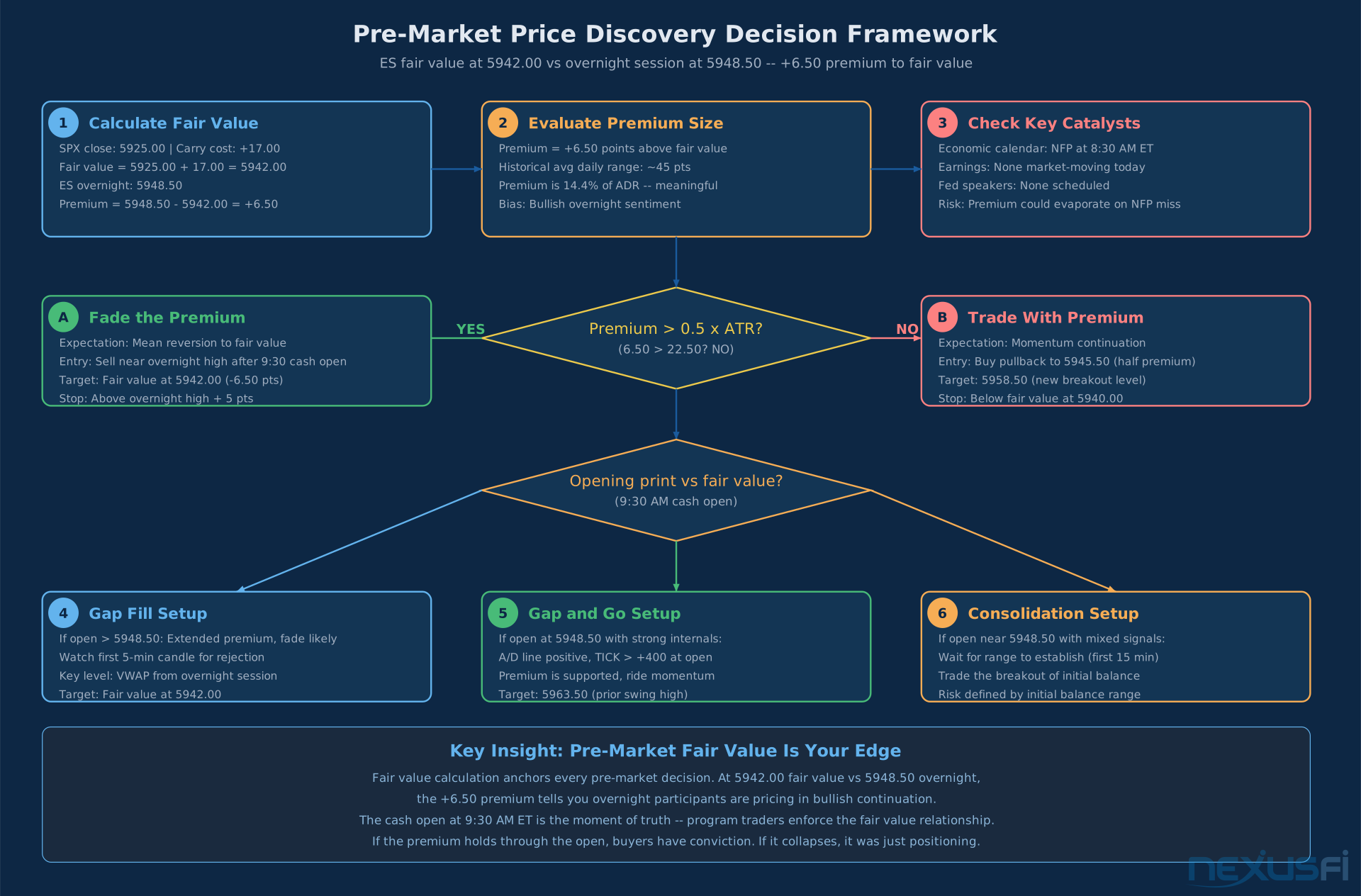
Step 1: Check fair value against overnight ES pricing. CME publishes the formula inputs (index level, interest rates, dividends, days to expiration). The pre-market ES premium or discount to fair value tells you the implied cash open before SPX trades.
Step 2: Note the opening auction volume and location relative to prior session close and overnight range. High-volume opens that gap much indicate genuine revaluation. Low-volume gaps into prior ranges warrant skepticism.
Step 3: Identify call auction clearing price quality — was the open price accepted by volume following the opening auction, or did price immediately reverse? Accepted opens typically see continuation or balance. Rejected opens typically see immediate return toward prior reference.
During Session #
Monitor spread width in context: Normal spread for the session hour tells you the baseline. Widening spreads before scheduled events (FOMC announcements, economic data) reflect rational uncertainty — market makers pricing for potential large moves. Unexpected spread widening is an early warning of stress.
Track price relative to fair value during the equity session. Large divergences (ES much above or below the fair value implied by SPX cash) attract index arbitrage and typically self-correct within the session.
Use Velocity Logic triggers as information: When CME's dynamic circuit breaker triggers and price briefly enters a reserved state, the subsequent reopen is a mini call auction. The clearing price after the reserved state is a better representation of participant intentions than the last price before the disruption.
Around Expiration #
As futures approach expiration, the fair value relationship tightens mechanically — the carry component approaches zero as T approaches 0. The convergence between futures and cash accelerates in the final days and becomes precise at final settlement.
Index futures don't expire through delivery of stocks — they cash-settle at a calculated index level. For ES, this is the Special Opening Quotation (SOQ) of the S&P 500 — the opening prices of all 500 component stocks on the third Friday of the expiration month. The specific design of this settlement mechanism (using opening prices rather than close) reflects decades of design evolution to prevent manipulation of the cash-settle price.
Exchange Mechanism Differences Across Products #
CME vs. ICE Architecture #
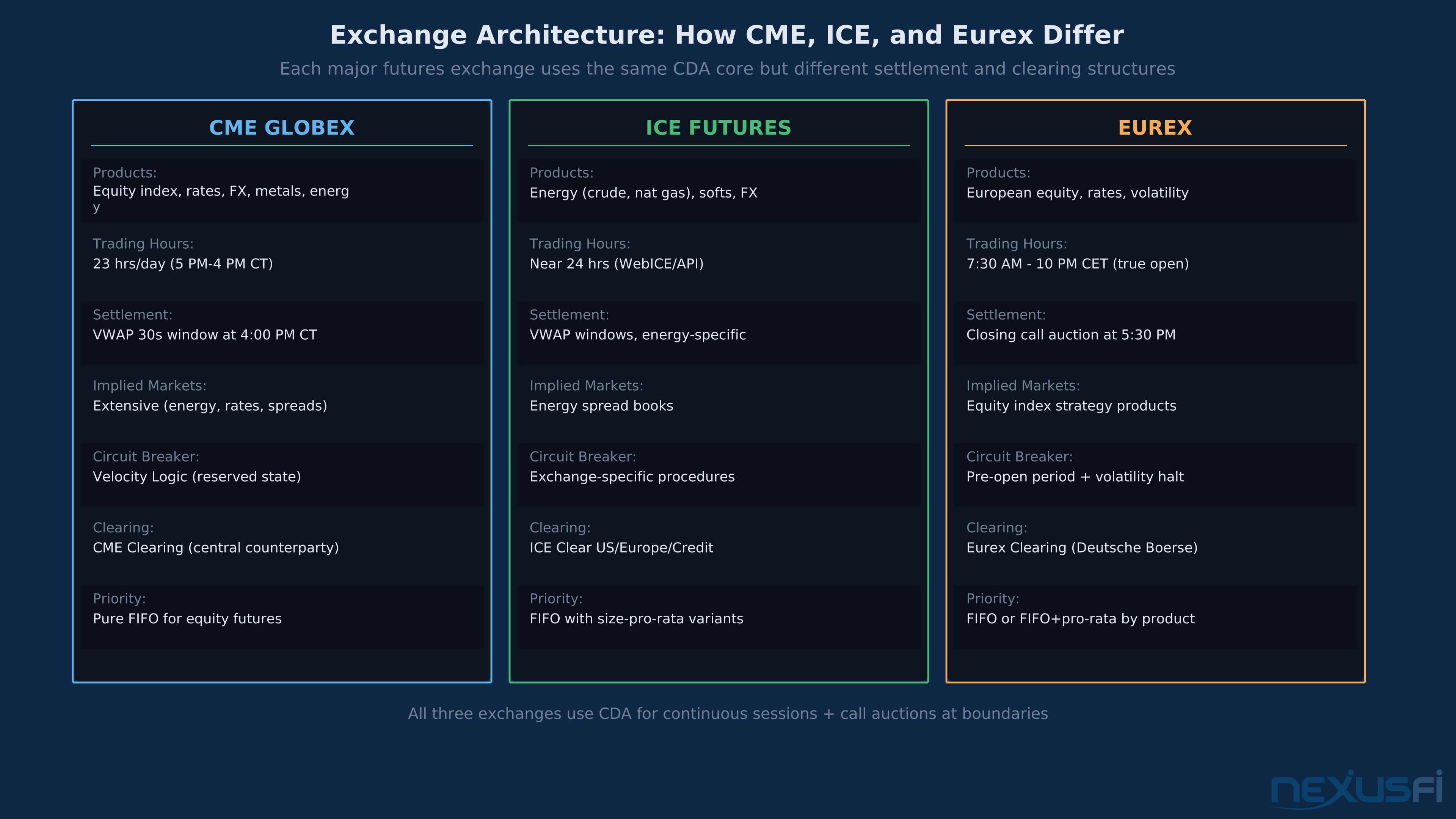
CME Globex runs a distributed matching engine with data centers at Aurora, Illinois (CME primary) and co-location facilities for direct-access participants. ICE operates through its proprietary WebICE and API platforms with matching at data centers in Atlanta and London.
Both use continuous double auctions for their electronic sessions. The key differences are:
- CME's implied markets are more extensively developed, especially in energy, agricultural, and rate products
- ICE's energy markets use VWAP windows for settlement that differ from CME's methodology
- Eurex and other European exchanges use more extensive call auction structures, especially at open and close, reflecting different regulatory traditions around settlement price manipulation
The Pit-to-Electronic Transition #
The move from open-outcry pit trading to electronic CDAs at the core changed the speed and accessibility of price discovery without changing its underlying logic. Pit trading was a form of call auction conducted continuously — floor traders aggregating orders and expressing them through voice and hand signals. The electronic CDA replicates the economic function at machine speed with a continuous published order book rather than a floor of shouting traders.
What changed with electronic markets:
- Transparency: The full order book depth is visible electronically; the pit showed only voice bids and offers
- Speed: Electronic matching happens in microseconds; pit execution was seconds to minutes
- Access: Electronic markets give retail traders direct access to the same order book as institutions; the pit was intermediated by floor brokers
What didn't change:
- The fundamental auction mechanic
- The fair value relationship enforced by arbitrage
- The role of call auctions at session boundaries
- The information aggregation function of trading
Advanced Exchange Mechanisms #
Auction-on-Demand and Self-Help Rules #
When a market becomes clearly one-sided — all bids or all offers — and normal CDA matching can't produce equilibrium, exchanges have procedures for declaring an "imbalance" and triggering an abbreviated auction. This is rare in liquid futures but becomes relevant in stressed markets or for less-liquid contracts.
Self-help rules allow exchanges to temporarily route around technical failures at other venues without triggering circuit breakers. In multi-exchange environments (more relevant for equities), self-help prevents a single venue's technical problem from halting all trading.
Reserve (Iceberg) Orders in the CDA #
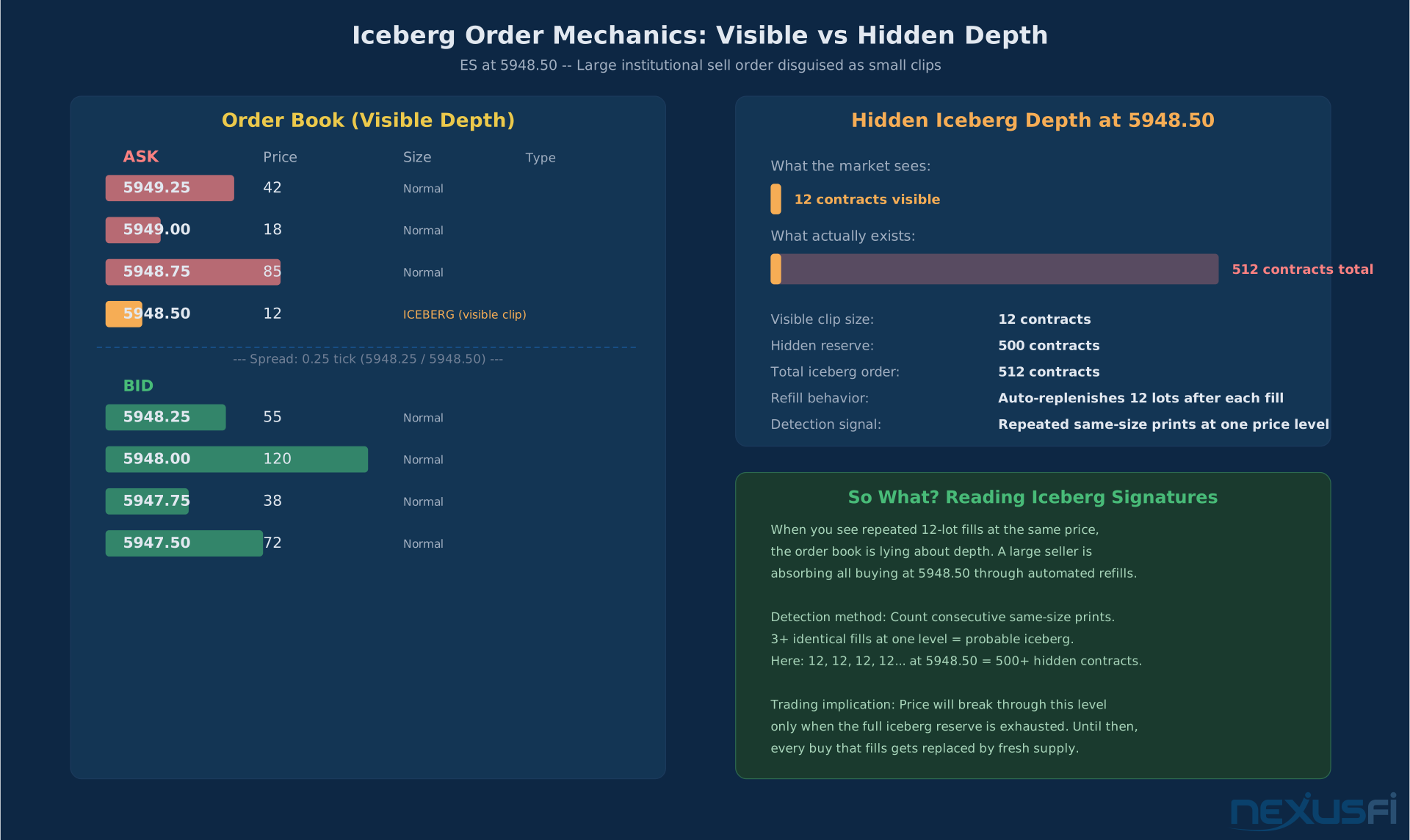
Exchange rules define what's visible in the order book. Reserve orders — often called iceberg orders — show only a specified quantity in the visible book while holding additional size behind the queue. The hidden portion rejoins the queue at the back after the visible portion executes.
Icebergs affect price discovery by obscuring true supply and demand. When a 500-contract sell order shows only 50 visible, the apparent book depth understates available supply. This is a deliberate design tradeoff: large participants need tools to limit market impact; the exchange mechanism that reveals everything simultaneously would make large orders impossible to execute without severe adverse price movement.
The exchange permits this because the alternative — large participants not participating — would reduce overall liquidity more than the information opacity of icebergs.
Algorithmic Trading and the CDA #
The CDA's continuous, rules-based, machine-readable nature was tailor-made for algorithmic trading. Market-making algorithms post quotes continuously, adjusting bid and offer prices in response to order flow, inventory, volatility estimates, and model-derived fair values. Directional algorithms identify patterns in order flow and position so.
The result is that in liquid futures like ES and NQ during the regular session, market maker algorithms compete aggressively to provide the best bid and offer, frequently maintaining one-tick spreads throughout the session. This is beneficial for price discovery: tighter spreads mean lower transaction costs, which reduces the size of moves needed to make information-based trading worthwhile and attracts more informational trading volume.
Summary #
Exchange-level price discovery is not a passive process. It's engineered.
The continuous double auction is the perpetual matching engine — real-time price formation from competing orders, limited by price-time priority rules, continuously updating as new orders arrive and fill. Call auctions concentrate liquidity at session boundaries, producing opening prices that aggregate overnight information more efficiently than a thin-market CDA would.
Fair value is the arbitrage anchor. The formula connecting futures prices to the underlying asset's value defines the boundaries within which futures can trade before risk-free profits become available. Index arbitrage desks enforce this relationship in equity index futures in seconds; commodity arbitrage operates at slightly longer timescales but with the same mechanism.
The exchange's job is to make all of this run with integrity — preventing manipulation, providing transparency, enforcing the rules that make the mechanism work. Circuit breakers, settlement procedures, reserve order rules, and call auction design are all part of this infrastructure.
Understanding this machinery doesn't give you a trading edge directly. It gives you a conceptual vocabulary for reading markets — one where the opening auction has specific information content, where spread width is a uncertainty signal, and where fair value is an anchor rather than noise.
Knowledge Map
Go Deeper
Build on this knowledgeReferences This Article
Articles that build on this topicCitations
- — Opening Call. Is it still available? (2012) 👍 8“When we are trading, we usually assume that price discovery is achieved via a continuous double auction (CDA), where market orders hit the order book, which then triggers a trade within the matching engine.”
- — Opening Call. Is it still available? (2012) 👍 8“Usually there is a pre-open period, during which brokers and other exchange members can enter their orders... there may be a non-cancellation period from 8:55 to 9:00.”
- — Fair Market Value (FMV) (2011) 👍 12“The fair market value of a futures contract is the price at which an arbitrageur who buys (sells) the futures market and sells (buys) the spot market and holds both positions until the expiry just breaks even.”
- — Spoo-nalysis ES e-mini futures S&P 500 (2014) 👍 6“When you buy an e-mini future, you post margin and subsequently earn carry because you can invest the money you would have otherwise spent buying all the underlying stocks.”
- — Newbie Question - ES E-Mini Contracts (2016) 👍 4“The relative valuation is kept reasonably in step by the market. Others will be watching for any significant differences between them, and will buy one (or a basket of stocks similar to the S&P) and sell the other.”
- — Trading Lessons from TopstepTrader's John Hoagland (HOAG) (2014) 👍 15“Futures markets -- or any market for that matter, is truly an auction. Price discovery is the function of all the participants in the auction establishing the collective perception of value.”
- — Trading the new CME E-Micro's (2021) 👍 3“Actually had a price higher than 34200, but 34200 was the auction open clearing price (before my order) based upon 'number of bids and offers'.”
- — EURUSD M6E/6E Euro (2015) 👍 4“Mispricing between fair value of the futures & the current spot rate -- that's pure arbitrage = free money. You buy one sell the other & either hold the position to expiry, or trade out of it when the basis flips.”
- — Filling Limit Orders on the ES (2012) 👍 4“In a continuous auction there are basically two types of orders: Market orders (liquidity-seeking) and Limit orders (liquidity-adding). Limit orders will be executed with price/time priority.”
- — Orders appearing out of nowhere (2014) 👍 1“If you sell the implied market in Feb, the exchange matching engine will sell in Jan, and buy the spread. Most exchanges show 1st order implied markets but NOT 2nd order -- yet will match against them if possible.”