



Permitted Investments of Customer Funds: What Futures Brokers Can and Cannot Do With Your Money Under CFTC Regulation 1.25
Overview #
Every futures trader deposits margin and assumes their broker will return it on demand. That assumption rests on a regulatory architecture most traders never examine until something goes wrong. The mechanics of how your FCM manages the cash sitting in your segregated account — what they invest it in, how quickly they can retrieve it, and who captures the interest — directly affects your capital safety, your account's liquidity buffer, and the resilience of your broker in a market crisis.
CFTC Regulation 1.25 is the rule that governs this. It establishes a narrow "investment basket" that FCMs are permitted to use with customer segregated funds. The rule sounds technical, but its practical implications are anything but abstract. MF Global's collapse in 2011 — a $1.6 billion shortfall that froze thousands of trading accounts — was not simply a case of fraud. It was a case of an FCM pushing the boundaries of its investment authority until those boundaries broke, taking customer money with them.
This article explains how the permitted investment framework works, what protections it provides, where it falls short, and how you can verify that your FCM is operating within it.
Key Concepts #
CFTC Regulation 1.25 — The federal rule governing how Futures Commission Merchants may invest customer segregated funds. Rooted in the principle that customer money must remain "cash-like": low-risk, highly liquid, and immediately accessible.
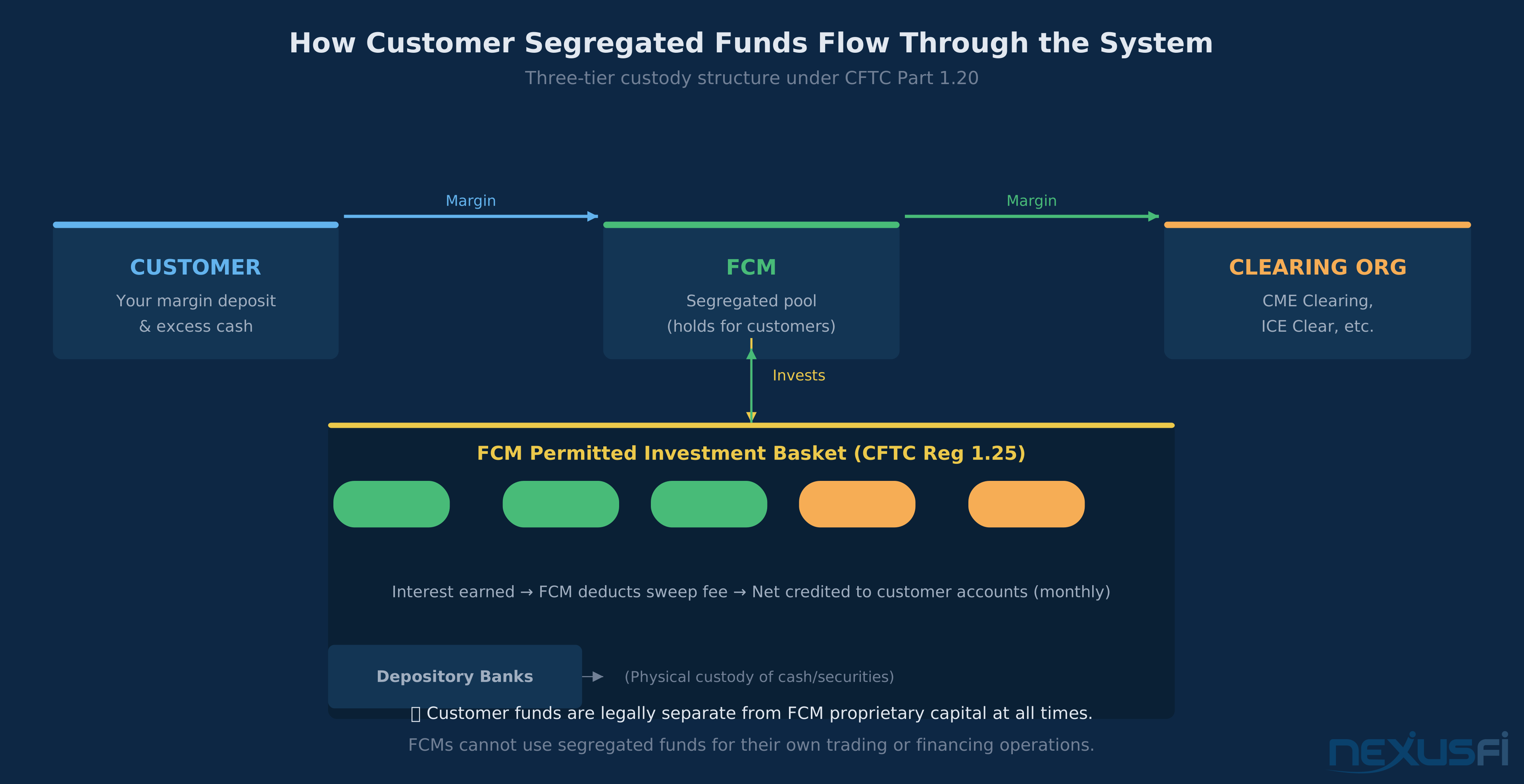
Segregated Customer Funds — Customer margin and excess deposits held by the FCM in accounts legally separate from the firm's proprietary capital. The FCM does not own these funds; it holds them on behalf of customers and is prohibited from using them for its own purposes.
Investment Basket — The universe of permitted instruments into which an FCM may deploy customer segregated funds. Defined and limited by Reg 1.25. FCMs must file an Investment Basket Disclosure with the NFA.
Repo-to-Maturity (RTM) — A repurchase agreement structured so that the repo matures simultaneously with the pledged security. Explicitly prohibited for customer segregated funds after 2012 reforms. MF Global's use of RTM trades with European sovereign debt was the central mechanism of its customer funds shortfall.
FOCUS Reports — Financial and Operational Combined Uniform Single reports that FCMs must file monthly with the CFTC and NFA. The primary public source for information about how an FCM is deploying customer funds.
Residual Interest — The FCM's own capital buffer maintained inside the segregated account pool, above the minimum required. This cushion protects the aggregate pool from intraday fluctuations before customer funds are individually reconciled.
NFA BASIC — The National Futures Association's Background Affiliation Status Information Center, publicly accessible at nfa.futures.org. Shows registration status, disciplinary history, and financial data for registered firms.
CFTC Rule 1.55 Disclosure Document — A required disclosure every FCM must provide prospective customers that explains how the firm handles customer funds, including its specific investment practices. Your first stop for understanding any broker's approach.
The Permitted Investment Framework: CFTC Regulation 1.25 #
The foundational principle of Reg 1.25 is that customer segregated funds are not a treasury management tool — they are a trust held by the FCM for customers' benefit. The FCM has narrow authority to invest those funds, and every instrument in the permitted basket must satisfy two overriding tests: preservation of principal and immediate liquidity.
"Immediate liquidity" means the investment must be convertible to cash within one business day without significant loss of value. This is not a soft guideline — it is the structural requirement that everything else flows from. Any investment that cannot meet this test on any given day is not permitted, regardless of its credit quality.
The rule applies to three categories of customer funds: domestic futures customer funds (held under CFTC Part 1.20), cleared swaps customer funds (Part 22), and foreign futures and options customer funds (Part 30.7 secured amounts). Each has its own segregation requirements, but the investment authority under Reg 1.25 applies to all three.
FCMs must also file an Investment Basket Disclosure with the NFA specifying exactly which instruments they use. This disclosure is the bridge between regulatory permission and actual practice — a broker may be permitted to hold repos but choose not to, or may hold only Treasury bills. The disclosure tells you which choice your broker made.
What FCMs Can Invest In #
The permitted investment basket under Reg 1.25 is deliberately conservative. These are the instruments the CFTC determined could be held for customer funds without creating unacceptable credit, market, or liquidity risk.
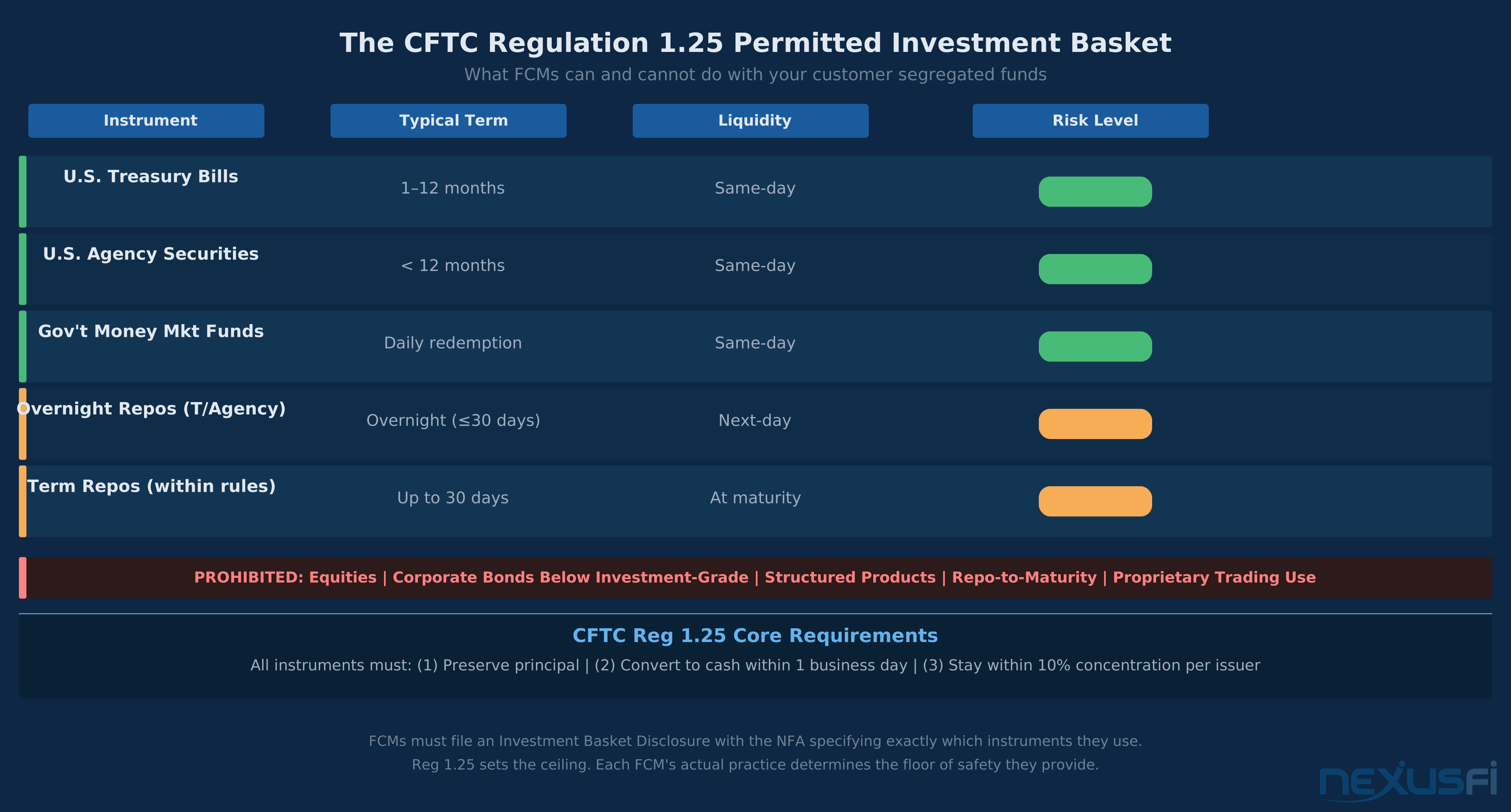
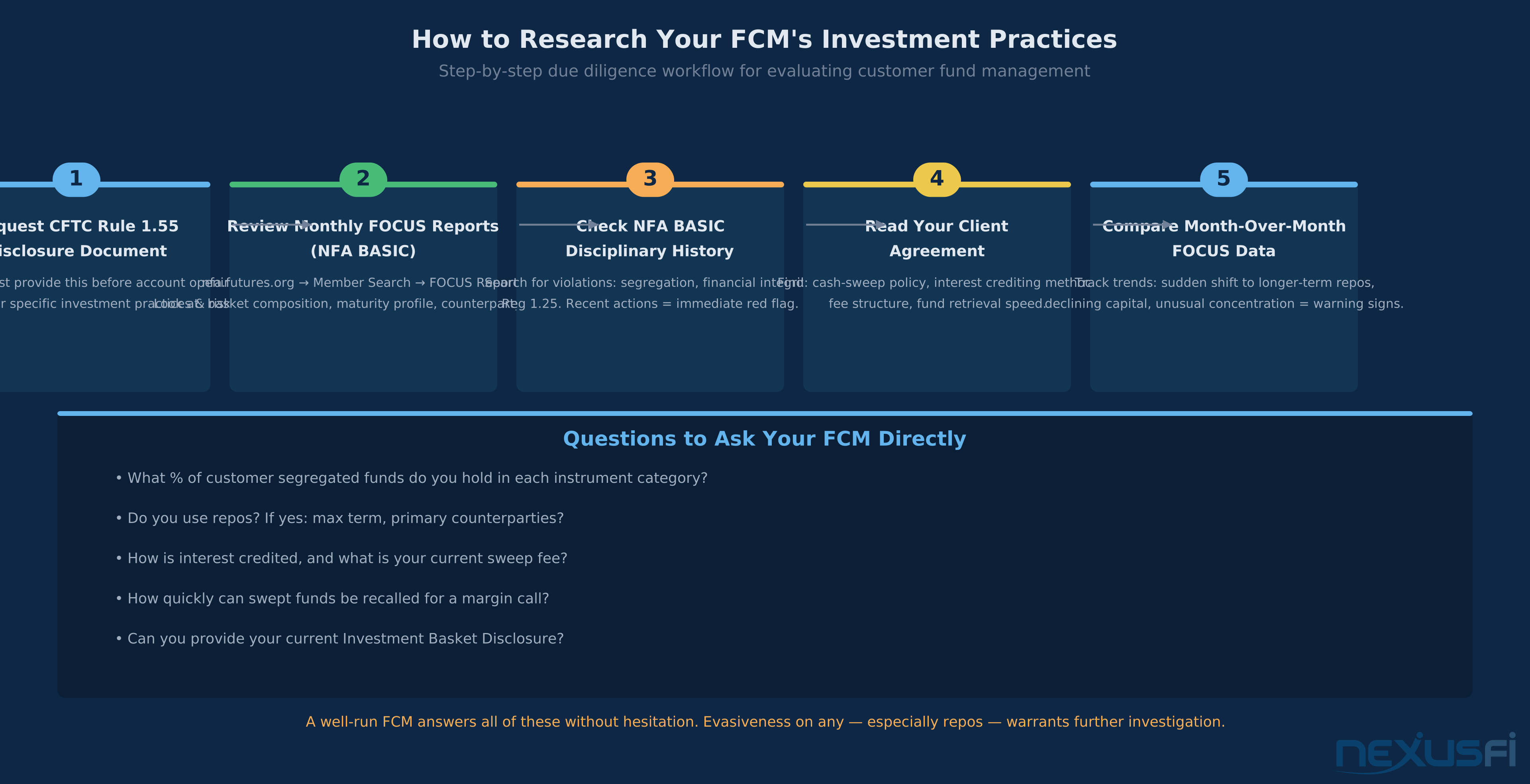
U.S. Treasury Securities — Bills, notes, and bonds issued by the U.S. government. The benchmark safe-harbor instrument. Direct Treasury obligations carry the full faith and credit of the U.S. government and provide daily liquidity. T-bills with maturities of one to twelve months are the most common holding. FCMs favoring maximum safety tend to concentrate here.
U.S. Agency Securities — Obligations of U.S. government-sponsored enterprises including Ginnie Mae (GNMA), Fannie Mae (FNMA), and Freddie Mac (FHLMC). Slightly higher yield than direct Treasury obligations, still considered high-quality under the rule. Subject to the same concentration limits as other categories.
Money Market Mutual Funds (MMFs) — Government-only MMFs that invest exclusively in U.S. Treasury and agency securities qualify under Reg 1.25. Some prime MMFs meeting specific credit thresholds also qualify. The stability of net asset value and daily liquidity make MMFs attractive for cash management. Post-2016 SEC MMF reforms — which introduced floating NAV for institutional prime funds — changed the calculus somewhat, with government-only funds becoming the dominant choice for segregated fund investment.
Repurchase Agreements (Repos) — An FCM lends cash from the segregated pool to a counterparty, which pledges high-quality collateral (typically Treasury or agency securities) and agrees to repurchase it at a fixed price on a specified date. Repos earn the FCM a short-term rate of return while keeping the cash technically "invested" in qualifying collateral. Overnight repos — the most common form — reset daily and present minimal liquidity risk when done with creditworthy counterparties and good collateral.
The critical constraints on repos under current rules: the term cannot exceed 30 days, counterparty credit quality must meet specified thresholds, and the collateral haircut must be appropriate to the collateral type. Repos with longer terms or on lower-quality collateral — the structure MF Global exploited — are prohibited.
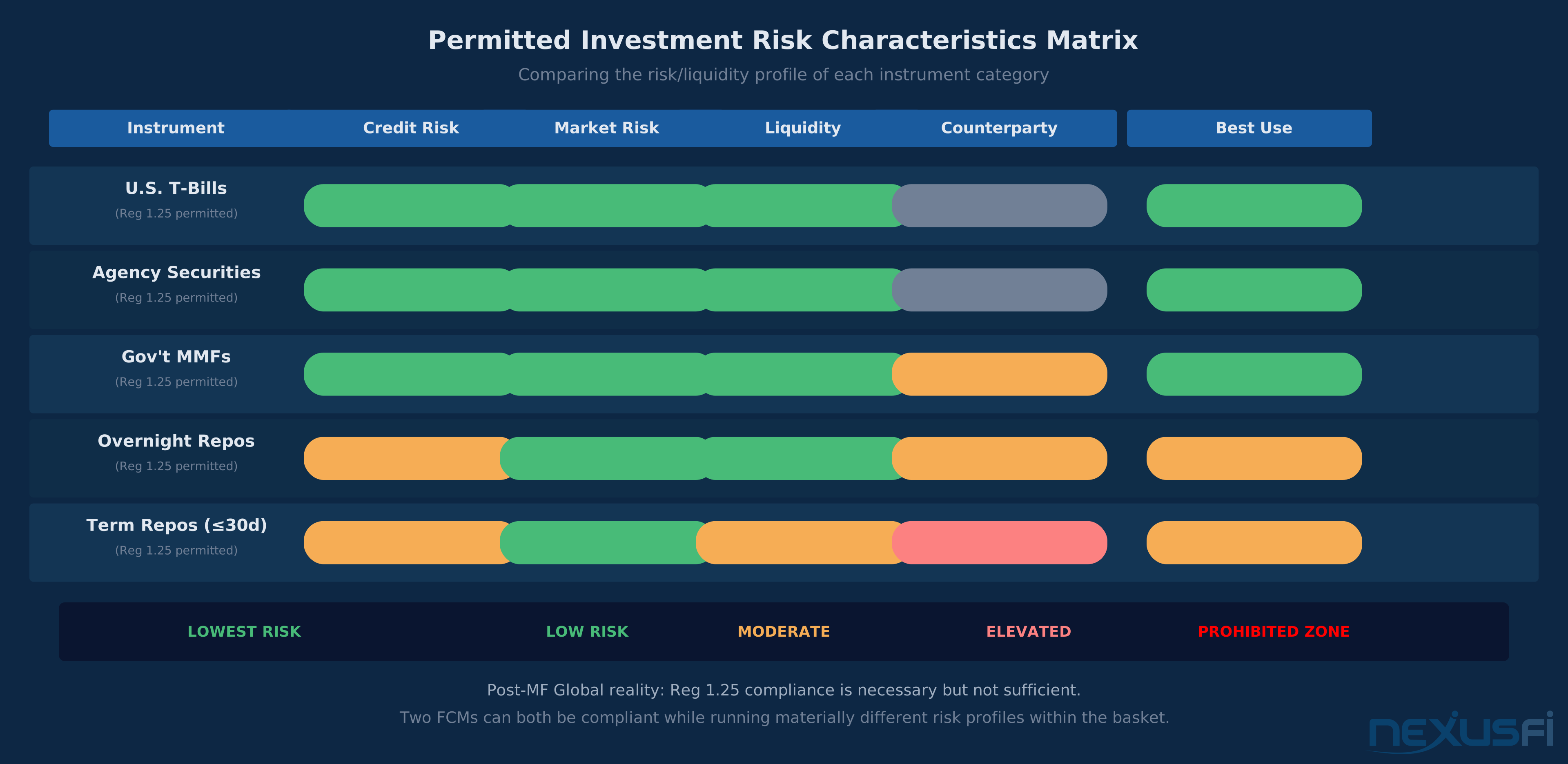
Concentration limits apply across all categories: aggregate exposure to any single issuer cannot exceed 10% of the total basket, preventing the kind of counterparty concentration that could create systemic exposure.
What Is Prohibited #
The prohibitions under Reg 1.25 are as important as the permissions. Understanding what FCMs cannot do is how you calibrate your assessment of risk.
Equities — Customer segregated funds cannot be invested in corporate stock. Equities are volatile, not cash-like, and expose the pool to market risk that has nothing to do with futures trading.
Corporate debt below investment grade — High-yield or unrated corporate bonds are prohibited. The rule requires investment-grade quality throughout the basket. This was reaffirmed and tightened post-2012.
Structured products and derivatives — Collateralized debt obligations, mortgage-backed securities without agency status, credit default swaps, and similar instruments are prohibited. Their complexity, illiquidity, and potential for sudden value deterioration make them incompatible with the "immediately available" standard.
Using segregated funds for proprietary trading — An FCM cannot pledge customer funds as collateral for its own positions, cannot lend them to its own trading desk, and cannot use them to finance its balance sheet. This is the prohibition MF Global violated — not overtly at first, but incrementally through the use of RTM structures that effectively tied customer cash to the firm's proprietary bets.
Repo-to-maturity structures — Explicitly banned after the 2012 reforms. RTM repos mature on the same date as the pledged security, effectively locking the cash for the security's remaining life. When that collateral loses value or the repo market freezes, the "cash" cannot be retrieved. MF Global treated RTM repos as low-risk Treasury investments on its books while the customer cash was functionally unavailable.
Concentration beyond limits — Even permitted instruments become prohibited when a single issuer exceeds 10% of the basket. A basket comprised 40% of repos with a single counterparty is non-compliant regardless of the counterparty's credit quality.
The MF Global Case Study: When the System Failed #
MF Global's October 2011 bankruptcy is the most consequential test of the customer funds protection framework in U.S. futures history. Understanding what actually happened — not the simplified narrative, but the mechanism — is essential for evaluating your own broker's practices.
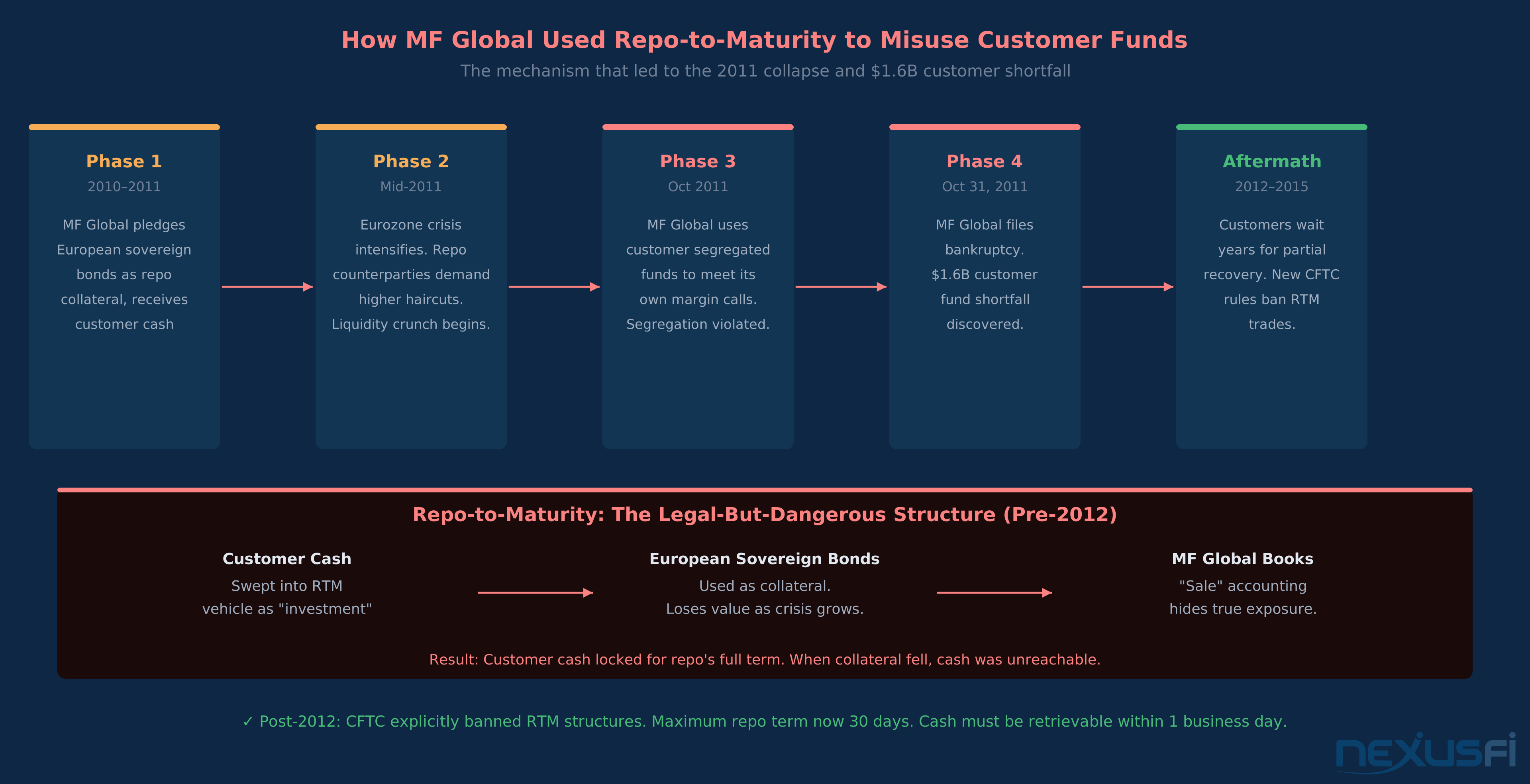
MF Global was a large FCM and broker-dealer with significant proprietary trading operations. Under CEO Jon Corzine, the firm built a major position in European sovereign debt — primarily Italian, Spanish, Portuguese, and Irish government bonds — as a proprietary bet on eurozone stability. By 2011, this position exceeded $6 billion, many times the firm's equity.
To finance this position, MF Global used repo-to-maturity trades. The mechanics: MF Global pledged European sovereign bonds as collateral and received cash, agreeing to "repurchase" the bonds on the same date the bonds matured. Critically, because the repo matured simultaneously with the underlying security, accounting rules then in effect allowed MF Global to treat the entire transaction as a sale rather than a financing arrangement — removing the position from its balance sheet while the economic exposure remained.
As the European debt crisis escalated through 2011, the perceived risk of these sovereign bonds increased sharply. Counterparties demanded more collateral (higher haircuts) on their repos with MF Global. Variation margin calls on other positions intensified. The firm faced a liquidity squeeze requiring it to deploy cash from wherever it could find it.
What followed was what investigators and prosecutors described as the commingling of customer segregated funds with proprietary funds during the final days before bankruptcy. Customer cash was used to meet the firm's own margin calls. The shortfall at the time of bankruptcy was approximately $1.6 billion. Customers could not access their accounts for weeks. Recovery came in stages over years, and while most customers ultimately recovered the majority of their funds, the disruption was severe and the trauma to industry confidence was lasting.
The MF Global failure revealed specific gaps in the pre-2011 framework:
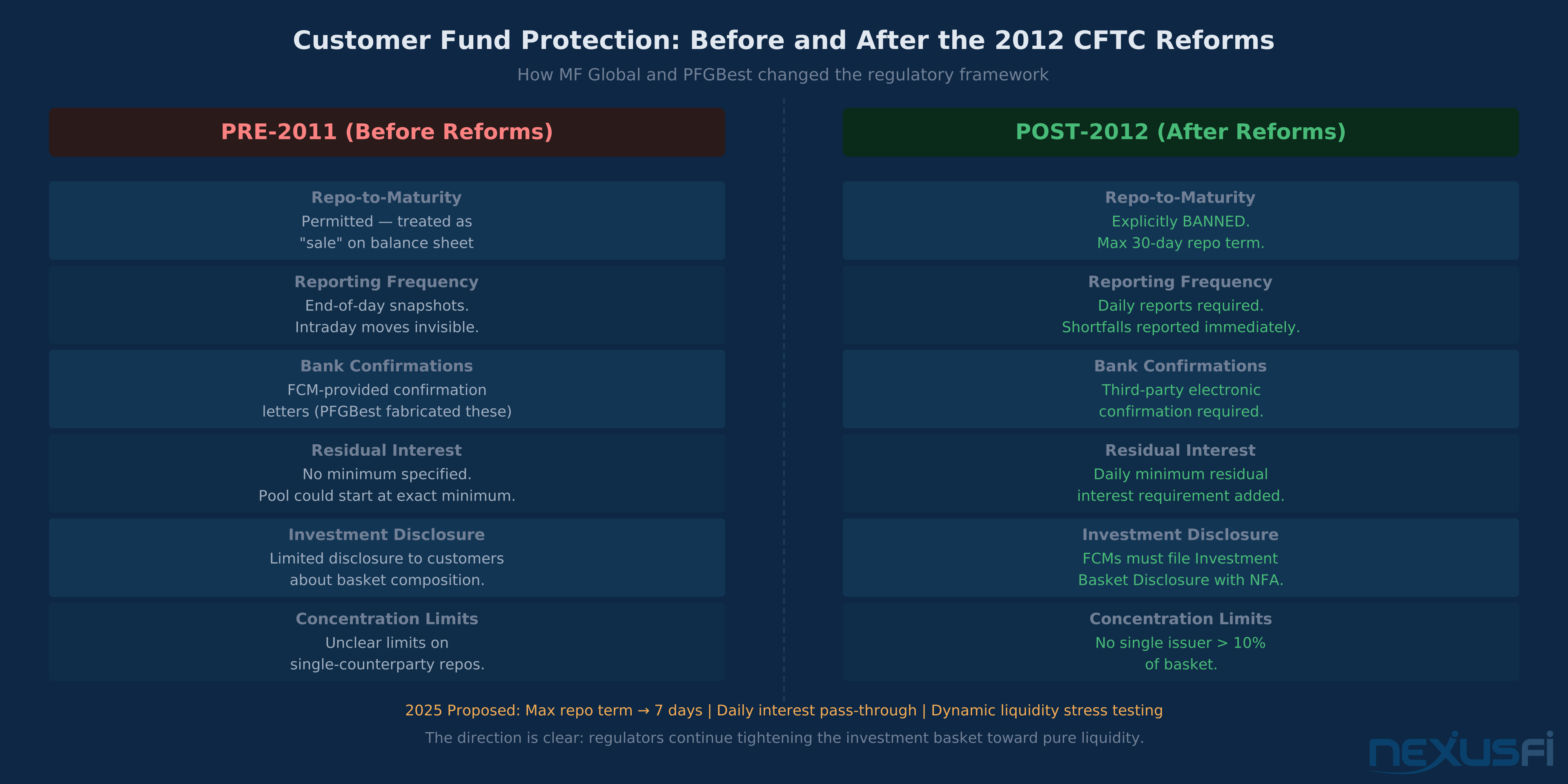
The RTM loophole — Repo-to-maturity trades were technically within the letter of pre-2011 Reg 1.25 while at the core violating its spirit. The rule required liquidity but did not explicitly prohibit term structures that locked customer cash.
Inadequate intraday monitoring — The CFTC's daily segregation reporting requirements at the time used end-of-day snapshots. Intraday movements of customer funds — including the final transfers that depleted segregated accounts — occurred between reporting windows.
Governance failures — Internal controls at MF Global failed to prevent senior management from overriding compliance systems in the final days. The regulatory framework assumed FCMs would self-enforce; MF Global demonstrated that assumption had limits.
Peregrine Financial Group (PFGBest) followed a different pattern — outright fraud involving fabricated bank statements that overstated customer funds by approximately $215 million — but the underlying lesson was the same: regulatory reporting systems depended on accurate inputs that bad actors could falsify.
Post-2011 Reforms: The Narrowed Investment Basket #
The CFTC's regulatory response to MF Global and PFGBest substantially tightened both the investment framework and the monitoring architecture. The 2012 rule package remains the foundation of current practice.
Explicit RTM prohibition — The CFTC amended Reg 1.25 to explicitly prohibit repo-to-maturity structures for customer segregated funds. Any repo with a term exceeding 30 days became non-compliant.
Daily liquidity requirement reinforced — The rule now requires that all instruments in the basket be convertible to cash within one business day without significant loss. This is interpreted strictly — instruments that might be convertible in most circumstances but could freeze in stress scenarios do not qualify.
Enhanced daily reporting — FCMs must now file daily segregation computation reports with the CFTC and NFA. These reports capture beginning-of-day and end-of-day segregated fund levels, required amounts, and actual amounts. Shortfalls must be reported immediately.
Third-party confirmation requirements — FCMs must receive third-party confirmation of balances held at depositories and clearing organizations. This addressed the PFGBest vulnerability where the firm's own personnel fabricated bank confirmation letters. Electronic confirmation systems now pull data directly from depositories, bypassing the FCM entirely.
Residual interest minimums — FCMs must maintain a defined minimum level of their own capital (residual interest) within the segregated account pool at the beginning of each business day. This prevents the pool from starting each day exactly at the regulatory minimum and providing no buffer against intraday movements.
Looking ahead, the CFTC has proposed additional amendments (comment period as of 2024) that would further tighten the framework:
- Reducing the maximum permitted repo term from 30 days to 7 days
- Introducing dynamic liquidity stress testing requirements — FCMs would need to model a 30-day market stress scenario demonstrating ability to meet all customer withdrawal requests
- Mandating daily interest pass-through to customers (currently monthly for most FCMs)
- Requiring expanded disclosure of counterparty credit ratings for any repo collateral
- Replacing monthly PDF FOCUS reports with an electronic API feed for near-real-time basket composition monitoring
These proposals reflect the CFTC's ongoing concern about repos as the primary structural vulnerability in the current framework. If adopted, they would much reduce FCM flexibility to earn spread on customer funds through repo operations.
Interest Income and Cash Sweep Programs #
Customer segregated funds are not idle. FCMs invest them in the permitted basket and earn returns on those investments. The question of who gets that income — and how much — is one of the least-discussed but economically significant aspects of the FCM relationship.
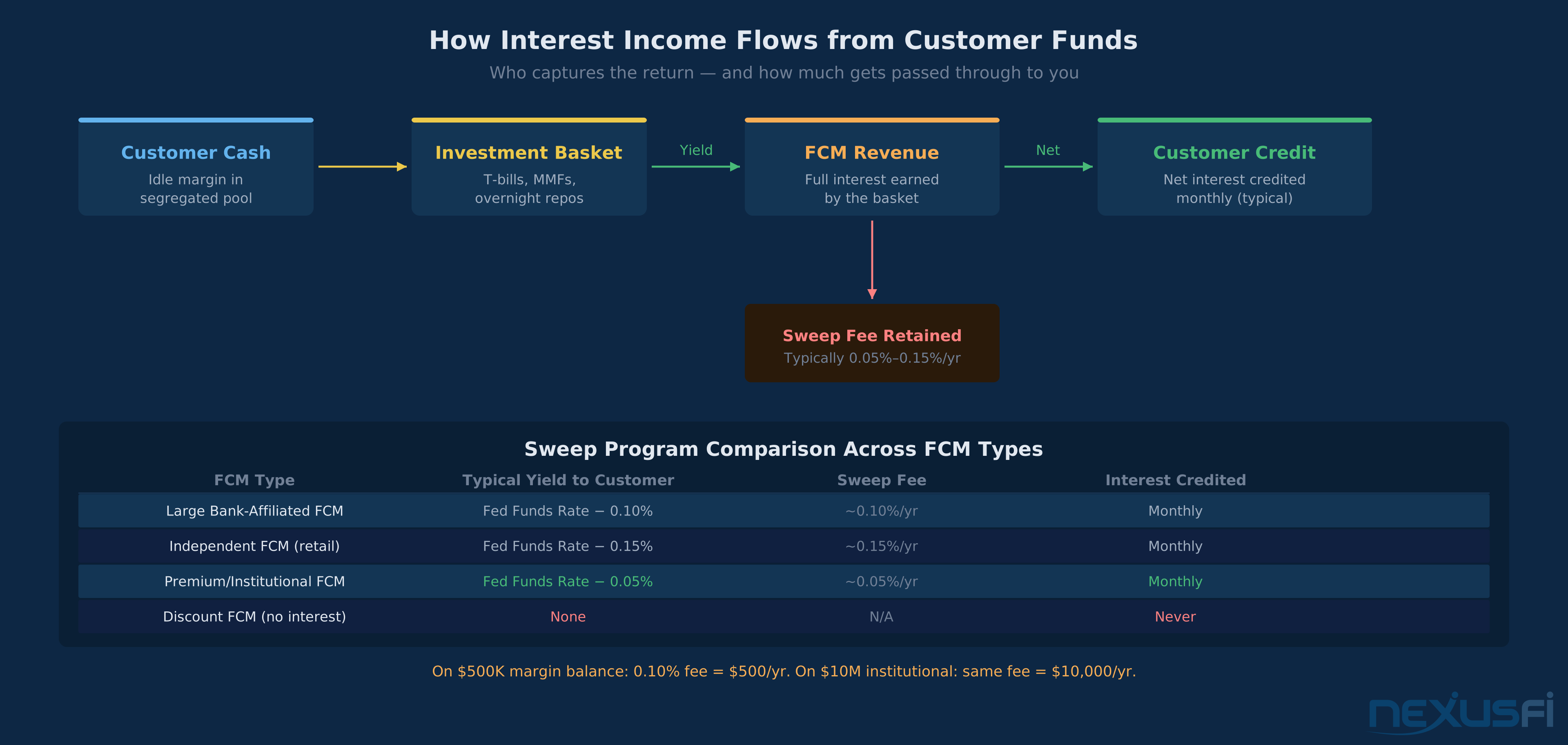
The standard mechanism: Your margin cash sits in the FCM's segregated pool. The FCM sweeps the pool into its investment basket (T-bills, MMFs, repos), earns interest, deducts a "sweep fee" (typically 0.05% to 0.15% annually), and credits the net interest to your margin account — usually monthly. On a $500,000 margin balance, a 0.10% fee difference is $500 per year. On an institutional portfolio with $10 million in margin, that same 0.10% is $10,000 annually.
Some FCMs offer more attractive arrangements: zero explicit sweep fees but with commissions priced so, or "enhanced" accounts where the full Treasury bill rate is credited. Others offer only non-interest-bearing accounts for retail customers, keeping the entire investment return as FCM revenue.
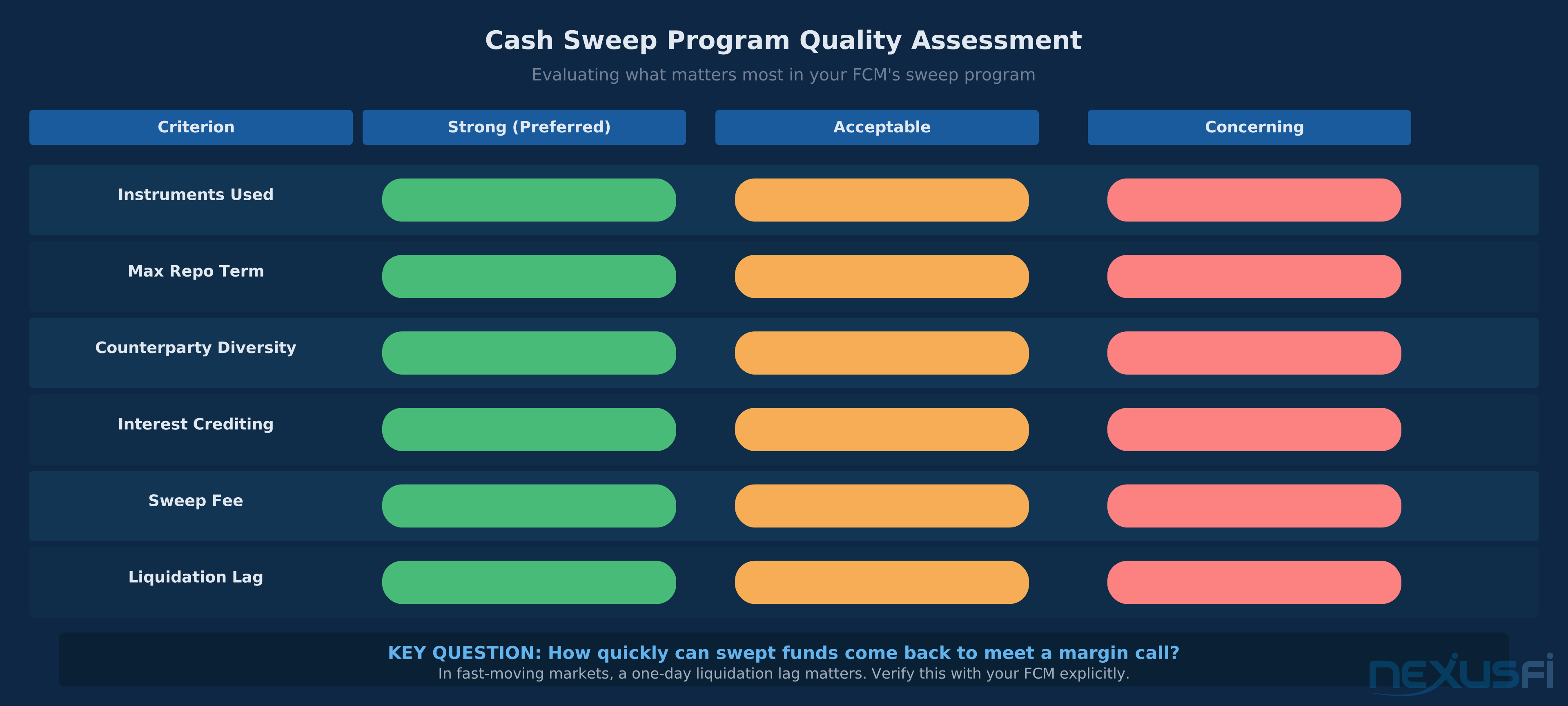
The liquidation lag question — When you sweep funds into a money market fund or repo, there is a retrieval step before that cash can be applied to a margin call. For overnight repos and same-day-redemption MMFs, this lag is minimal — often intraday. For term repos or MMFs with notice periods, the lag can be one business day. In fast-moving markets, that one day matters.
Sophisticated traders scrutinize this: not just where their idle cash goes, but how quickly it can come back. An FCM that sweeps into government-only MMFs with same-day redemption provides better practical liquidity than one using term repos that require a day to unwind.
Bank-affiliated FCMs vs. independents — FCMs affiliated with large banks have institutional treasury operations that can deploy customer funds efficiently across the permitted basket while maintaining excellent liquidity. Independent FCMs may have less sophistication in this area, resulting in either lower yields or higher operational risk. Neither profile is naturally better — the critical factor is whether the FCM stays within the permitted basket regardless of its treasury efficiency.
Practical Implications for Trader Capital Safety #
Understanding the permitted investment framework is not academic exercise — it translates directly into how you evaluate and monitor your broker.
Segregation is not insurance. This distinction is non-negotiable. When the FDIC insures your bank account, it guarantees dollar-for-dollar recovery up to $250,000 regardless of what the bank did. Segregation has no analogous guarantee. The regulatory framework is designed to make customer funds recoverable, but if an FCM violates the rules — through error, negligence, or fraud — recovery is never automatic. The MF Global bankruptcy took years to resolve. Most customers eventually received close to their full balance, but "close to" and "years later" are real costs.
SIPC does not cover futures accounts. The Securities Investor Protection Corporation protects securities accounts at broker-dealers. Futures accounts at FCMs operate under an entirely different regulatory regime. The confusion persists because many FCMs are also registered as broker-dealers, and some accounts span both structures. In your futures account specifically, SIPC provides no protection. Some FCMs offer sweep programs that move excess cash into SIPC-protected securities accounts — but your futures margin itself is not covered.
The basket composition matters, not just the name. Two FCMs can both be "compliant with Reg 1.25" while running very different risk profiles. One might hold 90% T-bills with 10% government MMFs. Another might hold 60% repos — concentrated in a small number of counterparties, with 28-day terms. Both are technically within the rules. The first is effectively risk-free from a customer funds perspective. The second introduces counterparty concentration and term risk that could create friction in a stress scenario. The difference is visible only if you look at the basket composition, not just the compliance checkbox.
Concentration risk compounds quietly. An FCM that holds 70% of its basket in repos with three primary counterparties has created an operational dependency that doesn't appear dangerous until those counterparties come under pressure simultaneously. In September 2008, repo markets froze broadly. In October 2011, MF Global's specific repo counterparties became unwilling to roll positions. Concentration is a risk that only manifests in bad times — which is exactly when you need your funds.
Governance matters more than any single instrument. The strongest indicator of future customer fund safety is not what instruments an FCM currently holds but whether its governance, compliance culture, and risk management systems are strong. PFGBest was technically compliant by all external indicators right up until the fraud was exposed. MF Global appeared conservatively run until it wasn't. No due diligence checklist eliminates this risk entirely, but strong governance makes failures less likely and more detectable earlier.
How to Research Your FCM's Investment Practices #
Concrete steps replace vague worry. Here is the practical workflow for evaluating your FCM's approach to customer funds.
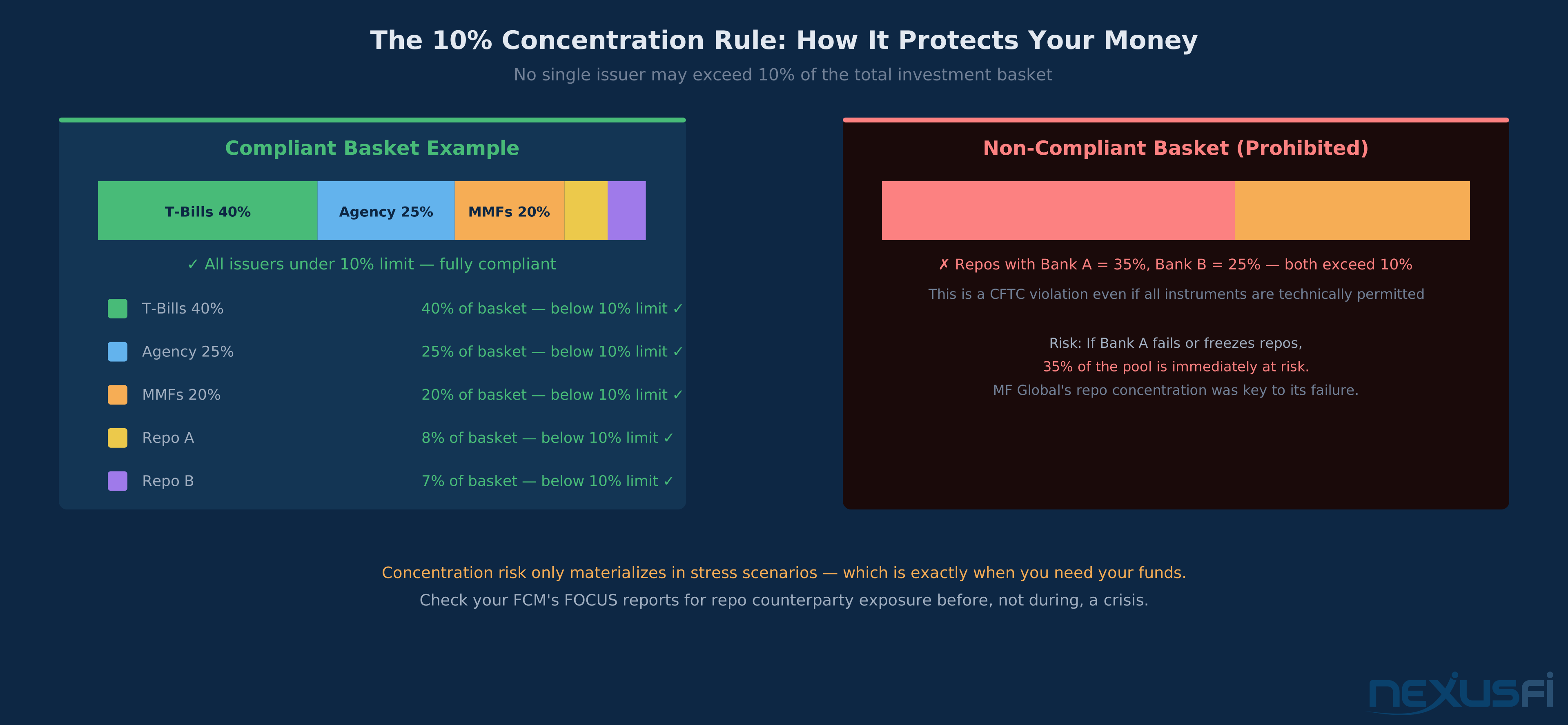
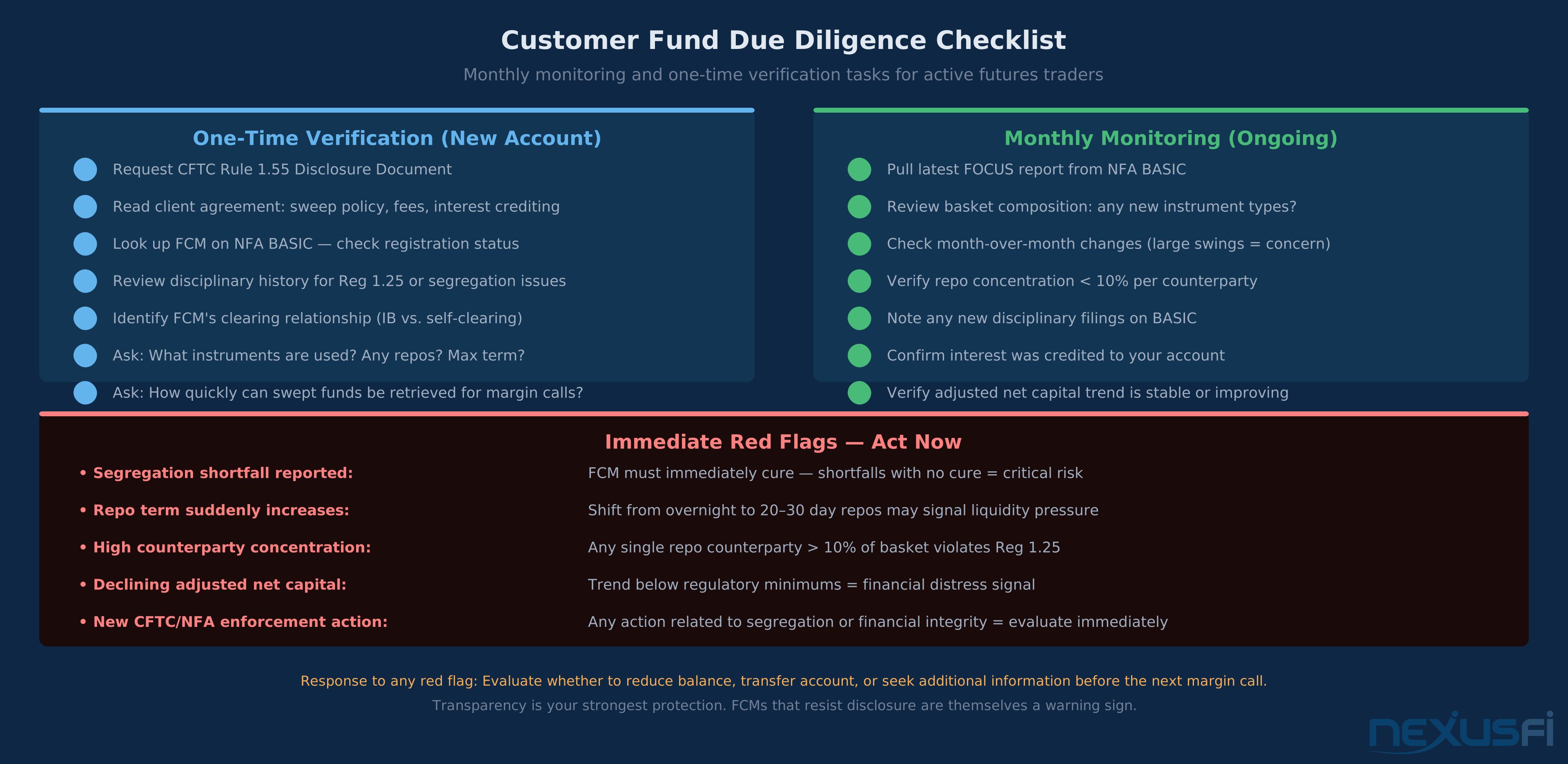
Step 1: Request the CFTC Rule 1.55 Disclosure Document. Every FCM must provide this to prospective customers before accepting their account. This document explains how the firm handles customer funds, including its specific investment practices and any risks associated with those practices. If your FCM cannot or will not provide this, that is itself a red flag.
Step 2: Review FOCUS reports via NFA BASIC. Work through to nfa.futures.org and search for your FCM by name. Under the firm's profile, find the FOCUS report section. The most recent monthly filing shows the firm's financial condition and, critically, a breakdown of how customer segregated funds are deployed. Look for:
- The "Investment of Customer Segregated Funds" table or equivalent section
- The percentage allocated to each instrument category (T-bills, agencies, MMFs, repos)
- The maturity profile of any repo positions
- Any month-over-month shifts in composition — sudden moves toward longer-term repos or less liquid instruments can signal funding pressure
Step 3: Check the NFA BASIC disciplinary history. Under your FCM's BASIC profile, review the disciplinary history section. Any regulatory actions related to segregation compliance, financial integrity violations, or Reg 1.25 matters require immediate evaluation. A single past issue resolved years ago may be acceptable with context. Recent or ongoing matters are disqualifying red flags.
Step 4: Read your client agreement for sweep mechanics. The customer agreement you signed (or will sign) specifies how your cash is swept, what fee applies, how interest is credited, and how quickly swept funds can be retrieved. Many traders sign this without reading it. The sweep policy section is one of the most practically important parts of this document.
Step 5: Compare FOCUS data month-over-month. A one-time review is a snapshot. The more valuable practice is tracking the basket composition over several months. Gradual shifts toward longer-dated instruments, increased repo concentration, or declining adjusted net capital are early warning indicators that warrant attention or escalation to account movement.
Step 6: Cross-check independently. If your FCM reports holdings in specific money market funds, those funds file quarterly with the SEC (Form N-CSR) and you can verify the fund's investment policies and credit quality independently. Treasury holdings can be cross-referenced against Treasury Direct auction schedules. This level of verification is more relevant for institutional accounts with large balances, but the option exists.
Questions to ask your FCM directly:
- What percentage of customer segregated funds do you currently hold in each instrument category?
- Do you use repurchase agreements? If so, what is your maximum repo term, and who are your primary repo counterparties?
- How is interest credited to customer accounts, and what is your current sweep fee?
- How quickly can swept funds be recalled to meet a margin call?
- Can you provide your current Investment Basket Disclosure?
A well-run FCM will answer all of these without hesitation. Evasiveness on any of them — especially the repo questions — warrants follow-up.
Common Misconceptions Debunked #
"My funds are in a private account with my name on it." No. The "segregated account" is a pool — your balance is tracked as a claim against the pool, not as funds in a named sub-account. The protection comes from the FCM's accounting discipline and regulatory requirements, not from individual account isolation. This is the same structure that worked in the vast majority of FCM histories and failed catastrophically at MF Global and PFGBest.
"As long as my FCM is compliant, I'm fully protected." Compliance is not a guarantee — it is a framework. PFGBest filed accurate-appearing compliance reports for years while its principal fabricated bank statements. Compliance filings reflect what the FCM reports; they depend on the accuracy of those reports. External verification mechanisms (third-party confirmation requirements added post-2012) reduce but do not eliminate this risk.
"The FCM earns nothing from holding my funds." On the contrary, float income from customer segregated funds is a significant revenue source for many FCMs. The spread between what the FCM earns on the investment basket and what it passes through to customers — net of the sweep fee — represents real revenue. For large FCMs with billions in customer funds, this can be material. This is not naturally wrong — FCMs provide real services and deserve compensation — but understanding it helps you evaluate whether your FCM's interest crediting terms are competitive.
"SIPC protects my futures account." No. SIPC covers securities accounts. Futures accounts at FCMs are regulated by the CFTC under an entirely different framework. Some FCMs offer programs that sweep excess cash into separate SIPC-covered accounts, but this is a separate product from your futures margin account, not the same protection applied to it.
"All compliant FCMs are equally safe." Two FCMs can both be fully compliant with Reg 1.25 while operating with materially different risk profiles in their investment baskets, their governance quality, and their financial cushions. The regulatory framework sets minimum standards; it does not guarantee uniform safety above that floor.
Knowledge Map
Go Deeper
Build on this knowledgeReferences This Article
Articles that build on this topicCitations
- — NinjaTrader Clearing Risks (2024) 👍 5“Futures commission merchants commingle the funds received from customers in segregated customer accounts.”
- — Brokers regulations (2017) 👍 1“The way futures accounts work is that funds are held in the clearing firms customer segregated funds. Meaning that your funds are held completely separate from the FCMs working capital.”
- — NinjaTrader Clearing Risks (2024) 👍 2“Account that is separate than the firms accounts. This is supposed to protect customers from a broker failure.”
- — Edge Clear futures broker (2020) 👍 5“Segregated bank account that are held separate from the working capital of the FCM. This customer segregation protection is a core principle of the futures industry.”
- — No software fees for new Tradestation account! (2017) 👍 1“Regulation 1.22 prohibits an FCM from using, or permitting the use of, the futures customer funds of one futures customer to purchase, margin, guarantee, or secure the trades or contracts of any person other than such futures customer.”
- — MF Global situation (2011) 👍 1“It is scary that customer segregated funds may not be segregated and that what looks to be a reputable broker can so easily violate the rules.”
- — AMP Futures / AMP Global Review (2014) 👍 17“The most important question is how safe is my capital? Is the owner stealing my funds (PFG) or hypothecating them in an egotistical sovereign bond bet (MF Global)?”
- — MF Global situation (2011) 👍 2“MF Global officials are still working to piece together what happened in the last days before the Oct. 31 bankruptcy filing.”
- — U.S. approves new rules to protect futures customers (2012) 👍 1“Regulators approved new regulations on Friday to shore up protection of brokerage customer funds following last year's collapse of MF Global.”
- — Class Action Lawsuit: AMP Global Clearing LLC (2020) 👍 21“One particular reason I personally like Interactive Brokers is their option that allows me to sweep funds to a SIPC account, which currently is providing $2.75M in per-account protection.”
- — Brokerage cash sweeps of futures contracts sales (2012) 👍 2“My best advice when dealing with a futures broker is to only work with a broker who's exclusive business is serving as a futures broker/clearing for its customers.”
- — Is AMP at risk of going under? (2020) 👍 7“You need to understand that there is NO INSURANCE for funds deposited with a futures broker. Customer accounts are not insured.”
- — Futures Broker Due Diligence Notes post PFG (2012) 👍 82“Prior to opening my existing accounts I'd done a fair amount of due diligence... checking NFA BASIC for financial data, disciplinary history, and regulatory compliance indicators.”
- — Futures Broker Due Diligence Notes post PFG (2012) 👍 2“The National Futures Association has added some additional public financial information on their BASIC search function... public display of FCM financial information.”
- — Due Diligence: NFA Search for IB's, FCM's, CTA's, etc... (2011) 👍 16“Practical guide to looking up FCM regulatory standing using NFA BASIC.”