



Cross-Margining and Portfolio Margining: How Clearinghouses Recognize That Your Hedge Actually Reduces Risk
Overview #
You're long 10 ES contracts and short 5 ZN contracts as a risk-off hedge. The standalone margin on those positions? Roughly $140,000. The margin your clearing firm actually charges after offsets? Maybe $85,000. That $55,000 difference isn't a gift
Cross-margining and portfolio margining are the mechanisms that make this happen. They're how clearing infrastructure recognizes hedged risk, calculates appropriate collateral, and lets traders deploy capital more efficiently. If you trade spreads, hedges, or multi-product portfolios, understanding these systems directly impacts how much capital you need and how much you can do with it.
When a clearinghouse sees that your long equity index position is partially hedged by your short treasury position, it reduces the collateral required to reflect the portfolio's net risk rather than the gross exposure.
Here's the fundamental problem they solve: traditional per-contract margining treats every position as an independent risk. Long 1 ES? That's $15,400 in margin. Short 1 ES? Another $15,400. Together? $30,800 under standalone rules
Key Concepts #
Cross-margining is the practice of recognizing offsetting positions across related products, accounts, or clearing venues to reduce total margin requirements. When a clearinghouse sees that your long equity index position is partially hedged by your short treasury position, it reduces the collateral required to reflect the portfolio's net risk rather than the gross exposure.
Portfolio margining takes this further. Instead of applying fixed scenarios product-by-product, portfolio margin systems evaluate the entire account's risk using stress tests across multiple risk factors simultaneously. The result is margin that approximates the portfolio's actual worst-case loss over the liquidation horizon
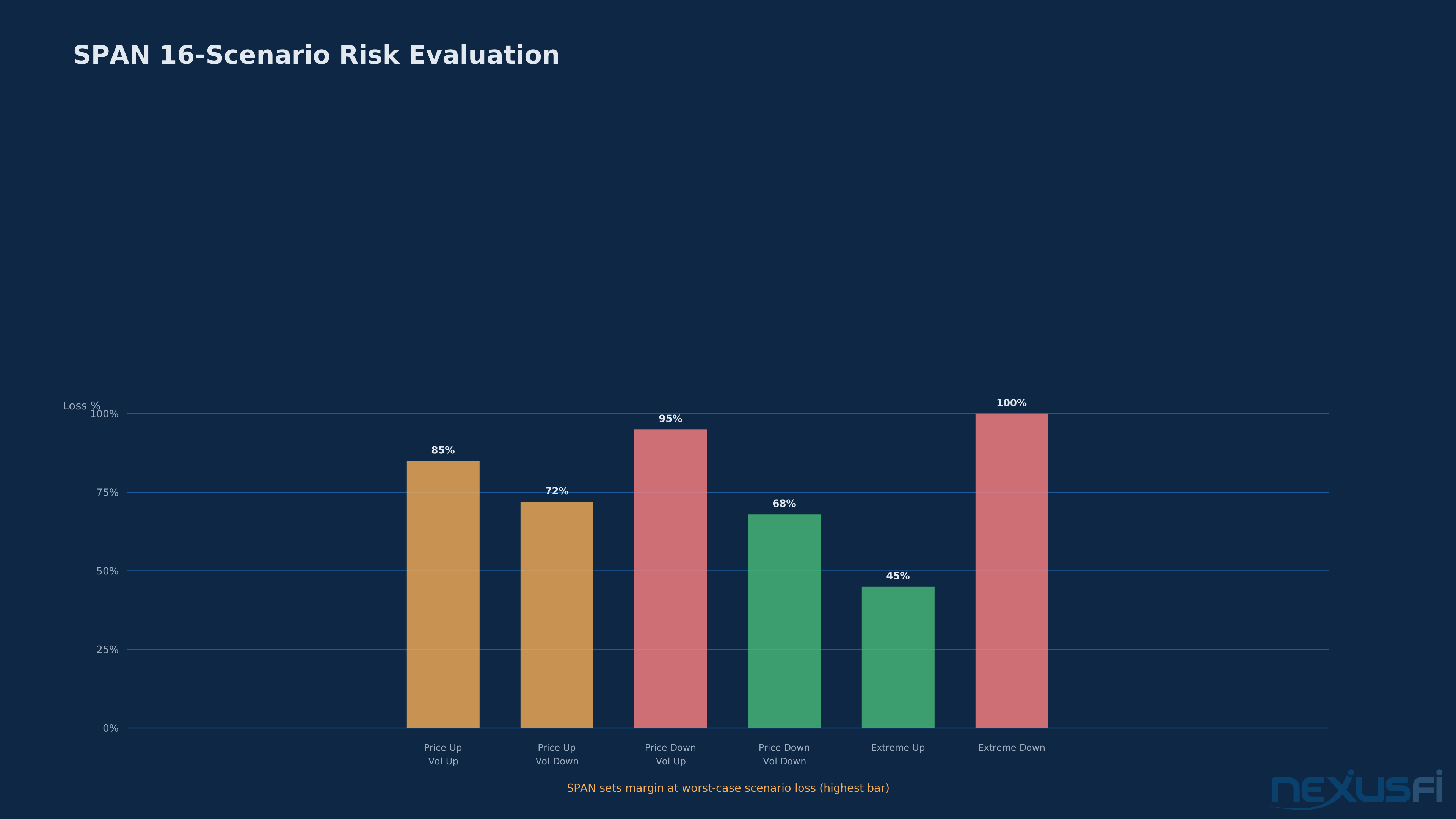
SPAN (Standard Portfolio Analysis of Risk) is the industry-standard methodology for computing futures margin. Developed by CME in the 1980s, SPAN evaluates 16 risk scenarios per product group, combining price moves and volatility shifts. SPAN already provides inter-commodity spread credits
Margin offsets are the specific reductions in required collateral that result from holding hedged positions. These aren't arbitrary discounts
Netting vs. offsetting
How Standalone Margin Overstates Risk #
Consider a trader who runs a calendar spread: long December ES, short March ES. Each leg carries roughly $15,400 in initial margin. Under standalone margining, the total requirement would be $30,800. But the risk of a calendar spread is a fraction of the outright
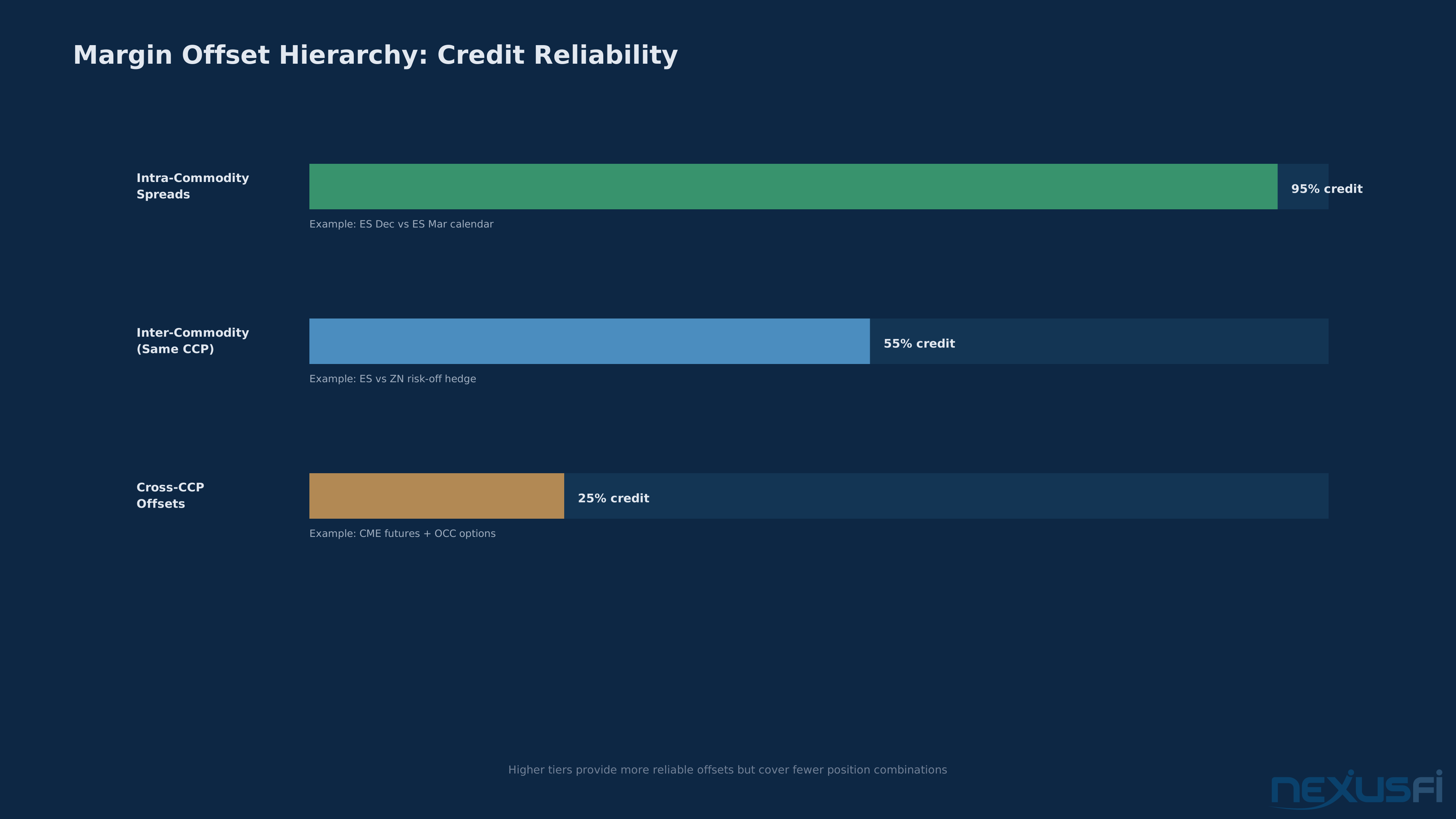
CME SPAN handles this specific case through intra-commodity spread credits. The spread margin for an ES calendar is roughly $550
Now extend this logic across products. Long ES and short ZN (10-year Treasury futures) create a "risk-on vs. risk-off" hedge. When equities sell off in a flight-to-quality move, treasuries typically rally, offsetting part of the equity loss. SPAN recognizes this through inter-commodity spread credits between equity index and interest rate products.
The catch: inter-commodity credits are smaller than intra-commodity credits because the correlation is less reliable. ES vs. ZN might get a 50-70% credit during normal markets, but that offset is based on historical relationships that can
SPAN vs. Portfolio Margin: Two Approaches to the Same Problem #
SPAN: Scenario-Based #
SPAN evaluates risk through predefined scenarios. For each product group, it defines a set of price and volatility moves (typically 16 scenarios), calculates the worst-case loss across those scenarios, and sets margin at that level. Inter-commodity credits are applied as fixed percentages based on the clearing house's assessment of correlation between product groups.
The advantage of SPAN is simplicity and transparency. Traders can replicate SPAN calculations using tools like PC-SPAN (a free CME application). As @SMCJB noted in a NexusFi discussion on margin requirements, "SPAN Margins are set by the exchanges. Brokers are obligated to use SPAN Margins as minimum margins for positions held overnight."
The limitation is that SPAN uses predetermined scenarios rather than modeling the portfolio's risk factors dynamically. For complex multi-leg positions, SPAN can be conservative (overstating risk for well-hedged portfolios) or occasionally liberal (understating risk for positions with non-linear exposures).
Portfolio Margin: Risk-Factor-Based #
Portfolio margin systems model the account's total risk using factor analysis
This produces more accurate risk assessment for portfolios that span multiple asset classes. A trader with positions in ES, ZN, CL, and GC gets margin that reflects the actual correlation structure of the entire book, not just pairwise credits applied sequentially.
CME offers portfolio margining through its Performance Bond system for qualified participants. The methodology uses a broader set of stress scenarios and more sophisticated correlation modeling than standard SPAN. The result is typically lower margin for well-diversified portfolios and higher margin for concentrated directional bets.
Who qualifies? Portfolio margining in futures is generally available to:
- Clearing member firms
- Institutional accounts meeting minimum equity thresholds
- Some large retail accounts through FCMs that support the program
Most retail traders operate under standard SPAN margin. The portfolio margin benefit primarily accrues to institutional players running multi-asset books.
How Cross-Margining Works Across Products #
Cross-margining operates at two levels: within a single clearinghouse and across clearinghouses. The distinction matters because the mechanics, eligibility, and reliability differ much.
Within-Clearinghouse Cross-Margining #
This is the more common and straightforward form. When all your positions clear through the same CCP (say, CME Clearing), the clearinghouse can evaluate the entire portfolio and apply appropriate offsets. CME's SPAN system does this automatically for recognized inter-commodity spreads.
The margin reduction comes from the clearinghouse's recognition that certain product pairs move in predictable opposition. Common recognized offsets include:
- Equity index vs. interest rate: Long ES / short ZN or ZB (flight-to-quality hedge)
- Energy spreads: Long CL (crude) / short HO (heating oil) or RB (gasoline)
- Treasury curve spreads: Long ZF (5-year) / short ZN (10-year)
- Equity index cross-hedging: Long ES / short NQ
The offset percentage varies by product pair and is updated by the clearinghouse based on ongoing correlation analysis. These credits are published in the CME's SPAN parameter files and are transparent to market participants.
Cross-Clearinghouse Arrangements #
True cross-margining between different CCPs is more limited. The most notable arrangement in US markets is between CME Clearing and OCC (Options Clearing Corporation). Under this agreement, qualifying positions in CME-listed futures and OCC-cleared options can be evaluated together for margin purposes.
This matters for traders who combine futures hedges with options strategies
However, cross-CCP arrangements face legal, operational, and risk-management hurdles that limit their scope:
- Positions must be held in linked accounts at both clearing organizations
- Not all products qualify
- Default management across CCPs adds complexity
- The arrangements can be suspended during market stress, precisely when traders need the offsets most
As @kkfx observed in a NexusFi discussion on spread trading, traders can achieve "up to 95% margin credit in some combinations" when holding hedged positions. But that credit exists because the clearing system recognizes the hedge
The ES/Treasury Example: Where Cross-Margining Shines and Where It Breaks #
Let's walk through a concrete case that illustrates both the benefit and the risk.
The Setup #
A trader establishes a macro hedge:
- Long 10 ES contracts (notional ~$2.7 million in equity exposure)
- Short 15 ZN contracts (notional ~$1.6 million in 10-year treasury exposure, duration-adjusted to roughly match the equity sensitivity)
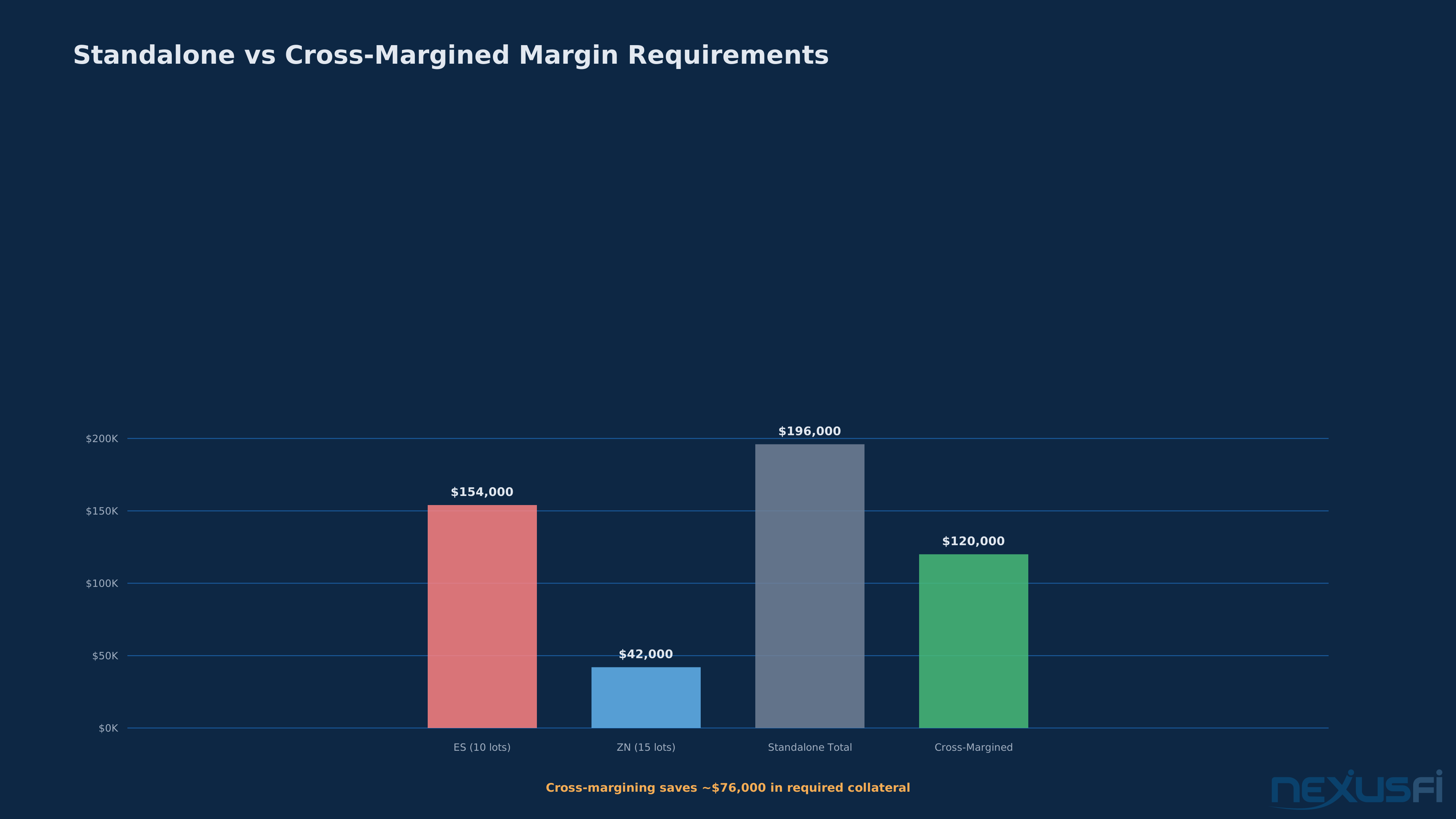
Under standalone SPAN, the margin would be:
- ES: 10 × $15,400 = $154,000
- ZN: 15 × $2,800 = $42,000
- Standalone total: $196,000
When the Hedge Works #
With inter-commodity spread credits, CME recognizes the equity/treasury offset. During normal market conditions, the combined margin might be reduced by 30-45%, bringing the total to roughly $110,000-$135,000. That's $60,000-$85,000 in freed capital.
In a standard risk-off event
When the Hedge Breaks #
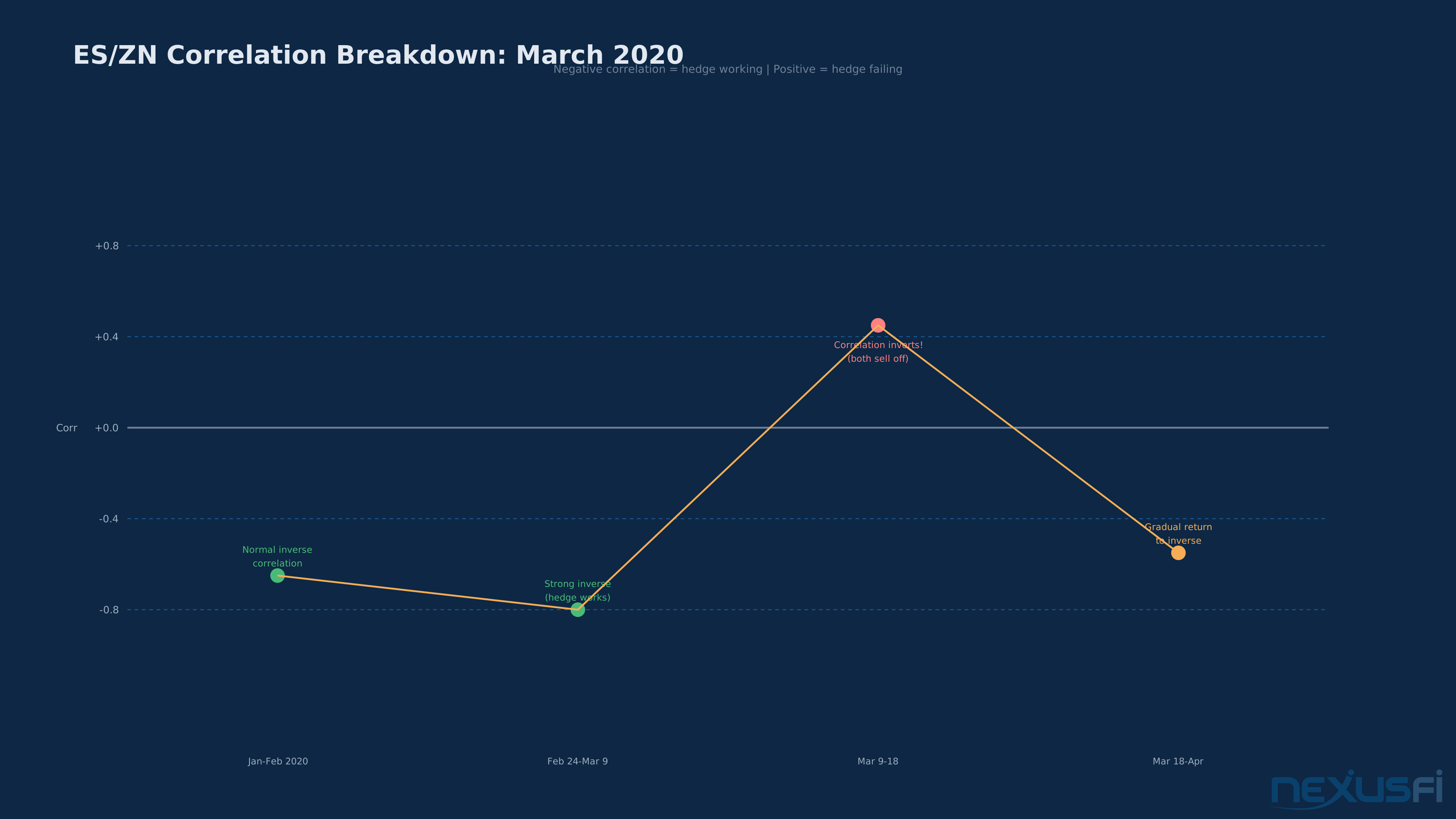
March 2020: COVID crash. In the initial selloff (Feb 24 - Mar 9), the ES/ZN hedge worked beautifully
During this period:
- The hedge stopped offsetting
- CME widened SPAN parameters, increasing base margins across all products
- Inter-commodity spread credits were reduced as realized correlations diverged from historical assumptions
- Margin calls hit on both legs, requiring the trader to post additional collateral at the worst possible time
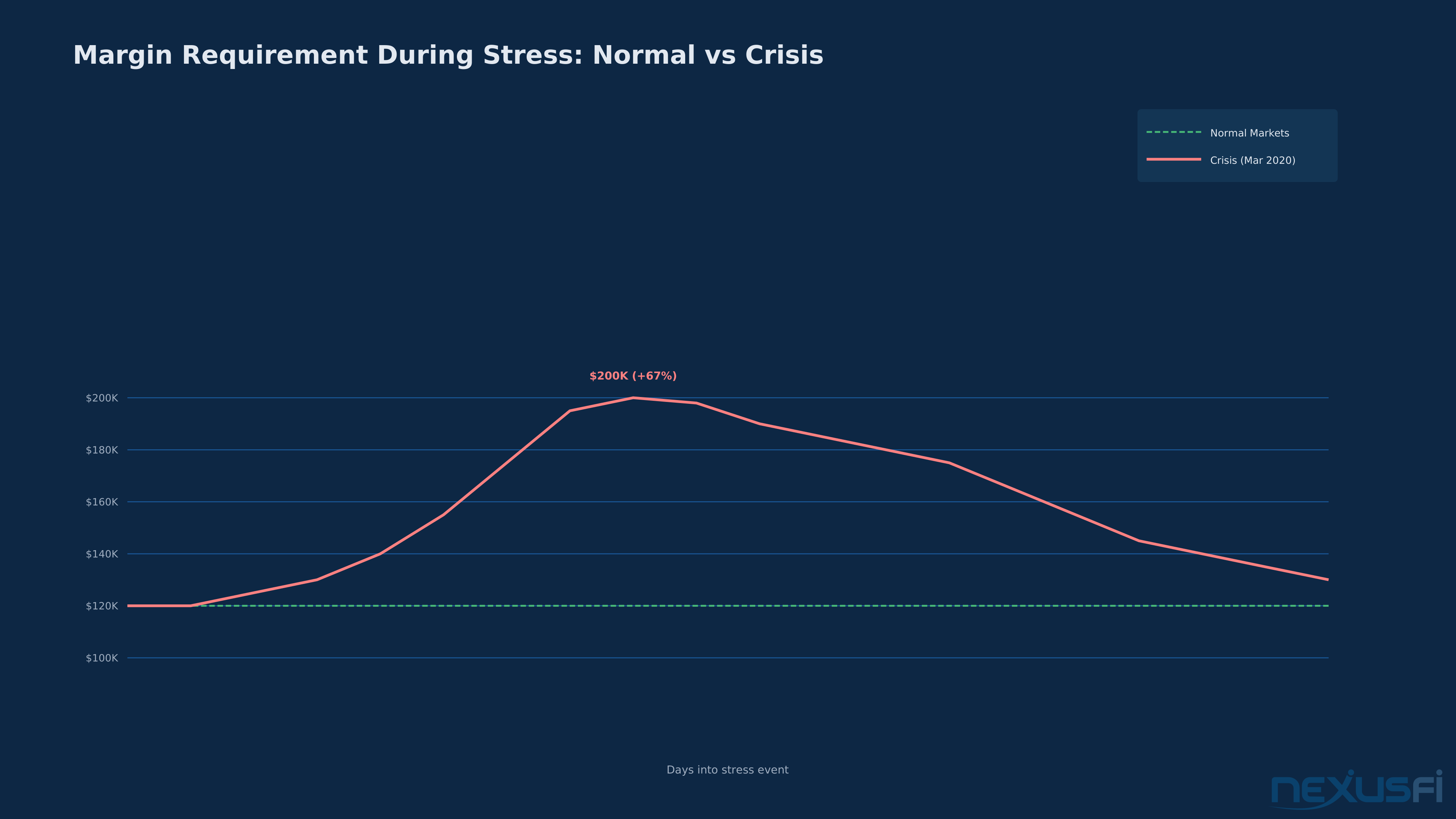
The margin requirement that was $120,000 under normal cross-margining could spike to $200,000+ as credits evaporated
This is the core risk of relying on cross-margin offsets: they are most likely to disappear during the exact market conditions where you need them most.
Eligibility, Requirements, and Operational Realities #
Who Gets Cross-Margin Benefits #
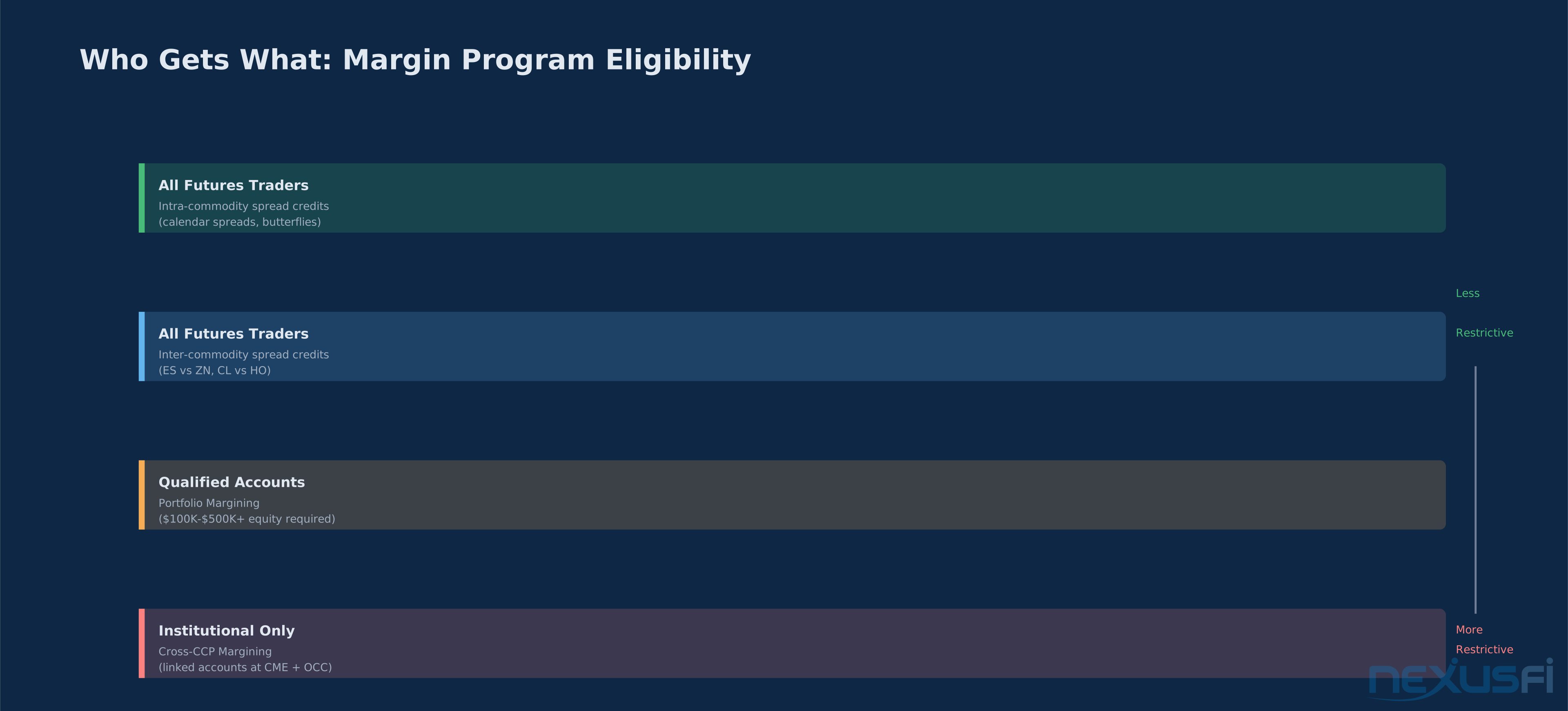
All futures traders automatically receive intra-commodity spread credits through SPAN. If you trade a calendar spread or butterfly in the same product, your broker's margin system applies these credits without any special qualification.
Inter-commodity spread credits (cross-product offsets within the same clearinghouse) are also applied automatically through SPAN for recognized product pairs. No special enrollment is needed. However, the extent of credits your broker passes through depends on their risk management policies
Portfolio margining requires explicit enrollment and typically demands:
- Minimum account equity (often $100,000-$500,000+, varies by FCM)
- Institutional account structure or qualifying individual account
- FCM that supports CME's portfolio margin program
- Agreement to enhanced risk monitoring and reporting
Cross-CCP margining (CME/OCC) requires:
- Linked accounts at clearing members of both CCPs
- Qualifying position combinations
- Explicit enrollment in the cross-margin program
- Ongoing eligibility maintenance
Broker Policies vs. Exchange Minimums #
Here's a critical reality: your broker sits between you and the clearinghouse margin system. Some brokers use SPAN minimums, passing through the full benefit of inter-commodity credits. Others add their own margin buffers that can much reduce or eliminate cross-margin benefits.
As community discussion on NexusFi has highlighted, brokers like Interactive Brokers are "notorious for NOT using SPAN mins." Meanwhile, firms like Advantage Futures and Infinity Futures "fully adhere to SPAN margin." If cross-margin efficiency matters to your trading, your choice of FCM directly impacts how much benefit you actually receive.
Before assuming you'll get favorable margin treatment on a spread or hedge, call your broker and ask specifically about their inter-commodity credit policies for the product pairs you trade. Don't assume
Operational Considerations #
- Intraday vs. overnight: Some cross-margin credits only apply to overnight positions. Intraday margin calculations may use different rules.
- Real-time recalculation: Margin requirements are recalculated throughout the session. A position that was within margin at 10 AM can trigger a call by 2 PM if market conditions shift.
- Margin call timing: Intraday margin calls can be immediate. Your positions may be liquidated before end-of-day settlement if intraday losses exceed your available margin.
- Credit changes: Clearinghouses update SPAN parameters regularly. Inter-commodity spread credits can change without notice during periods of market stress.
Benefits of Cross-Margining #
Capital efficiency: The primary benefit. By recognizing hedged risk, cross-margining reduces the capital required to maintain hedged positions. For institutional traders managing large multi-asset portfolios, the savings can be significant
Realistic risk assessment: Standalone margining overstates risk for hedged books. Cross-margining brings margin requirements closer to the portfolio's actual risk, which is both more accurate and more fair to traders who actively manage their exposures.
Scalability: Without cross-margining, the capital required to run multi-product strategies would be prohibitive for many traders. The ability to receive margin offsets on recognized hedges makes it economically viable to run sophisticated strategies that would otherwise consume too much capital.
Market quality: By reducing capital barriers for hedgers and spread traders, cross-margining supports market liquidity and price discovery. Markets with better cross-margin programs tend to attract more professional flow and tighter spreads.
Risks and Failure Modes #
Correlation breakdown: The biggest risk. Cross-margin credits assume historical correlation persists into the future. During regime shifts
Model risk: Margin models are simplifications of complex market dynamics. They use historical data, assume certain distribution properties, and apply fixed liquidation horizons. All of these assumptions can fail, especially during unprecedented events.
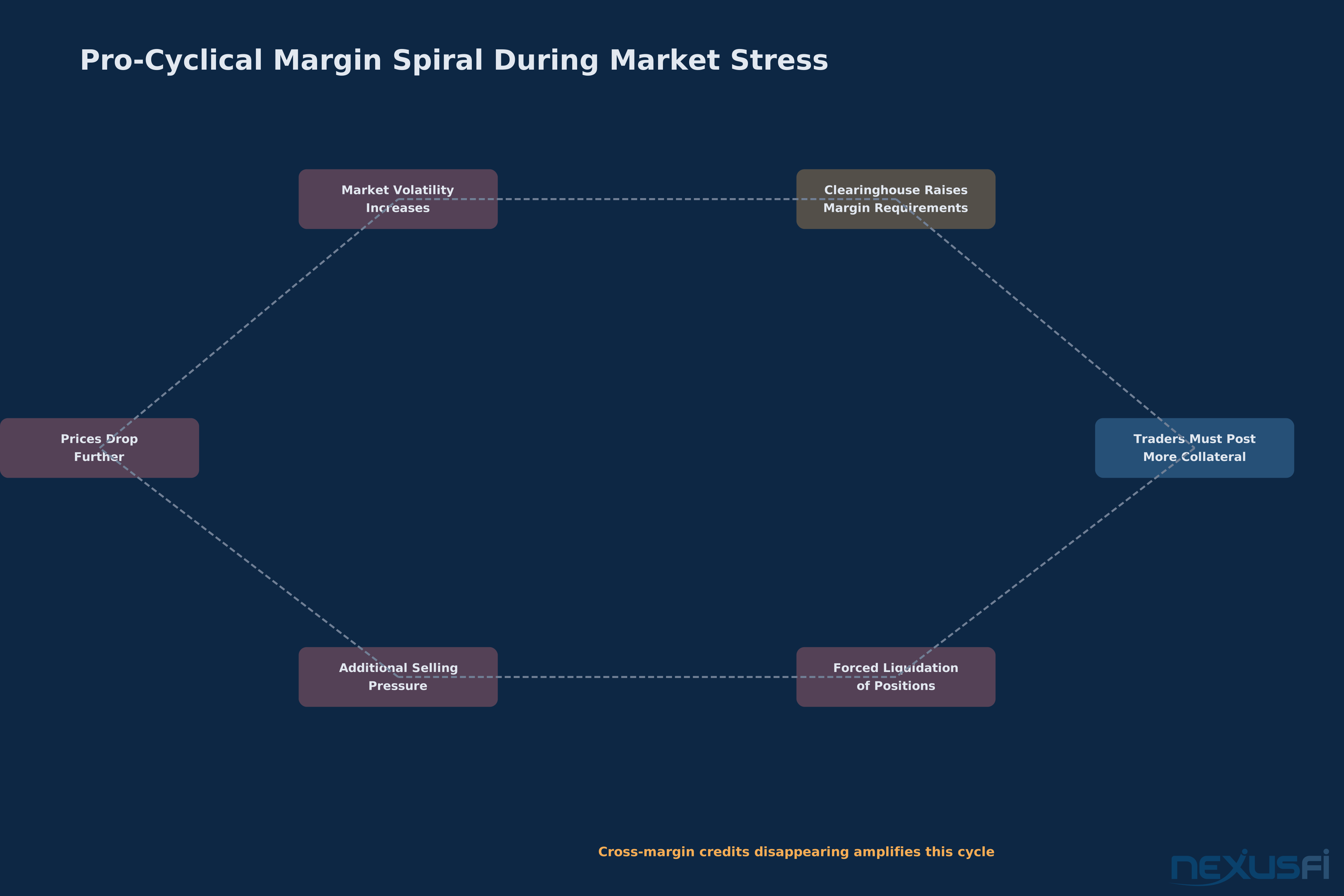
Pro-cyclical margin increases: When markets get volatile, clearinghouses increase margins. They do this to protect the system, but the timing creates a vicious cycle: positions lose money → margins increase → traders must post more collateral → forced liquidation → more selling → more losses. Cross-margin credits shrinking during stress amplifies this cycle.
False sense of security: Reduced margin can tempt traders to increase position size. "I only need $120,000 instead of $200,000, so I'll trade bigger." This is precisely the wrong response. The cross-margin benefit reflects normal-market risk reduction, not stress-market risk reduction. Sizing positions based on cross-margined requirements rather than standalone requirements creates outsized exposure to the tail scenarios where credits disappear.
Operational complexity: Multi-product, cross-venue positions require sophisticated risk management infrastructure. Understanding which credits apply, how they change, and what happens during stress requires ongoing attention. This is not set-and-forget.
Common Misconceptions #
"Cross-margining is free leverage." No. It's a more accurate assessment of hedged risk. The collateral reduction reflects the fact that your positions partially offset each other. It's not additional purchasing power
"My hedge will always provide an offset." Not guaranteed. Clearinghouses can and do reduce inter-commodity credits during stress. The offset you see today may not exist during the crisis where you need it.
"SPAN margin is the minimum I'll ever need." SPAN parameters are updated regularly. During volatile periods, exchanges can increase scanning ranges, reduce spread credits, and add special margin charges. Your SPAN margin today may be materially different from your SPAN margin tomorrow.
"Portfolio margin is always better." For concentrated directional positions, portfolio margin can actually result in higher requirements than SPAN. The benefit of portfolio margin is for well-diversified, multi-asset portfolios. Single-product directional traders may see no benefit or even higher margin.
"All brokers pass through the same credits." As discussed in the eligibility section, broker policies on margin vary much. Some use SPAN minimums, others add significant buffers. The cross-margin benefit you receive depends heavily on your FCM's policies.
Practical Takeaways #
- Know your broker's margin methodology. Call and ask specifically whether they use SPAN minimums and pass through inter-commodity spread credits. This is the single highest-impact action for traders who run hedged positions.
- Don't size based on cross-margined requirements. Use standalone margin as your mental "worst case" for position sizing. Cross-margin credits are a bonus that reduces your capital requirements during normal markets
- Stress-test your portfolio. Ask: "What happens to my margin if inter-commodity credits go to zero?" If the answer is "I get a margin call I can't meet," you're over-leveraged relative to your stress-case capital.
- Monitor margin parameter changes. CME publishes SPAN parameter files daily. Unusual changes in scanning ranges or spread credits can signal that the exchange is seeing elevated risk in specific product pairs.
- Understand the hierarchy. Intra-commodity spreads get the highest credits (most reliable offsets). Inter-commodity credits within the same clearinghouse are next. Cross-CCP credits are smallest and least reliable. Build your expectations so.
- Keep liquidity reserves. Cross-margin environments create a false sense of capital adequacy. Maintain cash reserves sufficient to absorb a 50-100% increase in margin requirements without forced liquidation. This is your margin call buffer.