



Futures vs Swaps: The Regulatory Distinction Every Derivatives Trader Must Understand
Overview #
Here's something that trips up even experienced traders: you can run the exact same interest rate risk in two different instruments — one labeled a "future" and one labeled a "swap" — and face completely different regulatory requirements, margin models, documentation burdens, and access restrictions. The economic payoff can be nearly identical. The operational reality could not be more different.
That's the core of this article: not what futures or swaps do, but what they are under U.S. law, and why that classification determines everything from how you get filled to what you post as collateral.
The distinction matters more now than ever. The 2008 financial crisis exposed how dangerously concentrated counterparty risk had become in the uncleared OTC swap market. Dodd-Frank Title VII responded by mandating central clearing for most standardized swaps, creating exchange-like infrastructure that didn't exist before. The result is a hybrid environment: some products that look like swaps clear like futures, and some products that look like futures pay off like swaps. Understanding the legal taxonomy is the only way to work through it without getting burned.
If you've traded futures through a standard FCM account, you've been operating entirely within the CEA framework: standardized contracts, daily mark-to-market, novation to a clearinghouse. Swaps operate under a parallel framework with overlapping CFTC authority but at the core different rules for clearing, margin, access, and reporting. Economic similarity does not equal regulatory equivalence, and mistaking one for the other is expensive.
The practitioner's rule of thumb: if the product settles daily, has a listed ticker, and requires only an FCM margin account to trade — it's a future, regardless of how swap-like its payoff looks. If it requires an ISDA Master Agreement before you can touch it — it's a swap, even if a clearinghouse sits in the middle.
The Legal Divide: Futures vs Swaps Under U.S. Law #
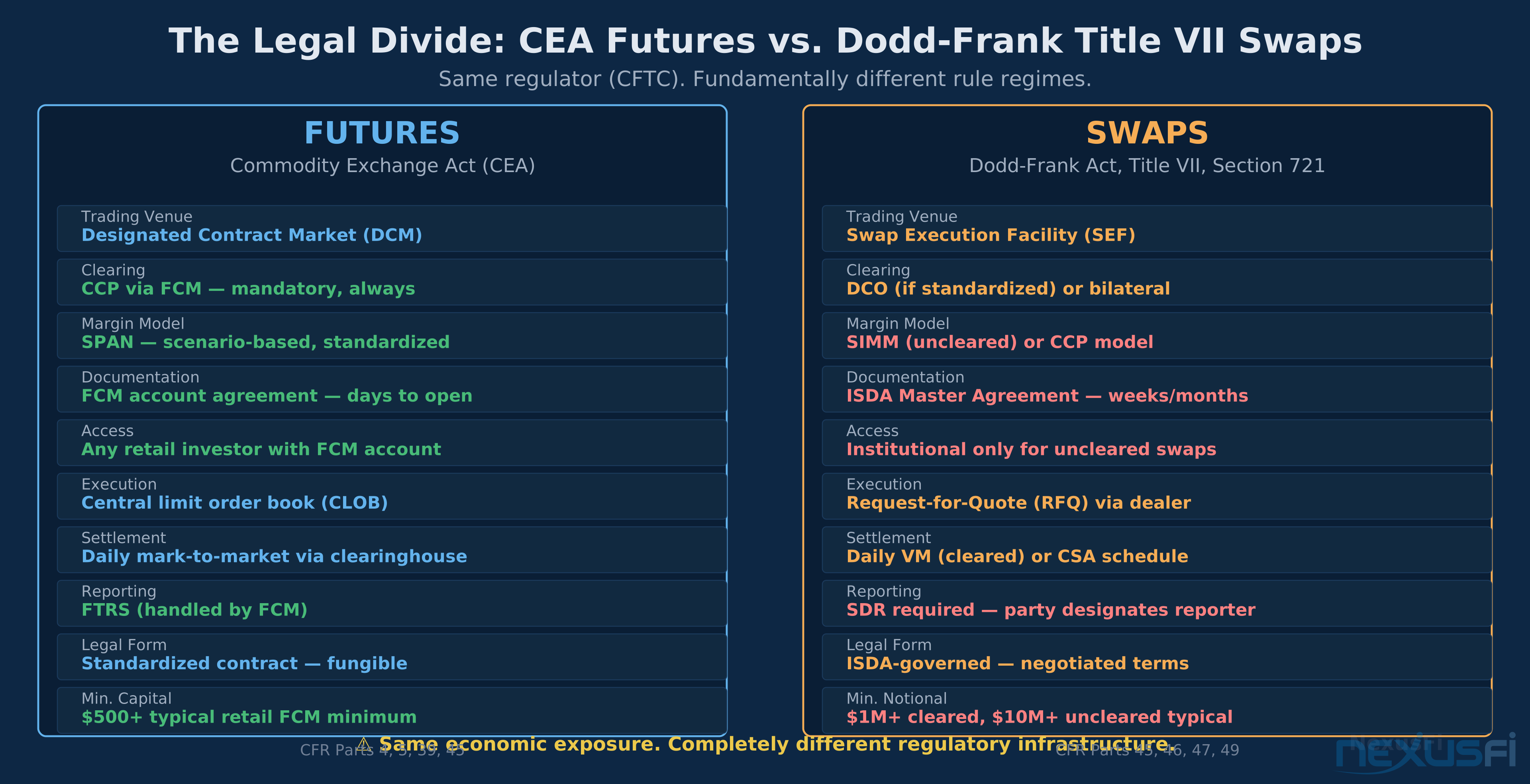
The Commodity Exchange Act (CEA) and the Dodd-Frank Wall Street Reform and Consumer Protection Act of 2010 create two distinct regulatory categories for derivatives. Both fall under CFTC jurisdiction, but the rule regimes are entirely different.
Futures contracts under the CEA are standardized contracts traded on a Designated Contract Market (DCM), cleared through a registered clearinghouse, and subject to daily settlement. CFTC has exclusive jurisdiction. The key regulatory pillar is standardization: fixed contract specs, exchange-set rules, and clearinghouse novation between every buyer and seller.
Swaps were defined comprehensively for the first time by Dodd-Frank's Title VII, Section 721. A swap is any contract exchanging cash flows based on a variable reference rate — interest rate, currency, credit spread, commodity price — that is not a futures contract, forward, or security. CFTC regulates commodity swaps and interest rate swaps. The SEC has jurisdiction only for security-based swaps referencing a single security or narrow index.
Here's the critical point most traders miss: the regulatory label attaches to legal form, not economic exposure. A 5-year fixed-for-SOFR interest rate swap and a CME 5-Year SOFR Swap Future can both express the same duration view. The OTC swap is governed by Title VII: swap dealer registration requirements, trade reporting to a Swap Data Repository, mandatory clearing if standardized, and uncleared margin rules if it isn't. The CME swap future is a futures contract under the CEA: DCM rules, FCM clearing, SPAN-based margin, futures reporting. Same risk. Completely different compliance architecture.
The practical rule regimes diverge across the board:
- Futures: CFTC Parts 4 (FCM registration), 5 (DCM rules), 39 (clearing organization requirements), 45 (position limits)
- Swaps: CFTC Parts 45 (swap dealer registration), 46 (clearing obligations), 47 (uncleared swap margin), 49 (swap data repository reporting)
This isn't regulatory minutiae. When a trader decides "I want exposure to the 5-year interest rate," the regulatory framework they end up in determines what documentation they sign, how much cash they post, and who they call when something goes wrong.
CFTC oversees both futures and swaps, but this does not mean the rules are the same. A firm registered as an FCM (Futures Commission Merchant) is NOT automatically authorized to act as a Swap Dealer. These are separate registrations with different capital requirements and compliance programs. Assuming your broker can handle both swaps and futures under one framework is a mistake that has produced significant regulatory problems.
Clearing Mechanics: How Each Structure Actually Works #
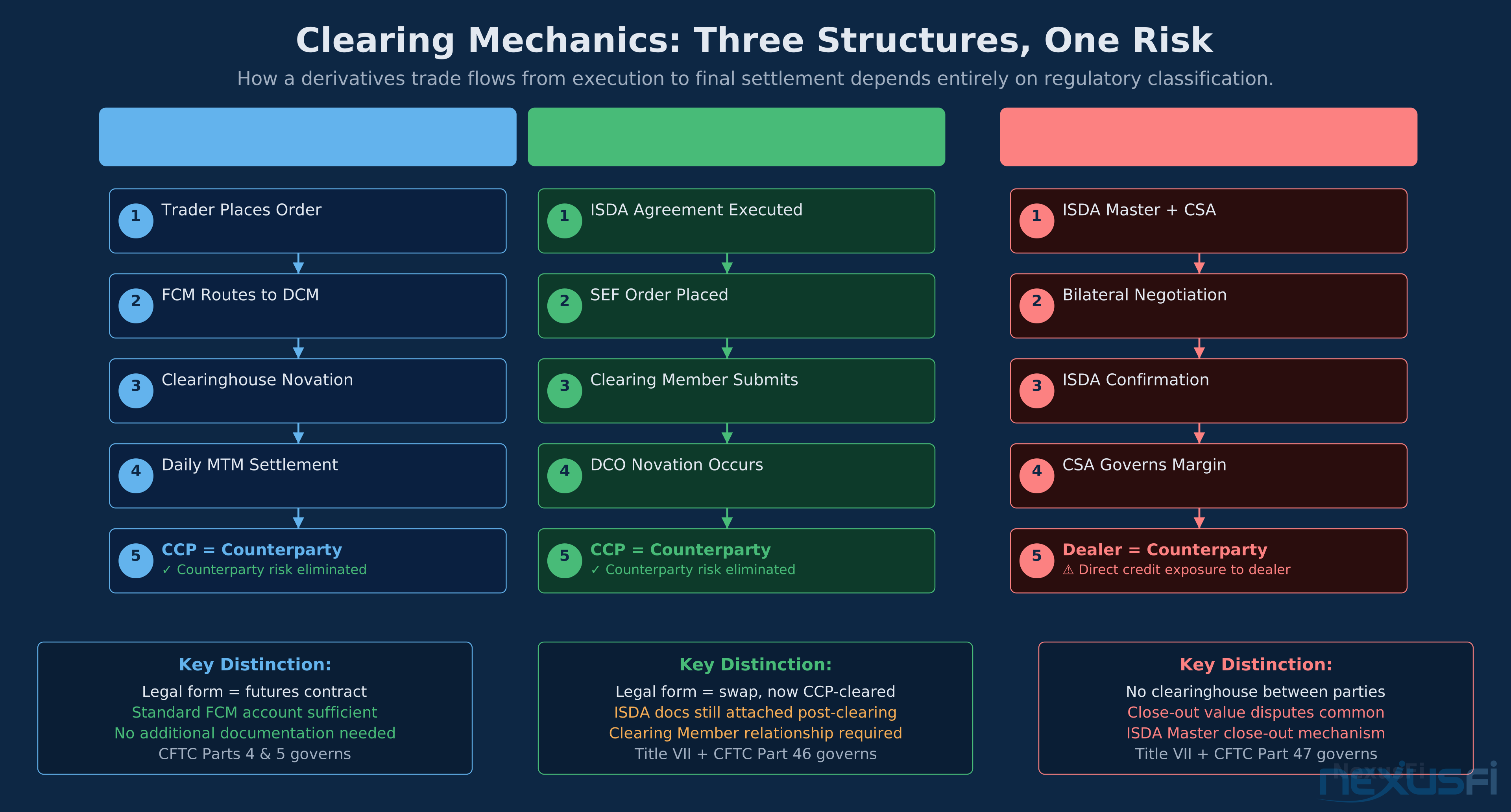
Futures clearing is the simpler case. When you trade an E-mini S&P 500 future (ES) through your FCM, the clearinghouse interposes itself between buyer and seller through novation, and you end up facing the clearinghouse — not the trader on the other side. Daily mark-to-market (variation margin) flows through the FCM to the clearinghouse each settlement cycle. The contract is standardized, so every ES September 2026 contract is identical — fungible, netable, rollable via calendar spread.
Cleared swap clearing follows a similar path mechanically, but with key differences in legal form. A cleared interest rate swap still starts as a swap — executed via ISDA Master Agreement, often on a Swap Execution Facility (SEF), confirmed through swap-specific documentation. The trade is then submitted to a Derivatives Clearing Organization (DCO), where novation occurs and the clearinghouse becomes counterparty to both sides. But here's the difference: the underlying legal relationship retains its swap character. The ISDA terms remain attached. This matters for dispute resolution, collateral eligibility, and reporting — it's still a swap, now cleared by a DCO, not a futures position cleared by a CCP.
Uncleared swaps have no central clearinghouse at all. Both parties remain directly exposed to each other. Collateral is governed by an ISDA Credit Support Annex (CSA) — a bilateral contract specifying what each party posts as margin, what's eligible, how disputes are resolved, and on what schedule variation margin moves. This is the pre-2008 structure that the financial crisis revealed to be systemically dangerous when multiple large dealers failed simultaneously.
The concept of futurization captures what happened after Dodd-Frank: exchanges created futures products that mimic swap economics precisely so participants could access swap-like risk within the familiar FCM/CCP model. SOFR futures reference the Secured Overnight Financing Rate compounded over specific periods, generating payoffs that closely track the floating leg of an interest rate swap. They clear through CME Clearing like any other future. No ISDA documentation required. But they're legally futures contracts under the CEA, subject to all futures regulations. The economic convergence is intentional; the regulatory divergence is structural.
| Feature | Futures | Cleared Swaps | Uncleared Swaps |
|---|---|---|---|
| Trading venue | DCM (exchange order book) | SEF or OTC, then submitted to DCO | Bilateral OTC negotiation |
| Novation | Immediate to CCP | Yes, via DCO | None |
| Legal form | Standardized futures (CEA) | Swap (ISDA) cleared through DCO | Swap (ISDA/CSA) bilateral |
| Daily settlement | Yes, variation margin | Yes, CCP-driven | IM/VM per CSA schedule |
| Documentation | Exchange rules + FCM agreement | ISDA Master + CCP rules | ISDA Master + CSA |
Margin Architecture: SPAN, SIMM, and the Bilateral CSA #
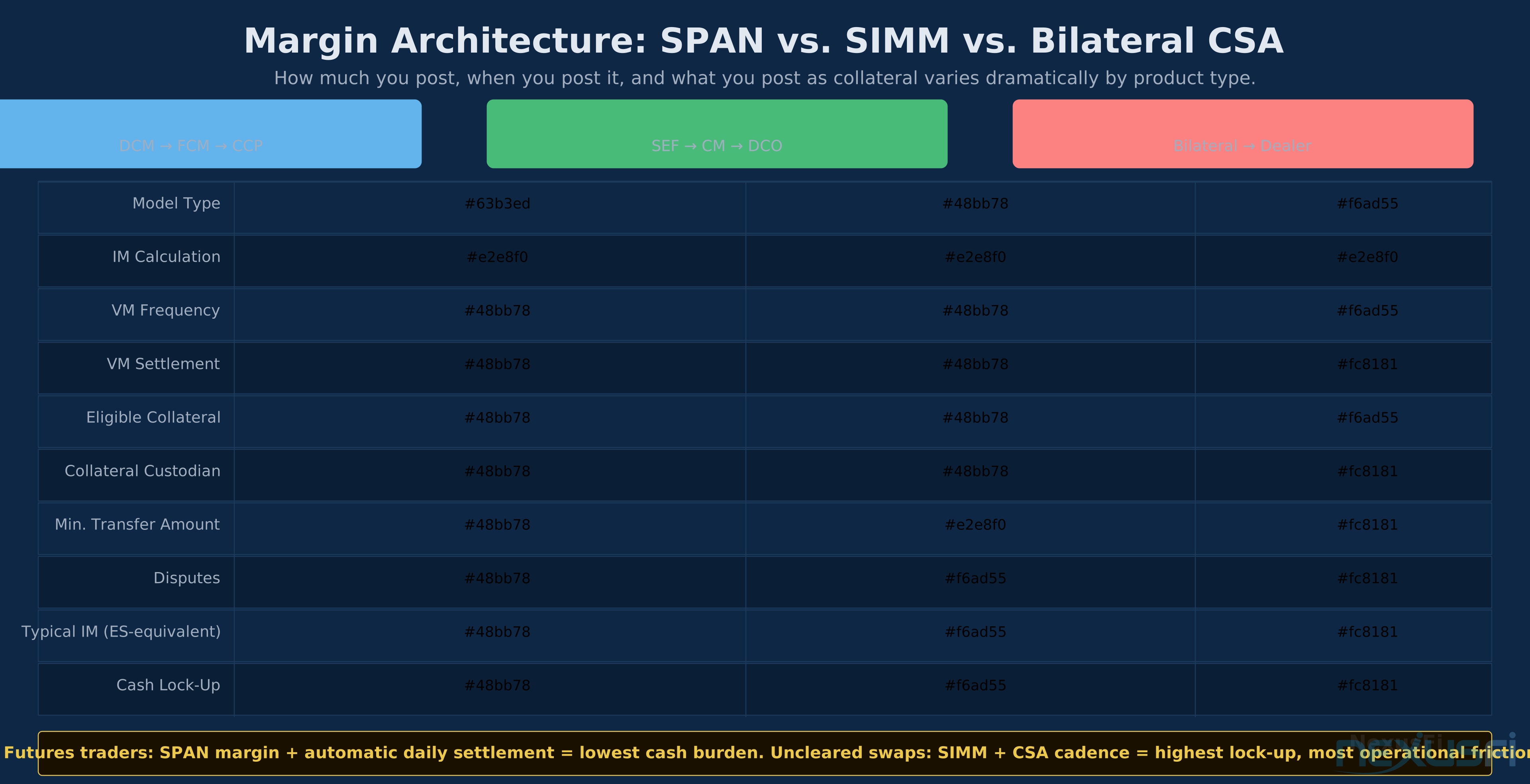
Margin is where the practical difference between futures and swaps hits traders in the wallet. The three frameworks — SPAN for futures, CCP models for cleared swaps, and SIMM for uncleared swaps — produce different capital demands, collateral eligibility, and intraday cash-flow profiles. Two hedges with identical duration exposure can require very different working capital depending on which regulatory bucket they fall into.
SPAN-based futures margin is the standard for exchange-traded futures. SPAN (Standard Portfolio Analysis of Risk) evaluates worst-case loss across a defined set of market scenarios, setting initial margin at roughly the 99th percentile stress loss. Variation margin settles daily. For ES futures, SPAN initial margin typically runs around $12,000-$13,000 per contract on a $250,000 notional — roughly 5%, varying with volatility. Eligible collateral is primarily cash and high-quality government securities.
Cleared swap margin at a DCO uses risk models that incorporate Value-at-Risk methodology and stress scenarios. Collateral eligibility is broader: CME's DCO accepts cash, Treasury securities, agency MBS, and AAA-rated corporate bonds (subject to haircuts). For a $100 million notional 5-year cleared SOFR swap, DCO initial margin might run $2-3 million, with daily variation margin of approximately $10,000 per basis point of rate move.
Uncleared swap margin under SIMM (Standard Initial Margin Model) is a risk-factor-based model calibrated to historical return volatility across asset classes. SIMM was developed by ISDA to standardize the bilateral IM calculations mandated by post-2015 reforms (CFTC Regulation 23.150-23.161). For a $200 million notional 10-year uncleared swap, SIMM IM might reach $4-5 million, posted to a segregated custodial account. Variation margin under bilateral CSAs typically settles weekly — creating a lumpier cash-flow profile than the daily streams in futures and cleared swaps.
Futures margin is predictable, automated, and daily. Cleared swap margin introduces broader collateral eligibility but different risk models. Uncleared swap margin involves the highest capital lock-up, the most manual workflows, and the most fragmented cash-flow timing. If you're used to the precision of futures margin calls, uncleared swap margin calls arriving by email from a dealer desk will feel like stepping back decades.
| Margin element | Futures (SPAN) | Cleared Swaps (DCO) | Uncleared Swaps (SIMM/CSA) |
|---|---|---|---|
| Model | Scenario-based SPAN | VaR + stress (CCP model) | Risk-factor SIMM |
| IM example ($100mm, 5Y rate) | ~$5mm | ~$2-3mm | ~$2.5-4mm |
| Collateral eligibility | Cash, gov securities | Cash, Treasuries, agency, AAA corp | Cash, Treasuries per CSA |
| VM frequency | Daily, automated | Daily, CCP automated | Often weekly; manual |
| Capital efficiency | High | Moderate-High | Lowest |
Access Pathways: Who Can Trade What #
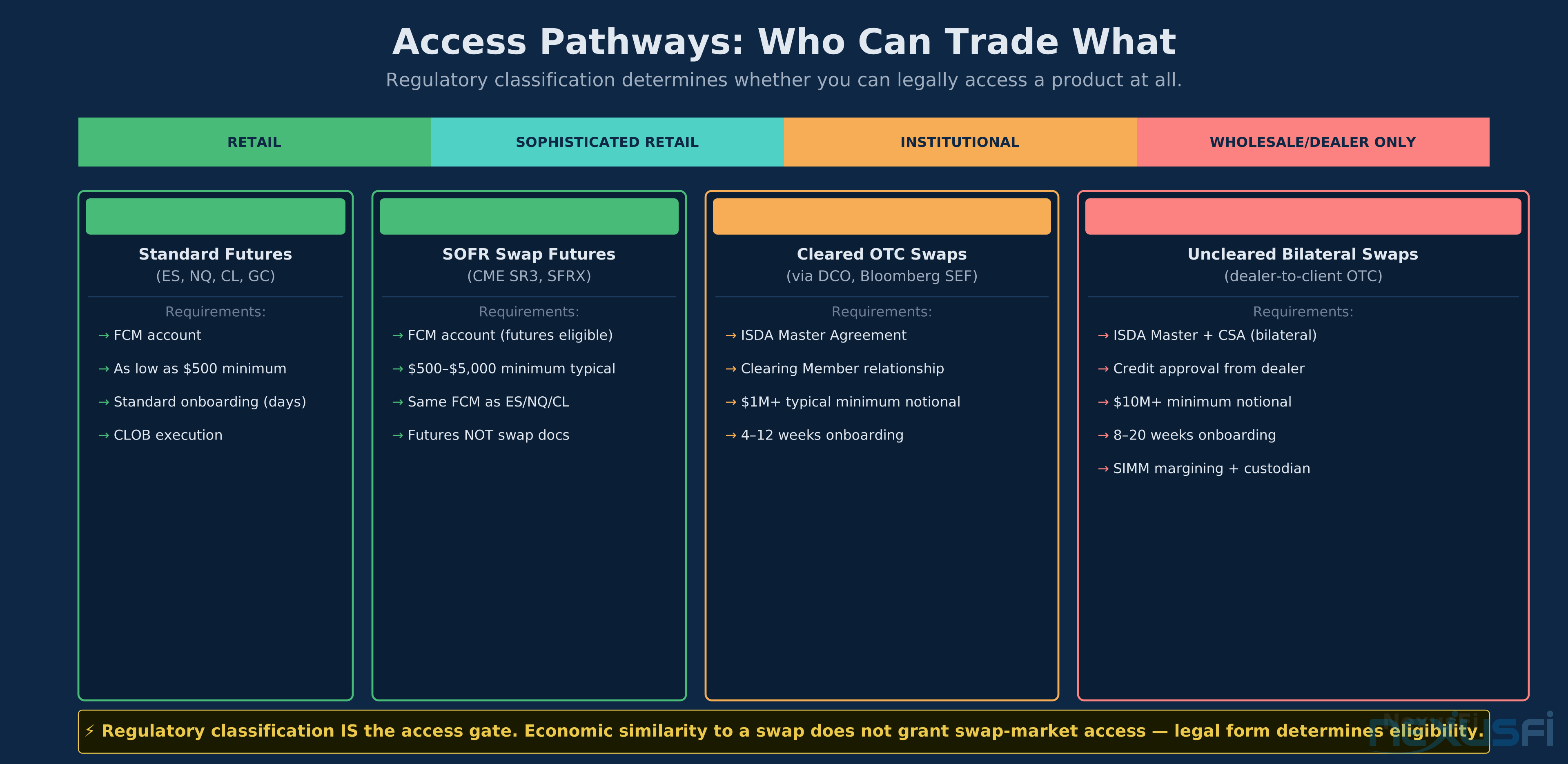
The most consequential regulatory distinction for retail and small institutional traders is access. Futures are accessible to anyone who can open an FCM account. Swaps are a different story entirely.
Futures access runs through the FCM infrastructure. Your FCM is registered with the CFTC, holds customer funds in segregated accounts, and routes orders to DCMs. Onboarding takes 1-3 business days. Minimum account sizes range from a few hundred dollars at some introducing brokers to a few thousand at most retail FCMs. You can trade a single ES contract for around $12,000 in margin and participate in the same pool of liquidity as institutional traders.
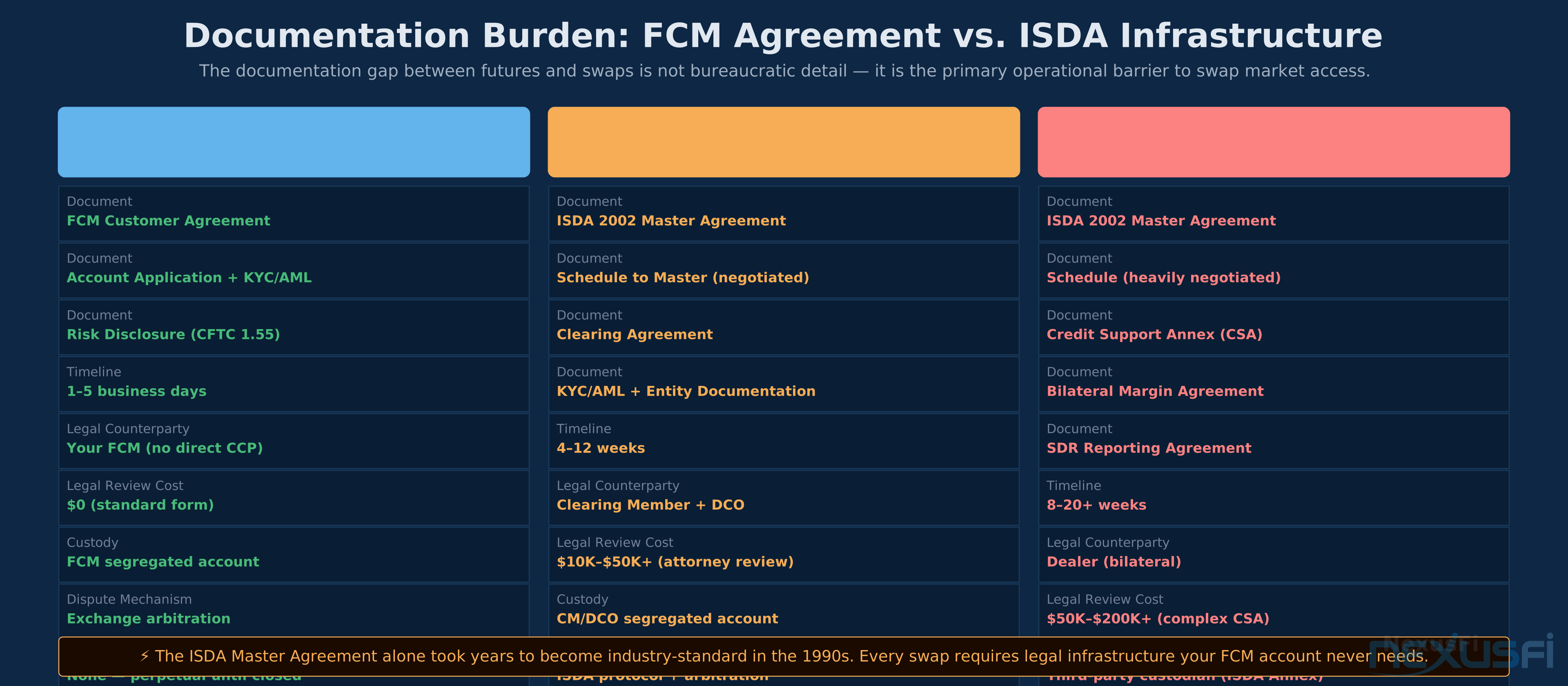
Swap access starts with the ISDA Master Agreement — a lengthy legal contract covering netting, close-out, governing law, and dozens of other provisions requiring corporate legal review. Layered on top is the Credit Support Annex (CSA), specifying collateral terms, eligible securities, haircuts, thresholds, minimum transfer amounts, and dispute resolution procedures. These documents typically take 4-12 weeks to negotiate and execute for a new counterparty relationship. Minimum ticket sizes are typically $10 million notional or larger, and dealer credit approval is required before any trade is executed.
For cleared swaps specifically, access runs through SEFs — institutional platforms where swap execution occurs — or voice-brokered trades submitted to a DCO. Retail participants cannot access SEFs directly. You need a clearing broker relationship (typically a Clearing Member FCM or bank clearing desk) that can submit your trades to the DCO on your behalf.
The key market participants differ between ecosystems:
Swap Dealers (SDs) are the primary liquidity providers in swap markets, registered with the CFTC under Title VII and subject to capital requirements, business conduct standards, and mandatory reporting. Major names include JPMorgan, Goldman Sachs, Citi, and Bank of America.
FCMs in the futures world play a at the core different role: clearing broker, not price maker. Your FCM doesn't quote you a price on ES — it routes your order to the exchange. In cleared swaps, the clearing broker submits trades to the DCO but typically doesn't act as the swap dealer providing the quote.
This distinction matters for counterparty risk: in futures, you always face the clearinghouse (after your FCM). In cleared swaps, you face the DCO (after your clearing broker). In uncleared swaps, you face the specific swap dealer you traded with, backed only by whatever collateral they hold under your CSA.
Practical Implications: Execution, Transparency, and Lifecycle #
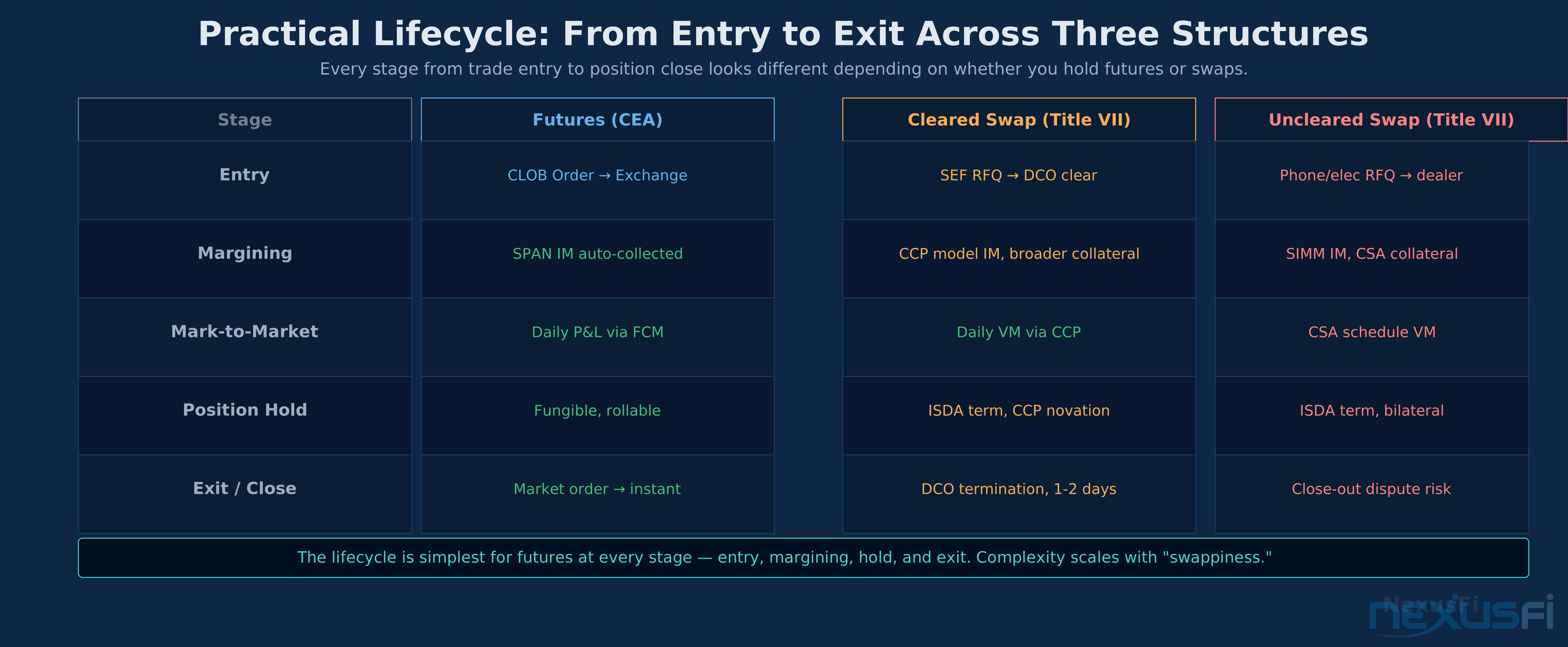
Execution: Order Book vs RFQ
Futures trade on exchange order books — submit a limit order, it fills when a counterparty crosses your price, typically in milliseconds. You see the bid/ask in real time, know exactly where the market is, and pay the bid-ask spread once. Market impact is observable through level-2 depth.
Swaps — even listed swaps on SEFs — typically trade via Request for Quote (RFQ). You send a request to one or more swap dealers specifying the product and notional; dealers return prices based on their own book and risk appetite. Liquid plain-vanilla USD interest rate swaps complete RFQs in 5-30 seconds. Illiquid tenors can take minutes. The bid-ask spread is dealer-determined and not publicly displayed.
Reporting Requirements
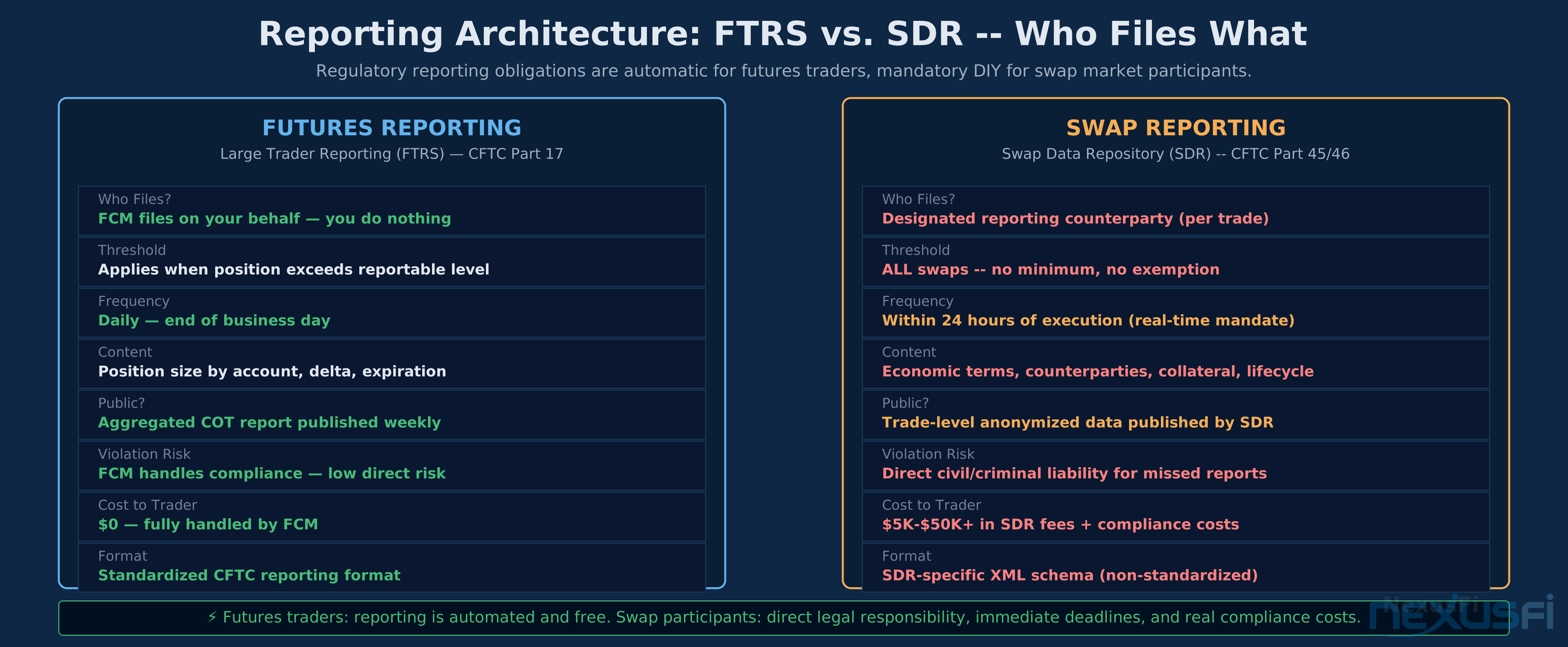
Futures are reported via the CFTC's Futures Transaction Reporting System, handled by your FCM. Swaps require reporting to a Swap Data Repository (SDR) — entities like DTCC Trade Repository or ICE Trade Vault. Both counterparties to a swap have reporting obligations (though typically one is designated as the reporting counterparty). SDRs receive detailed economic terms for every swap: notional, rate, tenor, payment dates, reference rate. This is the transparency regime Dodd-Frank mandated to replace the opaque bilateral OTC market.
CFTC Large Trader Reporting thresholds apply to both futures and some swap positions. SOFR futures thresholds can be much lower than equivalent Eurodollar thresholds were, especially for newer products with lower aggregate open interest. As @comegetme noted on NexusFi, exceeding the SOFR futures reporting threshold during the Eurodollar-to-SOFR transition caught some hedgers off guard.
Position Lifecycle and Roll Mechanics
Futures positions roll by simultaneously closing the expiring contract and opening the next one — calendar spreads or EFPs, exchange-native and highly automated. The entire infrastructure exists on the exchange.
Cleared swaps generate periodic payment dates (quarterly or semi-annual) where cash flows exchange between counterparties. Rolling a swap position means entering an offsetting swap (creating positions that can be compressed at the DCO) or amending the existing ISDA confirmation. Neither is as clean or automated as a calendar spread. Uncleared swap lifecycle is the most operationally intensive: payment dates require bilateral cash transfers, termination requires agreed close-out valuation (which can be disputed), and rolls require fresh ISDA negotiation.
The Blurred Middle: Instruments That Straddle Both Worlds #
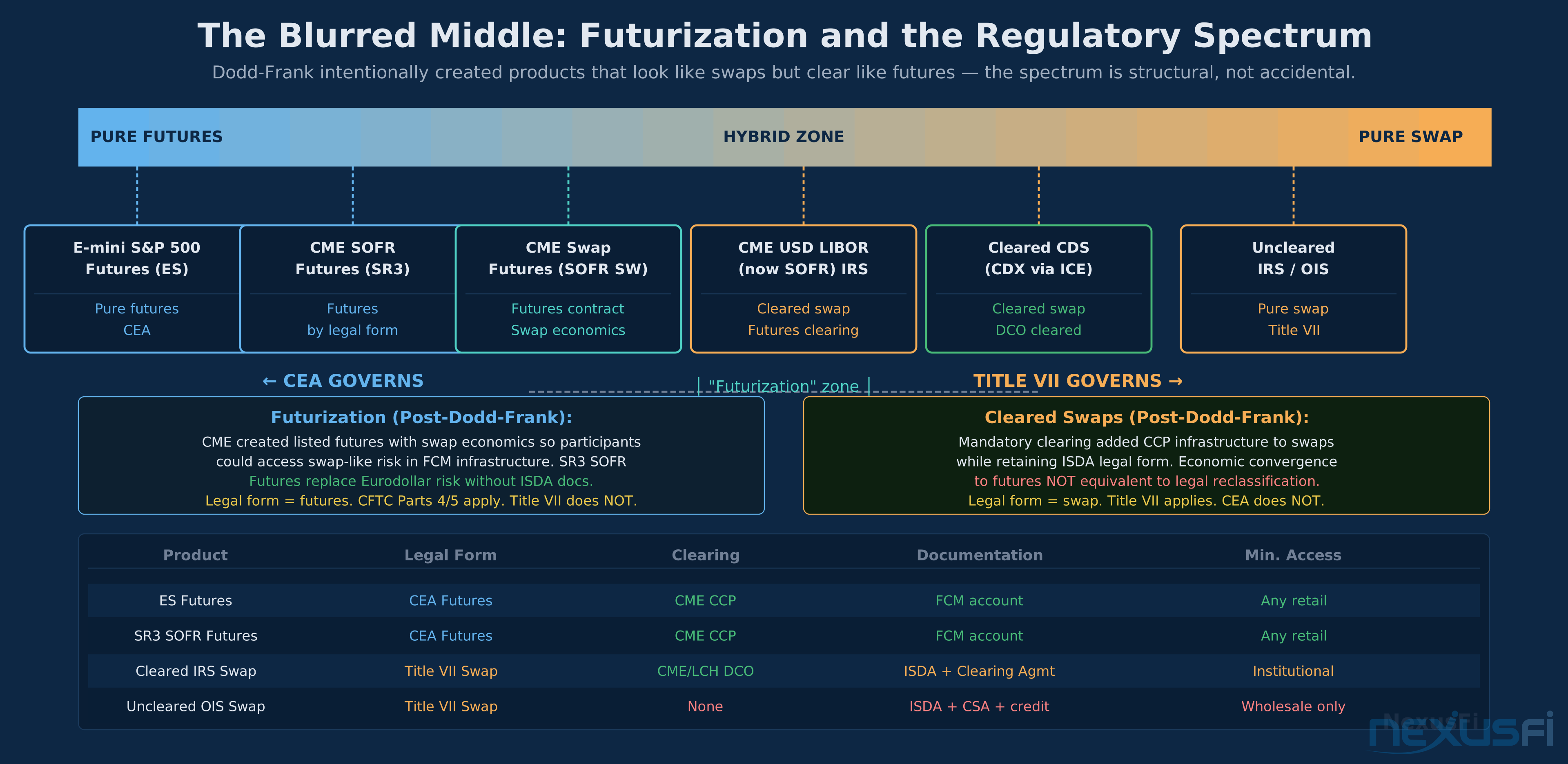
The post-Dodd-Frank environment created instruments that deliberately sit on the futures side of the regulatory boundary while delivering swap-like economics. These hybrids are essential for any futures trader working with interest rate or commodity risk.
SOFR Futures are the clearest example. CME launched SOFR futures in 2018 as the industry transitioned from LIBOR, which was retired in 2023. SOFR futures reference the compounded average of overnight Treasury repo rates over a specific quarter. Their economic payoff closely replicates the floating leg of a short-term interest rate swap. They're unambiguously futures contracts under the CEA — traded on CME's DCM, cleared by CME Clearing, margined under SPAN, accessible via standard FCM accounts.
CME Interest Rate Swap Futures (2Y, 5Y, 10Y, and 30Y Swap Rate Futures) replicate the P&L of entering and holding an OTC interest rate swap. The notional is set so a 1-basis-point move generates the same dollar value as the equivalent swap. Listed futures, CME clearing, no ISDA required. This is futurization in its most deliberate form: regulatory accessibility in the service of market access.
Exchange for Physical (EFP) transactions are the institutional mechanism for converting between worlds. An EFP allows a trader to exchange a futures position for an economically equivalent OTC swap (or vice versa), with both legs executed simultaneously as a package. EFPs generate transactions in both regulatory categories: one leg is a futures position cleared through the CCP, the other is a swap subject to Title VII reporting and clearing requirements. For large institutional hedgers who need the precise cash-flow characteristics of a swap but want futures market liquidity to source the hedge, EFPs are the bridge.
Treasury Bond Futures vs Treasury Bond Swaps illustrate the distinction at its sharpest. A ZB (30-Year Treasury Bond Future) gives linear price exposure to long-duration Treasuries with daily settlement and SPAN margin — a futures contract, full stop. A 30-year fixed-for-floating interest rate swap gives cash-flow exposure with semi-annual payment dates and swap-specific margin — a Title VII instrument, regardless of how similar the rate sensitivity looks. Both are used for duration management. Both can be delta-hedged against each other as a spread. But they sit in completely separate regulatory regimes, and the operational overhead of running both simultaneously is much higher than running a pure futures book.
The Regulatory Classification Test
Before trading any derivative, ask three questions:
- Listed on a DCM with a CFTC-approved contract? → If yes, almost certainly a futures contract
- Requires ISDA documentation? → If yes, it's a swap (cleared or uncleared)
- Settles daily through an FCM? → If yes, futures framework applies — regardless of economic similarity to a swap
When economic exposure looks swap-like but the product has a listed ticker and an FCM margin account — you're in the futures regulatory world.
Historical Context: How the Market Got Here #
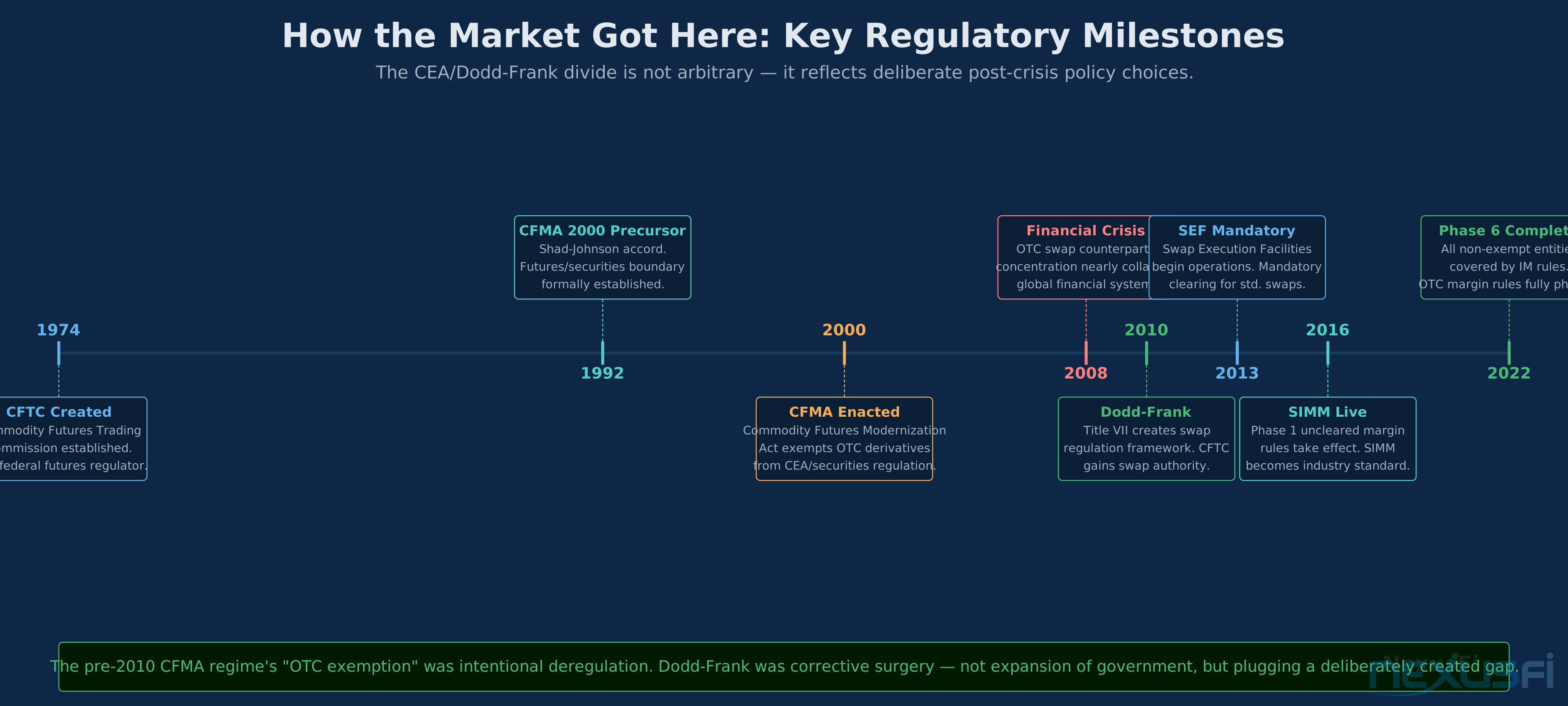
The futures market's legal form pre-dates Dodd-Frank by decades. The Commodity Exchange Act has governed listed futures since 1974, when Congress created the CFTC. Before 2010, OTC derivatives existed in a regulatory gap created by the Commodity Futures Modernization Act of 2000 (CFMA), which explicitly exempted OTC swaps from CEA jurisdiction.
The 2008 financial crisis exposed the systemic risk hidden in that exemption. When AIG nearly collapsed under $440 billion in CDS exposure, and Lehman's OTC swap book became a $400+ billion source of counterparty risk, policymakers learned exactly what the CFMA exemption had enabled: unchecked concentration of bilateral counterparty exposure with no central visibility and no mandatory margining.
Dodd-Frank Title VII (2010) was the legislative correction: swap dealer registration, mandatory clearing for standardized swaps, SEF execution requirements, SDR reporting. The CFTC gained the swap authority Congress had intentionally withheld in 2000. The futures/swaps divide we work through today reflects that post-crisis regulatory architecture — a deliberate choice to apply exchange-like discipline to the OTC swap market while preserving the distinct legal framework that CEA futures had always operated under.
Practical Decision Framework #
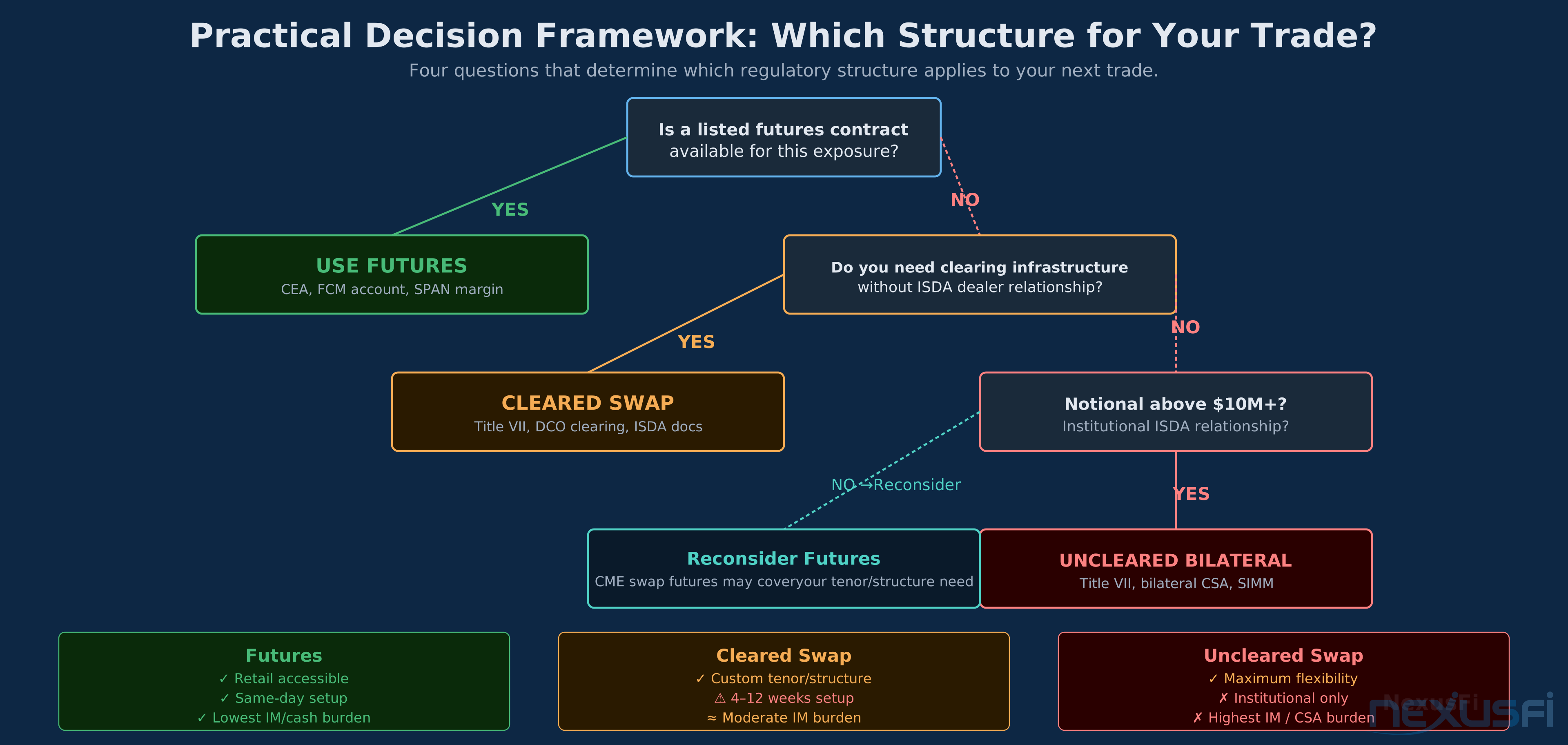
When you encounter an instrument and need to assess its regulatory classification and operational implications:
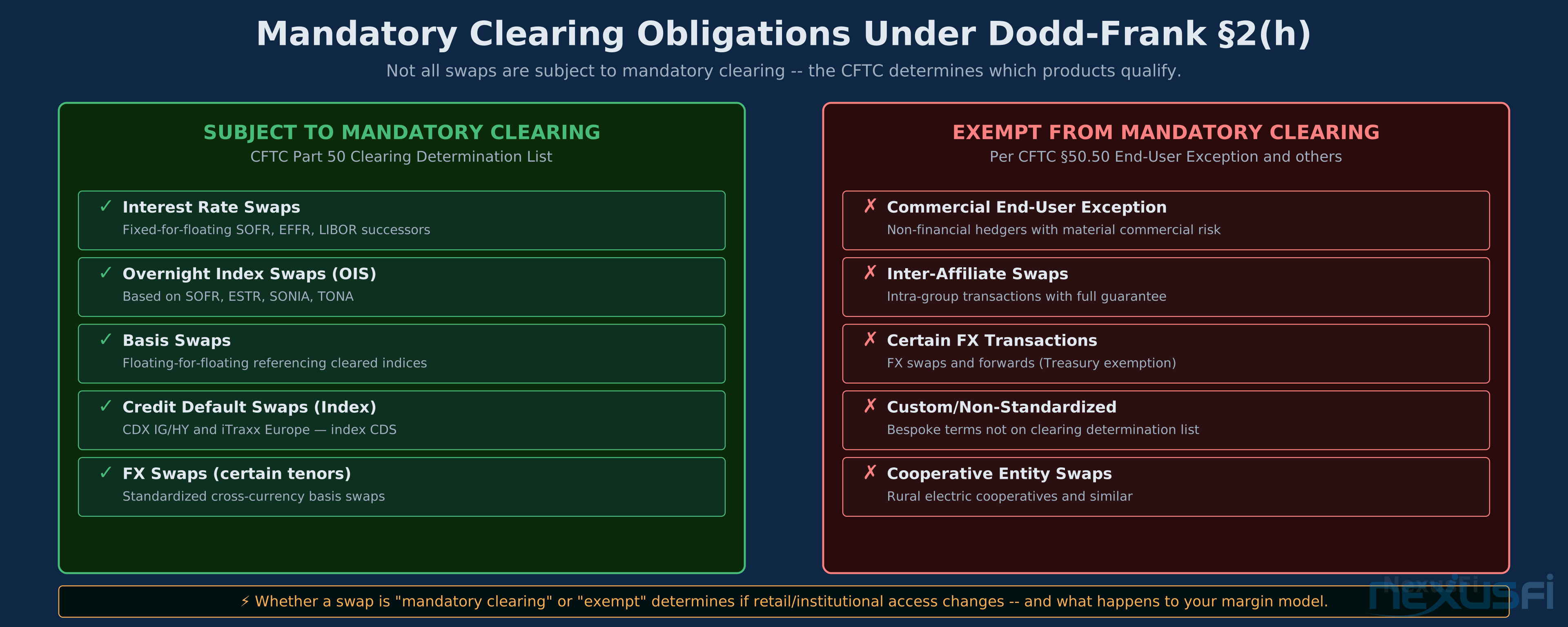
Identify the regulatory label first. Is it listed on a DCM with a CFTC-approved contract? Almost certainly a futures contract. Referenced in CFTC clearing mandate tables (17 CFR §50.4)? Subject to mandatory clearing as a swap. Does it require ISDA documentation? Then it's a swap, cleared or otherwise.
Assess clearing requirements. Futures are always cleared through a CCP via FCM — no exceptions. Cleared swaps need a DCO relationship through a Clearing Member. Uncleared swaps are bilateral, with margin under SIMM or CSA terms negotiated with your dealer.
Evaluate access requirements. Futures: FCM account, standard onboarding in days. Cleared swaps: ISDA plus Clearing Agreement plus Clearing Member relationship — weeks to months. Uncleared swaps: ISDA plus CSA plus bilateral credit approval plus minimum $10mm ticket — weeks to months minimum.
Model margin and liquidity. Futures: SPAN IM plus daily VM cash flows, predictable and automated. Cleared swaps: CCP model IM with broader collateral mix plus daily VM. Uncleared swaps: SIMM IM in segregated accounts plus periodic VM — highest cash lock-up and least predictable timing.
Consider reporting obligations. Futures: FTRS via FCM, handled for you. Swaps: SDR reporting required; verify which party is the designated reporting counterparty in your master confirmation. Uncleared swaps: SDR reporting plus CFTC recordkeeping requirements for all swap documentation.
This framework applies whether you're evaluating a new instrument for your strategy, hedging futures positions with swap-adjacent products, or trying to understand why a product your broker is offering has different margin behavior than expected. The futures vs swaps distinction is not arcane regulatory trivia — it's the infrastructure map of the modern derivatives market, and every sophisticated trader needs to be able to read it.
Key Terms: A Quick Reference #
Designated Contract Market (DCM): An exchange registered with the CFTC to list futures. CME Group and ICE Futures U.S. are DCMs.
Futures Commission Merchant (FCM): A firm registered to solicit or accept futures orders and hold customer margin. Your retail broker is an FCM or clears through one.
Swap Execution Facility (SEF): A trading system registered with the CFTC for swap execution. Bloomberg SEF and Tradeweb are major SEFs. Not directly accessible to retail.
Derivatives Clearing Organization (DCO): A registered clearinghouse for swaps. CME Group and LCH operate DCOs alongside futures clearing.
ISDA Master Agreement: The legal contract governing OTC derivatives between two parties. Required before any uncleared (and most cleared) swap trades.
Credit Support Annex (CSA): A schedule to the ISDA Master specifying collateral terms — eligible collateral, minimum transfer amounts, dispute resolution.
SPAN: Standard Portfolio Analysis of Risk — CME's scenario-based futures margining model. Industry standard for futures since 1988.
SIMM: Standard Initial Margin Model — ISDA's risk-factor-based model for uncleared swap initial margin, mandatory for covered entities since 2016--2022 phase-in.
SDR: Swap Data Repository — required reporting destination for all OTC swap trades under Dodd-Frank.
The Reality by Trader Type #
Different traders face different aspects of this distinction first and hardest. Here's the hierarchy of what matters for each archetype:
| Your role | Priority #1 | Priority #2 | Priority #3 |
|---|---|---|---|
| Retail futures trader | Instrument eligibility (can you even access it?) | Margin model (SPAN vs SIMM — affects capital needed) | Documentation burden |
| CTA/prop fund | Execution mechanics (order book latency vs RFQ) | Intraday margin/VM cadence | Reporting compliance |
| Corporate hedger | Clearing status (affects accounting hedge designation) | Cash flow timing (when margin calls arrive) | ISDA/CSA setup timeline |
| Asset manager | Clearing obligation (mandatory clearing triggers) | Collateral eligibility (what securities work for IM) | Portfolio netting efficiency |
Retail futures traders encounter this distinction primarily when products that look like familiar futures — SOFR futures, CME swap futures — are presented alongside information about OTC swaps for the same risk. The regulatory classification determines whether you can actually access the product through your FCM.
What Goes Wrong: Operational Failure Modes #
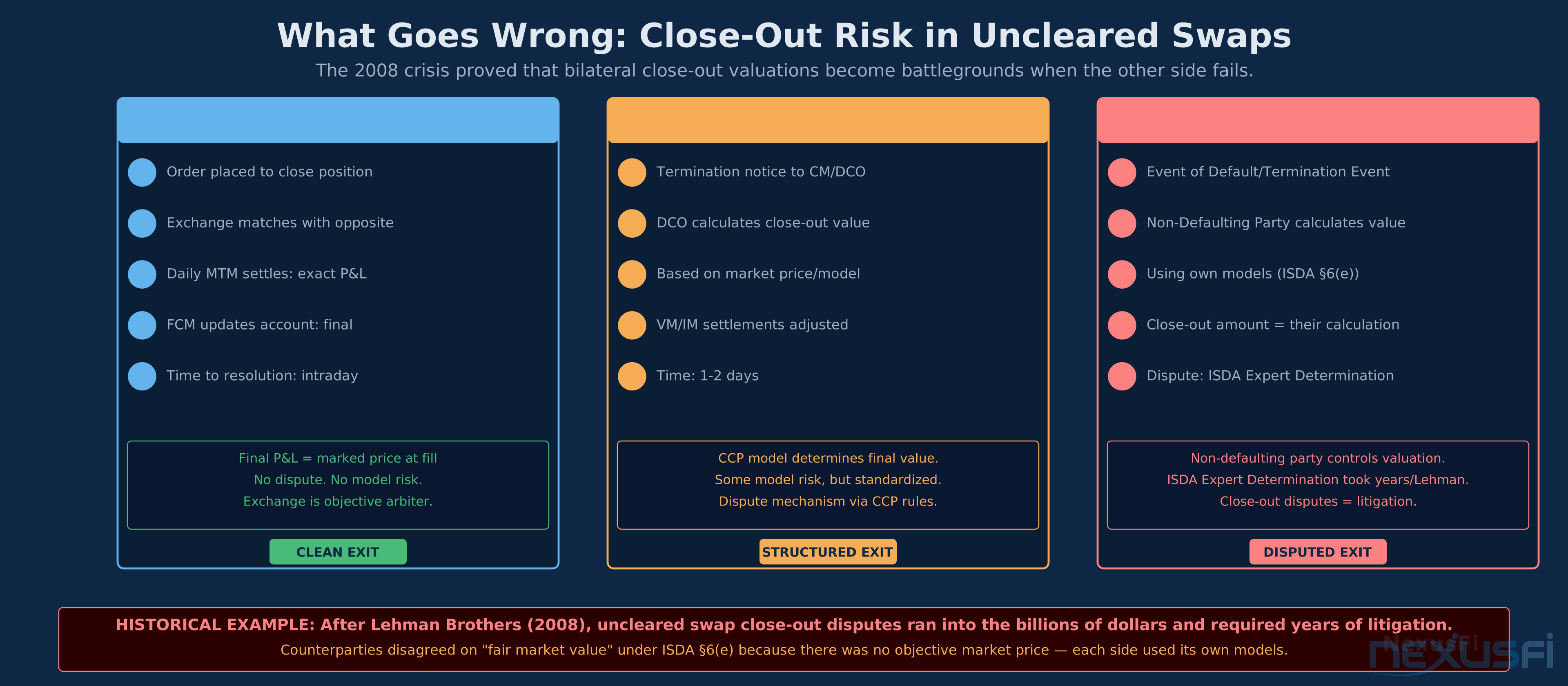
The article has covered what the regulatory distinction means structurally. Here's what it means when things go wrong in practice.
Margin call timing surprises: Futures variation margin settles daily — you know exactly when the cash moves (next-business-day settlement on daily P&L). Cleared swap VM also settles daily at most DCOs, but the timing of intraday IM calls differs. Uncleared swap VM under many CSAs settles within 1 business day of notification — if the call arrives at 3pm, you have until the same time the next business day to wire the funds, not just post to your FCM account. For large positions, this timing difference creates real liquidity management challenges.
Collateral eligibility mismatches: A futures trader used to posting cash knows their IM eligibility is simple — dollars in, problem solved. Under an uncleared swap CSA, you may have negotiated the right to post Treasury securities — but your counterparty's operations team may take 2-3 days to confirm receipt and apply the credit. In a volatile market, that lag matters.
ISDA close-out uncertainty: When a futures position is closed, the economics are final at daily settlement. When an uncleared swap is terminated early, the close-out value is calculated by the "Non-Defaulting Party" using its own models under the ISDA Master close-out mechanism. This calculation is often disputed. After Lehman's bankruptcy, disputes over close-out valuations on uncleared swaps ran into the billions and took years to resolve.
One of the most common operational mistakes: a futures trader sets up a position in a "swap future" (e.g., CME's 5-year SOFR Swap Future) and assumes it behaves exactly like an OTC cleared swap for reporting purposes. It doesn't. The swap future is reported via FTRS to the CFTC's futures surveillance system, not via SDR. If you're trying to demonstrate "hedge accounting" for GAAP purposes using this instrument, the audit trail and documentation requirements differ from a cleared swap — and your accountants may push back.
SEF access failures: Cleared swaps require SEF execution for most standardized products (Dodd-Frank §2(h)(8)). If your clearing broker's SEF connectivity goes down, you cannot execute cleared swaps in normal market hours — there's no order book to route to. In futures markets, a failed order route simply hits another route to the same exchange. The SEF/RFQ infrastructure has fewer redundancy options.
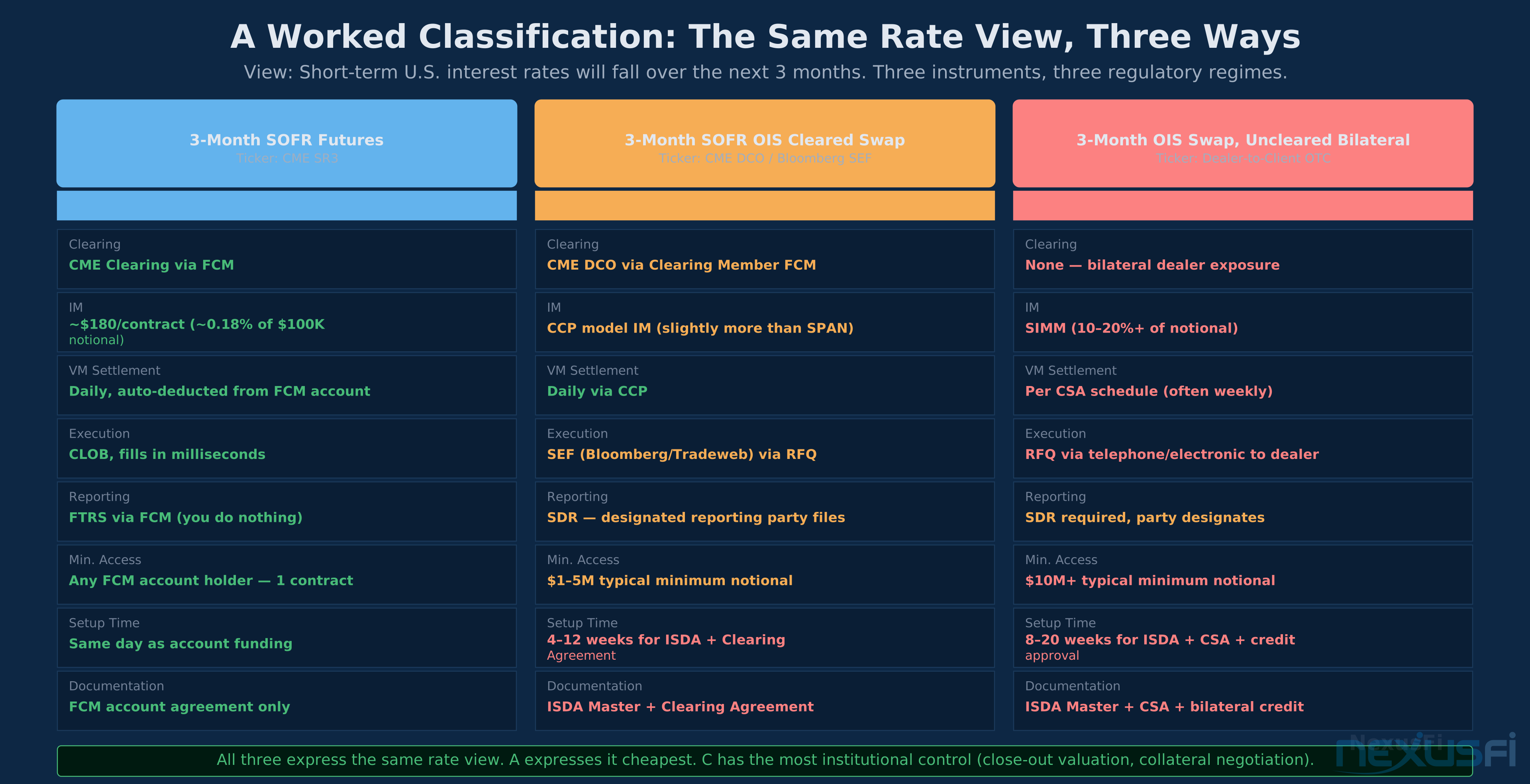
A Worked Classification: The Same Rate View, Three Ways #
Let's make this concrete. Suppose you want to hold a position expressing a view that short-term U.S. interest rates will fall over the next 3 months. Three possible instruments:
Option A: 3-Month SOFR Futures (CME, ticker SR3)
- Regulatory classification: Futures contract (CEA)
- Clearing: CME Clearing via your FCM. No additional documentation needed beyond your existing futures account.
- Margin: SPAN IM approximately 0.18% of notional ($180 per contract on $100,000 notional). Daily VM settles automatically.
- Execution: Central limit order book. Market fills in milliseconds. Visible depth.
- Reporting: FTRS via your FCM — handled for you.
- Access: Available to any FCM account holder. Minimum = 1 contract.
- Time to first trade: Same day as account opening if funded.
Option B: 3-Month SOFR OIS Cleared Swap (CME DCO)
- Regulatory classification: Cleared swap (Title VII)
- Clearing: CME DCO via a Clearing Member FCM relationship.
- Margin: CCP-determined IM (different model than SPAN) on notional. Daily VM via CCP. Eligible collateral includes government bonds and some corporate bonds.
- Execution: SEF (e.g., Bloomberg SEF) via RFQ. Minimum typical notional: $1-5 million.
- Reporting: SDR (DTCC Trade Repository) — designated reporting party handles.
- Access: Requires ISDA Master Agreement with a Clearing Member. Plus a Clearing Agreement. Timeline: 4-12 weeks to establish the relationship.
- Time to first trade: Weeks to months for documentation; then same-day execution.
Option C: 3-Month OIS Swap, Uncleared Bilateral
- Regulatory classification: Uncleared swap (Title VII)
- Clearing: None. Bilateral exposure to the dealer.
- Margin: SIMM IM (posted to segregated custodial account). VM per CSA schedule (often weekly). Cash or Treasuries only.
- Execution: Telephone/electronic RFQ to dealer. Minimum notional: typically $10 million+.
- Reporting: SDR filing required.
- Access: ISDA Master + CSA + dealer credit approval + bilateral margin agreement. Timeline: 8-20 weeks to establish.
- Time to first trade: Months. Then subject to credit limits on each trade.
All three express the same rate view. Options A and B are effectively accessible for any funded account above ~$10K (A) or institutional account with clearing infrastructure (B). Option C is institutional-only. The decision between A and B often comes down to whether you need a specific tenor/maturity not available in listed SOFR futures, or whether the institution needs the ISDA legal form for hedge accounting purposes.
Knowledge Map
Go Deeper
Build on this knowledgeReferences This Article
Articles that build on this topicCitations
- — futures vs swaps (2018) 👍 2“With a future the daily difference is added or deducted at daily settlement. With a swap this difference is only settled at one or more payment periods and discounted for time value.”
- — futures vs swaps (2018) 👍 4“True OTC swaps rarely trade now, outside of producers hedging with banks. Products still trade OTC but are cleared through CME or ICE -- once cleared they are margined and cash flows are no longer discounted.”
- — futures vs swaps (2018) 👍 2“Dodd-Frank brought stringent requirements for reporting of OTC Non-cleared trades that almost everything became cleared. This greatly reduced counterparty risk and increased capital efficiency.”
- — Are arrangements between large participants causing high volume balances zones? (2020) 👍 5“The OTC market is large -- at least in energies. Most OTC markets fall into categories not ideally suited for exchange orders: long-dated transactions, inter-exchange spreads, and large/complicated option structures.”
- — General bond / interest rate discussion (2021) 👍 2“The bulk of overall trading volumes in rates actually happen outside of the futures market in the over-the-counter cash markets -- COT data captures only a small part of the fixed income universe.”
- — General bond / interest rate discussion (2021) 👍 4“CME Webinar on the STIR (Short Term Interest Rate) Futures complex -- specifically the pricing of SOFR futures and their relationship to Eurodollars.”
- — General bond / interest rate discussion (2022) 👍 1“SOFR futures OI rose to a record 2.27M contracts -- 20% of Eurodollars. SOFR futures ADV jumped to 531K contracts -- 26% of Eurodollars. SOFR swaps captured 45% of CME Group's USD swap trades.”
- — Sofr (2023) 👍 1“The Eurodollar replaced by Three-Month SOFR Futures -- the benchmark transition from LIBOR to SOFR after 20 years.”
- — Cftc.gov
- — Cftc.gov
- — Isda.org