



Give-Up Agreements in Futures Trading: How Multi-Broker Execution and Clearing Separation Works
Overview #
Most futures traders never think about the infrastructure between their order and the exchange. You click sell, the market fills you, and you move on. But behind that transaction, at institutional scale, is a carefully constructed arrangement that separates where a trade gets executed from where it gets cleared and held. This is the give-up agreement — one of the most important but least-discussed structures in professional futures trading.
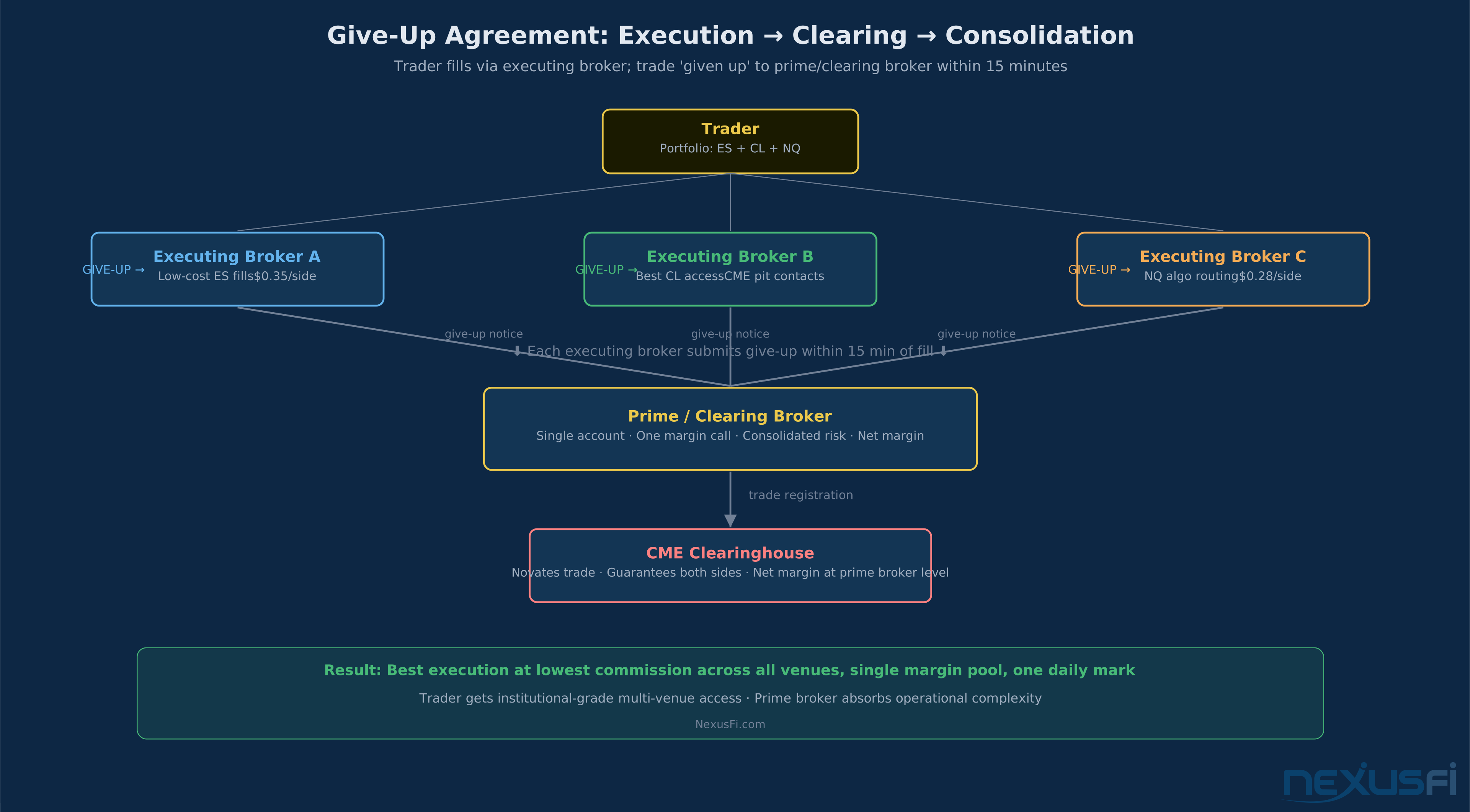
A give-up agreement is a contractual arrangement between a trader, one or more executing brokers, and a prime or clearing broker. The trader executes trades through whichever broker offers the best terms for each market — the tightest spreads on ES, the best CL access, the fastest NQ fills. Those trades don't stay at the executing broker. They get "given up" — transferred — to the prime broker, who holds the position, manages margin, and provides a single consolidated account. The executing broker gets its commission. The prime broker gets its fees. The trader gets best-in-class execution across multiple venues without managing six separate margin accounts.
When it works, it's invisible. When it doesn't — mismatched clearing code, late submission, system outage — it creates "position breaks" that can leave a trade unclaimed for hours. Understanding give-up mechanics determines whether multi-broker strategies are operationally viable, who absorbs what risk, and what your costs actually are beyond the headline commission rate.
How Give-Up Agreements Work #
Three parties, one transaction, two steps:
Step 1 — Execution: The trader places an order through an executing broker with specialized capabilities — CME direct access, co-location, or simply the lowest commission for a specific instrument. The trade fills. The executing broker holds it momentarily on their books.
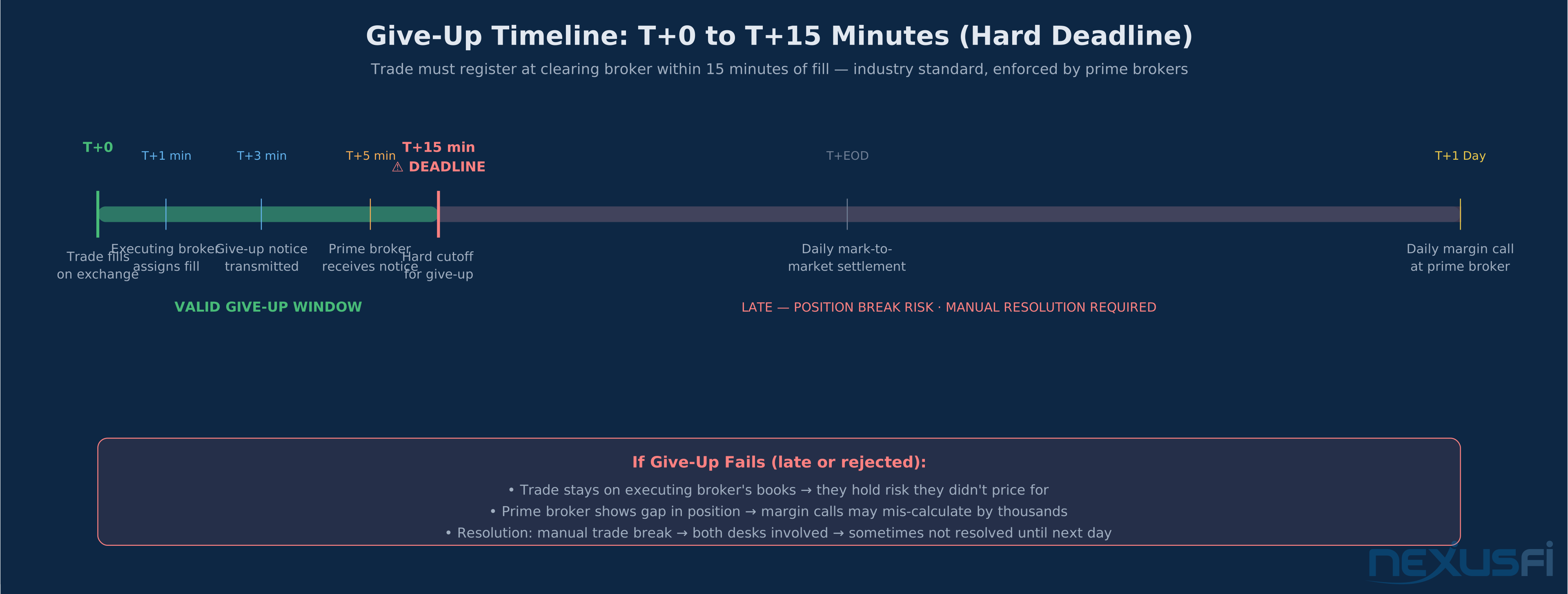
Step 2 — Give-Up: Within 15 minutes of the fill (the CME-enforced deadline), the executing broker submits a give-up notice to the prime broker. This notice contains trade details — contract, quantity, price, timestamp — and transfers economic ownership. The prime broker accepts, records it in the trader's consolidated account, and the executing broker is done. They've been "given up."
From the exchange's perspective, the prime broker is the counterparty after the give-up. CME's clearing system novates the trade to the prime broker's clearing member account. The executing broker's exposure disappears. The prime broker becomes responsible for margin, mark-to-market, and settlement.
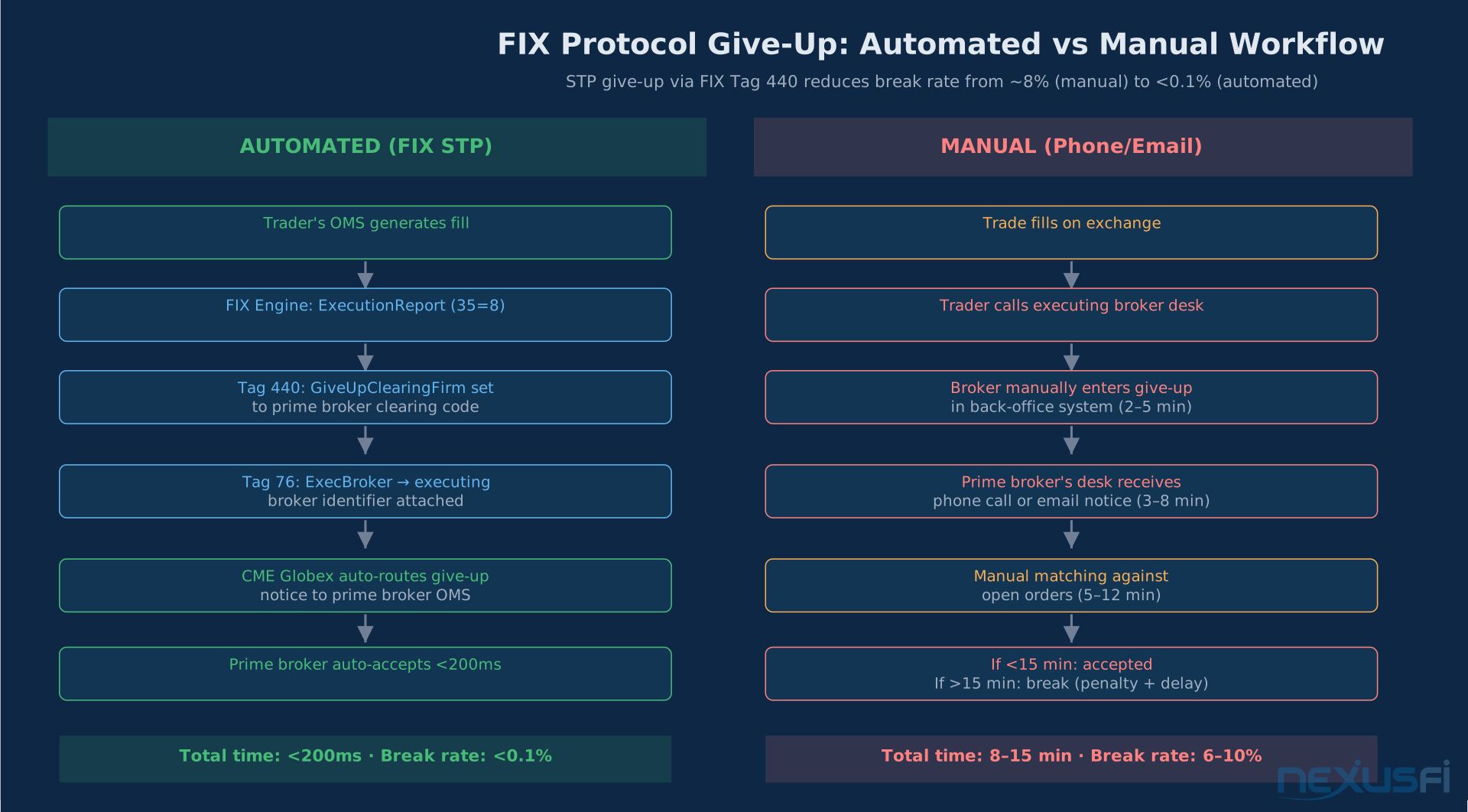
The 15-minute window is enforced by CME clearing rules. Past 15 minutes, the give-up becomes "late" — requiring manual desk override, triggering penalty fees ($50--$250 per trade), and potentially creating overnight position breaks. Institutional desks run automated FIX protocol submissions that complete give-ups in under 200 milliseconds. Manual phone-based workflows risk missing the window during high-volume periods.
Why Traders Use Give-Up Arrangements #
Four motivations drive give-up arrangements:
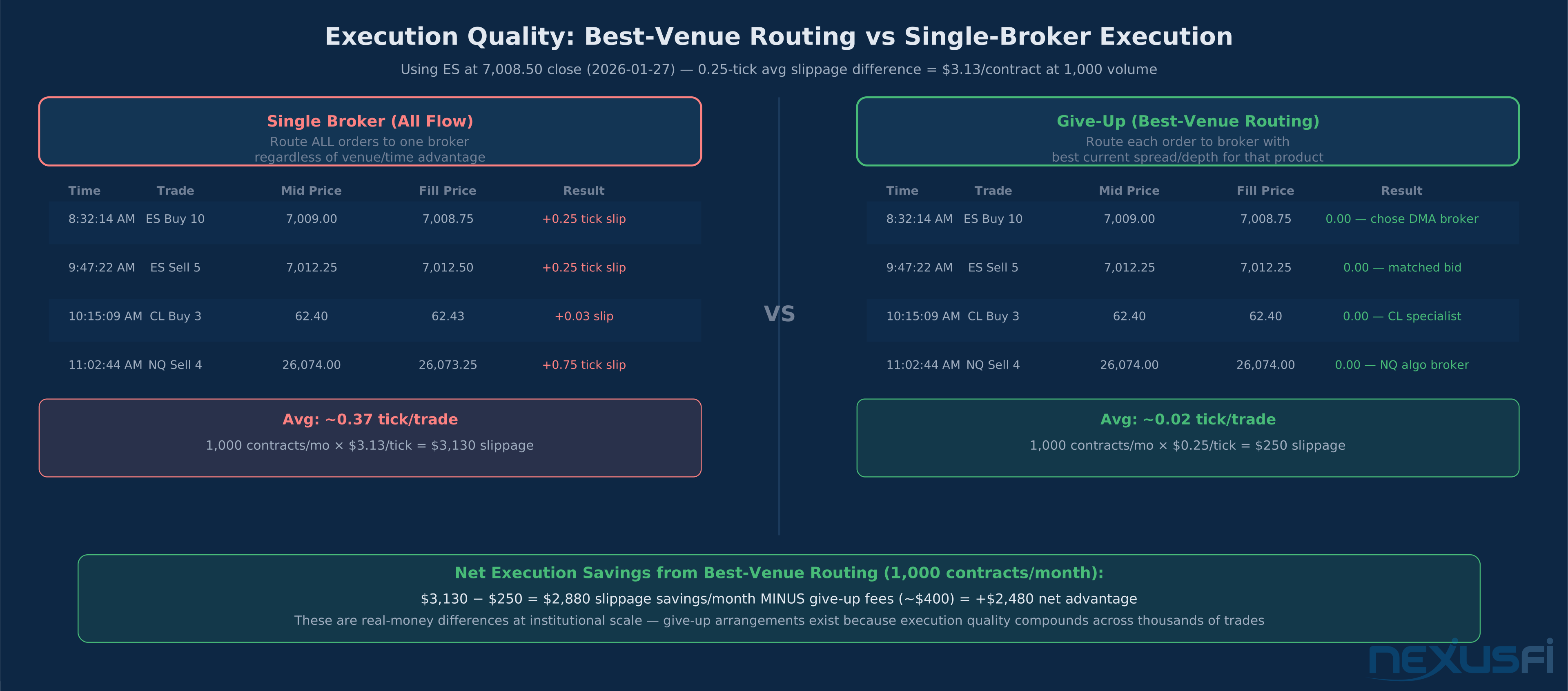
Best-execution routing across venues: No single executing broker is best for every instrument. The broker with co-location and CME direct access for ES may not have the CL pit relationships that get you better fills on crude spreads. A give-up arrangement routes each trade to whichever broker is best for it, without managing six separate margin accounts. The execution savings often dwarf the give-up fees — 0.25--0.37 tick average slippage improvement across 1,000+ contracts per month generates $2,000--$4,000 in monthly execution savings, far exceeding the $400--$600 in give-up fees.
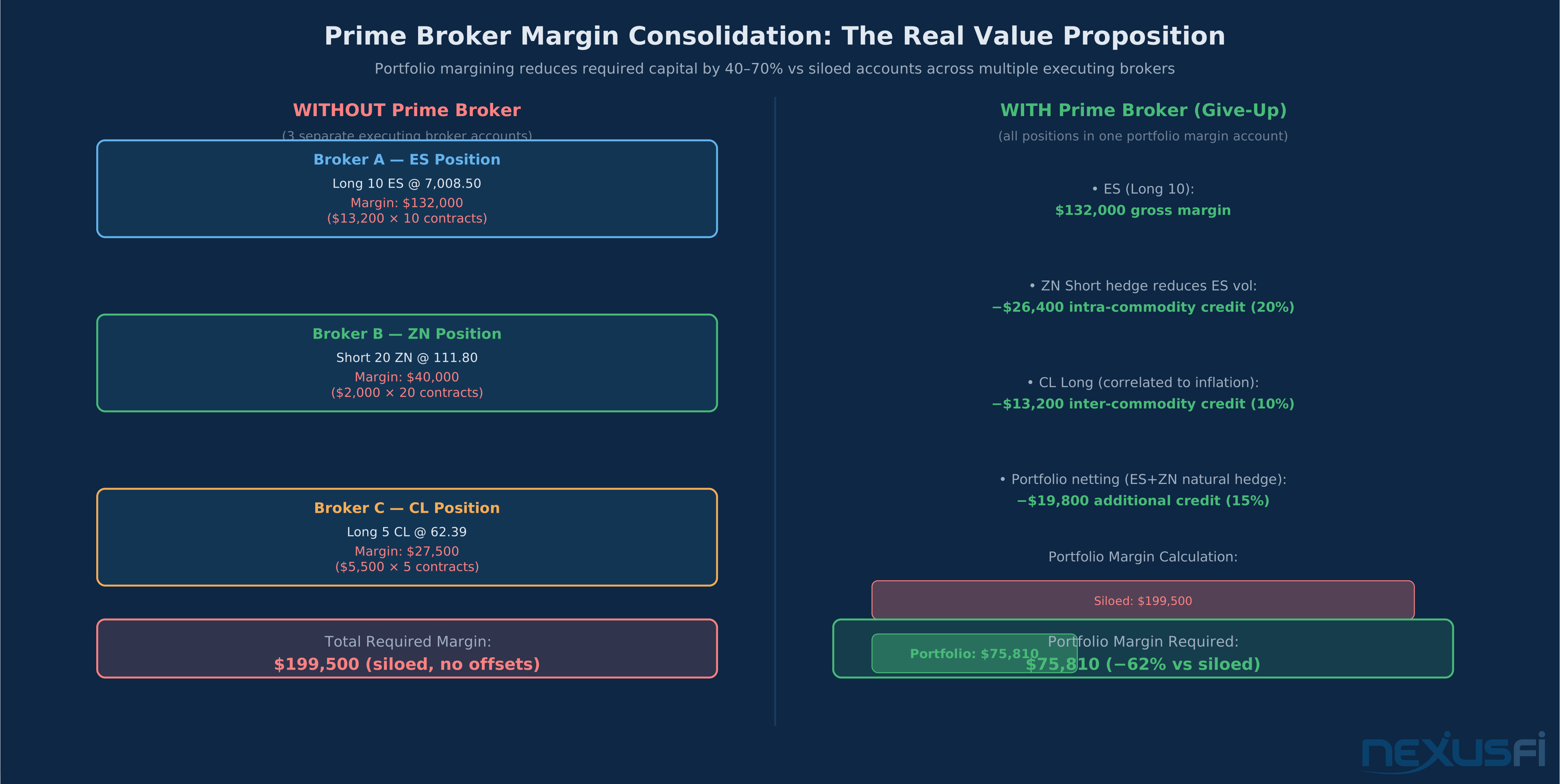
Portfolio margin consolidation: When positions are siloed across multiple executing brokers, margin is calculated independently for each account. A long ES position at Broker A and a short ZN position at Broker B are each margined at full gross requirement. At a prime broker holding both, SPAN calculates the portfolio's actual risk profile. Portfolio margin reduction is typically 40--70% vs siloed accounts. On a $200,000 siloed margin requirement, that's $80,000--$140,000 in freed capital. [5]
@"Margin analysis used to be something I spent a lot of time looking at. SPAN calculates margin on the portfolio level — maintenance margin for major US equity index futures at the clearing level runs around 4% of notional value, but spread credits can reduce that substantially." — @SMCJB [5]
Operational consolidation: Professional traders don't want six daily P&L statements, six margin calls, and six reconciliation processes. A prime broker provides one account, one statement, one margin call. This alone justifies prime brokerage for active CTAs and hedge funds managing complex portfolios.
@"I finally got the account set up with PM [portfolio margin]. PM has a very unique way of managing an entire portfolio to keep the margin in check." — @AnvilRob [6]
The Parties and Their Roles #
Understanding who bears what risk clarifies why give-up fees exist and how disputes get resolved:
The trader signs give-up agreements with both the prime broker and each executing broker. The agreement specifies: approved executing brokers, the give-up fee structure, the 15-minute deadline, and the dispute resolution process for failed give-ups. Give-up fees are negotiable. Typical range: $0.02--$0.05 per side per contract, paid by the trader to the prime broker.
The executing broker accepts trades with the understanding that they won't hold them. The moment the give-up notice is submitted and accepted, the executing broker has no ongoing obligation. The risk is the window between fill and give-up acceptance — if the prime broker rejects the give-up (late submission, wrong clearing code, trade detail mismatch), the executing broker is holding a position they didn't price to hold. Most executing brokers charge a "failed give-up" penalty for this scenario.
The prime or clearing broker is the central counterparty after give-up. They hold the position, calculate margin, handle settlement, and produce all reporting. Prime brokers are typically large FCMs with CME clearing membership. They charge a base monthly fee ($500--$2,500 for smaller accounts) plus per-transaction clearing fees ($0.02--$0.08 per side).
The exchange clearinghouse sees only the prime broker after the give-up. The clearinghouse requires the prime broker to hold initial and variation margin. This is why prime broker credit quality matters: if your prime broker fails, your positions are at risk regardless of which executing broker placed the trades. [11]
@"After the PFG collapse I've been evaluating my futures brokers to determine whether my capital is adequately protected. I kept asking for someone else to speak to until I got someone who knew what they were talking about [at each broker's margin desk]." — @djkiwi [4]
Give-Up Agreement Documentation #
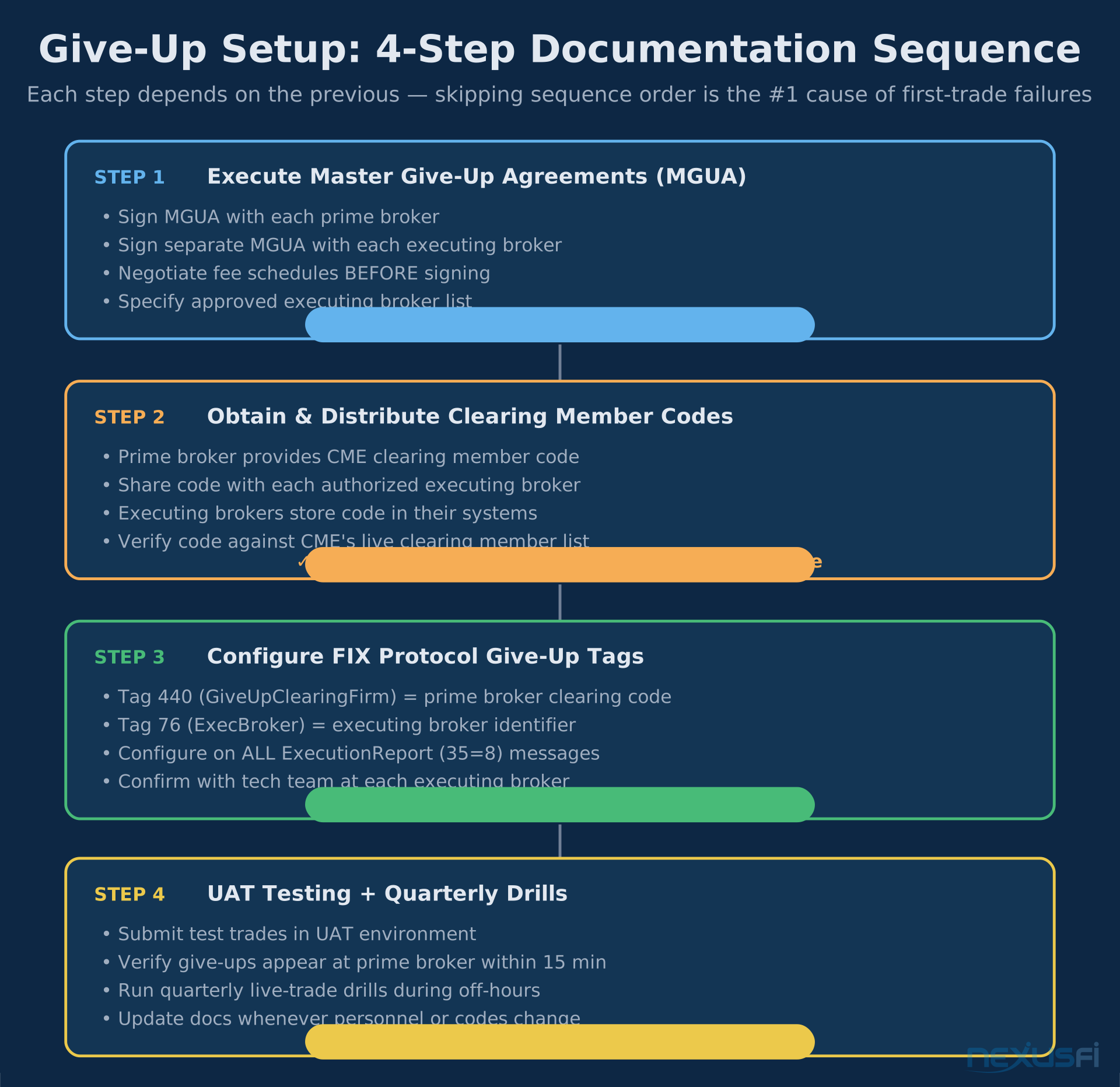
Give-up arrangements require specific documentation before any trade can be given up:
The Master Give-Up Agreement (MGUA): The Futures Industry Association (FIA) publishes standard give-up agreement templates that most prime brokers adopt with modifications. The MGUA covers: approved executing brokers, fee schedules, the timeline window, notification procedures, failed give-up remedies, termination provisions, and liability allocation. Both the executing broker and prime broker sign separate versions with the trader. You need signed MGUAs with every party before a single give-up trade can occur. [1]
Clearing member authorization: The prime broker provides a specific CME clearing member code (a numeric identifier) to each authorized executing broker. The executing broker embeds this code in every give-up notice. Wrong code = failed give-up. Update paperwork immediately when changing prime brokers — executing brokers submitting to the old clearing code will fail silently until the code update propagates.
FIX protocol configuration: The executing broker's FIX engine must be configured with Tag 440 (GiveUpClearingFirm = prime broker clearing code) and Tag 76 (ExecBroker = executing broker identifier) on every ExecutionReport message. Test in UAT before going live. Run quarterly give-up drills — test trades during off-hours to verify the automated flow still works as personnel and systems change.
When Give-Ups Fail: Position Breaks and Resolution #
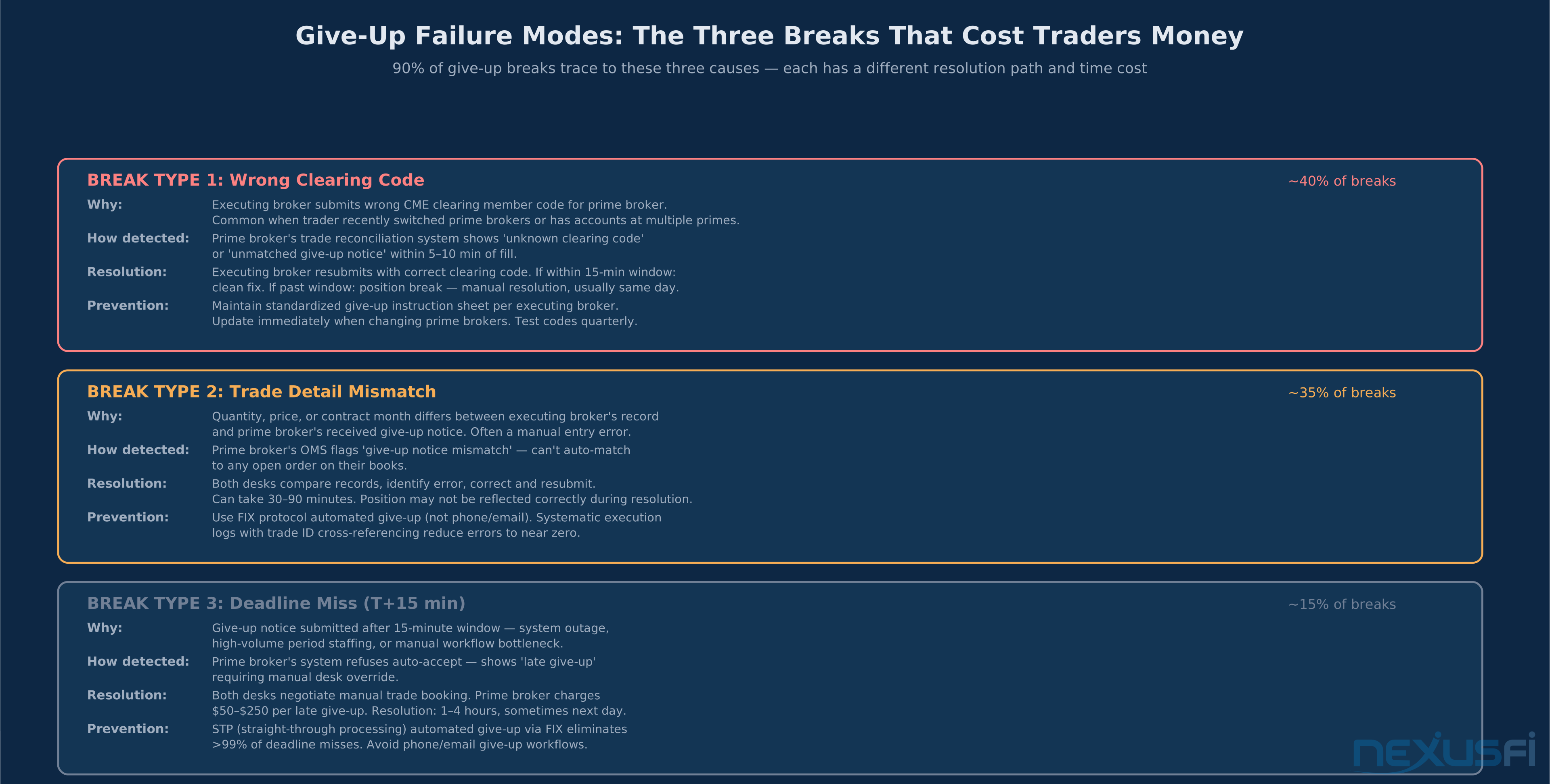
A failed give-up creates a "position break" — the same trade exists on two brokers' books simultaneously, or on neither. Three failure modes cause 90% of breaks:
Wrong clearing code (40% of breaks): Executing broker submits give-up with an outdated or incorrect prime broker clearing member code. Detection happens within 5--10 minutes. If caught within the 15-minute window, the executing broker can resubmit with the correct code — clean resolution. After 15 minutes, it's a late give-up with penalty fees and manual resolution.
Trade detail mismatch (35% of breaks): Quantity, price, or contract month differs between the executing broker's give-up notice and the prime broker's expected records. Resolution requires both desks to agree on correct details, correct records, and rebook. Typically 30--90 minutes. STP automated FIX workflows eliminate this category almost entirely.
Deadline miss (15% of breaks): Give-up notice arrives past the 15-minute window. The prime broker's system auto-rejects. Manual desk override required, $50--$250 penalty per trade, 1--4 hours to resolve. Automated FIX reduces deadline misses to near zero.
Resolution protocol: When a break is identified, the trader's operations contact at the prime broker initiates the break ticket process. Both brokers' operations teams work the break simultaneously using CME's GiveUpSystem web portal. The break is considered resolved when both books show matching positions and the prime broker has officially booked the trade. [2]
Costs and Economics of Give-Up Arrangements #
The give-up structure adds layers to your cost stack, but done correctly, the net effect is positive for active strategies:
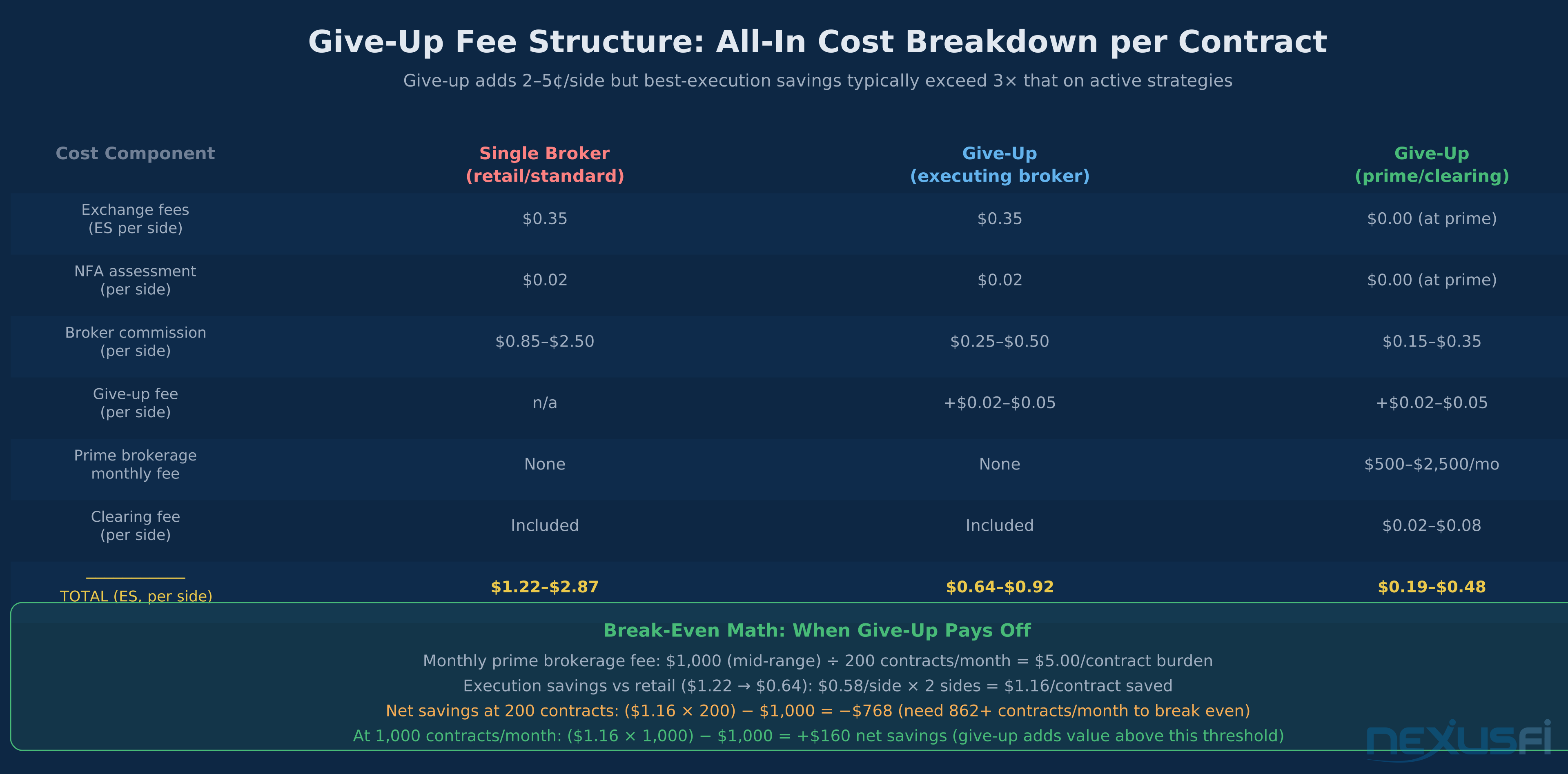
Give-up fees: Typically $0.02--$0.05 per side, paid to the prime broker. On 1,000 contracts per month, this is $400--$1,000 in monthly give-up fees.
Prime brokerage monthly fee: $500--$2,500/month for mid-size accounts (under $5M AUM). At $1,000/month, you need 200+ contracts/month just to cover the base fee. Below 800 contracts/month, single-broker arrangements are typically cheaper on a total-cost basis.
Clearing fees at prime level: $0.02--$0.08 per side depending on product and prime broker. These are in addition to executing broker commissions.
The economic case for best-venue routing: On ES (tick size $12.50), a 0.25-tick average fill improvement is $3.13/contract. At 1,000 contracts/month, that's $3,130 in execution savings — exceeding $400--$1,000 in give-up fees and $500--$1,000 in prime brokerage overhead when operating above 800 contracts/month. [3]
Portfolio margin savings: A long ES / short ZN portfolio that requires $200,000 in siloed margin may require only $80,000 under portfolio margining. The freed $120,000 invested at 4--5% Treasury yield generates $4,800--$6,000/year in additional income that offsets prime brokerage costs. This calculation alone often justifies prime brokerage for strategies with natural cross-market hedges. [5]
When Does a Give-Up Pay Off? Run this calculation: take your monthly contract volume, multiply by the commission differential between your current broker and the give-up arrangement, then subtract monthly prime brokerage and give-up fees. Positive result = the arrangement makes sense. Most traders find the crossover at roughly 800--1,000 contracts per month. Below that threshold, improve your single-broker relationship first.
Give-Up vs Post-Trade Allocation: Knowing the Difference #
Give-up and post-trade allocation are different mechanisms that serve similar purposes but work differently. Confusing them creates operational problems:
Give-up: The trade is executed for a specific account, and the executing broker knows immediately which prime broker account it's going to. The give-up notice is submitted within 15 minutes of the fill. One trade goes to one specific account, determined at execution.
Post-trade allocation: A block trade is executed first (typically by a fund manager running a single order that fills multiple client accounts), then allocated across multiple accounts post-execution. The allocation ratios are pre-defined or determined at time of allocation. Each sub-account gets their slice of the fill. This is how hedge fund managers run multiple client accounts from a single execution.
Many strategies combine both — a fund manager executes block trades (allocated across client sub-accounts) and also uses give-up agreements to get those block trades cleared at the prime broker from multiple executing brokers.
Give-Up at the CME: Technical Infrastructure #
CME Group operates the GiveUpSystem — a combination of automated FIX interfaces and a web-based portal — that handles give-up processing for CME, CBOT, NYMEX, and COMEX products:
Timing enforcement: CME enforces the 15-minute window through automated timestamp validation. Give-up notices more than 15 minutes after the reported fill time require manual override by the destination clearing firm. [2]
Clearing member codes: Each FCM with CME clearing membership has a unique 3-digit alphanumeric clearing member code that must appear on every give-up notice and match exactly. CME maintains the authoritative list — executing brokers verify prime broker codes quarterly. When a prime broker changes their clearing member code (after mergers or clearing relationship changes), executing brokers must update their FIX configurations immediately.
Non-standard contracts: Not all CME contracts support automated give-up. Some voice-executed contracts (certain calendar spreads, inter-commodity spreads, complex options on futures) require manual give-up processes. Verify give-up eligibility for your specific instruments before committing to the arrangement — discover this in testing, not live trading.
End-of-day reconciliation: CME conducts daily reconciliation at 4:15 PM CT for financial contracts. Outstanding give-up breaks appear on CME's exception report. Both the executing broker and prime broker receive this report. Persistent breaks that carry overnight create accounting problems requiring manual resolution — sometimes not until the following morning.
When Give-Up Breaks Down: Risk Management #
Prime Broker Credit Risk Your positions after a give-up are held at the prime broker's clearing member account. If the prime broker fails, client positions are subject to transfer processes that can take days to weeks. MF Global (2011) and PFG Best (2012) both demonstrated this risk is real. Evaluate prime broker financial health the same way you'd evaluate any institution holding your capital. Consider maintaining relationships with two prime brokers if exposure is material.
System outage during volatile markets: Give-up automated systems (FIX engines, prime broker OMS) occasionally experience outages during high-volatility periods when volume spikes. If the automated flow goes down during a major market move, executing brokers accumulate unwanted positions rapidly. Have manual backup workflows tested and documented before you need them. Know the executing broker's phone-based give-up process even if you never use it. [10]
Personnel turnover: Give-up relationships are maintained by people. When your operations contacts change, institutional knowledge about your give-up configuration often walks out with them. Maintain written documentation of every give-up agreement parameter — clearing codes, fee schedules, contact escalation lists, manual backup procedures — and review it quarterly regardless of whether anything has changed.
Who Needs a Give-Up Arrangement -- And Who Doesn't #
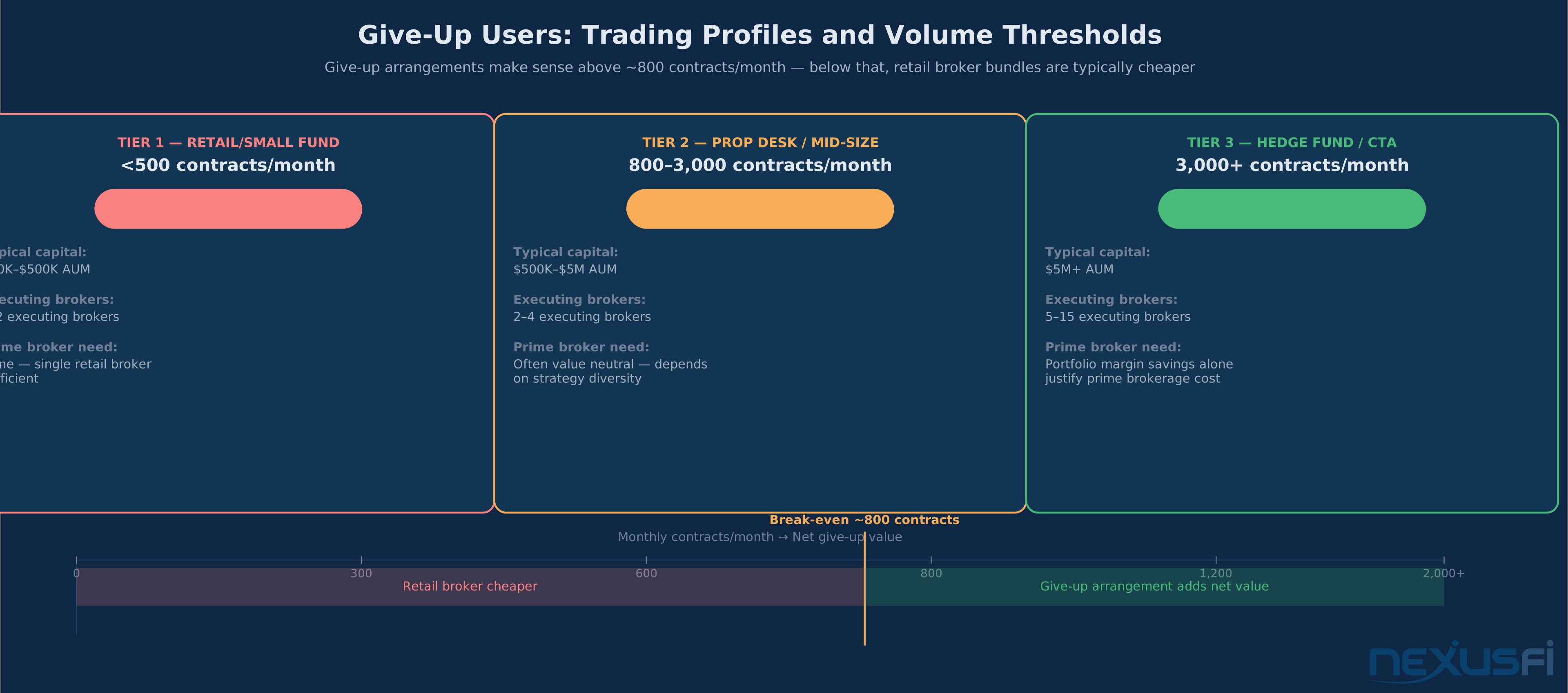
Volume Threshold Summary Below 800 contracts/month: a single competitive broker outperforms on total cost. 800--3,000 contracts/month: portfolio margin savings may justify prime brokerage. Above 3,000 contracts/month: multi-venue execution quality differences compound materially and the economics are clearly positive.
Don't bother below 800 contracts/month: A single institutional-grade broker with competitive commissions will outperform a give-up arrangement at this volume. Monthly prime brokerage overhead plus give-up fees will exceed execution quality improvements. Improve your single broker relationship first — negotiate commissions, get co-location if your strategy warrants it, use the best API routing they offer.
Consider it at 800--3,000 contracts/month: This is the zone where economics are close. Portfolio margin consolidation may justify prime brokerage even if execution routing doesn't. Model your specific numbers: compare siloed margin requirements against portfolio margin requirements, then compare capital savings to prime brokerage costs. Cross-market hedges (long equities / short bonds, long crude / long gold) generate real capital efficiency gains in this range.
Clear value above 3,000 contracts/month: At this volume, execution quality differences compound materially. Running multiple executing brokers through a prime broker with automated FIX give-up delivers measurable, auditable improvements in fill quality. The operational consolidation — single margin account, single P&L, single daily statement — has real value for professional trading operations.
Setting Up a Give-Up Arrangement: Practical Steps #
Step 1 — Select a prime broker: Shortlist three candidates. Get quotes simultaneously — competition drives pricing. Key criteria: CME clearing member status, minimum account requirements, real-time risk API access, and operational reliability track record.
Step 2 — Execute the MGUA: Review every provision, especially failed give-up remedy clauses and fee schedules. Negotiate the fee schedule before signing — it's far harder to renegotiate after the relationship is established. Your prime broker must formally authorize each executing broker, providing CME clearing member codes for each. [1]
Step 3 — Configure FIX and test: Configure FIX Tag 440 (prime broker clearing code) and Tag 76 (executing broker code) on all ExecutionReport messages. Test in UAT before going live. Run a small live test trade before scaling.
Step 4 — Run in parallel for 30 days: Side-by-side reconciliation between your prime broker's records and your own trade logs during the first month. Every give-up should appear in both systems within 15 minutes of execution. Any discrepancy is a break that needs investigation. The first 30 days reveals every configuration issue before volume scales.
Knowledge Map
Prerequisites
Understand these firstGo Deeper
Build on this knowledgeCitations
- Futures Industry Association (FIA) — Master Give-Up Agreement for Exchange-Traded Futures and Options (2023)
- CME Group — Give-Up System: Submitting and Managing Exchange-Traded Give-Ups (2024)
- CME Group -- Education — Understanding Clearing at CME Group: Margin, Settlement, and Risk (2024)
- — Futures Broker Due Diligence Notes post PFG (2012) 👍 1“After the PFG collapse I've been evaluating my futures brokers to determine whether my capital is adequately protected. The most important aspect for me is capital protection. I spoke to managers at the margin desks of three FCMs to understand exactly what protections exist.”
- — PC-SPAN (2016) 👍 3“Margin analysis used to be something I spent a lot of time looking at. If I'm correct the maintenance margin requirement of the five major US equity index futures... The clearing code for the S&P 400 Midcap futures is ME... SPAN calculates margin on the portfolio level.”
- — Rob's Journal of trading shenanigans (2023) 👍 3“I finally got the account set up with PM [portfolio margin]. This will allow me to leverage options strategies that are designed for PM trading on the SPX. PM has a very unique way of managing an entire portfolio to keep the margin in check.”
- — Futures Broker Due Diligence Notes post PFG (2012) 👍 1“Under the U.S. Federal Reserve Board's Regulation T and SEC Rule 15c3-3, a prime broker may re-hypothecate assets to the value of 140% of the client's liability to the prime broker. Of the three brokers mentioned, only Interactive Brokers operates a prop trading desk -- and a very active one.”
- NFA — Give-Up and Allocation Agreements: Compliance Requirements for FCMs (2023)
- CFTC — Customer Fund Protections After MF Global and PFG Best (2013)
- — AMP Futures / AMP Global Review (2020) 👍 3“CME notified Clearing Member Firms of changes to price and strike price eligibility flags. The retail guy is always the last to know -- CME sends advisory notices to clearing member firms weeks before retail traders find out about rule changes affecting their accounts.”
- NexusFi Community Consensus — Prime broker failure risk demonstrated by MF Global (2011) and PFG Best (2012) (based on 12 posts)