



NinjaTrader Brokerage Margins and Commissions: The Complete Cost Guide for Futures Traders
Overview #
NinjaTrader Brokerage is the most widely used futures broker among retail traders running the NinjaTrader platform, and it's one of the few retail brokers that still competes seriously on both price and margin. If you're already using NT8 for charting and execution, the brokerage integration is direct — same login, same interface. But if you're evaluating NT Brokerage as a standalone cost decision, the math deserves a hard look before you commit.
This guide covers everything that matters: the three-plan pricing structure, the true all-in cost per round turn after every fee is included, intraday margin requirements for the major contracts, the economics of the Lifetime license, how the economic news 4X margin rule actually works, and how NT stacks up against the main alternatives. No fluff. Just the numbers and the reasoning.
If you're already past the basics, jump to the Lifetime License Math or the Broker Comparison sections. If you're just getting oriented, start here.
NinjaTrader Brokerage at a glance:
- Three plans: Free, Monthly ($99/month), Lifetime ($1,499 one-time)
- Standard futures: $1.29/side (Free), $0.99/side (Monthly), $0.59/side (Lifetime)
- Micro futures: $0.39/side (Free), $0.29/side (Monthly), $0.09/side (Lifetime)
- Intraday day trade margin: $500 for ES, $50 for MES
- No minimum deposit required to open an account
- NinjaTrader and Tradovate now share the same brokerage infrastructure
See the NinjaTrader RDL listing for the full platform overview. This article focuses specifically on brokerage costs and margin policy.
The Three-Tier Pricing Structure #
NT Brokerage runs a tiered model with three pricing levels. Each unlocks progressively lower commissions in exchange for either a monthly subscription or a one-time upfront payment.
Free Plan No monthly cost. Commission is $0.39/side for micro contracts and $1.29/side for standard futures. You can trade indefinitely at this rate without paying anything beyond per-trade costs. The catch: a $35 monthly inactivity fee applies if you're logged into a live account but execute zero trades in any 30-day window. Pure paper trading or sim use doesn't protect you from this.
Monthly Plan — $99/month Commission drops to $0.29/side on micros and $0.99/side on standard contracts. You're paying $99 upfront every month regardless of volume. This plan makes economic sense only if your monthly commission savings exceed $99 — which requires meaningful trading frequency. We'll show you exactly where that break-even falls later.
Lifetime Plan — $1,499 one-time Lowest commission available: $0.09/side on micros and $0.59/side on standard contracts. A one-time payment that covers the license permanently. Payable in full or in four installments. For any trader doing serious volume, this is the plan that matters.
The image below shows the all-in per-side rates for the major contracts under each plan.
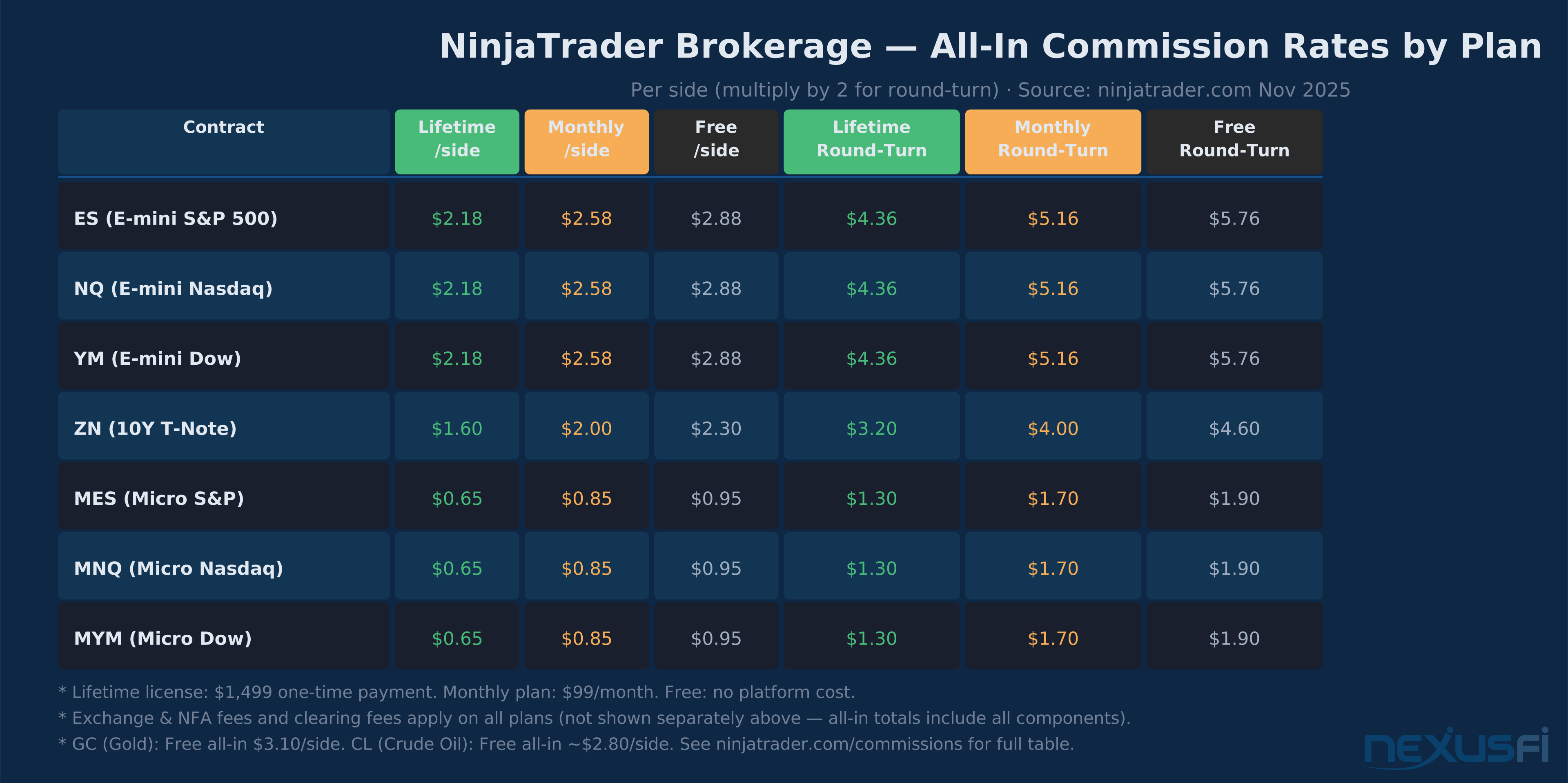
One thing @matthew28 flagged in a 2021 broker comparison thread: always confirm with NT directly whether a rate is quoted per side or round turn before you calculate your cost expectations. NT quotes per side — double the number for your actual round-turn cost.
True All-In Cost Per Round Turn #
The commission is only one piece of what you're actually paying. The true all-in cost includes five components:
- Commission — varies by plan and contract type
- Clearing fee — $0.19/contract, charged by NT's clearing firm
- Order routing — $0.25/contract for Rithmic (default)
- Exchange fee — set by CME/NYMEX/CBOT; typically $0.02-$0.05/contract for most retail futures
- NFA fee — $0.02/contract, regulatory assessment
For an ES standard contract, here's the actual all-in per round turn under each plan:
ES round-turn cost (all-in):
- Free plan: ~$3.46 (($1.29 + $0.19 + $0.25 + $0.02) x 2)
- Monthly plan: ~$2.90 (plus $99/month fixed overhead)
- Lifetime plan: ~$2.10 (($0.59 + $0.19 + $0.25 + $0.02) x 2)
MES round-turn cost (all-in):
- Free plan: ~$1.70
- Monthly plan: ~$1.50 (plus $99/month fixed overhead)
- Lifetime plan: ~$1.10
Those MES numbers were lower in 2019 when @researcher247 posted in a NexusFi trading journal that "a micro w/Ninja lifetime license is .82 cents per roundturn" — fees have increased since then, but the Lifetime plan still delivers the lowest per-trade cost structure available through NT.
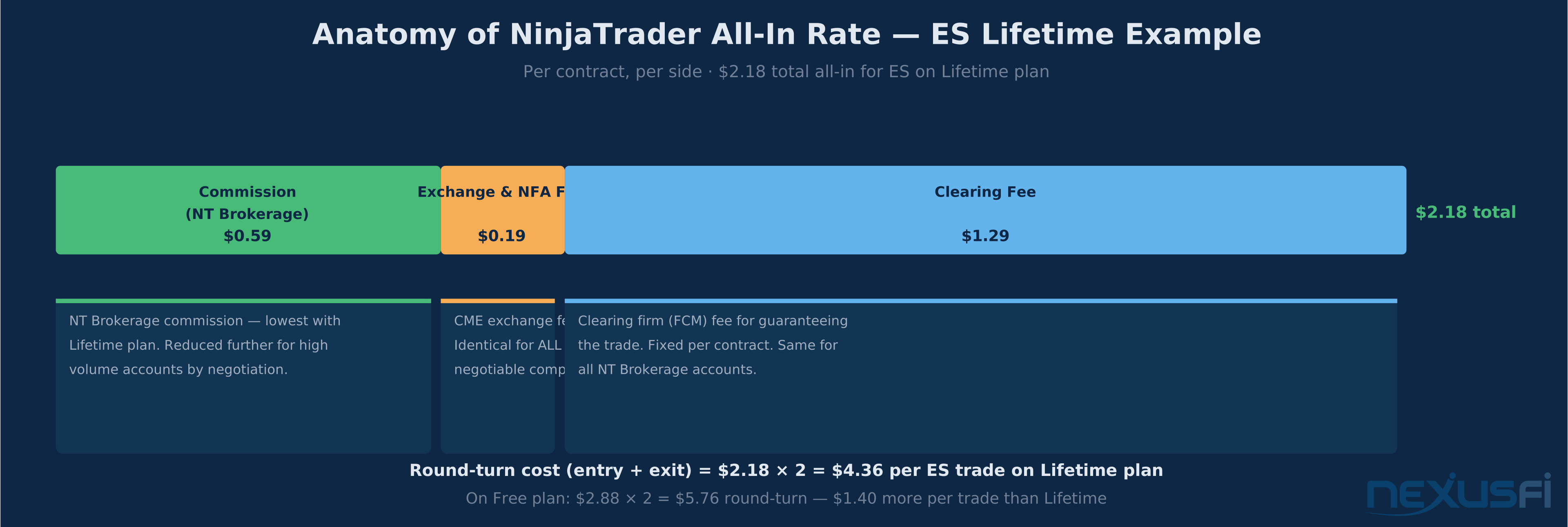
The image below breaks down where each dollar goes for a standard ES round turn on the Free plan.
The data fee question: CME market data is $12/month for the Level I bundle covering all four CME exchanges (CME, CBOT, NYMEX, COMEX), or $4/month per exchange. Full depth (Level II) is $48/month for the full bundle. If you're trading without a data subscription, you're working off delayed data — which is technically legal for trading but a serious handicap for anything requiring real-time decision making. Budget the data cost into your monthly overhead.
Breaking Down Every Fee Component #
Understanding what each fee component is and who controls it matters for broker comparison.
Commission — This is NT's piece. It varies by plan and is the only component that changes when you upgrade from Free to Monthly to Lifetime. Everything else below is fixed regardless of plan.
Clearing fee ($0.19/contract) — NT Brokerage clears through its own clearing firm. This fee is charged by the clearing firm to process and guarantee the trade. It's per contract, not per round turn, so it applies on entry and exit separately. On a round turn: $0.38 total.
Order routing ($0.25/contract via Rithmic) — NT uses Rithmic as its default order routing infrastructure. This is the fee for transmitting your order to the exchange. Also per contract, so $0.50 per round turn on a single-lot trade.
Exchange fee — Set by CME Group and not negotiable. For most retail-volume contracts (ES, NQ, CL, GC), this is typically in the $0.02-$0.05 range per side. NT publishes these on their fees page — check it for your specific contract since they vary.
NFA fee ($0.02/contract) — The National Futures Association charges this regulatory assessment on every trade. Small but real; it adds up at scale.
What's not in the above: CQG Desktop users pay an additional $0.25/contract if they choose that routing option instead of Rithmic. Third-party integrations can add $0.05-$0.25/contract on top. If you're using any third-party routing or technology overlay, confirm the fee structure before assuming you're paying the standard rate.
Margin call fee: If your account falls below margin requirements and NT's desk liquidates a position, that's $50. First violation of the intraday margin policy costs $25; subsequent violations cost $50 each. These aren't hypothetical — at the margin levels NT offers, undercapitalized traders hit them regularly. Factor this into your risk management before sizing up.
Day Trading Margins: NT's Core Advantage #
Margin is where NT Brokerage genuinely stands out in the retail space.
For intraday day trading, NT requires only:
- $500 for ES (E-mini S&P 500)
- $500 for NQ (E-mini Nasdaq-100)
- $50 for MES (Micro E-mini S&P 500)
- $50 for MNQ (Micro E-mini Nasdaq-100)
- $500 for CL (Crude Oil WTI)
- $500 for GC (Gold futures)
- $500 for ZB (30-Year Treasury Bond)
These are intraday margins, effective from the product open until 15 minutes before the session close. They represent the minimum your account must maintain per contract while the position is open during normal trading hours.
The image below shows NT's full intraday margin table.
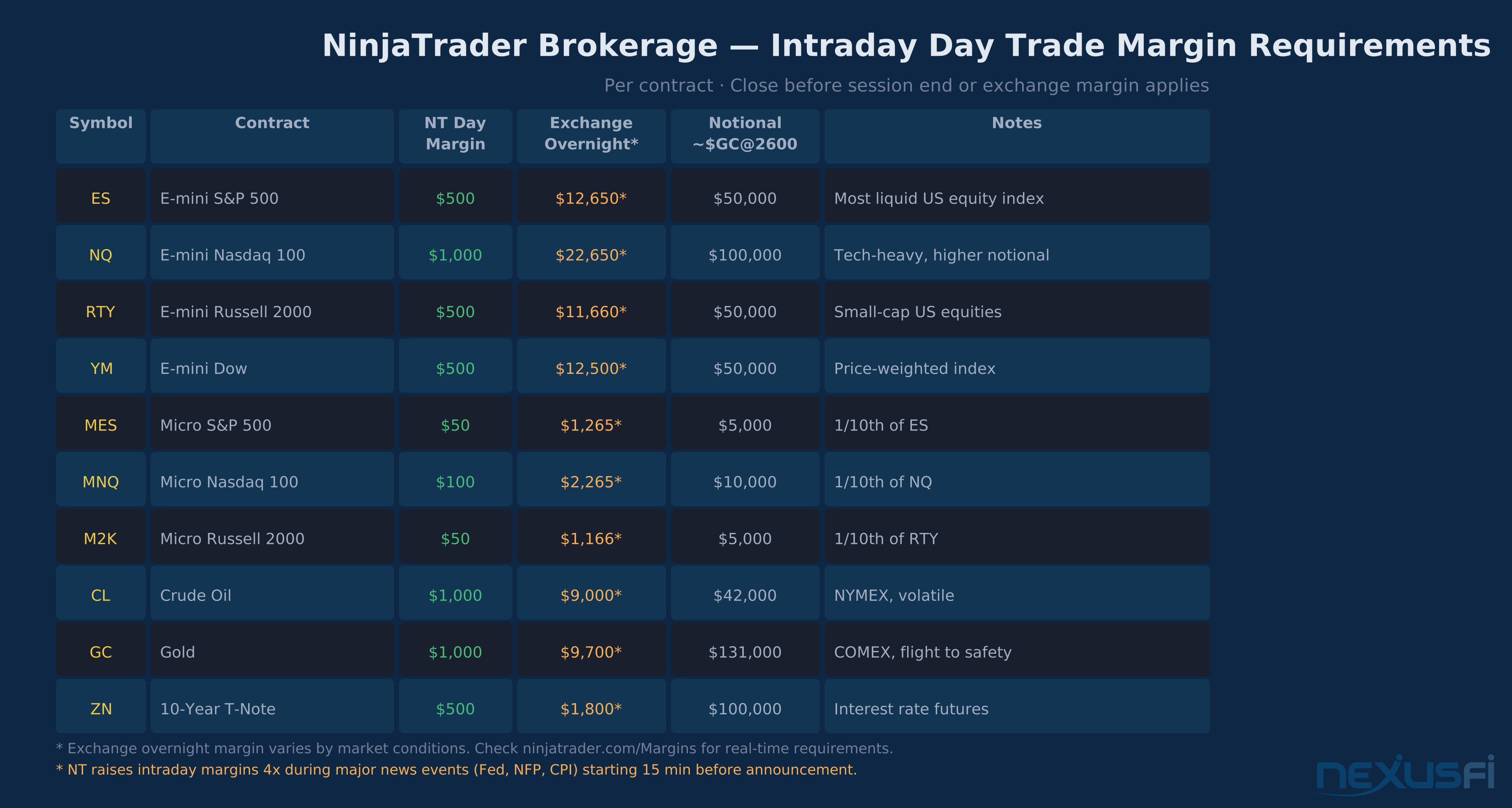
The low intraday margin is NT's competitive choice, not an exchange requirement — and it ends at session close.
Compare this to Interactive Brokers, which typically requires $1,000-$2,500 for an ES intraday position depending on their margin model. The difference isn't trivial — at $500 per ES contract, a $10,000 account can theoretically hold 20 contracts intraday. Whether that's wise is a different question entirely, which we address in the Leverage Trap section.
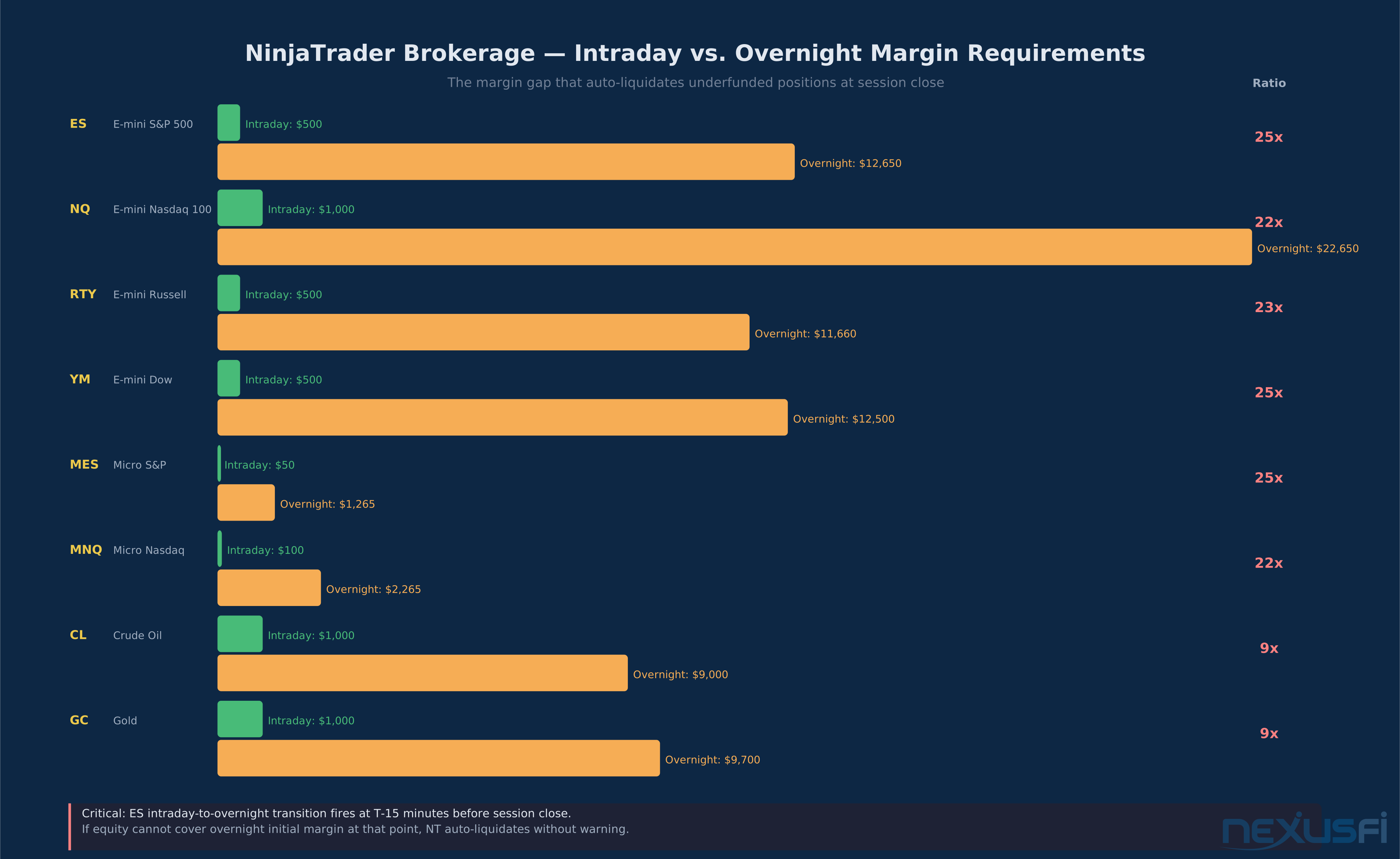
Intraday margins at NT apply from market open to 15 minutes before the session close. At that point, the position must meet initial margin — the exchange-set overnight requirement, which is substantially higher. If your account can't cover initial margin at T-15, NT's automated risk system will auto-liquidate the position. This happens every session, consistently, without warning beyond the automated email notification.
— margin requirements are publicly posted, not hidden, and comparison shopping takes 30 minutes.
Overnight Margin: What Changes at the Close #
Most traders running NT Brokerage trade intraday and never hold overnight. For those who do, the margin requirements are very different.
Overnight (Initial) Margin is set by the exchange via SPAN methodology, not by NT. For ES, overnight initial margin typically runs $7,000-$12,000 per contract depending on volatility. NQ is higher. CL moves with crude volatility. These are the actual exchange-set requirements for holding a position into the next session.
If you hold overnight:
- Your position must meet initial margin 15 minutes before the session close
- After the session reopens, maintenance margin applies — slightly lower than initial margin
- If your equity drops below maintenance during the overnight session, you'll receive a margin call
NT's risk desk monitors positions in real time. They don't wait for end-of-day reconciliation. If you're in a position when overnight margin kicks in and you're short on equity, the auto-liquidation runs immediately.
The T-15 Rule in Practice: With an ES intraday margin of $500 but an overnight requirement of $12,650, a $2,000 account trading 1 ES contract must close by 15 minutes before the session end or face auto-liquidation. The position hits the exchange-required margin check at that exact moment — not at close, not at settlement.
For traders using NT primarily for intraday scalping and swing trading within a session, this is largely academic. But if you're trading an approach that benefits from holding through overnight price gaps — economic reports, earnings, geopolitical events — you need to fully fund for the exchange overnight requirement before entering those positions.
The chart below shows the intraday vs. overnight margin gap for each major contract — the jump that auto-liquidates underfunded positions at session close.
See Day Trading Margins and Intraday Margin Policies for a full treatment of how intraday margin policies work across the industry, and SPAN Margin Mechanics for how exchanges calculate the overnight requirement that NT and every other broker must honor.
The Lifetime License Math #
The $1,499 Lifetime license is the most discussed purchasing decision for active NT traders. Here's how to actually analyze it.
Lifetime vs. Free Plan — ES standard contracts:
- Savings per round turn: ($1.29 - $0.59) x 2 = $1.40/round turn
- Break-even point: $1,499 / $1.40 = 1,071 ES round turns
- At 10 round turns/day: break-even in 107 trading sessions (~5 months)
- At 20 round turns/day: break-even in 54 trading sessions (~2.5 months)
- At 50 round turns/day: break-even in 21 trading sessions (~1 month)
Lifetime vs. Monthly Plan — ES standard contracts:
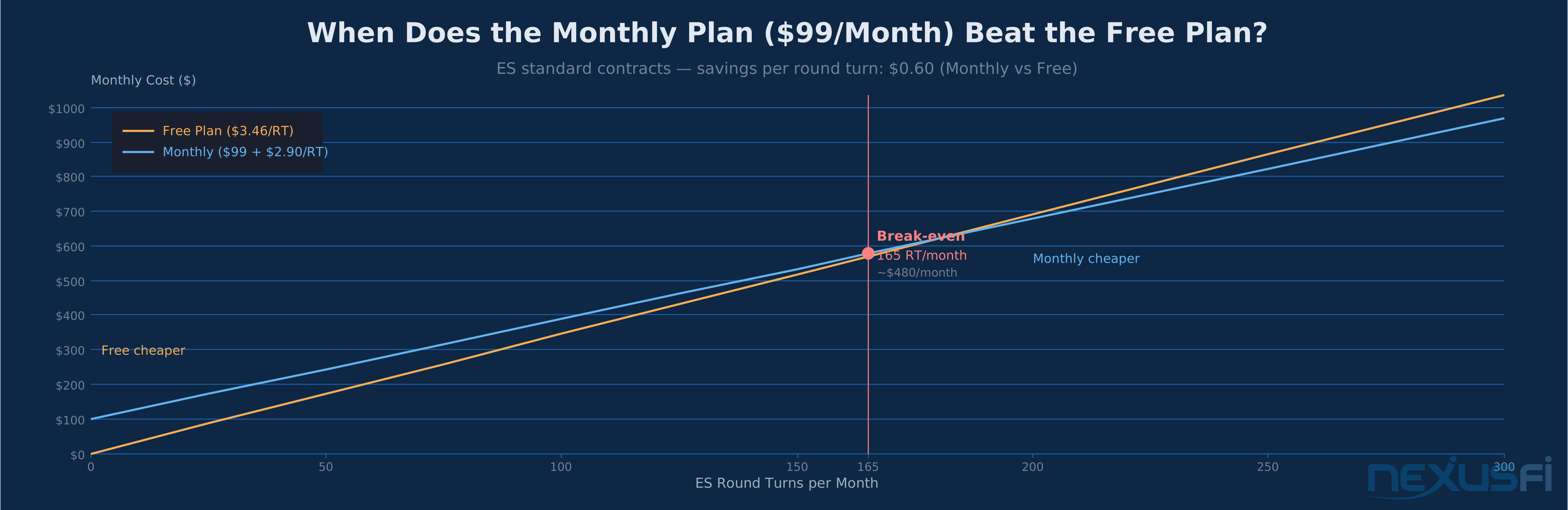
- Monthly plan saves per round turn vs. Free: $0.60/round turn
- You'd need 165 round turns/month to break even on the $99 Monthly fee vs. Free
- Lifetime vs. Monthly savings per round turn: $0.80/round turn
For micro contracts (MES):
- Lifetime vs. Free savings per round turn: $0.60/round turn
- Break-even: $1,499 / $0.60 = 2,498 MES round turns
- At 50 MES round turns/day: break-even in 50 trading sessions (~2.5 months)
The break-even analysis chart below shows cumulative savings by daily volume.
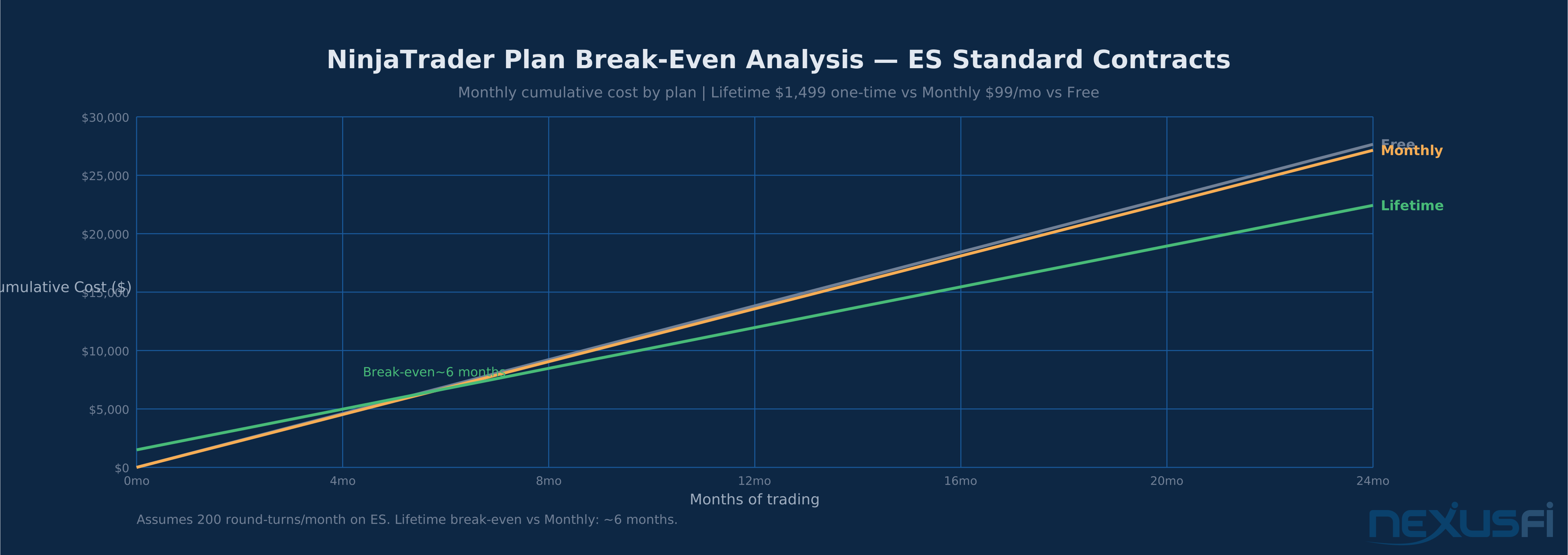
As noted in a 2026 NexusFi thread on NT promotions: "if you've been with NinjaTrader for more than a year, the lifetime math is not even close for active traders." That holds. The question is whether your current volume justifies paying $1,499 today versus accumulating credit over months of Monthly payments.
The four-installment option: NT allows the Lifetime payment in four installments, which lowers the cash-flow barrier without changing the economics. If you're volume-certain but capital-constrained, the installment route achieves the same outcome.
The chart below shows where the Monthly plan breaks even versus the Free plan, to help you choose the right starting tier.
Watch for discount opportunities: NT Brokerage periodically offers discounted Lifetime pricing for NexusFi Elite members and during promotional windows. NexusFi members have historically received better pricing than the standard $1,499 rate. Check the NinjaTrader subforum for current offers before paying full price.
NexusFi Elite Discount: NT Brokerage has historically offered special Lifetime license pricing to NexusFi Elite members. Before paying the standard rate, check the NinjaTrader subforum for current promotions. The Lifetime math changes much if you can acquire it at a discount.
Economic News Windows and the 4X Margin Rule #
This is the margin policy that catches traders off guard, and it's worth understanding precisely.
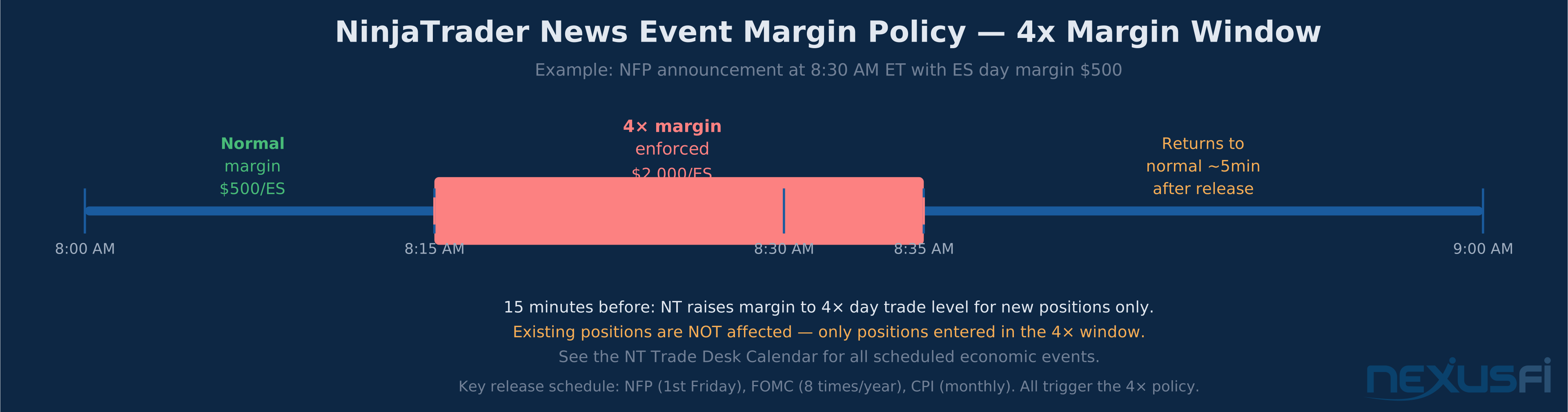
NT raises intraday margin requirements to 4 times the standard rate starting at least 15 minutes before major economic news announcements. The elevated requirement applies to new position entries only — existing positions already on are not forced to post additional margin immediately, but if you want to add to a position during the window, you need the 4X capital.
Examples of what this means in practice:
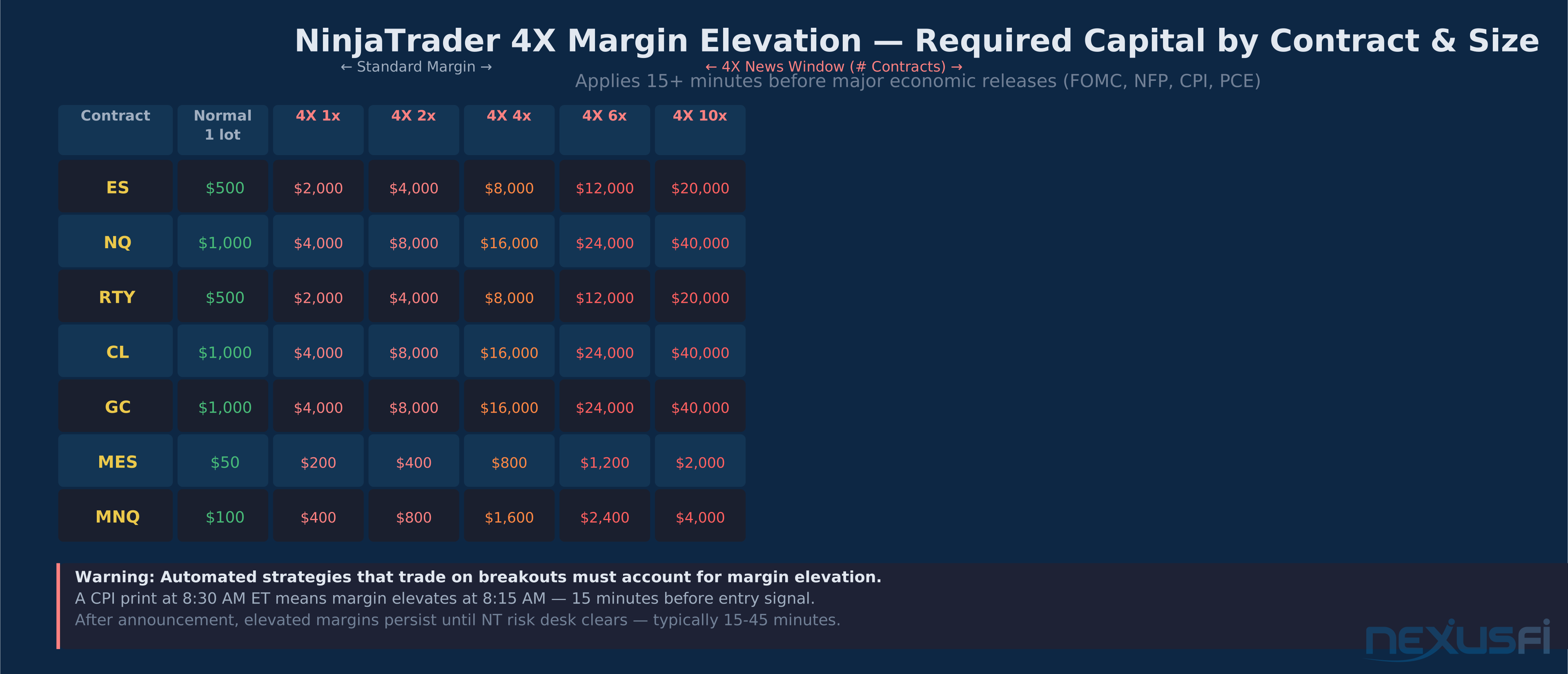
- ES intraday margin: $500 standard — $2,000 during news windows
- MES intraday margin: $50 standard — $200 during news windows
- NQ intraday margin: $500 standard — $2,000 during news windows
The announcements that trigger elevated margins include: Federal Reserve meeting decisions, FOMC minutes, NFP (Non-Farm Payroll), CPI, core PCE, and other scheduled economic releases NT designates in your account dashboard. The list is published in advance.
The discretionary return timeline is the key variable — it's not automated.
After the announcement, elevated margins remain in place until NT's risk team determines that volatility has settled to a manageable level. That's discretionary — it typically resolves within 15-45 minutes of the release, but there's no automated timer. In extreme volatility events (surprise Fed decisions, major geopolitical breaks), elevated margins can persist for hours.
The image below shows the timing structure of NT's news window margin policy.
Practical implications:
- If you intentionally trade news events, your position sizing is constrained during the window. At 4X, a 5-contract ES news trade requires $10,000 in margin versus $2,500 outside the window.
- If you run automated strategies that might execute during an announcement, make sure your account has sufficient margin headroom. An automated strategy that enters on a breakout without knowing a news window just opened can get filled into a 4X margin requirement.
- The 4X window starts 15 minutes before the announcement. CPI prints at 8:30 AM ET — elevated margin kicks in at 8:15 AM.
The table below shows required margin across contracts and position sizes during a 4X elevation window.
NinjaTrader and Tradovate: One Brokerage, Two Interfaces #
This is a structural change that most traders who haven't revisited their broker research recently don't know about.
NinjaTrader acquired Tradovate. The two platforms now share the same brokerage infrastructure — identical pricing tiers, same order routing, same clearing, same account. Your NinjaTrader login credentials work on Tradovate. Your Tradovate credentials work on NinjaTrader. The account is unified.
Why both still exist: They serve different trader types.
NinjaTrader Desktop is a power platform built for serious technical traders who want advanced charting, footprint charts, volume profile analysis, the SuperDOM for fast order entry, NinjaScript automation, and access to the massive NT ecosystem of third-party indicators and add-ons. It runs on Windows. It requires local installation. The configuration depth is significant.
Tradovate is a cloud-first platform built for accessibility. Web browser, iOS, Android. Modern interface. Direct TradingView integration for chart-based traders. Lower complexity, faster onboarding. The same commission rates as NT because it's the same brokerage account.
The diagram below shows how both front-ends connect to the same clearing infrastructure.
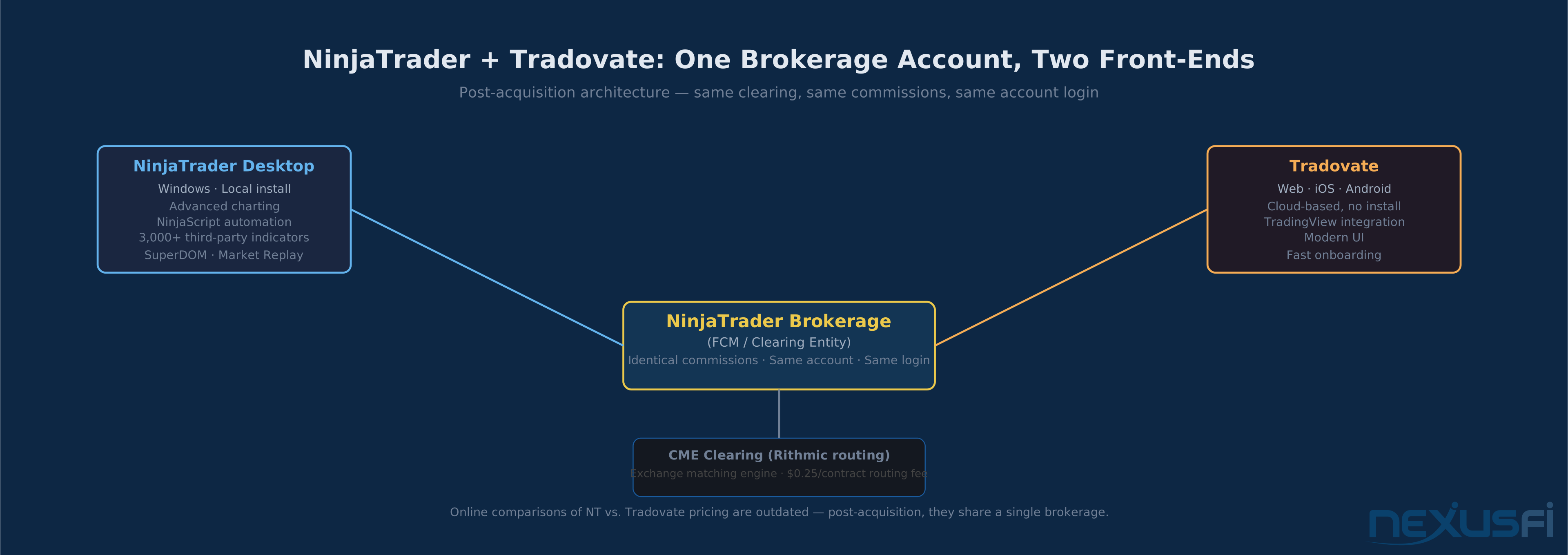
The practical implication: If you're deciding between NT Brokerage and Tradovate as brokerages, there's no longer a decision to make. They're the same entity. The choice is which front-end interface fits your workflow better.
Comparisons you'll find online between "NT vs. Tradovate" on pricing are outdated. Post-acquisition, the pricing is identical and the debate is purely about platform UI.
How NT Compares to the Competition #
The major alternatives in the retail futures space alongside NT Brokerage: Interactive Brokers, AMP Futures, Tradier Futures, and discount-focused options like MetroTrade.
Interactive Brokers (IBKR) IBKR's commission structure for futures gets competitive at higher volume. For ES, you're typically at $0.65-$0.85/side — higher than NT Lifetime but in the same range as NT Monthly. IBKR's intraday margins are higher than NT's, typically requiring $1,000-$2,500 for ES intraday. The institutional infrastructure is unmatched — global market access, portfolio margining, the full spectrum of futures markets worldwide. For traders with diversified portfolios (futures, equities, options, fixed income), IBKR's multi-asset margining can actually reduce your total margin requirement. See Cross-Margining and Portfolio Margining for how that works.
AMP Futures The traditional "cheapest fees" competitor for high-volume retail traders. AMP routes through multiple platforms including NT8 itself — you can run NT software with AMP as your broker, which some traders prefer for keeping platform and brokerage costs separate.
Tradier Futures Active NexusFi sponsor. Their commission structure for futures is worth comparing directly, especially for traders who want transparent, simplified pricing.
MetroTrade MetroTrade runs a single-tier commission at $0.29/side for micros — which competes with NT Monthly but without the monthly fee. For micro-focused traders who don't want the upfront Lifetime investment, MetroTrade can deliver comparable or better per-trade economics depending on volume.
The broker comparison chart below puts the key dimensions side by side.
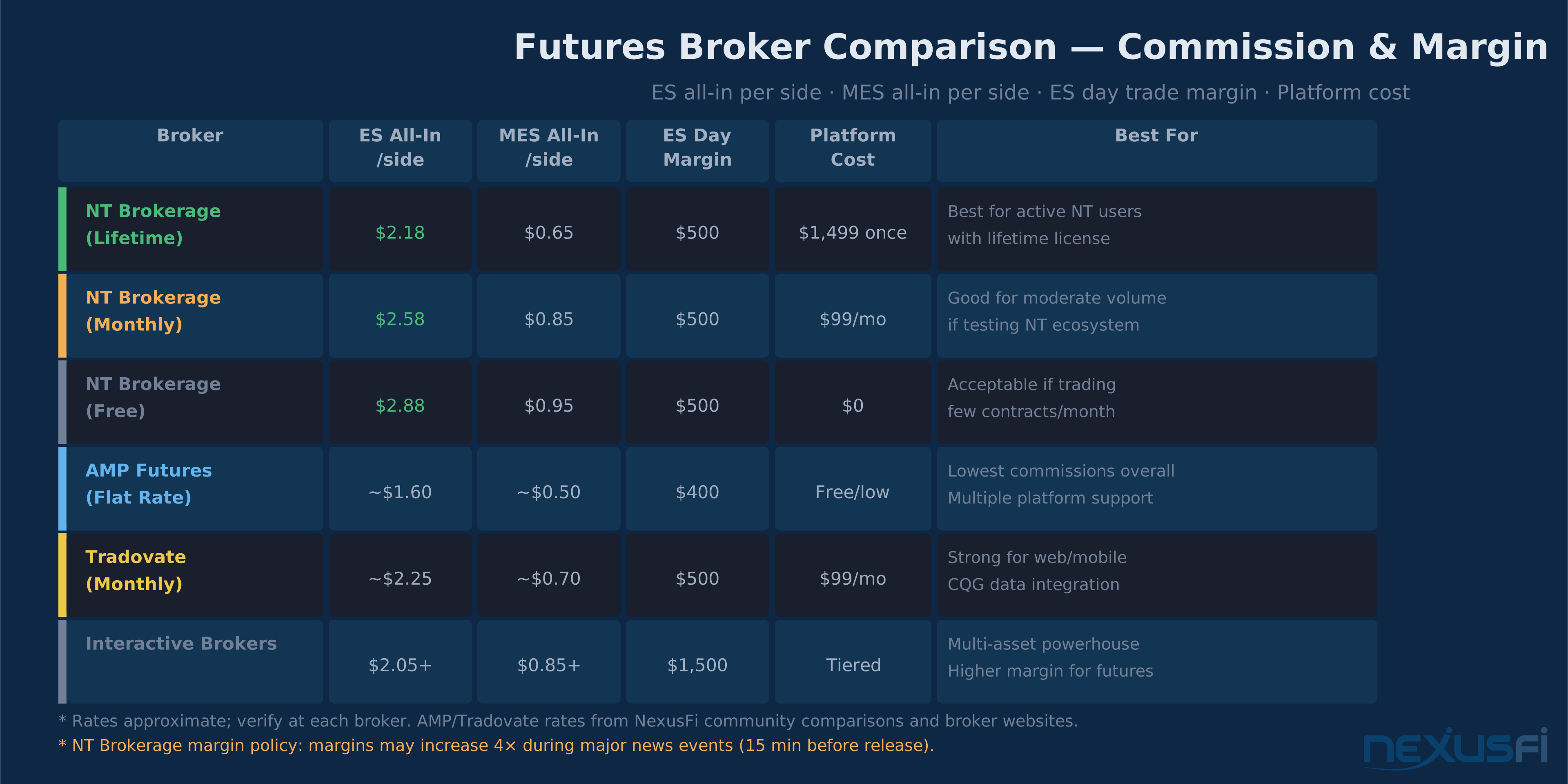
When comparing, always normalize to round-turn all-in cost — commission x 2, plus clearing, routing, and exchange fees. @bobwest pointed out in a 2019 NexusFi discussion that "I don't think any broker is offering 2.00 or sub-2.00 round turn all in fees for ES" — NT Lifetime at ~$2.10 all-in is as close as retail gets.
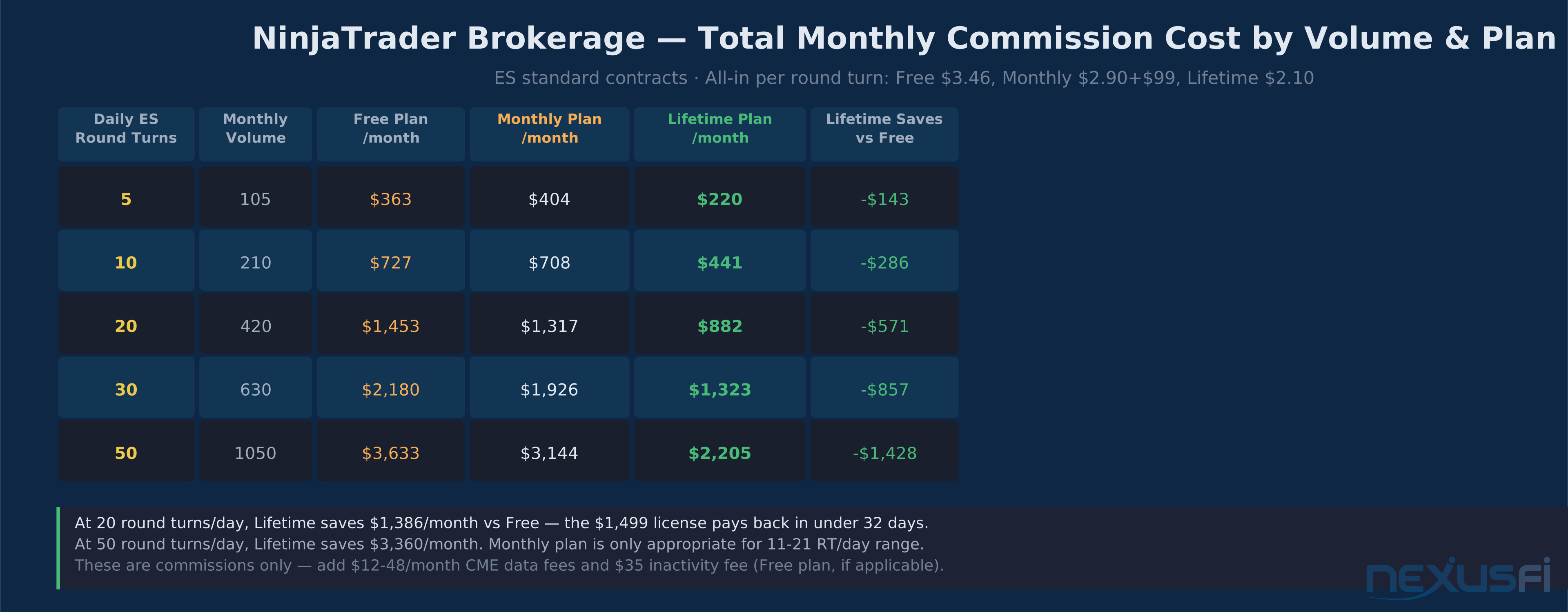
The table below shows what different volume levels actually cost each month under each NT plan — the numbers that matter for choosing between Free, Monthly, and Lifetime.
See How to Choose a Futures Broker and the Futures Broker Evaluation Framework for structured methodology on broker selection beyond just commission comparison.
The Leverage Trap: Why Low Margins Cut Both Ways #
NT's $500 intraday margin for ES is a genuine competitive advantage. It's also the mechanism through which undercapitalized traders destroy accounts at frightening speed.
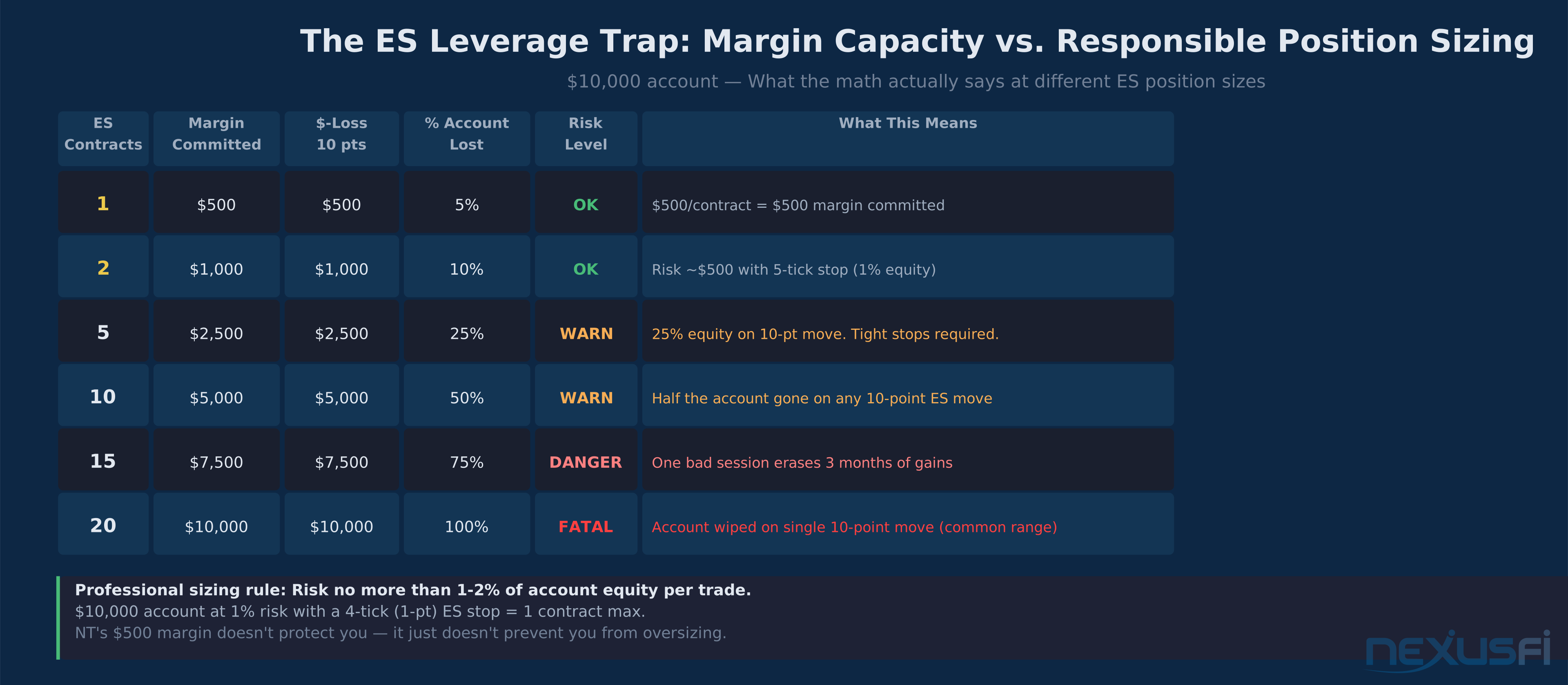
The math of the risk is straightforward. ES moves $50 per point, $12.50 per tick. With $500 margin, you can hold one ES contract. If the market moves 10 points against you in a session — a routine daily range for ES — that's $500 in losses. You've just lost your entire margin in one bad session on a single contract.
At $500 margin, a $5,000 account can theoretically hold 10 contracts intraday. Ten contracts moving 10 points against you is $5,000. Account gone.
This isn't hypothetical. It's the mechanism behind most retail futures account blowups. The broker's margin isn't a risk control — it's a technical minimum to hold the position. Your actual risk control is your stop loss, position sizing, and daily loss limits.
A reasonable rule from professional risk management: risk no more than 1-2% of total account equity on any single trade. That puts appropriate position sizing dramatically below what NT's $500 margin technically permits.
Practical sizing guidance:
- $10,000 account, 2% risk per trade, 4-tick stop on ES: max 1-2 contracts
- $25,000 account, 1% risk, 8-tick stop: max 3-4 contracts
- $100,000 account, 1% risk, 10-tick stop: max 8-10 contracts
NT's margin system doesn't protect you from oversizing. It just doesn't prevent you from doing it. The low margin is a tool — for experienced traders who want capital efficiency, it's valuable. For new traders who don't fully understand leverage, it's dangerous.
The table below shows exactly what happens at different ES position sizes on a single 10-point adverse move.
See Margin Calls and Forced Liquidation for what actually happens when you breach margin and how to avoid the $25/$50 violation fees. See Futures Margin Requirements for how margin requirements are set at the exchange level and what brokers can and cannot change.
Managing Costs and Margins in Practice #
A few operational considerations that matter once you're actually trading through NT Brokerage:
The chart below shows the full overhead picture for NT traders — fixed and semi-fixed costs that apply regardless of trading performance.
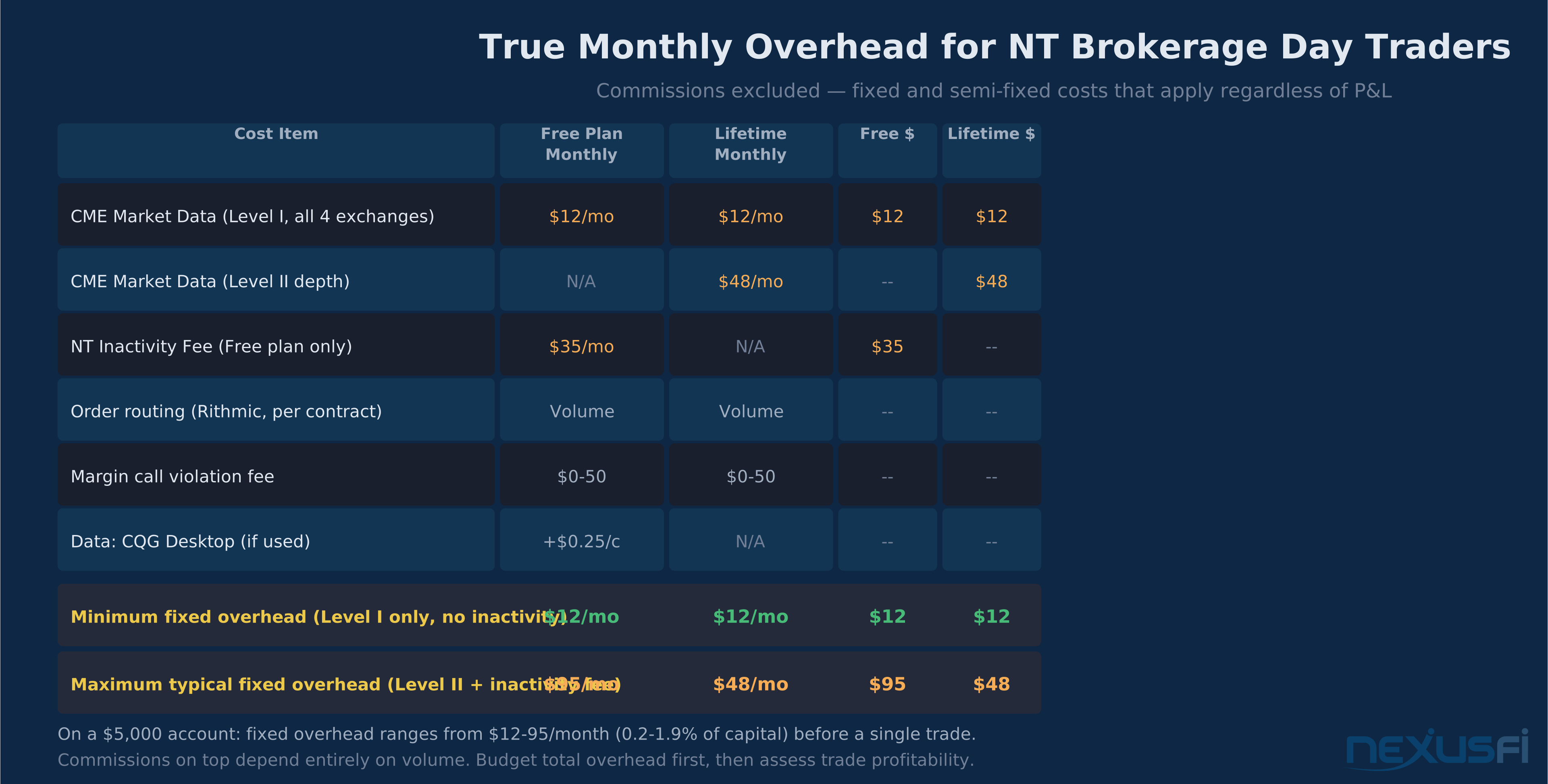
The inactivity fee: On the Free plan, if you have a funded live account but don't execute any trades for 30 days, NT charges $35. This applies even if you're only trading in simulation. The rule is specifically about live trades. If you're using NT for paper trading while building your strategy, either close your live account or accept the $35 as an operating cost while you develop.
Inactivity Fee Trap: The $35/month inactivity fee applies to funded live accounts with zero trades — including months where you only sim trade. Close your live account before an extended simulation period, or you'll see $35/month quietly leaving your account.
Margin headroom: Don't run right at the margin floor. If your trading plan includes holding through news events where NT elevates margins to 4X, make sure your account has the full 4X amount available before entering. An automated strategy that doesn't account for margin elevation will get rejected or liquidated at the worst moment.
Data costs: Factor $12/month (Level I bundle) or $48/month (Level II) into your total overhead before calculating whether you're profitable net of costs. Many traders improve their commission structure while ignoring data costs. On a $5,000 account, $60/month in combined data and overhead represents a meaningful percentage of your operating buffer.
Position limit and delivery rules: NT prohibits trading in physically deliverable futures contracts in the period leading up to the last trade date. If you're in CL, GC, or agricultural futures, know your expiration dates. NT will auto-liquidate positions that don't roll in time, with associated fees.
Order routing choice: The default Rithmic routing at $0.25/contract is the standard path. CQG Desktop is available for an additional $0.25/contract. If you're using third-party order flow tools with specialized routing, confirm what the fee adds up to — it can be $0.05-$0.25 on top, which matters at scale.
Break-even reality check: Before committing to the Lifetime license, run your actual trading volume through the break-even calculation. NT's platform makes it easy to generate trade history reports. Take your last three months of actual round turns, not your volume target, and calculate what your real break-even date would be.
See Futures Order Routing and Execution Quality for a full analysis of what routing choice actually means for fill quality beyond just cost.
Knowledge Map
Go Deeper
Build on this knowledgeReferences This Article
Articles that build on this topicCitations
- — Micro E-mini Madness (1% per day) (2019) 👍 3“I don't think any broker is offering 2.00 or sub-2.00 round turn all in fees for ES.”
- — Micro E-mini Madness (1% per day) (2019) 👍 2“a micro w/Ninja lifetime license is .82cents per roundturn”
- — Brokers vs Direct (2023) 👍 1“I found this list of commissions and fees for NinjaTrader, to give you an idea”
- — NT8 vs Edgeclear for Jigsaw DOM trading? (2021) 👍 1“do confirm with them before signing up whether that rate is per side, or per round turn”
- — When do micros stop making sense? (2021) 👍 4“Just looking at Ninjatrader's most expensive round turn cost with the free platform, it is only $0.72 per side for MES.”
- — NinjaTrader holiday promotion (2026)“if you've been with NinjaTrader for more than a year, the lifetime math is not even close for active traders”
- — NinjaTrader Brokerage - Pricing Plans
- — NinjaTrader Brokerage - Account and Exchange Fees
- — NinjaTrader Brokerage - Margin Policy and Position Management
- — Ninjatrader Margin Update for Major Events & New Announcements (2022) 👍 3“Our intent is to have margins returned to standard intraday rates as soon as possible following the news event, but not until conditions are viable for intraday margins to resume.”
- — Why are NinjaTrader initial margins so low? (2022) 👍 3“Some are below $1,000. You would have to either close the trade or add to your margin to keep the position past the close because that's when you enter CME margin territory.”