



SPAN Margin Mechanics: How Futures Exchanges Calculate Your Performance Bond
Overview #
Every futures trader knows the drill: you want to put on a trade, you check the margin requirement, and you fund so. Most traders stop there. That's a mistake.
The number your broker shows you is the output of a sophisticated risk modeling system called SPAN — Standard Portfolio Analysis of Risk. Developed by CME Group in 1988, SPAN has since become the industry standard for futures and options margin calculation across virtually every major exchange worldwide. If you're trading ES, NQ, CL, or options on any of these, SPAN is setting your margin.
Understanding how SPAN works changes how you trade. It changes how you size positions, how you structure spreads, when you reduce risk before events, and why your margin can spike even when you think you're in a good trade. Traders who treat margin as a fixed number are playing blind. Traders who understand SPAN are managing a live risk variable.
This article covers SPAN mechanics from the ground up — what it's trying to do, how it calculates margin, why spreads cost less than outrights, what drives margin higher, and how to use this knowledge in your daily trading. The focus is futures and options on futures, with specific examples in ES, NQ, and CL.
What SPAN Is -- and What It Isn't #
SPAN is a performance bond margin system, not a pricing model. That distinction matters more than almost anything else in this article.
When you sell an ES option, Black-Scholes or some variant prices that option. SPAN doesn't care about fair value. SPAN asks one question: what is the worst reasonable loss this portfolio could sustain in one day? The answer to that question is your margin requirement.
This means SPAN is not sensitive to whether you're "in the money" on a trade, whether your P&L looks good today, or whether the market has been calm. SPAN is sensitive to what could happen — specifically, what the exchange believes could happen in a bad day based on historical price behavior and volatility patterns.
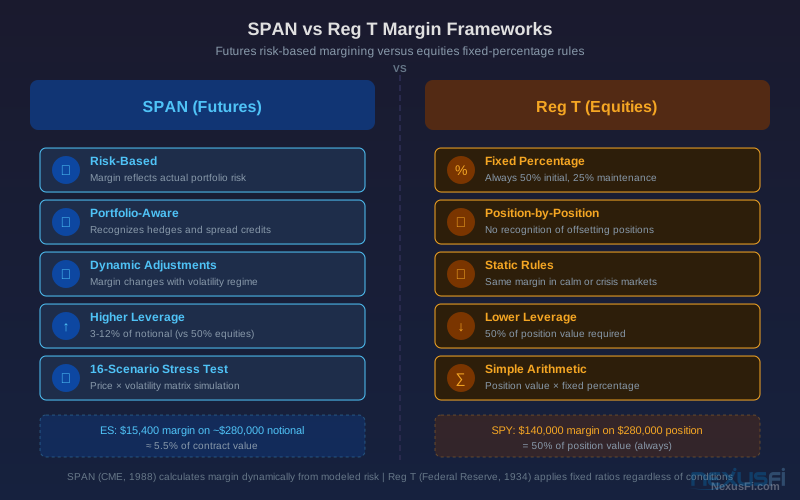
The other thing SPAN is not: a per-position calculation. This is the part that surprises most traders. SPAN evaluates your entire portfolio as a single risk object. Two positions that hedge each other produce less margin than the sum of their standalone requirements. This is portfolio margining in its purest form, and it's one of the most useful concepts in futures trading once you understand how to exploit it.
SPAN formalizes that relationship between volatility and margin into a systematic framework.
SPAN answers "What can I lose in a bad day?" not "What is my position worth today?" These are completely different questions, and confusing them leads to wrong position sizing and surprise margin calls.
The Risk Array: How SPAN Builds Its Scenarios #
The core of SPAN is the risk array — a grid of hypothetical market scenarios that the exchange applies to your portfolio to simulate losses under adverse conditions.
For each contract, the exchange defines a set of scenarios combining price moves with volatility shifts.
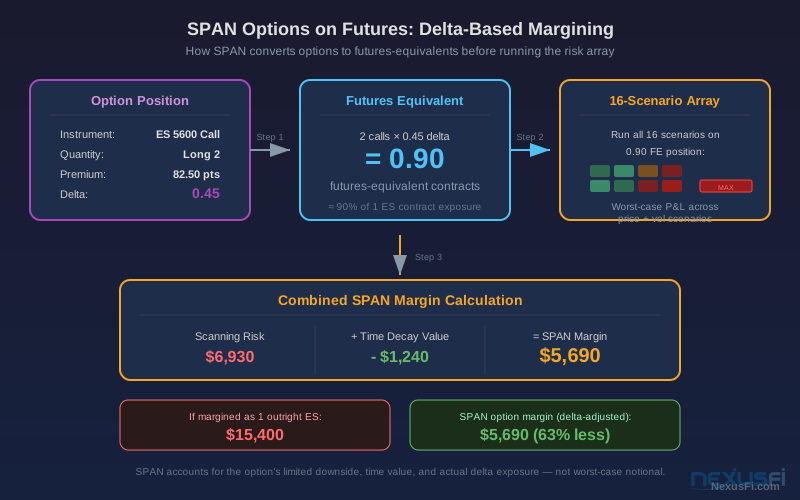
A typical equity index scenario grid evaluates price moves across several discrete steps in both directions, combined with volatility shifts both up and down. The exact parameters — how many scenarios, how large the price moves, how much the vol shifts — are exchange-defined, product-specific, and published by CME as SPAN parameter files. What doesn't vary is the logic: every position in your portfolio gets repriced under each scenario, and the system selects the largest adverse loss across all scenarios as the primary margin driver.
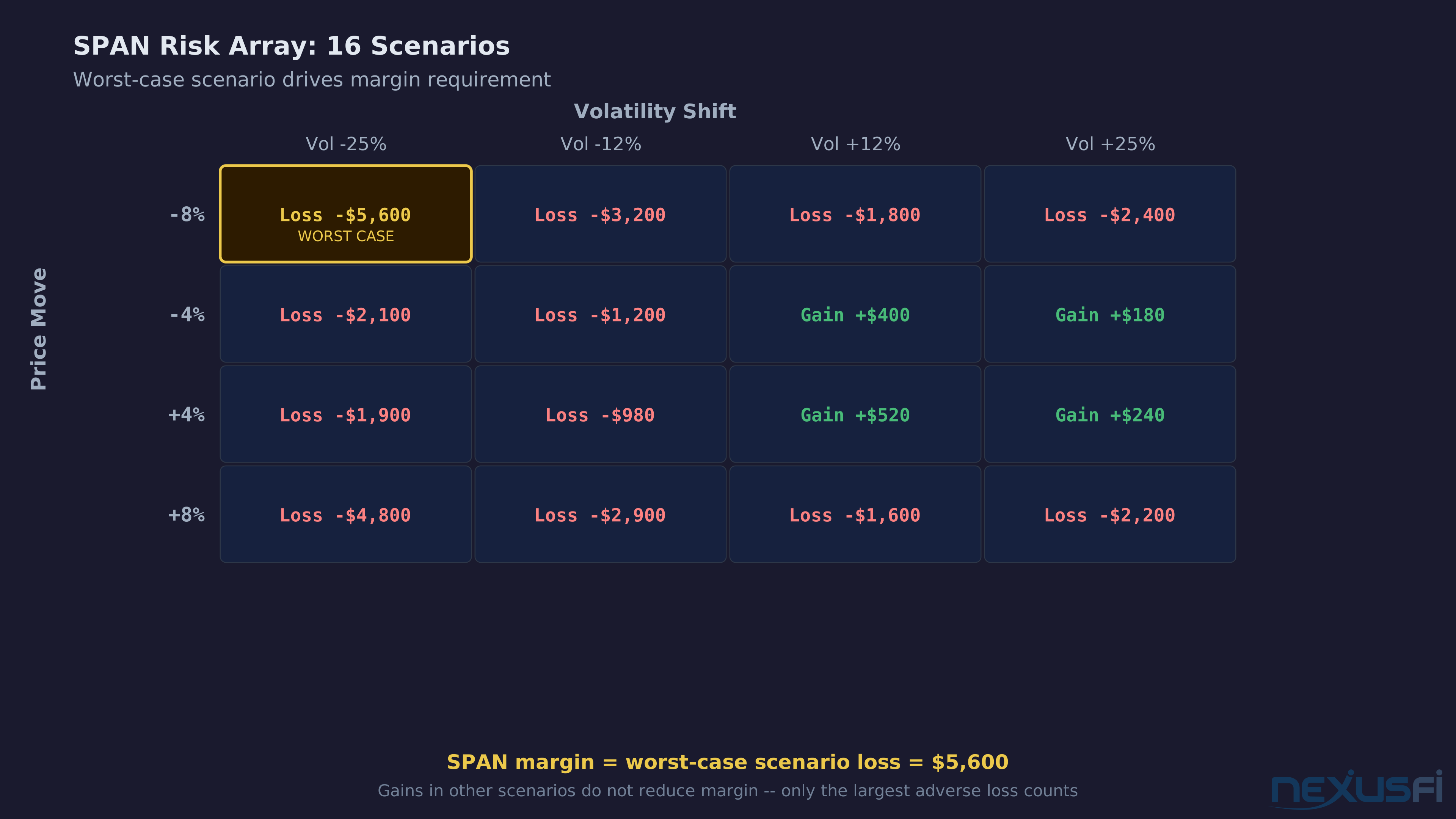
This has critical implications. Gains in favorable scenarios don't offset the margin. SPAN ignores scenarios where you make money. Only the worst case counts.
Consider a short ES put. In most scenarios — flat market, mild moves, even moderate rallies — the short put is fine or profiting. But in the scenario where ES drops 8% while VIX spikes 25%, that put goes from worthless to worth a lot, and the loss is large. That loss drives the margin, not the average of all scenarios.
CME publishes SPAN parameter files daily on their website. Free tools like PC-SPAN and community-built spreadsheet tools let you calculate exact margin requirements before you put on a trade. Experienced options sellers model their margin under multiple scenarios before entering positions.
Scenario Selection: The Worst Case Wins #
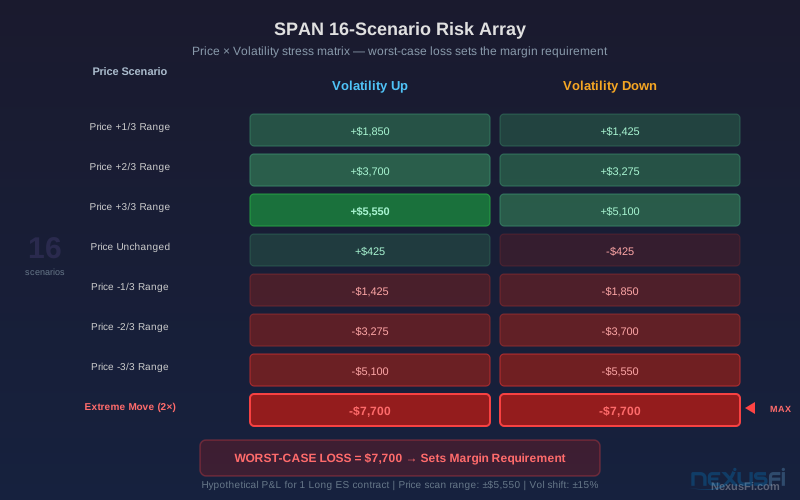
After SPAN runs your portfolio through every scenario, the selection logic is simple: find the maximum loss and use that as the margin number. Favorable scenarios are irrelevant.
Suppose a simplified ES options portfolio produces these results across scenarios:
- Scenario A: +$2,400 gain (market flat, vol drops)
- Scenario B: -$1,200 loss (small down move)
- Scenario C: -$5,600 loss (large down move, vol spike)
- Scenario D: +$800 gain (moderate rally)
- Scenario E: -$3,100 loss (large up move)
The SPAN scan risk is $5,600 — scenario C. The profits in scenarios A and D don't reduce it by a penny. SPAN is a worst-case selector, not an average-case calculator.
This explains something traders find counterintuitive: delta neutral doesn't mean margin neutral. A delta-neutral short strangle looks balanced — until SPAN finds the scenario where price gaps down 8% and volatility jumps 25%. The short put now has a large loss in that combined scenario, and that's what drives margin. The short call might be fine in the same scenario, but the put's loss is what SPAN picks up.
For options sellers, the most damaging SPAN scenarios are almost always the combination of a directional move against a short strike AND volatility expansion. A large, fast selloff while VIX rips is exactly the scenario that hammers short puts hardest — and that's the scenario SPAN is designed to capture.
Short premium strategies face a double danger in SPAN's scenarios: if you're short puts, your worst scenario is a big down move with vol expansion. If you're short calls, it's a big up move with vol expansion. Delta-neutral structures only partially protect you because vol expansion hurts both legs simultaneously, and one leg's loss typically dominates in the worst scenario.
Portfolio Aggregation: Where the Math Gets Interesting #
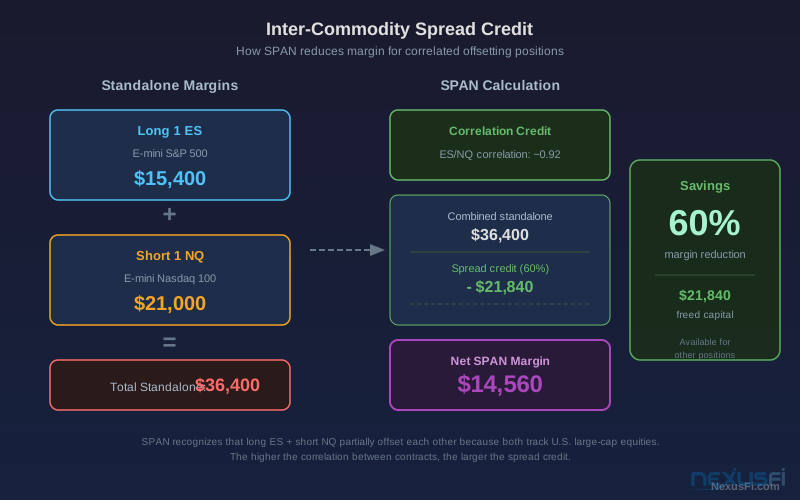
Here's where SPAN becomes a tool rather than just a constraint. Because SPAN evaluates your entire portfolio simultaneously, positions that offset each other produce less combined margin than their standalone requirements summed together.
The mechanism: when SPAN runs its scenario grid, the worst-case scenario for the combined portfolio is often less severe than the worst-case for either position alone. The scenario where a short put gets hammered (big down move) is often a scenario where a short call gains or loses less. The combined worst case is lower than either individual worst case.
For a short ES strangle — short a put and short a call — the net result is that many scenarios partially offset. In the big-down-move scenario, the short put loses badly but the short call profits from the move against it. In the big-up-move scenario, the short call loses badly but the short put is worthless. The combined worst case is lower than either leg's standalone worst case.
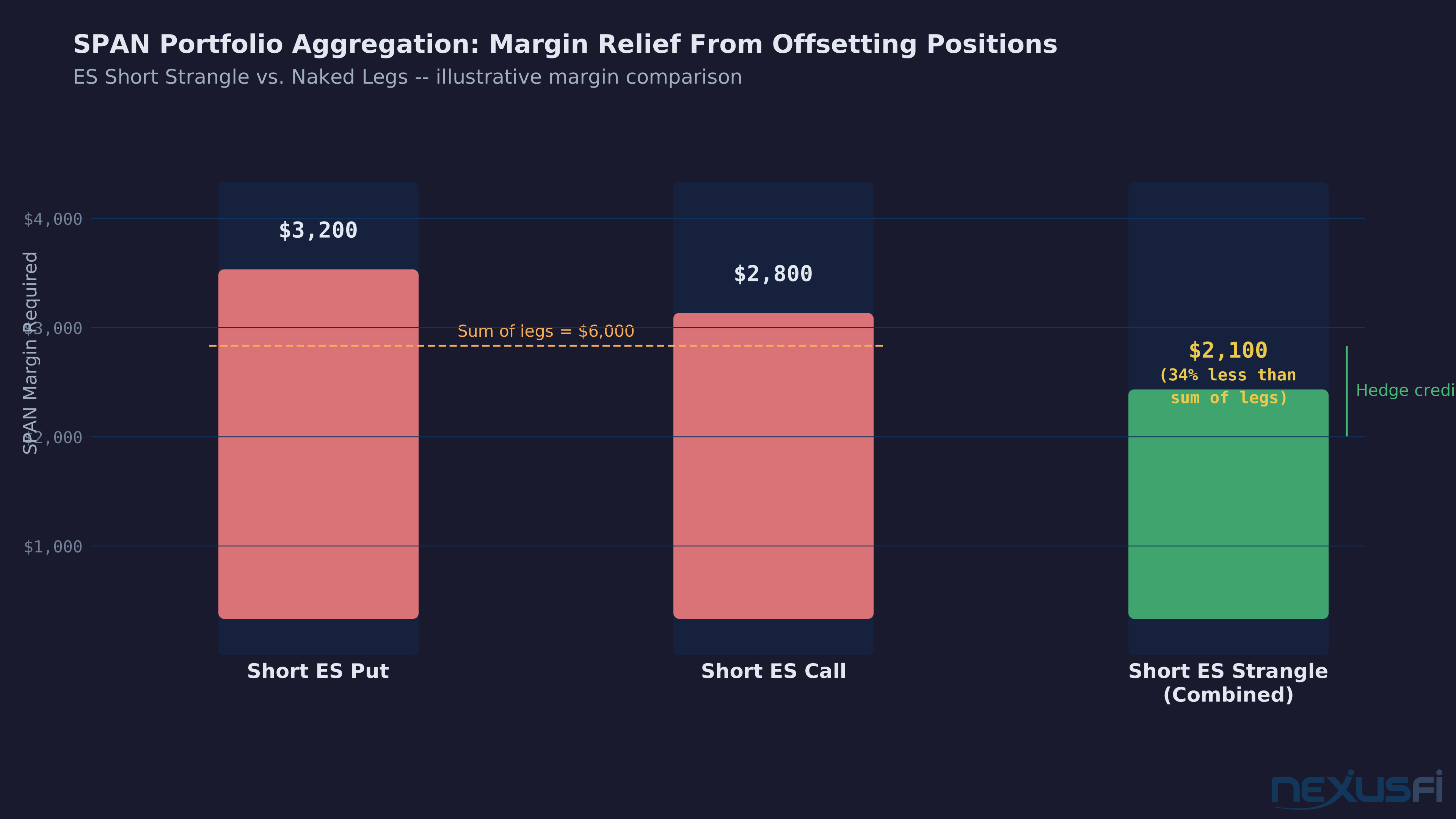
This portfolio netting logic applies broadly:
Short put + short call (strangle): Delta near zero means price-move scenarios partially offset. The combined margin is typically 60-70% of the sum of both legs' naked margins, depending on strikes and market conditions.
Short call + long futures: Upside scenarios are the dangerous ones for short calls. A long futures position gains in those same scenarios, partially offsetting the call's loss. SPAN recognizes this and reduces margin compared to a naked short call alone.
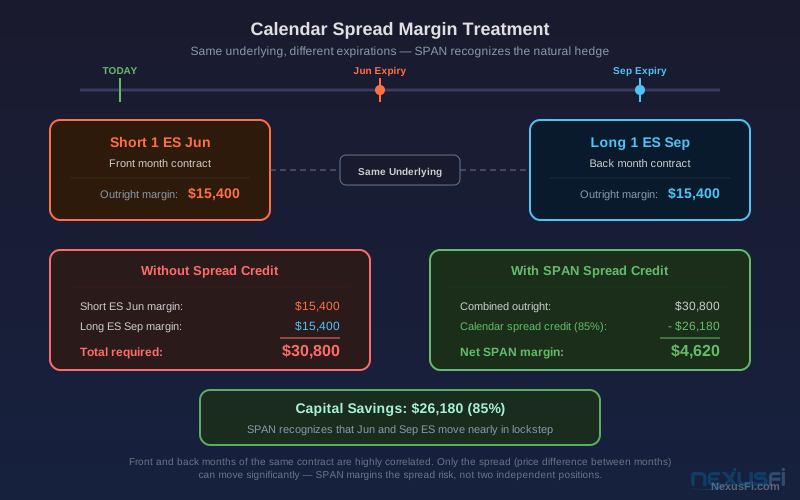
Calendar spreads: The two legs move together most of the time because the underlying is the same. SPAN grants spread credits reflecting the reduced risk of the combined position vs. two independent outrights.
The flip side is equally true. Adding correlated directional exposure — a second ES futures long to a portfolio already long ES — produces margin close to the sum of the two positions because both positions lose in the same down-move scenarios.
Calendar Spreads and Inter-Month Credits #
Futures traders running calendar spreads — long one delivery month, short another in the same underlying — get a significant margin advantage from SPAN. The exchange recognizes that adjacent delivery months in the same product are correlated, that a move in front-month CL almost always accompanies a similar move in next-month CL, and that the spread's net risk is far lower than two independent outright positions.
The result: instead of margining each leg as a standalone outright, SPAN applies a spread charge to the recognized calendar relationship. The spread charge is a fraction of the outright margin for each leg. For crude oil calendar spreads, for example, the total spread margin might be 80-90% less than the margin you'd pay for two independent outright positions.
This capital efficiency makes spread trading attractive beyond the directional risk reduction. You're expressing a curve view — "front month will outperform back month" or "the spread will widen" — with dramatically less capital tied up in margin.
The key requirement: the spread must be "recognized" by SPAN's parameter set. Adjacent months in the same product almost always qualify. Products with loose correlation often don't, or get only partial credit. CME defines the eligible spread relationships in their SPAN parameter files.
For traders rolling positions from one delivery month to the next, this is directly practical. During the roll window, you can establish the new month before closing the old — and the combined position should carry spread margin, not double outright margin. If your broker shows you double outright margin on a roll trade, the positions may not be recognized as a spread or your account structure may be preventing the netting.
When rolling futures positions — ES quarterly rolls, CL monthly rolls, NQ calendar rolls — always verify whether your broker is applying spread margin to the combined old-month/new-month position. Spread margin should be substantially lower than two outrights. If you're seeing doubled margin during the roll, it's worth calling your broker to confirm the netting is being applied correctly.
Add-Ons: Why Final Margin Exceeds Pure SPAN #
The SPAN scan risk — that worst-case scenario loss — is not the number you'll see on your broker's margin report. Final margin is higher. This is where traders get surprised.
Final margin = SPAN scan risk + exchange-defined add-ons + broker house margin adjustments.
Understanding each layer is essential:
Short option minimum: Exchanges impose a minimum margin floor on short options regardless of how far out-of-the-money they are. A way-OTM short put might calculate a modest SPAN scan risk because the worst scenario loss is small. But the exchange still requires a minimum performance bond for any short options position. This prevents margin from approaching zero on very small-delta shorts.
Delivery and spot charges: For futures contracts approaching final settlement or physical delivery, exchanges add a delivery charge that has nothing to do with the scenario grid. If you're holding short CL futures into the front month as delivery approaches, expect a meaningful margin jump from this component.
Intra-commodity spread charges: Even when SPAN grants spread credits to calendar positions, there's usually still a small charge for the spread relationship itself. The two-leg spread gets better margin than two outrights, but not zero margin.
Broker house margin: Your FCM may require more margin than the exchange minimum. House margin requirements differ between brokers, can vary based on your account history and capital level, and are a major reason why "exchange minimum" and "what your broker charges" are different numbers.
Never assume the margin number on your broker's platform equals the CME exchange minimum. Most brokers layer house margin on top of exchange requirements. The displayed number may be 20-50% higher than exchange minimums, especially for smaller accounts or volatile products. Before comparing brokers on "low margin," get the total required margin including house add-ons — not just the advertised headline number.
What Drives Margin Changes #
This is where most traders get blindsided. They put on a trade, fund the margin, and assume the number will hold. It won't. SPAN margin is a live variable with six independent drivers.
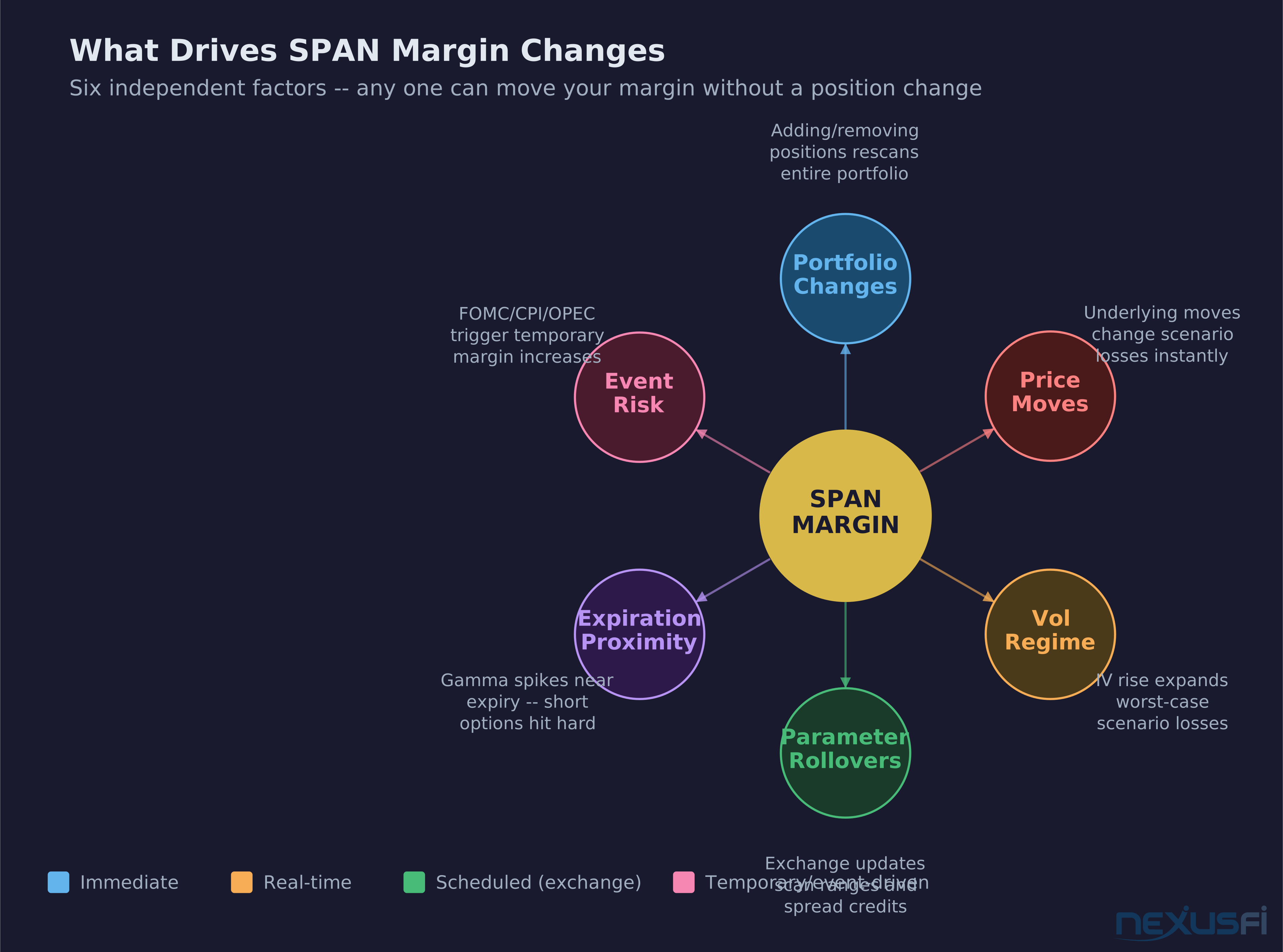
1. Portfolio changes: Adding or removing any position triggers a full portfolio rescan. The worst scenario for your combined portfolio may shift, sometimes increasing margin on your existing positions as a result of adding a new one.
2. Underlying price moves: As the market moves, scenario losses in SPAN's grid change. Options move closer to or further from their strikes. A short put that was comfortably OTM now has a much larger worst-case scenario loss as price approaches the strike. This happens in real time and can shift margin requirements even during a trading session.
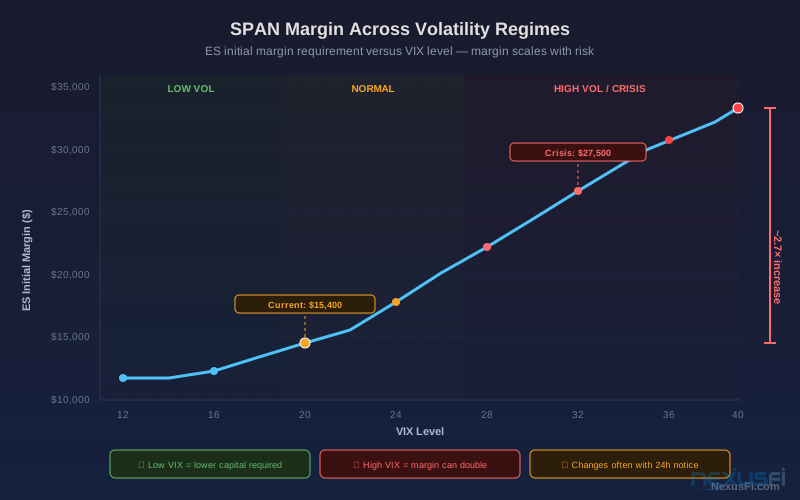
3. Volatility regime shifts: For options portfolios, this is the most treacherous driver. When implied volatility rises, the scenario grid's option repricing shows larger losses in adverse scenarios — even without any move in the underlying. A short straddle with comfortable margin at VIX 14 looks very different at VIX 22. Exchanges also periodically update SPAN parameter files to reflect current vol regimes, which can move margins overnight without any change in the market.
4. Risk-parameter rollovers: CME and other exchanges review SPAN parameters on a regular schedule — quarterly reviews, plus emergency updates when conditions warrant. These can change scan ranges, spread credits, short option minimums, and other parameters that directly affect margin. A parameter update can change your margin requirements overnight without any position or market change.
5. Expiration proximity: As options approach expiration, gamma spikes. Small price moves now produce large P&L swings. SPAN may increase margin for near-expiration short options even if they're still OTM, because the worst-case scenario loss in the final days can be severe. Options sellers approaching expiration should monitor this closely.
6. Event-driven temporary increases: Before major scheduled events — FOMC, CPI, non-farm payrolls, OPEC decisions — exchanges and brokers often temporarily increase margin requirements. This can happen the evening before the announcement and persist until after the event.
Parameter file updates can move your margin overnight without any change in the market or your positions. If you see an unexplained margin increase on a morning when the market was quiet and your positions didn't change, check whether CME released new SPAN parameters. This is more common than most traders realize.
Intraday Dynamics: The Double-Hit Scenario #
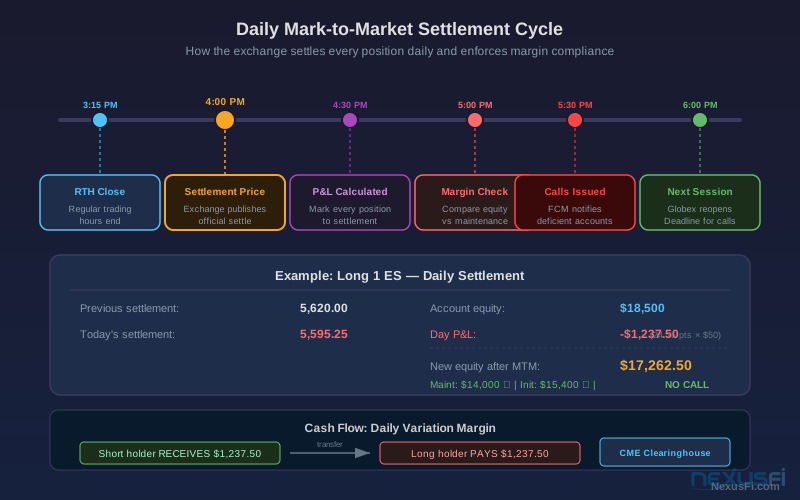
Futures are marked to market at settlement each day, and this interacts with SPAN in ways that create real intraday risk management challenges.
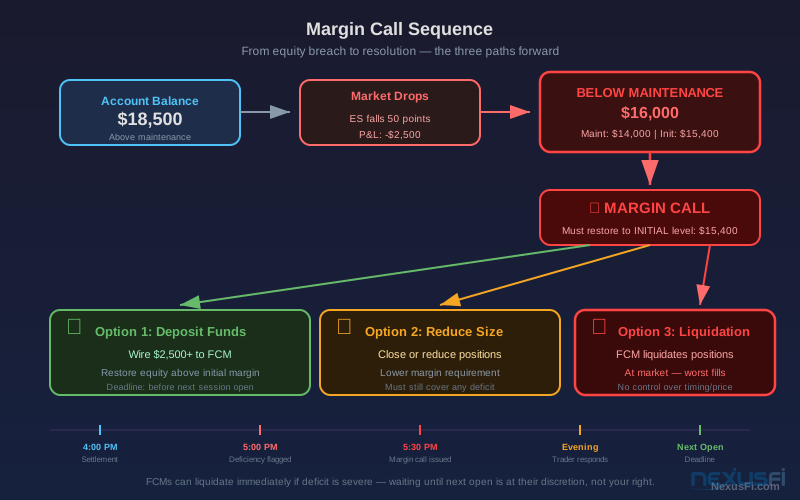
Here's the double-hit that catches traders off guard: you're short ES options, the market sells off during the session, and your short puts are under pressure. Two things happen simultaneously: (1) your variation margin loss is debited from your account, reducing your equity, and (2) SPAN recalculates with the new market prices and potentially higher implied volatility, increasing the required margin. Your equity drops while the required margin rises. You can hit a margin call on a position where the option hasn't yet moved into the money.
Most brokers scan intraday — not just at daily settlement. A sharp move can trigger an intraday margin call before the official end-of-day. This is especially relevant for short premium strategies run through scheduled events.
@ron99, who conducted extensive analysis of ES options selling through historical crash scenarios on NexusFi, found: "6x would allow you to ride out the Aug 24, 2015 crash without getting a margin call... When entering a position that requires $300 margin I hold $1,800 for that position until I exit it. If the increase in margin and premium uses the $1,800 up, I exit." [3]
Six times the required margin as a buffer. That's what it took to survive the 2015 crash scenario without forced liquidation on a short ES puts strategy.
Day trading margin is the broker's rule. Overnight margin is the exchange's rule. Both can change independently of each other and independently of your position.
The intraday double-hit: a market move against your position simultaneously reduces your equity via variation losses AND increases required margin via SPAN recalculation. Size your account to absorb both, not just one. Holding exactly enough to meet initial margin is not enough buffer for real market conditions.
Margin Relief vs. Margin Expansion: Practical Trade Examples #
Knowing SPAN in theory is one thing. Seeing how it behaves with specific position structures makes it actionable.
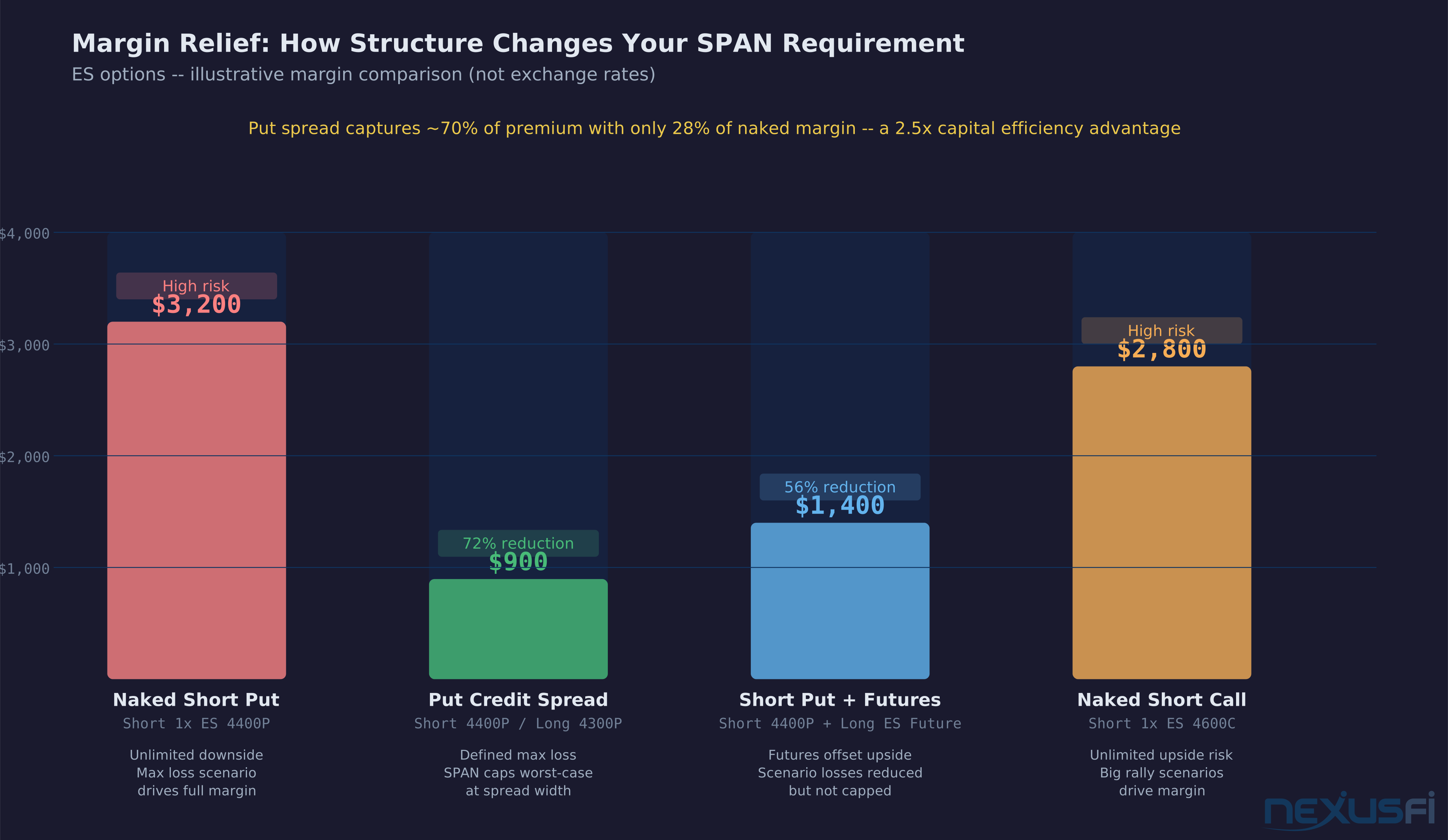
Converting naked puts to put spreads: Short naked puts carry full downside risk in SPAN's worst scenarios. Add a long put at a lower strike, and you've capped the maximum loss in every scenario. SPAN sees a defined-risk position where no single scenario can produce an unlimited loss, and margin falls sharply. Converting a short ES put into a put credit spread might reduce margin from $3,200+ per contract to under $1,000 — a 70% reduction.
Short call + long futures: A trader short NQ calls finds that adding long NQ futures reduces margin. The futures gain in the upside scenarios that are worst for the short calls. SPAN recognizes the hedge and reduces the worst-case combined scenario loss.
Calendar spreads for curve views: A crude oil trader wanting front-month CL exposure might weigh a calendar spread (long front, short back) against an outright long. The outright carries full directional margin. The calendar spread carries the spread charge — potentially 80-90% less. If the thesis is "front month will outperform," the spread expresses that view with dramatically less capital.
Margin expansion from correlated risk: Adding a long NQ futures position to a portfolio already long ES futures gets limited hedge credit — they're both long equity, correlated in the same direction. SPAN's worst-case down-move scenario hammers both positions simultaneously. Total margin approaches the sum of both outrights.
Options near expiration: Adding short gamma exposure as expiration approaches can produce surprising margin expansion. Gamma is high, small moves produce large scenario losses, and SPAN marks those losses aggressively.
Practical Application: Building SPAN Into Your Process #
SPAN knowledge only creates value if it changes how you actually make decisions.
Pre-trade margin modeling: Before entering any options position, model the margin impact. Most broker platforms have a what-if tool that lets you add hypothetical positions and see the margin change before executing. Use it. Check not just the base margin but also how it would look if volatility increases 25% or if price moves against you by 5%.
Size to the stressed scenario, not current margin: The scenario driving your margin isn't the benign one — it's the tail. Your position sizing should account for the margin you'd need in a stressed scenario. If your current margin is $5,000 but a volatility spike would take it to $8,500, size your account based on the stressed number.
Maintain meaningful buffer:
[5] That's 5-6x the margin requirement in account equity — consistent with @ron99's 6x finding for short premium strategies through crash scenarios.
@shodson puts the operational principle directly: "I never trade futures with so much leverage that I couldn't handle holding it overnight. You need to worry about sizing your positions not based on how much leverage you have, but how much risk/loss you are willing to take in the account if the trade goes against you." [6]
The margin number tells you what the exchange requires. Your risk management plan tells you what you should actually be risking. These should never be the same threshold.
Monitor exchange circulars before events: CME announces margin changes in advance when possible. Subscribe to margin alert services. Check for parameter updates before major scheduled events. Never carry a short options book into an FOMC using yesterday's margin assumptions.
Use spreads for capital efficiency: When expressing directional or volatility views, defined-risk spreads almost always offer better capital efficiency per unit of risk than naked positions. A put credit spread that collects 70% of the premium of a naked put while using 28% of the margin isn't just balance-sheet optimization — it's the difference between being able to size the trade appropriately and being constrained to a position too small to matter.
Get the detailed breakdown: Don't rely on the summary margin number. Find the detailed breakdown that shows SPAN scan risk, add-ons, and house margin separately. When your margin spikes unexpectedly, the detailed breakdown tells you which component moved and why.
Set a calendar alert for SPAN parameter file release dates. CME typically releases updated parameters regularly, with emergency updates as needed. A parameter update can change your margin requirements overnight without any position or market change.
When SPAN Falls Short #
SPAN is better than simple per-contract margin — but it has real limitations that affect traders in specific conditions.
True tail events exceed the scenario grid: The scenario grid is calibrated to historical extreme moves, large by normal standards but not unlimited. Real black-swan events — circuit breakers, limit moves in energy markets, flash crashes — can produce losses outside the scenario range. SPAN margin may be insufficient for those events. This is partly why exchanges impose emergency margin increases after extreme events, and why brokers maintain house margin buffers above exchange minimums.
Correlation assumptions can break: The spread credits SPAN grants to calendar positions assume the two contracts maintain their historical correlation. During delivery squeezes, geopolitical disruptions, or liquidity crises, front-month and back-month prices can diverge dramatically and temporarily. The spread credit assumes correlation, but the market can violate it exactly when you least want it to.
Near-expiration options have specific risks SPAN can underestimate: In the final hours before expiration, pin risk and gamma exposure can create scenarios that SPAN's discrete grid doesn't fully capture. Short options near their strike at expiration can swing wildly in a way the daily-move scenario grid doesn't model well.
Parameter updates create overnight cliff-risk: When SPAN parameters are updated, margin can change abruptly overnight. A position that was within margin limits at 5:00 PM can be under-margined by 6:00 PM after a parameter refresh. Options sellers who calibrate position size to specific margin requirements are exposed to this cliff risk whenever exchange parameters are updated.
In fast markets, your actual portfolio risk can exceed SPAN margin before the system updates. Brokers use house margin to buffer this lag, but during limit moves or flash crashes, the buffer may not be enough. If you're sizing positions to the SPAN minimum with no additional cushion, you're one bad day away from forced liquidation in conditions where exits are the most expensive.
Reading Your Margin Report #
Most broker platforms display a margin summary — a single number per product or total account. That's the output of the entire SPAN + add-ons process. To understand your actual risk exposure and anticipate changes, you need the detailed breakdown.
Look for these components:
- Scan risk / SPAN component: The core scenario loss number from the risk array evaluation
- Short option minimum: The floor charge applied to short options positions
- Spread charges: The intra-commodity charge on calendar spread positions
- Delivery charges: Near-expiration add-ons for contracts approaching settlement
- House margin: Your broker's overlay above exchange requirements
- Available excess: Your cushion above the total requirement
When this cushion shrinks unexpectedly without a position change, the first things to investigate: did exchange parameters update? Did implied volatility increase, expanding the worst-case scenario losses? Is an approaching expiration adding delivery charges?
@Dudetooth, who built a spreadsheet tool for SPAN calculation and discussed it on NexusFi, notes the depth beneath the surface: "I found that the short option minimum and initial-to-maintenance ratio (two items I was missing) were in the risk arrays, so you have everything you need to calculate the SPAN initial/maintenance and the Total initial/maintenance margins." [8]
The margin number is a calculation, not an arbitrary constraint. Understanding what feeds that calculation gives you advance warning of changes and allows you to structure positions that are both capital-efficient and resilient to margin spikes.
Knowledge Map
Go Deeper
Build on this knowledgeReferences This Article
Articles that build on this topicCitations
- — Diversified Option Selling Portfolio (2016) 👍 3“When you have more than one position on your margin requirements are set by a program called SPAN which looks at the risk of your portfolio. It does this by looking at 16 predefined scenarios and seeing which of these 16 scenarios has the greatest risk, and that is what your portfolio margin is.”
- — Margin: initial vs maintenance vs day trading (2017) 👍 7“Initial Margin is set by the exchange (not by the FCM/broker)... Intraday Margin is the amount an account needs to trade one contract. It is also the lowest of the three listed. Intraday margin is set by the FCM/broker and may vary between firms.”
- — Selling Options on Futures? (2017) 👍 4“6x would allow you to ride out the Aug 24, 2015 crash (quickest crash since 2012) without getting a margin call... When entering a position that requires $300 margin I hold $1,800 for that position until I exit it.”
- — Where would you start as a beginner with $1500 to risk? (2023) 👍 3“CME is only concerned about margin on trades that are not closed out during the trading day... Initial margin is set by the CME, and has no bearing on day trading margin.”
- — Correct margin level for ES (2013) 👍 11“A good practice that I see in use at hedge funds that allow margin trading in the first place is to never let margin requirement exceed 15% to 20% of total capital.”
- — understanding margin & leverage in emini and futures (2017) 👍 3“I never trade futures with so much leverage that I couldn't handle holding it overnight. You need to worry about sizing your positions not based on how much leverage you have, but how much risk/loss you are willing to take in the account if the trade goes against you.”
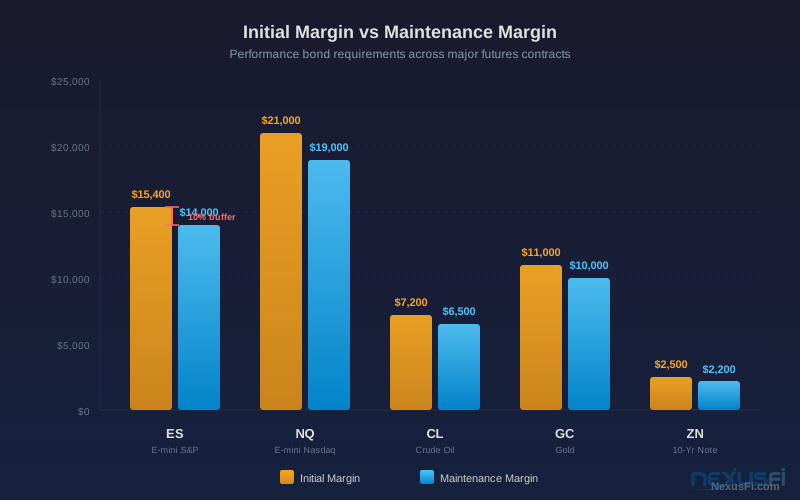
- — The cost of buying/selling futures (2015) 👍 6“Future's exchanges, to protect themselves and their customers, require that everybody buying or selling futures contracts post an 'initial' margin with the exchange. Margins are not surprisingly contract specific. The bigger the contract size & the greater the volatility the higher the margin requirement.”
- — PC-SPAN (2013) 👍 4“I found that the short option minimum and initial-to-maintenance ratio (two items I was missing) were in the risk arrays, so you have everything you need to calculate the SPAN initial/maintenance and the Total initial/maintenance margins.”
- — PC-SPAN (2018) 👍 4“Detailed walkthrough of SPAN margin calculations for equity index futures options.”
- — Margin: initial vs maintenance vs day trading (2017) 👍 7“Futures are a highly leveraged product. Margins are good faith deposits -- three types: initial, maintenance, and day trading margin.”