



Max Pain and Options Expiration: How Dealer Gamma Hedging Creates Predictable Patterns in ES and NQ Futures
Overview #
Every experienced ES or NQ futures trader has seen it: price drifts toward a round number into Friday's close, oscillates there for an hour, then settles within a point or two of that level. The retail explanation is "max pain." The real explanation is dealer gamma hedging--and understanding the difference changes how you trade.
Max Pain theory describes a real market phenomenon. But the causal mechanism is not some conspiratorial force designed to hurt option buyers. It's the mechanical result of how dealers hedge their options exposure as contracts approach expiration. When you understand the machinery, you can identify when the effect is likely to hold, when it's likely to fail, and how to position around it--without trusting in a magic strike magnet.
This article covers the mechanics of max pain and strike pinning, the gamma regime framework (short vs. long gamma) that determines whether price will oscillate or accelerate, how weekly and monthly expiration cycles differ in their market impact, and a practical trading and risk management approach for ES and NQ futures traders navigating options expiration.
What Max Pain Is (and What It Isn't) #
Max Pain is defined as the strike price at which the aggregate dollar value of outstanding options expires worthless for the largest number of option holders. In simple terms: it's the price level that inflicts the most damage on the people who bought options.
Traders often frame this as: "market makers push price to max pain to maximize their profit by expiring options worthless." That framing is mostly wrong. Market makers don't have a direct incentive to push price to max pain--they generally hedge dynamically to stay delta-neutral. What they do have is a hedging obligation that, when open interest is concentrated at a strike, creates mechanical buying below that strike and selling above it. The result looks like pinning, because it is pinning--just not for the reasons most traders assume.
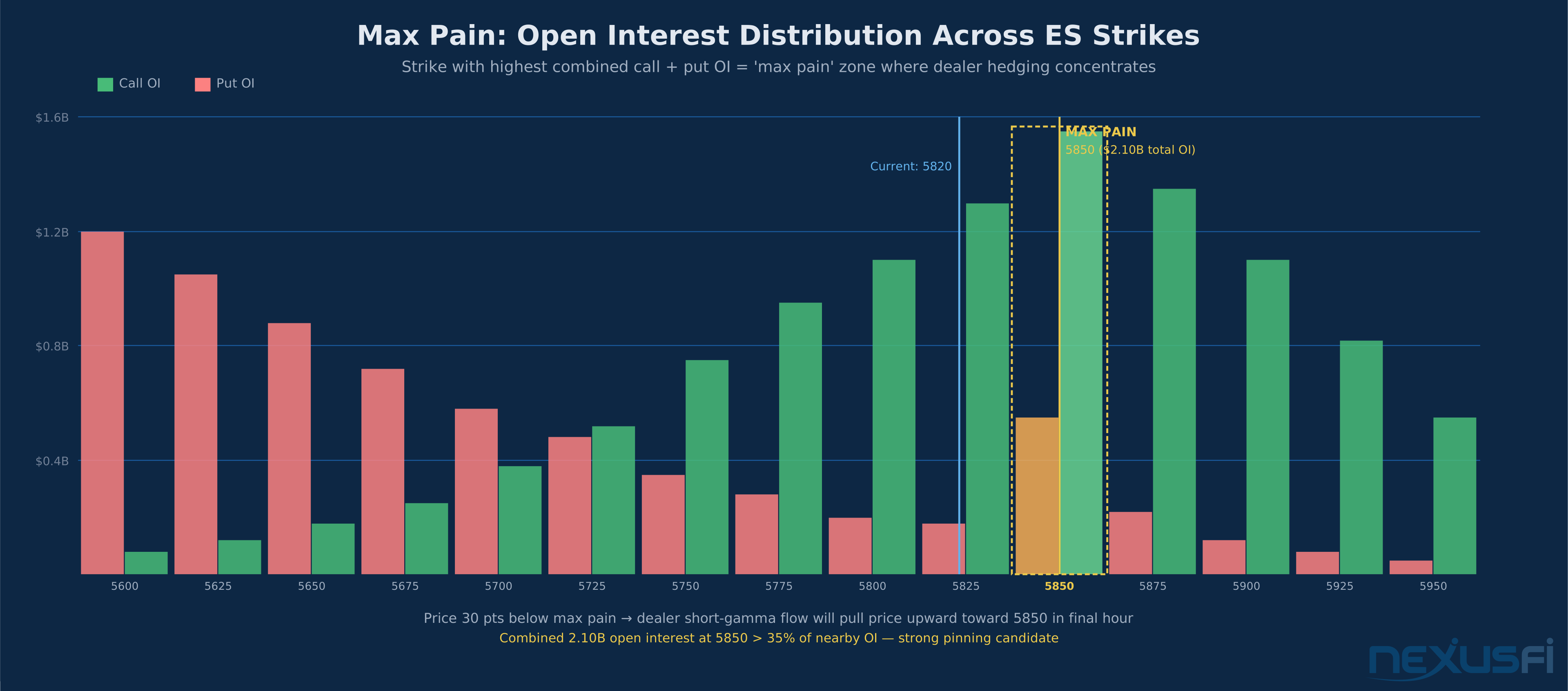
The actual calculation is straightforward: for every strike, sum the total dollar losses to call holders (calls worth zero) plus total dollar losses to put holders (puts worth zero). The strike where this combined loss is maximized is max pain. In practice, this usually lands near the strike with the highest combined call and put open interest, because that's where the most premium value is concentrated.
Why does this matter? Because max pain gives you a map of where dealer hedging is likely to be most concentrated--not a price target. Price doesn't go to max pain because the exchange wills it there. Price may drift toward max pain because dealer hedging flows create mean-reverting pressure in that vicinity when conditions are favorable.
The Dealer Gamma Mechanism: Why Pinning Happens at All #
The mechanics of strike pinning start with dealers. When a trader buys an ES call option, a dealer sells it. To manage the risk, the dealer delta-hedges: they buy futures to offset the negative delta from the short call. As price moves, the call's delta changes--this rate of change is gamma. The higher the gamma, the more frequently and aggressively dealers must rebalance their hedge.
Near expiration, gamma spikes dramatically. An option that was nearly worthless on Monday can become deep in-the-money by Friday. This means that in the final hours of an expiration day, small moves in ES or NQ require much larger offsetting futures trades to keep dealers delta-neutral. Elite Circle member @tigertrader documented this mechanism in action [1]:
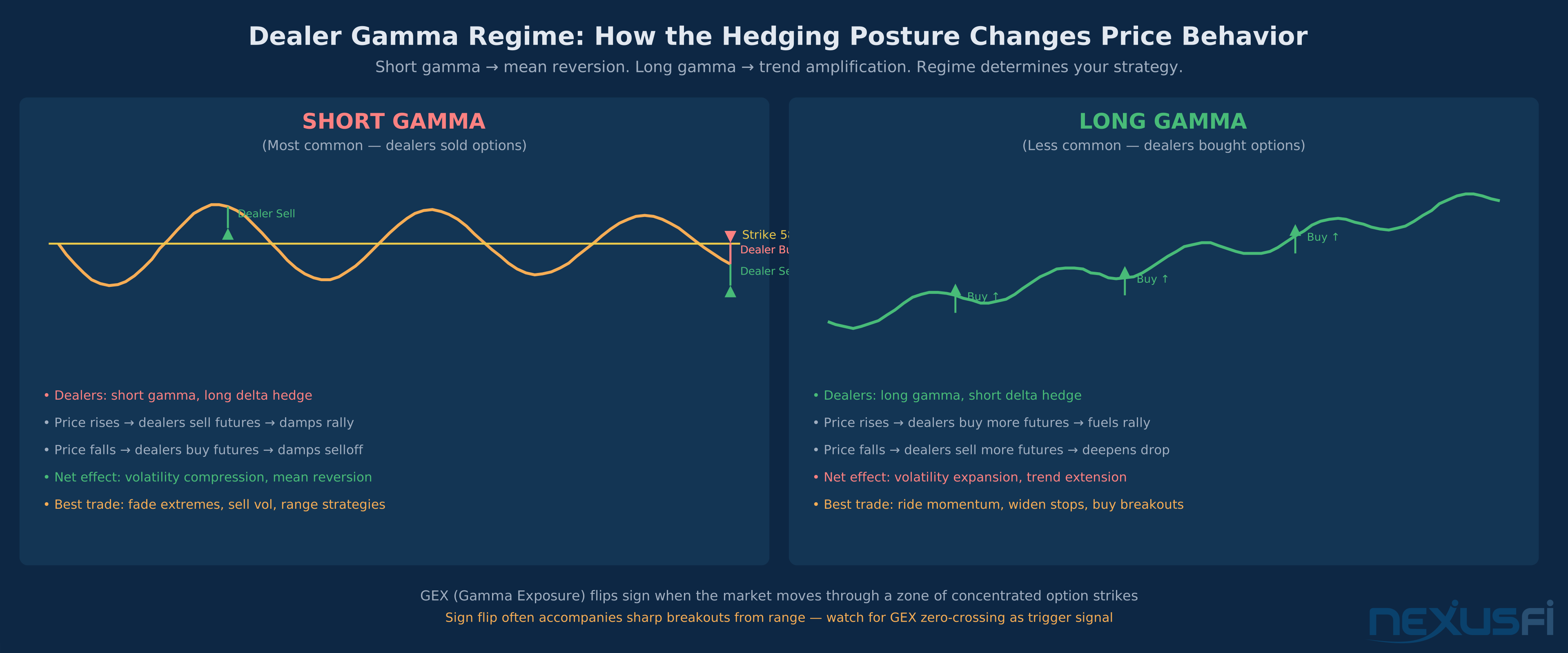
When dealers are net short gamma (the typical posture--dealers sold options to buyers), the hedging creates a mean-reverting force:
- Price rises → dealers sold calls, now short calls → delta becomes more negative → dealers buy futures to rehedge → but wait, that buying pushes price back up, then they need to sell again → oscillation around the strike
- Price falls → dealers sold puts, now short puts → delta becomes more positive → dealers sell futures to rehedge → selling pressure brings price back up
This feedback loop creates the oscillation traders observe. It's not coordinated. It's not collusive. It's mechanical: the aggregate hedging behavior of dealers across thousands of options positions creates a net force that dampens large moves away from heavily-populated strikes.
The size of this force depends on two things: the amount of open interest concentrated at the strike, and how close the market is to expiration (which determines gamma magnitude). When both are high--large OI concentration, hours to expiration--the pinning effect is strongest.
Short Gamma vs. Long Gamma: The Two Regimes That Govern Expiration Trading #
The gamma regime--whether dealers are net short or net long gamma--is the single most important variable for predicting expiration day behavior. It determines whether your go-to approach should be fading extremes or riding momentum.
Short Gamma Regime (most common): Dealers sold more options than they bought. They're net short gamma. Their hedging is mean-reverting--buy when price falls, sell when price rises. This dampens volatility, creates range-bound conditions, and makes ES or NQ feel "sticky" near a key strike. In this regime, fading extreme moves near expiration typically has an edge. Spreads and range-bound strategies benefit. SpotGamma addressed this directly in their NexusFi AMA [4]:
Long Gamma Regime (less common): Dealers bought more options than they sold. They're net long gamma. Their hedging is trend-reinforcing--sell when price falls, buy when price rises. This amplifies volatility, extends directional moves, and makes ES feel like it has afterburners. In this regime, fading is dangerous. Breakouts tend to extend. Momentum strategies work better. The familiar "gamma squeeze" dynamic in meme stocks works exactly this way--dealers short calls must buy stock as price rises, fueling the move.
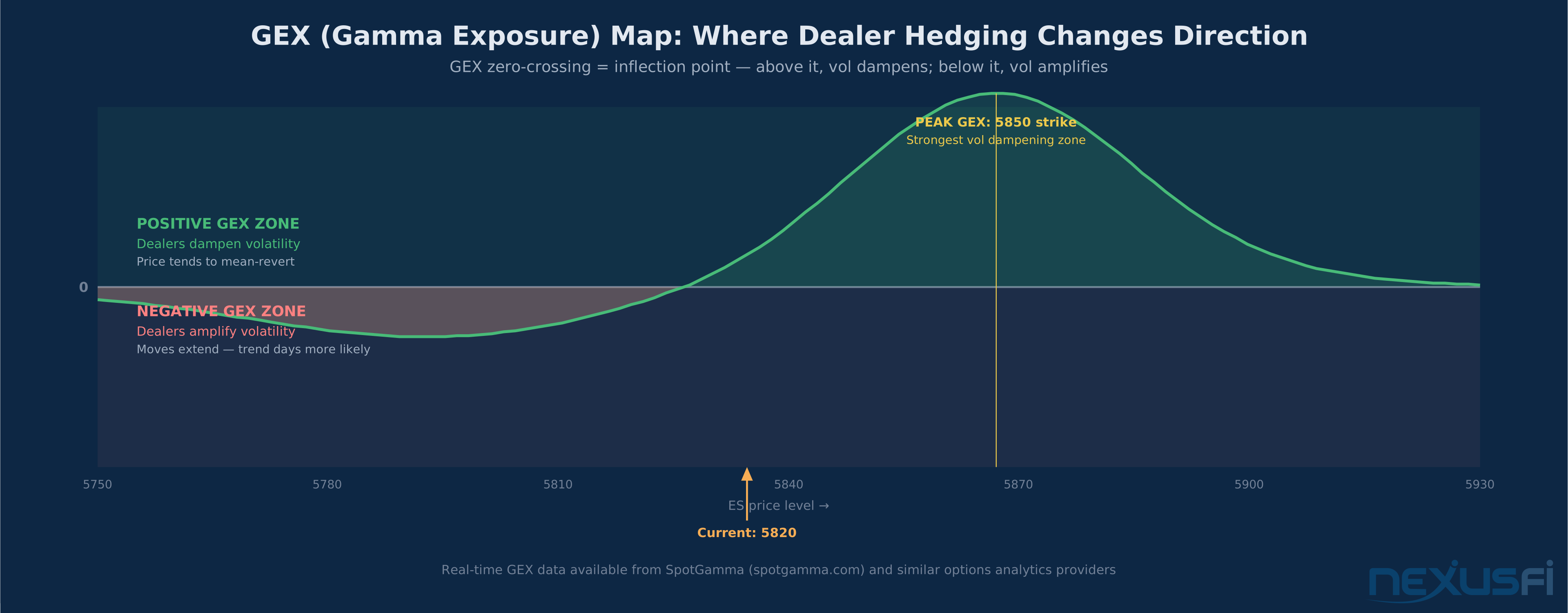
The tool for measuring which regime you're in is Gamma Exposure (GEX)--a real-time calculation of aggregate dealer gamma exposure by price level. Positive GEX means dealers are net long gamma (trend-reinforcing). Negative GEX means dealers are net short gamma (mean-reverting). The zero crossing--where GEX transitions from positive to negative--is where dealer behavior flips.
ES vs. NQ: How Each Contract Responds to Expiration Forces #
Both ES and NQ are affected by options expiration mechanics, but they behave differently. Understanding these differences helps you calibrate your expectations and position size appropriately.
ES (E-mini S&P 500) exhibits more stable pinning behavior for several reasons. The S&P 500 is the world's most-hedged index--asset managers, pension funds, and institutional traders run enormous options overlays on SPX. This creates deeper, more stable open interest at key strikes. The pinning zone tends to be tighter (often ±0.25 to ±0.50 points), the oscillations are smoother, and the effect persists longer. Monthly OPEX is especially significant for ES because of the large institutional positioning that rolls over every month. Statistical observation suggests meaningful pinning occurs in roughly 55% of weekly ES expirations and approximately 65% of monthly expirations when OI concentration is high and GEX is negative.
NQ (E-mini Nasdaq-100) is more volatile, more momentum-sensitive, and harder to pin. The Nasdaq-100 has heavier growth/tech concentration, making it more responsive to single-stock news and momentum signals. When pinning does occur, the bounce amplitude can be larger (2-3 points in seconds), but pins fail more frequently--especially when tech earnings or macro news creates directional pressure. The effective pinning zone is wider (±0.50 to ±1.00 points). Pinning frequency is lower, roughly 45% weekly and 58% monthly under favorable conditions. In negative gamma environments, NQ's volatility amplification is often more severe than ES--it tends to run harder in both directions when dealers are short gamma and a large strike is breached.
The practical implication: if you're going to trade OPEX dynamics, ES is generally more predictable. NQ offers larger potential moves but higher invalidation risk. Size down further for NQ OPEX trades relative to your normal position size.
Weekly vs. Monthly OPEX: Different Patterns, Different Tactics #
Not all options expirations are equal. Weekly and monthly expirations have structurally different market impacts that require different tactical approaches.
Weekly OPEX (Fridays) has become the dominant expiration cycle, especially with the explosion of 0DTE (zero days to expiration) options. Weekly expirations have lower total open interest than monthly, which means a single large strike can dominate the gamma profile more easily. The result is sharper, more tactical pinning--when it occurs, it tends to be more intense for a shorter window. Pinning behavior is most visible in the final 60-90 minutes. The flipside: because weekly OI is lower, a moderately-sized institutional flow can overwhelm the gamma mechanics. Failed pins on weekly OPEX often result in clean directional breakouts that run surprisingly far, precisely because the mean-reverting dealer flow that was holding price is overwhelmed.
Monthly OPEX (third Friday) represents the quarterly accumulation of institutional positioning. Higher total OI, more distributed across strikes, with more systematic fund and dealer balance-sheet activity. The "pinning zone" is broader--sometimes spanning 1-2 full points rather than the tight weekly bands. The effect can begin earlier in the day. Monthly OPEX sometimes has significant impact the Monday following expiration, as dealers unwind hedges and new positioning establishes: @tigertrader noted this pattern multiple times, observing that "the last two monthly expirations have seen turning points the Monday following OPEX, and considering we are at/near zero gamma (notional) the stage could be set for a turn." [3]
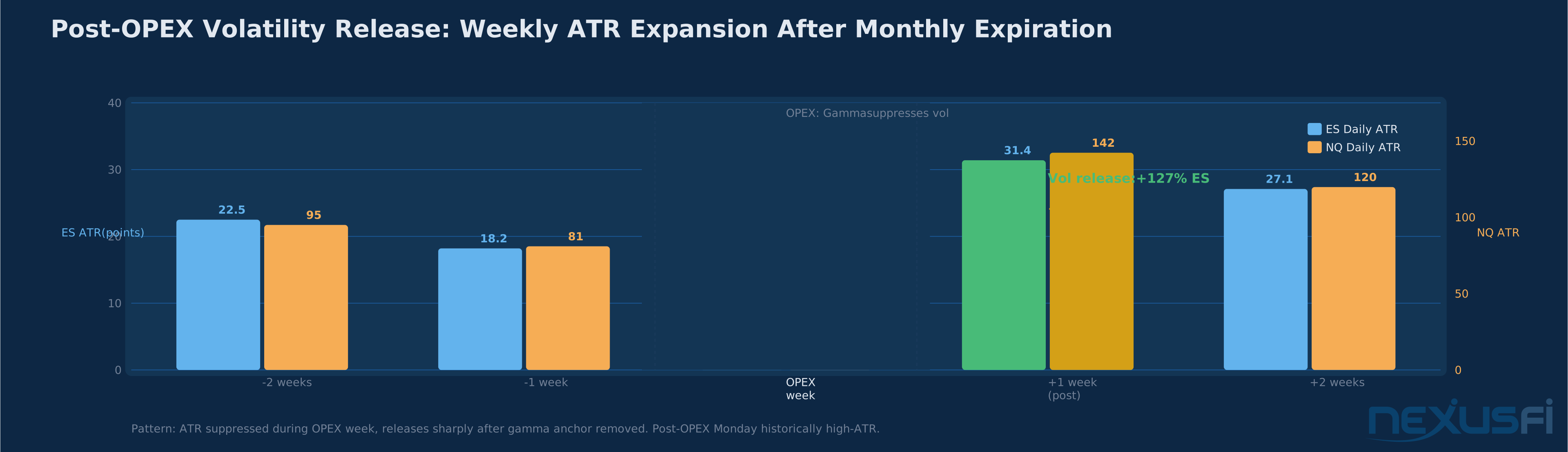
For the quarterly super-expiration events, see the guide to Triple Witching and Quad Witching. The post-OPEX environment deserves attention. When large open interest rolls off, the gamma that was suppressing volatility disappears. Markets that felt sticky and range-bound during expiration week often release sharp directional moves the following Monday as dealers unwind hedges and the market finds its new equilibrium without the gamma anchor.
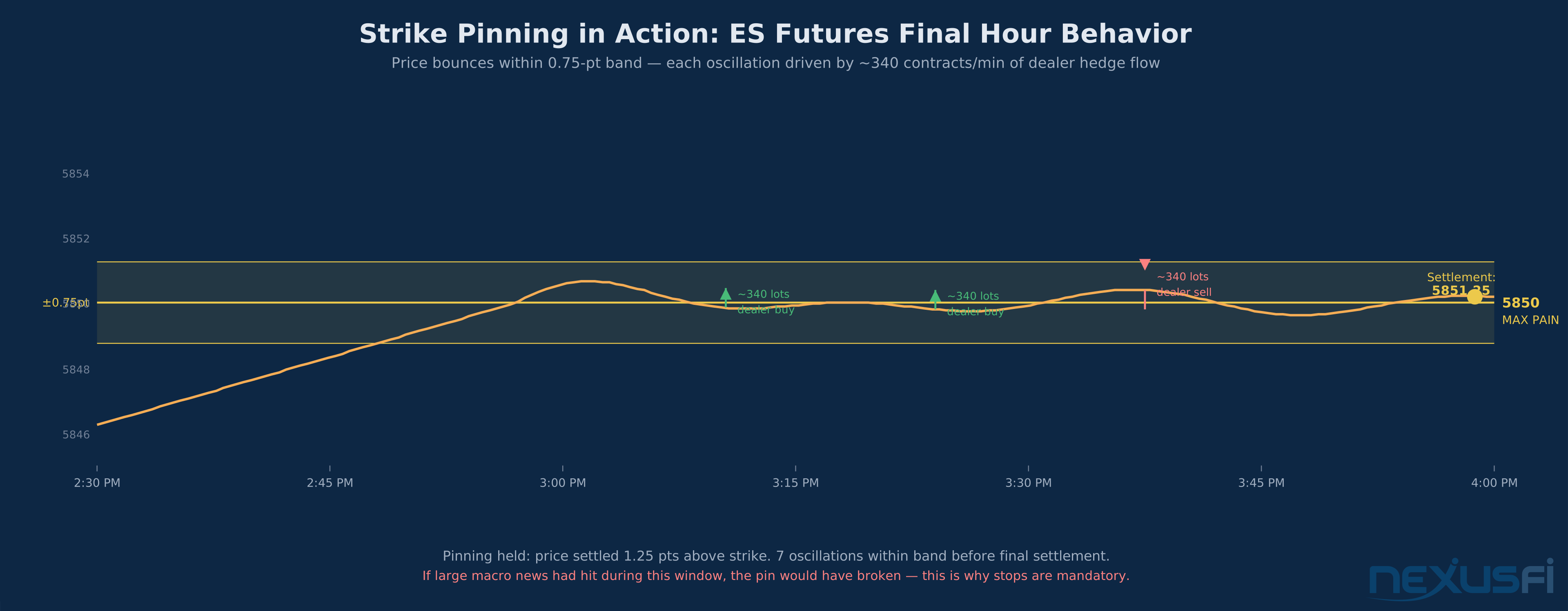
The 0DTE Transformation: OPEX Dynamics Now Happen Every Day #
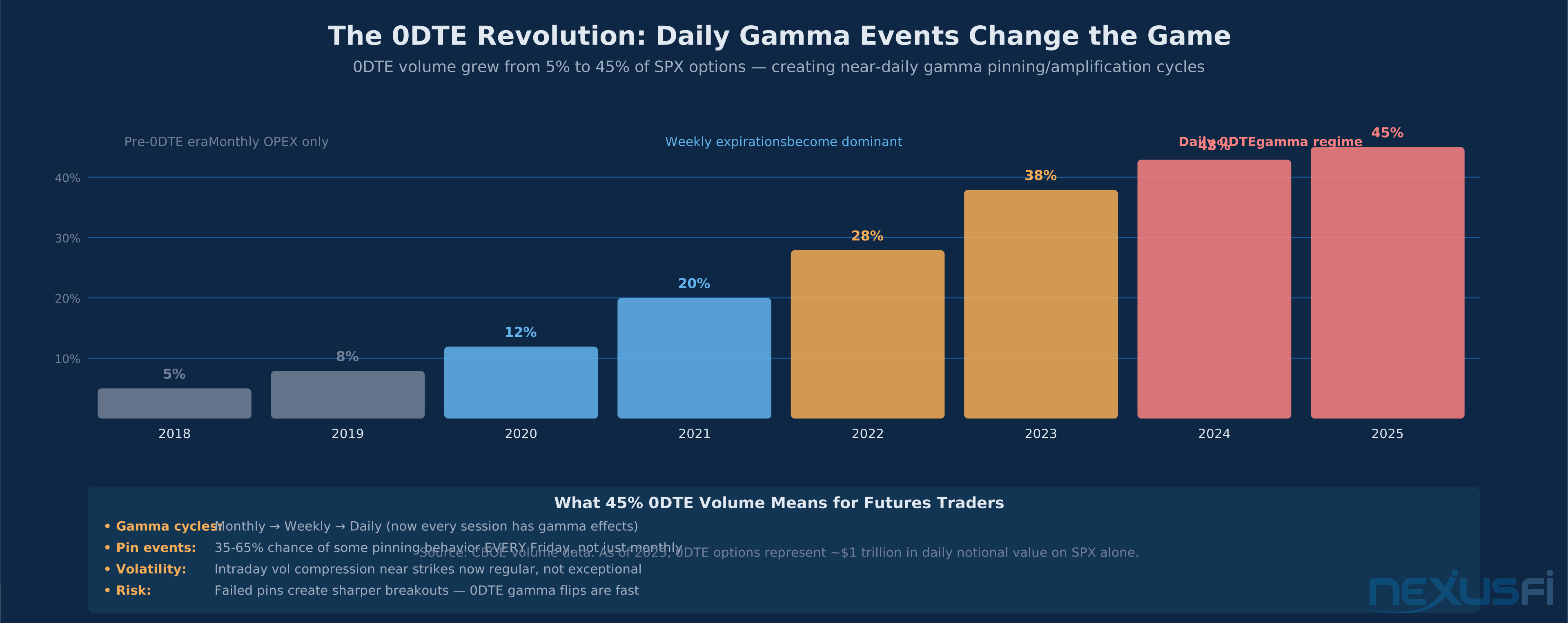
Until roughly 2021, the dynamics described in this article were primarily a once-a-week (or once-a-month) phenomenon. Since then, the rise of 0DTE (zero days to expiration) options has at the core changed the environment.
0DTE options--contracts that expire the same day they're traded--now represent approximately 45% of total SPX options volume, up from roughly 5% in 2018. This means that every trading day now has some elements of an expiration day: large open interest concentrating near current strikes, steep gamma, and dealer hedging flows that can meaningfully affect ES and NQ price action in the afternoon session.
The implications are significant. First, the pinning/amplification cycle that used to occur mainly on Friday afternoons now occurs to some degree every afternoon. Second, when 0DTE calls are aggressively purchased (as happens during momentum rallies), dealers are forced to buy futures to hedge--creating positive feedback that can turn modest afternoon moves into accelerating squeezes. Third, failed 0DTE pins can create sharp late-day reversals, as the dealer hedging that was providing support or resistance evaporates suddenly at the close.
For futures traders, this means the OPEX analytical framework is no longer just a Friday tool. Checking the daily gamma profile--especially in the 2-4 PM ET window--has become a regular part of professional trading workflow [8].
Reading the GEX Environment: A Practical Workflow #
GEX data has become more accessible through third-party analytics platforms. Here's how to incorporate it into a trading workflow without overcomplicating the process.
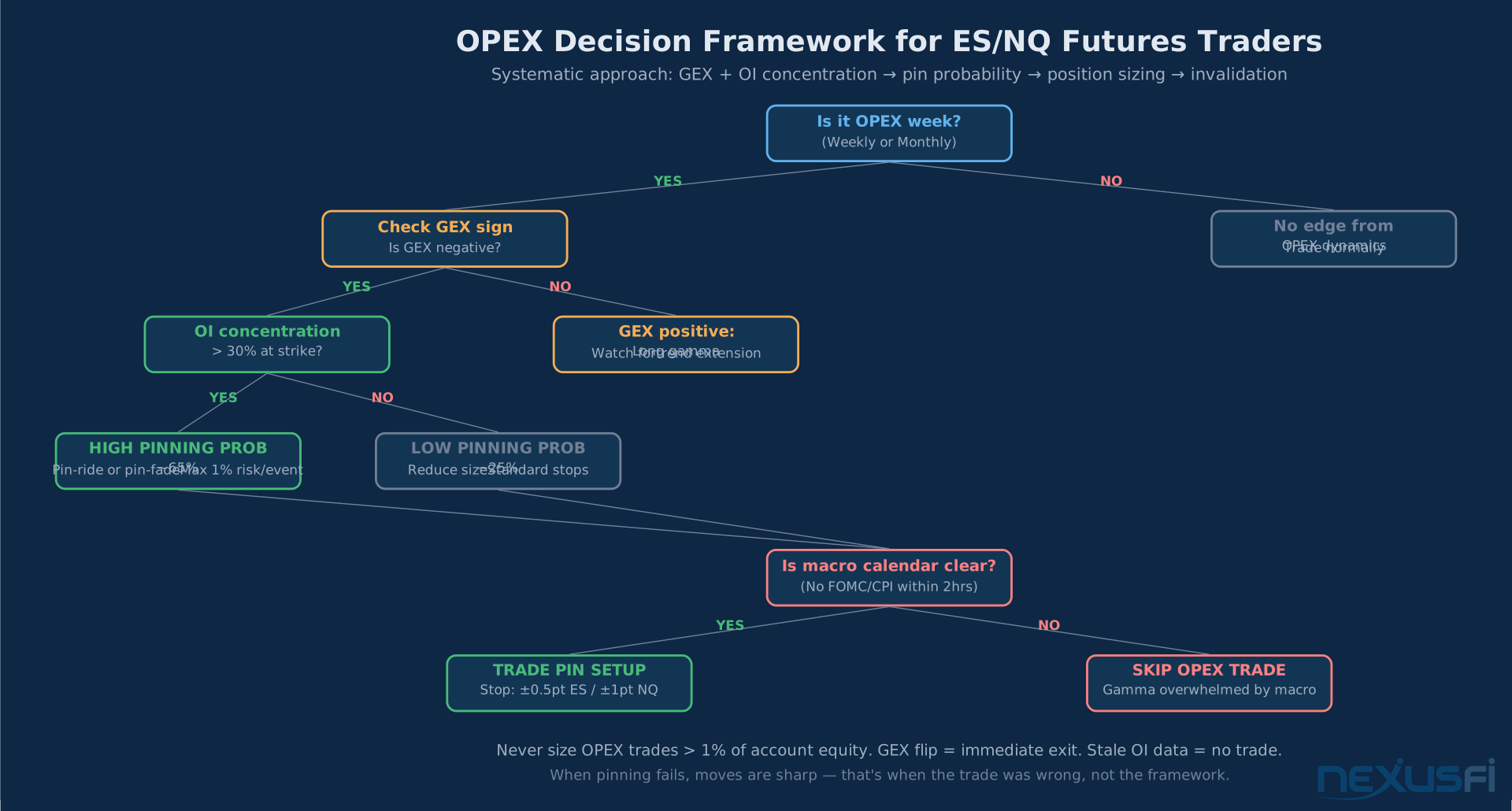
Step 1: Identify the dominant strike. Look at the options chain for the expiring contract (or nearest weekly). Find the strike with the highest combined call and put open interest. This is your candidate max pain level. Confirm whether it's within 1-2% of current price--distant strikes have negligible gamma effect.
Step 2: Assess the GEX regime. If you have a GEX provider (SpotGamma, SqueezeMetrics, or similar), check whether net GEX is positive or negative. Positive = dampening. Negative = amplifying. If you don't have a provider, a rough proxy: if the market has been trending strongly and volatility is elevated, dealers are likely short gamma and the regime is amplifying. If markets have been calm and grinding, dealers are likely in a dampening regime.
Step 3: Define your pin band and invalidation. For ES, the typical pin band around a strike is ±0.25 to ±0.50 points. For NQ, ±0.50 to ±1.00 points. If price breaks and holds outside the band for more than 5 minutes with expanding volume, the pin thesis has failed.
Step 4: Check the macro calendar. Any major scheduled release (FOMC, CPI, payrolls) within two hours of expiration can override gamma mechanics entirely. When macro dominates, abandon the OPEX framework and trade the news flow. The gamma effect is a background force--strong news events are a foreground force that always wins.
Step 5: Size down, use tight stops. OPEX trades should never represent more than 1% of account equity. The binary nature--either the pin holds or it doesn't--makes these high-conviction but low-tolerance setups. Stops at the next 0.25-point increment for ES, 1-point for NQ.
The Expiration Week Playbook #
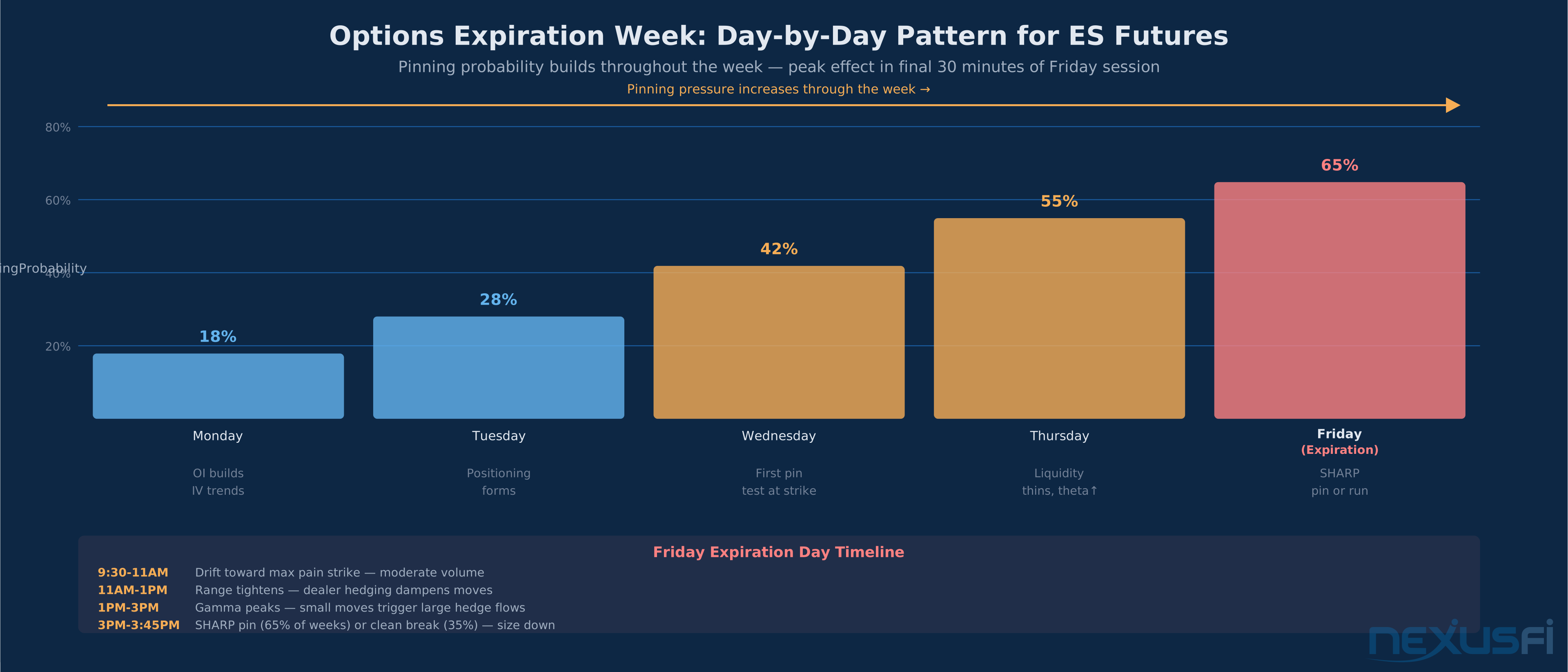
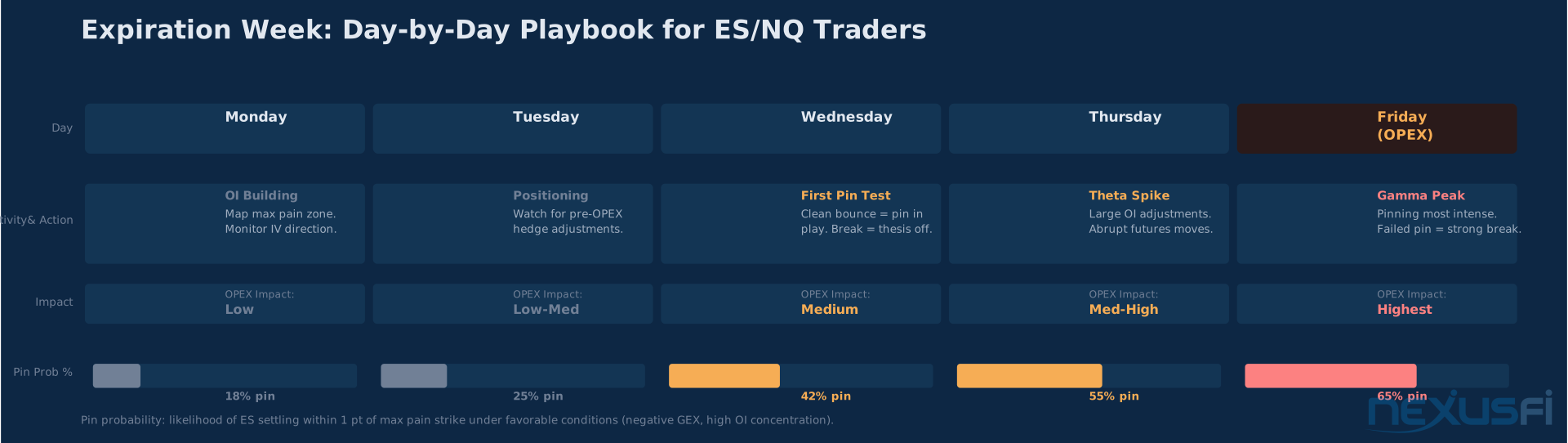
Each day of expiration week has different implications for futures traders. Here's the pattern:
Monday-Tuesday: Open interest is still building. GEX trends are establishing. Too early to trade OPEX-specific setups with conviction. Use this period to map the likely max pain zone and monitor how IV is trending. Rising IV into the week often signals positioning pressure that will resolve at expiration.
Wednesday: The first meaningful "pin test" often occurs around Wednesday's session. If price approaches the max pain zone and bounces cleanly, it validates that pinning forces are in play. A clean break through the zone without a bounce suggests the thesis may not hold this week--adjust expectations so.
Thursday: Theta decay accelerates. Liquidity in the options market thins as traders reduce near-term exposure. This sometimes creates abrupt moves in futures as large options positions get adjusted. Thursday can be a useful final observation day before committing to Friday tactics.
Friday (Expiration Day): The pattern, when it plays out, usually follows this sequence:
First 30 minutes (9:30-10:00 AM ET): Price drifts toward max pain as pre-market positioning established overnight gets adjusted at the open. Mid-session: Range tightens. Dealer hedging begins to visibly dampen moves. Volume may be below average. Last 90 minutes (2:00-3:30 PM ET): Gamma peaks. Small moves generate large hedging flows. This is when pinning is most observable--and when the pin most frequently fails if it's going to. Final 15 minutes: If pinning holds, price settles close to the dominant strike. If not, moves can be sharp and directional.
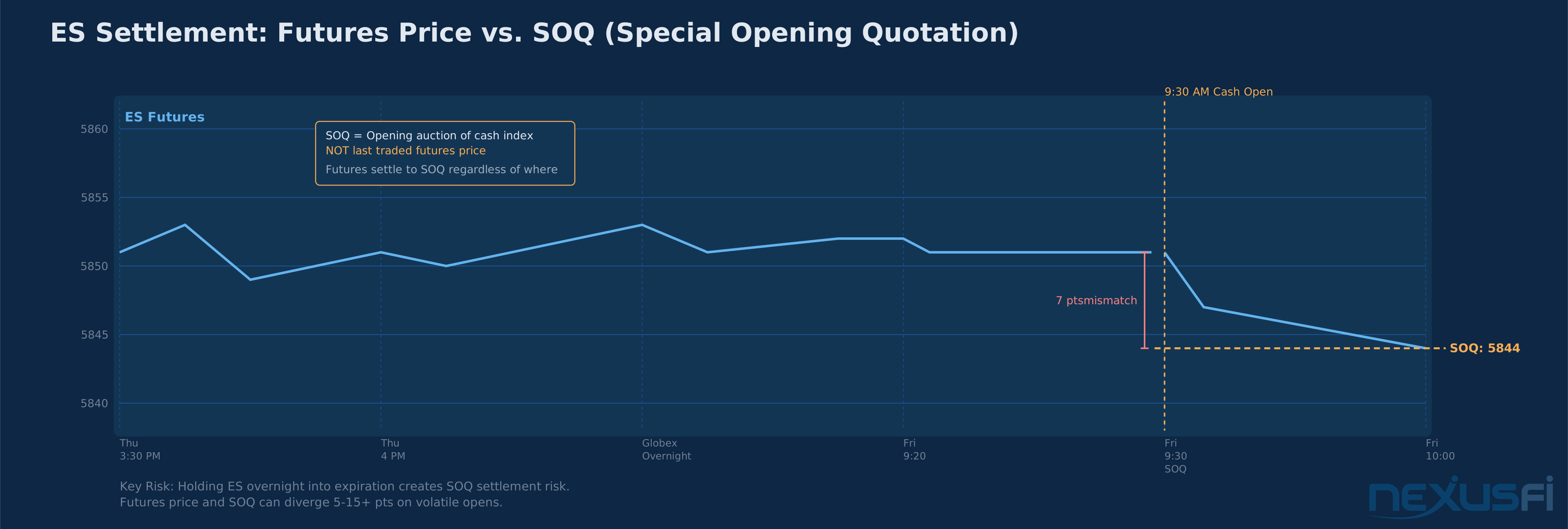
There's also a settlement nuance worth knowing: ES and NQ futures settle to the Special Opening Quotation (SOQ)--derived from the opening auction of the underlying cash index, not the last traded futures price. This means there's always some possibility of a settlement mismatch between where futures were trading and where contracts actually settle. Expect elevated volume at the 9:30 AM cash open on expiration days as dealers reconcile futures positions against the index settlement price.
When Pinning Fails: Understanding the Breakout Condition #
The pin fails in roughly 35-45% of cases. Understanding the failure mode is just as important as understanding the success mode--the failed pin often produces the week's cleanest directional move.
Pinning fails when incoming directional flow exceeds the dealer hedging force. The three most common causes:
Macro news surprise: Any significant economic release, geopolitical event, or Fed communication during or near expiration hours can overwhelm gamma mechanics entirely. The pin was holding because dealer hedging was providing a steady mean-reverting force. News creates a step-function directional flow that dealers cannot offset. The pin breaks, and often breaks fast and far, because the same delta-neutral hedging that was dampening movement near the strike now forces dealers to chase in one direction.
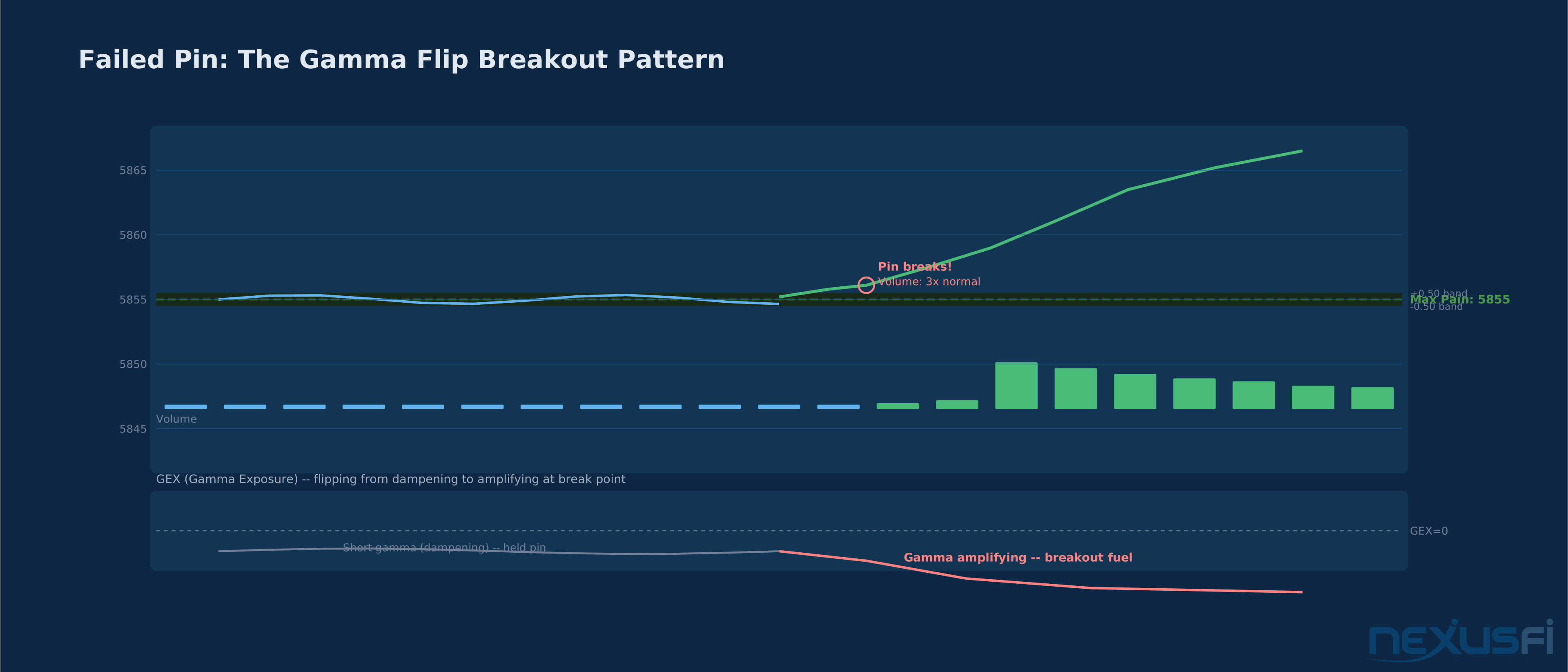
Large institutional order flow: A single large institutional trade--a fund rebalancing, a systematic strategy triggering, or a CTA stop-out--can generate enough directional volume to push through the gamma band. Once price escapes the pin zone, the mean-reverting force reverses sign: now dealers who were selling into rallies must buy to stay hedged, amplifying the breakout. This is the "gamma flip" that traders watching GEX data look for.
Insufficient OI concentration: In weeks where open interest is spread thinly across many strikes rather than concentrated at one, the pinning force is diffuse. The max pain calculation still exists, but there's no single strike dominating the gamma profile. In these weeks, expect a more normal Friday with no meaningful OPEX distortion.
The key diagnostic for a failed pin: price breaks the band (±0.50 pts for ES) with expanding volume, and a GEX indicator crosses zero or goes sharply more negative. When you see that combination, the OPEX trade is off--don't average into a failing pin. The same mechanism that was providing support has now become a fuel source for the breakout.
Integrating OPEX Analysis into Your Trading System #
OPEX analysis works best as a regime filter, not a standalone trading signal. It tells you which strategies are likely to be more effective in the current session, not where price will go.
For systematic traders, consider building a Friday expiration filter into your strategy logic. In negative-GEX environments near expiration with high OI concentration, reduce the size of momentum strategies and increase the size of mean-reversion strategies in the 1-4 PM window. The opposite for positive-GEX breakout environments.
For discretionary traders, think of OPEX analysis as part of your pre-market prep. Map the max pain zone. Check the GEX regime. Verify the macro calendar. Then trade your normal setup--but if you're near the max pain zone in the afternoon of expiration day, be more patient with entries and tighter with stops. The pin doesn't need to be your trade; it just needs to inform your expectations about volatility and directional behavior.
For risk management, the most useful OPEX insight is often the post-expiration environment. When a large monthly OPEX resolves, the gamma that was suppressing volatility disappears. If markets were unusually calm through expiration week, expect a volatility expansion in the following week as the gamma anchor is removed. The Monday following large monthly expirations has historically shown higher average true range and more frequent directional continuation of pre-OPEX trends.
Tools and Data Sources #
To implement this framework, you need at minimum: real-time or near-real-time options open interest by strike, and some measure of dealer gamma exposure.
Options open interest is available from most data providers with options market data. The key is accessing it during the trading day--end-of-day OI is too stale for expiration day tactics. IQFeed from DTN provides tick-level options data. Most professional brokerage platforms include live options chains with OI. Pairing OI data with volatility skew analysis provides a richer picture of where dealer positioning is concentrated.
Gamma Exposure (GEX) calculations require modeling dealer positioning--which involves assumptions about who is long and short various strikes. SpotGamma is the most widely-referenced provider specifically for this analysis, offering ES and NQ-specific GEX data. SqueezeMetrics provides GEX proxies. Some traders calculate a simplified version themselves from the options chain, though this requires assumptions about dealer vs. customer flows.
For NexusFi members: The Spoo-nalysis thread has years of real-world GEX analysis from @tigertrader and others, providing both methodology and historical examples. The SpotGamma AMA thread documents how their tools translate to ES/NQ specifically. The NexusFi options forum has active discussion of selling strategies and expiration mechanics from practitioners.
The Limits of This Framework #
A few honest caveats before applying any of this live:
Pinning is a statistical tendency, not a law. The 65% success rate under favorable conditions means 35% of the time it fails, often sharply. Never enter an OPEX trade without a clear stop and a plan for when the pin breaks.
OI data can be stale. Options open interest is reported with a lag. Intraday positioning can shift much--a large block trade in the final hour can change the dominant strike without showing up in official OI figures until the next day. Real-time GEX tools update more frequently, but no tool provides perfect precision on dealer positioning.
HFT front-running has changed the pattern. High-frequency firms have become sophisticated at modeling dealer hedging flows and positioning ahead of expected trades. This can accelerate the pinning effect early in the day but also create more volatile "fake pins" that break down before the close. The more aware market participants are of a pattern, the more it becomes priced in before it fully plays out.
Algorithmic complexity grows. The JPM quarterly collar, large vol funds, and systematic options strategies create gamma concentrations that don't behave like simple retail options OI. Treat published max pain calculations as starting points for analysis, not conclusions.
The framework is genuine and useful. The discipline is treating it as one input rather than the whole story. Price goes where it goes, and the mechanics described here are real but not deterministic. Build them into your analytical toolkit, size so, and always have the exit before you enter.
Knowledge Map
Go Deeper
Build on this knowledgeReferences This Article
Articles that build on this topicCitations
- — Spoo-nalysis ES e-mini futures S&P 500 (2020) 👍 19“If you want to know how options volume translates into actionable signals, you can look at a chart of May 2850 Puts. Notice the spike in volume at 12:05. Most likely a put buyer, and dealer selling it to him, leaving the dealer short puts, and having to sell futures to hedge. It led to a ~15 point selloff in /ES.”
- — Spoo-nalysis ES e-mini futures S&P 500 (2022) 👍 12“GEX or gamma exposure is 261,538,294. Which means the market flipped from negative gamma to positive gamma. Instead of buying into rallies and selling as the market goes down, hedgers will now be selling into rallies and buying as the market goes down. This has the effect of dampening volatility, and allowing the market to breathe, so to speak.”
- — Spoo-nalysis ES e-mini futures S&P 500 (2022) 👍 12“The 3835 strike is the short call leg of the JPM options overlay collar. Dealers are long 20BN notional of gamma. For every 1% up or down from that level it represents ~3BN to buy on dips and ~3BN to sell on rallies. The result has been a mean reversion trade centered around the 3835 strike, where dealers have been buying dips and selling rallies to hedge their deltas.”
- — SpotGamma AMA - Ask Me Anything About Options Flow & Gamma Analysis (2026) 👍 1“ES and NQ traders should be watching gamma exposure for the underlying index, since SPX and NDX options are hedged first and most directly in the futures market. That means index options trades will result in buying or selling pressure for ES and NQ. We would treat a flip from positive to negative GEX as a structural shift -- the volatility response can begin almost immediately.”
- — Spoo-nalysis ES e-mini futures S&P 500 (2022) 👍 5“Both the March OPEX and the August OPEX, which saw the market sell off after expiration, took place in a positive gamma (call weighted) environment. All the other expirations were in a negative gamma (put weighted) environment.”
- — Paps pre open prep (2017) 👍 8“In 2015, there was a very pronounced seasonality around the 3rd Friday of the month, where the market would ramp higher going into both quad-witch and triple-witch.”
- — Spoo-nalysis ES e-mini futures S&P 500 (2022) 👍 9“The closer the option gets to expiration the larger the gamma grows. Just since last week, gamma exposure on the 3835 call strike grew by 50%. The effect of this growing gamma call strike is putting a floor under the market.”
- — Spoo-nalysis ES e-mini futures S&P 500 (2021) 👍 12“There is a natural dealer flow from vanna and charm. They prefer to do this nearer the end of the day. ES is the primary hedging vehicle for this purpose. There is often a tailwind at 3pm.”