



Options Flow Data for Futures Traders: Put/Call Ratios, Dealer Gamma Hedging, and the Market Intelligence Layer Most Traders Ignore
Overview #
Most futures traders look at price action, volume, and maybe a few indicators. A smaller group watches order flow through the DOM and CVD. But there's a layer most retail traders completely skip: the options market and what it forces market makers to do with futures.
Options flow data isn't about predicting direction. It's about understanding how dealer hedging creates mechanical pressure on futures prices — pressure that exists regardless of fundamentals, technicals, or news. When you know how dealers are positioned, you know where they'll be forced to buy or sell ES, NQ, or CL futures, and that information changes how you read the market.
This is a practical guide to using options flow as a secondary intelligence layer. We'll cover put/call ratios, how to filter unusual activity from the noise, dealer gamma mechanics, the tools traders actually use (SpotGamma, SqueezeMetrics), the explosive growth of 0DTE options and what it means for intraday futures trading, and how to integrate all of it into a workflow that enhances — not replaces — your existing edge.
Fair warning upfront: options flow data is expensive, complex, and easy to misread. Every advantage it provides comes with an equal capacity to generate false confidence. Use it correctly and it's a genuine edge. Misuse it and it's expensive noise. This article covers both.
The Dealer Gamma Mechanism: Why Options Force Futures Trades #
The entire premise of options flow as a futures trading edge rests on one thing: market makers delta-hedge. When a dealer sells an option, they face risk from price movement. They manage that risk by buying or selling the underlying — in this case, ES or NQ futures — to stay delta-neutral.
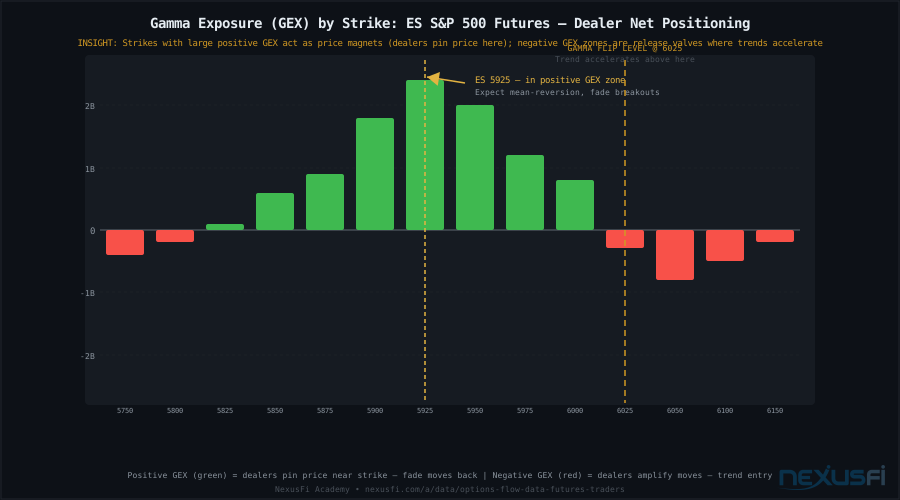
The critical variable is gamma: how fast the dealer's delta changes as price moves. High gamma means the dealer must hedge aggressively as price moves. Low gamma means they can hedge more slowly. The aggregate of all dealer gamma exposure across all strikes creates a map of where mechanical futures buying and selling pressure will appear.
There are two distinct regimes:
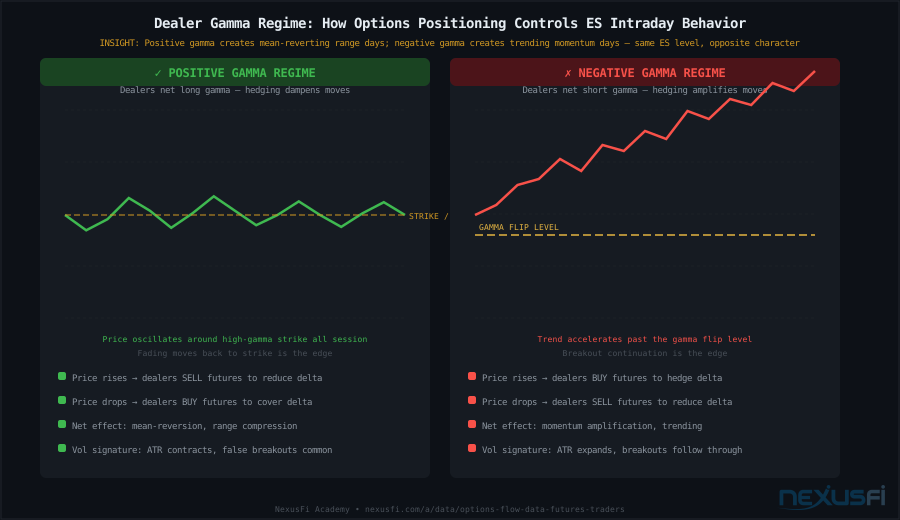
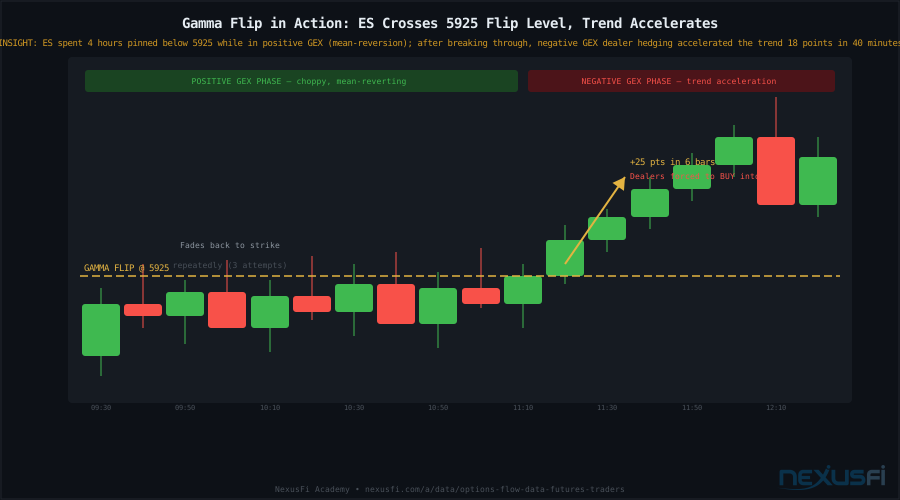
Positive gamma (dealers net long gamma): Dealers sold options and own the gamma. As ES rises, their delta becomes more positive, so they sell futures to stay neutral. As ES falls, their delta becomes more negative, so they buy futures. This is a naturally dampening force — dealer hedging fights against price movement. The result: mean-reverting, choppy, range-bound price action. False breakouts are common. Fading moves back toward high-gamma strikes often works.
Negative gamma (dealers net short gamma): Dealers bought options or are net short gamma from other positioning. Now as ES rises, their delta goes negative, forcing them to buy more futures to catch up. As ES falls, their delta becomes more positive, forcing them to sell more futures. This is amplifying — dealer hedging accelerates price movement. The result: trending, momentum-driven price action. Breakouts follow through. Chasing is less punishing than usual.
The point where dealer positioning shifts between these regimes is the gamma flip level — one of the most actionable numbers in modern equity index futures trading. Below the flip, mean-reversion. Above the flip, trend acceleration. When ES crosses that level with conviction, the change in dealer hedging behavior can persist for hours.
Put/Call Ratios: Sentiment Gauge, Not Trade Signal #
The CBOE equity put/call ratio compares the volume of equity put options traded against call options. High ratio = more puts = more protection being bought = fear. Low ratio = more calls = more upside speculation = greed. Simple enough in concept, but in practice it's a blunt instrument that most traders misuse.
How to actually read it:
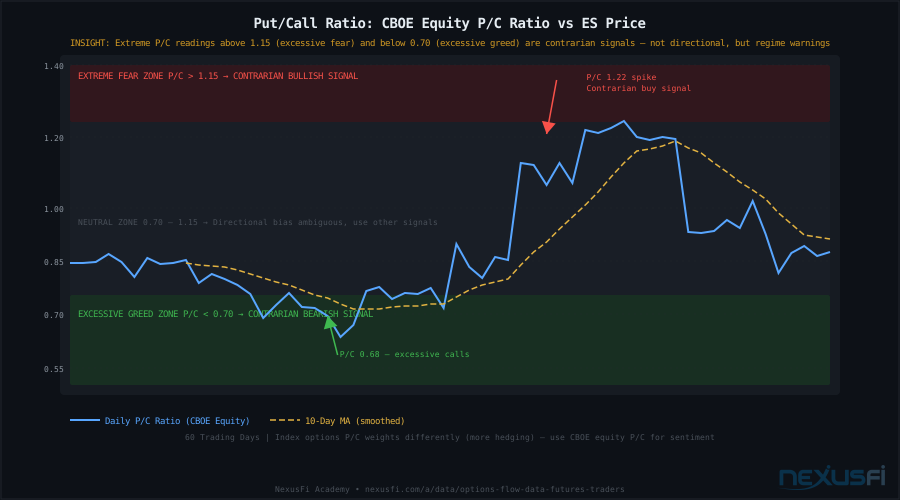
Use it as a regime indicator, not a timing tool. The P/C ratio tells you about the demand for protection and upside leverage across the broad market. It doesn't tell you when the turn will happen. A ratio above 1.15 tells you fear is elevated; it doesn't tell you the market is about to bounce this hour.
Contrarian signal only at extremes. The ratio is most useful when it's at a meaningful extreme — roughly above 1.15 (excess fear, contrarian bullish signal) or below 0.70 (excess greed, contrarian bearish signal). In the middle range, it's basically noise for directional positioning.
Index P/C ratio vs. equity P/C ratio. These are different instruments measuring different things. The CBOE equity P/C ratio strips out large institutional hedging flows that dominate the index options market. For sentiment purposes, equity P/C is cleaner. Index P/C is heavily influenced by hedging programs that have nothing to do with directional bias.
Use the 10-day moving average. Single-day readings can spike due to expiration mechanics, large institutional rolls, or unusual events. The 10-day moving average smooths these out and gives a clearer picture of trend in sentiment.
Decompose by moneyness and expiry. "More puts" means nothing without knowing where the puts are. A spike in near-the-money puts has immediate gamma relevance. A spike in far OTM puts six weeks out is crash insurance buying — informative about risk psychology but not about immediate dealer hedging pressure.
The CBOE provides equity P/C data free on their website, and most professional charting platforms integrate it. You want the 10-day moving average alongside ES price. The relationship won't be obvious on any given day, but over time the pattern becomes clear: persistent extremes often precede mean reversion in the underlying index.
Unusual Options Activity: How to Filter 500,000 Prints Down to 5 #
On any given trading day, OPRA (the Options Price Reporting Authority) processes roughly 500,000 to 800,000 individual options transactions. The overwhelming majority are noise: retail orders, spread legs, rolls, small hedges, and algorithmic flows that move the market in ways that don't translate to actionable futures signals.
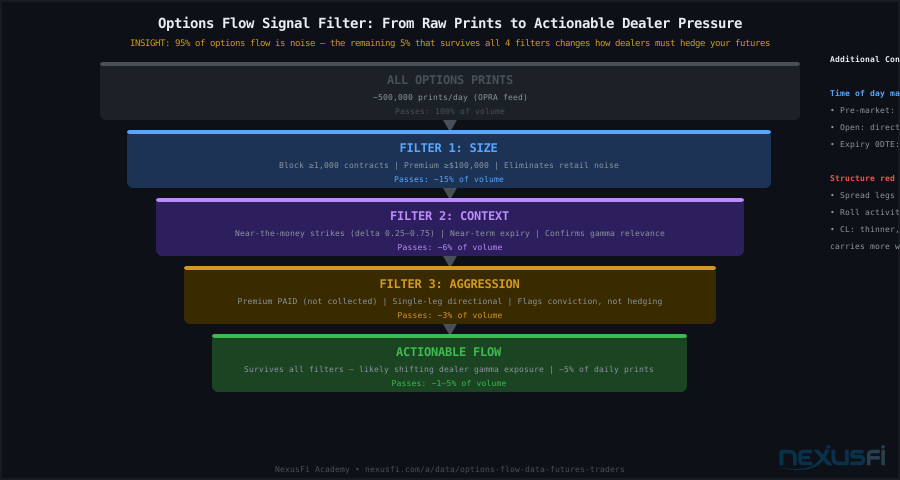
The goal isn't to watch all of it. The goal is to filter for the 10-20 prints per day that actually tell you something about how dealer gamma exposure is shifting. Here's the filtering hierarchy that works in practice:
Filter 1 — Size. Start with blocks of 1,000 contracts or greater, or premium paid of $100,000 or more. Below this threshold, the print is almost certainly not an institutional directional bet. This single filter eliminates roughly 85% of daily flow.
Filter 2 — Strike location. Near-the-money strikes (approximately delta 0.25 to 0.75) have the most gamma. Flow hitting these strikes directly affects dealer hedging today, not someday. Far OTM prints are tail hedges or lottery positions. They matter for risk psychology but rarely for immediate futures pressure. This filter cuts flow to roughly 6% of the original.
Filter 3 — Aggression. Was premium paid or collected? A trader who paid the ask for a large call position has a directional view and is willing to accept negative theta to hold it. A trader who sold a put might be selling protection — a very different trade. You want paid premium, directional single-leg prints. Multi-leg spreads (verticals, butterflies, calendars) require decomposition that most real-time systems can't do accurately. Filter them out as primary signals.
Filter 4 — Context. Timing matters. Flow that hits at the open is different from flow that hits at 3:45 PM. Pre-market flow often represents institutional positioning before a trigger. Late-day flow near a major strike is often gamma-related pinning or hedging ahead of expiry. The same print at different times of day can mean very different things.
After all four filters, you're typically looking at 10-30 prints per day that potentially convey actionable information about dealer gamma shifts. These are the prints worth analyzing in detail: which strikes they hit, what the existing gamma profile looks like at those strikes, and whether the flow is increasing or decreasing dealer short gamma at levels near current price.
The gamma flip level is updated daily by SpotGamma and similar services. It's not a static number — it shifts as new options are bought and sold and as expiration approaches. Treat it as a dynamic boundary that needs to be re-marked each morning, not a fixed support/resistance level on your chart.
For NQ, the filtering principles are the same but the gamma effects tend to be more pronounced — NQ's higher volatility means hedging dynamics play out faster. For CL (crude oil), the options market is considerably thinner, which means single large prints carry more information weight but pinning behavior is less reliable than in the equity index complex.
SpotGamma, SqueezeMetrics, and the Tools That Make This Practical #
Calculating dealer gamma exposure from scratch requires OPRA data (expensive), a gamma calculation model, and real-time integration with futures prices. Most retail traders won't build this themselves. Several services have done the work and sell access at various price points.
SpotGamma is the most widely known. Their core product provides daily and intraday views of dealer gamma exposure by strike — visualized as the "GEX chart" — plus the gamma flip level, key call and put walls (strikes where large gamma concentrates), and 0DTE flow analytics. SpotGamma has become standard reference material in the professional retail and semi-institutional trading community. The NexusFi community uses it regularly as a pre-market context tool, especially @tigertrader's Spoo-nalysis thread where SpotGamma data appears daily.
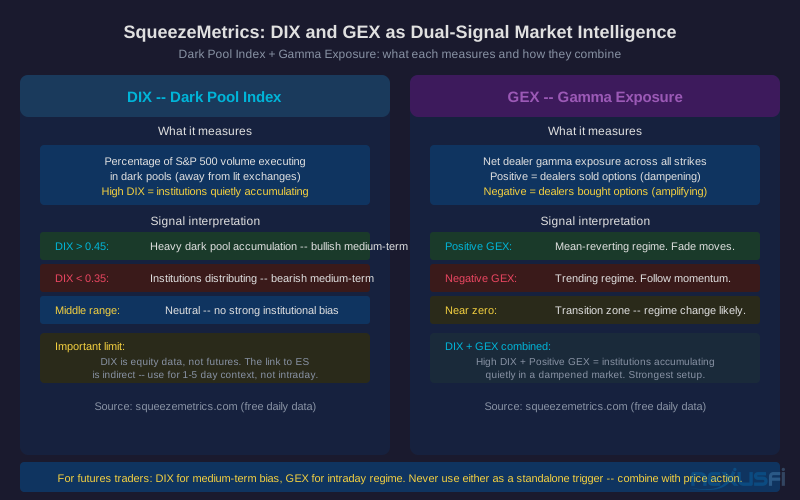
SqueezeMetrics takes a different approach. Their flagship product, the "Dark Pool Index" (DIX), tracks dark pool activity in the S&P 500 constituents and correlates it with gamma exposure through their GEX indicator. SqueezeMetrics's methodology is more opaque but has a following among quantitative retail traders who want aggregate market positioning data.
Tier1Alpha and Volland provide more granular options flow analytics with real-time scanning features. These are better for intraday monitoring of specific strikes and watching for unusual activity in real time.
How to use these tools correctly:
- Mark the gamma flip level on your ES chart at market open. It changes daily but often holds for the session. Note whether current price is above or below it.
- Identify the call wall and put wall. These are the strikes where the most positive gamma concentrates -- they act as magnetic price points. Expect price to be drawn toward them and to face resistance when approaching from the other side.
- Watch how the flip level behaves when tested. A clean rejection at the flip often leads to a full mean-reversion to the nearest high-GEX strike. A break through the flip with closing price above it often sets up follow-through on the next session.
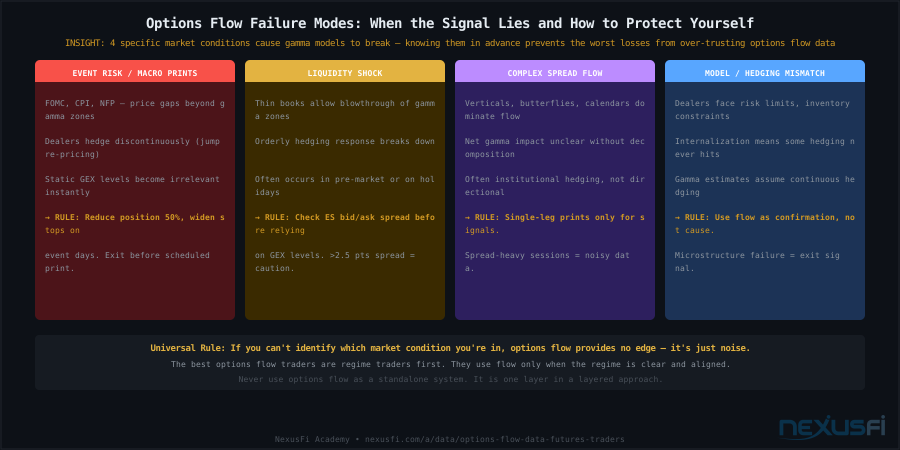
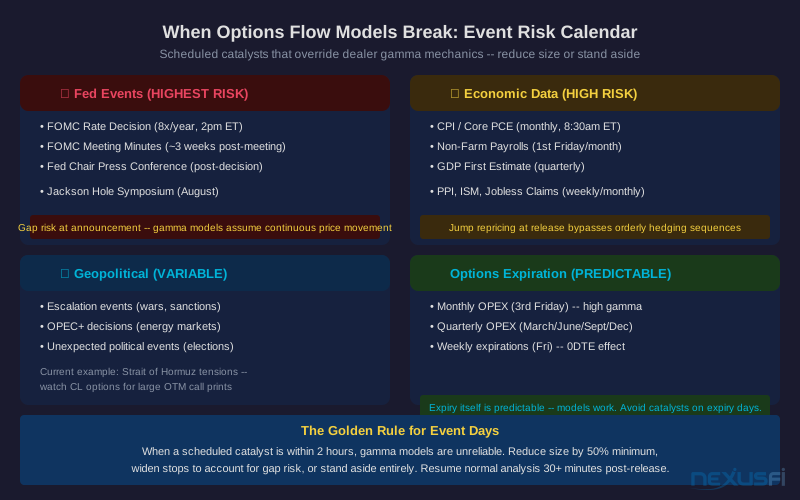
- Don't treat gamma levels as static support/resistance. They decay with time, change as new options open, and are much affected by scheduled macro events. On FOMC days, the models break -- don't trade off GEX levels around scheduled catalysts.
0DTE Options: The Factor That's Rewritten Intraday Futures Trading #
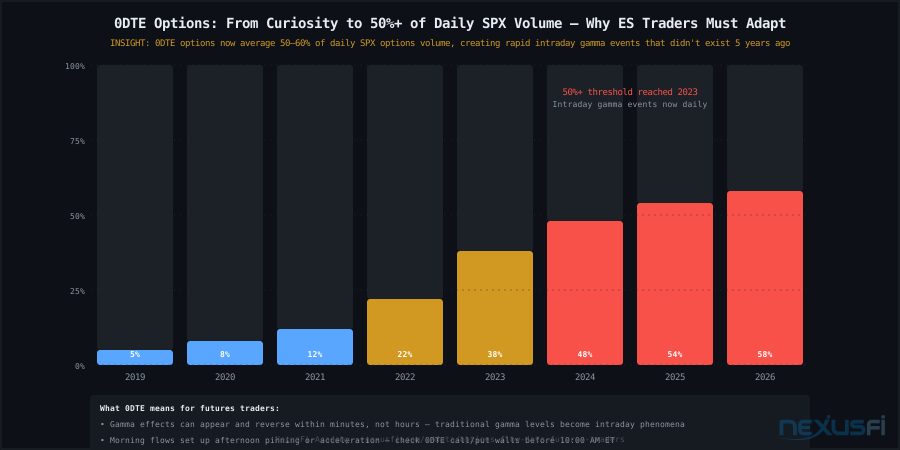
Five years ago, zero-days-to-expiry (0DTE) options were a curiosity. Today, they average 50-60% of daily SPX options volume. This is the single biggest structural change in equity derivatives markets since the VIX was created, and it has direct implications for every ES and NQ futures trader.
0DTE options expire at 4 PM ET on the day they're traded. Their gamma is extremely high relative to longer-dated options — because gamma spikes dramatically as expiration approaches. A 0DTE option at-the-money can have 10-20x the gamma of a 30-day option at the same strike. When 50% of options flow hits 0DTEs, you have massive amounts of gamma sitting in options that expire in hours, not weeks.
What this means practically for futures traders:
Intraday gamma events are now frequent. In the old world, gamma pinning was mostly a weekly phenomenon (near weekly expiry). Today, it can appear and dissolve within a single session. You can have a positive gamma pinning regime in the morning that dissolves into a negative gamma acceleration in the afternoon as 0DTE options expire worthless and their gamma disappears from the market.
The open and close are even more important. 0DTE options generate positioning at the open (when they're bought for the day) and create hedging flows near the close (as dealers manage gamma that's about to expire). These two windows see elevated, more predictable options-driven futures pressure than the middle of the session.
Pre-market 0DTE flow matters. Large overnight purchases of 0DTE calls or puts (yes, they can be opened pre-market for same-day expiry) set up the gamma profile for the session before RTH even opens. Checking this flow at 8:00-9:00 AM ET gives advance warning of the session's gamma character.
Expiry creates a natural resolution. By 4 PM ET, all 0DTE gamma evaporates. Pinned markets can move more freely in the final minutes as hedging pressure from expiring options disappears. This creates the occasional odd close-of-session behavior that looks inexplicable on pure price action but makes perfect sense through a 0DTE lens.
@tigertrader built this visualization into his pre-market routine before most traders were paying attention to 0DTE mechanics.
ES, NQ, and CL: What's Different for Each Instrument #
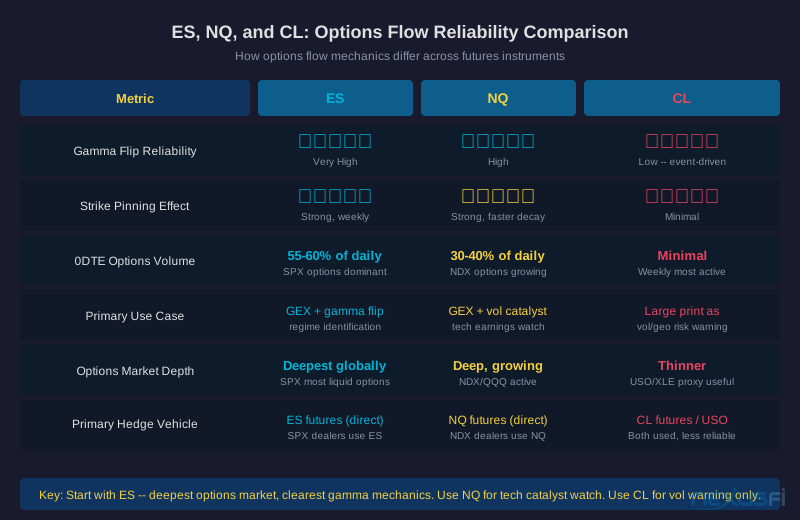
Options flow concepts apply across instruments but with meaningfully different reliability levels.
ES (E-mini S&P 500): This is where options flow data has the clearest, most reliable relationship with futures price behavior. SPX options are the most liquid options market in the world, with massive institutional participation and continuous dealer hedging via ES futures. Gamma pinning is a real and recurring phenomenon in ES. The gamma flip level usually holds significance. 0DTE dynamics are most pronounced here. If you're going to learn one set of options flow skills for futures trading, make it ES.
NQ (E-mini Nasdaq-100): Very similar to ES in options flow reliability, but with higher volatility and faster hedging dynamics. NQ's higher vol-of-vol means gamma effects play out more aggressively — what takes ES two hours to work through, NQ might resolve in 45 minutes. Tech earnings create large, concentrated flows in NDX options that have clear NQ implications. The NQ gamma flip level is real but can move more dramatically than ES.
CL (Crude Oil): The options market is considerably thinner than equity index options. Single large prints carry more weight because there are fewer of them — but the flip side is that pinning behavior is less reliable. Oil options flow is more event-driven: large unusual activity in CL options or oil ETF options (USO, XLE) often precedes geopolitical events, inventory surprises, or OPEC announcements rather than reflecting gamma mechanics. For CL, use options flow as early warning for volatility rather than for specific gamma level trading. With current Strait of Hormuz tensions, watching CL options flow for large OTM call purchases is a legitimate geopolitical risk monitor.
Practical Workflow: Pre-Market to Close #
Here's how to actually integrate this into a trading routine without it becoming a distraction:
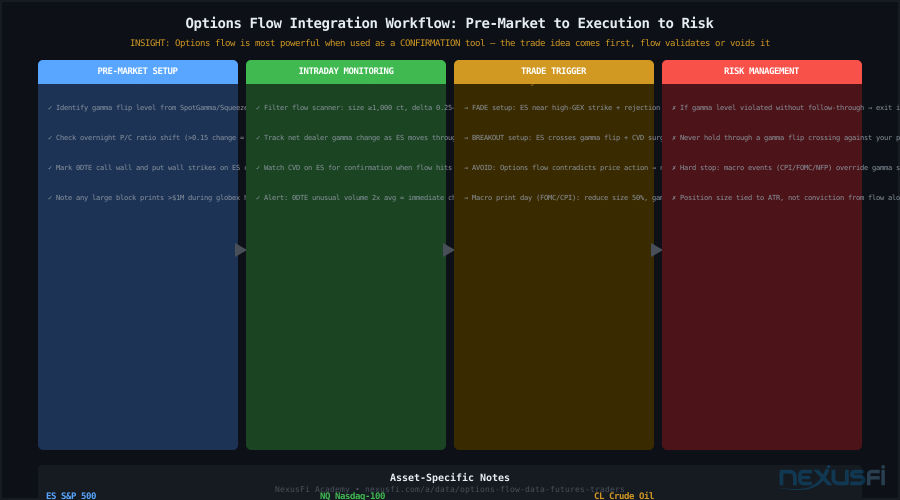
Pre-market (6:00--9:30 AM ET):
- Pull the daily gamma exposure chart from SpotGamma or equivalent. Note the flip level, call wall, and put wall strikes.
- Check overnight P/C ratio change. A shift of more than 0.15 in either direction deserves a note.
- Scan for any globex-session 0DTE or large prints that hit overnight. Flag anything >$1M premium in near-money strikes.
- Mark gamma flip, call wall, and put wall levels on your ES/NQ chart for the session.
Pre-market routine takes 10-15 minutes once you know the workflow. Mark gamma flip, call wall, and put wall on your ES/NQ chart before RTH opens. These three numbers plus your standard pre-market prep give you the full context for the day's options-driven mechanics.
Intraday (9:30 AM — Close):
- Filter your options flow scanner for: size ≥1,000 contracts, near-money strikes, paid premium, single-leg.
- When ES approaches the gamma flip level, heighten attention. This is the decision point where the session's character may change.
- Use CVD (Cumulative Delta) on ES to confirm when large flow hits. Options flow alone isn't a trigger -- futures microstructure confirmation is required.
- Be aware of 0DTE volume ramping into the close. After 2:00 PM ET, 0DTE gamma effects can create artificial pinning or sudden acceleration as expiry approaches.
Trade execution filters:
- Fade setup: ES approaching high-GEX strike + rejection candle + flat CVD = high-probability reversion entry.
- Breakout setup: ES crosses gamma flip with conviction + CVD surge + order flow imbalance = trend entry with gamma tailwind.
- Conflict signal: Options flow and price action pointing in opposite directions = no trade, wait for resolution.
Dark Pool Data: Useful Context, Not Primary Signal #
Dark pool prints get a lot of attention in trading communities, but for futures traders specifically, they occupy a different role than options flow. Dark pools are alternative trading venues where large institutional equity orders execute off-exchange to minimize market impact. The data that leaks out (through aggregators like SqueezeMetrics's DIX or commercial flow scanners) is primarily equity transactions, not derivatives or futures.
The causal link from equity dark pool prints to futures prices is real but indirect: large institutional equity positioning eventually moves through futures markets either directly (institutional hedges via ES) or indirectly (via rebalancing and arbitrage). This is meaningful as background context but lacks the immediacy of options → dealer gamma → futures that makes options flow directly actionable.
Practical use of dark pool data for futures traders:
- High DIX readings (elevated dark pool buy pressure in S&P 500 stocks) combined with depressed equity P/C ratio = risk accumulation by institutions, often a constructive medium-term signal for ES.
- Large dark pool prints in individual tech names (AAPL, NVDA, MSFT) can precede NQ moves when they represent program trading or index rebalancing.
- Don't treat dark pool prints as a real-time trigger for futures positions. Use them as confirmation of institutional participation direction over days, not minutes.
Data Sources and Costs #
A significant practical barrier to options flow trading is data cost. Traders who want to go further can read about rolling options positions on futures to understand how institutional position management creates flow events. Real-time OPRA options data — the full feed of every options transaction — is among the most expensive market data products sold. Institutional subscriptions can run $2,000-$5,000 per month. This is why most retail traders access options flow through intermediary services that handle the data processing and sell interpreted output at more accessible price points.
Practical options for futures traders at different levels:
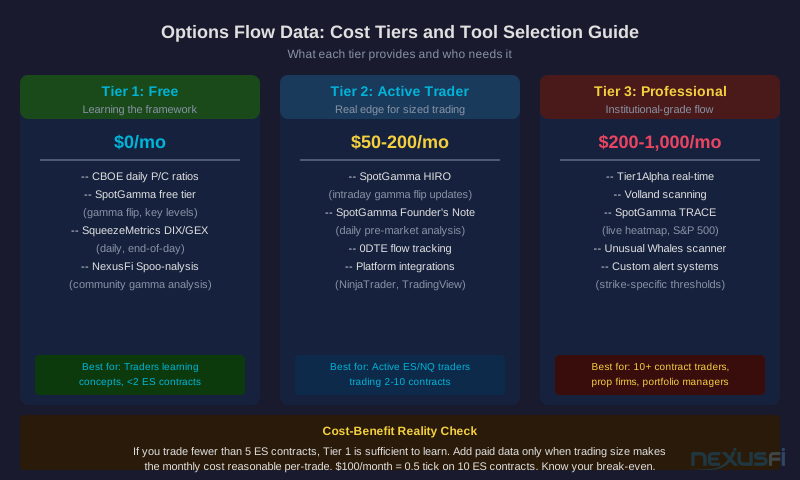
Beginner (free/low cost): CBOE website for daily P/C ratios. SpotGamma's free tier provides basic gamma flip level data. SqueezeMetrics publishes some DIX data publicly. Sufficient for understanding the concepts and doing pre-market context checks.
Intermediate ($50-200/month): SpotGamma HIRO (intraday) or equivalent services that provide real-time gamma flip updates, 0DTE flow tracking, and alert systems for gamma regime changes. This is the practical range for active retail traders who want genuine edge.
Advanced ($200-1,000/month): Tier1Alpha, Volland, or Unusual Whales for real-time options flow scanning with filtering capabilities. Combined with a SpotGamma subscription, this provides institutional-grade options intelligence at a fraction of direct data costs.
The honest assessment: if you're trading fewer than 5 ES contracts at a time, the cost-to-benefit math for paid options flow subscriptions is questionable. Learn the concepts, use the free tier tools for context, and add paid data only when your trading size justifies the monthly cost.
Common Mistakes and How to Avoid Them #
Options flow data has a specific failure mode: it creates a feeling of knowing what institutional players are doing, which translates into overconfidence in setups that don't account for all the ways the signal can fail.
The most common mistakes:
Treating large prints as directional signals. A $5M purchase of near-the-money calls is not a buy signal for ES. It could be a hedge against a short futures position. It could be a spread leg. It could be a fund covering synthetic short exposure. Options flow is positioning data, not directional prediction. Always ask "what does this imply about dealer hedging?" rather than "what does this tell me the market will do?"
Ignoring the model on event days. Gamma models assume continuous hedging and no discrete price jumps. FOMC decisions, CPI reports, and NFP prints can create instantaneous gaps that render gamma levels meaningless. Many experienced traders simply reduce size much or stay flat around major scheduled events, regardless of what the options flow suggests.
Using flow without microstructure confirmation. Options flow is a secondary signal. It never triggers trades on its own. The trade must first make sense on price action, volume profile, or order flow. Options flow either confirms or warns against what the primary analysis already suggests. The companion article on max pain and options expiration covers the dealer gamma mechanics in more detail.
Confusing signal decay with trade failure. Gamma effects operate on timescales from minutes to hours. A gamma pin at a specific strike might be relevant from 10 AM to 2 PM, then become irrelevant as 0DTE options expire. Knowing the shelf life of your signal matters as much as knowing the signal itself.
Building Your Options Flow Approach #
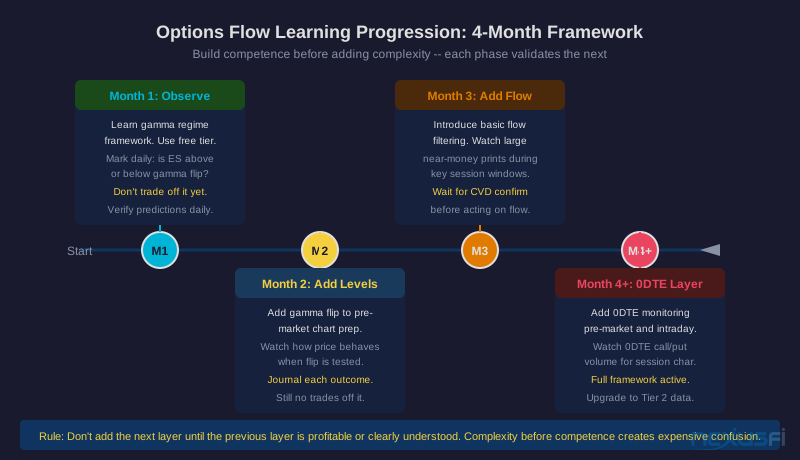
Options flow data rewards traders who build knowledge incrementally rather than trying to use every tool at once. A practical progression:
Month 1: Learn the gamma regime framework. Practice identifying whether ES is in a positive or negative gamma regime daily using free SpotGamma data. Don't trade off it yet. Just observe whether the predicted behavior (mean-reverting vs trending) matches what actually happens. Build intuition for how reliable the signal is in your typical market hours.
Month 2: Add the gamma flip level to your pre-market routine. Mark it on your chart. Watch how price behaves when it tests the flip. Note whether crossings lead to acceleration. Track this in your trading journal alongside your normal analysis.
Month 3: Introduce basic flow filtering. Start watching for large, near-money prints that occur during key session times. Pay attention to whether these prints are followed by immediate futures order flow confirmation (CVD surge, order imbalance). Don't act until confirmation appears.
Ongoing: Add 0DTE monitoring when you're comfortable with the base framework. This is the highest-effort, highest-reward layer but requires the foundation of gamma mechanics to be solid before it makes sense.
The goal is never to make options flow the center of your trading. The goal is to add a layer of structural market intelligence that occasionally tips a marginal setup into a high-conviction trade, and occasionally warns you away from a setup that would have been punished by dealer hedging working against your direction. Those two contributions — more conviction when right, fewer forced losses when wrong — compound meaningfully over time.
Key Takeaways #
- Options flow data is a dealer hedging intelligence tool, not a directional prediction system. The edge comes from knowing how market maker gamma forces mechanical futures buying and selling -- not from interpreting "big money" bets.
- The gamma regime (positive vs. negative) determines session character: mean-reverting when dealers are long gamma, trending when dealers are short gamma. The gamma flip level is the boundary between regimes.
- Put/call ratios are most useful as contrarian indicators at extremes (equity P/C above 1.15 or below 0.70). In the middle range, they're noise for directional trading.
- Filter unusual options activity through four gates: size (≥1,000 contracts), strike location (near-the-money), aggression (premium paid), and context (timing and structure). About 5% of daily flow survives all four filters.
- 0DTE options now represent 50-60% of daily SPX volume. They've made gamma events intraday rather than weekly phenomena and require monitoring from pre-market through close.
- For ES: most reliable gamma mechanics. For NQ: faster-playing, higher amplitude. For CL: use options flow for volatility warning, not pinning mechanics.
- Never use options flow without futures microstructure confirmation (CVD, order flow imbalance). It's a secondary signal, always.
- Options flow models break on event days (FOMC, CPI, NFP). Reduce size or stand aside around major scheduled catalysts.
- Data costs are significant. SpotGamma's free tier and CBOE's public P/C data are sufficient to learn the framework. Paid real-time flow is justified only when your trading size makes the monthly cost an acceptable cost-per-trade.
Knowledge Map
Go Deeper
Build on this knowledgeCitations
- — Spoo-nalysis ES e-mini futures S&P 500 (2020) 👍 19“If you want to know how options volume translates into actionable signals, you can look at a chart of May 2850 Puts. Notice the spike in volume at 12:05. Most likely a put buyer, and dealer selling it to him, leaving the dealer short puts, and having to sell futures to hedge. It led to a ~15 point selloff in /ES.”
- — Spoo-nalysis ES e-mini futures S&P 500 (2022) 👍 12“GEX or gamma exposure is 261,538,294. Which means the market flipped from negative gamma to positive gamma. Instead of buying into rallies and selling as the market goes down, hedgers will now be selling into rallies and buying as the market goes down. This has the effect of dampening volatility, and allowing the market to breathe, so to speak.”
- — Spoo-nalysis ES e-mini futures S&P 500 (2022) 👍 6“Since 0DTE options average ~50% of daily options flows, it stands to reason that having a visual representation of the flows could provide an edge for trading ES. I like to chart the 0DTE call strike that is exhibiting the highest volume, against the 0DTE put strike that has the highest volume.”
- — SpotGamma AMA - Ask Me Anything About Options Flow & Gamma Analysis (2026) 👍 2“For ES day traders using SpotGamma, we would suggest starting with pre-market support and resistance levels. These integrate directly into other trading platforms with a simple CSV upload. Our integrations include NinjaTrader, TradingView, Thinkorswim, Trendspider, and Bookmap.”
- — Webinar: The Impact of Options on Futures w/SpotGamma (2021) 👍 14“The sheer size of the SPX options market makes it the most interesting in terms of options flow. When the world needs to hedge equity exposure, the SPX options market is king of the hill. Dealers are effectively long calls and short puts -- they collect a risk premium by selling puts which are comparatively more expensive than an equivalent upside call.”
- — CBOE Daily Market Statistics: Put/Call Ratios (2026)
- — Spoo-nalysis ES e-mini futures S&P 500 (2020) 👍 23“The last two monthly expirations have seen turning points the Monday following OPEX, and considering we are at/near zero gamma (notional) the stage could be set for a turn.”
- — Spoo-nalysis ES e-mini futures S&P 500 (2020) 👍 18“Gamma 'flip' is a reliable girl. When there is evidence of gamma rich strikes and anticipated MM positioning near those strikes it can be a tell of how much volume may or should come to bear on the market to get to 'neutral' if price moves X%.”
- — Spoo-nalysis ES e-mini futures S&P 500 (2020) 👍 19“DIX is dark pool activity. GEX is gamma. Interesting to notice the price move associated with 'gamma flip' positive to negative. The formula generates very impressive readings -- would avoid about 85-90% of peak drawdown.”
- — SpotGamma AMA - Ask Me Anything About Options Flow & Gamma Analysis (2026) 👍 1“ES and NQ traders should be watching gamma exposure for the underlying index, since SPX and NDX options are hedged first and most directly in the futures market. Index options trades will result in buying or selling pressure for ES and NQ. We would treat a flip from positive to negative GEX as a structural shift -- the volatility response can begin almost immediately.”