



Volatility Skew in Futures Options: Reading the Market's Risk Fingerprint
Overview #
Every options trader has seen the volatility surface — that three-dimensional chart showing implied volatility across strikes and expirations. But most futures traders interact with it the wrong way: they look at ATM implied vol, check the VIX, and call it a day. That's leaving real information on the table.
Volatility skew is the pattern of implied volatility varying across strikes for a given expiration. In futures options, skew is not random noise — it is the options market's direct expression of where it thinks crash risk, supply shocks, and tail events are most likely to come from. ES puts trade at persistently higher implied vol than ES calls. CL puts spike hard when OPEC meets and supply disruption risk rises. GC skew flips depending on whether the market is worried about inflation or deflation. Each market's skew fingerprint tells you exactly what the crowd is pricing as dangerous.
If you're trading options on ES, NQ, CL, or GC, you need to understand skew — not as an abstract concept but as a live market signal. It affects which side of a vertical spread is expensive, whether a risk reversal is worth putting on, and how your delta exposure actually behaves when the market moves hard. This article covers the mechanics, the drivers by asset class, and what skew actually means for your positioning.
Prerequisites: You should already understand how futures options work mechanically — strike conventions, delta/gamma/theta/vega in practice, and how to read an options chain. If you haven't read the Futures Options Trading: The Complete Strategy Guide or Option Greeks for Futures Traders articles, start there.
What Volatility Skew Actually Means #
Implied volatility (IV) is what the market charges for an option. The Black-76 model — the standard for futures options pricing — takes an option price and backs out what annualized volatility is implied. Do that calculation for every strike in a given expiration month, and you get the IV curve.
In a perfect theoretical world, that curve would be flat. All strikes would have the same implied vol because the log-normal distribution Black-76 assumes is symmetric. The real world looks nothing like that.
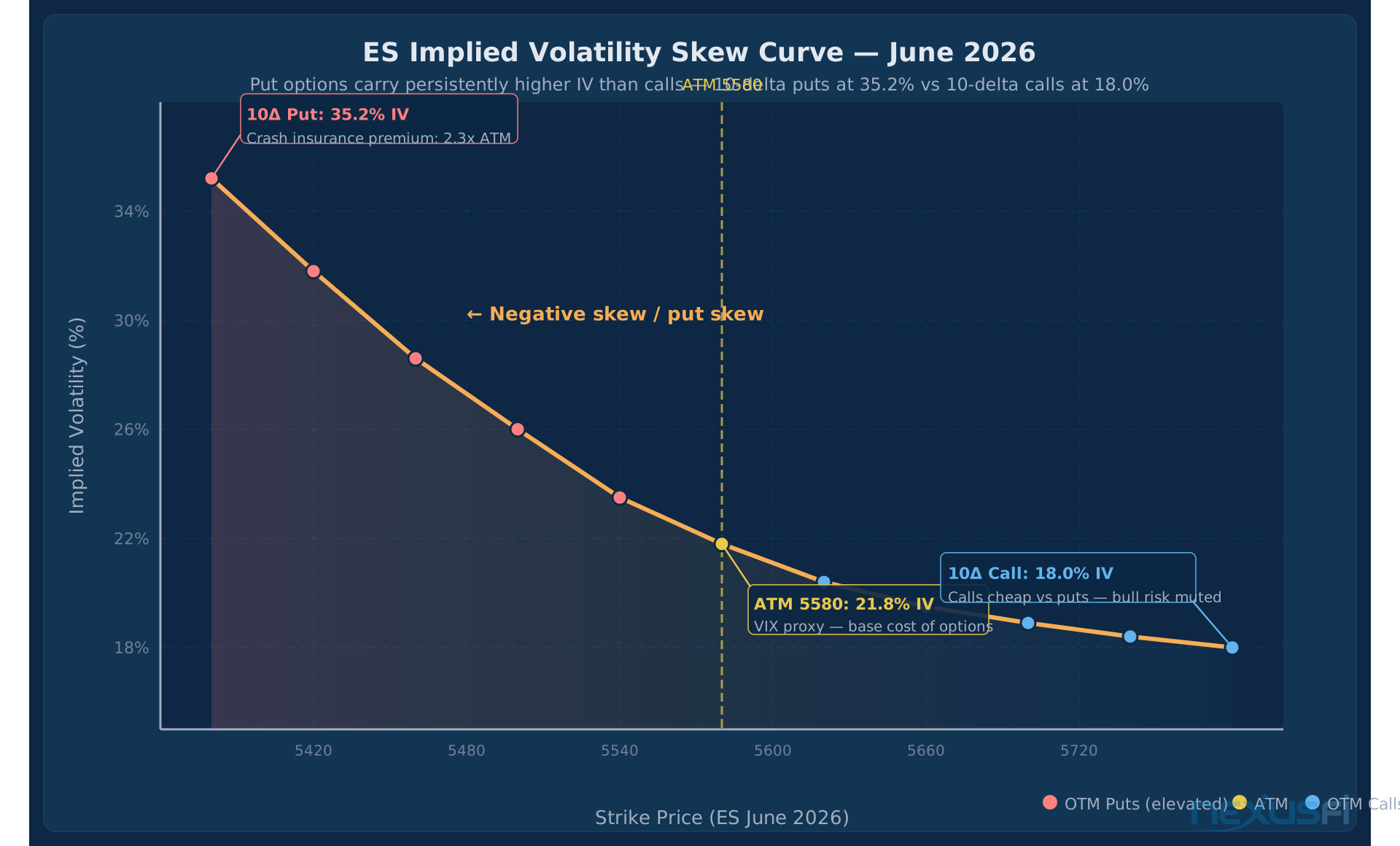
The IV curve tilts. For equity index futures like ES and NQ, it tilts hard to the left — OTM puts have much higher IV than OTM calls. That tilt is the skew. It's asymmetric, it's persistent, and it's telling you something specific: the market assigns far more probability to a large downside move than a large upside move of the same magnitude. Downside puts are more expensive because demand for downside protection exceeds demand for upside participation.
Skew has three components that traders often conflate. Level is ATM implied vol — the VIX for ES. Skew (or slope) is how IV changes across strikes — the tilt of the curve. Curvature is how much the wings bow out relative to a straight line. You can have high level with low skew, or low level with steep skew. These are independent signals that require different responses.
Different markets produce different shapes:
- Smile: IV is lowest ATM and rises in both directions. Natural gas (NG) frequently shows this — the market prices large moves in either direction because NG can spike on supply disruptions or crash on mild winters.
- Skew/Smirk: IV is monotonically higher for lower strikes. Classic ES and NQ pattern. Puts are consistently more expensive than equivalent calls.
- Reverse skew: IV is higher for calls. Shows up in CL when there's a supply disruption narrative — the market prices an upside blow-off more aggressively than a crash.
The terminology matters because it determines how you read any given options chain. When you see IV at the 1700-strike ES put running 25% while ATM is at 18% and the 1900-strike call is at 14%, you're looking at classic smirk. The 11-point ATM-to-put spread versus 4-point ATM-to-call spread tells you exactly where the crowd is paying for insurance.
Futures Options vs Equity Options: Why Black-76 Matters #
Futures options use Black-76, not Black-Scholes. The underlying is the futures price, not the spot price — cost of carry is already embedded in the futures basis. Delta and gamma calculations use the futures price. For ES options, that means ESM6 (the June contract), not SPX spot.
CME futures options are American-style, meaning early exercise is theoretically possible. In practice it is almost never optimal — most ES options desks use European-style pricing intuition. The more important point: exercising a futures option delivers a futures contract, not the underlying index. An exercised ES put delivers a short ES position. This is why dealer hedging of long ES puts happens directly in the ES futures book — their hedge is a futures sale, and that flow influences the ES order book directly.
Reading the Skew: Measures and Conventions #
There are several ways to measure skew. The standard that most professional options desks use for equity index futures:
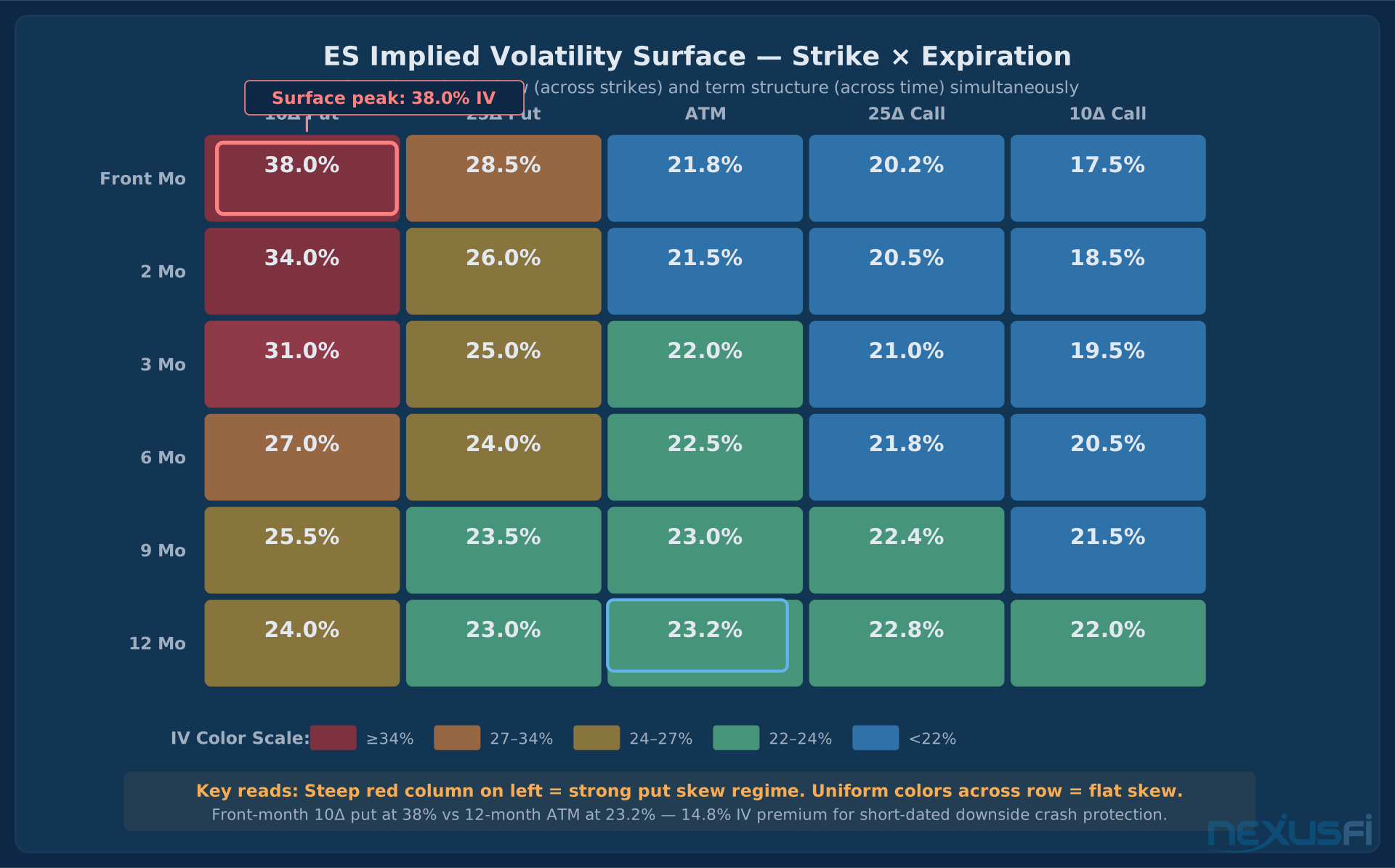
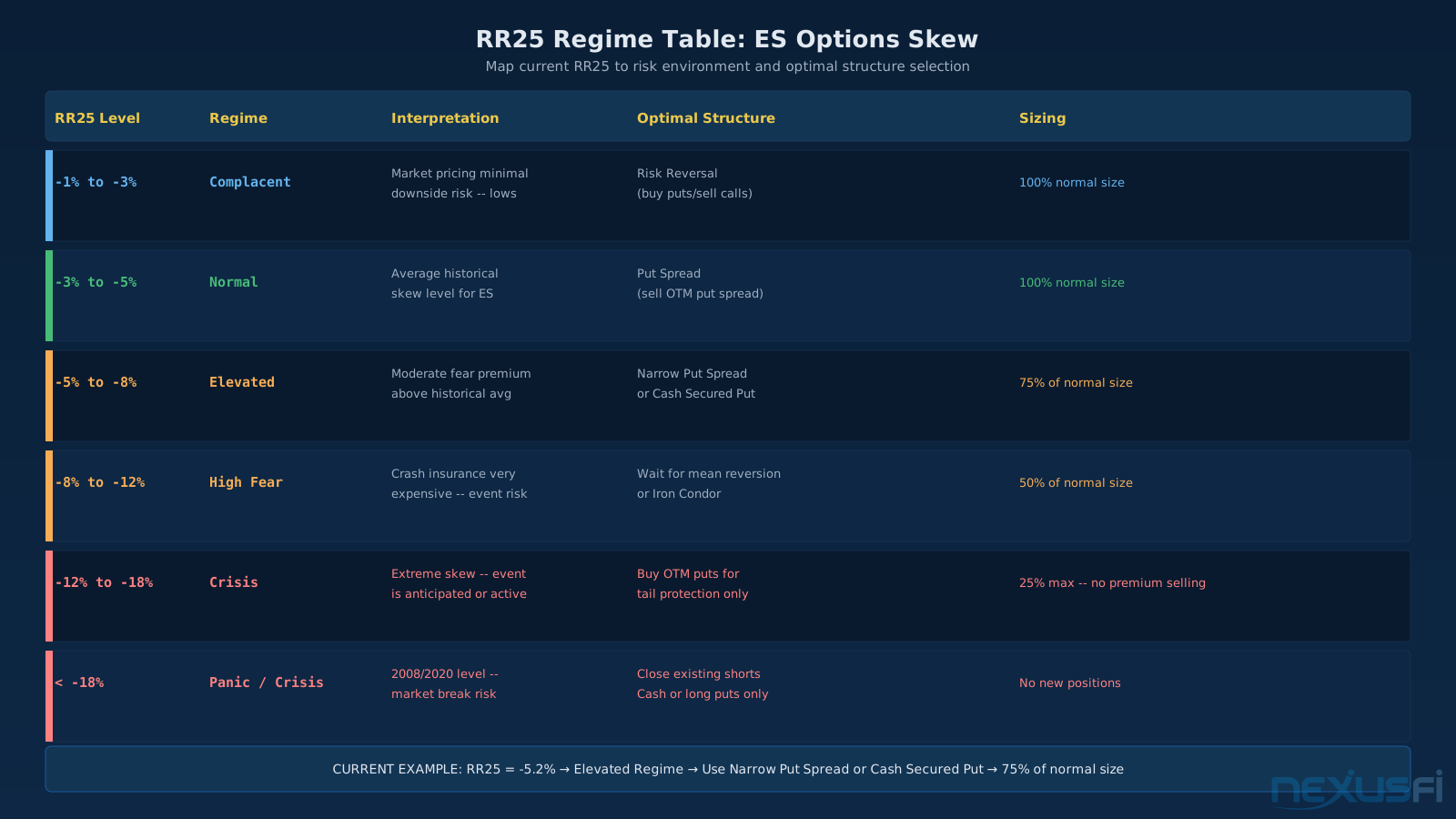
25-delta Risk Reversal (RR25): Take the IV of the 25-delta put minus the IV of the 25-delta call. A negative RR25 means puts are more expensive. For ES, RR25 is almost always negative — typically -3% to -8% in normal markets, widening to -10% to -15% during stress. The magnitude tells you how much you're paying for that skew bias.
10-delta Risk Reversal (RR10): Same calculation with 10-delta options. Captures the extreme wings rather than the 25-delta body. More sensitive to tail-risk repricing events.
Skew slope: The rate at which IV changes per unit of moneyness. Commonly expressed as IV change per 1% change in strike/forward. Steeper slope means more expensive downside protection per unit.
CBOE SKEW Index: Published daily, measures the price of a theoretical SPX option two standard deviations OTM relative to ATM. When SKEW rises, the market is paying more for tail protection. When SKEW is low, traders are comfortable with the distribution being roughly normal. It's an EOD indicator — timeliness matters.
For real-time skew tracking, the SDEX (1-SD OTM put normalized by ATM vol) is more useful than the CBOE SKEW Index. SDEX is calculated continuously during the session. When SDEX falls while SPX rallies, the market isn't buying tail protection into the rally — that's often a signal the rally lacks conviction and won't sustain.
[1]
The practical data point every day trader should internalize: check where RR25 is relative to its recent range before entering any options position. A risk reversal at historic wides means puts are especially expensive — selling put spreads is more attractive than usual because you're collecting elevated IV on the short leg. A risk reversal at historic narrow means skew is compressed — perhaps ahead of a positioning reset.
Why Skew Exists: Drivers by Market #
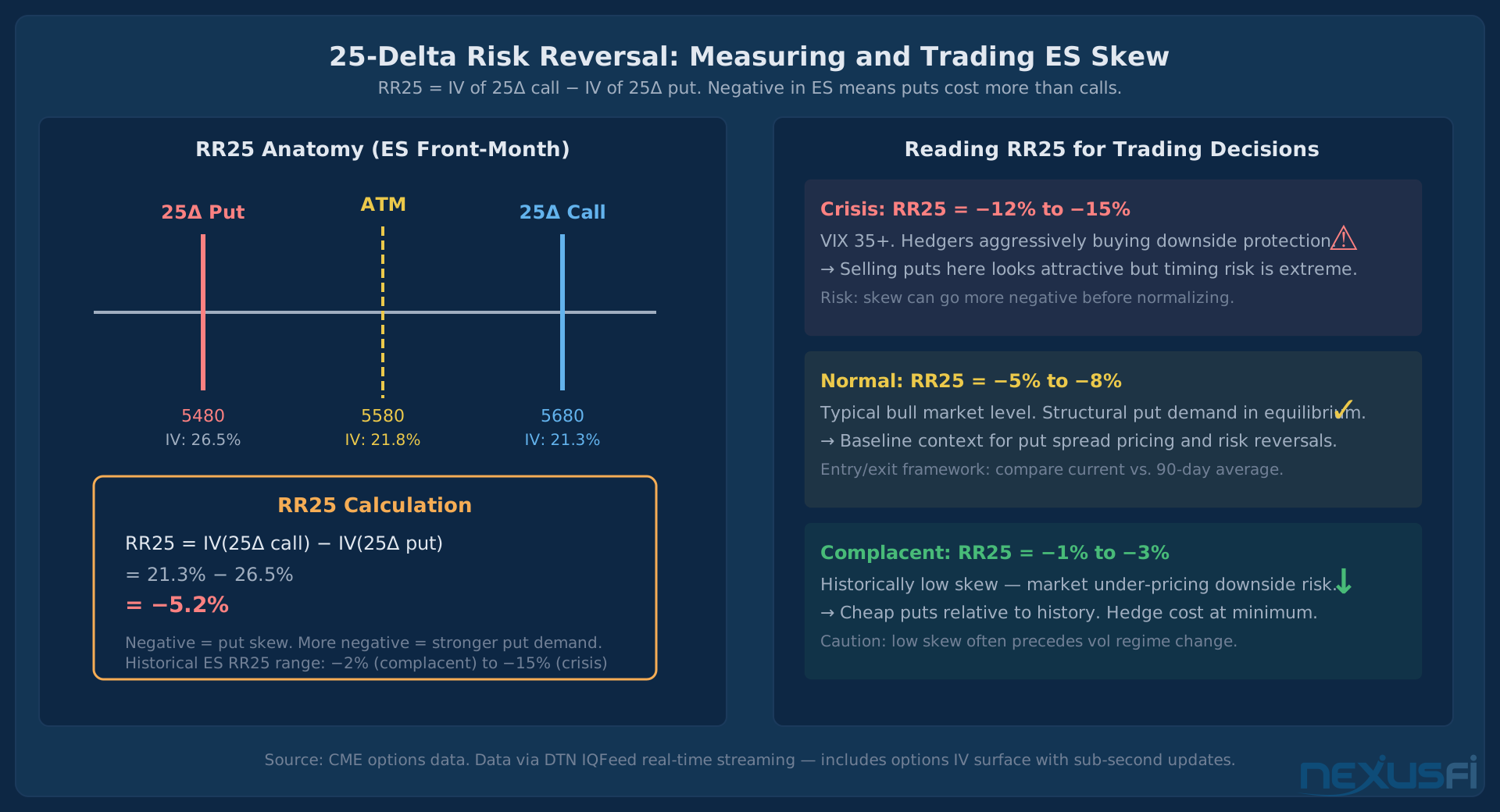
Skew doesn't just exist, it exists for specific structural reasons that differ by market. Getting these wrong means misreading what the skew is telling you.
ES and NQ: The Crash Premium #
The persistent negative skew in equity index futures traces directly to the 1987 crash. Before October 19, 1987, ES-equivalent options showed something close to a flat smile — the market assumed log-normal distributions and priced puts and calls roughly symmetrically for equivalent strikes. The crash rewrote that assumption permanently.
After 1987, large institutions, pension funds, and portfolio managers permanently shifted their options posture. They became structural buyers of OTM puts as portfolio insurance. The supply of downside protection never caught up with the demand. That structural imbalance created the persistent skew that's been there ever since.
[2]
The modern dynamic is even more complex. Post-2012, large institutions shifted from pure tail hedging toward call overwriting and put underwriting strategies — basically selling volatility back to the market as yield enhancement.
[3]
This dealer gamma positioning is why the skew behaves the way it does around the 5% down level. Inside 5%, dealers are aggressively buying dips and selling rallies to hedge their short gamma. Beyond 5%, convexity changes and the market is free to accelerate lower — which is exactly when skew steepens most aggressively.
For day traders: ES put skew tends to steepen on down days and compress on up days. If you're selling put spreads, you want to enter after a selloff when put IV has been elevated. If you're buying put spreads, entering on quiet rallies when skew is compressed is cheaper — you're paying less for the long put leg.
CL: Supply Dynamics and Regime Flips #
Crude oil skew is structurally different because CL can move violently in either direction depending on the news flow. During normal periods of stable production, CL shows modest put skew — the market prices some downside from demand shocks or OPEC supply surprises. But this can flip entirely.
During periods of supply disruption narrative — OPEC cuts, Middle East escalation, pipeline outages — call skew can exceed put skew. The market shifts from pricing "crude crashes on oversupply" to pricing "crude spikes on supply shock." The skew actually inverts.
[4]
The key data input for CL skew reading is inventory reports (EIA Wednesday) and OPEC/geopolitical headlines. When the RR25 flips positive (calls more expensive than puts), the market is pricing a squeeze or spike — that's your signal to reassess any short call positions and tighten stops on the long side.
CL skew can shift from put-dominated to call-dominated within hours of a geopolitical headline. Never assume CL skew has a stable direction. Check the options chain the morning of any major geopolitical development before entering a directional position.
GC: Macro Regime and the Safe-Haven Bid #
Gold futures skew reflects the macro narrative more than any other major market. When the dominant theme is inflation fear or dollar weakness, call skew can be elevated — the market prices a gold spike more aggressively. When the dominant theme is dollar strength or risk-on positioning, put skew builds as the market prices gold selling off.
GC's skew is regime-dependent in a way that ES isn't. ES put skew is structurally persistent. GC skew genuinely changes direction depending on what the macro narrative is. This means reading GC skew requires knowing the current macro context — you can't just look at the skew number in isolation.
The flight-to-safety bid matters too. During equity stress events, gold call skew sometimes rises as institutions buy calls to hedge equity exposure — if equities crash and dollar weakens, gold spikes. This gold call premium exists even while ES put premium rises, creating an interesting relative value trade.
Skew Across Maturities: What Changes as You Look Further Out #
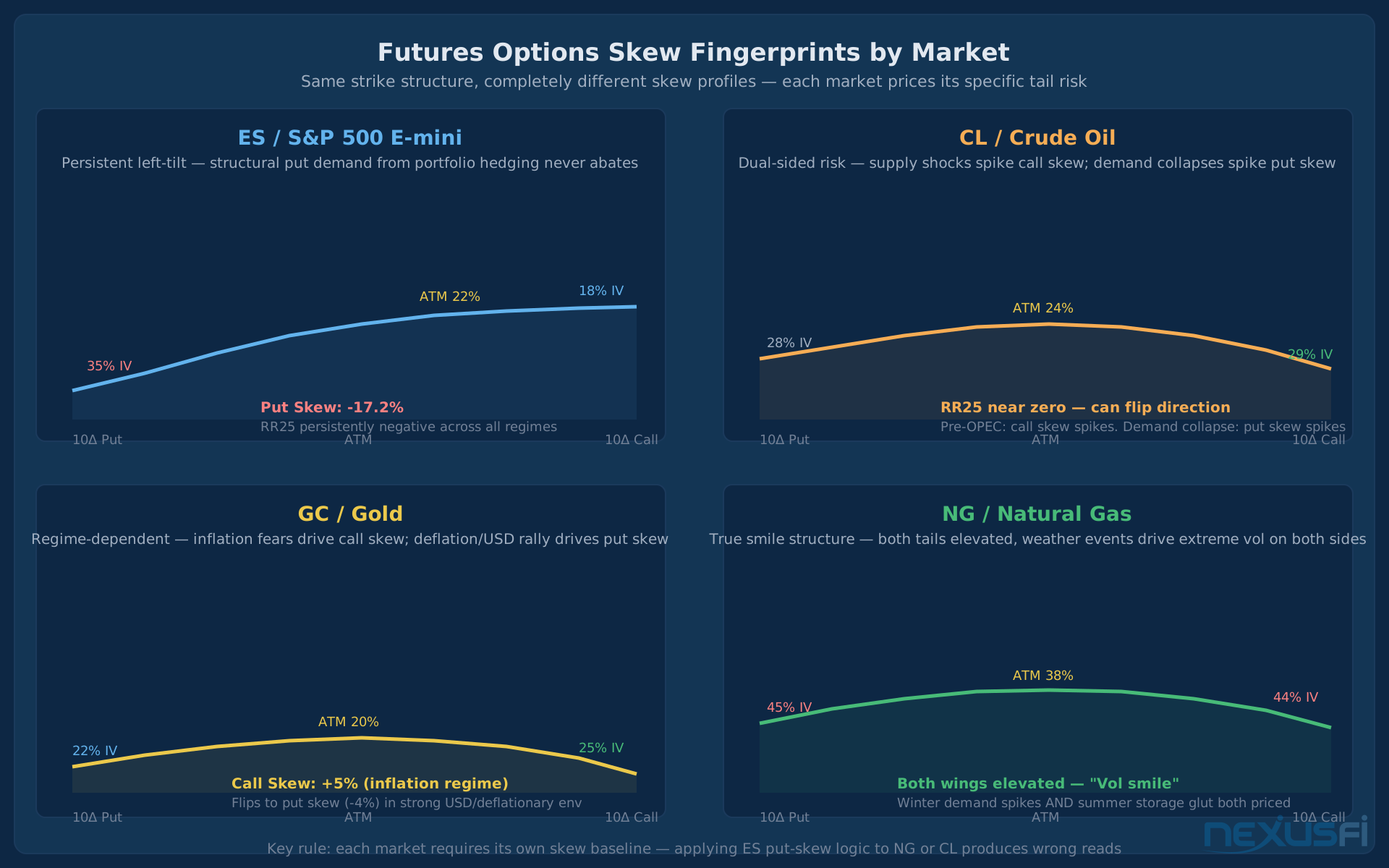
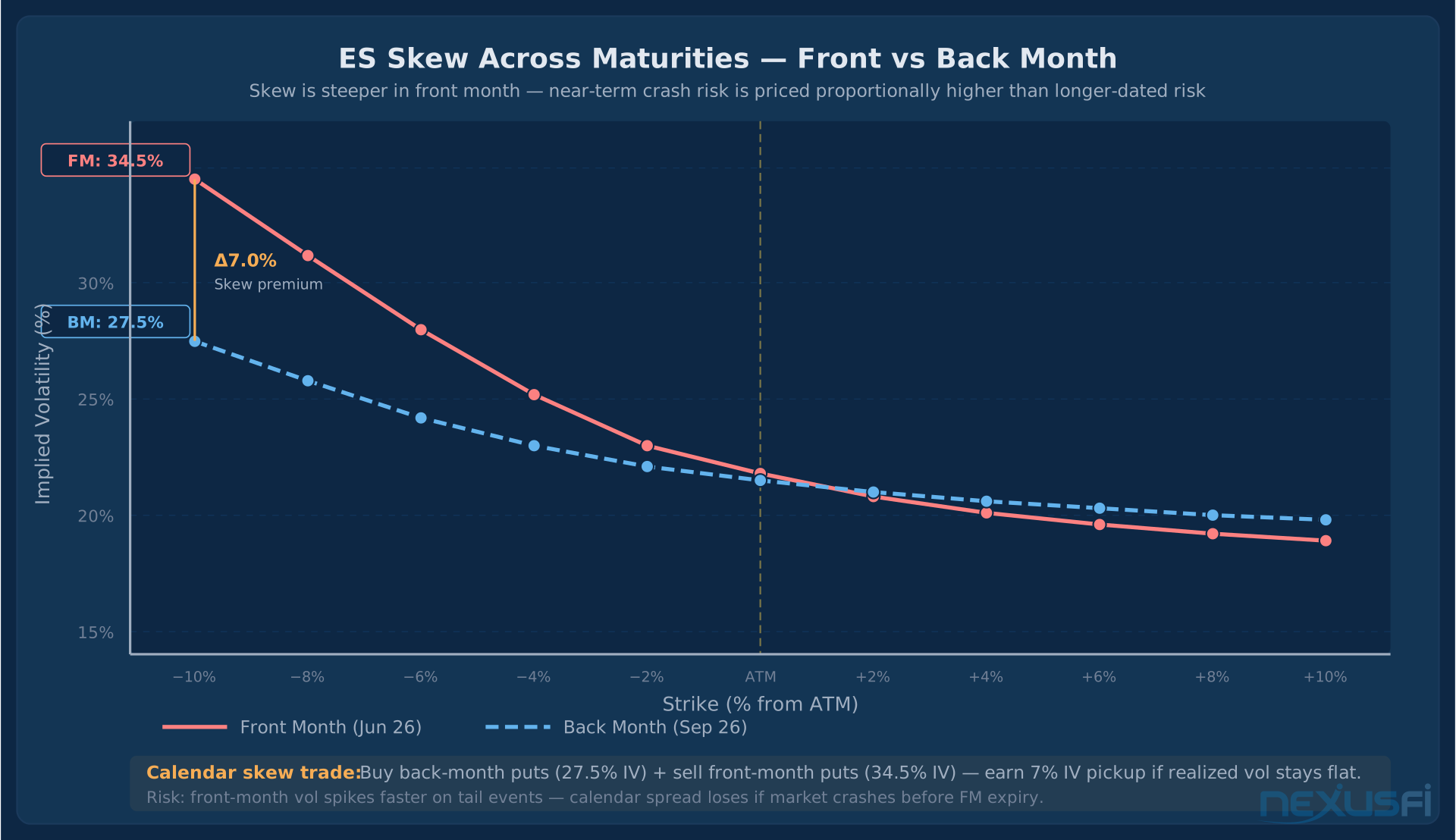
Skew is not constant across time. The front-month options show the most reactive, event-driven skew. Back-month options show more structural, macro-path-driven skew. These can tell very different stories.
Front-month skew: More sensitive to near-term event risk (FOMC, CPI, earnings). Spikes around scheduled events and compresses quickly after them. During the week before a major macro release, front-month put skew can expand 15-30% just from the event premium. This front-month skew elevation is one reason why selling weekly or monthly puts in the week before FOMC can produce misleadingly high premiums — you're collecting event risk that collapses immediately post-announcement.
Back-month skew: More structural. Reflects the market's expectation of the volatility distribution over a longer horizon. If 3-month skew is steep while 1-month skew is compressed, the market is saying: "Right now things seem calm, but we see structural risk further out." That's a useful regime signal.
The term structure of skew connects directly to what
[5]
Front-month skew = event risk and near-term hedging. Back-month skew = structural risk and macro path uncertainty. When they diverge — calm front month but steep back-month — the market is pricing a regime shift further out. When front month spikes while back month stays flat, the event passes and skew compresses fast.
Practically: the most useful single action before any options trade is to compare the skew shape across at least two expirations. If both show elevated put skew, you're in a structurally risk-off environment. If only the front month is elevated, it's event-specific and will pass.
How Skew Changes Your Trading #
This is where skew goes from concept to edge. Three direct applications:
Vertical Spread Selection #
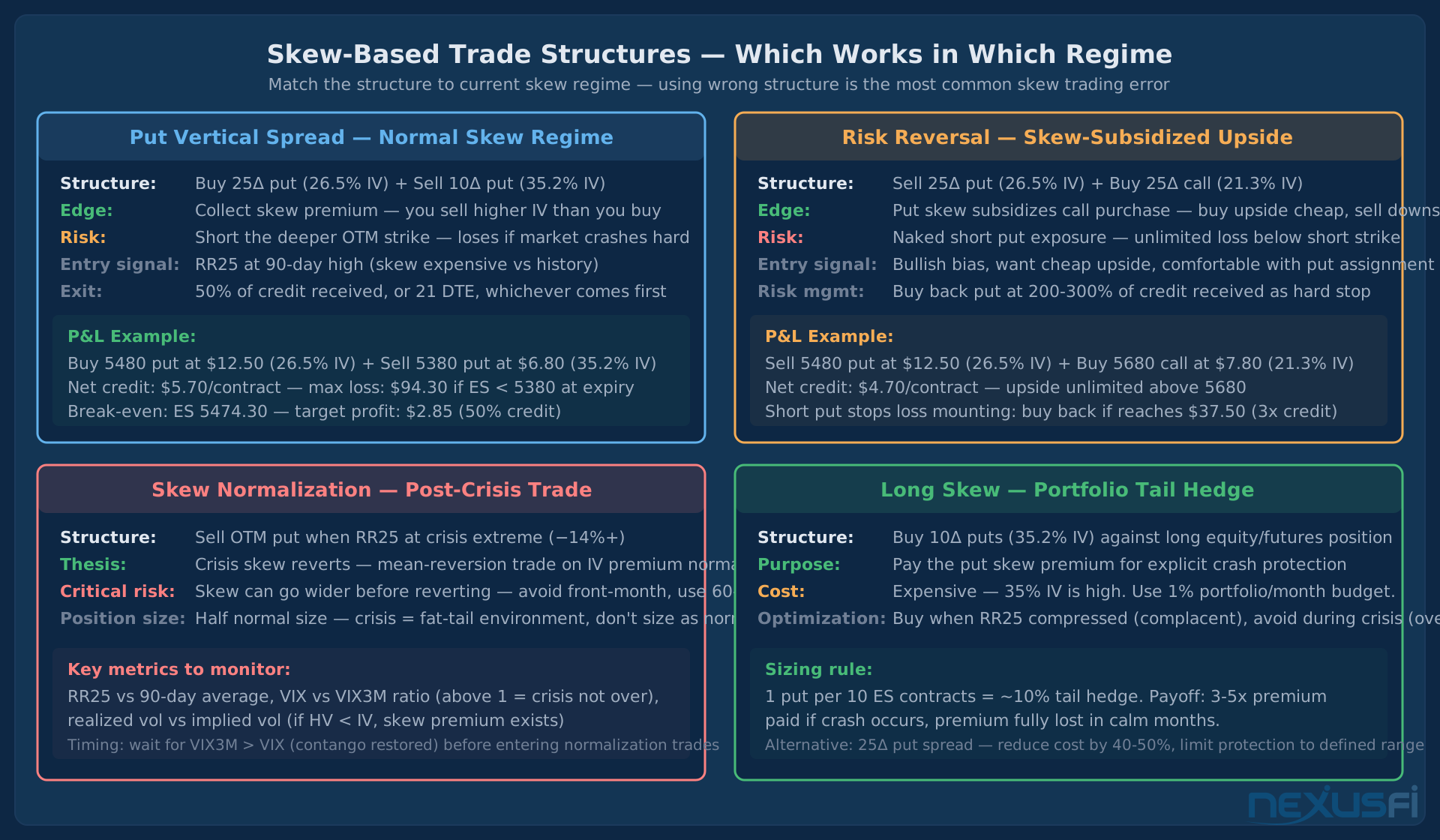
When you trade a put spread or call spread, you're buying one option and selling another. The relative IV between those two strikes — driven by skew — determines your actual edge.
For ES put spreads in a high-skew environment: the long put (higher strike, closer to ATM) has lower IV than the short put (lower strike, further OTM). Wait — that's backwards from what you'd want for a spread seller. You're selling the lower IV option and buying the higher IV option when you go short a put spread. That's why selling bull put spreads in elevated skew environments is actually unfavorable — you're paying more for the short strike relative to what you'd ideally want.
The better trade when put skew is steep: sell cash-secured puts outright or sell put spreads further OTM where the short put still captures a lot of the premium. @SMCJB made this precise: "The combination of the volatility skew in ES options (calls have lower IV than puts) and the directional bias of equity index's means the returns for call selling are much lower than put selling." [6]
@ron99's systematic approach exploited this directly: "I sell around 0.0300 deltas at 90-110 DTE (strikes about 400-500 below futures) and buy back when premium is 50% gone." At those deep OTM strikes, put skew means IV is much elevated relative to ATM — you're selling inflated premium in the fat right tail of the premium distribution. [7]
For call spreads in a high-skew market: the short call (lower strike, closer to ATM) has higher IV than the long call (higher strike, further OTM). Selling call spreads actually benefits from skew here — you're selling the higher IV option and buying the cheaper wing. This is why bear call spreads are often the better defined-risk vehicle in high-skew environments even when you just want to express mild bearishness.
Risk Reversals as Skew Trades #
A risk reversal (RR) is buying an OTM call and selling an OTM put (or vice versa) at the same delta. Since puts are more expensive than calls in ES, selling a risk reversal (selling the put, buying the call) collects a net credit. You're being paid to take on the negative delta exposure.
The skew level tells you how much that trade pays. When RR25 is at -8% (puts 8% more expensive), selling the RR collects significant credit — but you're also taking on significant negative delta. When RR25 compresses to -3%, the credit shrinks and the trade makes less sense unless you specifically want the delta exposure.
Risk reversals are also used as skew indicators by @CafeGrande: "Risk Reversals can be a trading strategy, but they're also a good way to plot the IV curve/skew as a time series (it saves having to click through x number of days to watch the shape change). You can calculate them using any delta, but a couple of common calcs are RR10 (IV of a 10-delta call minus the IV of 10-delta put) and RR25." [4]
The time-series of RR25 is one of the most useful sentiment indicators you can track as an ES trader. When RR25 expands to historic wides, the crowd is paying up for insurance — often near a fear peak. When RR25 compresses to historic tights, the crowd is complacent about downside — often near a positioning extreme.
Butterfly and Condor Construction #
Skew affects wing pricing in butterflies and condors too. The standard iron condor sells OTM put spreads and OTM call spreads. In a high-put-skew environment, the put side collects more premium than the call side for the same wing width. That means your condor structure naturally skews toward put premium collection.
The practical implication: don't size your condor symmetrically. If put skew is substantially higher than call skew, the center of the premium isn't at ATM — it's below ATM where the put wing dominates.
[8]
Greeks Under a Skewed Surface #
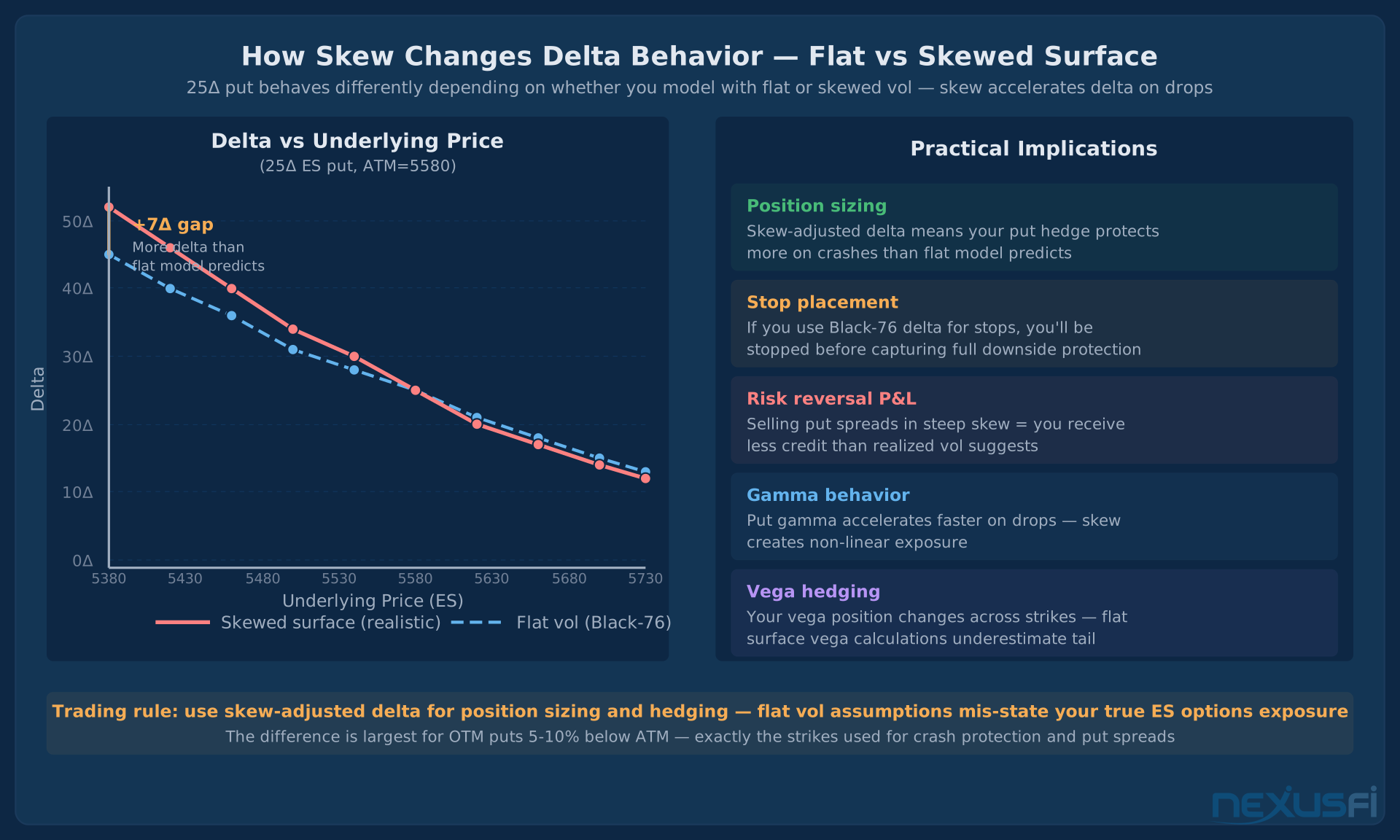
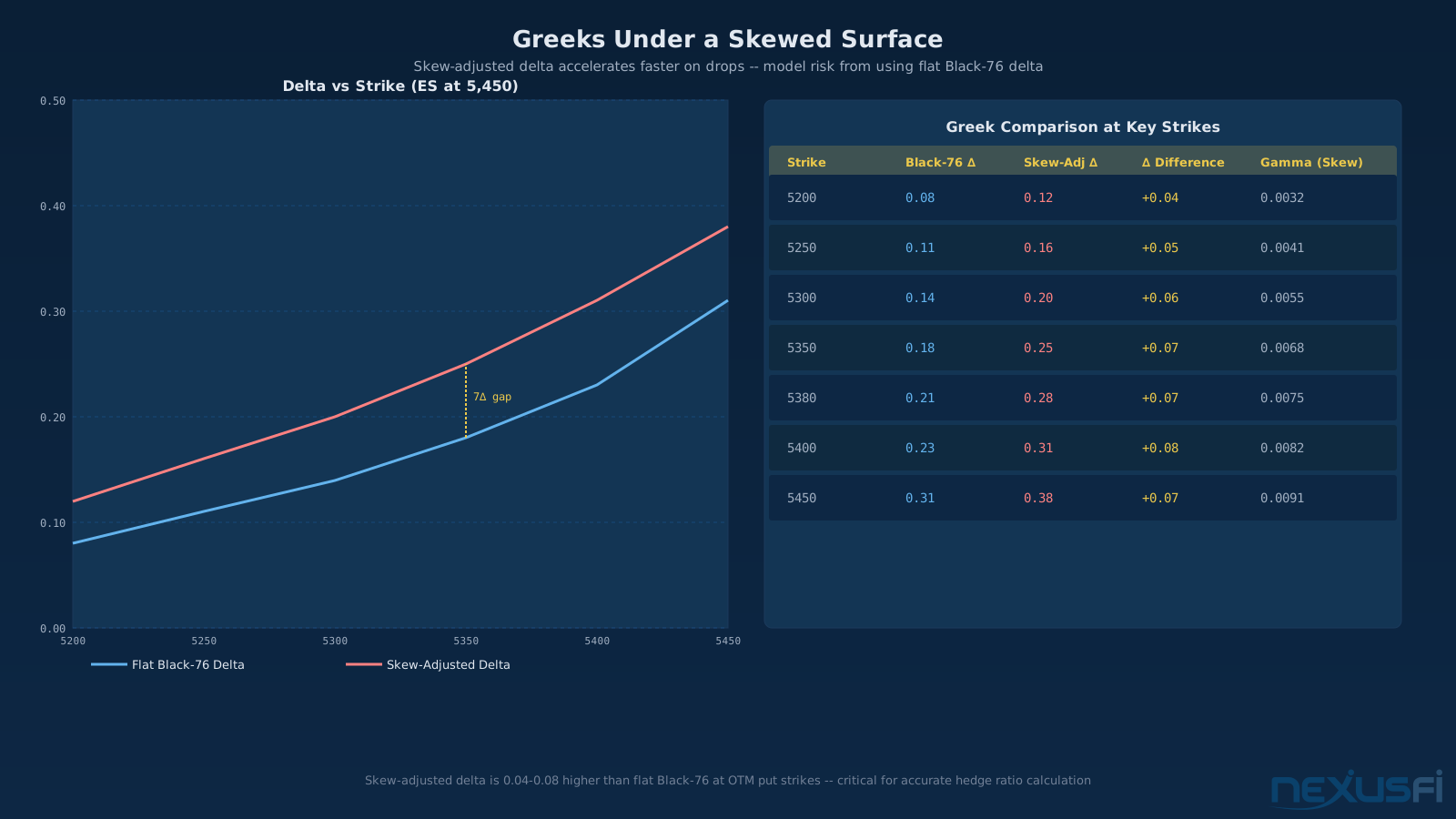
This is where academic options pricing meets real-world P&L. Under a flat IV assumption (Black-76 with one IV for all strikes), delta and gamma behave predictably. Under a skewed surface, they don't.
Delta behavior: The delta of an option doesn't just depend on where the market is — it depends on where implied vol is at that strike. Since put skew pushes up IV for lower strikes, OTM puts have a higher delta (in absolute terms) than a flat-vol model would predict. An ES 25-delta put that a flat model says has 0.25 delta might actually have 0.27-0.30 delta when you account for the skew. You're more long delta than you think when you buy OTM puts.
Vega exposure: Your vega isn't uniform across strikes either. A put wing position has high vega sensitivity to a change in the slope of the skew — not just a parallel shift in the entire IV surface. You can be vega-neutral at ATM while having significant exposure to a skew steepening or flattening. Professional desks track "vanna" (sensitivity of delta to IV) and "volga" (sensitivity of vega to IV) specifically because of this.
Gamma convexity: When skew is steep, short OTM put positions have more gamma than expected as the market falls into those strikes. Dealers who are short puts (through put underwriting programs) find their delta exposure increasing faster than a flat-vol model predicts during a selloff — which is exactly why their hedging buying can be less aggressive than expected when the market is already down much and convexity has shifted.
The most practical skew-to-Greeks takeaway: when ES drops hard, short put positions have higher delta acceleration (faster position growth) than your Black-76 model shows. This means short put risk is actually worse in a crash than your software's position P&L suggests. Size your naked or cash-secured puts so — they will hurt more than they look on screen.
Risk Management for Skew Trades #
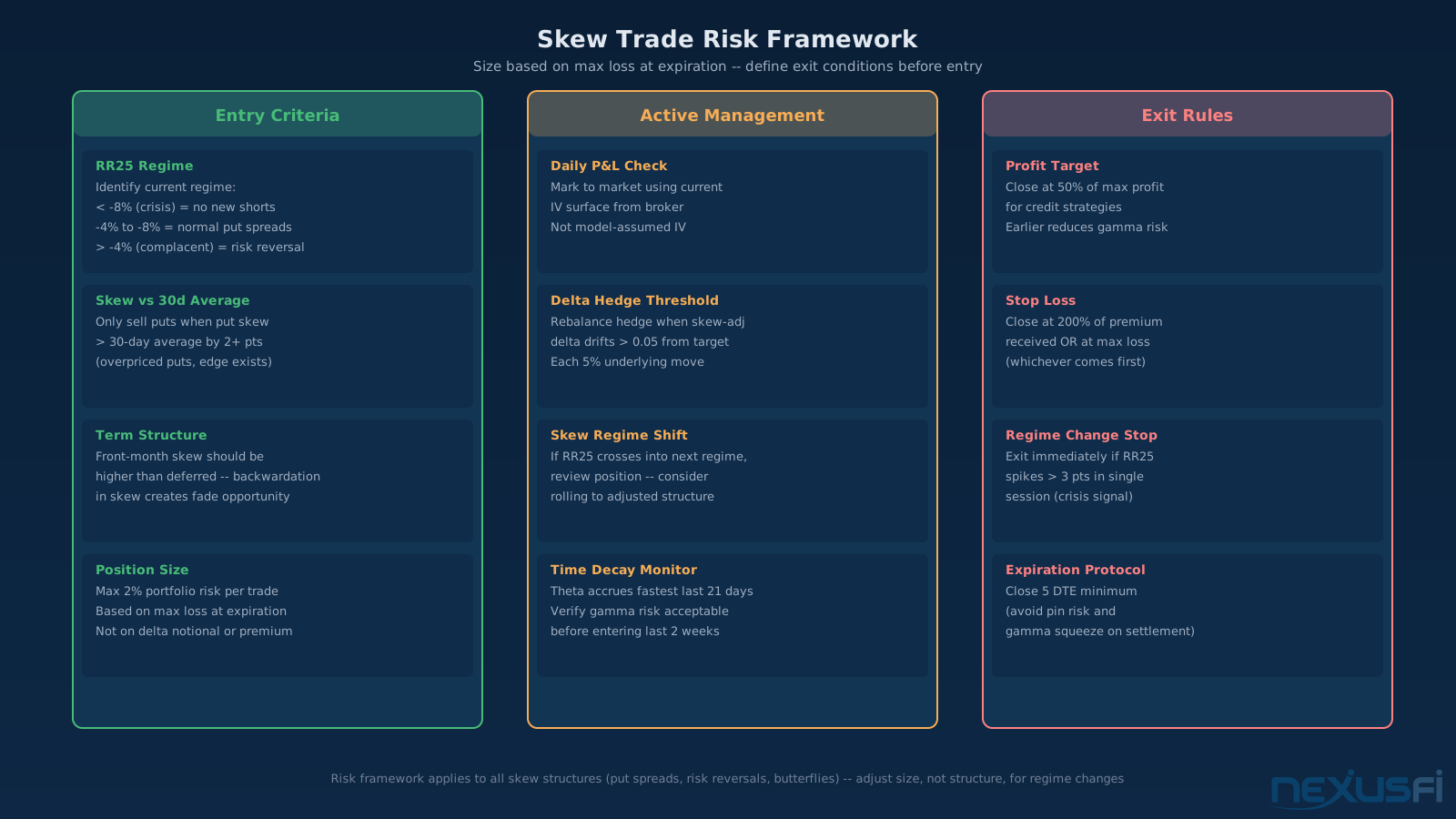
The single biggest risk in any skew trade is tail re-pricing. Skew exists because the market prices tails asymmetrically. Trading against it — selling put wings — means you're short the tail risk premium. Fine when compressed, catastrophic when a vol spike hits.
Know your break-even move, not just your profit zone. When you sell a 30-delta ES put in elevated skew, delta and vega both work against you in a selloff. In a 5% down move, that put's IV can jump from 22% to 35% and its delta from 0.30 to 0.60. Your platform P&L shows a small loss because it's "30-delta" — the actual loss is much larger because skew amplifies both effects.
Size for the regime, not just the IV. When VIX term structure is in backwardation (front > back), the market is pricing near-term stress. Elevated front-month premium is not free money — it's compensation for that stress.
[9] In backwardation, you're not riding with them — you're on the other side.
Selling put wings when VIX is in backwardation is one of the most reliable ways to blow up an options account. The elevated front-month premium isn't free money — it's compensation for near-term stress that the market is actively pricing. The position can turn into a full loss within hours if a macro shock materializes.
Common Misconceptions and Traps #
"High skew means buy puts." Wrong direction. High skew means puts are expensive — it makes buying them costly. High skew is when you sell put spreads, not buy them outright.
"You can fade the structural skew." Skew is driven by persistent demand imbalances. You can trade around extremes, but do not mistake short-term compression for the structural premium disappearing. Institutions always pay for downside insurance.
"Same skew logic across all markets." ES put skew is persistent and structural. CL skew can flip entirely on a single geopolitical headline. NG can show a true smile (both wings elevated). Read each market on its own terms.
"Compressed skew = safe to sell puts." Often the opposite. Historical low skew signals complacency and frequently precedes a regime shift — the worst entry point for short put programs.
Put/Call ratio vs. skew: PCR measures put volume vs. call volume — sentiment. Skew measures IV differential — pricing.
[1] Conflating them produces bad reads.
Practical Daily Workflow #
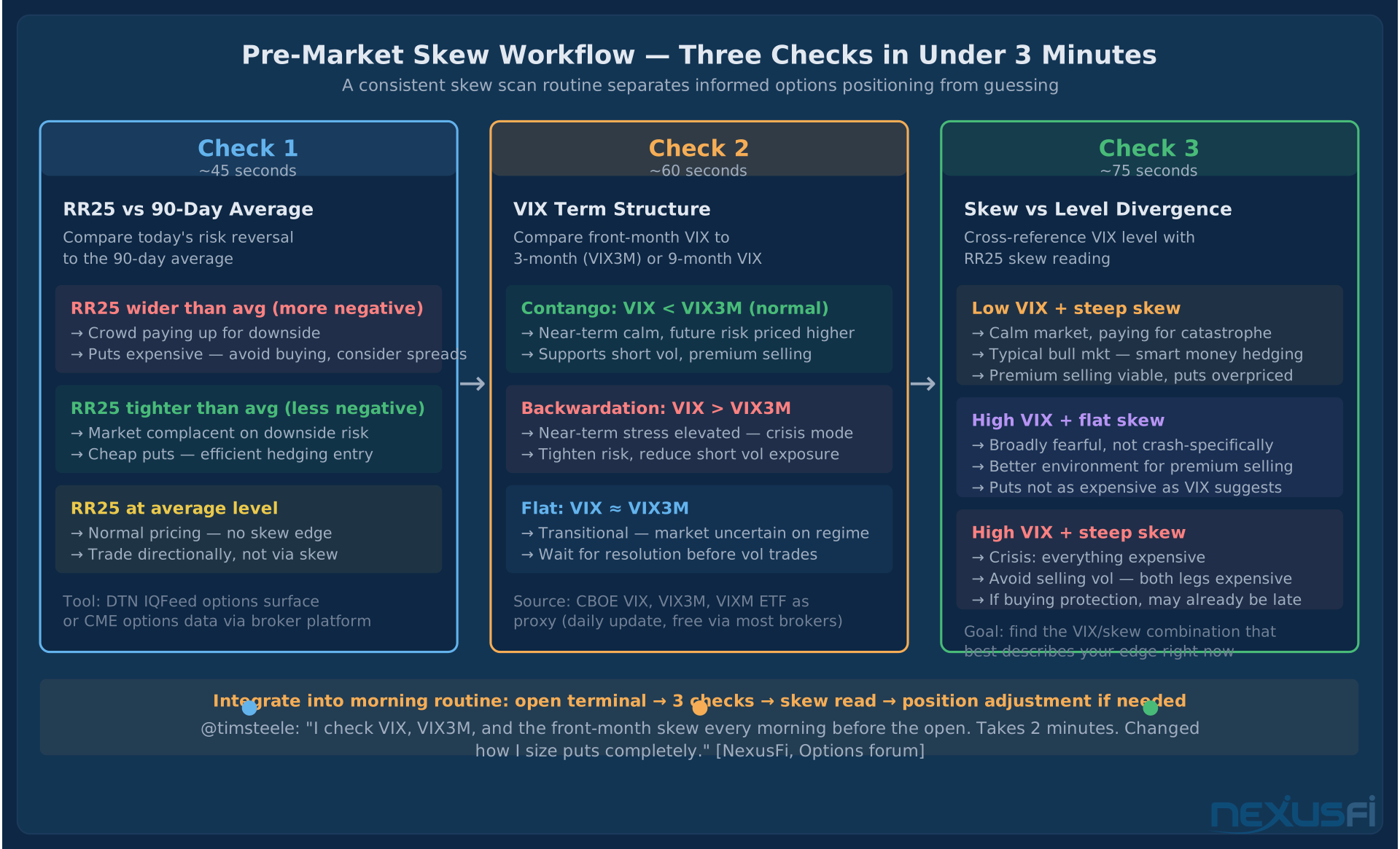
Integrating skew into your pre-market prep doesn't require building a vol surface from scratch. Three data points cover most of what you need:
- RR25 vs. 90-day average: Is put skew wider or tighter than normal? Wider means the crowd is paying up for downside protection — either smart money sees something or it's a sentiment extreme. Tighter means complacency.
- VIX term structure: Is front month VIX above or below 3-month VIX? Contango (front < back) is normal and supportive of short vol strategies. Backwardation (front > back) means near-term stress is being priced — tighten risk.
- Skew vs. level divergence: If VIX (level) is low but skew is steep, the market is calm but paying for catastrophic protection — typical bull market behavior. If VIX is high and skew is flat, the market is broadly fearful but not specifically pricing crash scenarios — often a better environment for premium selling than you'd expect.
Skew is the options market's opinion about the shape of risk, not just the level of risk. VIX tells you the market expects volatility. Skew tells you which direction the market expects the volatility to come from. You need both to properly assess your options positions.
The Academy articles on Implied Volatility Rank (IVR) and IV Percentile, Selling Options on Futures, and Option Greeks for Futures Traders give you the full framework for deploying what you've learned here.
Putting It Together: A Real Trade Setup #
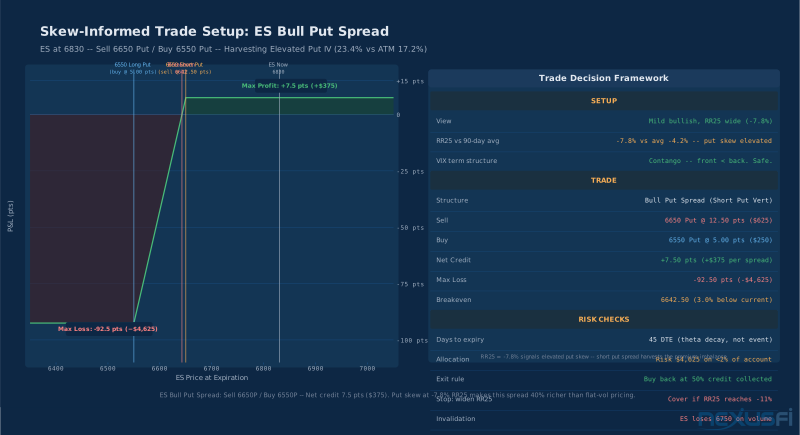
ES at 6830. RR25 is at -7.8% versus a 90-day average of -4.2%. VIX term structure in contango (front 16.4, 3-month 18.1). Elevated put skew on calm VIX means institutional hedging demand without retail panic. Tradeable.
Trade structure — Bull Put Spread, 45 DTE:
- Sell 6650 put @ 12.50 pts ($625)
- Buy 6550 put @ 5.00 pts ($250)
- Net credit: 7.50 pts ($375 per spread)
- Max loss: 92.50 pts ($4,625)
- Breakeven: 6642.50 (3.0% below current)
The edge: at flat vol 17.2% ATM, the 6650 put is worth ~8.75 pts. Put skew at 23.4% for that strike prices it at 12.50 pts — 43% richer. You are selling structural premium that institutional hedgers pay for crash insurance.
Exits: Cover at 50% credit (~day 20-25). Hard stop if RR25 widens past -11%. Structural stop if ES loses 6750 on volume. Keep total options risk under 10% of account.
Vanna warning: This spread has positive vanna. A 5% ES down move makes the short put delta accelerate faster than Black-76 shows. The spread hurts more than your platform P&L suggests in a fast selloff. Do not let elevated IV tempt you into oversizing.
RR25 Worked Example and Regime Table #
RR25 formula: IV(25Δ call) - IV(25Δ put)
ES at 6830, 45 DTE, forward delta on skewed surface:
- ATM IV 17.2% | 25Δ put strike ~6580 at 23.8% IV | 25Δ call strike ~7060 at 15.1% IV
- RR25 = 15.1% - 23.8% = -8.7%
Note: the skewed surface shifts the 25Δ put strike ~50 pts lower than a flat-vol model predicts, because put IV increases at OTM strikes, raising delta for those strikes. When desk quotes say "25-delta put," confirm whether they mean forward delta under the smile or flat-model approximation.
| Regime | RR25 | Trade Bias |
|---|---|---|
| Complacent | -1% to -3% | Buy put spreads cheap |
| Normal | -3% to -6% | Standard short put spreads |
| Elevated | -6% to -9% | Reduce size, tighter stops |
| Stressed | -9% to -12% | Cover shorts, consider long skew |
| Crisis | -12%+ | Long volatility only |
Knowledge Map
Go Deeper
Build on this knowledgeReferences This Article
Articles that build on this topicCitations
- — Selling Options on Futures? (2014) 👍 1
- — Selling Options on Futures? (2013) 👍 21
- — Spoo-nalysis ES e-mini futures S&P 500 (2022) 👍 10
- — Spoo-nalysis ES e-mini futures S&P 500 (2014) 👍 7
- — Attack of the Robots - An Algo Journal (2019) 👍 4
- — Selling Options on Futures? (2016) 👍 5
- — Selling Options on Futures? (2013) 👍 8
- — Understanding Volatility Skew
- — CBOE VIX Index
- — Spoo-nalysis ES e-mini futures S&P 500 (2014) 👍 7
- — Spoo-nalysis ES e-mini futures S&P 500 (2014) 👍 8