



Cryptocurrency Futures Regulation: CFTC, SEC, and the Digital Asset Rules Every Futures Trader Must Know
Overview #
If you trade crypto futures — or you're thinking about it — the regulatory environment changed materially in 2026. The decade-long turf war between the CFTC and SEC over who governs digital assets ended with a joint interpretation in March 2026 that established a coherent token taxonomy. At the same time, the CFTC issued new guidance permitting FCMs to accept bitcoin and ether as margin collateral, and CME Group announced 24/7 crypto futures trading and a new Bitcoin Volatility futures contract.
This isn't abstract compliance trivia. Regulatory structure determines which protections apply to your account, how your margin works, what rules govern the platforms you use, and what happens if a broker fails. A futures trader who skips this due diligence is flying blind into one of the most legally complex corners of derivatives markets.
The short version: crypto futures traded on CFTC-regulated exchanges like CME Group operate under the same framework as oil, gold, and equity index futures — cash-settled contracts, segregated customer funds, FCM registered with CFTC and NFA. Unregulated perpetual swaps on offshore platforms offer none of these protections.
This article covers CFTC-supervised crypto futures only. Spot crypto trading, token issuance, DeFi lending, and NFTs are adjacent but distinct regulatory domains.
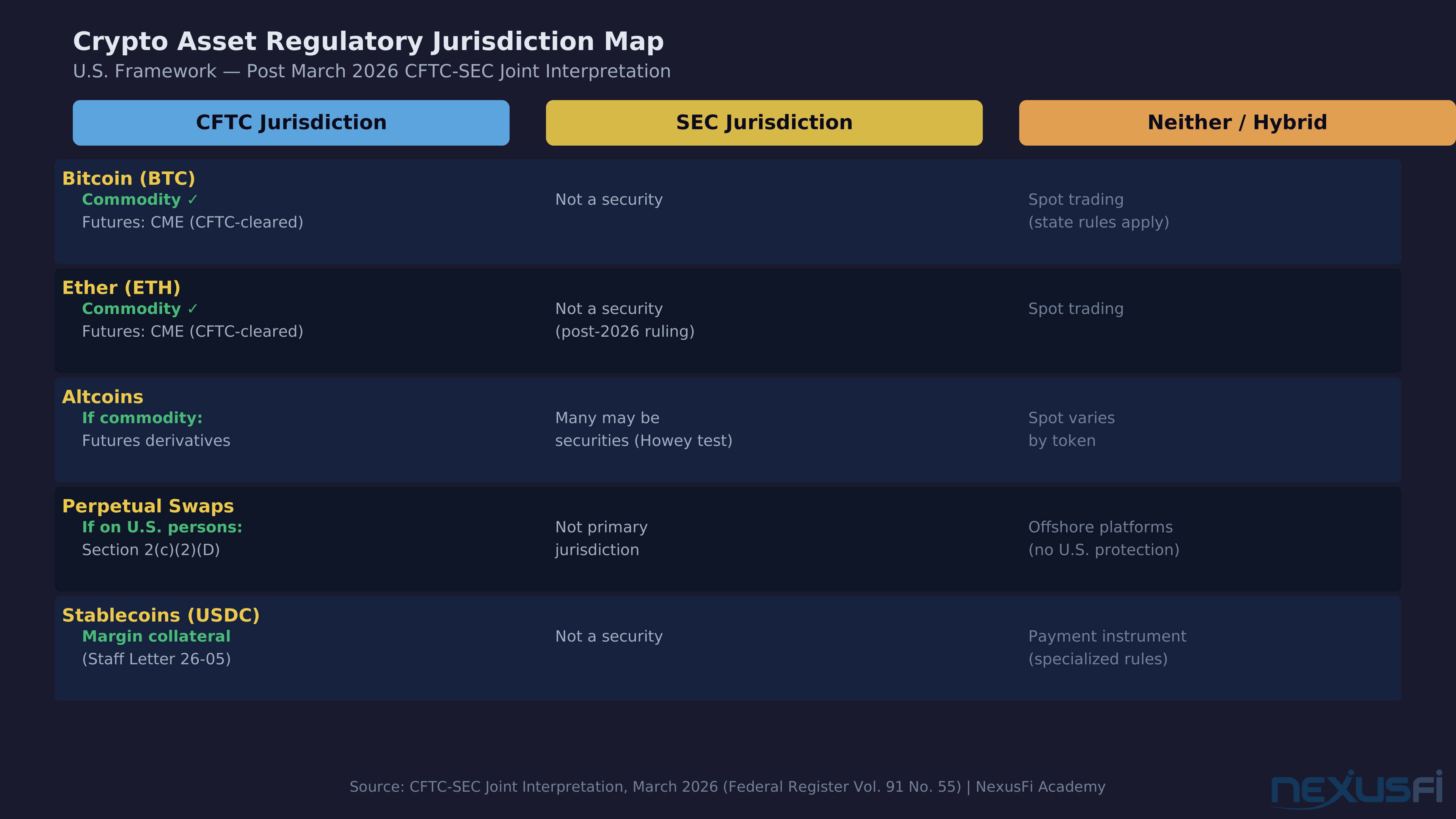
The March 2026 joint CFTC-SEC interpretation clarified that most crypto assets are not securities — they are commodities, meaning derivatives on them fall under CFTC jurisdiction. This resolved over a decade of enforcement-by-litigation that made U.S. crypto derivatives market development nearly impossible.
The Regulatory Perimeter: What Counts as Regulated Crypto Futures #
Understanding what the CFTC does and does not regulate is the first step. The Commodity Exchange Act (CEA) grants the CFTC jurisdiction over futures contracts, options on futures, and swaps on commodities. Bitcoin and ether have been classified as commodities since at least 2015, when the CFTC first exercised jurisdiction in an enforcement action against a bitcoin options platform.
What the CFTC regulates in crypto:
- Futures contracts on crypto assets traded on Designated Contract Markets (DCMs) — currently CME Group for bitcoin and ether
- Options on those futures contracts
- Swaps on crypto commodities, including cleared swaps
- Retail commodity transactions involving crypto (under CEA Section 2(c)(2)(D)) — this covers leveraged contracts sold to retail participants, even if not on an exchange
- Anti-fraud and anti-manipulation in spot crypto markets (limited jurisdiction)
What the CFTC does not regulate:
- Spot crypto purchases and transfers (though it has anti-fraud authority)
- Crypto assets classified as securities (SEC jurisdiction)
- Unregistered offshore perpetual swap platforms (though it can pursue enforcement against U.S. persons)
- Underlying blockchain protocols
The critical boundary is between a "futures contract" (regulated by CFTC) and a "spot transaction" (largely unregulated federally). Any contract providing leveraged exposure to a crypto asset offered to U.S. retail participants should be analyzed through the CEA framework.
Perpetual swaps offered by offshore exchanges to U.S. retail traders exist in a legal gray zone. The CFTC has brought enforcement actions against multiple offshore platforms for offering illegal off-exchange retail commodity transactions. Trading perps on unregistered platforms means no segregated funds, no NFA arbitration, no CFTC recovery mechanism, and potentially exposure to U.S. enforcement risk.
CFTC Jurisdiction: Bitcoin and Ether as Commodities #
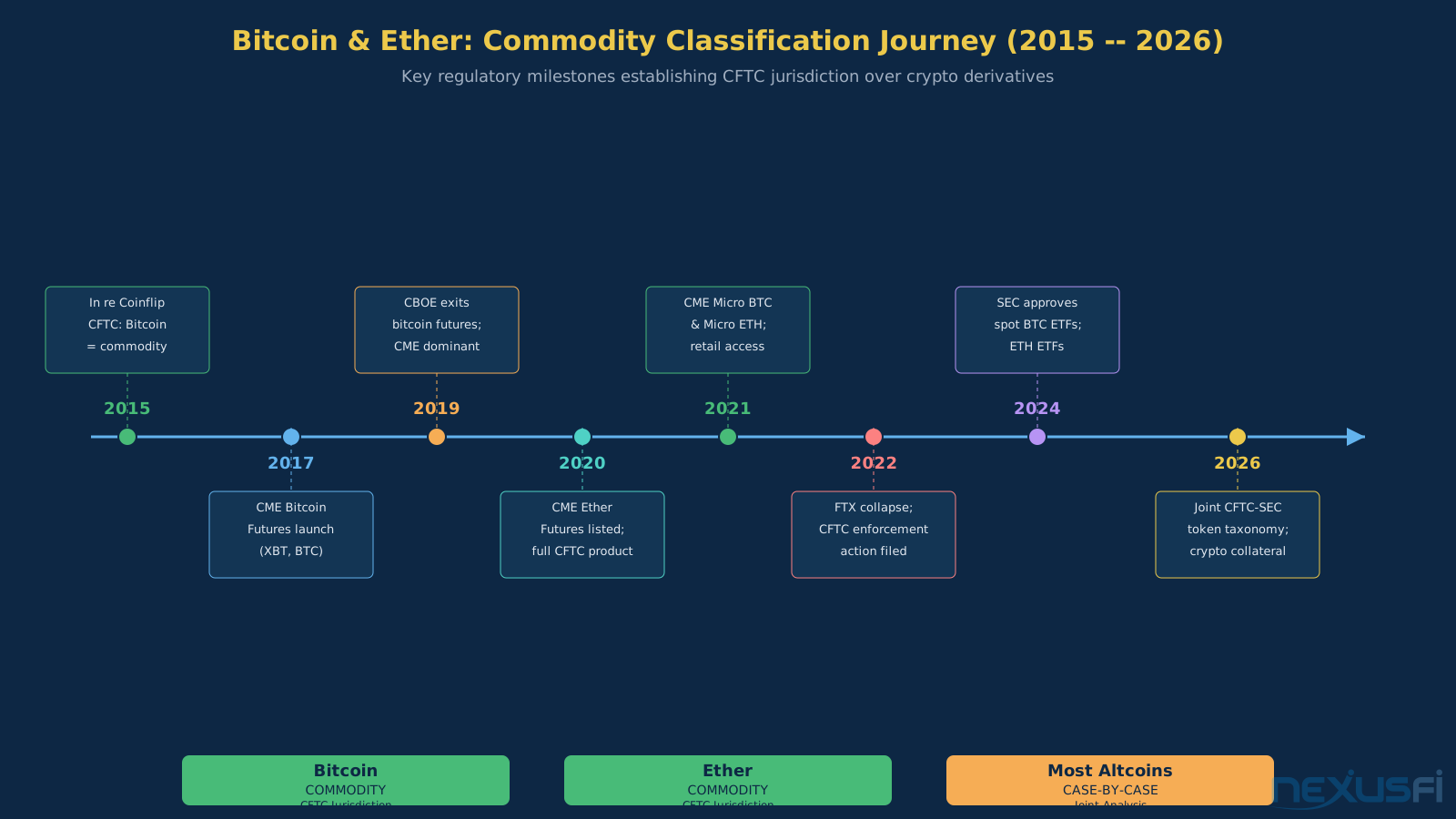
The legal foundation for crypto futures regulation is the classification of bitcoin and ether as commodities under the CEA. The CFTC first claimed commodity jurisdiction over bitcoin in 2015 (In re Coinflip, Inc.), a position reinforced by multiple court decisions and enforcement actions since.
For ether, the classification took longer. The SEC argued for years that ether was potentially a security, creating regulatory uncertainty. That ended with the March 2026 joint CFTC-SEC interpretation, which explicitly confirmed ether as a commodity subject to CFTC derivatives jurisdiction. CFTC Chairman Michael Selig stated: "For far too long, American builders, innovators, and entrepreneurs have awaited clear guidance on the status of crypto assets under the federal securities and commodity laws. With today's interpretation, the wait is over."
The commodity classification has practical implications for futures traders:
Margin treatment: The CFTC's Regulation 1.17 governs FCM capital requirements. Under CFTC Staff Letter 26-05 (issued early 2026), FCMs may now accept bitcoin and ether as collateral for margin in futures and cleared swaps accounts, after applicable haircuts. This is a significant operational expansion — previously, FCMs could only accept listed securities and cash equivalents as margin collateral.
Section 1256 tax treatment: Gains and losses on CFTC-regulated crypto futures contracts qualify for Section 1256's 60/40 rule — 60% long-term capital gains rates and 40% short-term, regardless of holding period. For a trader in the 37% ordinary income bracket, this blended rate is approximately 26.8% on net gains — substantially lower than the 37% rate that would apply to short-term gains on spot crypto.
Market manipulation jurisdiction: The CFTC has broad anti-manipulation authority over commodity futures and the underlying spot markets. Wash trading, spoofing, and front-running in CME crypto futures are CFTC enforcement targets.
CFTC Commodity Classification Test
A digital asset is a commodity subject to CFTC jurisdiction when it is:
- Not a security (no Howey test positive result — no investment contract in the token itself)
- Used or usable as a commodity (has intrinsic use, not purely speculative)
- Subject to futures trading when contracts are offered on it
Post-March 2026: Bitcoin ✓ Commodity | Ether ✓ Commodity | Most altcoins → case-by-case analysis
The CFTC-SEC Token Taxonomy: What the March 2026 Interpretation Changed #
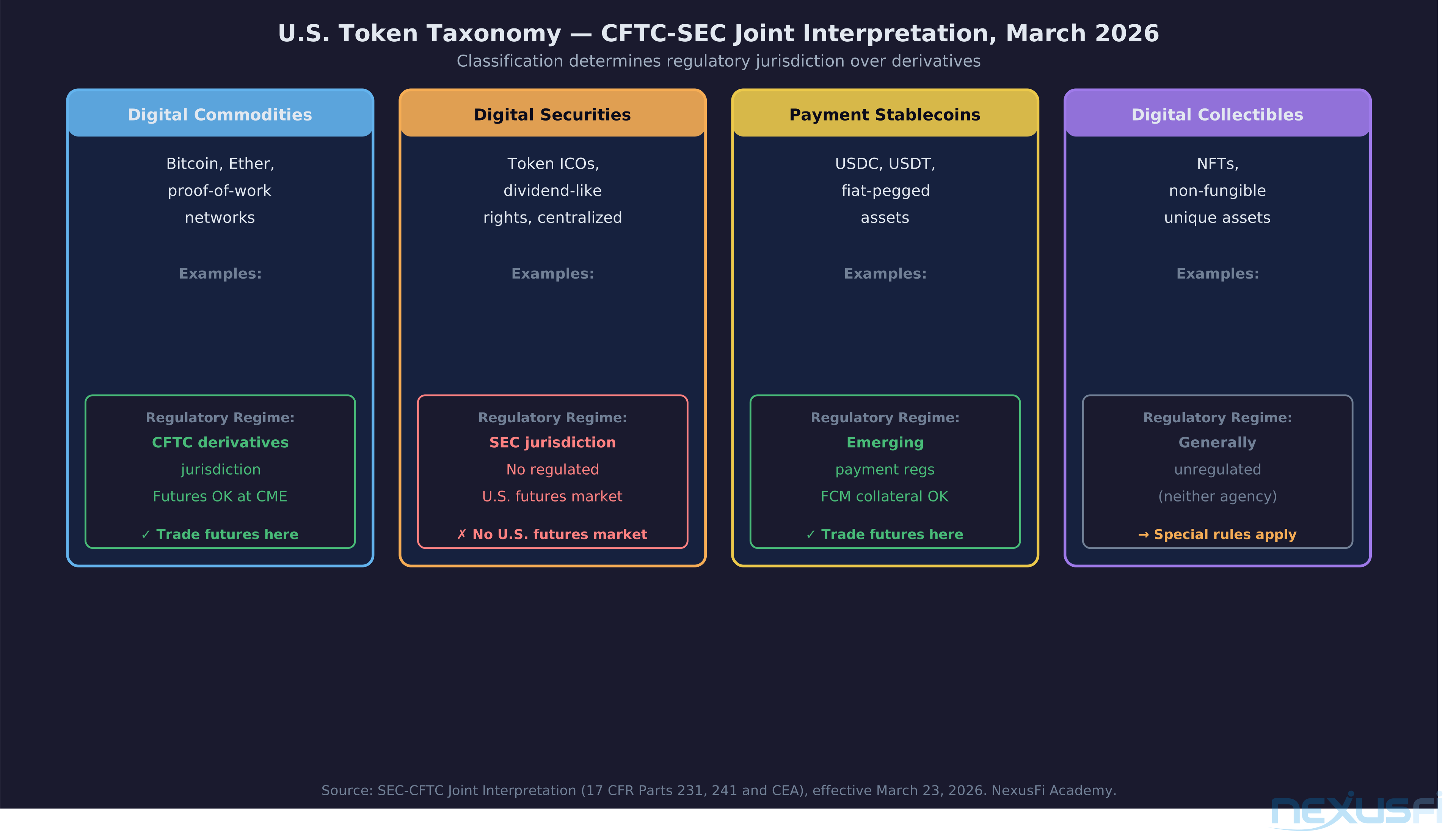
The March 2026 joint CFTC-SEC interpretation established four token categories: Digital Commodities (bitcoin, ether, and most decentralized networks — CFTC derivatives jurisdiction), Digital Securities (tokens meeting the Howey investment contract test — SEC jurisdiction), Payment Stablecoins (USDC, USDT — regulated as payment instruments, not commodities or securities), and Digital Collectibles (NFTs with no investment expectation — generally outside both agencies' jurisdiction).
A "sunset" mechanism allows tokens initially distributed as investment contracts to "graduate" to commodity status once sufficiently decentralized — expanding the future universe of assets that could trade on CFTC-regulated markets. For futures traders, the practical takeaway: derivatives on bitcoin and ether are CFTC territory. Congressional legislation codifying this taxonomy is advancing on a bipartisan basis.
Regulated Products: The CFTC-Cleared Crypto Futures Universe #
CME Group is currently the primary venue for CFTC-regulated crypto futures in the United States. Here's what's available:
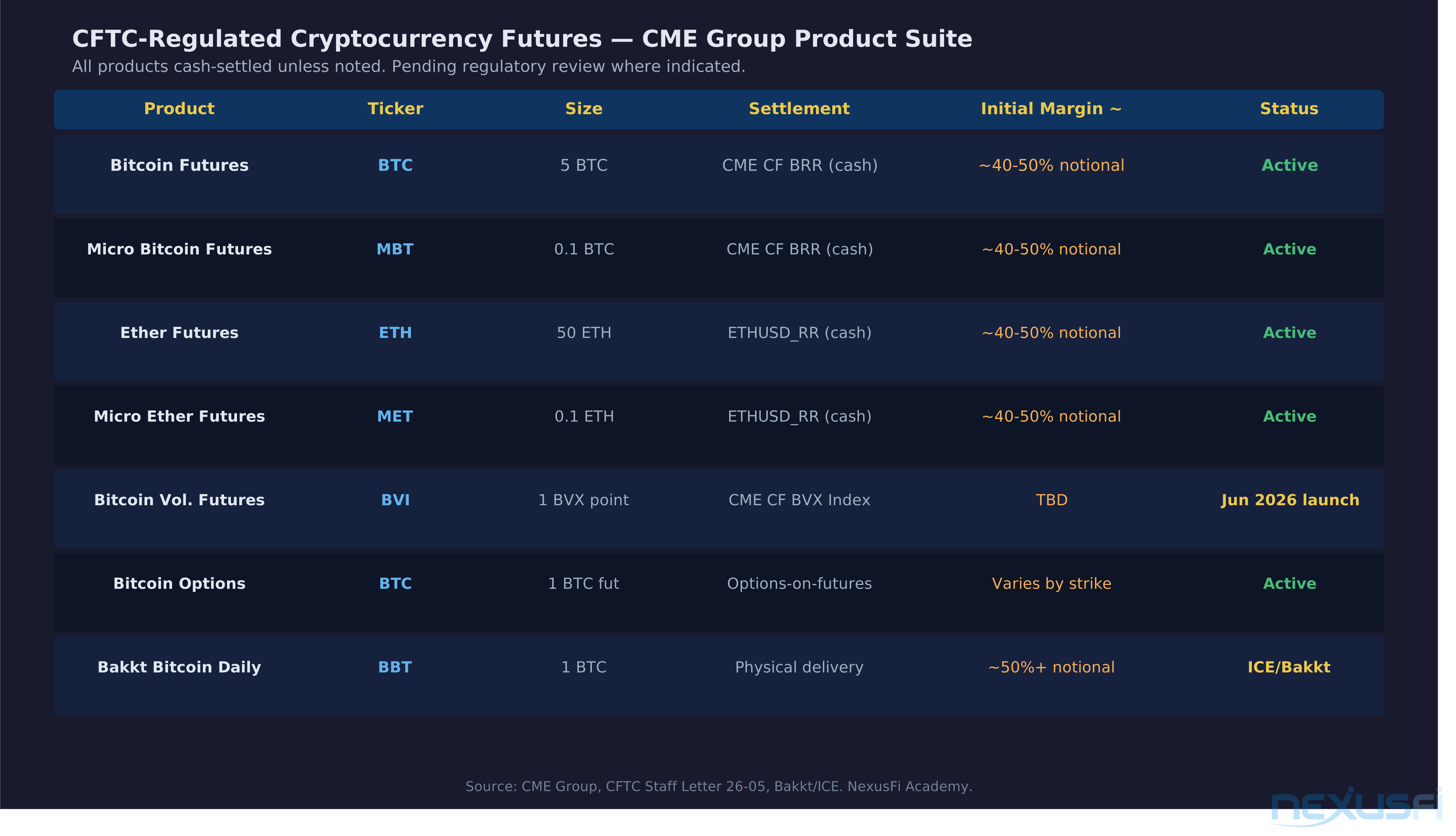
CME Bitcoin Futures (BTC): Cash-settled, 5 bitcoin per contract, settled to the CME CF Bitcoin Reference Rate (BRR). Contracts expire monthly and quarterly. Electronic trading hours are extended, with 24/7 trading announced for launch in 2026 to match offshore crypto exchange hours.
CME Micro Bitcoin Futures (MBT): One-tenth of a bitcoin per contract. Launched in 2021 to address the size barrier that initially limited retail participation in CME bitcoin futures. @SMCJB laid out the regulated crypto futures environment at Micro Ether launch in 2021: ICE Bitcoin (1 coin, ~$64k notional), CME Bitcoin (5 coins, ~$320k), CME Micro Bitcoin (0.1 coins, ~$6.4k), CME Ether (50 ether, ~$225k), CME Micro Ether (0.1 ether, ~$450). [1] Micro contracts were 33x more expensive on a per-contract basis than full size — but the smaller notional made market access practical.
CME Ether Futures (ETH): Cash-settled, 50 ether per contract, settled to the CME CF Ether Dollar Reference Rate. Monthly expiration.
CME Micro Ether Futures (MET): One-tenth of an ether per contract — the practical entry point for most retail traders wanting ether exposure via regulated futures.
CME Bitcoin Volatility Futures (BVI): Launching June 1, 2026, pending regulatory review. Settles to the CME CF Bitcoin Volatility Index (BVX), a 30-day forward-looking implied volatility measure derived from CME Bitcoin options order books. This is the first regulated product allowing traders to directly trade bitcoin volatility — separating the volatility risk from directional price risk.
Historical context: CBOE launched the first U.S. bitcoin futures (XBT contracts) in December 2017, one week before CME. As @mattz from Optimus Futures warned at the time: "Let me just tell you guys that talking to FCMs and exchanges is a complete mess. Figuring out all the specs was a pain... my suggestion is to WAIT. Let's see the contract is flowing right and the exchanges don't halt and above all there is liquidity. This is a contract we have not seen before so being cautious is a must." [2] CBOE discontinued its bitcoin futures in 2019 due to insufficient volume, leaving CME as the dominant regulated venue.
Bakkt (ICE): Intercontinental Exchange's Bakkt platform launched physically-delivered bitcoin daily futures in December 2018, cleared by ICE Clear US. [3] These contracts delivered actual bitcoin rather than cash.
— the settlement mechanism that remains the gold standard today. [6] Volume remained modest relative to CME.
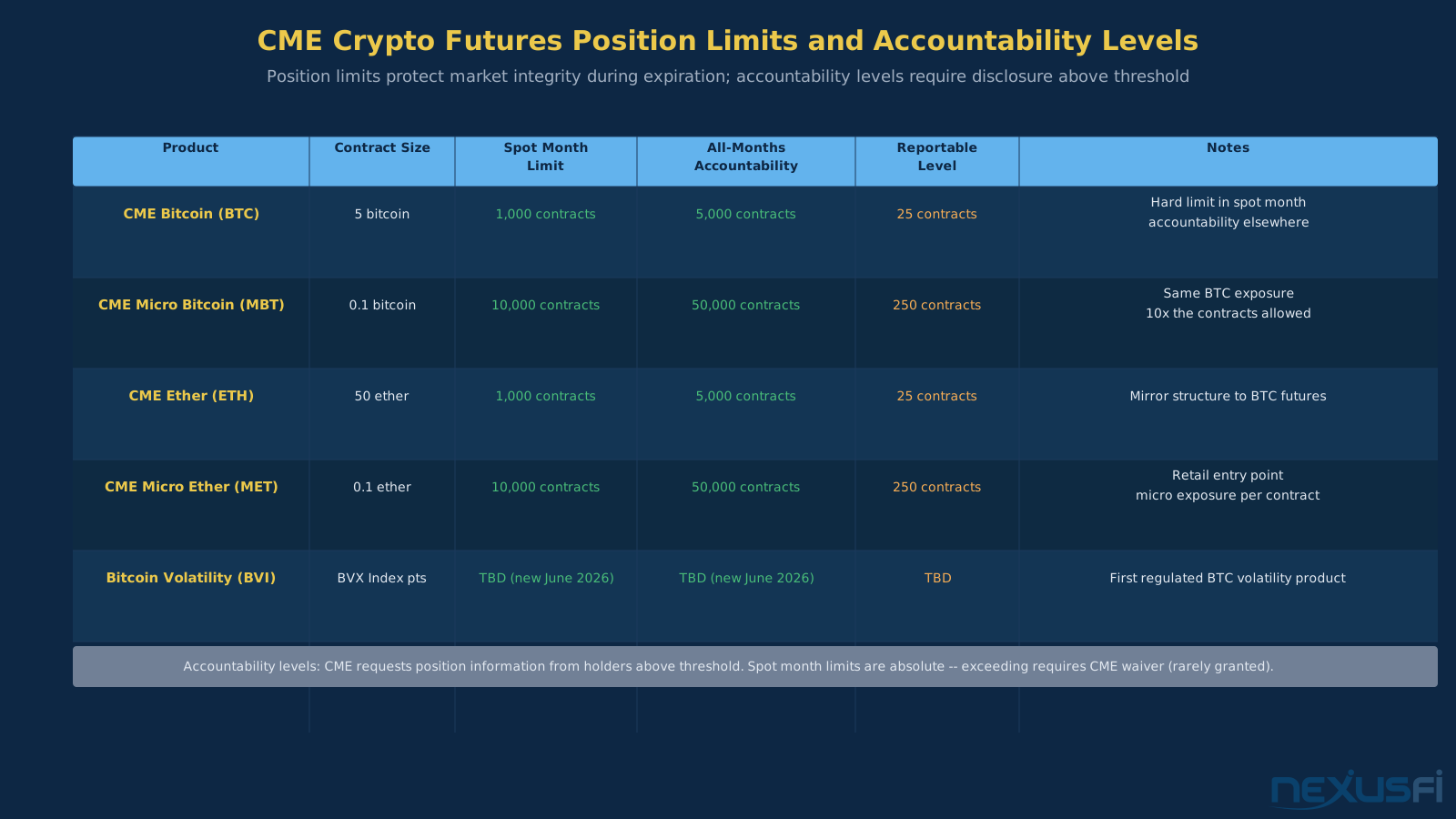
CME Group is the dominant regulated venue for crypto futures in the U.S. Its Bitcoin and Ether futures — especially the Micro contracts — provide CFTC-regulated, NFA-supervised, FCM-intermediated access with customer fund segregation. The product suite is expanding: volatility futures, 24/7 trading, and options provide institutional-grade risk management tools that didn't exist even two years ago.
FCM Registration and Platform Compliance: How to Verify Your Broker #
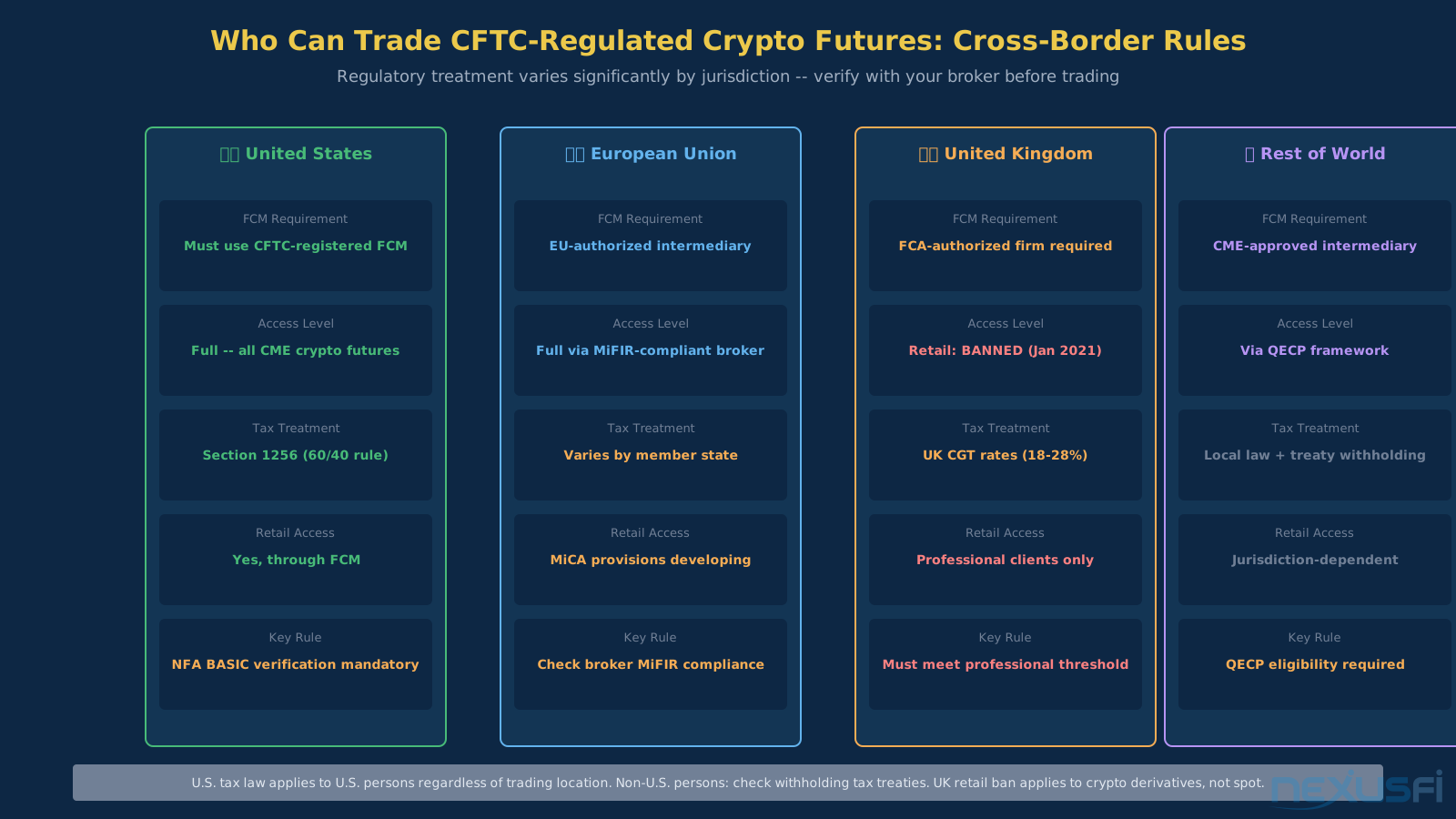
Every futures trader in the U.S. accesses markets through a Futures Commission Merchant (FCM) — a firm registered with the CFTC and a member of the National Futures Association (NFA). This registration requirement is not optional, and it's the primary protection layer for retail and professional futures traders.
What FCM registration means for your account:
- Customer funds must be segregated from FCM proprietary capital under CFTC Regulations 1.20-1.30
- FCMs must maintain specified minimum capital levels
- FCMs are subject to NFA examination and CFTC oversight
- CFTC and NFA have jurisdiction over FCM misconduct
- NFA Arbitration program provides dispute resolution
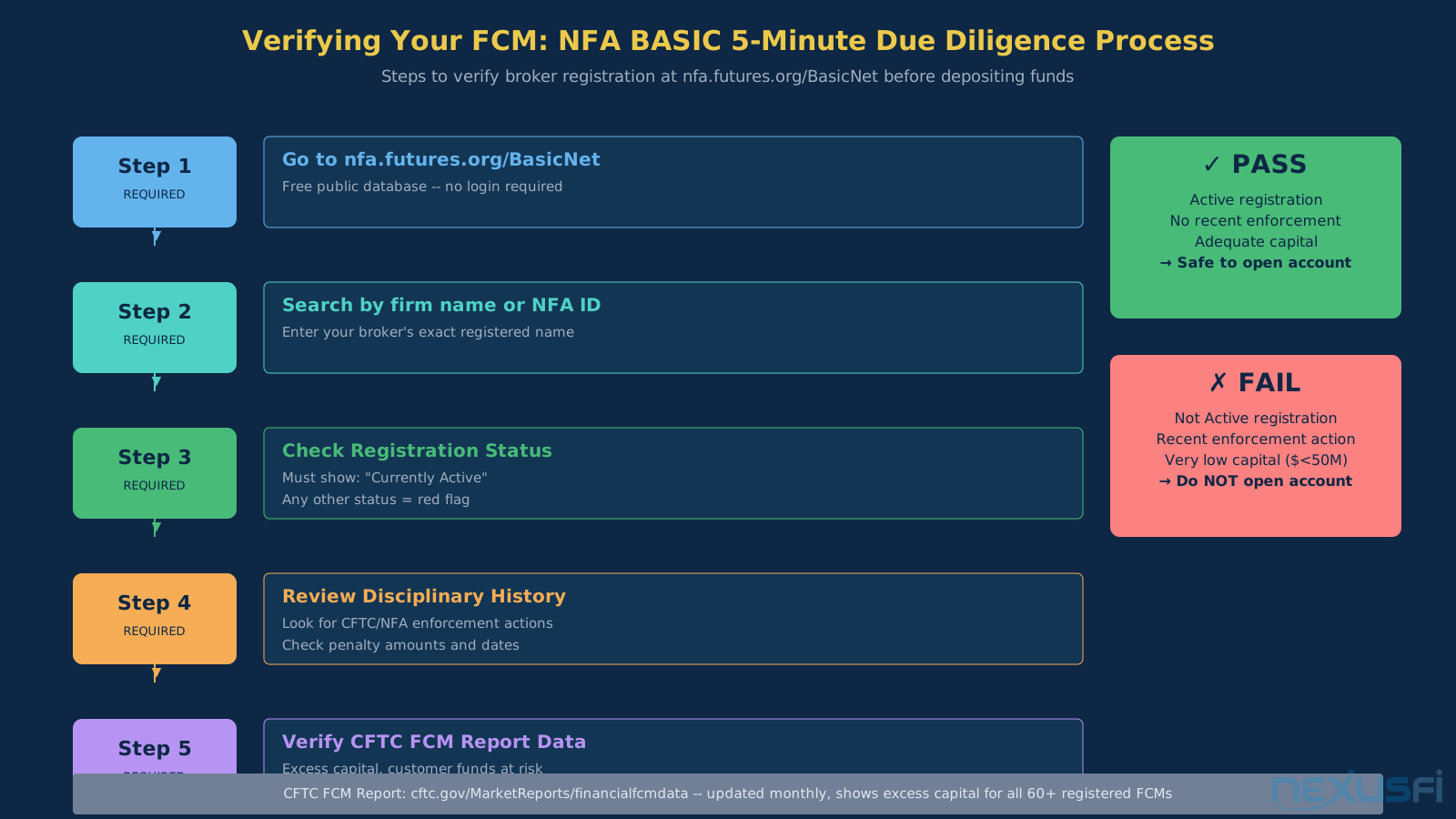
To verify an FCM's registration status, use the NFA's Background Affiliation Status Information Center (BASIC) database at nfa.futures.org/BasicNet. Every registered FCM has a public profile showing their registration status, any disciplinary actions, and principal information. This verification takes five minutes and should be done before depositing any funds.
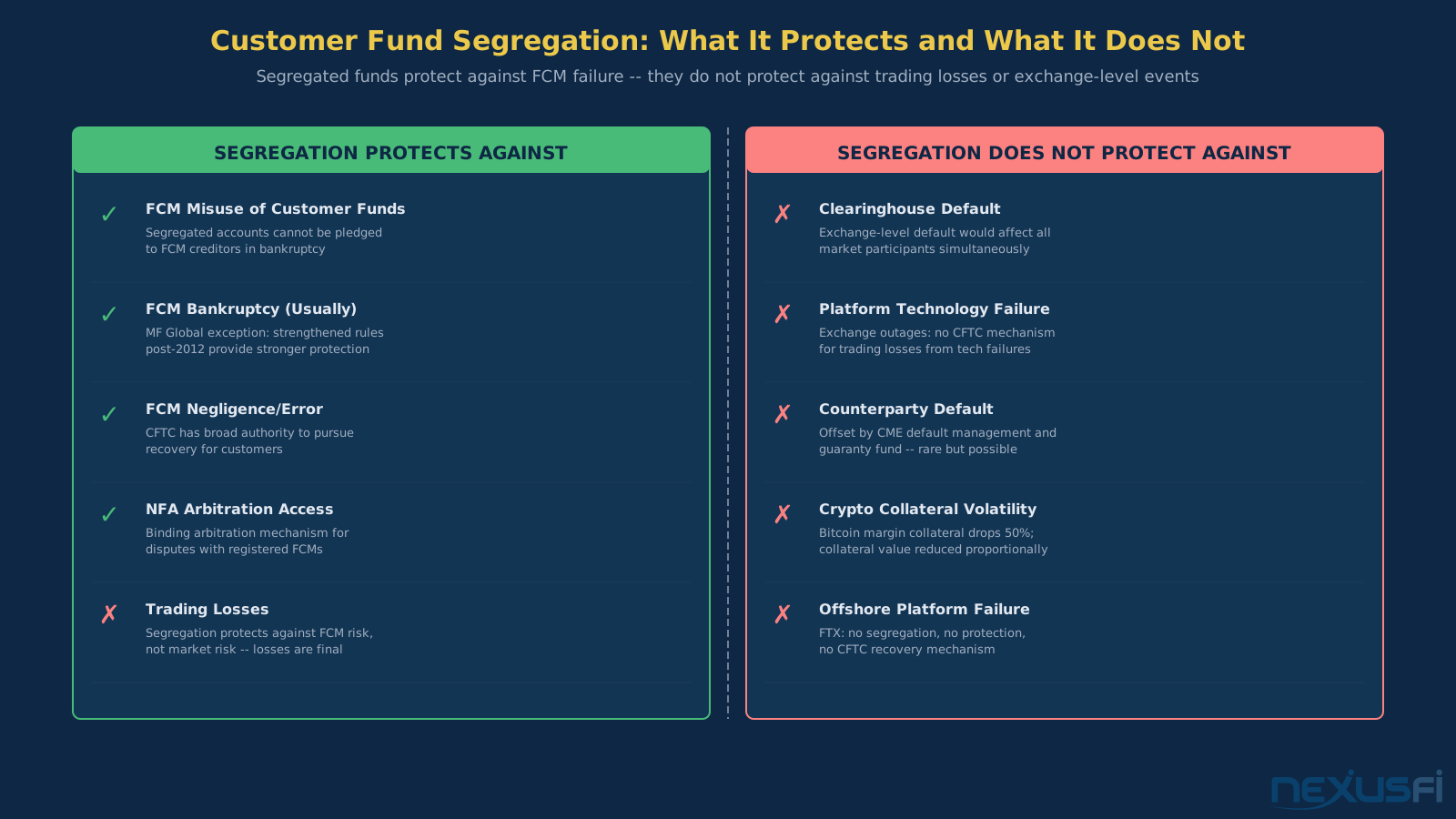
What registration does NOT protect against:
- FCM bankruptcy (though segregated funds provide significant — but not absolute — protection)
- Trading losses
- Platform technology failures
- Counterparty default at the exchange level (mitigated by clearinghouse default management)
The 2026 crypto collateral update: Under CFTC Staff Letter 26-05, FCMs may now accept bitcoin and ether as customer margin collateral. The key rules:
- Bitcoin and ether accepted after applicable haircuts (minimum 20% capital charge on FCM proprietary positions per Regulation 1.17)
- FCMs cannot invest customer funds in bitcoin or ether (only listed investments under Regulation 1.25)
- FCMs may use payment stablecoins as residual interest in segregated accounts, subject to 2% capital charge
- Crypto assets remain ineligible as margin for uncleared swaps
Red flags: FCMs claiming "crypto-native" status without NFA registration, firms promising to hold crypto on-chain in customer-named wallets, and introducing brokers that guarantee returns unavailable from regulated venues.
Customer Funds Segregation in Crypto Futures #
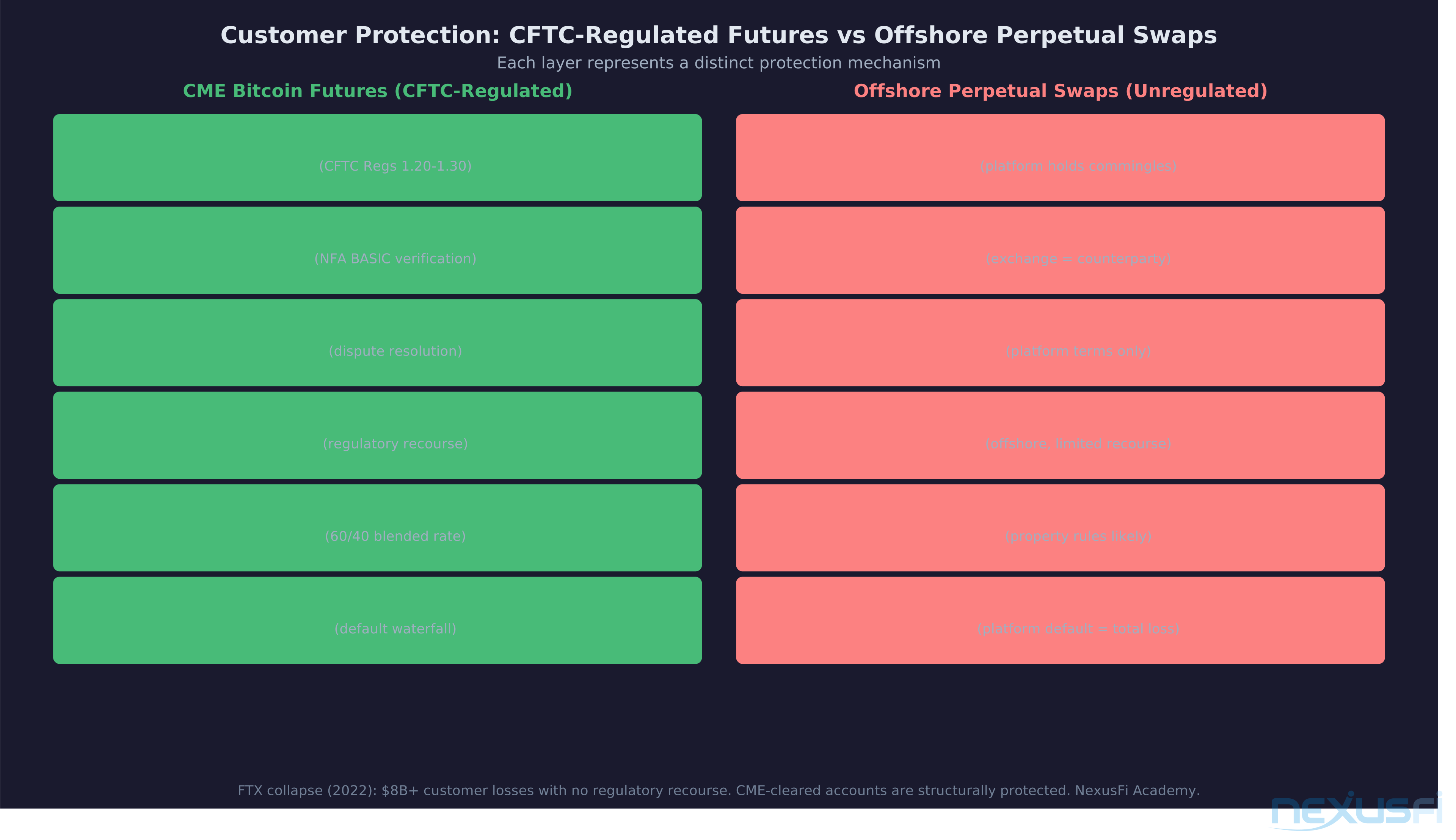
This is where CFTC-regulated crypto futures diverge most sharply from unregulated crypto trading. Every FCM must segregate customer funds from its own capital — this is a statutory requirement under the CEA, not just an industry practice.
Segregated accounts: Customer cash and securities are held in accounts titled clearly as belonging to customers, not the FCM. Segregated funds are not available to FCM creditors in a failure. When MF Global failed in 2011, ~$1.6 billion in customer funds went missing because the firm improperly used segregated funds for proprietary purposes — leading to strengthened CFTC segregation requirements.
[7]
Crypto-specific segregation: Under March 2026 CFTC guidance, FCMs accepting bitcoin or ether as margin collateral must hold those assets in clearly designated customer accounts, not commingled with proprietary holdings.
What segregation does not cover: Crypto assets on offshore exchanges have no equivalent protection. When FTX collapsed in 2022, customer assets were commingled with FTX's own trading operations — users lost billions with no regulatory recourse. That cannot happen to funds held in a properly maintained CFTC-regulated FCM account.
The complete mechanics of FCM failure and customer fund recovery are detailed in FCM Bankruptcy and Futures Trader Protection.
Margin Rules and the 2026 Crypto Collateral Update #
Margin in CFTC-regulated crypto futures works identically to any other commodity futures market — initial margin, maintenance margin, daily mark-to-market settlement. What changed in 2026 was the collateral eligible for margin purposes.
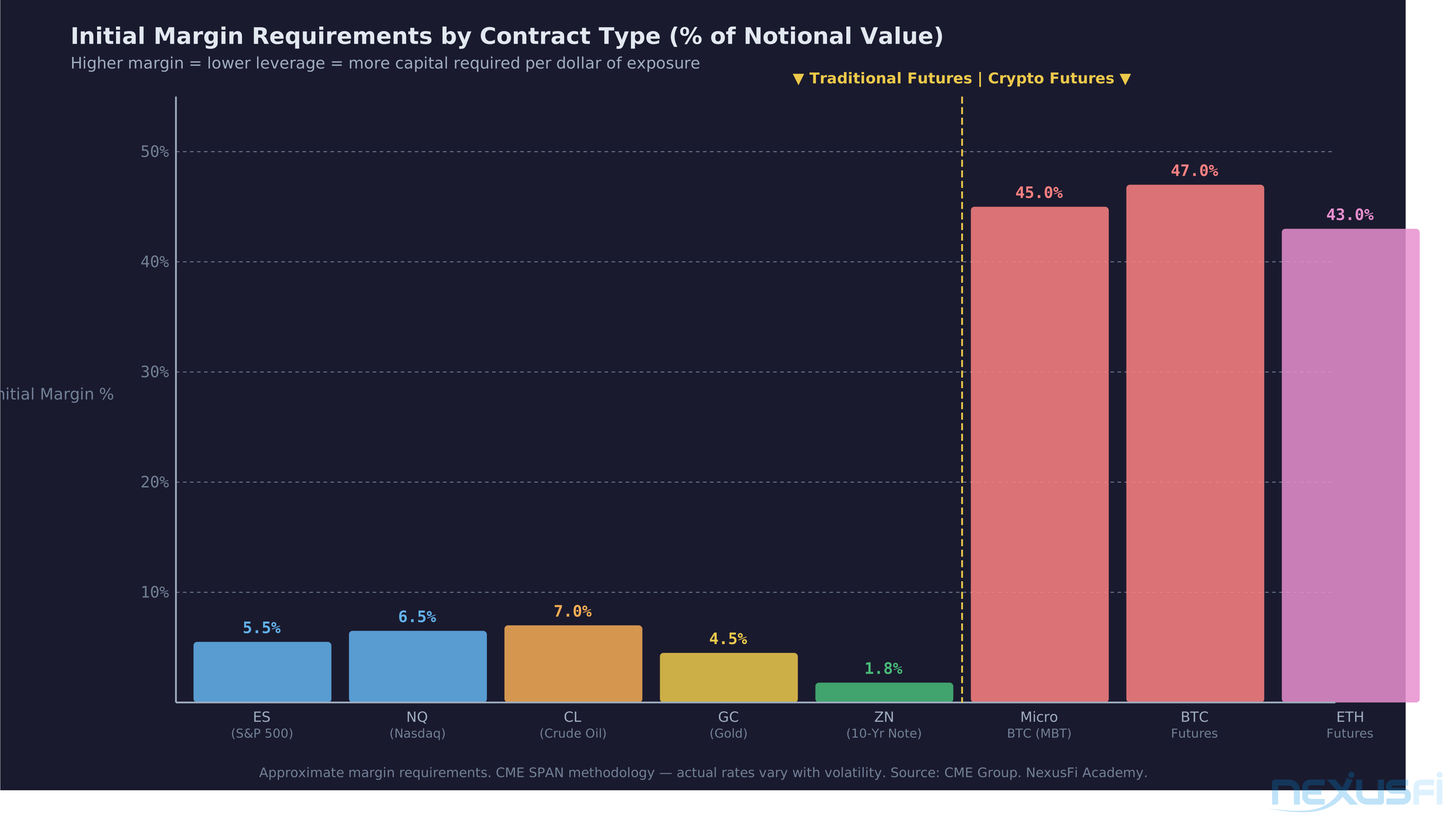
Initial margin: Set by CME Clearing based on SPAN methodology. For BTC futures, initial margin requirements run approximately 40-50% of contract value due to crypto's higher volatility compared to equity index or energy futures. This is much higher than the 5-7% typical for ES or NQ — a position in BTC futures requires substantially more capital per dollar of notional exposure than a comparable ES position.
Daily mark-to-market: Like all futures, crypto futures settle to variation margin daily. Profits flow into your account overnight; losses are debited. This differs at the core from spot crypto positions, where unrealized P&L can compound without daily cash settlement — and without the forced discipline that daily settlement imposes on overleveraged positions.
Position limits: CME imposes position limits on bitcoin and ether futures during the spot month (the contract month nearest expiration). Spot-month limits prevent corner and squeeze strategies that historically plagued commodity markets. Outside the spot month, accountability levels apply — traders above accountability thresholds must provide position information to CME on request.
The new collateral reality: CFTC Staff Letter 26-05 allows FCMs to apply bitcoin or ether value (after haircuts) to cover account debit balances in futures accounts. A trader holding significant bitcoin can now offset futures margin requirements — reducing the cash drag from separate collateral pools. Haircuts mean a $100,000 bitcoin deposit provides only $80,000 in margin credit.
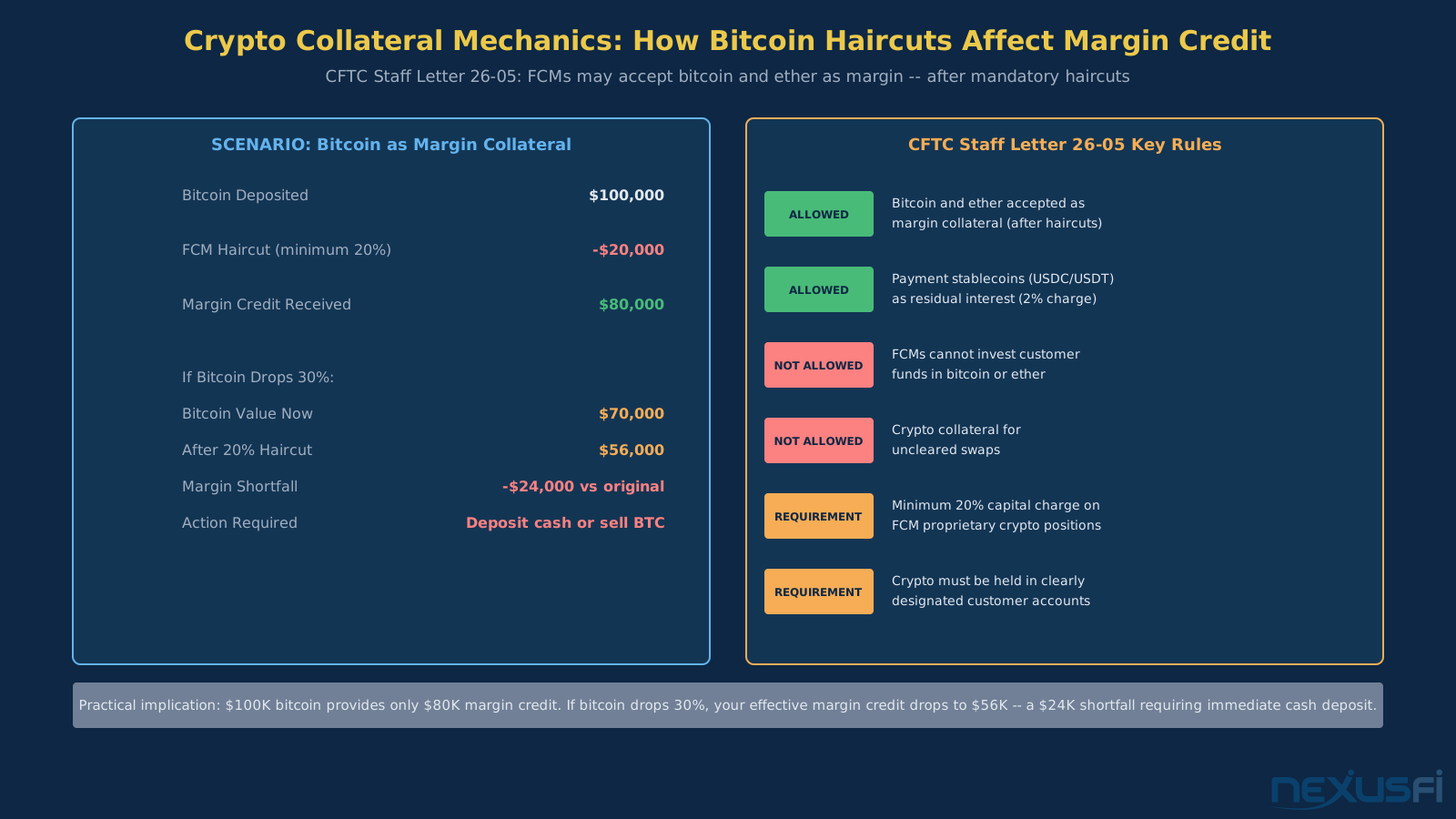
The 20% capital charge on FCM proprietary bitcoin and ether positions, and haircuts on customer bitcoin collateral, are intentionally conservative. Do not mistake the availability of crypto collateral for a reduction in effective margin requirements — haircuts mean a significant portion of your bitcoin's value is not credited toward margin. Model this carefully before using bitcoin as margin collateral.
Market Integrity: Surveillance and CFTC Enforcement #
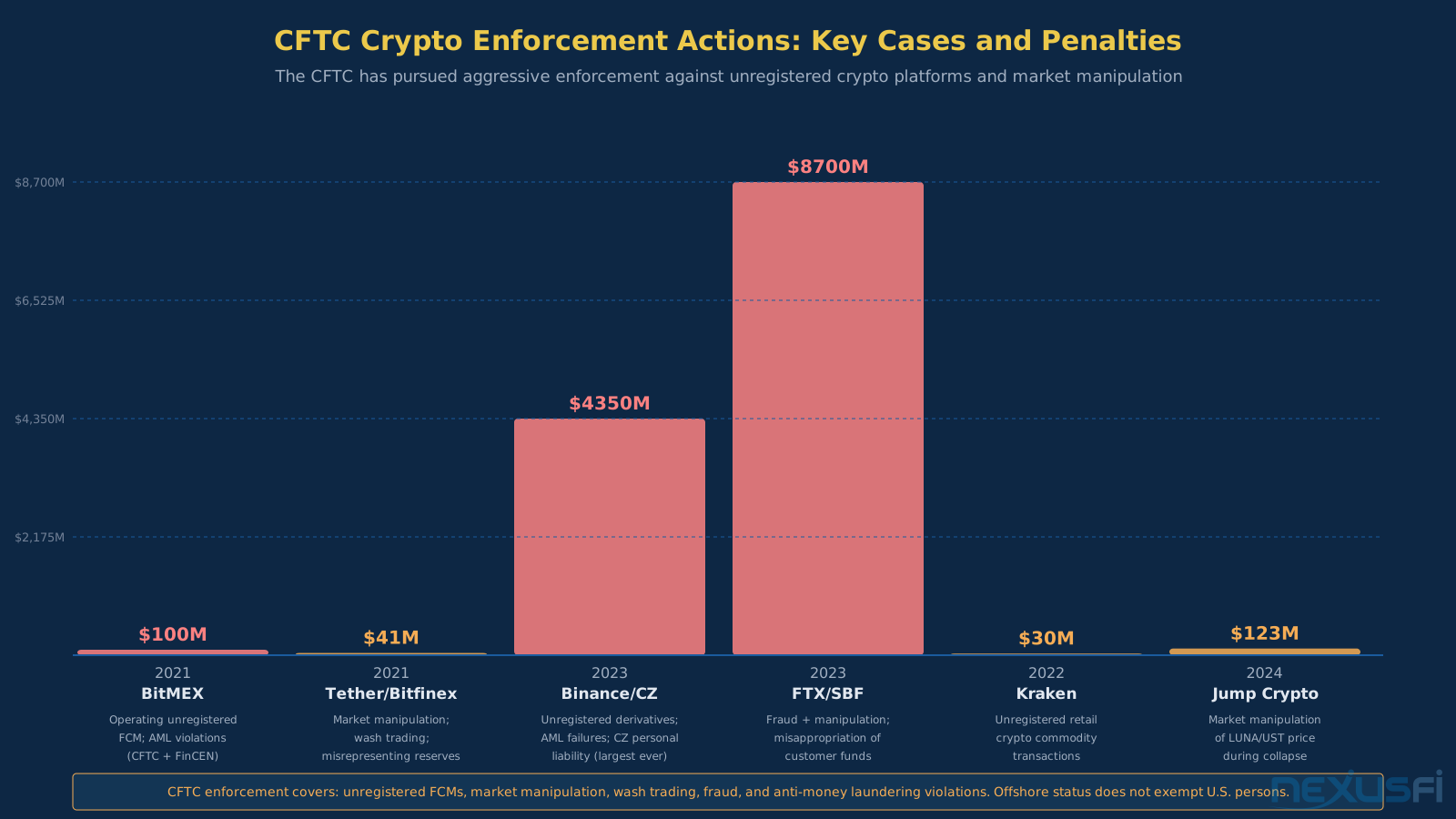
CME Group's surveillance systems monitor crypto futures for manipulation, spoofing, and wash trading. The CFTC's enforcement record in crypto is extensive: $100M against BitMEX founders, $4.35B against Binance and CZ, $8.7B against FTX — the largest enforcement action in CFTC history. The FIX Tag 50 trader identification system links every order to a specific trader; anonymity does not exist in CFTC-regulated futures markets. Spoofing enforcement applies to intent, not just outcomes. Traders above position accountability levels must respond to exchange information requests.
Tax Treatment: Section 1256 and Crypto Futures #
CFTC-regulated crypto futures receive Section 1256 treatment — the same framework as oil, gold, and equity index futures. Gains and losses are split 60% long-term / 40% short-term regardless of holding period. For a 37% ordinary income bracket trader, the blended rate is approximately 26.8% — versus 37% for short-term spot crypto. Section 1256 contracts are also marked to market at year-end and losses can be carried back three years, generating immediate refunds.
Spot bitcoin ETFs do NOT receive Section 1256 treatment. Offshore perpetual swaps do not qualify, and their tax treatment remains uncertain. For full mechanics, see Section 1256 Contracts and the 60/40 Tax Rule.
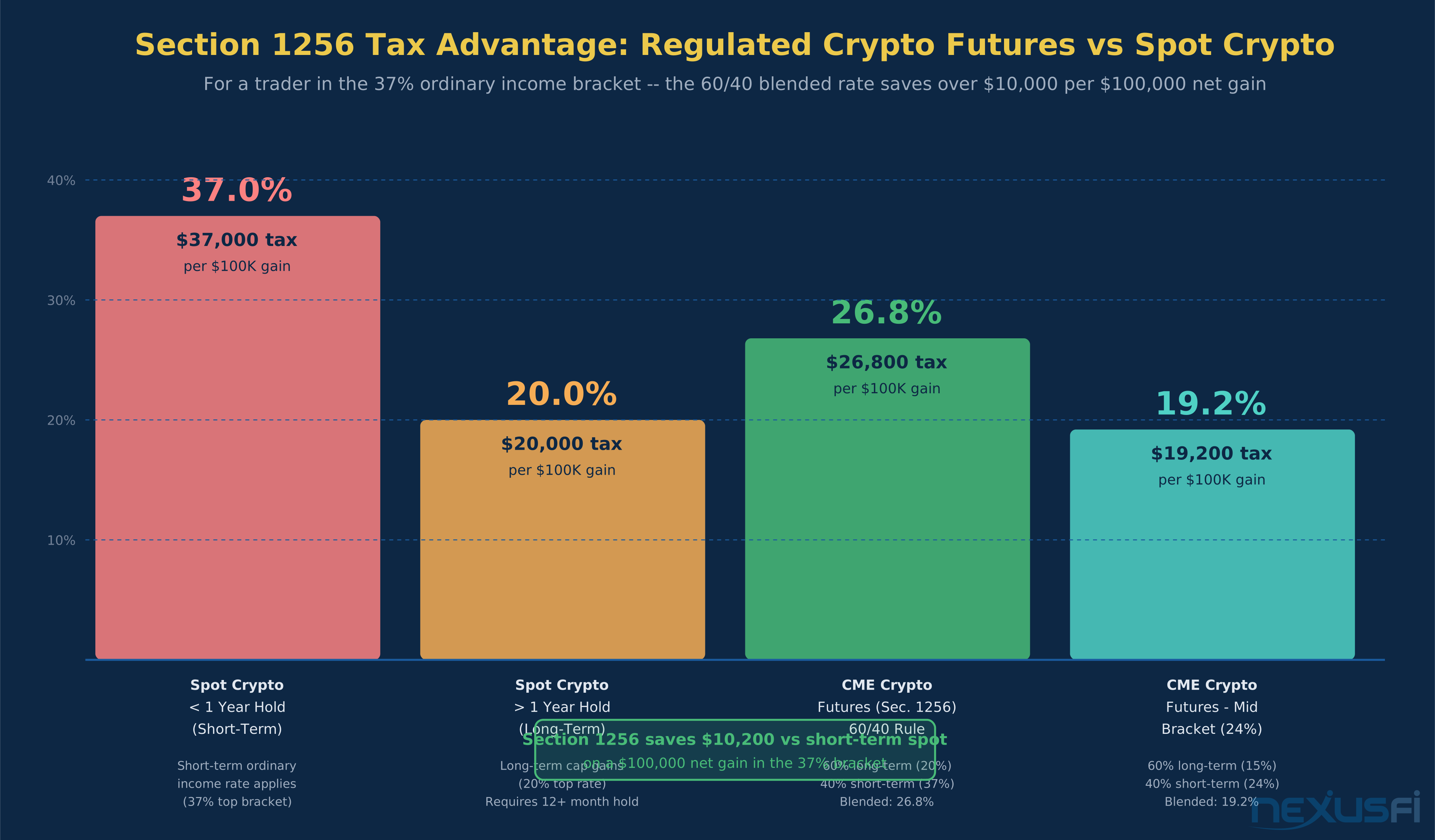
Track CME futures and spot crypto in completely separate accounting. Commingling these creates unnecessary audit risk. Use tax software that handles Section 1256 contracts separately from property-basis crypto accounting.
Perpetual Swaps vs Regulated Futures: The Critical Distinction #
Perpetual swaps — the dominant instrument on Binance, Bybit, and OKX — are structurally similar to futures but are NOT futures contracts under the CEA and are NOT regulated by the CFTC. Key structural differences: no expiration date, funding rate mechanism (instead of spot convergence), no Designated Contract Market, no regulated clearinghouse, no FCM intermediation, and no customer fund segregation requirement.
The regulatory consequence: perps offered to U.S. retail traders by unregistered offshore platforms are, in the CFTC's view, illegal off-exchange retail commodity transactions. The CFTC has brought enforcement actions against platforms serving U.S. users. The protection consequence: when trading perps on unregistered platforms, you have no CFTC or NFA protection, no segregated customer funds, no arbitration mechanism, and no recovery path if the platform fails. FTX demonstrated this catastrophically in 2022 — users lost billions with no regulatory recourse.
The basis trade between perps and regulated futures (selling perps during positive funding, buying CME futures) requires positions on both platforms simultaneously — with the counterparty risk that entails for the unregulated side.
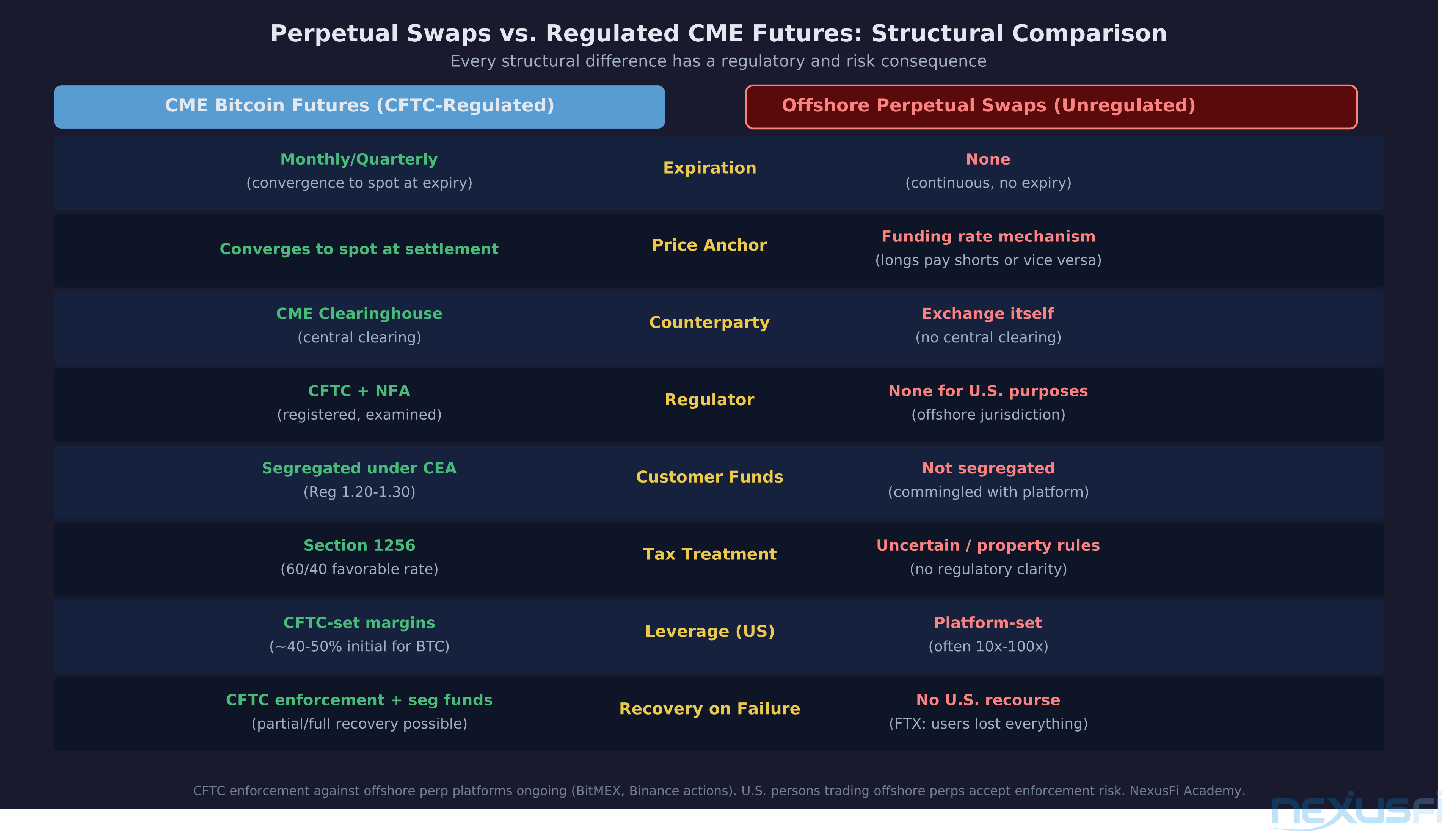
Trading crypto perpetual swaps on offshore unregistered platforms carries regulatory, counterparty, and custody risks that do not exist in CFTC-regulated futures markets. Shifting from CME bitcoin futures to an offshore perp exchange for lower margin or higher leverage means accepting platform insolvency risk with no regulatory backstop.
Practical Considerations #
Choosing a regulated platform: For capital protection, Section 1256 tax treatment, and a firm regulatory foundation, CFTC-regulated CME futures are the right structure. Offshore perp platforms offer different tradeoffs — but those aren't just about leverage limits. They're about what happens to your money if something goes wrong.
Verifying your FCM: Use NFA BASIC (nfa.futures.org/BasicNet) to verify FCM registration status before depositing funds. Look for: active registration status, no pending enforcement actions, adequate excess capital in the CFTC FCM report. Five minutes of due diligence that most traders skip.
Margin calibration for crypto: CME bitcoin futures carry 40-50% initial margin — far higher than ES or NQ. Micro contracts (MBT, MET) are the practical entry point for retail traders. @SMCJB noted the fee economics clearly when Micro Ether launched: fees run "36x more expensive to trade" than the full-size contract on a per-contract basis, but the smaller notional makes position building practical. [5]
The CME 24/7 expansion: CME launched around-the-clock trading for crypto futures and options beginning 2026. The operational implications are real — broker support hours, data feed coverage, and tech support availability become critical when you can hold positions all weekend. Plan your entries, exits, and stop management around these realities before trading CME crypto futures in extended hours.
Documentation discipline: Keep better records than you would for traditional futures. Document trading rationale, retain brokerage statements, and use tax software that tracks Section 1256 positions separately from spot crypto. Clean records from a registered FCM make IRS compliance much simpler.
The regulatory clarity achieved in 2026 — the joint CFTC-SEC token taxonomy, the staff letter on crypto collateral, and the CME product expansion — means U.S. futures traders can now access bitcoin and ether derivatives within a fully regulated framework. The protections are real: segregated funds, NFA oversight, Section 1256 tax treatment, and CFTC enforcement backstop. None of these exist on offshore perp platforms. Know which side of that line you're on before you trade.
Knowledge Map
Go Deeper
Build on this knowledgeReferences This Article
Articles that build on this topicCitations
- — CME announces 7x24 crypto futures trading to start in 2026 (2025) 👍 6“CME Group to Offer Around-the-Clock Trading for Cryptocurrency Futures. Do brokers and software companies now need 7x24 coverage also?”
- — Bitcoin Futures by the CME (2017) 👍 6“I don't think the CME is going to build the new Bitcoin Futures for the very small speculator. The Futures contacts would serve as a hedge for institutional investing.”
- — CBOE BitCoin futures (2017) 👍 6“Let me just tell you guys that talking to FCMs and exchanges is a complete mess. Figuring out all the specs was a pain. My suggestion is to WAIT.”
- — Physically Delivered Bitcoin Futures (2018) 👍 4“BAKKT BITCOIN (USD) DAILY FUTURES CONTRACT TO BEGIN TRADING ON DECEMBER 12, 2018.”
- CFTC — CFTC Joins SEC to Clarify the Application of Federal Securities Laws to Crypto Assets (2026)
- Federal Register / CFTC-SEC — Application of Federal Securities Laws to Certain Types of Crypto Assets (2026)
- Morgan Lewis — Crypto Clarity: CFTC FAQs Clarify Use of Crypto Assets by Registrants (2026)
- CME Group — CME Group to Launch Bitcoin Volatility Futures Contracts (2026)
- — What if a broker declare bankruptcy!!! Ftx first whose next? (2022) 👍 6“In the US Customer Funds are required to be held in a separate segregated account to protect the customer. FTX International was based in the Bahamas and not subject to CFTC segregation requirements.”
- — What if a broker declare bankruptcy!!! Ftx first whose next? (2022) 👍 6“FTX was not a broker in the same sense as a broker on a regulated exchange. It was in fact itself an exchange, in a totally unregulated environment. Trading only on a regulated exchange is essential for fund safety.”
- — 11 New CME Crypto Reference Rates = More Futures Soon? (2022) 👍 3“CME is launching 11 new crypto reference rates. CME crypto futures are financially settled vs the reference rates -- without more reference rates the CME cannot launch more crypto futures.”