



Choosing a Crypto Exchange: Coinbase Advanced, Binance, Kraken, Bybit, and OKX for Active Traders
Overview #
Every futures trader who crosses into crypto eventually hits the same wall: choosing an exchange.
In regulated futures, this decision is straightforward. You pick a broker, the broker routes to CME, your margin is segregated by CFTC rule, and you have regulatory recourse if something goes wrong. The infrastructure is standardized. The risk is bounded.
Crypto exchanges work differently. Your margin lives on the exchange. The exchange operates under varying degrees of regulatory oversight depending on its jurisdiction — or none at all. The fee structures, product access, API capabilities, and security track records vary dramatically across the five platforms that dominate active trading: Coinbase Advanced, Binance, Kraken, Bybit, and OKX.
For futures traders moving into crypto derivatives — perpetual swaps, options, quarterly contracts — the exchange you choose is a structural decision that affects your cost basis, your execution quality, your access to products, and your counterparty risk on every position you hold. That's not a decision to make based on which platform has the best mobile app.
This guide covers fee structures and the hidden costs that matter more than headline rates, security track records, regulatory access by jurisdiction, API infrastructure for automated strategies, derivatives product depth, and the account security practices that are non-negotiable regardless of which exchange you choose.
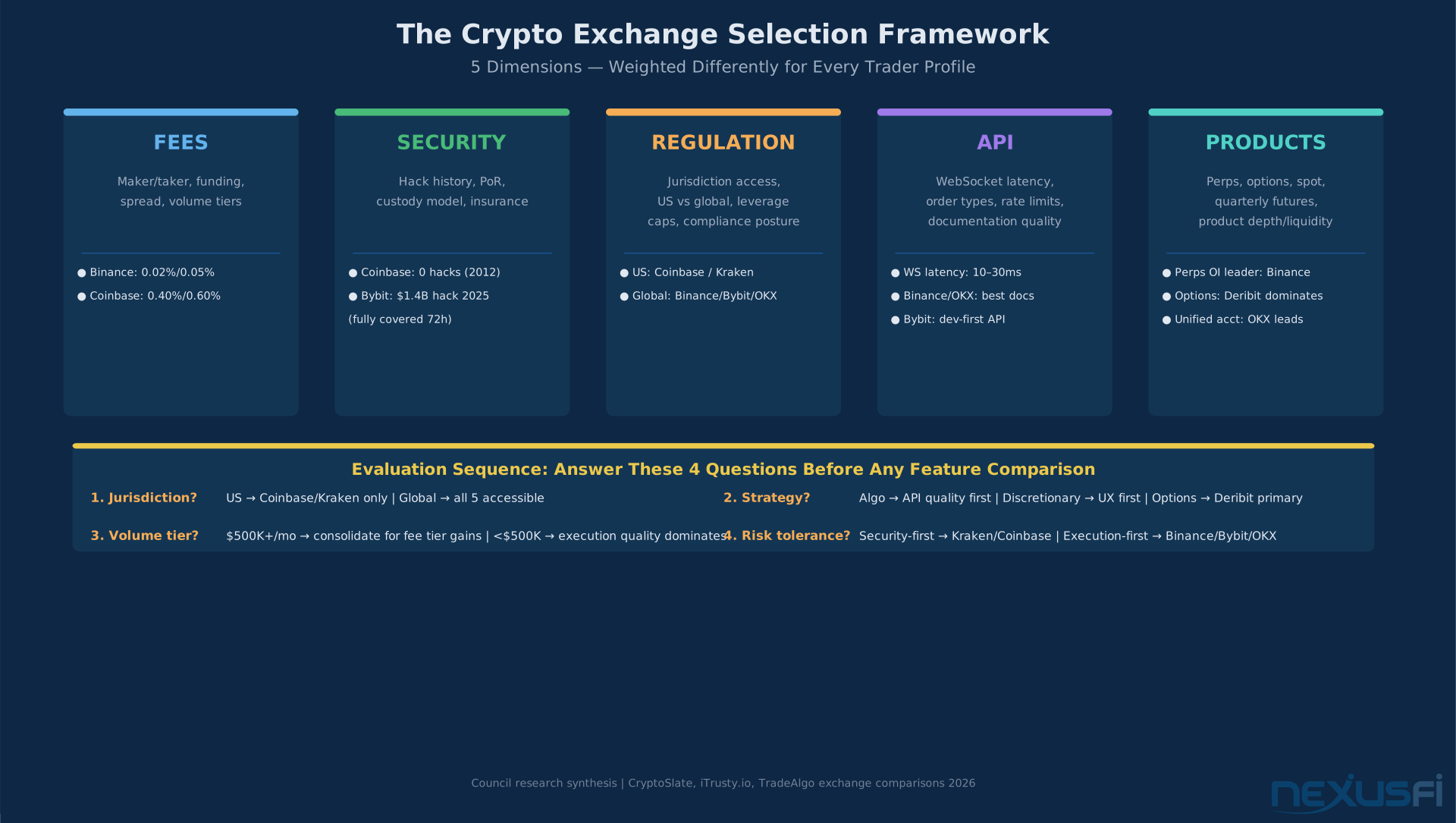
The five-dimension framework for evaluating crypto exchanges: fees, security, regulation, API quality, and product access. Each dimension weighs differently depending on trader profile. A US-based retail discretionary trader weights these completely differently than a global algorithmic futures trader.
The Five-Exchange Environment: Where Active Traders Actually Trade #
The global crypto exchange market has hundreds of platforms, but active traders concentrate on five. Understanding what each one optimizes for is the starting point before any quantitative comparison.
Binance: The Liquidity King
Binance is the largest crypto exchange by trading volume globally, and for active traders outside the US, it's often the default answer. Its order books are the deepest in the market — especially on BTC and ETH perpetuals — which means tighter spreads and better fill quality at larger sizes. The product selection is the broadest available: spot pairs, USDM perpetuals, COIN-M perpetuals, quarterly futures, and options.
The tradeoffs are real. Binance has a complicated regulatory history across multiple jurisdictions, the platform's global presence creates geographic access complexity that changes with enforcement actions, and US traders cannot access Binance's main platform (Binance.US is a separate, more limited entity). Despite a $40M 2019 hack that was covered by Binance's SAFU fund, the platform's security infrastructure has generally been considered institutional-grade for active traders.
Bybit: The Derivatives UI Leader
Bybit built its reputation specifically on derivatives trading and has consistently led on user experience for discretionary futures traders. Chart-based leverage adjustment, integrated TP/SL management, copy trading infrastructure, and mobile execution are genuinely differentiating. For traders who manage positions manually rather than through automated systems, Bybit's interface reduces execution errors under stress in a way that matters.
The February 2025 hack — $1.4 billion in ETH stolen from a cold wallet in the largest exchange hack in history — changed the calculus on Bybit's security posture. Bybit covered all losses within 72 hours through bridge loans and reserves, which is operationally significant. CoinDesk Research documented the full breach-to-recovery timeline, noting that Bybit's rapid response prevented cascading liquidations across interconnected venues. [11] The platform has since strengthened its MPC wallet infrastructure. Trading volumes recovered quickly post-incident, indicating that the market assessed the full-coverage response as credible. But any serious position at Bybit now requires a sober assessment of exchange-side custody risk.
OKX: The Unified Account Differentiator
OKX's defining advantage is its Unified Trading Account (UTA), which allows spot holdings and derivatives positions to share collateral. For traders running simultaneous spot hedges alongside perpetual positions, this capital efficiency is genuinely valuable — you're not posting separate margin for each product type. OKX also offers the broadest derivatives product menu after Binance, including exotic perpetuals and structured products that don't exist on other platforms.
OKX's base fees (0.08% maker / 0.10% taker spot, 0.02%/0.05% futures) are slightly more favorable than Binance's. API documentation and developer tooling have improved substantially and are now competitive with Binance for algorithmic traders. Geographic restrictions apply similarly to Binance.
Kraken: The Security Standard
Kraken has operated since 2011 without an exchange-level hack and has consistently been cited as the security benchmark in the industry. Its 2022 proof-of-reserves cryptographic audit process was pioneering. The exchange is regulated in multiple jurisdictions including the UK (FCA) and Australia, with a strong compliance-forward posture that limits regulatory uncertainty.
The Kraken/NinjaTrader acquisition in 2025 signals a significant strategic direction: Kraken is building toward a multi-asset platform that bridges regulated futures and crypto derivatives. For NexusFi members trading ES and NQ through NinjaTrader, this combination means futures market access and crypto access through a single, regulated entity.
[1]
@These crypto exchanges are making an absolute fortune as they charge % of notional rather than per-contract like futures brokers. It's a very different cost structure for high-volume traders — and a key reason why fee tier mechanics matter so much more in crypto than in futures.
The tradeoffs: Kraken's spot fees (0.16% maker / 0.26% taker at base tier) are higher than Binance/Bybit/OKX, and its derivatives product depth is narrower for traders accustomed to the full global perps market. For US-based traders and risk-averse institutional traders, these costs are often worth paying for regulatory certainty.
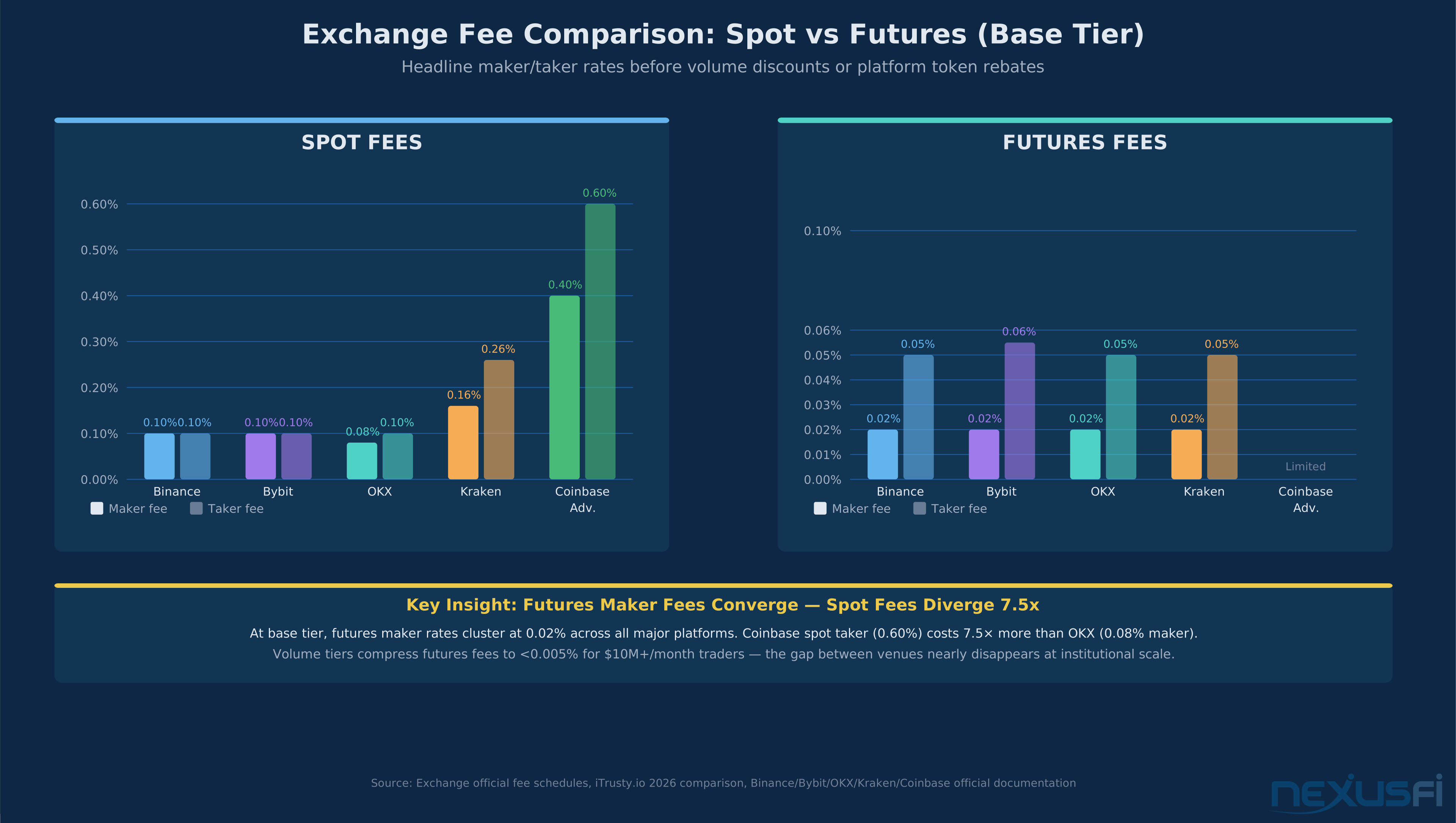
Base fee comparison across the five major exchanges. Spot fees range from 0.08% (OKX maker) to 0.40-0.60% (Coinbase Advanced). Futures maker fees converge tightly at 0.02% across Binance, Bybit, OKX, and Kraken — the real differentiation in futures cost is taker fees, volume tier discounts, and platform token rebates.
Coinbase Advanced: The US Compliance Leader
Coinbase Advanced is the answer for US traders who require full regulatory compliance. Publicly traded on NASDAQ, audited financials, $255 billion in assets under custody, insured through Lloyd's of London for hot wallet holdings, and zero exchange-level hacks since founding in 2012. It is the most institutionally credible platform available to US retail traders.
The constraints are significant for active traders. Base spot fees of 0.40% maker / 0.60% taker are the highest of any major platform. Derivatives access for US users is limited compared to global alternatives. But for traders who need fiat rails, regulatory certainty, and institutional-grade custody, Coinbase is often the only viable choice.
Fee Structures: Headline vs. Effective Cost #
The biggest mistake traders make when comparing exchanges is treating headline maker/taker fees as the primary cost metric. For active futures trading, headline fees are often the third or fourth most important cost factor.
The Five Components of Trading Cost
Maker/taker fees are what everyone compares. They're real, but they're highly compressible through volume tier discounts and platform token rebates. On Binance, paying with BNB reduces fees by 25%. For futures specifically, maker fees have converged to 0.02% or below across all four major derivatives exchanges — the difference between venues at high volume tiers is often measured in fractions of a basis point. Cross-exchange fee benchmarking from CryptoSlate confirms this convergence pattern, with sub-basis-point maker fee differences between Binance, Bybit, OKX, and Kraken at equivalent volume tiers. [7] See the Transaction Cost Analysis guide for a framework on measuring true execution cost.
Funding rates on perpetual contracts can dominate P&L for traders holding positions through multiple funding intervals. Perpetual swap funding rates are paid every 8 hours at rates that fluctuate based on the market's premium or discount to spot. During trend periods, funding rates can reach 0.1% per 8 hours — 0.3% per day — roughly 9% per month just in funding costs on a neutral position. For traders holding directional perpetual swaps for days or weeks, this cost can exceed all other combined fees.
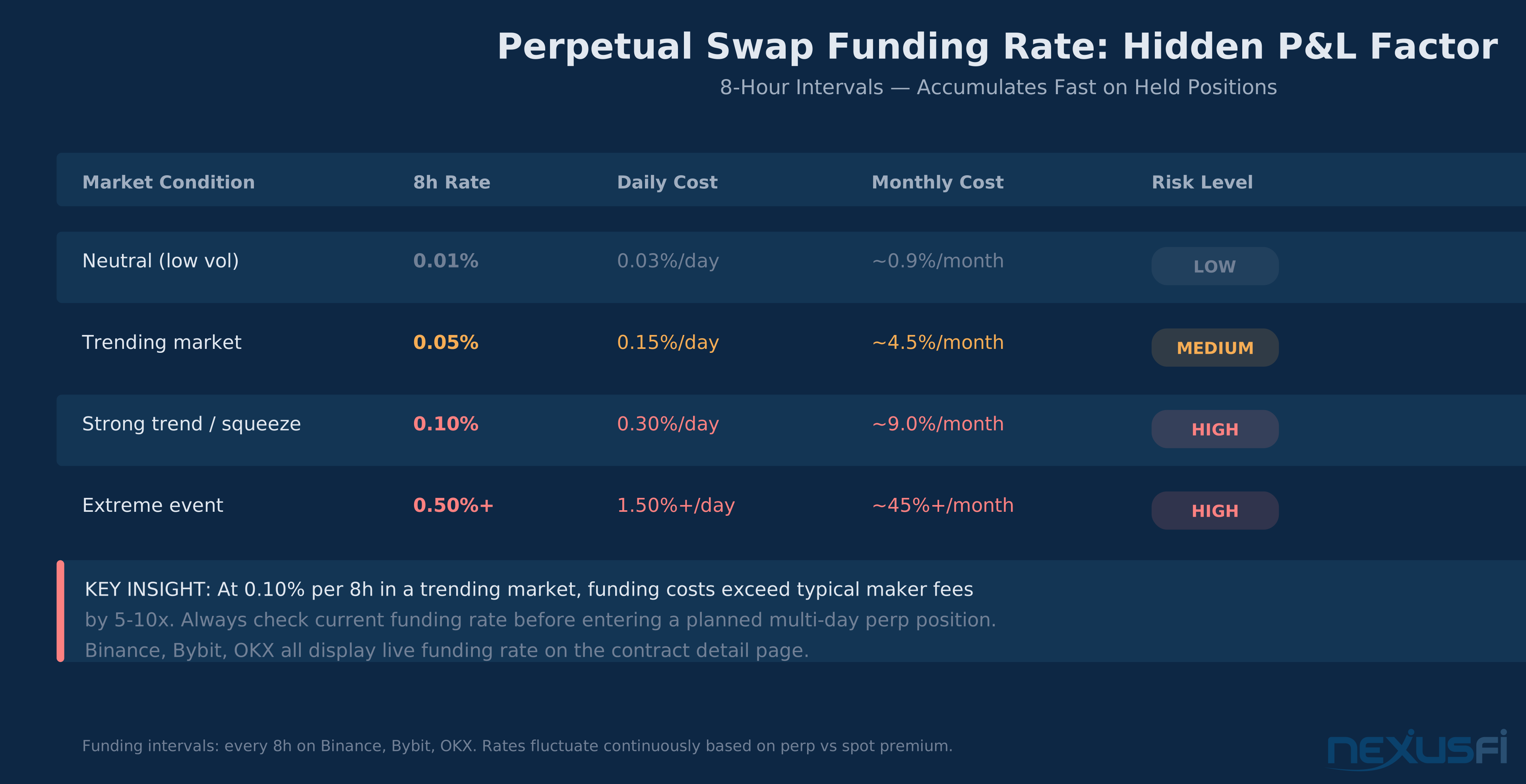
Funding rate impact at different market conditions. At 0.10% per 8h in a trending market, funding costs exceed typical maker fees by 5-10x. Always check the current funding rate before entering a planned multi-day perpetual position — Binance, Bybit, and OKX display live rates on the contract detail page.
Spread and market impact reflect execution cost from the bid/ask spread plus market impact on your order. For major pairs (BTC/USD, ETH/USD perpetuals) on Binance or Bybit, spreads are typically sub-basis-point at reasonable sizes. For illiquid altcoin pairs, this can exceed 0.5% on a round trip even with "zero maker fees."
Order execution reliability is the hidden cost traders underestimate until they've experienced it. Failed cancels, slow order acknowledgment, and WebSocket disconnects during high-volatility windows translate directly into execution slippage. An exchange with 0.02% taker fees that drops your cancel during a fast-moving market is more expensive than an exchange with 0.05% taker fees that executes reliably.
Withdrawal and deposit friction affects operational flexibility. How quickly can you get fiat in and out? What are the blockchain fees? These don't affect daily P&L but affect your ability to respond to opportunity and manage risk across venues.
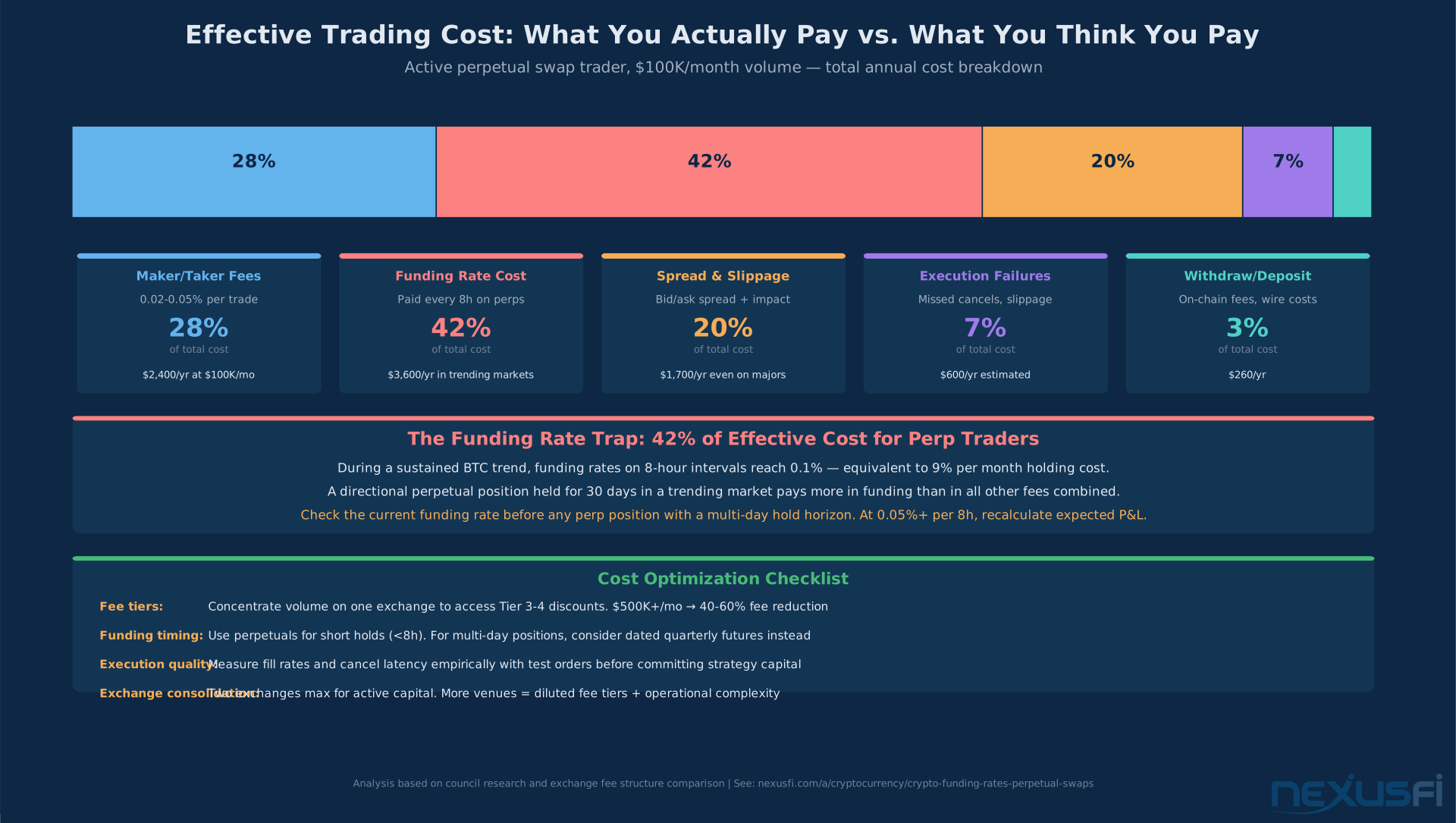
Effective cost breakdown for a $100,000/month active perpetual swap trader. Headline maker fees account for only 28% of total cost — funding rates and spread/slippage dominate. Optimizing for lowest maker fees while ignoring funding rate differences produces the wrong answer.
Volume Tier Mechanics
All major exchanges run tiered fee structures based on 30-day trailing volume. At moderate volume ($1M-$5M/month), fees on Binance/Bybit/OKX drop to 0.01% maker / 0.03%-0.04% taker on futures. At institutional volumes ($50M+/month), maker rebates are available — the exchange pays you to provide liquidity. The practical implication: consolidating onto a single exchange to accelerate through the tiers produces meaningful cost savings versus scattering volume across three exchanges at base tier.
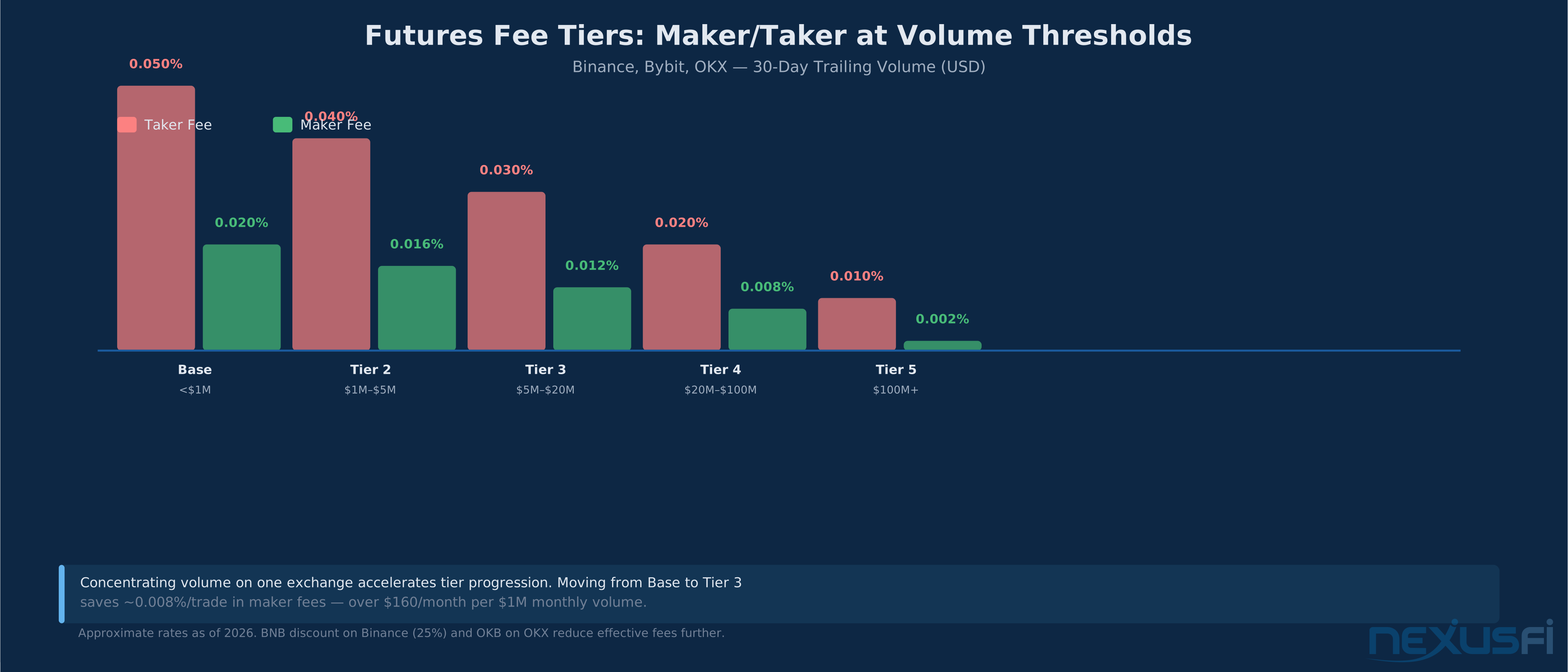
Volume tier fee schedules across exchanges. Moving from base to Tier 3 saves ~0.008%/trade in maker fees — over $160/month per $1M monthly volume. BNB discount on Binance and OKB on OKX reduce effective fees by an additional 25% at any tier.
Security Track Records and What They Mean Operationally #
The history of crypto exchange security is a series of catastrophic failures interspersed with successful defenses. Every active trader needs to understand this history before deciding how much capital to leave on any exchange.
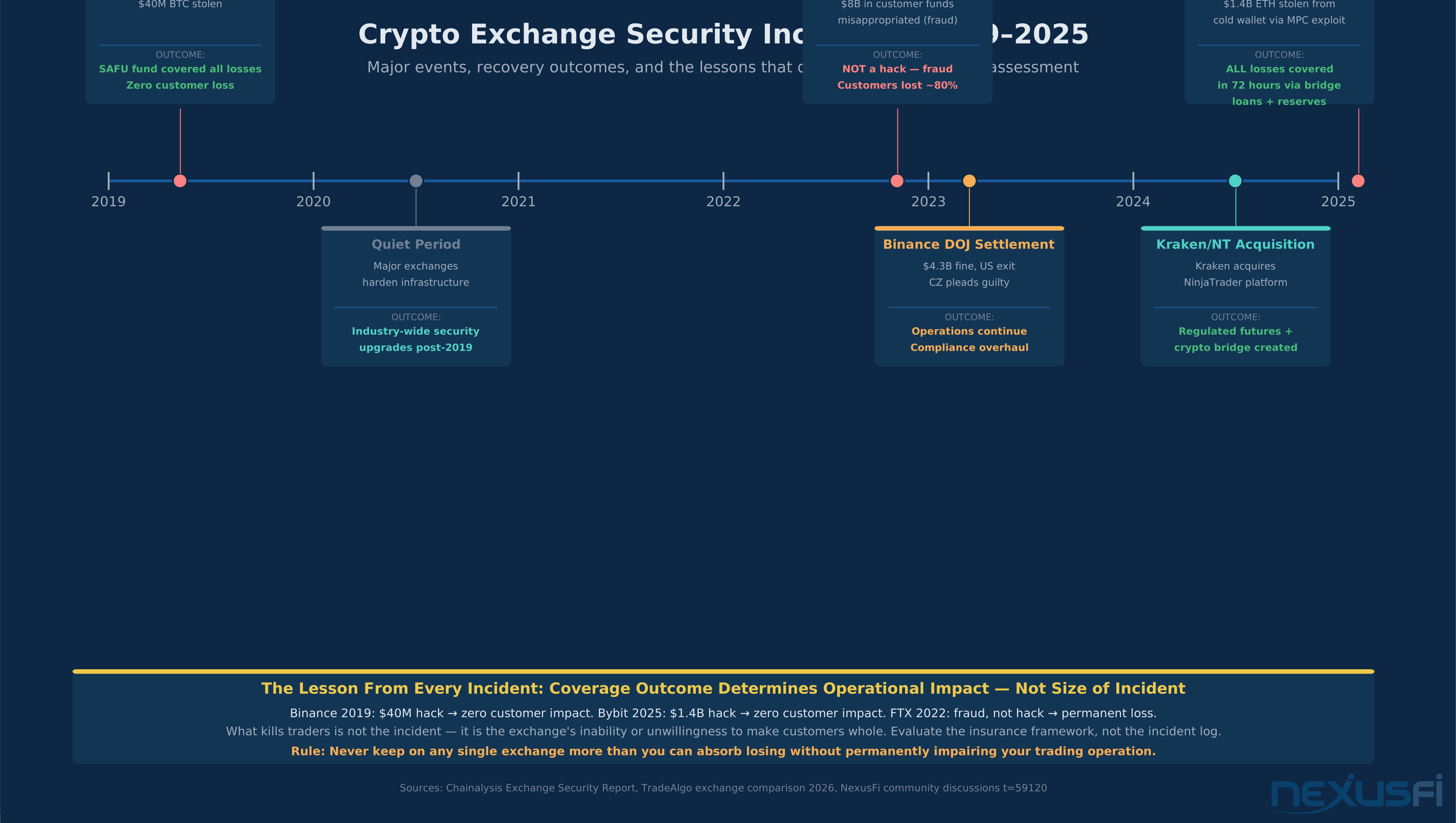
Major crypto exchange security incidents 2019-2025, including recovery outcomes. Binance 2019: $40M, fully covered by SAFU fund. FTX 2022: ~$8B, fraud not hack — assets permanently lost. Bybit 2025: $1.4B, fully covered within 72 hours. The pattern that matters: coverage outcome, not incident occurrence.
The FTX collapse in November 2022 is the defining cautionary event in exchange risk. The $8 billion hole in customer assets wasn't the result of a hack — it was fraud. The lesson is uncomfortable: in crypto, the gap between "regulated by design" and "actually segregated" can be enormous. @SMCJB made this clear in the NexusFi discussion on FTX's implications: "Laws are not the same everywhere. In the US Customer Funds are required to be held in a separate segregated account to protect the customer from a situation like this. Unfortunately people were not aware of this." [2]
The practical risk management framework: treat your exchange balance as unsecured credit risk to the exchange. The maximum you keep on any exchange should be the maximum you can afford to lose in a tail risk event without permanently impairing your trading operation. This isn't pessimism — it's accurate risk accounting. See the Crypto Cold Storage guide for custody frameworks that keep most capital off exchanges entirely.
Security Evaluation Framework
Cold wallet ratio: What percentage of assets does the exchange hold in cold storage? Coinbase and Kraken have historically maintained high cold storage ratios. The 2025 Bybit hack targeted cold storage using a compromised multi-signature signing process — a vector that most security frameworks hadn't addressed.
Proof of reserves: Does the exchange publish regular cryptographic proof that customer assets are 1:1 backed? Binance publishes quarterly Merkle tree verification. Kraken pioneered the methodology. OKX and Bybit have implemented similar programs post-FTX. This is a baseline minimum for any exchange holding significant capital.
Insurance funds: For derivatives specifically, does the exchange maintain an insurance fund that prevents auto-deleveraging (ADL) from affecting your open positions? Binance's SAFU fund holds an estimated $1B+. These protect against liquidation cascade events that would otherwise force profitable traders to reduce positions to cover losing traders' deficits.
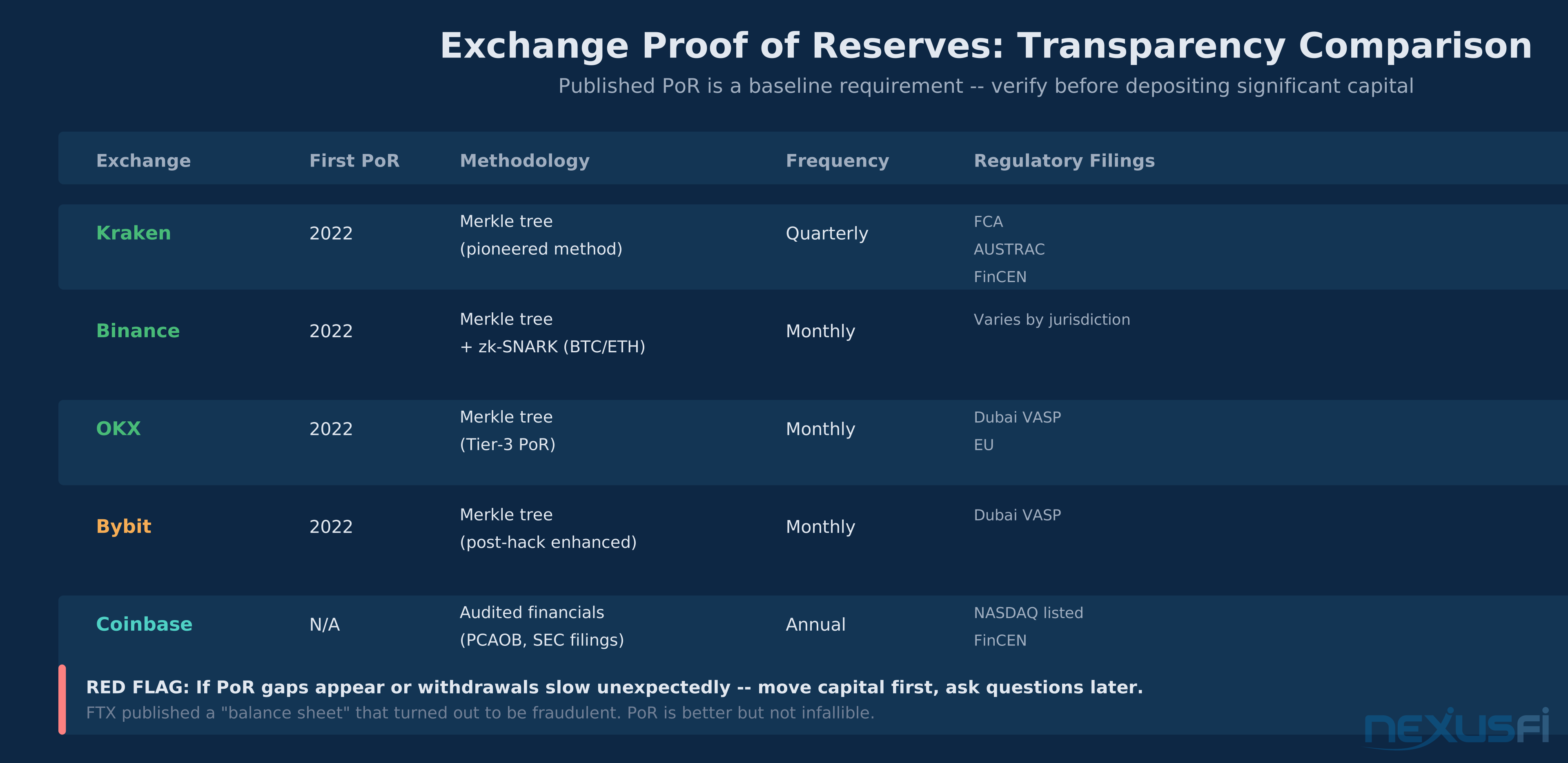
Proof of reserves methodology comparison. Kraken pioneered Merkle tree PoR in 2022 and remains the transparency benchmark. If PoR gaps appear or withdrawals slow unexpectedly, move capital first and ask questions later.
Account-level security tools: IP whitelisting for API keys, separate trading and withdrawal permissions, and withdrawal confirmation delays. The hardening tools that exist in the interface matter less than whether the exchange's default security state forces you to actively opt down.
Regulation: The US vs. Global Divide #
The regulatory divide is the single largest determinant of which exchanges a trader can practically use. It precedes all feature comparisons because it eliminates options entirely before any analysis starts.
US Traders: The Restricted Reality
US traders face the most constrained exchange access in the developed world. Binance's main platform is unavailable (Binance.US is a heavily restricted alternative). OKX operates in the US but with reduced product access. Bybit has had intermittent US access. The practical universe for US-based active crypto derivatives traders is Coinbase Advanced and Kraken, with limited OKX/Bybit access depending on regulatory developments.
The leverage restrictions are significant: where global traders on Binance/Bybit can access 50-125x leverage on major perpetuals, US traders on compliant platforms face caps of 3-10x. The Kraken/NinjaTrader combination is especially relevant — Kraken's acquisition of NinjaTrader and its Breakout prop trading platform creates a regulated multi-asset pathway for US traders already trading CME futures through NinjaTrader. [3] The distinction between regulated FCMs and unregulated crypto exchanges isn't academic — as Big Mike emphasized in a discussion on broker regulatory obligations: "AMP is an FCM, and not a software developer or price feed distributor. It's dangerous for people to think otherwise — broker/FCM relationships carry specific regulatory obligations." [6] Those obligations — segregated customer accounts, capital requirements, CFTC oversight — are precisely what's absent from most offshore crypto venues.
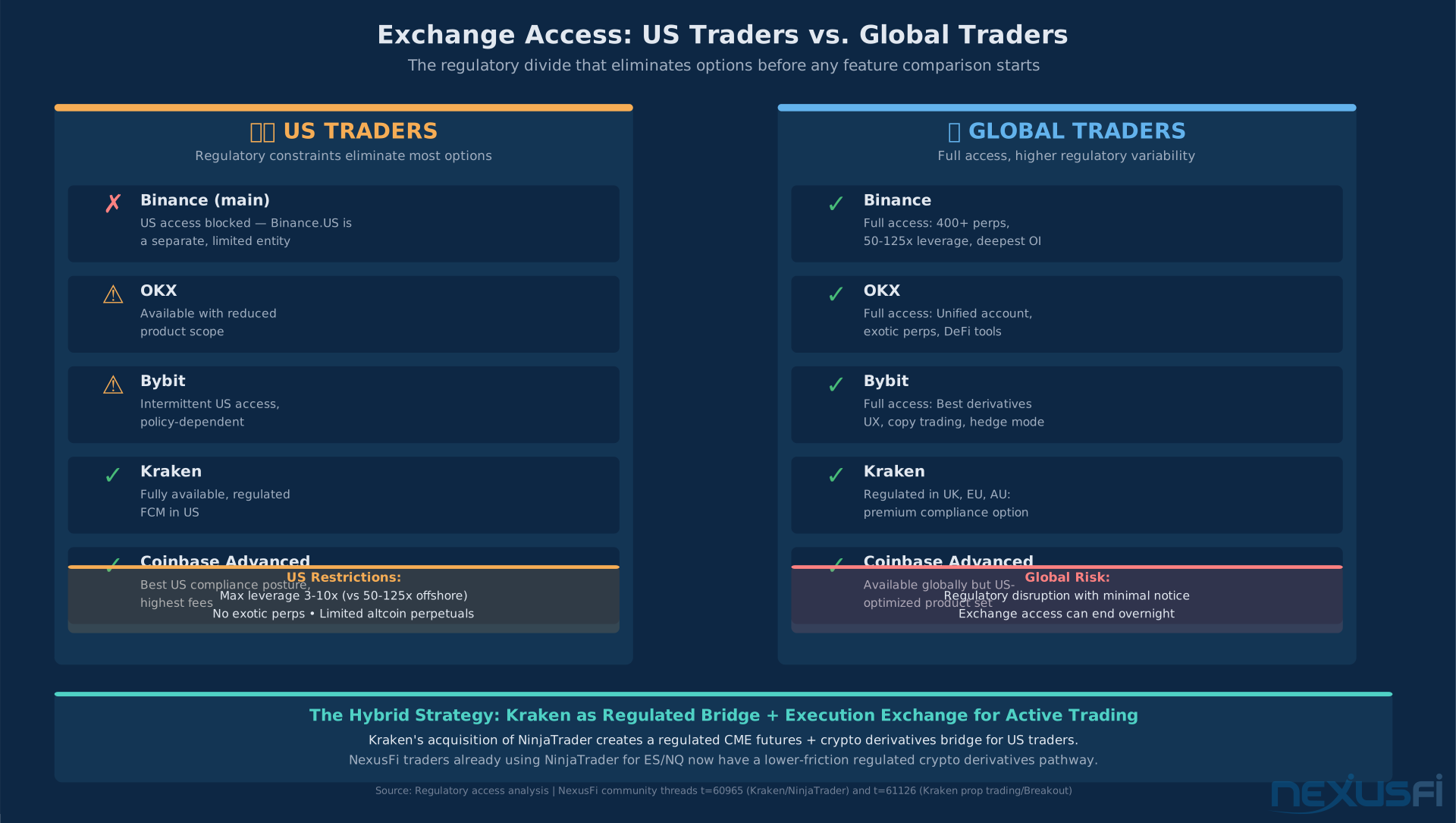
Exchange access and product availability for US traders versus global (non-US) traders. US traders face significant restrictions on leverage (3-10x vs 50-125x), product scope (no exotic perps), and exchange choice (Binance main unavailable). The Kraken/NinjaTrader bridge creates a regulated pathway for futures-to-crypto crossover traders.
Global Traders: Regulatory Variability Risk
Traders outside the US can access the full global derivatives market — but they accept regulatory disruption risk. The history of the past three years includes multiple jurisdictions banning or restricting specific exchanges with varying amounts of notice. Any global trader with significant capital concentration on a single offshore exchange needs a contingency plan for sudden access restriction. This means maintaining enough capital diversification across two venues that a single access disruption doesn't prevent you from trading through a position.
API Trading: Infrastructure That Defines Execution Quality #
For traders who run automated strategies or use algorithmic order management, API quality is the primary selection criterion — not headline fees. An exchange with suboptimal API infrastructure is unusable for serious automated trading regardless of fee advantages.
WebSocket vs REST: The Latency Architecture That Matters
Modern exchange APIs operate on two layers. REST APIs are request-response. WebSocket connections maintain persistent connections where the exchange pushes updates in real time. For any strategy that depends on real-time market data or order status, WebSocket is not optional. Binance and Bybit consistently lead in WebSocket latency benchmarks (10-30ms range for order book updates at major data centers). OKX is competitive. For discretionary traders using APIs primarily for order management rather than real-time data, latency differences between top-tier exchanges are functionally irrelevant. See the Futures Trading APIs guide for a deep dive on API architecture.
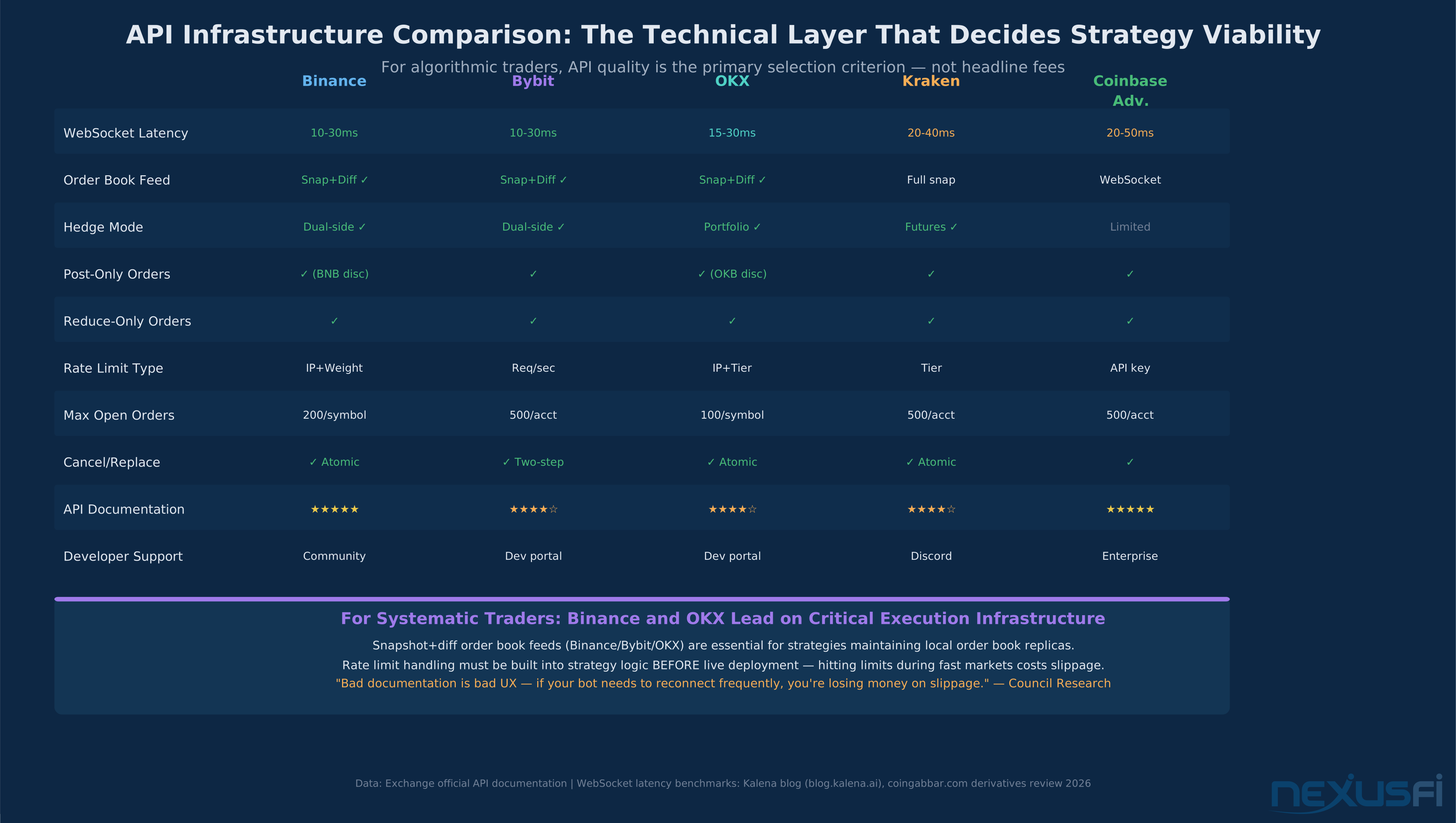
API capability comparison across five exchanges: WebSocket latency, order book feed type, hedge mode support, max position limits, and rate-limit architecture. Binance and OKX lead for high-throughput algorithmic strategies. Bybit leads for order management UX in discretionary derivatives trading.
Order Types: What Derivatives Traders Actually Need
Core requirements for active derivatives traders include: limit/maker orders with post-only flag (mandatory for avoiding taker fees in market-making), IOC (immediate-or-cancel) and FOK (fill-or-kill) for aggressive entry logic, reduce-only orders for risk management without accidental position increases, and hedge mode (the ability to hold simultaneous long and short positions in the same instrument). Bybit's hedge mode implementation is widely considered the cleanest for discretionary traders. OKX's unified account allows more complex multi-instrument setups. For traders building automated systems, testing order type behavior with small positions before deploying production logic is essential — the difference between how order types are documented and how they behave under edge conditions is a persistent source of live trading errors.
Derivatives Access and Product Depth #
Perpetual Swaps: The Core Product
Perpetual swaps are the dominant crypto derivatives product globally — futures contracts with no expiration date, maintaining price anchor to spot through the funding rate mechanism. Binance maintains the highest open interest across major perpetual contracts — deeper books translate directly to better fill quality at larger sizes. For positions in the $500K-$5M notional range, the execution quality difference between Binance and smaller venues on BTC/ETH perps is measurable. For smaller positions ($10K-$100K notional), the difference is minimal and other factors dominate. Bybit and OKX have made significant market share gains through product innovation — more altcoin perpetuals, better spread on mid-cap pairs, and unified account mechanics.
Options: The Deribit Question
For crypto options trading, Deribit dominates the institutional market — it holds roughly 80% of Bitcoin options open interest and comparable dominance on ETH options. For any serious crypto options strategy, Deribit is the primary venue regardless of which exchange you use for perpetuals. The five exchanges discussed here all offer options products, but liquidity concentration on Deribit means that options traders evaluate Deribit separately from their perpetuals exchange selection.
Account Security: What You Must Do Regardless of Exchange #
Exchange-side security is their problem. Account-side security is entirely yours. These practices are non-negotiable for any trader with meaningful capital on a crypto exchange.
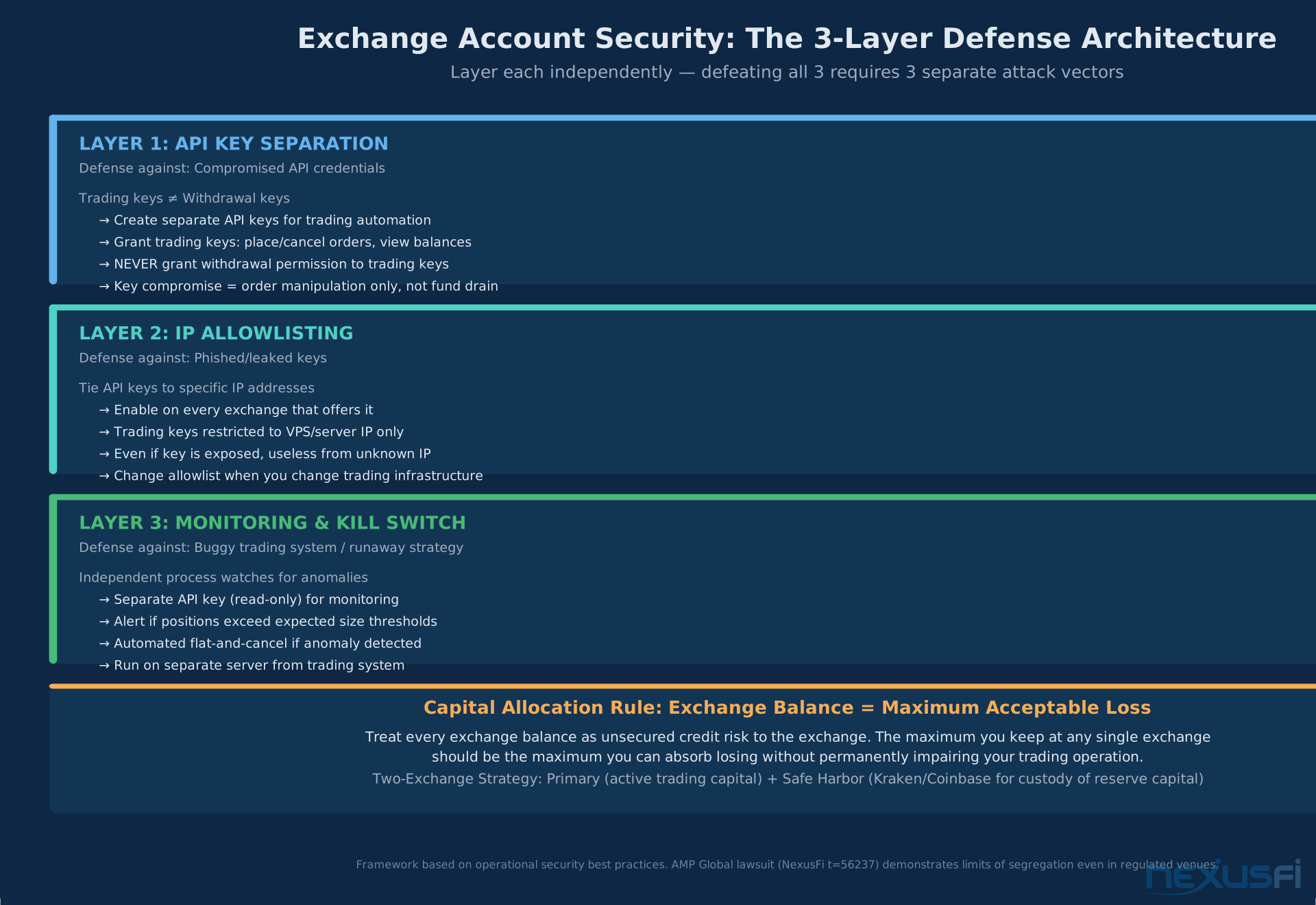
Three-layer exchange account security architecture: API key separation (trading vs withdrawal permissions), IP allowlisting, and monitoring automation. Each layer adds an independent barrier that must be defeated separately. The capital allocation rule applies universally: the maximum you keep at any single exchange should be the maximum you can absorb losing without permanently impairing your trading operation.
API Key Architecture for Trading Systems
Every exchange allows you to create multiple API keys with granular permissions. The rule is absolute: never grant withdrawal permissions to a key that is used for trading automation. Separate these permissions completely:
Trading-only keys: Can place orders, cancel orders, check positions and balances. Cannot withdraw. These are the keys used by your trading software. If they're compromised, the attacker gains order management capabilities but cannot drain your account.
Withdrawal keys (if you use them at all): Stored offline, never in any running process. Many traders simply use the exchange UI for withdrawals and never create API keys with withdrawal permissions at all.
IP allowlisting ties your API keys to specific IP addresses. Even if a key is somehow exposed, it cannot be used from any IP address not on your allowlist. This is available on all five major exchanges and should be configured for every trading API key.
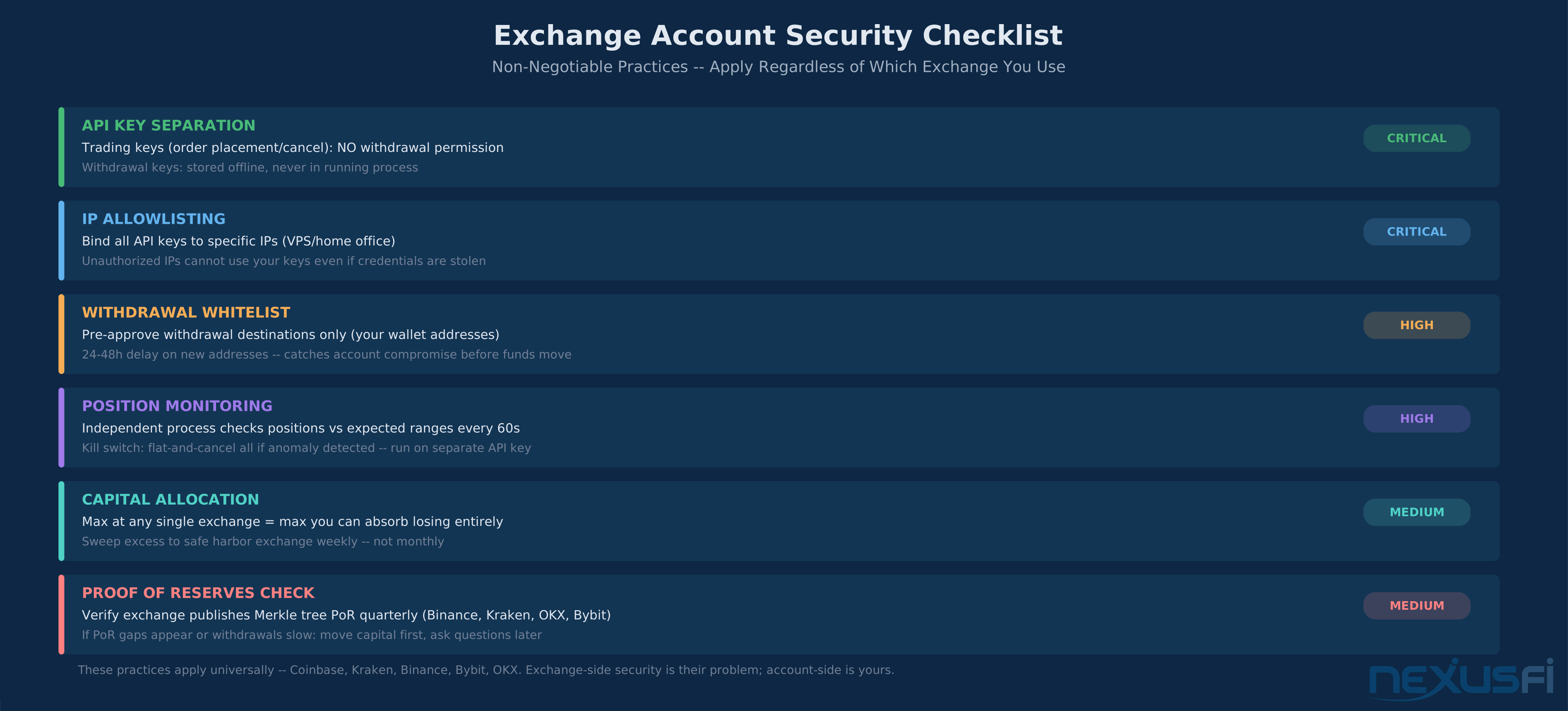
Non-negotiable security practices for every exchange account. API key separation and IP allowlisting are the two highest-impact controls — implement these before anything else. The capital allocation rule applies universally: max on any exchange = max you can absorb losing.
Position Monitoring and Kill Switches
Automated trading systems can go wrong in ways that create enormous positions before a human can intervene. Build monitoring automation that checks position sizes against expected ranges and executes a flat-and-cancel if anomalies are detected. Position monitoring should run independently from your trading system on a separate API key. See the Automated Risk Controls guide for kill switch implementation patterns.
Exchange Counterparty Risk Management
The capital management rule for exchange exposure: never keep more on any single exchange than you can absorb losing without permanently impairing your trading operation. @bobwest made the same point about regulated brokers that applies even more strongly to crypto: "Trading only on a regulated exchange, in a country that is serious about its regulation, is an essential if you want any safety for your money — and it is not necessarily safe then either, just more so." [4] In lightly regulated or unregulated crypto venues, the constraints are even looser.
Choosing Your Primary Exchange: Decision Framework by Trader Profile #
The exchange selection framework starts not with features but with constraints. Answer these four questions in order:
1. What's your jurisdiction? If you're US-based, the answer is Coinbase Advanced or Kraken, with limited OKX access. This isn't a preference question — it eliminates options before any analysis starts.
2. What's your primary strategy? Algorithmic/systematic: API quality and liquidity depth dominate. Discretionary scalper: interface quality under stress, order management UX. Options strategies: Deribit is primary regardless of this analysis. Longer hold discretionary: fees, funding rates, and account management tools.
3. What's your volume tier? If you're trading $500K/month or more, fee tier mechanics start to matter much. Below $500K/month, fee differences between exchanges are noise compared to execution quality and product access.
4. What's your security tolerance? The spectrum from Coinbase (most secure, most regulated, highest fees, fewest products) to Bybit (lower regulatory certainty, stronger derivatives focus, lower fees) reflects a real trade-off. Where you sit on this spectrum is a personal risk decision.

Decision matrix for primary exchange selection by trader profile. There is no universally best exchange — the decision is personalized to jurisdiction, strategy type, volume, and risk tolerance. Applying someone else's "best exchange" answer to your situation produces the wrong answer.
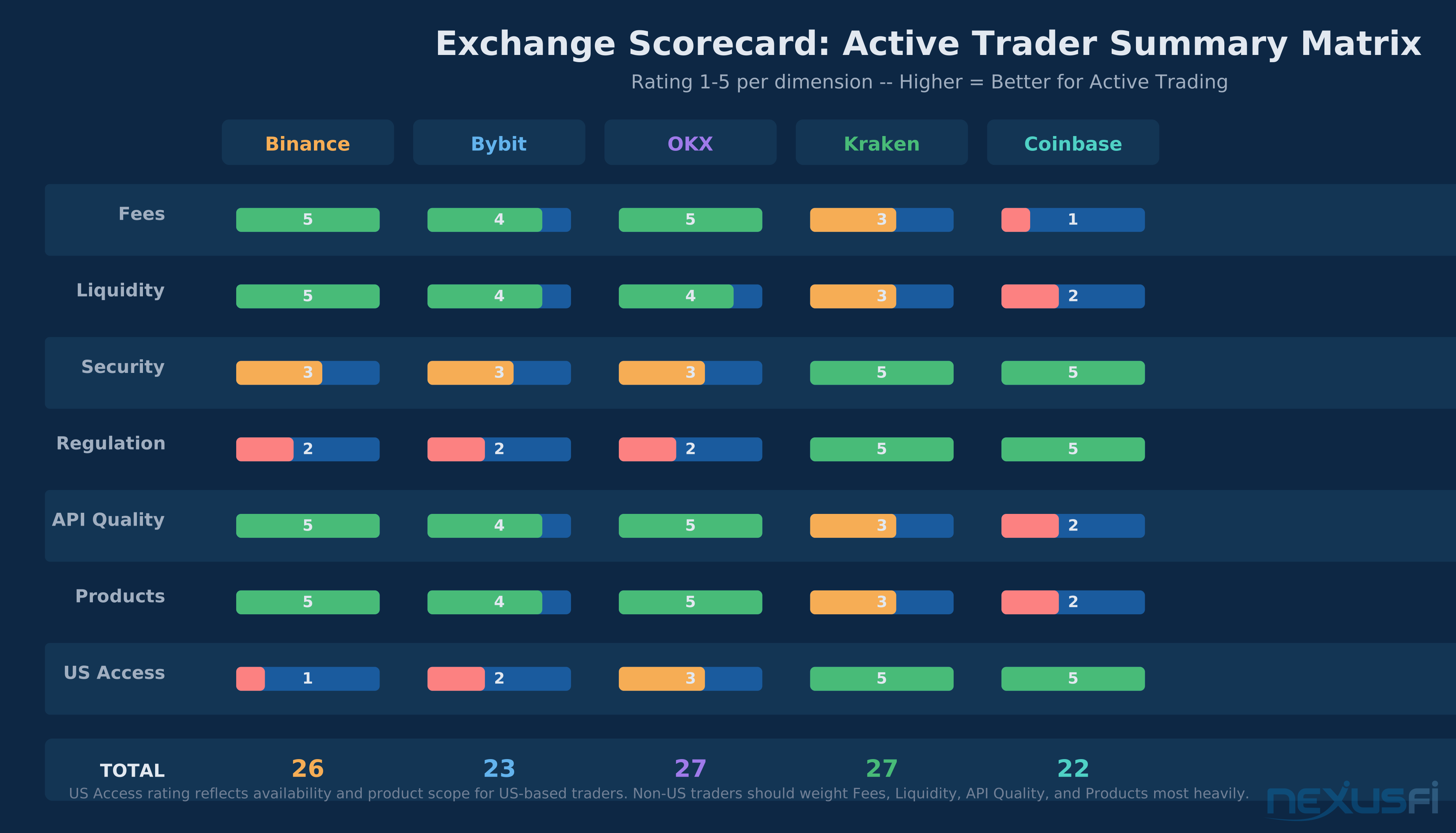
Exchange scorecard across seven active-trading dimensions. Binance and OKX lead on fees, liquidity, API, and products. Kraken and Coinbase lead on security, regulation, and US access. No exchange is universally "best" — the right answer depends on which dimensions matter most for your specific trading operation.
For US-Based Retail Traders
Coinbase Advanced for fiat rails and institutional-grade compliance. Kraken as the fee-competitive alternative with better derivatives access. The product limitations are real — you're sacrificing the full global perps market in exchange for regulatory certainty. For NexusFi members already trading CME futures through NinjaTrader, the Kraken integration creates a lower-friction path to crypto derivatives than building entirely separate exchange infrastructure.
For High-Frequency and Algorithmic Traders
Binance or OKX, with the selection determined by API behavior testing on your specific strategy's order flow patterns. Run execution tests with small positions measuring: fill rates on limit orders, cancel acknowledgment latency, WebSocket disconnect frequency, and order book snapshot accuracy during volatility events. The exchange whose API performs best for your specific order patterns is the right answer — general benchmarks are starting points, not answers. Bybit has made significant progress on API capabilities and is worth testing alongside Binance/OKX, especially for strategies that require hedge mode.
For Discretionary Scalpers and Day Traders
Bybit leads on the interface features that matter most for discretionary derivatives trading: chart-integrated leverage and stop management, clean position dashboard, and mobile execution quality for managing trades away from the desk. The post-2025 hack infrastructure improvements also addressed the security concern that caused some traders to move away. OKX is a strong alternative if you're trading across multiple crypto assets simultaneously and unified account capital efficiency matters for your position management.
For Risk-Averse and Institutional Traders
Kraken. The proof-of-reserves transparency, zero exchange-level hack history, and regulated multi-jurisdiction operation are worth the fee premium. For traders who operate under compliance constraints or need to document exchange relationships, Kraken is the answer. The @liquidcci observation in the Kraken/NinjaTrader thread sums it up: segregated accounts and CFTC requirements represent a floor of customer protection that offshore venues can't match. [5]
The Two-Exchange Strategy: Primary Execution Plus Safe Harbor #
The consistent operational recommendation from experienced crypto traders: use two exchanges. A primary venue for active trading and a secondary venue for operational backup and conservative custody.
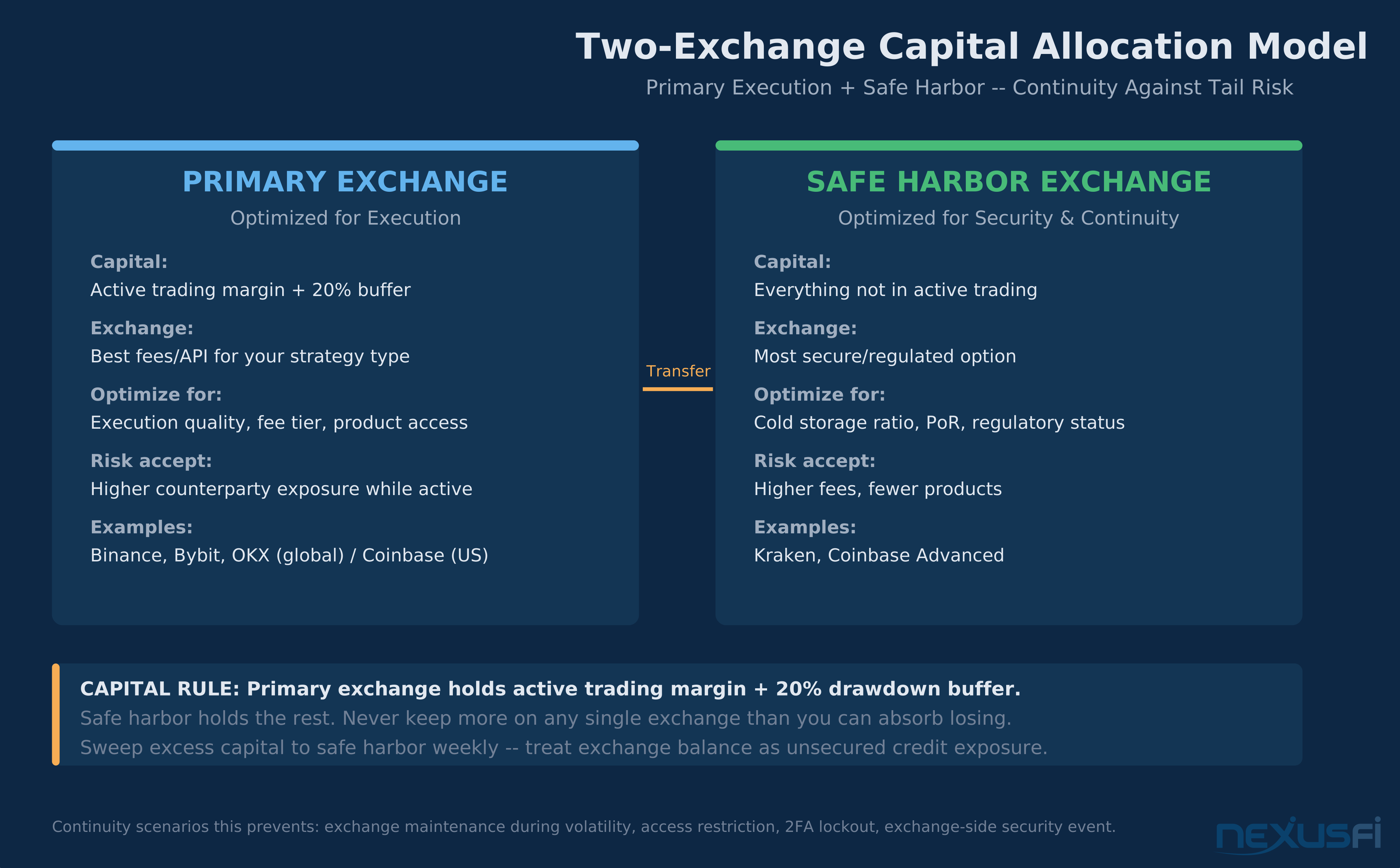
The two-exchange capital allocation model: primary exchange holds active trading margin plus 20% drawdown buffer; safe harbor holds everything else. Sweep excess capital to safe harbor weekly — treat exchange balance as unsecured credit exposure to the counterparty.
Primary exchange: Optimized for your execution needs — fees, API quality, product access, interface. This is where most of your active trading capital lives and where you've tested thoroughly.
Safe harbor exchange: Optimized for security and regulatory stability. This is where capital lives when you're not actively trading it. For most traders, this is Kraken or Coinbase Advanced, regardless of which exchange they use for primary execution.
The capital allocation rule: your primary exchange holds what you need for active trading plus a 20% buffer. Your safe harbor holds the rest. The 20% buffer prevents forced liquidations from funding shortfalls — you always have enough at the primary exchange to handle reasonable drawdowns before needing to transfer. The two-exchange strategy also provides continuity insurance against exchange maintenance during market volatility, geographic access restrictions with insufficient notice, and device-side authentication failures. Having a funded backup account means a single-point failure doesn't take you entirely offline.
Knowledge Map
Prerequisites
Understand these firstGo Deeper
Build on this knowledgeReferences This Article
Articles that build on this topicCitations
- — Kraken in Talks to Acquire NinjaTrader (2025) 👍 8“These crypto exchanges are making an absolute fortune as they charge % of notional rather than per-contract like futures brokers.”
- — What if a broker declare bankruptcy!!! Ftx first whose next? (2022) 👍 6“Laws are not the same everywhere. In the US Customer Funds are required to be held in a separate segregated account to protect the customer from a situation like this.”
- — Kraken Enters Prop Trading: Breakout Acquisition Gives Funded Accounts Access to CME Futures (2025)“Kraken's acquisition of the Breakout prop firm creates a regulated multi-asset pathway for US traders to access both CME futures and crypto derivatives under one umbrella.”
- — What if a broker declare bankruptcy!!! Ftx first whose next? (2022) 👍 7“Trading only on a regulated exchange, in a country that is serious about its regulation, is an essential if you want any safety for your money -- and it is not necessarily safe then either, just more so.”
- — Kraken in Talks to Acquire NinjaTrader (2025) 👍 6“If they aren't segregated accounts, then that would be a major CFTC violation. That's a major requirement just to play on US soil.”
- — Class Action Lawsuit: AMP Global Clearing LLC (2020) 👍 21“AMP is an FCM, and not a software developer or price feed distributor. It's dangerous for people to think otherwise -- broker/FCM relationships carry specific regulatory obligations.”
- CryptoSlate — Best Crypto Futures Exchanges 2026 -- Fees and Access (2026)
- iTrusty.io — Crypto Exchanges 2026: Binance vs Bybit vs OKX vs Kraken vs Coinbase (2026)
- TradeAlgo — Best Crypto Exchanges 2026: Fees, Features and Security Track Records (2026)
- — What if a broker declare bankruptcy!!! Ftx first whose next? (2022) 👍 6“A trader getting involved in something like this is making a serious mistake. Trading only on a regulated exchange is an essential if you want any safety for your money.”
- CoinDesk Research — Crypto Exchange Risk Analysis 2025: Bybit Hack and What It Means for Active Traders (2025)