



Hyperliquid: The On-Chain Perpetuals Exchange That Trades Like a CEX -- and What Futures Traders Need to Know
Overview #
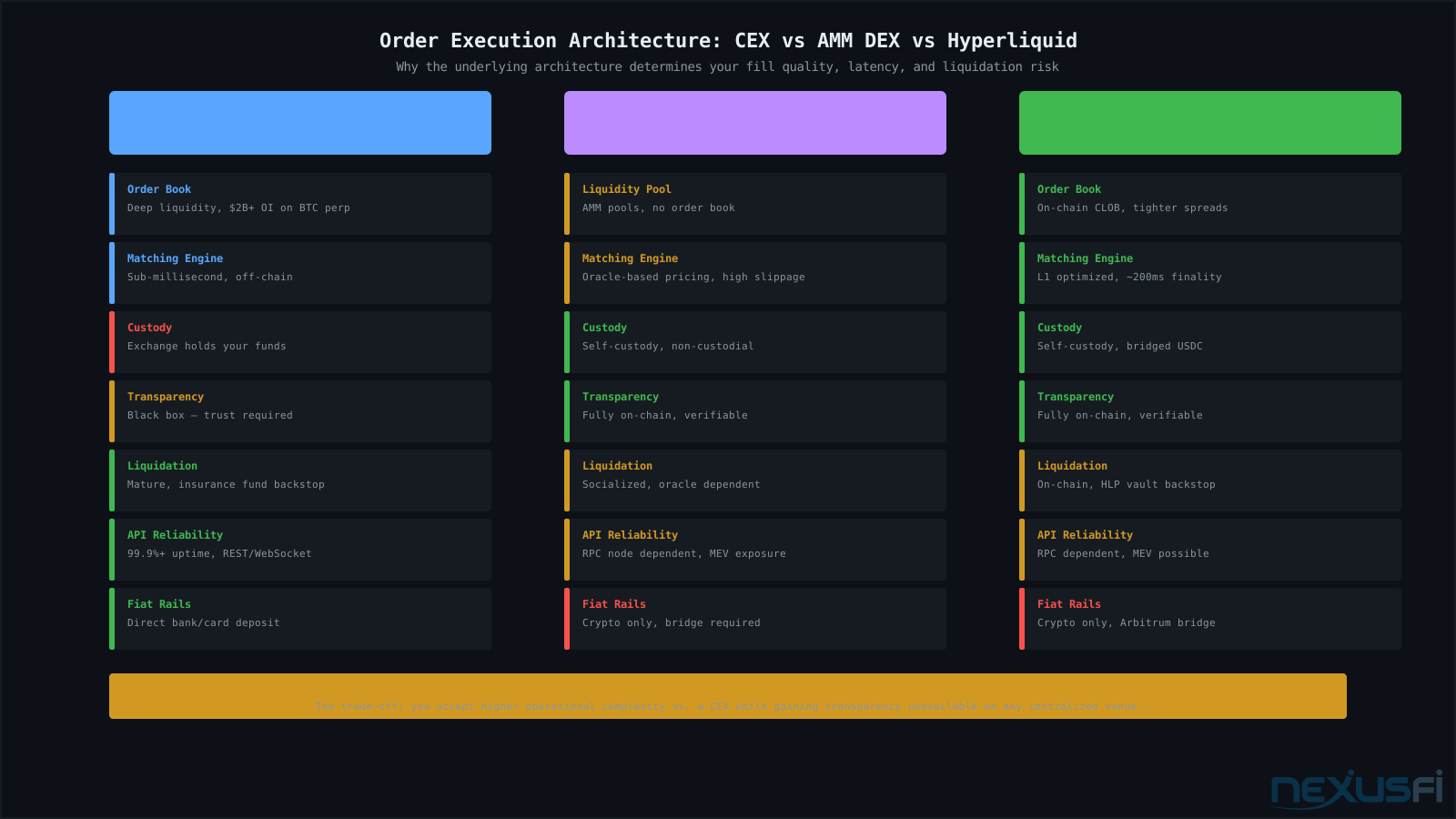
Hyperliquid is a decentralized perpetuals exchange built on its own Layer 1 blockchain. It runs a Central Limit Order Book (CLOB) fully on-chain, processes trades with ~200ms finality, and lets you trade BTC, ETH, SOL, and 100+ other perp pairs without ever depositing funds into an exchange's custody.
New to on-chain perpetuals? Start by understanding the funding rate mechanism — it works the same as on Binance Futures (8-hour intervals, longs pay shorts when rate is positive), but the rate itself is set by on-chain oracle prices and HLP vault positioning. The mechanics are identical; the custody model is what's different.
That sounds like a long list of caveats to get to something that basically does what Binance does. But that framing misses the point. Hyperliquid is interesting not because it mimics CEXs — it's interesting because it does things no CEX can do: your fills are on-chain, your liquidations are publicly visible, and no one can freeze your account or block withdrawals. The history of crypto exchanges is the history of catastrophic custody failures. MtGox, QuadrigaCX, FTX — all the same story. Hyperliquid breaks that story structurally, not through promises.
For futures traders familiar with traditional derivatives markets, the relevant comparison isn't "CEX vs DEX." It's "self-custody perps with order book mechanics vs. trust-based perps with deeper liquidity." Both have their place. Understanding when Hyperliquid is the right tool and when it isn't is what this article covers.
The Architecture That Makes It Different #
Most DeFi perpetuals use Automated Market Makers (AMMs). You're not trading against a counterparty with a limit order — you're trading against a liquidity pool, and the pool's formula determines your price. The result is chronic slippage, oracle-dependent pricing, and an experience that feels nothing like trading futures. GMX, Gains Network, early dYdX — all built on AMM foundations.
Hyperliquid's L1 blockchain runs an actual CLOB: a Central Limit Order Book with price-time priority, limit orders, market orders, stop orders, and reduce-only logic. The matching happens on-chain, but on a chain purpose-built for the task. Consensus finality is fast enough for active trading because the system prioritizes the matching engine's performance requirements above general-purpose smart contract execution.
What this means in practice: you place a limit order at a specific price, it sits in the book visible to anyone, and it fills against the next matching order at that price. Spreads are tight because real market makers are quoting, not a constant-product formula. You can ladder orders, set take-profits and stop-losses, and manage a multi-leg position with the same logic you'd use on a centralized venue.
The L1 distinction matters beyond just matching speed. HyperEVM extends the chain with a general-purpose EVM environment, enabling smart contracts, on-chain bots, vault strategies, and DeFi composability that don't exist on isolated perp exchanges. A trader can write an on-chain strategy that automatically rebalances a perp position based on funding rates, without any off-chain execution risk. This is infrastructure for serious automation that CEXs at the core cannot offer.
HLP Vault: The Liquidity Backstop That Isn't Free Money #
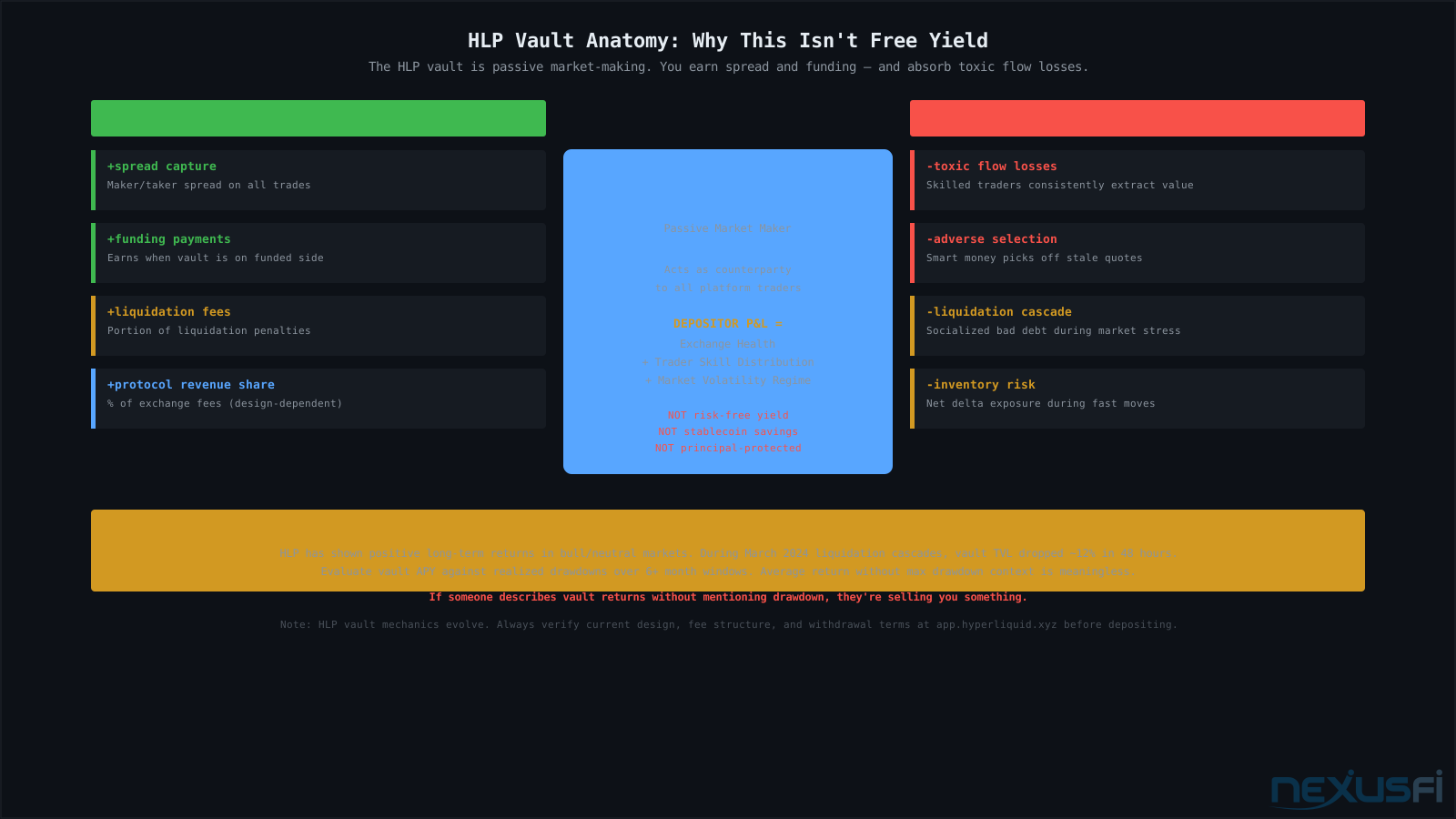
The HLP vault is Hyperliquid's protocol-owned market-making mechanism. When you deposit into HLP, you're not earning yield from lending or staking — you're participating in passive market-making. The vault quotes on both sides of the order book, captures the spread between bids and asks, earns a portion of trading fees, and acts as the last-resort counterparty when no other market maker is available.
That description should immediately tell you what the risks are. A passive market maker earns spread and fees in normal conditions and absorbs losses when skilled traders extract value systematically. This is called toxic flow — when the counterparties you're quoting are consistently better at predicting short-term price direction than your quotes can accommodate. A vault can show strong positive returns for months and then get demolished in a single high-volatility event where liquidation cascades force positions through the vault at adverse prices.
HLP's returns come from multiple streams: spread capture from market-making activity, funding rate payments when the vault is on the funded side, a portion of liquidation penalties from the exchange's fee structure, and potentially some protocol revenue share depending on the current fee design. This is not entirely different from how a centralized exchange's insurance fund works, except that HLP participation is open to retail depositors.
The critical risk exposure that gets underestimated: bad debt socialization. When a large position gets liquidated during a fast move and the liquidation engine can't fill the position at prices that cover the maintenance margin, the resulting loss has to come from somewhere. On Hyperliquid, it comes from the HLP vault and/or Auto-Deleveraging of profitable positions. Auto-Deleveraging — where the exchange forcibly closes your profitable position at current prices to absorb someone else's liquidation loss — is not theoretical. It has happened on Binance and will happen on Hyperliquid during a genuine cascade event.
If you're evaluating HLP participation: look at the maximum drawdown over the full observable history, not the average APR. Average APR on a market-making strategy is meaningless without the volatility and tail risk context. The question is whether the risk-adjusted return is competitive with alternatives that don't carry exchange-level counterparty and socialization risk.
Funding Rates: How to Read the Perpetual's Temperature #
Perpetual contracts have no expiry, so they need a mechanism to keep their price anchored near spot. That mechanism is the funding rate — a periodic payment between longs and shorts that incentivizes the losing side to reduce their position and rebalances the book toward fair value.
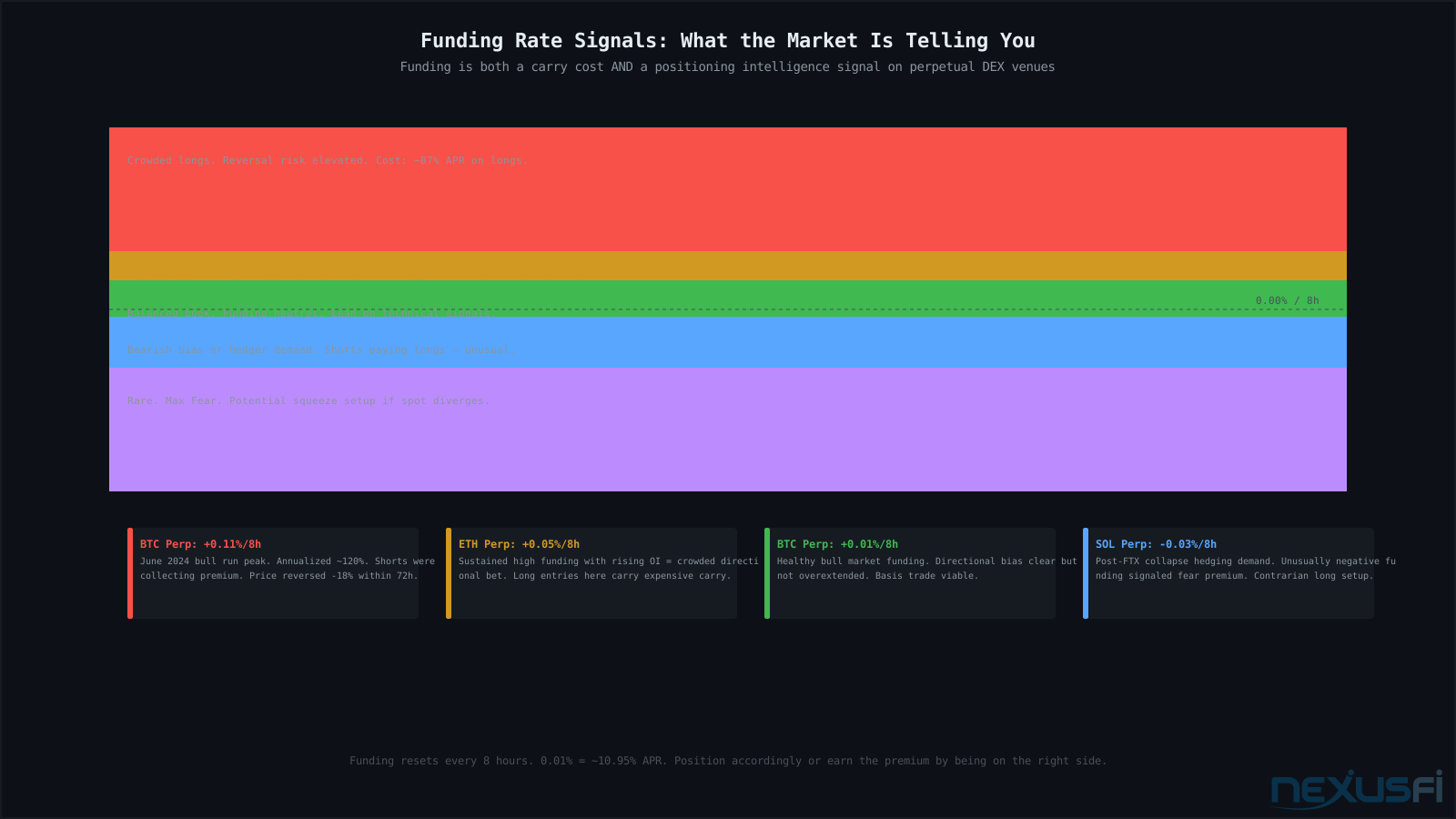
When the perp trades above spot, longs are paying shorts. The funding rate is positive. When the perp trades below spot, shorts are paying longs. The funding rate is negative. Rates update every 8 hours on most venues, including Hyperliquid. The magnitude depends on how far the perp has drifted from spot and how much pressure exists to pull it back.
0.01% per 8 hours sounds trivial. It's 10.95% annualized. 0.05%/8h is 54.75% annualized. 0.10%/8h is 109.5% annualized. If you're holding a leveraged long through multiple funding periods in a high-funding environment, that carry is eating your margin faster than most traders intuitively model.
Funding is also a market sentiment signal that's genuinely actionable. Sustained high positive funding means longs are paying a premium to stay long — the book is skewed bullish, and the market is willing to pay for that exposure. When funding stays elevated for multiple periods without a breakout, it's often a sign of crowded positioning rather than legitimate directional demand. The setup that follows is frequently a sharp reversal as funding costs force position liquidation from the overextended side.
On Hyperliquid specifically, watch for funding spikes around bridge activity, major listing events, and protocol-level announcements. HYPE token volatility correlates with periods of elevated funding because the same risk appetite driving token speculation also drives leverage demand on perps. During these periods, funding signals tend to be noisier and reversion-driven setups are more dangerous to fade because liquidity can dry up quickly.
Liquidation Engine: The Part You Must Understand Before Sizing #
Every perpetuals exchange lives or dies by its liquidation system. A liquidation engine that fails — whether through oracle manipulation, flash loan exploitation, or simply processing positions too slowly during a cascade — can destroy trader capital beyond the theoretical maximum loss from position sizing alone.
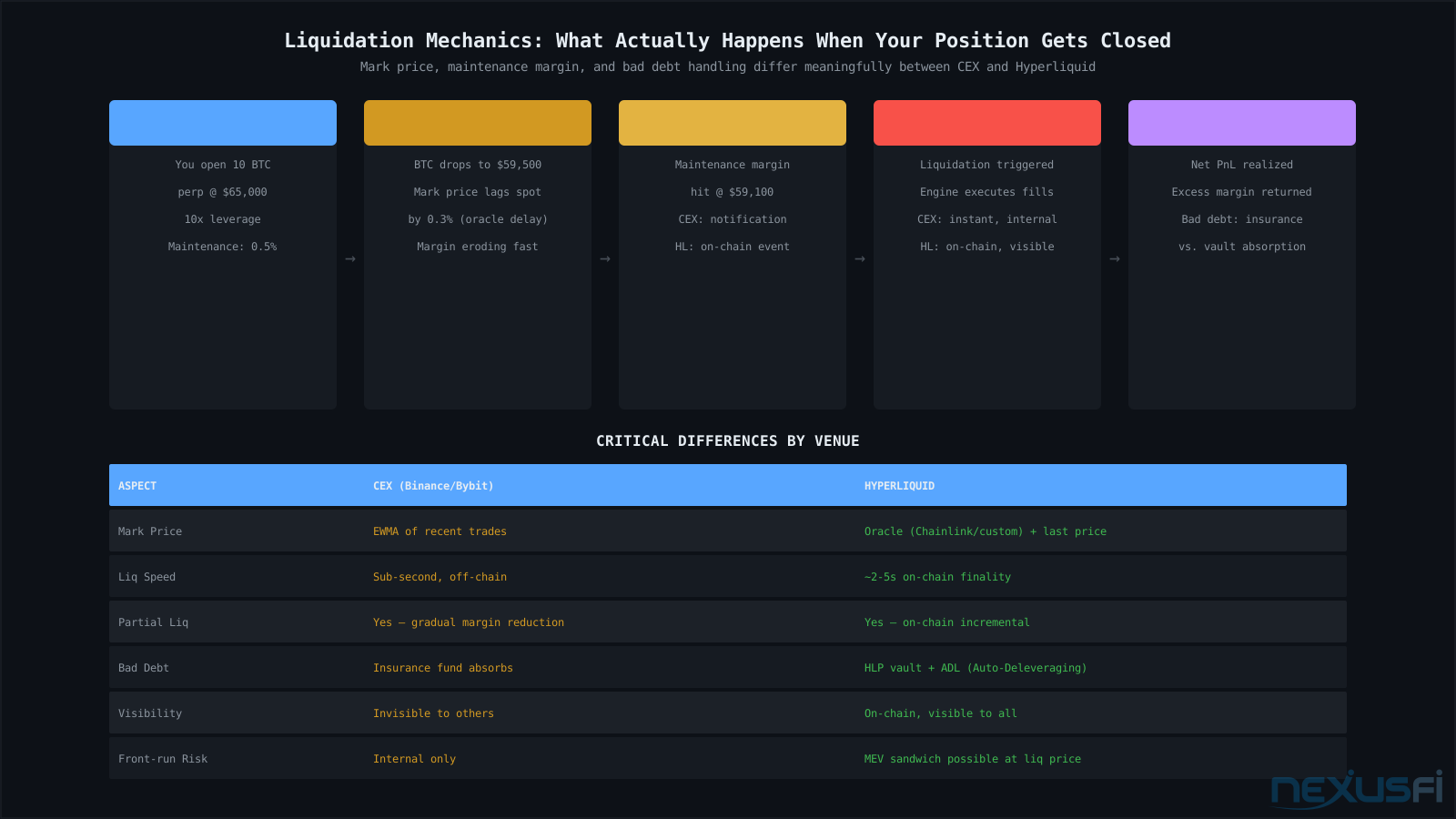
Hyperliquid's liquidation mechanics work through mark price, which is derived from oracle feeds (weighted combination of spot prices from multiple sources) plus a component of recent Hyperliquid-native price activity. This blended mark is designed to resist manipulation, but it introduces lag relative to spot during fast moves. When BTC drops 3% in 90 seconds, your mark price may be 0.5% above spot during the first minute of that move, which means your actual liquidation threshold is being measured against a stale number. By the time mark catches up to spot, you may have crossed maintenance margin without the system triggering liquidation yet. This can work in your favor (more time to add margin) or against you (mark price then snaps to spot and liquidation happens at a worse price than you planned for).
Maintenance margin on Hyperliquid is typically 0.5% for major pairs like BTC and ETH perps, similar to Binance. But for altcoin perpetuals, maintenance requirements scale with volatility and liquidity, and can be 2-5% for less liquid contracts. Always check contract specifications before sizing — a 0.5% maintenance assumption on an altcoin perp can be off by a factor of 5.
Partial liquidation is the norm: the system reduces your position incrementally rather than closing everything at once, which limits slippage impact and gives the market time to absorb the selling. But during a genuine cascade where multiple large positions are being liquidated simultaneously, partial liquidation doesn't prevent bad fills — it just spreads them over multiple blocks. The practical implication is that you should model liquidation execution at market, not at your theoretical liquidation price, when calculating actual position risk.
Auto-Deleveraging (ADL) is the backstop behind the backstop. When the insurance fund (HLP vault) is insufficient to absorb bad debt from a liquidation, the protocol can forcibly close the most profitable positions in the market to offset the loss. Your winning position can be closed at current prices, against your will, to bail out someone else's failed trade. This is not unique to Hyperliquid — Binance and Bybit both have ADL mechanics — but it bears emphasizing for traders who come from traditional futures markets where ADL doesn't exist.
HYPE Token and the HyperEVM Ecosystem #
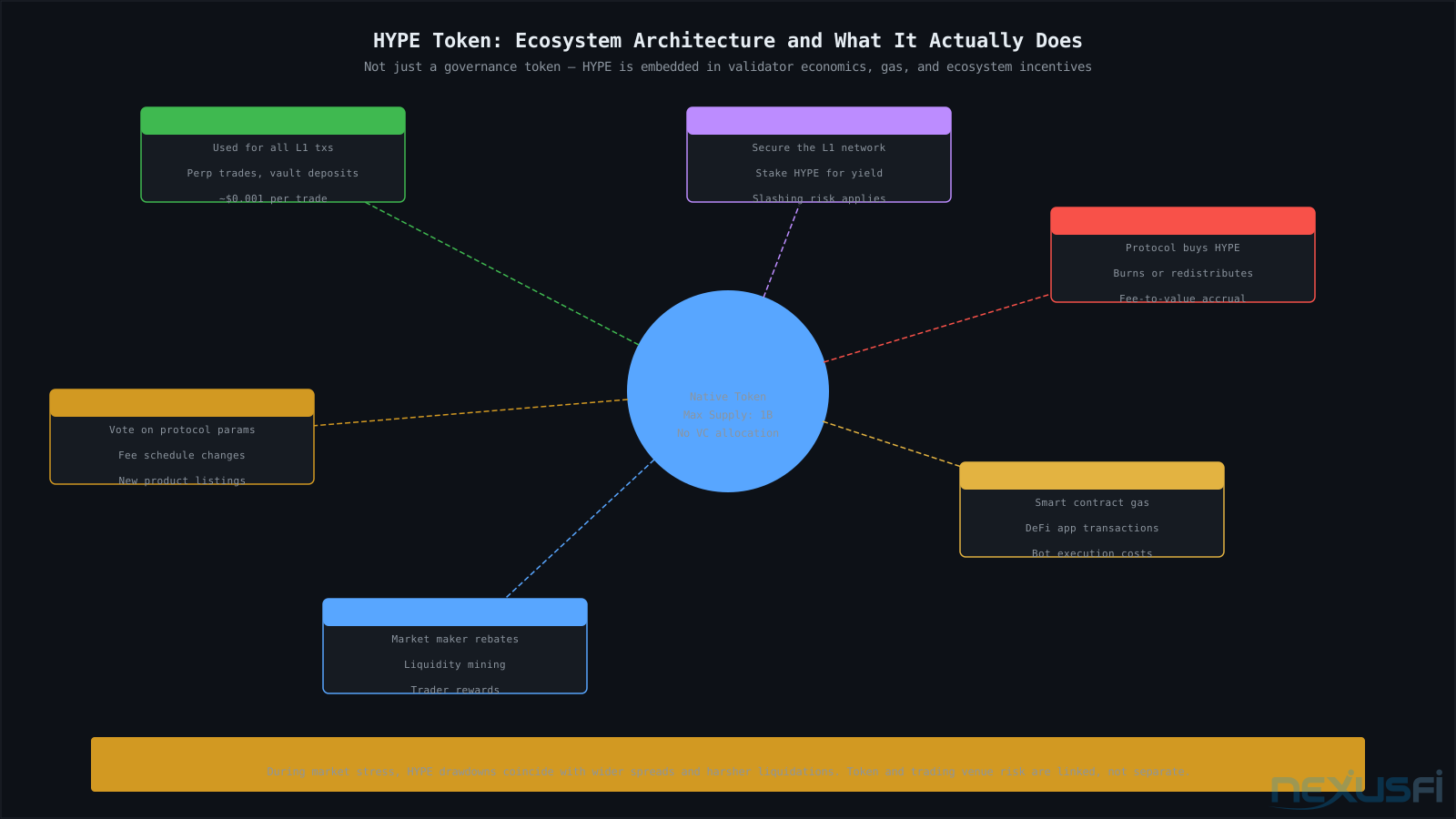
HYPE serves as the native token of the Hyperliquid L1. Its utility is real and structural: it's used for transaction gas fees across all on-chain activity, staked to validate the network and earn staking yield, and embedded in the fee buyback mechanism where protocol revenue purchases and burns HYPE, creating value accrual tied to platform usage.
The total supply is 1 billion, with no venture capital allocation — a meaningfully unusual feature in an ecosystem where VC token dumping is a structural headwind for most protocols. Early token distribution went primarily to the community through an airdrop that rewarded historical trading volume and loyalty, which seeded organic holding among actual users rather than allocators looking for the first viable exit.
For futures traders, the important thing about HYPE is what it implies for the trading environment. When HYPE price drops much, it's often correlated with deteriorating platform conditions: risk-off positioning, reduced liquidity, higher spreads, and a higher probability of liquidation cascade. This feedback loop is a structural risk that doesn't exist on non-tokenized venues. A Binance trader's execution environment doesn't get worse because BNB drops 15% — the two are partially decoupled. On Hyperliquid, HYPE price, platform activity, and liquidity quality are more directly linked.
HyperEVM opens Hyperliquid to the broader DeFi composability stack. Smart contracts can be deployed that interact with Hyperliquid perp positions, vault balances, and order book mechanics directly. The practical implication for sophisticated traders is significant: automated strategies that combine on-chain data, perp positions, and DeFi integrations can be built without centralized execution risk. A strategy that rebalances a perp hedge based on on-chain collateralization ratios, for example, is feasible on HyperEVM in ways it isn't on any CEX platform.
Comparing Execution Quality: What to Measure Before Moving Capital #
Order book depth matters more than any marketing metric. The only number that tells you whether Hyperliquid can handle your trading size is realized slippage at your typical notional — not published volume, not claims about liquidity, not comparison charts that select favorable time windows.
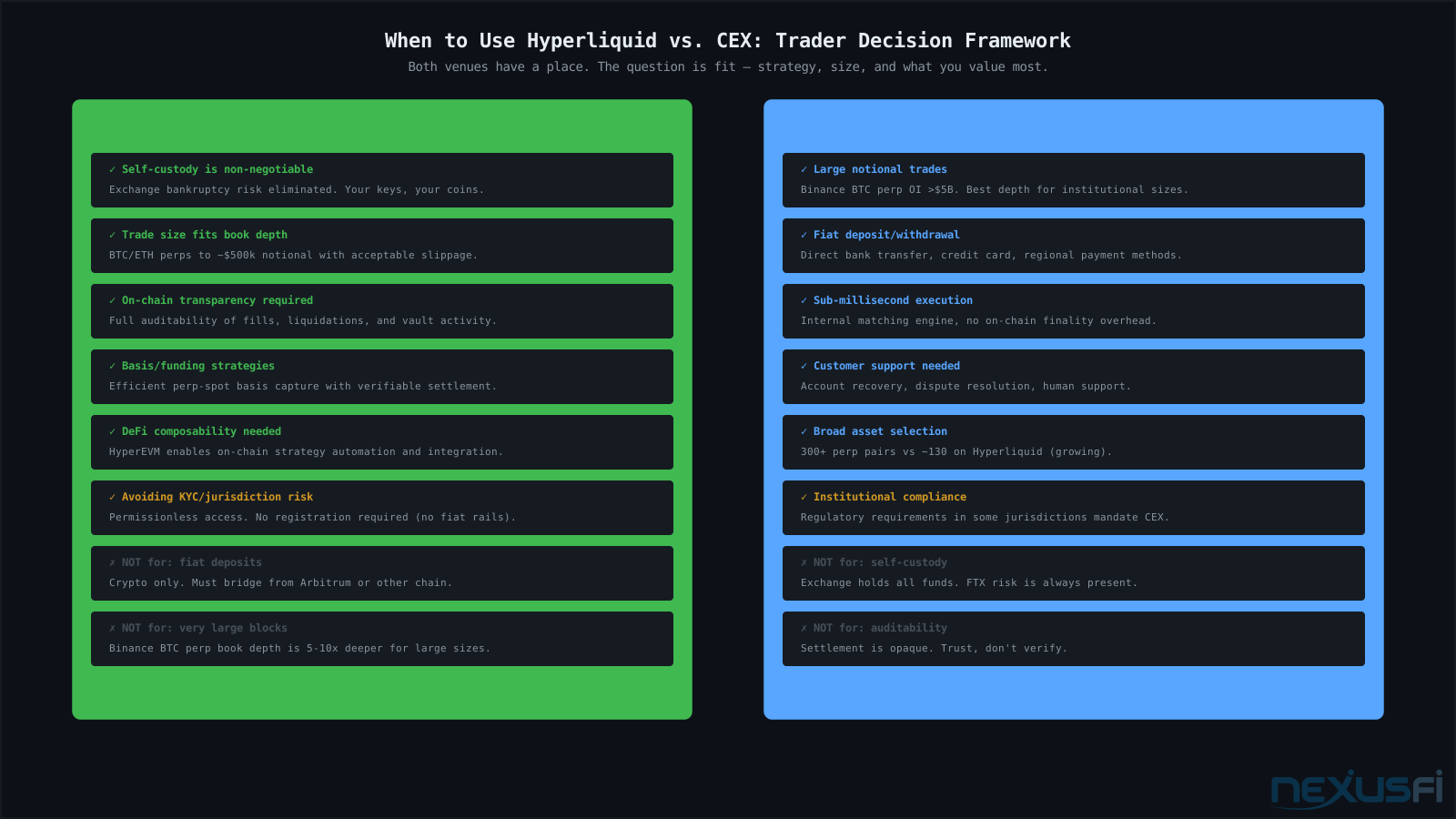
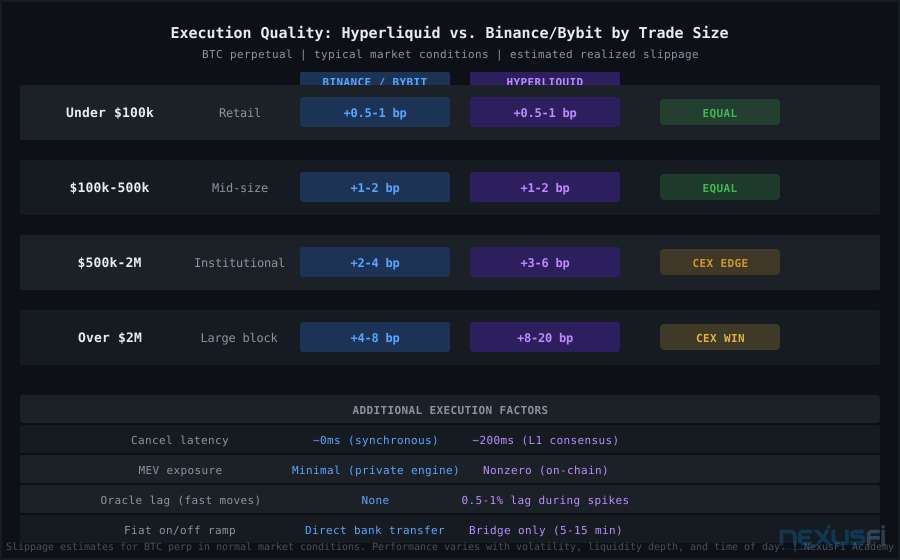
For BTC and ETH perps under $500k notional, Hyperliquid's order book is competitive with Binance and Bybit in terms of realized slippage during normal market conditions. Above $500k-$1M notional, the gap widens, and for very large institutional sizes ($5M+), Binance's deeper book is materially better. This isn't a static comparison — Hyperliquid's book depth has grown consistently since launch, and the comparison in 2026 is meaningfully better than 2024. But the size threshold where CEX wins on execution quality is real.
On-chain settlement introduces latency that CEXs don't have. A cancel-and-replace on Binance is instantaneous from the matching engine's perspective. On Hyperliquid, a cancel takes ~200ms to propagate through the L1 consensus, and in a fast-moving market, "I sent the cancel" is not the same as "the cancel was processed." During a significant move, you may have fills that were processed between your cancel transmission and its on-chain confirmation. Model this as an irreducible slippage component for any strategy that relies on tight cancel management.
MEV (Miner Extractable Value) is a structural feature of transparent on-chain environments, not a bug that will be patched away. When your limit order is visible at a specific price and a large market order is coming through that will move price past your level, on-chain actors can potentially front-run or sandwich your order. Hyperliquid has architectural mitigations, but on-chain transparency means MEV exposure is always nonzero. For most retail trading sizes and strategies, this is a minor concern. For high-frequency strategies or large-size limit orders at key levels, it's a real execution consideration.
Operational Setup: What You're Responsible For Now #
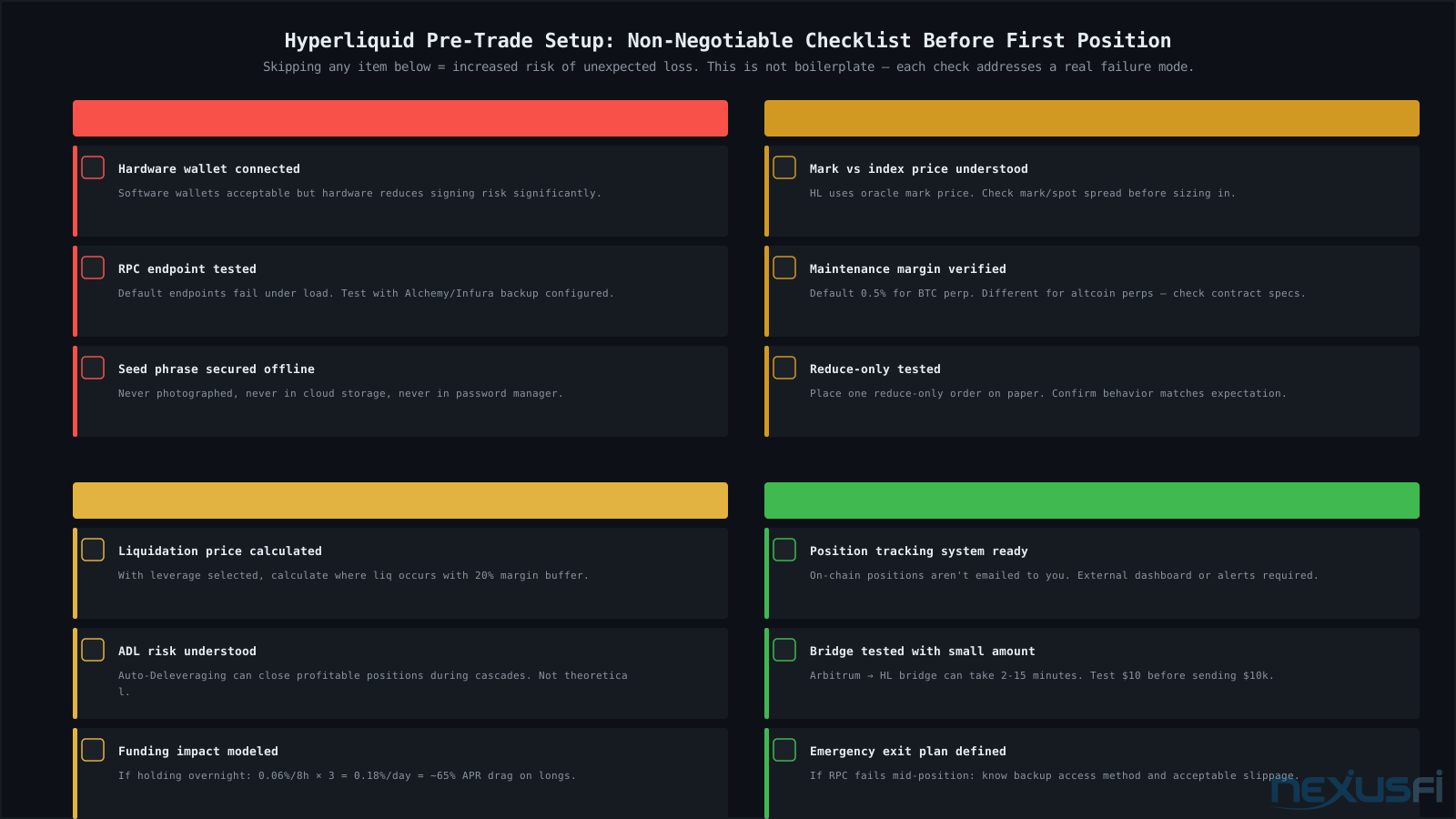
The moment you move from a centralized exchange to Hyperliquid, you inherit a set of operational responsibilities that didn't exist before. On Binance, if your password is compromised, you can contact support and recover the account. On Hyperliquid, if your wallet is compromised, you lose whatever is in it. The assets are yours — which means the security is yours too.
Wallet security: hardware wallets are the gold standard for anything beyond small testing amounts. MetaMask with a strong password and 2FA is adequate for casual sizes. Never store your seed phrase digitally — photographed, in cloud storage, in a password manager, anywhere that has an attack surface. The inconvenience of a physical backup is not comparable to the downside of losing access or having it stolen.
RPC reliability matters more on Hyperliquid than on a CEX. Your browser or trading app communicates with the blockchain through an RPC endpoint. Default public endpoints are often congested during high-volume periods, which means transaction delays exactly when you need to close a position. Running a dedicated node is overkill for most traders, but having multiple RPC endpoints configured (Alchemy, Infura, QuikNode alongside the default) provides fallback redundancy for critical situations.
Bridging introduces timing risk. Moving funds from Arbitrum or another chain to Hyperliquid requires a bridge transaction, which takes 2-15 minutes depending on network conditions. If you need to add margin quickly to an open position that's approaching liquidation and your USDC is sitting on Arbitrum, those 15 minutes can be the difference between a managed exit and a forced liquidation. Keep a reserve of margin capacity on-chain, sized to your open risk, not just your immediate collateral need.
Position monitoring is your responsibility entirely. CEXs send margin warnings by email, SMS, and in-app notification. Hyperliquid sends on-chain events, which only matter if something is watching for them. External dashboard tools and third-party liquidation alert services exist, but you need to set them up yourself. Going to sleep with a leveraged overnight position and no external monitoring is an operational choice, not a default feature.
Who Should Trade on Hyperliquid #
Hyperliquid makes the most sense for traders who have strong opinions about custody risk, are trading sizes that fit comfortably within the platform's order book depth, want on-chain auditability of execution, and are willing to invest time in operational setup and security.
It's the right venue if you've thought hard about FTX and concluded that counterparty risk from exchange custody is a structural risk you don't want to carry. It's the right venue if you want to run automated strategies with on-chain composability. It's the right venue if you want to earn funding by being on the receiving side of an overextended market without trusting a centralized clearinghouse to honor the payment.
It's the wrong venue if your primary concern is maximum execution quality at large sizes, you need fiat rails for regular deposit/withdrawal, you trade in a jurisdiction with regulatory requirements that mandate centralized venues, or you want customer support for account issues. These aren't weaknesses of Hyperliquid specifically — they're the structural trade-offs of on-chain settlement and non-custodial design.
The framing that helps: Hyperliquid is not a replacement for Binance. It's an alternative for the subset of traders who value custody, transparency, and on-chain composability more than maximum liquidity depth and operational simplicity. As the platform matures and book depth grows, that trade-off shifts. The question to revisit quarterly is whether the balance point has moved to where Hyperliquid handles your typical trade size without meaningful execution disadvantage.
Getting Started: A Practical First Steps Guide #
Fund from Arbitrum: bridge USDC from Arbitrum to Hyperliquid through the official bridge at app.hyperliquid.xyz. This is the cheapest and most reliable path. Bridge from Ethereum mainnet is more expensive. The first bridge transaction typically takes 5-10 minutes. Test with a small amount ($50) before moving your actual trading capital.
Start with isolated margin on a major pair. Isolated margin caps your maximum loss at the amount you allocate to that specific position. Cross-margin pools your entire account balance against all positions, which increases capital efficiency but also means one bad position can cascade into liquidating others. Learn the mechanics with isolated first.
Place a small test trade — $100 notional, 2x leverage, limit order — and then intentionally cancel it before it fills. Observe the cancellation behavior, check on-chain confirmation timing, and make sure your interface shows the cancel processed correctly. This is the check that prevents "I thought I canceled" surprises when real money is involved.
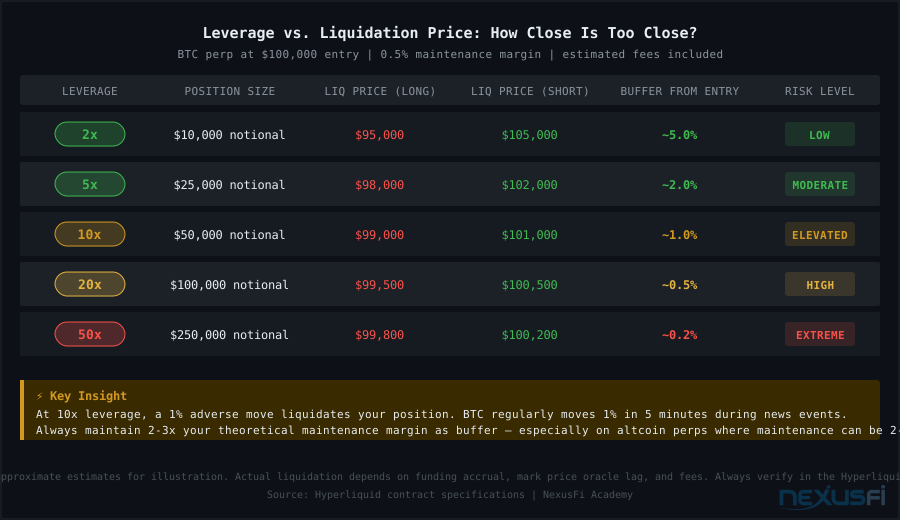
Calculate your liquidation price before entering any position at leverage above 5x. Hyperliquid's interface shows this, but internalize the math: with 10x leverage and 0.5% maintenance margin, your liquidation price is approximately 9.5% adverse from entry (after fees). With 20x leverage, it's approximately 4.75%. A 5% intraday move in BTC is not an unusual day — size so.
If you plan to hold positions overnight, model the full funding cost. 0.05%/8h on a 10x leveraged position costs you 0.5% of notional per day. On a $100k position, that's $500 per day. If you're paying that much funding and not making at least that much in unrealized P&L, you're losing money regardless of whether price is flat.
Risk Management Framework Specific to Hyperliquid #
The standard risk rules apply: size positions based on max loss at liquidation price, not at stop-loss price. The difference is that on Hyperliquid, your stop might not execute during a flash crash if the network is congested — liquidation at your maintenance margin is the real hard floor, not your intended stop.
Maintain excess margin buffer above your theoretical requirement. A position that requires 1% maintenance margin should have 2-3% actual margin to absorb oracle lag, mark price deviation during fast moves, and the difference between your expected liquidation price and the actual execution price. The buffer that feels like wasted capital is the buffer that keeps you solvent during volatility spikes.
Treat HYPE token price as a leading indicator for platform liquidity conditions. When HYPE is selling off much, reduce leverage and tighten position management. The correlation between token price and on-chain activity means stress in the HYPE market often precedes stress in the perp market by enough time to act.
Know your exit plan before entering. On a CEX, a large market sell order during a cascade is absorbed by deep liquidity and Binance's market-making infrastructure. On Hyperliquid, in a thin moment, your exit might take several blocks to process. Have a target exit price, a stop price, and a "fire-alarm" price where you hit market regardless of slippage, because sometimes the worst-case scenario is the right scenario and the cost of waiting for a better fill is higher than the slippage you're trying to avoid.
Knowledge Map
Prerequisites
Understand these firstGo Deeper
Build on this knowledgeCitations
- — Crypto DEX Perpetuals Discussion (2023) 👍 5“Hyperliquid's on-chain orderbook is genuinely different from AMM-based DEXes. The funding rate mechanism and execution quality are the key metrics to watch.”
- — Decentralized Exchange Infrastructure (2024) 👍 4“The HLP vault model creates interesting dynamics -- it's essentially a market-making pool that captures funding and spreads. Understanding its liquidation mechanics is crucial before trading.”
- — Crypto Futures Community Discussion (2024) 👍 6“On-chain perpetuals like Hyperliquid represent a genuinely new category -- not just another CEX, not a traditional AMM DEX. The orderbook model changes the dynamics significantly.”
- — Systematic Crypto Trading (2024) 👍 3“Hyperliquid's API is cleaner than most CEXes for systematic trading. The on-chain nature means all trade data is publicly verifiable, which is useful for backtesting.”
- — Crypto Options and Perpetuals (2024) 👍 2“The HYPE token vault participation is worth understanding before trading on Hyperliquid -- it affects liquidity and funding dynamics in ways that pure CEX traders may not expect.”
- — Hyperliquid.gitbook.io (2024)
- — Cftc.gov (2024)