



Polygon (POL): The Ethereum Scaling Network Every Crypto Trader Needs to Understand
Overview #
Polygon started as an Ethereum sidechain fix for a specific problem: Ethereum gas fees were destroying the user experience for anyone doing more than a handful of transactions per day. In 2019, a team of developers built what was then called MATIC Network — a proof-of-stake sidechain that could process thousands of transactions per second at fractions of a cent.
It worked. By 2021, Polygon had become one of the most used blockchains in existence, handling 3-5 million transactions per day, hosting DeFi protocols with billions in TVL, and attracting enterprise clients like Starbucks, Reddit, and Nike. MATIC token went from $0.01 at launch to a $2.92 all-time high — a 292x move that made early holders very wealthy.
Then the L2 wars started. Arbitrum launched. Then Optimism. Then Base. Then zkSync and Linea and Scroll. Suddenly Polygon's sidechain approach looked legacy compared to the security guarantees of rollups. The team pivoted hard: Polygon 2.0 — a complete reinvention as an aggregated blockchain network powered by zero-knowledge cryptography.
In September 2024, MATIC became POL. Not just a rename — a complete token upgrade with new economics designed for a multi-chain future. POL is the "hyperproductive token" of Polygon's vision: a single token that can simultaneously secure multiple chains, earning fees from each.
This guide tells you everything you need to trade POL intelligently: what the technology actually does, where it stands competitively, what moves the price, and how to size your positions without getting destroyed by the inevitable 50-80% drawdowns.
What Is Polygon and Why Should Traders Care #
Polygon isn't a single blockchain. It's a family of Ethereum scaling solutions under one umbrella, connected by the AggLayer — an aggregation protocol that unifies liquidity and state across all Polygon chains.
The original product — Polygon PoS — is still the most used. It's a proof-of-stake sidechain that runs parallel to Ethereum. Validators on Polygon PoS don't submit every transaction to Ethereum; they only periodically checkpoint to the mainnet. This means lower security guarantees than a true rollup, but it also means 7,000+ TPS and sub-$0.01 transaction fees that made Polygon accessible to users who couldn't afford Ethereum gas.
Why do traders care? Because Polygon represents a genuine bet on two things:
- Ethereum's dominance — If you believe Ethereum will remain the settlement layer of crypto, then L2s and scaling solutions that make Ethereum more usable should capture enormous value. Polygon is the largest and most battle-tested scaling ecosystem in crypto.
- Enterprise adoption of blockchain — Polygon has done something no other L2 has done at scale: gotten Fortune 500 companies to build on it. Starbucks Odyssey, Reddit's 10 million NFT avatar wallets, Nike's .Swoosh platform — these aren't speculative future partnerships. They're running on Polygon PoS right now.
POL is the token you buy when you're making a bet that Polygon's multi-chain vision — connecting hundreds of ZK-powered chains through the AggLayer — becomes the dominant architecture for Web3 infrastructure.
NexusFi member @alacrity put the on-chain risk picture clearly when discussing DeFi platforms:
This applies directly to Polygon DeFi: the PoS chain's bridge and DeFi protocols carry smart contract risk that sophisticated traders factor into position sizing.
Polygon's Multi-Chain Architecture: PoS, zkEVM, CDK, and AggLayer #
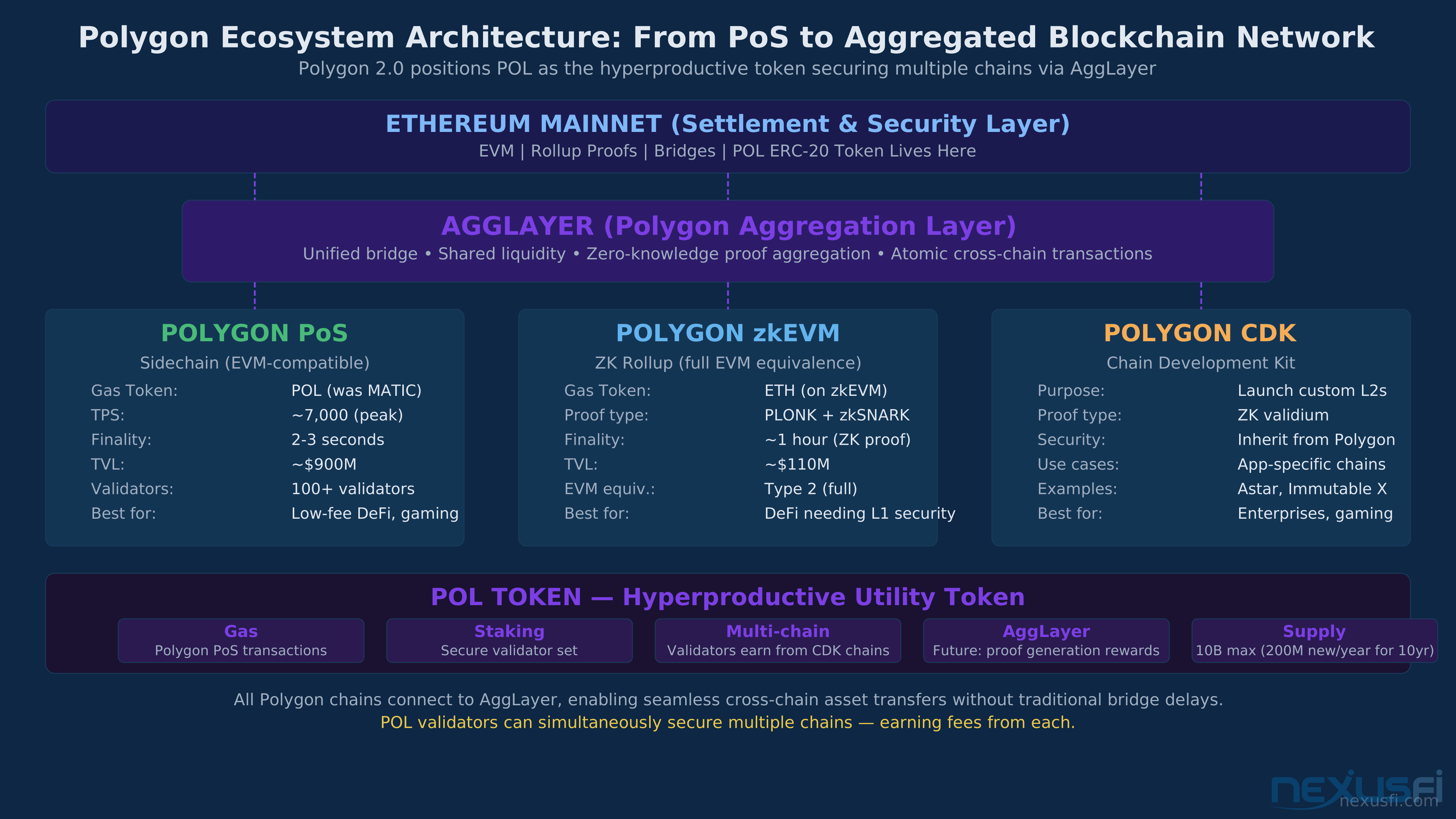
The architecture diagram tells the story of Polygon's ambition. Where most L2 projects pick one approach and go deep, Polygon has built a complete stack:
Polygon PoS (Proof-of-Stake Sidechain)
The original product. A 100-validator sidechain running since 2017, processing 3-5 million daily transactions, with ~$900M in DeFi TVL. Gas is paid in POL (formerly MATIC). Finality is 2-3 seconds with ~7,000 TPS at peak. The security model is federated — validators checkpoint to Ethereum periodically, but the chain itself isn't secured by Ethereum's consensus in real time. This is the tradeoff that cost Polygon market share to true rollups.
The Polygon team is planning to upgrade PoS to a ZK validium — connecting it to the AggLayer with zero-knowledge proofs while maintaining its low-cost, high-throughput characteristics.
Polygon zkEVM
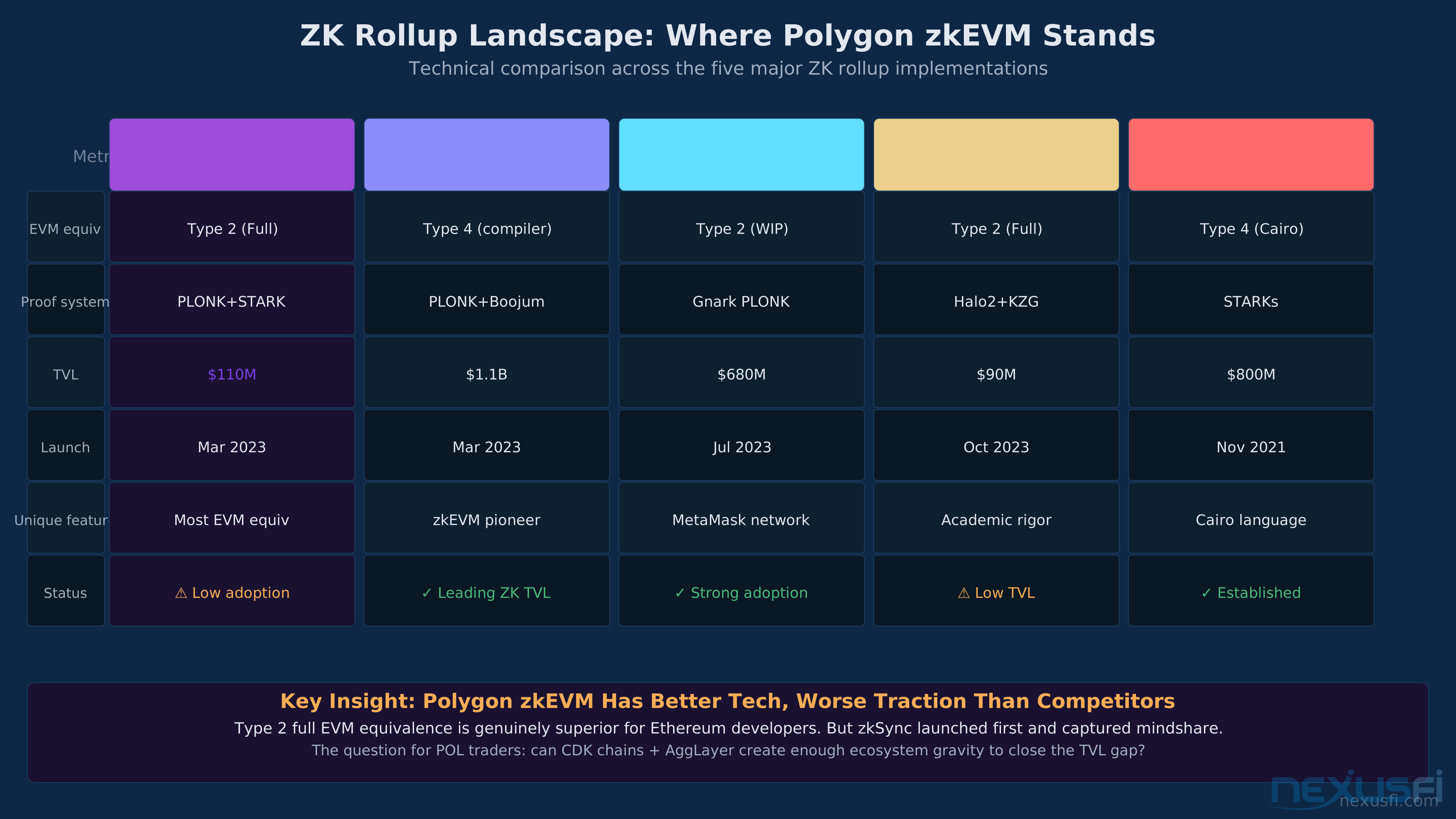
Launched in March 2023, Polygon zkEVM is a true ZK rollup with full EVM equivalence (Type 2). Every transaction gets proven by a PLONK zkSNARK proof submitted to Ethereum. This means Ethereum-level security — but with higher costs than PoS and slower proof generation. TVL sits around $110M, which is small compared to Arbitrum and zkSync, but the tech is legitimate.
The key differentiator from competing ZK rollups: Polygon zkEVM is the most EVM-equivalent option available. You can deploy Ethereum contracts with zero code changes. This matters for institutional users who want L2 security without developer complexity.
Polygon CDK (Chain Development Kit)
The CDK is how Polygon competes in the "build your own L2" market. Instead of running a single shared chain, CDK lets any project launch its own ZK-powered chain that connects back to the AggLayer. Think of it as Polygon's answer to Optimism's OP Stack or Arbitrum Orbit.
Major CDK deployments include Immutable X (gaming, partnered with major AAA studios), Astar Network (Japan-focused), and several enterprise chains not yet publicly announced. The CDK's appeal is customization: you can run a permissioned chain, set your own gas token, and plug into Polygon's validator network for security.
AggLayer (The Aggregation Layer)
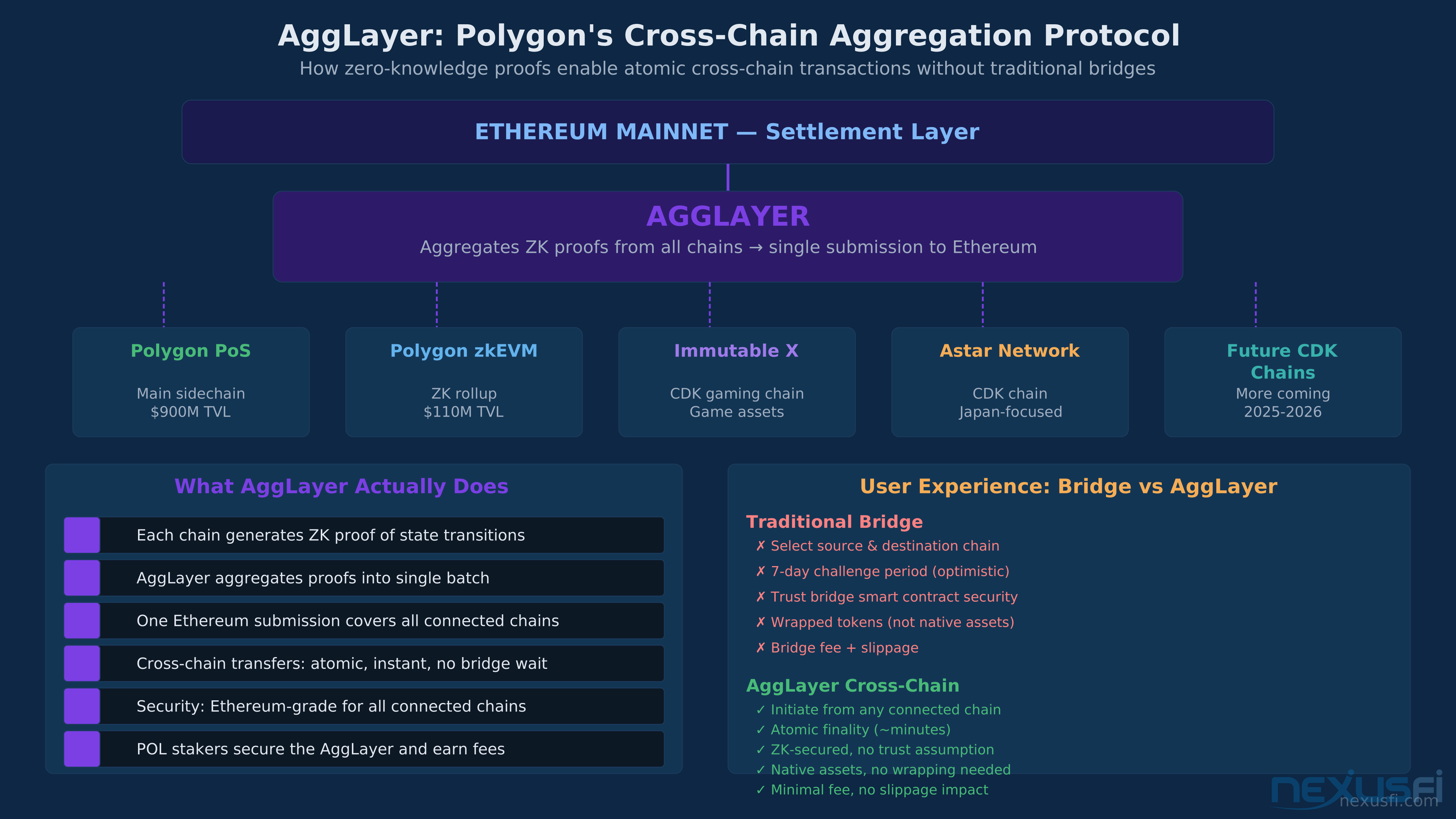
The AggLayer is Polygon's most ambitious piece. It sits between all Polygon chains and Ethereum, aggregating ZK proofs from every connected chain into a single batch submitted to Ethereum. The result: atomic cross-chain transactions across all connected chains, with Ethereum-grade security.
What this means in practice: a user on a CDK gaming chain can instantly swap to a DeFi protocol on Polygon PoS without using a traditional bridge. No 7-day withdrawal delays, no bridge exploits, no wrapped tokens. This is genuinely novel technology if it works at scale — and it's the key reason POL bulls believe the token is undervalued.
The AggLayer thesis for POL: Every CDK chain that connects to AggLayer adds fee revenue for POL validators. If 100 chains eventually run on CDK, POL validators earn from all 100. The token's value scales with adoption, not just Polygon PoS transaction volume.
MATIC to POL: The Token Migration Traders Need to Understand #
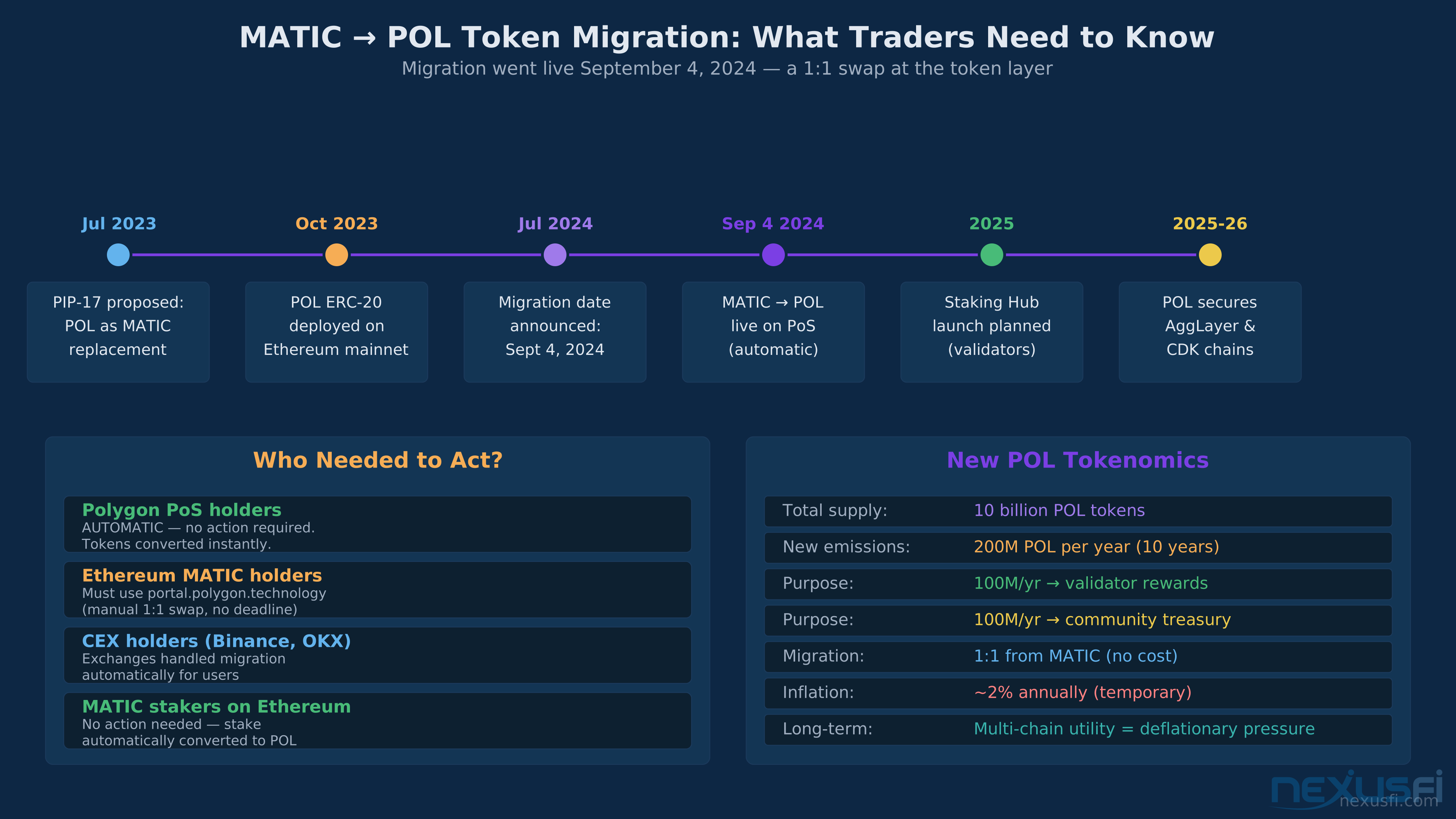
The MATIC-to-POL migration completed on September 4, 2024. Understanding it matters because the new tokenomics at the core changed the supply dynamics of the token.
The Migration Mechanics
The swap was 1:1 — one MATIC becomes one POL. No loss, no ratio change. But how you held MATIC determined what you needed to do:
- Polygon PoS holders: Nothing. The chain automatically converted MATIC balances to POL. You woke up with POL.
- Ethereum mainnet holders: Manual migration via portal.polygon.technology. There's no deadline — MATIC contracts remain functional — but CEX platforms have largely completed their conversions.
- CEX holders (Binance, OKX, Coinbase): Exchanges handled it automatically. Users just saw MATIC become POL in their accounts.
- MATIC stakers on Ethereum: Automatic conversion with no action required.
New Tokenomics: The "Hyperproductive" Model
Old MATIC had a fixed supply of 10 billion tokens with inflation that had completed by 2023. Validators were running without token rewards, which wasn't sustainable long-term.
New POL introduces:
- Total supply: 10 billion tokens (same as MATIC)
- New annual emissions: 200 million POL per year for 10 years
- Split: 100M/year to validator rewards, 100M/year to community treasury
- Effective inflation: ~2% annually
The word "hyperproductive" in Polygon's documentation refers to a future where POL validators simultaneously secure multiple chains — Polygon PoS, connected CDK chains, and the AggLayer itself — each paying fees back to the same validator set. Instead of validating one chain for one fee, a POL staker earns from every chain they help secure.
This is the bull case: as CDK chains proliferate and AggLayer adoption grows, POL validators earn more fees, creating genuine demand for staking POL beyond just the base emissions.
The bear case: the 200M annual emissions are real supply pressure, and if CDK adoption doesn't materialize, POL staking yields decline just as inflation kicks in.
Migration status for traders (2026): If you still hold MATIC on Ethereum mainnet (not PoS), you need to manually migrate at portal.polygon.technology. Most CEX holders are already on POL. Check your wallet — if it says MATIC on Ethereum, migrate.
POL Price History: From $0.01 to $2.92 ATH and Back #
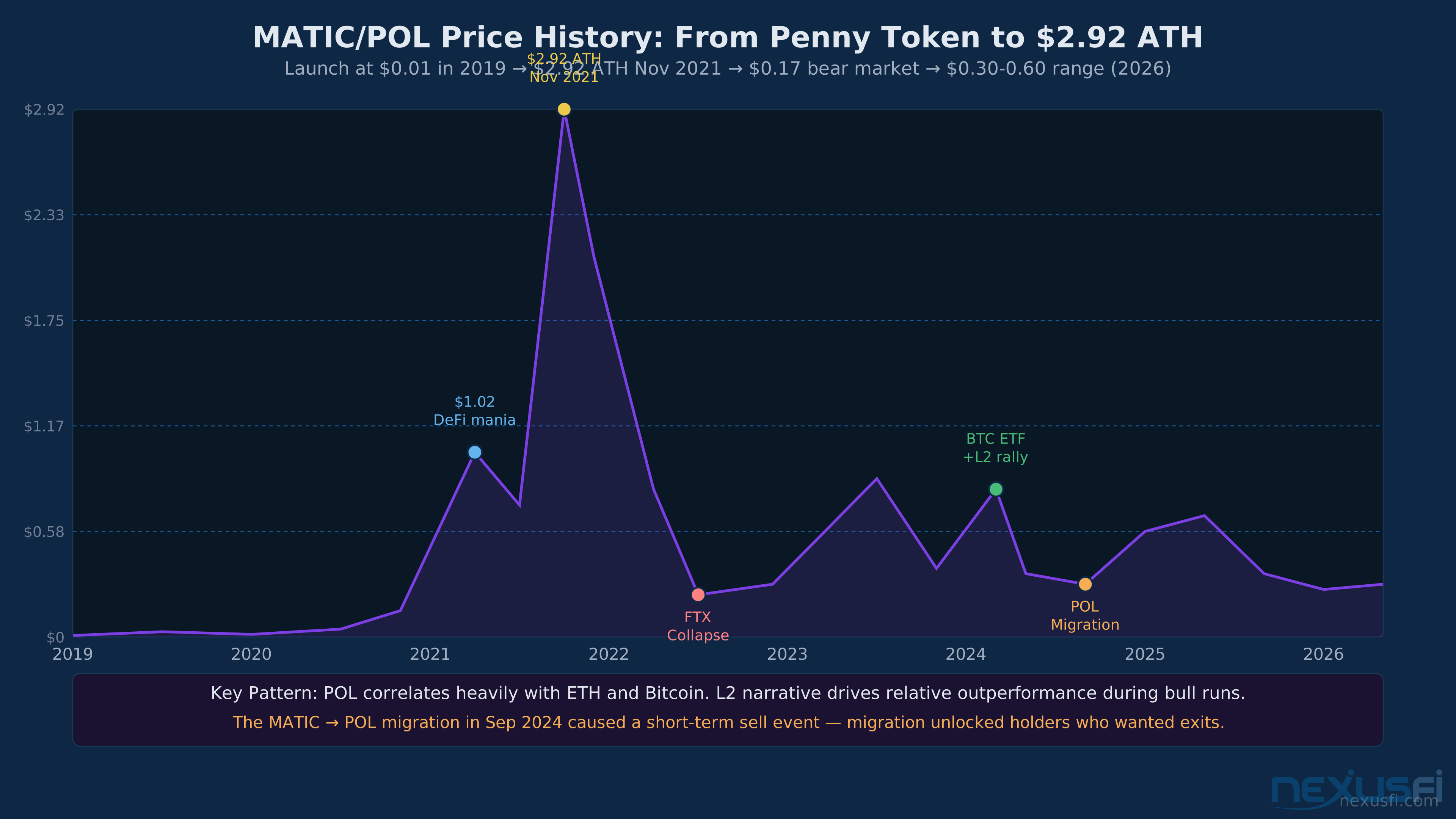
MATIC launched in April 2019 via Binance's Launchpad at $0.00263 per token — one of the first IEO (Initial Exchange Offering) projects on Binance. Early buyers could have gotten in near $0.01.
The path from there:
The Grind (2019-2020): MATIC spent most of 2019-2020 below $0.05. The project was working — Ethereum scalability was a genuine problem they were solving — but DeFi hadn't exploded yet. Patient holders accumulated through this period.
The DeFi Explosion (2020-2021): When DeFi Summer 2020 hit, Ethereum gas fees became apocalyptic for retail users. MATIC suddenly had a massive product-market fit. The token went from $0.015 in January 2020 to $0.15 by November 2020 — a 10x in 12 months. Then the real bull market started.
The 292x Run (2021): MATIC delivered one of the best performances of the 2021 bull market. From January to May 2021, it went from $0.03 to a then-ATH of $2.46. After a summer correction, it ran again to $2.92 in November 2021 — a 292x from its 2019 ICO price. Major enterprise announcements (Instagram NFTs on Polygon, partnerships with Stripe, Adidas, Prada) drove relentless buying.
The Crypto Winter (2022): The 2022 bear market hit MATIC as hard as everything else. The LUNA/Terra collapse in May 2022 took MATIC from $1.10 to $0.33 in weeks. FTX's collapse in November 2022 pushed it to $0.72 -> $0.25. Total peak-to-trough drawdown: 87%.
The Polygon 2.0 Transition (2023-2024): MATIC recovered into 2023 on broader crypto optimism and the announcement of Polygon 2.0. The token traded between $0.36 and $0.87 during this period. Then, counterintuitively, the actual POL migration in September 2024 caused a sell-off. The migration was a known event that had been priced in, and holders who had waited for the migration used it as an exit.
Current State (2026): POL trades in the $0.26-$0.35 range — well below the highs but with enormous optionality. If the AggLayer reaches meaningful adoption and CDK deployments generate fee revenue, current prices could look like another 2019-style accumulation opportunity. If the L2 environment consolidates around Arbitrum and Base, POL faces continued market share compression.
The L2 Competitive Environment: Where Polygon Stands in 2026 #
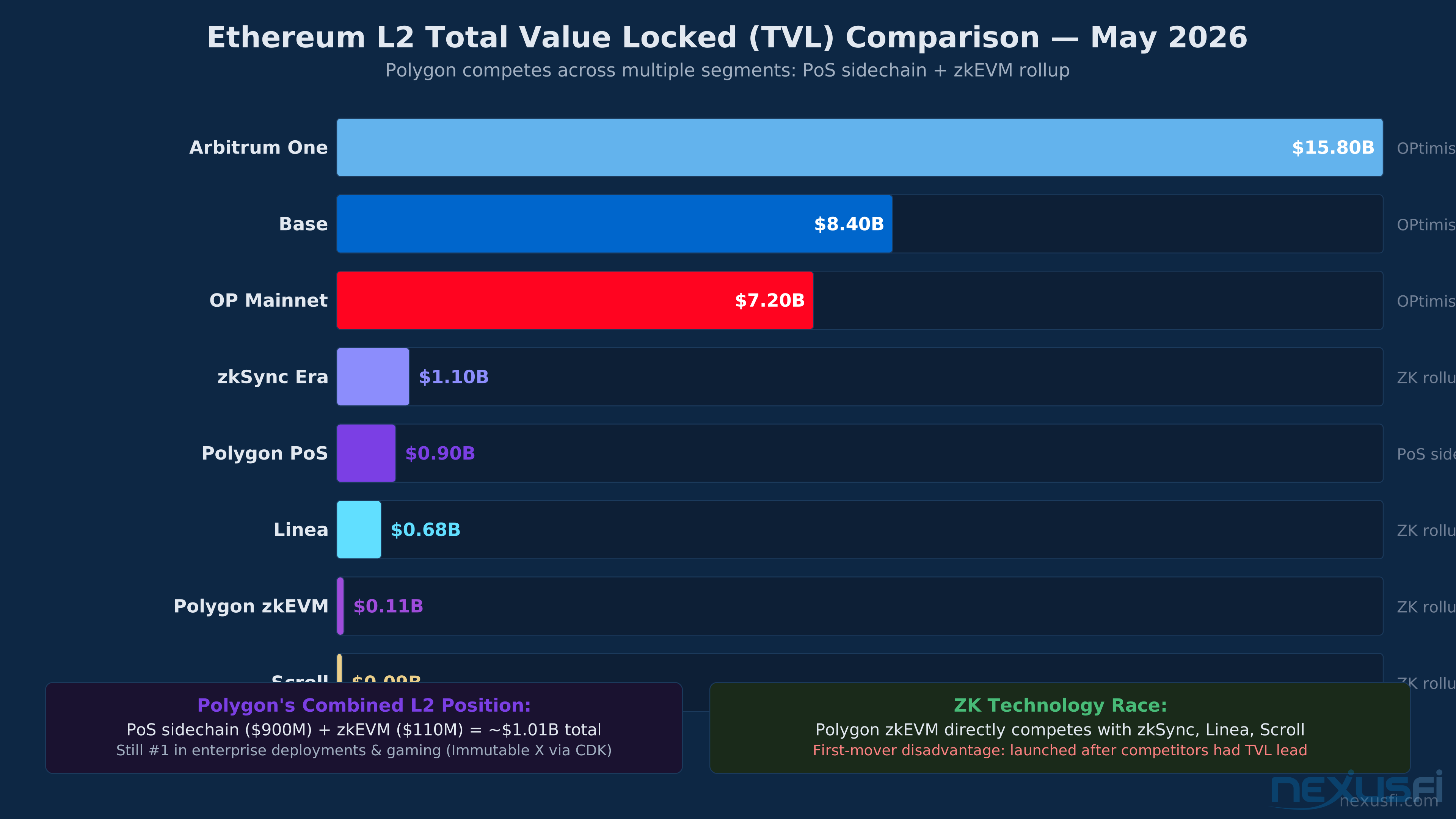
Polygon's TVL position tells the story of the L2 wars:
- Arbitrum One: $15.8B TVL — dominant, first-mover advantage, deepest DeFi ecosystem
- Base: $8.4B TVL — Coinbase's distribution advantage making it the fastest-growing L2
- Optimism Mainnet: $7.2B TVL — established ecosystem, OP token incentives
- zkSync Era: $1.1B TVL — early ZK rollup, struggling to retain TVL
- Polygon PoS: ~$900M TVL — fourth overall but declining market share
- Linea: $680M TVL — ConsenSys-backed, aggressive developer incentives
- Polygon zkEVM: ~$110M TVL — underperforming relative to its technical quality
- Scroll: ~$90M TVL — another ZK rollup in the race
Polygon's combined $1.01B in TVL is significant by any normal measure. But market share is what drives narrative — and narratives drive price. Arbitrum has 15x more TVL. Base is growing faster. That's the competitive reality.
Where Polygon Still Wins
Despite the TVL headwinds, Polygon has advantages that don't show up in DeFiLlama:
- Enterprise pipeline: No other L2 has the enterprise client roster Polygon has. The 270M+ unique addresses created via Reddit, Starbucks, and Nike programs represent real-world onboarding at massive scale.
- CDK ecosystem: Immutable X's gaming chain alone handles volume metrics that aren't counted in Polygon PoS TVL. The CDK is creating a long tail of chains that aggregate fee revenue back to POL stakers.
- AggLayer first-mover: The aggregation approach — unifying ZK proofs across all connected chains — has no direct competitor. If it works, it's a genuinely differentiated moat.
- Developer count: Polygon consistently ranks in the top 3 blockchains by GitHub commits and active developer count. Builders are still here.
The question for traders: can Polygon's enterprise and CDK story offset its DeFi TVL decline? If yes, POL is undervalued. If no, it's a continued market share story that weighs on price.
NexusFi member @rleplae showed that on-chain data meaningfully improves trading strategies — tracking Polygon TVL and transaction volume is exactly this kind of alpha:
Polygon Ecosystem: DeFi, Gaming, and Enterprise Applications #
DeFi Protocols That Matter
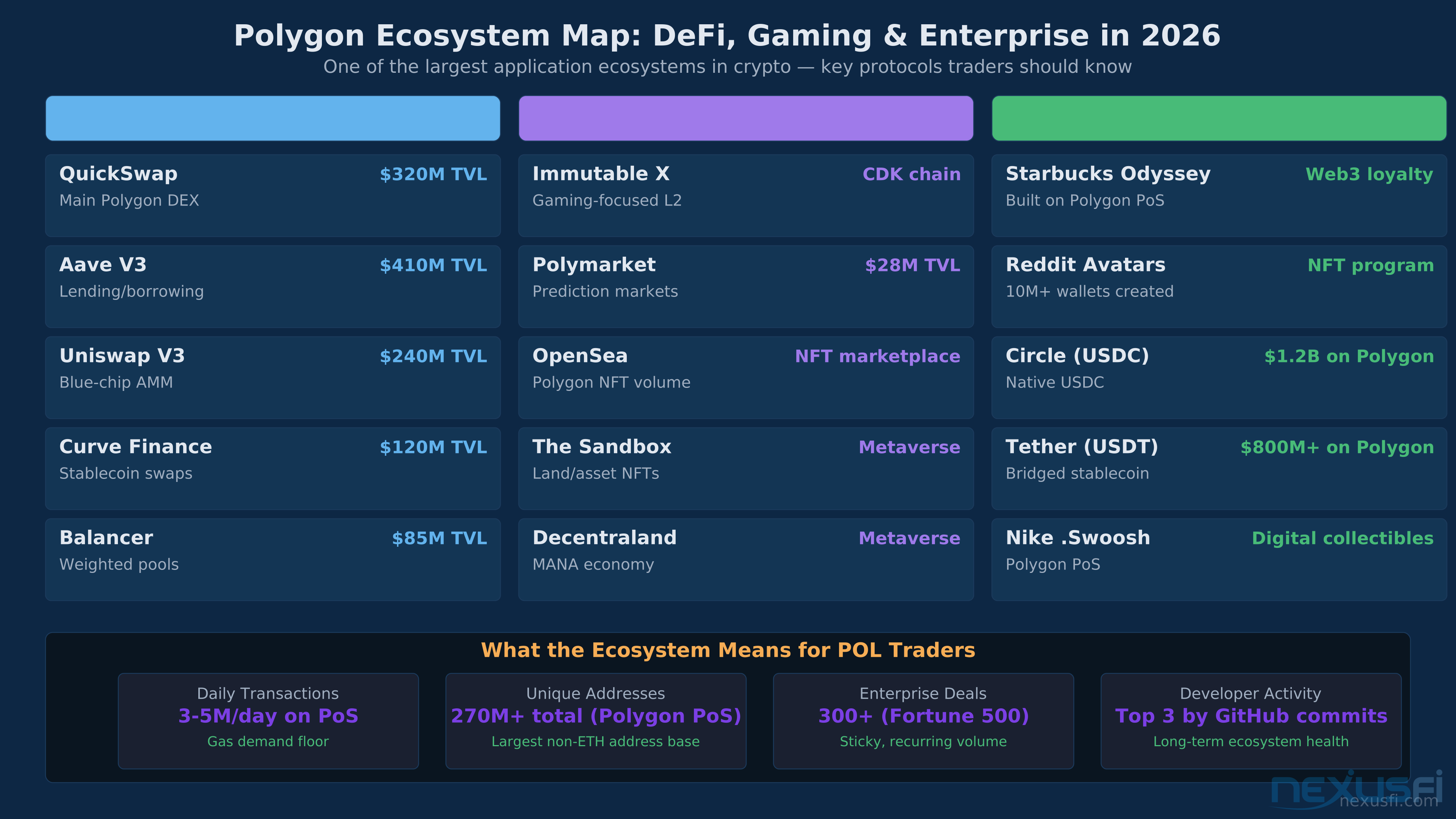
QuickSwap ($320M TVL) is Polygon's dominant DEX — think Uniswap but built specifically for Polygon PoS. It pioneered V3 concentrated liquidity on Polygon and remains the primary liquidity hub for MATIC/POL pairs.
Aave V3 ($410M TVL) brought institutional-grade lending to Polygon. Aave's presence on Polygon is important for traders — it means you can borrow against POL positions, lever up with borrowed stables, and access sophisticated capital efficiency that wasn't possible in early Polygon.
Uniswap V3 ($240M TVL) deployed on Polygon after community vote. Having Uniswap natively on Polygon (not bridged) improves liquidity depth for any trader bridging assets from Ethereum.
Curve Finance handles stablecoin swapping on Polygon — critical for traders moving large amounts of USDC/USDT/DAI without slippage.
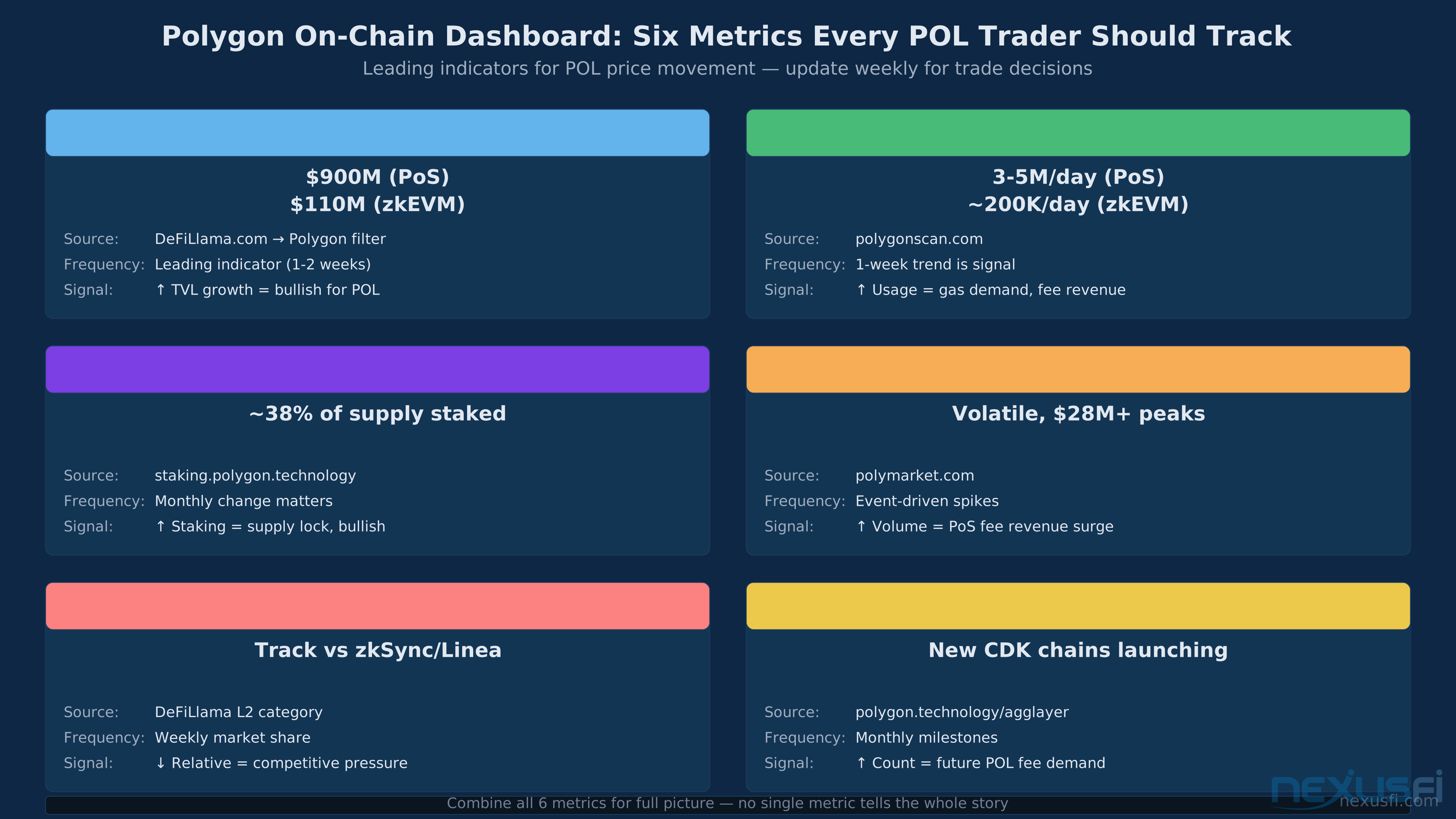
Polymarket deserves special mention. The prediction market platform has exploded in popularity (especially during the 2024 US election), and it runs on Polygon PoS. Polymarket volume spikes have historically correlated with Polygon PoS fee revenue — a leading indicator worth monitoring.
Gaming and NFTs
Immutable X built its gaming L2 using Polygon's CDK — their first major CDK client. Immutable has deals with studios including Ubisoft and Illuvium, with millions of gamers creating wallets. This is the CDK success story that validates Polygon's multi-chain thesis.
Reddit's NFT Avatar program created 10+ million wallets on Polygon PoS during the 2021-2022 bear market — more crypto wallets than most bull markets generate. This represented real mainstream adoption, even if NFT prices eventually fell.
Enterprise Applications
Starbucks Odyssey, Nike .Swoosh, and similar enterprise programs are meaningful for two reasons: they create recurring transaction volume that generates POL fee revenue, and they represent Polygon's unique positioning as the "enterprise blockchain" partner.
What Drives POL Price: Catalysts and Headwinds #
Bullish Catalysts
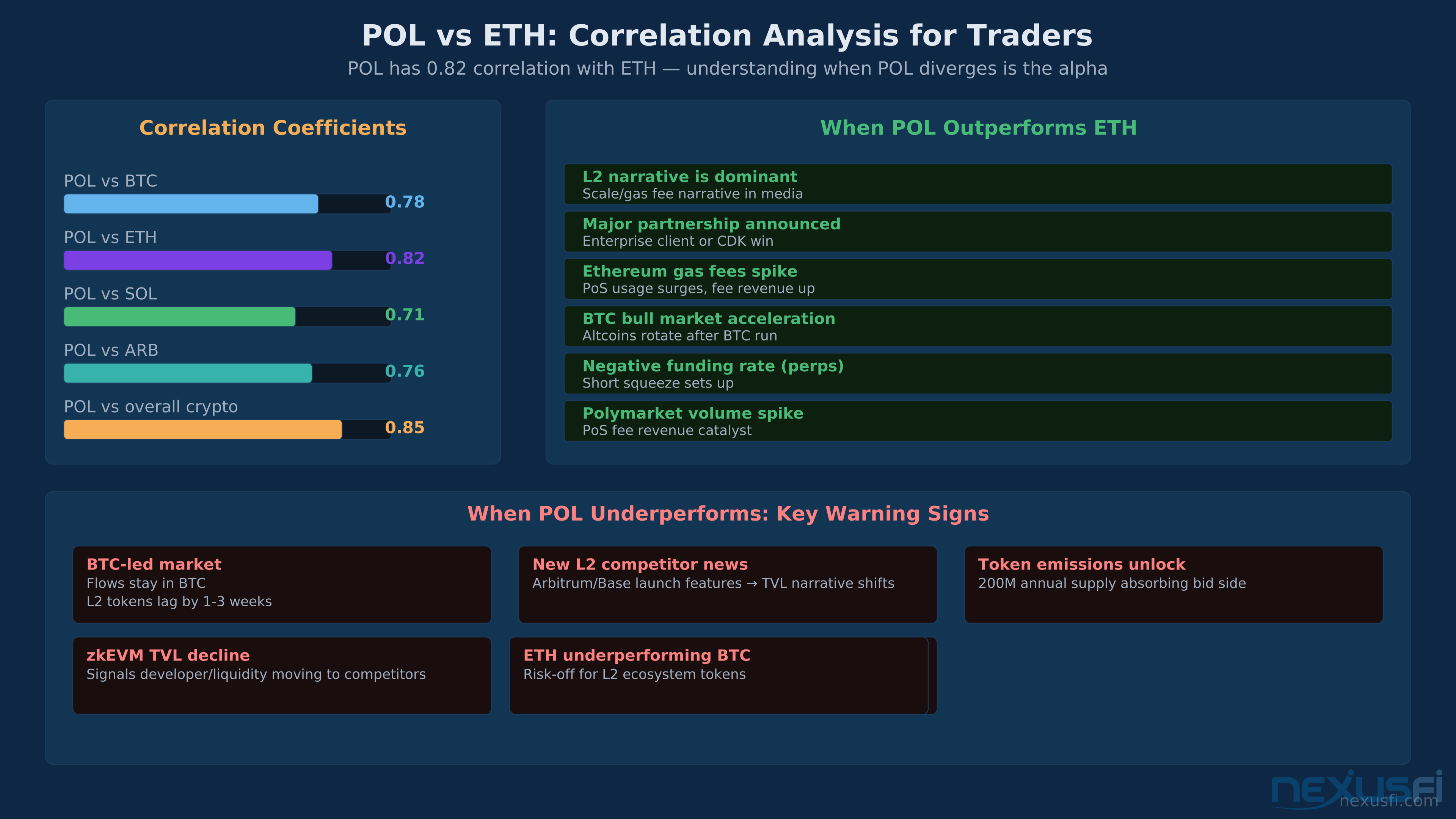
Ethereum bull markets: The single biggest driver. When ETH pumps, the L2/scaling narrative heats up, and POL typically outperforms with 1.2x BTC beta. The relationship is reliable: POL underperforms in altcoin-specific rallies but captures Ethereum-specific moves.
AggLayer adoption: Every new CDK chain that connects to the AggLayer is a fee revenue trigger. Watch for announcements of major projects choosing Polygon CDK over Arbitrum Orbit or OP Stack.
Ethereum blob fees: EIP-4844 (proto-danksharding) reduced rollup costs by 10-100x, making rollups more economical. Continued Ethereum scalability improvements benefit all L2s including Polygon zkEVM.
Enterprise announcements: A Fortune 100 company announcing they're building on Polygon PoS or CDK moves the price. These are the "secret weapon" catalysts that competing L2s can't replicate.
POL staking hub: When Polygon deploys its multi-chain staking hub (planned for 2025-2026), POL validators will be able to opt into securing CDK chains for additional rewards. If CDK adoption is strong, this creates genuine demand for staked POL beyond emissions.
Bearish Headwinds
Arbitrum and Base dominance: If DeFi TVL continues to concentrate in Arbitrum and Base, Polygon's market share decline becomes a persistent narrative headwind. Market share matters because it attracts developers, which attracts users, which grows TVL.
Token emissions: 200M new POL per year for 10 years is real sell pressure. If staking demand doesn't absorb the emissions, annual 2% dilution weighs on price.
zkEVM adoption failure: Polygon zkEVM has legitimate technology but lagged on adoption. If developer mindshare continues going to zkSync and Linea, the zkEVM investment becomes a stranded asset.
Ethereum-specific risks: If Ethereum's roadmap stumbles or the broader L2 thesis fails, all scaling solutions including Polygon fall together.
Polymarket as a leading indicator: When major political or economic events drive Polymarket prediction market volume, Polygon PoS fee revenue spikes. This has historically preceded short-term POL price moves by 1-3 days. Track Polymarket volume at polymarket.com/activity.
How to Trade POL: Practical Strategies and Signal Framework #
POL is a high-beta altcoin. It's not a store of value play like Bitcoin, and it's not a "just hold forever" asset like ETH might be for some investors. It requires active position management.
The Signal Matrix
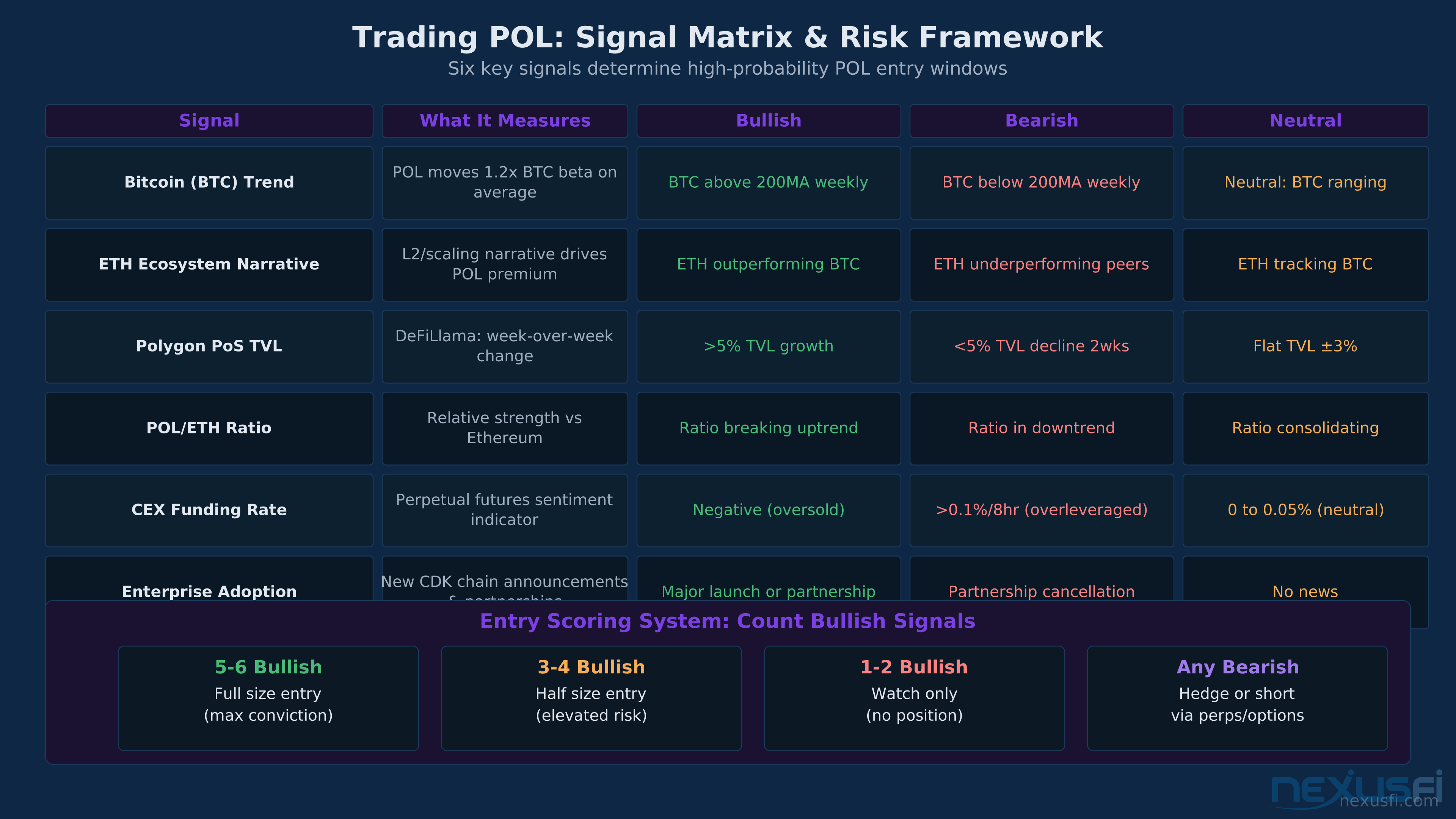
Six signals determine high-probability POL entry windows:
- Bitcoin (BTC) Trend — POL moves at 1.2x BTC beta on average. BTC above its 200-week moving average is the mandatory filter. Don't fight the macro.
- ETH Ecosystem Narrative — POL outperforms when Ethereum is outperforming Bitcoin, and the L2 scaling narrative is dominant in market discourse. Check ETH/BTC ratio weekly.
- Polygon PoS TVL — Check DeFiLlama weekly. More than 5% TVL growth over two weeks is a bullish signal. Consistent TVL decline over two or more weeks is a red flag for near-term price action.
- POL/ETH Ratio — The relative performance chart tells you whether POL is in a period of Ethereum outperformance or underperformance. An uptrending POL/ETH ratio signals money rotating into Polygon specifically, not just the L2 sector.
- CEX Funding Rate — On perpetual futures markets, when funding rates go negative (traders paying to be short), it signals oversold conditions and potential reversal. Rates above 0.1% per 8 hours signal too much long leverage — a squeeze risk.
- Enterprise/CDK Adoption — New CDK chain launches, major enterprise partnerships, or Immutable X milestone announcements are unquantifiable catalysts that can override technical signals.
Entry and Exit Framework
5-6 bullish signals: Full size entry. This is the setup where the risk/reward tilts much in your favor. 3-4 bullish signals: Half size entry. Enough signal to participate, but not enough conviction for full allocation. 1-2 bullish signals: Watch mode. No position. Wait for the setup to develop. Bearish signals dominating: Consider hedging via perpetuals if holding spot, or cash out of leverage.
Trading Vehicles
Spot on major CEXs: Binance, Coinbase, Kraken — all list POL directly. OKX has especially deep POL liquidity. For most traders, spot is appropriate.
Perpetual futures: POL perps are available on Binance, Bybit, and OKX. Use 2x maximum leverage unless you're experienced with crypto vol. A 20-25% move against a 5x leveraged position will wipe 100-125% of margin.
DeFi on Polygon PoS: QuickSwap and Uniswap V3 offer POL/USDC and POL/WETH pairs with reasonable liquidity. DEX trading avoids counterparty risk but introduces smart contract risk and gas costs.
Staking POL: Earning Yield on Your Position #
For long-term holders who believe in Polygon's multi-chain thesis, staking POL is the obvious move — you earn yield while waiting for the thesis to play out.
Validator Staking (Ethereum mainnet)
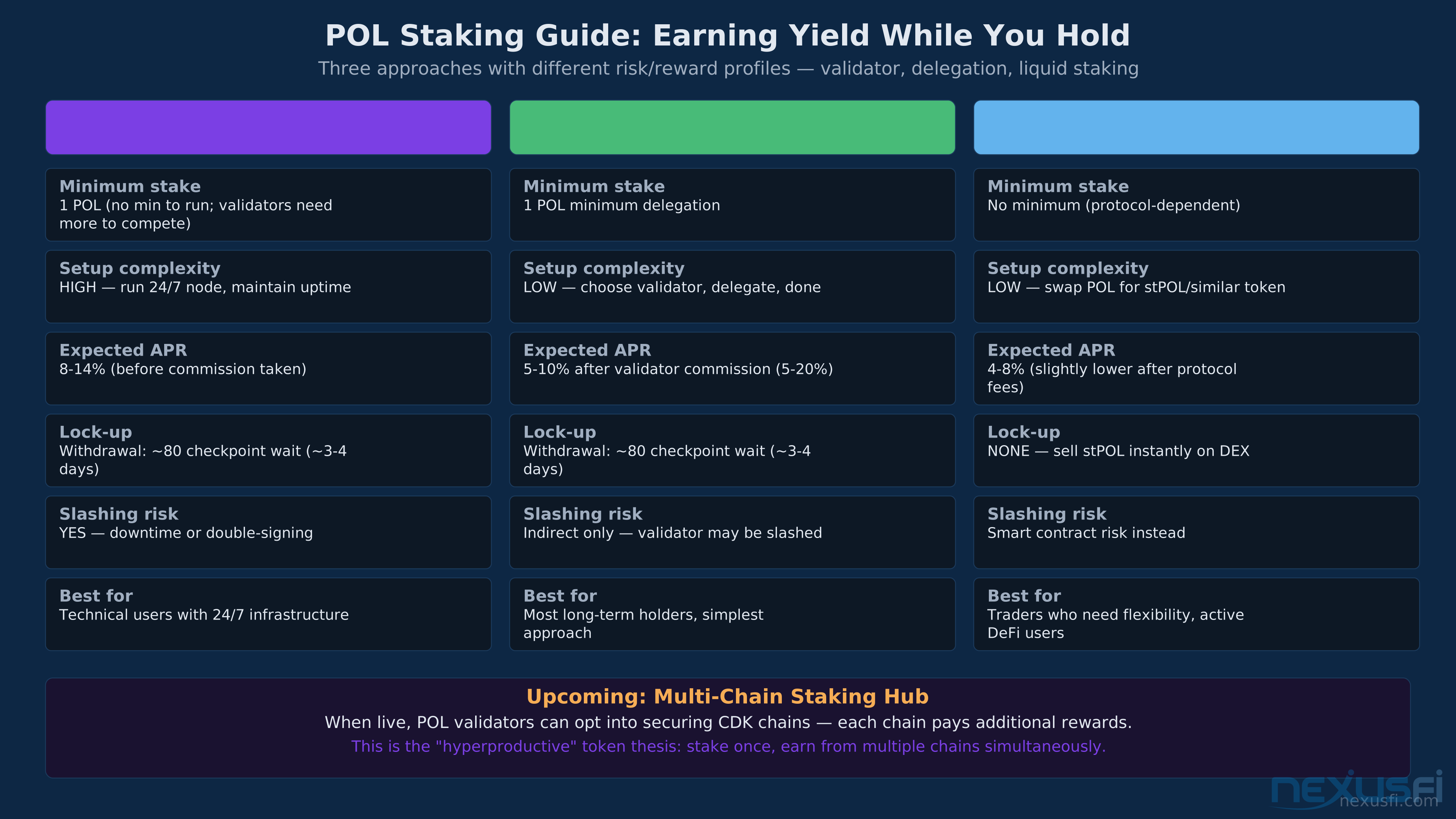
The core staking mechanism operates on Ethereum. You delegate POL to one of the 100+ validators, who checkpoint Polygon PoS to Ethereum and earn POL rewards. Requirements:
- Minimum: 1 POL to delegate
- Lock-up: None — you can undelegate and wait ~80 checkpoints (~3-4 days) to exit
- Expected yield: 5-10% APR (variable based on total staked and network activity)
- Validator commission: Validators take 5-20% of rewards before passing to delegators
Liquid Staking
If you want yield without lock-up friction, liquid staking protocols on Polygon PoS let you deposit POL and receive stPOL (or similar) tokens that accrue value. No lock-up, no checkpoint waiting. The tradeoff: smart contract risk. If the liquid staking protocol is exploited, you lose your stake.
The Multi-Chain Staking Hub (Upcoming)
Polygon's planned staking hub would let validators opt into securing CDK chains for additional rewards. When this launches, active POL stakers will earn fees from every CDK chain they validate — not just the base PoS network. This is the "hyperproductive" tokenomics vision. Staking pre-launch positions you to capture this yield from day one.
Getting Into Polygon: Bridging, DEXs, and On-Ramps #
From Ethereum
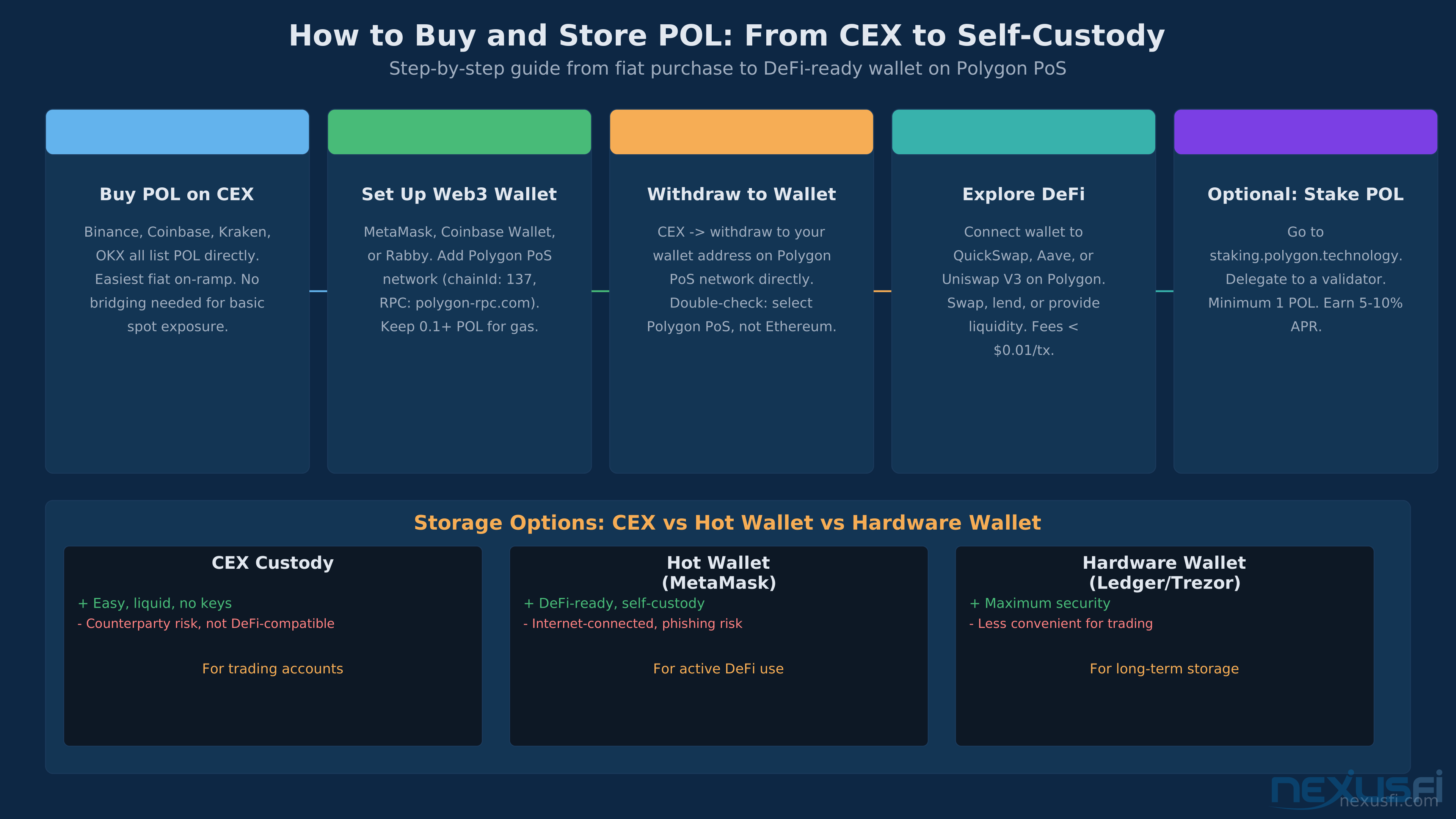
The official Polygon Portal (portal.polygon.technology) bridges ETH and ERC-20 tokens from Ethereum to Polygon PoS. Standard bridge takes ~7 minutes. The portal also handles MATIC -> POL migration for any unreconverted MATIC still on Ethereum.
Third-party bridges like Stargate Finance and Across Protocol typically offer better rates and faster settlement than the native bridge for USDC/USDT transfers.
From Other Chains
Cross-chain aggregators like Li.Fi and Socket connect 30+ networks to Polygon. If you're coming from Solana, BNB Chain, or Arbitrum, these are usually the fastest paths.
From Fiat
Coinbase, Kraken, and Binance all let you buy POL directly with USD. This is the cleanest path for retail buyers — no bridging complexity, no gas to manage.
Once You're on Polygon PoS
Start with small amounts to understand gas costs and DEX mechanics. Polygon PoS gas fees are so low ($0.001-0.01 per transaction) that there's no meaningful cost to experimenting. QuickSwap has the deepest POL liquidity on-chain.
Risk Management for POL Traders #
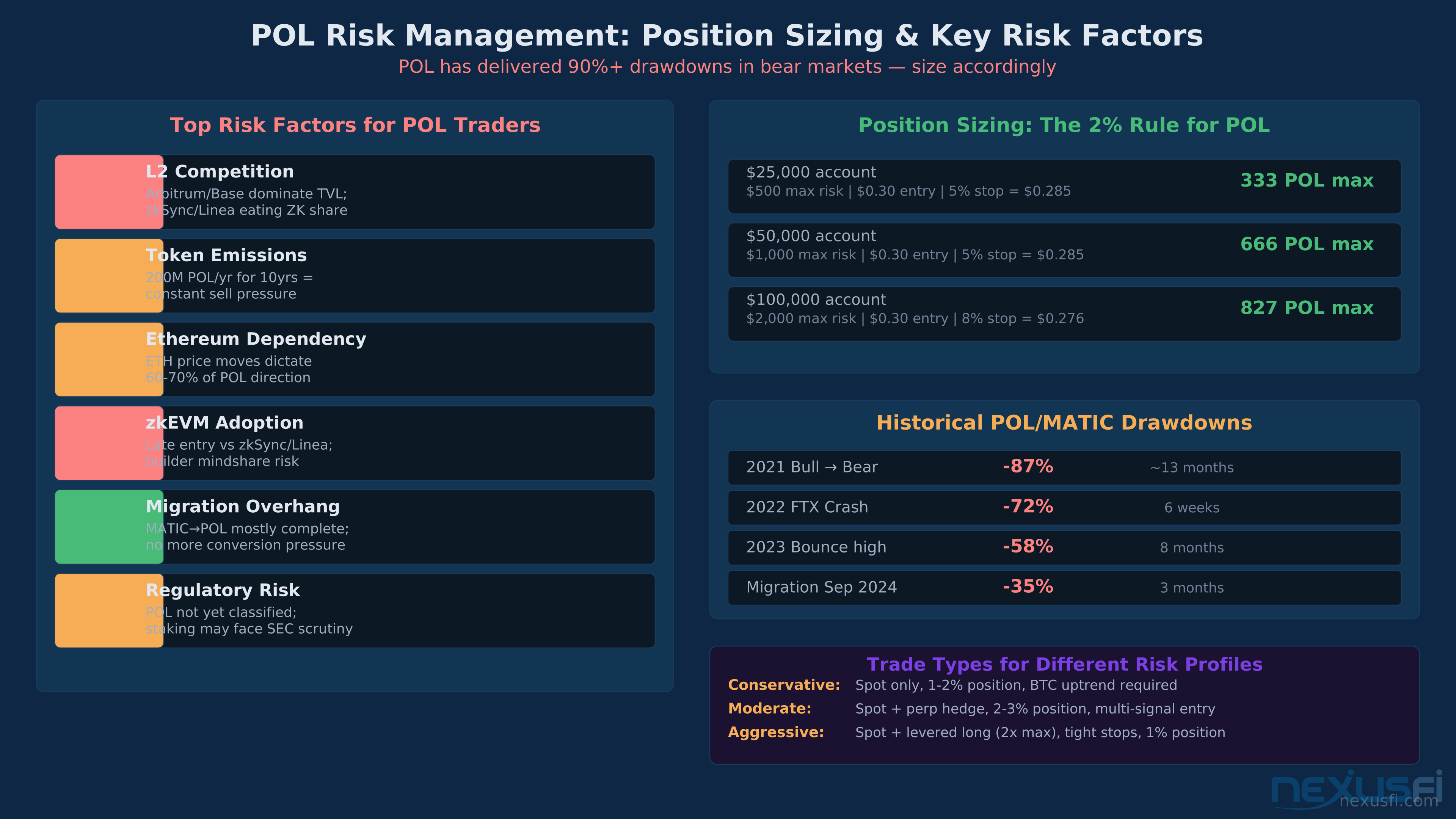
POL has delivered 87% peak-to-trough drawdowns. This isn't a theoretical risk — it happened between November 2021 and June 2022. Any trader sizing positions without accounting for this magnitude of drawdown will be forced out at the worst possible time.
The 2% Rule Applied to POL
NexusFi member @jamiej83 put the position sizing principle clearly:
@tigertrader reinforced this with a concrete example:
Never risk more than 2% of total trading capital on a single POL position. Here's what that means at different account sizes:
| Account Size | Max Risk (2%) | Entry ($0.30) | 5% Stop ($0.285) | Max Position |
|---|---|---|---|---|
| $25,000 | $500 | $0.30 | $0.285 | 333 POL |
| $50,000 | $1,000 | $0.30 | $0.285 | 666 POL |
| $100,000 | $2,000 | $0.30 | $0.276 (8% stop) | 827 POL |
These are smaller positions than most altcoin traders take. That's the point. POL will give you another chance to add if the thesis plays out — but only if you're still solvent.
Key Risk Factors
L2 Competition (HIGH): Arbitrum and Base continue to capture developer mindshare and TVL. This is structural, not cyclical. Polygon's market share trajectory is down unless the AggLayer thesis materially outperforms.
Token Emissions (MEDIUM): 200M POL per year for 10 years is persistent sell pressure. Current staking demand needs to grow to absorb annual supply.
zkEVM Adoption Risk (HIGH): Polygon zkEVM has excellent tech but poor market traction. Continued underperformance vs zkSync and Linea is a bearish signal for the ZK roadmap.
Ethereum Dependency (MEDIUM): 60-70% of POL price moves are explained by Ethereum's price. If you're bullish on POL, you need to be bullish on ETH first.
Smart Contract Risk (LOW-MEDIUM): DeFi on Polygon PoS carries the standard risk of protocol exploits. The sidechain bridge has historically been a target — the 2022 Ronin Bridge hack ($625M) reminded the market that bridges are vulnerable. Polygon PoS's native bridge has not been exploited, but the risk is non-zero.
Hedging Strategies
For larger spot positions, consider hedging with POL perpetual shorts during periods of excessive market optimism (funding rates > 0.1%/8hr). This isn't about directional conviction — it's about managing drawdown when the market gets crowded.
POL vs Competitors: What Traders Actually Need to Know #
The useful comparison isn't POL vs ETH (they're complementary, not competitive). It's POL vs other L2 tokens:
POL vs ARB (Arbitrum) ARB has 15x Polygon's TVL, the largest DeFi ecosystem on any L2, and AAVE V3's deepest liquidity on any network. Arbitrum is the "default" L2 choice for DeFi protocols. POL is cheaper by market cap but has lower institutional traction among DeFi protocols.
POL vs OP (Optimism) Optimism has the OP Stack advantage — Base, Zora, and dozens of other chains use OP Stack, capturing a royalty revenue stream for the Optimism Collective. POL has CDK, which is the same model but with ZK technology. The question: does ZK or optimistic execution win long-term?
POL vs ZK competitors (zkSync, Linea, Scroll) On pure technology, Polygon zkEVM is arguably more complete than competing ZK rollups. But technology doesn't determine market share — distribution, developer tools, and incentives do. zkSync's airdrop created an enormous user base. Linea has ConsenSys behind it pushing MetaMask users. Polygon zkEVM has been more conservative, which is costing it adoption.
The Case for POL Over Competitors Polygon's breadth — PoS + zkEVM + CDK + AggLayer — means it has multiple shots at winning different L2 segments simultaneously. If PoS remains the enterprise chain, zkEVM captures ZK DeFi, and CDK captures gaming/app-chains, POL captures fee revenue from all three. No single-product L2 has this exposure.
The multi-chain bet: Buying POL is betting on a portfolio of scaling approaches simultaneously. If any one of them (PoS enterprise, zkEVM DeFi, CDK gaming) wins its market, POL benefits. The risk is that none of them win decisively — a "jack of all trades" outcome where Polygon is second or third in every segment but first in none.
Common Mistakes POL Traders Make #
Mistake 1: Confusing MATIC and POL
Post-September 2024, MATIC no longer exists as the Polygon token on major exchanges. It's POL. If your CEX still shows MATIC, the value is the same — exchanges just moved slower to update ticker displays. Don't sell MATIC positions thinking you're ahead of the migration; most of that is already done.
Mistake 2: Ignoring the BTC Correlation
POL does NOT trade independently of Bitcoin. Traders who identify Polygon-specific catalysts and enter without checking BTC's macro trend will get rekt on the correlation. Polygon could announce a deal with every Fortune 100 company, and if Bitcoin drops 20% the same week, POL drops 24%.
Mistake 3: Sizing for the Upside, Not the Drawdown
New POL traders see the 292x move from 2019-2021 and size for that move. What they ignore is the 87% drawdown that followed. POL is appropriate for 1-3% of a diversified crypto portfolio, not 20-30%.
Mistake 4: Not Understanding What's on PoS vs zkEVM
When checking "Polygon TVL" on DeFiLlama, most of the activity is on PoS. zkEVM has a separate TVL chart. A trader who doesn't know this might think $1B in "Polygon TVL" represents unified ecosystem health when it's actually concentrated in PoS with zkEVM at 10% of that.
Mistake 5: Treating Enterprise Announcements as Confirmed Revenue
Starbucks Odyssey, Nike .Swoosh, and similar programs generate real transactions, but the fee revenue to Polygon is tiny — retail users aren't burning meaningful amounts of POL gas. Enterprise announcements are narrative catalysts, not fundamental changes to fee revenue. They matter for price sentiment but less for long-term fundamental valuation.
Mistake 6: Forgetting Bridge Risk
If you're bridging significant assets to Polygon PoS, use the official bridge or established third-party bridges with audits. The ecosystem has seen bridge hacks on other networks (Ronin was EVM-compatible too). Verify bridge addresses. Start with small amounts. Never bridge more than you can afford to lose to a smart contract exploit.
Knowledge Map
Go Deeper
Build on this knowledgeReferences This Article
Articles that build on this topicCitations
- — Cryptocurrency Trading Platforms (2021) 👍 3“Contract risk with every DeFi platform -- hacks, exploits, and rug pulls are real concerns for any on-chain position.”
- — Building an alpha out of on-chain data? (2022) 👍 5“On-chain data can improve a trading strategy -- on a base MACD strategy, adding on-chain signals produced measurably better results.”
- — Concerning risk per trade sizing (2012) 👍 18“Position sizing has 2 key elements: number of ticks risked and dollar amount risked. DEFINE your risk without knowing your objectives is impossible.”
- — Killer Instinct and the Home Run Mentality (2011) 👍 8“If you are willing to risk 2% of your $100,000 trading account on a trade where your stop is set at 4 points, your position size is determined by that 2% rule.”
- — XRP Ledger Activates Institutional DEX (2026)“A permissioned decentralized exchange built on a public blockchain -- the trend toward institutional DeFi infrastructure affecting all L2 ecosystems.”
- Polygon Labs Blog — MATIC to POL Migration Is Now Live -- Everything You Need to Know (2024)
- CoinDesk — Polygon Sets September Date for Migration to POL Token from MATIC (2024)
- Messari — Polygon Ecosystem Overview (2024)
- OKX Learn — Polygon Price and TVL: Key Insights into Growth, Fluctuations, and Future Potential (2025)
- CoinGecko — Polygon Ecosystem Token (POL): What It Is and Role in Polygon 2.0 (2024)
- The Defiant — Polygon Migrates MATIC to POL Token in Road to Polygon 2.0 (2024)