



Futures Clearing and Settlement: How the System That Guarantees Every Trade Actually Works
Overview #
Every time you execute a futures trade, something solid happens in the background: the exchange's clearing house steps between you and the person on the other side, guaranteeing that both of you will honor the contract. This process
Most traders never think about clearing until something goes wrong
This article covers the mechanics of how trades get cleared, how daily settlement works, and what happens at the end of a contract's life. For detailed coverage of margin calculations and requirements, see Futures Margin Requirements.
Key Concepts #
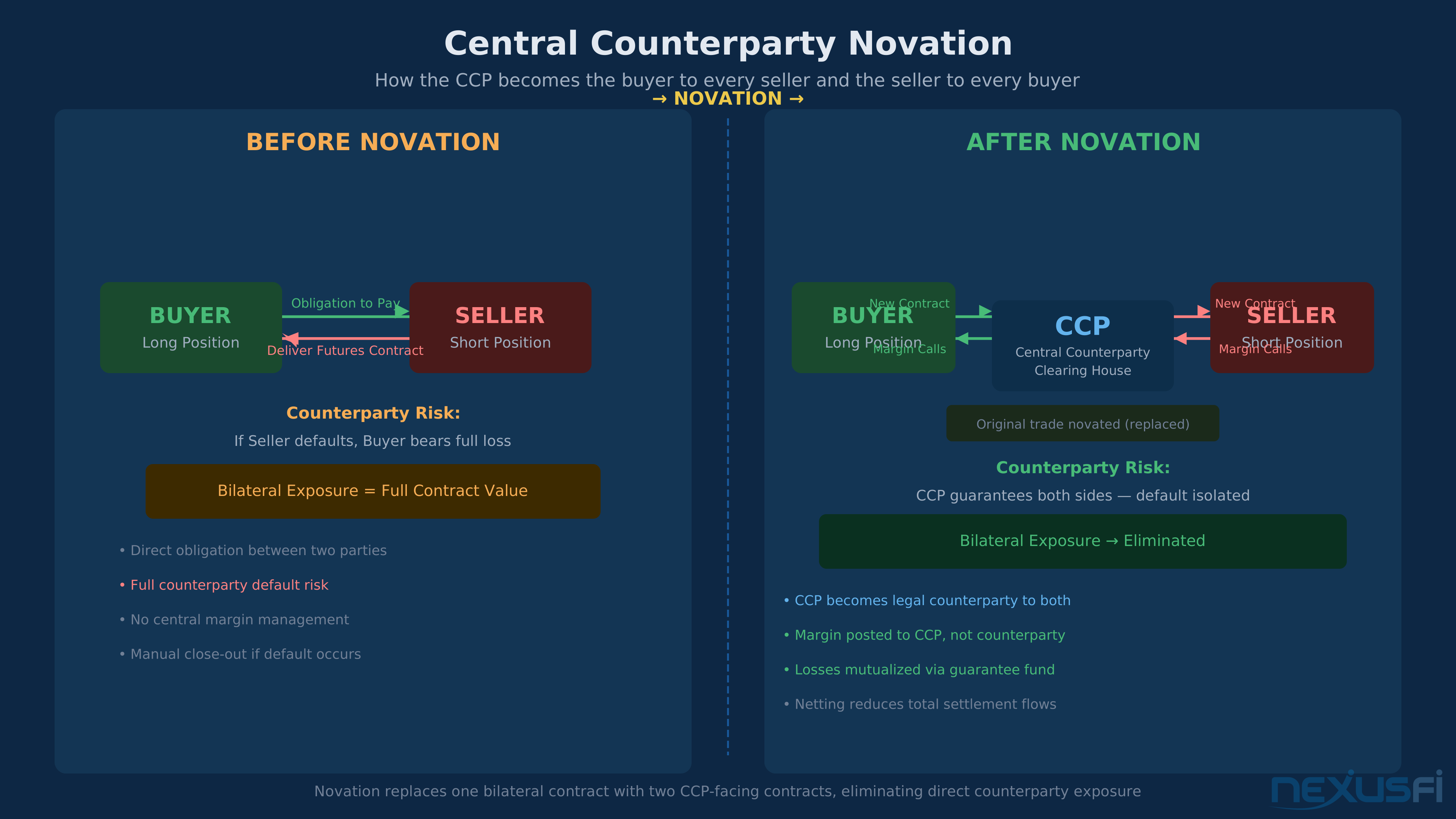
Central Counterparty (CCP): The clearing house that becomes the buyer to every seller and the seller to every buyer after a trade is matched. CME Clearing is the CCP for all CME Group products.
Novation: The legal process where the original bilateral trade between two parties is replaced by two separate contracts
Clearing Member: A firm (typically a large bank or FCM) that has direct membership at the clearing house. Your broker either is a clearing member or routes through one. Think of them as the gatekeepers between retail traders and the CCP.
Variation Margin: The daily cash flow that reflects your mark-to-market profit or loss. Real money moves
Settlement Price: The official daily closing price determined by the exchange, used to calculate mark-to-market gains and losses. Not necessarily the last traded price.
Guarantee Fund: A pool of capital contributed by all clearing members that serves as a backstop if a defaulting member's margin can't cover their losses.
The CCP Model and Novation #
Here's the core concept that makes futures markets at the core different from bilateral contracts: the clearing house stands in the middle of every trade.
When you buy one ES contract and someone else sells it, the trade initially matches on CME Globex as a bilateral transaction. Within seconds, CME Clearing steps in and performs novation
Why does this matter? Because you don't care who the counterparty is. You don't need to evaluate their creditworthiness, worry about whether they'll honor the contract at expiration, or even know who they are. CME Clearing guarantees performance on both sides. If the seller defaults, that's CME Clearing's problem to manage
This model operates through a two-tier structure. Clearing members
Trade Lifecycle: From Click to Cleared Position #
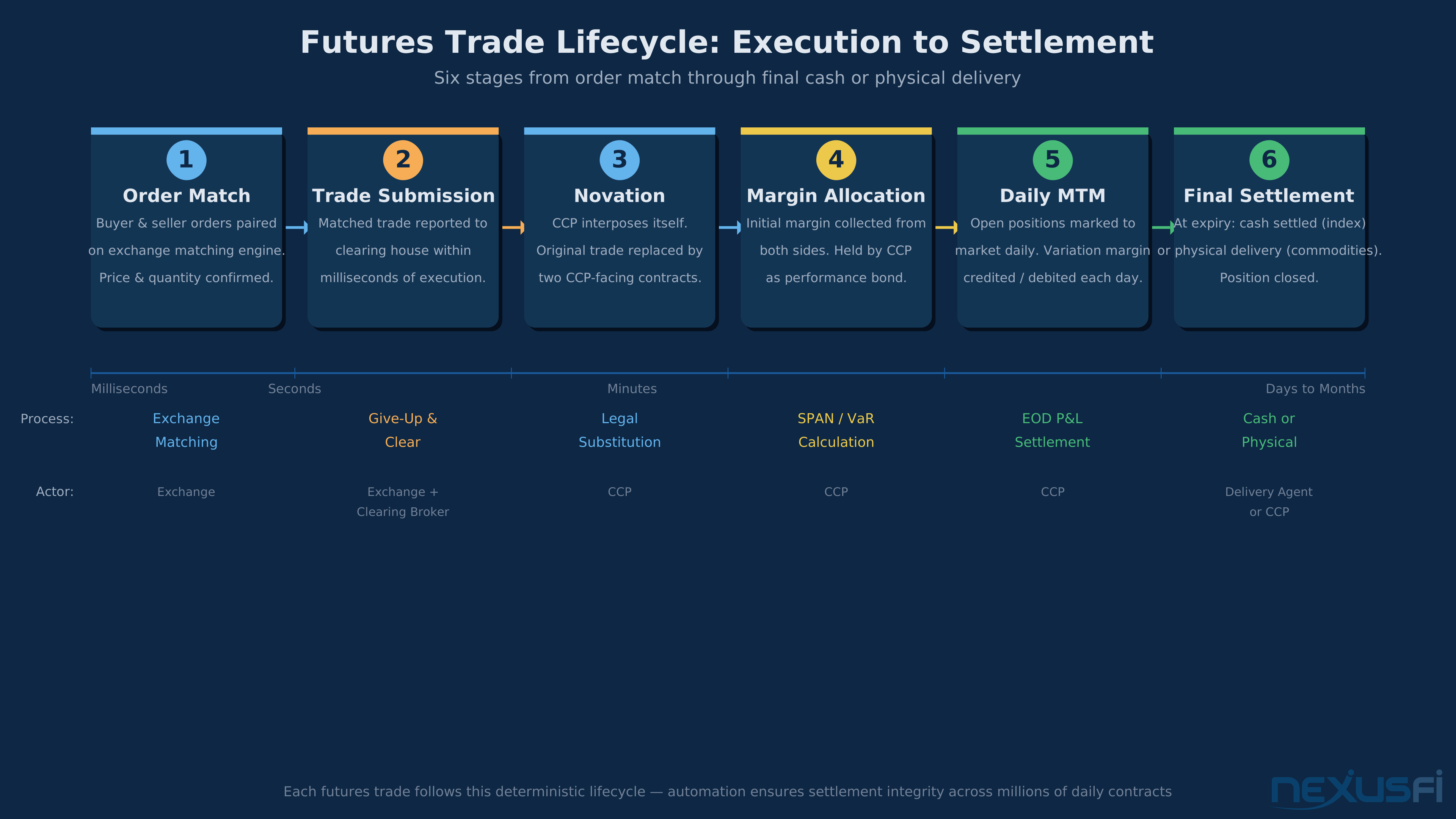
Here's what happens when you click "Buy" on one ES contract:
1. Order Matching (milliseconds): Your order hits CME Globex and matches with a seller. At this point, you have a bilateral trade.
2. Trade Submission (seconds): The matched trade is submitted to CME Clearing for acceptance. The clearing house runs real-time risk checks
3. Novation (seconds): CME Clearing accepts the trade and performs novation. Your bilateral trade becomes two CCP-facing contracts. Your clearing member's account is updated.
4. Margin Allocation (real-time): Initial margin is allocated against the position. If this is your first position of the session, your broker deducts initial margin from your available funds. The clearing house holds this as a performance bond.
5. Daily Mark-to-Market (end of session): At the end of each trading day, your position is marked to the official settlement price. Gains are credited, losses are debited. This is variation margin
6. Final Settlement (at expiration): When the contract expires, it's either cash-settled against a final reference price or enters the physical delivery process.
The entire flow from execution to cleared position takes seconds. The ongoing daily settlement cycle continues for as long as you hold the position.
Daily Settlement and Mark-to-Market #
Daily mark-to-market is the heartbeat of the futures clearing system. Every single trading day, every open position is settled at the official settlement price, and cash moves between accounts to reflect gains and losses.
This is at the core different from stocks, where unrealized P&L stays unrealized until you close the position. In futures, every day is a fresh start. Your cost basis effectively resets to the settlement price each evening.
Settlement Price vs. Last Trade Price #
The settlement price is not simply the last price that traded.
For ES, that's the volume-weighted average of all transactions between 3:14:30 and 3:15:00 PM Central Time. For gold futures, settlement is calculated between 1:29:00 and 1:30:00 PM Eastern
This creates real implications for traders. The P&L on your daily statement reflects the settlement price, not the last price you saw on your chart. For products like gold or currencies where settlement happens well before the session close, the difference can be significant.
How Cash Actually Flows #
When the day ends and settlement prices are determined:
- Winning positions receive variation margin credits
- Losing positions have variation margin debits
- Net effect across all clearing members is zero
- If debits cause your equity to drop below maintenance margin, your broker issues a margin call
The settlement cycle typically completes by the early morning following the trading session. Your account statement reflects the settlement-based P&L, not intraday mark-to-market.
The Margin System in Clearing Context #
Margin is the clearing house's primary risk management tool. It's not a fee or a cost of trading
Three margin types interact with the clearing process:
Initial Margin is posted when you first enter a position (or hold through the first session). It covers the clearing house's estimate of the worst-case one-day price move. The exchange sets this using risk models like SPAN (Standard Portfolio Analysis of Risk).
Maintenance Margin is the minimum equity required to continue holding positions. If your account drops below this level through mark-to-market losses, you'll receive a margin call. Typically 80-90% of initial margin.
Variation Margin is the daily cash flow reflecting mark-to-market settlement. This isn't "margin" in the traditional sense
For a complete treatment of margin calculation methods, SPAN methodology, day trading margin, and broker-specific considerations, see Futures Margin Requirements.
Settlement Types: What Happens at Expiration #
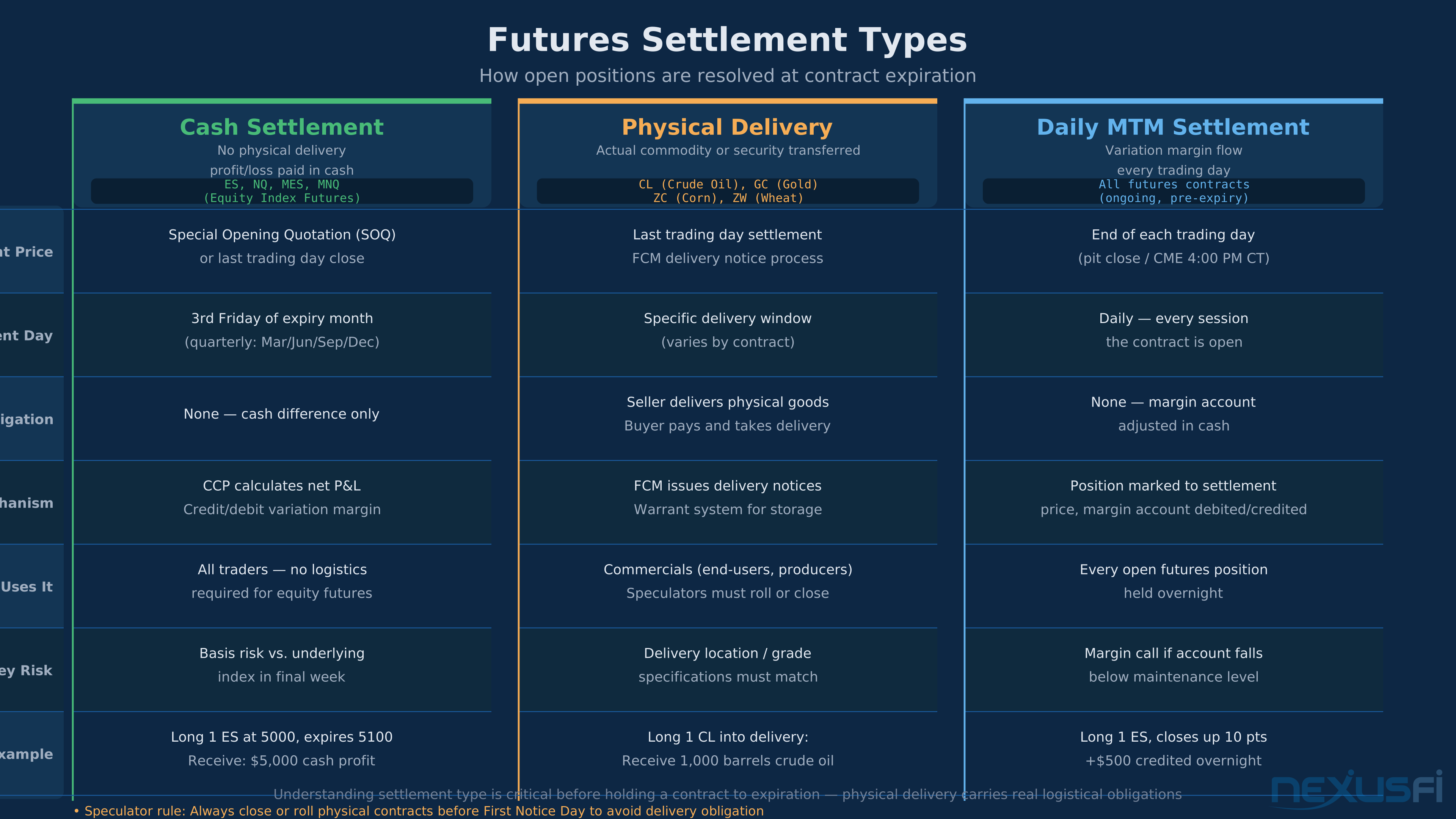
Every futures contract must eventually settle. How it settles depends on the contract specification
Cash-Settled Contracts #
Index futures (ES, NQ, RTY), most financial futures, and many newer contracts settle in cash at expiration. The clearing house calculates a final settlement price
Cash settlement is clean, automatic, and operationally simple. No physical exchange occurs.
Physically Delivered Contracts #
Commodity futures (CL, GC, ZC, ZW) and Treasury futures (ZB, ZN) settle through physical delivery of the underlying asset. This is where things get operationally complex.
For physically delivered contracts, key dates matter:
- First Notice Day (FND): The first day holders of short positions can notify the exchange of intent to deliver. Long holders can be assigned delivery starting this date.
- Last Trading Day: The final day the contract trades on the exchange.
- Delivery Period: The window during which physical delivery actually occurs.
Most retail traders should be out of physically delivered contracts well before First Notice Day. Brokers typically enforce this
The Difference Matters #
Different contracts within the same commodity can have different settlement methods. Gold is a good example: GC (full-size) and MGC (micro) are physically delivered, while QO (e-mini gold) is cash-settled against the GC closing price. [7] Know which type you're trading.
The Default Waterfall: What Protects You #
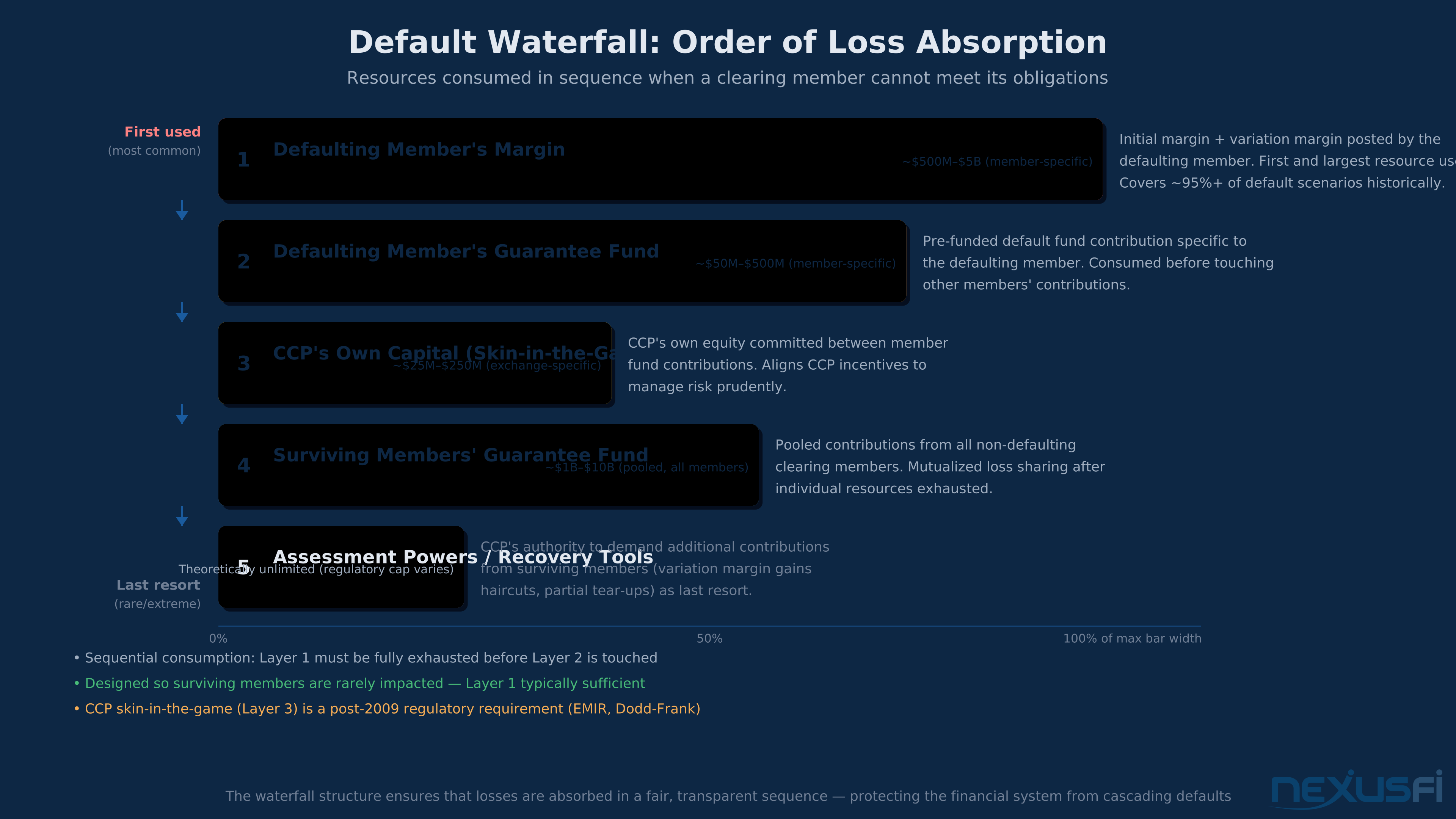
The clearing house operates a multi-layered defense system
If a clearing member defaults, losses are absorbed in this order:
**Layer 1
**Layer 2
**Layer 3
**Layer 4
**Layer 5
CME Clearing stress-tests its default waterfall against extreme scenarios
Customer Segregation #
Your funds are legally separated from your broker's proprietary funds under CFTC customer segregation rules. If your broker fails (as happened with MF Global in 2011 and Peregrine Financial in 2012), your segregated funds are protected
Practical Considerations for Traders #
Settlement Price Timing Varies by Product #
Don't assume settlement happens at the close. ES settles at 3:15 PM CT, but gold settles at 1:30 PM ET
Mark-to-Market is Real Cash #
Unlike stocks where unrealized P&L is just a number, futures mark-to-market moves actual cash in your account daily. This means you can withdraw unrealized gains on a long-term futures position without closing it
Know Your Contract's Settlement Method #
Before trading any contract, know whether it's cash-settled or physically delivered. Check the contract specifications on the exchange's website. For physically delivered contracts, know the First Notice Day and make sure you're out before then (or have arranged for delivery with your broker, which retail traders almost never do).
Your Broker is Your Interface to Clearing #
You don't interact with the clearing house directly. Your broker (FCM) is your interface to the clearing member, who is the clearing house's interface to the market. The quality of your broker matters
Weekend and Holiday Risk #
Settlement is a business-day process. Positions held over weekends and holidays still carry risk, but settlement only processes on trading days. Large gap moves on Sunday night can trigger margin calls that require immediate attention Monday morning.
Knowledge Map
Prerequisites
Understand these firstGo Deeper
Build on this knowledgeReferences This Article
Articles that build on this topicCitations
- — Lost & losing hope (2019) 👍 22“This is endlessly discussed, between people who want to be optimistic and say "everyone can win" versus those who understand how the account balances are adjusted in CME futures trading, and who therefore know that it is a zero sum game in a literal...”
- — Daily Pivot Point Calculation (2012) 👍 8“The closing price is the transaction price of the last trade of a trading day. The settlement price is the volume weighted average price of the settlement period.”
- — Margin: initial vs maintenance vs day trading (2017) 👍 7“Futures are a highly leveraged trading product. Margins are "good faith deposits" that a trader must maintain in order to trade a particular product.”
- — Made a total newb mistake. Held position open while contract expired... (2018) 👍 8“For cash settled futures like the mini S&P, it is no big deal. You will "close" at the official settlement price, which is likely why your profit changed to $812.50.”
- — Physical or Cash Settlement for day trades (2023) 👍 2“I'm not sure I understand your question (or maybe you didn't mean what you actually asked) The main NYMEX Crude Oil contract ("CL") is a physically delivered contract.”
- — Made a total newb mistake. Held position open while contract expired... (2018) 👍 10“Most brokers will never let this happen to you. Tradestation, for example, will auto liquidate and close your position, although they charge you $50 for doing so, and they usually call you and chew you out a bit.”
- — Physical or Cash Settlement for day trades (2023) 👍 2“I'm not sure I understand your question (or maybe you didn't mean what you actually asked) The main NYMEX Crude Oil contract ("CL") is a physically delivered contract.”
- — Last Traded Price vs Settlement Price (2012) 👍 7“This a question relative to futures contracts. I personally think that the settlement price is more important, and for my indicators, such as the floor pivots, I always use the settlement price.”