



Futures Margin Requirements: What Every Trader Needs to Know About the Capital That Keeps You in the Game
Overview #
Margin in futures trading is not a loan. It's not a down payment. It's a performance bond — a good-faith deposit that guarantees you can cover losses on your positions. This distinction matters because it changes how you think about capital allocation entirely.
In equities, margin means borrowing money from your broker to buy stock. In futures, margin means posting collateral against the risk of your open positions. No money is borrowed. No interest accrues. But if your collateral falls below required thresholds, you're out — sometimes before you even know what happened.
Understanding margin isn't optional. It's the mechanical foundation that determines how many contracts you can trade, how long you can hold them, and under what conditions your broker will forcibly close your positions. Get this wrong and no amount of technical analysis or trade management will save you.
Key Concepts #
Before diving into the mechanics, here are the core terms you'll need:
Initial Margin (IM): The amount required to open a new position or hold an existing position through the first trading session. Set by the exchange.
Maintenance Margin (MM): The minimum equity required to continue holding a position from the second trading day onward. Also set by the exchange. Typically 80-90% of initial margin.
Intraday (Day Trading) Margin: The amount required to hold a position within a single trading session, provided it's closed before the session ends. Set by your broker, not the exchange.
Margin Call: A demand from your broker to deposit additional funds or reduce positions when your account equity falls below the maintenance margin level.
SPAN (Standard Portfolio Analysis of Risk): The risk-based margin methodology used by CME and most major futures exchanges to calculate margin requirements based on worst-case portfolio scenarios.
Variation Margin: The daily cash settlement of gains and losses through mark-to-market, which directly affects your available equity.
The Margin Taxonomy: Initial, Maintenance, and Intraday #
Three margin levels govern every futures position, and confusing them is one of the most common mistakes new futures traders make.
[NexusFi post by @NinjaTrader, "Margin: initial vs maintenance vs day trading"] [1]
Here's how this plays out with real numbers.
[NexusFi post by @Kuuluud, "Clear Explanation On Margin Requirements"] [2]
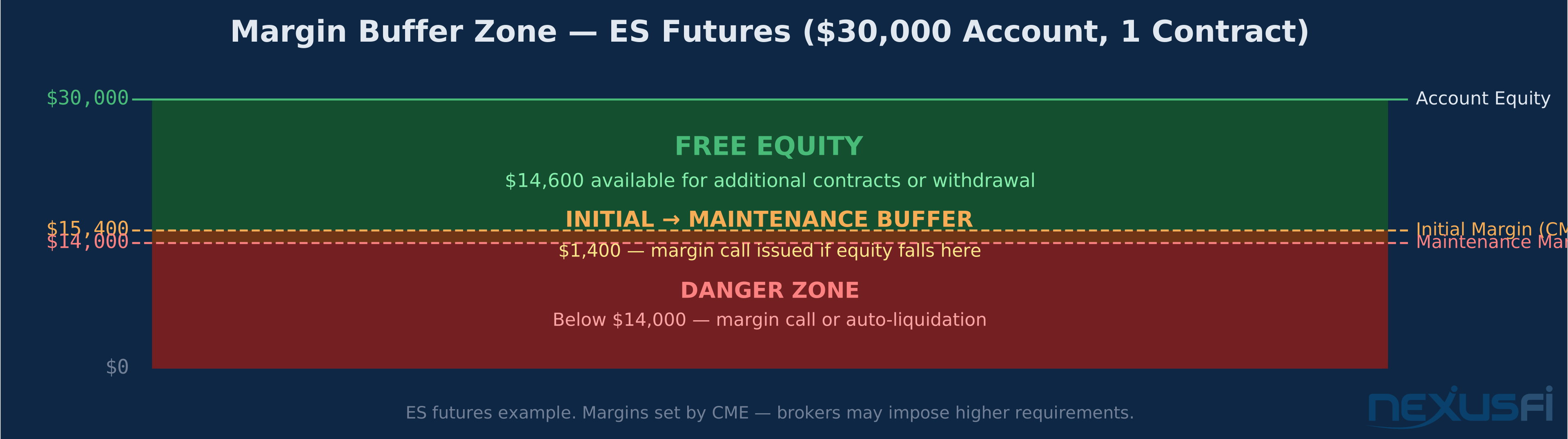
The gap between initial and maintenance margin is your buffer zone. For ES futures, that gap is currently around $1,400 per contract. Operating near the maintenance level means normal intraday price fluctuations can trigger a margin call. Operating at maximum leverage with no buffer is a recipe for forced liquidation.
The math matters. If ES initial margin is $15,400 and maintenance is $14,000, a trader with $30,000 holding 1 ES contract has $14,600 in free equity above the maintenance requirement ($30,000 - $15,400 = $14,600 free). That's roughly 292 ES points of adverse movement before a margin call (at $50/point). Holding 2 contracts? Now it's just $100 of free equity above maintenance — about 1 ES point. Different game entirely.
Who Sets the Rules: The Margin Responsibility Chain #
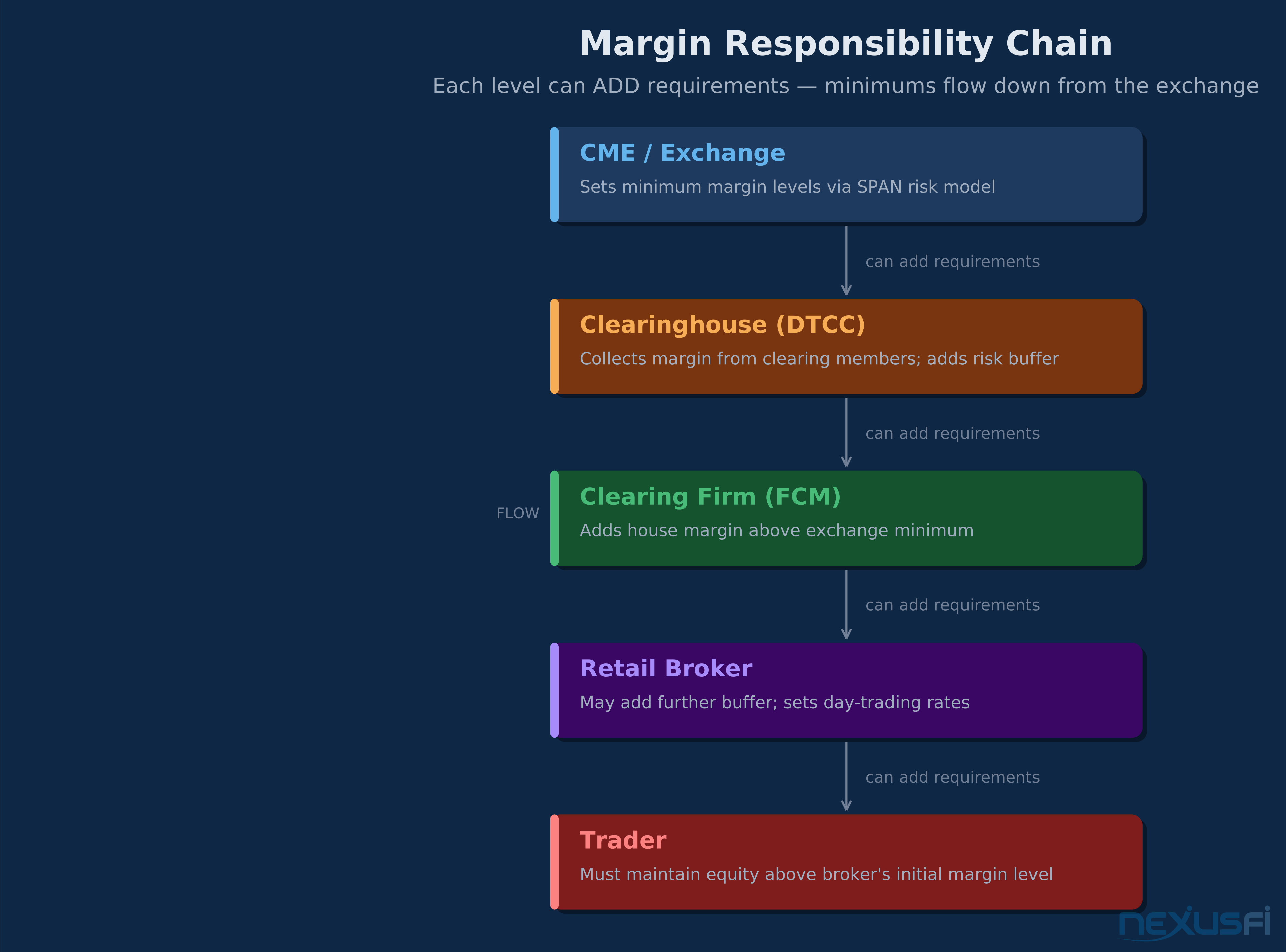
Margin requirements flow through a chain where each level can add requirements but cannot go below the level above:
CME / Exchange → Sets the absolute minimum via SPAN margin calculations. These are the "exchange minimums" you'll see published on CME Group's website.
Clearinghouse → May impose additional requirements based on systemic risk, clearing member exposure, or concentrated positions.
Clearing Firm (FCM) → The Futures Commission Merchant that clears your trades. They commonly apply "house requirements" above exchange minimums based on their own risk models.
Retail Broker → Your front-end interface. Brokers can — and routinely do — set higher margins than exchange minimums. Day trading margins are entirely at the broker's discretion.
You (the Trader) → Subject to all of the above. Your actual margin requirement is whatever your broker demands, which is always at or above exchange minimums.
This chain explains why margin requirements vary between brokers. Two traders with identical positions at different brokers can face different margin requirements, different margin call policies, and different liquidation timelines.
[NexusFi post by @SMCJB, "Futures Margin Leniency"] [3]
Day Trading Margin vs Overnight Margin #
This is where margin gets operationally interesting — and potentially dangerous.
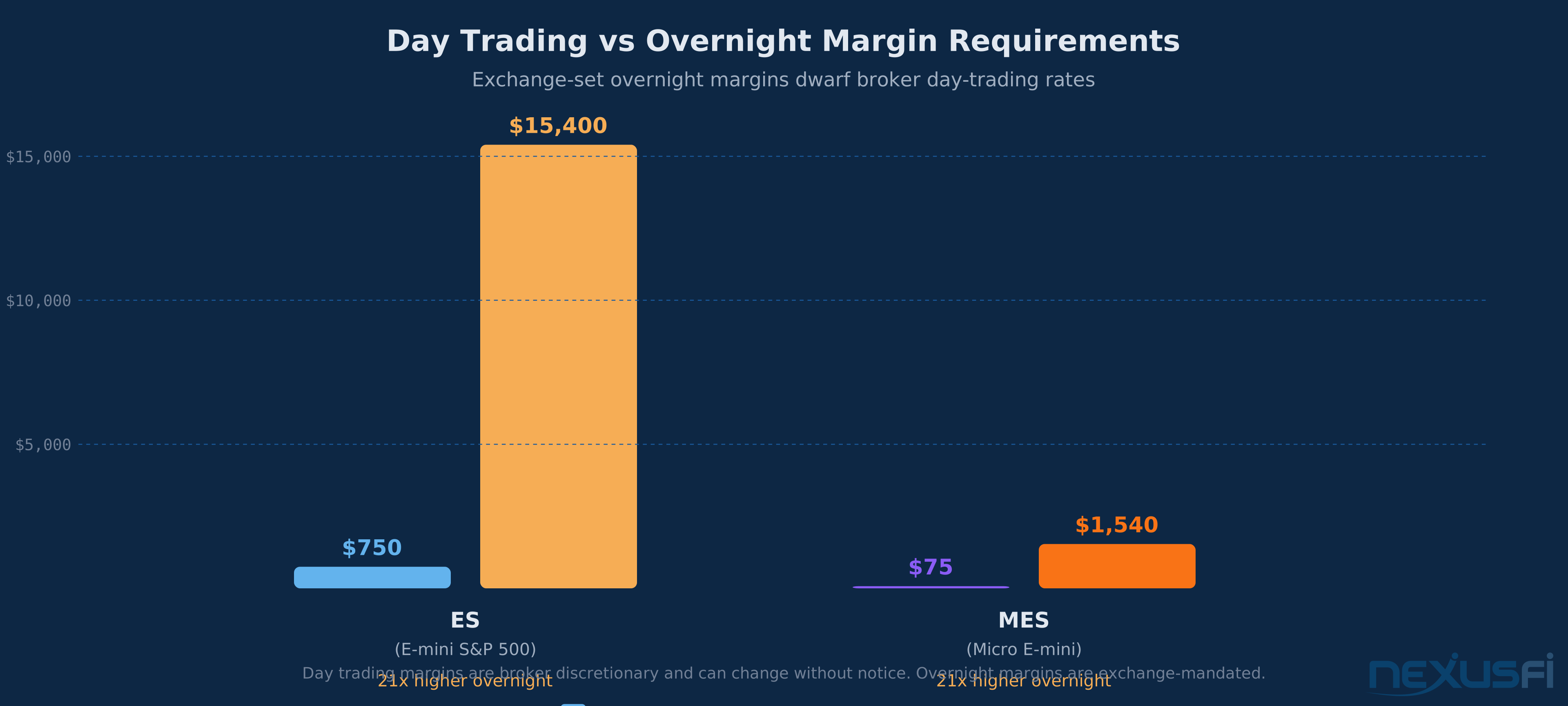
Overnight (exchange) margin is the full initial/maintenance requirement set by the exchange. For ES, that's currently around $15,400 initial. For MES (Micro E-mini S&P 500), it's around $1,540.
Day trading margin is set entirely by your broker and is dramatically lower. Some brokers offer ES day trading margins as low as $500-$1,000 per contract. MES day trading margins can be as low as $50-$100.
The ratio between day and overnight margin can be 15:1 or 20:1. This means a trader with $10,000 can hold 10-20 ES contracts during the day session but only manage to hold 0 contracts overnight (since $10,000 is below the ~$15,400 initial margin for even 1 contract).
The cliff at session close. If you're trading on day margins and fail to close your position before the broker's cutoff time, your margin requirement jumps from day trading levels to overnight levels — instantly. If your account can't support the overnight requirement, you face immediate forced liquidation.
[NexusFi post by @kevinkdog, "Question about intraday margins"] [4]
Know your broker's cutoff time. Each broker defines when "day trading" ends. Some use the official session close, others use their own cutoff 15-30 minutes earlier. Miss the cutoff with positions open and your margin requirement multiplies by 15x or more. This has liquidated accounts that were otherwise profitable.
How SPAN Calculates Margin #
SPAN — Standard Portfolio Analysis of Risk — is the margin methodology used by CME Group and most major futures exchanges worldwide since 1988. It replaced the old fixed-percentage margin model with something far more sophisticated.
The core idea: SPAN doesn't ask "what is 5% of the contract value?" Instead, it asks "what is the maximum this portfolio could lose in one day across 16 different market scenarios?" Those scenarios combine various price moves and volatility shifts to stress-test your positions.
Risk arrays. For each contract, SPAN generates an array of potential gains and losses under different scenarios — prices up 1 scan range, prices down 1 scan range, volatility up, volatility down, and various combinations. The "scan range" is basically the exchange's estimate of a one-day worst-case price move.
Spread and hedge recognition. This is where SPAN gets interesting for traders with multiple positions. SPAN recognizes that being long ES and short NQ isn't the same risk as being long both. Correlated positions get margin credits — your total margin is less than the sum of individual legs. Calendar spreads (long one month, short another in the same product) get significant margin reductions.
[NexusFi post by @SMCJB, "Futures Margin Leniency"] [3]
The practical limitation. SPAN is a model, and all models have assumptions. SPAN's assumptions about worst-case daily moves are based on recent historical volatility. When volatility regimes shift suddenly — think March 2020, February 2018 VIX event — actual moves can exceed SPAN's scan ranges. The margin "protection" can be overwhelmed precisely when you need it most.
What this means for you: Don't treat SPAN margin as your risk budget. SPAN tells you the minimum you need to post, not the minimum you should have. Professional traders typically maintain 3-5x the exchange margin in their accounts to absorb volatility spikes and margin increases without forced liquidation.
Why Margin Changes: Volatility-Based Adjustments #
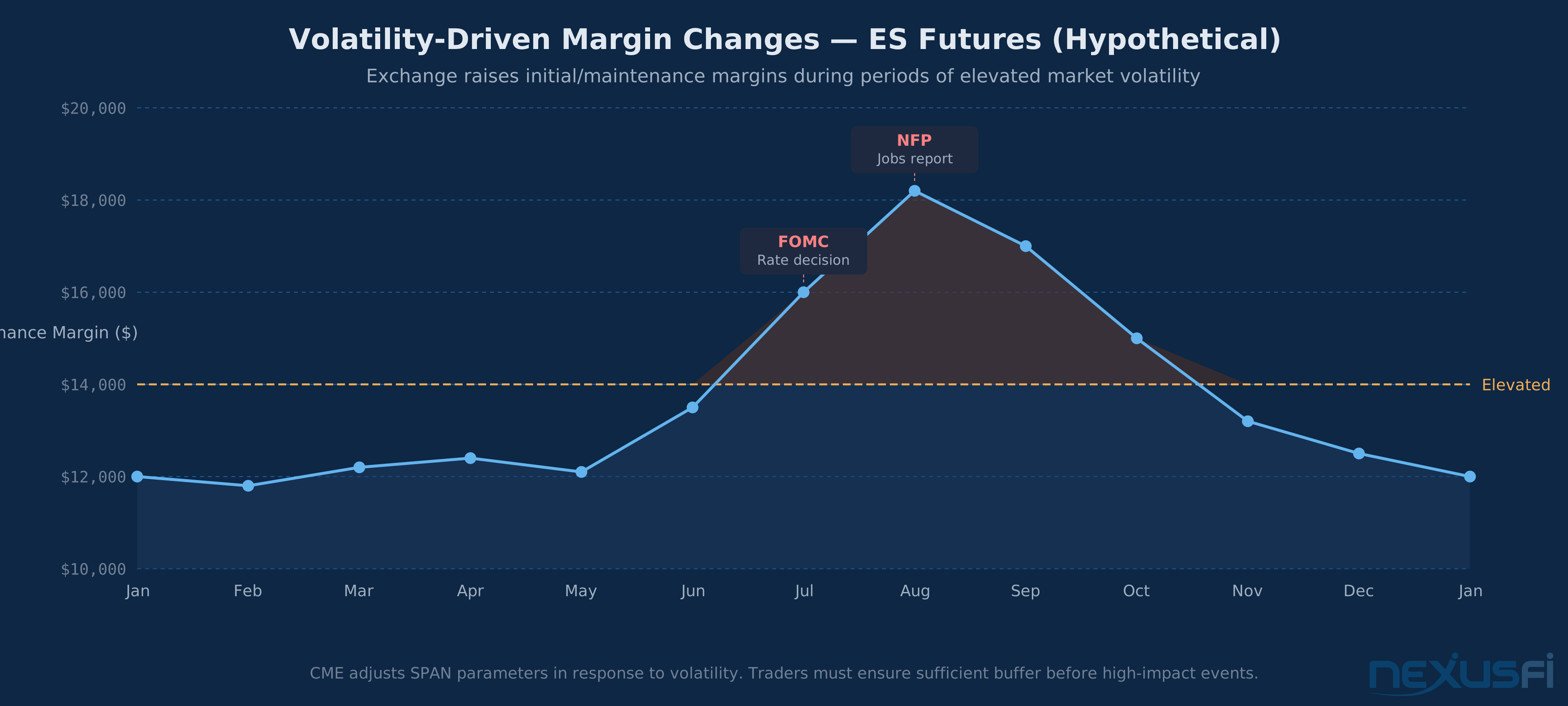
Margin is not static. It changes — sometimes daily, sometimes intraday — based on market conditions. This catches traders off guard more than almost anything else in futures.
What drives margin changes:
- Implied and realized volatility — When price swings widen, exchanges increase scan ranges, which increases margin requirements
- Major economic events — Pre-FOMC, pre-NFP, pre-CPI, exchanges may preemptively raise margins
- Market stress — During flash crashes, limit moves, or extreme dislocation, margin can spike with little warning
- Open interest shifts — Concentrated positioning across the exchange can trigger additional requirements
- Contract-specific factors — Approaching expiration, delivery months, and seasonal patterns
The NexusFi community has documented these changes extensively. In the natural gas thread alone, @SMCJB tracked multiple margin increases in 2021-2022 as NG volatility surged, with maintenance margins changing several times within weeks. [NexusFi posts by @SMCJB, "Trading natural gas futures"][7]
The timing trap. Margin increases often happen after a big move — meaning you entered a position when margin was lower, the market moved against you (reducing your equity), and then the exchange raised margins (increasing your requirement). You're getting squeezed from both directions simultaneously.
Asymmetric impact. Margin increases hurt most when you can least afford them. A 20% margin increase during a quiet market is manageable. The same increase during a volatile selloff — when your positions are already losing money — can push an otherwise viable position into forced liquidation.
Portfolio Margin: Cross-Position Risk Recognition #
Portfolio margin represents an evolution beyond standard SPAN, computing risk across your entire portfolio rather than treating each product independently.
How it works: Instead of summing margin requirements per contract, portfolio margin uses a complete risk model that stress-tests your entire portfolio across correlated scenarios. If you're long ES and short crude oil, the model recognizes that these positions have different (and potentially offsetting) risk characteristics.
Who qualifies: Portfolio margin programs typically require minimum account sizes ($100,000+ at many brokers), specific account types, and approval processes. Not every broker participates, and eligibility criteria vary.
Key benefits: Traders with diversified positions across multiple futures products or combinations of futures and options can see significant margin reductions — sometimes 30-50% below standard SPAN requirements.
Key limitations: Portfolio margin models make assumptions about correlations that can break down during market stress. The 2008 financial crisis and 2020 COVID crash both saw historical correlations fail, meaning portfolio margin benefits can evaporate exactly when you need them. Concentration constraints can also override offsets — a large position in a single product may not benefit from portfolio margining regardless of hedges.
Margin Calls and Liquidation: What Actually Happens #
This is the section most traders don't fully understand until it's too late. Here's the operational reality of what happens when your equity drops below margin requirements.
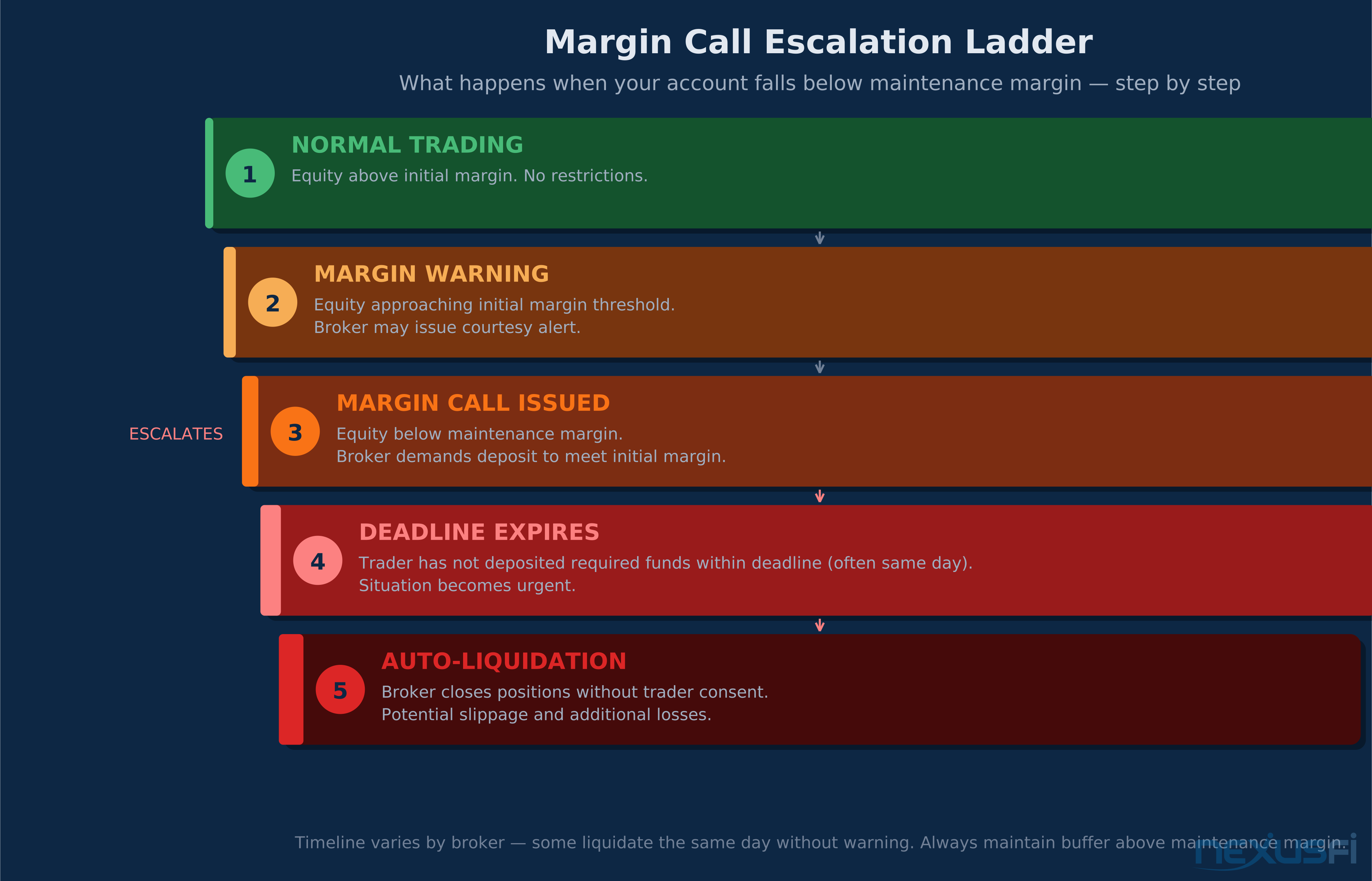
The escalation ladder:
Step 1: Normal Trading. Account equity comfortably above initial margin. No action required.
Step 2: Warning Zone. Equity between initial and maintenance margin. No margin call yet, but you can't add new positions. Your buffer is shrinking.
Step 3: Margin Call Issued. Equity drops below maintenance margin. Your broker demands you either deposit funds or reduce positions. The deadline varies by broker — some give you until end of day, some give you hours, some give you minutes.
Step 4: Deadline Expires. If you haven't met the margin call, your broker has the right (and often the obligation) to liquidate your positions.
Step 5: Auto-Liquidation. The broker closes your positions at market. You have no say in timing, price, or which positions are closed. During volatile markets, the execution quality can be terrible.
[NexusFi post by @josh, "Risk of trading micro futures"] [5]
Broker variation is massive. Some brokers are automated and aggressive.
[NexusFi post by @wldman, "Question about leverage"] [6]
Other brokers are more flexible, especially for established clients.
[NexusFi post by @SMCJB, "Futures Margin Leniency"] [3]
The worst-case scenario: During extreme market events (flash crashes, limit moves, overnight gaps), even stop losses may not protect you. If the market gaps through your stop, your loss can exceed your margin. Your broker liquidates what's left, and if the account goes negative, you owe the difference. This is rare, but it happens.
The Operational Checklist: What Experienced Traders Monitor #
Margin management isn't a set-it-and-forget-it calculation. Here's what traders who survive long-term actually monitor:
Before every trade:
- Current margin requirement for the specific contract (check your broker's site — requirements change)
- Account equity after the trade, including existing positions
- Free equity remaining above maintenance margin for all positions combined
- Time of day relative to your broker's day/overnight margin cutoff
While in a position:
- Changes to exchange or broker margin requirements (these can hit mid-session)
- Account equity relative to maintenance margin across all open positions
- Upcoming economic events that might trigger preemptive margin increases
- Time remaining before overnight margin kicks in (if using day margins)
Common failure modes:
- Confusing day margin with overnight margin and getting caught at the transition
- Sizing positions based on day margin and assuming you can "just close before the bell" — markets can halt, systems can fail
- Ignoring margin increases that happen after you've entered a trade
- Treating margin as "buying power" rather than "risk capacity" — the fact that your broker lets you open 20 contracts doesn't mean you should
- Assuming spread margin always reduces total requirements — it doesn't when correlations break
The professional standard: Maintain account equity at 3-5x the exchange margin for your intended position size. This provides adequate buffer for volatility spikes, margin increases, and adverse moves without forcing liquidation. Trading near maximum margin isn't aggressive — it's reckless. The difference between surviving a volatile session and getting liquidated out of a position that eventually recovers often comes down to whether you had sufficient margin cushion.
Where Margin Fits in the Bigger Picture #
Margin is a constraint, not a strategy. It tells you the minimum capital required to hold a position — not the optimal capital allocation.
Position sizing, risk per trade, and portfolio allocation are separate decisions that sit on top of margin requirements. A sound trading plan starts with risk management and works backward to margin — not the other way around.
Understanding margin mechanically — how it's calculated, when it changes, how calls and liquidation work, and why brokers differ — puts you in control of a variable that, left unmanaged, will eventually end a career. Every trader who's survived a decade in futures has a margin story. The goal is to make sure yours is about the time you had enough cushion, not the time you didn't.
Knowledge Map
Go Deeper
Build on this knowledgeReferences This Article
Articles that build on this topicCitations
- — Margin: initial vs maintenance vs day trading (2017) 👍 7“Futures are a highly leveraged trading product. Margins are "good faith deposits" that a trader must maintain in order to trade a particular product.”
- — Clear Explanation On Margin Requirements (2020) 👍 2“Initial Margin $13,200 = You can buy 1 contract per $13,200 if you want to hold overnight. Maintenance Margin $12,000 = How much money you have to keep in your account per contract traded if holding overnight.”
- — Futures Margin Leniency (2023) 👍 3“Interesting. I would say that the consensus opinion is that IB have some of the highest margin requirements and some of the most aggressive liquidation policies.”
- — Question about intraday margins (2021) 👍 4“This is a REALLY dangerous conversation with intraday margins. I think matthew28 said it best: "my thought has always been that if it is that critical to a trader, their account is too small for the size they are trading and that is an unsustainable...”
- — Risk of trading micro futures (2020) 👍 3“It's a general disclosure. Not everyone uses a stop loss, and not everyone manages risk. When you open a position on margin, by definition you are effectively being 'loaned' money, and if the market does move quickly, you can be in a position such th...”
- — Question about leverage (2020) 👍 4“I am not sure I understand the question. I have never heard of 15% leverage, that said, when your 100,000 accounts loses 100,000 you will have lost all your money.”
- Trading natural gas futures