



Price Banding and Market Protection Mechanisms: How CME Globex Prevents Fat-Finger Errors, Extreme Fills, and Order Book Disasters
Overview #
Price banding and market protection mechanisms are the exchange-level systems that prevent futures orders from executing at extreme, erroneous prices. On CME Globex — the dominant electronic futures exchange — every order you submit passes through multiple automated filters before it ever touches the order book. Understanding these filters is not academic. They determine whether your stop fills, why your market order sometimes rests in the book instead of filling immediately, and what happens when a fat-finger trade or flash crash blows through normal market depth.
Key Concepts
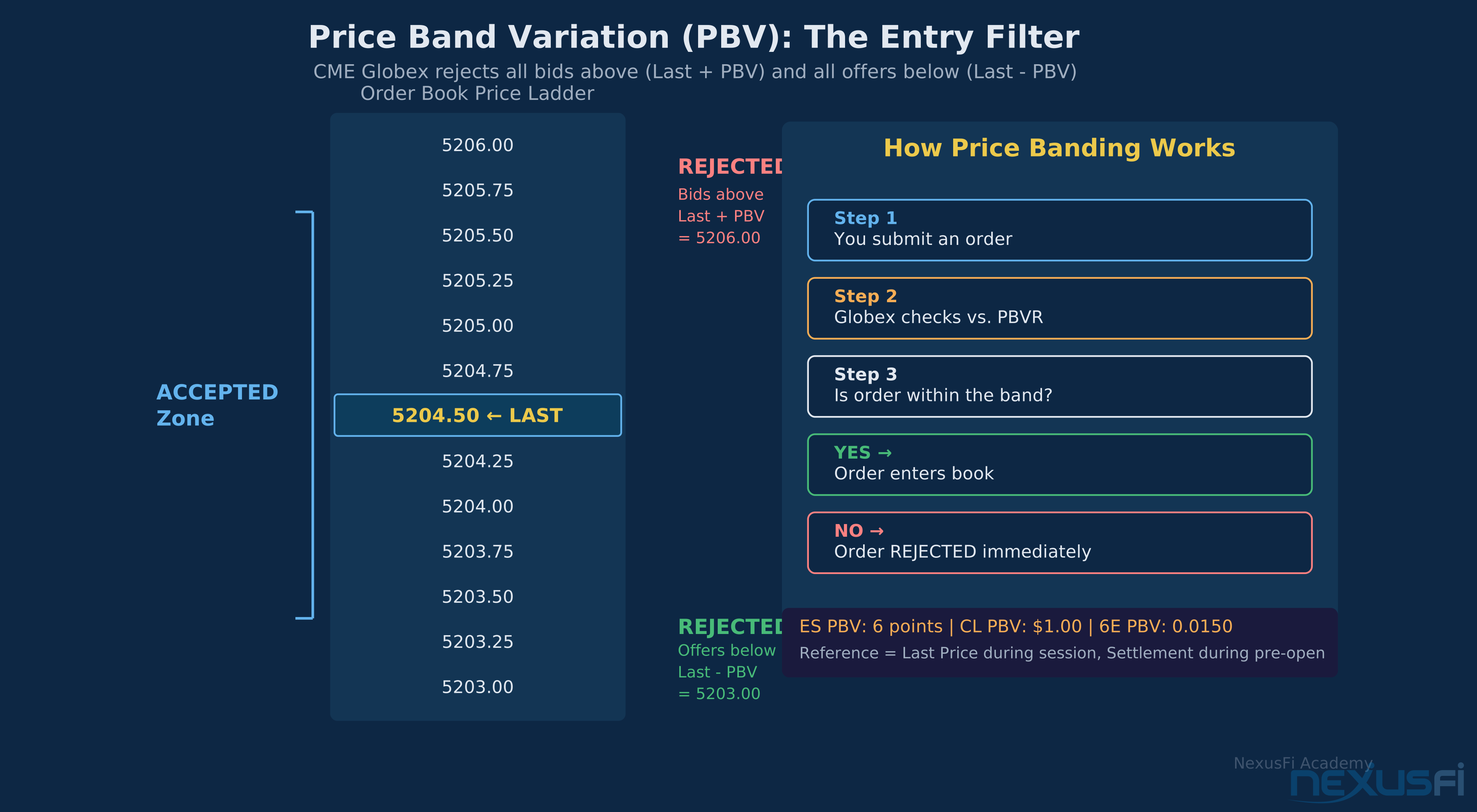
Price Band Variation (PBV): A static, per-product value defining how far from the last traded price CME Globex will accept a new bid or offer. All bids and offers submitted outside this range are rejected outright — they never enter the order book.
Market Order with Protection: On CME Globex, there is no true market order. Every "market order" submitted to Globex is automatically converted to a limit order with a protection limit equal to 50% of the No-Bust Range. If the book doesn't have enough liquidity to fill at that limit price, the remaining quantity rests in the book at the limit price rather than continuing to sweep.
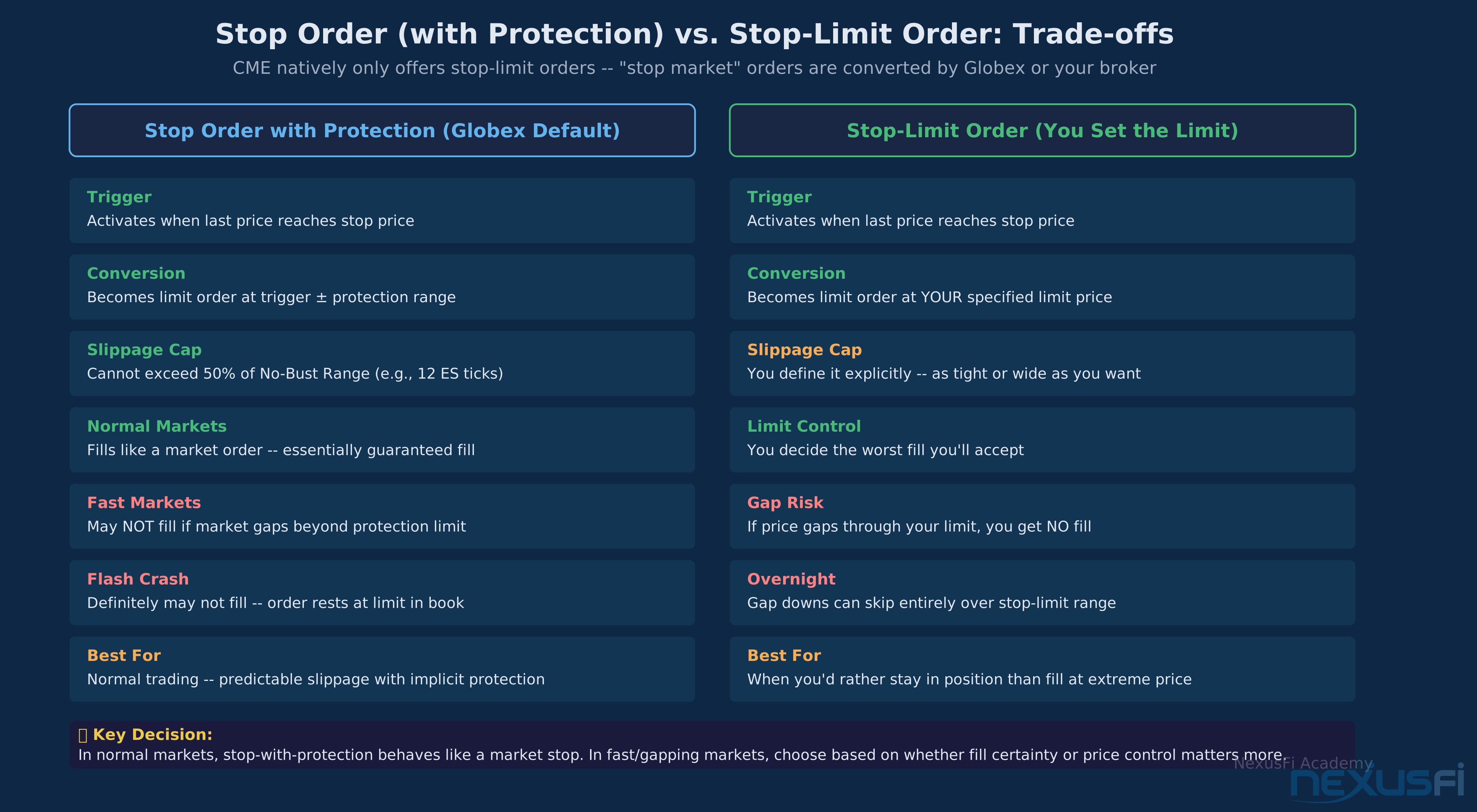
Stop Order with Protection: CME's stop orders work similarly — when triggered, the order enters the book as a limit order bounded by the protection range. Stop orders cannot execute at prices beyond the trigger price plus or minus the protection point value.
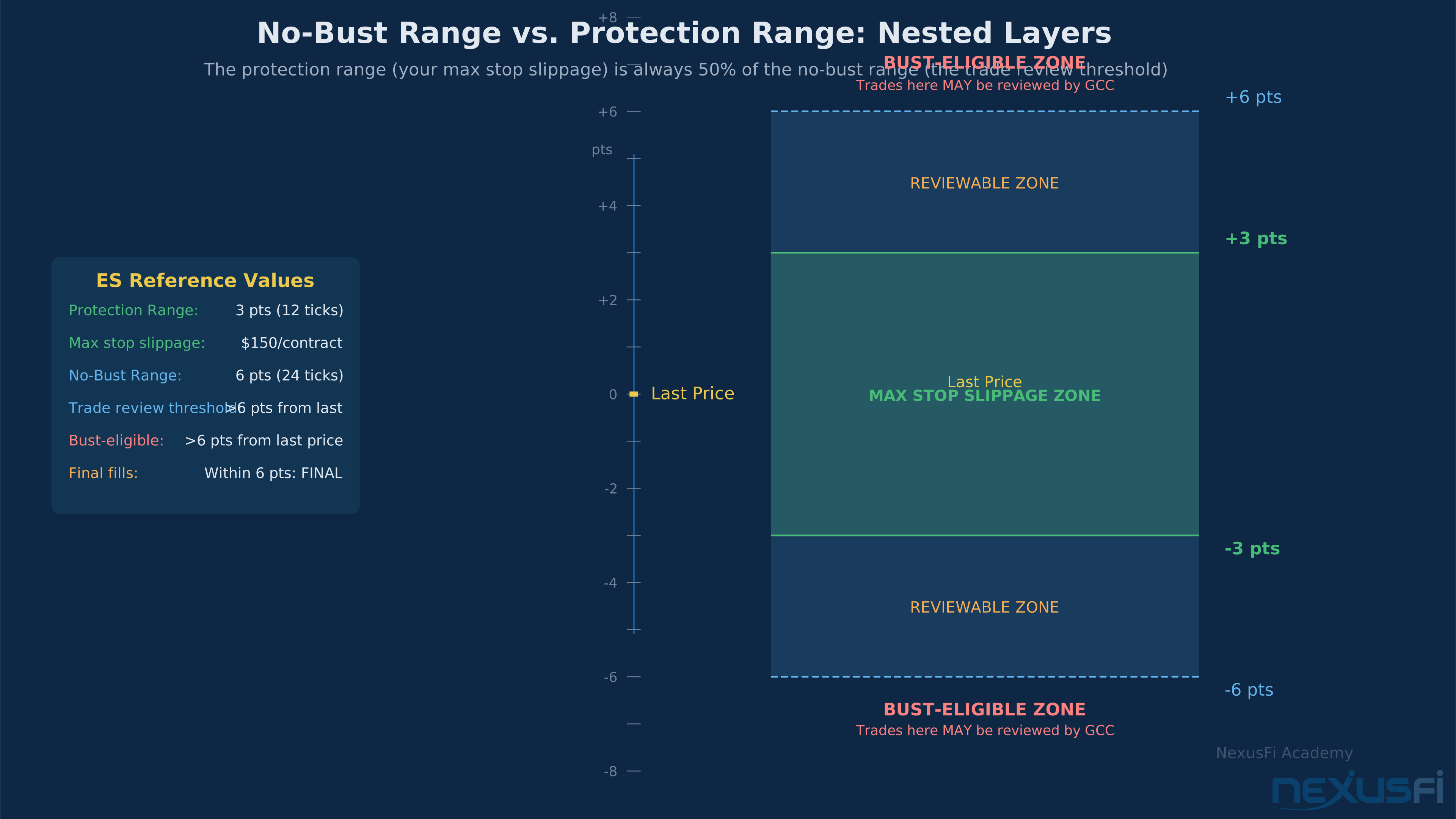
No-Bust Range: A per-product range published by CME. Trades executing within this range are final — they will not be reviewed or cancelled regardless of how bad the fill looks. Trades outside this range may be reviewed and potentially busted by the GCC.
Non-Reviewable Range: Same as No-Bust Range in most CME documentation. The key concept: once a fill executes within this range from the market price at time of execution, that fill stands forever.
Trade Busting: The CME Global Command Center (GCC) can cancel trades that executed outside the non-reviewable range. This is not automatic — it requires a party to file a request, and the GCC exercises discretion.
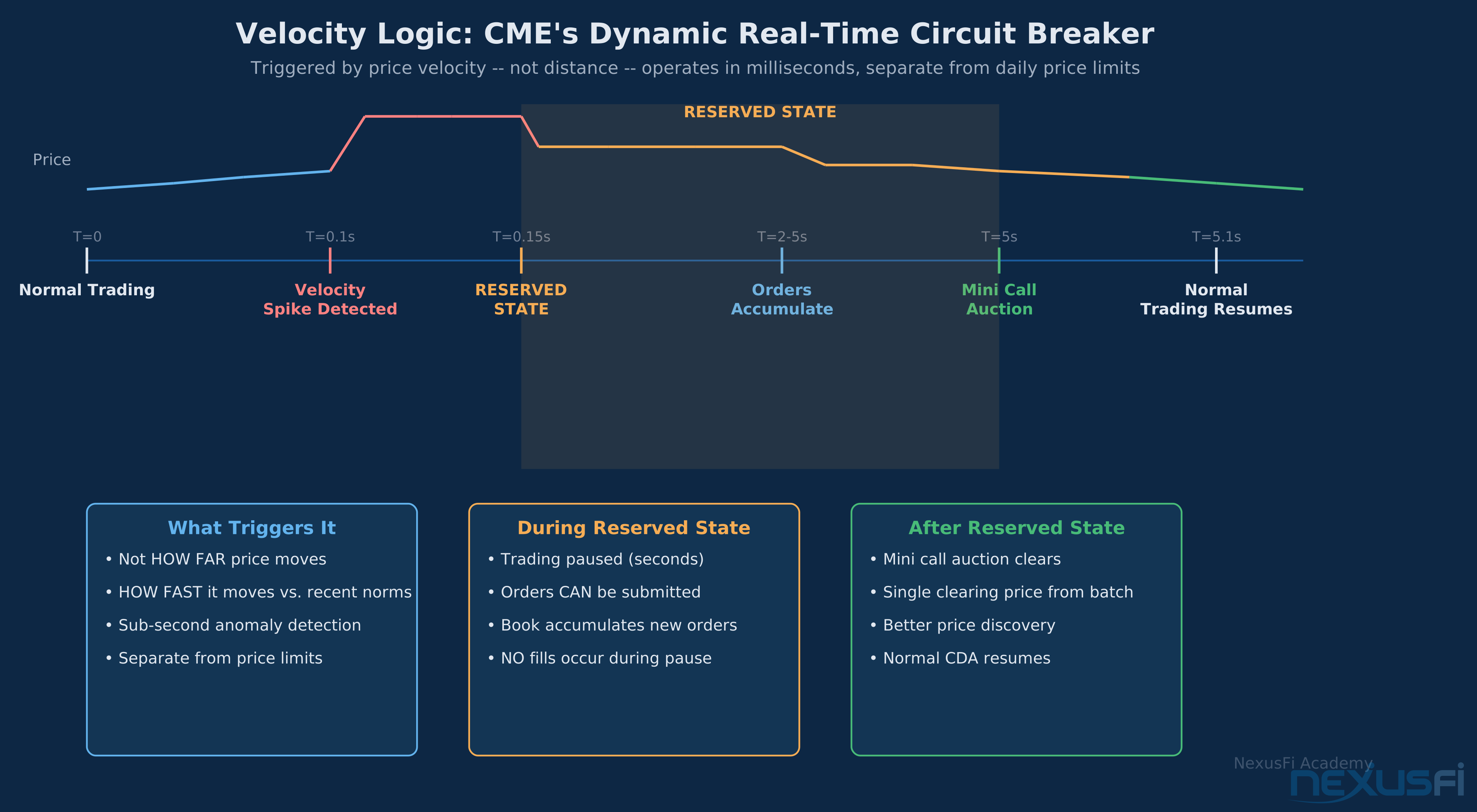
Velocity Logic: CME's dynamic circuit breaker that detects anomalous price velocities in real time. When triggered, trading briefly pauses and the market reopens with a mini call auction.
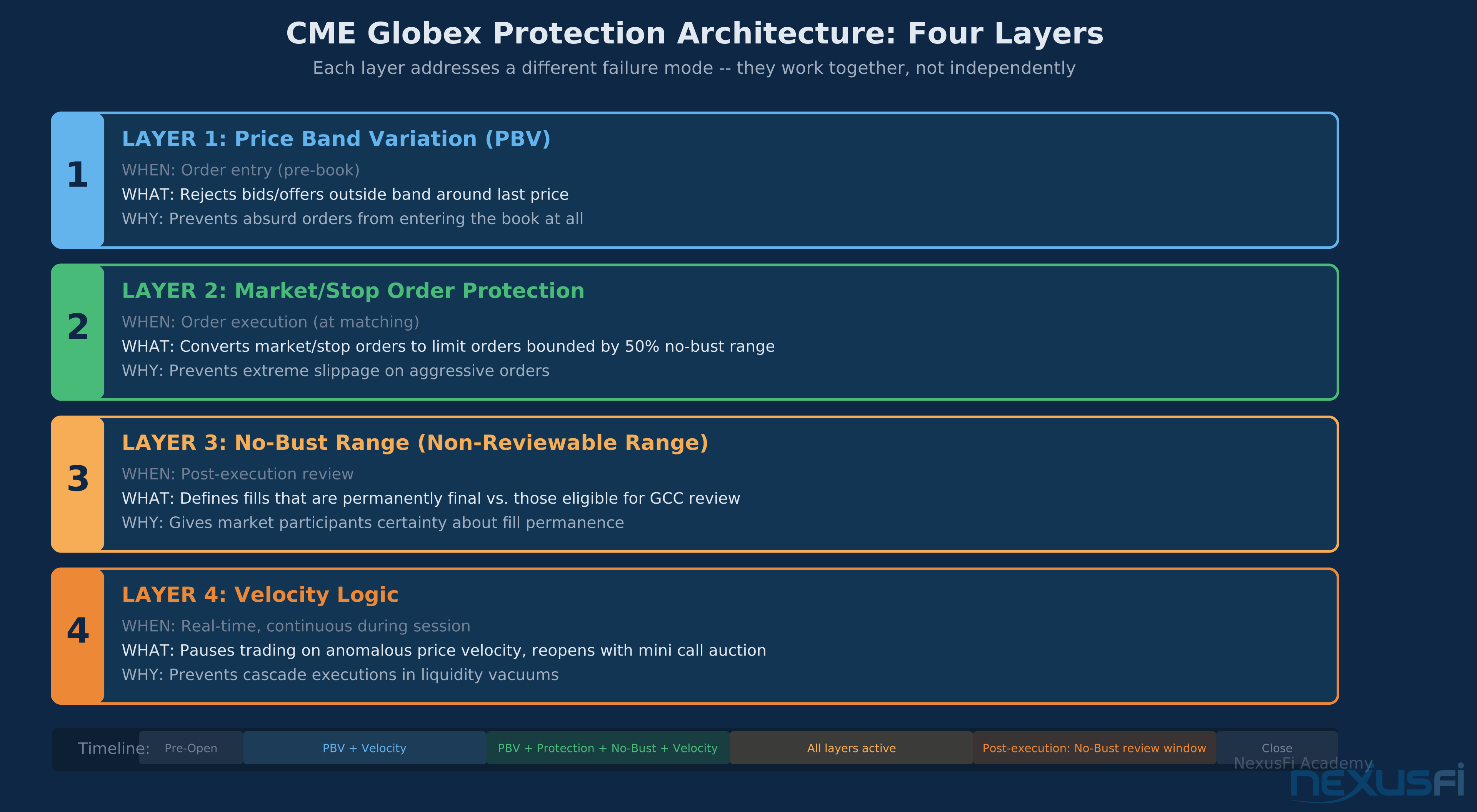
Most traders know vaguely that CME has protections against extreme fills. Few understand the layered architecture: PBV filters at order entry, protection ranges at execution, non-reviewable ranges for post-trade review, and velocity logic for real-time anomaly detection. Each layer serves a different purpose, and understanding all of them changes how you design stops, size positions, and respond when markets move faster than you expected.
Why These Mechanisms Exist #
Before electronic trading, floor brokers manually executed orders. Fat-finger errors existed, but the physical constraint of humans shouting prices in a pit meant genuinely absurd orders were often caught before execution. A floor broker seeing a market order to sell 500 ES at $1 would flag it as obviously erroneous.
Electronic markets removed that human filter. Matching engines are fast and literal — they execute what they receive. During the 2010 Flash Crash, the Dow Jones Industrial Average dropped nearly 1,000 points within minutes, some individual stocks had trades executing at a penny, and stop orders were triggering cascades that amplified the move rather than damping it. Many of the worst trades were later busted, but the damage to market confidence was real.
As @choke35 explained on NexusFi after reviewing the 2010 event:
The post-2010 regulatory response introduced circuit breakers for equities and tightened protection mechanisms for futures. For CME Globex products, the response included stricter enforcement of price banding and clearer documentation of non-reviewable ranges. The current architecture reflects those reforms.
The underlying problem hasn't changed: automated matching engines will execute orders at any price if given the chance. Protection mechanisms exist because pure laissez-faire execution produces outcomes that destroy market confidence and occasionally wipe out accounts that had no rational expectation of catastrophic loss.
Price Band Variation: The Entry Filter #
Price Band Variation is the first protection layer — an entry filter applied at the order book level before any execution occurs. CME Globex maintains a dynamic price band around the last traded price and rejects any bid or offer submitted outside that band.
How the Band Works #
The PBV is a static value that varies by product. CME applies it symmetrically:
- For bids: The band extends upward from the reference price. A bid above (last price + PBV) is rejected.
- For offers: The band extends downward from the reference price. An offer below (last price - PBV) is rejected.
The reference price updates with every trade:
- During trading hours: the last traded price
- During pre-open: the prior day's settlement price
- Once the first Indicative Opening Price (IOP) is established during pre-open: the IOP becomes the reference
@aquarian1 documented this directly from CME's GCC Price Banding page on NexusFi:
For ES (E-mini S&P 500), the PBV has historically been 6 points. That means if ES last traded at 5200.00, any bid above 5206.00 or any offer below 5194.00 is rejected outright by Globex before it ever enters the order book.
Why PBV Matters for Limit Orders #
Most traders think of PBV as irrelevant unless you're placing an absurd order — and that's mostly correct. But PBV becomes operationally relevant in a few situations:
Flash crash scenarios: When price drops rapidly, the PBV band moves with the last price. Stop orders triggering in a fast market generate cascades of limit orders. If those limits can't fill within the protection range, they rest in the book. The PBV band continues moving with price, which means a limit order placed seconds ago may now be outside the PBV.
Pre-open positioning: During the pre-open period, the settlement price serves as the reference. Traders trying to establish large limit orders much above or below settlement may find their orders rejected if they exceed the PBV. This matters for traders who want to position for a large gap open.
Market emergencies: When CME places a market in non-trading mode and then resumes, the Indicative Opening Price (if established) or the last price serves as the reference. The PBV band restarts around whatever price CME uses as the IOP after a halt.
Market Orders with Protection: The Execution Filter #
Here's where the misunderstanding begins for most retail traders: CME Globex does not have true market orders.
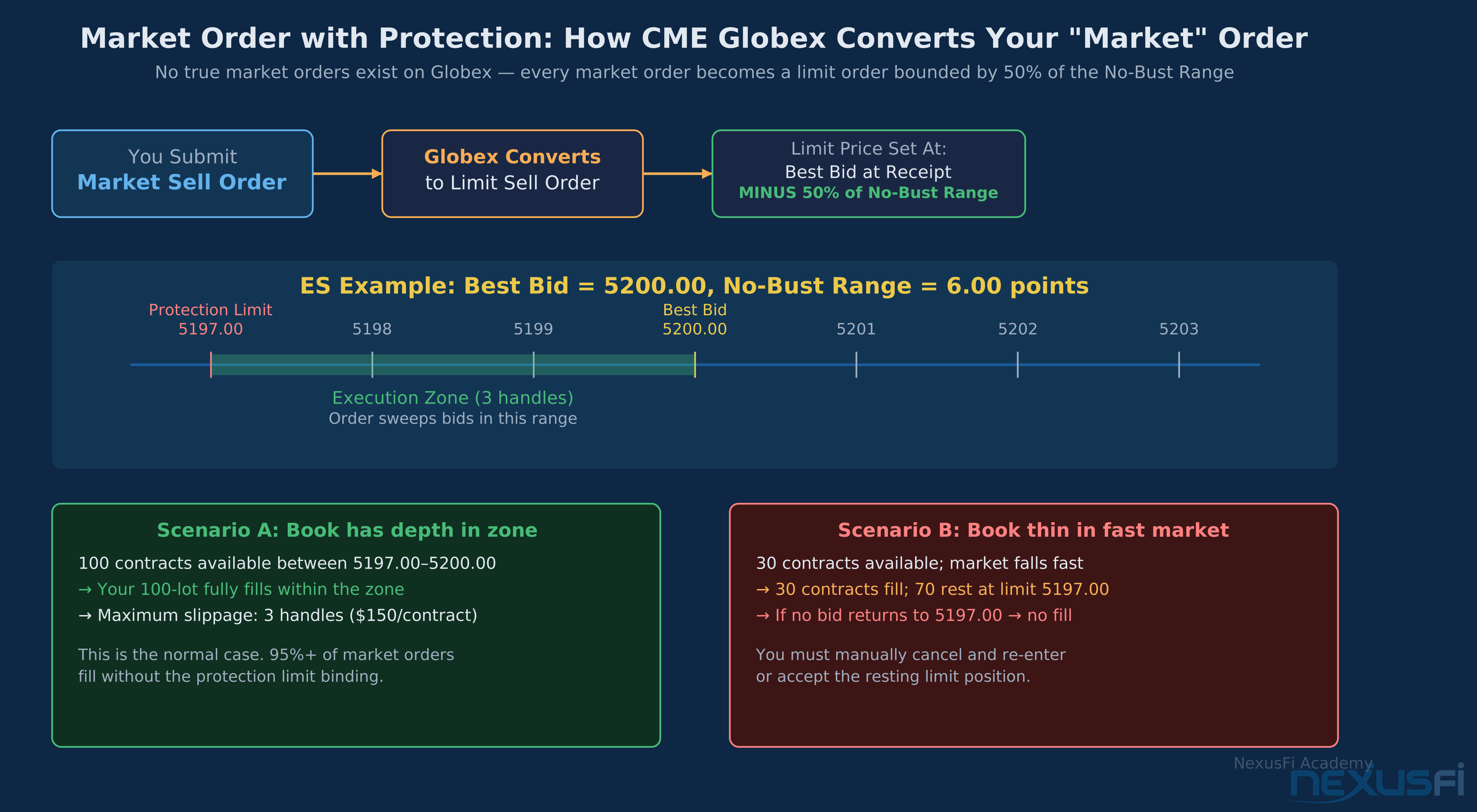
Every order submitted as a market order is automatically converted to a limit order with a protection price. The protection price is defined as 50% of the No-Bust Range for that product. This conversion happens at the matching engine level — your broker may label it a "market order," but Globex treats it as a limit order with a bounded execution range.
@Fat Tails explained this precisely on NexusFi:
The Mechanics in Detail #
When you send a market sell order to ES:
- Your broker sends a market order to Globex
- Globex converts it: The order becomes a limit sell order with a limit price = (best bid at time of receipt) minus (50% of No-Bust Range)
- Globex sweeps the book: Starting at the best bid, the order fills against available size at successive price levels
- If the book runs out before the limit: The remaining unfilled quantity rests as a limit sell order at the protection limit price
For ES with a 6-point No-Bust Range and a best bid of 5200.00, your "market sell" becomes a limit sell at 5197.00. If the book can fill you completely between 5200.00 and 5197.00, you're done. If there's only 50 contracts between 5200.00 and 5197.01, and you sent 100 contracts, the remaining 50 rest as a limit sell at 5197.00.
This has a critical implication: in a fast market, your market sell may not fully execute immediately. The unfilled portion sits at 5197.00 waiting for a buyer. If the market continues to fall, those contracts don't chase it — they wait. This is the mechanism that prevented 1987-style "sell at any price" cascades from fully manifesting in electronic futures.
@Fat Tails explained the per-product variation for CL:
Stop Orders with Protection: The Trigger Mechanism #
Stop orders on CME Globex have a specific execution architecture that most traders don't fully understand until they get a confusing fill — or no fill — during a fast market.
How Stop with Protection Works #
When you submit a stop order on Globex:
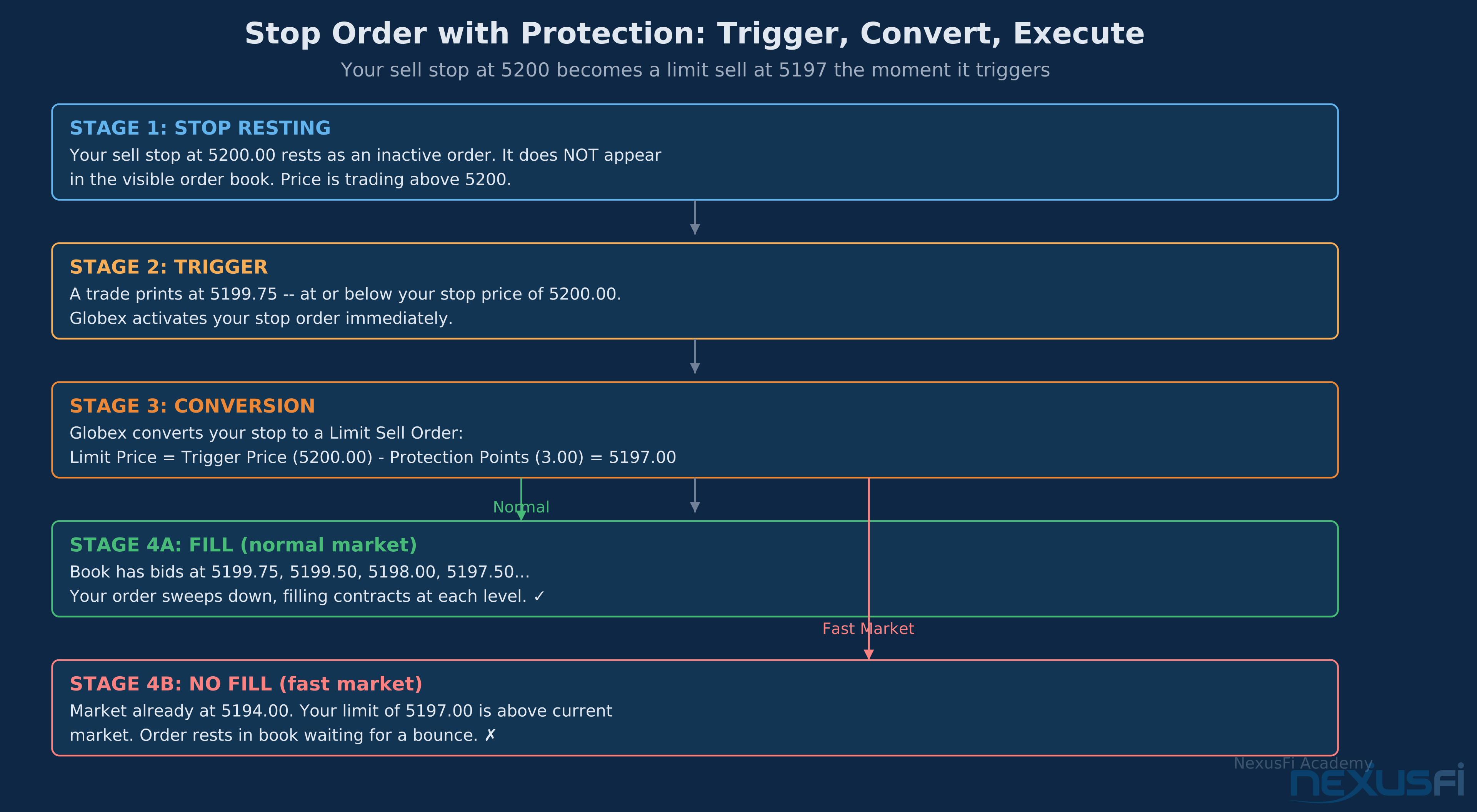
- The stop rests as an inactive order — it does not appear in the visible order book
- Trigger condition: When the market trades at or through your stop price, the stop activates
- Conversion: The stop activates as a market order with protection, entering the book as a limit order
- Execution: For a sell stop, the limit price = trigger price minus protection points. The order sweeps the book from the trigger price down to that limit.
- If the book runs out: Remaining quantity rests at the limit price
@tpredictor provided the authoritative description from CME documentation:
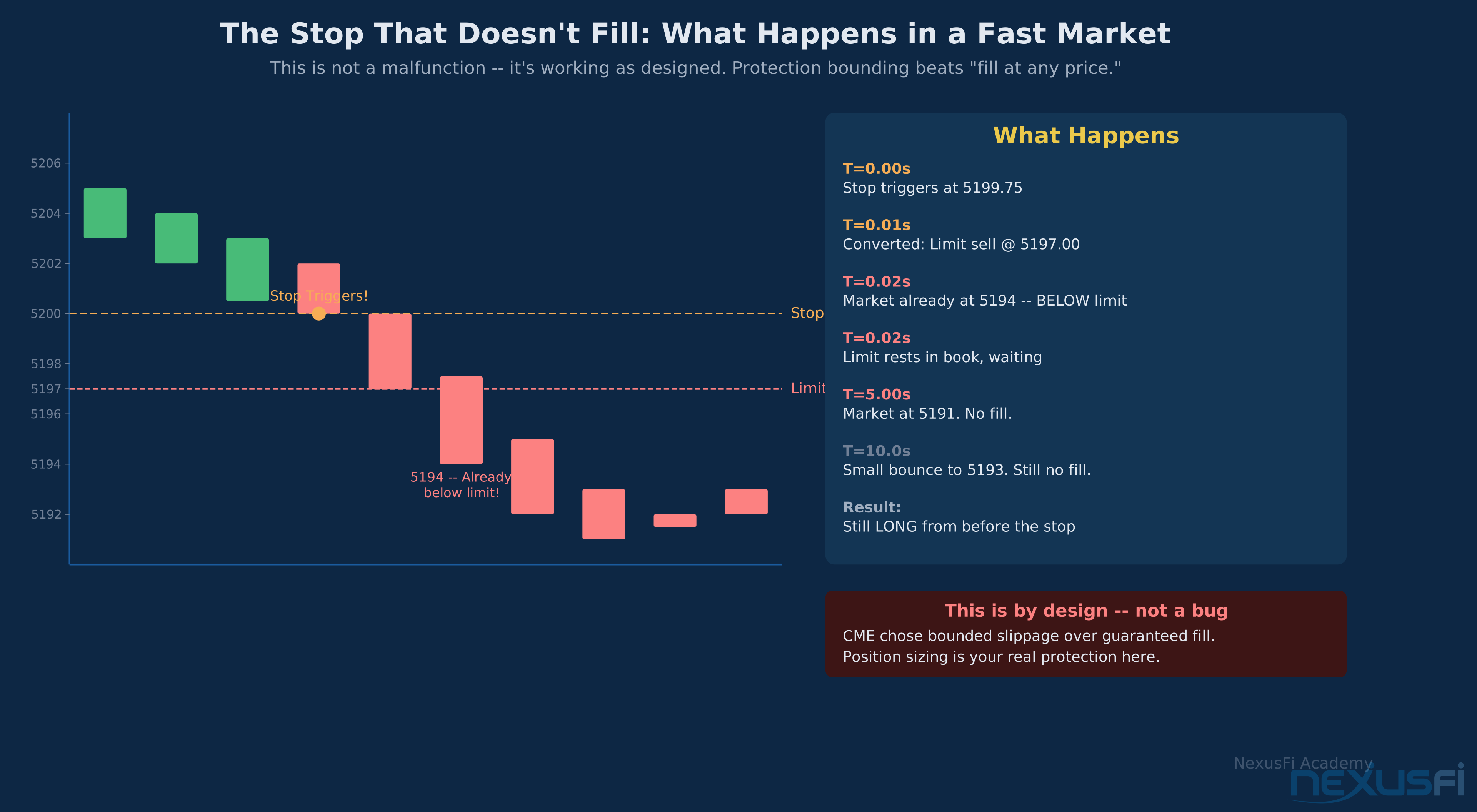
The Critical Risk: Stops That Don't Fill #
The protection mechanism creates a scenario that many traders find alarming when they first encounter it. Consider this:
- You're long ES and have a sell stop at 5200.00
- The market gaps down, trading at 5199.00, 5197.00, 5195.00 in rapid succession
- Your stop triggers at 5199.00 (first print at or below 5200.00)
- Your sell stop converts to a limit sell at 5196.00 (3-handle protection)
- But the market is already trading at 5195.00 — below your limit price
- Your order rests in the book at 5196.00, waiting for a buyer
If the market doesn't bounce back to 5196.00, you remain long while price continues to fall. This is the documented downside of stop protection: in exchange for preventing extreme fills, you risk no fill at all in a genuine crash.
@josh articulated this consequence directly on NexusFi:
The Explicit Protection Range #
@josh also documented the exact protection range for ES:
12 ticks on ES is 3 points — $150 per contract maximum stop slippage in normal conditions. This bounds the downside. But it also creates the no-fill scenario above.
Stop-Limit Orders: The Alternative #
A stop-limit order gives you direct control over the limit price — you specify both the trigger price and the exact limit price. This gives more control but introduces a different risk: in a gap, if price skips over your limit price before you're filled, you don't execute.
@Fat Tails explained the conversion process from CME documentation:
The practical implication: if you submit a "stop market" order through your broker for a CME product, the broker's platform may route it as a stop-limit already (using the Globex protection range as the limit offset), or the broker may send it to Globex as a market-triggered stop, which Globex then converts. The end result is the same protection behavior.
The No-Bust Range: What Can and Cannot Be Cancelled #
After execution, a second layer of protection applies: the No-Bust Range (also called the Non-Reviewable Range). This defines the range within which trades will not be cancelled regardless of circumstances.
How No-Bust Ranges Work #
The No-Bust Range is a per-product price distance published by CME. Trades executing within this distance from the prevailing market price at the time of execution are final:
- Trade is within No-Bust Range: Trade stands. Period. No review, no cancellation.
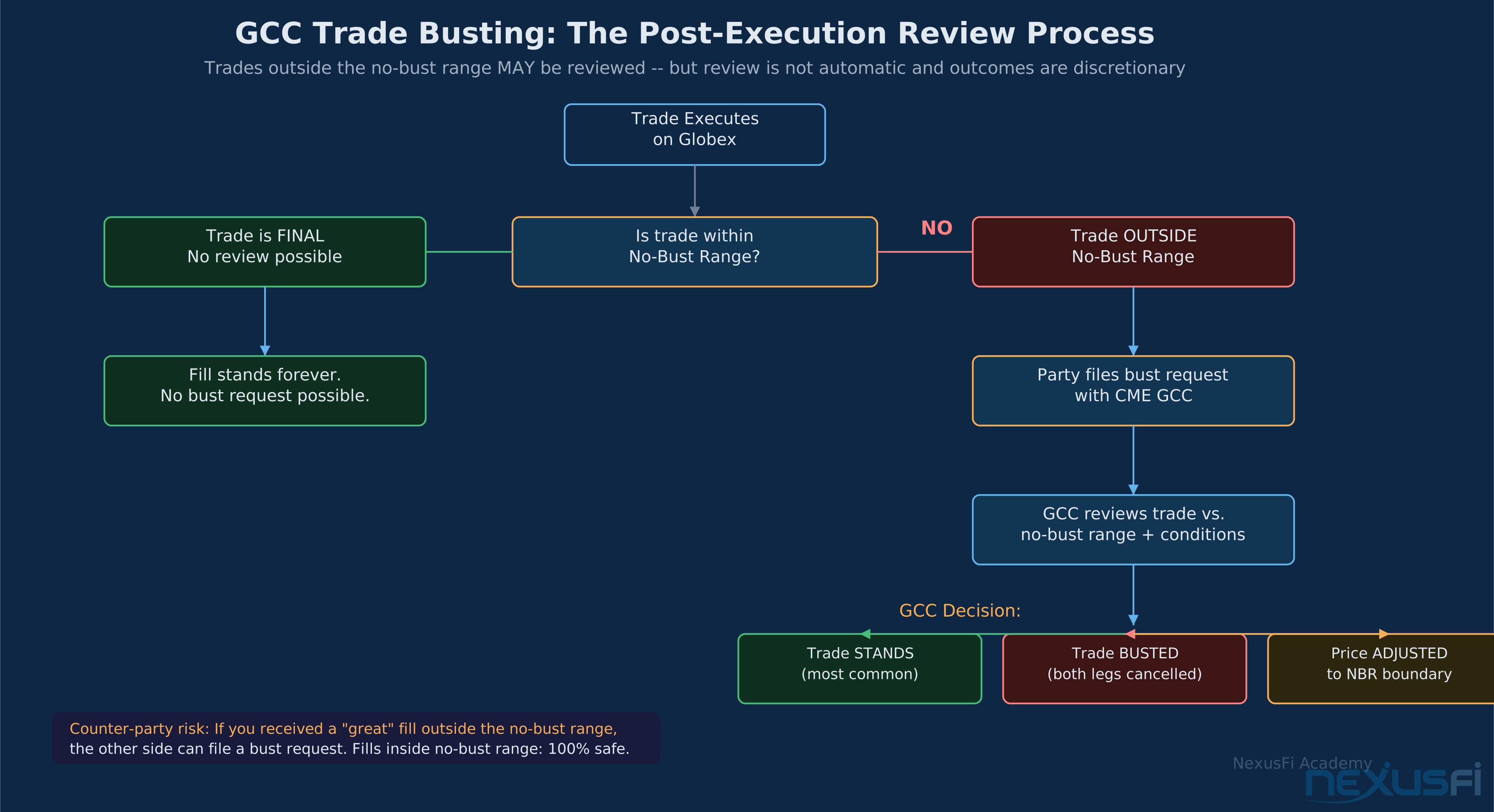
- Trade is outside No-Bust Range: Trade may be reviewed by the CME GCC upon request. The GCC has discretion to bust or adjust the trade price.
For ES, the historical No-Bust Range has been 6.00 points (24 ticks). A fill that occurs more than 6 points from the prevailing market price at the time of execution may be reviewed. This number changes with market conditions — always verify current values on CME's published product reference sheet.
The GCC Review Process #
The CME Global Command Center (GCC) is the operational team that monitors Globex trading in real time and handles trade bust requests. The process:
- A party files a bust request — typically within minutes of the trade
- GCC reviews the trade against the no-bust range and prevailing market conditions
- GCC has three options: Allow the trade to stand, bust the trade (cancel both legs), or adjust the trade price to the edge of the non-reviewable range
- Decision is final: The GCC's determination is not easily appealed
@josh described this process on NexusFi:
The Risk to You as a Counter-Party #
Here's the scenario most traders don't anticipate: you're sitting with a limit buy in the book. An algorithmic system fires a fat-finger sell order, sweeping the book far outside the no-bust range. You get filled at a spectacular price — 10 handles below recent trading. The algo firm files a bust request. CME GCC reviews and busts the trade. Your fill disappears.
This creates real problems:
- If you immediately traded against that fill (e.g., selling to lock in the profit), you now have an open position you didn't intend
- Your account may be briefly confused about your actual position until the bust is processed
The protection against this scenario is the no-bust range itself. Trades within the no-bust range are final — you keep them regardless of what the other party thinks. Trades outside it can be reviewed. This creates a strong incentive to place limit orders within the no-bust range of the prevailing price — outside it, your fill may not be permanent.
Velocity Logic: Dynamic Real-Time Protection #
Beyond the order-level protections, CME operates a systemic protection layer called Velocity Logic — a dynamic circuit breaker that detects anomalous price velocity in real time and responds by pausing trading briefly.
What Velocity Logic Detects #
Velocity Logic is not triggered by how far price moves — it's triggered by how fast it moves relative to recent norms. The mechanism monitors the rate of price change and flags situations where price movement exceeds the expected statistical range for the current conditions.
In a liquid, normally functioning market, price moves of several ticks per second happen regularly on news. Velocity Logic doesn't trigger on that. What it detects is when price moves that would normally take minutes happen in milliseconds — the signature of a genuine liquidity event, not normal trading.
When Velocity Logic triggers:
- Trading pauses briefly: The affected product enters a "reserved" state for a few seconds
- Orders can still be submitted: Participants can enter orders during the reserved period
- Mini call auction: When trading resumes, accumulated orders from the reserved period execute as a batch at a single clearing price
- Normal CDA resumes: After the clearing print, continuous auction trading continues
Why Velocity Logic Matters for Stops #
If you have stop orders pending when Velocity Logic triggers, your stops may not execute until after the reserved period ends. When trading resumes with the mini call auction, your stop activates in the batch along with all other pending orders.
The mini call auction clearing price may be better or worse than your stop price depending on whether price recovered during the reserved period. Velocity Logic can sometimes protect stop orders from the most extreme execution prices by pausing trading before the worst prints occur. The downside: if you needed to exit a position immediately and your stop was your exit mechanism, Velocity Logic delays that exit by a few seconds.
Velocity Logic vs. Circuit Breakers #
Velocity Logic operates on a much shorter timescale than exchange-wide circuit breakers. Circuit breakers (price limits) halt trading entirely when price moves more than a fixed percentage from the prior settlement — these are daily product-level limits and coordinated market-wide halts. Velocity Logic operates within the circuit breaker parameters — it's a fine-grained, sub-second detection mechanism for localized liquidity events. A product can trigger Velocity Logic multiple times in a session without triggering a price limit halt.
Product-Specific Reference: Protection Values #
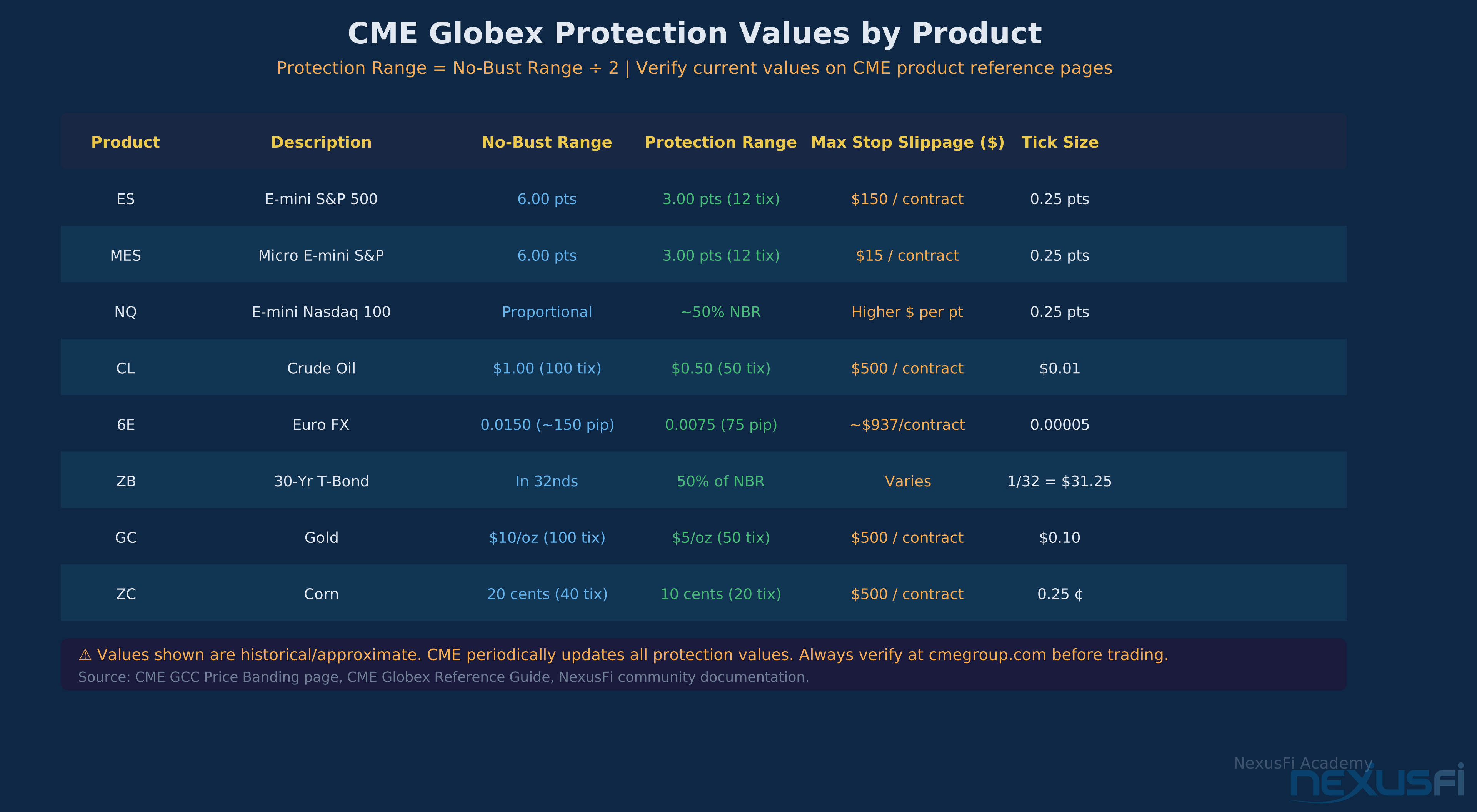
The specific protection values vary substantially by product and are updated periodically by CME. Always verify current values on CME's published product reference sheet before relying on them for position sizing.
ES (E-mini S&P 500)
- No-Bust Range: 6.00 points (24 ticks)
- Market/Stop Protection Range: 3.00 points (12 ticks) — 50% of no-bust range
- Price Band Variation: 6.00 points
- Dollar value of protection range: $150 per contract maximum stop slippage
NQ (E-mini Nasdaq 100)
- No-Bust Range: Larger in nominal points given NQ's higher dollar value per point
- Market/Stop Protection Range: 50% of product-specific no-bust range
CL (Crude Oil)
- No-Bust Range: $1.00 (100 ticks)
- Market/Stop Protection Range: $0.50 (50 ticks at $10/tick)
- Dollar value: $500 per contract maximum stop slippage from the protection range
6E (Euro Currency Futures)
- No-Bust Range: 0.0150 (approximately 150 pips)
- Market/Stop Protection Range: 0.0075 (75 pips)
Key Principle: The protection range is always 50% of the no-bust range. If you know one, you know the other. The no-bust range is the published number — the protection range is derived from it.
For current values, the CME GCC Price Banding page under CME's developer/iLink documentation lists per-product PBV and no-bust range values. The CME Globex Reference Guide (published periodically) contains per-product no-bust ranges in tabular form.
How This Changes How You Trade #
Understanding the protection mechanism architecture has direct, practical implications for trade design.
Stops in Fast Markets #
The standard advice to "use stop orders to limit losses" assumes your stop will execute at or near the stop price. Price banding and stop protection mechanics introduce conditions where that assumption fails:
Normal conditions: Your stop triggers, converts to a limit order within 12 ticks (ES), sweeps available liquidity, and fills. Maximum slippage from stop price is 12 ticks. This is the expected case for the vast majority of stop executions.
Fast market conditions: Your stop triggers during a sharp selloff. The conversion limit price is 12 ticks below trigger. But by the time the conversion executes, the book has already moved 20 ticks below your trigger. Your limit sits in the book 8 ticks above current market. You're still long.
Flash crash conditions: Your stop triggers, the conversion limit is 12 ticks below trigger, but market has moved 50 ticks below. Your limit sits well above market. You're long through the crash. If the market recovers to your limit price, you get filled. If it doesn't recover, you stay long until you manually exit.
This is not a bug. CME explicitly chose to bound stop slippage at the expense of guaranteed execution. The alternative — stops executing at any price — produced the 2010 Flash Crash dynamics. The practical response: don't treat stop orders as guaranteed exits in crisis scenarios. For catastrophic risk management, position sizing matters more than stop placement. A position sized so that a 100-point ES move doesn't destroy your account is more resilient than a tightly stopped position that may not execute in a crash.
Market Order Execution Expectations #
In liquid conditions for ES/NQ during RTH, market orders execute basically like true market orders. The protection range (3 handles on ES) is never actually binding because the book has more than enough depth within 3 handles to fill any reasonable retail order.
The protection mechanism bites in:
- Pre-open and overnight sessions: Thinner books mean the protection limit can be binding for larger orders
- Major news events: Immediately post-announcement, the book can empty several handles before bids return. Market orders during the first 0.5 seconds after a major release may not fully fill within the protection range
- Micro futures: MES, MNQ, MYM have the same protection mechanics as their full-size counterparts but smaller dollar consequences
Practical Stop Order Design #
Given the asymmetry — bounded slippage vs. risk of no fill — consider:
Use stop-limit orders when fill certainty matters less than price: A stop-limit with a limit 5 handles below your trigger gives you explicit control over the worst fill you'll accept. Below that limit, you'd rather stay long than take the fill.
Use stop orders (with protection) when fill certainty matters more: For normal market conditions, stop orders fill efficiently within the protection range. In 95%+ of cases, this is indistinguishable from a true stop market order.
For catastrophic protection, size appropriately: If your biggest fear is a flash crash where ES drops 150 points overnight, no stop order architecture protects you reliably. OTM put options on ES or SPY provide convex payoffs that don't depend on order execution mechanics.
Check protection values before trading a new product: Before trading any CME Globex product you haven't traded before, look up its no-bust range and protection range. The protection range bounds your maximum stop slippage — and so the worst-case scenario for any single stop order execution.
Summary #
Price banding and market protection mechanisms on CME Globex operate in three distinct layers:
Pre-execution (PBV): Orders submitted outside the Price Band Variation range are rejected before reaching the order book. Reference price updates with every trade during session, uses settlement price during pre-open.
At execution (Protection Ranges): Market orders and stop orders execute within a bounded range — the No-Bust Range divided by two. No CME order can move price beyond this range in a single execution. The "Market Order with Protection" and "Stop with Protection" architecture means maximum ES stop slippage is 12 ticks. It also means your stop may not fill at all if the market gaps beyond the protection limit.
Post-execution (No-Bust Range): Trades outside the No-Bust Range can be reviewed and potentially busted by CME's GCC. Trades inside the No-Bust Range are final. Within the no-bust range, your fill stands forever regardless of how bad it looks.
Real-time systemic (Velocity Logic): CME's dynamic circuit breaker detects anomalous price velocity and briefly pauses trading, reopening with a mini call auction. This operates continuously during the session and is separate from daily price limits and market-wide circuit breakers.
Together, these layers address the core problem of electronic futures markets: that automated matching engines will execute orders at any price unless explicitly constrained. The constraints don't eliminate risk — they bound and structure it in ways that make futures markets viable for consistent trading over long periods.
The practical upshot for your trading: know the protection ranges for the products you trade, size positions so that protection-range slippage is within your risk parameters, don't treat stops as guaranteed exits in fast markets, and understand that a stop order that doesn't fill in a crash is doing exactly what it was designed to do.
Knowledge Map
Go Deeper
Build on this knowledgeCitations
- — Limit Orders (2010) 👍 3“CME limits slippage to 50% of the No Bust Range. A market sell order is automatically transformed to a limit order with a limit price = current best bid - 3.00 points. For ES the No Bust Range is 6.00 points.”
- — Limit Orders (2010) 👍 1“For CME Globex, all market orders are limit orders, and all stop orders are stop limit orders. ES has a no bust range of 6.00 points. If you enter a market order, slippage is automatically limited to half of the no bust range.”
- — Managing risk with ES trading (2020) 👍 3“The CME has no such thing as a true 'buy/sell at any stop price' order. CME's stop order are actually 'stop with protection.' There is a protection band, and for the ES it is +/- 3 handles.”
- — Buy stop not filled? (2013) 👍 3“CME does not natively support stop market orders. Stop with Protection orders are filled within a predefined range of prices (the protected range), equal to the trigger price plus or minus 50% of the No Bust range.”
- — Stop loss order during a precipitous decline (2017) 👍 1“Stop orders with protection prevent stop orders from being executed at extreme prices. The order enters the order book as a market order with the protection price limit equal to the trigger price plus or minus the pre-defined protection point range.”
- — Sierra vs. Ninja: why I chose... (2012) 👍 3“The CME does not have a 'stop market' order, they have a 'stop with protection.' For ES it is 12 ticks. Non-reviewable range is 24 ticks, and the limit given to the stop is half of that.”
- — Sell Stop limit order (2010) 👍 1“The no-bust range for CL is $1.00. The exchange automatically applies half of the no-bust range as an offset to all market orders and calls this market order with protection.”
- — Trading Journal (2013)“Futures Price Banding: A Price Band Variation (PBV) is a static value that varies by product. It is symmetrically applied to both the upside (for bids) and downside (for offers). The CME Globex platform rejects all bids and offers outside the PBVR.”
- — Question on CME Price Banding? (2016) 👍 2“After the 2010 flash crash when the futures were battered and stocks were ripped... they just widened the spread -- in extreme cases down to the stub of $0.01 in the case of Accenture during the flash crash. Many of these trades were annulled later.”
- — The CL Crude-analysis Thread (2019) 👍 3“A large sell order swept through 46 price levels -- CME changes arbitrarily the stop market order to a limit order further down. The distance is determined by CME according to the product. They call it Stop Orders with Protection.”