



Settlement Prices and Daily Mark-to-Market: How Your Futures Account Balances Every Night
Overview #
Every futures position gets repriced at the end of every trading day. The exchange doesn't care what you paid — it cares what the contract is worth right now, at the official settlement price. That daily repricing is called mark-to-market, and it's the mechanism that moves cash in and out of your account every single night.
Most traders know their P&L changes overnight. Fewer understand exactly why, how the settlement price gets calculated, or what happens to the money. This article breaks down the entire process — from how CME determines settlement prices to how your broker sweeps variation margin — so you know exactly what's happening to your account every evening.
Key Concepts #
Settlement Price: The official price assigned to a futures contract at the end of each trading day. This is NOT the last price traded. It's a calculated value — typically a volume-weighted average of trades during a specific settlement window — determined by the exchange. Your daily P&L, margin requirements, and account equity all hinge on this number.
Mark-to-Market (MTM): The process of revaluing every open futures position to the current settlement price at the end of each trading day. If you bought ES at 5800 and today's settlement is 5815, your account gets credited with 15 points x $50/point = $750. Tomorrow, the process starts fresh from 5815 — not from your original entry.
Variation Margin: The actual cash that moves between accounts as a result of mark-to-market. Winners receive variation margin. Losers pay it. This isn't theoretical P&L sitting in a ledger — it's real money moving through the clearinghouse every night.
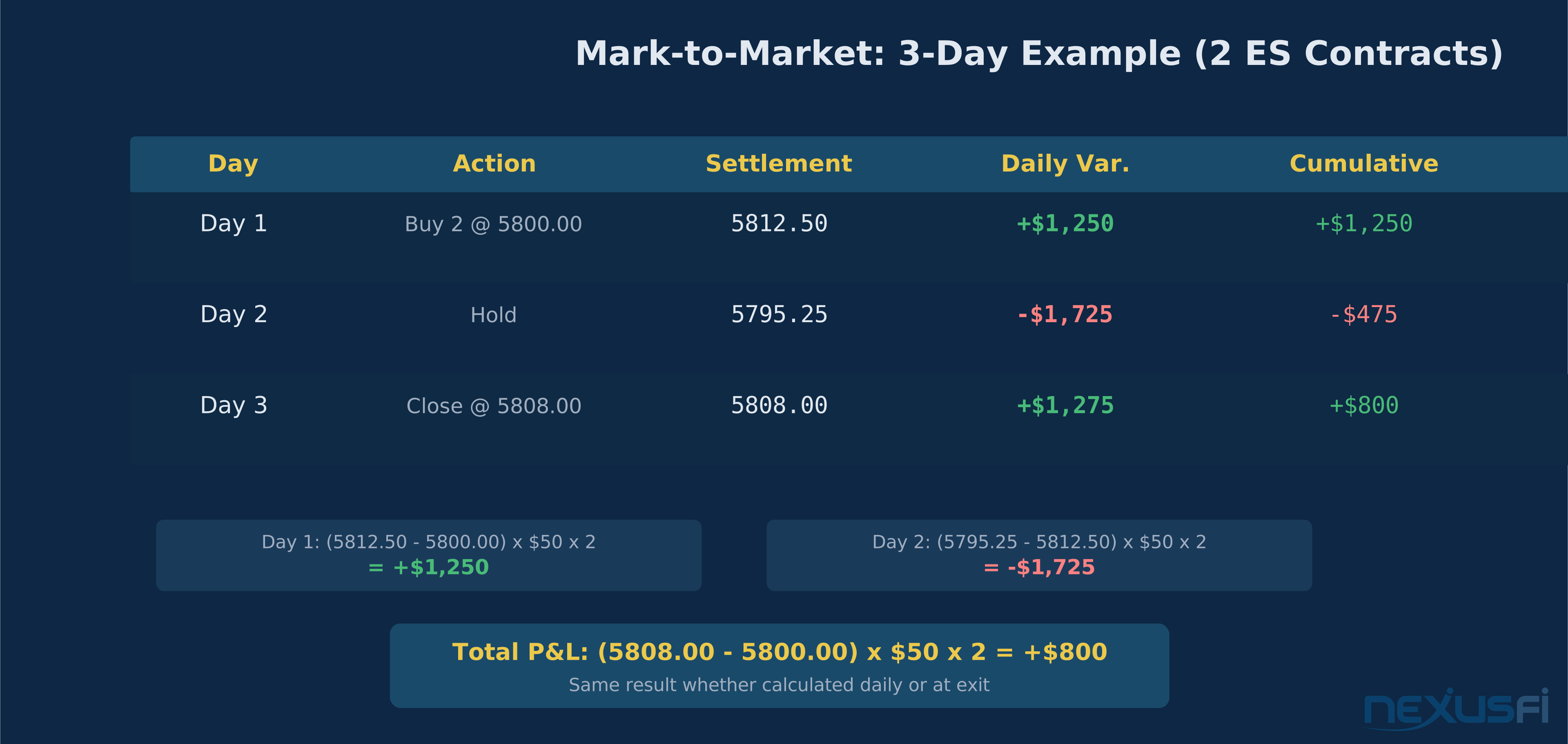
Settlement Period: The specific time window during which the exchange calculates the settlement price. For CME equity index futures, this is the last minute before the cash session close at 4:00 PM ET. Different product groups use different windows and calculation methods.
Initial Margin: The deposit required to open a futures position. Think of it as a performance bond, not a down payment. The exchange sets minimum levels. Your broker can require more, but never less.
Maintenance Margin: The minimum equity you must maintain in your account to keep a position open. Fall below this level and you get a margin call — deposit more funds or get liquidated. The settlement price determines whether you're above or below this threshold.
How Exchanges Calculate Settlement Prices #
Here's where it gets interesting. The settlement price isn't just the last trade of the day. Each exchange — and often each product group within an exchange — uses its own settlement procedure.
CME Equity Index Futures (ES, NQ, YM, RTY) #
For S&P 500 and NASDAQ futures, the settlement price of the lead month contract is the midpoint of the closing range determined based on trading activity during the settlement window. As @Fat Tails documented in a [detailed thread on CME settlement procedures] [1], the CME publishes specific settlement procedure documents for each product group.
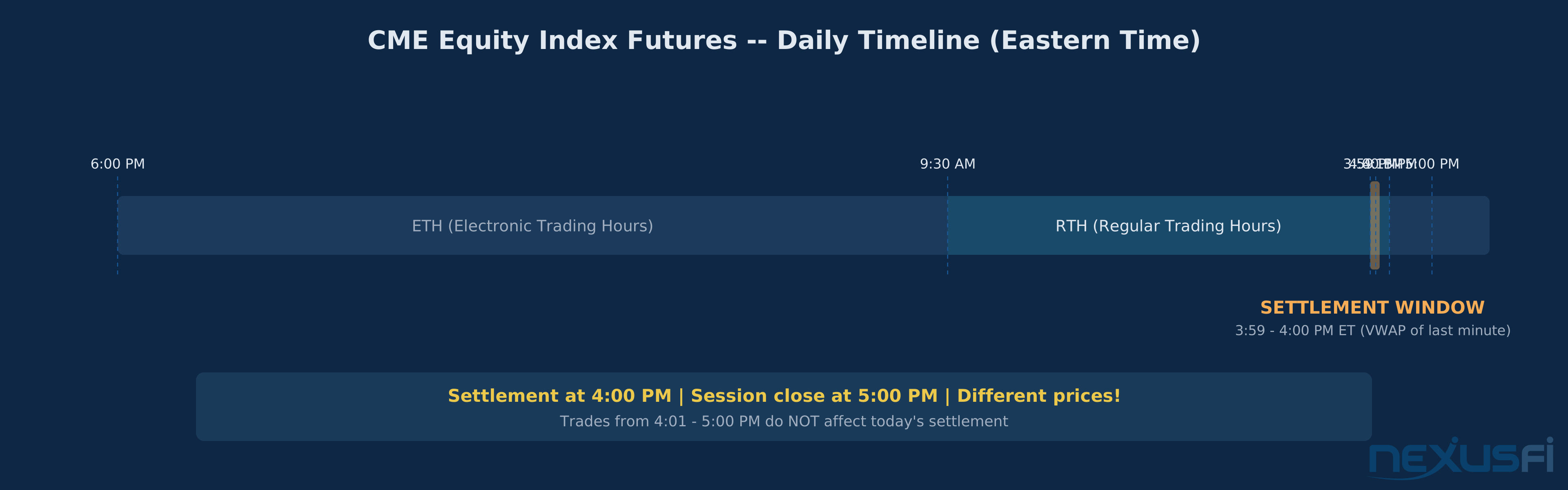
The settlement window for equity index futures is the last minute before the cash session close at 4:00 PM ET. As @tr8er clarified in a [post explaining the difference between close and settlement] [2]: "The daily close is the last tick of the current day at 1700 EST. The settlement price is a VWAP of the last minute before the cash-session close (1600 EST)."
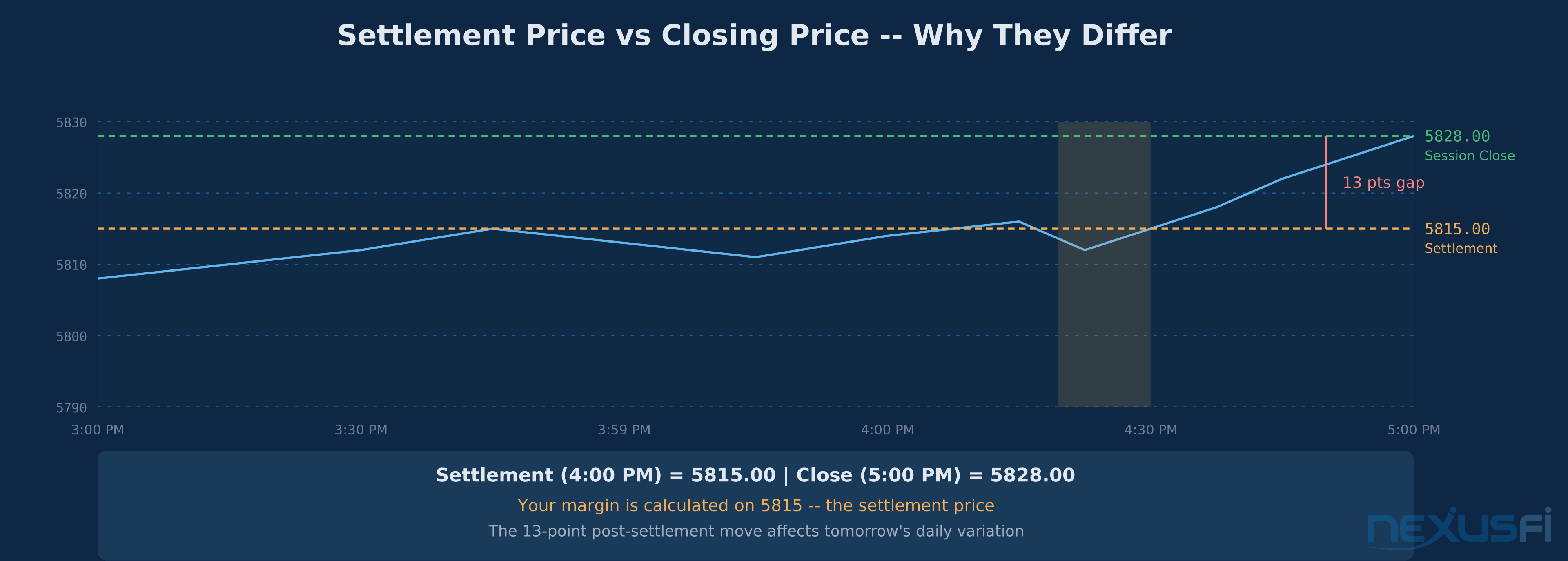
That distinction matters. The session runs until 5:00 PM ET, but the settlement price gets determined an hour earlier at 4:00 PM ET. Trades from 4:01 PM to 5:00 PM don't affect today's settlement — they're part of the extended session that carries into tomorrow.
Historical note: before November 2012, equity index futures had a 15-minute break at 4:15 PM ET, and the settlement price was calculated in the last minute before that break. When CME eliminated the break, the settlement window shifted to align with the cash market close at 4:00 PM ET.
Energy and Agricultural Futures #
Energy futures (CL, NG) and agricultural products (corn, wheat, soybeans) use different settlement windows that align with their respective pit close times — a legacy of the open outcry era. For crude oil, the settlement period is the last two minutes of the NYMEX trading session. The exchange calculates a weighted average of trades during that window.
Treasury Futures #
Bond futures (ZB, ZN, ZF, ZT) settle based on the closing range during the last minute of the designated settlement window, which aligns with the CBOT bond pit close. Because treasury futures are among the most liquid products globally, the settlement price is generally very close to the last traded price — but they're not always identical.
What Happens When There Are No Trades #
On low-volume contracts or during holidays, the settlement window might contain zero trades. In that case, the exchange uses alternative procedures: the midpoint of the closing bid-ask spread, a spread relationship to a more liquid contract, or a committee determination. As @Fat Tails noted in a [post about daily settlement] [3]: "There are 6 days per year where no settlement price is determined" for certain contracts, and settlement procedures vary based on whether it's a holiday session, early close, or normal session.
Settlement Price vs Closing Price -- The Difference That Confuses Everyone #
This is the single most common confusion in futures data. Settlement price and closing price are different numbers, and the gap between them can be meaningful.
The closing price is the last price traded before the session ends. For ES, that's the last tick at 5:00 PM ET. Simple — whatever the last trade was.
The settlement price is the exchange-calculated value from the settlement window (4:00 PM ET for equity indexes). It's a VWAP or midpoint of a specific time window, not the last trade.
Most of the time, these two numbers are close. The ES settlement and close might differ by a tick or two. But on volatile days — when the market rips 20 points in the last hour of ETH trading — the gap can be significant.
Here's why this matters practically: your platform might show one number, your broker statement another, and the CME website a third. Data feed providers handle this inconsistently. As @bobwest explored in a [Sierra Chart data reconciliation thread] [5], some data providers use the settlement price as the daily close, while others use the actual last trade. Neither is wrong — they're answering different questions.
For daily charts: Most serious traders use the settlement price as the "close" on daily bars. This is the number the exchange uses for margin calculations, so it's the financially meaningful close. As @Silvester17 noted in [The Scalper's Path] [6]: "I would pick settlement price as right, because this is the official (correct) close for futures."
For pivot point calculations: @Fat Tails specifically addressed this in a [post on daily pivot calculation] [3]: "The settlement price is used to calculate your daily profit and loss. It makes sense to calculate the next day's pivots from the settlement price."
The Mark-to-Market Process -- Step by Step #
Here's exactly what happens every night:
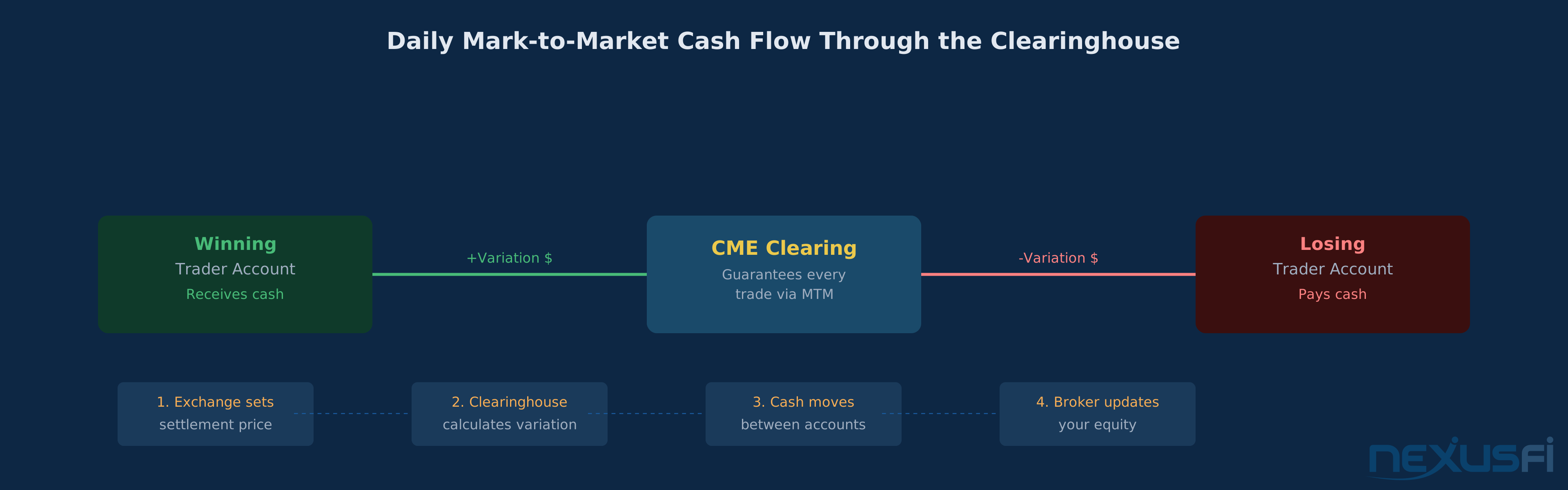
Step 1: Exchange determines settlement price. At the end of each settlement window, the exchange calculates the official settlement price for every listed futures contract. This includes all active delivery months, not just the front month.
Step 2: Clearinghouse calculates variation margin. The clearinghouse (CME Clearing for CME Group products) compares today's settlement price against yesterday's settlement price (or your entry price, if you opened the position today). The difference, multiplied by the contract multiplier, is your variation margin — positive or negative.
Step 3: Cash moves through the clearinghouse. This is real money. The clearinghouse collects cash from losing accounts and distributes it to winning accounts. At CME, this happens through the daily settlement cycle, typically completed by 7:00 PM CT. Your FCM (futures commission merchant) — the entity between you and the clearinghouse — participates in this process.
Step 4: Broker updates your account. Your broker reflects the variation margin in your account balance. Tomorrow morning, your equity starts from this new baseline. If you bought ES at 5800 and settlement is 5815, your account shows a $750 credit. If settlement tomorrow is 5810, you give back $250 — calculated from settlement to settlement, not from your entry.
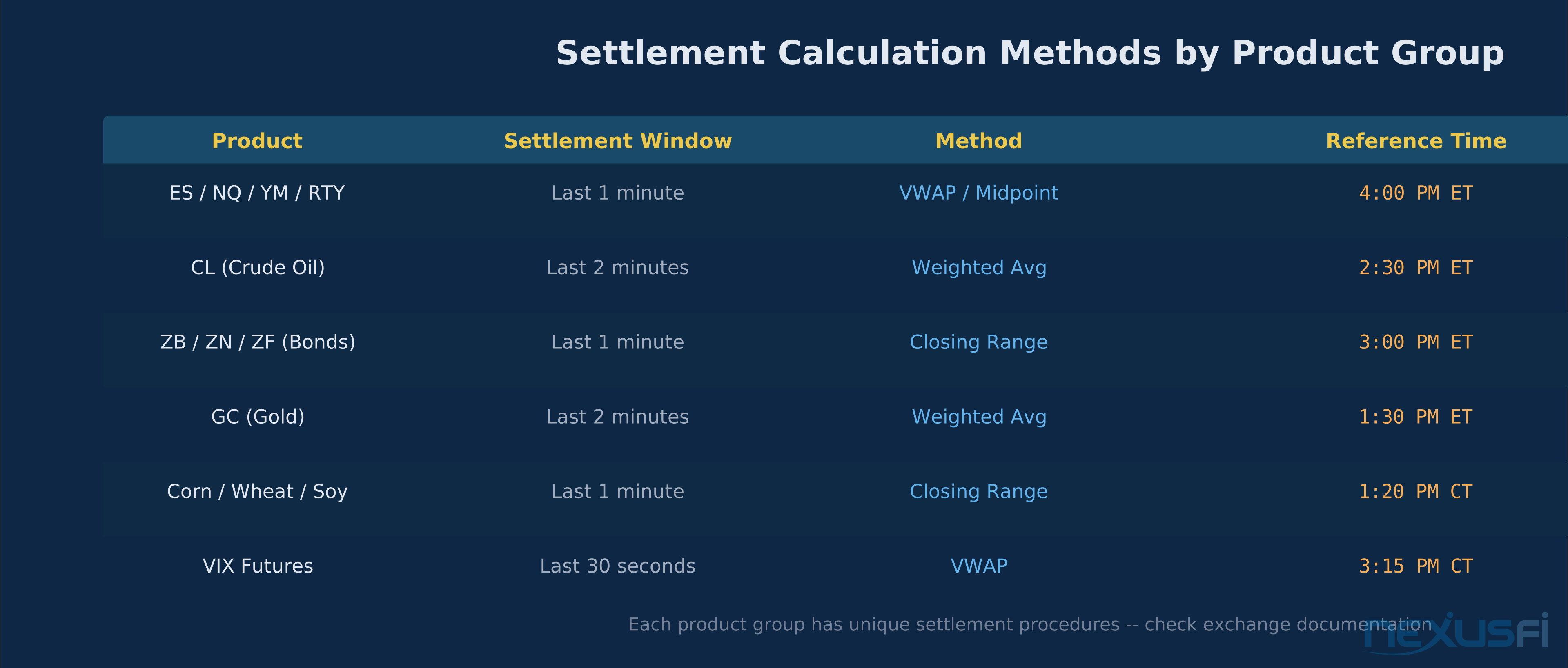
Step 5: Margin check. After marking to market, your broker checks whether your account equity meets maintenance margin requirements. If your account dropped below maintenance margin, you'll get a margin call — typically before the next session opens.
The Math of Daily Mark-to-Market #
Here's a concrete example:
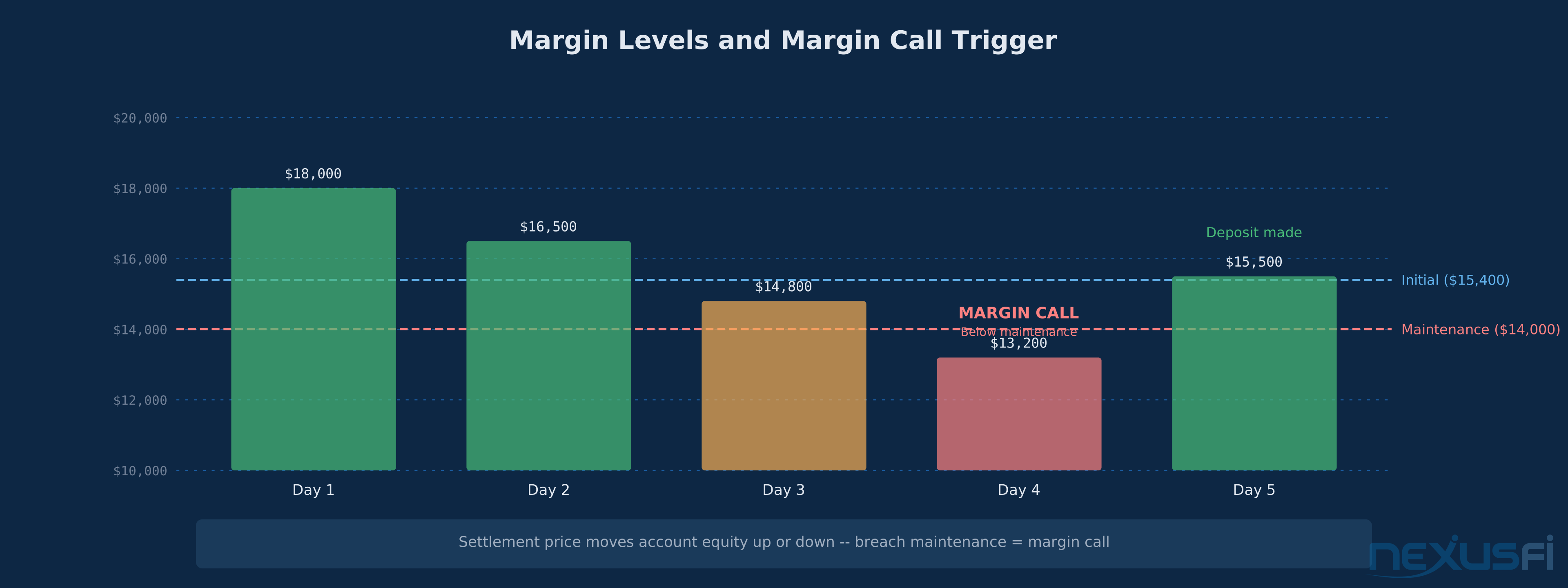
Day 1: You buy 2 ES contracts at 5800.00. Settlement price: 5812.50. Your daily variation = (5812.50 - 5800.00) x $50 x 2 = +$1,250. Account credited $1,250.
Day 2: Settlement price: 5795.25. Daily variation = (5795.25 - 5812.50) x $50 x 2 = -$1,725. Account debited $1,725. Note: this is calculated from yesterday's settlement (5812.50), not from your entry (5800.00).
Day 3: You close the position at 5808.00. Daily variation = (5808.00 - 5795.25) x $50 x 2 = +$1,275.
Total P&L: +$1,250 - $1,725 + $1,275 = +$800. Which equals: (5808.00 - 5800.00) x $50 x 2 = +$800. The math always works out to the same total — mark-to-market just distributes the cash flow across days rather than waiting until you exit.
Variation Margin -- Where the Cash Actually Goes #
Variation margin is the mechanism that makes futures different from stocks. When you hold a stock position overnight, your unrealized P&L sits as a paper gain or loss. In futures, unrealized P&L gets realized every single day through variation margin.
This creates important practical effects:
Cash flow timing. Winning positions generate cash immediately. You can withdraw variation margin credits (subject to initial margin requirements). Conversely, losing positions drain cash immediately — you don't get the luxury of holding through a drawdown without actual money leaving your account.
Compounding effect. Because winning variation margin becomes available cash, you can compound gains in real-time. A position that gains $5,000 over five days adds that $5,000 to your available equity along the way — not just at exit. The flip side: a five-day losing streak drains your account progressively, which is why drawdown management in futures requires strict daily loss limits, not just position-level stops.
Tax implications. Section 1256 contracts (most regulated futures) are marked to market for tax purposes at year-end. Unrealized gains as of December 31 are taxable — you don't need to close the position. This is the "60/40 rule": 60% of gains taxed at long-term capital gains rates, 40% at short-term, regardless of holding period. The daily mark-to-market isn't directly a tax event, but the year-end MTM is.
Margin Calls and the Settlement Price Connection #
Your broker checks margin after every daily settlement. There are distinct margin levels in play, and the settlement price drives all of them.
As @NinjaTrader explained in a [post on margin types] [7]: "There are three different types of margins: Initial Margin, Maintenance Margin, and Day Trading Margin." Initial margin is what you need to open the position. Maintenance margin is what you need to keep it open overnight. Day trading margin is the reduced rate your broker offers during regular hours for intraday positions.
@rleplae expanded on this in a [post about the four margin numbers] [8], distinguishing between intraday initial, intraday maintenance, overnight initial, and overnight maintenance. The overnight numbers — set by the exchange — are the ones that matter for the daily settlement process.
Here's the sequence that triggers a margin call:
- Settlement price moves against your position
- Mark-to-market debits variation margin from your account
- Your account equity drops below maintenance margin
- Broker issues margin call before next session opens
- You deposit funds, reduce position size, or get liquidated
As @bobwest clarified in a [discussion on margin mechanics] [9], margin calls require you to bring your account back up to the maintenance margin level (not the initial margin level, as some traders mistakenly believe). The distinction matters — initial margin is higher than maintenance, so you don't need to go all the way back to the initial level after a call.
Final Settlement -- When Contracts Expire #
Daily settlement is the routine nightly process. Final settlement is a different animal — it happens once, when the contract reaches its expiration date.
For cash-settled contracts (ES, NQ, VIX futures), final settlement uses a special calculation. ES final settlement is based on the Special Opening Quotation (SOQ) — the opening prices of the component S&P 500 stocks on expiration Friday morning. This number can differ substantially from the previous day's settlement because it incorporates overnight gaps.
For physically-delivered contracts (CL, ZB, grains), final settlement triggers the delivery process. The short position delivers the underlying commodity (crude oil, treasury bonds, bushels of corn) and receives the final settlement price. The long position pays the final settlement price and receives delivery.
Most retail traders roll before expiration and never deal with final settlement. But understanding the mechanism matters because contract behavior changes as expiration approaches. The basis between the futures price and the underlying narrows toward zero — this convergence is a direct consequence of the final settlement mechanism forcing the futures price to align with the spot.
Practical Implications and Common Mistakes #
Platform Data Issues #
The settlement vs close confusion creates real problems in trading platforms. Your daily bar's close might not match the settlement price your broker uses for margin calculations. If you're running daily-timeframe strategies — especially pivot point or range-based systems — verify which price your platform uses as the daily close. As @Fat Tails noted: the settlement price is the financially correct close for daily calculations, but not every data source provides it.
Weekend and Holiday Gaps #
On Fridays, the settlement price is calculated normally (4:00 PM ET for equity indexes). But the session continues until 5:00 PM ET, and then Sunday's session opens at 6:00 PM ET. The gap between Friday's settlement and Sunday's opening can move against your position — but your margin was calculated on Friday's settlement. A large gap can push you below maintenance margin before you even see it happen.
Settlement Price Manipulation Concerns #
The settlement window is short — one minute for equity index futures. A coordinated burst of orders during that window could theoretically skew the settlement price. Exchanges monitor for this through surveillance systems, and it's explicitly prohibited under exchange rules. But the incentive exists, especially around options expiration when settlement prices determine which options expire in-the-money.
The "Flash" Settlement #
Occasionally, the settlement price will print at a level that seems disconnected from where the market was trading. This typically happens when the settlement window catches a momentary spike or dip in a thinner market. Your account gets marked to that price regardless. These revert quickly in the next session, but the variation margin impact is real — which is why adequate margin cushion above maintenance levels is essential.
Impact on Options on Futures #
If you trade options on futures, settlement prices are doubly important. The daily settlement determines the underlying futures price used for option Greeks calculations, and the daily option settlement determines the option's theoretical value for margin purposes. On expiration day, the settlement price determines which options expire ITM and which expire worthless — the difference between a $0.25 settlement and a $0.50 settlement on an ES option is worth $12.50 per contract.
The Settlement Price Timeline -- Key Times to Know #
For CME Group products, the critical daily timestamps (all times Eastern):
4:00 PM ET — Cash market close. Equity index futures settlement window. This is the price that determines your margin status.
4:15 PM ET — Equity index futures session close (daily settlement session ends). Historical break time, now just a session boundary.
5:00 PM ET — Globex session end. The "close" on your chart. One hour after settlement.
6:00 PM ET (Sunday-Thursday) — Next Globex session opens. Your new trading day begins from last settlement.
~7:00 PM CT — CME Clearing completes daily settlement cycle. Cash movements finalized.
Knowing these times matters. If you're placing a trade at 4:30 PM ET, you're trading in the post-settlement extended session. Your entry will be marked against tomorrow's settlement, not today's.
The Bottom Line #
Settlement prices are the backbone of futures market mechanics. Every night, the exchange calculates an official price, the clearinghouse moves real cash between winners and losers, and every account gets re-baselined. This daily mark-to-market is what makes futures a leveraged, cash-efficient product — but it's also what makes position sizing and drawdown management non-negotiable.
Know your settlement windows. Understand the difference between settlement and close. Check your platform's data source. And always maintain margin above maintenance levels with enough buffer for overnight moves — because the settlement price waits for no one.
Knowledge Map
Prerequisites
Understand these firstGo Deeper
Build on this knowledgeReferences This Article
Articles that build on this topicCitations
- — CME settlement price calculation (2010) 👍 5“Excellent question! Thanks for putting this up. This made me search for more details on CME Group Settlement Procedures, and I found the document attahaced below.”
- — ES close vs settlement (2023) 👍 5“The daily close is the last tick of the current day at 1700 EST. The settlement price is a VWAP of the last minute before the cash-session close (1600 EST) 1615 EST is outdated, in the past Index-futures had a 15 min break at 1615 (and the settlement...”
- — Daily Pivot Point Calculation. (2012) 👍 8“The closing price is the transaction price of the last trade of a trading day. The settlement price is the volume weighted average price of the settlement period.”
- — Closing Price of ES (2023) 👍 6“The closing-price is the last tick 5 pm ET, but most platform use the settlement-price which now is calculated as a VWAP of the last minute before cash-close (4 pm ET) in the past it was calculated the last minute before the 15 min break of ES (at 4:...”
- — Accuracy of SC Denali data, and a data reconciliation request (2021) 👍 1“I just remembered something that may only create more confusion, but CME has a procedure to determine the daily "settlement" price that is almost always not going to be the same as the actual intra-day last price.”
- — The Scalper's Journey (2016) 👍 4“I would pick settlement price as "right". because this is the official (correct) close for futures. but the real problem is your data feed provider and what they use for daily data. a data feed like cqg uses rth for daily data.”
- — Margin: initial vs maintenance vs day trading (2017) 👍 7“Futures are a highly leveraged trading product. Margins are "good faith deposits" that a trader must maintain in order to trade a particular product.”
- — Greetings from a newcomer (2015) 👍 2“Simple explanation through Google(MB trading) Margin is the equivalent of a "good faith" deposit. Margin deposits are set by the exchange and are subject to change with price movement and market volatility.”
- — Question about intraday margins (2021) 👍 5“This seems to have been an issue from the beginning. I can only touch on a few things now. If you do more research, I'm sure it can become more clear. Let me walk you through one hypothetical trade.”
- — New CME Equity Index Hours as of November 18th 2012 (2012) 👍 17“Starting November 18, CME Globex Trading Day for Equity Index Products to End at 4:15 p.m. CT Change to CME Globex trading hours will coordinate with switch to daily price limits for U.S.”